
Tennessee
Tennessee Recording Laws (2026): One-Party Consent Rules
Independently fact-checked against primary sources (last audited August 15, 2026). · Reviewed by the RecordingLaw editorial team. · Law checked current as of August 9, 2026. · 21 primary sources cited on this page. How we verify our legal content
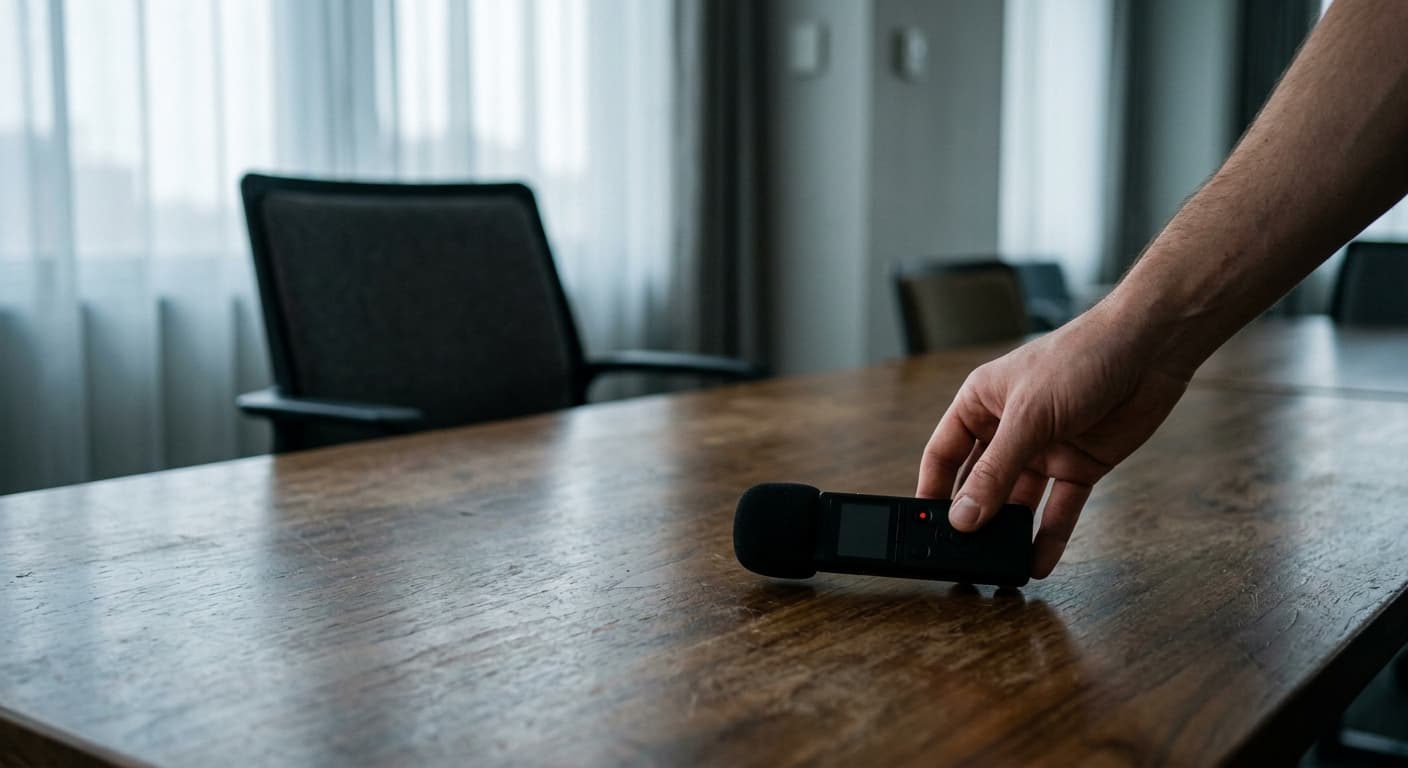
Tennessee is a one-party consent state under Tenn. Code Ann. section 39-13-601: any participant in a wire, oral, or electronic communication may record without notifying the other parties, unless the recording is made for the purpose of committing a criminal or tortious act, which section 39-13-601(b)(5)-(6) carves out of the one-party rule. Recording a conversation you are not part of is a Class D felony under section 39-13-602 carrying up to 12 years and a $5,000 fine. Victims may also bring a civil action under the federal Electronic Communications Privacy Act, (Tennessee's own civil remedy, formerly at section 39-13-603, was repealed in its entirety effective May 28, 2024 by Public Chapter 1045 of 2024, with no state-law replacement), where the statutory minimum is $10,000.
Tennessee recording law at a glance
| Question | Answer |
|---|---|
| Consent rule | One-party consent |
| Controlling statute | Tenn. Code Ann. section 39-13-601 |
| Can you record your own calls? | Yes, without notifying the other party, unless the recording is made for the purpose of committing a criminal or tortious act (section 39-13-601(b)(5)-(6)) |
| Criminal penalty | Class D felony, 2 to 12 years, fine up to $5,000 |
| Civil minimum | $10,000 statutory minimum plus actual damages, punitives, attorney fees (federal ECPA, ; state remedy at former section 39-13-603 repealed May 2024, not replaced) |
| Civil SOL | 2 years from discovery |
| Hidden cameras | Class E felony (base); Class D felony for dissemination, a victim under 13, or a minor used to facilitate; Class C felony for dissemination plus a victim under 13 or position of trust (section 39-13-605, as rewritten by Public Chapter 474 of 2025) |
| Recording police | Likely permitted; no binding Sixth Circuit precedent |
For more on specific recording contexts, see the in-depth guides below.
Recording in-person conversations in Tennessee
Under Tenn. Code Ann. section 39-13-601, it is lawful to record any wire, oral, or electronic communication you are a party to, or that one party has consented to, without telling anyone else. The statute covers face-to-face oral communications, but only those where the speaker has a reasonable expectation that the conversation is not being intercepted. A conversation spoken loudly in a crowded restaurant or on a public sidewalk generally carries no such expectation, so recording it does not require participant consent. Closing a door or lowering a voice in an otherwise public setting can establish a privacy expectation.
Recording becomes a Class D felony when you intercept a conversation you are not part of and no participant has consented, or when you use or disclose a recording you knew was obtained illegally.

One important limit is written into the Tennessee statute itself. Section 39-13-601(b)(5) makes a participant's recording lawful only "unless the communication is intercepted for the purpose of committing any criminal or tortious act in violation of the constitution or laws of this state," and section 39-13-601(b)(6) separately provides that it is unlawful to intercept any wire, oral, or electronic communication for the purpose of committing a criminal act. Lose that exception and the recording falls back under section 39-13-601(a), which section 39-13-602 punishes as a Class D felony. Federal ECPA carries a parallel rule at (2)(d), which the Sixth Circuit applied in Boddie v. American Broadcasting Cos., 881 F.2d 267 (6th Cir. 1989). The federal rule adds civil exposure; the Tennessee provision is what turns the same recording into a felony. Documenting harassment or preserving an oral agreement is lawful. Recording to set up extortion or blackmail is not, even as a participant.
Recording phone calls in Tennessee
The same one-party rule applies to landline calls, cell phone calls (section 39-13-604 separately makes cellular and cordless interception a Class A misdemeanor, rising to a Class E felony if the intercepted communication is disseminated), VoIP and conferencing platforms such as Zoom, Teams, and Google Meet, and video calls with audio. Tennessee imposes no statutory beep-tone requirement and no oral disclosure requirement on private parties.

When a Tennessee caller is on the phone with someone in an all-party consent state, the safest course is to obtain consent from every participant before recording. States that typically require all-party consent include California, Connecticut, Delaware, Florida, Illinois, Maryland, Massachusetts, Montana, Nevada, New Hampshire, Pennsylvania, and Washington. Nevada's statute reads as one-party consent, but the Nevada Supreme Court held in Lane v. Allstate Ins. Co., 114 Nev. 1176 (1998), that phone calls require consent from every participant. The rule on which state's law controls a multistate call varies by court; the conservative answer is to treat the stricter state as controlling.
Tennessee businesses recording customer or employee calls face no state disclosure mandate, though many still announce the recording to handle cross-border calls cleanly. Recordings that retain personally identifiable information may also fall under the Tennessee Information Protection Act (TIPA), effective July 1, 2025, which governs consumer data retention and deletion practices.
For a deeper look, see Tennessee Phone Call Recording Laws.
Hidden cameras, doorbells, and nanny cams
As of July 1, 2025, Tenn. Code Ann. section 39-13-605 governs unlawful photography under three pathways added by Public Chapter 474 of 2025: photography taken for sexual arousal or gratification, or capturing an unclothed intimate area, where the subject has a reasonable expectation of privacy; the same conduct plus actual or threatened dissemination; and photography focused on an intimate area for sexual arousal or gratification, which applies regardless of whether the subject had a reasonable expectation of privacy.
The base offense under the sexual-arousal or intimate-area pathways is a Class E felony (1 to 6 years). It rises to a Class D felony (2 to 12 years) if the defendant disseminated the photograph, the victim was under 13, or a minor under 13 was used to facilitate the offense, and to a Class C felony (3 to 15 years) if the defendant disseminated the photograph and either the victim was under 13 or the defendant used a position of trust over the victim. A narrower dissemination-focused pathway is a Class B misdemeanor for a first violation and a Class A misdemeanor for a second or subsequent violation. Conviction under specified subsections triggers sex-offender registration.
A Ring doorbell capturing porch visitors, a nanny cam in a common room, a dashcam on a public road, or a security camera in a parking lot does not trigger section 39-13-605 in the ordinary case, because these devices are not focused on an intimate area for sexual arousal or gratification and, for the other pathways, the location carries no reasonable expectation of privacy. If the camera also captures audio, section 39-13-601 still applies, but the homeowner is a participant, satisfying the one-party rule. The FTC v. Ring LLC settlement (FTC Matter No. 2023113, May 2023) governs vendor-side cloud review, AI training, and human access to customer video, and provides a practical baseline for choosing camera vendors.
Note: Tenn. Code Ann. section 39-13-609, which some older guides mislabel an "AI photographing" statute, is actually the Freedom from Unwarranted Surveillance Act, restricting law-enforcement drone use. It has no bearing on private cameras or AI image generation.
For more detail, see Tennessee Voyeurism and Hidden Camera Laws and Tennessee Security Camera Laws.
Penalties for illegal recording in Tennessee
Tennessee's combined criminal and civil exposure for unlawful interception is among the strongest in the country. The same recording can produce a felony charge and a civil judgment simultaneously.
Criminal penalties
| Offense | Statute | Class | Penalty |
|---|---|---|---|
| Wiretapping or illegal interception | section 39-13-602 | Class D felony | 2 to 12 years; fine up to $5,000 |
| Disclosing illegally obtained communications | section 39-13-602 | Class D felony | 2 to 12 years; fine up to $5,000 |
| Cellular or cordless interception | section 39-13-604 | Class A misdemeanor | Up to 11 mo. 29 d.; fine up to $2,500 |
| Cellular interception with dissemination | section 39-13-604 | Class E felony | 1 to 6 years |
| Unlawful photography (base, sexual-arousal or intimate-area pathway) | section 39-13-605 | Class E felony | 1 to 6 years |
| Unlawful photography (minor under 13 used to facilitate) | section 39-13-605 | Class D felony | 2 to 12 years |
| Unlawful photography (dissemination plus victim under 13 or position of trust) | section 39-13-605 | Class C felony | 3 to 15 years |
| Unlawful photography (dissemination-focused, first violation) | section 39-13-605 | Class B misdemeanor | Up to 6 months; fine up to $500 |
| Unlawful photography (dissemination-focused, repeat violation) | section 39-13-605 | Class A misdemeanor | Up to 11 mo. 29 d.; fine up to $2,500 |
Range I (standard offender) for a Class D felony is 2 to 4 years; Range II is 4 to 8 years; Range III is 8 to 12 years (section 40-35-112).
Civil liability
Tennessee's own statutory civil action for wiretap violations, formerly at Tenn. Code Ann. section 39-13-603, was repealed in its entirety effective May 28, 2024 by Public Chapter 1045 of 2024 (SB 2221), section 3. No replacement civil-remedy statute was enacted; section 39-13-601(a)(2) still cross-references a private suit "as provided in [former] section 39-13-603 [repealed]," a stale reference the general assembly has not updated.
Victims are not without recourse. The federal Electronic Communications Privacy Act's civil provision, 18 U.S.C. section 2520, independently reaches any unlawful interception and provides the same remedy structure the repealed state law used: an aggrieved person may recover the greatest of (a) actual damages plus the violator's profits; (b) $100 per day of violation; or (c) $10,000 statutory minimum, plus punitive damages, reasonable attorney fees and costs, and injunctive or declaratory relief. The statute of limitations is 2 years running from the date the claimant first had a reasonable opportunity to discover the violation, not from the date of the recording itself.
A complete defense applies for good-faith reliance on a court warrant or order, a grand jury subpoena, or a statutory authorization. The reliance must be genuine and contemporaneous.

Recording the police in Tennessee
Most Tennessee district courts recognize a citizen's right to record police in public by analogy to binding decisions in other circuits. The legal architecture, however, deserves candor: the Sixth Circuit, which covers Tennessee, has no published decision announcing a First Amendment right of citizens to record police performing public duties.
Crawford v. Geiger, 656 F. App'x 190 (6th Cir. 2016), the closest case on point, is unpublished (Federal Appendix) and persuasive only. The panel affirmed denial of qualified immunity to deputies who arrested plaintiffs for recording a police encounter, but it did not announce a circuit-wide right. Hils v. Davis, 52 F.4th 997 (6th Cir. 2022), is published but different in scope: it holds that police officers themselves lack a First Amendment right to record their own internal misconduct interviews. It does not address civilian recording.
Tennessee courts and litigants cite Glik v. Cunniffe, 655 F.3d 78 (1st Cir. 2011); Fields v. City of Philadelphia, 862 F.3d 353 (3d Cir. 2017); Turner v. Lieutenant Driver, 848 F.3d 678 (5th Cir. 2017); and ACLU of Illinois v. Alvarez, 679 F.3d 583 (7th Cir. 2012), all persuasive. Qualified-immunity outcomes therefore vary in Tennessee. A separate, simpler floor applies: Tennessee one-party consent independently permits any citizen who is in conversation with an officer to record that conversation.
Practical limits apply regardless of the constitutional posture: do not physically interfere with police operations, do not trespass to obtain a better angle, and follow lawful orders to step to a safe distance.
The Tennessee Open Meetings Act (Tenn. Code Ann. section 8-44-101 et seq.) requires most government meetings to be open to the public, and recording at city commission meetings, school board sessions, public hearings, and legislative proceedings is generally permitted. Body-worn camera footage is presumptively public under Tenn. Code Ann. section 10-7-503, except that section 10-7-504(u) makes footage confidential when recorded inside a private residence not under criminal investigation, a state-licensed healthcare or mental-health facility, or a K-12 school. The exemption is location-based, not content-based.
For a deeper treatment, see Tennessee Laws on Recording Police.
Special topics in Tennessee
The ELVIS Act: AI voice protection
The Ensuring Likeness, Voice, and Image Security Act of 2024 (ELVIS Act), codified at Tenn. Code Ann. section 47-25-1101 et seq. (Public Chapter 588 of 2024, HB 2091 / SB 2096), signed March 26, 2024, and effective July 1, 2024, made Tennessee the first state in the nation to extend right-of-publicity protection to a person's voice against unauthorized AI imitation. The Act covers simulated or AI-generated voices that are readily identifiable as a particular individual, creates liability for anyone who makes available a tool or service whose primary purpose is unauthorized production of an identifiable voice or likeness, and provides injunctive relief, actual damages, punitive damages, and attorney fees. Fictional uses falsely presented as authentic are not protected, but news, public affairs, satire, and fair-comment uses are. A lawful one-party recording under section 39-13-601 can still become an ELVIS Act violation if the recording is then used to train or generate an AI voice clone of an identifiable Tennessean without authorization.
2025 Preventing Deepfake Images Act
The Preventing Deepfake Images Act (Public Chapter 466 of 2025, HB 1299 / SB 1346), signed May 9, 2025, and effective July 1, 2025, amends Tenn. Code Ann. Title 39 Chapter 17. It creates a Class E felony (1 to 6 years; fine up to $3,000) for intentional disclosure, threat to disclose, or solicitation to disclose an intimate digital depiction without consent with intent to harm the subject. The offense is enhanced to a Class C felony (3 to 15 years; fine up to $10,000) where the creation or distribution could reasonably affect administrative, legislative, or judicial proceedings or facilitate violence. The civil cause of action allows recovery of actual damages or liquidated damages of $150,000, plus punitive damages, attorney fees, and injunctive relief; plaintiffs may proceed under a pseudonym. Consent to creation does not equal consent to disclosure; the Act requires a signed written agreement for valid consent.
Workplace recording and the NLRB
Tennessee one-party consent permits an employee to record any workplace conversation they participate in, including meetings with HR or management. The employer's ability to prohibit recording is constrained federally: Stericycle, Inc. and Teamsters Local 628, 372 NLRB No. 113 (Aug. 2, 2023), holds that a blanket no-recording rule is presumptively unlawful unless narrowly tailored and supported by a substantial business interest, because Section 7 of the NLRA protects concerted activity that recording often serves. NLRB General Counsel Memo 25-05 (Feb. 14, 2025) changed only prosecutorial posture and did not overrule Stericycle. NLRB General Counsel Memo 25-07 (June 25, 2025) is narrowly scoped to surreptitious recording of collective-bargaining sessions. For more, see Tennessee Workplace Recording Laws.
Federal overlay: ECPA, FCC, TAKE IT DOWN Act
ECPA (18 U.S.C. sections 2510-2522) sets a one-party federal floor that mirrors Tennessee law; it does not preempt stricter state statutes. FCC Declaratory Ruling 24-17 (Feb. 8, 2024) treats AI-generated voices in robocalls as "artificial or prerecorded voice" under the TCPA, requiring prior express consent for calls to Tennessee numbers; FCC Order 24-24 (the one-to-one consent rule) was vacated by the Eleventh Circuit, Insurance Marketing Coalition Ltd. v. FCC, No. 24-10277 (11th Cir. Jan. 24, 2025), mandate issued April 30, 2025. The TAKE IT DOWN Act (S. 146, 119th Congress, signed May 19, 2025) criminalized knowing publication of nonconsensual intimate visual depictions; its platform notice-and-removal compliance deadline of May 19, 2026, has now passed and the obligation is in full effect. The Tennessee 2025 Deepfake Act and the federal TAKE IT DOWN Act operate as parallel frameworks: the federal Act creates a platform removal duty and a federal criminal offense; the Tennessee Act creates a state criminal offense and a civil cause of action with pseudonym protection.

Recent legal developments
- July 1, 2024: ELVIS Act (Tenn. Code Ann. section 47-25-1101 et seq., Public Chapter 588 of 2024) effective, making Tennessee the first state with AI voice and likeness protection.
- May 28/July 1, 2024: Public Chapter 1045 of 2024 (SB 2221) repealed Tennessee's own civil action for interception (former section 39-13-603) with no state-law replacement, and revised business-vendor disclosure provisions in the wiretap statute; the one-party consent rule was unchanged.
- August 2, 2023: Stericycle, Inc., 372 NLRB No. 113, set the current test for employer no-recording rules under the NLRA.
- May 2023: FTC v. Ring LLC settled for $5.8 million, establishing vendor-side standards for camera cloud access and AI training.
- July 1, 2025: Preventing Deepfake Images Act (Public Chapter 466 of 2025) effective, adding Class E / Class C criminal penalties and a $150,000 liquidated-damages civil cause of action for nonconsensual intimate digital depictions.
- July 1, 2025: Public Chapter 474 of 2025 substantially rewrote the unlawful photography statute, section 39-13-605, raising the base offense to a Class E felony and adding a pathway that applies regardless of whether the subject had a reasonable expectation of privacy.
- July 1, 2025: Tennessee Information Protection Act (TIPA) effective, covering personal data including recordings linked to identifiable individuals.
- May 19, 2026: Federal TAKE IT DOWN Act platform compliance deadline passed; covered platforms must remove nonconsensual intimate depictions within 48 hours of valid notice.
Tennessee recording laws in depth
By type of recording
- Tennessee Audio Recording Laws: One-Party Consent Rules and Penalties
- Tennessee Phone Call Recording Laws: One-Party Consent Rules
- Tennessee Video Recording Laws: What Is Legal and What Is Not
- Tennessee Voyeurism and Hidden Camera Laws: Statutes and Penalties
- Tennessee Dashcam Laws: Legality, Mounting Rules, and Evidence Use
By place or relationship
- Tennessee Workplace Recording Laws: Employee and Employer Rights
- Tennessee Laws on Recording Police: Your Rights and Limits
- Tennessee Laws on Recording in Public: What You Can and Cannot Film
- Tennessee Landlord-Tenant Recording Laws: Rights and Restrictions
- Tennessee Medical Recording Laws: Patient Rights and Provider Rules
- Tennessee School Recording Laws: Student, Parent, and Teacher Rights
- Tennessee Security Camera Laws: Home, Business, and HOA Rules
More Tennessee laws
- Tennessee AI Meeting Recording Laws
- Tennessee At-Will Employment Laws
- Tennessee Data Privacy Laws
- Tennessee Divorce Laws
- Tennessee Landlord-Tenant Laws
This article is general legal information, not legal advice. Recording laws change and apply differently to each situation. For advice about your situation, consult a licensed Tennessee attorney.
More Tennessee Laws
Frequently Asked Questions
Is Tennessee a one-party or two-party consent state for recording?
Tennessee is a one-party consent state. Under Tenn. Code Ann. section 39-13-601, a participant in a wire, oral, or electronic communication, or anyone with the prior consent of one party, may lawfully record without notifying the other parties. That exception has a limit written into the statute itself: section 39-13-601(b)(5)-(6) withdraws it where the communication is intercepted for the purpose of committing a criminal or tortious act, which leaves the recording punishable as a Class D felony under section 39-13-602. Recording a conversation you are not part of, with no participant consent, is also a Class D felony.
Is recording without consent in Tennessee a felony?
Yes. Unlawful interception under section 39-13-601 is a Class D felony under section 39-13-602 carrying 2 to 12 years in prison (Range I-III under section 40-35-112) and a fine up to $5,000 under section 40-35-111(b)(4). Tennessee's own civil action, formerly at section 39-13-603, was repealed effective May 2024 with no state-law replacement, but civil exposure remains under the federal ECPA (18 U.S.C. section 2520), starting at a $10,000 statutory minimum plus actual damages, punitive damages, and attorney fees.
Can I record a phone call from Tennessee to someone in California, Florida, or Pennsylvania?
The safest course is to obtain consent from every party before recording. ECPA sets a one-party federal floor but does not preempt stricter state statutes. California, Florida, and Pennsylvania are typically treated as all-party consent states. Which state's law controls a multistate call varies by court, so disclosing the recording before the conversation begins eliminates the risk.
Can I record a meeting with my boss or HR in Tennessee?
Yes, if you are in the meeting. Tennessee one-party consent under section 39-13-601 allows any participant to record. A blanket employer no-recording rule is presumptively unlawful under the NLRB's Stericycle standard (372 NLRB No. 113, Aug. 2, 2023) unless narrowly tailored and justified by a substantial business interest.
Are Ring doorbells and home security cameras legal in Tennessee?
Yes, generally. Ordinary porch or common-area video does not trigger section 39-13-605, which (as rewritten effective July 1, 2025 by Public Chapter 474 of 2025) reaches photography taken for sexual arousal or gratification or focused on an intimate area, not routine security footage. If the camera captures audio, section 39-13-601 applies, but the homeowner satisfies the one-party rule as a participant.
Can I record Tennessee police during a traffic stop or in public?
Most likely yes. Tennessee district courts have recognized a First Amendment right to record police in public by analogy to other circuits, though the Sixth Circuit has no published binding ruling on the point. Crawford v. Geiger, 656 F. App'x 190 (6th Cir. 2016), is unpublished and persuasive only. Separately, Tennessee one-party consent independently allows you to record any conversation you are part of, including with an officer.
What does the ELVIS Act do, and does it affect recording someone's voice?
The ELVIS Act (Tenn. Code Ann. section 47-25-1101 et seq., Public Chapter 588 of 2024, effective July 1, 2024) made Tennessee the first state to protect a person's voice against unauthorized AI imitation as a right-of-publicity property right. A lawful one-party recording under section 39-13-601 can become an ELVIS Act violation if the recording is then used to train or generate an AI voice clone of an identifiable Tennessean without authorization.
What are Tennessee's civil damages for illegal recording?
Tennessee's own civil-damages statute, formerly at section 39-13-603, was repealed in its entirety effective May 28, 2024 by Public Chapter 1045 of 2024, with no state-law replacement. Under the federal ECPA (18 U.S.C. section 2520), an aggrieved person may still recover the greatest of: actual damages plus the violator's profits, $100 per day of violation, or $10,000 statutory minimum, plus punitive damages, attorney fees, and litigation costs. Injunctive relief is also available. The statute of limitations is 2 years from the date the claimant first had a reasonable opportunity to discover the violation.
Updates
Clarified that the criminal-or-tortious-purpose limit on Tennessee one-party consent recording comes from the Tennessee statute itself at Tenn. Code Ann. section 39-13-601(b)(5)-(6), not only from federal law, and carried that qualifier into the article summary, key takeaways, at-a-glance table, and FAQ.
Corrected the criminal-penalty classification for cellular and cordless call interception (Tenn. Code Ann. section 39-13-604 is a Class A misdemeanor rising to a Class E felony on dissemination, not a Class D felony) and updated the unlawful-photography statute (section 39-13-605) throughout the page to reflect the July 1, 2025 rewrite by Public Chapter 474 of 2025, which raised the base offense to a Class E felony and added a pathway that applies regardless of reasonable expectation of privacy.
Independently fact-checked against the cited primary sources
Governing law re-checked for recent changes
Governing law re-checked for recent changes
Verified the page's existing repeal coverage for Tenn. Code Ann. section 39-13-603 (effective May 28, 2024) and added the repeal to the Recent Legal Developments timeline for consistency; removed an outdated law.justia.com citation for the repealed section.
Competitive gap-check against the Tennessee Bar Association Journal's top-ranked recording-law article. Corrected a hallucinated citation introduced by the 2026-06-05 audit pass, which had claimed the repealed civil-action statute (former section 39-13-603) was consolidated into Tenn. Code Ann. Title 40, Chapter 6, Part 3. Verified against the enacted text of Public Chapter 1045 of 2024 and the current Tennessee Code (Justia): section 39-13-603 was deleted in its entirety with no replacement civil-remedy statute anywhere in Title 39 or Title 40, Chapter 6, Part 3, and 39-13-601(a)(2) still carries a stale cross-reference to the repealed section. Corrected all five references (intro paragraph, KeyTakeaways, at-a-glance table, Civil Liability section, two FAQ answers) to point to the surviving federal remedy, 18 U.S.C. section 2520, which the repealed state provision mirrored almost verbatim. Also added Nevada to the list of states requiring all-party phone-call consent (Lane v. Allstate Ins. Co., 114 Nev. 1176 (1998)), matching this site's own Nevada page classification.
Reviewed and approved by an editor
Restructured for readability: rewrote as short-paragraph sections (in-person, phone, hidden cameras, penalties, police, special topics), condensed federal overlay and NLRB material into Special Topics subsections, added in-depth index with By-type and By-place groupings, refreshed FAQ to 8 plain-language questions, updated Recent Legal Developments bullet list through May 2026 (TAKE IT DOWN Act platform deadline), confirmed ELVIS Act codification, Preventing Deepfake Images Act penalties, and Class D felony sentencing ranges against primary sources. All statutes verified against capitol.tn.gov and law.cornell.edu. Audit-fixed: corrected criminal penalty citation from section 39-13-601 to section 39-13-602 (penalty section); updated civil remedy references to note section 39-13-603 was repealed effective May 28, 2024 by Public Chapter 1045 of 2024, with civil remedy provisions now at Tenn. Code Ann. Title 40, Chapter 6, Part 3.
Refreshed for 2026: added ELVIS Act (Tenn. Code 47-25-1101 et seq., Public Chapter 588 of 2024) as first-in-nation AI voice and likeness protection; added 2025 Preventing Deepfake Images Act (HB 1299, Public Chapter 466 of 2025) at Title 39 Chapter 17; corrected section 39-13-609 framing to Freedom from Unwarranted Surveillance Act (drone and law-enforcement surveillance), not AI photographing; corrected body-cam citation to section 10-7-504(u); reframed Crawford v. Geiger as unpublished persuasive only; updated FCC 24-24 to vacated; removed stale 47 CFR section 64.501; added Stericycle and NLRB GC 25-05 / 25-07 workplace overlay; added TAKE IT DOWN Act federal compliance; replaced commercial-codifier URLs with capitol.tn.gov, tncourts.gov, and uscode.house.gov.
Added wearable recording devices section and related FAQs
The Law Behind This Article
This article rests on the statutory provisions below, held in our own legal record and retrieved from the official source. Tap a section to read the operative text.
Tennessee Code Annotated
§ 39-13-601Wiretapping and electronic surveillance — Prohibited acts — Exceptions.In forcecited in 20 of our articles
(a)(1) Except as otherwise specifically provided in §§ 39-13-601 — [former] 39-13-603 [repealed] and title 40, chapter 6, part 3, a person commits an offense who: (A) Intentionally intercepts, endeavors to intercept, or procures any other person to intercept or endeavor to intercept, any wire, oral
Official text (excerpt) · last checked 2026-08-31 · Read the full text in our law library · Verify at publications.tnsosfiles.com
Cited in 25 court opinionsMost recently applied by a court: 2026
In the courts (editorial summary, independently checked):Lawrence v. Lawrence held a parent may vicariously consent under Section 39-13-601 to recording a 2 1/2-year-old child's phone call with the other parent. State of Tennessee v. Henry Floyd Sanders noted that a body-wire recording made with one party's consent is lawful under the section's exceptions.
Leading cases:
- Lawrence v. Lawrence (Court of Appeals of Tennessee 2010, 360 S.W.3d 416)“…called upon to construe the term “consent” as it is used in Tenn. Code Ann. § 39-13-601 to determine whether Mother had an “unr…”
- Harold Dean McDaniel v. Kimberly Ruth McDaniel (Court of Appeals of Tennessee 2010)“…ourt: I have had an opportunity to look at T.C.A. 39-13-601(a)(1), (A) and (B), and…”
- State of Tennessee v. Henry Floyd Sanders (Tennessee Supreme Court 2014, 452 S.W.3d 300)✓Police recorded a front yard conversation in which a man admitted touching his ex-partner's daughter; the court upheld admission of the recording as a voluntary statement to a confidante and noted that this type of recording is sanctioned as lawful by 39-13-601(b)(4)-(5).
Identified automatically from the court opinions citing this section — not a ranking of which case controls.
Also relied on in: Tennessee Voyeurism and Hidden Camera Laws: Statutes and Penalties, Tennessee Audio Recording Laws: One-Party Consent Rules and Penalties, Tennessee Dashcam Laws: Legality, Mounting Rules, and Evidence Use
§ 39-13-603Civil actions — Injunctive relief — Damages — Defenses — Limitation of actions.Repealedcited in 11 of our articles
(a) Except as provided in § 39-13-601(b)(4), any aggrieved person whose wire, oral or electronic communication is intentionally intercepted, disclosed, or used in violation of § 39-13-601 or title 40, chapter 6, part 3 may in a civil action recover from the person or entity that engaged in that…
Official text (excerpt) · last checked 2026-08-06 · Read the full text in our law library · Verify at publications.tnsosfiles.com
Cited in 8 court opinionsMost recently applied by a court: 2018
Leading cases:
- Robinson v. Fulliton (Court of Appeals of Tennessee 2003, 140 S.W.3d 312)“…il damages provision of the Tennessee wiretapping statutes, Tenn. Code Ann. § 39-13-603. The trial court, sitting without a jur…”
- Montgomery v. Montgomery (Court of Appeals of Tennessee 2005, 181 S.W.3d 720)“…0), whichever is greater” plus attorney fees and costs. See Tenn. Code Ann. § 39-13-603(a)(1). On appeal, Defendant argues that…”
- State of Tennessee v. William Keith Paulson, alias (Court of Criminal Appeals of Tennessee 2009)“…ted.” Violation of subsection (a) is a Class A misdemeanor. T.C.A. § 39-13-603(a)(3). As previously noted, subsection…”
Identified automatically from the court opinions citing this section — not a ranking of which case controls.
Also relied on in: Tennessee Landlord-Tenant Recording Laws: Rights and Restrictions, Tennessee Medical Recording Laws: Patient Rights and Provider Rules, Tennessee Phone Call Recording Laws: One-Party Consent Rules
§ 8-44-101Policy — Construction.In force
(a) The general assembly hereby declares it to be the policy of this state that the formation of public policy and decisions is public business and shall not be conducted in secret. (b) This part shall not be construed to limit any of the rights and privileges contained in the Constitution of…
Official text (excerpt) · last checked 2021-05-21 · Read the full text in our law library
Cited in 59 court opinionsMost recently applied by a court: 2025
Leading cases:
- Cooper v. Williamson County Board of Education (Tennessee Supreme Court 1987, 746 S.W.2d 176)“…her the Board had violated the Tennessee Open Meetings Act, T.C.A. §§ 8-44-101, et seq. Plaintiff objected to this p…”
- Smith County Education Ass'n v. Anderson (Tennessee Supreme Court 1984, 676 S.W.2d 328)“…Act, T.C.A. § 49-5-601 to 5-604, or the Open Meetings Act, T.C.A. § 8-44-101 to 106, entitled to a jury trial and if…”
- Bob Fannon, Individually and as a City Councilman for the City of LaFollette v. City of LaFollotte (Tennessee Supreme Court 2010, 329 S.W.3d 418)“…relief from his colleagues’ violation of the Sunshine Law [Tenn.Code Ann. §§ 8-44-101 to -111 (2002 & Supp. 2010) ]. I also a…”
Identified automatically from the court opinions citing this section — not a ranking of which case controls.
United States Code Title 18
§ 2520Recovery of civil damages authorizedIn forcecited in 115 of our articles
Except as provided in section 2511(2)(a)(ii), any person whose wire, oral, or electronic communication is intercepted, disclosed, or intentionally used in violation of this chapter may in a civil action recover from the person or entity, other than the United States, which engaged in that violation such relief as may be appropriate. In an action under this section, appropriate relief includes— such preliminary and other equitable or declaratory relief as may be appropriate; damages under subsection (c) and punitive damages in appropriate cases; and a reasonable attorney’s fee and other litigation costs reasonably incurred.
Official text (excerpt) · last checked 2026-07-28 · Read the full text in our law library · Verify at uscode.house.gov
Cited in 860 court opinionsMost recently applied by a court: 2026
In the courts (editorial summary, independently checked):Walker v. Darby (1990) held a 2520 plaintiff need not prove the contents of intercepted conversations, only interception and a justified expectation against it. Bartnicki v. Vopper (2001) barred 2520 damages against defendants who took no part in the interception, obtained the tape lawfully, and disclosed a matter of public concern.
Leading cases:
- Jessie Walker v. Thomas E. Darby, Hugh L. Robinson, Jr., and Kenneth Day (Court of Appeals for the Eleventh Circuit 1990, 911 F.2d 1573)✓A postal letter carrier said three supervisors wired an intercom near his workstation to listen in. Reversing summary judgment, the Eleventh Circuit held a section 2520 plaintiff can show interception without proving the contents of specific conversations.
- Gelbard v. United States (Supreme Court of the United States 1972, 408 U.S. 41)“…disclosure, or use is entitled to recover civil damages, 18 U. S. C. § 2520 . Title III also bars the use as eviden…”
- DirecTV, Inc. v. Hoa Huynh (Court of Appeals for the Ninth Circuit 2007, 503 F.3d 847)“…7 U.S.C. § 605 (e)(4), or alternatively, for violations of 18 U.S.C. § 2520 (a), or alternatively, for violations o…”
Identified automatically from the court opinions citing this section — not a ranking of which case controls.
Also relied on in: US Recording Laws by State (2026): All 50 States Explained, Alabama Audio Recording Laws: Consent Rules and Penalties, Alabama Phone Call Recording Laws: What You Need to Know
§ 2511Interception and disclosure of wire, oral, or electronic communications prohibitedIn forcecited in 415 of our articles
Except as otherwise specifically provided in this chapter any person who— intentionally intercepts, endeavors to intercept, or procures any other person to intercept or endeavor to intercept, any wire, oral, or electronic communication; intentionally uses, endeavors to use, or procures any other person to use or endeavor to use any electronic, mechanical, or other device to intercept any oral communication when— such device is affixed to, or otherwise transmits a signal through, a wire, cable, or other like connection used in wire communication; or such device transmits communications by radio, or interferes with the transmission of such communication; or such person knows, or has reason to know, that such device or any component thereof has been sent through the mail or transported in interstate or foreign commerce; or such use or endeavor to use (A) takes place on the premises of any business or other commercial establishment the operations of which affect interstate or foreign commerce; or (B) obtains or is for the purpose of obtaining information relating to the operations of any business or other commercial establishment the operations of which affect interstate or foreign…
Official text (excerpt) · last checked 2026-08-28 · Read the full text in our law library · Verify at uscode.house.gov
Cited in 2,045 court opinionsMost recently applied by a court: 2026
In the courts (editorial summary, independently checked):Griggs-Ryan v. Smith (1990) applied the Section 2511(2)(d) prior-consent exception, treating a tenant repeatedly told that all incoming calls were taped as having impliedly consented. United States v. United States District Court (1972) read the then-current Section 2511(3) as conferring no presidential surveillance power.
Leading cases:
- Mitchell v. Forsyth (Supreme Court of the United States 1985, 472 U.S. 511)✓The Attorney General authorized a warrantless 1970 national security wiretap that caught the plaintiff's calls; the Court held the since-repealed Section 2511(3) disclaimer left the tap lawful under Title III, and that Mitchell had qualified immunity.
- United States v. United States District Court for the Eastern District of Michigan (Supreme Court of the United States 1972, 407 U.S. 297)✓The Attorney General approved warrantless wiretaps on members of a domestic group accused of bombing a CIA office; the Court read Section 2511(3) as a congressional disclaimer conferring no surveillance power, then held the Fourth Amendment required prior judicial approval.
- Forsyth v. Barr (Court of Appeals for the Fifth Circuit 1994, 19 F.3d 1527)✓Dallas police used, in an internal affairs probe of an officer, calls private parties allegedly intercepted illegally; assuming that was unlawful, the Fifth Circuit held Section 2517(1) and (2) allowed the disclosure and use, defeating the Section 2511(1)(c) and (d) claims.
Identified automatically from the court opinions citing this section — not a ranking of which case controls.
Also relied on in: Connecticut Recording Laws (2026): Hybrid Consent Rules Explained, Oregon Recording Laws (2026): Hybrid One-Party and All-Party Rules, Hawaii Recording Laws (2026): Hybrid Consent State Rules
Search our full record of US law — 2.1 million sections, every state + federal →
Sources and References
- wapp.capitol.tn.gov.gov
- capitol.tn.gov.gov
- wapp.capitol.tn.gov.gov
- wapp.capitol.tn.gov.gov
- firstamendment.mtsu.edu
- uscode.house.gov.gov
- docs.fcc.gov.gov
- media.ca11.uscourts.gov.gov
- federalregister.gov.gov
- nlrb.gov.gov
- ftc.gov.gov
- congress.gov.gov
- mtas.tennessee.edu
- ecfr.gov.gov
- ecfr.gov.gov
- Governor Lee Signs ELVIS Act Into Law, March 26, 2024(tn.gov).gov
- HB 1299 Bill Text, Preventing Deepfake Images Act(capitol.tn.gov).gov
- Tennessee Open Meetings Act, Tenn. Code Ann. section 8-44-101 et seq.(comptroller.tn.gov).gov
- 18 U.S.C. section 2511 (ECPA interception prohibition and one-party consent exception)(law.cornell.edu)
- NLRB General Counsel Memo 25-05 (Feb. 14, 2025)(nlrb.gov).gov
- NLRB General Counsel Memo 25-07 (June 25, 2025) on surreptitious recording of collective-bargaining sessions(nlrb.gov).gov
- DOJ Justice Manual section 9-7.302 (Consensual Monitoring)(justice.gov).gov
- 47 CFR Part 64 Subpart E (Customer Proprietary Network Information, current carrier framework)(ecfr.gov).gov
- 18 U.S.C. section 2520 (ECPA civil cause of action for unlawful interception)(law.cornell.edu)
- Public Chapter 1045 of 2024 (SB 2221), Section 3 (repealing Tenn. Code Ann. section 39-13-603 in its entirety)(publications.tnsosfiles.com).gov
- Lane v. Allstate Ins. Co., 114 Nev. 1176 (Nev. 1998) (NRS 200.620 requires all-party consent to record phone calls)(courtlistener.com)