
Connecticut
Connecticut Recording Laws (2026): Hybrid Consent Rules Explained
Independently fact-checked against primary sources (last audited August 22, 2026). · Reviewed by the RecordingLaw editorial team. · Law checked current as of August 22, 2026. · 30 primary sources cited on this page. How we verify our legal content
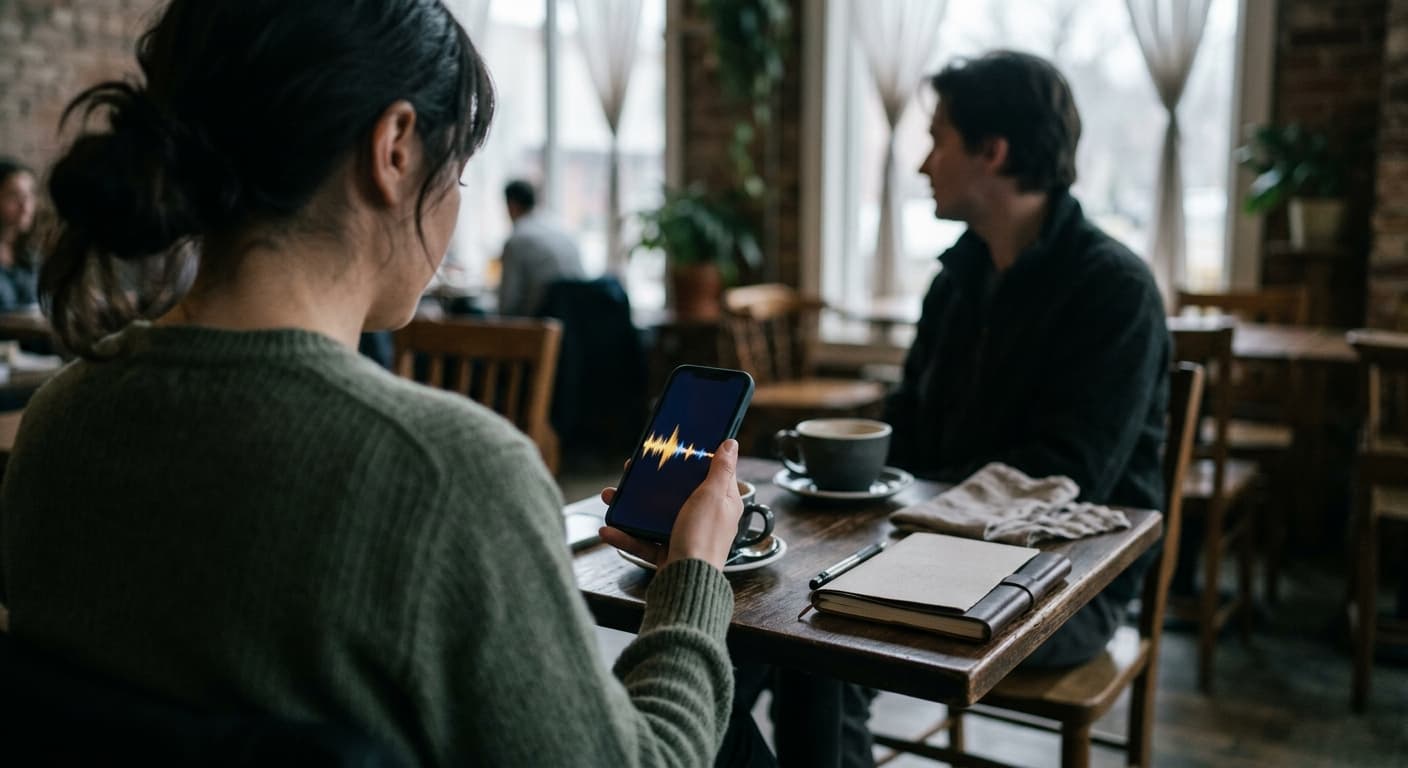
Connecticut uses a hybrid recording consent framework. In-person conversations follow a one-party (participant) standard. The criminal eavesdropping offense, Conn. Gen. Stat. § 53a-189, reaches only a recording made by a person not present at the conversation, as § 53a-187 defines it; a footnote in State v. DeMartin, 171 Conn. 524 (1976), reads those definitions to mean that "one may tape one's own conversation." Phone calls are separately governed by the civil statute, § 52-570d, which requires all-party consent. Eavesdropping by a person not present at the conversation is a Class D felony under § 53a-189, while a participant who records a phone call without all-party consent faces civil liability under § 52-570d rather than criminal prosecution.
Connecticut recording law at a glance
| Question | Answer |
|---|---|
| In-person consent rule | One-party (participant) under §§ 53a-187, 53a-189 |
| Phone call consent rule | All-party required under § 52-570d (civil) |
| Main criminal statute | Conn. Gen. Stat. § 53a-189 |
| Criminal penalty | Class D felony: up to 5 years, up to $5,000 fine |
| Civil penalty (phone) | Actual damages + costs + attorney fees (§ 52-570d) |
| Phone recording remedy | Civil action for damages, costs, and attorney's fee under § 52-570d(c) |
| Hidden cameras / voyeurism | § 53a-189a (Class D felony; Class C for minors or repeat) |
| Recording police in public | Not barred by state recording law; no binding circuit precedent |
For a deeper look at each context, see the in-depth guides below.
Recording in-person conversations in Connecticut
For face-to-face conversations, Connecticut follows the participant doctrine built into the definitions in § 53a-187, which govern the eavesdropping offense in § 53a-189. Section 53a-187 defines "mechanical overhearing of a conversation" as recording a conversation without the consent of at least one party by a person not present. A participant who is present and recording their own conversation satisfies the "at least one party" requirement and commits no criminal offense.
The Connecticut Supreme Court addressed party recording in State v. DeMartin, 171 Conn. 524 (1976). It held that an undercover officer who taped his own telephone calls for use as evidence broke no state prohibition: the only wiretapping ban in force at the time, former § 53-140, did not prohibit parties from taping their own telephone conversations, and the wiretap-authorization act (§§ 54-41a through 54-41s) had no application. A footnote in the opinion adds that under the Penal Code provisions that replaced § 53-140, eavesdropping occurs only when the recording is made by a person other than a sender or receiver and without the consent of at least one party, so "one may tape one's own conversation." No subsequent Connecticut Supreme Court or Appellate Court decision has modified or overruled DeMartin.
There is no civil counterpart to § 52-570d covering in-person audio; that statute expressly applies only to "private telephonic communications." A participant who lawfully records a face-to-face conversation faces no civil liability under Connecticut recording law, though common-law privacy torts remain possible in extreme cases.
Recording becomes criminal when the recorder is not present at the conversation. Placing a hidden device in a room to capture conversations without being present, or intercepting discussions you are not part of, falls within § 53a-187's definition of mechanical overhearing and constitutes eavesdropping under § 53a-189.
Recording phone calls in Connecticut
Phone calls are subject to a stricter, separate standard. Conn. Gen. Stat. § 52-570d creates a private civil cause of action for recording a "private telephonic communication" without all-party consent. Unlike the criminal statute, § 52-570d has no participant exception, so even a party to the call who records without meeting the notice requirements faces civil liability. Telephone interception carries separate criminal exposure. Section 53a-187 defines "wiretapping" as intentionally overhearing or recording a telephonic communication by someone other than a sender or receiver, without the consent of either the sender or receiver; wiretapping is eavesdropping under § 53a-189, the same Class D felony that covers in-person mechanical overhearing. Because a party to a call is by definition a sender or receiver, a participant cannot commit criminal wiretapping of their own conversation, which is why unauthorized participant recording of a phone call exposes only civil liability under § 52-570d, not criminal charges.
Three methods satisfy the consent requirement under § 52-570d:
- Written consent from all parties obtained before or at the start of the recording
- A verbal notification recorded at the beginning of and as part of the call
- An automatic beep-tone warning device at approximately 15-second intervals
Section 52-570d has used the phrase "any instrument, device or equipment" since its original 1990 enactment (P.A. 90-305); that broad, technology-neutral language already captures smartphones, VoIP software, and cloud-based recording tools without needing a later amendment. The section's only subsequent changes, P.A. 19-132 (2019) and P.A. 21-40 (2021), were technical edits to the law-enforcement exception in subsection (b)(1) and did not touch the recording-method language.
Section 52-570d's remedy for a violation is civil, not evidentiary: any person aggrieved by an unlawful recording may bring a civil action in Superior Court to recover damages, together with costs and a reasonable attorney's fee. The statute's text does not itself render a noncompliant recording inadmissible as evidence.
For interstate calls, Connecticut courts have issued no definitive choice-of-law ruling. Commentators recommend treating any call involving a Connecticut party as subject to § 52-570d's all-party requirement. The federal baseline under 18 U.S.C. § 2511(2)(d) permits one-party recording, but Connecticut's stricter civil rule governs in Connecticut proceedings.
To see how Connecticut's phone-call rule lines up with the other caller's state, try our recording consent checker.
For full treatment of phone call rules, see our dedicated Connecticut phone call recording laws page.

Hidden cameras, doorbells, and nanny cams
Recording video on your own property in areas where visitors have no reasonable expectation of privacy (entryways, living rooms, front porches) is generally lawful in Connecticut. Doorbells, security cameras, and nanny cams in common living areas present no special legal problem.
The line is drawn at places of genuine privacy. Conn. Gen. Stat. § 53a-189a, the voyeurism statute, prohibits knowingly photographing, filming, videotaping, or otherwise recording another person without that person's knowledge and consent, while the person is not in plain view, and under circumstances where the person has a reasonable expectation of privacy (a bathroom, dressing room, bedroom, or locker room).
Two separate mental states each complete that offense, and only one of them is sexual. Subdivision (a)(1) reaches the conduct done "with malice." Subdivision (a)(2) reaches the same conduct done "with intent to arouse or satisfy the sexual desire of such person or any other person." A hidden camera in a bedroom or bathroom placed out of spite, to harass, or to gather leverage, with no sexual motive at all, is squarely covered by the malice prong. Subdivisions (a)(3) and (a)(4) add trespass-based observation inside a dwelling and close-up recording of the genitals, pubic area, or buttocks, and both of those do require the sexual-desire intent. The statute applies whether the camera is in your own home or on someone else's property.
Penalties are serious. A first offense under § 53a-189a is a Class D felony, carrying up to 5 years imprisonment and a fine up to $5,000. If the victim is under 16, or for any subsequent offense, the charge rises to a Class C felony with a maximum of 10 years. Conn. Gen. Stat. § 53a-189b makes it a separate Class D felony to disseminate images obtained through unlawful surveillance under § 53a-189a.
An audio caveat: § 53a-189a targets visual surveillance, but a camera that also captures audio can trigger the criminal eavesdropping statutes (§§ 53a-187 and 53a-189) if no participant to a captured conversation consented. A nanny cam in a living room is generally fine; a device secretly capturing private conversations between non-consenting people creates eavesdropping exposure.
For comprehensive coverage, see our Connecticut voyeurism and hidden camera laws and Connecticut security camera laws pages.
Penalties for illegal recording in Connecticut
Criminal penalties apply when a person not present at the conversation records it, or when someone other than the sender or receiver records a call, without any party's consent. Eavesdropping under § 53a-189 is a Class D felony.
Civil penalties under § 52-570d apply whenever a phone call is recorded without all-party consent, regardless of whether the recorder was a participant.
| Violation | Statute | Penalty |
|---|---|---|
| Criminal eavesdropping (recording by a person not present) | § 53a-189 | Class D felony: up to 5 years prison, up to $5,000 fine |
| Unlawful phone recording (any party, no all-party notice) | § 52-570d | Civil action for damages + costs + reasonable attorney fee |
| Voyeurism (secret visual recording in private space, with malice or with sexual intent) | § 53a-189a | Class D felony (Class C for minors/repeat); up to 5 or 10 years |
| Disseminating voyeuristic material | § 53a-189b | Class D felony: up to 5 years, up to $5,000 fine |
| Employer monitoring without written notice | § 31-48d | Civil: $500 first offense, $1,000 second, $3,000 each subsequent |
The § 52-570d civil cause of action allows recovery of damages together with costs and a reasonable attorney fee. Attorney fees shift to the violator, making civil enforcement practical even for modest actual damages.

Recording the police in Connecticut
The Connecticut recording consent statutes do not bar recording people in public places. Criminal eavesdropping under § 53a-189 reaches the "mechanical overhearing of a conversation" only when the recording is made "by a person not present thereat," as § 53a-187(a)(2) defines it. Someone openly present at the scene is outside that definition, whether they are a party to the exchange with the officer or a bystander filming an officer's stop of a third person, so no criminal eavesdropping offense is committed. No Connecticut state law prohibits openly recording police in public.
The Second Circuit has not issued a controlling First Amendment ruling confirming an affirmative civilian right to record police in Connecticut, a gap in circuit authority the Reporters Committee for Freedom of the Press notes. The practical posture is that recording police is not barred by state recording law, rather than affirmatively confirmed by on-point circuit precedent.
Practical guidelines: do not interfere with official duties, maintain a safe distance, and do not access restricted areas. Officers may not lawfully demand that you stop recording or delete footage, and may not confiscate a recording device without a warrant.
For in-depth analysis, see our Connecticut laws on recording police page.
Special topics in Connecticut
Employer electronic monitoring (§ 31-48d)
Section 31-48d requires every employer that engages in electronic monitoring (telephone calls, internet, computer use) to give prior written notice to all employees who may be monitored, including new hires, and to post notice conspicuously. A narrow covert-monitoring exception permits monitoring without prior notice when there are reasonable grounds to believe an employee is engaged in conduct that violates the legal rights of the employer or other employees, is criminal, or creates a hostile work environment. Satisfying § 31-48d does not, by itself, satisfy § 52-570d's all-party consent requirement as to third parties on a recorded call.
Federal overlay (ECPA and TCPA)
The Electronic Communications Privacy Act (18 U.S.C. § 2511(2)(d)) sets a federal one-party consent baseline permitting a party to record their own communication absent a criminal or tortious purpose, but Connecticut's stricter civil telephone rule under § 52-570d is independently enforced in state court regardless of federal permissibility. The TCPA (47 U.S.C. § 227) and FCC 24-17 (CG Docket No. 23-362, Feb. 8, 2024) confirm that AI voice-cloning technologies are "artificial voices" within the TCPA's prerecorded-voice prohibition, requiring prior express consent for robocalls; this applies concurrently with § 52-570d. A separate FCC ruling, the 2023 order in CG Docket No. 21-402, was vacated in part by the Eleventh Circuit on January 24, 2025 (Insurance Marketing Coalition v. FCC, No. 24-10277): the court vacated Part III.D, which barred consent to a telemarketing or advertising robocall unless the consumer consented to calls from only one entity at a time and only to calls logically and topically associated with the interaction that prompted the consent, and remanded; the two rulings address different topics and must not be conflated.
NLRB workplace recording policies
The NLRB in Stericycle, Inc., 372 NLRB No. 113 (Aug. 2, 2023) held that blanket employer no-recording policies are presumptively unlawful under NLRA Section 7 unless the employer shows a legitimate, substantial business interest. NLRB Acting GC Memorandum 25-07 (June 26, 2025) further treats surreptitious recordings of collective bargaining sessions as per se bad-faith bargaining. That memo is prosecutorial guidance, not a binding Board decision, and remains subject to revision under current NLRB leadership.
HIPAA and FERPA
Recording a call with a Connecticut healthcare provider requires compliance with both § 52-570d and the HIPAA Privacy Rule (45 C.F.R. §§ 164.502, 164.508). Audio recordings capturing student personally identifiable information held by Connecticut educational institutions are FERPA education records (20 U.S.C. § 1232g; 34 C.F.R. Part 99) requiring prior written consent for disclosure absent an exception.

Recent legal developments
- 2025 HB 7073 (eff. October 1, 2025): Changed when police may view body and dashboard camera recordings and when such footage may be disclosed. Does not amend civilian recording consent statutes.
- 2026 SB 472 / Public Act 26-73 (employer monitoring notice, eff. October 1, 2026): Enacted. Passed both chambers unanimously (Senate 36-0, House 150-0-1), chaptered as Public Act 26-73 on May 19, 2026, transmitted to the governor May 22, 2026, and signed by the governor on June 4, 2026. Amends § 31-48d to require employers to identify specific monitored workplace locations in their written notice and to give new hires a plain-language statement about which prohibited activities may trigger covert monitoring without prior notice.
- 2025 SB 1484 (AI employee monitoring, FAILED): Would have limited employer electronic monitoring and required disclosure of AI in employee assessments. Received favorable committee reports but was tabled in the Senate calendar and never reached a floor vote.
- 2025 SB 1295 (AI employment decisions, enacted): Extended consumer opt-out rights to automated employment decision systems using personal data to train LLMs. Does not amend §§ 53a-187, 52-570d, or 31-48d; no new audio or phone recording consent requirements.
- FCC one-to-one consent rule vacated (Jan. 24, 2025): The Eleventh Circuit vacated Part III.D of the FCC's 2023 robocall order (CG Docket No. 21-402), the one-to-one consent and topically-associated consent restrictions, and remanded.
- Core recording statutes unchanged: §§ 53a-187, 52-570d, and 31-48d remain unchanged as of June 2026.
Connecticut recording laws in depth
By type of recording
- Connecticut Audio Recording Laws: Mixed Consent Rules and Penalties (2026)
- Connecticut Phone Call Recording Laws: All-Party Consent Rules and Penalties (2026)
- Connecticut Video Recording Laws: Consent, Surveillance, and Privacy Rules (2026)
- Connecticut Voyeurism and Hidden Camera Laws: Penalties and Protections (2026)
- Connecticut Dashcam Laws: Mounting Rules, Audio Recording, and Evidence (2026)
By place or relationship
- Connecticut Workplace Recording Laws: Employee Rights and Employer Rules (2026)
- Connecticut Laws on Recording Police: Your Rights and Limits (2026)
- Connecticut Laws on Recording in Public: What Is Legal (2026)
- Connecticut Security Camera Laws: Home, Business, and Workplace Rules (2026)
- Connecticut Landlord-Tenant Recording and Surveillance Laws (2026)
- Connecticut Medical Recording Laws: Patients, Doctors, and HIPAA Rules (2026)
- Connecticut School Recording Laws: Students, Teachers, and Campus Rules (2026)
More Connecticut laws
- Connecticut Alimony Laws
- Connecticut At-Will Employment Laws
- Connecticut Data Privacy Laws
- Connecticut Divorce Laws
- Connecticut Landlord-Tenant Laws
This article is general legal information, not legal advice. Recording laws change and apply differently to each situation. For advice about your situation, consult a licensed Connecticut attorney.
More Connecticut Laws
- Connecticut AI Meeting Recording Laws
- Connecticut Dashcam Laws
- Connecticut Data Privacy Laws
- Connecticut Deepfake Laws
- Connecticut Employee Monitoring Laws
- Connecticut GPS Tracking Laws
- Connecticut Police Bodycam Laws
- Connecticut Smart Glasses Recording Laws
Frequently Asked Questions
Is Connecticut a one-party or two-party consent state?
Neither, purely. Connecticut uses a hybrid framework where the medium determines the rule. For in-person conversations, the criminal eavesdropping offense (§ 53a-189) reaches only a recorder not present at the conversation (§ 53a-187(a)(2)), so a participant may record their own conversation without criminal liability. For phone calls, the civil statute (§ 52-570d) requires all-party consent via written notice, verbal notification at the start of the call, or an automatic beep tone every 15 seconds.
Can I record a phone call in Connecticut if I am a party to the call?
Not without notifying the other party first. Even though you are a participant, § 52-570d has no participant exception for telephone calls. Recording a phone call without proper notice exposes you to civil liability, including damages, costs, and a reasonable attorney's fee, under § 52-570d(c).
Is illegal recording a felony in Connecticut?
Yes. Criminal eavesdropping under § 53a-189, which applies when a person not present at the conversation records it without any party's consent, is a Class D felony carrying up to five years imprisonment and a fine up to $5,000. Voyeurism under § 53a-189a is also a Class D felony (Class C when a minor under 16 is involved or for repeat offenses).
What can I sue for if someone illegally recorded my phone call?
Under § 52-570d, you can bring a civil action in Superior Court to recover damages, together with costs and a reasonable attorney fee, for each unlawful recording. The statute's text does not expressly provide for punitive damages or address the recording's admissibility as evidence.
Are Ring doorbells and nanny cams legal in Connecticut?
Generally yes, when used in areas where visitors have no reasonable expectation of privacy, such as entryways, living rooms, or public areas outside your home. The voyeurism statute § 53a-189a bars secretly recording anyone in a bathroom, bedroom, dressing room, or other place of genuine privacy. Cameras that also capture audio can trigger the eavesdropping statutes if no participant to the captured conversation consented.
Can my employer record my work calls in Connecticut?
Only with proper notice. Under § 31-48d, employers must give prior written notice of electronic monitoring and post it conspicuously, and must also satisfy § 52-570d's all-party consent requirement as to anyone on the other end of a recorded call. An exception permits covert monitoring when there are reasonable grounds to believe an employee is engaged in criminal conduct, conduct violating other employees' legal rights, or conduct creating a hostile work environment.
Can I record my boss or an HR meeting in Connecticut?
If the meeting is in person and you are a participant, you can record it under the criminal participant doctrine without risking criminal liability under § 53a-189, which reaches only a recorder not present at the conversation. If the meeting is on a phone call or video conferencing platform treated as a telephonic communication, § 52-570d's all-party consent requirement applies and you must notify all parties before recording.
Can I record police officers in Connecticut?
Yes. Connecticut recording law does not bar recording people in public places, including police on official duties. The eavesdropping offense in § 53a-189 reaches only a recording made by a person not present at the conversation, so someone openly present at the scene, whether a participant or a bystander filming an officer's stop of someone else, commits no eavesdropping offense. The Second Circuit has not issued a controlling First Amendment ruling specifically confirming an affirmative right to record police in Connecticut, but no state law prohibits it. Do not interfere with official duties or enter restricted areas.
Updates
Corrected the descriptions of State v. DeMartin and Insurance Marketing Coalition v. FCC to match what each court actually held, including that the Eleventh Circuit vacated only Part III.D of the FCC's 2023 consent order.
Corrected the criminal eavesdropping citation throughout (the offense is Conn. Gen. Stat. § 53a-189; § 53a-187 supplies the definitions), explained that Connecticut voyeurism under § 53a-189a is committed either with malice or with sexual intent so a spiteful hidden camera is covered even with no sexual motive, restated the police-recording rule on the statutory "person not present" element so it also covers bystanders, and updated Public Act 26-73 to note it was signed by the governor on June 4, 2026.
Removed a fabricated claim that Connecticut's phone-recording statute (CGS 52-570d) was amended in 2012 to cover 'any means' of recording; the statute's broad recording-method language dates to its 1990 enactment and was never amended on that point.
Independently fact-checked against the cited primary sources; governing law re-checked for recent changes
Governing law re-checked for recent changes
Corrected the claim that § 52-570d makes an unlawfully recorded phone call inadmissible as evidence: the statute's text provides only a civil damages remedy (subsection (c)), with no evidentiary-exclusion provision.
Corrected the § 53a-189 eavesdropping penalty range: Connecticut's Class D felony sentencing statute (§ 53a-35a) sets a maximum of five years with no stated statutory minimum, not a '1 to 5 years' range.
Governing law re-checked for recent changes
Clarified that the Class D felony applies to eavesdropping by non-participants (§ 53a-189); a participant recording a phone call without all-party consent faces civil liability under § 52-570d, not criminal prosecution.
Reviewed and approved by an editor
Restructured per recording-redo template: added AEO lede, at-a-glance table, canonical section order (in-person, phone, hidden cameras, penalties, police, special topics, recent developments, in-depth index). Condensed special-topics sections (employer monitoring, federal overlay, NLRB, HIPAA/FERPA) into concise subsections. Refreshed FAQ to 8 pairs. Audit fixes: (1) removed unconfirmed '§ 52-570d(d)' subsection reference - inadmissibility cited as '§ 52-570d' generally; (2) corrected civil damages to codified text 'damages, together with costs and a reasonable attorney fee' (removed unenacted 'nominal or otherwise' phrase throughout); (3) SB 472 corrected to enacted Public Act 26-73 effective October 1, 2026; (4) removed an unconfirmed 2014 amendment claim; (5) § 53a-189 Class D felony penalty restored to 'up to 5 years' throughout. CORRECTION (2026-08-22): the '2012 amendment' to § 52-570d referenced in earlier versions of this changelog does not exist -- the CGA's own source note for § 52-570d shows P.A. 90-305 (1990 enactment), P.A. 19-132 (2019), and P.A. 21-40 (2021) only, and the statute's 'any instrument, device or equipment' language is original to 1990, not a 2012 addition. All banlist links removed; all inline images placed per meta.
Full refresh. Title and meta rewritten to surface hybrid one-party/all-party split in SERP snippet. Hybrid framing moved above the fold with quick-reference table. Statute citations corrected throughout: § 53a-189 identified as eavesdropping offense; § 53a-189a identified as unlawful surveillance/voyeurism (separate statute). All Justia URLs replaced with cga.ct.gov official links. FCC 24-17 (AI voice/TCPA, CG Docket 23-362, operative) and FCC 24-24 (One-to-One Consent, CG Docket 21-402, vacated by 11th Cir. Jan. 24, 2025) distinguished throughout. SB 472 (2026) and SB 1484 (2025) correctly framed as failed legislation that did not become law. New H2 sections added: § 53a-189a/189b unlawful surveillance, federal law overlay (ECPA/TCPA/FCC), special contexts (HIPAA/FERPA/CFPB), pending and failed legislation, interstate recording, and Topic Index. FAQ expanded to 12 pairs. Citation count increased to 28.
Added wearable recording device guidance covering AI voice recorders, smart glasses, and Connecticut employer monitoring requirements under CGS § 31-48d.
The Law Behind This Article
This article rests on the statutory provisions below, held in our own legal record and retrieved from the official source. Tap a section to read the operative text.
Connecticut General Statutes, Title 53a (Penal Code), Chapter 952
§ 53a-189Eavesdropping: Class D felony.In forcecited in 18 of our articles
(a) A person is guilty of eavesdropping when he unlawfully engages in wiretapping or mechanical overhearing of a conversation. (b) Eavesdropping is a class D felony.
Official text (excerpt) · last checked 2026-09-23 · Read the full text in our law library · Verify at cga.ct.gov
Cited in 14 court opinions in our collectionLatest citing opinion in our collection: 2020
In the courts (editorial summary, independently checked):Washington v. Meachum (1996) held the eavesdropping statutes, section 53a-189 among them, are violated only when neither party to a call knows it is being monitored. State v. McLoughlin (1998), a trial court ruling on a scanner intercept, read 53a-189 to cover cordless calls, a question no Connecticut appellate court had decided.
Opinions citing this section in our collection:
- State v. McLoughlin (Connecticut Superior Court 1998, 45 Conn. Super. Ct. 497)“…on. Subsequently, the defendant was charged in violation of General Statutes § 53a-189, eavesdropping, which is a class D felo…”
- Rado v. Board of Education of the Borough of Naugatuck (Supreme Court of Connecticut 1990, 216 Conn. 541)✓A tenured teacher acquitted of eavesdropping was fired after a panel found he tampered with the school phone system to overhear staff calls; the court treated that conduct as proscribed by section 53a-189 and upheld the moral-misconduct finding.
- Washington v. Meachum (Supreme Court of Connecticut 1996, 238 Conn. 692)✓Inmates challenged prison rules allowing officials to monitor and record their nonprivileged phone calls; the Connecticut Supreme Court held the eavesdropping statutes are violated only when neither party knows the call is being monitored, so the noticed recording was lawful.
Identified automatically from the court opinions citing this section — not a ranking of which case controls.
Also relied on in: Connecticut Phone Call Recording Laws: All-Party Consent Rules and Penalties (2026), Connecticut Audio Recording Laws: Mixed Consent Rules and Penalties (2026), Connecticut AI Meeting Recording Laws (2026)
§ 53a-187Definitions. Applicability.In forcecited in 22 of our articles
(a) The following definitions are applicable to sections 53a-188 and 53a-189: (1) “Wiretapping” means the intentional overhearing or recording of a telephonic or telegraphic communication or a communication made by cellular radio telephone by a person other than a sender or receiver thereof, without the consent of either the sender or receiver, by means of any instrument, device or equipment. The normal operation of a telephone or telegraph corporation and the normal use of the services and facilities furnished by such corporation pursuant to its tariffs shall not be deemed “wiretapping”. (2) “Mechanical overhearing of a conversation” means the intentional overhearing or recording of a conversation or discussion, without the consent of at least one party thereto, by a person not present thereat, by means of any instrument, device or equipment. (3) “Unlawfully” means not specifically authorized by law. For purposes of this section, “cellular radio telephone” means a wireless telephone authorized by the Federal Communications Commission to operate in the frequency bandwidth reserved for cellular radio telephones.
Official text (excerpt) · last checked 2026-07-29 · Read the full text in our law library · Verify at cga.ct.gov
Cited in 12 court opinions in our collectionLatest citing opinion in our collection: 2021
In the courts (editorial summary, independently checked):Connecticut courts read section 53a-187's definitions to reach only surreptitious, nonconsensual monitoring. State v. Grullon (1989) applied it to place one-party-consent recordings outside the eavesdropping statutes, and Washington v. Meachum (1996) held those statutes are violated only when neither party knows the call is monitored.
Opinions citing this section in our collection:
- State v. Grullon (Supreme Court of Connecticut 1989, 212 Conn. 195)✓Police recorded the defendant's calls with his brother, who consented; the court held that replacing the older wiretap penal statute with section 53a-187, which reaches recording only when no party consents, gave no reason to exclude the transcripts.
- Washington v. Meachum (Supreme Court of Connecticut 1996, 238 Conn. 692)✓Inmates challenged prison rules allowing nonprivileged collect calls to be monitored after posted signs, signed forms and a recurring tone; reading section 53a-187's consent-based definitions, the court held the eavesdropping statutes are violated only when neither party knows.
- State v. McVeigh (Supreme Court of Connecticut 1993, 224 Conn. 593)✓Police used a scanner in a neighbor's apartment to record a couple's cordless phone calls; the court rejected the State's argument that a 1989 amendment adding cellular phones to section 53a-187's wiretapping definition left cordless calls unprotected, and ordered suppression.
Identified automatically from the court opinions citing this section — not a ranking of which case controls.
Also relied on in: Connecticut Laws on Recording Police: Your Rights and Limits (2026), Connecticut Laws on Recording in Public: What Is Legal (2026), Connecticut School Recording Laws: Students, Teachers, and Campus Rules (2026)
§ 53a-189aVoyeurism: Class D or C felony.In forcecited in 14 of our articles
(a) A person is guilty of voyeurism when, (1) with malice, such person knowingly photographs, films, videotapes or otherwise records the image of another person (A) without the knowledge and consent of such other person, (B) while such other person is not in plain view, and (C) under circumstances where such other person has a reasonable expectation of privacy, (2) with intent to arouse or satisfy the sexual desire of such person or any other person, such person knowingly photographs, films, videotapes or otherwise records the image of another person (A) without the knowledge and consent of such other person, (B) while such other person is not in plain view, and (C) under circumstances where such other person has a reasonable expectation of privacy, (3) with the intent to arouse or satisfy the sexual desire of such person, commits simple trespass, as provided in section 53a-110a, and observes, in other than a casual or cursory manner, another person (A) without the knowledge or consent of such other person, (B) while such other person is inside a dwelling, as defined in section 53a-100, and not in plain view, and (C) under circumstances where such other person has a reasonable…
Official text (excerpt) · last checked 2026-08-31 · Read the full text in our law library · Verify at cga.ct.gov
Cited in 6 court opinions in our collectionLatest citing opinion in our collection: 2026
In the courts (editorial summary, independently checked):In State v. Panek (2018) the Connecticut Supreme Court held that the 'not in plain view' element of section 53a-189a refers to the view of the general public, not of the person recording, and that the statute reaches a nonconsensual recording made in the victim's immediate presence. It rejected a vagueness challenge.
Opinions citing this section in our collection:
- State v. Panek (Supreme Court of Connecticut 2018, 328 Conn. 219)✓A man secretly recorded women during sexual encounters in his own home and argued they were in his plain view, so the voyeurism statute did not reach him; the Connecticut Supreme Court held the 'not in plain view' element refers to the public's view, reversing the dismissal.
- Middlesex Insurance v. Mara (District Court, D. Connecticut 2010, 699 F. Supp. 2d 439)✓Neighbors sued a homeowner for a campaign of harassment, including a voyeurism count under the statute for videotaping a woman; the federal court found every count alleged intentional acts excluded from his homeowner's policy and declared the insurer had no duty to defend.
- Project Veritas v. Michael Schmidt (Court of Appeals for the Ninth Circuit 2023, 72 F.4th 1043)“…ev. Stat. Ann. §§ 18-9-301(8), 18-9- 304(1)(a) Connecticut: Conn. Gen. Stat. Ann. § 53a-189a(a)(1); Connecticut v. Panek, 177 A.3d 1…”
Identified automatically from the court opinions citing this section — not a ranking of which case controls.
Also relied on in: Connecticut Security Camera Laws: Home, Business, and Workplace Rules (2026), Connecticut Video Recording Laws: Consent, Surveillance, and Privacy Rules (2026), Connecticut Voyeurism and Hidden Camera Laws: Penalties and Protections (2026)
§ 53a-189bDisseminating voyeuristic material: Class D felony.In forcecited in 3 of our articles
(a) A person is guilty of disseminating voyeuristic material when such person disseminates a photograph, film, videotape or other recorded image of another person without the consent of such other person and knowing that such photograph, film, videotape or image was taken, made or recorded in violation of section 53a-189a. (b) Disseminating voyeuristic material is a class D felony.
Official text (excerpt) · last checked 2026-07-29 · Read the full text in our law library · Verify at cga.ct.gov
Cited in 1 court opinions in our collectionLatest citing opinion in our collection: 2014
Opinions citing this section in our collection:
- United States v. Thoms (U S Coast Guard Court of Criminal Appeals 2014)“…constitutional 3 Ariz. Rev. Stat. Ann. § 13-3019 (2006); Conn. Gen. Stat. § 53a-189b (2013); D.C. Code § 22-3531 (2013); Fla…”
Identified automatically from the court opinions citing this section — not a ranking of which case controls.
Also relied on in: Connecticut Smart Glasses Recording Laws, Connecticut Surveillance Camera Laws (2026 Guide)
Connecticut General Statutes, Title 52 (Civil Actions), Chapter 925
§ 52-570dAction for illegal recording of private telephonic communications.In forcecited in 56 of our articles
(a) No person shall use any instrument, device or equipment to record an oral private telephonic communication unless the use of such instrument, device or equipment (1) is preceded by consent of all parties to the communication and such prior consent either is obtained in writing or is part of, and obtained at the start of, the recording, or (2) is preceded by verbal notification which is recorded at the beginning and is part of the communication by the recording party, or (3) is accompanied by an automatic tone warning device which automatically produces a distinct signal that is repeated at intervals of approximately fifteen seconds during the communication while such instrument, device or equipment is in use.
Official text (excerpt) · last checked 2026-08-28 · Read the full text in our law library · Verify at cga.ct.gov
Cited in 22 court opinions in our collectionLatest citing opinion in our collection: 2024
In the courts (editorial summary, independently checked):Holler v. Buckley Broadcasting Corp. (1998) held section 52-570d creates a cause of action unknown at common law that is strictly construed, and does not reach a third party's rerecording of an already illegal tape. Jezouit v. Malloy (2019) held the statute does not waive the state's sovereign immunity from suit.
Opinions citing this section in our collection:
- Holler v. Buckley Broadcasting Corp. (Connecticut Appellate Court 1998, 47 Conn. App. 764)✓A girlfriend secretly taped a radio employee's call, and a coworker re-recorded that tape and used it to get him fired. The court held section 52-570d, strictly construed, bars taping a private call but not a third party's re-recording of an already illegal tape.
- Jezouit v. Malloy (Connecticut Appellate Court 2019, 193 Conn. App. 576)“…his complaint because (1) he brought his claim pursuant to General Statutes § 52-570d, which he contends waives sovereign imm…”
- State v. Skok (Supreme Court of Connecticut 2015)“…on without the consent of all parties to the communication. General Statutes § 52-570d (a) prohibits the use of ‘‘any instrume…”
Identified automatically from the court opinions citing this section — not a ranking of which case controls.
Also relied on in: Connecticut Dashcam Laws: Mounting Rules, Audio Recording, and Evidence (2026), Connecticut Landlord-Tenant Recording and Surveillance Laws (2026), Connecticut Medical Recording Laws: Patients, Doctors, and HIPAA Rules (2026)
Connecticut General Statutes, Title 31 (Labor), Chapter 557
§ 31-48dEmployers engaged in electronic monitoring required to give prior notice to employees. Exceptions. Civil penalty.In forcecited in 26 of our articles
(a) As used in this section: (1) “Employer” means any person, firm or corporation, including the state and any political subdivision of the state which has employees; (2) “Employee” means any person who performs services for an employer in a business of the employer, if the employer has the right to control and direct the person as to (A) the result to be accomplished by the services, and (B) the details and means by which such result is accomplished; and (3) “Electronic monitoring” means the collection of information on an employer's premises concerning employees' activities or communications by any means other than direct observation, including the use of a computer, telephone, wire, radio, camera, electromagnetic, photoelectronic or photo-optical systems, but not including the collection of information (A) for security purposes in common areas of the employer's premises which are held out for use by the public, or (B) which is prohibited under state or federal law.
Official text (excerpt) · last checked 2026-08-31 · Read the full text in our law library · Verify at cga.ct.gov
Cited in 4 court opinions in our collectionLatest citing opinion in our collection: 2021
In the courts (editorial summary, independently checked):Gerardi v. City of Bridgeport (2010) held that section 31-48d creates no private right of action, reading subsection (c) to delegate all enforcement of the electronic monitoring notice duty to the labor commissioner. J.P. Alexandre, LLC v. Egbuna (2012) cited that reading when rejecting an implied right of action under a tax statute.
Opinions citing this section in our collection:
- Gerardi v. City of Bridgeport (Supreme Court of Connecticut 2010, 294 Conn. 461)✓Bridgeport put GPS units in fire inspectors' city vehicles without telling them, then disciplined them; the Connecticut Supreme Court held section 31-48d creates no private right of action because subsection (c) leaves enforcement to the labor commissioner.
- Borelli v. Renaldi (Supreme Court of Connecticut 2020, 336 Conn. 1)“…(2010) (comparing electronic monitoring statute, General Statutes § 31-48d, to other employment statutes…”
- J.P. Alexandre, LLC v. Egbuna (Connecticut Appellate Court 2012, 137 Conn. App. 340)“…idgeport, supra, 294 Conn. 472 (rejecting claim that General Statutes § 31-48d [c] provided private right of action wh…”
Identified automatically from the court opinions citing this section — not a ranking of which case controls.
Also relied on in: Employer Guide to Wearable Recording Device Policies (2026), Connecticut Workplace Recording Laws: Employee Rights and Employer Rules (2026), Employee Data Privacy: Employer Obligations by State (2026)
Connecticut General Statutes, Title 54 (Criminal Procedure), Chapter 959a
§ 54-41rRemedies of party intercepted; defense.In forcecited in 4 of our articles
Any person whose wire communication is intercepted, disclosed or used in violation of this chapter or of sections 53a-187 to 53a-189, inclusive, shall (1) have a civil cause of action against any person who intercepts, discloses or uses, or procures any other person to intercept, disclose or use, such communication, and (2) be entitled to recover from any such person actual damages but not less than liquidated damages computed at the rate of one hundred dollars per day for each day of violation or one thousand dollars, whichever is higher; punitive damages; and a reasonable attorney's fee and other litigation costs reasonably incurred. A good faith reliance on a court order shall constitute a complete defense to any civil or criminal action brought in accordance with the provisions of this chapter or any other law.
Official text (excerpt) · last checked 2026-07-29 · Read the full text in our law library · Verify at cga.ct.gov
Cited in 9 court opinions in our collectionLatest citing opinion in our collection: 2023
Opinions citing this section in our collection:
- State v. Brown (Connecticut Appellate Court 1988, 14 Conn. App. 605)“…and enabling him promptly to seek his civil remedies under General Statutes § 54-41r.” State v. Formica, supra, 482-83…”
- State v. McVeigh (Supreme Court of Connecticut 1993, 224 Conn. 593)“…ure or use of his unlawfully intercepted conversations. See General Statutes § 54-41r. 25 We do not believe that the legisla…”
- State v. Formica (Connecticut Appellate Court 1985, 3 Conn. App. 477)“…and enabling him promptly to seek his civil remedies under General Statutes § 54-41r. A strict reading of the inventory se…”
Identified automatically from the court opinions citing this section — not a ranking of which case controls.
United States Code Title 18
§ 2511Interception and disclosure of wire, oral, or electronic communications prohibitedIn forcecited in 441 of our articles
Except as otherwise specifically provided in this chapter any person who— intentionally intercepts, endeavors to intercept, or procures any other person to intercept or endeavor to intercept, any wire, oral, or electronic communication; intentionally uses, endeavors to use, or procures any other person to use or endeavor to use any electronic, mechanical, or other device to intercept any oral communication when— such device is affixed to, or otherwise transmits a signal through, a wire, cable, or other like connection used in wire communication; or such device transmits communications by radio, or interferes with the transmission of such communication; or such person knows, or has reason to know, that such device or any component thereof has been sent through the mail or transported in interstate or foreign commerce; or such use or endeavor to use (A) takes place on the premises of any business or other commercial establishment the operations of which affect interstate or foreign commerce; or (B) obtains or is for the purpose of obtaining information relating to the operations of any business or other commercial establishment the operations of which affect interstate or foreign…
Official text (excerpt) · last checked 2026-09-17 · Read the full text in our law library · Verify at uscode.house.gov
Cited in 2,045 court opinions in our collectionLatest citing opinion in our collection: 2026
In the courts (editorial summary, independently checked):Griggs-Ryan v. Smith (1990) applied the Section 2511(2)(d) prior-consent exception, treating a tenant repeatedly told that all incoming calls were taped as having impliedly consented. United States v. United States District Court (1972) read the then-current Section 2511(3) as conferring no presidential surveillance power.
Opinions citing this section in our collection:
- Mitchell v. Forsyth (Supreme Court of the United States 1985, 472 U.S. 511)✓The Attorney General authorized a warrantless 1970 national security wiretap that caught the plaintiff's calls; the Court held the since-repealed Section 2511(3) disclaimer left the tap lawful under Title III, and that Mitchell had qualified immunity.
- United States v. United States District Court for the Eastern District of Michigan (Supreme Court of the United States 1972, 407 U.S. 297)✓The Attorney General approved warrantless wiretaps on members of a domestic group accused of bombing a CIA office; the Court read Section 2511(3) as a congressional disclaimer conferring no surveillance power, then held the Fourth Amendment required prior judicial approval.
- Forsyth v. Barr (Court of Appeals for the Fifth Circuit 1994, 19 F.3d 1527)✓Dallas police used, in an internal affairs probe of an officer, calls private parties allegedly intercepted illegally; assuming that was unlawful, the Fifth Circuit held Section 2517(1) and (2) allowed the disclosure and use, defeating the Section 2511(1)(c) and (d) claims.
Identified automatically from the court opinions citing this section — not a ranking of which case controls.
Also relied on in: Oregon Recording Laws (2026): Hybrid One-Party and All-Party Rules, US Recording Laws by State (2026): All 50 States Explained, Hawaii Recording Laws (2026): Hybrid Consent State Rules
§ 2510DefinitionsIn forcecited in 137 of our articles
As used in this chapter— “wire communication” means any aural transfer made in whole or in part through the use of facilities for the transmission of communications by the aid of wire, cable, or other like connection between the point of origin and the point of reception (including the use of such connection in a switching station) furnished or operated by any person engaged in providing or operating such facilities for the transmission of interstate or foreign communications or communications affecting interstate or foreign commerce; “oral communication” means any oral communication uttered by a person exhibiting an expectation that such communication is not subject to interception under circumstances justifying such expectation, but such term does not include any electronic communication; “State” means any State of the United States, the District of Columbia, the Commonwealth of Puerto Rico, and any territory or possession of the United States; “intercept” means the aural or other acquisition of the contents of any wire, electronic, or oral communication through the use of any electronic, mechanical, or other device.1 So in original. The period probably should be a semicolon.
Official text (excerpt) · last checked 2026-07-28 · Read the full text in our law library · Verify at uscode.house.gov
Cited in 2,382 court opinions in our collectionLatest citing opinion in our collection: 2026
In the courts (editorial summary, independently checked):United States v. New York Telephone Co. (1977) held that pen registers fall outside Title III because they do not acquire the contents of a communication as Section 2510(4) and (8) define interception. Forsyth v. Barr (1994) applied the same definitions, treating the defendant officers as law enforcement officers under Section 2510(7).
Opinions citing this section in our collection:
- Forsyth v. Barr (Court of Appeals for the Fifth Circuit 1994, 19 F.3d 1527)✓Neighbors tapped an informant's home line and the overheard charges reached Dallas internal affairs; the Fifth Circuit saw no evidence the police defendants intercepted anything and held they were 2510(7) law enforcement officers, so 2517(1) and (2) allowed their use of it.
- Nixon v. Administrator of General Services (Supreme Court of the United States 1977, 433 U.S. 425)“…of the Omnibus Crime Control and Safe Streets Act of 1968, 18 U. S. C. §§ 2510 et seq. 408 F. Supp., at 363 . We…”
- Gannett Co. v. DePasquale (Supreme Court of the United States 1979, 443 U.S. 368)“…of the Omnibus Crime Control and Safe Streets Act of 1968, 18 U. S. C. § 2510 et seq., be preserved prior to the d…”
Identified automatically from the court opinions citing this section — not a ranking of which case controls.
Also relied on in: Surveillance Camera Laws by State (2026 Guide), Georgia Recording Laws (2026): One-Party Audio, All-Party Video, District of Columbia Recording Laws (2026): One-Party Consent Rules
United States Code Title 47
§ 227Restrictions on use of telephone equipmentIn forcecited in 39 of our articles
As used in this section— The term “automatic telephone dialing system” means equipment which has the capacity— to store or produce telephone numbers to be called, using a random or sequential number generator; and to dial such numbers. The term “established business relationship”, for purposes only of subsection (b)(1)(C)(i), shall have the meaning given the term in section 64.1200 of title 47, Code of Federal Regulations, as in effect on January 1, 2003, except that— such term shall include a relationship between a person or entity and a business subscriber subject to the same terms applicable under such section to a relationship between a person or entity and a residential subscriber; and an established business relationship shall be subject to any time limitation established pursuant to paragraph (2)(G)).1 So in original. Second closing parenthesis probably should not appear.
Official text (excerpt) · last checked 2026-09-16 · Read the full text in our law library · Verify at uscode.house.gov
Cited in 3,209 court opinions in our collectionLatest citing opinion in our collection: 2026
In the courts (editorial summary, independently checked):Facebook, Inc. v. Duguid (2021) held that to qualify as an automatic telephone dialing system under Section 227(a)(1), equipment must have the capacity to use a random or sequential number generator to store or produce the numbers it dials. Nicole Blow v. Bijora, Inc. (2017) applied the prior express consent defense to promotional texts.
Opinions citing this section in our collection:
- Campbell-Ewald Co. v. Gomez (Supreme Court of the United States 2016, 577 U.S. 153)✓A marketing firm hired by the Navy had a subcontractor text a recruiting message to 100,000 phones, reaching a man who never consented; the Supreme Court held a contractor gets no derivative sovereign immunity from TCPA suit when it violates the Act and the Navy's orders.
- Auto-Owners Insurance Company v. Stevens & Ricci Inc (Court of Appeals for the Third Circuit 2016, 835 F.3d 388)✓An insured let an advertiser send 18,879 unsolicited fax ads, drawing a $2 million TCPA class judgment; the Third Circuit read the TCPA as protecting seclusion, not secrecy, so the faxes were no covered 'advertising injury' and the insurer need not pay the judgment.
- Facebook, Inc. v. Duguid (Supreme Court of the United States 2021, 592 U.S. 395)✓Facebook texted login alerts to a man who had no account and never gave it his number; the Supreme Court held a device is an autodialer under 227(a)(1) only if it uses a random or sequential number generator to store or produce numbers, excluding Facebook's system.
Identified automatically from the court opinions citing this section — not a ranking of which case controls.
Also relied on in: Massachusetts Recording Laws (2026): Two-Party Consent Rules, California Recording Laws (2026): All-Party Consent Rules, Delaware Recording Laws (2026): Two-Statute Consent Conflict
Code of Federal Regulations Title 45
§ 164.502Uses and disclosures of protected health information: General rules.In forcecited in 16 of our articles
(a) Standard. A covered entity or business associate may not use or disclose protected health information, except as permitted or required by this subpart or by subpart C of part 160 of this subchapter. (1) Covered entities: Permitted uses and disclosures. A covered entity is permitted to use or disclose protected health information as follows: (i) To the individual; (ii) For treatment, payment, or health care operations, as permitted by and in compliance with § 164.506; (iii) Incident to a use or disclosure otherwise permitted or required by this subpart, provided that the covered entity has complied with the applicable requirements of §§ 164.502(b), 164.514(d), and 164.530(c) with respect to such otherwise permitted or required use or disclosure; (iv) Except for uses and disclosures prohibited under § 164.502(a)(5)(i), pursuant to and in compliance with a valid authorization under § 164.508; (v) Pursuant to an agreement under, or as otherwise permitted by, § 164.510; and (vi) As permitted by and in compliance with any of the following: (A) This section. (B) Section 164.512 and, where applicable, § 164.509. (C) Section 164.514(e), (f), or (g).
Official text (excerpt) · last checked 2026-09-16 · Read the full text in our law library · Verify at ecfr.gov
Cited in 290 court opinions in our collectionLatest citing opinion in our collection: 2026
In the courts (editorial summary, independently checked):Section 164.502 is the Privacy Rule's general bar on using or disclosing protected health information. Opis Management Resources, LLC (2013) held it preempted a Florida law compelling release of deceased residents' records to a spouse or named representative; Disability Rights Texas v. Hollis (2024) applied the required-by-law exception.
Opinions citing this section in our collection:
- Northwestern Memorial Hospital v. John Ashcroft, Attorney General of the United States (Court of Appeals for the Seventh Circuit 2004, 362 F.3d 923)“…sub-part or by subpart C of part 160 of this subchapter.” 45 C.F.R. § 164.502 (a). Before looking to the various exce…”
- Opis Management Resources, LLC v. Secretary, Florida Agency for Health Care Administration (Court of Appeals for the Eleventh Circuit 2013, 713 F.3d 1291)✓Nursing homes refused to give deceased residents' records to spouses who were not personal representatives under 45 CFR 164.502(g); the Eleventh Circuit held Florida's statute compelling those blanket disclosures was preempted as an obstacle to HIPAA's privacy objectives.
- United States ex rel. Baltazar v. Warden (District Court, N.D. Illinois 2014, 302 F.R.D. 256)“…nduct was protected under HIPAA’s whistleblower exception, 45 C.F.R. § 164.502 (j)(l). 2 Regardless of whether Baltaz…”
Identified automatically from the court opinions citing this section — not a ranking of which case controls.
Also relied on in: Michigan Recording Laws (2026): Consent Rules and Participant Exception, Is It Illegal to Video Record Someone Without Their Consent? (2026), Illinois Recording Laws (2026): All-Party Consent Rules
United States Code Title 20
§ 1232gFamily educational and privacy rightsIn forcecited in 29 of our articles
No funds shall be made available under any applicable program to any educational agency or institution which has a policy of denying, or which effectively prevents, the parents of students who are or have been in attendance at a school of such agency or at such institution, as the case may be, the right to inspect and review the education records of their children. If any material or document in the education record of a student includes information on more than one student, the parents of one of such students shall have the right to inspect and review only such part of such material or document as relates to such student or to be informed of the specific information contained in such part of such material. Each educational agency or institution shall establish appropriate procedures for the granting of a request by parents for access to the education records of their children within a reasonable period of time, but in no case more than forty-five days after the request has been made.
Official text (excerpt) · last checked 2026-09-03 · Read the full text in our law library · Verify at uscode.house.gov
Cited in 981 court opinions in our collectionLatest citing opinion in our collection: 2026
In the courts (editorial summary, independently checked):Courts have held Section 1232g is enforced by the Secretary of Education, not by suit. Gonzaga University v. Doe (2002) held FERPA's nondisclosure provisions create no personal rights enforceable under 42 U.S.C. 1983. Kate Frazier v. Fairhaven School Committee (2002) held FERPA confers no private right of action, express or implied.
Opinions citing this section in our collection:
- Goss v. Lopez (Supreme Court of the United States 1975, 419 U.S. 565)“…ucation Amendments of 1974, Pub. L. 93-380, 88 Stat. 571, 20 U. S. C. § 1232g (1970 ed., Supp. IV), adding § 438 to t…”
- Gonzaga University v. Doe (Supreme Court of the United States 2002, 536 U.S. 273)✓A university official told the state teacher-licensing agency about sexual misconduct allegations against a student, who then lost the affidavit he needed to teach; the Supreme Court held FERPA's nondisclosure provisions create no personal rights enforceable under section 1983.
- Foster Children v. Jeb Bush, Kathleen Kearney, Chuck Bates, Robert Williams, Ester Tibbs (Court of Appeals for the Eleventh Circuit 2003, 329 F.3d 1255)“…Family Educational Rights and Privacy Act of 1974 (FERPA), 20 U.S.C. § 1232g. In FERPA Congress directed the Secreta…”
Identified automatically from the court opinions citing this section — not a ranking of which case controls.
Also relied on in: Alaska School Recording Laws: Student Privacy, FERPA, and Classroom Rules (2026), Arkansas School Recording Laws: Student Privacy, FERPA, and Classroom Rules (2026), DC School Recording Laws: Student Privacy, FERPA, and Classroom Rules (2026)
Search our full record of US law — 2.1 million sections, every state + federal →
Sources and References
- Conn. Gen. Stat. § 53a-187(cga.ct.gov).gov
- Conn. Gen. Stat. § 53a-187(cga.ct.gov).gov
- State v. DeMartin, 171 Conn. 524 (1976)(cga.ct.gov).gov
- Conn. Gen. Stat. §§ 53a-187, 53a-189(cga.ct.gov).gov
- Conn. Gen. Stat. § 52-570d(cga.ct.gov).gov
- Conn. Gen. Stat. § 52-570d(cga.ct.gov).gov
- Conn. Gen. Stat. § 52-570d(cga.ct.gov).gov
- Conn. Gen. Stat. § 31-48d(cga.ct.gov).gov
- Connecticut AG Guidance (2001) re: DRS telephone recording; Conn. Gen. Assembly OLR Research Report 2010-R-0212 (citing AG guidance)(cga.ct.gov).gov
- Stericycle, Inc. and Teamsters Local 628, 372 NLRB No. 113 (Aug. 2, 2023)(nlrb.gov).gov
- NLRB GC Memorandum 25-07 (June 26, 2025), Acting General Counsel William B. Cowen(nlrb.gov).gov
- Conn. Gen. Stat. §§ 53a-189a, 53a-189b(cga.ct.gov).gov
- 18 U.S.C. § 2511(2)(d)(uscode.house.gov).gov
- FCC 24-17, Declaratory Ruling, CG Docket No. 23-362 (Feb. 8, 2024)(fcc.gov).gov
- FCC 24-24, Second Report and Order, CG Docket No. 21-402; Insurance Marketing Coalition v. FCC, No. 24-10277 (11th Cir. Jan. 24, 2025) (vacating rule)(wiley.law)
- 47 C.F.R. § 64.501(ecfr.gov).gov
- 45 C.F.R. §§ 164.502, 164.508 (HIPAA Privacy Rule); Conn. Gen. Stat. § 52-570d(hhs.gov).gov
- 20 U.S.C. § 1232g; 34 C.F.R. Part 99 (FERPA)(studentprivacy.ed.gov).gov
- 2026 Conn. SB 472, An Act Concerning the Electronic Surveillance of Employees; Conn. Gen. Assembly Bill Analysis PDF (2026SB-00472-R01-BA.PDF)(cga.ct.gov).gov
- 2025 Conn. SB 1484, An Act Implementing Artificial Intelligence Protections for Employees; Labor Comm. vote March 20, 2025; Judiciary Comm. vote May 6, 2025(cga.ct.gov).gov
- 2025 Conn. SB 1295 (enacted 2025)(cga.ct.gov).gov
- CT Supreme Court Term Advisories 1-6 (Sept 2025 - May 2026); CT Appellate Court advance release opinions through May 8, 2026; RCFP Reporters Recording Guide (Connecticut)(rcfp.org)
- 2025 Conn. HB 7073, eff. October 1, 2025(cga.ct.gov).gov
- RCFP Reporters Recording Guide, Connecticut (last updated Oct. 2019)(rcfp.org)
- Conn. Gen. Stat. § 52-570d; general choice-of-law analysis(cga.ct.gov).gov
- DOJ Justice Manual § 9-7.302; Attorney General Memorandum (May 30, 2002)(justice.gov).gov
- 12 C.F.R. § 1006 (Regulation F), eff. Nov. 30, 2021(ecfr.gov).gov
- cga.ct.gov.gov
- jud.ct.gov.gov
- cga.ct.gov.gov
- Conn. Gen. Stat. ch. 959a (Wiretapping and Mechanical Overhearing of Conversation), incl. 54-41r civil damages(cga.ct.gov).gov
- uscode.house.gov.gov
- uscode.house.gov.gov
- 2026 Conn. SB 472 bill history: Public Act 26-73 (May 19, 2026); signed by the Governor June 4, 2026(cga.ct.gov)