
Australia
South Australia Recording Laws: Consent, Lawful Interests and the Public-Interest Exception
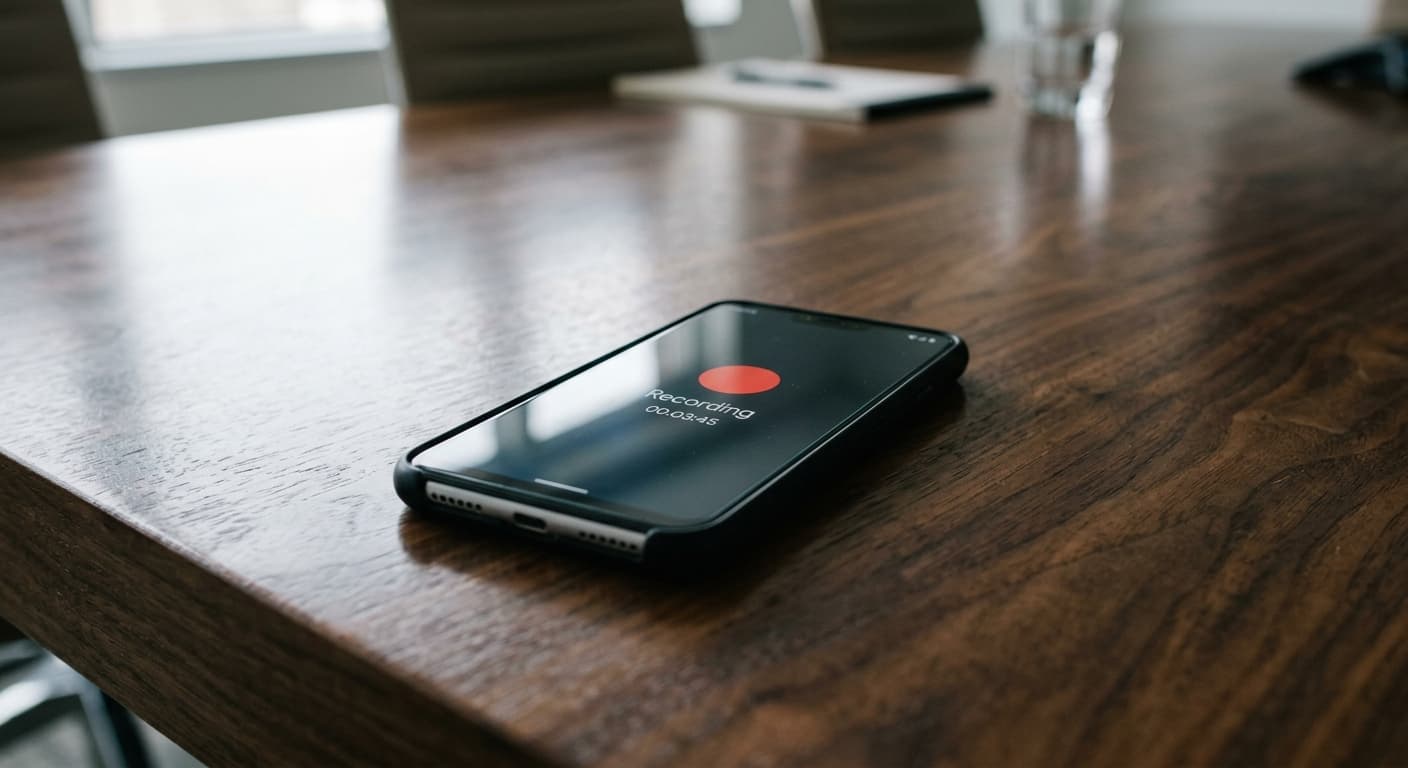
South Australia requires consent, or a narrow justification, before any private conversation is recorded, including your own. Section 4 of the Surveillance Devices Act 2016 (SA) has no personal-use exception, though a separate public-interest exception at s.6 can excuse a recording that consent and lawful interest do not cover.
Does South Australia Require Consent to Record a Conversation?
South Australia requires the consent of every party to a private conversation before any participant, including someone taking part in the conversation, may record it. Section 4(1) of the Surveillance Devices Act 2016 (SA) prohibits recording both a conversation you are not part of and a conversation you are part of. A participant may only record without everyone's consent if the recording is reasonably necessary to protect that participant's own lawful interests under s.4(2)(a)(ii), or if the separate, broader public-interest exception in s.6 applies.
Unlike New South Wales, Tasmania and the Australian Capital Territory, South Australia has no exception for a recording made purely for the recorder's own reference and never intended for anyone outside the conversation. The same structure, consent, a lawful interest, or the public interest, governs video of a private activity under s.5.
This article explains what the Act requires, what the lawful-interests and public-interest exceptions actually cover, how South Australia compares to other Australian states, and how three developments since 2021 change the compliance picture: the 2024 federal deepfake legislation, South Australia's own 2025 deepfake laws, and the new federal statutory tort for serious invasions of privacy.
Information last verified on 2026-07-21. This article has not yet been reviewed by a licensed lawyer.
Jurisdiction scope: This article addresses recording and surveillance laws in South Australia under the Surveillance Devices Act 2016 (SA), the Summary Offences Act 1953 (SA), the Telecommunications (Interception and Access) Act 1979 (Cth), the Criminal Code Act 1995 (Cth), and the Privacy Act 1988 (Cth). It does not address laws in other Australian states or territories in detail; for national comparisons, see the Australia recording laws hub.
Quick Answer: What Are the Rules for Recording in South Australia?
A participant may not record their own private conversation in South Australia unless every principal party consents, the recording is reasonably necessary to protect that participant's own lawful interests, or the recording is genuinely in the public interest. Section 4(1) of the Surveillance Devices Act 2016 (SA) prohibits installing, using or maintaining a listening device to record a private conversation, whether or not the recorder is a party to it, subject to the exceptions in s.4(2) and s.6.
This puts South Australia with Western Australia as the two Australian jurisdictions with the narrowest exception structure. Unlike Victoria, Queensland and the Northern Territory, where a participant is entirely outside the offence, and unlike New South Wales, Tasmania and the ACT, where a broad personal-use exception excuses most private recording, a South Australian participant needs consent, a lawful interest, or the public interest, and nothing less. The maximum penalty for an unlawful recording is $15,000 or 3 years imprisonment for an individual, and $75,000 for a corporation. The Australia recording consent checker applies this state-by-state framework to a specific situation and states whether recording is likely lawful under South Australia's narrower exception structure.
The Surveillance Devices Act 2016: Structure and Scope
The Surveillance Devices Act 2016 (SA) received royal assent on 18 February 2016 and commenced on 18 December 2017, replacing the Listening and Surveillance Devices Act 1972, which only covered audio recording. The 2016 Act governs four categories of device:
- Section 4: listening devices (audio recording of conversations).
- Section 5: optical surveillance devices (visual recording and observation of activities).
- Section 7: tracking devices (GPS and location monitoring).
- Section 8: data surveillance devices (monitoring computer input and output).
Section 6 sits above both s.4 and s.5: it is a public-interest exception that removes the recording offence entirely, for a participant or a non-participant, where the use of the device is genuinely in the public interest. Sections 9 through 12 separately govern the communication, publication and use of information obtained through a surveillance device. These publication restrictions operate independently of the recording offences: a person who lawfully records a conversation under an exception can still commit a separate offence by sharing the recording with the wrong person.
Key Definitions
The Act defines a private conversation as a conversation carried on in circumstances where at least one party would reasonably expect it to be heard only by those present. A whispered exchange in a busy cafe can qualify if the participants would reasonably expect no one else to hear them.
A private activity covers any activity where at least one participant does not want anyone else to see or hear it.
A listening device means any instrument, apparatus, equipment, or device capable of being used to listen to or record a conversation. Hearing aids worn by hearing-impaired persons are excluded.
Consent Framework: Section 4 and Its Exceptions
Section 4(1) of the Surveillance Devices Act 2016 (SA) prohibits two distinct categories of conduct:
Subject to this section and section 6, a person must not knowingly install, use or cause to be used, or maintain, a listening device (a) to overhear, record, monitor or listen to a private conversation to which the person is not a party; or (b) to record a private conversation to which the person is a party.
Surveillance Devices Act 2016 (SA), s.4(1)
Both limbs are offences. A third party eavesdropping electronically and a participant secretly recording their own conversation face the same maximum penalty: $15,000 or 3 years imprisonment for an individual, $75,000 for a corporation.
Consent under s.4(2)(a)(i) can be express or implied. Express consent means the person clearly agrees to being recorded. Implied consent arises from circumstances where the person was genuinely aware that recording was taking place and chose to continue. A business that plays an automated message stating "this call is being recorded for quality purposes" before the call begins generally obtains implied consent if the caller continues. Simply being visible in front of a security camera does not, by itself, amount to implied consent to audio recording.
Section 4 also prohibits using a listening device to overhear or monitor a conversation you are not part of, even without recording it. Electronic eavesdropping is an offence in its own right, and it is not excused merely because nothing was saved.
The Lawful-Interests Exception: Section 4(2)(a)(ii)
The most frequently misunderstood part of South Australian recording law is the lawful-interests exception. Under section 4(2)(a)(ii), a party to a private conversation may record it without the consent of the other parties if the use of the device is reasonably necessary for the protection of that party's own lawful interests.
The test has a single qualifying criterion: a genuine, objectively identifiable interest that the recording serves. Wanting a reliable record of what was said is not, by itself, that interest.
Situations South Australian courts have accepted as qualifying lawful interests:
- Recording a former partner who was contacting the protected person in breach of an intervention order, where the person had a genuine fear for their safety: Groom v Police [2015] SASC 101, (2015) 252 A Crim R 332. Nicholson J held that courts should more readily accept a lawful interest where the person had a genuine concern for their safety.
- Recording conversations to gather direct evidence of criminal activity specifically directed at the recording party.
Situations courts have rejected:
- Recording to gain an advantage in civil litigation: Thomas & Anor v Nash [2010] SASC 153. Gaining a forensic edge is not a lawful interest.
- Recording as a general precaution, to have an accurate record of a conversation, without a specific threat or identifiable interest at stake.
- Mixed-purpose recordings: in Nanosecond Corporation Pty Ltd & Anor v Glen Carron [2018] SASC 116, the court found that some recordings met the lawful-interests test and others did not, illustrating that the analysis is applied conversation by conversation, not to a whole course of dealing at once.
How SA's Exception Compares to Victoria, Queensland and Western Australia
| State | Statute | Participant exception |
|---|---|---|
| South Australia | Surveillance Devices Act 2016 (SA) s.4(2)(a) | Consent of every party, or a lawful interest under s.4(2)(a)(ii), or the separate public-interest exception at s.6. No personal-use limb. |
| Western Australia | Surveillance Devices Act 1998 (WA) s.5(3) | Consent of every party, or a lawful interest under s.5(3)(d). No personal-use limb and no public-interest exception. |
| Victoria | Surveillance Devices Act 1999 (Vic) s.6(1) | A participant may record their own conversation freely; the restriction sits on communication and publication instead. |
| Queensland | Invasion of Privacy Act 1971 (Qld) s.43(2) | A participant may record their own conversation freely. |
A person in Melbourne can legally record their own phone call without telling the other party. The identical recording made in Adelaide by a South Australian party is a criminal offence unless the lawful-interests test, or the public-interest exception, is satisfied. South Australia's structure is closest to Western Australia's, with one meaningful difference: South Australia's s.6 public-interest exception gives it a second route to lawful recording that Western Australia's Act does not have.
The Public-Interest Exception: Section 6
Section 6 of the Surveillance Devices Act 2016 (SA) provides a route around the consent requirement that has no Western Australian equivalent. It states:
Section 4 does not apply to the use of a listening device to overhear, record, monitor or listen to a private conversation if the use of the device is in the public interest.
Surveillance Devices Act 2016 (SA), s.6(1)(a)
Section 6(2) applies the identical exception to optical surveillance devices under s.5. Unlike the lawful-interests exception, s.6 is not limited to a participant protecting their own interest, and it is not limited to a person who was a party to the conversation at all. A non-party, as well as a participant, may rely on s.6 if the use of the device is genuinely in the public interest.
The Act does not define "public interest" beyond this. South Australian courts assess the term on the specific facts, and the exception is not a general licence to record anything a person subjectively believes the public would want to know. Matters generally treated as engaging a public interest in Australian privacy law include exposing serious wrongdoing or corruption, and addressing a genuine threat to public safety. A recording made out of personal curiosity, or to gain a private advantage, is unlikely to qualify.
Watch out: Section 6 excuses the recording. It does not automatically excuse publishing it. Communicating or publishing material obtained under the public-interest exception is separately regulated by s.10, which generally requires a judge's order authorising the publication, unless the disclosure is made to, or by, a media organisation.
Sections 9, 10 and 12: Publication Is Regulated Separately From Recording
A recording that is lawfully made can still become unlawful the moment it is shared. The Act separates the offence of recording from the offence of publishing, and treats a publication differently depending on which exception justified the original recording.
- Section 9 governs material obtained under the lawful-interests exception (or by a licensed investigation agent or loss adjuster). It may be used or published only to a party to the conversation, with the consent of every party, to an investigating agency, in the course of specified proceedings, where a person is being subjected to or threatened with violence, to a media organisation, under a judge's order, or otherwise in the course of duty or as required by law. Maximum penalty: $10,000 for an individual, $50,000 for a body corporate. There is no imprisonment component for a s.9 breach.
- Section 10 governs material obtained under the public-interest exception in s.6. It may not be used or published except under a judge's order, unless the disclosure is made to a media organisation, or made by a media organisation where the material is genuinely in the public interest. Maximum penalty: $10,000 for an individual, $50,000 for a body corporate, also with no imprisonment component.
- Section 12 is the broadest and most serious of the three: it is an offence to use, communicate or publish material derived from a recording made in contravention of the Act at all, regardless of which exception, if any, was claimed for the original recording. This carries a higher penalty of $15,000 or 3 years imprisonment for an individual, $75,000 for a body corporate, matching the penalty for the underlying unlawful recording itself.
The practical consequence: a recording that was perfectly lawful to make is not automatically lawful to share. If you record a conversation under the lawful-interests exception and then forward the audio file to a friend, a journalist, or a social media platform without meeting one of the s.9 grounds, you commit a fresh offence, even though the original recording broke no law.
Recording Phone Calls in South Australia
Phone calls involve both state and federal law. Section 7 of the federal Telecommunications (Interception and Access) Act 1979 (Cth) prohibits the interception of communications passing over a telecommunications system. Recording your own telephone conversation is generally not "interception" under the TIA Act, because the communication has already reached you. State law therefore governs recording of a phone call you are a party to.
Under South Australia's Surveillance Devices Act 2016 s.4(1), the rule is the same as for any other private conversation: every party must consent, expressly or impliedly, or the lawful-interests or public-interest exception must apply.

For businesses recording customer calls: play an automated notification at the very start of the call, before the customer speaks about their matter. If the customer continues after hearing the notification, that generally constitutes implied consent. If the customer objects, the recording must stop. Document your notification policy and train staff on compliance.
For personal calls: tell the other person you intend to record and get their agreement before you begin recording. Silence, or continuing the call after notification, is usually treated as implied consent, but verbal confirmation is the safer practice.
The lawful-interests exception under section 4(2)(a)(ii) can apply to phone calls on the same terms as in-person conversations. If you are receiving threatening calls in breach of a court order, recording those calls may be reasonably necessary to protect your lawful interests.
Recording In-Person Conversations
The same consent-or-exception rules apply to face-to-face conversations that qualify as "private" under the Act. The key question is always whether at least one participant would reasonably expect the conversation to be heard only by those present.
In practice:
- Recording a private meeting without informing all attendees is an offence.
- Recording a conversation with a landlord, neighbour, or colleague without their knowledge is an offence, unless the lawful-interests or public-interest exception applies.
- Wearing a hidden microphone or body camera to capture a private exchange is an offence on the same terms.
A covert recording made because you have a genuine, objective safety concern may fall within the lawful-interests exception. A precautionary recording made because you "want evidence just in case" does not.
Optical Surveillance: CCTV, Cameras and Video
Section 5 of the Act regulates optical surveillance devices. It is an offence to knowingly install, use, or maintain an optical surveillance device to record visually or observe a private activity without the express or implied consent of each party. The s.6(2) public-interest exception applies to s.5 on the same terms it applies to s.4; there is no separate lawful-interests limb written into s.5 itself.
Penalty: up to $15,000 or 3 years imprisonment for individuals, up to $75,000 for corporations.
Important distinctions:
- Bathrooms, change rooms, and bedrooms: people always have a reasonable expectation of privacy. Installing cameras in these locations is unlawful regardless of any posted notice.
- Offices and meeting rooms: may constitute private spaces depending on the circumstances. A closed-door one-on-one meeting could be a private activity.
- Retail stores, lobbies, and public-facing areas: generally not private, provided signage notifies people that CCTV is in operation.
For dashcams: video recording of public roads is lawful because it captures public spaces, not private activities. If the dashcam also records audio inside the vehicle, inform passengers that audio recording is active before the trip begins.
Tracking Devices and GPS
Section 7 makes it an offence to install, use, or maintain a tracking device to determine the geographical location of a person, vehicle, or thing without the consent of the person being tracked.
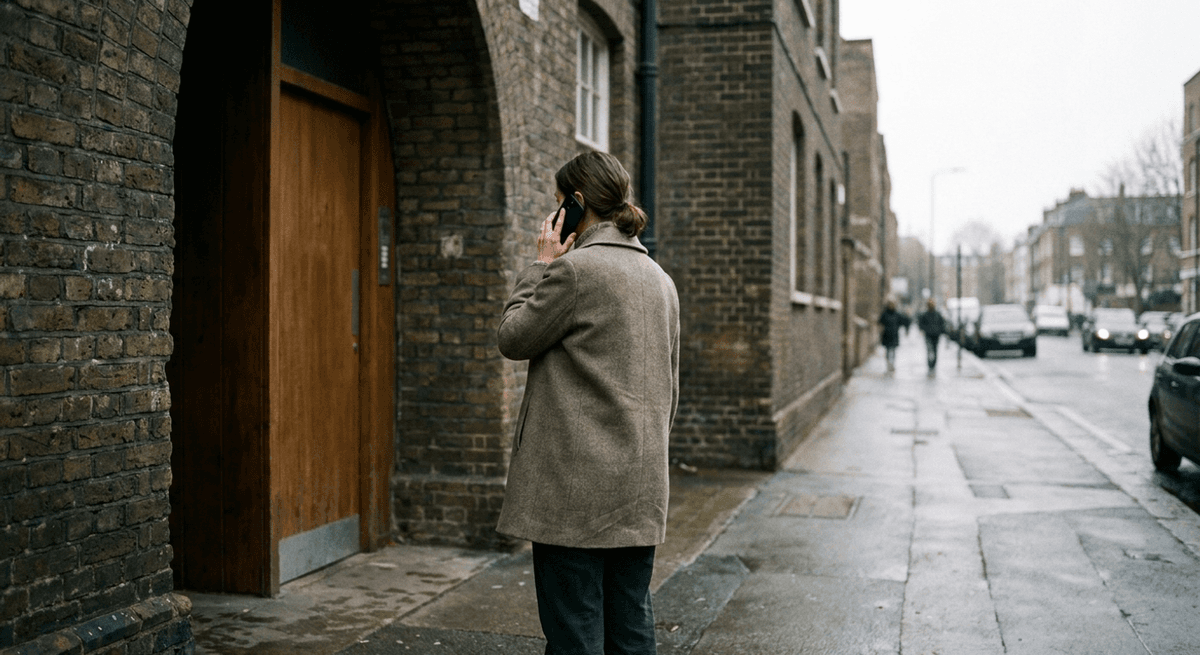
This covers GPS trackers placed on vehicles, phone location tracking apps used without the account holder's knowledge, and any technology that monitors movements. Placing a GPS tracker on another person's car without their knowledge is a criminal offence.
Exceptions apply for law enforcement with appropriate authorisation, parents tracking minor children, and employers tracking company vehicles where employees have been notified.
Data Surveillance Devices
Section 8 covers data surveillance devices: it is an offence to install, use, or maintain any device or program that accesses, tracks, monitors, or records the input or output of information from a computer without the consent of the owner or user.
Keystroke loggers, screen capture software, email monitoring tools, and internet browsing trackers all fall within section 8. Employers may monitor employee computer activity only with employee consent, typically obtained through signed IT acceptable use policies during onboarding. Best practice includes specifying in employment contracts exactly what monitoring occurs and why.
Workplace Recording Rules
South Australia has no standalone workplace surveillance legislation equivalent to the New South Wales Workplace Surveillance Act 2005. The Surveillance Devices Act 2016 applies to workplace surveillance directly.
Key obligations for employers:
- Policy disclosure: develop and communicate policies covering what surveillance is conducted, where, how, and why. Employees must be informed before monitoring begins.
- CCTV in common areas: lawful if employees and visitors are notified through signage and written policy.
- Private areas: monitoring of toilets, bathrooms, and changing rooms is prohibited regardless of policy or consent.
- Audio recording: workplace conversations require consent from all parties, or the lawful-interests or public-interest exception. Secret recording of employees outside those exceptions is unlawful.
- Computer monitoring: requires employee consent via signed IT policies.
- Federal Privacy Act 1988 (Cth) overlay: employers with annual turnover exceeding $3 million, and all health service providers regardless of turnover, must also comply with the Australian Privacy Principles when handling employee personal information collected through workplace monitoring. There is no equivalent SA state privacy statute.
The Fair Work Commission has consistently held that secretly recording workplace conversations can justify dismissal even in states with a broader participant exception than South Australia's. In South Australia, where consent or a specific statutory exception is required, a secret workplace recording carries both criminal liability under the Surveillance Devices Act and potential employment law consequences. Evidence obtained through unlawful workplace surveillance may be inadmissible in disciplinary proceedings and unfair dismissal claims.
Recording in Public Places
The Surveillance Devices Act 2016 defines "public place" broadly: any place the public has access to, whether freely or by payment, with the owner's consent, and any road, street, or thoroughfare.
Because a private activity cannot occur in a genuinely public place as defined by the Act, there are no general restrictions on taking photos or video in public places in South Australia. You can film streets, buildings, parks, and public events without consent from bystanders.
Caveats:
- Audio recording in public still requires consent, a lawful interest, or the public interest, if the conversation is private. Two people speaking quietly on a park bench may have a reasonable expectation that no one else is listening, even in public.
- Venues with conditional access: concert halls, sports stadiums, and private businesses may prohibit photography and recording as a condition of entry. Breaching those conditions is not a criminal offence under the Surveillance Devices Act, but it may constitute trespass.
- Voyeuristic filming: indecent filming in public remains an offence under the Summary Offences Act 1953 (SA) s.26D regardless of location (see the voyeurism and humiliating filming section below).
- Health care premises: section 48F of the Health Care Act 2008 (SA) prohibits publishing recordings that identify people at or near protected abortion service premises.
Recording Police Officers in South Australia
Recording police officers performing their duties in a public place is generally lawful in South Australia. When a police officer conducts their duties in public, there is no private conversation and no private activity within the meaning of the Surveillance Devices Act 2016. The private conversation requirement is simply not triggered by conduct that occurs openly in a public place.
The key limits are:
- If an exchange occurs in a location or manner where a reasonable person in the officer's position would expect it to be private, for example a conversation in a private home or a closed room, the private conversation rules apply.
- Audio recording of a police interview conducted in a private space may require consent, or a lawful-interest or public-interest justification, under section 4.
- Police have their own authorisation to record in the course of their duties: section 4(2)(e) of the Act excepts use of a listening device by an officer to record words spoken by or to, or within the hearing of, the officer during activities carried out in the course of the officer's duties.
From a practical standpoint: filming a police officer making an arrest on a public street is not an offence under the Surveillance Devices Act 2016, because the officer's public-facing activities are not a private activity. Obstruction of police, or interference with their duties, is a separate offence, and a recording should not interfere with police operations.
Voyeurism and Humiliating Filming (Summary Offences Act 1953)
Separate from the Surveillance Devices Act 2016, the Summary Offences Act 1953 (SA) contains specific offences targeting voyeurism, humiliating filming, and image-based abuse. These offences apply regardless of whether the filming occurs in a public or private place.
Section 26B: Humiliating or Degrading Filming
It is an offence to film a person being subjected to, or compelled to engage in, an act that a reasonable adult member of the community would consider humiliating or degrading, without the consent of the person being filmed. Maximum penalty: 2 years imprisonment.
Section 26C: Distribution of Invasive Images (Image-Based Abuse)
It is an offence to distribute an "invasive image" of another person, knowing or having reason to believe that the person does not consent to that particular distribution.
An invasive image is defined as a moving or still image showing a person in a non-public place engaged in a private act, or in a state of undress exposing their genitals, anal region, or, for females, breasts.
The definition includes digitally altered images. Legitimate purposes (medical, legal, scientific, law enforcement) are defences.
| Circumstance | Maximum penalty |
|---|---|
| Adult depicted | $10,000 or 2 years imprisonment |
| Minor (under 17) depicted | $20,000 or 4 years imprisonment |
Section 26D: Indecent Filming (Voyeurism / Upskirting)
It is an offence to film another person in a state of undress in circumstances where a reasonable person would expect privacy, engaged in a private act in circumstances where a reasonable person would expect privacy, or whose "private region" (genitals, anal region, or an uncovered female breast, or a breast covered only by underwear) is filmed in circumstances where a reasonable person would not expect to be filmed.
The term "upskirting" falls squarely within this provision. The offence applies regardless of whether the filming occurs in public.
| Circumstance | Maximum penalty |
|---|---|
| Adult filmed | $10,000 or 2 years imprisonment |
| Minor (under 17) filmed | $20,000 or 4 years imprisonment |
Section 26DA: Threatening to Distribute
It is an offence to threaten to distribute an invasive image or an indecently filmed image, with intent to cause, or reckless indifference to causing, fear that the threat will be carried out. Maximum penalty: $5,000 or 1 year (adult depicted); $10,000 or 2 years (minor depicted).
Licensed investigator defence: it is a defence under sections 26C, 26D, and 26DA that the filming or distribution was carried out by a licensed investigation agent to obtain evidence in connection with a claim for compensation, damages, or another benefit.
Deepfakes and AI-Generated Content
Two distinct legislative frameworks now apply in South Australia to AI-generated and digitally altered depictions.
South Australia State Law: Summary Offences Act 1953 (SA) ss.26G-26I (effective 3 November 2025)
South Australia enacted state-specific deepfake offences that the Attorney-General's Department described as "nation-leading." These provisions target simulated persons, meaning AI-generated or digitally manipulated depictions that resemble real people, regardless of whether the person depicted actually exists.
Section 26G: Creating Deepfakes
A person who creates a humiliating or degrading depiction of a simulated person commits an offence. Maximum penalty: $10,000 or 2 years imprisonment.
A person who creates an invasive depiction of a simulated person commits an offence. Maximum penalty: $10,000 or 2 years (adult); $20,000 or 4 years (minor, where the simulated person purports to be under 17).
Section 26H: Distributing Deepfakes
A person who distributes a humiliating or degrading depiction of a simulated person commits an offence. Maximum penalty: 1 year imprisonment.
A person who distributes an invasive depiction of a simulated person commits an offence. Maximum penalty: $10,000 or 2 years (adult); $20,000 or 4 years (minor).
Section 26I: Threatening to Distribute
Threatening to distribute a deepfake depiction carries a maximum penalty of $5,000 or 1 year (adult); $10,000 or 2 years (minor).
Written consent is a defence to sections 26G and 26H. A person under 17 or with a cognitive impairment cannot provide effective consent. Courts may order the surrender of records and equipment used to create the material.
The SA provisions are more expansive than the federal Act in one critical way: they criminalise creation of deepfakes, not only transmission.
Federal Law: Criminal Code Act 1995 (Cth) s.474.17A (effective 3 September 2024)
The Criminal Code Amendment (Deepfake Sexual Material) Act 2024 (Cth) inserted section 474.17A into the Criminal Code Act 1995 (Cth). It is an offence to use a carriage service to transmit sexual material relating to an adult without their consent, when the person knows or is reckless as to whether the depicted person consents.
Key features:
- Applies to images, videos, and audio that are unaltered, edited, or entirely created using technology, including generative AI.
- The form of the material is irrelevant: a real photograph distributed without consent and a wholly AI-generated image are both covered.
- Maximum penalty: 6 years imprisonment.
- Aggravated offence (repeat offenders with prior civil penalties under the Online Safety Act 2021, or creators of the material): 7 years imprisonment.
- Does not criminalise creation alone. A carriage service (internet, mobile network, and so on) must be used for transmission.
South Australian residents may be prosecuted under both the SA state provisions and the federal provision where both apply.
Privacy Law in South Australia: No State Privacy Act
Unlike most comparable jurisdictions, South Australia has no general state privacy legislation. The Law Handbook states plainly: "There is currently no legislation in South Australia creating a general right of privacy."
Instead, SA government agencies are bound by the Information Privacy Principles Instruction, a Cabinet Administrative Instruction in force since 1 July 1989 and reissued in May 2020. The instruction governs how agencies collect, store, use, and disclose personal information. It carries no legislative force: a member of the public cannot enforce it in a court of law. The instruction is policy, not statute.
Federal Privacy Act 1988 (Cth) Application in SA
The federal Privacy Act 1988 (Cth) and the Australian Privacy Principles fill part of the gap for private-sector entities in SA. The APPs apply to organisations with annual turnover exceeding $3 million, all health service providers regardless of turnover, and certain other entities prescribed by regulation.
The APPs govern how covered entities collect, use, and disclose personal information, including information derived from workplace monitoring, recordings, and other surveillance activities.
New Statutory Tort: Serious Invasions of Privacy (effective 10 June 2025)
The Privacy and Other Legislation Amendment Act 2024 (Cth) introduced a new statutory cause of action in tort for serious invasions of privacy, which commenced on 10 June 2025. This is a federal development that applies in South Australia as in every other state and territory.
A plaintiff may bring an action for either:
- Intrusion upon seclusion: physically intruding into private space, or watching, listening to, or recording a person's private activities.
- Misuse of private information: collecting, using, or disclosing information without consent.
To succeed, a plaintiff must establish that the invasion was intentional or reckless, that a reasonable person in their position would have had a reasonable expectation of privacy, that the invasion was serious, and that their privacy interest outweighed any countervailing public interest. No proof of actual damage is required.
Remedies include damages for emotional distress, exemplary or punitive damages in exceptional cases (capped at the greater of $478,550 or the maximum amount available in defamation proceedings), injunctions, correction orders, apologies, declarations, and an account of profits.
The Office of the Australian Information Commissioner does not administer the tort. Individuals must pursue claims through the courts independently, and the tort applies to any individual or entity, not only organisations regulated by the Privacy Act.
The practical consequence for recording in SA: an unlawful surveillance recording that causes serious harm could now give rise to a civil claim under this tort, in addition to any criminal liability under the Surveillance Devices Act 2016.
Penalties Summary
Surveillance Devices Act 2016 (SA)
| Offence | Individual | Corporation |
|---|---|---|
| Unlawful use of a listening, optical, tracking, or data device (ss.4, 5, 7, 8) | $15,000 or 3 years | $75,000 |
| Unlawful publication of material obtained under the lawful-interests exception (s.9) | $10,000 | $50,000 |
| Unlawful publication of material obtained under the public-interest exception (s.10) | $10,000 | $50,000 |
| Publication of material obtained in contravention of the Act (s.12) | $15,000 or 3 years | $75,000 |
Summary Offences Act 1953 (SA)
| Offence | Adult victim | Minor victim |
|---|---|---|
| Humiliating/degrading filming (s.26B) | 2 years | 2 years |
| Distribution of invasive image (s.26C) | $10,000 or 2 years | $20,000 or 4 years |
| Indecent filming / voyeurism (s.26D) | $10,000 or 2 years | $20,000 or 4 years |
| Threatening to distribute (s.26DA) | $5,000 or 1 year | $10,000 or 2 years |
| Creating deepfake, humiliating/degrading (s.26G) | $10,000 or 2 years | $20,000 or 4 years |
| Creating deepfake, invasive (s.26G) | $10,000 or 2 years | $20,000 or 4 years |
| Distributing deepfake, humiliating/degrading (s.26H) | 1 year | 1 year |
| Distributing deepfake, invasive (s.26H) | $10,000 or 2 years | $20,000 or 4 years |
Criminal Code Act 1995 (Cth)
| Offence | Maximum penalty |
|---|---|
| Non-consensual transmission of sexual material via carriage service (s.474.17A) | 6 years |
| Aggravated (repeat offenders or creators) (s.474.17A) | 7 years |
How South Australia Compares to Other Australian States
Australia has no single national rule for recording your own conversation. There are three genuinely distinct groups, based on whether the recording offence catches a participant at all, and if so, how broad the exception is.
| Group | States/territories | Can a participant secretly record their own private conversation? |
|---|---|---|
| Outside the offence entirely | Victoria, Queensland, Northern Territory | Yes. The offence is defined so it only catches recording a conversation you are not a party to. |
| Prohibited, but broad personal-use exception | New South Wales, Tasmania, Australian Capital Territory | Usually yes in practice. Recording is prohibited, but excused if all parties consent, or a lawful interest applies, or the recording is not made for the purpose of sharing it with anyone outside the conversation. |
| Prohibited, narrow lawful-interest exception only | South Australia, Western Australia | Often no. There is no personal-use limb. Only consent, a genuine lawful interest, or, in SA only, the public interest excuses the recording. |
For cross-border communications, the South Australian participant in a call must comply with South Australian law regardless of the other party's location. A person in Queensland calling someone in Adelaide cannot assume that Queensland's more permissive rules extend to the South Australian end of the call. The federal Surveillance Devices Act 2004 (Cth) applies to federal law enforcement operations but does not regulate private recording.
Practical Guidance
If you want to record a conversation in South Australia:
- Tell every person involved that you intend to record.
- Get their express agreement before you start recording.
- If anyone objects, do not record, unless you have a genuine, objectively assessable lawful interest or public interest that justifies recording without their agreement.
- Keep the recording secure and only share it with parties who were in the original conversation, unless you have a specific legal authorisation to share it more widely.
If you are a business recording customer calls:
- Play an automated notification at the start of every call, before the customer's substantive query begins.
- Give the customer a clear option to proceed without recording if they object.
- Document your recording policy and train all relevant staff.
- Store recordings securely with defined retention periods that comply with the Australian Privacy Principles if your organisation is an APP entity.
If you believe someone has recorded you without consent:
- Contact South Australia Police (SAPOL).
- Seek legal advice from the Legal Services Commission of South Australia (free legal helpline: 1300 366 424).
- For image-based abuse or deepfake material, also contact the eSafety Commissioner (esafety.gov.au), which can require platforms to remove material under the Online Safety Act 2021 (Cth).
- Do not attempt to destroy or seize the recording device yourself.
Disclaimer: This article presents general legal information about recording and surveillance laws in South Australia. It does not constitute legal advice. The information covers the Surveillance Devices Act 2016 (SA), the Summary Offences Act 1953 (SA), and applicable Commonwealth legislation as in force as of 2026-07-21. Laws can change. If you have a specific legal situation, consult a legal practitioner admitted in South Australia or the relevant Australian state or territory.
About the Author
[PLACEHOLDER, author roster pending]
Last updated: 2026-07-21. Statutes cited reflect their in-force version as of 2026-07-21.
Frequently Asked Questions
Can I record a phone call in South Australia without telling the other person?
Generally no. South Australia requires the consent of every party under section 4 of the Surveillance Devices Act 2016 (SA), unless the recording is reasonably necessary to protect your own lawful interests under s.4(2)(a)(ii), or falls within the separate public-interest exception at s.6. Recording a phone call without the other party's consent, and without meeting one of those exceptions, is a criminal offence punishable by up to $15,000 in fines or 3 years imprisonment. Courts have rejected recordings made simply to obtain evidence for civil proceedings as falling within the lawful-interests exception.
What is the difference between the old 1972 Act and the current Surveillance Devices Act 2016?
The Listening and Surveillance Devices Act 1972 (SA) only regulated listening devices, meaning audio recording. The Surveillance Devices Act 2016 (SA), which commenced on 18 December 2017, expanded coverage to four categories: listening devices, optical surveillance devices (cameras and CCTV), tracking devices (GPS), and data surveillance devices (computer monitoring software). The 2016 Act also introduced separate publication offences at sections 9, 10 and 12, which make sharing a recording with the wrong person a criminal offence in its own right, distinct from the offence of making the recording.
Does South Australia have a personal-use exception like New South Wales?
No. New South Wales, Tasmania and the Australian Capital Territory excuse a participant's recording of their own conversation where it is not made for the purpose of communicating or publishing it to anyone outside the conversation, even without consent or a lawful interest. South Australia has no equivalent provision. A South Australian participant needs the consent of every party, a lawful interest under s.4(2)(a)(ii), or the public interest under s.6. A recording made purely for your own private reference, with none of those, remains an offence in South Australia even though the identical recording would usually be lawful in NSW, Tasmania or the ACT.
Can my employer record me at work in South Australia?
Your employer can use surveillance devices in the workplace, but only with proper consent and disclosure. Employers must develop written policies explaining what surveillance is conducted, where devices are located, and why monitoring occurs. Employees must be informed before monitoring begins. CCTV in common work areas is generally lawful with adequate signage. Monitoring of toilets, bathrooms, and changing rooms is always prohibited. Audio recording of workplace conversations requires consent from everyone involved, or a lawful-interests or public-interest justification. Computer monitoring requires employee consent, typically obtained through signed IT policies. Employers with turnover over $3 million must also comply with the Australian Privacy Principles under the Privacy Act 1988 (Cth).
Is it legal to use a dashcam in South Australia?
Yes. Dashcams that record video of public roads are lawful because they capture public spaces, not private activities within the meaning of the Surveillance Devices Act 2016 (SA). However, if your dashcam also records audio inside the vehicle, you should inform passengers that audio recording is active before the trip begins. Recording a passenger's private conversation without their consent, and without a lawful-interest or public-interest justification, could breach section 4 of the Act, even though the video recording itself is lawful.
Can a secretly recorded conversation be used as evidence in a South Australian court?
It depends. Evidence obtained through unlawful surveillance may be excluded from proceedings. South Australian courts weigh the probative value of the evidence against the public interest in discouraging illegal recording. In some cases, particularly family law and intervention order matters, courts have admitted unlawfully obtained recordings where the evidence was highly relevant and no other means of establishing the facts existed. The person who made the recording still faces potential criminal liability regardless of whether the recording is later admitted, and a court retains discretion to exclude the evidence entirely.
Can I film police officers in South Australia?
Generally yes, when police are performing their duties in a public place. Filming police conducting an arrest or directing traffic on a public street is not an offence under the Surveillance Devices Act 2016 (SA), because those activities are not private conversations or private activities. The private conversation requirement is not triggered by conduct occurring openly in public. If you are filming within a private space, or your filming interferes with police operations, different considerations apply. Obstruction of police is a separate offence under South Australian law.
What is the law on upskirting and voyeuristic filming in South Australia?
Indecent filming, including upskirting, is an offence under section 26D of the Summary Offences Act 1953 (SA). It is unlawful to film another person's private region (genitals, anal region, or an uncovered female breast) in circumstances where a reasonable person would not expect to be filmed. This applies regardless of whether the filming occurs in public or in private. Maximum penalty: $10,000 or 2 years imprisonment for an adult victim, $20,000 or 4 years imprisonment for a minor. Distributing images obtained by indecent filming carries the same maximum penalty.
Are deepfakes illegal in South Australia?
Yes, under two separate regimes. South Australia enacted its own state deepfake laws in the Summary Offences Act 1953 (SA) ss.26G-26I, effective 3 November 2025. These offences cover both creating and distributing humiliating, degrading, or invasive depictions of simulated persons, meaning AI-generated content. Maximum penalties range from 1 year to 4 years imprisonment depending on the offence and whether the depicted person is a minor. The federal Criminal Code Act 1995 (Cth) s.474.17A also applies: using a carriage service to transmit non-consensual sexual material, including deepfakes, carries up to 6 years imprisonment, or 7 years for an aggravated offence.
Does South Australia have a Privacy Act?
No. South Australia has no general state privacy legislation. Government agencies are bound by the Information Privacy Principles Instruction, a Cabinet Administrative Instruction in force since 1989, but this is policy, not law, and cannot be enforced in court. For private-sector entities, the federal Privacy Act 1988 (Cth) and Australian Privacy Principles apply if the organisation has annual turnover over $3 million or provides health services. A new federal statutory tort for serious invasions of privacy also commenced on 10 June 2025, allowing individuals to sue for an intentional or reckless invasion of privacy, including unauthorised recording of private activities.
If I lawfully record a conversation, can I share it with others?
Not freely, and the answer depends on which exception justified the original recording. If the recording relied on the lawful-interests exception, section 9 restricts sharing it to a party to the conversation, someone all parties consent to, an investigating agency, specified legal proceedings, or a media organisation, among other narrow grounds, with a maximum penalty of $10,000. If the recording relied on the public-interest exception in s.6, section 10 generally requires a judge's order before it can be published, unless the disclosure is made to or by a media organisation. Sharing outside these grounds is a separate offence from the original recording.
Updates
Full framing correction. Retitled from 'South Australia Recording Laws: All-Party Consent Rules (2026)' to reflect the verified rule: consent is the default, with a narrow lawful-interests exception and a separate public-interest exception, and no personal-use limb. Added a dedicated Public-Interest Exception (s.6) section, previously omitted from the article's substantive analysis of the recording offence, and corrected the publication-offence structure to distinguish s.9 (lawful-interests material, fine only, no imprisonment), s.10 (public-interest material, fine only, generally requires a judge's order), and s.12 (unlawfully obtained material, the only one of the three carrying imprisonment). Corrected a systemic citation error: the lawful-interests exception is s.4(2)(a)(ii), not s.4(2)(b) as the article previously stated throughout (s.4(2)(b) is in fact the law-enforcement/TIA Act/investigation-agent/loss-adjuster authorisation bucket). Corrected the police-duty exception citation from the previously stated s.4(2)(c) (which is in fact the owner/occupier premises exception) to the verified s.4(2)(e). Removed an unverifiable case citation (Alliance Craton Explorer Pty Ltd v Mutton) that the prior draft flagged as 'full citation on file.' Removed the 'Authorities Cited' in-body list, now carried solely in the citations field. Replaced the old comparison table with the corrected three-group taxonomy. Re-verified ss.4, 5, 6, 9, 10 and 12 of the Surveillance Devices Act 2016 (SA) directly against AustLII on 2026-07-21; all quoted text confirmed verbatim.
The Law Behind This Article
This article rests on the statutory provisions below, held in our own legal record and retrieved from the official source. Tap a section to read the operative text.
Surveillance Devices Act 2016 (SA)
s 10Communication or publication of information or material—public interestIn forcecited in 2 of our articles
(1) A person must not knowingly use, communicate or publish information or material derived from the use of a listening device or an optical surveillance device in circumstances where the device was used in the public interest except in accordance with an order of a judge under this Division. Maximum penalty: (a) in the case of a body corporate—$50 000; (b) in the case of a natural person—$10 000. (2) Subsection (1) does not apply to the use, communication or publication of information or material derived from the use of a listening device or an optical surveillance device in circumstances where the device was used in the public interest if— (a) the use, communication or publication of the information or material is made to a media organisation; or (b) the use, communication or publication of the information or material is made by a media organisation and the information or material is in the public interest.
Official text (excerpt) · last checked 2026-09-28 · Read the full text in our law library · Verify at legislation.sa.gov.au
Cited in 1 court opinions in our collectionLatest citing opinion in our collection: 2022
Opinions citing this section in our collection:
- Farm Transparency International Ltd v New South Wales (High Court of Australia 2022, [2022] HCA 23)
Identified automatically from the court opinions citing this section — not a ranking of which case controls.
Also relied on in: Recording Phone Calls in South Australia: What the Law Requires
s 12Prohibition on communication or publication derived from use of surveillance deviceIn force
(1) A person must not knowingly use, communicate or publish information or material derived from the use (whether by that person or another person) of a surveillance device in contravention of this Part. Maximum penalty: (a) in the case of a body corporate—$75 000; (b) in the case of a natural person—$15 000 or imprisonment for 3 years. (1a) A person must not knowingly communicate or publish information or material derived from the use (whether by that person or another person) of a listening device in contravention of section 4 of the Listening and Surveillance Devices Act 1972 (as in force immediately prior to the commencement of this Act). Maximum penalty: $10 000 or imprisonment for 2 years.
Official text (excerpt) · last checked 2026-09-28 · Read the full text in our law library · Verify at legislation.sa.gov.au
Cited in 1 court opinions in our collectionLatest citing opinion in our collection: 2022
Opinions citing this section in our collection:
- Farm Transparency International Ltd v New South Wales (High Court of Australia 2022, [2022] HCA 23)
Identified automatically from the court opinions citing this section — not a ranking of which case controls.
s 4Listening devicesIn forcecited in 11 of our articles
(1) Subject to this section and section 6, a person must not knowingly install, use or cause to be used, or maintain, a listening device— (a) to overhear, record, monitor or listen to a private conversation to which the person is not a party; or (b) to record a private conversation to which the person is a party. Maximum penalty: (a) in the case of a body corporate—$75 000; (b) in the case of a natural person—$15 000 or imprisonment for 3 years. (2) Subsection (1) does not apply— (a) to the use of a listening device by a party to a private conversation to record the conversation if— (i) all principal parties to the conversation consent, expressly or impliedly, to the device being so used; or (ii) the use of the device is reasonably necessary for the protection of the lawful interests of that person; or (b) to the installation, use or maintenance of a listening device if— (i) the installation, use or maintenance is authorised under this Act or any other Act or a corresponding law; or (ii) the installation, use or maintenance is authorised under the Telecommunications (Interception and Access) Act 1979, or another law, of the Commonwealth, or (iii) the device is installed
Official text (excerpt) · last checked 2026-09-28 · Read the full text in our law library · Verify at legislation.sa.gov.au
Cited in 2 court opinions in our collectionLatest citing opinion in our collection: 2022
Opinions citing this section in our collection:
- Farm Transparency International Ltd v New South Wales (High Court of Australia 2022, [2022] HCA 23)
- RRG Nominees Pty Ltd v Visible Temporary Fencing Australia Pty Ltd (No 3) (Federal Court of Australia 2018, [2018] FCA 404)
Identified automatically from the court opinions citing this section — not a ranking of which case controls.
Also relied on in: CCTV and Home Security Camera Laws in Australia (2026), Dash Cam Laws in Australia: What's Legal to Record, Is It Illegal to Record Someone Without Consent in Australia?
s 5Optical surveillance devicesIn forcecited in 4 of our articles
(1) Subject to this section and section 6, a person must not knowingly install, use or maintain an optical surveillance device on or in premises, a vehicle or any other thing, (whether or not the person has lawful possession or lawful control of the premises, vehicle or thing) to record visually or observe the carrying on of a private activity without the express or implied consent of each party to the activity. Maximum penalty: (a) in the case of a body corporate—$75 000; (b) in the case of a natural person—$15 000 or imprisonment for 3 years. (2) Subject to this section and section 6, a person must not knowingly install, use or maintain an optical surveillance device on or in premises, a vehicle or any other thing, to record visually or observe the carrying on of a private activity without the express or implied consent of each party to the activity and, if the installation, use or maintenance of the device involves entry onto or into the premises or vehicle, without the express or implied consent of the owner or occupier of the premises or vehicle.
Official text (excerpt) · last checked 2026-09-28 · Read the full text in our law library · Verify at legislation.sa.gov.au
Cited in 1 court opinions in our collectionLatest citing opinion in our collection: 2022
Opinions citing this section in our collection:
- Farm Transparency International Ltd v New South Wales (High Court of Australia 2022, [2022] HCA 23)
Identified automatically from the court opinions citing this section — not a ranking of which case controls.
Also relied on in: Home Security Cameras and CCTV Law in South Australia, Recording Colleagues and Managers at Work in South Australia, Drone Privacy Laws in Australia: What CASA Doesn't Cover
s 6Listening devices and optical surveillance devices—public interest exceptionIn forcecited in 4 of our articles
(1) Section 4 does not apply— (a) to the use of a listening device to overhear, record, monitor or listen to a private conversation if the use of the device is in the public interest; or (b) to the installation, use or maintenance of a listening device under subsection (2)(b)(iv) or (v) of that section if the use of the device is in the public interest. (2) Section 5 does not apply— (a) to the use of an optical surveillance device to record visually or observe the carrying on of a private activity if the use of the device is in the public interest; or (b) to the installation, use or maintenance of an optical surveillance device under subsection (4)(a)(iv) or (v), or subsection (4)(b), of that section if the use of the device is in the public interest.
Official text (excerpt) · last checked 2026-09-28 · Read the full text in our law library · Verify at legislation.sa.gov.au
Cited in 1 court opinions in our collectionLatest citing opinion in our collection: 2022
Opinions citing this section in our collection:
- Farm Transparency International Ltd v New South Wales (High Court of Australia 2022, [2022] HCA 23)
Identified automatically from the court opinions citing this section — not a ranking of which case controls.
s 9Communication or publication of information or material—lawful interestIn forcecited in 3 of our articles
(1) A person must not knowingly use, communicate or publish information or material derived from the use of a listening device or an optical surveillance device in circumstances where the device was used to protect the lawful interests of that person except— (a) to a person who was a party to the conversation or activity to which the information or material relates; or (b) with the consent of each party to the conversation or activity to which the information or material relates; or (c) to an officer of an investigating agency for the purposes of a relevant investigation or relevant action or proceeding; or (d) in the course, or for the purposes, of a relevant action or proceedings; or (e) in relation to a situation where— (i) a person is being subjected to violence; or (ii) there is an imminent threat of violence to a person; or (f) to a media organisation; or (g) in accordance with an order of a judge under this Division; or (h) otherwise in the course of duty or as required or authorised by law. Maximum penalty: (a) in the case of a body corporate—$50 000; (b) in the case of a natural person—$10 000.
Official text (excerpt) · last checked 2026-09-28 · Read the full text in our law library · Verify at legislation.sa.gov.au
Search our full record of US law — 2.1 million sections, every state + federal →
Sources and References
- Surveillance Devices Act 2016 (SA), South Australian Legislation(legislation.sa.gov.au).gov
- Surveillance Devices Act 2016 (SA), s.4, listening devices, AustLII(www5.austlii.edu.au)
- Surveillance Devices Act 2016 (SA), s.5, optical surveillance devices, AustLII(www5.austlii.edu.au)
- Surveillance Devices Act 2016 (SA), s.6, public-interest exception, AustLII(www5.austlii.edu.au)
- Surveillance Devices Act 2016 (SA), s.9, publication, lawful interest, AustLII(www5.austlii.edu.au)
- Surveillance Devices Act 2016 (SA), s.10, publication, public interest, AustLII(www5.austlii.edu.au)
- Surveillance Devices Act 2016 (SA), s.12, publication of unlawfully obtained material, AustLII(www5.austlii.edu.au)
- Summary Offences Act 1953 (SA), South Australian Legislation(legislation.sa.gov.au).gov
- Criminal Code Amendment (Deepfake Sexual Material) Act 2024 (Cth), Parliament of Australia(aph.gov.au).gov
- OAIC, Statutory Tort for Serious Invasions of Privacy (commenced 10 June 2025)(oaic.gov.au).gov
- Privacy Act 1988 (Cth), OAIC Overview(oaic.gov.au).gov
- Telecommunications (Interception and Access) Act 1979 (Cth)(legislation.gov.au).gov
- SA Law Handbook, Recording Private Conversations or Activities(lawhandbook.sa.gov.au).gov
- SA Law Handbook, Lawful Interest and Public Interest Exceptions(lawhandbook.sa.gov.au).gov
- SA Law Handbook, Publication of Information Derived from Surveillance Devices(lawhandbook.sa.gov.au).gov
- SA Law Handbook, Surveillance in the Workplace(lawhandbook.sa.gov.au).gov
- SA Law Handbook, Privacy (South Australian Government / Cabinet Administrative Instruction)(lawhandbook.sa.gov.au).gov
- SA Law Handbook, Distribution of Invasive Images(lawhandbook.sa.gov.au).gov
- SA Law Handbook, Statutory Tort for Serious Invasions of Privacy(lawhandbook.sa.gov.au).gov
- OAIC, Workplace Monitoring and Surveillance(oaic.gov.au).gov
- SA Attorney-General's Department, Nation-leading deepfake laws (Summary Offences Act ss.26G-26I)(agd.sa.gov.au).gov
- Groom v Police [2015] SASC 101, (2015) 252 A Crim R 332(jade.io)