Two-Party Consent States for Recording
In two-party consent states (also called all-party consent states), every person in a conversation must agree before it can be legally recorded. Recording without universal consent is a criminal offense. Use the interactive map below to check your state.
What Is Two-Party Consent?
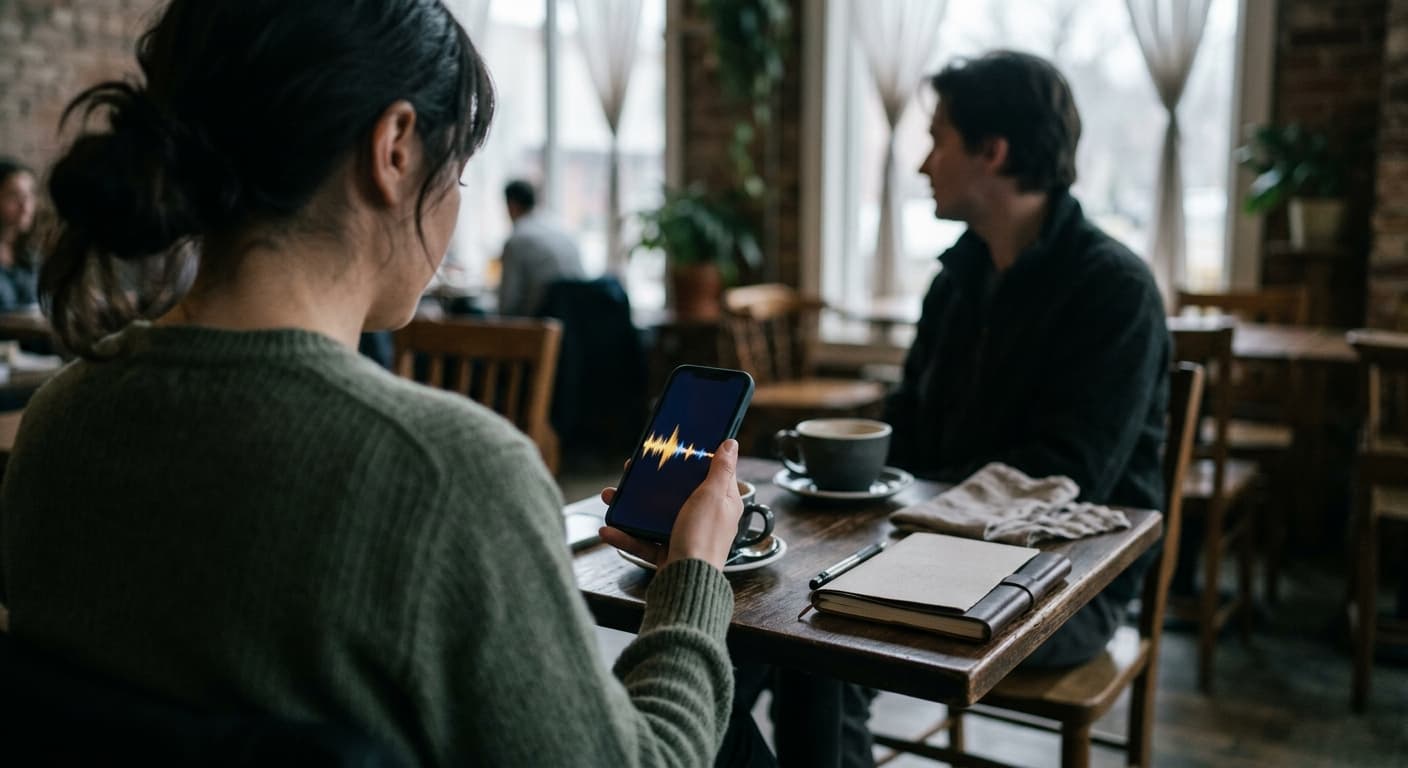
Two-party consent is a legal standard that requires every person participating in a conversation to know about and agree to a recording before it can legally begin. The term "two-party" is somewhat misleading because it does not just apply to conversations between two people. A more accurate name is "all-party consent," because every participant, whether there are two, five, or twenty, must consent.
Under two-party consent rules, if you want to record a phone call, a meeting, or any private conversation, you must tell everyone involved that a recording is taking place and get their agreement. If even one person objects, the recording is illegal. This stands in contrast to one-party consent states, where only the person doing the recording needs to consent.
Interactive US Recording Consent Map
Navy blue states require all-party consent. Teal states follow one-party consent. Click any state for details.
Recording a call or meeting with someone in another state? Our recording consent checker takes both states and the type of recording and shows which consent rule controls.
It is worth noting that the exact number of two-party consent states is debated because some states have mixed rules. We count a state as two-party if it requires every party's consent for at least one major type of conversation, which gives 13 states. Connecticut requires all-party consent for phone call recordings but follows one-party consent for in-person conversations under criminal law. Oregon requires every participant to be specifically informed before an in-person conversation or video-conference call is recorded, but only one-party consent for telephone calls. Nevada runs the other way: in-person conversations need only one party's consent (NRS 200.650), but the Nevada Supreme Court read NRS 200.620 to require every party's consent to record a phone call (Lane v. Allstate, 1998, reaffirmed in 2017). Delaware has two statutes that conflict. Michigan is a closer call in the opposite direction: its eavesdropping statute is written as all-party consent, but Michigan courts have read in a participant exception since Sullivan v. Gray (1982), a position a federal court re-affirmed in 2026, so a participant can lawfully record their own conversation. We therefore classify Michigan as a one-party consent state.
The legal foundation for two-party consent comes from state wiretapping and eavesdropping statutes. While federal law under 18 U.S.C. 2511 follows a one-party consent standard, states are free to impose stricter requirements. Thirteen states have chosen to do so, creating a patchwork of recording laws across the country.
Is My State a Two-Party Consent State? All 50 States and DC
The table answers the question for every state and the District of Columbia using the counting rule above. "No" means the state follows one-party consent: a participant in the conversation may record it. Each state name links to that state's full recording-law guide.
Alabama to Montana
States from Alabama through Montana, plus the District of Columbia.
| State | Two-party (all-party) consent state? |
|---|---|
| Alabama | No, one-party consent |
| Alaska | No, one-party consent |
| Arizona | No, one-party consent |
| Arkansas | No, one-party consent |
| California | Yes, for phone calls and in-person conversations |
| Colorado | No, one-party consent |
| Connecticut | Yes, for phone calls only (in-person is one-party) |
| Delaware | Unsettled: two state statutes conflict |
| District of Columbia | No, one-party consent |
| Florida | Yes, for phone calls and in-person conversations |
| Georgia | No, one-party consent |
| Hawaii | No, one-party consent |
| Idaho | No, one-party consent |
| Illinois | Yes, for phone calls and in-person conversations |
| Indiana | No, one-party consent |
| Iowa | No, one-party consent |
| Kansas | No, one-party consent |
| Kentucky | No, one-party consent |
| Louisiana | No, one-party consent |
| Maine | No, one-party consent |
| Maryland | Yes, for phone calls and in-person conversations |
| Massachusetts | Yes, for phone calls and in-person conversations |
| Michigan | No, one-party (the statute reads all-party, but courts let a participant record) |
| Minnesota | No, one-party consent |
| Mississippi | No, one-party consent |
| Missouri | No, one-party consent |
| Montana | Yes, for phone calls and in-person conversations |
Nebraska to Wyoming
States from Nebraska through Wyoming.
| State | Two-party (all-party) consent state? |
|---|---|
| Nebraska | No, one-party consent |
| Nevada | Yes, for phone calls only (in-person is one-party) |
| New Hampshire | Yes, for phone calls and in-person conversations |
| New Jersey | No, one-party consent |
| New Mexico | No, one-party consent |
| New York | No, one-party consent |
| North Carolina | No, one-party consent |
| North Dakota | No, one-party consent |
| Ohio | No, one-party consent |
| Oklahoma | No, one-party consent |
| Oregon | Yes, for in-person conversations only (phone is one-party) |
| Pennsylvania | Yes, for phone calls and in-person conversations |
| Rhode Island | No, one-party consent |
| South Carolina | No, one-party consent |
| South Dakota | No, one-party consent |
| Tennessee | No, one-party consent |
| Texas | No, one-party consent |
| Utah | No, one-party consent |
| Vermont | No, one-party consent |
| Virginia | No, one-party consent |
| Washington | Yes, for phone calls and in-person conversations |
| West Virginia | No, one-party consent |
| Wisconsin | No, one-party consent |
| Wyoming | No, one-party consent |
How Two-Party Consent Works in Practice
The practical impact of two-party consent laws is significant. In these states, you cannot simply press record on your phone during a conversation and deal with it later. You must take affirmative steps to inform everyone and get their agreement before the recording starts.

How to Get Consent
Consent can be obtained in several ways. The most straightforward is to explicitly ask: "Do you mind if I record this conversation?" Consent does not have to be in writing, but verbal consent at the beginning of a recorded conversation creates a clear record.
For phone calls, businesses commonly use automated announcements: "This call may be recorded for quality and training purposes." If the other party continues the conversation after hearing this announcement, courts generally treat their continued participation as implied consent. However, the announcement must be made before the recording begins, not during or after.
Consent must be knowing and voluntary. Tricking someone into consenting, burying consent in fine print, or recording before consent is given all violate the law. If someone revokes their consent during a conversation, you must stop recording immediately.
What Counts as a Private Conversation?
Two-party consent laws apply to private conversations where participants have a reasonable expectation of privacy. This includes phone calls, meetings in offices or homes, and one-on-one conversations in quiet settings. It generally does not include speeches at public events, public meetings, or conversations in settings where others can easily overhear.
The line between public and private is not always clear. A conversation at a restaurant table might be considered private even though it takes place in a public establishment. Courts look at factors like the volume of the conversation, whether the speakers took steps to keep it private, and whether a reasonable person would expect the conversation to be overheard.
The same public-versus-private line governs wearable cameras. Filming with smart glasses such as Meta Ray-Bans in a public place is generally allowed, but using them to record a private conversation in a two-party state requires every participant's consent, just like any other recorder.
Recording at Work in Two-Party Consent States
Workplace recording in two-party consent states is much more restricted than in one-party states. You cannot secretly record meetings with your boss, conversations with HR, or discussions with coworkers. If you want to record a workplace conversation in California, Florida, Maryland, Pennsylvania, or any other two-party state, you must tell everyone present and get their agreement.
This creates a practical challenge for employees who want to document workplace misconduct. In these states, the act of asking to record may itself change the dynamic of the conversation. Some employees in two-party consent states choose to take contemporaneous written notes instead, which are legal and can still serve as evidence.
All Two-Party Consent States: Statutes and Penalties
The following 13 states require all-party consent before recording. Each state has its own statute with specific penalties for violations. Click any state for the full breakdown of its recording law. The states are grouped below by US Census region.
Western States: California, Montana, Nevada, Oregon, Washington
Oregon and Nevada are the mixed-rule states in this group, in opposite directions: Oregon requires every participant to be specifically informed before an in-person conversation or video-conference call is recorded, but only one-party consent for telephone calls, while Nevada requires all-party consent for phone calls but only one party's consent in person. Montana uses graduated penalties, and a third or subsequent offense is a felony.
| State | Statute | Max Criminal Penalty | Civil Damages |
|---|---|---|---|
| California | Cal. Penal Code 632 | 1 year jail, $2,500 fine ($10,000 repeat) | $5,000 per violation or treble damages |
| Montana | Mont. Code Ann. 45-8-213 | 6 months/$500 (1st); 1 year/$1,000 (2nd); 5 years/$10,000 (3rd+) | Actual damages |
| Nevada | Nev. Rev. Stat. 200.620 (phone); 200.650 (in-person) | 4 years prison, $5,000 fine (category D felony) | $100 per day or $1,000, whichever is greater, plus punitive damages and attorney fees |
| Oregon | Or. Rev. Stat. 165.540 | 5 years prison, $125,000 fine | $200 minimum statutory damages |
| Washington | Wash. Rev. Code 9.73.030 | 5 years prison, $10,000 fine | $100 per day minimum or actual damages |
Northeastern States: Connecticut, Massachusetts, New Hampshire, Pennsylvania
Connecticut treats in-person and telephone conversations differently. Massachusetts treats every violation as a felony, and Pennsylvania and New Hampshire allow up to 7 years imprisonment.
| State | Statute | Max Criminal Penalty | Civil Damages |
|---|---|---|---|
| Connecticut | Conn. Gen. Stat. 52-570d; 53a-187 to 53a-189 | 5 years prison, $5,000 fine (eavesdropping by a non-participant) | Damages, costs and attorney fees (52-570d) |
| Massachusetts | Mass. Gen. Laws ch. 272, 99 | 5 years prison, $10,000 fine | Actual and punitive damages plus attorney fees |
| New Hampshire | N.H. Rev. Stat. 570-A:2 | 7 years prison | Actual damages plus attorney fees |
| Pennsylvania | 18 Pa. Cons. Stat. 5704 | 7 years prison, $15,000 fine | $1,000 minimum plus actual damages, punitive damages, attorney fees |
Southern States: Delaware, Florida, Maryland
Florida's law covers oral, wire, and electronic communications, making it one of the broadest two-party consent statutes. Delaware and Maryland each carry up to 5 years in prison.
| State | Statute | Max Criminal Penalty | Civil Damages |
|---|---|---|---|
| Delaware | Del. Code tit. 11, 1335 | 5 years prison | Actual damages |
| Florida | Fla. Stat. 934.03 | 5 years prison, $5,000 fine | $100 per day or $1,000, whichever is greater |
| Maryland | Md. Code, Cts. & Jud. Proc. 10-402 | 5 years prison, $10,000 fine | Actual damages plus attorney fees |
Midwestern States: Illinois
Illinois is the only Midwestern state on this list, and it rewrote its eavesdropping statute in 2014. Michigan is often grouped with these states, but its courts recognize a participant exception, so we classify Michigan as a one-party consent state.
| State | Statute | Max Criminal Penalty | Civil Damages |
|---|---|---|---|
| Illinois | 720 ILCS 5/14-2 | 1-3 years prison (Class 4 felony) | Actual and punitive damages |
State-by-State Highlights
California
California's Penal Code Section 632 prohibits recording confidential communications without the consent of all parties. A first offense is a misdemeanor punishable by up to one year in county jail and a $2,500 fine. Subsequent offenses increase the fine to $10,000. Victims can also sue for $5,000 per violation or three times the actual damages, whichever is greater.
California has been particularly aggressive in enforcing its recording laws across state lines. In the landmark case Kearney v. Salomon Smith Barney (2006), the California Supreme Court ruled that California's two-party consent law applies to calls made to or from California, even if the other party is in a one-party consent state.
Florida
Florida's wiretapping statute (Fla. Stat. 934.03) makes unauthorized interception of communications a third-degree felony, punishable by up to five years in prison and a $5,000 fine. Florida's law covers oral, wire, and electronic communications, making it one of the broadest two-party consent statutes. Civil damages include $100 per day of violation or $1,000, whichever is greater, plus reasonable attorney fees.
Massachusetts
Massachusetts has the distinction of treating all illegal recording as a felony, with no misdemeanor option. Under Mass. Gen. Laws ch. 272, 99, secret recording carries a penalty of up to five years in state prison and a $10,000 fine. The law applies to both wire and oral communications and has been interpreted broadly by Massachusetts courts.
Pennsylvania
Pennsylvania's Wiretapping and Electronic Surveillance Control Act (18 Pa. Cons. Stat. 5704) classifies unauthorized recording as a third-degree felony with up to seven years in prison and a $15,000 fine. Pennsylvania also provides strong civil remedies: victims can recover a minimum of $1,000 in statutory damages plus actual damages, punitive damages, and attorney fees. This makes Pennsylvania one of the riskiest states for unauthorized recording.
Illinois
Illinois has a complex history with recording consent laws. Its original eavesdropping statute was one of the strictest in the nation, but in 2014, the Illinois Supreme Court struck it down as unconstitutional in People v. Clark and People v. Melongo. The legislature replaced it with a more nuanced law (720 ILCS 5/14-2) that still requires all-party consent but includes broader exceptions for recording public officials and law enforcement in public.
Two-Party vs. One-Party Consent: Key Differences
Understanding the differences between these two frameworks is essential, especially if you live near a state border or make interstate calls. Here is a side-by-side comparison.
| Factor | Two-Party (All-Party) Consent | One-Party Consent |
|---|---|---|
| Who must consent | Every person in the conversation | Only one participant (you) |
| Must you tell others? | Yes, all parties must be informed | No |
| Number of states | 13 states | 37 states + DC |
| Federal standard | Stricter than federal law | Matches federal law (18 U.S.C. 2511) |
| Typical penalties | Felony in most states; civil liability | Misdemeanor to felony for illegal wiretapping |
| Secret recording | Always illegal in private settings | Legal if you are a participant |
Interstate Recording and Conflict of Laws
Interstate recording presents one of the thorniest legal questions in this area of law. When a call crosses state lines between a one-party and a two-party consent state, which law applies? The short answer is: it depends, and the safest approach is always to follow the stricter rule.
Federal law does not resolve this conflict. The federal wiretap statute follows one-party consent but does not preempt stricter state laws. This means each state can enforce its own rules, and a recording that is perfectly legal in one state might be a felony in another.
Several key court decisions have shaped how interstate recording conflicts are resolved. California's Kearney v. Salomon Smith Barney (2006) established that California law applies when either party is in California. Other states have taken different approaches, with some applying the law of the state where the recording device is located and others applying the law of the state where the recorded party is located.
For businesses that operate across state lines, the standard practice is to treat all calls as if they are governed by the strictest applicable law. This is why virtually every major company uses a "this call may be recorded" announcement at the beginning of customer service calls.
Exceptions to Two-Party Consent
While two-party consent states impose strict recording requirements, most have carved out exceptions for specific circumstances.
Law Enforcement
Every two-party consent state allows law enforcement to record communications with a court-issued wiretap order. Some states also allow law enforcement to record with only one party's consent during criminal investigations, even though civilians are required to get all-party consent.
Recording Public Officials
Several two-party consent states treat recording public officials performing their duties in public differently. Illinois's eavesdropping article says it does not prohibit recording a law enforcement officer performing duties in a public place (720 ILCS 5/14-2(e), effective January 1, 2016). Several federal appeals courts have recognized a First Amendment right to record police in public, but not all of them, and Massachusetts, Oregon and Montana still turn on how the audio is recorded. Our police recording checker lists the rules for each state and situation, with citations.
Criminal Activity
Some two-party consent states allow one-party recording when it captures evidence of certain crimes. For example, a person may be able to record a conversation without consent if it documents extortion, bribery, kidnapping, or other serious criminal activity. However, these exceptions are narrow and typically require specific circumstances to apply. Do not assume this exception covers your situation without consulting an attorney.
Emergency Situations
In emergency situations involving immediate threats to life or safety, some states relax their consent requirements. For example, a 911 call center may record calls without obtaining explicit consent from the caller, and some states allow recording when necessary to prevent imminent harm.
Business Compliance in Two-Party Consent States
Businesses operating in two-party consent states face significant compliance obligations. Call centers, customer service operations, sales teams, and any department that records calls must have systems in place to obtain consent before recording begins.
Best practices for business compliance include:
- Automated announcements: Play a clear recording notification before the conversation begins. The announcement should state that the call is being recorded and give the caller an opportunity to proceed or hang up.
- Training: Train employees on which states require all-party consent and how to handle situations where a caller objects to recording.
- Documentation: Keep records of consent, including timestamps showing the announcement played before the recording started.
- Opt-out procedures: Provide a way for callers to continue the conversation without being recorded. In some states, simply hanging up and calling back to a non-recorded line satisfies this requirement.
- Multi-state compliance: If your business operates across state lines, apply the strictest applicable law to all calls to avoid inadvertent violations.
AI Meeting Assistants and Notetakers
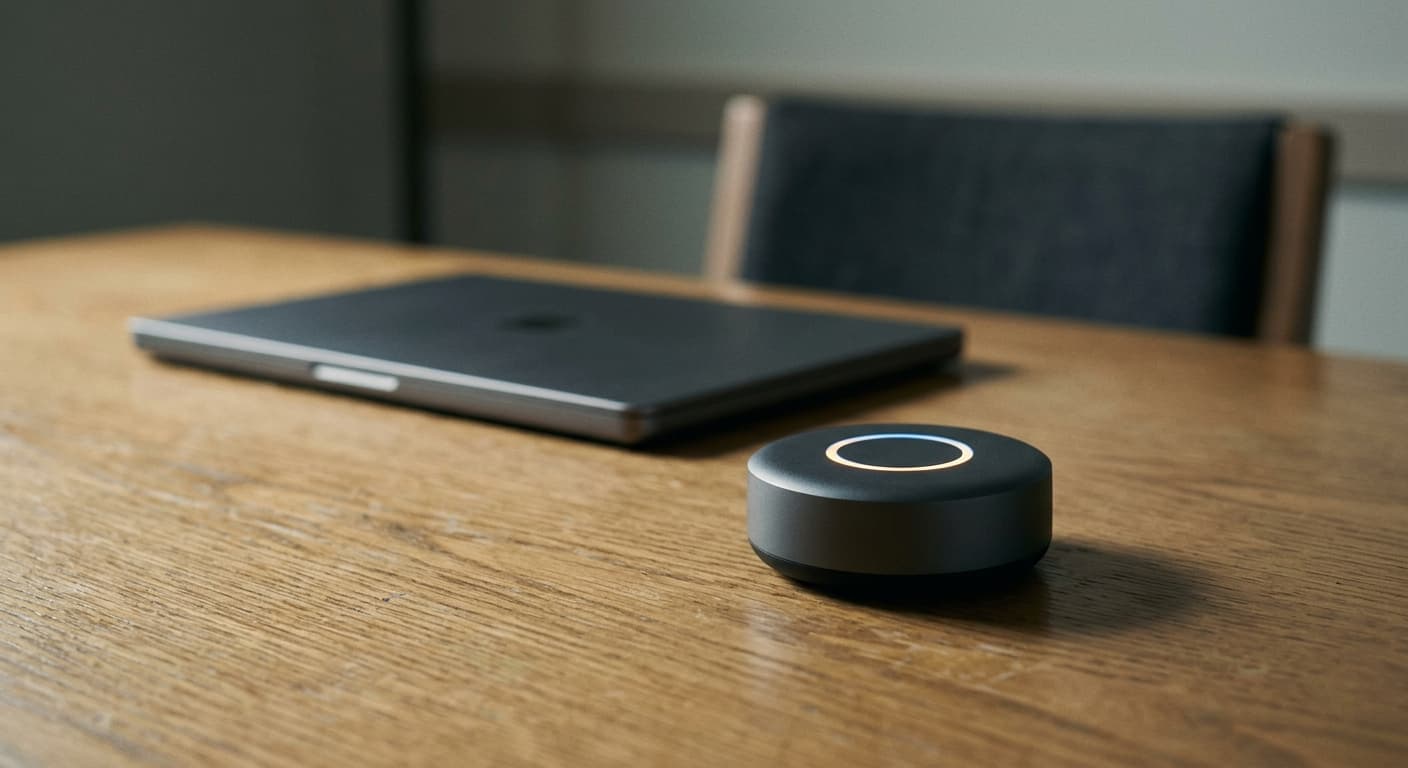
AI notetakers count as recorders. Tools like Otter, tl;dv, Fireflies, and the built-in AI companions in Zoom and Microsoft Teams capture the audio of a meeting to produce their transcripts and summaries, and two-party consent laws treat that exactly like any other recording. Sending a bot into a meeting without telling the other participants can be unlawful recording in these 13 states (in Nevada and Connecticut for calls, in Oregon for in-person meetings), even if the tool appears in the participant list. Announce the assistant at the start of the meeting and give participants a chance to object, just as you would with a "this call may be recorded" notice. State-by-state rules for these tools are covered in our guide to AI meeting recording laws.
Using Recordings as Evidence in Two-Party Consent States
Recordings made in compliance with two-party consent laws can be powerful evidence in court proceedings. However, recordings made in violation of these laws face two major consequences.
First, illegally obtained recordings are typically inadmissible in court. Under the federal wiretap statute and most state laws, evidence obtained through unauthorized interception cannot be used in legal proceedings. A judge will suppress the recording, and it cannot be presented to a jury.
Second, the person who made the illegal recording may face criminal prosecution and civil liability from the recorded parties. This means that not only does the recording fail to help your case, it can actively harm you by creating new criminal charges and civil claims.
If you need to document conversations for potential legal use in a two-party consent state, the safest approaches are: obtain clear consent to record, take detailed contemporaneous written notes, follow up verbal agreements with written emails summarizing what was discussed, or have a witness present during important conversations.
Criminal and Civil Penalties by State
Penalties for illegal recording in two-party consent states are substantially harsher than in most one-party consent states. Here is what you face in the strictest jurisdictions:
- Montana uses graduated penalties under Mont. Code Ann. 45-8-213: a first offense is a misdemeanor (up to 6 months and $500), a second offense carries up to 1 year and $1,000, and a third or subsequent offense is a felony with up to 5 years in prison and a $10,000 fine.
- Pennsylvania and New Hampshire allow up to 7 years imprisonment. Pennsylvania also has the most generous civil damages provisions, with a $1,000 minimum plus actual and punitive damages.
- Massachusetts treats every violation as a felony, with no misdemeanor option. Even a first offense can result in up to 5 years in state prison.
- California is relatively lenient on criminal penalties (first offense is a misdemeanor) but has strong civil remedies: $5,000 per violation or three times actual damages.
In addition to state penalties, illegal recording may also violate the federal wiretap statute (18 U.S.C. 2511), which carries up to 5 years imprisonment and $250,000 in fines, as well as civil liability for actual damages, statutory damages of $10,000, punitive damages, and attorney fees.
Best Practices in Two-Party Consent States
- Always ask permission. Before recording any conversation, tell every participant and get their agreement. A simple "Do you mind if I record this?" is sufficient.
- Record the consent itself. When you get verbal consent, make sure the consent is captured at the beginning of the recording so you have proof.
- Use written notes as an alternative. If someone refuses to be recorded, take detailed written notes immediately during or after the conversation.
- Follow up in writing. After important conversations, send an email summarizing what was discussed. This creates a written record without the legal risks of recording.
- Be cautious with interstate calls. If you are calling someone in a two-party consent state, treat the call as if all-party consent is required regardless of your state's law.
- Know your state's exceptions. Some states have exceptions for recording public meetings, criminal activity, or emergency situations. Review the specific statute linked above for your state.
Frequently Asked Questions
What is a two-party consent state?
A two-party consent state (more accurately called an all-party consent state) requires every person in a conversation to consent before the conversation can be legally recorded. Unlike one-party consent states where only the recorder needs to agree, two-party states make it a crime to record without everyone's knowledge and permission. This applies to both phone calls and in-person conversations.
What states are two-party consent?
As of 2026, 13 states follow two-party (all-party) consent rules: California, Connecticut, Delaware, Florida, Illinois, Maryland, Massachusetts, Montana, Nevada, New Hampshire, Oregon, Pennsylvania, and Washington. Each requires every party's consent for at least one major type of conversation. Several of these are partial: Connecticut (phone calls, civil rule) and Nevada (phone calls) require every party's consent only for calls, Oregon only for in-person conversations and video calls, and Delaware has two conflicting statutes. Michigan's statute reads as all-party, but its courts let a participant record, so it is counted as one-party. Illinois rewrote its eavesdropping statute in 2014.
What happens if I record someone without consent in a two-party consent state?
Recording without consent in a two-party consent state can result in criminal charges. Penalties vary by state but can include felony charges with prison time up to 5 years, fines up to $10,000, and civil liability for damages. In Massachusetts, illegal wiretapping is always a felony. In California, a first offense is a misdemeanor but repeat offenses are felonies. The recording will also likely be inadmissible as evidence in court.
Does saying "this call may be recorded" count as consent?
Generally, yes. If a party announces that the call is being recorded and the other person continues the conversation, courts typically interpret continued participation as implied consent. This is why businesses use automated recording announcements. However, the announcement must be clear and given before the recording begins. Simply staying on the line after hearing the announcement is usually considered consent.
Can I record a conversation in a two-party consent state if I suspect illegal activity?
Some two-party consent states have exceptions for recording evidence of criminal activity. For example, some states allow recording without consent when documenting certain crimes like extortion, bribery, or kidnapping. However, these exceptions are narrow and vary by state. You should consult an attorney before relying on a criminal activity exception, as misapplying it could expose you to criminal charges yourself.
Do two-party consent laws apply to recording in public places?
Two-party consent laws generally apply to conversations where participants have a reasonable expectation of privacy. In truly public settings where anyone can overhear, there may not be a reasonable expectation of privacy, and recording may be permissible. However, the line between public and private can be blurry. A conversation in a crowded restaurant booth, for example, might still carry a privacy expectation. When in doubt, get consent.
Does two-party consent apply to video recording without audio?
Generally, no. Two-party consent laws are wiretapping and eavesdropping statutes: they cover the interception of oral, wire, and electronic communications, meaning sound. Silent video is instead governed by hidden-camera and video voyeurism laws, which prohibit filming in places where people have a reasonable expectation of privacy, such as bathrooms, bedrooms, and changing areas. The practical trap is that most modern cameras record audio by default. A security camera or smart doorbell that captures a private conversation can turn lawful video surveillance into illegal audio interception in a two-party consent state, so disable audio capture or post clear notice that audio recording is in use.
If I am in a one-party consent state calling someone in a two-party consent state, which law applies?
Courts have not reached a uniform answer on this question. Some courts apply the law of the state where the recording device is located, while others apply the law of the state where the recorded party is. The California Supreme Court has ruled that California's two-party consent law applies to calls made to or from California regardless of the caller's location. The safest practice is to follow the stricter law and get everyone's consent for interstate calls.
Compare: One-Party Consent States
In one-party consent states, you can record conversations you participate in without telling the other parties. 37 states plus DC follow this standard, which matches federal law.
View All One-Party Consent StatesSources and References
- 18 U.S.C. 2511 - Federal Wiretap Act(law.cornell.edu)
- California Penal Code Section 632 - Eavesdropping(leginfo.legislature.ca.gov).gov
- Florida Statutes 934.03 - Interception of Communications(leg.state.fl.us).gov
- Department of Justice - Electronic Surveillance(justice.gov).gov
- FCC - Recording Telephone Conversations(fcc.gov).gov
- Pennsylvania Wiretapping and Electronic Surveillance Act (18 Pa.C.S. 5704)(legis.state.pa.us).gov