
Illinois
Illinois Recording Laws (2026): All-Party Consent Rules
Independently fact-checked against primary sources (last audited August 22, 2026). · Reviewed by the RecordingLaw editorial team. · Law checked current as of August 22, 2026. · 21 primary sources cited on this page. How we verify our legal content
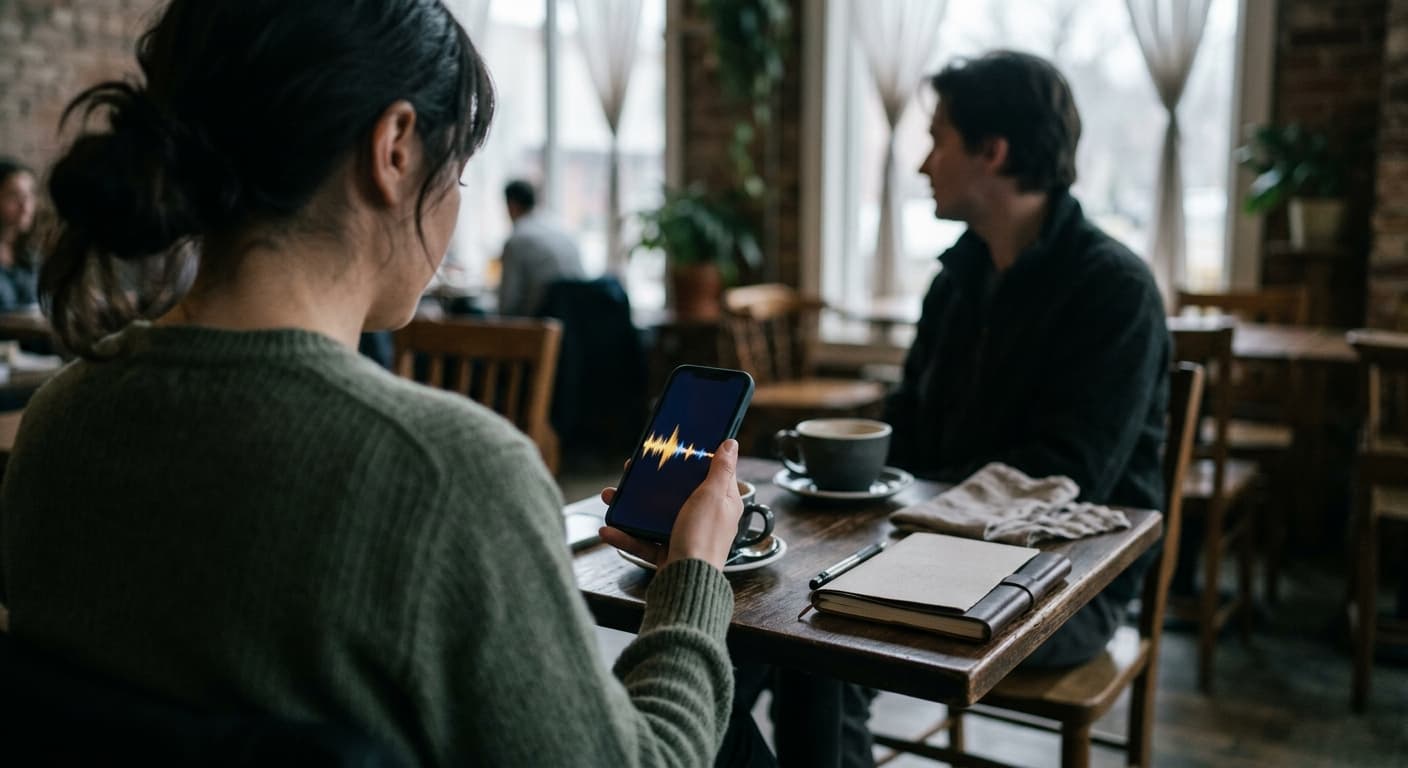
Illinois requires all-party consent before recording a private conversation under 720 ILCS 5/14-2. The law's pivotal word is "surreptitiously": secretly recording a private conversation where participants have a reasonable expectation of privacy is a felony, but openly recording a conversation you take part in does not meet the elements of the offense. Illegal recording is both a criminal felony and grounds for a civil lawsuit.
Illinois recording law at a glance
| Question | Answer |
|---|---|
| Consent rule | All-party consent required for private conversations |
| Main statute | 720 ILCS 5/14-2 (eff. Dec. 30, 2014, P.A. 098-1142) |
| When is recording illegal? | Surreptitious recording of a conversation where participants reasonably expect privacy, without all-party consent |
| Criminal penalty (first offense) | Class 4 felony: 1 to 3 years, up to $25,000 fine |
| Criminal penalty (subsequent offense) | Class 3 felony: 2 to 5 years, up to $25,000 fine |
| Civil penalty | Actual damages, punitive damages, injunctive relief, attorney fees (720 ILCS 5/14-6) |
| Hidden cameras / video voyeurism | Class 4 felony (720 ILCS 5/26-4); Class 3 felony if victim is under 18 or offender is a registered sex offender |
| Recording police in public | Permitted and First Amendment-protected (ACLU v. Alvarez; 720 ILCS 5/14-2(e)) |
For a deeper explanation of any row, see the in-depth guides below.
Recording in-person conversations in Illinois
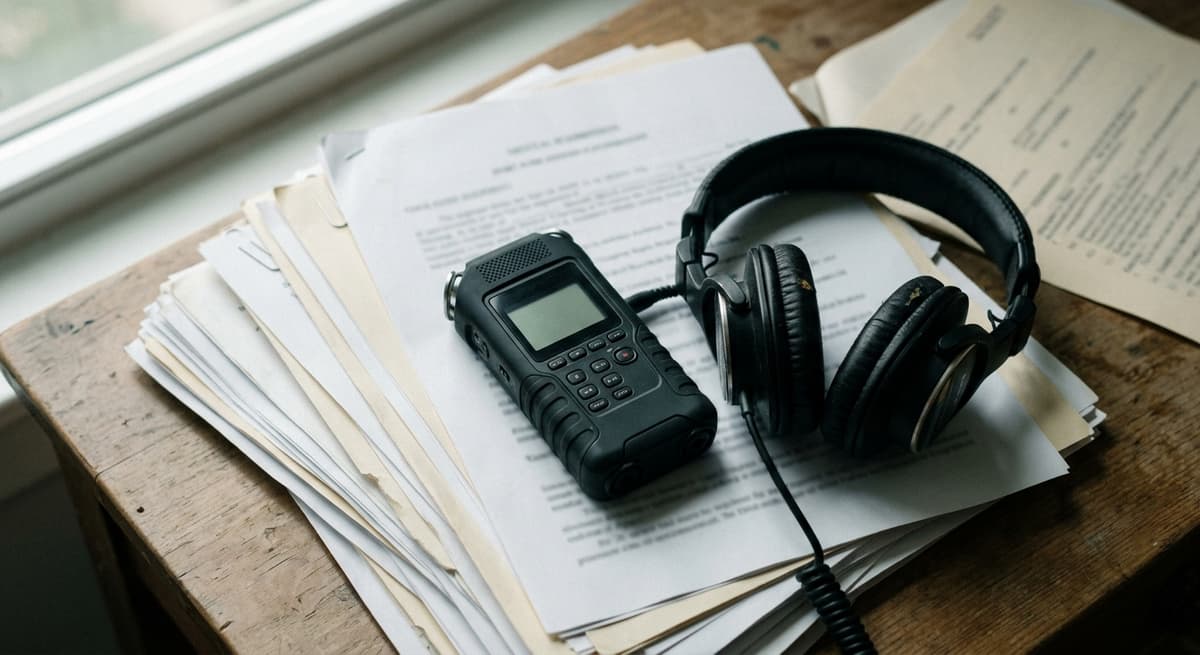
Illinois is an all-party consent state, but the statute is more targeted than that label suggests. Under 720 ILCS 5/14-2, a person commits eavesdropping when they use an eavesdropping device "in a surreptitious manner, for the purpose of overhearing, transmitting, or recording all or any part of any private conversation" without the consent of all parties.
Two elements must both be present. First, the recording must be made surreptitiously: hidden, concealed, or done without the knowledge of the other participants. Second, the target must be a "private conversation," defined in 720 ILCS 5/14-1(d) as an oral communication where at least one party intended privacy and circumstances objectively justified that expectation.
If the recording is open, the surreptitious element is absent and no violation occurs. If the conversation is held in public, with no reasonable expectation of privacy, the private-conversation element is absent and no violation occurs. Both conditions must be satisfied for the statute to apply.
How Illinois arrived here: People v. Melongo and People v. Clark
Illinois's prior eavesdropping statute covered any conversation without consent, including fully public exchanges. On March 20, 2014, the Illinois Supreme Court unanimously struck down that version as unconstitutionally overbroad in a pair of companion rulings decided the same day, People v. Melongo, 2014 IL 114852, and People v. Clark, 2014 IL 115776, ruling that criminalizing the recording of public conversations violated the First Amendment. Melongo arose after a woman was prosecuted for recording phone calls with an administrator in the Cook County Court Reporter's Office and posting the recordings online; Clark arose from a recorded conversation with a judge and an attorney. Governor Quinn signed Senate Bill 1342 (P.A. 098-1142) in December 2014; the Act took effect on becoming law on December 30, 2014, creating the current framework: all-party consent remains the rule for private conversations, but the "surreptitiously" element and the privacy anchor were added to cure the constitutional defect.
What counts as a private conversation
Private conversations include a discussion in a closed office, a phone call between two people, a whispered exchange in a restaurant, a therapy session, or a meeting in a private home. Conversations that are not private include a speech at a public meeting, a loud argument on a sidewalk audible to passersby, officer commands during a public arrest, and statements at any proceeding open under the Illinois Open Meetings Act, 5 ILCS 120.
Public officials performing their official duties have no reasonable expectation of privacy in those duties. That is the statutory foundation for recording government officials in public, entirely separate from the First Amendment analysis addressed below.
The fear-of-crime exception
720 ILCS 5/14-3(i) allows a party to record without all-party consent when they have reasonable suspicion that another party is committing, has committed, or is about to commit a crime against the recording party or a household member. The exception requires both a subjective belief and an objective reasonableness standard, and is available only to private individuals, not law enforcement agents.
Recording phone calls in Illinois
Phone calls are private conversations under 720 ILCS 5/14-1(d): parties ordinarily expect calls to remain between themselves. All-party consent is therefore required before recording any telephone conversation, whether landline, cell, or VoIP.
The safest practice is to announce at the start of the call that you are recording and obtain verbal agreement before the substantive conversation begins. Courts generally treat continued participation after a clear, unambiguous announcement as implied consent. If any party objects, stop recording immediately.
When a call crosses state lines, the stricter law applies. Illinois's all-party consent requirement binds the Illinois party regardless of the other state's standard. If you cannot confirm all parties' locations, obtain consent from everyone on the call.
Our recording consent checker can help you compare Illinois's rule with the other party's state before a multi-state call.
For detailed rules on business call recording and AI transcription tools that may trigger BIPA, see the Illinois Phone Call Recording Laws spoke page.

Hidden cameras, doorbells, and nanny cams
Video recording on your own property is generally lawful, subject to the placement rules discussed below. The key boundary is the expectation of privacy.
Authorized placement
Outdoor security cameras pointed at your own property, doorbell cameras covering a shared driveway or public sidewalk, and nanny cams in living areas where no privacy expectation exists are all lawful without consent from visitors. Illinois does not require advance notice for cameras on your own property in areas where people have no reasonable expectation of privacy.
Prohibited placement
720 ILCS 5/26-4 makes it a Class 4 felony to knowingly make a video recording or transmit live video of another person without consent in a restroom, tanning bed facility, locker room, changing room, or hotel bedroom, or to record another person in their residence without consent. The offense escalates to a Class 3 felony if the victim is under 18 or if the offender is a registered sex offender.
The audio caveat
A camera with a microphone that captures private conversations triggers the eavesdropping statute, 720 ILCS 5/14-2, on top of the voyeurism statute. A nanny cam recording conversations in a home is recording a private conversation where all parties have a reasonable expectation of privacy: all-party consent is required for the audio portion.
For additional guidance on camera placement and BIPA liability, see Illinois Security Camera Laws and Illinois Voyeurism and Hidden Camera Laws.
Penalties for illegal recording in Illinois
Criminal penalties for eavesdropping are set in 720 ILCS 5/14-4 (P.A. 098-1142, eff. Dec. 30, 2014):
| Offense | Class | Prison term | Max fine |
|---|---|---|---|
| Basic eavesdropping, first offense | Class 4 felony | 1 to 3 years | $25,000 |
| Basic eavesdropping, subsequent offense | Class 3 felony | 2 to 5 years | $25,000 |
| Eavesdropping on law enforcement / state's attorney / AG / judge, first offense | Class 3 felony | 2 to 5 years | $25,000 |
| Eavesdropping on law enforcement / state's attorney / AG / judge, subsequent offense | Class 2 felony | 3 to 7 years | $25,000 |
| Corporate defendant | Same classes | Same prison terms | Up to $50,000 |
Civil liability
In addition to criminal prosecution, the victim of illegal eavesdropping may sue under 720 ILCS 5/14-6 for injunctive relief, actual damages, punitive damages, and attorney fees and costs. Third parties who aided, abetted, or knowingly permitted the eavesdropping (including landlords, building operators, and carriers) are also subject to actual and punitive damages.

Recording the police in Illinois
Illinois offers two independent layers of protection for openly recording police in public, making it one of the strongest positions in the country on this issue.
Constitutional protection: ACLU v. Alvarez
The Seventh Circuit Court of Appeals held in ACLU of Illinois v. Alvarez, 679 F.3d 583 (7th Cir. 2012), that the First Amendment protects the right to openly record police officers performing their duties in public places. Illinois is within the Seventh Circuit, making this ruling directly controlling precedent. Any attempt to re-criminalize open recording of police in public would face a First Amendment challenge under Alvarez.
Statutory codification
After Alvarez, Illinois added an explicit statutory exemption at 720 ILCS 5/14-2(e) (P.A. 99-352, eff. Jan. 1, 2016), providing that nothing in the eavesdropping article prohibits a person who is not a law enforcement officer from recording a law enforcement officer performing official duties in a public place or in circumstances with no reasonable expectation of privacy, though an officer may take reasonable action to maintain safety and control of the scene. The companion provision at 720 ILCS 5/26-4 tracks the same logic for video.
The recording must be open. Surreptitious recording of police communications without authorization remains subject to the enhanced penalties under 720 ILCS 5/14-4. Recording law enforcement radio or secured communications is not protected.
Practical guidance: record openly with your device visible, stay in a location where you have a lawful right to be, and do not interfere with officers' duties. See Illinois Laws on Recording Police for a full analysis.
Special topics in Illinois
Biometric Information Privacy Act (BIPA)
Illinois's Biometric Information Privacy Act, 740 ILCS 14, requires written consent before collecting, using, or storing biometric identifiers such as voiceprints, fingerprints, and facial geometry scans. Any recording tool that generates these identifiers from Illinois participants triggers BIPA obligations independently of the eavesdropping statute. BIPA provides a private right of action with statutory damages of $1,000 per negligent violation and $5,000 per reckless or intentional violation, with no requirement to prove actual harm. Class action exposure can be substantial: the $51.75 million Clearview AI settlement in 2025 illustrated the scale of liability for large-scale collection without proper consent.
Cruz v. Fireflies.AI Corp., No. 3:25-cv-03399-SEM-DJQ (filed December 2025), alleged that an AI meeting assistant's speaker-recognition feature collected voiceprints without BIPA-compliant written consent from non-account-holder participants. The plaintiff voluntarily dismissed the case without prejudice on March 11, 2026, so it is no longer pending. A complaint is an allegation, not a court ruling, so the case remains useful as an illustration of the BIPA theory plaintiffs are testing against AI meeting tools operating in Illinois, not as a decided legal standard.
Workplace recording: NLRB standards
Employer no-recording policies in Illinois are subject to federal labor law scrutiny under the Stericycle standard. In Stericycle, Inc. and Teamsters Local 628, 372 NLRB No. 113 (Aug. 2, 2023), the NLRB held that a challenged rule is presumptively unlawful if it has a reasonable tendency to chill employees from exercising their Section 7 rights, evaluated from the perspective of an economically dependent employee. Blanket no-recording policies that sweep in employees documenting unsafe conditions or discussing wages may be found presumptively unlawful.
NLRB Acting General Counsel William B. Cowen issued GC Memorandum 25-07 (June 25, 2025), directing regional offices to treat surreptitious recording of collective bargaining sessions as a per se violation of the duty to bargain in good faith under NLRA Sections 8(a)(5) and 8(b)(3). Separately, such recording also violates 720 ILCS 5/14-2 under state law. GC Memo 25-07 is prosecutorial guidance, not binding precedent. See Illinois Workplace Recording Laws for the full analysis.
HIPAA and FERPA overlays
Healthcare providers face a dual-consent obligation: the HIPAA Privacy Rule (45 CFR 164.502 and 164.508) governs the content of patient communications, while 720 ILCS 5/14-2 governs the act of recording. Both must be satisfied. Educational institutions face the same dual structure under FERPA (20 U.S.C. 1232g; 34 CFR Part 99): recordings that capture identifiable student information are education records requiring separate written consent, on top of the all-party consent requirement. See Illinois Medical Recording Laws and Illinois School Recording Laws.
Federal overlay (ECPA, FCC, CFPB)
Federal law applies alongside Illinois's stricter state standard, not in place of it. FCC Declaratory Ruling 24-17 (Feb. 8, 2024) extended TCPA prior-express-consent requirements to AI-generated voice-cloning calls: Illinois's all-party consent standard is stricter and controls for intrastate recordings. The FCC's One-to-One Consent Rule was vacated by the Eleventh Circuit in Insurance Marketing Coalition v. FCC, No. 24-10277 (Jan. 24, 2025), and the FCC accepted that ruling nationwide. 47 CFR 64.501 sets a federal beep-tone floor for carrier recordings of interstate calls; Illinois's standard supersedes it for private intrastate recordings. CFPB Regulation F (12 CFR 1006.100(b)) requires debt collectors to retain call recordings for three years: Illinois all-party consent must be obtained before any such recording is made.
Recent legal developments
- Aug. 15, 2025: P.A. 104-0171 (HB1278) amended the Victims' Economic Security and Safety Act (VESSA), 820 ILCS 180, to prohibit employer retaliation against employees who use employer-issued devices to record crimes of violence against themselves or a family member. This is an employer-retaliation prohibition only: it does not amend 720 ILCS 5/14-2 or change consent requirements.
- Nov. 21, 2025 (enrolled; effectively dead): HB1836 would have permitted the Attorney General to authorize one-party-consent eavesdropping in felony investigations. The Governor's 60-day deadline to act passed approximately January 20, 2026, with no Public Act number assigned. HB1836 does not change Illinois recording law.
- Apr. 11, 2025 (stalled): SB1796 would have exempted body-camera recordings from the eavesdropping statute and adjusted destruction timelines. Re-referred to Assignments on April 11, 2025: it did not advance from committee and has not been enacted.
- Dec. 2025 (voluntarily dismissed Mar. 2026): Cruz v. Fireflies.AI Corp. filed as a BIPA class action targeting AI meeting-assistant speaker-recognition. The plaintiff voluntarily dismissed the case without prejudice on March 11, 2026, before any ruling on the merits.
Illinois recording laws in depth
By type of recording
- Illinois Audio Recording Laws - All-party consent rules, penalties, and exceptions for audio
- Illinois Phone Call Recording Laws - Consent rules for landline, cell, and VoIP calls
- Illinois Video Recording Laws - Consent, BIPA, and surveillance rules for video
- Illinois Dashcam Laws - Audio rules, placement, and legal use
By place or relationship
- Illinois Laws on Recording in Public - What you can and cannot record in public places
- Illinois Laws on Recording Police - Your rights and First Amendment protections
- Illinois Workplace Recording Laws - Employee rights, BIPA, and employer rules
- Illinois Medical Recording Laws - Patient rights, HIPAA, and consent rules
- Illinois School Recording Laws - Student, parent, and teacher recording rights
- Illinois Landlord-Tenant Recording Laws - Camera rules and privacy rights
- Illinois Security Camera Laws - BIPA, audio rules, and placement
- Illinois Voyeurism and Hidden Camera Laws - Hidden camera laws and BIPA penalties
For a national comparison, see the United States Recording Laws hub and the guide to one-party vs. all-party consent states.
More Illinois laws
- Illinois AI Meeting Recording Laws
- Illinois Alimony Laws
- Illinois At-Will Employment Laws
- Illinois Car Accident Laws
- Illinois Child Custody Laws
- Illinois Data Privacy Laws
- Illinois Expungement Laws
This article is general legal information, not legal advice. Recording laws change and apply differently to each situation. For advice about your situation, consult a licensed Illinois attorney.
More Illinois Laws
- Illinois AI Meeting Recording Laws
- Illinois Dashcam Laws
- Illinois Data Privacy Laws
- Illinois Deepfake Laws
- Illinois Employee Monitoring Laws
- Illinois GPS Tracking Laws
- Illinois Police Bodycam Laws
- Illinois Smart Glasses Recording Laws
Frequently Asked Questions
Is Illinois a one-party or two-party consent state?
Neither label fits precisely. Illinois requires all-party consent under 720 ILCS 5/14-2, but only for conversations where participants have a reasonable expectation of privacy. Conversations with public officials on duty, or in public spaces where no privacy expectation exists, can be recorded without consent. The 'two-party consent' label is commonly used but technically imprecise: the law covers all parties, not just two.
Can I record a phone call in Illinois?
Only with the consent of all parties to the call. Phone calls are treated as private conversations under 720 ILCS 5/14-1(d) because participants ordinarily expect them to remain between themselves. Recording without consent is a Class 4 felony for a first offense. The safest approach is to announce you are recording at the start of the call and obtain verbal agreement from everyone before continuing.
Can I secretly record someone if I think they are committing a crime?
Yes, under the fear-of-crime exception at 720 ILCS 5/14-3(i). A party to a conversation may record without all-party consent if they have reasonable suspicion that another party is committing, is about to commit, or has committed a crime against the recording party or a household member. Both a subjective belief and an objective reasonableness standard are required. This exception is available to private individuals, not law enforcement.
What is the penalty for illegal recording in Illinois?
Under 720 ILCS 5/14-4, a first-offense eavesdropping violation is a Class 4 felony (1 to 3 years in prison, up to $25,000 fine). A subsequent offense is a Class 3 felony (2 to 5 years). Secretly recording a law enforcement officer, state's attorney, or judge is a Class 3 felony for a first offense (2 to 5 years) and a Class 2 felony for a subsequent offense (3 to 7 years).
Can I record police in Illinois?
Yes. The Seventh Circuit held in ACLU v. Alvarez, 679 F.3d 583 (7th Cir. 2012), that openly recording police performing public duties is protected by the First Amendment. Illinois codified this right at 720 ILCS 5/14-2(e) (P.A. 99-352, eff. Jan. 1, 2016). Alvarez involved open recording, and the injunction the court ordered covered openly recording officers on duty in public places, though the court said it was not suggesting the First Amendment protects only open recording. Record openly and do not interfere with officers' duties.
Are Ring doorbells and nanny cams legal in Illinois?
Yes, for video coverage of areas where people have no reasonable expectation of privacy (your doorstep, driveway, or exterior). Cameras placed to record in restrooms, locker rooms, changing rooms, or other private areas are a Class 4 felony under 720 ILCS 5/26-4. Nanny cams with active microphones recording private home conversations also trigger the all-party consent requirement under 720 ILCS 5/14-2 for any audio they capture.
Can I record my boss or an HR meeting in Illinois?
Probably not without consent. A private meeting in a closed office is a 'private conversation' under 720 ILCS 5/14-1(d), and secretly recording it is a Class 4 felony. If you have reasonable suspicion your employer is about to commit a crime against you (such as threats or harassment), the fear-of-crime exception at 720 ILCS 5/14-3(i) may apply. Consult an attorney before recording workplace conversations without consent.
Does BIPA apply to AI meeting recorders used with Illinois participants?
Potentially yes. BIPA (740 ILCS 14) requires written consent before collecting biometric identifiers such as voiceprints. Cruz v. Fireflies.AI Corp. (filed December 2025) alleged that an AI meeting assistant's speaker-recognition feature collected voiceprints without BIPA-compliant consent, but the plaintiff voluntarily dismissed the case without prejudice on March 11, 2026, so it is no longer active. Organizations using AI meeting tools with Illinois participants should still confirm whether the tool generates voiceprints and whether BIPA-compliant consent has been obtained.
Updates
Corrected the descriptions of People v. Melongo and ACLU v. Alvarez to match what the opinions actually say about who was recorded and what the Seventh Circuit decided.
Corrected the effective date of P.A. 98-1142 to December 30, 2014 (it took effect on becoming law, not January 1, 2015) everywhere it appeared, repaired five broken or misrouted links to the Illinois Compiled Statutes and the Biometric Information Privacy Act, and confirmed the Cruz v. Fireflies.AI docket was voluntarily dismissed on March 11, 2026.
Corrected the citation for Illinois's statutory right to record on-duty police: the page previously pointed to 720 ILCS 5/14-3(i) (which is actually the unrelated fear-of-crime recording exception); the real police-recording exemption is 720 ILCS 5/14-2(e). Also fixed the fear-of-crime exception's own citation, which had been mislabeled 14-3(h), and replaced a dead Open Meetings Act citation link.
Independently fact-checked against the cited primary sources; governing law re-checked for recent changes
Governing law re-checked for recent changes
Reviewed and approved by an editor
Restructured page per recording-redo template spec: condensed 5,500-word dense article to readable format with short paragraphs; added AEO lede, at-a-glance table, and in-depth index; split consent-rule, phone-call, hidden-camera, and police sections; consolidated special-topics (BIPA, NLRB/Stericycle, HIPAA/FERPA, federal overlay) into tight subsections; added attorney fees to civil-remedy list (720 ILCS 5/14-6); confirmed penalty classes, consent elements, and HB1836 dead-bill status against primary sources; preserved all statute citations; refreshed FAQ with 8 questions; updated hero and inline images.
Corrected penalty classifications to current 720 ILCS 5/14-4 (P.A. 98-1142, eff. Dec. 30, 2014): basic eavesdropping is a Class 4 felony (1-3 years) for a first offense and Class 3 felony (2-5 years) for a subsequent offense; eavesdropping on law enforcement is a Class 3 felony (2-5 years) for a first offense and Class 2 felony (3-7 years) for a subsequent offense. Updated lede, KeyTakeaways, summary table, Penalties section and table, and FAQ answers accordingly.
Refreshed per post-Clark dossier. Added Federal Law Overlay section (FCC 24-17, FCC One-to-One vacatur, 47 CFR 64.501, DOJ JM 9-7.302, CFPB Reg F). Added Special Contexts section (HIPAA dual-consent, FERPA dual-consent, BIPA, Cruz v. Fireflies.AI pending litigation). Added Current Developments 2025-2026 section (P.A. 104-0171 VESSA amendment, HB1836 effectively dead, SB1796 stalled). Added 12-spoke Topic Index. Corrected penalty framing to Class 2 felony / up to 5 years per 720 ILCS 5/14-4. Corrected fear-of-crime citation to 14-3(h). Fixed broken link markup from prior AI wearables section. Title and meta rewrite per dossier proposal. Word count expanded from 3,387 to approximately 5,500 words.
Refreshed per post-Clark dossier. Added Federal Law Overlay section (FCC 24-17, FCC One-to-One vacatur, 47 CFR 64.501, DOJ JM 9-7.302, CFPB Reg F). Added Special Contexts section (HIPAA dual-consent, FERPA dual-consent, BIPA, Cruz v. Fireflies.AI pending litigation). Added Current Developments 2025-2026 section (P.A. 104-0171 VESSA amendment, HB1836 effectively dead, SB1796 stalled). Added 12-spoke Topic Index.
Added wearable recording device guidance covering AI voice recorders (Plaud), smart glasses (Meta Ray-Bans), and Illinois BIPA biometric privacy implications.
Previous version published with post-Clark statutory analysis and police recording section.
The Law Behind This Article
This article rests on the statutory provisions below, held in our own legal record and retrieved from the official source. Tap a section to read the operative text.
Illinois Compiled Statutes Chapter 720, Act 5 (Criminal Code of 2012)
§ 14-2Elements of the offense; affirmative defenseIn forcecited in 63 of our articles
(a) A person commits eavesdropping when he or she knowingly and intentionally: (1) Uses an eavesdropping device, in a surreptitious manner, for the purpose of overhearing, transmitting, or recording all or any part of any private conversation to which he or she is not a party unless he or she does so with the consent of all of the parties to the private conversation; (2) Uses an eavesdropping device, in a surreptitious manner, for the purpose of transmitting or recording all or any part of any private conversation to which he or she is a party unless he or she does so with the consent of all other parties to the private conversation; (3) Intercepts, records, or transcribes, in a surreptitious manner, any private electronic communication to which he or she is not a party unless he or she does so with the consent of all parties to the private electronic communication; (4) Manufactures, assembles, distributes, or possesses any electronic, mechanical, eavesdropping, or other device knowing that or having reason to know that the design of the device renders it primarily useful for the purpose of the surreptitious overhearing, transmitting, or recording of private conversations or the…
Official text (excerpt) · last checked 2026-09-23 · Read the full text in our law library · Verify at ilga.gov
Cited in 92 court opinions in our collectionLatest citing opinion in our collection: 2026
Opinions citing this section in our collection:
- People v. Melongo (Illinois Supreme Court 2014, 2014 IL 114852)“…ations of section 14-2 of the Criminal Code of 1961 (720 ILCS 5/14-2 (West 2008)), which defines the offense…”
- People v. Smith (Appellate Court of Illinois 2025, 2025 IL App (1st) 220116)“…ropping violated section 14-2 of the Criminal Code of 2012 (720 ILCS 5/14-2 (West 2014)) and that then State’s Att…”
- Cook Au Vin, LLC v. Mid-Century Insurance Co. (Appellate Court of Illinois 2023, 226 N.E.3d 694)“…onversation by one who is not a party to the conversation. 720 ILCS 5/14-2(a)(1) (West 2020). In enacting the stat…”
Identified automatically from the court opinions citing this section — not a ranking of which case controls.
Also relied on in: Illinois Audio Recording Laws: All-Party Consent Rules and Penalties (2026), Illinois Security Camera Laws: BIPA, Audio Rules, and Placement (2026), Illinois AI Meeting Recording Laws (2026)
§ 14-1DefinitionsIn forcecited in 5 of our articles
(a) Eavesdropping device. An eavesdropping device is any device capable of being used to hear or record oral conversation or intercept, or transcribe electronic communications whether such conversation or electronic communication is conducted in person, by telephone, or by any other means; Provided, however, that this definition shall not include devices used for the restoration of the deaf or hard-of-hearing to normal or partial hearing. (b) Eavesdropper. An eavesdropper is any person, including any law enforcement officer and any party to a private conversation, who operates or participates in the operation of any eavesdropping device contrary to the provisions of this Article or who acts as a principal, as defined in this Article. (c) Principal. A principal is any person who: (1) Knowingly employs another who illegally uses an eavesdropping device in the course of such employment; or (2) Knowingly derives any benefit or information from the illegal use of an eavesdropping device by another; or (3) Directs another to use an eavesdropping device illegally on his or her behalf. (d) Private conversation.
Official text (excerpt) · last checked 2026-07-29 · Read the full text in our law library · Verify at ilga.gov
Cited in 65 court opinions in our collectionLatest citing opinion in our collection: 2026
Opinions citing this section in our collection:
- People v. Rodriguez (Appellate Court of Illinois 2000, 313 Ill. App. 3d 877)“…tion of the amended version of section 14-1(a) of the Code (720 ILCS 5/14-1(a) (West 1998)). Defendant alternativel…”
- People v. Smith (Appellate Court of Illinois 2025, 2025 IL App (1st) 220116)“…onsent of all parties or prior judicial authorization. See 720 ILCS 5/14-1 et seq. (West 2014). The conversations…”
- Hurst v. Board of the Fire and Police Commission (Appellate Court of Illinois 2011, 2011 IL App (4th) 100964)“…vesdropping statute contained in the Criminal Code of 1961 (720 ILCS 5/14-1 through 14- 9 (West 2008)), and…”
Identified automatically from the court opinions citing this section — not a ranking of which case controls.
Also relied on in: Illinois Smart Glasses Recording Laws: Audio, BIPA & Consent, Illinois Laws on Recording Police: Your Rights and Protections (2026), Illinois Laws on Recording in Public: What You Can and Cannot Record (2026)
§ 14-3ExemptionsIn forcecited in 7 of our articles
The following activities shall be exempt from the provisions of this Article: (a) Listening to radio, wireless electronic communications, and television communications of any sort where the same are publicly made; (b) Hearing conversation when heard by employees of any common carrier by wire incidental to the normal course of their employment in the operation, maintenance or repair of the equipment of such common carrier by wire so long as no information obtained thereby is used or divulged by the hearer; (c) Any broadcast by radio, television or otherwise whether it be a broadcast or recorded for the purpose of later broadcasts of any function where the public is in attendance and the conversations are overheard incidental to the main purpose for which such broadcasts are then being made; (d) Recording or listening with the aid of any device to any emergency communication made in the normal course of operations by any federal, state or local law enforcement agency or institutions dealing in emergency services, including, but not limited to, hospitals, clinics, ambulance services, fire fighting agencies, any public utility, emergency repair facility, civilian defense establishment…
Official text (excerpt) · last checked 2026-07-29 · Read the full text in our law library · Verify at ilga.gov
Cited in 32 court opinions in our collectionLatest citing opinion in our collection: 2026
Opinions citing this section in our collection:
- People v. Brindley (Appellate Court of Illinois 2017, 2017 IL App (5th) 160189)“…3(q)(1) of the Criminal Code of 2012 (Criminal Code) (720 ILCS 5/14-3(q)(1) (West 2012)). The circuit co…”
- People v. Graves (Appellate Court of Illinois 2012, 2012 IL App (4th) 110536)“…re exempt from the provisions of the eavesdropping statute. 720 ILCS 5/14-3 (West 2008). At the time of defendant's…”
- People v. Wachholtz (Appellate Court of Illinois 2013, 988 N.E.2d 765)“…tion 14-3(h-15) of the Criminal Code of 1961 (Code) (720 ILCS 5/14-3(h-15) (West 2010)) when they destroyed…”
Identified automatically from the court opinions citing this section — not a ranking of which case controls.
Also relied on in: Illinois Surveillance Camera Laws (2026 Guide), Illinois Landlord-Tenant Recording Laws: Camera Rules and Privacy Rights (2026), Illinois Medical Recording Laws: Patient Rights, HIPAA, and Consent Rules (2026)
§ 14-4SentenceIn forcecited in 9 of our articles
(a) Eavesdropping, for a first offense, is a Class 4 felony and, for a second or subsequent offense, is a Class 3 felony. (b) The eavesdropping of an oral conversation or an electronic communication of any law enforcement officer, State's Attorney, Assistant State's Attorney, the Attorney General, Assistant Attorney General, or a judge, while in the performance of his or her official duties, if not authorized by this Article or proper court order, is a Class 3 felony, and for a second or subsequent offense, is a Class 2 felony.
Official text (excerpt) · last checked 2026-07-29 · Read the full text in our law library · Verify at ilga.gov
Cited in 5 court opinions in our collectionLatest citing opinion in our collection: 2025
Opinions citing this section in our collection:
- People v. Jenkins (Appellate Court of Illinois 2012, 2012 IL App (2d) 91168)“…y if the officer was engaged in his or her official duties. 720 ILCS 5/14-4(b) (West 2008). A person commits eavesd…”
- Morris v. Ameritech Illinois (Appellate Court of Illinois 2003)“…acts of high managerial agents. Eavesdropping is a felony. 720 ILCS 5/14-4 (West 1994). Therefore, Ameritech can…”
- Acuff v. IBP, Inc. (District Court, C.D. Illinois 1999, 65 F. Supp. 2d 866)“…4. Illinois’ Eavesdropping Statute, 720 ILCS 5/14-2 and 720 ILCS 5/14-4; and 5. Illinois Constitution Ar…”
Identified automatically from the court opinions citing this section — not a ranking of which case controls.
Also relied on in: Illinois Ring Doorbell Laws: What You Need to Know in 2026, Illinois School Recording Laws: Student, Parent, and Teacher Rights (2026), Washington Smart Glasses Recording Laws (2026)
§ 14-6Civil remedies to injured partiesIn forcecited in 2 of our articles
(1) Any or all parties to any conversation or electronic communication upon which eavesdropping is practiced contrary to this Article shall be entitled to the following remedies: (a) To an injunction by the circuit court prohibiting further eavesdropping by the eavesdropper and by or on behalf of his principal, or either; (b) To all actual damages against the eavesdropper or his principal or both; (c) To any punitive damages which may be awarded by the court or by a jury; (d) To all actual damages against any landlord, owner or building operator, or any common carrier by wire who aids, abets, or knowingly permits the eavesdropping concerned; (e) To any punitive damages which may be awarded by the court or by a jury against any landlord, owner or building operator, or common carrier by wire who aids, abets, or knowingly permits the eavesdropping concerned. (2) No cause of action shall lie in any court against any common carrier by wire or its officers, agents or employees for providing information, assistance or facilities in accordance with the terms of a court order entered under Article 108A of the Code of Criminal Procedure of 1963.
Official text (excerpt) · last checked 2026-07-29 · Read the full text in our law library · Verify at ilga.gov
Cited in 11 court opinions in our collectionLatest citing opinion in our collection: 2025
Opinions citing this section in our collection:
- Morris v. Ameritech Illinois (Appellate Court of Illinois 2003)“…opping even if the principal is not criminally responsible. 720 ILCS 5/14-6(1)(b)(West 1994). In the context of ci…”
- Hannant v. Culbertson Memorial Hospital Foundation (District Court, C.D. Illinois 2025)“…miss 18 (second and third alteration in original) (quoting 720 ILCS 5/14-6). And she cites to cases for the propo…”
- Kurowski v. Rush System for Health (District Court, N.D. Illinois 2024)“…720 ILCS 5/14-6. Rush argues that, under Illinois law,…”
Identified automatically from the court opinions citing this section — not a ranking of which case controls.
§ 26-4Unauthorized video recording and live video transmissionIn forcecited in 9 of our articles
(a) It is unlawful for any person to knowingly make a video record or transmit live video of another person without that person's consent in a restroom, tanning bed, tanning salon, locker room, changing room, or hotel bedroom. (a-5) It is unlawful for any person to knowingly make a video record or transmit live video of another person in that other person's residence without that person's consent. (a-6) It is unlawful for any person to knowingly make a video record or transmit live video of another person in that other person's residence without that person's consent when the recording or transmission is made outside that person's residence by use of an audio or video device that records or transmits from a remote location. (a-10) It is unlawful for any person to knowingly make a video record or transmit live video of another person's intimate parts for the purpose of viewing the body of or the undergarments worn by that other person without that person's consent.
Official text (excerpt) · last checked 2026-08-31 · Read the full text in our law library · Verify at ilga.gov
Cited in 16 court opinions in our collectionLatest citing opinion in our collection: 2026
Opinions citing this section in our collection:
- People v. McCavitt (Illinois Supreme Court 2021, 452 Ill. Dec. 456)“…o Recording/Live Video Transmission in violation of 720 ILCS 5/26-4,” and the warrant authorized th…”
- People v. Van Syckle (Appellate Court of Illinois 2020, 2019 IL App (1st) 181410)“…in violation of section 26-4(a) of the Criminal Code (720 ILCS 5/26-4(a) (West 2014)). Defendant filed a…”
- People v. Maillet (Appellate Court of Illinois 2019, 2019 IL App (2d) 161114)“…of section 26-4(a-5) of the Criminal Code of 2012 (Code) (720 ILCS 5/26-4(a-5) (West 2012)). Count II alleged tha…”
Identified automatically from the court opinions citing this section — not a ranking of which case controls.
Also relied on in: Illinois Video Recording Laws: Consent, BIPA, and Surveillance Rules (2026), Illinois Voyeurism and Hidden Camera Laws: Penalties and BIPA Rules (2026), Illinois Drone Laws (2026): Police Warrants, Privacy, and Hunting
United States Code Title 20
§ 1232gFamily educational and privacy rightsIn forcecited in 29 of our articles
No funds shall be made available under any applicable program to any educational agency or institution which has a policy of denying, or which effectively prevents, the parents of students who are or have been in attendance at a school of such agency or at such institution, as the case may be, the right to inspect and review the education records of their children. If any material or document in the education record of a student includes information on more than one student, the parents of one of such students shall have the right to inspect and review only such part of such material or document as relates to such student or to be informed of the specific information contained in such part of such material. Each educational agency or institution shall establish appropriate procedures for the granting of a request by parents for access to the education records of their children within a reasonable period of time, but in no case more than forty-five days after the request has been made.
Official text (excerpt) · last checked 2026-09-03 · Read the full text in our law library · Verify at uscode.house.gov
Cited in 981 court opinions in our collectionLatest citing opinion in our collection: 2026
In the courts (editorial summary, independently checked):Courts have held Section 1232g is enforced by the Secretary of Education, not by suit. Gonzaga University v. Doe (2002) held FERPA's nondisclosure provisions create no personal rights enforceable under 42 U.S.C. 1983. Kate Frazier v. Fairhaven School Committee (2002) held FERPA confers no private right of action, express or implied.
Opinions citing this section in our collection:
- Goss v. Lopez (Supreme Court of the United States 1975, 419 U.S. 565)“…ucation Amendments of 1974, Pub. L. 93-380, 88 Stat. 571, 20 U. S. C. § 1232g (1970 ed., Supp. IV), adding § 438 to t…”
- Gonzaga University v. Doe (Supreme Court of the United States 2002, 536 U.S. 273)✓A university official told the state teacher-licensing agency about sexual misconduct allegations against a student, who then lost the affidavit he needed to teach; the Supreme Court held FERPA's nondisclosure provisions create no personal rights enforceable under section 1983.
- Foster Children v. Jeb Bush, Kathleen Kearney, Chuck Bates, Robert Williams, Ester Tibbs (Court of Appeals for the Eleventh Circuit 2003, 329 F.3d 1255)“…Family Educational Rights and Privacy Act of 1974 (FERPA), 20 U.S.C. § 1232g. In FERPA Congress directed the Secreta…”
Identified automatically from the court opinions citing this section — not a ranking of which case controls.
Also relied on in: Alaska School Recording Laws: Student Privacy, FERPA, and Classroom Rules (2026), Arkansas School Recording Laws: Student Privacy, FERPA, and Classroom Rules (2026), DC School Recording Laws: Student Privacy, FERPA, and Classroom Rules (2026)
Code of Federal Regulations Title 45
§ 164.502Uses and disclosures of protected health information: General rules.In forcecited in 16 of our articles
(a) Standard. A covered entity or business associate may not use or disclose protected health information, except as permitted or required by this subpart or by subpart C of part 160 of this subchapter. (1) Covered entities: Permitted uses and disclosures. A covered entity is permitted to use or disclose protected health information as follows: (i) To the individual; (ii) For treatment, payment, or health care operations, as permitted by and in compliance with § 164.506; (iii) Incident to a use or disclosure otherwise permitted or required by this subpart, provided that the covered entity has complied with the applicable requirements of §§ 164.502(b), 164.514(d), and 164.530(c) with respect to such otherwise permitted or required use or disclosure; (iv) Except for uses and disclosures prohibited under § 164.502(a)(5)(i), pursuant to and in compliance with a valid authorization under § 164.508; (v) Pursuant to an agreement under, or as otherwise permitted by, § 164.510; and (vi) As permitted by and in compliance with any of the following: (A) This section. (B) Section 164.512 and, where applicable, § 164.509. (C) Section 164.514(e), (f), or (g).
Official text (excerpt) · last checked 2026-09-16 · Read the full text in our law library · Verify at ecfr.gov
Cited in 290 court opinions in our collectionLatest citing opinion in our collection: 2026
In the courts (editorial summary, independently checked):Section 164.502 is the Privacy Rule's general bar on using or disclosing protected health information. Opis Management Resources, LLC (2013) held it preempted a Florida law compelling release of deceased residents' records to a spouse or named representative; Disability Rights Texas v. Hollis (2024) applied the required-by-law exception.
Opinions citing this section in our collection:
- Northwestern Memorial Hospital v. John Ashcroft, Attorney General of the United States (Court of Appeals for the Seventh Circuit 2004, 362 F.3d 923)“…sub-part or by subpart C of part 160 of this subchapter.” 45 C.F.R. § 164.502 (a). Before looking to the various exce…”
- Opis Management Resources, LLC v. Secretary, Florida Agency for Health Care Administration (Court of Appeals for the Eleventh Circuit 2013, 713 F.3d 1291)✓Nursing homes refused to give deceased residents' records to spouses who were not personal representatives under 45 CFR 164.502(g); the Eleventh Circuit held Florida's statute compelling those blanket disclosures was preempted as an obstacle to HIPAA's privacy objectives.
- United States ex rel. Baltazar v. Warden (District Court, N.D. Illinois 2014, 302 F.R.D. 256)“…nduct was protected under HIPAA’s whistleblower exception, 45 C.F.R. § 164.502 (j)(l). 2 Regardless of whether Baltaz…”
Identified automatically from the court opinions citing this section — not a ranking of which case controls.
Also relied on in: Connecticut Recording Laws (2026): Hybrid Consent Rules Explained, Michigan Recording Laws (2026): Consent Rules and Participant Exception, How to Find Old Medical Records Online
Code of Federal Regulations Title 12
§ 1006.100Record retention.In forcecited in 7 of our articles
(a) In general. Except as provided in paragraph (b) of this section, a debt collector must retain records that are evidence of compliance or noncompliance with the FDCPA and this part starting on the date that the debt collector begins collection activity on a debt until three years after the debt collector's last collection activity on the debt. (b) Special rule for telephone call recordings. If a debt collector records telephone calls made in connection with the collection of a debt, the debt collector must retain the recording of each such telephone call for three years after the date of the call.
Official text (excerpt) · last checked 2026-07-28 · Read the full text in our law library · Verify at ecfr.gov
Also relied on in: US Recording Laws by State (2026): All 50 States Explained, Delaware Recording Laws (2026): Two-Statute Consent Conflict, Florida Recording Laws (2026): All-Party Consent Rules
Search our full record of US law — 2.1 million sections, every state + federal →
Sources and References
- 720 ILCS 5/14-2(a)(1) (eff. Dec. 30, 2014, P.A. 098-1142)(ilga.gov).gov
- 720 ILCS 5/14-1(d) (eff. Dec. 30, 2014, P.A. 098-1142)(ilga.gov).gov
- ACLU of Illinois v. Alvarez, 679 F.3d 583 (7th Cir. 2012)(rcfp.org)
- Illinois P.A. 104-0171 (HB1278), amending 820 ILCS 180/ (VESSA), eff. Aug. 15, 2025(hinshawlaw.com)
- Illinois HB1836, 104th General Assembly (2025-2026), enrolled Nov. 21, 2025(ilga.gov).gov
- Illinois SB1796, 104th General Assembly (2025-2026), re-referred Apr. 11, 2025(ilga.gov).gov
- Cruz v. Fireflies.AI Corp., No. 3:25-cv-03399-SEM-DJQ (filed Dec. 18, 2025) (voluntarily dismissed without prejudice Mar. 11, 2026)(commlawgroup.com)
- FCC 24-17, Declaratory Ruling, CG Docket No. 23-362 (Feb. 8, 2024)(fcc.gov).gov
- FCC Second Report and Order, CG Docket No. 21-402; Insurance Marketing Coalition v. FCC, No. 24-10277 (11th Cir. Jan. 24, 2025) (vacating rule), mandate issued Apr. 30, 2025(wiley.law)
- 47 C.F.R. § 64.501(ecfr.gov).gov
- DOJ Justice Manual § 9-7.302; Attorney General Memorandum (May 30, 2002)(justice.gov).gov
- Stericycle, Inc. and Teamsters Local 628, 372 NLRB No. 113 (Aug. 2, 2023)(kutakrock.com)
- NLRB GC Memo 25-07 (June 25, 2025)(nlrb.gov).gov
- 12 CFR § 1006.100(b) (CFPB Regulation F)(consumerfinance.gov).gov
- 45 CFR § 164.502; HHS OCR, HIPAA Privacy Rule Summary (hhs.gov); HHS OCR Guidance on Audio-Only Telehealth (2022)(hhs.gov).gov
- FERPA, 20 U.S.C. § 1232g; 34 CFR §§ 99.3, 99.30; USDOE Student Privacy Policy Office guidance (studentprivacy.ed.gov)(studentprivacy.ed.gov).gov
- 720 ILCS 5/14-3, Exemptions from eavesdropping prohibition(ilga.gov).gov
- 720 ILCS 5/14-4, Penalties for eavesdropping (P.A. 098-1142, eff. Dec. 30, 2014)(ilga.gov).gov
- 720 ILCS 5/14-6, Civil remedies for eavesdropping(ilga.gov).gov
- 720 ILCS 5/26-4, Unauthorized video recording and live video transmission(ilga.gov).gov
- ACLU of Illinois v. Alvarez, 679 F.3d 583 (7th Cir. 2012)(courtlistener.com)
- People v. Clark, 2014 IL 115776 (Ill. Sup. Ct. 2014) (striking down prior eavesdropping statute)(courtlistener.com)
- Illinois P.A. 098-1142 (SB 1342), creating current 720 ILCS 5/14-2 (eff. Dec. 30, 2014)(ilga.gov).gov
- Illinois P.A. 104-0171 (HB1278), amending 820 ILCS 180 (VESSA), eff. Aug. 15, 2025(ilga.gov).gov
- Illinois HB1836, 104th General Assembly (2025-2026), enrolled Nov. 21, 2025 (effectively dead; no PA number assigned)(ilga.gov).gov
- 740 ILCS 14, Illinois Biometric Information Privacy Act (BIPA)(ilga.gov).gov
- Stericycle, Inc. and Teamsters Local 628, 372 NLRB No. 113 (Aug. 2, 2023)(nlrb.gov).gov
- 5 ILCS 120, Illinois Open Meetings Act(ilga.gov).gov
- Cruz v. Fireflies.AI Corp., No. 3:25-cv-03399 (C.D. Ill.) (filed Dec. 18, 2025; voluntarily dismissed without prejudice under Fed. R. Civ. P. 41(a)(1)(A)(i), case terminated Mar. 11, 2026)(courtlistener.com)