Can you get a speeding ticket without being pulled over?
Independently fact-checked against primary sources (last audited August 4, 2026). · 3 primary sources cited on this page. How we verify our legal content
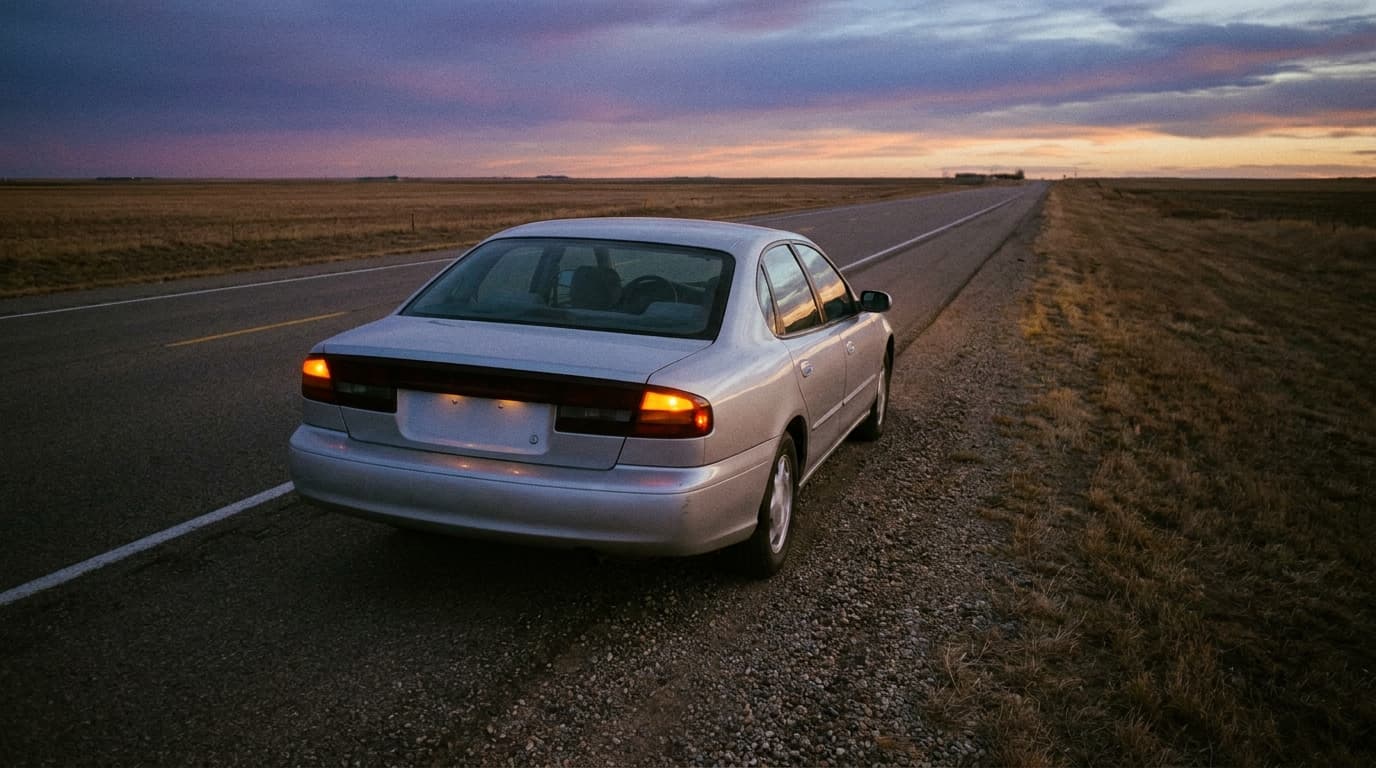
You're driving in the left lane a few miles per hour over the speed limit, a police officer pulls up behind you, and you move into the right lane. After you slow down, you can't help but wonder: is it possible they gave me a ticket?
Yes, a speeding ticket can reach you without a traffic stop. In the United States the mechanism that reliably does it is automated camera enforcement: equipment records the violation, and the citation is mailed to the vehicle's registered owner. Whether that can happen where you drive is a state-law question, because some states permit speed cameras and others ban them outright.
Can a cop clock your speed while driving?
Yes. Patrol radar is built to work from a moving car, not only a parked one. Illinois State Police policy describes moving radar as a unit used to monitor the speed of vehicles while the patrol car is in either a stationary position or a moving position.
What is not standard is the second antenna. These units are sold in one-antenna and two-antenna configurations, and the forward-facing antenna is the baseline. The South Carolina Criminal Justice Academy requires a radar operator to demonstrate proficiency in forward stationary and moving mode at a minimum, and treats rear antenna, same direction and dual antenna work as separate test sections to be completed only for instruments designed with those capabilities. Illinois State Police policy refers to the antenna unit "including the rear antenna if so equipped." A rear-facing antenna is a genuine capability, but it is an option on particular models rather than something every patrol car carries.
Moving mode is also widely misunderstood. It does not report how much faster you are going than the police car. The unit measures the patrol car's own speed first, from the radar signal reflecting off the stationary road and roadside objects it is passing, and then uses that figure to work out your actual speed over the ground. Patrol speed and target speed appear as two separate readings, and Illinois State Police operators are required to compare the displayed patrol speed against the cruiser's own speedometer and to see no more than one mile per hour of difference between them.
So a police car does not have to be parked to read your speed, and if its unit has a rear antenna, it does not have to be ahead of you either.
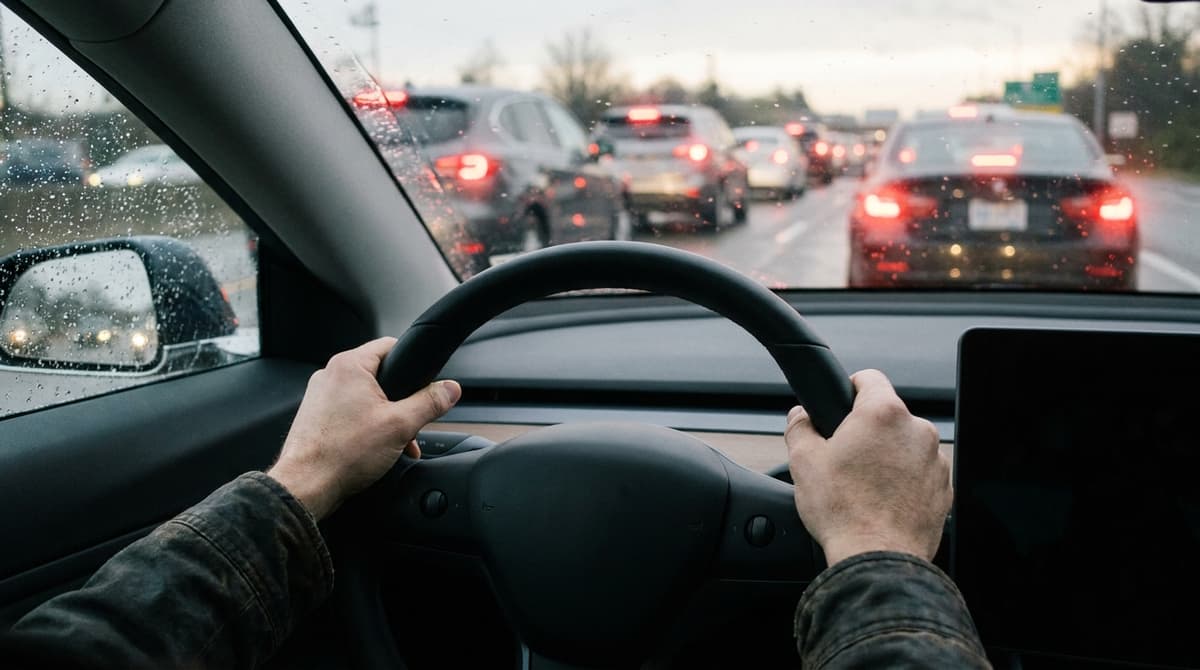
Can a police officer send you a ticket from just your license plate?
Usually not on its own. The documented route to a ticket with no stop is an automated speed camera program, where the equipment captures the vehicle and its plate and a citation goes out by mail to the registered owner. Those programs can be unmanned photo radar or manned photo radar, depending on the jurisdiction.
The mailed-citation statutes on the books are tied to camera systems rather than to an officer's own observation. Florida's school-zone speed detection law shows the shape these take: a notice of violation must be sent to the registered owner within 30 days of the violation, and a uniform traffic citation is mailed by certified mail only if that notice goes unpaid for 30 days and the owner has not requested a hearing or filed an affidavit. The camera system is the trigger, and the statute builds in a step where the owner can respond before anything becomes a citation.
There is no general rule letting an officer mail a speeding ticket off a plate reading with no camera system behind it. Reading a plate identifies a vehicle, not a driver, and identifying the driver is one of the things a traffic stop accomplishes.
The practical point stands: if an officer intends to ticket you and is in a position to do it, it is far more likely that they pull you over than that something arrives in the mail weeks later. Who may be cited, and how, is set by state law, so check your state's traffic code or motor vehicle agency rather than relying on a general rule.

Where speed cameras are legal, and where they are not
Two organizations count this, and they count different things, so the figures should not be merged into one national number.
The Governors Highway Safety Association tracks what state law permits: 19 states plus the District of Columbia have passed laws permitting speed cameras, and 10 states have passed laws prohibiting them. GHSA last updated that page in October 2025, based on laws reviewed by state highway safety offices in June 2025.
The Insurance Institute for Highway Safety counts where cameras actually operated: speed safety cameras were in use in 338 US communities in 26 states plus the District of Columbia during 2025. IIHS also notes cameras used statewide in highway work zones in Arkansas, Colorado, Connecticut, Delaware, Illinois, Indiana, Kentucky, Maryland, Minnesota, New York, Oregon, Pennsylvania, Virginia and Washington.
State legislatures keep moving on this in both directions. In 2025, lawmakers in New York, Massachusetts and Maryland advanced measures expanding automated traffic enforcement, while Louisiana narrowed speed cameras to active school zones and North Carolina passed legislation allowing automated systems to detect speed violations in school zones. Wisconsin, which does not currently allow speed cameras, saw companion bills to let Milwaukee use them; as of MultiState's February 2026 recap, neither bill had passed out of its chamber. Treat any count, including the ones above, as a dated snapshot that the next legislative session can change.

Do camera tickets put points on your license?
Often they do not, but that is a state and local question, not a national rule. GHSA describes automated enforcement penalties this way:
"Penalties usually are more lenient than those used with traditional enforcement. For example, the fine may be lower, points may not be assessed or the citation may not go on the driver's record."
Note: A camera citation is mailed to the registered owner, and GHSA reports that points often are not assessed in these programs. That is not a guarantee for your state or your program. Read the notice itself and confirm the penalty with the court or agency named on it.
If a ticket shows up in the mail
Camera authority, fines and points all sit in state and local law, and several states changed theirs during 2025 alone. Confirm any mailed citation against the court or agency printed on the notice before you pay it or contest it, and check the deadline on the notice itself rather than assuming the window matches a roadside ticket.
Frequently Asked Questions
Can a police car catch you speeding from behind?
It can if its radar unit has a rear antenna, which is an option on particular models rather than standard equipment on every patrol car. Where the capability exists, the unit can read your speed while the cruiser is behind you. Treat the reading as accurate within the tolerance the device holds when it is properly operated and maintained, not as an exact figure: Illinois State Police, for example, require a radar accuracy check using the power-on self-test, internal circuit test and certified tuning forks both before and after every tour of duty, and any unit producing unusual or suspect readings is removed from service until a qualified technician clears it.
How long does a speed camera ticket take to arrive?
That is set by the state's statute, so the notice you receive governs rather than any general rule. Florida's school-zone speed detection law requires the notice of violation to be sent to the registered owner within 30 days of the violation, and then allows another 30 days to pay, request a hearing or submit an affidavit before a uniform traffic citation is mailed by certified mail. Other states set their own windows, so read the dates printed on the notice.
The camera ticket came to me, but I was not driving. What happens then?
Camera citations go to the registered owner because a plate identifies a vehicle rather than a driver. Statutes commonly build in a way to say you were not the driver. Under Florida's school-zone law, a registered owner who submits an affidavit in accordance with the statute avoids the escalation to a uniform traffic citation. Whether your state offers that route, and what it requires, is a matter of state law, so confirm it against the notice and the agency named on it.
Can I ignore a mailed camera notice?
No. These statutes are generally built to escalate when a notice goes unanswered. In Florida, if the registered owner has not paid within 30 days of the notice, has not requested a hearing and has not submitted an affidavit, a uniform traffic citation is issued and mailed by certified mail. Contact the court or agency printed on the notice before the deadline on it, even if you intend to contest the violation.
Updates
Corrected a garbled line that said demerit points would be taken off your license, and replaced two off-topic California speed-limit citations with sources on automated camera enforcement. Removed a patent citation that did not support the radar claims attached to it, and re-sourced the section on police radar to Illinois State Police policy and South Carolina Criminal Justice Academy training materials. Corrected the explanation of moving-mode radar, which measures the patrol car's own speed and then your actual speed rather than a speed relative to the cruiser, and clarified that a rear-facing antenna is an option on some units rather than standard equipment. Added current figures on which states permit speed cameras, where they actually operate, and how 2025 legislation changed both, plus a key takeaways summary and a new FAQ covering how long a mailed camera ticket takes to arrive and what to do if the ticket names you but someone else was driving.
Independently fact-checked against the cited primary sources
Sources and References
- Illinois State Police Directive EQP-006, Speed Detection Equipment (revised December 9, 2024): moving radar is used while the patrol car is stationary or moving; the antenna unit includes the rear antenna "if so equipped"; in moving mode operators must verify the displayed patrol vehicle speed against the patrol speedometer within plus or minus one mile per hour; radar accuracy tests using the power-on self-test, internal circuit test and certified tuning forks are required before and after each tour of duty, covering stationary, moving and same direction modes, and units giving persistent suspect readings are removed from service until checked by a qualified technician(isp.illinois.gov).gov
- South Carolina Criminal Justice Academy, Traffic Safety Unit, Speed Measuring Device Road Proficiency Field Testing Forms (revised June 2019): for a radar unit, "forward stationary and moving mode must as a minimum be completed," while rear antenna, same direction, dual antenna and digital signal processing sections are completed only for instruments designed with those capabilities; the booklet scores front antenna as the minimum required and rear antenna and same direction tests as "If Utilized"(sccja.sc.gov).gov
- Stalker S DUAL and DUAL SL Moving Police Radar Operator's Manual (Applied Concepts), copy published by the City of Hamilton: the radar is "operational with one or two antennas"; in moving mode two signals are processed, with patrol speed derived from the radar signal reflecting off passing stationary objects and then subtracted from the closing speed to determine the target vehicle's speed, in both opposite lane and same lane moving mode(hamilton.ca)
- Fla. Stat. 316.1896, Roadways maintained as school zones; speed detection system enforcement; penalties; appeal procedure; privacy; reports: subsection (2) requires notice to be sent to the registered owner within 30 days after a violation, and subsection (6) provides that a uniform traffic citation is mailed by certified mail to the registered owner only if payment has not been made within 30 days after that notice, no hearing has been requested under subsection (3), and no affidavit has been submitted under subsection (8)(flsenate.gov).gov
- Governors Highway Safety Association, Speed and Red Light Cameras: 19 states plus the District of Columbia permit speed cameras and 10 states prohibit them; penalties are usually more lenient than traditional enforcement and points may not be assessed (last updated October 2025; laws reviewed by State Highway Safety Offices June 2025)(ghsa.org)
- Insurance Institute for Highway Safety, Speed: speed safety cameras operated in 338 U.S. communities in 26 states and the District of Columbia during 2025, including statewide work-zone programs in 14 states(iihs.org)
- MultiState, Automated Traffic Enforcement Bills Confront Privacy and Safety Debates (2025 legislative recap, published February 3, 2026): New York, Massachusetts and Maryland advanced expansions while Louisiana narrowed speed cameras to active school zones and North Carolina authorized school-zone automated speed detection; Wisconsin lawmakers introduced companion bills to allow Milwaukee to use speed safety cameras, "though neither bill has passed out of its respective chamber"(multistate.us)