Photo Video Recording Consent Form
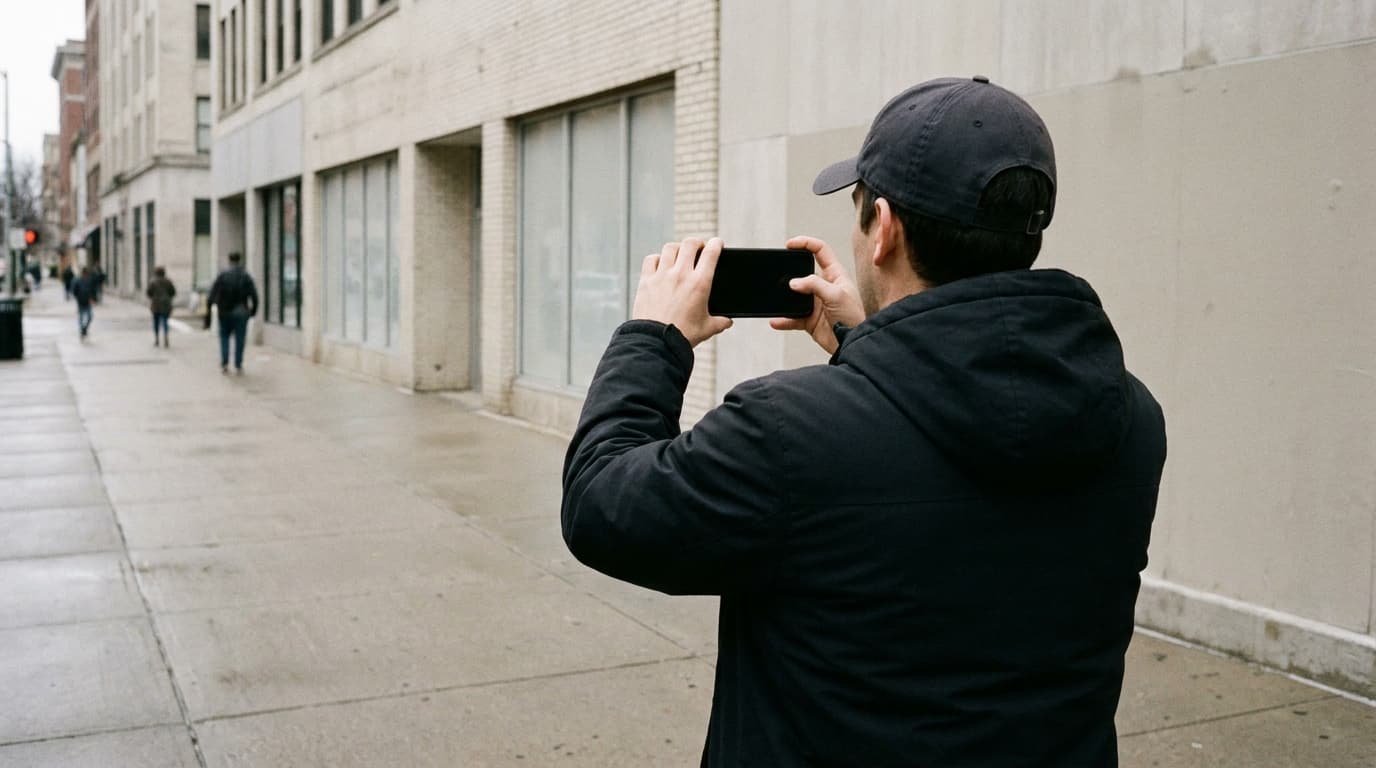
A photo and video consent form, also called a model release, is a signed document giving a photographer, videographer, or organization permission to use a person's image, voice, name, or likeness in photos, video, or other media.
This page covers general United States law on the right of publicity and privacy as it applies to photo and video releases. Specific rules vary by state, some of which, including California and New York, have their own statutes; it does not address the law of any country outside the United States.
If you need something more robust for ongoing commercial use with compensation, see our name and likeness licensing agreement instead. The release below fits one-time or occasional use where the subject is not being paid.
What Is a Photo and Video Consent Form?
A photo and video consent form, or model release, is a written agreement in which a person allows their photograph, video recording, voice, name, or statements to be used by the person or organization recording them. Signing the form does two things: it gives the photographer or organization documented permission to record and publish the material, and it protects them from a later claim that the recording or publication was unauthorized.
The form typically covers three separate permissions: permission to record (to photograph, film, or make an audio or video recording of the person), permission to use the person's name, and permission to publish the resulting material, such as quotes, footage, or photographs, in the organization's publications, advertising, or other media, including online. Some releases limit this use to a specific project; others, like the general-purpose template below, grant broader, ongoing permission.
Why You Need Consent: The Right of Publicity
Every U.S. state recognizes some version of the right of publicity, the legal principle that protects a person's name, image, and likeness from unauthorized commercial use. About half the states have codified the right by statute; the rest protect it through common law privacy or unfair competition claims instead. Because the details differ by state, what counts as a required consent in one state may not be identical in another.
California's version, Civil Code section 3344, makes it unlawful to knowingly use someone's name, voice, signature, photograph, or likeness for advertising or selling a product without their consent. New York's Civil Rights Law section 50 similarly requires the written consent of the person, or if a minor, of the minor's parent or guardian, before their name, portrait, picture, or voice may be used for advertising or trade purposes; using it without consent is a misdemeanor under that statute, and New York's Civil Rights Law section 51 also allows the person to sue for an injunction and damages.
When Consent Generally Isn't Required
California's statute, like most other states' publicity laws, exempts the use of a person's name, photograph, or likeness in connection with a news, public affairs, or sports broadcast or account, since that kind of editorial use is treated as newsworthy rather than commercial. A photo and video consent form is generally needed for advertising, marketing, product packaging, social media promotion, and similar commercial or promotional use, not for a news photograph or interview covering a matter of public interest.
What to Include in a Photo and Video Consent Form
A complete release should address each of the following:
- Identification of the parties. The name of the person being recorded and the name of the person, business, or organization requesting consent.
- Scope of the recording. What the person is agreeing to: being photographed, filmed, or recorded on video or audio, and whether interview statements may be quoted.
- Scope of use. Where the material may be used, such as publications, advertising, broadcast, or the internet, and whether that use is limited to one project or ongoing.
- Compensation. Whether the person is being paid for their appearance or is granting consent without expecting payment.
- Duration and revocability. Whether consent is granted for a limited time or in perpetuity, and whether it can later be withdrawn.
- Signatures and date. Signatures of the person giving consent (or their parent or guardian, if a minor) and the person or organization obtaining it, along with the date.
Consent for Minors
If the person being photographed or recorded is under 18, a parent or legal guardian generally must sign the release on the minor's behalf. New York's privacy statute expressly requires the written consent of a minor's parent or guardian before the minor's name, portrait, or likeness may be used for advertising or trade. Because a minor generally has the right to disaffirm, or cancel, a contract before or shortly after turning 18, under principles such as California Family Code section 6710, many releases involving minors include a signature line for both the parent or guardian and the minor, even though only the adult's signature is legally binding on its own.
If you are unsure how a release should be worded for your situation, the American Bar Association's Find Legal Help directory is a free way to locate a licensed attorney in your state.

Photo and Video Recording Consent and Release Form
Copy the template below, fill in the bracketed fields, and have each party sign. Our forms are free to use.
PHOTO AND VIDEO RECORDING CONSENT AND RELEASE FORM
Without expectation of compensation or other remuneration, now or in the future, I hereby give my consent to ( name of photographer, videographer, or organization ), its affiliates and agents, to use my image and likeness and/or any interview statements from me in its publications, advertising, or other media activities, including the internet. This consent includes, but is not limited to:
(a) Permission to interview, film, photograph, tape, or otherwise make a video reproduction of me and/or record my voice;
(b) Permission to use my name; and
(c) Permission to use quotes from the interview(s), or excerpts of such quotes, the film, photograph(s), tape(s), or reproduction(s) of me, and/or recording of my voice, in part or in whole, in its publications, in newspapers, magazines, and other print media, on television, radio, and electronic media, including the internet, in theatrical media, and/or in mailings for educational and awareness purposes.
This consent is given in perpetuity and does not require prior approval by me.
Name: ( print name )
Address: ( address )
Signature: _________________________________ Date: _______________
Signature of Parent or Guardian (required if the person named above is a minor)
Signature: _________________________________ Date: _______________
Signature of Photographer/Videographer
Signature: _________________________________ Date: _______________
Signature of Organization
Signature: _________________________________ Date: _______________
Related Legal Document Templates
Looking for another legal document? Explore the related free templates below.
Other Free Forms
- Cease and desist letter
- DMCA takedown notice template
- Bicycle bill of sale
- Boat bill of sale
- Cat bill of sale
- Furniture bill of sale
- Gun bill of sale
- Livestock bill of sale
- Motor vehicle bill of sale
- Motorbike bill of sale
- Pet bill of sale
- RV bill of sale
- Trailer bill of sale
- Lease agreement form
- Name and likeness licensing agreement
- Partnership agreement template
- Service agreement template
- Bill of sale guide
- DMCA takedown guide
Frequently Asked Questions
Do I need a photo or video release for news reporting?
Generally, no. California's publicity statute, like most other states' laws, exempts the use of a person's name, photograph, or likeness in connection with a news, public affairs, or sports broadcast or account, since that use is treated as newsworthy rather than commercial. A release is typically needed for advertising, marketing, or other promotional use, not for news coverage of a matter of public interest.
What is the difference between this consent form and a name and likeness licensing agreement?
This form is a simple, general-purpose release for one-time or occasional use where the person is not being paid. A name and likeness licensing agreement is a more detailed contract used when someone's name or image will be used commercially on an ongoing basis in exchange for compensation, and it typically spells out payment terms, exclusivity, and duration in more detail.
Does a photo and video consent form need to be notarized?
Generally, no. A signed consent form is valid once signed by the person giving consent (or their parent or guardian, if a minor) and does not require notarization in most states. Some organizations choose to have signatures witnessed for extra evidentiary security, but this is optional unless a specific policy requires it.
Can someone revoke consent after signing the form?
It depends on how the form is written. The template on this page states that consent is given in perpetuity and does not require further approval, which is a common approach in general-purpose releases. If you want the person to be able to withdraw consent later, that needs to be stated explicitly in the form, since a release silent on revocation is generally treated as permanent.
Do I need a parent or guardian's signature for a minor?
Yes. If the person being photographed or recorded is under 18, a parent or legal guardian should sign the release on the minor's behalf. New York's privacy statute, for example, expressly requires the written consent of a minor's parent or guardian before the minor's name, portrait, or likeness may be used for advertising or trade purposes.
What happens if someone's photo or video is used without consent?
It can expose the person or organization who used it to a legal claim under the applicable state's right of publicity or privacy law. New York's Civil Rights Law, for example, makes unauthorized commercial use of a person's name, portrait, or voice a misdemeanor and lets the person sue for an injunction and damages. California's Civil Code 3344 similarly allows the person whose likeness was used to recover damages. Recording Law does not provide legal advice; consult an attorney licensed in your state for advice about your specific situation.
Updates
Fixed three links that were stripped down to bare, unclickable URLs by an old WordPress migration bug: one internal link to the name and likeness licensing agreement, and a duplicated link to a Microsoft Word template download. Removed that dead Word download entirely (the file no longer exists on the site) since the template text is already reproduced in full on the page. Removed a leftover 'Our forms are free and always will be' promotional line, a remnant of the competing document-builder affiliate pattern found and removed on sibling forms pages. Fixed a broken blank field in the release template where the organization's name had been stripped out. Reformatted the signature block into clear, labeled lines and added a dedicated parent or guardian signature line for minors. Corrected the page's category from Recording Laws to Legal Information to match sibling forms pages. Added sections explaining the right of publicity, when consent is and is not required, and consent for minors, each with citations to California Civil Code 3344, New York Civil Rights Law 50 and 51, and California Family Code 6710. Added Key Takeaways, a related forms cross-link list, and a new FAQ section.
The Law Behind This Article
This article rests on the statutory provisions below, held in our own legal record and retrieved from the official source. Tap a section to read the operative text.
California Civil Code
§ 3344In forcecited in 4 of our articles
(a) (1) Any person who knowingly uses another’s name, voice, signature, photograph, or likeness, in any manner, on or in products, merchandise, or goods, or for purposes of advertising or selling, or soliciting purchases of, products, merchandise, goods, or services, without that person’s prior consent, or, in the case of a minor, the prior consent of their parent or legal guardian, shall be liable for any damages sustained by the person or persons injured as a result thereof. In addition, in any action brought under this section, the person who violated the section shall be liable to the injured party or parties in an amount equal to the greater of seven hundred fifty dollars ($750) or the actual damages suffered by them as a result of the unauthorized use, and any profits from the unauthorized use that are attributable to the use and are not taken into account in computing the actual damages. In establishing these profits, the injured party or parties are required to present proof only of the gross revenue attributable to the unauthorized use, and the person who violated this section is required to prove their deductible expenses.
Official text (excerpt) · last checked 2026-07-28 · Read the full text in our law library · Verify at leginfo.legislature.ca.gov
Cited in 274 court opinions in our collectionLatest citing opinion in our collection: 2026
Opinions citing this section in our collection:
- Lugosi v. Universal Pictures (California Supreme Court 1979, 25 Cal. 3d 813)“…0 .) Certainly the Legislature by appropriate amendment to Civil Code section 3344 (see fn. 6, ante), might recognize a…”
- Eastwood v. Superior Court (California Court of Appeal 1983, 149 Cal. App. 3d 409)“…t person’s right of publicity under both the common law and Civil Code section 3344, subdivision (a). We have determined th…”
- Stewart v. Rolling Stone LLC (California Court of Appeal 2010, 181 Cal. App. 4th 664)“…ses of action: (1) unauthorized use of name in violation of Civil Code section 3344, (2) unauthorized use of name for comme…”
Identified automatically from the court opinions citing this section — not a ranking of which case controls.
Also relied on in: California Deepfake Laws: AI Images, Voice Cloning & Penalties (2026), Ninth Circuit Affirms Classmates.com Yearbook Class Certification, Florida Deepfake Laws: AI Images, Voice Cloning & Penalties (2026)
California Family Code
§ 6710In force
Except as otherwise provided by statute, a contract of a minor may be disaffirmed by the minor before majority or within a reasonable time afterwards or, in case of the minor’s death within that period, by the minor’s heirs or personal representative.
Official text (excerpt) · last checked 2026-07-28 · Read the full text in our law library · Verify at leginfo.legislature.ca.gov
Cited in 25 court opinions in our collectionLatest citing opinion in our collection: 2026
Opinions citing this section in our collection:
- Berg v. Traylor (California Court of Appeal 2007, 56 Cal. Rptr. 3d 140)“…n adult, subject to the power of disaffirmance” provided by Family Code section 6710. In turn, Family Code section 6710 stat…”
- J.R. v. Electronic Arts (California Court of Appeal 2024)“…el on the ground that J.R. II had exercised his power under Family Code section 6710 to disaffirm all of his contracts with…”
- Chui v. Chui (California Court of Appeal 2022)“…r before majority or within a reasonable time afterwards.” (Fam. Code, § 6710; see, e.g., Berg v. Traylor (2007) 148…”
Identified automatically from the court opinions citing this section — not a ranking of which case controls.
New York Civil Rights Law
§ 50Right of privacyIn forcecited in 2 of our articles
Right of privacy. A person, firm or corporation that uses for advertising purposes, or for the purposes of trade, the name, portrait, picture, likeness, or voice of any living person without having first obtained the written consent of such person, or if a minor of such minor's parent or guardian, is guilty of a misdemeanor.
Official text (excerpt) · last checked 2026-07-29 · Read the full text in our law library · Verify at legislation.nysenate.gov
Cited in 278 court opinions in our collectionLatest citing opinion in our collection: 2026
Opinions citing this section in our collection:
- Howell v. New York Post Co. (New York Court of Appeals 1993, 81 N.Y.2d 115)“…eking multimillion dollar damages for alleged violations of Civil Rights Law §§ 50 and 51, intentional and negligent infli…”
- Messenger v. Gruner + Jahr Printing & Publishing (New York Court of Appeals 2000, 94 N.Y.2d 436)“…3 NY2d 948 ): "1. May a plaintiff recover under New York Civil Rights Law §§ 50 and 51 where the defendant used the pla…”
- Finger v. Omni Publications International., Ltd. (New York Court of Appeals 1990, 77 N.Y.2d 138)“…laintiffs commenced this action alleging only violations of Civil Rights Law §§ 50 and 51. Defendant moved to dismiss the…”
Identified automatically from the court opinions citing this section — not a ranking of which case controls.
Also relied on in: New York Deepfake Laws: AI Images, Voice Cloning & Penalties (2026)
Search our full record of US law — 2.1 million sections, every state + federal →
Sources and References
- Cornell Law School, Wex: Right of Publicity(law.cornell.edu)
- California Legislative Information: Civil Code Section 3344(leginfo.legislature.ca.gov).gov
- New York State Senate: Civil Rights Law Section 50, Right of Privacy(nysenate.gov).gov
- California Legislative Information: Family Code Section 6710, Disaffirmance of Contracts(leginfo.legislature.ca.gov).gov
- American Bar Association: Find Legal Help(americanbar.org)