
Washington
Washington Recording Laws (2026): All-Party Consent Rules
Independently fact-checked against primary sources (last audited August 22, 2026). · Reviewed by the RecordingLaw editorial team. · Law checked current as of August 22, 2026. · 18 primary sources cited on this page. How we verify our legal content
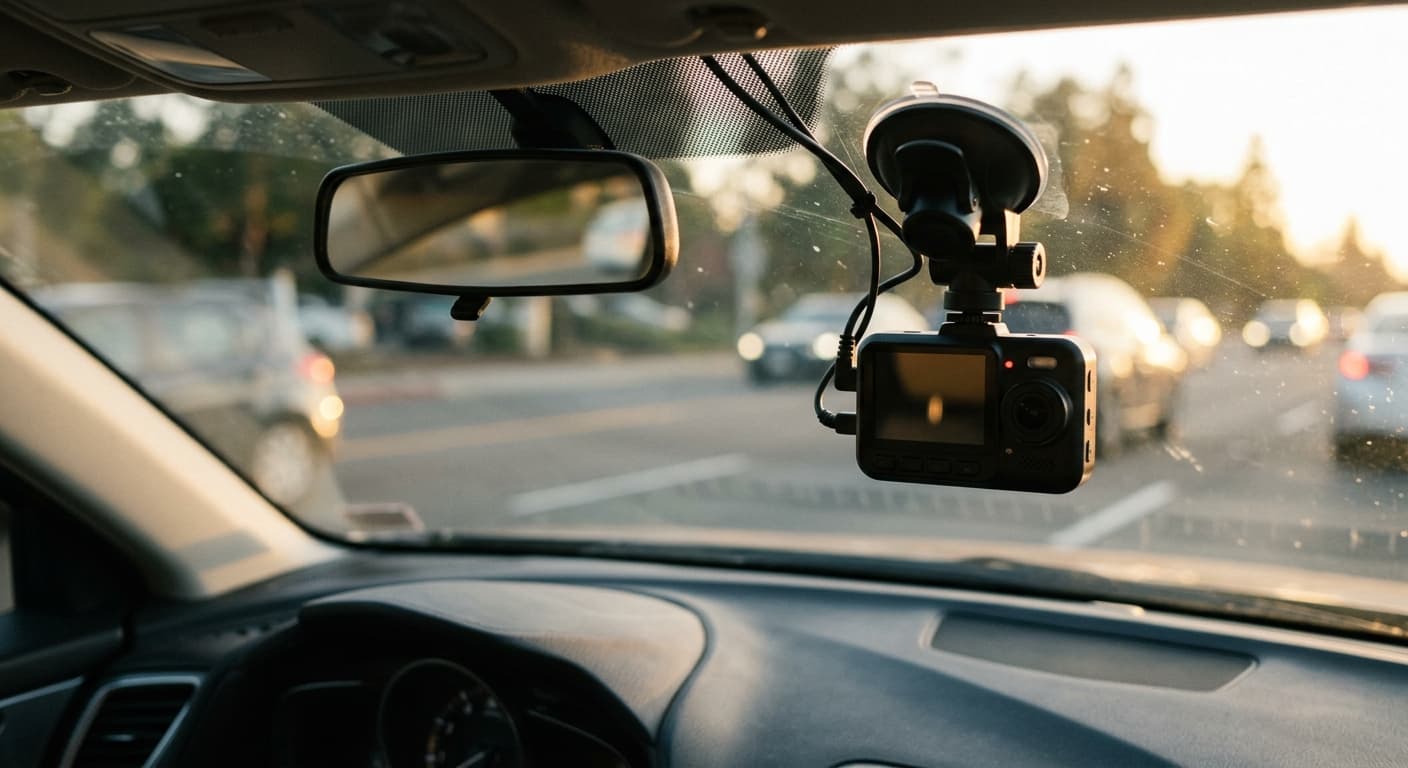
Washington is an all-party consent state under RCW 9.73.030: every participant in a private conversation or phone call must consent before anyone may record it. Secretly recording a conversation you are part of is still a crime. Violations are a gross misdemeanor carrying up to 364 days in jail and a $5,000 fine, and any illegally obtained recording is inadmissible in Washington courts.
Washington recording law at a glance
| Question | Answer |
|---|---|
| Consent standard | All-party (every participant must consent) |
| Main statute | RCW 9.73.030 |
| When recording is illegal | Any private conversation or call without all parties' consent |
| Criminal penalty | Gross misdemeanor: up to 364 days jail, $5,000 fine |
| Civil penalty | $100/day (max $1,000) or actual damages, plus attorney fees |
| Hidden cameras / voyeurism | RCW 9A.44.115: Class C felony (first degree) or gross misdemeanor (second degree) |
| Recording police | Lawful in public; officer-public conversations are not private under the WPA |
For a deeper dive, jump to the Washington recording laws in depth section.
Recording in-person conversations in Washington
Washington's Washington Privacy Act (WPA) has required all-party consent since 1967. Under RCW 9.73.030, no person may intercept or record any private in-person conversation without the consent of every participant. The statute's label as "two-party consent" is a shorthand that understates its reach: on a five-person call, all five must consent.
This all-party rule applies equally to telephone calls and in-person conversations under RCW 9.73.030(1)(a)-(b) itself. The Washington Supreme Court's State v. Townsend, 147 Wn.2d 666, 57 P.3d 255 (2002), supplies the multi-factor test courts use to decide whether a given communication is private under the WPA. The case itself arose from a police sting operation recording a suspect's email and ICQ instant messages, not a phone call or in-person conversation, and the court held the defendant had impliedly consented to that recording.
The WPA protects only "private" communications. Courts apply a multi-factor test from Townsend: the parties' subjective expectation of privacy, the subject matter, the location, the presence of potential third-party listeners, and the relationship between the parties. A quiet office meeting differs legally from a shouted argument on a busy sidewalk.
Practical example: You cannot record a face-to-face meeting with your boss without first telling everyone present that you are recording. A statement such as "I am recording this conversation," made audibly once the device is recording, so the announcement itself is captured, satisfies RCW 9.73.030(3). Written notice given before a meeting begins may help, but because the statute requires the announcement itself to be recorded, repeating the notice aloud once recording starts is the safer practice.

Recording phone calls in Washington
The same all-party consent rule applies to telephone calls (landline, cell, and VoIP). Every person on the call must consent before anyone may record it.
The standard business method is an automated message that plays before the call connects: "This call may be recorded for quality assurance purposes." The message must play before recording begins and must itself be captured in the recording file, satisfying RCW 9.73.030(3).
Interstate calls: When a call crosses state lines, the stricter state's law governs. Washington's all-party rule is stricter than federal law (which requires only one-party consent under 18 U.S.C. 2511). Anyone calling into or out of Washington must satisfy RCW 9.73.030, regardless of the other party's state.
Video conferencing: Zoom, Teams, and Google Meet capture audio by default. The platform's built-in recording notification (which announces to all participants that recording is starting) may satisfy RCW 9.73.030(3), but that is untested: the statute also requires the announcement itself to be recorded, and a visual banner or popup may not be captured in the recording. The safe practice is a spoken announcement made after recording starts, so it is captured in the file.
See our Washington Phone Call Recording Laws guide for business call recording, TCPA, and interstate call rules.
Hidden cameras, doorbells, and nanny cams
Washington's Chapter 9.73 governs audio. Its application to video turns on whether audio is captured.
Silent video in public is generally lawful. Filming people in places where they have no reasonable expectation of privacy (streets, parks, government buildings, public demonstrations) does not trigger the WPA.
Video with audio is a different matter. The moment a recording device captures audio of a private conversation, RCW 9.73.030 applies and all-party consent is required. A smartphone video at a family dinner, a conference recording, a doorbell camera picking up a neighbor's private conversation: all require consent.
Audio-enabled security cameras aimed at private spaces (offices, break rooms, restrooms) trigger RCW 9.73.030 for the audio component. Best practice is to disable audio pickup on interior cameras in private-use areas or post clear notice that audio recording is active.
Voyeurism (RCW 9A.44.115): Separate from the WPA, Washington prohibits recording intimate areas without consent:
- Voyeurism in the first degree (Class C Felony): Knowingly viewing, photographing, or filming another person without their knowledge and consent in a place where they have a reasonable expectation of privacy, for purposes of sexual arousal or gratification.
- Voyeurism in the second degree (Gross Misdemeanor): Intentionally photographing or filming intimate areas of another person without consent and with intent to distribute, under circumstances where the person has a reasonable expectation of privacy.
A recording can violate both statutes simultaneously (one for capturing private audio without consent, one for targeting intimate areas), and each violation is independent.
See our Washington Voyeurism and Hidden Camera Laws and Washington Security Camera Laws guides for full coverage.
Penalties for illegal recording in Washington
Criminal penalties
Under RCW 9.73.080(1), violating RCW 9.73.030's all-party consent requirement is a gross misdemeanor. RCW 9.92.020 sets the maximum at 364 days in county jail and a $5,000 fine.
| Offense | Classification | Max Jail | Max Fine |
|---|---|---|---|
| Recording without consent (RCW 9.73.080(1)) | Gross misdemeanor | 364 days | $5,000 |
| Altering, erasing, or wrongfully disclosing a police in-car audio recording (RCW 9.73.080(2)) | Gross misdemeanor | 364 days | $5,000 |
The second row is narrow, and it is easy to misread as a general ban on sharing a recording. RCW 9.73.080(2) punishes knowingly altering, erasing, or wrongfully disclosing a recording only "in violation of RCW 9.73.090(1)(c)", and RCW 9.73.090(1)(c) covers just one category: sound recordings that correspond to video images recorded by video cameras mounted in law enforcement vehicles. Chapter 9.73 creates no general offense of disclosing a recording.
This is a meaningful difference from California and Illinois, which treat the same conduct as a felony. Washington's gross misdemeanor classification avoids the collateral consequences of a felony conviction (such as firearm restrictions), but it still produces a criminal record affecting employment and professional licensing.
Civil remedies
Under RCW 9.73.060, any person whose communications were illegally recorded may sue and recover:
- Actual damages, including mental pain and suffering
- Liquidated damages of $100 per day of violation, capped at $1,000 per violation
- Reasonable attorney fees and court costs
The injured party elects whichever measure is more favorable. Because actual damages in recording cases are often hard to quantify, the $1,000 ceiling plus attorney fees provides a meaningful floor.
Inadmissibility
RCW 9.73.050 bars use of illegally obtained recordings in any Washington civil or criminal proceeding. Two narrow exceptions apply: the victim may consent to use the recording in their own damages action, or the recording may be admitted in a national-security criminal case. Outside those situations, exclusion is absolute.

Recording the police in Washington
Recording police officers performing their public duties in public is protected by the First Amendment. Officers conducting a traffic stop, making an arrest, or managing a crowd at a demonstration are engaged in public-facing government activity that citizens have a constitutional interest in documenting.
Why police-public conversations are generally not "private" under the WPA: AGO 2014 No. 8 (Nov. 24, 2014) concluded that conversations between law enforcement officers and members of the public during body camera use are not "private" communications under the WPA. The Townsend multi-factor test supplies the reasoning: police-citizen encounters in public involve no reasonable expectation of privacy because officers act in an official capacity in open view.
Practical guidelines: record openly; do not physically interfere with officers; officers cannot lawfully demand you stop recording or seize your device without a warrant or lawful arrest; step back to a safe distance if directed but you are not required to stop recording.
Body cameras operate under RCW 10.109, not RCW 9.73.030. HB 2644 (69th Leg., 2025-26 Biennium), which proposes amendments to the body-camera chapter, had not received a floor vote as of the publication date and would not alter RCW 9.73.030's all-party consent rule in any event.
See our Washington Laws on Recording Police guide for First Amendment doctrine, public meetings, and custodial interrogation recording rules.
Special topics in Washington
Consent by announcement and the Lewis notice nuance
RCW 9.73.030(3) establishes the "consent by notice" mechanism: consent is legally obtained when one party announces to all others, in any reasonably effective manner, that the communication is about to be recorded, and that announcement is itself recorded. The statute does not require the other party to affirmatively say "yes." Staying on the line after a clear notice implies consent.
Washington courts have also recognized implied consent where context makes recording obvious. Leaving a voicemail implies consent because the answering machine's sole function is to record messages. Sending a message through a system known to log communications implies consent to that logging.
One-party consent exceptions for emergencies and threats
RCW 9.73.030(2) carves out four narrow situations where recording with only one party's consent is lawful, even though subsection (1) otherwise requires everyone to agree. One-party consent is enough for: communications of an emergency nature, such as reporting a fire, medical emergency, crime, or disaster (this covers most calls to 911 and other emergency responders); communications that convey threats of extortion, blackmail, bodily harm, or other unlawful demands; calls that are anonymous, repeated, or made at an extremely inconvenient hour; and communications involving a hostage holder or barricaded person as defined in RCW 70.85.100. Outside these four categories, subsection (1)'s all-party consent rule applies without exception.
Federal overlay
Federal law (18 U.S.C. 2511, ECPA) sets a one-party consent floor. Washington's all-party rule is stricter and controls for in-state conduct. The two regimes must both be satisfied; federal law does not preempt the state standard.
FCC 24-17 (Feb. 8, 2024) declared AI-generated voice technologies constitute "artificial or prerecorded voice" under the TCPA, requiring prior express consent for such calls. This federal obligation applies concurrently with RCW 9.73.030 to calls into or within Washington.
The FCC's 2023 One-to-One Consent Rule was vacated by the Eleventh Circuit in Insurance Marketing Coalition Ltd. v. FCC, 127 F.4th 303 (11th Cir. 2025). FCC DA 25-621 reinstated the pre-2023 standard nationwide. The operative rule for prior express written consent is the same in Washington as elsewhere.
Workplace recording and NLRB overlay
Washington's all-party consent standard applies fully in employment settings. An employee who secretly records a supervisor or coworker violates RCW 9.73.030 regardless of purpose; the recording is also inadmissible under RCW 9.73.050. The statutory threat exception (RCW 9.73.030(2)) permits one-party consent recording only for the specific threatening communication.
The NLRB's Stericycle, Inc., 372 NLRB No. 113 (Aug. 2, 2023), held that facially neutral no-recording policies are presumptively unlawful if they chill Section 7 rights. Employer recording bans must be narrowly drawn. NLRB GC Memo 25-07 (June 26, 2025) treats surreptitious recording of collective-bargaining sessions as a per se violation of the duty to bargain in good faith under NLRA Sections 8(a)(5)/8(b)(3), and in Washington such recording is separately and independently prohibited by RCW 9.73.030.
See our Washington Workplace Recording Laws guide for full employer-monitoring and NLRB guidance.
Healthcare and schools
HIPAA (45 CFR 160.103) classifies audio and video recordings of patient communications as protected health information when maintained by a covered entity. Washington providers must satisfy both HIPAA authorization requirements and RCW 9.73.030(3) announcement consent; neither statute displaces the other.
FERPA (34 CFR Part 99) governs disclosure of student-identifiable recordings maintained by a school. Washington schools must satisfy both FERPA disclosure rules and RCW 9.73.030 recording-consent rules. See our Washington Medical Recording Laws and Washington School Recording Laws guides for full coverage.
Website tracking pixels: no Privacy Act claim for automated website activity
In Baker v. Seattle Children's Hospital, No. 104590-5 (Wash. Oct. 8, 2026) (en banc), the Washington Supreme Court affirmed dismissal of a putative class action alleging that a hospital's use of Meta Pixel to track visitors' clicks and searches on its public website violated RCW 9.73.030(1)(a). The court held that the provision reaches only private communications "between two or more individuals," and that a visitor interacting with a fully automated system a corporation owns and operates is not communicating with an "individual" (slip op. at 7, 10). The court expressly declined to decide whether those searches and clicks were "private communications" at all (slip op. at 10). That is a narrower ground than the one the Court of Appeals used below: in Baker v. Seattle Children's Hospital, No. 86461-1-I (Wash. Ct. App. Div. I, Aug. 18, 2025) (unpublished), Division One held that the navigation itself "is not 'communication' as contemplated by the privacy act" (slip op. at 6 to 7), while cautioning that its holding "should not be read to definitively construe the application of the term 'private communication' for all cases involving website or internet use" (slip op. at 10 to 11).
Two limits matter before anyone reads this as a safe harbour. Footnote 6 reserves the question whether the statute applies when a corporation or another listed entity communicates through individuals, so an exchange routed to a person at the organization is not resolved by this decision. And Justice Gonzalez, concurring in the result, would have held that the searches were private communications and that communications between an individual and individuals working for a corporation are protected. The plaintiffs also did not appeal dismissal of their other claims, including those under the Washington Consumer Protection Act and the Washington Uniform Health Care Information Act, so the opinion says nothing about whether those theories reach website tracking. For the Washington statutes that do address health-data collection, including the My Health My Data Act, see Washington data privacy laws.
Recent legal developments
- Oct. 8, 2026: Washington Supreme Court decided Baker v. Seattle Children's Hospital, No. 104590-5 (en banc), holding that RCW 9.73.030(1)(a) reaches only private communications "between two or more individuals" and so does not cover a visitor's clicks and searches answered by a corporation's automated website. The court expressly declined to decide whether those searches were "private communications."
- Jan. 8, 2026: Washington Supreme Court accepted review of Baker v. Seattle Children's Hospital, No. 104590-5 (WPA applicability to website tracking pixels).
- Aug. 18, 2025: Court of Appeals, Division I, held in Baker that public-website click-and-search navigation is not "communication" as contemplated by the privacy act, while cautioning that its holding did not definitively construe "private communication" for website cases generally.
- June 26, 2025: NLRB GC Memo 25-07 issued, treating undisclosed recording during collective-bargaining sessions as a per se violation of the duty to bargain in good faith.
- Feb. 8, 2024: FCC 24-17 declared AI-generated voice a "prerecorded voice" under the TCPA.
- 2021: RCW 9.73.030 last amended (HB 1223-S / 2021 c 329 s 21), adding subsection (5) for custodial interrogation recordings under RCW 10.122.040. All-party consent standard unchanged.

Washington recording laws in depth
By type of recording
- Washington Audio Recording Laws: phone calls, in-person consent, announcement requirements
- Washington Video Recording Laws: filming, surveillance, public vs. private spaces
- Washington Phone Call Recording Laws: interstate calls, business call recording, TCPA
- Washington Dashcam Laws: mounting rules, audio on dashcams, evidentiary use
By place or relationship
- Washington Security Camera Laws: home, business, and rental property surveillance
- Washington Workplace Recording Laws: employee rights, employer monitoring, NLRB rules
- Washington Laws on Recording Police: First Amendment rights, body cameras, public meetings
- Washington Laws on Recording in Public: photography, protest documentation, bystander video
- Washington Landlord-Tenant Recording Laws: surveillance in rental properties, tenant rights
- Washington Medical Recording Laws: HIPAA, patient consent, telehealth
- Washington School Recording Laws: FERPA, classroom recording, campus rules
- Washington Voyeurism and Hidden Camera Laws: RCW 9A.44.115, penalties, intimate-area recording
More Washington laws
- Washington Alimony Laws
- Washington At-Will Employment Laws
- Washington Child Custody Laws
- Washington Data Privacy Laws
- Washington Landlord-Tenant Laws
This article is general legal information, not legal advice. Recording laws change and apply differently to each situation. For advice about your situation, consult a licensed Washington attorney.
Related news
More Washington Laws
- Washington AI Meeting Recording Laws
- Washington Dashcam Laws
- Washington Data Privacy Laws
- Washington Deepfake Laws
- Washington Employee Monitoring Laws
- Washington GPS Tracking Laws
- Washington Police Bodycam Laws
- Washington Smart Glasses Recording Laws
Frequently Asked Questions
Is Washington a two-party consent state?
Yes, but the accurate term is all-party consent. RCW 9.73.030 requires every participant to consent before any private conversation or call may be recorded. On a three-person call, all three must consent. 'Two-party' is shorthand that works for one-on-one conversations but understates the statute.
Can I record a phone call in Washington?
Only with all parties' consent. You must announce that the call is being recorded before recording begins, and that announcement must itself be captured (RCW 9.73.030(3)). A pre-call automated message saying the call may be recorded can satisfy this requirement when the message itself is captured in the recording. Secretly recording a call is a gross misdemeanor.
Is recording someone without consent a felony in Washington?
No. Washington classifies recording without consent as a gross misdemeanor under RCW 9.73.080, punishable by up to 364 days in county jail and a $5,000 fine (RCW 9.92.020). California and Illinois treat the same conduct as a felony; Washington does not.
What can I sue for if someone recorded me illegally?
Under RCW 9.73.060 you can recover actual damages (including mental pain and suffering), or $100 per day of violation capped at $1,000, whichever is greater, plus reasonable attorney fees. You choose whichever measure is more favorable to you.
Are Ring doorbells and nanny cams legal in Washington?
Silent video cameras in your own home or on your property are generally lawful. If the camera records audio of private conversations, RCW 9.73.030 applies and all parties must consent. A camera aimed at a neighbor's window or at a bathroom where someone has a reasonable expectation of privacy may also violate RCW 9A.44.115 (voyeurism).
Can I record my boss or an HR meeting in Washington?
Not secretly. Washington's all-party consent rule applies in the workplace; secretly recording a supervisor or coworker is a gross misdemeanor and the recording is inadmissible in court under RCW 9.73.050. If you receive a direct explicit threat of bodily harm, RCW 9.73.030(2) permits one-party consent recording of that specific threatening communication.
Can I record the police in Washington?
Yes. Recording police officers performing their duties in public is protected by the First Amendment. Per AGO 2014 No. 8, officer-citizen conversations in public settings are not 'private' communications under the WPA, so the all-party consent rule does not bar you from filming a traffic stop or arrest. Record openly, do not interfere, and step back if directed.
Can a secret recording be used in a Washington divorce case?
No. RCW 9.73.050 bars illegally obtained recordings from any Washington civil or criminal proceeding. Secretly recording a spouse's private conversations is also a gross misdemeanor and exposes the recording party to civil liability. Any recording for use in family court must be made with all-party consent.
Updates
Updated the website tracking pixel section for Baker v. Seattle Children's Hospital, No. 104590-5 (Wash. Oct. 8, 2026): the Washington Supreme Court affirmed dismissal, holding RCW 9.73.030(1)(a) covers only private communications between two or more individuals and so does not reach a visitor's clicks and searches answered by a corporation's automated website. The section previously described the question as pending before the Supreme Court, and it also described the Court of Appeals as having decided the 'private communication' question when Division One had in fact decided that the navigation was not 'communication' at all. Both the Supreme Court and the Court of Appeals expressly left the broader 'private communication' question open, and footnote 6 of the Supreme Court opinion reserves the case where an entity communicates through individuals.
Follow-up to the same day's Baker correction: the Recent legal developments timeline still listed the Washington Supreme Court review as pending and still described the Court of Appeals as having held that pixel tracking is not a 'private communication'. Division One in fact held the navigation was not 'communication' as contemplated by the privacy act. The timeline now carries the October 8, 2026 decision and both earlier entries are corrected.
Clarified that Washington's recording announcement must itself be captured in the recording (RCW 9.73.030(3)): a video platform banner, written notice or pre-call message may not by itself meet that rule, and a spoken announcement made once recording starts is the safe practice.
Corrected the penalties table: the wrongful-disclosure offense under RCW 9.73.080(2) applies only to sound recordings that correspond to video from cameras mounted in law enforcement vehicles (RCW 9.73.090(1)(c)), not to recordings generally.
Corrected a mischaracterized case citation (State v. Townsend actually involved a recorded email/instant-message sting with an implied-consent finding, not a general phone/in-person all-party holding) and fixed the date and severity of an NLRB memo on recording bargaining sessions.
Independently fact-checked against the cited primary sources; governing law re-checked for recent changes
Re-attributed the PHI-classification citation to 45 CFR 160.103 (HIPAA's definitions section); 164.502 governs use/disclosure of already-classified PHI, not what counts as PHI.
Governing law re-checked for recent changes
Governing law re-checked for recent changes
Reviewed and approved by an editor
Restructured page for readability: added at-a-glance table, rewrote core sections (in-person, phone calls, hidden cameras, penalties, police) with short paragraphs and plain language, consolidated special topics (consent-by-announcement/Lewis notice, federal overlay, workplace/NLRB, healthcare, schools, Baker pixel case) into tight subsections, added in-depth index linking all 12 spoke pages, refreshed FAQ to 8 focused questions. All load-bearing facts re-verified against primary sources (RCW 9.73.030, 9.73.060, 9.73.080, 9.92.020, 9A.44.115; State v. Townsend; AGO 2014 No. 8). No factual corrections required. Added 2021 amendment detail (2021 c 329 s 21 / subsection 5 for custodial interrogations). Zero em-dashes, zero banlist links.
Corrected consent-by-announcement citation from RCW 9.73.040 to RCW 9.73.030(3) throughout. Corrected Townsend and Baker SourcesList URLs. Clarified RCW 9.73.090(1)(c) covers in-car camera audio only; body-worn camera audio governed by RCW 10.109 and AGO 2014 No. 8.
Refreshed for 2026. Added sections on video recording, security cameras, workplace (NLRB Stericycle and GC Memo 25-07), recording police (AGO 2014 No. 8, HB 2644), federal law overlay (ECPA, FCC 24-17, DA 25-621, CFPB Reg F, HIPAA, FERPA, DOJ guidelines), and special contexts (healthcare, schools, divorce, debt collection). Added Baker v. Seattle Children's Hospital with Supreme Court review caveat. Expanded FAQ to 12 questions.
Minor content corrections.
Added Wearable Recording Devices in Washington section; added 2 FAQs on AI voice recorders and smart glasses
The Law Behind This Article
This article rests on the statutory provisions below, held in our own legal record and retrieved from the official source. Tap a section to read the operative text.
Revised Code of Washington
§ 9.73.030Intercepting, recording, or divulging private communication—Consent required—Exceptions.In forcecited in 46 of our articles
(1) Except as otherwise provided in this chapter, it shall be unlawful for any individual, partnership, corporation, association, or the state of Washington, its agencies, and political subdivisions to intercept, or record any: (a) Private communication transmitted by telephone, telegraph, radio, or other device between two or more individuals between points within or without the state by any device electronic or otherwise designed to record and/or transmit said communication regardless how such device is powered or actuated, without first obtaining the consent of all the participants in the communication; (b) Private conversation, by any device electronic or otherwise designed to record or transmit such conversation regardless how the device is powered or actuated without first obtaining the consent of all the persons engaged in the conversation.
Official text (excerpt) · last checked 2026-09-24 · Read the full text in our law library · Verify at app.leg.wa.gov
Cited in 221 court opinions in our collectionLatest citing opinion in our collection: 2026
In the courts (editorial summary, independently checked):Washington courts have policed what counts as a private communication under Sec. 9.73.030: State v. Gunwall (1986) concluded a pen register intercept comes within a private communication transmitted by telephone, while State v. Riley (1993) held a line trap that reveals only the calling number does not record one.
Opinions citing this section in our collection:
- State v. Salinas (Washington Supreme Court 1992, 119 Wash. 2d 192)“…alties for divulging a telegram or opening a sealed letter. RCW 9.73.030-.070, making it unlawful to intercept,…”
- State v. Gunwall (Washington Supreme Court 1986, 106 Wash. 2d 54)✓Everett police pulled a suspected cocaine dealer's toll records and put a pen register on her line without valid legal process; the court held a pen register intercept is a private communication transmitted by telephone, installable only under the eavesdropping statutes.
- State v. Brown (Washington Supreme Court 1997, 132 Wash. 2d 529)✓Palm Springs officers secretly recorded a Washington murder suspect's statements after his arrest; the court treated RCW 9.73.090, not 9.73.030, as the provision reaching recordings of arrested persons, and held the Privacy Act did not require suppressing that recording.
Identified automatically from the court opinions citing this section — not a ranking of which case controls.
Also relied on in: US Recording Laws by State (2026): All 50 States Explained, Federal Wiretap Act and ECPA: The Complete Guide (2026), Is It Illegal to Video Record Someone Without Their Consent? (2026)
§ 9.73.080Penalties.In forcecited in 17 of our articles
(1) Except as otherwise provided in this chapter, any person who violates RCW 9.73.030 is guilty of a gross misdemeanor. (2) Any person who knowingly alters, erases, or wrongfully discloses any recording in violation of RCW 9.73.090(1)(c) is guilty of a gross misdemeanor.
Official text (excerpt) · last checked 2026-07-29 · Read the full text in our law library · Verify at app.leg.wa.gov
Cited in 13 court opinions in our collectionLatest citing opinion in our collection: 2023
Opinions citing this section in our collection:
- State v. Wanrow (Washington Supreme Court 1977, 88 Wash. 2d 221)“…9.73.090, which opens with a waiver of RCW 9.73.030 through RCW 9.73.080, [9] i.e., the recording is not unlaw…”
- State v. Williams (Washington Supreme Court 1980, 94 Wash. 2d 531)✓ATF agents recorded a suspect's conversations with an informant and undercover agents with only one party's consent. The court assumed without deciding that the RCW 9.73.080 criminal penalty may not reach federal agents, but held the tapes were still inadmissible in state court.
- State v. Clark (Washington Supreme Court 2007, 916 P.2d 384)“…Violation of RCW 9.73.030 constitutes a gross misdemeanor, RCW 9.73.080, and may also result in civil liability…”
Identified automatically from the court opinions citing this section — not a ranking of which case controls.
Also relied on in: Washington Audio Recording Laws: Two-Party Consent Rules and Penalties (2026), Washington Dashcam Laws: Mounting Rules, Audio Recording, and Evidence (2026), Washington Phone Call Recording Laws: Consent Rules and Exceptions (2026)
§ 9.92.020Punishment of gross misdemeanor when not fixed by statute.In forcecited in 7 of our articles
Every person convicted of a gross misdemeanor for which no punishment is prescribed in any statute in force at the time of conviction and sentence, shall be punished by imprisonment in the county jail for a maximum term fixed by the court of up to three hundred sixty-four days, or by a fine in an amount fixed by the court of not more than five thousand dollars, or by both such imprisonment and fine.
Official text (excerpt) · last checked 2026-07-29 · Read the full text in our law library · Verify at app.leg.wa.gov
Cited in 37 court opinions in our collectionLatest citing opinion in our collection: 2023
Opinions citing this section in our collection:
- State v. Lewis (Court of Appeals of Washington 1976, 15 Wash. App. 172)“…eached after an examination of RCW 9.01.020, 4 RCW 9.92.020, 5 and RCW 9.95.010, the c…”
- Robinson v. Peterson (Washington Supreme Court 1976, 87 Wash. 2d 665)“…ls in which the maximum sentence is for a period of 1 year (RCW 9.92.020), most occupancies being of much briefe…”
- Mortell v. State (Court of Appeals of Washington 2003, 118 Wash. App. 846)“…heme. Several provisions comprise this sentencing scheme. RCW 9.92.020 reads, in part, “Every person convicted…”
Identified automatically from the court opinions citing this section — not a ranking of which case controls.
Also relied on in: Washington Smart Glasses Recording Laws (2026), Washington Surveillance Camera Laws (2026 Guide), Washington AI Meeting Recording Laws (2026)
§ 9.73.060Violating right of privacy—Civil action—Liability for damages.In forcecited in 14 of our articles
Any person who, directly or by means of a detective agency or any other agent, violates the provisions of this chapter shall be subject to legal action for damages, to be brought by any other person claiming that a violation of this statute has injured his or her business, his or her person, or his or her reputation. A person so injured shall be entitled to actual damages, including mental pain and suffering endured by him or her on account of violation of the provisions of this chapter, or liquidated damages computed at the rate of one hundred dollars a day for each day of violation, not to exceed one thousand dollars, and a reasonable attorney's fee and other costs of litigation.
Official text (excerpt) · last checked 2026-07-29 · Read the full text in our law library · Verify at app.leg.wa.gov
Cited in 36 court opinions in our collectionLatest citing opinion in our collection: 2025
In the courts (editorial summary, independently checked):Washington courts read RCW 9.73.060 as supplying civil damages only for conduct chapter 9.73 prohibits. Kearney v. Kearney (1999) held RCW 9.73.050 creates no civil liability for filing illegally recorded material. Dillon v. Seattle Deposition Reporters, LLC (2014) reversed summary judgment on secretly transcribed calls.
Opinions citing this section in our collection:
- State v. Wanrow (Washington Supreme Court 1977, 88 Wash. 2d 221)“…case under RCW 9.73.050; there is no civil liability under RCW 9.73.060; and, there is no criminal liability un…”
- Kearney v. Kearney (Court of Appeals of Washington 1999, 95 Wash. App. 405)✓A father sued a guardian ad litem, an evaluator and an attorney under RCW 9.73.060 for filing transcripts of calls with his children that his estranged wife taped; the court held the act creates liability only for recording or intercepting, not filing, and affirmed dismissal.
- Dillon v. Seattle Deposition Reporters, LLC (Court of Appeals of Washington 2014, 179 Wash. App. 41)“…act is a gross misdemeanor and is also actionable in tort. RCW 9.73.060, .080. “We engage in a four-pronged ana…”
Identified automatically from the court opinions citing this section — not a ranking of which case controls.
Also relied on in: Washington Landlord-Tenant Recording and Surveillance Laws (2026), Washington Medical Recording Laws: Recording Doctors, Hospitals, and Telehealth (2026), Washington Laws on Recording in Public: What Is Legal and What Is Not (2026)
§ 9.73.050Admissibility of intercepted communication in evidence.In forcecited in 13 of our articles
Any information obtained in violation of RCW 9.73.030 or pursuant to any order issued under the provisions of RCW 9.73.040 shall be inadmissible in any civil or criminal case in all courts of general or limited jurisdiction in this state, except with the permission of the person whose rights have been violated in an action brought for damages under the provisions of RCW 9.73.030 through 9.73.080, or in a criminal action in which the defendant is charged with a crime, the commission of which would jeopardize national security.
Official text (excerpt) · last checked 2026-07-29 · Read the full text in our law library · Verify at app.leg.wa.gov
Cited in 116 court opinions in our collectionLatest citing opinion in our collection: 2025
Opinions citing this section in our collection:
- State v. Wanrow (Washington Supreme Court 1977, 88 Wash. 2d 221)“…epartment of an emergency telephone call, on the basis that RCW 9.73.050 and RCW 9.73.090 which authorize the re…”
- State v. Rupe (Washington Supreme Court 1984, 101 Wash. 2d 664)“…find that this statement violated the terms of the statute. RCW 9.73.050 provides that information obtained in v…”
- State v. Fjermestad (Washington Supreme Court 1990, 114 Wash. 2d 828)“…At the time RCW 9.73.040 was enacted, the Legislature added RCW 9.73.050 4 which deals with admissibility of *…”
Identified automatically from the court opinions citing this section — not a ranking of which case controls.
Also relied on in: Washington Workplace Recording Laws: Employee Rights and Employer Rules (2026), Washington Ring Doorbell Laws: What You Need to Know in 2026, Recordings as Evidence: US Court Rules by State
§ 9.73.090Certain emergency response personnel exempted from RCW 9.73.030 through 9.73.080—Standards—Court authorizations—Admissibility.In forcecited in 7 of our articles
(1) The provisions of RCW 9.73.030 through 9.73.080 shall not apply to police, fire, emergency medical service, emergency communication center, and poison center personnel in the following instances: (a) Recording incoming telephone calls to police and fire stations, licensed emergency medical service providers, emergency communication centers, and poison centers; (b) Video and/or sound recordings may be made of arrested persons by police officers responsible for making arrests or holding persons in custody before their first appearance in court.
Official text (excerpt) · last checked 2026-07-29 · Read the full text in our law library · Verify at app.leg.wa.gov
Cited in 99 court opinions in our collectionLatest citing opinion in our collection: 2025
Opinions citing this section in our collection:
- State v. Salinas (Washington Supreme Court 1992, 119 Wash. 2d 192)“…all participants in the communication, was passed in 1967. RCW 9.73.090 was enacted in 1970, and allowed police…”
- State v. Brown (Washington Supreme Court 1997, 132 Wash. 2d 529)“…133 Recording of Appellant’s Custodial Statements and RCW 9.73.090 (7) Whether Appellant’s statement…”
- State v. Wanrow (Washington Supreme Court 1977, 88 Wash. 2d 221)“…mergency telephone call, on the basis that RCW 9.73.050 and RCW 9.73.090 which authorize the recording of such a…”
Identified automatically from the court opinions citing this section — not a ranking of which case controls.
Also relied on in: Washington Laws on Recording Police: Your Rights and Legal Limits (2026), Washington School Recording Laws: Students, Teachers, and Campus Rules (2026)
§ 10.122.040Consent not required—Notice.In force
Notwithstanding RCW 9.73.030 and 9.73.090, a law enforcement officer conducting a custodial interrogation is not required to obtain consent to electronic recording from the individual being interrogated, but must inform the individual that an electronic recording is being made of the interrogation. This chapter does not permit a law enforcement officer or a law enforcement agency to record a private communication between an individual and the individual's lawyer.
Official text (excerpt) · last checked 2026-07-29 · Read the full text in our law library · Verify at app.leg.wa.gov
§ 70.85.100Authority to isolate telephones in barricade or hostage situation—Definitions.In force
(1) The supervising law enforcement official having jurisdiction in a geographical area who reasonably believes that a person is barricaded, or one or more persons are holding another person or persons hostage within that area may order a telephone company employee designated pursuant to RCW 70.85.110 to arrange to cut, reroute, or divert telephone lines for the purpose of preventing telephone communications between the barricaded person or hostage holder and any person other than a peace officer or a person authorized by the peace officer. (2) As used in this section: (a) A "hostage holder" is one who commits or attempts to commit any of the offenses described in RCW 9A.40.020, 9A.40.030, or 9A.40.040; and (b) A "barricaded person" is one who establishes a perimeter around an area from which others are excluded and either: (i) Is committing or is immediately fleeing from the commission of a violent felony; or (ii) Is threatening or has immediately prior threatened a violent felony or suicide; or (iii) Is creating or has created the likelihood of serious harm within the meaning of chapter 71.05 RCW relating to mental illness.
Official text (excerpt) · last checked 2026-07-29 · Read the full text in our law library · Verify at app.leg.wa.gov
Cited in 2 court opinions in our collectionLatest citing opinion in our collection: 1994
Opinions citing this section in our collection:
- State v. Pejsa (Court of Appeals of Washington 1994, 75 Wash. App. 139)“…ions by a hostage holder or barricaded person as defined in RCW 70.85.100, . . . may be recorded with the consent…”
- State v. Kadoranian (Court of Appeals of Washington 1992, 65 Wash. App. 193)“…ions by a hostage holder or barricaded person as defined in RCW 70.85.100, whether or not conversation ensues, ma…”
Identified automatically from the court opinions citing this section — not a ranking of which case controls.
§ 9A.44.115Voyeurism.In forcecited in 6 of our articles
(1) As used in this section: (a) "Intimate areas" means any portion of a person's body or undergarments that is covered by clothing and intended to be protected from public view; (b) "Photographs" or "films" means the making of a photograph, motion picture film, videotape, digital image, or any other recording or transmission of the image of a person; (c) "Place where he or she would have a reasonable expectation of privacy" means: (i) A place where a reasonable person would believe that he or she could disrobe in privacy, without being concerned that his or her undressing was being photographed or filmed by another; or (ii) A place where one may reasonably expect to be safe from casual or hostile intrusion or surveillance; (d) "Surveillance" means secret observation of the activities of another person for the purpose of spying upon and invading the privacy of the person; (e) "Views" means the intentional looking upon of another person for more than a brief period of time, in other than a casual or cursory manner, with the unaided eye or with a device designed or intended to improve visual acuity.
Official text (excerpt) · last checked 2026-08-31 · Read the full text in our law library · Verify at app.leg.wa.gov
Cited in 33 court opinions in our collectionLatest citing opinion in our collection: 2026
Opinions citing this section in our collection:
- State v. Stevenson (Court of Appeals of Washington 2005, 128 Wash. App. 179)“…of voyeurism (domestic violence). On appeal, he challenges RCW 9A.44.115 as unconstitutionally vague and overbro…”
- State v. Glas (Washington Supreme Court 2002, 147 Wash. 2d 410)“…Sorrells each contend that Washington's voyeurism statute, RCW 9A.44.115, does not apply to their actions becaus…”
- State v. Boyd (Court of Appeals of Washington 2007, 137 Wash. App. 910)“…where a person has a reasonable expectation of privacy. 1 RCW 9A.44.115(2)(b) provides, A person commits the…”
Identified automatically from the court opinions citing this section — not a ranking of which case controls.
Also relied on in: Washington Voyeurism and Hidden Camera Laws: Penalties and Protections (2026), Washington Employee Monitoring Laws: Biometric Privacy, Social Media, and Surveillance (2026)
United States Code Title 18
§ 2511Interception and disclosure of wire, oral, or electronic communications prohibitedIn forcecited in 441 of our articles
Except as otherwise specifically provided in this chapter any person who— intentionally intercepts, endeavors to intercept, or procures any other person to intercept or endeavor to intercept, any wire, oral, or electronic communication; intentionally uses, endeavors to use, or procures any other person to use or endeavor to use any electronic, mechanical, or other device to intercept any oral communication when— such device is affixed to, or otherwise transmits a signal through, a wire, cable, or other like connection used in wire communication; or such device transmits communications by radio, or interferes with the transmission of such communication; or such person knows, or has reason to know, that such device or any component thereof has been sent through the mail or transported in interstate or foreign commerce; or such use or endeavor to use (A) takes place on the premises of any business or other commercial establishment the operations of which affect interstate or foreign commerce; or (B) obtains or is for the purpose of obtaining information relating to the operations of any business or other commercial establishment the operations of which affect interstate or foreign…
Official text (excerpt) · last checked 2026-09-17 · Read the full text in our law library · Verify at uscode.house.gov
Cited in 2,045 court opinions in our collectionLatest citing opinion in our collection: 2026
In the courts (editorial summary, independently checked):Griggs-Ryan v. Smith (1990) applied the Section 2511(2)(d) prior-consent exception, treating a tenant repeatedly told that all incoming calls were taped as having impliedly consented. United States v. United States District Court (1972) read the then-current Section 2511(3) as conferring no presidential surveillance power.
Opinions citing this section in our collection:
- Mitchell v. Forsyth (Supreme Court of the United States 1985, 472 U.S. 511)✓The Attorney General authorized a warrantless 1970 national security wiretap that caught the plaintiff's calls; the Court held the since-repealed Section 2511(3) disclaimer left the tap lawful under Title III, and that Mitchell had qualified immunity.
- United States v. United States District Court for the Eastern District of Michigan (Supreme Court of the United States 1972, 407 U.S. 297)✓The Attorney General approved warrantless wiretaps on members of a domestic group accused of bombing a CIA office; the Court read Section 2511(3) as a congressional disclaimer conferring no surveillance power, then held the Fourth Amendment required prior judicial approval.
- Forsyth v. Barr (Court of Appeals for the Fifth Circuit 1994, 19 F.3d 1527)✓Dallas police used, in an internal affairs probe of an officer, calls private parties allegedly intercepted illegally; assuming that was unlawful, the Fifth Circuit held Section 2517(1) and (2) allowed the disclosure and use, defeating the Section 2511(1)(c) and (d) claims.
Identified automatically from the court opinions citing this section — not a ranking of which case controls.
Also relied on in: Connecticut Recording Laws (2026): Hybrid Consent Rules Explained, Oregon Recording Laws (2026): Hybrid One-Party and All-Party Rules, Hawaii Recording Laws (2026): Hybrid Consent State Rules
Code of Federal Regulations Title 45
§ 160.103Definitions.In forcecited in 16 of our articles
Except as otherwise provided, the following definitions apply to this subchapter: Act means the Social Security Act. Administrative simplification provision means any requirement or prohibition established by: (1) 42 U.S.C. 1320d-1320d-4, 1320d-7, 1320d-8, and 1320d-9; (2) Section 264 of Pub. L. 104-191; (3) Sections 13400-13424 of Public Law 111-5; or (4) This subchapter. ALJ means Administrative Law Judge. ANSI stands for the American National Standards Institute. Business associate: (1) Except as provided in paragraph (4) of this definition, business associate means, with respect to a covered entity, a person who: (i) On behalf of such covered entity or of an organized health care arrangement (as defined in this section) in which the covered entity participates, but other than in the capacity of a member of the workforce of such covered entity or arrangement, creates, receives, maintains, or transmits protected health information for a function or activity regulated by this subchapter, including claims processing or administration, data analysis, processing or administration, utilization review, quality assurance, patient safety activities listed at 42 CFR 3.20, billing,…
Official text (excerpt) · last checked 2026-07-28 · Read the full text in our law library · Verify at ecfr.gov
Cited in 374 court opinions in our collectionLatest citing opinion in our collection: 2026
In the courts (editorial summary, independently checked):Courts apply the Section 160.103 definitions inside and outside HIPAA. Zani v. Rite Aid Headquarters Corp. (2017) used its health care definition to hold pharmacy flu shot calls fell within the TCPA health care exemption. Kenneth Wilson v. UnitedHealthcare Insurance Co (2022) applied its individually identifiable health information test.
Opinions citing this section in our collection:
- Northwestern Memorial Hospital v. John Ashcroft, Attorney General of the United States (Court of Appeals for the Seventh Circuit 2004, 362 F.3d 923)“…mation” as “individually identifiable health information.” 45 C.F.R. § 160.103 . Both Congress and HHS define “individ…”
- Florida Ex Rel. Attorney General v. United States Department of Health & Human Services (Court of Appeals for the Eleventh Circuit 2011, 648 F.3d 1235)“…is paid for health care in the normal course of business.” 45 C.F.R. § 160.103. And in 2009, Congress expanded HIPAA’s…”
- Zani v. Rite Aid Headquarters Corp. (District Court, S.D. New York 2017, 246 F. Supp. 3d 835)✓Rite Aid sent a prerecorded flu shot reminder to a pharmacy customer's cell phone. Reading the TCPA health care exemption against 160.103, the court held the call conveyed a health care message made on behalf of a covered entity, and granted Rite Aid summary judgment.
Identified automatically from the court opinions citing this section — not a ranking of which case controls.
Search our full record of US law — 2.1 million sections, every state + federal →
Sources and References
- 147 Wn.2d 666, 57 P.3d 255 (2002)
- 153 Wn.2d 186 (2004)
- No. 86461-1-I (Wash. Ct. App. Div. I, Aug. 18, 2025)
- No. 84473-3 (Wash. Ct. App.) [unpublished]
- app.leg.wa.gov.gov
- app.leg.wa.gov.gov
- app.leg.wa.gov.gov
- app.leg.wa.gov.gov
- app.leg.wa.gov.gov
- app.leg.wa.gov.gov
- app.leg.wa.gov.gov
- app.leg.wa.gov.gov
- courts.wa.gov.gov
- atg.wa.gov.gov
- app.leg.wa.gov.gov
- docs.fcc.gov.gov
- docs.fcc.gov.gov
- nlrb.gov.gov
- nlrb.gov.gov
- consumerfinance.gov.gov
- hhs.gov.gov
- studentprivacy.ed.gov.gov
- RCW 9.73.090 - Certain emergency response personnel exempted; standards; recordings(app.leg.wa.gov)