
Utah
Utah Recording Laws (2026): One-Party Consent Rules
Independently fact-checked against primary sources (last audited August 15, 2026). · Reviewed by the RecordingLaw editorial team. · Law checked current as of August 15, 2026. · 35 primary sources cited on this page. How we verify our legal content
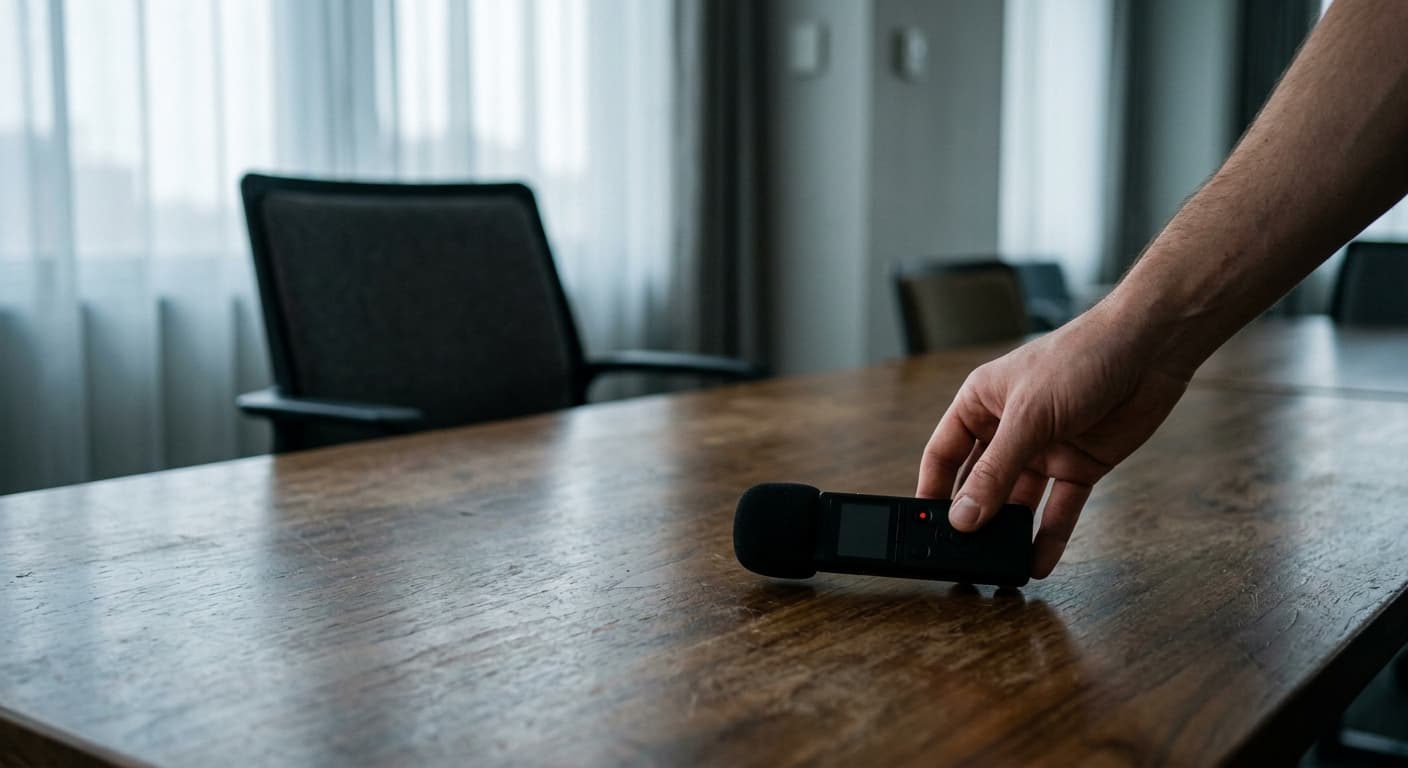
Utah is a one-party consent state under Utah Code Ann. 77-23a-4. If you are a party to a conversation, you may record it without notifying anyone else. Recording without that consent is a third-degree felony carrying up to five years in prison and a $5,000 fine, plus a civil action in which a court may award the greater of actual damages plus the violator's profits or statutory damages of $100 a day or $10,000.
Utah recording law at a glance
| Question | Answer |
|---|---|
| Consent rule | One-party (you may record conversations you participate in) |
| Main statute | Utah Code Ann. 77-23a-4 (Utah Interception of Communications Act) |
| When recording is illegal | Recording a wire, oral, or electronic communication without being a party and without any party's consent, or recording for a criminal or tortious purpose |
| Criminal penalty | Third-degree felony: up to 5 years prison; up to $5,000 fine |
| Civil penalty | Court may award the greater of actual damages + profits, $100/day, or $10,000; plus punitive damages and attorney fees. Lower statutory caps apply to the 77-23a-11(3)(a) satellite/radio subclasses |
| Hidden cameras | Lawful on your own property in areas with no privacy expectation; 76-12-302 makes it a class B misdemeanor to install or use a recording device in a private place without the consent of those entitled to privacy there; 76-12-307 separately bars secret recording made for the purpose of viewing a part of the body as to which the subject has a reasonable expectation of privacy |
| Recording police | First Amendment right clearly established as of May 26, 2019 (Irizarry v. Yehia, 10th Cir. 2022) |
See the in-depth guides below for specific situations.
Recording in-person conversations in Utah
Utah Code Ann. 77-23a-4 covers wire, electronic, and oral communications. The "oral communication" definition under 77-23a-3 requires that the speaker have a reasonable expectation the conversation is private. That means public statements made in a park, lobby, sidewalk, or open meeting generally fall outside the statute and can be recorded without consent.
When a conversation takes place in a private setting, you may record it as long as you are a participant. The one-party rule does not allow you to plant a recording device and leave the room: you must be present in the conversation at the time of recording. A device-only third-party interception is the core violation pattern under 77-23a-4.
The criminal or tortious purpose qualifier is the structural gatekeeper. A recording that is otherwise lawful loses its safe harbor if it is made to facilitate blackmail, extortion, fraud, defamation, or another crime or tort. This mirrors the federal ECPA qualifier at 18 U.S.C. 2511(2)(d).
Recording phone calls in Utah
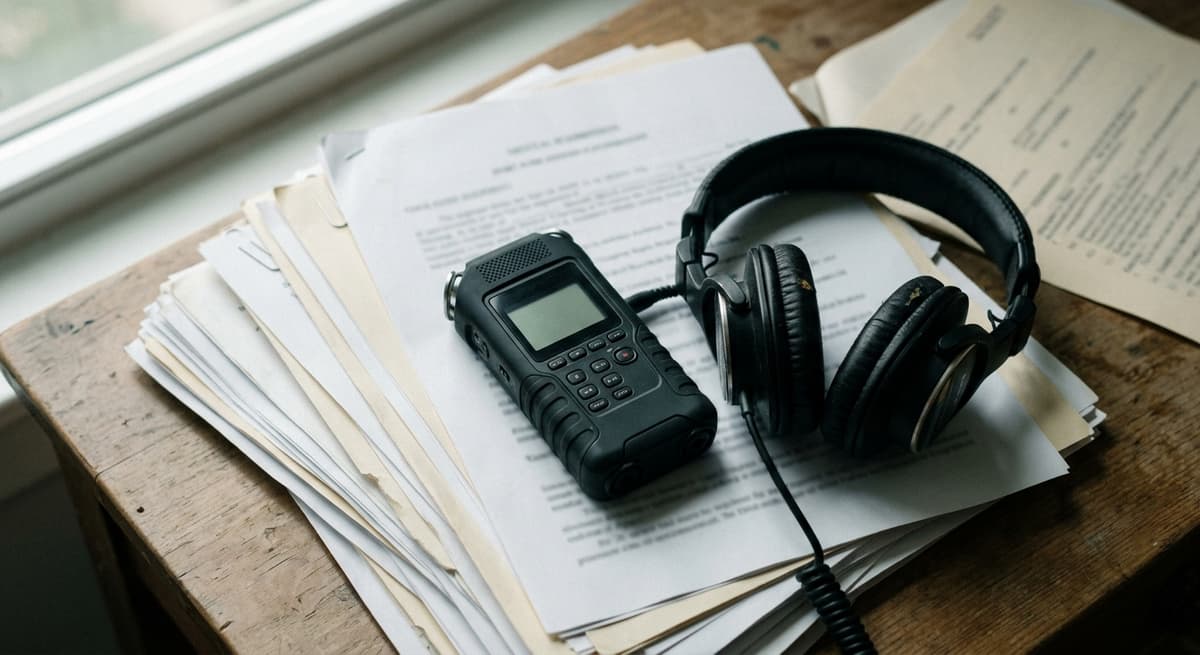
The one-party consent rule applies equally to landlines, cellular, cordless, and VoIP calls (Zoom, Teams, Google Meet). You do not need to tell the other party the call is being recorded, and there is no statutory beep-tone requirement: the FCC removed 47 C.F.R. 64.501 effective November 20, 2017.
Interstate calls require extra attention. Federal ECPA is a one-party floor; it does not preempt stricter state law. For calls touching California (Cal. Penal Code 632), Washington (RCW 9.73.030), or Nevada phone lines (NRS 200.620 per Lane v. Allstate), the conservative posture is to treat the call as all-party and notify before recording. Utah-Arizona calls are fine under one-party (A.R.S. 13-3005).
Our recording consent checker runs the same comparison for a Utah call with a party in any other state.
For more detail on call recording, including business use cases and multistate scenarios, see the Utah Phone Call Recording Laws sub-page.
Hidden cameras, doorbells, and nanny cams
Title 77 Chapter 23a governs audio interception; pure video recording is addressed separately, and two different Title 76 sections do that work. Getting them the right way round matters, because one is general and one is narrow.
Utah Code Ann. 76-12-302, "Unlawful privacy violation," is the general hidden-device statute. Under 76-12-302(2)(b) it is an offense to install, or to use after unauthorized installation, "a device for observing, photographing, hearing, recording, amplifying, or broadcasting sounds or events" in a private place, without the consent of the person or persons entitled to privacy in that place. Subsection (2)(c) reaches a device installed or used outside a private place that captures sounds or events originating inside it that "would not ordinarily be audible, visible, or comprehensible outside the private place." A "private place" is defined at 76-12-301 as "a place where one may reasonably expect to be safe from casual or hostile intrusion or surveillance." A violation is a class B misdemeanor under 76-12-302(3), and 76-12-302(8) gives the injured person a civil claim for injunctive relief, actual damages that are proven, reasonable attorney fees, and exemplary damages where the violation was malicious.
Utah Code Ann. 76-12-307 (eff. May 7, 2025) is the much narrower voyeurism offense, and it is commonly misread as a general ban on secret recording. It is not one. Subsection (2)(a) requires that the secret recording be made "for the purpose of viewing any portion of the individual's body regarding which the individual has a reasonable expectation of privacy, whether or not that portion of the body is covered with clothing." Secretly video-recording a guest in a living room therefore is not voyeurism under 76-12-307, even though it may still be an unlawful privacy violation under 76-12-302 and an interception under 77-23a-4 if audio of a private conversation is captured. Bathrooms, locker rooms, and dressing rooms are the paradigm 76-12-307 settings, and 76-12-307(4) provides that an individual has a reasonable expectation of privacy within a public restroom.
A Ring doorbell or exterior security camera capturing street-side audio generally does not trigger 77-23a-4, because people on a public sidewalk lack a privacy expectation. A camera positioned to capture audio inside a foyer or living room where guests have a privacy expectation can create interception exposure unless a household participant has consented.
A nanny cam in a child's room or a home workspace satisfies 77-23a-4 when a parent or employer is treated as a consenting participant. Best practice is a written disclosure to caregivers and signage at entry points. Audio recording in a workplace where the employer is not a party to the conversation remains an interception even where video is permitted, because the employer is not a "party" under 77-23a-4.
The penalty under 76-12-307(3)(a) for a qualifying secret recording of an adult is a Class A misdemeanor (up to 364 days jail, up to $2,500 fine). Under 76-12-307(3)(b) the offense is a third-degree felony if the person recorded is a child under 14, if the recording is made in a sex-designated privacy space not designated for the actor's sex, or if it is made while committing criminal trespass in a changing room, a lewdness offense, or loitering in a privacy space. A hidden-camera violation that does not meet the body-viewing element of 76-12-307(2)(a) is not voyeurism at all; it is charged instead as a class B misdemeanor under 76-12-302(3). Distribution of recordings obtained by voyeurism (76-12-308) is a third-degree felony for adults and a second-degree felony (1 to 15 years) for children under 14.
See Utah Security Camera Laws and Utah Voyeurism Laws for full treatment.

Penalties for illegal recording in Utah
The presumptive criminal penalty under 77-23a-4 is a third-degree felony for any unlawful interception and for knowing use or disclosure of an unlawfully intercepted communication (subsections (1)(b)(iii)-(iv)). The penalty structure under 76-3-203(3) and 76-3-301:
| Conduct | Class | Max Prison | Max Fine |
|---|---|---|---|
| Unlawful interception (presumptive) | Third-degree felony | 5 years | $5,000 |
| Use or disclosure of unlawfully intercepted communication | Third-degree felony | 5 years | $5,000 |
| First-offense radio carve-out: cellular/paging (unscrambled) | Class B misdemeanor | 6 months | $1,000 |
| First-offense radio carve-out: other unscrambled radio types | Class A misdemeanor | 364 days | $2,500 |
The radio carve-out under 77-23a-4(10)(b) requires all four conditions: first offense, no prior conviction under Chapter 23a; not for a tortious or illegal purpose; not for commercial advantage or private financial gain; and the communication must be an unscrambled radio transmission. Encrypted cell calls, standard phone lines, and in-person conversations fall outside the carve-out. Its practical reach is narrow: hobbyist scanner interception of unencrypted emergency channels, accidental baby-monitor capture, CB radio public-band transmissions.
For civil liability, Utah Code Ann. 77-23a-11 creates a private cause of action, but the damages award is discretionary rather than guaranteed. Subsection (3)(b) provides that the court may assess as damages whichever is the greater of: (1) the actual damages suffered by the plaintiff plus any profits the violator made from the violation, or (2) statutory damages of $100 a day for each day of violation or $10,000, whichever of those two is greater. A separate and far lower tier applies under 77-23a-11(3)(a) to violations involving unscrambled private satellite video programming or certain FCC Part 74 Subpart D radio communications that were not put to a tortious use: statutory damages there run from $50 to $500 for a first violation and from $100 to $1,000 for a subsequent one. Whatever damages the court assesses, the plaintiff may also recover punitive damages, reasonable attorney fees, reasonably incurred litigation costs, and preliminary or declaratory relief. The two-year limitations period is a discovery rule: the clock starts when the claimant first had a reasonable opportunity to discover the violation. Civil recovery does not require a criminal conviction.
Illegally intercepted communications also carry an evidentiary consequence. Utah Code Ann. 77-23a-7 bars the contents of an unlawfully intercepted communication, and any evidence derived from it, from being received in any Utah trial, hearing, grand jury proceeding, or other proceeding before a court, department, agency, or legislative committee.
Recording the police in Utah
Utah sits in the Tenth Circuit. The controlling framework is a two-step progression anchored by two cases.
Frasier v. Evans, 992 F.3d 1003 (10th Cir. 2021) held that any First Amendment right to record police was not "clearly established" in the Tenth Circuit as of August 2014, when the underlying Denver incident occurred. All defendant officers received qualified immunity. This case controls for incidents predating May 26, 2019.
Irizarry v. Yehia, 38 F.4th 1282 (10th Cir. 2022) reversed a qualified immunity grant and recognized the clearly established First Amendment right to film police performing public duties. The underlying incident was May 26, 2019, in Lakewood, Colorado: Officer Yehia obstructed a YouTube journalist filming a DUI traffic stop, then shone a flashlight into his camera. The Tenth Circuit joined six other circuits in recognizing the right. This case controls for incidents on or after May 26, 2019.
Practical guidance for Utah: you may film officers at traffic stops, arrests, protests, and other public encounters. Do not physically interfere with the work, comply with lawful distance orders, and do not trespass to improve your angle. In Irizarry, the Tenth Circuit said it would be obvious to a reasonable officer that blocking a person's filming, shining a flashlight into the camera lens, and driving a police car at the person in response to that filming would infringe First Amendment protected activity. Utah has no standalone statutory right-to-record-police comparable to Colorado's C.R.S. 16-3-311; enforcement runs through 42 U.S.C. 1983 with attorney fees under 42 U.S.C. 1988.
See Utah Laws on Recording Police for the full treatment.

Special topics in Utah
Two Utah statutes share the word "recording" - they are unrelated
Utah Code Ann. Title 13 Chapter 10 is the Unauthorized Recording Practices Act. It governs bootleg recordings of live performances and unauthorized commercial sound recordings - a copyright-adjacent piracy statute. The consent and wiretap rules live in Title 77 Chapter 23a (the Utah Interception of Communications Act). They share the word "recording" and surface together in searches but address completely different conduct.
Body-worn cameras: Title 77 Chapter 7a
Utah's body-worn camera framework is in Title 77 Chapter 7a. Section 77-7a-104 (last amended May 7, 2025) requires officers to activate the camera before any law enforcement encounter or as soon as reasonably possible. The Utah-specific structural feature is 77-7a-104(3): a violation of the activation rules may not serve as the sole basis to dismiss a criminal case or charge. Defense counsel can still use non-activation as one factor in a broader suppression or credibility challenge, but not as a standalone dismissal ground.
NCII: authentic images (76-5b-203) and deepfakes (76-5b-205)
Utah Code Ann. 76-5b-203 criminalizes non-consensual distribution of authentic intimate images (Class A misdemeanor first offense; third-degree felony on recidivism). Utah Code Ann. 76-5b-205 is the separate hook for counterfeit intimate images - the definition expressly covers AI-generated, digitally altered, edited, or manipulated visual depictions of an identifiable person. Charging the wrong section in a deepfake case (203 instead of 205) is a material element mismatch. The federal TAKE IT DOWN Act (Pub. L. 119-12, signed May 19, 2025) adds a parallel federal criminal prohibition and a 48-hour platform notice-and-takedown obligation effective May 19, 2026.
AI synthetic media and the Utah AI Policy Act
Utah Code Ann. 20A-11-1104 (SB 131 (2024)) requires audible or on-screen AI-content disclosures in political and election communications, with a $1,000 civil penalty per violation. The Utah Artificial Intelligence Policy Act (SB 149 (2024), codified Title 13 Chapter 72a) brought generative AI within Utah consumer protection law and requires licensed professionals to disclose AI use in consumer-facing interactions. HB 452 and SB 332 (both eff. May 7, 2025) extended the Act's sunset to July 1, 2027 and refined disclosure requirements. For recording-law purposes, the Act is most relevant when downstream AI processing (transcription, voice cloning, biometric extraction) is applied to a recorded file.
Workplace recording and the NLRB framework
Utah's one-party consent rule governs the criminal and civil interception layer for workplace recordings. The federal NLRB layer applies to employer no-recording policies. Stericycle, Inc., 372 NLRB No. 113 (Aug. 2, 2023) requires employers to show a no-recording rule advances a legitimate, substantial business interest that cannot be served by a narrower rule. NLRB GC 25-05 (Feb. 14, 2025) rescinded certain prior General Counsel memoranda but did not overrule Stericycle. NLRB GC 25-07 (June 25, 2025) is narrow: surreptitious recording of collective-bargaining sessions is a per se good-faith violation; it does not change the general workplace recording framework.
Federal overlay: ECPA, FCC, and HIPAA
The federal Electronic Communications Privacy Act at 18 U.S.C. 2510-2522 is a one-party consent floor that mirrors 77-23a-4. Utah plaintiffs routinely plead both. FCC Declaratory Ruling 24-17 (Feb. 2024) classifies AI-generated voices in robocalls as "artificial or prerecorded voice" under the TCPA, with $500 per violation. The FCC One-to-One Consent rule (FCC 24-24) was vacated by the Eleventh Circuit in Insurance Marketing Coalition Ltd. v. FCC, 127 F.4th 303 (11th Cir. 2025); pre-existing TCPA prior-express-written-consent rules still apply. HIPAA does not block a patient from recording their own medical visit, but a Utah covered entity recording a patient typically needs HIPAA authorization.
Recent legal developments
- HB 21 (2025, eff. May 7, 2025): Criminal Code Recodification renumbered voyeurism from 76-9-702.7 to 76-12-307, viewing-only to 76-12-306, and distribution to 76-12-308. Substantive elements and penalty classifications unchanged. 77-23a-4 untouched.
- HB 452 and SB 332 (2025, eff. May 7, 2025): Refined the Utah AI Policy Act; extended sunset to July 1, 2027; adjusted disclosure requirements for regulated professions.
- 77-7a-104 amended (eff. May 7, 2025): Body-worn camera activation rules updated; 77-7a-104(3) no-sole-basis-for-dismissal clause preserved.
- TAKE IT DOWN Act (Pub. L. 119-12, signed May 19, 2025): Federal criminal prohibition on NCII (authentic and deepfake); platforms were required to implement a 48-hour takedown procedure by May 19, 2026 (deadline now passed).
- SB 131 and SB 149 (2024, eff. May 1, 2024): Created election synthetic-media disclosure at 20A-11-1104 and the Utah AI Policy Act at Title 13 Chapter 72a.
- FCC 24-24 vacated (Jan. 24, 2025, mandate Apr. 30, 2025): Eleventh Circuit set aside the One-to-One Consent rule nationally; pre-existing TCPA consent rules remain.
Utah recording laws in depth
By type of recording
- Utah Audio Recording Laws
- Utah Phone Call Recording Laws
- Utah Video Recording Laws
- Utah Voyeurism Laws
- Utah Dashcam Laws
By place or relationship
- Utah Laws on Recording Police
- Utah Laws on Recording in Public
- Utah Workplace Recording Laws
- Utah Landlord-Tenant Recording Laws
- Utah Medical Recording Laws
- Utah School Recording Laws
- Utah Security Camera Laws
More Utah laws
- Utah AI Meeting Recording Laws
- Utah At-Will Employment Laws
- Utah Data Privacy Laws
- Utah Divorce Laws
- Utah Landlord-Tenant Laws
This article is general legal information, not legal advice. Recording laws change and apply differently to each situation. For advice about your situation, consult a licensed Utah attorney.
More Utah Laws
- Utah AI Meeting Recording Laws
- Utah Dashcam Laws
- Utah Data Privacy Laws
- Utah Deepfake Laws
- Utah Employee Monitoring Laws
- Utah GPS Tracking Laws
- Utah Police Bodycam Laws
- Utah Smart Glasses Recording Laws
Frequently Asked Questions
Is Utah a one-party or two-party consent state?
Utah is a one-party consent state under Utah Code Ann. 77-23a-4. You may record any wire, oral, or electronic communication you are a party to, or where any one party has given prior consent, as long as the recording is not for a criminal or tortious purpose. The oral communication definition under 77-23a-3 requires a reasonable expectation of privacy, so conversations in public spaces are generally outside the statute.
Can I record a phone call in Utah?
Yes, if you are a party to the call. Utah Code Ann. 77-23a-4 requires only one party's consent, which can be your own. You do not have to notify the other party. For calls touching California, Washington, or Nevada (all all-party or hybrid all-party for phone calls), the conservative posture is to comply with the stricter state's rule and obtain consent before recording.
What is the criminal penalty for illegally recording in Utah?
Illegal recording is presumptively a third-degree felony under 77-23a-4: up to 5 years in prison under 76-3-203(3) and up to a $5,000 fine under 76-3-301. A narrow first-offense carve-out for unscrambled radio interceptions reduces the charge to a Class B misdemeanor (cellular/paging) or Class A misdemeanor (other radio types), but only if the interception is also non-tortious and non-commercial. Standard phone calls and in-person conversations fall outside that carve-out.
Can I sue someone for recording me without consent in Utah?
Yes. Utah Code Ann. 77-23a-11 creates a private cause of action, though the damages award is discretionary rather than automatic. Under 77-23a-11(3)(b) the court may assess whichever is greater of actual damages plus the violator's profits, or statutory damages of $100 per day of violation or $10,000. A lower tier at 77-23a-11(3)(a) sets statutory damages of $50 to $500 for a first violation involving unscrambled private satellite video or certain FCC Part 74 Subpart D radio communications. You can also seek punitive damages, attorney fees, and injunctive relief. The two-year limitations period is a discovery rule: it starts when you first had a reasonable opportunity to learn about the recording. A prior criminal conviction is not required.
Can I record a Utah police officer?
Yes. Irizarry v. Yehia, 38 F.4th 1282 (10th Cir. 2022), recognized the clearly established First Amendment right to film police performing public duties as of May 26, 2019. The court held it would be obvious to a reasonable officer that blocking the filming, shining a flashlight into the camera lens, and driving a police car at the person filming in response to that filming would infringe First Amendment protected activity. Do not physically interfere with police activity or trespass to improve your angle. Utah has no standalone right-to-record-police statute; enforcement runs through 42 U.S.C. 1983.
Can I record from Utah to California?
California is an all-party consent state under Cal. Penal Code 632. The conservative approach for a Utah-to-California call is to treat the call as all-party: notify the California party at the start and obtain consent on the record. Federal ECPA at 18 U.S.C. 2511(2)(d) is one-party but does not preempt stricter state law. The same all-party posture applies to Utah-to-Washington calls under RCW 9.73.030.
Are Ring doorbells and nanny cams legal in Utah?
Generally yes, with limits. A Ring doorbell capturing street-side audio does not trigger the wiretap statute because there is no privacy expectation in public street speech. A camera positioned to capture audio inside a home where guests have a privacy expectation can create interception exposure under 77-23a-4. Installing or using a hidden camera in a private place without the consent of the people entitled to privacy there is a class B misdemeanor under Utah Code Ann. 76-12-302, whether or not audio is captured. Aiming a camera at a bathroom, locker room, or dressing room can additionally be voyeurism under 76-12-307, which requires that the recording be made for the purpose of viewing a part of the body as to which the person has a reasonable expectation of privacy.
Can I record an HR meeting or my boss at work?
Yes, under Utah Code Ann. 77-23a-4, if you are a participant in the meeting. One-party consent applies. Your employer may have a no-recording policy; violating it is not a crime under 77-23a-4 but can lead to discipline or termination. NLRB Stericycle (372 NLRB No. 113, 2023) limits how broadly employers can write those policies: a policy must advance a legitimate business interest that cannot be served by a narrower rule.
Is making or distributing a deepfake illegal in Utah?
Yes for intimate-image deepfakes. Utah Code Ann. 76-5b-205 expressly covers AI-generated, digitally altered, or manipulated visual depictions of an identifiable person: Class A misdemeanor first offense, third-degree felony on recidivism, when the depicted person is an adult. If the depicted person is a child, the offense is aggravated to a third-degree felony for a first offense and a second-degree felony on recidivism. Authentic intimate-image distribution is at 76-5b-203. Election deepfakes require AI-content disclosure under 20A-11-1104 (SB 131, 2024), with a $1,000 civil penalty per violation. The federal TAKE IT DOWN Act adds a parallel federal criminal prohibition effective May 19, 2025.
Updates
Corrected the description of Irizarry v. Yehia to the conduct the Tenth Circuit actually addressed (blocking the filming, a flashlight in the lens, and driving a police car at the person filming), removing a claim about phone seizure and footage deletion the opinion does not make.
Corrected the hidden-camera section: Utah's voyeurism statute (76-12-307) only reaches recordings made to view a part of the body the person expects to keep private, the general hidden-device statute (76-12-302, a class B misdemeanor with a private right of action) was added as the on-point law, and the 77-23a-11 civil damages are now described as discretionary rather than a guaranteed $10,000 floor.
Corrected an orphaned citation (an unrelated Consumer Privacy Act link repointed to the actual AI Policy Act chapter), updated the TAKE IT DOWN Act platform-compliance deadline language from future to past tense, and added the child-victim felony-aggravation tier under the deepfake statute (76-5b-205) to the FAQ.
Independently fact-checked against the cited primary sources; governing law re-checked for recent changes
Governing law re-checked for recent changes
Corrected the body-worn camera 'sole basis to dismiss' citation from 77-7a-104(11) (a subsection that does not exist) to the correct 77-7a-104(3).
Corrected the historical 2026-05-10 changelog entry's reference to a nonexistent '77-7a-104(11)' to the correct '77-7a-104(3)' (the actual no-sole-basis-for-dismissal subsection), matching the fix already made in the article body and the newer changelog entry.
Governing law re-checked for recent changes
Reviewed and approved by an editor
Restructured for readability: condensed 8,000-word page into core sections (in-person, phone calls, hidden cameras, penalties, police, special topics), pushed depth to in-depth index linking all 12 sub-pages. Preserved every statute, case, and penalty. Added compact penalties table. Condensed special topics to single tight paragraphs each. Added at-a-glance table and FAQ refreshed for AEO. Re-verified load-bearing facts (77-23a-4 one-party consent, third-degree felony, 77-23a-11 civil floor, 76-12-307 renumbering, Irizarry 10th Cir. 2022) against primary sources - no corrections required.
Major restructure anchored on the Utah Interception of Communications Act 77-23a-4 third-degree-felony presumptive baseline (up to 5 years, up to $5,000) with the narrow 77-23a-4(10)(b) Class B misdemeanor first-offense alternative enumerated as four cumulative conditions (first offense + non-tortious + non-commercial + radio-portion-cellular / cordless / public-band / non-encrypted private channel). Added 77-23a-11 civil cause of action with greater-of-three structure: actual damages plus violator's profits, or $100/day, or $10,000, plus punitive damages, reasonable attorney fees, reasonably incurred litigation costs, and preliminary equitable and declaratory relief; two-year discovery-rule statute of limitations; civil recovery does not require criminal conviction. Added 77-23a-5 use-and-disclosure parallel third-degree felony. Corrected Utah voyeurism citation to 76-9-702.7 per HB 21 (2025) Criminal Code Recodification framing. Distinguished 76-5b-205 counterfeit (AI-generated, deepfake) NCII from 76-5b-203 authentic NCII. Added correct Utah 2024 AI bills SB 131 (election synthetic-media at 20A-11-1104) and SB 149 (Utah AI Policy Act at Title 13 Chapter 72a) plus 2025 refinements HB 452 and SB 332. Added Tenth Circuit Frasier-then-Irizarry progression: Frasier v. Evans, 992 F.3d 1003 (10th Cir. 2021) governs incidents predating May 26, 2019; Irizarry v. Yehia, 38 F.4th 1282 (10th Cir. 2022) recognized the clearly-established First Amendment right to film police on or after that date. Added Utah body-worn camera framework at 77-7a-103 and 77-7a-104 with the 77-7a-104(11) no-sole-basis-for-dismissal qualifier. Reframed NLRB GC 25-05 as a housekeeping rescission (Stericycle remains controlling) and GC 25-07 as the narrow per se bar on surreptitious bargaining-session recording. Updated FCC 24-24 to vacated by 11th Cir. (Insurance Marketing Coalition Ltd. v. FCC, panel decision Jan 24 2025, mandate Apr 30 2025) and removed the stale 47 C.F.R. 64.501 reference. Added TAKE IT DOWN Act federal compliance (Pub. L. 119-12, signed May 19, 2025; platform compliance May 19, 2026). Added Title 13 Chapter 10 disambiguation paragraph. Replaced commercial-codifier URLs throughout with le.utah.gov, utcourts.gov, ca10.uscourts.gov, uscode.house.gov, congress.gov, nlrb.gov, ftc.gov, fcc.gov, ecfr.gov, federalregister.gov, and media.ca11.uscourts.gov canonicals. Populated keywords array with 15 Utah-specific terms covering the modal cluster (phone, audio, call), the statute-cite anchors (77-23a-4, Utah Interception of Communications Act), and the deepfake / NCII / body-cam / hidden-camera variants.
Major restructure anchored on the Utah Interception of Communications Act 77-23a-4 third-degree-felony presumptive baseline (up to 5 years, up to $5,000) with the narrow 77-23a-4(10)(b) first-offense reduced-penalty carve-out. Added 77-23a-11 civil cause of action with greater-of-three structure plus punitive damages, attorney fees, litigation costs, and equitable relief; two-year discovery-rule SOL. Distinguished 76-5b-205 counterfeit NCII from 76-5b-203 authentic NCII. Added Utah 2024 AI bills SB 131 and SB 149 plus 2025 refinements HB 452 and SB 332. Added Tenth Circuit Frasier-then-Irizarry progression. Added Utah body-worn camera framework at 77-7a-103 and 77-7a-104(3). Reframed NLRB GC 25-05 as housekeeping rescission and GC 25-07 as narrow per se bar. Updated FCC 24-24 to vacated. Added TAKE IT DOWN Act. Added Title 13 Chapter 10 disambiguation. Replaced all commercial-codifier URLs with primary sources.
Added wearable recording devices section and related FAQs
The Law Behind This Article
This article rests on the statutory provisions below, held in our own legal record and retrieved from the official source. Tap a section to read the operative text.
Utah Code, Title 77: Criminal Procedure
§ 77-23a-4Offenses -- Criminal and civil -- Lawful interception.In forcecited in 19 of our articles
(1) (a) Except as otherwise specifically provided in this chapter, any person who violates Subsection (1)(b) is guilty of an offense and is subject to punishment under Subsection (10), or when applicable, the person is subject to civil action under Subsection (11). (b) A person commits a violation of this subsection who: (i) intentionally or knowingly intercepts, endeavors to intercept, or procures any other person to intercept or endeavor to intercept any wire, electronic, or oral communication; (ii) intentionally or knowingly uses, endeavors to use, or procures any other person to use or endeavor to use any electronic, mechanical, or other device to intercept any oral communication, when the device is affixed to, or otherwise transmits a signal through a wire, cable, or other like connection used in wire communication or when the device transmits communications by radio, or interferes with the transmission of the communication; (iii) intentionally or knowingly discloses or endeavors to disclose to any other person the contents of any wire, electronic, or oral communication, knowing or having reason to know that the information was obtained through the interception of a wire,…
Official text (excerpt) · last checked 2026-09-24 · Read the full text in our law library · Verify at le.utah.gov
Cited in 5 court opinions in our collectionLatest citing opinion in our collection: 2026
In the courts (editorial summary, independently checked):State v. Wood (2023) held a jail's recording of inmate calls fell within the consent exception in section 77-23a-4(7)(a) because the inmate impliedly consented by using phones he was told were monitored. The Quarasan Group, Inc. v. Nozani, LLC (2020) dismissed an eavesdropping claim once Utah law governed and did not bar the recording.
Opinions citing this section in our collection:
- State v. Wood (Utah Supreme Court 2023, 532 P.3d 997)✓A jail recorded an inmate's calls to his wife after warning him by handbook, placard and a message before each call; the Utah Supreme Court held he impliedly consented, so the interception fell within section 77-23a-4(7)(a) and suppression was denied.
- State v. Draughon (Court of Appeals of Utah 2026, 2026 UT App 52)“…rties to the call—consented to the call being recorded. See Utah Code §§ 77-23a-4(7)(b), -7. He claims Counsel should hav…”
- United States v. Maynard (Court of Appeals for the D.C. Circuit 2010, 615 F.3d 544)“…ined by the police acting pursuant to a warrant. See, e.g., Utah Code Ann. §§ 77-23a-4, 77-23a-7, 77-23a-15.5; Minn Stat §§ 62…”
Identified automatically from the court opinions citing this section — not a ranking of which case controls.
§ 77-23a-11Civil remedy for unlawful interception -- Action for relief.In forcecited in 8 of our articles
(1) Except under Subsections 77-23a-4(3), (4), and (5), a person whose wire, electronic, or oral communication is intercepted, disclosed, or intentionally used in violation of this chapter may in a civil action recover relief as appropriate from the person or entity that engaged in the violation. (2) In an action under this section appropriate relief includes: (a) preliminary and other equitable or declaratory relief as is appropriate; (b) damages under Subsection (3) and punitive damages in appropriate cases; and (c) a reasonable attorney's fee and reasonably incurred litigation costs.
Official text (excerpt) · last checked 2026-07-29 · Read the full text in our law library · Verify at le.utah.gov
§ 77-23a-3Definitions.In forcecited in 3 of our articles
As used in this chapter: (1) "Aggrieved person" means a person who was a party to any intercepted wire, electronic, or oral communication, or a person against whom the interception was directed. (2) "Aural transfer" means any transfer containing the human voice at any point between and including the point of origin and the point of reception. (3) "Communications common carrier" means any person engaged as a common carrier for hire in intrastate, interstate, or foreign communication by wire or radio, including a provider of electronic communication service. However, a person engaged in radio broadcasting is not, when that person is so engaged, a communications common carrier. (4) "Contents" when used with respect to any wire, electronic, or oral communication includes any information concerning the substance, purport, or meaning of that communication.
Official text (excerpt) · last checked 2026-07-29 · Read the full text in our law library · Verify at le.utah.gov
Cited in 3 court opinions in our collectionLatest citing opinion in our collection: 2023
Opinions citing this section in our collection:
- State v. Wood (Utah Supreme Court 2023, 532 P.3d 997)“…7-23a- 4(7)(a); 18 U.S.C. § 2511(2)(c) (consent exception); UTAH CODE § 77-23a-3(8)(a)(ii); 18 U.S.C. § 2510(5)(a)(ii) (…”
- State v. Hebeishy (Court of Appeals of Utah 2022, 522 P.3d 943)“…ted on the telephone line to which the device is attached.” Utah Code Ann. § 77-23a-3(14) (LexisNexis 2017). 20200463-CA…”
- Project Veritas v. Michael Schmidt (Court of Appeals for the Ninth Circuit 2023, 72 F.4th 1043)“…(c)(4); Tex. Code Crim. Proc. Ann. art. 18A.001(19) Utah: Utah Code Ann. §§ 77-23a-3(13), 77-23a-4(1)(b)(i), (7)(b) Virginia…”
Identified automatically from the court opinions citing this section — not a ranking of which case controls.
§ 77-23a-7Evidence -- Exclusionary rule.In force
When any wire, electronic, or oral communication has been intercepted, no part of the contents of the communication and no evidence derived from it may be received in evidence in any trial, hearing, or other proceeding in or before any court, grand jury, department, officer, agency, regulatory body, legislative committee, or other authority of the state, or a political subdivision of the state, if the disclosure of that information would be in violation of this chapter.
Official text (excerpt) · last checked 2026-07-29 · Read the full text in our law library · Verify at le.utah.gov
§ 77-23a-5Traffic in intercepting devices -- Offenses -- Lawful activities.In force
(1) Except as otherwise specifically provided in this chapter, any person is guilty of a third degree felony who intentionally: (a) sends through the mail, or sends or carries in intrastate, interstate, or foreign commerce any electronic, mechanical, or other device, knowing or having reason to know that the design of the device renders it primarily useful for the purpose of the surreptitious interception of wire, electronic, or oral communications; (b) manufactures, assembles, possesses, or sells any electronic, mechanical, or other device, knowing or having reason to know that the design of the device renders it primarily useful for the purpose of the surreptitious interception of wire, electronic, or oral communications; or (c) places in any newspaper, magazine, handbill, or other publication any advertisement of: (i) any electronic, mechanical, or other device knowing or having reason to know that the design of the device renders it primarily useful for the purpose of the surreptitious interception of wire, electronic, or oral communications; or (ii) any other electronic, mechanical, or other device, where the advertisement promotes the use of the device for the purpose…
Official text (excerpt) · last checked 2026-07-29 · Read the full text in our law library · Verify at le.utah.gov
§ 77-7a-104Activation and use of body-worn cameras.In forcecited in 2 of our articles
(1) As used in this section: (a) "Health care facility" means the same as that term is defined in Section 78B-3-403. (b) "Health care provider" means the same as that term is defined in Section 78B-3-403. (c) "Hospital" means the same as that term is defined in Section 78B-3-403. (d) "Human service program" means the same as that term is defined in Section 26B-2-101. (2) Except as provided in Subsection (5), an officer using a body-worn camera: (a) shall verify that the equipment is properly functioning as is reasonably within the officer's ability; (b) shall report any malfunctioning equipment to the officer's supervisor if: (i) the body-worn camera issued to the officer is not functioning properly upon initial inspection; or (ii) the officer determines that the officer's body-worn camera is not functioning properly at any time while the officer is on duty; (c) shall wear the body-worn camera so that it is clearly visible to the individual being recorded; (d) shall activate the body-worn camera prior to any law enforcement encounter, or as soon as reasonably possible; (e) shall record in an uninterrupted manner until after the conclusion of a law enforcement…
Official text (excerpt) · last checked 2026-08-31 · Read the full text in our law library · Verify at le.utah.gov
Cited in 2 court opinions in our collectionLatest citing opinion in our collection: 2023
Opinions citing this section in our collection:
- State v. Alvarado (Court of Appeals of Utah 2023, 538 P.3d 633)“…2F encounter. 4 See Utah Code § 77-7a-104(4) (“An officer shall 3F…”
- State v. Jessop (Court of Appeals of Utah 2023, 540 P.3d 713)“…ble given the circumstances they were confronted with.” See Utah Code Ann. § 77-7a-104(4) (LexisNexis Supp. 2022). 6 The State…”
Identified automatically from the court opinions citing this section — not a ranking of which case controls.
§ 77-7a-103Definitions.In force
(1) (a) "Body-worn camera" means a video recording device that is carried by, or worn on the body of, a law enforcement officer and that is capable of recording the operations of the officer. (b) "Body-worn camera" does not include a dashboard mounted camera or a camera intended to record clandestine investigation activities. (2) "Law enforcement agency" means any public agency having general police power and charged with making arrests in connection with enforcement of the criminal statutes and ordinances of this state or any political subdivision. (3) "Law enforcement encounter" means: (a) an enforcement stop; (b) a dispatched call; (c) a field interrogation or interview; (d) use of force; (e) execution of a warrant; (f) a traffic stop, including: (i) a traffic violation; (ii) stranded motorist assistance; and (iii) any crime interdiction stop; or (g) any other contact that becomes adversarial after the initial contact in a situation that would not otherwise require recording.
Official text (excerpt) · last checked 2026-07-29 · Read the full text in our law library · Verify at le.utah.gov
Cited in 1 court opinions in our collectionLatest citing opinion in our collection: 2023
Opinions citing this section in our collection:
- State v. Alvarado (Court of Appeals of Utah 2023, 538 P.3d 633)“…of a “law enforcement encounter” includes “a traffic stop.” Utah Code § 77-7a-103(3)(f). 5. Section 77-7a-104 was amende…”
Identified automatically from the court opinions citing this section — not a ranking of which case controls.
Utah Code, Title 76: Criminal Offenses
§ 76-3-203Felony conviction -- Indeterminate term of imprisonment.In forcecited in 8 of our articles
A person who has been convicted of a felony may be sentenced to imprisonment for an indeterminate term as follows: (1) In the case of a felony of the first degree, unless the statute provides otherwise, for a term of not less than five years and which may be for life. (2) In the case of a felony of the second degree, unless the statute provides otherwise, for a term of not less than one year nor more than 15 years. (3) In the case of a felony of the third degree, unless the statute provides otherwise, for a term not to exceed five years.
Official text (excerpt) · last checked 2026-07-29 · Read the full text in our law library · Verify at le.utah.gov
Cited in 79 court opinions in our collectionLatest citing opinion in our collection: 2024
Opinions citing this section in our collection:
- State v. Speer (Utah Supreme Court 1988, 74 Utah Adv. Rep. 16)“…avated assault. In sentencing defendant, the judge applied Utah Code Ann. § 76-3-203 (1) (1978), which adds an additional ye…”
- State v. Alvarez (Utah Supreme Court 1994, 235 Utah Adv. Rep. 61)“…"not less than five years ... and which may be for life." Utah Code Ann. § 76-3-203 . For first degree felonies, section 76…”
- State v. Labrum (Utah Supreme Court 1996, 293 Utah Adv. Rep. 19)“…firearm and gang sentence enhancements in accordance with Utah Code Ann. §§ 76-3-203 and 76-3-203.1. The gang sentence enha…”
Identified automatically from the court opinions citing this section — not a ranking of which case controls.
§ 76-3-301Fines of individuals.In forcecited in 8 of our articles
(1) An individual convicted of an offense may be sentenced to pay a fine, not exceeding: (a) $10,000 for a felony conviction of the first degree or second degree; (b) $5,000 for a felony conviction of the third degree; (c) $2,500 for a class A misdemeanor conviction; (d) $1,000 for a class B misdemeanor conviction; (e) $750 for a class C misdemeanor conviction or infraction conviction; and (f) any greater amounts specifically authorized by statute. (2) (a) An individual convicted of a misdemeanor or infraction and sentenced to pay a fine may not be charged by a court: (i) notwithstanding Section 15-1-4, interest on the judgment that in the aggregate is more than 25% of the initial fine; or (ii) that issues an order to show cause under Section 78B-6-317 for failure to pay the fine, interest that is more than 25% of the initial fine. (b) An individual convicted only of an infraction and sentenced to pay a fine may not be charged: (i) by the Office of State Debt Collection, late fees and interest that in the aggregate are more than 25% of the initial fine; or (ii) by a third-party debt contractor of the Office of State Debt Collection, additional fees.
Official text (excerpt) · last checked 2026-07-29 · Read the full text in our law library · Verify at le.utah.gov
Cited in 9 court opinions in our collectionLatest citing opinion in our collection: 2026
Opinions citing this section in our collection:
- State v. Weeks (Utah Supreme Court 2002, 458 Utah Adv. Rep. 3)“…on), the judge could have fined Weeks up to $12,500, see Utah Code Ann. § 76-3-301 (b) to (e) (1999) (stating that a perso…”
- State v. Mitchell (Court of Appeals of Utah 1991, 175 Utah Adv. Rep. 77)“…of a firearm. Defendant was also fined $10,000 pursuant to Utah Code Ann. § 76-3-301 (a) (1990). Defendant claimed hi…”
- Planned Parenthood Association v. State (Utah Supreme Court 2024, 554 P.3d 998)“…sk of monetary fines and up to fifteen years in prison. See UTAH CODE §§ 76-3-301(1)(a), 76-7a-201(3). SB 174 further req…”
Identified automatically from the court opinions citing this section — not a ranking of which case controls.
§ 76-3-204Misdemeanor conviction -- Term of imprisonment.In forcecited in 5 of our articles
A person who has been convicted of a misdemeanor may be sentenced to imprisonment as follows: (1) (a) Except as provided in Subsection (1)(b), in the case of a class A misdemeanor, for a term not exceeding 364 days. (b) (i) Except as provided in Subsection (1)(b)(ii), in the case of a class A misdemeanor under Title 76, Chapter 5, Offenses Against the Individual, for a term not exceeding one year. (ii) For a class A misdemeanor for one of following offenses, for a term not exceeding 364 days: (A) Section 76-5-102.9, propelling a bodily substance or material as described in Section 76-5-102.9; (B) Section 76-5-107.5, prohibition of "hazing"; (C) Section 76-5-113, surreptitious administration of certain substances; or (D) Section 76-5-303, custodial interference. (2) In the case of a class B misdemeanor, for a term not exceeding six months. (3) In the case of a class C misdemeanor, for a term not exceeding 90 days.
Official text (excerpt) · last checked 2026-07-29 · Read the full text in our law library · Verify at le.utah.gov
Cited in 14 court opinions in our collectionLatest citing opinion in our collection: 2025
Opinions citing this section in our collection:
- State v. Sanchez (Court of Appeals of Utah 2015, 782 Utah Adv. Rep. 78)“…nder the Immigration and Nationality Act. See id.; see also Utah Code Ann. § 76-3-204(1) (LexisNexis 2012). 3. Sanchez cites…”
- State v. Patience (Court of Appeals of Utah 1997, 323 Utah Adv. Rep. 24)“…or "an indeterminate term not to exceed five years." Under Utah Code Ann. § 76-3-204 (1) (1995), a person who has been convi…”
- Richfield City v. Walker (Court of Appeals of Utah 1990, 131 Utah Adv. Rep. 37)“…n of the penalty for a class B misdemeanor as set forth in Utah Code Ann. § 76-3-204 (2) (1978), imprisonment “for a term no…”
Identified automatically from the court opinions citing this section — not a ranking of which case controls.
§ 76-12-307Recorded or photographed voyeurism.In forcecited in 14 of our articles
(1) (a) As used in this section, "sex-designated privacy space" means the same as that term is defined in Section 76-12-309. (b) Terms defined in Sections 76-1-101.5, 76-12-101, and 76-12-301 apply to this section. (2) An actor commits recorded or photographed voyeurism if the actor intentionally uses any type of technology to secretly or surreptitiously record, by video, photograph, or other means, an individual: (a) for the purpose of viewing any portion of the individual's body regarding which the individual has a reasonable expectation of privacy, whether or not that portion of the body is covered with clothing; (b) without the knowledge or consent of the individual; and (c) under circumstances in which the individual has a reasonable expectation of privacy. (3) (a) Except as provided in Subsection(3)(b), a violation of Subsection (2) is a class A misdemeanor.
Official text (excerpt) · last checked 2026-07-29 · Read the full text in our law library · Verify at le.utah.gov
§ 76-5b-203Distribution of an intimate image -- Penalty.In forcecited in 3 of our articles
(1) (a) As used in this section: (i) "Intimate image" means any visual depiction, photograph, film, video, recording, picture, or computer or computer-generated image, picture, or video, whether made or produced by electronic, mechanical, or other means, that depicts: (A) exposed human male or female genitals or pubic area, with less than an opaque covering; (B) a female breast with less than an opaque covering, or any portion of the female breast below the top of the areola; or (C) the individual engaged in any sexually explicit conduct. (ii) "Sexually explicit conduct" means actual or simulated: (A) sexual intercourse, including genital-genital, oral-genital, anal-genital, or oral-anal, whether between individuals of the same or opposite sex; (B) masturbation; (C) bestiality; (D) sadistic or masochistic activities; (E) exhibition of the genitals, pubic region, buttocks, or female breast of any individual; (F) visual depiction of nudity or partial nudity; (G) fondling or touching of the genitals, pubic region, buttocks, or female breast; or (H) visual depiction of defecation or urination for the purpose of causing sexual arousal of any individual.
Official text (excerpt) · last checked 2026-07-29 · Read the full text in our law library · Verify at le.utah.gov
Cited in 1 court opinions in our collectionLatest citing opinion in our collection: 2021
Opinions citing this section in our collection:
- State v. Kitches (Court of Appeals of Utah 2021, 484 P.3d 415)“…etation is necessary to read subsection (3) in harmony with Utah Code section 76-5b-203—colloquially referred to as Utah’s reve…”
Identified automatically from the court opinions citing this section — not a ranking of which case controls.
§ 76-5b-205Unlawful distribution of a counterfeit intimate image -- Penalty.In forcecited in 2 of our articles
(1) (a) As used in this section: (i) "Child" means an individual under 18 years old. (ii) "Counterfeit intimate image" means any visual depiction, photograph, film, video, recording, picture, or computer or computer-generated image , picture, or video, whether made or produced by electronic, mechanical, or other means, that has been edited, manipulated, generated, or altered to depict the likeness of an identifiable individual and purports to, or is made to appear to, depict that individual's: (A) exposed human male or female genitals or pubic area, with less than an opaque covering; (B) a female breast with less than an opaque covering, or any portion of the female breast below the top of the areola; or (C) the individual engaged in any sexually explicit conduct or simulated sexually explicit conduct. (iii) "Sexually explicit conduct" means the same as that term is defined in Section 76-5b-203. (iv) "Simulated sexually explicit conduct" means the same as that term is defined in Section 76-5b-203. (v) "Single criminal episode" means the same as that term is defined in Section 76-1-401. (b) Terms defined in Section 76-1-101.5 apply to this section.
Official text (excerpt) · last checked 2026-08-30 · Read the full text in our law library · Verify at le.utah.gov
§ 76-12-301Definitions.In forcecited in 2 of our articles
For purposes of this part: (1) "Eavesdrop" means to overhear, record, amplify, or transmit any part of a wire or oral communication of another without the consent of at least one party thereto by means of an electronic, mechanical, or other device. (2) "Private place" means a place where one may reasonably expect to be safe from casual or hostile intrusion or surveillance. (3) "Public" includes any professional or social group of which the victim of a defamation is a member.
Official text (excerpt) · last checked 2026-07-29 · Read the full text in our law library · Verify at le.utah.gov
§ 76-12-302Unlawful privacy violation.In forcecited in 4 of our articles
(1) (a) For purposes of this section, "expectation of privacy" means a property owner's expectation of privacy described in Subsection (6). (b) Terms defined in Sections 76-1-101.5, 76-12-101, and 76-12-301 apply to this section. (2) An actor commits unlawful privacy violation if, except as authorized by law, the actor: (a) trespasses on property with intent to subject anyone to eavesdropping or other surveillance in a private place; (b) installs, or uses after unauthorized installation in a private place, without the consent of the person or persons entitled to privacy in the private place, a device for observing, photographing, hearing, recording, amplifying, or broadcasting sounds or events in the private place; (c) installs or uses outside of a private place a device for observing, photographing, hearing, recording, amplifying, or broadcasting sounds or events originating in the private place that would not ordinarily be audible, visible, or comprehensible outside the private place, without the consent of the person or persons entitled to privacy in the private place; or (d) uses ground-penetrating technology, without the consent of the property owner, to detect,…
Official text (excerpt) · last checked 2026-08-31 · Read the full text in our law library · Verify at le.utah.gov
Cited in 1 court opinions in our collectionLatest citing opinion in our collection: 2026
Opinions citing this section in our collection:
- United States v. Watkins (Court of Appeals for the Tenth Circuit 2026)“…x. Penal Code Ann. § 21.17;2 Tex. Penal Code Ann. § 42.01;2 Utah Code Ann. § 76-12-302;3 Utah Code Ann. § 76-12-306;2 Vt. Stat…”
Identified automatically from the court opinions citing this section — not a ranking of which case controls.
Utah Code, Title 20A: Election Code
§ 20A-11-1104Disclosure of synthetic media.In forcecited in 2 of our articles
(1) As used in this section: (a) "Artificial intelligence" means a machine-based system that can, for a given set of human-defined objectives, make predictions, recommendations, or decisions influencing real or virtual environments. (b) (i) "Creator" means a person that uses artificial intelligence to generate synthetic media. (ii) "Creator" does not include a person that solely provides the technology used in the creation of the synthetic media. (c) "Digital content provenance" means purely factual information that: (i) details a digital resource's creator, origin, context, history, and editing process; and (ii) conforms to an open industry technical standard. (d) "Generative artificial intelligence" means artificial intelligence technology that is capable of creating content such as text, audio, image, or video based on patterns learned from large volumes of data rather than being explicitly programmed with rules. (e) "Sponsor" means a person that pays for the content that uses artificial intelligence to generate synthetic media. (f) "Synthetic audio media" means audio content that was substantially produced by generative artificial intelligence.
Official text (excerpt) · last checked 2026-07-29 · Read the full text in our law library · Verify at le.utah.gov
United States Code Title 18
§ 2511Interception and disclosure of wire, oral, or electronic communications prohibitedIn forcecited in 441 of our articles
Except as otherwise specifically provided in this chapter any person who— intentionally intercepts, endeavors to intercept, or procures any other person to intercept or endeavor to intercept, any wire, oral, or electronic communication; intentionally uses, endeavors to use, or procures any other person to use or endeavor to use any electronic, mechanical, or other device to intercept any oral communication when— such device is affixed to, or otherwise transmits a signal through, a wire, cable, or other like connection used in wire communication; or such device transmits communications by radio, or interferes with the transmission of such communication; or such person knows, or has reason to know, that such device or any component thereof has been sent through the mail or transported in interstate or foreign commerce; or such use or endeavor to use (A) takes place on the premises of any business or other commercial establishment the operations of which affect interstate or foreign commerce; or (B) obtains or is for the purpose of obtaining information relating to the operations of any business or other commercial establishment the operations of which affect interstate or foreign…
Official text (excerpt) · last checked 2026-09-17 · Read the full text in our law library · Verify at uscode.house.gov
Cited in 2,045 court opinions in our collectionLatest citing opinion in our collection: 2026
In the courts (editorial summary, independently checked):Griggs-Ryan v. Smith (1990) applied the Section 2511(2)(d) prior-consent exception, treating a tenant repeatedly told that all incoming calls were taped as having impliedly consented. United States v. United States District Court (1972) read the then-current Section 2511(3) as conferring no presidential surveillance power.
Opinions citing this section in our collection:
- Mitchell v. Forsyth (Supreme Court of the United States 1985, 472 U.S. 511)✓The Attorney General authorized a warrantless 1970 national security wiretap that caught the plaintiff's calls; the Court held the since-repealed Section 2511(3) disclaimer left the tap lawful under Title III, and that Mitchell had qualified immunity.
- United States v. United States District Court for the Eastern District of Michigan (Supreme Court of the United States 1972, 407 U.S. 297)✓The Attorney General approved warrantless wiretaps on members of a domestic group accused of bombing a CIA office; the Court read Section 2511(3) as a congressional disclaimer conferring no surveillance power, then held the Fourth Amendment required prior judicial approval.
- Forsyth v. Barr (Court of Appeals for the Fifth Circuit 1994, 19 F.3d 1527)✓Dallas police used, in an internal affairs probe of an officer, calls private parties allegedly intercepted illegally; assuming that was unlawful, the Fifth Circuit held Section 2517(1) and (2) allowed the disclosure and use, defeating the Section 2511(1)(c) and (d) claims.
Identified automatically from the court opinions citing this section — not a ranking of which case controls.
§ 2520Recovery of civil damages authorizedIn forcecited in 130 of our articles
Except as provided in section 2511(2)(a)(ii), any person whose wire, oral, or electronic communication is intercepted, disclosed, or intentionally used in violation of this chapter may in a civil action recover from the person or entity, other than the United States, which engaged in that violation such relief as may be appropriate. In an action under this section, appropriate relief includes— such preliminary and other equitable or declaratory relief as may be appropriate; damages under subsection (c) and punitive damages in appropriate cases; and a reasonable attorney’s fee and other litigation costs reasonably incurred.
Official text (excerpt) · last checked 2026-07-28 · Read the full text in our law library · Verify at uscode.house.gov
Cited in 860 court opinions in our collectionLatest citing opinion in our collection: 2026
In the courts (editorial summary, independently checked):Walker v. Darby (1990) held a 2520 plaintiff need not prove the contents of intercepted conversations, only interception and a justified expectation against it. Bartnicki v. Vopper (2001) barred 2520 damages against defendants who took no part in the interception, obtained the tape lawfully, and disclosed a matter of public concern.
Opinions citing this section in our collection:
- Jessie Walker v. Thomas E. Darby, Hugh L. Robinson, Jr., and Kenneth Day (Court of Appeals for the Eleventh Circuit 1990, 911 F.2d 1573)✓A postal letter carrier said three supervisors wired an intercom near his workstation to listen in. Reversing summary judgment, the Eleventh Circuit held a section 2520 plaintiff can show interception without proving the contents of specific conversations.
- Gelbard v. United States (Supreme Court of the United States 1972, 408 U.S. 41)“…disclosure, or use is entitled to recover civil damages, 18 U. S. C. § 2520 . Title III also bars the use as eviden…”
- DirecTV, Inc. v. Hoa Huynh (Court of Appeals for the Ninth Circuit 2007, 503 F.3d 847)“…7 U.S.C. § 605 (e)(4), or alternatively, for violations of 18 U.S.C. § 2520 (a), or alternatively, for violations o…”
Identified automatically from the court opinions citing this section — not a ranking of which case controls.
United States Code Title 42
§ 1983Civil action for deprivation of rightsIn forcecited in 52 of our articles
Every person who, under color of any statute, ordinance, regulation, custom, or usage, of any State or Territory or the District of Columbia, subjects, or causes to be subjected, any citizen of the United States or other person within the jurisdiction thereof to the deprivation of any rights, privileges, or immunities secured by the Constitution and laws, shall be liable to the party injured in an action at law, suit in equity, or other proper proceeding for redress, except that in any action brought against a judicial officer for an act or omission taken in such officer’s judicial capacity, injunctive relief shall not be granted unless a declaratory decree was violated or declaratory relief was unavailable. For the purposes of this section, any Act of Congress applicable exclusively to the District of Columbia shall be considered to be a statute of the District of Columbia.
Official text (excerpt) · last checked 2026-09-16 · Read the full text in our law library · Verify at uscode.house.gov
Cited in 282,365 court opinions in our collectionLatest citing opinion in our collection: 2026
Opinions citing this section in our collection:
- Ashcroft v. Iqbal (Supreme Court of the United States 2009, 556 U.S. 662)“…its brought against state officials under Rev. Stat. §1979, 42 U. S. C. §1983.” Hartman, 547 U. S., at 254, n. 2. Cf.…”
- Celotex Corp. v. Catrett, Administratrix of the Estate of Catrett (Supreme Court of the United States 1986, 477 U.S. 317)“…policeman as she left. Petitioner brought an action under 42 U. S. C. § 1983 claiming that the refusal of service a…”
- Monell v. New York City Dept. of Social Servs. (Supreme Court of the United States 1978, 436 U.S. 658)“…decided less than two decades ago. Focusing new light on 42 U. S. C. § 1983 , that decision widened access to the f…”
Identified automatically from the court opinions citing this section — not a ranking of which case controls.
§ 1988Proceedings in vindication of civil rightsIn forcecited in 6 of our articles
The jurisdiction in civil and criminal matters conferred on the district courts by the provisions of titles 13, 24, and 70 of the Revised Statutes for the protection of all persons in the United States in their civil rights, and for their vindication, shall be exercised and enforced in conformity with the laws of the United States, so far as such laws are suitable to carry the same into effect; but in all cases where they are not adapted to the object, or are deficient in the provisions necessary to furnish suitable remedies and punish offenses against law, the common law, as modified and changed by the constitution and statutes of the State wherein the court having jurisdiction of such civil or criminal cause is held, so far as the same is not inconsistent with the Constitution and laws of the United States, shall be extended to and govern the said courts in the trial and disposition of the cause, and, if it is of a criminal nature, in the infliction of punishment on the party found guilty. In any action or proceeding to enforce a provision of sections 1981, 1981a, 1982, 1983, 1985, and 1986 of this title, title IX of Public Law 92–318 [20 U.S.C.
Official text (excerpt) · last checked 2026-07-28 · Read the full text in our law library · Verify at uscode.house.gov
Cited in 17,943 court opinions in our collectionLatest citing opinion in our collection: 2026
Opinions citing this section in our collection:
- Monell v. New York City Dept. of Social Servs. (Supreme Court of the United States 1978, 436 U.S. 658)“…cts of its deputies and sheriff,” id., at 696 , under 42 U. S. C. § 1988 . In rejecting this vicarious-liability…”
- Gall v. United States (Supreme Court of the United States 2007, 552 U.S. 38)“…ssing the Civil Rights Attorney’s Fees Awards Act of 1976, 42 U. S. C. § 1988 ). See also United States v. Oakland…”
- Hensley v. Eckerhart (Supreme Court of the United States 1983, 461 U.S. 424)“…ing the proper amount of an award of attorney’s fees under 42 U. S. C. § 1988 .” Ante, at 440. I agree with the Cou…”
Identified automatically from the court opinions citing this section — not a ranking of which case controls.
Revised Code of Washington
§ 9.73.030Intercepting, recording, or divulging private communication—Consent required—Exceptions.In forcecited in 46 of our articles
(1) Except as otherwise provided in this chapter, it shall be unlawful for any individual, partnership, corporation, association, or the state of Washington, its agencies, and political subdivisions to intercept, or record any: (a) Private communication transmitted by telephone, telegraph, radio, or other device between two or more individuals between points within or without the state by any device electronic or otherwise designed to record and/or transmit said communication regardless how such device is powered or actuated, without first obtaining the consent of all the participants in the communication; (b) Private conversation, by any device electronic or otherwise designed to record or transmit such conversation regardless how the device is powered or actuated without first obtaining the consent of all the persons engaged in the conversation.
Official text (excerpt) · last checked 2026-09-24 · Read the full text in our law library · Verify at app.leg.wa.gov
Cited in 221 court opinions in our collectionLatest citing opinion in our collection: 2026
In the courts (editorial summary, independently checked):Washington courts have policed what counts as a private communication under Sec. 9.73.030: State v. Gunwall (1986) concluded a pen register intercept comes within a private communication transmitted by telephone, while State v. Riley (1993) held a line trap that reveals only the calling number does not record one.
Opinions citing this section in our collection:
- State v. Salinas (Washington Supreme Court 1992, 119 Wash. 2d 192)“…alties for divulging a telegram or opening a sealed letter. RCW 9.73.030-.070, making it unlawful to intercept,…”
- State v. Gunwall (Washington Supreme Court 1986, 106 Wash. 2d 54)✓Everett police pulled a suspected cocaine dealer's toll records and put a pen register on her line without valid legal process; the court held a pen register intercept is a private communication transmitted by telephone, installable only under the eavesdropping statutes.
- State v. Brown (Washington Supreme Court 1997, 132 Wash. 2d 529)✓Palm Springs officers secretly recorded a Washington murder suspect's statements after his arrest; the court treated RCW 9.73.090, not 9.73.030, as the provision reaching recordings of arrested persons, and held the Privacy Act did not require suppressing that recording.
Identified automatically from the court opinions citing this section — not a ranking of which case controls.
Arizona Revised Statutes, Title 13 (Criminal Code), Chapter 30 (EAVESDROPPING AND COMMUNICATIONS)
§ 13-3005Interception of wire, electronic and oral communications; installation of pen register or trap and trace device; classification; exceptionsIn forcecited in 23 of our articles
A. Except as provided in this section and section 13-3012, a person is guilty of a class 5 felony who either: 1. Intentionally intercepts a wire or electronic communication to which he is not a party, or aids, authorizes, employs, procures or permits another to so do, without the consent of either a sender or receiver thereof. 2. Intentionally intercepts a conversation or discussion at which he is not present, or aids, authorizes, employs, procures or permits another to so do, without the consent of a party to such conversation or discussion. 3. Intentionally intercepts the deliberations of a jury or aids, authorizes, employs, procures or permits another to so do. B. Except as provided in sections 13-3012 and 13-3017, a person who intentionally and without lawful authority installs or uses a pen register or trap and trace device on the telephone lines or communications facilities of another person which are utilized for wire or electronic communication is guilty of a class 6 felony.
Official text (excerpt) · last checked 2026-08-31 · Read the full text in our law library · Verify at azleg.gov
Cited in 7 court opinions in our collectionLatest citing opinion in our collection: 2025
In the courts (editorial summary, independently checked):State v. Morrison (2002) held that 13-3005 criminalizes unlawful interception but provides no exclusionary remedy, so a recording made in violation of it is not automatically inadmissible. State v. Hauss (1984) held the section inapplicable to a police station interview room talk where no reasonable expectation of privacy existed.
Opinions citing this section in our collection:
- State v. Morrison (Court of Appeals of Arizona 2002, 203 Ariz. 489)“…ause it was made without his or her consent in violation of A.R.S. § 13-3005 and 18 U.S.C. § 2511 and was, therefo…”
- State v. Hauss (Court of Appeals of Arizona 1984, 142 Ariz. 159)✓Police secretly recorded an arrested suspect's talk with his girlfriend in a station interview room, after telling her the room was being monitored; the court held there was no reasonable expectation of privacy in that setting, so section 13-3005 did not apply.
- State v. Allgood (Court of Appeals of Arizona 1992, 171 Ariz. 522)“…communication.” (Emphasis added.) See also A.R.S. § 13-3005. (penalizing as a class 5 felony interc…”
Identified automatically from the court opinions citing this section — not a ranking of which case controls.
Colorado Revised Statutes, Title 16: Criminal Proceedings
§ 16-3-311Peace officer incident recordingsIn forcecited in 8 of our articles
(1) A person has the right to lawfully record any incident involving a peace officer and to maintain custody and control of that recording and the device used to record the recording. A peace officer shall not seize a recording or recording device without consent, without a search warrant or subpoena, or without a lawful exception to the warrant requirement. (2) (a) If a peace officer seeks to obtain from a person a device used to record an incident involving a peace officer in order to access the recording as possible evidence in an investigation, the officer shall first: (I) Advise the person of his or her name, his or her badge number or other identifying number, and the name of the law enforcement agency; (II) Identify the legal reason for which the information is requested; and (III) If practicable under the circumstances, inquire whether the person will voluntarily provide the officer with a copy of the specific recording that is relevant to the investigation either by voluntarily providing the device to the officer or immediately electronically transferring the information to the officer or the law enforcement agency so that the person may retain possession of his or…
Official text (excerpt) · last checked 2026-07-29 · Read the full text in our law library · Verify at olls.info
Nevada Revised Statutes, Chapter 200: CRIMES AGAINST THE PERSON
§ 200.620Interception and attempted interception of wire communication prohibited; exceptions.In forcecited in 38 of our articles
1. Except as otherwise provided in subsection 5 and NRS 179.410 to 179.515, inclusive, 209.419 and 704.195, it is unlawful for any person to intercept or attempt to intercept any wire communication unless: (a) The interception or attempted interception is made with the prior consent of one of the parties to the communication; and (b) An emergency situation exists and it is impractical to obtain a court order as required by NRS 179.410 to 179.515, inclusive, before the interception, in which event the interception is subject to the requirements of subsection 3. If the application for ratification is denied, any use or disclosure of the information so intercepted is unlawful, and the person who made the interception shall notify the sender and the receiver of the communication that: (1) The communication was intercepted; and (2) Upon application to the court, ratification of the interception was denied.
Official text (excerpt) · last checked 2026-08-28 · Read the full text in our law library · Verify at leg.state.nv.us
Cited in 18 court opinions in our collectionLatest citing opinion in our collection: 2025
In the courts (editorial summary, independently checked):Nevada reads NRS 200.620 as an all-party consent rule for phone recording, with a territorial limit. Lane v. Allstate Insurance held a participant who taped his own calls without the other parties' consent violated it; DITECH FINANCIAL, LLC VS. BUCKLES held it does not reach calls recorded from outside Nevada.
Opinions citing this section in our collection:
- Lane v. Allstate Insurance (Nevada Supreme Court 1998, 114 Nev. 1176)✓A former employee secretly taped hundreds of his own phone calls with his ex-employer's staff to build his suit; the court held NRS 200.620 bars recording a call without every party's consent, so the tapes were excluded and the dismissal of his suit was reversed.
- State v. Reyes (Nevada Supreme Court 1991, 107 Nev. 191)✓Police had an interpreter listen on a station extension phone while an informant set up a drug buy; the court held that officers' use of regularly installed telephone equipment in the ordinary course of their duties is not an interception under NRS 200.620.
- ABID VS. ABID (CHILD CUSTODY) (Nevada Supreme Court 2017, 2017 NV 94)“…corded phone conversations in violation of NRS 200.620 to obtain evidence to support tort…”
Identified automatically from the court opinions citing this section — not a ranking of which case controls.
Search our full record of US law — 2.1 million sections, every state + federal →
Sources and References
- le.utah.gov.gov
- le.utah.gov.gov
- le.utah.gov.gov
- le.utah.gov.gov
- le.utah.gov.gov
- le.utah.gov.gov
- le.utah.gov.gov
- le.utah.gov.gov
- le.utah.gov.gov
- le.utah.gov.gov
- le.utah.gov.gov
- le.utah.gov.gov
- le.utah.gov.gov
- le.utah.gov.gov
- Utah Code Ann. Title 13 Chapter 72a -- Artificial Intelligence Policy Act(le.utah.gov).gov
- le.utah.gov.gov
- le.utah.gov.gov
- le.utah.gov.gov
- le.utah.gov.gov
- Utah H.B. 0021, "Criminal Code Recodification and Cross References" (2025 General Session, enrolled)(le.utah.gov).gov
- ca10.uscourts.gov.gov
- ca10.uscourts.gov.gov
- uscode.house.gov.gov
- uscode.house.gov.gov
- justice.gov.gov
- docs.fcc.gov.gov
- media.ca11.uscourts.gov.gov
- federalregister.gov.gov
- congress.gov.gov
- nlrb.gov.gov
- nlrb.gov.gov
- nlrb.gov.gov
- ftc.gov.gov
- ecfr.gov.gov
- utcourts.gov.gov
- Utah Code Ann. 76-12-302 -- Unlawful privacy violation(le.utah.gov)
- Utah Code Ann. 76-12-301 -- Definitions ("private place")(le.utah.gov)