
Vermont
Vermont Recording Laws (2026): No Wiretap Statute, One-Party Default
Independently fact-checked against primary sources (last audited August 15, 2026). · Reviewed by the RecordingLaw editorial team. · Law checked current as of August 9, 2026. · 18 primary sources cited on this page. How we verify our legal content
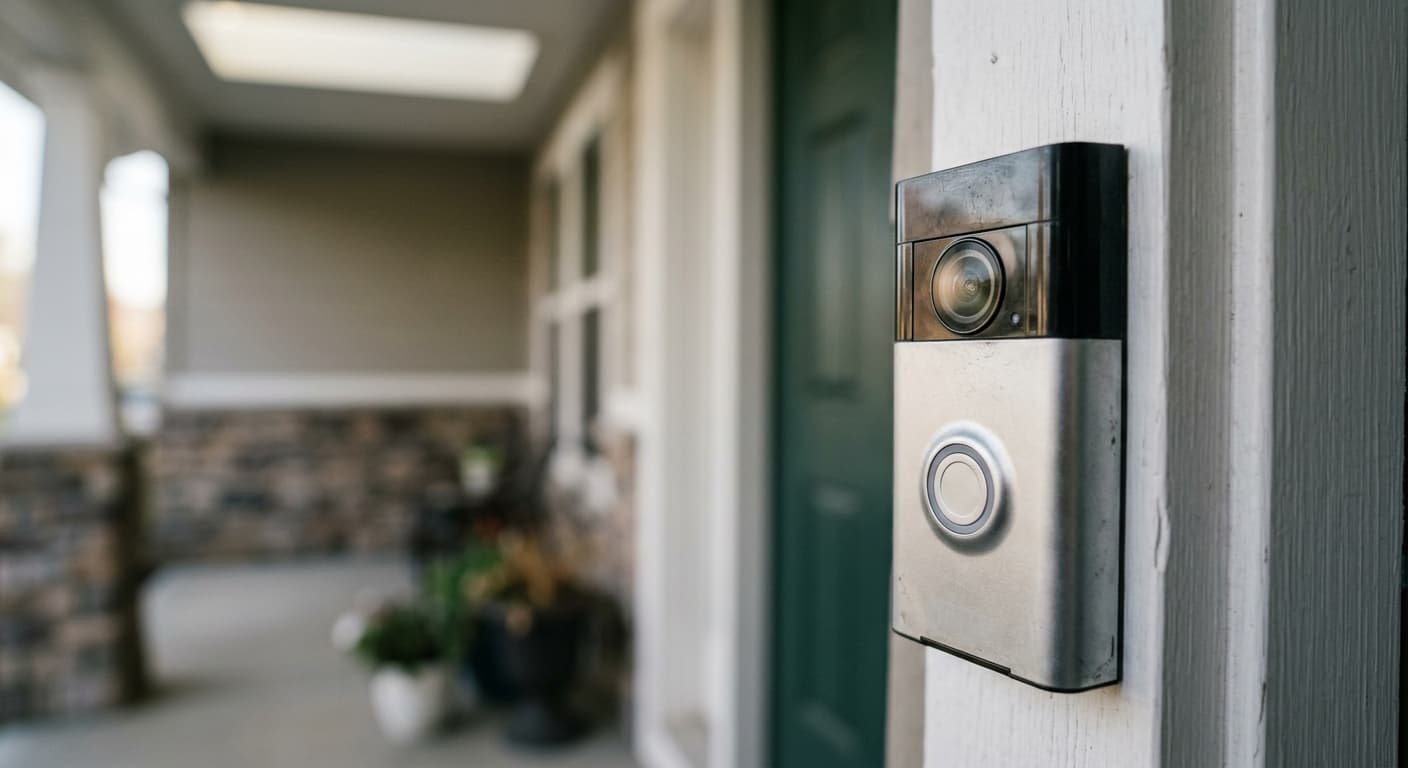
Vermont is technically a one-party consent state, but the label obscures what makes it unique: Vermont is the only US state without a general wiretap or eavesdropping criminal statute. The federal Wiretap Act at 18 U.S.C. 2511(2)(d) supplies the consent floor. Secretly recording inside a private home is a separate matter: the Vermont Supreme Court in State v. Geraw, 173 Vt. 350, 795 A.2d 1219 (2002), held that Article 11 of the Vermont Constitution bars warrantless secret in-home audio recording even by known, invited officers. Illegal recording also violates targeted criminal statutes and gives rise to civil liability.
Vermont recording law at a glance
| Question | Answer |
|---|---|
| Consent rule | One-party (by federal default; no Vermont wiretap statute) |
| Controlling authority | 18 U.S.C. 2511(2)(d); Geraw / Blow / Brooks trilogy for in-home |
| When recording is illegal | Recording for a criminal or tortious purpose; covert recording of a person in a place carrying a reasonable expectation of privacy within a home under 13 V.S.A. 2605(d); voyeurism under 13 V.S.A. 2605(b) |
| Criminal penalty (voyeurism/in-home) | Up to 2 yrs and $1,000 first offense; up to 3 yrs and $5,000 subsequent; up to 5 yrs and $5,000 for disclosure |
| Criminal penalty (NCII) | Up to 2 yrs and $2,000 basic; up to 5 yrs and $10,000 for-profit |
| Civil remedy | Common-law intrusion-upon-seclusion (Hodgdon); 18 U.S.C. 2520 federal civil action; 13 V.S.A. 2606(e) for NCII |
| Hidden cameras | Legal on your own property absent an intimate-area or reasonable-expectation-of-privacy element; 13 V.S.A. 2605 reaches restrooms, changing areas, and private areas within a home; 13 V.S.A. 3835 requires the property owner's prior written consent to place a camera on someone else's property |
| Recording police | No binding Second Circuit civilian ruling; persuasive consensus supports open public-place recording |
For the full in-depth analysis see Vermont recording laws in depth below.
Recording in-person conversations in Vermont
Vermont has never enacted a general wiretap or eavesdropping criminal statute. A direct review of Title 13 of the Vermont Statutes Annotated confirms no chapter prohibits private interception of wire, oral, or electronic communications. The Vermont Electronic Communication Privacy Act at 13 V.S.A. chapter 232 (sections 8101 to 8108) sounds relevant but is not a wiretap statute: it regulates only the process by which Vermont law enforcement may compel a service provider to produce stored electronic data. It carries no private-party criminal liability for eavesdropping.
Because the state criminal code is silent, federal ECPA at 18 U.S.C. 2511(2)(d) is the operative rule. A person who is a party to a wire, oral, or electronic communication may record it without notifying the other parties. The one limit: the safe harbor is forfeited when the recording is made "for the purpose of committing any criminal or tortious act." Recording a colleague to document harassment for HR is lawful. Recording the same colleague as part of a blackmail scheme is not.
The Geraw / Blow / Brooks trilogy from the Vermont Supreme Court builds an additional layer on top of the federal floor. State v. Blow, 157 Vt. 513, 602 A.2d 552 (1991) held that warrantless electronic participant monitoring inside a home "offends the core values of Article 11" of the Vermont Constitution. State v. Brooks, 157 Vt. 490, 601 A.2d 963 (1991), decided the same day, held the opposite for a public parking lot: conversations open to passersby carry no Article 11 privacy protection.
State v. Geraw, 173 Vt. 350, 795 A.2d 1219 (2002) is the doctrinal anchor. Two Essex Junction detectives were invited into a defendant's home and secretly tape-recorded the conversation at the kitchen table. The Vermont Supreme Court suppressed the recording under Article 11, extending Blow's covert-informant rule to identified, invited officers:
"Any Vermonter who sits around the kitchen table conversing as defendant did here has a reasonable right to expect that he or she is not being secretly monitored or recorded."
The trilogy yields a clean binary for state actors: secret recording inside a private home requires a warrant; public-place participant recording does not. These are Article 11 cases binding state actors, not private parties. But private actors who secretly record inside someone else's home face separate exposure under 13 V.S.A. 2605(d), the federal tortious-purpose carve-out, and the common-law intrusion-upon-seclusion tort.
Recording phone calls in Vermont
The one-party consent rule applies equally to phone calls. Vermont has no state-law call-recording statute, so federal ECPA governs. A Vermont caller who is a party to the call may record without notification.
The cross-border hazard is the bigger practical issue. Vermont borders Massachusetts (all-party for secret civilian recording under M.G.L. ch. 272, section 99) and New Hampshire (all-party under RSA 570-A). When any party to the call is physically in Massachusetts or New Hampshire, the safer rule is to treat the call as requiring all-party consent: notify at the start or obtain affirmative consent. New York and Quebec are both one-party jurisdictions, so Vermont-to-New York and Vermont-to-Quebec calls follow the Vermont default.
For a call that crosses into another state, our recording consent checker shows which consent rule controls.
See Vermont Phone Call Recording Laws for a deeper walkthrough.
Hidden cameras, doorbells, and nanny cams

Security cameras on your own property are generally lawful in Vermont, subject to two targeted criminal provisions and, since June 2024, a civil-penalty statute that governs placing a camera on property you do not control.
13 V.S.A. 2605(b) prohibits intentionally recording the intimate areas of another person without consent in a place where they have a reasonable expectation of privacy. "Intimate areas" covers genitals, pubic area, buttocks, and the female breast of an identifiable person.
13 V.S.A. 2605(d) is broader. It bars intentionally conducting surveillance on, or photographing, filming, or recording, a person without that person's knowledge and consent "while the person being surveilled, photographed, filmed, or recorded is in a place where he or she would have a reasonable expectation of privacy within a home or residence." No nudity is required. This is the closest Vermont analog to the in-home wiretap prohibition other states codify.
Read the trigger carefully, because the common shorthand gets it wrong. The operative element is the subject's reasonable expectation of privacy, not whose home it is, and the subsection contains no exception for recording inside a home you own. A nanny cam covering the open common living areas of your own home generally does not trigger 2605(d), since a person in a shared living room usually has no reasonable expectation of privacy there. A camera aimed at a guest room, a bathroom, or the private sleeping quarters of a live-in caregiver, tenant, or houseguest can fall inside 2605(d) even though the house is yours. Planting a covert camera inside another person's home is squarely within the subsection.
Subsection (d) carries one express carve-out: "Bona fide private investigators and bona fide security guards engaged in otherwise lawful activities within the scope of their employment are exempt from this subsection." Vermont defines those terms by reference to the licensing provisions at 26 V.S.A. sections 3151 and 3151a, so the exemption turns on actual licensure and on the activity being otherwise lawful.
The first-offense penalty for 2605(b) or (d) violations is up to 2 years and a $1,000 fine. Disclosure of images obtained in violation of 2605(b), (d), or (e) is graded more severely under 2605(c): up to 5 years and $5,000.
13 V.S.A. 3835 is the newest layer and the one most often missed, because it is civil rather than criminal. Added by Act 161 of 2024, section 47, and effective June 6, 2024, it provides that a person "shall not place a camera or other surveillance device on any privately owned real property with the intent to conduct surveillance on a person or the property unless the person has obtained prior written consent from the property owner." The civil penalty is up to $50 for a first violation and up to $250 for a second or subsequent violation. Law enforcement officers acting for legitimate law-enforcement purposes are excluded.
Two definitions in 3835(d) do the practical work. "Property owner" means "a person who owns, leases, licenses, or otherwise controls ownership or use of land, or an employee or agent of that person," which on its face reaches a tenant in possession, so a landlord who wants to place a camera at a rented unit should obtain the tenant's prior written consent rather than rely on holding title. "Surveillance device" is defined as a device hidden or obscured from plain view that permits observation of the property or of a person on it in a manner that invades a reasonable expectation of privacy. Because the prohibition attaches to where the device is placed, a camera you mount on your own home stays outside 3835 even if its field of view extends past your property line.
A camera that also records audio while no party to the conversation has consented may separately invoke the federal tortious-purpose analysis under 18 U.S.C. 2511(2)(d).
See Vermont Voyeurism Laws and Vermont Security Camera Laws for more detail.
Penalties for illegal recording in Vermont
Vermont has no general wiretap penalty because there is no wiretap statute. The targeted penalties on the books:
| Provision | Conduct | Penalty |
|---|---|---|
| 13 V.S.A. 2605(b), (d), (e) first offense | Voyeurism, surveillance of a person in a private area within a home, sexual-conduct recording | Up to 2 yrs and $1,000 |
| 13 V.S.A. 2605(b), (d), (e) subsequent | Same conduct, prior conviction | Up to 3 yrs and $5,000 |
| 13 V.S.A. 2605(c) | Disclosure of images obtained in violation of 2605(b)/(d)/(e) | Up to 5 yrs and $5,000 |
| 13 V.S.A. 3835 (civil, not criminal) | Placing a camera or surveillance device on privately owned real property to conduct surveillance without the property owner's prior written consent | Civil penalty up to $50 first; up to $250 subsequent |
| 13 V.S.A. 2606 basic | Nonconsensual intimate imagery (including AI deepfake post-Act 161) | Up to 2 yrs and $2,000 |
| 13 V.S.A. 2606 for-profit | Commercial NCII disclosure | Up to 5 yrs and $10,000 |
| 18 U.S.C. 2511 | Federal wiretap violation (tortious-purpose recording) | Up to 5 yrs plus federal fines |
Civil remedies. Vermont has no statutory recording-interception damages formula. The available routes:
- Common-law intrusion upon seclusion. Hodgdon v. Mt. Mansfield Co., 160 Vt. 150, 624 A.2d 1122 (1992) is the workhorse. The tort requires an intentional interference with solitude or seclusion of a kind highly offensive to a reasonable person. No statutory floor or ceiling.
- 13 V.S.A. 2606(e) private cause of action. Express civil remedy for NCII (including deepfake post-Act 161), with TRO and permanent-injunction relief plus actual damages.
- Federal civil action at 18 U.S.C. 2520. Actual damages plus the violator's profits, or statutory damages of whichever is greater between $100 a day for each day of violation or $10,000, plus punitive damages and reasonable attorney fees for federal Wiretap Act violations.
- Public disclosure of private facts and appropriation. In Lemnah v. American Breeders Service, 144 Vt. 568 (1984), the Vermont Supreme Court applied the Restatement's publicity standard only because the parties agreed it controlled, expressly declined to decide what elements make up the invasion-of-privacy tort in Vermont, and entered judgment for the defendant on the privacy claim because a statement made to one person was not enough publicity. Staruski v. Continental Tel. Co. of Vt., 154 Vt. 568 (1990) recognized a damages remedy for appropriation of a person's identity, at least when done for commercial purposes.
The statute of limitations on Vermont privacy torts is 3 years under 12 V.S.A. 512. Vermont also has a strong anti-SLAPP statute at 12 V.S.A. 1041, providing mandatory fee-shifting where a recording-related civil claim targets constitutionally protected speech or newsgathering.
Federal law separately criminalizes disclosing or using the contents of a communication that was illegally intercepted, even by someone who did not do the intercepting, if that person knows or has reason to know the interception was unlawful. 18 U.S.C. 2511(1)(c), (d). The First Amendment nonetheless protects a person or publisher who lawfully obtains such material from a third party, and had no role in the illegal interception, from liability for publishing truthful information on a matter of public concern. Bartnicki v. Vopper, 532 U.S. 514 (2001).
Recording the police in Vermont
Vermont sits in the Second Circuit (with Connecticut and New York), not the First. The First Circuit has issued published civilian rulings clearly establishing a First Amendment right to record on-duty police in public. The Second Circuit has not. Reyes v. City of New York (2d Cir. June 18, 2025) was a procedural certification of New York's Right-to-Record statutes to the New York Court of Appeals, not a constitutional ruling. The Second Circuit's posture on civilian recording of police remains formally unsettled.
That said, every federal circuit to have addressed the question has recognized at least an open public-place right to record on-duty police. Vermont courts presented with the question would likely follow that consensus. The practical conservative posture: record openly, maintain a reasonable distance, comply with lawful orders to move back, and do not physically interfere with police activity.
Because the right is not "clearly established" under controlling Second Circuit precedent, qualified immunity is more available to officers in Vermont than in states within the First, Third, Seventh, or Eleventh Circuits.
See Vermont Laws on Recording Police for the full analysis.
Special topics in Vermont
Workplace recording and the NLRA
Vermont has no state wiretap statute, so there is no Vermont-statutory consent rule for workplace recording. Federal ECPA one-party consent governs. An employee present in a meeting may record it. Blanket employer no-recording handbook rules are subject to Stericycle, Inc., 372 NLRB No. 113 (Aug. 2, 2023), which makes them presumptively unlawful unless narrowly tailored. NLRB GC 25-05 (Feb. 14, 2025) was a housekeeping rescission of prior General Counsel memoranda; it did not reinstate Boeing or overrule Stericycle. NLRB GC 25-07 (June 25, 2025) narrowly bars surreptitious recording of formal collective-bargaining sessions. The 13 V.S.A. 2605 layer still applies to workplace restrooms, lactation rooms, and similar private-zone areas. See Vermont Workplace Recording Laws.
Body-worn cameras and public records
Vermont's body-camera framework rests on two statutes. 20 V.S.A. 1819 requires Vermont State Police Field Force members who routinely engage with the public to carry a body camera, effective October 2, 2020. 20 V.S.A. 2369 requires any Vermont law-enforcement agency that authorizes body cameras to adopt and follow the Vermont Criminal Justice Council model policy, on and after January 1, 2022 (the VCJC model policy was adopted December 7, 2022). Civilian access to footage runs through the Vermont Public Records Act at 1 V.S.A. 315 to 320, with exemptions under 317(c)(5) (law-enforcement investigation records) and 317(c)(7) (unwarranted invasion of privacy).
AI deepfakes and election synthetic media
Act 161 of 2024 (H.878), signed June 6, 2024, added a "digitization" definition to 13 V.S.A. 2606, bringing AI-generated and digitally manipulated nonconsensual intimate imagery within the criminal NCII statute. Act 75 of 2026 (S.23), signed March 5, 2026, creates 17 V.S.A. chapter 35, subchapters 4 and 5, prohibiting publication of deceptive synthetic media of candidates within 90 days of a Vermont election without a clear disclosure; civil penalties range from $1,000 to $15,000 scaled by intent. The federal TAKE IT DOWN Act, Pub. L. 119-12 (signed May 19, 2025), adds a federal criminal prohibition on knowingly publishing nonconsensual intimate visual depictions (including AI-generated) and a covered-platform 48-hour notice-and-takedown duty effective May 19, 2026, stacking on top of 13 V.S.A. 2606.
Data privacy
H.121 of 2024 (Vermont Data Privacy Act) was vetoed by Governor Phil Scott on June 13, 2024, and the Senate override failed 14 to 15 on June 17, 2024. It is not in force. Successor bills S.71, H.208, and H.211 remain pending and have not been signed into law. Vermont does have a live data-broker registration and security regime under 9 V.S.A. chapter 62, enacted as Act 171 of 2018, effective January 1, 2019.
Federal ECPA and FCC overlay
Because Vermont has no state wiretap statute, the federal ECPA at 18 U.S.C. 2510 to 2522 does more work in Vermont than in states with codified two-party rules. The FCC's Declaratory Ruling 24-17 (Feb. 8, 2024) classifies AI-generated voices in robocalls as "artificial or prerecorded" messages under TCPA 47 U.S.C. 227, requiring prior express consent. The one-to-one consent rule (FCC Order 23-107/24-24) was vacated by the 11th Circuit in Insurance Marketing Coalition Ltd. v. FCC, No. 24-10277 (Jan. 24, 2025) and the FCC has removed the implementing language.
Recent legal developments
- March 5, 2026: Act 75 of 2026 (S.23) signed, creating Vermont election synthetic media disclosure regime at 17 V.S.A. chapter 35, subchapters 4 and 5.
- May 19, 2025: Federal TAKE IT DOWN Act (Pub. L. 119-12) signed; platform takedown duty live as of May 19, 2026.
- June 12, 2025: Act 63 of 2025 (S.69) signed, creating Vermont Age-Appropriate Design Code Act at 9 V.S.A. sections 2449a to 2449j, effective January 1, 2027.
- June 6, 2024: Act 161 of 2024 (H.878) signed, amending 13 V.S.A. 2606 to cover AI-generated deepfake intimate imagery. The same act, at section 47, added 13 V.S.A. 3835, a civil prohibition on placing a camera or other surveillance device on privately owned real property without the property owner's prior written consent.
- June 13, 2024: Governor Phil Scott vetoed H.121 (Vermont Data Privacy Act); Senate override failed June 17, 2024 on a 14-to-15 vote. H.121 is not law.

Vermont recording laws in depth
The following sub-pages cover specific Vermont recording contexts in greater depth than this hub.
By type of recording
- Vermont Audio Recording Laws
- Vermont Video Recording Laws
- Vermont Phone Call Recording Laws
- Vermont Voyeurism Laws
- Vermont Dashcam Laws
By place or relationship
- Vermont Laws on Recording in Public
- Vermont Laws on Recording Police
- Vermont Workplace Recording Laws
- Vermont Security Camera Laws
- Vermont Landlord-Tenant Recording Laws
- Vermont Medical Recording Laws
- Vermont School Recording Laws
More Vermont laws
- Vermont Alimony Laws
- Vermont At-Will Employment Laws
- Vermont Child Custody Laws
- Vermont Data Privacy Laws
- Vermont Landlord-Tenant Laws
This article is general legal information, not legal advice. Recording laws change and apply differently to each situation. For advice about your situation, consult a licensed Vermont attorney.
More Vermont Laws
- Vermont AI Meeting Recording Laws
- Vermont Dashcam Laws
- Vermont Data Privacy Laws
- Vermont Deepfake Laws
- Vermont Employee Monitoring Laws
- Vermont GPS Tracking Laws
- Vermont Police Bodycam Laws
- Vermont Smart Glasses Recording Laws
Frequently Asked Questions
Is Vermont a one-party or two-party consent state?
Vermont is a one-party consent state by default, but only because no Vermont statute imposes a stricter rule. Vermont is the only US state without a general wiretap or eavesdropping criminal statute. Federal ECPA at 18 U.S.C. 2511(2)(d) supplies the one-party rule: any party to a communication may record without notifying the others. The safe harbor is forfeited if the recording is made for a criminal or tortious purpose. State actors recording secretly inside a private home need a warrant under Vermont Constitution Article 11 per State v. Geraw, 173 Vt. 350 (2002).
Does Vermont have a wiretap law?
No. Vermont is the only US state without a general wiretap or eavesdropping criminal statute. Title 13 of the Vermont Statutes Annotated contains no chapter prohibiting private interception of wire, oral, or electronic communications. The Vermont Electronic Communication Privacy Act at 13 V.S.A. chapter 232 (sections 8101 to 8108) regulates only law-enforcement compelled production of stored electronic data from service providers; it is not a wiretap statute and carries no private-party criminal liability for recording. The federal Wiretap Act at 18 U.S.C. 2511 supplies the criminal floor.
Can I secretly record a conversation inside someone else's home in Vermont?
Proceed with caution. Federal ECPA one-party consent technically permits a party to the conversation to record. But 13 V.S.A. 2605(d) separately criminalizes intentionally surveilling or recording a person, without that person's knowledge and consent, while that person is in a place where he or she would have a reasonable expectation of privacy within a home or residence, regardless of nudity. Bona fide private investigators and bona fide security guards engaged in otherwise lawful activities within the scope of their employment are exempt from that subsection. Separately, 13 V.S.A. 3835 makes it a civil violation to place a camera or other surveillance device on someone else's privately owned real property without the property owner's prior written consent. A common-law intrusion-upon-seclusion claim under Hodgdon v. Mt. Mansfield Co., 160 Vt. 150 (1992), is also a real civil risk, and State v. Geraw bars warrantless secret in-home recording by state actors under Article 11. The federal one-party rule is not a green light for hidden microphones in someone else's house.
Can I record my employer or coworkers in Vermont?
Generally yes for audio, as a party to the conversation under federal ECPA one-party consent. Blanket employer no-recording handbook rules are subject to NLRB Stericycle, Inc., 372 NLRB No. 113 (Aug. 2, 2023), which makes them presumptively unlawful unless narrowly tailored to a substantial business interest. NLRB GC 25-07 (June 25, 2025) narrowly bars surreptitious recording of formal collective-bargaining sessions only. The 13 V.S.A. 2605 voyeurism layer applies to restrooms, lactation rooms, and similar private-zone areas regardless of who is recording.
Can I record the police in Vermont?
Vermont sits in the Second Circuit, which has not issued a published civilian ruling clearly establishing a First Amendment right to record on-duty police in public. Every sister circuit to address the question has recognized at least an open public-place right, and Vermont courts would likely follow that consensus. However, the right is not clearly established under controlling Second Circuit precedent, so qualified immunity is more available to officers here than in First, Third, or Seventh Circuit states. Record openly, maintain a reasonable distance, and do not interfere with police activity.
What are the penalties for illegal recording in Vermont?
There is no general Vermont wiretap penalty. Voyeurism and covert surveillance of a person in a private area within a home under 13 V.S.A. 2605: up to 2 years and $1,000 first offense; up to 3 years and $5,000 subsequent; up to 5 years and $5,000 for disclosing images under 2605(c). Placing a camera or other surveillance device on someone else's privately owned real property without the owner's prior written consent is a civil violation under 13 V.S.A. 3835: up to $50 for a first violation and up to $250 for a subsequent one. Nonconsensual intimate imagery under 13 V.S.A. 2606 (including AI deepfakes post-Act 161): up to 2 years and $2,000 basic; up to 5 years and $10,000 for-profit. Federal Wiretap Act at 18 U.S.C. 2511: up to 5 years plus the federal civil action at 18 U.S.C. 2520, which sets statutory damages at whichever is greater of $100 a day for each day of violation or $10,000, plus punitive damages and attorney fees. That federal floor applies in Vermont because the state has never enacted its own civil recording-damages statute.
Can I record a phone call between Vermont and Massachusetts or New Hampshire?
Treat those calls as requiring all-party consent. Massachusetts requires all-party consent for secret civilian recording under M.G.L. ch. 272, section 99. New Hampshire requires all-party consent under RSA 570-A. Where any party to the call is physically in a stricter state, the safer practice is to notify the other party or obtain affirmative consent before recording. Vermont-to-New York and Vermont-to-Quebec calls follow the one-party default.
Has Vermont enacted deepfake or AI-recording legislation?
Yes, two laws are enacted. Act 161 of 2024 (H.878, signed June 6, 2024) expanded 13 V.S.A. 2606 to expressly cover AI-generated and digitally manipulated nonconsensual intimate imagery through a new 'digitization' definition. Act 75 of 2026 (S.23, signed March 5, 2026) requires clear disclosure on deceptive synthetic media of candidates within 90 days of a Vermont election, with civil penalties from $1,000 to $15,000 by intent. The federal TAKE IT DOWN Act (Pub. L. 119-12, signed May 19, 2025) adds a federal criminal prohibition on publishing NCII including AI-generated depictions, with a platform notice-and-takedown duty effective May 19, 2026. The Vermont Data Privacy Act (H.121 of 2024) was vetoed and is not law.
Updates
Corrected the description of Lemnah v. American Breeders Service, which applied the Restatement privacy standard by the parties' agreement without deciding the tort's elements in Vermont and ruled for the defendant on the privacy claim, and limited Staruski to the appropriation remedy it recognized.
Added Vermont's camera-placement statute, 13 V.S.A. 3835 (effective June 6, 2024), which requires the property owner's prior written consent before placing a camera on privately owned real property, and corrected the description of 13 V.S.A. 2605(d) to state its reasonable-expectation-of-privacy element rather than an ownership-based test and to note its exemption for licensed private investigators and security guards.
Repointed the page's six historical Vermont Supreme Court case citations (State v. Blow, State v. Brooks, State v. Geraw, Hodgdon v. Mt. Mansfield Co., Lemnah v. American Breeders Service, and Staruski v. Continental Telephone Co.) from a generic opinions index that only covers cases from about 2018 onward to each case's specific CourtListener opinion page.
Independently fact-checked against the cited primary sources
Governing law re-checked for recent changes
Governing law re-checked for recent changes
Reviewed and approved by an editor
Full restructure per recording-redo spec: condensed 12,000-word hub into lean scannable format while preserving every verified statute, case, and penalty. Led with the no-wiretap-statute differentiator and the Geraw / Blow / Brooks Article 11 trilogy as the doctrinal spine. Organized into standard hub sections (in-person, phone, hidden cameras, penalties, police, special topics). Condensed NLRB, body-camera, AI/deepfake, data-privacy, and federal overlay into tight Special Topics subsections. Fact-verified 13 V.S.A. 2605 penalties, 13 V.S.A. 2606 penalties and digitization definition, and 20 V.S.A. 1819 effective date against primary sources. Added in-depth subpage index, refreshed FAQ to 8 questions, updated hero and inline images. Zero corrections required: all load-bearing facts in prior version confirmed accurate.
Refresh: Reframed the lead around Vermont's defining differentiator that no other US state shares: Vermont is the only state without a general wiretap or eavesdropping criminal statute, so the federal Wiretap Act at 18 U.S.C. 2511(2)(d) supplies the one-party consent floor and the principal criminal limit is the federal tortious-purpose carve-out. Reframed the operative doctrinal core as the Geraw / Blow / Brooks Article 11 trilogy: State v. Geraw, 173 Vt. 350, 795 A.2d 1219 (2002) (warrantless secret in-home recording by state actors violates Article 11 even by known officers), paired with State v. Blow, 157 Vt. 513, 602 A.2d 552 (1991) (warrantless electronic participant monitoring in a home offends the core values of Article 11) and State v. Brooks, 157 Vt. 490, 601 A.2d 963 (1991) (public-place participant recording does not violate Article 11). Used the verified Geraw 'kitchen table' verbatim quote and paraphrased the holding sentence rather than putting unverified language in quotes. Corrected the catastrophic prior framing that placed Vermont in the First Circuit and treated Glik v. Cunniffe, 655 F.3d 78 (1st Cir. 2011) and Project Veritas Action Fund v. Rollins, 982 F.3d 813 (1st Cir. 2020) as controlling in Vermont. Vermont is in the Second Circuit (with Connecticut and New York). The Second Circuit has not issued a published civilian First Amendment ruling clearly establishing a right to record on-duty police; Reyes v. City of New York (2d Cir. June 18, 2025) was a procedural certification of the New York Right-to-Record Acts to the New York Court of Appeals, not a constitutional holding. Glik and Rollins are persuasive sister-circuit authority only in Vermont. Added Act 161 of 2024 (H.878), signed by Governor Phil Scott on June 6, 2024 (not June 4), amending 13 V.S.A. 2606 to expressly cover AI-generated and digitally manipulated nonconsensual intimate imagery through a new 'digitization' definition that reaches computer-generated images and altered images using other persons' likeness. Added Act 75 of 2026 (S.23), signed March 5, 2026, creating 17 V.S.A. chapter 35, subchapters 4 and 5 (deceptive election synthetic media disclosure within 90 days of election; civil penalties from $1,000 to $15,000 scaled by intent). Clarified that H.121 of 2024 (Vermont Data Privacy Act, sometimes called 'VDPA') was vetoed June 13, 2024 and the Senate override failed 14 to 15 on June 17, 2024 (20 votes required); H.121 is not in force despite some third-party summaries treating it as enacted. Flagged S.71, H.208, and H.211 (2025 to 2026 successor data-privacy bills) as pending only. Corrected the body-cam citations from any 20 V.S.A. 1815 or 1825 framing to the correct pair 20 V.S.A. 1819 (Vermont State Police Field Force equipping, effective October 2, 2020, per 2019 Acts and Resolves No. 154 (Adj. Sess.) section E.209.1) plus 20 V.S.A. 2369 (statewide policy via Vermont Criminal Justice Council; on and after January 1, 2022). Anchored civilian access through the Vermont Public Records Act at 1 V.S.A. 315 to 320 with section 317(c) exemptions, and referenced the VCJC Model Body-Worn Camera Policy adopted December 7, 2022. Corrected the anti-SLAPP citation from any 12 V.S.A. 1697 framing to the operative 12 V.S.A. 1041, with the correct URL path /12/027/01041. Set the personal-injury statute of limitations at 12 V.S.A. 512 (3 years) for invasion-of-privacy civil claims. Built the tort civil-remedy framework on Hodgdon v. Mt. Mansfield Co., 160 Vt. 150, 624 A.2d 1122 (1992) (intrusion upon seclusion), Lemnah v. American Breeders Service, 144 Vt. 568, 482 A.2d 700 (1984) (public disclosure of private facts), and Staruski v. Continental Tel. Co. of Vt., 154 Vt. 568, 581 A.2d 266 (1990) (appropriation). Added the 13 V.S.A. 2606(e) private cause of action with TRO and permanent-injunction relief. Made explicit that Vermont has NO statutory recording-interception civil cause of action with no $100/day formula and no $1,000 minimum, in contrast to neighboring one-party states like West Virginia and Rhode Island. Reframed NLRB GC 25-05 (February 14, 2025; Acting General Counsel William B. Cowen) as a housekeeping rescission of prior General Counsel memoranda for case-backlog management, not a Boeing reinstatement; Stericycle, Inc., 372 NLRB No. 113 (Aug. 2, 2023) remains controlling Board law. Added NLRB GC 25-07 (June 25, 2025) narrowly scoped to surreptitious recording of collective-bargaining sessions. Updated FCC Order 23-107 (FCC 24-24) to vacated by 11th Cir. Insurance Marketing Coalition Ltd. v. FCC, No. 24-10277 (mandate April 30, 2025); FCC subsequently removed 47 C.F.R. 64.1200(f)(9). Removed reliance on 47 C.F.R. 64.501 (removed November 20, 2017). Added federal TAKE IT DOWN Act, Pub. L. 119-12 (S. 146), signed May 19, 2025; covered-platform 48-hour notice-and-takedown effective May 19, 2026 (live by publication of this refresh). Surfaced State v. VanBuren, 2018 VT 95, 214 A.3d 791 (Vt. 2019) as the First Amendment narrowing-construction case validating 13 V.S.A. 2606 enforceability. Replaced commercial-codifier and law.cornell.edu URLs with legislature.vermont.gov, vtcourts.gov, ago.vermont.gov, vcjc.vermont.gov, uscode.house.gov, congress.gov, justice.gov, fcc.gov, docs.fcc.gov, media.ca11.uscourts.gov, ca2.uscourts.gov, ecfr.gov, nlrb.gov, and ftc.gov primary sources.
Refresh: Reframed the lead around Vermont's defining differentiator that no other US state shares: Vermont is the only state without a general wiretap or eavesdropping criminal statute, so the federal Wiretap Act at 18 U.S.C. 2511(2)(d) supplies the one-party consent floor and the principal criminal limit is the federal tortious-purpose carve-out. Reframed the operative doctrinal core as the Geraw / Blow / Brooks Article 11 trilogy: State v. Geraw, 173 Vt. 350, 795 A.2d 1219 (2002) (warrantless secret in-home recording by state actors violates Article 11 even by known officers), paired with State v. Blow, 157 Vt. 513, 602 A.2d 552 (1991) (warrantless electronic participant monitoring in a home offends the core values of Article 11) and State v. Brooks, 157 Vt. 490, 601 A.2d 963 (1991) (public-place participant recording does not violate Article 11). Used the verified Geraw 'kitchen table' verbatim quote and paraphrased the holding sentence rather than putting unverified language in quotes. Corrected the catastrophic prior framing that placed Vermont in the First Circuit and treated Glik v. Cunniffe, 655 F.3d 78 (1st Cir. 2011) and Project Veritas Action Fund v. Rollins, 982 F.3d 813 (1st Cir. 2020) as controlling in Vermont. Vermont is in the Second Circuit (with Connecticut and New York). The Second Circuit has not issued a published civilian First Amendment ruling clearly establishing a right to record on-duty police; Reyes v. City of New York (2d Cir. June 18, 2025) was a procedural certification of the New York Right-to-Record Acts to the New York Court of Appeals, not a constitutional holding. Glik and Rollins are persuasive sister-circuit authority only in Vermont. Added Act 161 of 2024 (H.878), signed by Governor Phil Scott on June 6, 2024, amending 13 V.S.A. 2606 to expressly cover AI-generated and digitally manipulated nonconsensual intimate imagery. Added Act 75 of 2026 (S.23), signed March 5, 2026. Clarified that H.121 of 2024 was vetoed June 13, 2024 and the Senate override failed 14 to 15 on June 17, 2024. H.121 is not in force. Corrected body-cam citations to 20 V.S.A. 1819 and 20 V.S.A. 2369. Corrected anti-SLAPP citation to 12 V.S.A. 1041. Replaced commercial-codifier URLs with primary legislature.vermont.gov, vtcourts.gov, uscode.house.gov, and other primary sources.
Added wearable recording devices section and related FAQs
The Law Behind This Article
This article rests on the statutory provisions below, held in our own legal record and retrieved from the official source. Tap a section to read the operative text.
United States Code Title 18
§ 2511Interception and disclosure of wire, oral, or electronic communications prohibitedIn forcecited in 441 of our articles
Except as otherwise specifically provided in this chapter any person who— intentionally intercepts, endeavors to intercept, or procures any other person to intercept or endeavor to intercept, any wire, oral, or electronic communication; intentionally uses, endeavors to use, or procures any other person to use or endeavor to use any electronic, mechanical, or other device to intercept any oral communication when— such device is affixed to, or otherwise transmits a signal through, a wire, cable, or other like connection used in wire communication; or such device transmits communications by radio, or interferes with the transmission of such communication; or such person knows, or has reason to know, that such device or any component thereof has been sent through the mail or transported in interstate or foreign commerce; or such use or endeavor to use (A) takes place on the premises of any business or other commercial establishment the operations of which affect interstate or foreign commerce; or (B) obtains or is for the purpose of obtaining information relating to the operations of any business or other commercial establishment the operations of which affect interstate or foreign…
Official text (excerpt) · last checked 2026-09-17 · Read the full text in our law library · Verify at uscode.house.gov
Cited in 2,045 court opinions in our collectionLatest citing opinion in our collection: 2026
In the courts (editorial summary, independently checked):Griggs-Ryan v. Smith (1990) applied the Section 2511(2)(d) prior-consent exception, treating a tenant repeatedly told that all incoming calls were taped as having impliedly consented. United States v. United States District Court (1972) read the then-current Section 2511(3) as conferring no presidential surveillance power.
Opinions citing this section in our collection:
- Mitchell v. Forsyth (Supreme Court of the United States 1985, 472 U.S. 511)✓The Attorney General authorized a warrantless 1970 national security wiretap that caught the plaintiff's calls; the Court held the since-repealed Section 2511(3) disclaimer left the tap lawful under Title III, and that Mitchell had qualified immunity.
- United States v. United States District Court for the Eastern District of Michigan (Supreme Court of the United States 1972, 407 U.S. 297)✓The Attorney General approved warrantless wiretaps on members of a domestic group accused of bombing a CIA office; the Court read Section 2511(3) as a congressional disclaimer conferring no surveillance power, then held the Fourth Amendment required prior judicial approval.
- Forsyth v. Barr (Court of Appeals for the Fifth Circuit 1994, 19 F.3d 1527)✓Dallas police used, in an internal affairs probe of an officer, calls private parties allegedly intercepted illegally; assuming that was unlawful, the Fifth Circuit held Section 2517(1) and (2) allowed the disclosure and use, defeating the Section 2511(1)(c) and (d) claims.
Identified automatically from the court opinions citing this section — not a ranking of which case controls.
Also relied on in: Connecticut Recording Laws (2026): Hybrid Consent Rules Explained, Oregon Recording Laws (2026): Hybrid One-Party and All-Party Rules, US Recording Laws by State (2026): All 50 States Explained
§ 2510DefinitionsIn forcecited in 137 of our articles
As used in this chapter— “wire communication” means any aural transfer made in whole or in part through the use of facilities for the transmission of communications by the aid of wire, cable, or other like connection between the point of origin and the point of reception (including the use of such connection in a switching station) furnished or operated by any person engaged in providing or operating such facilities for the transmission of interstate or foreign communications or communications affecting interstate or foreign commerce; “oral communication” means any oral communication uttered by a person exhibiting an expectation that such communication is not subject to interception under circumstances justifying such expectation, but such term does not include any electronic communication; “State” means any State of the United States, the District of Columbia, the Commonwealth of Puerto Rico, and any territory or possession of the United States; “intercept” means the aural or other acquisition of the contents of any wire, electronic, or oral communication through the use of any electronic, mechanical, or other device.1 So in original. The period probably should be a semicolon.
Official text (excerpt) · last checked 2026-07-28 · Read the full text in our law library · Verify at uscode.house.gov
Cited in 2,382 court opinions in our collectionLatest citing opinion in our collection: 2026
In the courts (editorial summary, independently checked):United States v. New York Telephone Co. (1977) held that pen registers fall outside Title III because they do not acquire the contents of a communication as Section 2510(4) and (8) define interception. Forsyth v. Barr (1994) applied the same definitions, treating the defendant officers as law enforcement officers under Section 2510(7).
Opinions citing this section in our collection:
- Forsyth v. Barr (Court of Appeals for the Fifth Circuit 1994, 19 F.3d 1527)✓Neighbors tapped an informant's home line and the overheard charges reached Dallas internal affairs; the Fifth Circuit saw no evidence the police defendants intercepted anything and held they were 2510(7) law enforcement officers, so 2517(1) and (2) allowed their use of it.
- Nixon v. Administrator of General Services (Supreme Court of the United States 1977, 433 U.S. 425)“…of the Omnibus Crime Control and Safe Streets Act of 1968, 18 U. S. C. §§ 2510 et seq. 408 F. Supp., at 363 . We…”
- Gannett Co. v. DePasquale (Supreme Court of the United States 1979, 443 U.S. 368)“…of the Omnibus Crime Control and Safe Streets Act of 1968, 18 U. S. C. § 2510 et seq., be preserved prior to the d…”
Identified automatically from the court opinions citing this section — not a ranking of which case controls.
Also relied on in: Surveillance Camera Laws by State (2026 Guide), Georgia Recording Laws (2026): One-Party Audio, All-Party Video, District of Columbia Recording Laws (2026): One-Party Consent Rules
§ 2520Recovery of civil damages authorizedIn forcecited in 130 of our articles
Except as provided in section 2511(2)(a)(ii), any person whose wire, oral, or electronic communication is intercepted, disclosed, or intentionally used in violation of this chapter may in a civil action recover from the person or entity, other than the United States, which engaged in that violation such relief as may be appropriate. In an action under this section, appropriate relief includes— such preliminary and other equitable or declaratory relief as may be appropriate; damages under subsection (c) and punitive damages in appropriate cases; and a reasonable attorney’s fee and other litigation costs reasonably incurred.
Official text (excerpt) · last checked 2026-07-28 · Read the full text in our law library · Verify at uscode.house.gov
Cited in 860 court opinions in our collectionLatest citing opinion in our collection: 2026
In the courts (editorial summary, independently checked):Walker v. Darby (1990) held a 2520 plaintiff need not prove the contents of intercepted conversations, only interception and a justified expectation against it. Bartnicki v. Vopper (2001) barred 2520 damages against defendants who took no part in the interception, obtained the tape lawfully, and disclosed a matter of public concern.
Opinions citing this section in our collection:
- Jessie Walker v. Thomas E. Darby, Hugh L. Robinson, Jr., and Kenneth Day (Court of Appeals for the Eleventh Circuit 1990, 911 F.2d 1573)✓A postal letter carrier said three supervisors wired an intercom near his workstation to listen in. Reversing summary judgment, the Eleventh Circuit held a section 2520 plaintiff can show interception without proving the contents of specific conversations.
- Gelbard v. United States (Supreme Court of the United States 1972, 408 U.S. 41)“…disclosure, or use is entitled to recover civil damages, 18 U. S. C. § 2520 . Title III also bars the use as eviden…”
- DirecTV, Inc. v. Hoa Huynh (Court of Appeals for the Ninth Circuit 2007, 503 F.3d 847)“…7 U.S.C. § 605 (e)(4), or alternatively, for violations of 18 U.S.C. § 2520 (a), or alternatively, for violations o…”
Identified automatically from the court opinions citing this section — not a ranking of which case controls.
Also relied on in: Alabama Audio Recording Laws: Consent Rules and Penalties, Alabama Phone Call Recording Laws: What You Need to Know, Alaska Phone Call Recording Laws: Rules for Landline, Cell, and VoIP (2026)
Vermont Statutes Annotated, Title 13: Crimes and Criminal Procedure, Chapter 59: Lewdness and Prostitution, Subchapter: LEWD AND INDECENT CONDUCT
§ 2605VoyeurismIn forcecited in 15 of our articles
(a) As used in this section: (1) “Bona fide private investigator or bona fide security guard” means an individual lawfully providing services, whether licensed or unlicensed, pursuant to 26 V.S.A. §§ 3151 and 3151a. (2) “Female breast” means any portion of the female breast below the top of the areola. (3) “Circumstances in which a person has a reasonable expectation of privacy” means circumstances in which a reasonable person would believe that his or her intimate areas would not be visible to the public, regardless of whether that person is in a public or private area. This definition includes circumstances in which a person knowingly disrobes in front of another, but does not expect nor give consent for the other person to photograph, film, or record his or her intimate areas. (4) “Intimate areas” means the naked or undergarment-clad genitals, pubic area, buttocks, or female breast of a person.
Official text (excerpt) · last checked 2026-09-24 · Read the full text in our law library · Verify at legislature.vermont.gov
Cited in 6 court opinions in our collectionLatest citing opinion in our collection: 2022
In the courts (editorial summary, independently checked):In State v. DEVOID (2010) the Vermont Supreme Court reversed an attempted voyeurism conviction under section 2605(b)(1), holding the evidence could not show the defendant, on the ground, was able to see the complainant's intimate areas as the statute defines them, so looking at her window was not an overt act.
Opinions citing this section in our collection:
- State v. DEVOID (Supreme Court of Vermont 2010, 188 Vt. 445)✓A man stared up at a second-floor shower window from the parking lot; a photograph taken inside the bathroom showed the complainant's intimate areas, as the statute defines them, were below the sill, so the court reversed his attempted-voyeurism conviction as unsupported.
- State v. Squiers (Supreme Court of Vermont 2006, 179 Vt. 388)“…r any object into the genital or anal opening of another”); 13 V.S.A. § 2605(a)(4) & (b) (prohibiting the viewing or…”
- State v. Beaudoin (Supreme Court of Vermont 2008, 185 Vt. 164)“…ter 1 includes §§ 2601 and 2602 and a section on voyeurism, 13 V.S.A. § 2605. Section 2601 makes it a felony to enga…”
Identified automatically from the court opinions citing this section — not a ranking of which case controls.
Also relied on in: Vermont Medical Recording Laws, Vermont Laws on Recording in Public, Vermont School Recording Laws
§ 2606Disclosure of sexually explicit images without consentIn forcecited in 10 of our articles
(a) As used in this section: (1) “Disclose” includes transfer, publish, distribute, exhibit, or reproduce. (2) “Harm” means physical injury, financial injury, or serious emotional distress. (3) “Nude” means any one or more of the following uncovered parts of the human body: (A) genitals; (B) pubic area; (C) anus; or (D) post-pubescent female nipple. (4) “Sexual conduct” shall have the same meaning as in section 2821 of this title. (5) “Visual image” includes a photograph, film, videotape, recording, or digital reproduction, including an image created or altered by digitization. (6) “Digitization” means the process of altering an image in a realistic manner utilizing an image or images of a person, including images other than the person depicted, or computer-generated images. (b)(1) A person violates this section if the person knowingly discloses a visual image of an identifiable person who is nude or who is engaged in sexual conduct, without the person’s consent, with the intent to harm, harass, intimidate, threaten, or coerce the person depicted, and the disclosure would cause a reasonable person to suffer harm.
Official text (excerpt) · last checked 2026-08-30 · Read the full text in our law library · Verify at legislature.vermont.gov
Cited in 3 court opinions in our collectionLatest citing opinion in our collection: 2024
Opinions citing this section in our collection:
- State v. Rebekah S. VanBuren (Supreme Court of Vermont 2019, 2018 VT 95)“…s statute banning disclosure of nonconsensual pornography. 13 V.S.A. § 2606. We conclude that the statute is const…”
- Ava Morton v. Mayah Young (Supreme Court of Vermont 2023, 298 A.3d 230)“…ute criminalizing disclosure of nonconsensual pornography, 13 V.S.A. § 2606, did not violate the First Amendment. I…”
- corriveau v. windham (Vermont Superior Court 2024)“…ithout saying that an injunction is an equitable remedy.”); 13 V.S.A. § 2606(e)(2) (explicitly listing “a preliminar…”
Identified automatically from the court opinions citing this section — not a ranking of which case controls.
Also relied on in: Vermont Video Recording Laws, Vermont Smart Glasses Recording Laws 2025
Vermont Statutes Annotated, Title 13: Crimes and Criminal Procedure, Chapter 81: Trespass and Malicious Injuries to Property, Subchapter: MISCELLANEOUS PROVISIONS
§ 3835Surveillance devices; placement on private property without consent of owner; civil penaltyIn forcecited in 3 of our articles
(a) A person shall not place a camera or other surveillance device on any privately owned real property with the intent to conduct surveillance on a person or the property unless the person has obtained prior written consent from the property owner. (b) A person who violates this section shall be assessed a civil penalty of not more than: (1) $50.00 for a first violation; or (2) $250.00 for a second or subsequent violation. (c) This section shall not apply to the use of a camera or other surveillance device by a law enforcement officer for legitimate law enforcement purposes. (d) As used in this section: (1) “Property owner” means a person who owns, leases, licenses, or otherwise controls ownership or use of land, or an employee or agent of that person.
Official text (excerpt) · last checked 2026-08-01 · Read the full text in our law library · Verify at legislature.vermont.gov
Also relied on in: Vermont Ring Doorbell Laws: What You Need to Know in 2026, Vermont Surveillance Camera Laws (2026 Guide)
Vermont Statutes Annotated, Title 20: Internal Security and Public Safety, Chapter 111: General Provisions
§ 1819Equipment of officers with video recording devicesIn forcecited in 4 of our articles
The Department shall ensure that all members assigned to the Vermont State Police Field Force Division who routinely engage with members of the public related to the enforcement of laws are equipped with a body camera or other video recording device on his or her person. (Added 2019, No. 154 (Adj. Sess.), § E.209.1, eff. Oct. 2, 2020.)
Official text (excerpt) · last checked 2026-08-31 · Read the full text in our law library · Verify at legislature.vermont.gov
Also relied on in: Vermont Laws on Recording Police, Vermont Police Body Camera Laws: Mandate & Access, Vermont Police Report: How to Get a Crash Report, Incident Report, or Body Camera Video
Vermont Statutes Annotated, Title 20: Internal Security and Public Safety, Chapter 151: Vermont Criminal Justice Council, Subchapter: GENERAL PROVISIONS
§ 2369Statewide policy; required use of body camera policyIn forcecited in 3 of our articles
(a)(1) On and after January 1, 2022, each law enforcement agency that authorizes its law enforcement officers to use body cameras shall adopt, follow, and enforce a model body camera policy established by the Council, and each law enforcement officer who uses a body camera shall comply with the provisions of that policy. (2) Until the date set forth in subdivision (1) of this subsection, each law enforcement agency that authorizes its law enforcement officers to use body cameras shall adopt, follow, and enforce the Model Body Worn Camera (BWC) Policy established by the Law Enforcement Advisory Board pursuant to 2016 Acts and Resolves No. 163, and each law enforcement officer who uses a body camera shall comply with the provisions of that policy. (b) The Council shall incorporate the provisions of this section into training it provides. (Added 2019, No. 166 (Adj. Sess.), § 13, eff. Oct. 1, 2020.)
Official text (excerpt) · last checked 2026-08-01 · Read the full text in our law library · Verify at legislature.vermont.gov
Vermont Statutes Annotated, Title 12: Court Procedure, Chapter 27: Pleading and Practice, Subchapter: PLEADINGS GENERALLY
§ 1041Exercise of rights to free speech and to petition government for redress of grievances; special motion to strikeIn forcecited in 2 of our articles
(a) A defendant in an action arising from the defendant’s exercise, in connection with a public issue, of the right to freedom of speech or to petition the government for redress of grievances under the U.S. or Vermont Constitution may file a special motion to strike under this section. (b) A special motion to strike under this section shall be filed with the court and served on all parties not more than 60 days after the filing of the complaint. A party may file a response to the motion not more than 15 days after the motion is served on the party. The court may extend the time limits of this subsection for good cause shown. (c)(1) The filing of a special motion to strike under this section shall stay all discovery proceedings in the action. Except as provided in subdivision (2) of this subsection, the stay of discovery shall remain in effect until the court rules on the special motion to strike. (2) The court, on motion and for good cause shown, may order that limited discovery be conducted for the purpose of assisting its decision on the special motion to strike.
Official text (excerpt) · last checked 2026-08-01 · Read the full text in our law library · Verify at legislature.vermont.gov
Cited in 35 court opinions in our collectionLatest citing opinion in our collection: 2026
Opinions citing this section in our collection:
- Kenneth P. Felis v. Downs Rachlin Martin PLLC, and Gallagher, Flynn & Company, LLP (Supreme Court of Vermont 2015, 200 Vt. 465)“…superior court’s denial of its motion to strike pursuant to 12 V.S.A. § 1041.1 We affirm. ¶ 2. Plaintiff’…”
- Garrett M. Cornelius v. The Chronicle, Inc. (Supreme Court of Vermont 2019, 206 A.3d 710)“…P (strategic lawsuit against public participation) statute, 12 V.S.A. § 1041. Plaintiff Garrett Cornelius filed sui…”
- Draxxion Talandar v. Elizabeth Manchester-Murphy (Supreme Court of Vermont 2024, 331 A.3d 1093)“…(strategic lawsuit against public participation) statute, 12 V.S.A. § 1041. In his complaint, plaintiff raised cla…”
Identified automatically from the court opinions citing this section — not a ranking of which case controls.
Vermont Statutes Annotated, Title 12: Court Procedure, Chapter 23: Limitation of Time for Commencement of Actions, Subchapter: ACTIONS LIMITED
§ 512Assault and battery; false imprisonment; slander and libel; injuries to person or propertyIn forcecited in 8 of our articles
Actions for the following causes shall be commenced within three years after the cause of action accrues, and not after: (1) assault and battery; (2) false imprisonment; (3) slander and libel; (4) except as otherwise provided in this chapter, injuries to the person suffered by the act or default of another person, provided that the cause of action shall be deemed to accrue as of the date of the discovery of the injury; (5) damage to personal property suffered by the act or default of another. (Amended 1967, No. 32, § 2, eff. March 16, 1967; 1975, No. 248 (Adj. Sess.), § 2.)
Official text (excerpt) · last checked 2026-08-01 · Read the full text in our law library · Verify at legislature.vermont.gov
Cited in 110 court opinions in our collectionLatest citing opinion in our collection: 2026
Opinions citing this section in our collection:
- Fitzgerald v. Congleton (Supreme Court of Vermont 1990, 155 Vt. 283)“…al court that her claim for legal malpractice was barred by 12 V.S.A. § 512(4). We hold that plaintiff’s claim is n…”
- Cavanaugh v. Abbott Laboratories (Supreme Court of Vermont 1985, 145 Vt. 516)“…unrealistic interpretation of the term “accrues” as used in 12 V.S.A. § 512 (personal injury action must be commenc…”
- Kinney v. Goodyear Tire & Rubber Co. (Supreme Court of Vermont 1976, 134 Vt. 571)“…re advised of this error and of the parties’ intent to cite 12 V.S.A. § 512(4). Although no formal amendment of the…”
Identified automatically from the court opinions citing this section — not a ranking of which case controls.
Vermont Statutes Annotated, Title 1: General Provisions, Chapter 5: Common Law; General Rights, Subchapter: ACCESS TO PUBLIC RECORDS
§ 315Statement of policy; short titleIn forcecited in 3 of our articles
(a) It is the policy of this subchapter to provide for free and open examination of records consistent with Chapter I, Article 6 of the Vermont Constitution. Officers of government are trustees and servants of the people and it is in the public interest to enable any person to review and criticize their decisions even though such examination may cause inconvenience or embarrassment. All people, however, have a right to privacy in their personal and economic pursuits, which ought to be protected unless specific information is needed to review the action of a governmental officer. Consistent with these principles, the General Assembly hereby declares that certain public records shall be made available to any person as hereinafter provided. To that end, the provisions of this subchapter shall be liberally construed to implement this policy, and the burden of proof shall be on the public agency to sustain its action. (b) The General Assembly finds that public records are essential to the administration of State and local government.
Official text (excerpt) · last checked 2026-08-01 · Read the full text in our law library · Verify at legislature.vermont.gov
Cited in 98 court opinions in our collectionLatest citing opinion in our collection: 2026
Opinions citing this section in our collection:
- Wesco, Inc. v. Sorrell (Supreme Court of Vermont 2004, 177 Vt. 287)“…ANR pursuant to Vermont’s Access to Public Records Act. See 1 V.S.A. § 315. In the requests, appellants sought man…”
- Springfield Terminal Railway Co. v. Agency of Transportation (Supreme Court of Vermont 2002, 174 Vt. 341)“…uiring VTrans to produce the withheld documents pursuant to 1 V.S.A §§ 315-320, Vermont’s Access to Public Records…”
- Caledonian-Record Publishing Co. v. Walton (Supreme Court of Vermont 1990, 154 Vt. 15)“…nd that pursuant to Vermont’s Access to Public Records Act, 1 V.S.A. §§ 315-320 (Act), citation records are public…”
Identified automatically from the court opinions citing this section — not a ranking of which case controls.
United States Code Title 47
§ 227Restrictions on use of telephone equipmentIn forcecited in 39 of our articles
As used in this section— The term “automatic telephone dialing system” means equipment which has the capacity— to store or produce telephone numbers to be called, using a random or sequential number generator; and to dial such numbers. The term “established business relationship”, for purposes only of subsection (b)(1)(C)(i), shall have the meaning given the term in section 64.1200 of title 47, Code of Federal Regulations, as in effect on January 1, 2003, except that— such term shall include a relationship between a person or entity and a business subscriber subject to the same terms applicable under such section to a relationship between a person or entity and a residential subscriber; and an established business relationship shall be subject to any time limitation established pursuant to paragraph (2)(G)).1 So in original. Second closing parenthesis probably should not appear.
Official text (excerpt) · last checked 2026-09-16 · Read the full text in our law library · Verify at uscode.house.gov
Cited in 3,209 court opinions in our collectionLatest citing opinion in our collection: 2026
In the courts (editorial summary, independently checked):Facebook, Inc. v. Duguid (2021) held that to qualify as an automatic telephone dialing system under Section 227(a)(1), equipment must have the capacity to use a random or sequential number generator to store or produce the numbers it dials. Nicole Blow v. Bijora, Inc. (2017) applied the prior express consent defense to promotional texts.
Opinions citing this section in our collection:
- Campbell-Ewald Co. v. Gomez (Supreme Court of the United States 2016, 577 U.S. 153)✓A marketing firm hired by the Navy had a subcontractor text a recruiting message to 100,000 phones, reaching a man who never consented; the Supreme Court held a contractor gets no derivative sovereign immunity from TCPA suit when it violates the Act and the Navy's orders.
- Auto-Owners Insurance Company v. Stevens & Ricci Inc (Court of Appeals for the Third Circuit 2016, 835 F.3d 388)✓An insured let an advertiser send 18,879 unsolicited fax ads, drawing a $2 million TCPA class judgment; the Third Circuit read the TCPA as protecting seclusion, not secrecy, so the faxes were no covered 'advertising injury' and the insurer need not pay the judgment.
- Facebook, Inc. v. Duguid (Supreme Court of the United States 2021, 592 U.S. 395)✓Facebook texted login alerts to a man who had no account and never gave it his number; the Supreme Court held a device is an autodialer under 227(a)(1) only if it uses a random or sequential number generator to store or produce numbers, excluding Facebook's system.
Identified automatically from the court opinions citing this section — not a ranking of which case controls.
Also relied on in: Arkansas Phone Call Recording Laws: Landline, Cell, and VoIP Rules (2026)
Search our full record of US law — 2.1 million sections, every state + federal →
Sources and References
- uscode.house.gov.gov
- legislature.vermont.gov.gov
- legislature.vermont.gov.gov
- legislature.vermont.gov.gov
- legislature.vermont.gov.gov
- legislature.vermont.gov.gov
- legislature.vermont.gov.gov
- congress.gov.gov
- legislature.vermont.gov.gov
- legislature.vermont.gov.gov
- legislature.vermont.gov.gov
- legislature.vermont.gov.gov
- legislature.vermont.gov.gov
- nlrb.gov.gov
- nlrb.gov.gov
- legislature.vermont.gov.gov
- media.ca1.uscourts.gov.gov
- media.ca11.uscourts.gov.gov
- 13 V.S.A. Sec. 3835 - Surveillance devices; placement on private property without consent of owner; civil penalty (Vermont General Assembly)(legislature.vermont.gov)