
Texas
Texas Recording Laws (2026): One-Party Consent Rules
Independently fact-checked against primary sources (last audited August 15, 2026). · Reviewed by the RecordingLaw editorial team. · Law checked current as of August 7, 2026. · 20 primary sources cited on this page. How we verify our legal content
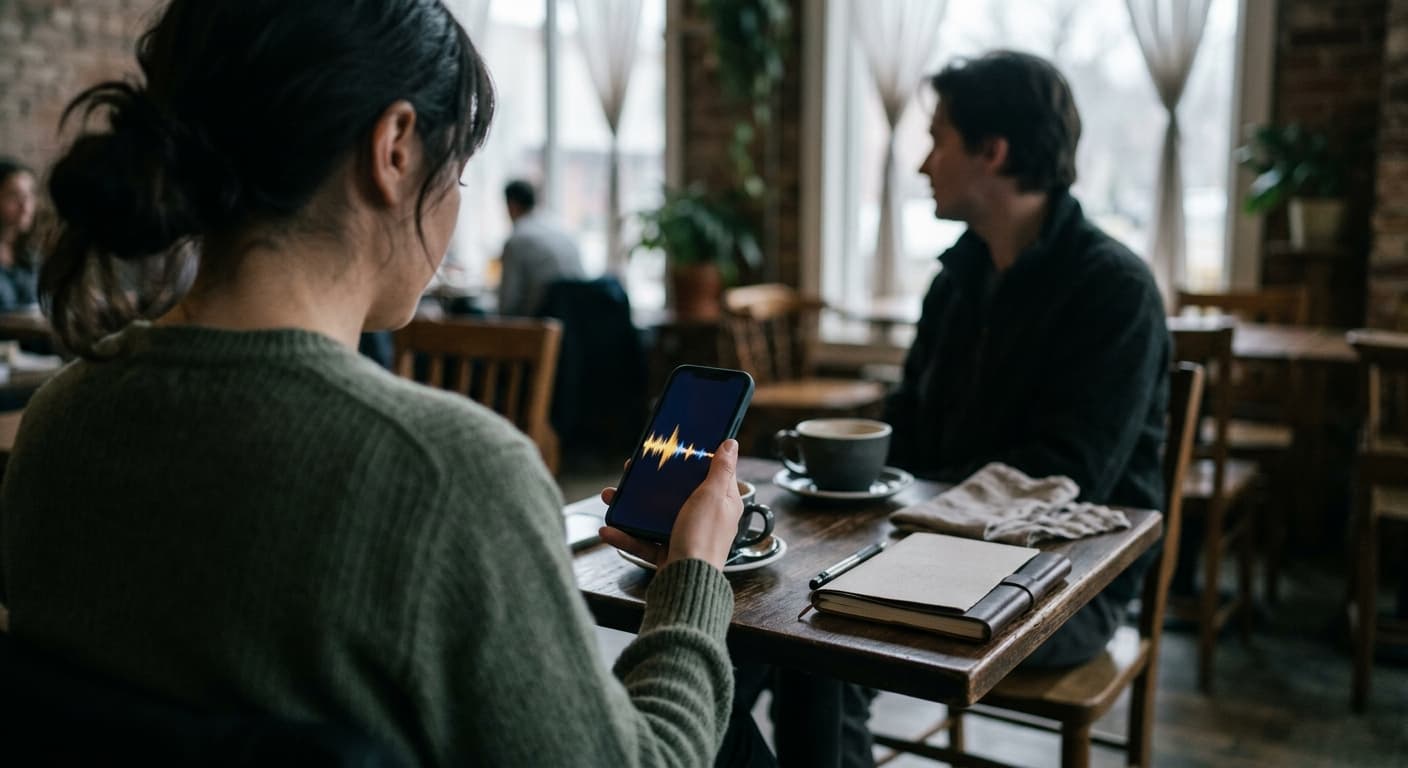
Texas is a one-party consent state under Tex. Penal Code § 16.02. If you are a party to a wire, oral, or electronic communication, you may record it without telling anyone else. Recording a conversation you are not part of is a second-degree felony, and a victim of illegal recording can sue for at least $10,000 per occurrence plus punitive damages under Tex. Civ. Prac. & Rem. Code § 123.004.
Texas recording law at a glance
| Question | Answer |
|---|---|
| Consent rule | One-party: a participant may record without disclosure |
| Main statute | Tex. Penal Code § 16.02 |
| When recording is illegal | Non-participant interception without any party's consent |
| Criminal penalty | Second-degree felony: 2 to 20 years TDCJ, fine up to $10,000 |
| Civil penalty | $10,000 per occurrence (floor), plus actual damages, punitives, attorney fees |
| Hidden cameras / intimate areas | State-jail felony under Tex. Penal Code § 21.15; sex-offender registration required (post-9/1/2025) |
| Recording police in public | Yes, a First Amendment right the Fifth Circuit recognized going forward in 2017, subject to reasonable time, place, and manner restrictions |
For a deeper treatment of any row, see the in-depth guides below.
Recording in-person conversations in Texas

Tex. Penal Code § 16.02(b) makes it a crime to intentionally intercept a wire, oral, or electronic communication. The one-party carve-out lives in § 16.02(c)(4), which is structured as an affirmative defense rather than an element of the offense. Subsections (c)(4)(A) and (B) provide that interception is not a crime if the actor is a party to the communication, or if a party has given prior consent, unless the interception is for the purpose of committing an unlawful act.
"Oral communication" under Texas law means an in-person utterance by a person who exhibits an expectation that the communication is not subject to interception, in circumstances that justify that expectation. A private conversation in a closed office meets that test; a normal-volume exchange at a busy coffee shop generally does not.
You can lawfully record in-person conversations in Texas when you are a participant, when the conversation takes place in public without a reasonable expectation of privacy, or when you have consent from at least one party (which can be yourself). You cannot record conversations you are not part of, and you cannot use a participant's presence as a pretext for capturing conversations while you are absent from the premises.
Recording phone calls in Texas
Yes. Texas one-party consent under § 16.02(c)(4)(A) permits a participant to record any call, landline, cell, VoIP, or the audio leg of a video call, without a beep tone or oral disclosure. There is no general notice requirement on private parties under Texas law. You cannot install a recording device on someone else's phone or in a room you do not occupy; that is third-party interception and a second-degree felony.
Interstate calls. Federal law sets a one-party consent floor at 18 U.S.C. § 2511(2)(d) but does not preempt stricter state laws. When a Texas caller reaches someone in a two-party state, courts generally apply the law with the stronger privacy interest, usually the stricter state. If any participant is in California, Florida, Illinois, Maryland, Massachusetts, Montana, New Hampshire, Pennsylvania, or Washington, disclose and get consent before recording. Connecticut, Nevada, Oregon, and Delaware also impose narrower or contested all-party rules on calls that can require disclosure depending on the circumstances.
To check a specific call, pick Texas and the other party's state in our recording consent checker.
For full interstate call guidance, see Texas Phone Call Recording Laws.
Hidden cameras, doorbells, and nanny cams

Plain video recording in public places is generally lawful in Texas without consent. The wiretap statute does not reach silent video, and Texas has no general right-of-publicity statute barring photography in public.
Video crosses into criminal territory under Tex. Penal Code § 21.15 (Invasive Visual Recording) when someone photographs or records a person's intimate areas without consent and with intent to invade that person's privacy. Sexual gratification is not an element of § 21.15(b); the current text requires only that the recording be made without the other person's consent and with intent to invade that person's privacy.
What H.B. 1465 (eff. Sept. 1, 2025) changed. The 89th Legislature broadened the location element from "bathroom or changing room" to any "place in which a person has a reasonable expectation of privacy," defined as a location where a reasonable person would believe they could undress without concern about being recorded. Bathrooms, bedrooms, and changing rooms are listed examples but the definition is not limited to them. H.B. 1465 also amended Tex. Code Crim. Proc. art. 62.001(5) to add § 21.15 convictions to the list of reportable offenses triggering mandatory sex-offender registration. The base offense remains a state-jail felony (180 days to 2 years; fine up to $10,000).
A nanny cam or Ring doorbell on your own property recording common areas is generally lawful. A hidden camera capturing a guest bedroom, bathroom, or other private area is a § 21.15 violation regardless of whose home it is. If the camera also captures audio, that audio falls under § 16.02's one-party rule; a camera set to record household conversations with no participant present is third-party interception.
A companion statute, Tex. Penal Code § 21.16, criminalizes disclosure of intimate visual material originally made under an expectation of confidentiality, even when the original recording was consensual.
For details, see Texas Voyeurism and Hidden Camera Laws and Texas Video Recording Laws.
Penalties for illegal recording in Texas
Criminal penalties. Unlawful interception under § 16.02(b) is a felony of the second degree. Under Tex. Penal Code § 12.33, that means 2 to 20 years in the Texas Department of Criminal Justice plus a fine up to $10,000. Two § 16.02 variants drop to a state-jail felony under § 12.35 (180 days to 2 years; fine up to $10,000). Under § 16.02(f) those are the only two: manufacture, possession, or sale of an interception device under § 16.02(d), and obstructing or giving notice of an authorized interception under § 16.02(g). Unlawful use of a pen register or trap and trace device is a separate offense under Tex. Penal Code § 16.03, also a state-jail felony.
| Offense | Statute | Classification | Range |
|---|---|---|---|
| Illegal interception, disclosure, or use | § 16.02(b) | 2nd-degree felony | 2-20 yrs TDCJ; up to $10,000 fine |
| Manufacture, possession, sale of interception device | § 16.02(d) | State-jail felony | 180 days-2 yrs; up to $10,000 fine |
| Obstructing or giving notice of an authorized interception | § 16.02(g) | State-jail felony | 180 days-2 yrs; up to $10,000 fine |
| Pen-register / trap-and-trace misuse | § 16.03 | State-jail felony | 180 days-2 yrs; up to $10,000 fine |
| Invasive visual recording | § 21.15 | State-jail felony | 180 days-2 yrs; up to $10,000 fine; sex-offender registration |
Civil remedies. Tex. Civ. Prac. & Rem. Code § 123.004 provides the private cause of action. A successful plaintiff is entitled to: (1) an injunction against further interception or disclosure; (2) statutory damages of $10,000 for each occurrence, which is a floor, not a cap; (3) all actual damages in excess of that floor; (4) punitive damages in an amount the court or jury determines; and (5) reasonable attorney fees and costs. A plaintiff does not need to prove actual harm to trigger the $10,000-per-occurrence floor.
Recording the police in Texas
The Fifth Circuit concluded in Turner v. Lieutenant Driver, 848 F.3d 678 (5th Cir. 2017) that the First Amendment protects the right to record police performing their duties in public, subject only to reasonable time, place, and manner restrictions. Because the right was not clearly established when Turner recorded in September 2015, all three officers received qualified immunity on his First Amendment claim; the majority then decided the question "for the future," in a section headed "Whether the Right Is Clearly Established Henceforth," because the issue keeps arising in qualified-immunity cases, while one judge dissented that the pronouncement was dicta. Turner remains good law in the Fifth Circuit as of June 2026; there has been no en banc rehearing or Supreme Court review.
You can film traffic stops (including your own), record arrests in public, and livestream encounters with police. You cannot obstruct police operations or trespass for a better angle. Tex. Penal Code § 38.15 (Interference with Public Duties) reaches conduct that physically obstructs an officer, not recording itself.
The Texas Open Meetings Act, Tex. Gov't Code Chapter 551, requires most government meetings to be open. City councils, county commissioners courts, school boards, and the legislature may set reasonable equipment rules but cannot prohibit recording at a public meeting outright.
For more detail, see Texas Laws on Recording Police.
Special topics in Texas
Workplace recording
Texas one-party consent lets an employee record their own conversations with a supervisor or HR representative without notice, commonly used to document harassment, wage disputes, or performance reviews. However, the NLRB's decision in Stericycle, Inc., 372 NLRB No. 113 (Aug. 2, 2023) makes blanket no-recording handbook rules presumptively unlawful under Section 7 of the NLRA. An employer must show a legitimate, substantial business interest not achievable by a narrower rule. NLRB GC 25-05 (Feb. 14, 2025) did not rescind Stericycle; NLRB GC 25-07 (June 25, 2025) narrowly addresses surreptitious recording at collective-bargaining sessions and does not undo employee one-party-consent recording of supervisor conversations.
Employers may record common work areas where employees have no reasonable expectation of privacy. Cameras or audio recording in bathrooms, locker rooms, or changing areas violate § 21.15. Texas has no analog to California's mandatory disclosure requirement. See Texas Workplace Recording Laws.
Deepfakes and AI imagery (89th Legislature, eff. Sept. 1, 2025)
Texas enacted the most comprehensive state-level deepfake regime in the country in 2025. Tex. Penal Code § 21.165 (S.B. 441) criminalizes knowing production or distribution of "deep fake media" depicting a real person's intimate parts or sexual conduct without written consent. The base offense is a Class A misdemeanor; it elevates to a third-degree felony if the actor has a prior conviction or the depicted person is under 18. A separate subsection (b-1) adds a Class B misdemeanor threat offense for threatening to produce or distribute deepfakes to coerce, extort, harass, or intimidate, elevating to Class A on a prior conviction or minor victim.
Tex. Civ. Prac. & Rem. Code Chapter 98B extends civil liability to AI-generated intimate imagery and imposes a 72-hour takedown duty on website operators after receiving a valid removal request.
Federal overlay
18 U.S.C. § 2511(2)(d) (ECPA) sets a one-party consent floor that mirrors Texas law. FCC Declaratory Ruling 24-17 (Feb. 8, 2024) classifies AI-generated voice as "artificial or prerecorded voice" under the TCPA, requiring prior express consent for such calls; this is active as of June 2026. The FCC's One-to-One Consent Rule (FCC 24-24) was vacated by the Eleventh Circuit on January 24, 2025 (mandate April 30, 2025) and is no longer in effect. The federal TAKE IT DOWN Act (signed May 19, 2025) criminalizes knowing publication of nonconsensual intimate depictions and digital-forgery deepfakes; the platform notice-and-removal compliance deadline was May 19, 2026. Texas subjects of such material have three parallel pathways: TAKE IT DOWN Act (48-hour platform removal), Ch. 98B (72-hour state takedown), and DMCA copyright removal. HIPAA governs a provider's downstream use of a recording; it does not prohibit a patient from recording their own visit. See our federal Wiretap Act and ECPA guide for the full federal framework.
Recent legal developments
- September 1, 2025: H.B. 1465 broadened Tex. Penal Code § 21.15 location element from "bathroom or changing room" to any place with a reasonable expectation of privacy, and added § 21.15 convictions to the mandatory sex-offender registration list (Tex. Code Crim. Proc. art. 62.001(5)).
- September 1, 2025: S.B. 441 amended Tex. Penal Code § 21.165 to replace "deep fake video" with "deep fake media" (covering still images), added a Class B misdemeanor threat offense, and amended Tex. Civ. Prac. & Rem. Code Ch. 98B to extend civil liability to AI-generated intimate imagery with a 72-hour takedown duty.
- May 19, 2025: Federal TAKE IT DOWN Act signed; criminal provisions immediate; platform compliance deadline May 19, 2026.
- April 30, 2025: FCC One-to-One Consent Rule (FCC 24-24) vacated by Eleventh Circuit mandate.
- June 25, 2025: NLRB GC 25-07 addresses surreptitious recording at collective-bargaining sessions; Stericycle standard for handbook rules unaffected.
Texas recording laws in depth
By type of recording
- Texas Audio Recording Laws: One-Party Consent Rules and Penalties
- Texas Phone Call Recording Laws: One-Party Consent and Interstate Rules
- Texas Video Recording Laws: What Is Legal and What Is Not
- Texas Voyeurism and Hidden Camera Laws: Statutes and Penalties
- Texas Dashcam Laws: Legality, Placement Rules, and Evidence Use
By place or relationship
- Texas Workplace Recording Laws: Employee and Employer Rights
- Texas Landlord-Tenant Recording Laws: Cameras, Privacy, and Rights
- Texas Medical Recording Laws: Patient Rights, HIPAA, and Provider Rules
- Texas Laws on Recording Police: Rights, Limits, and Body Cameras
- Texas Laws on Recording in Public: Rights, Limits, and Exceptions
- Texas School Recording Laws: Classrooms, Cameras, and Student Privacy
- Texas Security Camera Laws: Residential, Commercial, and Privacy Rules
More Texas laws
- Texas AI Meeting Recording Laws
- Texas At-Will Employment Laws
- Texas Data Privacy Laws
- Texas Landlord-Tenant Laws
- Texas Workplace Recording Laws
This article is general legal information, not legal advice. Recording laws change and apply differently to each situation. For advice about your situation, consult a licensed Texas attorney.
More Texas Laws
- Texas AI Meeting Recording Laws
- Texas Dashcam Laws
- Texas Data Privacy Laws
- Texas Deepfake Laws
- Texas Employee Monitoring Laws
- Texas GPS Tracking Laws
- Texas Police Bodycam Laws
- Texas Smart Glasses Recording Laws
Frequently Asked Questions
Is Texas a one-party or two-party consent state for recording?
Texas is a one-party consent state. Under Tex. Penal Code § 16.02(c)(4), a participant in a wire, oral, or electronic communication may lawfully record without notifying the other parties. Recording a conversation you are not part of is a second-degree felony under § 16.02(b).
Can I record a phone call in Texas without telling the other person?
Yes, if you are on the call. Texas imposes no beep-tone or oral-disclosure requirement on private parties. If the person you are calling is in a two-party state such as California, Florida, Pennsylvania, or Washington, that state's all-party rule typically applies, so disclose before recording.
What are the penalties for illegal recording in Texas?
Unlawful interception under § 16.02 is a second-degree felony: 2 to 20 years in TDCJ plus a fine up to $10,000. Civil damages under Tex. Civ. Prac. & Rem. Code § 123.004 start at a $10,000 per-occurrence floor, plus actual damages above that floor, punitive damages, and reasonable attorney fees.
Is it legal to video record someone in Texas without their consent?
Plain video in public places is generally lawful. Video of intimate areas, or of a person in any place where they have a reasonable expectation of privacy (bathroom, bedroom, changing room), is a state-jail felony under Tex. Penal Code § 21.15 and now triggers mandatory sex-offender registration after H.B. 1465 (eff. Sept. 1, 2025).
Can I record the police in Texas?
Yes. Turner v. Lieutenant Driver, 848 F.3d 678 (5th Cir. 2017), concluded that a First Amendment right to record police performing public duties exists going forward, subject to reasonable time, place, and manner restrictions, though one judge dissented that this determination was dicta.
Can my employer prohibit me from recording at work in Texas?
Blanket no-recording handbook rules are presumptively unlawful under NLRB Stericycle, Inc., 372 NLRB No. 113 (2023). The employer must show a legitimate, substantial business interest that cannot be achieved by a narrower rule. NLRB GC 25-05 (Feb. 2025) did not rescind Stericycle, so the standard remains in force.
What did Texas H.B. 1465 change about hidden cameras?
H.B. 1465 (eff. Sept. 1, 2025) broadened the location element of Tex. Penal Code § 21.15 from 'bathroom or changing room' to any place where a person has a reasonable expectation of privacy, and added § 21.15 convictions to the mandatory sex-offender registration list under Tex. Code Crim. Proc. art. 62.001(5).
Are recordings admissible in Texas family or divorce court?
Recordings lawfully made under § 16.02 (one-party consent by a participant) are generally admissible in Texas civil and family proceedings, subject to authentication under Tex. R. Evid. 901. The vicarious-consent doctrine for parents recording minor children has not been resolved by the Texas Supreme Court; consult a Texas family-law attorney before relying on it.
Updates
Corrected the description of Turner v. Lieutenant Driver: the Fifth Circuit granted the officers qualified immunity because the right to record police was not yet clearly established, and recognized the right only going forward, over a dissent that called that part dicta.
Corrected two statutory citations in the penalties section (unlawful use of a pen register is Tex. Penal Code § 16.03, and manufacture, possession, or sale of an interception device is § 16.02(d)), removed a description of H.B. 421, a 2025 deepfake-generator bill that was never enacted, and corrected the § 21.15 intent element, which requires intent to invade privacy and no longer includes a sexual-gratification alternative.
Added Montana to the interstate all-party-consent call list so it matches this page's audio and phone-calls sub-pages, and noted Connecticut, Nevada, Oregon, and Delaware as narrower or contested rather than omitting them; replaced a dead DOJ Justice Manual citation link with its current archived URL.
Independently fact-checked against the cited primary sources
Governing law re-checked for recent changes
Reviewed and approved by an editor
Restructured for readability: condensed bloat, added at-a-glance table, separated in-person/phone/hidden-camera/penalties/police sections, consolidated special topics (workplace, deepfakes, federal overlay) into tight subsections, added in-depth sub-page index, refreshed FAQ to 8 questions, prepended this UpdatesLog entry. All verified statutes, case law, and 2025 legislative changes preserved. Hero and inline images updated to recording-law pool.
Refreshed for 2026 with the 89th Texas Legislature recording-related bills, the federal TAKE IT DOWN Act compliance deadline, the Eleventh Circuit vacatur of FCC 24-24, and updated NLRB workplace overlay (Stericycle, GC 25-05, GC 25-07). Added Tex. Penal Code § 21.15 H.B. 1465 expansion (place with reasonable expectation of privacy; mandatory sex-offender registration eff. 9/1/2025). Added Tex. Penal Code § 21.165 deepfake media S.B. 441 amendment and Class B misdemeanor threat offense. Added Tex. Civ. Prac. and Rem. Code Chapter 98B 72-hour takedown duty for artificial intimate imagery. Added new Tex. Bus. and Com. Code Chapter 121 (H.B. 421) AI deepfake-generator age-verification and consent duties. Added federal TAKE IT DOWN Act with May 19, 2026 platform compliance deadline. Updated FCC 24-24 status to vacated by 11th Cir. mandate Apr. 30, 2025. Added FCC 24-17 (AI voice as artificial) as active TCPA overlay. Replaced encyclopedia citation for Turner v. Driver with the Fifth Circuit official PDF. Added cross-state call decision table (TX caller into 9 all-party states). Added clarification that § 16.02(c)(4) is structured as an affirmative defense, not an element. Clarified that $10,000 under § 123.004 is a per-occurrence floor, not a cap. Added NLRB GC 25-05 / GC 25-07 framing alongside Stericycle. Replaced /party-two-party-consent-states/ link with /united-states-recording-laws/one-party-consent-states/ where appropriate. Removed Amazon-affiliate digital recorder link. Removed sitewide More Texas Laws link block (off-topic for recording-laws hub). Switched to § symbol throughout for consistency with project style.
Refreshed for 2026 with the 89th Texas Legislature recording-related bills, the federal TAKE IT DOWN Act compliance deadline, the Eleventh Circuit vacatur of FCC 24-24, and updated NLRB workplace overlay (Stericycle, GC 25-05, GC 25-07). Added Tex. Penal Code § 21.15 H.B. 1465 expansion (place with reasonable expectation of privacy; mandatory sex-offender registration eff. 9/1/2025). Added Tex. Penal Code § 21.165 deepfake media S.B. 441 amendment and Class B misdemeanor threat offense. Added Tex. Civ. Prac. and Rem. Code Chapter 98B 72-hour takedown duty for artificial intimate imagery. Added federal TAKE IT DOWN Act with May 19, 2026 platform compliance deadline. Updated FCC 24-24 status to vacated by 11th Cir. mandate Apr. 30, 2025. Added FCC 24-17 (AI voice as artificial) as active [TCPA](/us-laws/tcpa) overlay. Replaced encyclopedia citation for Turner v. Driver with the Fifth Circuit official PDF. Added cross-state call decision table. Added clarification that § 16.02(c)(4) is an affirmative defense. Clarified that $10,000 under § 123.004 is a per-occurrence floor, not a cap. Added NLRB GC 25-05 / GC 25-07 framing alongside Stericycle.
Added wearable recording devices section covering one-party consent for wearables, CUBI Act biometric privacy, and Meta $1.4B settlement; added 2 FAQs on AI voice recorders and smart glasses
The Law Behind This Article
This article rests on the statutory provisions below, held in our own legal record and retrieved from the official source. Tap a section to read the operative text.
Texas Penal Code
§ 16.02UNLAWFUL INTERCEPTION, USE, OR DISCLOSURE OF WIRE, ORAL, OR ELECTRONIC COMMUNICATIONSIn forcecited in 17 of our articles
(a) In this section: (1) "Communication common carrier," "computer trespasser," "contents," "covert entry," "electronic communication," "intercept," "interception device," "investigative or law enforcement officer," "oral communication," "protected computer," and "wire communication" have the meanings assigned by Article 18A.001, Code of Criminal Procedure. (2) "Immediate life-threatening situation" and "member of a law enforcement unit specially trained to respond to and deal with life-threatening situations" have the meanings assigned by Article 18A.201, Code of Criminal Procedure.
Official text (excerpt) · last checked 2026-09-24 · Read the full text in our law library · Verify at statutes.capitol.texas.gov
Cited in 39 court opinions in our collectionLatest citing opinion in our collection: 2026
In the courts (editorial summary, independently checked):Texas courts have applied Section 16.02 to contested recordings. Long v. State (2017) held the oral communication definition carries a reasonable expectation of privacy test, sustaining a conviction over a covert locker room recording. Banargent v. State (2007) held a jail inmate impliedly consented, so no Section 16.02 violation.
Opinions citing this section in our collection:
- Banargent v. State (Texas Court of Appeals, 14th District (Houston) 2007, 228 S.W.3d 393)✓Jail phone prompts and posted notices warned that calls could be recorded, and a recorded call captured the defendant admitting he stabbed the victim; the court held he impliedly consented, so the recording did not violate Section 16.02.
- Long v. State (Court of Criminal Appeals of Texas 2017, 535 S.W.3d 511)✓A school board member had her daughter hide a phone in a visiting locker room to record the coach's halftime speech and sent it to the board; the court held Section 16.02's 'oral communication' incorporates the expectation of privacy test, which the coach met.
- Siddiq v. State (Court of Appeals of Texas 2016, 502 S.W.3d 387)✓Police automatically recorded a DWI arrestee's call to his father from the jail book-in desk, capturing him saying he was drunk; the court applied the law enforcement exception to hold the recording did not violate Section 16.02, so admitting it was not error.
Identified automatically from the court opinions citing this section — not a ranking of which case controls.
Also relied on in: Texas Smart Glasses Recording Laws (2026), One-Party Consent States: Complete 2026 Guide, Texas Audio Recording Laws: One-Party Consent Rules and Penalties
§ 12.33SECOND DEGREE FELONY PUNISHMENTIn forcecited in 5 of our articles
(a) An individual adjudged guilty of a felony of the second degree shall be punished by imprisonment in the Texas Department of Criminal Justice for any term of not more than 20 years or less than 2 years. (b) In addition to imprisonment, an individual adjudged guilty of a felony of the second degree may be punished by a fine not to exceed $10,000.
Official text (excerpt) · last checked 2026-07-28 · Read the full text in our law library · Verify at statutes.capitol.texas.gov
Cited in 589 court opinions in our collectionLatest citing opinion in our collection: 2026
Opinions citing this section in our collection:
- Kim v. State (Court of Appeals of Texas 2009, 283 S.W.3d 473)“…degree felony, is two to twenty years' confinement. See Tex. Penal Code Ann. §§ 12.33 (a), 30.02(c)(2) (Vernon 2003). [1]…”
- Means v. State (Texas Court of Appeals, 2nd District (Fort Worth) 2011, 347 S.W.3d 873)“…ent in a state jail facility for evading arrest. [1] See Tex. Penal Code Ann. §§ 12.33 (a), .35(a) (West 2011). And punishment…”
- Puente v. State (Court of Criminal Appeals of Texas 2010, 320 S.W.3d 352)“…have been sentenced to is confinement for 20 years. See Tex. Penal Code Ann. §§ 12.33 (a), 22.011(f). Therefore, appellant's…”
Identified automatically from the court opinions citing this section — not a ranking of which case controls.
Also relied on in: Manslaughter Degrees Explained: First, Second, and Third, Texas Felony Degrees and Misdemeanor Classes: Sentences (2026), Texas Manslaughter Laws: Reckless, Negligent and Intoxication (2026)
§ 21.15INVASIVE VISUAL RECORDINGIn forcecited in 17 of our articles
(a) In this section: (1) "Female breast" means any portion of the female breast below the top of the areola. (2) "Intimate area" means the naked or clothed genitals, pubic area, anus, buttocks, or female breast of a person. (3) "Changing room" means a room or portioned area provided for or primarily used for the changing of clothing and includes dressing rooms, locker rooms, and swimwear changing areas. (3-a) "Place in which a person has a reasonable expectation of privacy" means a place in which a reasonable person would believe that the person could disrobe in privacy, without being concerned that the act of undressing would be photographed or visually recorded by another or that a visual image of the person undressing would be broadcasted or transmitted by another. The term includes a bathroom, bedroom, and changing room. (4) "Promote" has the meaning assigned by Section 43.21.
Official text (excerpt) · last checked 2026-08-31 · Read the full text in our law library · Verify at statutes.capitol.texas.gov
Cited in 44 court opinions in our collectionLatest citing opinion in our collection: 2025
In the courts (editorial summary, independently checked):The Court of Criminal Appeals struck down the 2007 improper photography provision at Penal Code 21.15(b)(1), and Ex parte Shay (2016) set aside a conviction under it. The Legislature re-enacted the section in 2015, and Ex Parte Kamilah a Hamilton (2020) held the current subsection (b)(1) survives strict scrutiny and is not overbroad.
Opinions citing this section in our collection:
- Ex Parte Nyabwa (Texas Court of Appeals, 14th District (Houston) 2011, 366 S.W.3d 719)✓Charged with improper photography, Nyabwa attacked section 21.15(b)(1) by pretrial habeas; the court of appeals held the 2007 subsection regulated the photographer's intent rather than speech and was neither overbroad nor vague. Ex parte Thompson struck it down in 2014.
- Ex parte Shay (Court of Criminal Appeals of Texas 2016, 507 S.W.3d 731)✓Shay pleaded guilty under section 21.15(b)(1) before Ex parte Thompson struck that subsection down; the Court of Criminal Appeals held his favorable plea bargain did not estop habeas relief, set aside the conviction, and remanded to dismiss the indictment.
- Ex Parte Kamilah a Hamilton (Texas Court of Appeals, 14th District (Houston) 2020)✓Indicted under the 2015 version of section 21.15(b)(1) for broadcasting an image of a complainant's intimate area, Hamilton claimed facial overbreadth; the court held the rewritten subsection survives strict scrutiny, is not overbroad, and affirmed denial of relief.
Identified automatically from the court opinions citing this section — not a ranking of which case controls.
Also relied on in: Is It Illegal to Video Record Someone Without Their Consent? (2026), Texas Landlord-Tenant Recording Laws: Cameras, Privacy, and Rights, Texas Laws on Recording in Public: Rights, Limits, and Exceptions
§ 12.35STATE JAIL FELONY PUNISHMENTIn forcecited in 5 of our articles
(a) Except as provided by Subsection (c), an individual adjudged guilty of a state jail felony shall be punished by confinement in a state jail for any term of not more than two years or less than 180 days. (b) In addition to confinement, an individual adjudged guilty of a state jail felony may be punished by a fine not to exceed $10,000. (c) An individual adjudged guilty of a state jail felony shall be punished for a third degree felony if it is shown on the trial of the offense that: (1) a deadly weapon as defined by Section 1.07 was used or exhibited during the commission of the offense or during immediate flight following the commission of the offense, and that the individual used or exhibited the deadly weapon or was a party to the offense and knew that a deadly weapon would be used or exhibited; or (2) the individual has previously been finally convicted of any felony: (A) under Section 21.02 or 21.03 or listed in Article 42A.054(a), Code of Criminal Procedure; or (B) for which the judgment contains an affirmative finding under Article 42A.054(c) or (d), Code of Criminal Procedure.
Official text (excerpt) · last checked 2026-07-28 · Read the full text in our law library · Verify at statutes.capitol.texas.gov
Cited in 302 court opinions in our collectionLatest citing opinion in our collection: 2026
Opinions citing this section in our collection:
- State v. Mancuso (Court of Criminal Appeals of Texas 1996, 919 S.W.2d 86)“…l judge accepted the guilty pleas and, as the provisions of Tex.Penal Code Ann. § 12.35(c) were not applicable, the trial judge…”
- Deen v. State (Court of Criminal Appeals of Texas 2017, 509 S.W.3d 345)“…dissent. . See Tex. Health & Safety Code § 481.115(b); Tex. Penal Code § 12.35(a). . Tex. Penal Code § 12.35(c)(…”
- State v. Brown (Texas Court of Appeals, 6th District (Texarkana) 2010, 314 S.W.3d 487)“…ould make the offense punishable as a third-degree felony. Tex. Penal Code Ann. § 12.35 (Vernon Supp. 2009). *489 Brown pre…”
Identified automatically from the court opinions citing this section — not a ranking of which case controls.
Also relied on in: Texas Extortion Laws: Theft by Coercion, Sextortion and Penalties, Texas Theft Laws: Felony Threshold, Penalties and Shoplifting (2026)
§ 21.165UNLAWFUL PRODUCTION OR DISTRIBUTION OF CERTAIN SEXUALLY EXPLICIT MEDIAIn forcecited in 4 of our articles
(a) In this section: (1) "Deep fake media" means a visual depiction created or altered through the use of software, machine learning, artificial intelligence, or any other computer-generated or technological means, including by adapting, modifying, manipulating, or altering an authentic visual depiction manually or through an automated process, that appears to a reasonable person to depict a real person, indistinguishable from an authentic visual depiction of the real person, performing an action that did not occur in reality. (2) "Intimate parts" and "sexual conduct" have the meanings assigned by Section 21.16. (3) "Visual depiction" means a photograph, motion picture film, videotape, digital image or video, or other visual recording. (b) A person commits an offense if, without the effective consent of the person appearing to be depicted, the person knowingly produces or distributes by electronic means deep fake media that appears to depict the person: (1) with visible computer-generated intimate parts or with the visible intimate parts of another human being as the intimate parts of the person; or (2) engaging in sexual conduct in which the person did not engage.
Official text (excerpt) · last checked 2026-08-30 · Read the full text in our law library · Verify at statutes.capitol.texas.gov
Also relied on in: xAI Sues Grok User Over Alleged AI-Generated Child Sexual Abuse Material, Texas Deepfake Laws: AI Images, Voice Cloning & Penalties (2026), Texas Surveillance Camera Laws (2026 Guide)
§ 21.16UNLAWFUL DISCLOSURE OR PROMOTION OF INTIMATE VISUAL MATERIALIn forcecited in 5 of our articles
(a) In this section: (1) "Intimate parts" means the naked genitals, pubic area, anus, buttocks, or female nipple of a person. (2) "Promote" means to procure, manufacture, issue, sell, give, provide, lend, mail, deliver, transfer, transmit, publish, distribute, circulate, disseminate, present, exhibit, or advertise or to offer or agree to do any of the above. (3) "Sexual conduct" means sexual contact, actual or simulated sexual intercourse, deviate sexual intercourse, sexual bestiality, masturbation, or sadomasochistic abuse. (4) "Simulated" means the explicit depiction of sexual conduct that creates the appearance of actual sexual conduct and during which a person engaging in the conduct exhibits any uncovered portion of the breasts, genitals, or buttocks.
Official text (excerpt) · last checked 2026-07-28 · Read the full text in our law library · Verify at statutes.capitol.texas.gov
Cited in 17 court opinions in our collectionLatest citing opinion in our collection: 2025
Opinions citing this section in our collection:
- Sishir Pokhrel v. the State of Texas (Texas Court of Appeals, 2nd District (Fort Worth) 2025)“…otion of intimate visual material, a state-jail felony. See Tex. Penal Code Ann. § 21.16(c), (g). Although he pled not guilty, a…”
- Balentine Munos v. the State of Texas (Texas Court of Appeals, 5th District (Dallas) 2025)“…26, 28-32 Tex. Penal Code § 21.16 .......................................…”
- Paree La'Tiejira v. John A. Cribb (Texas Court of Appeals, 9th District (Beaumont) 2024)“…otographs were irrelevant. Additionally, Cribb cited Texas Penal Code section 21.16, which prohibits disclosing such mater…”
Identified automatically from the court opinions citing this section — not a ranking of which case controls.
Also relied on in: Texas Sexting Laws: Legal Consequences and Penalties, Texas Pornography Laws (2026): Age Verification, FSC v. Paxton, and Penalties
§ 38.15INTERFERENCE WITH PUBLIC DUTIESIn forcecited in 3 of our articles
(a) A person commits an offense if the person with criminal negligence interrupts, disrupts, impedes, or otherwise interferes with: (1) a peace officer while the peace officer is performing a duty or exercising authority imposed or granted by law; (2) a person who is employed to provide emergency medical services including the transportation of ill or injured persons while the person is performing that duty; (3) a fire fighter, while the fire fighter is fighting a fire or investigating the cause of a fire; (4) an animal under the supervision of a peace officer, corrections officer, or jailer, if the person knows the animal is being used for law enforcement, corrections, prison or jail security, or investigative purposes; (5) the transmission of a communication over a citizen's band radio channel, the purpose of which communication is to inform or inquire about an emergency; (6) an officer with responsibility for animal control in a county or municipality, while the officer is performing a duty or exercising authority imposed or granted under Chapter 821 or 822, Health and Safety Code; (7) a person who: (A) has responsibility for assessing, enacting, or enforcing public…
Official text (excerpt) · last checked 2026-07-28 · Read the full text in our law library · Verify at statutes.capitol.texas.gov
Cited in 90 court opinions in our collectionLatest citing opinion in our collection: 2026
Opinions citing this section in our collection:
- Duncantell v. State (Texas Court of Appeals, 14th District (Houston) 2007, 230 S.W.3d 835)“…ence with the duties of a public servant. See Tex. Penal Code Ann. § 38.15 (a)(1) (Vernon 2003). We affirm.…”
- Faust v. State (Court of Criminal Appeals of Texas 2015, 491 S.W.3d 733)“…iment, or interference alleged “consisted of speech only.” Tex. Penal Code Ann. § 38.15 (d) (West 2013). This is why one court…”
- Carney v. State (Texas Court of Appeals, 3rd District (Austin) 2000, 31 S.W.3d 392)“…erence with the duties of a peace officer. See Tex.Penal Code Ann. § 38.15 (West Supp.2000). The jury, having foun…”
Identified automatically from the court opinions citing this section — not a ranking of which case controls.
Also relied on in: Texas Laws on Recording Police: Rights, Limits, and Body Cameras, Texas Video Recording Laws: What Is Legal and What Is Not
Texas Civil Practice and Remedies Code
§ 123.004DAMAGESIn forcecited in 2 of our articles
A person who establishes a cause of action under this chapter is entitled to: (1) an injunction prohibiting a further interception, attempted interception, or divulgence or use of information obtained by an interception; (2) statutory damages of $10,000 for each occurrence; (3) all actual damages in excess of $10,000; (4) punitive damages in an amount determined by the court or jury; and (5) reasonable attorney's fees and costs.
Official text (excerpt) · last checked 2026-07-28 · Read the full text in our law library · Verify at statutes.capitol.texas.gov
Cited in 5 court opinions in our collectionLatest citing opinion in our collection: 2011
Opinions citing this section in our collection:
- Continental Coffee Products Co. v. Cazarez (Texas Supreme Court 1997, 937 S.W.2d 444)“…ion may recover, subject to Chapter 41, exemplary damages); Tex.Civ.Prac. & Rem.Code § 123.004(4) (person who establishes cause of act…”
- City of Ingleside v. Kneuper (Court of Appeals of Texas 1989, 768 S.W.2d 451)“…redit services organizations prohibited from various acts); Tex.Civ.Prac. & Rem.Code Ann. § 123.004 (1986) (victim of interception of commu…”
- City of Oak Ridge North v. Mendes (Texas Court of Appeals, 9th District (Beaumont) 2011, 339 S.W.3d 222)“…es the right to recover exemplary damages. See Tex. Civ. Prac. & Rem.Code Ann. § 123.004(2)-(5). As a result, there are no objec…”
Identified automatically from the court opinions citing this section — not a ranking of which case controls.
Also relied on in: Texas AI Meeting Recording Laws (2026)
Texas Code of Criminal Procedure
§ 62.001Art. 62.001. DEFINITIONSIn forcecited in 3 of our articles
In this chapter: (1) "Department" means the Department of Public Safety. (2) "Local law enforcement authority" means, as applicable, the office of the chief of police of a municipality, the office of the sheriff of a county in this state, or a centralized registration authority. (3) "Penal institution" means a confinement facility operated by or under a contract with any division of the Texas Department of Criminal Justice, a confinement facility operated by or under contract with the Texas Juvenile Justice Department, or a juvenile secure pre-adjudication or post-adjudication facility operated by or under a local juvenile probation department, or a county jail. (4) "Released" means discharged, paroled, placed in a nonsecure community program for juvenile offenders, or placed on juvenile probation, community supervision, or mandatory supervision.
Official text (excerpt) · last checked 2026-07-28 · Read the full text in our law library · Verify at statutes.capitol.texas.gov
Cited in 66 court opinions in our collectionLatest citing opinion in our collection: 2026
Opinions citing this section in our collection:
- Crabtree, Mark Alan (Court of Criminal Appeals of Texas 2012)“…to register, even in the absence of a TDPS ruling. See Tex. Code Crim. Proc. art. 62.001(5)(H). Because the criminal pro…”
- Texas Department of Public Safety v. Garcia (Texas Court of Appeals, 3rd District (Austin) 2010, 327 S.W.3d 898)“…is listed in SORA as a reportable offense. See Tex.Code Crim. Proc. Ann. art. 62.001(5)(A); Tex. Penal Code Ann. § 22.011 .…”
- Ex Parte Warren (Court of Criminal Appeals of Texas 2011, 353 S.W.3d 490)“…F.3d 818 , 831 (9th Cir.1997)). 12 . Tex.Code Crim. Proc. Ann. art. 62.001(5) (Vernon 2009). 13…”
Identified automatically from the court opinions citing this section — not a ranking of which case controls.
Also relied on in: Texas Voyeurism and Hidden Camera Laws: Statutes and Penalties
United States Code Title 18
§ 2511Interception and disclosure of wire, oral, or electronic communications prohibitedIn forcecited in 441 of our articles
Except as otherwise specifically provided in this chapter any person who— intentionally intercepts, endeavors to intercept, or procures any other person to intercept or endeavor to intercept, any wire, oral, or electronic communication; intentionally uses, endeavors to use, or procures any other person to use or endeavor to use any electronic, mechanical, or other device to intercept any oral communication when— such device is affixed to, or otherwise transmits a signal through, a wire, cable, or other like connection used in wire communication; or such device transmits communications by radio, or interferes with the transmission of such communication; or such person knows, or has reason to know, that such device or any component thereof has been sent through the mail or transported in interstate or foreign commerce; or such use or endeavor to use (A) takes place on the premises of any business or other commercial establishment the operations of which affect interstate or foreign commerce; or (B) obtains or is for the purpose of obtaining information relating to the operations of any business or other commercial establishment the operations of which affect interstate or foreign…
Official text (excerpt) · last checked 2026-09-17 · Read the full text in our law library · Verify at uscode.house.gov
Cited in 2,045 court opinions in our collectionLatest citing opinion in our collection: 2026
In the courts (editorial summary, independently checked):Griggs-Ryan v. Smith (1990) applied the Section 2511(2)(d) prior-consent exception, treating a tenant repeatedly told that all incoming calls were taped as having impliedly consented. United States v. United States District Court (1972) read the then-current Section 2511(3) as conferring no presidential surveillance power.
Opinions citing this section in our collection:
- Mitchell v. Forsyth (Supreme Court of the United States 1985, 472 U.S. 511)✓The Attorney General authorized a warrantless 1970 national security wiretap that caught the plaintiff's calls; the Court held the since-repealed Section 2511(3) disclaimer left the tap lawful under Title III, and that Mitchell had qualified immunity.
- United States v. United States District Court for the Eastern District of Michigan (Supreme Court of the United States 1972, 407 U.S. 297)✓The Attorney General approved warrantless wiretaps on members of a domestic group accused of bombing a CIA office; the Court read Section 2511(3) as a congressional disclaimer conferring no surveillance power, then held the Fourth Amendment required prior judicial approval.
- Forsyth v. Barr (Court of Appeals for the Fifth Circuit 1994, 19 F.3d 1527)✓Dallas police used, in an internal affairs probe of an officer, calls private parties allegedly intercepted illegally; assuming that was unlawful, the Fifth Circuit held Section 2517(1) and (2) allowed the disclosure and use, defeating the Section 2511(1)(c) and (d) claims.
Identified automatically from the court opinions citing this section — not a ranking of which case controls.
Also relied on in: Can an Employer Record Conversations Without Consent? (2026), Can I Record My Boss Harassing Me? State-by-State Legal Guide (2026), Can I Sue Someone for Recording Me on Private or Public Property?
Sources and References
- statutes.capitol.texas.gov.gov
- statutes.capitol.texas.gov.gov
- statutes.capitol.texas.gov.gov
- statutes.capitol.texas.gov.gov
- capitol.texas.gov.gov
- statutes.capitol.texas.gov.gov
- ca5.uscourts.gov.gov
- uscode.house.gov.gov
- nlrb.gov.gov
- docs.fcc.gov.gov
- media.ca11.uscourts.gov.gov
- congress.gov.gov
- S.B. 441, Acts 2025, 89th Leg., R.S. (Enrolled Bill Text)(capitol.texas.gov).gov
- Tex. Code Crim. Proc. Chapter 18A (Detection, Interception, and Use of Wire, Oral, and Electronic Communications)(statutes.capitol.texas.gov).gov
- Tex. Gov't Code Chapter 551 (Texas Open Meetings Act)(statutes.capitol.texas.gov).gov
- Tex. Penal Code § 38.15 (Interference with Public Duties)(statutes.capitol.texas.gov).gov
- 45 C.F.R. Part 164 (HIPAA Privacy Rule)(ecfr.gov).gov
- NLRB GC 25-07 (Surreptitious Recording of Collective-Bargaining Sessions, June 25, 2025)(nlrb.gov).gov
- DOJ Justice Manual, Criminal Resource Manual Section 9-7.302 (Consensual Monitoring)(justice.gov).gov
- Texas State Law Library Audio Recording Guide(guides.sll.texas.gov).gov