
Virginia
Virginia Recording Laws (2026): One-Party Consent Rules
Independently fact-checked against primary sources (last audited August 15, 2026). · Reviewed by the RecordingLaw editorial team. · Law checked current as of August 15, 2026. · 22 primary sources cited on this page. How we verify our legal content
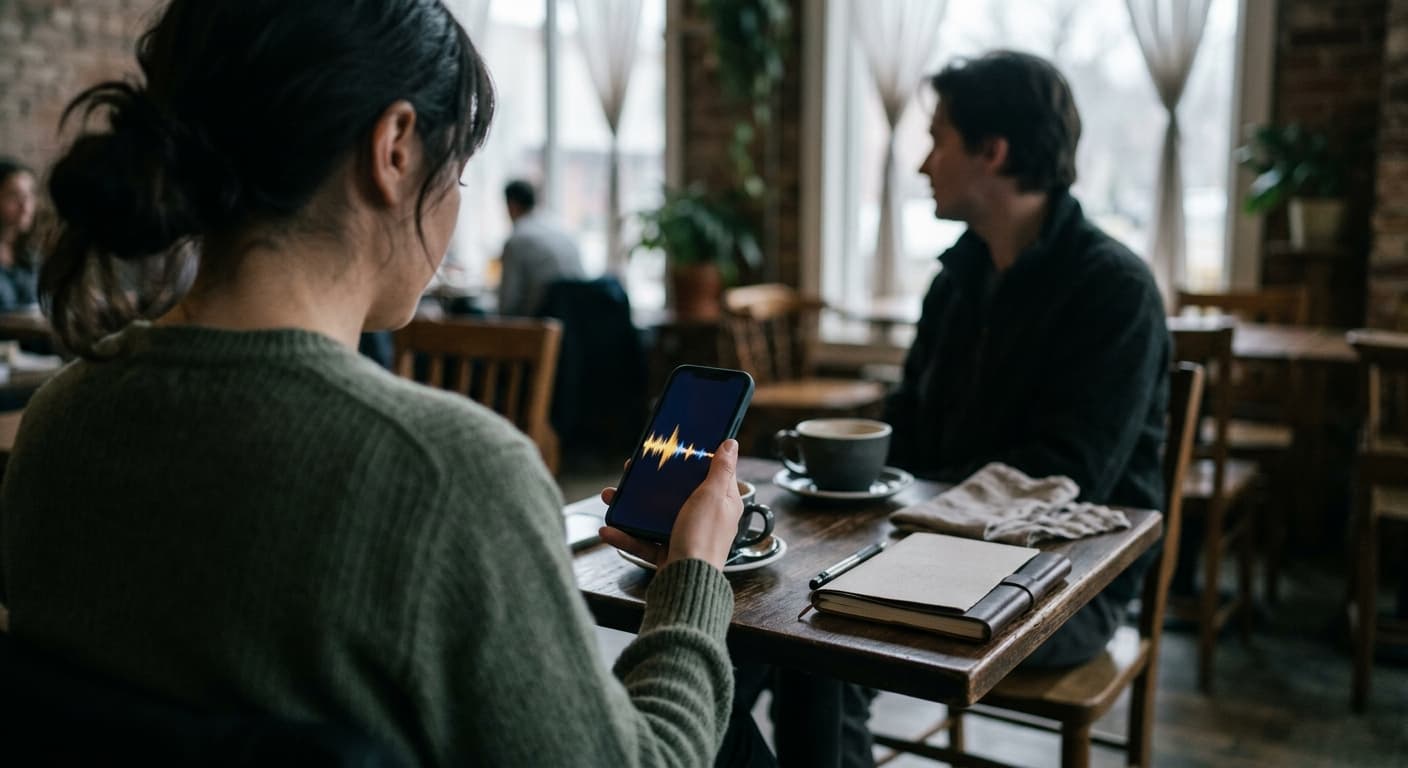
Virginia is a one-party consent state under Va. Code § 19.2-62: any participant in a conversation may record it without telling the other parties. Recording someone without their consent and without being a party yourself is a Class 6 felony, and the victim has a civil right of action for statutory damages plus attorney fees. There is one major wrinkle: even a lawful one-party recording is presumptively inadmissible in most Virginia civil proceedings under a separate evidence statute, Va. Code § 8.01-420.2.
Virginia recording law at a glance
| Question | Answer |
|---|---|
| Consent rule | One-party consent |
| Main statute | Va. Code § 19.2-62 |
| When is recording illegal? | When no party to the conversation consents |
| Criminal penalty | Class 6 felony: 1-5 years prison OR up to 12 months jail + $2,500 fine |
| Civil damages | $400/day or $4,000 min; $800/day or $8,000 min for privileged communications, plus punitives and attorney fees (§ 19.2-69) |
| Hidden cameras | Class 1 misdemeanor (§ 18.2-386.1); Class 6 felony if victim under 18 or offender has 2+ prior § 18.2-386.1 convictions within 10 years |
| Recording police | Livestreaming a police traffic stop is protected speech (Sharpe v. Winterville, 4th Cir. 2023); Sharpe did not decide a general right to record |
For deeper analysis of each scenario, see the in-depth guides below.
Recording in-person conversations in Virginia
Virginia's one-party rule is in Va. Code § 19.2-62(B)(2): "It shall not be a criminal offense under this chapter for a person to intercept a wire, electronic or oral communication, where such person is a party to the communication or one of the parties to the communication has given prior consent to such interception." If you are on the call or in the room, you can record without telling anyone else.
The statute covers in-person oral communications, phone calls, and electronic communications. Oral communications are protected only where the speaker has a reasonable expectation of privacy. A loud argument on a public sidewalk generally does not qualify; a quiet conversation in a closed office does.
If you are not a party to the conversation, you cannot record it without consent from at least one participant. Placing a hidden device to capture conversations between other people is a Class 6 felony under § 19.2-62(A), regardless of where you place it.

Recording phone calls in Virginia
The same one-party rule applies to phone calls: any participant may record without notice. This covers landline, cell, VoIP (Zoom, Teams, Google Meet, WhatsApp), and conference calls you are personally on.
The civil-court paradox. Even though the recording is criminally lawful, Va. Code § 8.01-420.2 makes it presumptively inadmissible in any Virginia civil proceeding. The recording comes in only if: (1) every party to the call knew it was being recorded, OR (2) the recording contains admissions of criminal conduct that is the basis for the civil suit, at least one party knew of the recording, and the case is not a divorce, separate-maintenance, or annulment proceeding. The divorce carve-out applies only to that criminal-conduct exception: a one-party spousal phone recording stays out of a divorce, separate-maintenance, or annulment case even if the spouse admits criminal conduct on the tape, but a call that all parties knew was being recorded (shown by a declaration at the beginning of the recorded portion) is not barred by this section under exception (1).
Cross-state calls. If the other party is in a two-party consent state (Maryland, California, Florida, Pennsylvania, Washington, Massachusetts, Illinois), that state's stricter rule may also govern the call. Federal ECPA sets a one-party floor under 18 U.S.C. § 2511(2)(d) but does not preempt stricter state law. Obtain consent or consult counsel before recording a call involving a stricter state.
Our recording consent checker shows how Virginia's rule compares with the other party's state for phone, in-person, and video recordings.
For full coverage of Virginia's phone-call rules, see the Virginia Phone Call Recording Laws guide.

Hidden cameras, doorbells, and nanny cams
Virginia has no statute banning Ring doorbells, indoor nanny cams, or home surveillance systems. The legality turns on where the camera points and whether it captures audio.
Video-only cameras raise no § 19.2-62 issue. But a camera aimed into a neighbor's bedroom window, or installed in a guest bathroom, can violate the voyeurism statute (§ 18.2-386.1) or the peeping statute (Va. Code § 18.2-130) regardless of audio.
Audio-capable cameras bring in § 19.2-62. A Ring doorbell capturing your own front-porch conversation is generally fine because you are a party to the interaction. A nanny cam recording a caregiver's interactions in your home is legally defensible when you give consent as a party. Covertly capturing a private conversation between two third parties on your property, when you are not participating, is harder to defend under § 19.2-62(A).
Voyeurism statute. Va. Code § 18.2-386.1 makes it a Class 1 misdemeanor to videotape or photograph a nonconsenting person who is nude or in a state of undress in a restroom, dressing room, locker room, hotel room, bedroom, or other place with a reasonable expectation of privacy. It also covers "upskirt" devices placed beneath or between a person's legs to capture intimate parts, regardless of location. The offense escalates to a Class 6 felony when the victim is under 18, or when the offender has two or more prior § 18.2-386.1 convictions within the preceding 10 years on different dates and not part of a common scheme.
Peeping statute. Va. Code § 18.2-130 separately covers peeping or spying into any dwelling, restroom, dressing room, locker room, hotel or motel room, tanning bed or booth, or bedroom and is a Class 1 misdemeanor.
For the full home-surveillance analysis, see Virginia Security Camera Laws and Virginia Voyeurism and Hidden Camera Laws.
Penalties for illegal recording in Virginia
Criminal penalties
Violating § 19.2-62(A) by intercepting, disclosing, or using a communication without consent is a Class 6 felony in every case. Under Va. Code § 18.2-10(f), the sentence is 1 to 5 years in prison, OR up to 12 months in jail and a $2,500 fine at the court's or jury's discretion. The 12-month jail branch is a sentencing alternative, not a separate misdemeanor: the conviction is a felony either way.
The Class 1 misdemeanor in § 19.2-62(C) applies only to electronic communication service providers that unlawfully divulge intercepted communications. It is not available to private individuals who illegally record.
Civil penalties
Va. Code § 19.2-69 gives the victim a civil cause of action for actual damages (not less than $400 per day or $4,000, whichever is higher), punitive damages, and attorney fees. For communications between spouses, attorney and client, a licensed practitioner of the healing arts and patient, a licensed professional counselor, licensed clinical social worker, licensed psychologist, or licensed marriage and family therapist and client, or a member of the clergy and a person seeking spiritual counsel or advice, the floor doubles to $800 per day or $8,000.
| Violation | Class | Sentence |
|---|---|---|
| Unlawful interception, disclosure, or use (§ 19.2-62(A)) | Class 6 felony | 1-5 years prison OR up to 12 months jail + $2,500 fine |
| Device manufacture, sale, possession (§ 19.2-63) | Class 6 felony | Same |
| Service-provider unauthorized divulgence (§ 19.2-62(C)) | Class 1 misdemeanor | Up to 12 months jail + $2,500 fine |
| Voyeurism, first offense (§ 18.2-386.1) | Class 1 misdemeanor | Up to 12 months jail + $2,500 fine |
| Voyeurism, victim under 18 or two+ prior convictions within 10 years | Class 6 felony | 1-5 years prison OR up to 12 months jail + $2,500 fine |
| NCII dissemination including AI deepfakes (§ 18.2-386.2) | Class 1 misdemeanor | Up to 12 months jail + $2,500 fine |
| Peeping or spying (§ 18.2-130) | Class 1 misdemeanor | Up to 12 months jail + $2,500 fine |
Va. Code § 19.2-65 also bars unlawfully intercepted communications and any evidence derived from them from any Virginia court, grand jury, or agency proceeding.

Recording the police in Virginia
Livestreaming a police traffic stop is protected by the First Amendment in the Fourth Circuit under Sharpe v. Winterville Police Dep't, 59 F.4th 674 (4th Cir. 2023), the controlling Fourth Circuit precedent for Virginia on that narrower question. In Sharpe, the Fourth Circuit held that livestreaming a police traffic stop is constitutionally protected speech and vacated the district court's order declaring the town's alleged livestreaming policy constitutional, because the town had not shown the policy furthers or is tailored to its interest in protecting its officers; it remanded for further proceedings and expressly declined to decide what level of scrutiny applies. Sharpe did not decide a general right to record police: the court found Sharpe lacked standing to seek a declaration of a right to record officers in the public performance of their duties, because the officers had told him he was free to record and only barred livestreaming.
After February 7, 2023, Sharpe is published Fourth Circuit precedent (binding in Virginia, Maryland, North Carolina, South Carolina, and West Virginia) that livestreaming a police traffic stop is protected First Amendment speech. Sharpe itself granted the officer qualified immunity because the right was not clearly established at the time of the 2018 stop, but its recognition of livestreaming as protected activity strengthens future claims in the circuit.
Practical limits remain: you may not interfere with police operations, trespass to get a better vantage point, or disobey a lawful time-place-manner order such as an instruction to step back. The right is to record from where you have a lawful right to be.
For the full analysis, see Virginia Laws on Recording Police.
Special topics in Virginia
Workplace recording and NLRB limits
Virginia's one-party rule applies in the workplace: an employee who is part of a conversation with a manager, HR representative, or coworker may record without notice. Employers who are parties to the conversation may also record under § 19.2-62(B)(2).
Blanket "no recording on premises" policies face NLRB scrutiny. Under Stericycle, Inc. and Teamsters Local 628, 372 NLRB No. 113 (Aug. 2, 2023), a workplace rule is presumptively unlawful if it could reasonably chill Section 7 activity. The employer must show a legitimate, substantial interest that a narrower rule cannot serve. NLRB GC Memo 25-07 (June 26, 2025) separately treats surreptitious recording of a collective-bargaining session as a per se unfair labor practice, but that rule is narrow and does not roll back Stericycle.
For the full workplace analysis, see Virginia Workplace Recording Laws.
AI-generated deepfakes and NCII
Va. Code § 18.2-386.2 makes it a Class 1 misdemeanor to maliciously disseminate intimate images of another person with intent to coerce, harass, or intimidate. The 2024 General Assembly extended this to synthetic and AI-generated imagery under 2024 Acts of Assembly Chapter 697 (HB 926), effective July 1, 2024: the statute now reaches any image depicting a recognizable real person, including deepfakes and face-swapped content. The same legislation extended the misdemeanor statute of limitations for §§ 18.2-386.1 and 18.2-386.2 to five years from the offense or one year from discovery, whichever is later.
The federal TAKE IT DOWN Act, Pub. L. 119-12 (signed May 19, 2025) provides a parallel federal remedy: it criminalizes publishing nonconsensual intimate depictions of adults (up to 2 years) or minors (up to 3 years), including AI-generated deepfakes, and requires covered platforms to remove flagged content within 48 hours of victim notice.
Body-worn cameras and government recording
Virginia law-enforcement agencies deploying body-worn cameras must adopt a written operating policy under Va. Code § 15.2-1723.1, informed by the Department of Criminal Justice Services model policy. Body-worn camera footage is generally treated as a criminal investigative file under Va. Code § 2.2-3706.1, with public access governed by Virginia's Freedom of Information Act.
Under Va. Code § 19.2-390.04, officers must make an audiovisual recording of any custodial interrogation at a place of detention, or an audio recording where audiovisual is not feasible. Failure to record does not automatically suppress resulting statements, but courts may weigh it.
Public meetings of boards of supervisors, city councils, school boards, planning commissions, and the General Assembly are open and may be recorded under Virginia's Freedom of Information Act (Va. Code § 2.2-3700 et seq.).
Federal overlay: ECPA and FCC
ECPA, 18 U.S.C. §§ 2510-2522 sets a one-party consent floor that Virginia's statute matches. The FCC's One-to-One TCPA Consent Rule (FCC 24-24) was vacated by the Eleventh Circuit in Insurance Marketing Coalition Ltd. v. FCC, No. 24-10277 (Jan. 24, 2025) and formally eliminated by the FCC in September 2025: there is no active federal one-to-one consent obligation. The FCC's AI-voice robocall ruling (FCC 24-17, Feb. 8, 2024) remains active and requires prior express consent for AI-generated voice calls under the TCPA.
Dashcams and wearables
Virginia has no statute restricting personal dashcams. A driver who is a party to an in-vehicle conversation may record audio under § 19.2-62(B)(2) without notice to passengers. Dashcam audio captured inside a vehicle is in-person oral communication, not a telephone conversation, so § 8.01-420.2's civil-court admissibility bar does not apply to it. Wearable recorders (smartwatches, smart glasses, body-mounted cameras) follow the same one-party framework: if you are a participant, you may record. Smart glasses add a video dimension and pointing them into private spaces still triggers § 18.2-386.1 regardless of audio consent.
For the full dashcam analysis, see Virginia Dashcam Laws.
Recent legal developments
- July 1, 2024: Va. Code § 18.2-386.2 extended to AI-generated and synthetic intimate imagery by 2024 Acts of Assembly Chapter 697 (HB 926, Del. Irene Shin). Statute of limitations for §§ 18.2-386.1 and 18.2-386.2 extended to five years or one year from discovery.
- February 7, 2023: Fourth Circuit holds in Sharpe v. Winterville Police Dep't, 59 F.4th 674, that livestreaming a police traffic stop is speech protected by the First Amendment, while granting the officer qualified immunity because that right was not clearly established at the time of the 2018 stop.
- August 2, 2023: NLRB adopts new Stericycle standard making blanket workplace no-recording policies presumptively unlawful under the NLRA.
- June 26, 2025: NLRB GC Memo 25-07 treats surreptitious recording of collective-bargaining sessions as a per se Section 8(a)(5)/8(d) violation (narrow; not a general Stericycle rollback).
- May 19, 2025: TAKE IT DOWN Act (Pub. L. 119-12) signed into law, criminalizing nonconsensual intimate deepfakes at the federal level and requiring platform takedowns within 48 hours.
- January 24, 2025 / September 2025: FCC One-to-One Consent Rule (FCC 24-24) vacated by 11th Circuit and formally eliminated by FCC. No longer in effect.
Virginia recording laws in depth
By type of recording
- Virginia Audio Recording Laws: One-Party Consent Rules and Penalties
- Virginia Phone Call Recording Laws: What You Need to Know
- Virginia Video Recording Laws: Surveillance Rules and Privacy Limits
- Virginia Voyeurism and Hidden Camera Laws: Penalties and Protections
- Virginia Dashcam Laws: Installation, Audio, and Evidence Rules
By place or relationship
- Virginia Workplace Recording Laws: Employee Rights and Employer Rules
- Virginia Laws on Recording Police: Your Rights and Limitations
- Virginia Laws on Recording in Public: Rights and Restrictions
- Virginia Security Camera Laws: Home, Business, and HOA Rules
- Virginia Medical Recording Laws: Patient Rights and Healthcare Privacy
- Virginia Landlord-Tenant Recording Laws: Surveillance and Privacy Rights
- Virginia School Recording Laws: Student, Parent, and Teacher Rights
More Virginia laws
- Virginia Alimony Laws
- Virginia At-Will Employment Laws
- Virginia Data Privacy Laws
- Virginia Divorce Laws
- Virginia Landlord-Tenant Laws
This article is general legal information, not legal advice. Recording laws change and apply differently to each situation. For advice about your situation, consult a licensed Virginia attorney.
More Virginia Laws
- Virginia AI Meeting Recording Laws
- Virginia Dashcam Laws
- Virginia Data Privacy Laws
- Virginia Deepfake Laws
- Virginia Employee Monitoring Laws
- Virginia GPS Tracking Laws
- Virginia Police Bodycam Laws
- Virginia Smart Glasses Recording Laws
Frequently Asked Questions
Is Virginia a one-party or two-party consent state?
Virginia is a one-party consent state under Va. Code § 19.2-62(B)(2). Any participant in a conversation may record it without notifying the other parties. Recording a conversation you are not part of, without consent from at least one party, is a Class 6 felony.
Can I record a phone call in Virginia?
Yes, if you are a party to the call. Virginia's one-party rule under § 19.2-62(B)(2) lets you record without telling the other party. However, under Va. Code § 8.01-420.2, that recording is presumptively inadmissible in most civil proceedings unless all parties knew of the recording or a narrow criminal-conduct exception applies.
Is recording someone in Virginia a felony?
Unlawful interception under Va. Code § 19.2-62(A) is a Class 6 felony carrying 1 to 5 years in prison, or up to 12 months in jail and a $2,500 fine at the court's discretion. Lawful one-party recordings are not a crime. The Class 1 misdemeanor in § 19.2-62(C) applies only to electronic communication service providers, not to private individuals.
What can I sue for if my communications are recorded illegally in Virginia?
Under Va. Code § 19.2-69, you can recover actual damages (not less than $400 per day or $4,000, whichever is higher), punitive damages, and attorney fees. If the intercepted communication was between spouses, attorney and client, a licensed practitioner of the healing arts and patient, a licensed professional counselor, licensed clinical social worker, licensed psychologist, or licensed marriage and family therapist and client, or a member of the clergy and a person seeking spiritual counsel or advice, the minimum doubles to $800 per day or $8,000.
Are Ring doorbells and nanny cams legal in Virginia?
Generally yes. Virginia has no statute banning consumer security cameras. A camera capturing your own front-porch interactions is lawful under the one-party rule. Audio-capable cameras must not be used to capture private conversations between third parties when you are not a participant. Cameras placed in bathrooms, guest bedrooms, or other spaces with a reasonable privacy expectation can violate Va. Code §§ 18.2-386.1 and 18.2-130 regardless of audio.
Can I record my boss or an HR meeting in Virginia?
Yes. As a party to the conversation, you may record under Va. Code § 19.2-62(B)(2) without telling your employer. If the recording captures a phone call, note that it will likely be inadmissible in any civil proceeding under § 8.01-420.2 unless all parties knew of it. For in-person workplace recordings, the § 8.01-420.2 bar does not apply by its terms.
Can I record the police in Virginia?
Under Sharpe v. Winterville Police Dep't, 59 F.4th 674 (4th Cir. 2023), livestreaming a police traffic stop is protected First Amendment speech in the Fourth Circuit, though the officer who stopped Sharpe from livestreaming was granted qualified immunity because that right was not clearly established at the time of the 2018 stop. Sharpe did not decide a general right to record police. Whenever you record, you may not interfere with police operations, trespass, or disobey a lawful order to step back.
Can a one-party recording be used in divorce court in Virginia?
Almost never. Va. Code § 8.01-420.2 makes telephone-conversation recordings inadmissible in civil proceedings unless all parties knew of the recording. The narrow criminal-conduct exception expressly excludes divorce, separate-maintenance, and annulment cases. Even a lawful spouse-to-spouse recording capturing criminal admissions stays out of family court.
Updates
Clarified that Virginia's divorce exclusion under Va. Code § 8.01-420.2 applies only to the criminal-conduct exception, so a phone recording that all parties knew about remains admissible in family court.
Corrected the description of Sharpe v. Winterville Police Dep't to what the Fourth Circuit actually held: livestreaming a police traffic stop is protected speech, the court did not decide a general right to record police or the level of scrutiny, and the right was not clearly established at the time of the stop.
Corrected the list of privileged relationships that double the civil damages floor under Va. Code § 19.2-69 to match the statute, adding licensed clinical social workers and licensed marriage and family therapists and restoring the statutory 'licensed psychologist.'
Corrected the qualified-immunity description of Sharpe v. Winterville and an NLRB memo date.
Independently fact-checked against the cited primary sources; governing law re-checked for recent changes
Governing law re-checked for recent changes
Reviewed and approved by an editor
Restructured for readability: added AEO lede, at-a-glance table, distinct sections for in-person/phone/hidden-cameras/penalties/police, condensed special topics (workplace/NLRB, deepfakes, body-cam, ECPA/FCC) into tight subsections, added in-depth index grouped by type and relationship, refreshed FAQ to 8 questions, prepended this UpdatesLog entry. All load-bearing facts re-verified against law.lis.virginia.gov primary sources (§ 19.2-62, § 19.2-69, § 8.01-420.2, § 18.2-386.1). No factual corrections required: all statute sections, penalty classes, damage figures, and Sharpe citation confirmed accurate.
Refreshed for 2026: corrected Va. Code § 19.2-62 penalty class to Class 6 felony only (no first-offense Class 1 misdemeanor alternative for one-party violations; Class 1 misdemeanor lives only in § 19.2-62(C) for service-provider divulgence). Expanded § 8.01-420.2 civil-court inadmissibility paradox treatment with the divorce, separate-maintenance, and annulment carveout from the criminal-conduct exception. Added 2024 c. 697 (HB 926, Del. Irene Shin) extending § 18.2-386.2 to AI-generated synthetic imagery effective July 1, 2024. Added Sharpe v. Winterville Police Dep't, 59 F.4th 674 (4th Cir. 2023) as the controlling 4th Circuit record-the-police precedent (replacing the prior Wilson v. Layne reference, which is a separate Fourth Amendment ride-along case). Added the federal TAKE IT DOWN Act (signed May 19, 2025; covered-platform notice-and-takedown effective May 19, 2026). Added the 11th Circuit vacatur of FCC 24-24 One-to-One Consent Rule (Insurance Marketing Coalition Ltd. v. FCC, mandate April 30, 2025). Added NLRB Stericycle and GC 25-05 / GC 25-07 workplace overlay. Corrected body-cam release citation to Va. Code § 15.2-1723.1. Replaced legacy commercial-codifier URLs with law.lis.virginia.gov, vacourts.gov, and uscode.house.gov primary sources. Removed unverified 2025 / 2026 General Assembly bill numbers and the failed-reenactment HB 2124 Synthetic Digital Content Act. Title and meta rewritten to exact-match the Wave 1 GSC opportunity 'recording laws in virginia' while leading with the criminal one-party rule and the civil-court paradox.
Refreshed for 2026: corrected Va. Code § 19.2-62 penalty class to Class 6 felony only (no first-offense Class 1 misdemeanor alternative for one-party violations; Class 1 misdemeanor lives only in § 19.2-62(C) for service-provider divulgence). Expanded § 8.01-420.2 civil-court inadmissibility paradox treatment with the divorce, separate-maintenance, and annulment carveout from the criminal-conduct exception. Added 2024 c. 697 (HB 926, Del. Irene Shin) extending § 18.2-386.2 to AI-generated synthetic imagery effective July 1, 2024. Added Sharpe v. Winterville Police Dep't, 59 F.4th 674 (4th Cir. 2023) as the controlling 4th Circuit precedent on livestreaming a traffic stop. Added the federal TAKE IT DOWN Act (signed May 19, 2025). Added the 11th Circuit vacatur of FCC 24-24 One-to-One Consent Rule (Insurance Marketing Coalition Ltd. v. FCC, mandate April 30, 2025). Added NLRB Stericycle and GC 25-05 / GC 25-07 workplace overlay. Corrected body-cam release citation to Va. Code § 15.2-1723.1. Replaced legacy commercial-codifier URLs with law.lis.virginia.gov, vacourts.gov, and uscode.house.gov primary sources.
Added wearable recording devices section and related FAQs
The Law Behind This Article
This article rests on the statutory provisions below, held in our own legal record and retrieved from the official source. Tap a section to read the operative text.
Code of Virginia, Title 19.2: Criminal Procedure
§ 19.2-62Interception, disclosure, etc., of wire, electronic or oral communications unlawful; penalties; exceptionsIn forcecited in 21 of our articles
A. Except as otherwise specifically provided in this chapter any person who: 1. Intentionally intercepts, endeavors to intercept or procures any other person to intercept or endeavor to intercept, any wire, electronic or oral communication; 2. Intentionally uses, endeavors to use, or procures any other person to use or endeavor to use any electronic, mechanical or other device to intercept any oral communication; 3. Intentionally discloses, or endeavors to disclose, to any other person the contents of any wire, electronic or oral communication knowing or having reason to know that the information was obtained through the interception of a wire, electronic or oral communication; or 4. Intentionally uses, or endeavors to use, the contents of any wire, electronic or oral communication, knowing or having reason to know that the information was obtained through the interception of a wire, electronic or oral communication; shall be guilty of a Class 6 felony. B. 1.
Official text (excerpt) · last checked 2026-09-24 · Read the full text in our law library · Verify at law.lis.virginia.gov
Cited in 11 court opinions in our collectionLatest citing opinion in our collection: 2025
In the courts (editorial summary, independently checked):Courts read Section 19.2-62 in step with the federal wiretap act. Global Policy Partners, LLC v. Yessin (2009) held that accessing email stored on a destination server is not an intercept, and Wilks v. Commonwealth (1977) held a conversation police recorded through a cooperating coconspirator was not a protected oral communication.
Opinions citing this section in our collection:
- Belmer v. Commonwealth (Court of Appeals of Virginia 2001, 36 Va. App. 448)✓A juvenile arrested for robbery whispered to his mother's boyfriend in a police interview room while a detective listened in; the court found no reasonable expectation of privacy, so Chapter 6, which carries the Section 19.2-62 ban, did not bar the detective's testimony.
- Wilks v. Commonwealth (Supreme Court of Virginia 1977, 217 Va. 885)✓An arson conspirator agreed to be wired and drew the defendant into a taped shop-talk about the fires; the court held the defendant had no justifiable expectation of noninterception, so the talk was not an oral communication protected by Chapter 6 and the tape was admissible.
- Bartnicki v. Vopper (Supreme Court of the United States 2001, 532 U.S. 514)“…16.02 (Supp. 2001); Utah Code Ann. § 77 23a4 (1982); Va. Code Ann. § 19.2-62 (1995); W. Va. Code § 62 -1D-3 (2000)…”
Identified automatically from the court opinions citing this section — not a ranking of which case controls.
Also relied on in: District of Columbia Phone Call Recording Laws: Consent Rules and Interstate Calls, Virginia Security Camera Laws: Home, Business, and HOA Rules, Virginia Video Recording Laws: Surveillance Rules and Privacy Limits
§ 19.2-69Civil action for unlawful interception, disclosure, or useIn forcecited in 10 of our articles
Any person whose wire, electronic, or oral communication is intercepted, disclosed, or used in violation of this chapter shall (i) have a civil cause of action against any person who intercepts, discloses, or uses, or procures any other person to intercept, disclose, or use, such communications and (ii) be entitled to recover from any such person: 1. Actual damages but not less than liquidated damages computed at the rate of $400 a day for each day of violation or $4,000, whichever is higher, provided that liquidated damages shall be computed at the rate of $800 a day for each day of violation or $8,000, whichever is higher, if the wire, electronic, or oral communication intercepted, disclosed, or used is between (i) persons married to each other; (ii) an attorney and client; (iii) a licensed practitioner of the healing arts and patient; (iv) a licensed professional counselor, licensed clinical social worker, licensed psychologist, or licensed marriage and family therapist and client; or (v) a clergy member and person seeking spiritual counsel or advice; 2. Punitive damages; and 3. A reasonable attorney fee and other litigation costs reasonably incurred.
Official text (excerpt) · last checked 2026-07-29 · Read the full text in our law library · Verify at law.lis.virginia.gov
Cited in 1 court opinions in our collectionLatest citing opinion in our collection: 2026
Opinions citing this section in our collection:
- Few (District Court, E.D. Virginia 2026)“…ing a civil claim for damages under Va. Code § 19.2-69. See Dkt. 1 at 1-3. Cc. Stat…”
Identified automatically from the court opinions citing this section — not a ranking of which case controls.
Also relied on in: Virginia Medical Recording Laws: Patient Rights and Healthcare Privacy, Virginia Phone Call Recording Laws: What You Need to Know, Virginia Voyeurism and Hidden Camera Laws: Penalties and Protections
§ 19.2-65When intercepted communications and evidence derived therefrom not to be received in evidenceIn forcecited in 3 of our articles
Whenever any wire or oral communication has been intercepted, no part of the contents of such communication and no evidence derived therefrom may be received in evidence in any trial, hearing or other proceeding in or before any court, grand jury, department, officer, commission, regulatory body, legislative committee or other agency of this Commonwealth or a political subdivision thereof if the disclosure of that information would be in violation of this chapter.
Official text (excerpt) · last checked 2026-07-29 · Read the full text in our law library · Verify at law.lis.virginia.gov
Cited in 2 court opinions in our collectionLatest citing opinion in our collection: 2011
Opinions citing this section in our collection:
- Wilks v. Commonwealth (Supreme Court of Virginia 1977, 217 Va. 885)“…nce if the disclosure would be in violation of the chapter. Va. Code § 19.2-65. But it is not a violation for a person…”
- United States v. Clenney (Court of Appeals for the Fourth Circuit 2011, 631 F.3d 658)“…te court obtained in violation of the statutory procedures. Va. Code Ann. § 19.2-65. But Virginia law does not attempt to d…”
Identified automatically from the court opinions citing this section — not a ranking of which case controls.
§ 19.2-390.04Custodial interrogations; recordingIn forcecited in 2 of our articles
A. For purposes of this section: "Custodial interrogation" means any interview conducted by a law-enforcement officer in such circumstances that would lead a reasonable person to consider himself to be in custody associated with arrest and during which the law-enforcement officer takes actions or asks questions that are reasonably likely to elicit responses from the person that could incriminate him. "Place of detention" means a police station, sheriff's office, jail, detention center, or other similar facility in which suspects may be detained. B. A law-enforcement officer conducting a custodial interrogation of any person at a place of detention shall cause an audiovisual recording of the entirety of such custodial interrogation to be made. If such law-enforcement officer is unable to cause an audiovisual recording of such custodial interrogation to be made, the law-enforcement officer shall cause an audio recording of such custodial interrogation to be made. This subsection shall not apply when a law-enforcement officer conducting a custodial interrogation has good cause not to record such custodial interrogation.
Official text (excerpt) · last checked 2026-07-29 · Read the full text in our law library · Verify at law.lis.virginia.gov
Also relied on in: Virginia Laws on Recording Police: Your Rights and Limitations
§ 19.2-63Manufacture, possession, sale or advertising of certain devices unlawful; penalties; exceptionsIn force
A. Except as otherwise specifically provided in this chapter, any person who intentionally: 1. Manufactures, assembles, possesses, or sells any electronic, mechanical, or other device, knowing or having reason to know that the design of such device renders it primarily useful for the purpose of the surreptitious interception of wire, electronic or oral communications; or 2. Places in any newspaper, magazine, handbill, or other publication any advertisement of: (a) Any electronic, mechanical, or other device knowing or having reason to know that the design of such device renders it primarily useful for the purpose of the surreptitious interception of wire, electronic or oral communications, or (b) Any other electronic, mechanical, or other device where such advertisement promotes the use of such device for the purpose of the surreptitious interception of wire, electronic or oral communications; shall be guilty of a Class 6 felony. B. It shall not be unlawful under this section for: 1.
Official text (excerpt) · last checked 2026-07-29 · Read the full text in our law library · Verify at law.lis.virginia.gov
Code of Virginia, Title 8.01: Civil Remedies and Procedure
§ 8.01-420.2Limitation on use of recorded conversations as evidenceIn forcecited in 16 of our articles
No mechanical recording, electronic or otherwise, of a telephone conversation shall be admitted into evidence in any civil proceeding unless (i) all parties to the conversation were aware the conversation was being recorded or (ii) the portion of the recording to be admitted contains admissions that, if true, would constitute criminal conduct which is the basis for the civil action, and one of the parties was aware of the recording and the proceeding is not one for divorce, separate maintenance or annulment of a marriage. The parties' knowledge of the recording pursuant to clause (i) shall be demonstrated by a declaration at the beginning of the recorded portion of the conversation to be admitted into evidence that the conversation is being recorded. This section shall not apply to emergency reporting systems operated by police and fire departments and by emergency medical services agencies, nor to any communications common carrier utilizing service observing or random monitoring pursuant to § 19.2-62.
Official text (excerpt) · last checked 2026-07-29 · Read the full text in our law library · Verify at law.lis.virginia.gov
Cited in 2 court opinions in our collectionLatest citing opinion in our collection: 1991
Opinions citing this section in our collection:
- Leitman v. McAusland (Court of Appeals for the Fourth Circuit 1991, 934 F.2d 46)“…transcript could not be admitted into evidence pursuant to Va.Code § 8.01-420.2. 5 A state evidentiary rule, such as…”
Identified automatically from the court opinions citing this section — not a ranking of which case controls.
Also relied on in: Virginia Audio Recording Laws: One-Party Consent Rules and Penalties, Virginia Dashcam Laws: Installation, Audio, and Evidence Rules, Virginia Landlord-Tenant Recording Laws: Surveillance and Privacy Rights
Code of Virginia, Title 18.2: Crimes and Offenses Generally
§ 18.2-386.1Unlawful creation of image of another; penaltyIn forcecited in 16 of our articles
A. It is unlawful for any person to knowingly and intentionally create any videographic or still image by any means whatsoever of any nonconsenting person if (i) that person is (a) totally nude; (b) clad in undergarments; (c) in a state of undress so as to expose the genitals, pubic area, buttocks, or female breast; or (d) not exposed to show the genitals, pubic area, buttocks, or female breast but such videographic or still image is obscene, as defined in § 18.2-372, when such nonconsenting person is in a restroom, dressing room, locker room, hotel room, motel room, tanning bed, tanning booth, bedroom, or other location; or (ii) the videographic or still image is created by placing the lens or image-gathering component of the recording device in a position directly beneath or between a person's legs for the purpose of capturing an image of the person's intimate parts or undergarments covering those intimate parts when the intimate parts or undergarments would not otherwise be visible to the general public; and when the circumstances set forth in clause (i) or (ii) are otherwise such that the person being recorded would have a reasonable expectation of privacy. B.
Official text (excerpt) · last checked 2026-08-31 · Read the full text in our law library · Verify at law.lis.virginia.gov
Also relied on in: Virginia Laws on Recording in Public: Rights and Restrictions, Virginia School Recording Laws: Student, Parent, and Teacher Rights, Virginia Workplace Recording Laws: Employee Rights and Employer Rules
§ 18.2-130Peeping or spying into dwelling or enclosureIn forcecited in 9 of our articles
A. It shall be unlawful for any person to enter upon the property of another and secretly or furtively peep, spy or attempt to peep or spy into or through a window, door or other aperture of any building, structure, or other enclosure of any nature occupied or intended for occupancy as a dwelling, whether or not such building, structure or enclosure is permanently situated or transportable and whether or not such occupancy is permanent or temporary, or to do the same, without just cause, upon property owned by him and leased or rented to another under circumstances that would violate the occupant's reasonable expectation of privacy. B.
Official text (excerpt) · last checked 2026-07-29 · Read the full text in our law library · Verify at law.lis.virginia.gov
Cited in 1 court opinions in our collectionLatest citing opinion in our collection: 2026
Opinions citing this section in our collection:
- United States v. Watkins (Court of Appeals for the Tenth Circuit 2026)“…ah Code Ann. § 76-12-306;2 Vt. Stat. Ann. tit. 13, § 2605;3 Va. Code Ann. § 18.2-130;1 (in part),3 Wash. Rev. Code § 9A.44.1…”
Identified automatically from the court opinions citing this section — not a ranking of which case controls.
Also relied on in: Virginia Employee Monitoring Laws: Workplace Surveillance and Social Media (2026), Virginia Ring Doorbell Laws: What You Need to Know in 2026, Virginia Surveillance Camera Laws (2026 Guide)
§ 18.2-386.2Unlawful dissemination or sale of images of another; penaltyIn forcecited in 10 of our articles
A. Any person who, with the intent to coerce, harass, or intimidate, maliciously disseminates or sells any videographic or still image created by any means whatsoever that depicts another person (i) who is totally nude; (ii) who is in a state of undress so as to expose the genitals, pubic area, buttocks, or female breast; or (iii) whose genitals, pubic area, buttocks, or female breast are not exposed but such videographic or still image is obscene as defined in § 18.2-372 where such person knows or has reason to know that he is not licensed or authorized to disseminate or sell such videographic or still image is guilty of a Class 1 misdemeanor. For purposes of this subsection, "another person" includes a person whose image was used in creating, adapting, or modifying a videographic or still image with the intent to depict an actual person and who is recognizable as an actual person by the person's face, likeness, or other distinguishing characteristic. B.
Official text (excerpt) · last checked 2026-09-03 · Read the full text in our law library · Verify at law.lis.virginia.gov
Also relied on in: Virginia Sexting Laws: Legal Consequences and Penalties
§ 18.2-10Punishment for conviction of felony; penaltyIn forcecited in 15 of our articles
The authorized punishments for conviction of a felony are: (a) For Class 1 felonies, imprisonment for life and, subject to subdivision (g), a fine of not more than $100,000. Any person who was 18 years of age or older at the time of the offense and who is sentenced to imprisonment for life upon conviction of a Class 1 felony shall not be eligible for (i) parole, (ii) any good conduct allowance or any earned sentence credits under Chapter 6 (§ 53.1-186 et seq.) of Title 53.1, or (iii) conditional release pursuant to § 53.1-40.01 or 53.1-40.02. (b) For Class 2 felonies, imprisonment for life or for any term not less than 20 years and, subject to subdivision (g), a fine of not more than $100,000. (c) For Class 3 felonies, a term of imprisonment of not less than five years nor more than 20 years and, subject to subdivision (g), a fine of not more than $100,000. (d) For Class 4 felonies, a term of imprisonment of not less than two years nor more than 10 years and, subject to subdivision (g), a fine of not more than $100,000.
Official text (excerpt) · last checked 2026-07-29 · Read the full text in our law library · Verify at law.lis.virginia.gov
Cited in 46 court opinions in our collectionLatest citing opinion in our collection: 2025
Opinions citing this section in our collection:
- Roper v. Simmons (Supreme Court of the United States 2005, 543 U.S. 551)“…minimum age) *580 Virginia Va. Code Ann. § 18.2-10 (a) (Lexis 2004) (minimum age…”
- Coker v. Georgia (Supreme Court of the United States 1977, 433 U.S. 584)“…5); Tenn. Code Ann. §§ 39-2402 , 39-2406, 39-3702 (1975); Va. Code Ann. §§ 18.2-10 , 18.2-31 (1975). Brief for Respondent…”
- Sumner v. Shuman (Supreme Court of the United States 1987, 483 U.S. 66)“…Tit. 21, §§ 701.7, 701.9 to 701.15 (1981 and Supp. 1986); Va. Code §§ 18.2-10(a) and 18.2-31(c) (1975), amended and c…”
Identified automatically from the court opinions citing this section — not a ranking of which case controls.
Also relied on in: Hit and Run Laws in the United States (2026 Guide), Virginia Smart Glasses Recording Laws, How Long Is a Life Sentence in Virginia? (2026 Guide)
§ 18.2-11Punishment for conviction of misdemeanorIn forcecited in 16 of our articles
The authorized punishments for conviction of a misdemeanor are: (a) For Class 1 misdemeanors, confinement in jail for not more than twelve months and a fine of not more than $2,500, either or both. (b) For Class 2 misdemeanors, confinement in jail for not more than six months and a fine of not more than $1,000, either or both. (c) For Class 3 misdemeanors, a fine of not more than $500. (d) For Class 4 misdemeanors, a fine of not more than $250. For a misdemeanor offense prohibiting proximity to children as described in subsection A of § 18.2-370.2, the sentencing court is authorized to impose the punishment set forth in subsection B of that section in addition to any other penalty provided by law.
Official text (excerpt) · last checked 2026-07-29 · Read the full text in our law library · Verify at law.lis.virginia.gov
Cited in 27 court opinions in our collectionLatest citing opinion in our collection: 2026
Opinions citing this section in our collection:
- Commonwealth v. White (Virginia Circuit Court 2002, 58 Va. Cir. 154)“…meanors carry a possible sentence of twelve months in jail. Va. Code § 18.2-11(a). Upon discovery of this violation…”
- Virginia v. Moore (Supreme Court of the United States 2008, 553 U.S. 164)“…le under Virginia law by a year in jail and a $2,500 fine, Va. Code Ann. §§18.2-11 (Lexis 2004), 18.2-272 (Supp. 2007), 4…”
- Richard Weidman v. Exxon Mobil Corporation (Court of Appeals for the Fourth Circuit 2015, 776 F.3d 214)“…months and a fine of not more than $2,500, either or both.” Va. Code Ann. § 18.2-11(a).…”
Identified automatically from the court opinions citing this section — not a ranking of which case controls.
Also relied on in: Virginia GPS Tracking Laws: Is It Legal to Put a Tracker on a Car? (2026), Virginia Window Tint Laws (2026): Legal VLT Limits, Virginia Windshield Mounting Laws (2026 Guide)
Code of Virginia, Title 15.2: Counties, Cities and Towns
§ 15.2-1723.1Body-worn camera systemIn forcecited in 3 of our articles
A. For purposes of this section, "body-worn camera system" means an electronic system for creating, generating, sending, receiving, storing, displaying, and processing audiovisual recordings, including cameras or other devices capable of creating such recordings, that may be worn about the person. B. No law-enforcement agency having jurisdiction over criminal law enforcement or regulatory violations shall purchase or deploy a body-worn camera system unless such agency has adopted and established a written policy for the operation of a body-worn camera system. Such policy shall follow identified best practices and be consistent with Virginia law and regulations, using as guidance the model policy established by the Department of Criminal Justice Services. Prior to the adoption of a written policy for the operation of a body-worn camera system, the agency shall make the policy available for public comment and review.
Official text (excerpt) · last checked 2026-08-31 · Read the full text in our law library · Verify at law.lis.virginia.gov
Also relied on in: Virginia Police Body Camera Laws: Mandate & FOIA Access, Virginia Police Report: How to Get a Crash Report from DMV, an Incident Report, or Body Camera Footage
Code of Virginia, Title 2.2: Administration of Government
§ 2.2-3706.1Disclosure of law-enforcement records; criminal incident information and certain criminal investigative files; limitationsIn forcecited in 6 of our articles
A. For purposes of this section: "Criminal investigative files" means any documents and information, including complaints, court orders, memoranda, notes, diagrams, maps, photographs, correspondence, reports, witness statements, and evidence, relating to a criminal investigation or prosecution, other than criminal incident information subject to disclosure in accordance with subsection B. "Family representative" means the decedent's personal representative or, if no personal representative as set forth in § 64.2-100 has qualified, the decedent's next of kin in order of intestate succession as set forth in § 64.2-200. "Immediate family members" means the decedent's family representative, spouse, child, sibling, parent, grandparent, or grandchild. "Immediate family members" include a stepparent, stepchild, stepsibling, and adoptive relationships. "Ongoing" refers to a case in which the prosecution has not been finally adjudicated, the investigation continues to gather evidence for a possible future criminal case, and such case would be jeopardized by the premature release of evidence. B.
Official text (excerpt) · last checked 2026-07-29 · Read the full text in our law library · Verify at law.lis.virginia.gov
Also relied on in: Virginia Freedom of Information Act: Who Can Request and How (2026)
§ 2.2-3700Short title; policyIn forcecited in 5 of our articles
A. This chapter may be cited as "The Virginia Freedom of Information Act." B. By enacting this chapter, the General Assembly ensures the people of the Commonwealth ready access to public records in the custody of a public body or its officers and employees, and free entry to meetings of public bodies wherein the business of the people is being conducted. The affairs of government are not intended to be conducted in an atmosphere of secrecy since at all times the public is to be the beneficiary of any action taken at any level of government. Unless a public body or its officers or employees specifically elect to exercise an exemption provided by this chapter or any other statute, every meeting shall be open to the public and all public records shall be available for inspection and copying upon request. All public records and meetings shall be presumed open, unless an exemption is properly invoked. The provisions of this chapter shall be liberally construed to promote an increased awareness by all persons of governmental activities and afford every opportunity to citizens to witness the operations of government.
Official text (excerpt) · last checked 2026-07-29 · Read the full text in our law library · Verify at law.lis.virginia.gov
Cited in 9 court opinions in our collectionLatest citing opinion in our collection: 2023
Opinions citing this section in our collection:
- McBurney v. Young (Supreme Court of the United States 2013, 569 U.S. 221)“…ust decide whether the Virginia Freedom of Information Act, Va.Code Ann. § 2.2-3700 et seq. , violates either the Privi…”
- Mark McBurney v. Nathaniel Young (Court of Appeals for the Fourth Circuit 2012)“…rict court held that Virginia’s Freedom of Information Act, Va. Code Ann. § 2.2-3700 et seq. (2011), ("VFOIA") does not viol…”
- McBurney v. Cuccinelli (Court of Appeals for the Fourth Circuit 2010, 616 F.3d 393)“…ld by the Commonwealth, its officers, employees, or agents. Va.Code Ann. §§ 2.2-3700 to .2-3714. In relevant part, the Act p…”
Identified automatically from the court opinions citing this section — not a ranking of which case controls.
United States Code Title 18
§ 2511Interception and disclosure of wire, oral, or electronic communications prohibitedIn forcecited in 441 of our articles
Except as otherwise specifically provided in this chapter any person who— intentionally intercepts, endeavors to intercept, or procures any other person to intercept or endeavor to intercept, any wire, oral, or electronic communication; intentionally uses, endeavors to use, or procures any other person to use or endeavor to use any electronic, mechanical, or other device to intercept any oral communication when— such device is affixed to, or otherwise transmits a signal through, a wire, cable, or other like connection used in wire communication; or such device transmits communications by radio, or interferes with the transmission of such communication; or such person knows, or has reason to know, that such device or any component thereof has been sent through the mail or transported in interstate or foreign commerce; or such use or endeavor to use (A) takes place on the premises of any business or other commercial establishment the operations of which affect interstate or foreign commerce; or (B) obtains or is for the purpose of obtaining information relating to the operations of any business or other commercial establishment the operations of which affect interstate or foreign…
Official text (excerpt) · last checked 2026-09-17 · Read the full text in our law library · Verify at uscode.house.gov
Cited in 2,045 court opinions in our collectionLatest citing opinion in our collection: 2026
In the courts (editorial summary, independently checked):Griggs-Ryan v. Smith (1990) applied the Section 2511(2)(d) prior-consent exception, treating a tenant repeatedly told that all incoming calls were taped as having impliedly consented. United States v. United States District Court (1972) read the then-current Section 2511(3) as conferring no presidential surveillance power.
Opinions citing this section in our collection:
- Mitchell v. Forsyth (Supreme Court of the United States 1985, 472 U.S. 511)✓The Attorney General authorized a warrantless 1970 national security wiretap that caught the plaintiff's calls; the Court held the since-repealed Section 2511(3) disclaimer left the tap lawful under Title III, and that Mitchell had qualified immunity.
- United States v. United States District Court for the Eastern District of Michigan (Supreme Court of the United States 1972, 407 U.S. 297)✓The Attorney General approved warrantless wiretaps on members of a domestic group accused of bombing a CIA office; the Court read Section 2511(3) as a congressional disclaimer conferring no surveillance power, then held the Fourth Amendment required prior judicial approval.
- Forsyth v. Barr (Court of Appeals for the Fifth Circuit 1994, 19 F.3d 1527)✓Dallas police used, in an internal affairs probe of an officer, calls private parties allegedly intercepted illegally; assuming that was unlawful, the Fifth Circuit held Section 2517(1) and (2) allowed the disclosure and use, defeating the Section 2511(1)(c) and (d) claims.
Identified automatically from the court opinions citing this section — not a ranking of which case controls.
Also relied on in: Connecticut Recording Laws (2026): Hybrid Consent Rules Explained, Oregon Recording Laws (2026): Hybrid One-Party and All-Party Rules, US Recording Laws by State (2026): All 50 States Explained
Search our full record of US law — 2.1 million sections, every state + federal →
Sources and References
- ca4.uscourts.gov.gov
- Primary criminal statute(law.lis.virginia.gov).gov
- Criminal-side exclusionary rule(law.lis.virginia.gov).gov
- Civil damages(law.lis.virginia.gov).gov
- Civil-court evidence rule(law.lis.virginia.gov).gov
- Voyeurism / hidden-camera statute(law.lis.virginia.gov).gov
- NCII / deepfake statute(law.lis.virginia.gov).gov
- Peeping / spying statute(law.lis.virginia.gov).gov
- Felony classes / Class 6 sentencing(law.lis.virginia.gov).gov
- Misdemeanor classes / Class 1 sentencing(law.lis.virginia.gov).gov
- Body-worn camera written-policy requirement(law.lis.virginia.gov).gov
- Custodial interrogation recording(law.lis.virginia.gov).gov
- FOIA access to body-cam footage(law.lis.virginia.gov).gov
- Deepfake / AI synthetic imagery extension to § 18.2-386.2(legacylis.virginia.gov).gov
- Federal one-party consent floor(law.cornell.edu)
- FCC AI-voice robocall rule (in force)(docs.fcc.gov).gov
- Vacatur of FCC One-to-One Consent Rule(ca11.uscourts.gov).gov
- Federal NCII / deepfake criminal statute(congress.gov).gov
- Controlling NLRB workplace-rule test(nlrb.gov).gov
- GC guidance (narrow per se rule for bargaining sessions)(nlrb.gov).gov
- Connected-camera vendor consent requirement(ftc.gov).gov
- Federal one-party-consent default for federal investigators(justice.gov).gov
- Federal health-information privacy(ecfr.gov).gov
- Interception device manufacture, sale, and possession (Class 6 felony)(law.lis.virginia.gov)