
Oklahoma
Oklahoma Recording Laws (2026): One-Party Consent Rules
Independently fact-checked against primary sources (last audited August 15, 2026). · Reviewed by the RecordingLaw editorial team. · Law checked current as of August 15, 2026. · 13 primary sources cited on this page. How we verify our legal content
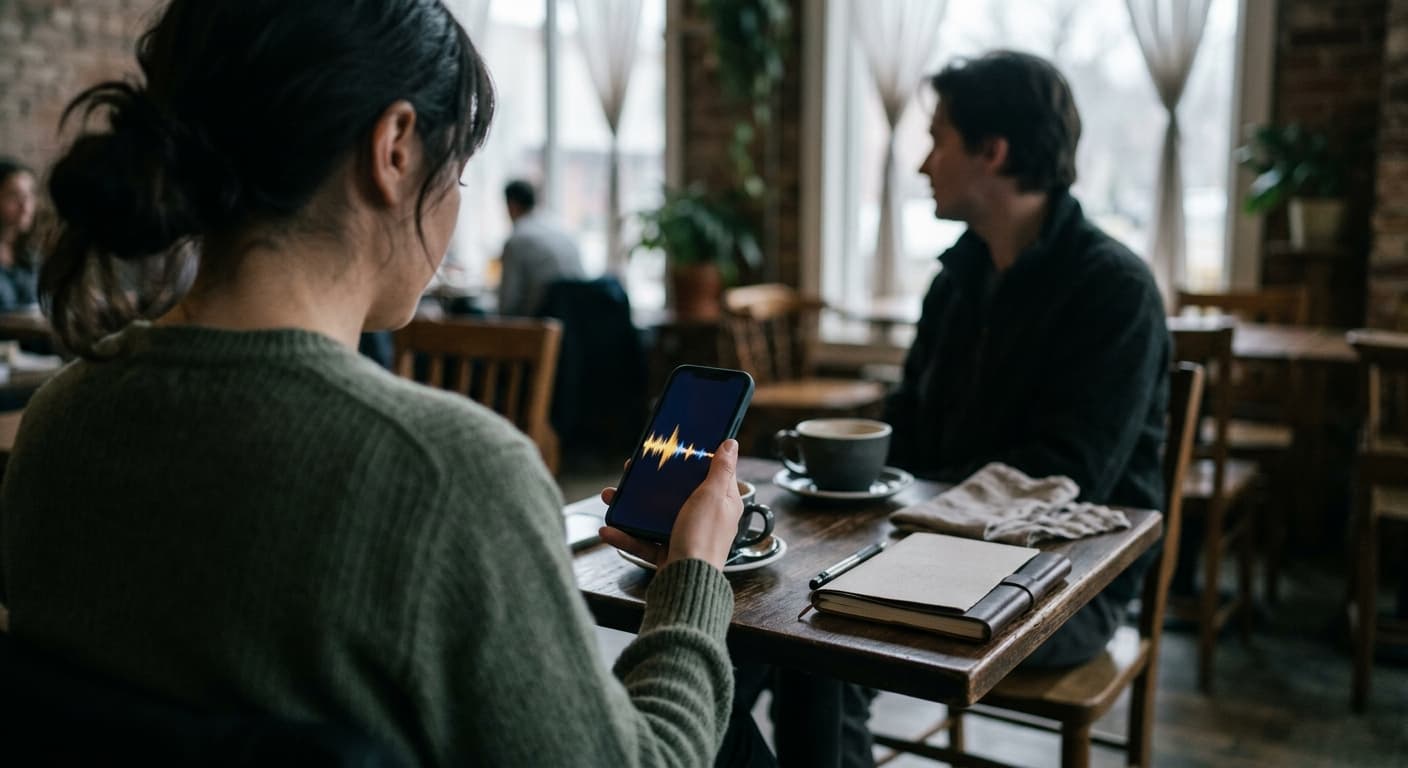
Oklahoma is a one-party consent state under the Security of Communications Act, 13 O.S. sections 176.2 to 176.11. The operative rule is 13 O.S. section 176.4(5): a participant in a wire, oral, or electronic communication may record it without notifying the other parties. Interception by a non-party is a Class D1 felony under 13 O.S. section 176.3 as of January 1, 2026, punishable by a fine of not less than $5,000, or by imprisonment of up to five years for a first offense with at least 20 percent of the sentence served before release, or by both. Repeat offenders with qualifying prior convictions face 1 to 7 years, or 2 to 10 years where the prior convictions are more serious, under 21 O.S. section 20N.
Oklahoma recording law at a glance
| Question | Answer |
|---|---|
| Consent rule | One-party |
| Controlling statute | 13 O.S. sections 176.2 to 176.11 (Security of Communications Act) |
| One-party carve-out | 13 O.S. section 176.4(5) |
| When is recording illegal? | Non-party records without any party's consent |
| Criminal penalty | Class D1 felony: fine not less than $5,000, or up to 5 years first offense (min. 20% served), or both; 1 to 7 years or 2 to 10 years for qualifying repeat offenders (13 O.S. section 176.3, 21 O.S. section 20N) |
| Civil remedy | None under state wiretap law; use federal ECPA 18 U.S.C. section 2520 |
| Hidden cameras | Clandestine voyeuristic recording: Class D1 felony (21 O.S. section 1171(B)) |
| Recording police | Clearly established First Amendment right per Irizarry v. Yehia (10th Cir. 2022) |
For a deeper analysis of each context, jump to the in-depth guides below.
Recording in-person conversations in Oklahoma
Oklahoma's Security of Communications Act, Title 13, Chapter 176, follows the same one-party-consent framework as federal ECPA. The key definition is at 13 O.S. section 176.2: "oral communication" reaches only speech uttered by a person who exhibits a reasonable expectation that it will not be intercepted. A conversation on a public sidewalk or in an open commercial space typically carries no such expectation and falls outside the Act even without consent.
Section 176.4(5) is titled "Acts Not Prohibited" and lists the one-party carve-out: a person not acting under color of law may intercept a communication when that person is a party to it, or when one of the parties has given prior consent, unless the recording is for the purpose of committing any criminal act. (Federal ECPA at 18 U.S.C. section 2511(2)(d) is slightly broader, also barring recordings for tortious purposes.)
Practical examples: an employee can record a one-on-one with a supervisor; a journalist can record an interview; a party to a dispute can record the other person. None of those require notice or consent from the other side. A person who is not part of the conversation and sets a hidden recorder to capture others talking commits felony interception under 13 O.S. section 176.3.
Oklahoma also has a much older, narrower misdemeanor for eavesdropping at 21 O.S. section 1202, dating to 1910: secretly loitering around a building with intent to overhear a conversation inside, then repeating or publishing what was overheard to vex, annoy, or injure someone. It carries Oklahoma's general misdemeanor penalty under 21 O.S. section 10: up to one year in county jail, a fine up to $500, or both. The statute covers eavesdropping without any recording device and predates the Security of Communications Act; it does not replace or expand the felony interception offense under 13 O.S. section 176.3.

Recording phone calls in Oklahoma
The one-party rule applies to telephone calls, VoIP, and other electronic communications exactly as it does to face-to-face conversations. An Oklahoma resident who is a party to a call may record it without telling the other side.
Interstate calls add a wrinkle. Federal ECPA does not preempt stricter state law, so if the person you are calling is in California, Connecticut, Delaware, Florida, Illinois, Maryland, Massachusetts, Montana, New Hampshire, Oregon, Pennsylvania, or Washington, the safer approach is to disclose the recording at the start of the call and get consent on the record. Every state bordering Oklahoma (Texas, Kansas, Arkansas, Missouri, Colorado, and New Mexico) is a one-party state, so Oklahoma-to-neighbor calls follow one-party consent at both ends.
For a call into one of the stricter states listed above, our recording consent checker shows which consent rule controls and what satisfies it.
For the full interstate-call analysis, see Oklahoma Phone Call Recording Laws.
Hidden cameras, doorbells, and nanny cams
Silent video in public is outside the Security of Communications Act entirely because Title 13 Chapter 176 covers only aural acquisition of conversations. A Ring doorbell facing a porch, a dashcam in a vehicle, or a nanny cam in a child's playroom are lawful on their own.
Oklahoma's voyeurism statute, 21 O.S. section 1171, draws the line at private spaces and prurient intent. Subsection (A) is a misdemeanor for loitering with intent to watch in a private dwelling, locker room, dressing room, or restroom. Subsection (B) is a Class D1 felony for using photographic, electronic, or video equipment in a clandestine manner for a prurient, lewd, or lascivious purpose in a place where the subject has a reasonable expectation of privacy. Subsection (C) is a misdemeanor for capturing an image of a person's genitalia, pubic area, buttocks, or female breast areola without consent. The Class D1 felony classification was confirmed effective January 1, 2026, under 21 O.S. section 20N, without changing the underlying conduct or maximum penalty.
Audio-capable smart cameras inside a home raise a separate issue. If a homeowner is away and the camera records a guest's or contractor's conversation with no party consenting, that audio can fall under 13 O.S. section 176.3. The homeowner's one-party consent covers only conversations the homeowner actually participates in. The 2023 FTC settlement with Ring LLC ($5.8 million, plus ongoing privacy-program requirements) reinforces this risk for Oklahoma households using audio-enabled smart cameras.
For deeper coverage see Oklahoma Security Camera Laws and Oklahoma Voyeurism Laws.

Penalties for illegal recording in Oklahoma
Criminal. Felony interception under 13 O.S. section 176.3 is a Class D1 felony as of January 1, 2026. The penalty clause is disjunctive: conviction is punishable by a fine of not less than $5,000 (a floor, not a ceiling), or by imprisonment as provided in subsections B through F of 21 O.S. section 20N, or by both. A first offense carries up to five years, with at least 20 percent of the sentence served before release. Under 21 O.S. section 20N, an offender previously convicted of one or two Class C or Class D offenses faces 1 to 7 years with at least 20 percent served, and an offender previously convicted of three Class C or Class D offenses, or of one or more Class Y, Class A, or Class B offenses, faces 2 to 10 years with at least 30 percent served. The eight prohibited-act categories include: intercepting; attempting to intercept; procuring another to intercept; using a device to acquire oral communications; disclosing illegally intercepted contents; using illegally intercepted contents; tampering with telephone or telegraph lines; manufacturing, possessing, or selling interception devices; and using a communication facility to commit a related felony. Each category is a separate felony.
Disclosure by an innocent recipient. The felony disclosure offense targets someone who knows or has reason to know a recording was illegally intercepted. In Bartnicki v. Vopper, 532 U.S. 514 (2001), the U.S. Supreme Court held that the First Amendment protects publication of a lawfully obtained, illegally intercepted recording on a matter of public concern, so long as the publisher played no part in the interception itself. The ruling shields publication, not the underlying interception, and does not protect the person who did the intercepting.
Civil. Oklahoma's Security of Communications Act has no statutory civil cause of action. 13 O.S. section 176.8 governs law-enforcement disclosure of lawfully intercepted content; it is not a damages provision. The criminal suppression remedy is 13 O.S. section 176.13. Oklahoma plaintiffs sue under federal ECPA at 18 U.S.C. section 2520, which provides actual damages or statutory damages of $100 per day of violation or $10,000 (whichever is greater), punitive damages, and attorney fees. They can pair that with a common-law invasion-of-privacy claim under McCormack v. Oklahoma Publishing Co., 1980 OK 98, 613 P.2d 737 (intrusion upon seclusion or public disclosure of private facts).
| Offense | Statute | Class | Max penalty |
|---|---|---|---|
| Felony interception (8 prohibited-act categories) | 13 O.S. section 176.3 | Class D1 felony | Fine not less than $5,000, or up to 5 years with min. 20% served (first offense), or both; 1 to 7 years (min. 20% served) or 2 to 10 years (min. 30% served) for qualifying repeat offenders |
| Secretly loitering to overhear, then repeat/publish to vex, annoy, or injure | 21 O.S. section 1202 | Misdemeanor | Up to 1 year; fine up to $500 (21 O.S. section 10) |
| Loitering to watch in a private place | 21 O.S. section 1171(A) | Misdemeanor | Up to 1 year; fine up to $5,000 |
| Clandestine recording for prurient purpose | 21 O.S. section 1171(B) | Class D1 felony | Felony imprisonment; fine up to $5,000 |
| Capture of private-area image | 21 O.S. section 1171(C) | Misdemeanor | Up to 1 year; fine up to $5,000 |
| NCII dissemination (basic violation) | 21 O.S. section 1040.13b | Misdemeanor | Up to 1 year; fine up to $1,000 |
| NCII dissemination (for financial gain) | 21 O.S. section 1040.13b | Felony | Up to 5 years |
| NCII dissemination (second or subsequent offense) | 21 O.S. section 1040.13b | Felony | Up to 10 years; sex-offender registration required |

Recording the police in Oklahoma
Oklahoma sits in the Tenth Circuit, which recognized a clearly established First Amendment right to film on-duty police in public in Irizarry v. Yehia, 38 F.4th 1282 (10th Cir. 2022). The court held the right was clearly established as of May 26, 2019, citing the prior consensus of six other circuits.
The earlier case, Frasier v. Evans, 992 F.3d 1003 (10th Cir. 2021), is often misread as denying the right. It did not reach the merits. It held only that the right was not clearly established for a 2014 incident, and that police training cannot substitute for judicial precedent in establishing rights for qualified-immunity purposes. After Irizarry, that gap is closed for incidents on or after May 26, 2019.
In practice: stay at a reasonable distance, do not interfere with the arrest or crime scene, comply with lawful orders to step back when those orders are not pretextual, and avoid trespassing for a better angle. Reasonable time, place, and manner restrictions still apply.
Body-worn camera recordings are public records under 51 O.S. section 24A.8(A)(10) (Oklahoma Open Records Act, enacted via HB 1037 in 2015). The statute's disclosure triggers for that footage include use-of-force, pursuits, arrests, detentions, and other exercises of authority that deprive a citizen of liberty. Oklahoma Association of Broadcasters v. City of Norman, 2016 OK 119 did not involve body-camera footage or that subsection. The Oklahoma Supreme Court held that a restaurant's surveillance video, which police obtained and relied on in a probable-cause affidavit, was a record of the facts of an arrest that 51 O.S. section 24A.8(A)(2) required police to make available, and that the Act allowed copying as well as inspection. The court treated an arrest as a taking into custody or restriction of liberty, including submission to an officer's custody.
For the full analysis see Oklahoma Laws on Recording Police.
Special topics in Oklahoma
Workplace recording and the NLRA
Oklahoma is a one-party consent state for workplace audio. An employee who is part of a conversation can record it. That said, an employer's no-recording policy is not automatically enforceable: under Stericycle, Inc., 372 NLRB No. 113 (2023), a blanket no-recording rule is presumptively unlawful under the NLRA if it could reasonably chill Section 7 concerted activity. NLRB GC 25-05 (February 14, 2025) rescinded several Biden-era General Counsel memoranda and reinstated a Boeing-era prosecutorial posture, but Stericycle itself remains controlling Board precedent. NLRB GC 25-07 (June 25, 2025) separately treats undisclosed recording of collective-bargaining sessions as a per se bad-faith bargaining violation; it does not affect ordinary employee recording outside of bargaining. For the workplace details see Oklahoma Workplace Recording Laws.
AI-generated NCII and deepfakes
Oklahoma HB 1364 (2025), signed by Governor Stitt on May 5, 2025 and effective November 1, 2025, expanded 21 O.S. section 1040.13b to expressly cover AI-generated and computer-generated nonconsensual intimate imagery of identifiable persons. A basic violation is a misdemeanor; a financial-gain offense is a felony of up to five years; a second or subsequent offense is a felony of up to ten years with sex-offender registration required. Prosecutions may be commenced any time before the victim's forty-fifth birthday. A second, concurrent 2025 amendment, HB 2104 (Laws 2025, c. 486, section 399, effective January 1, 2026), separately reclassified section 1040.13b's felony tiers as Class D1 offenses under 21 O.S. section 20N and added a Class D1 felony for disseminating three or more images within a six-month period. HB 2104 amended the section as it stood after a 2024 amendment, not after HB 1364, so the codifier currently carries the two 2025 amendments as separate, unreconciled versions of the statute. HB 3642 (2024), effective November 1, 2024, expanded 21 O.S. section 1024.1 et seq. to AI-generated CSAM. Oklahoma has no general election-deepfake statute in force (HB 3825 of 2024 advanced from committee but did not become law).
Federal overlay: ECPA, TAKE IT DOWN Act, HIPAA, FCC
Federal ECPA, 18 U.S.C. sections 2510 to 2522, sets the one-party consent floor that 13 O.S. section 176.4(5) tracks, and its civil remedy at section 2520 is the primary damages route for Oklahoma plaintiffs. The TAKE IT DOWN Act, Pub. L. No. 119-12 (signed May 19, 2025, platform compliance effective May 19, 2026), requires covered platforms to remove flagged nonconsensual intimate imagery, including deepfakes, within 48 hours of valid notice. Two FCC rules often cited as live recording-disclosure law are no longer in force: FCC 24-24 (one-to-one consent) was vacated by the Eleventh Circuit (mandate April 30, 2025), and 47 C.F.R. section 64.501 (historic carrier beep-tone rule) was removed in 2017. FCC 24-17 (AI-generated voices in robocalls are "artificial or prerecorded" under TCPA) remains in force. Healthcare recording sits under HIPAA, 45 C.F.R. Part 164, an additional layer for covered entities above and beyond Oklahoma one-party consent.
Recent legal developments
- November 1, 2025: Oklahoma HB 1364 of 2025 (signed May 5, 2025) took effect, expanding 21 O.S. section 1040.13b to AI-generated and computer-generated nonconsensual intimate imagery.
- November 1, 2024: Oklahoma HB 3642 of 2024 took effect, expanding 21 O.S. section 1024.1 et seq. to AI-generated CSAM.
- January 1, 2026: 21 O.S. section 1171(B) felony classification renumbered as Class D1 under 21 O.S. section 20N; conduct and maximum penalty unchanged.
- May 19, 2026: Federal TAKE IT DOWN Act platform-compliance deadline for removal of nonconsensual intimate imagery.
- April 30, 2025: FCC 24-24 (one-to-one consent rule) vacated by the Eleventh Circuit; no longer in force.
- June 25, 2025: NLRB GC 25-07 issued, treating undisclosed recording of collective-bargaining sessions as a per se bad-faith bargaining violation.
Oklahoma recording laws in depth
By type of recording
- Oklahoma Audio Recording Laws: One-Party Consent Rules and Penalties
- Oklahoma Phone Call Recording Laws: Consent Rules and Interstate Calls
- Oklahoma Video Recording Laws: Public, Private, and Consent Rules
- Oklahoma Voyeurism Laws: Hidden Cameras, Peeping Tom, and Penalties
- Oklahoma Dashcam Laws: Legality, Mounting Rules, and Evidence Use
By place or relationship
- Oklahoma Laws on Recording Police: Your Rights and Limitations
- Oklahoma Laws on Recording in Public: Rights, Limits, and Permits
- Oklahoma Workplace Recording Laws: Employee and Employer Rights
- Oklahoma Landlord-Tenant Recording Laws: Rights for Renters and Landlords
- Oklahoma Medical Recording Laws: Patient Rights, HIPAA, and Consent (2026)
- Oklahoma School Recording Laws: Student, Parent, and Teacher Rights (2026)
- Oklahoma Security Camera Laws: Home, Business, and HOA Rules
More Oklahoma laws
- Oklahoma AI Meeting Recording Laws
- Oklahoma Alimony Laws
- Oklahoma At-Will Employment Laws
- Oklahoma Child Custody Laws
- Oklahoma Data Privacy Laws
This article is general legal information, not legal advice. Recording laws change and apply differently to each situation. For advice about your situation, consult a licensed Oklahoma attorney.
More Oklahoma Laws
- Oklahoma AI Meeting Recording Laws
- Oklahoma Dashcam Laws
- Oklahoma Data Privacy Laws
- Oklahoma Deepfake Laws
- Oklahoma Employee Monitoring Laws
- Oklahoma GPS Tracking Laws
- Oklahoma Police Bodycam Laws
- Oklahoma Smart Glasses Recording Laws
Frequently Asked Questions
Is Oklahoma a one-party or two-party consent state?
Oklahoma is a one-party consent state. Under 13 O.S. section 176.4(5), a person who is a party to a wire, oral, or electronic communication may record it without notifying the other parties. Oklahoma is not a two-party or all-party consent state.
Can I record a phone call in Oklahoma without telling the other person?
Yes, if you are a party to the call. Oklahoma one-party consent under 13 O.S. section 176.4(5) applies to telephone, cell, and VoIP calls. If the other party is in a state requiring all-party consent (California, Florida, Illinois, Maryland, Massachusetts, and others), you should disclose the recording and get consent to avoid exposure under that state's law.
Is recording someone without consent a felony in Oklahoma?
Recording a conversation you are part of is lawful under 13 O.S. section 176.4(5). Recording a conversation you are not part of, with no party's consent, is a Class D1 felony under 13 O.S. section 176.3, punishable by a fine of not less than $5,000, or by imprisonment of up to five years for a first offense (at least 20% must be served), or by both. Repeat offenders with qualifying prior convictions face 1 to 7 years, or 2 to 10 years where the prior convictions are more serious, under 21 O.S. section 20N. Disclosing or using an illegally obtained recording is a separate felony under the same section.
Can I sue someone for illegally recording me in Oklahoma?
Oklahoma's Security of Communications Act has no statutory civil cause of action. Plaintiffs typically sue under federal ECPA at 18 U.S.C. section 2520, which provides statutory damages of $100 per day of violation or $10,000 (whichever is greater), punitive damages, and attorney fees. A companion claim for intrusion upon seclusion under Oklahoma common law (McCormack v. Oklahoma Publishing Co., 1980 OK 98) is the usual pairing.
Are Ring doorbells and nanny cams legal in Oklahoma?
Video-only cameras facing a porch, yard, or interior living area are generally lawful. Audio recording by a smart camera inside a home can implicate 13 O.S. section 176.3 if it captures conversations of guests or workers when no party has consented and the homeowner is not participating. The homeowner's one-party consent only covers conversations the homeowner is actually part of.
Can I record my boss or an HR meeting in Oklahoma?
Yes. Oklahoma one-party consent under 13 O.S. section 176.4(5) allows any participant to record a meeting without notice. Your employer may have an internal no-recording policy, and a violation can lead to discipline or termination even if the recording is legal under state criminal law. Private-sector employers covered by the NLRA must narrow any no-recording policy to legitimate confidentiality interests (Stericycle, Inc., 372 NLRB No. 113 (2023)); a blanket ban may itself be unlawful.
Can I record on-duty police in Oklahoma?
Yes. The Tenth Circuit, which covers Oklahoma, held in Irizarry v. Yehia, 38 F.4th 1282 (10th Cir. 2022), that the First Amendment right to film on-duty police in public was clearly established as of May 26, 2019. The right is subject to reasonable time, place, and manner restrictions, but the court stressed that a peaceful recording in a public space that does not interfere with officers' performance of their duties is not reasonably subject to limitation.
Does Oklahoma have a law against AI-generated intimate images?
Yes. Oklahoma HB 1364 (2025), effective November 1, 2025, expanded 21 O.S. section 1040.13b to expressly cover AI-generated and computer-generated nonconsensual intimate imagery of identifiable persons. A basic violation is a misdemeanor; a financial-gain offense is a felony of up to five years; a second or subsequent offense is a felony of up to ten years with sex-offender registration required. The federal TAKE IT DOWN Act (Pub. L. No. 119-12), with platform-compliance effective May 19, 2026, adds a federal takedown remedy.
Updates
Corrected the descriptions of Irizarry v. Yehia and Oklahoma Association of Broadcasters v. City of Norman to what the courts actually held: the Irizarry right to film police is subject to reasonable time, place, and manner restrictions, and Norman concerned police-obtained surveillance video of an arrest, not body-camera footage.
Corrected the criminal penalties for illegal interception: 13 O.S. section 176.3 imposes a fine of not less than $5,000, or imprisonment, or both (not a mandatory fine on top of a prison term), and repeat offenders under 21 O.S. section 20N face 1 to 7 years with at least 20 percent served or 2 to 10 years with at least 30 percent served, replacing a prior '1 to 10 years' range that matched neither tier.
Updated Oklahoma's felony interception penalty (13 O.S. 176.3) to reflect its January 1, 2026 reclassification as a Class D1 felony with a mandatory minimum-service rule and a recidivist range up to 10 years; corrected the bordering-states count from four to six; fixed two dead case-citation links; and added a second 2025 statutory amendment (HB 2104) to the AI-image law that was previously unmentioned. All oscn.net citation links on this page were replaced with law.justia.com (statutes) or CourtListener (case law) sources because OSCN is Cloudflare-blocked and its CiteIDs have proven unstable sitewide.
Independently fact-checked against the cited primary sources; governing law re-checked for recent changes
Governing law re-checked for recent changes
Reviewed and approved by an editor
Restructured the Oklahoma hub for readability: condensed from extended prose to short-paragraph sections with a new at-a-glance table, a compact penalties table, and an in-depth sub-page index. Preserved all verified statutes (13 O.S. sections 176.2 to 176.11, 21 O.S. section 1171, 21 O.S. section 1040.13b), case citations (Irizarry v. Yehia, Frasier v. Evans, McCormack v. Oklahoma Publishing Co., Oklahoma Association of Broadcasters v. City of Norman), and recent-development timeline (HB 1364/2025, HB 3642/2024, TAKE IT DOWN Act, FCC 24-24 vacatur, NLRB GC 25-07). Special-topics subsections (workplace/NLRA, AI-NCII/deepfakes, federal overlay) condensed to tight paragraphs. FAQ refreshed to 8 plain-language Q&As. Hero and inline images assigned from meta.
Refreshed Oklahoma hub with verified 13 O.S. sections 176.2 to 176.11 mapping for the Security of Communications Act. The felony interception offense is at 13 O.S. section 176.3 (eight prohibited-act categories; up to 5 years and a fine of not less than $5,000), and the operative one-party-consent rule for private parties is at 13 O.S. section 176.4(5). The prior page conflated 176.3 and 176.4. 13 O.S. section 176.8 reframed as a suppression remedy in criminal proceedings only; Oklahoma has no statutory civil cause of action under the Security of Communications Act. Civil plaintiffs are routed to federal ECPA at 18 U.S.C. section 2520 and common-law invasion of privacy under McCormack v. Oklahoma Publishing Co., 1980 OK 98, 613 P.2d 737. Added HB 1364 of 2025 (Acts of 2025; signed by Governor Stitt May 5, 2025; effective November 1, 2025) expanding 21 O.S. section 1040.13b to AI-generated and computer-generated nonconsensual intimate imagery, and HB 3642 of 2024 (effective November 1, 2024) expanding 21 O.S. section 1024.1 et seq. to AI-generated CSAM. Removed prior references to SB 1090, HB 1577, and HB 1837 (none enacted as Oklahoma deepfake or AI recording law). Body-camera citation corrected from 19 O.S. section 547 to 51 O.S. section 24A.8(A)(10) under the Open Records Act, enacted via HB 1037 (2015), with public-access language anchored to Oklahoma Association of Broadcasters v. City of Norman, 2016 OK 119. Added the Tenth Circuit Frasier-then-Irizarry progression: Frasier v. Evans, 992 F.3d 1003 (10th Cir. 2021), declined under qualified immunity, and Irizarry v. Yehia, 38 F.4th 1282 (10th Cir. 2022), recognized the clearly established First Amendment right to film police as of May 26, 2019. NLRB GC 25-05 (February 14, 2025) reframed as a housekeeping rescission that reinstates Boeing-era prosecutorial posture; Stericycle, Inc., 372 NLRB No. 113 (2023), remains binding Board precedent. FCC 24-24 marked vacated by the Eleventh Circuit (mandate April 30, 2025); the stale 47 C.F.R. section 64.501 reference removed. Added the federal TAKE IT DOWN Act platform-compliance regime effective May 19, 2026. Replaced commercial-codifier URLs with oklegislature.gov, oscn.net, and uscode.house.gov.
Refreshed Oklahoma hub with verified 13 O.S. sections 176.2 to 176.11 mapping for the Security of Communications Act. The felony interception offense is at 13 O.S. section 176.3 (eight prohibited-act categories; up to 5 years, a fine of not less than $5,000, or both), and the operative one-party-consent rule for private parties is at 13 O.S. section 176.4(5). The prior page conflated 176.3 and 176.4. 13 O.S. section 176.8 correctly identified as Disclosure of Information (LE use and sharing of lawfully intercepted communications); the suppression remedy is at 13 O.S. section 176.13. Oklahoma has no statutory civil cause of action under the Security of Communications Act. Civil plaintiffs are routed to federal ECPA at 18 U.S.C. section 2520 and common-law invasion of privacy under McCormack v. Oklahoma Publishing Co., 1980 OK 98, 613 P.2d 737. Added HB 1364 of 2025 (Acts of 2025; signed by Governor Stitt May 5, 2025; effective November 1, 2025) expanding 21 O.S. section 1040.13b to AI-generated and computer-generated nonconsensual intimate imagery, and HB 3642 of 2024 (effective November 1, 2024) expanding 21 O.S. section 1024.1 et seq. to AI-generated CSAM. Removed prior references to SB 1090, HB 1577, and HB 1837 (none enacted as Oklahoma [deepfake](/us-laws/deepfake-laws) or AI recording law). Body-camera citation corrected from 19 O.S. section 547 to 51 O.S. section 24A.8(A)(10) under the Open Records Act, enacted via HB 1037 (2015), with Oklahoma Association of Broadcasters v. City of Norman, 2016 OK 119, cited for public access to police-obtained video documenting the facts of an arrest under 51 O.S. section 24A.8(A)(2). Added the Tenth Circuit Frasier-then-Irizarry progression: Frasier v. Evans, 992 F.3d 1003 (10th Cir. 2021), declined under qualified immunity, and Irizarry v. Yehia, 38 F.4th 1282 (10th Cir. 2022), recognized the clearly established First Amendment right to film police as of May 26, 2019. NLRB GC 25-05 (February 14, 2025) reframed as a housekeeping rescission that reinstates Boeing-era prosecutorial posture; Stericycle, Inc., 372 NLRB No. 113 (2023), remains binding Board precedent. FCC 24-24 marked vacated by the Eleventh Circuit (mandate April 30, 2025); the stale 47 C.F.R. section 64.501 reference removed. Added the federal TAKE IT DOWN Act platform-compliance regime effective May 19, 2026. Replaced commercial-codifier URLs with oklegislature.gov, oscn.net, and uscode.house.gov.
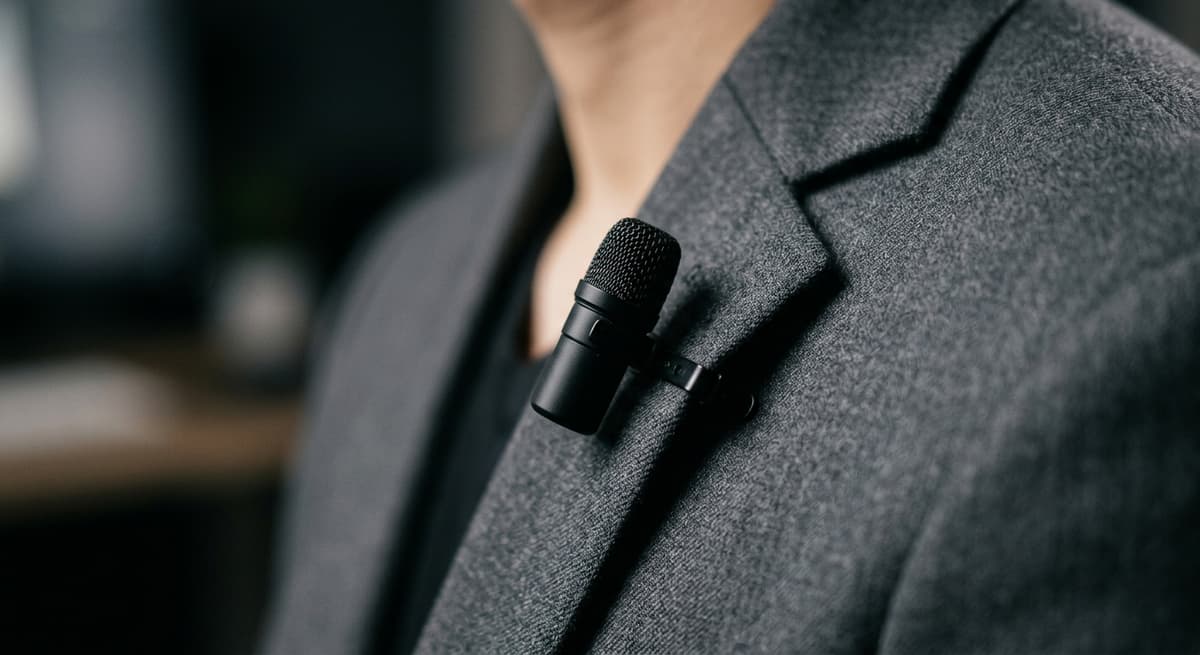
Added wearable recording devices section and 2 new FAQs about AI voice recorders and smart glasses
The Law Behind This Article
This article rests on the statutory provisions below, held in our own legal record and retrieved from the official source. Tap a section to read the operative text.
Oklahoma Statutes, Title 13: COMMON CARRIERS
§ 176.3Prohibited acts - Felonies – Penalties - VenueIn forcecited in 16 of our articles
Except as otherwise specifically provided in this act, any person is guilty of a Class D1 felony offense and upon conviction shall be punished by a fine of not less than Five Thousand Dollars ($5,000.00), or by imprisonment as provided for in subsections B through F of Section 20N of Title 21 of the Oklahoma Statutes, or by both who: 1. Willfully intercepts, endeavors to intercept or procures any other person to intercept or endeavor to intercept any wire, oral or electronic communication; 2. Willfully uses, endeavors to use or procures any other person to use or endeavor to use any electronic, mechanical or other device to intercept any oral communication; 3. Willfully discloses or endeavors to disclose to any other person the contents of any wire, oral or electronic communication, knowing or having reason to know that the information was obtained in violation of the provisions of the Security of Communications Act; 4. Willfully uses or endeavors to use the contents of any wire, oral or electronic communication, knowing or having reason to know that the information was obtained in violation of the provisions of the Security of Communications Act; 5.
Official text (excerpt) · last checked 2026-09-24 · Read the full text in our law library · Verify at oklegislature.gov
Also relied on in: Oklahoma AI Meeting Recording Laws: One-Party Consent Rules (2026), Oklahoma Audio Recording Laws: One-Party Consent Rules and Penalties, Oklahoma Dashcam Laws: Legality, Mounting Rules, and Evidence Use
§ 176.4Acts not prohibitedIn forcecited in 12 of our articles
It is not unlawful pursuant to the Security of Communications Act for: 1. an operator of a switchboard, or an officer, employee, or agent of any communication common carrier whose facilities are used in the transmission of a wire, oral or electronic communication to intercept, disclose, or use that communication in the normal course of his employment while engaged in any activity which is a necessary incident to the rendition of his service or to the protection of the rights or property of the carrier of such communication. Said communication common carriers shall not utilize service observing or random monitoring except for mechanical or service quality control checks; or 2. an officer, employee, or agent of any communication common carrier or other person authorized to provide information, facilities, or technical assistance to a law enforcement officer who is authorized to intercept a wire, oral or electronic communication; or 3.
Official text (excerpt) · last checked 2026-07-31 · Read the full text in our law library · Verify at oklegislature.gov
Cited in 1 court opinions in our collectionLatest citing opinion in our collection: 2014
Opinions citing this section in our collection:
- STATE v. MARCUM (Court of Criminal Appeals of Oklahoma 2014, 319 P.3d 681)“…Title 13. Common Carriers Cite Name Level 13 O.S. 176.4, Acts Not Prohibited Cited Title…”
Identified automatically from the court opinions citing this section — not a ranking of which case controls.
Also relied on in: Oklahoma Medical Recording Laws: Patient Rights, HIPAA, and Consent (2026), Oklahoma School Recording Laws: Student, Parent, and Teacher Rights (2026), Oklahoma Workplace Recording Laws: Employee and Employer Rights
§ 176.2DefinitionsIn forcecited in 3 of our articles
As used in the Security of Communications Act: 1. "Aggrieved person" means a person who was a party to any intercepted wire, oral or electronic communication or a person against whom the interception was directed; 2. "Aural acquisition" means obtaining knowledge of a communication through the sense of hearing which is contemporaneous with the communication; 3. "Aural transfer" means a transfer containing the human voice at any point between and including the point of origin and the point of reception; 4. "Communication common carrier" means, for the purposes of the Security of Communications Act only, any telephone or telegraph company, rural telephone cooperative, communications transmission company or other public communications company under the laws of this state; 5. "Communication facility" means any and all public and private instrumentalities used or useful in the transmission of writing, signs, signals, pictures, or sounds of all kinds and includes mail, telephone, wire, radio, and all other means of communication; 6.
Official text (excerpt) · last checked 2026-07-31 · Read the full text in our law library · Verify at oklegislature.gov
Cited in 3 court opinions in our collectionLatest citing opinion in our collection: 2023
Opinions citing this section in our collection:
- United States v. Dahda (Court of Appeals for the Tenth Circuit 2017, 853 F.3d 1101)“…ication through a device. 18 U.S.C. § 2510 (4). Compare Okla. Stat. tit. 13, § 176.2 (9), with 18 U.S.C. § 2510 (4). And…”
- Boehner, John A. v. McDermott, James A. (Court of Appeals for the D.C. Circuit 1999, 191 F.3d 463)“…zing civil damages for interception, disclosure, and use); Okla. Stat. Ann. tit. 13, §§ 176.2 to 176.5 (West 1994); Or.Rev. Stat. §§…”
- Project Veritas v. Michael Schmidt (Court of Appeals for the Ninth Circuit 2023, 72 F.4th 1043)“…Ohio v. Childs, 728 N.E.2d 379, 388 (Ohio 2000) Oklahoma: Okla. Stat. Ann. tit. 13, §§ 176.2(12), 176.3(1), (2), 176.4(5); K.F. v. O…”
Identified automatically from the court opinions citing this section — not a ranking of which case controls.
Oklahoma Statutes, Title 21: CRIMES AND PUNISHMENTS
§ 1171Peeping Tom – Use of photographic, electronic or videoIn forcecited in 11 of our articles
equipment – Offenses and punishment - Definition. A. Every person who hides, waits or otherwise loiters in the vicinity of any private dwelling house, apartment building, any other place of residence, or in the vicinity of any locker room, dressing room, restroom or any other place where a person has a right to a reasonable expectation of privacy, with the unlawful and willful intent to watch, gaze, or look upon any person in a clandestine manner, shall, upon conviction, be guilty of a misdemeanor. The violator shall be punished by imprisonment in the county jail for a term of not more than one (1) year, or by a fine not to exceed Five Thousand Dollars ($5,000.00), or by both such fine and imprisonment. B.
Official text (excerpt) · last checked 2026-08-31 · Read the full text in our law library · Verify at oklegislature.gov
Cited in 3 court opinions in our collectionLatest citing opinion in our collection: 2026
Opinions citing this section in our collection:
- United States v. Watkins (Court of Appeals for the Tenth Circuit 2026)“…D. Cent. Code § 12.1-31-14; Ohio Rev. Code Ann. § 2907.08;2 Okla. Stat. Ann. tit. 21, § 1171; Or. Rev. Stat. 163.700;2,3 18 Pa. Cons…”
- United States v. Helton (Court of Appeals for the Tenth Circuit 2008, 302 F. App'x 842)“…ory reference, we presume Helton was charged with violating Okla. Stat. Ann. tit. 21, § 1171(B) which makes it a felony to: “use[ ]…”
Identified automatically from the court opinions citing this section — not a ranking of which case controls.
Also relied on in: Oklahoma Surveillance Camera Laws (2026 Guide), Oklahoma Landlord-Tenant Recording Laws: Rights for Renters and Landlords, Oklahoma Security Camera Laws: Home, Business, and HOA Rules
§ 1040.13bNonconsensual dissemination of private sexualIn forcecited in 8 of our articles
images. A. As used in this section: 1. "Image" includes a photograph, film, videotape, digital recording or other depiction or portrayal of an object, including a human body; 2. "Intimate parts" means the fully unclothed, partially unclothed or transparently clothed genitals, pubic area or female adult nipple; and 3. "Sexual act" means sexual intercourse including genital, anal or oral sex. B. A person commits nonconsensual dissemination of private sexual images when he or she: 1. Intentionally disseminates an image of another person who is engaged in a sexual act or whose intimate parts are exposed, in whole or in part; 2. Obtains the image under circumstances in which a reasonable person would know or understand that the image was to remain private; and 3. Disseminates the image without the effective consent of the depicted person. C. The provisions of this section shall not apply to the intentional dissemination of an image of another identifiable person who is engaged in a sexual act or whose intimate parts are exposed when: 1. The dissemination is made for the purpose of a criminal investigation that is otherwise lawful; 2.
Official text (excerpt) · last checked 2026-09-03 · Read the full text in our law library · Verify at oklegislature.gov
Cited in 1 court opinions in our collectionLatest citing opinion in our collection: 2021
Opinions citing this section in our collection:
- Doe v. Coomes (District Court, N.D. Oklahoma 2021)“…tional distress. 2. Violation of 21 O.S. §1040.13b Oklahoma law c…”
Identified automatically from the court opinions citing this section — not a ranking of which case controls.
Also relied on in: Oklahoma Deepfake Laws: AI Images, Voice Cloning & Penalties (2026), Oklahoma AI Laws and Regulation (2026), Oklahoma Pornography Laws (2026): Obscenity, Age Verification & CSAM
§ 20NClass D1 offensesIn forcecited in 10 of our articles
A. Upon the effective date of this act, Class D1 shall include the following criminal offenses: 1. Public warehouse and/or commodity stock fraud, as provided for in Section 9-34 of Title 2 of the Oklahoma Statutes; 2. False issuance of warehouse receipt, as provided for in Section 9-35 of Title 2 of the Oklahoma Statutes; 3. Misrepresentation of charter, as provided for in Section 9- 36 of Title 2 of the Oklahoma Statutes; 4. Tampering with anhydrous equipment, as provided for in subsection A of Section 11-10 of Title 2 of the Oklahoma Statutes; 5. Willfully burn forest, grass, crops, or woodlands, as provided for in Section 16-25 of Title 2 of the Oklahoma Statutes; 6. Willful and unlawful burning of forest, grass, croplands, rangeland, or other wild lands by owner, as provided for in Section 16-28.1 of Title 2 of the Oklahoma Statutes; 7. Possession of incendiary device with the intent to burn, as provided for in Section 16-34 of Title 2 of the Oklahoma Statutes; 8. Operate aircraft not registered with the Federal Aviation Administration Office of Aircraft Registry or foreign country, as provided for in subsection A of Section 258 of Title 3 of the 9.
Official text (excerpt) · last checked 2026-07-31 · Read the full text in our law library · Verify at oklegislature.gov
Also relied on in: Oklahoma Ring Doorbell Laws: What You Need to Know in 2026, Oklahoma Identity Theft Laws: Penalties and Victim Resources, Oklahoma Restraining Order Laws (2026): How to Get a Victim Protective Order
§ 1202EavesdroppingIn forcecited in 3 of our articles
Every person guilty of secretly loitering about any building, with intent to overhear discourse therein, and to repeat or publish the same to vex, annoy, or injure others, is guilty of a misdemeanor. R.L.1910, § 2543.
Official text (excerpt) · last checked 2026-07-31 · Read the full text in our law library · Verify at oklegislature.gov
Also relied on in: Oklahoma Voyeurism Laws: Hidden Cameras, Peeping Tom, and Penalties
§ 10Punishment of misdemeanorIn forcecited in 2 of our articles
Except in cases where a different punishment is prescribed by this chapter or by some existing provisions of law, every offense declared to be a misdemeanor is punishable by imprisonment in the county jail not exceeding one year or by a fine not exceeding five hundred dollars, or both such fine and imprisonment. R.L.1910, § 2091.
Official text (excerpt) · last checked 2026-07-31 · Read the full text in our law library · Verify at oklegislature.gov
Cited in 4 court opinions in our collectionLatest citing opinion in our collection: 2020
Opinions citing this section in our collection:
- Opinion No. 76-293 (1976) Ag (Oklahoma Attorney General Reports 1976)“…accordingly, may be punished by the penalties set out in 21 O.S. 10 [ 21-10 ] (1971). The Attorney General…”
- Bettis v. Brown (Court of Civil Appeals of Oklahoma 1991, 62 O.B.A.J. 3607)“…that only the District Attorney could bring such an action. 21 O.S. § 10 defines the punishment to be imposed fo…”
- Opinion No. 55-0512 (Oklahoma Attorney General Reports 1955)“…NY MATTER UNDER THE JURISDICTION OF THE DEPARTMENT.) CITE: 21 O.S. 10 [ 21-10 ], 28 O.S. 81 [ 28-81 ], 47…”
Identified automatically from the court opinions citing this section — not a ranking of which case controls.
Also relied on in: Oklahoma Felony Classes and Misdemeanor Penalties (2026)
Oklahoma Statutes, Title 51: OFFICERS
§ 24A.8Law enforcement records - DisclosureIn forcecited in 6 of our articles
A. Law enforcement agencies shall make available for public inspection and copying, if kept, the following records: 1. An arrestee description, including the name, date of birth, address, race, sex, physical description, and occupation of the arrestee; 2. Facts concerning the arrest, including the cause of arrest and the name of the arresting officer; 3. A chronological list of all incidents, including initial offense report information showing the offense, date, time, general location, officer, and a brief summary of what occurred; 4. Radio logs, including a chronological listing of the calls dispatched; 5. Conviction information, including the name of any person convicted of a criminal offense; 6. Disposition of all warrants, including orders signed by a judge of any court commanding a law enforcement officer to arrest a particular person; 7. A crime summary, including an agency summary of crimes reported and public calls for service by classification or nature and number; 8.
Official text (excerpt) · last checked 2026-09-02 · Read the full text in our law library · Verify at oklegislature.gov
Also relied on in: Oklahoma Warrant Search: How to Check If You Have a Warrant (2026), Oklahoma Police Reports: How to Get a Collision or Incident Report, Oklahoma Open Records Act: How to Request Public Records
Search our full record of US law — 2.1 million sections, every state + federal →
Sources and References
- 13 O.S. section 176.2 (Security of Communications Act definitions)(law.justia.com)
- 13 O.S. section 176.3 (Prohibited Acts; Felonies; Penalties; Venue)(law.justia.com)
- 13 O.S. section 176.4 (Acts Not Prohibited)(law.justia.com)
- 13 O.S. section 176.7 (Predicate Offenses for Interception Orders)(law.justia.com)
- 13 O.S. section 176.8 (Disclosure of Information)(law.justia.com)
- 13 O.S. section 176.9 (Application for Court Order)(law.justia.com)
- 13 O.S. section 176.13 (Suppression Remedy)(law.justia.com)
- 21 O.S. section 1171 (Peeping Tom; Use of Photographic, Electronic, or Video Equipment)(law.justia.com)
- 21 O.S. section 20N (Class D1 Offenses)(law.justia.com)
- 21 O.S. section 1040.13b / Oklahoma HB 1364 (2025)(oklegislature.gov).gov
- Oklahoma HB 3642 of 2024 (AI-generated CSAM expansion)(oklegislature.gov).gov
- 51 O.S. section 24A.8(A)(10) (Oklahoma Open Records Act, body-worn camera framework)(law.justia.com)
- McCormack v. Oklahoma Publishing Co., 1980 OK 98, 613 P.2d 737(courtlistener.com)
- Oklahoma Association of Broadcasters v. City of Norman, 2016 OK 119(courtlistener.com)
- Frasier v. Evans, 992 F.3d 1003 (10th Cir. 2021)(ca10.uscourts.gov).gov
- Irizarry v. Yehia, 38 F.4th 1282 (10th Cir. 2022)(courtlistener.com)
- Federal Wiretap Chapter (18 U.S.C. sections 2510 to 2522)(uscode.house.gov).gov
- TAKE IT DOWN Act (Pub. L. No. 119-12)(congress.gov).gov
- Stericycle, Inc., 372 NLRB No. 113 (Aug. 2, 2023)(nlrb.gov).gov
- NLRB GC 25-05 (rescission of prior General Counsel memoranda)(nlrb.gov).gov
- NLRB GC 25-07 (surreptitious recording of bargaining sessions)(nlrb.gov).gov
- FCC Declaratory Ruling 24-17 (AI voice in robocalls)(docs.fcc.gov).gov
- Insurance Marketing Coalition Ltd. v. FCC, 127 F.4th 303 (11th Cir. 2025)(media.ca11.uscourts.gov).gov
- HIPAA Privacy Rule (45 C.F.R. Part 164)(ecfr.gov).gov
- FTC v. Ring LLC settlement (2023)(ftc.gov).gov
- 21 O.S. section 1202 (Penalty for Eavesdropping)(law.justia.com)
- 21 O.S. section 10 (Punishment of Misdemeanors, Generally)(law.justia.com)
- Bartnicki v. Vopper, 532 U.S. 514 (2001)(tile.loc.gov).gov
- 13 O.S. section 176.3 (Prohibited acts; Felonies; Penalties; Venue), Oklahoma Statutes Title 13(oklegislature.gov)
- 21 O.S. section 20N (Class D1 offenses; penalty subsections B through F), Oklahoma Statutes Title 21(oklegislature.gov)