
Idaho
Idaho Recording Laws (2026): One-Party Consent Rules
Independently fact-checked against primary sources (last audited August 15, 2026). · Reviewed by the RecordingLaw editorial team. · Law checked current as of August 15, 2026. · 20 primary sources cited on this page. How we verify our legal content
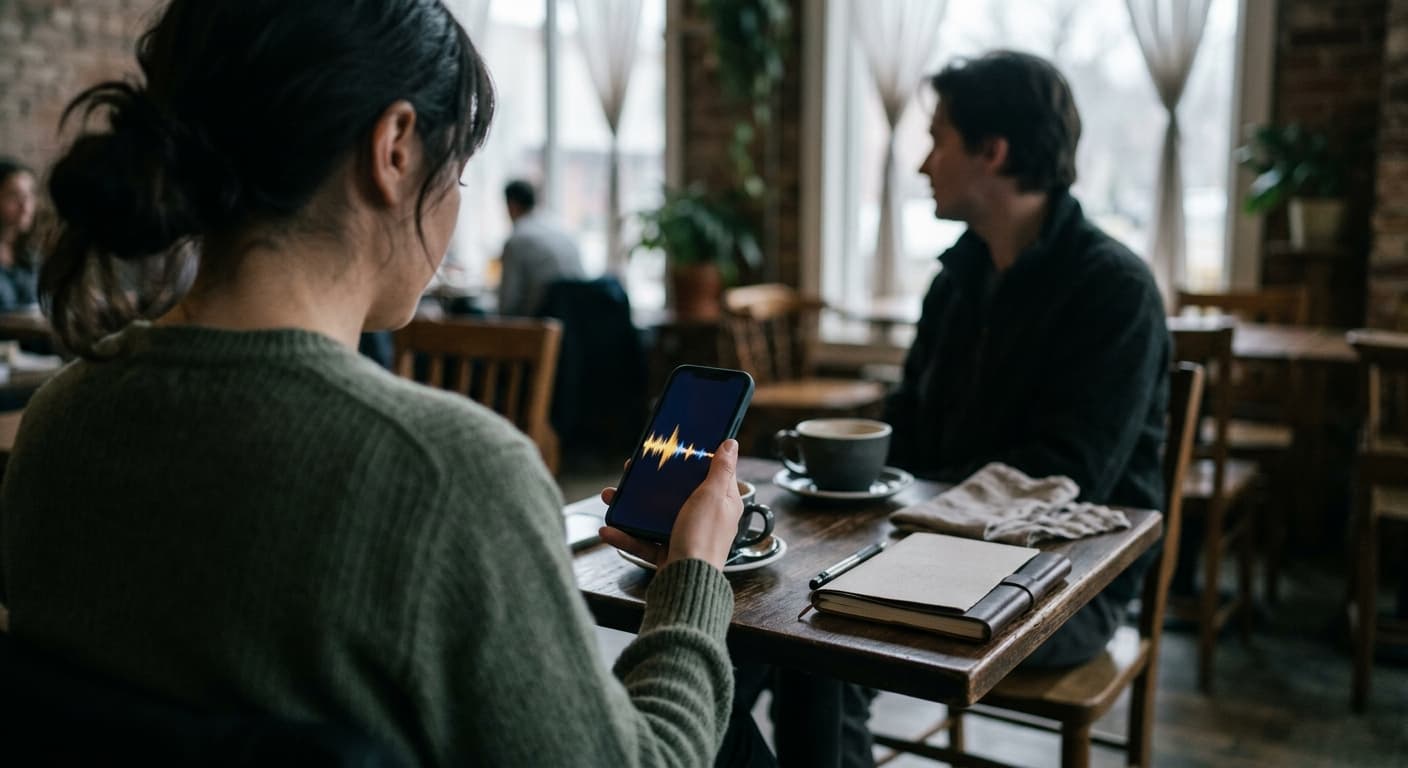
Idaho is a one-party consent state under Idaho Code 18-6702(2)(d). Any participant in a wire, electronic, or oral communication may record it without notifying the other parties. A separate subsection, Idaho Code 18-6702(2)(e), makes it unlawful to intercept any communication for the purpose of committing a criminal act. Unlawful interception is a felony punishable by up to 5 years in prison and a $5,000 fine under Idaho Code 18-6702(1), and it creates civil liability under Idaho Code 18-6709.
Idaho recording law at a glance
| Question | Answer |
|---|---|
| Consent rule | One-party consent |
| Main statute | Idaho Code 18-6702(2)(d) |
| When recording is illegal | No party consents (Idaho Code 18-6702(1)), or any person intercepts for the purpose of committing a criminal act (Idaho Code 18-6702(2)(e)) |
| Criminal penalty | Felony: up to 5 years prison and up to $5,000 fine (Idaho Code 18-6702(1)) |
| Civil remedy | Greater of actual damages, $100/day, or $1,000 minimum, plus punitives and attorney fees (Idaho Code 18-6709) |
| Hidden cameras | Felony under Idaho Code 18-6605 when sexual-gratification or entertainment intent is present |
| Recording police | First Amendment right recognized by the Ninth Circuit (Fordyce 1995; Askins 2018) |
For a full walkthrough of each rule, see the in-depth guides below.
Recording in-person conversations in Idaho
Under Idaho Code 18-6702(2)(d), it is lawful for a participant in a wire, electronic, or oral communication to record without the knowledge of the other parties. A companion subsection, Idaho Code 18-6702(2)(e), separately provides that "it is unlawful to intercept any communication for the purpose of committing any criminal act." Idaho's (2)(e) tracks the spirit of the federal floor at 18 U.S.C. 2511(2)(d) (which uses "criminal or tortious act") but Idaho's own text extends only to criminal acts, not tortious acts. Idaho also does not extend the prohibition to "any other injurious act" as some states do.
A structural feature distinguishes Idaho from a generic one-party state. Idaho Code 18-6701(2) defines an "oral communication" as one "uttered by a person exhibiting an expectation that such communication is not subject to interception under circumstances justifying such expectation." This two-prong test (subjective expectation plus objective justification) is imported directly from the federal Katz framework. A third party who records a conversation without any participant's consent does not violate Idaho Code 18-6702 unless the underlying conversation qualified as a protected "oral communication" in the first place.
In practice, conversations in private homes, closed offices, and medical or legal settings typically satisfy both prongs. Conversations on a public sidewalk, in a loud restaurant, or at a rally typically do not, because bystanders can plainly overhear and the circumstances do not objectively justify a privacy expectation. This means surreptitious recording of open-air public conversations does not violate chapter 67, even by a third party with no participant's consent.
Recording phone calls in Idaho
The same Idaho Code 18-6702(2)(d) rule applies to telephone calls: a participant may record a landline, cell, VoIP (Zoom, Teams, Google Meet, Webex), or over-the-top messaging call without notifying the other party, subject to the crime-tort proviso. A homeowner recording their own incoming calls, a small business recording a customer-service call they participate in, and an employee recording a call with their employer are all within the exception.
Interstate calls require extra care. Idaho borders two all-party-consent states. When one party is physically in Washington (RCW 9.73.030) or Montana (MCA 45-8-213), courts typically apply the stricter all-party rule. The same applies to California (Penal Code 632) and Nevada phone calls (NRS 200.620). Neighboring Oregon is a split state and a common source of confusion: ORS 165.540(1)(c) requires that all participants in an in-person conversation, or a call held through a video conferencing program (ORS 165.535(1) counts both as a conversation), be specifically informed it is being obtained, but ORS 165.540(1)(a) bars obtaining a telecommunication only when no participant consents, so an Idaho-to-Oregon phone call is governed by a one-party rule while an Idaho-to-Oregon video call is not. If you cannot reliably confirm the other party's location, the safe rule is to announce the recording at the start of the call and obtain a verbal affirmation. The recording consent checker on this site looks up both states at once and shows which consent rule applies before you place the call.
For a full interstate-call walkthrough, see Idaho Phone Call Recording Laws.

Hidden cameras, doorbells, and nanny cams
Idaho's visual-side statute is Idaho Code 18-6605, a felony covering both surreptitious recording and non-consensual disclosure of intimate imagery. The recording prong requires sexual-gratification or entertainment intent, an imaging device, capture of intimate areas, lack of consent, and a setting where the depicted person has a reasonable expectation of privacy. A parent monitoring childcare in shared living spaces does not satisfy the intent element, so a nanny cam in a living room or kitchen is generally permissible for video.
A Ring doorbell or front-door camera is generally permissible. Visitors approaching a front door typically have no reasonable expectation of privacy under Idaho Code 18-6701(2), so the audio captured is not a protected "oral communication." And the homeowner is a participant in any conversation they have at the door, satisfying one-party consent. Bathroom-facing or bedroom-facing coverage is a different matter: where the depicted person has REP and any sexual-gratification or entertainment intent is present, the recording prong of Idaho Code 18-6605 applies.
Nanny cam audio is a separate issue. An unattended camera can record conversations between a nanny and child to which the homeowner is not a party, which means no participant has consented. The conservative rule is video-only mode in shared spaces unless a written notice is posted making clear that audio is captured, so that a reasonable caregiver would not expect privacy.
For detailed rules on home surveillance, see Idaho Security Camera Laws and Idaho Video Recording Laws. For voyeurism specifics, see Idaho Voyeurism Laws.

Penalties for illegal recording in Idaho
Idaho Code 18-6702(1) makes unlawful interception, disclosure, or use of an intercepted communication a single ungraded felony. Each act is a separate offense: intercepting a conversation, then disclosing the recording, then using its contents each count separately. Disclosure and use liability under Idaho Code 18-6702(1)(c) and (1)(d) require that the person acted knowing or having reason to know the communication was obtained through an unlawful interception; a person who receives and republishes a recording without that knowledge does not violate this subsection.
| Statute | Offense | Prison | Fine |
|---|---|---|---|
| Idaho Code 18-6702(1) | Unlawful audio interception/disclosure/use | Up to 5 years | Up to $5,000 |
| Idaho Code 18-6605 (recording prong) | Video voyeurism (sexual-gratification intent) | Up to 5 years (18-112 default) | Up to $50,000 (18-112 default) |
| Idaho Code 18-6605 (disclosure prong) | Non-consensual intimate-image distribution | Up to 5 years (18-112 default) | Up to $50,000 (18-112 default) |
| Idaho Code 18-6606 (first offense, adult victim, no prior) | Explicit deepfake disclosure | Up to 6 months county jail | Up to $1,000 |
| Idaho Code 18-6606 (minor victim, or any offense after a prior conviction within 5 years) | Explicit deepfake, felony tier | Up to 10 years | Up to $25,000 |
For civil claims, Idaho Code 18-6709 authorizes recovery of the greater of actual damages, $100 per day of violation, or $1,000 minimum, plus punitive damages and reasonable attorney fees and litigation costs. Good-faith reliance on a court order is a complete defense to both civil and criminal liability. Practitioners often pair the 18-6709 claim with a common-law intrusion-upon-seclusion count under Restatement (Second) of Torts 652, with punitive damages available under Idaho Code 6-1604 on a showing of oppressive, fraudulent, malicious, or outrageous conduct.

Recording the police in Idaho
Idaho is in the Ninth Circuit, which recognizes a First Amendment right to record law enforcement and matters of public interest in public places. Two cases anchor the rule. In Fordyce v. City of Seattle, 55 F.3d 436 (9th Cir. 1995), the court recognized a First Amendment interest in filming matters of public interest and reversed summary judgment for an officer who allegedly struck a citizen's camera during a public protest. In Askins v. U.S. Department of Homeland Security, 899 F.3d 1035 (9th Cir. 2018), the court held expressly that "the First Amendment protects the right to photograph and record matters of public interest," including law enforcement officers performing official duties in public places.
Idahoans recording officers during traffic stops, at protests, on public streets, at federal land borders, and on BLM or Forest Service land have protection under both decisions. Idaho has no buffer-zone or distance-restriction statute. The right is not absolute: do not physically interfere with an officer's activity, record from a reasonable distance, and comply with lawful time, place, and manner orders.
Idaho Code 18-6702(2)(d) as applied to officer interactions is straightforward: you are a party to the conversation, so one-party consent covers the audio. The audio side of the chapter 67 analysis rarely blocks recording of police in public.
For more on body cameras and public records, see Idaho Laws on Recording Police.
Special topics in Idaho
Workplace recording
An Idaho employee who is a party to an HR meeting, a performance review, or a private workplace conversation may record audio under Idaho Code 18-6702(2)(d). Employers may adopt no-recording policies, but under Stericycle, Inc., 372 NLRB No. 113 (Aug. 2, 2023), the policy must advance a legitimate, substantial business interest and must be no broader than necessary. A blanket "no recording" rule typically fails; a rule limited to trade secrets, PHI, or attorney-client communications typically survives. Idaho is a right-to-work state under Idaho Code 44-2003, but that does not strip NLRB jurisdiction. NLRB GC 25-07 (June 25, 2025) separately bars surreptitious recording of collective-bargaining sessions as a per se violation of the NLRA, but that rule is narrowly scoped and does not affect general workplace audio. Idaho attorneys face an additional layer: Idaho State Bar Formal Opinion 130 governs surreptitious recording by attorneys, and what is lawful under 18-6702 may still violate the Idaho Rules of Professional Conduct.
For the full workplace framework, see Idaho Workplace Recording Laws.
AI and deepfake statutes
Idaho enacted an explicit-deepfake criminal statute in 2024. Idaho Code 18-6606 (HB 575 / Chapter 105 of Session Laws of Idaho 2024, signed March 19, 2024, effective July 1, 2024) criminalizes disclosure of AI-generated or digitally manipulated explicit imagery of an identifiable person without their consent. A first offense is a felony when the depicted person is under 18 or the discloser has a prior conviction for a similar offense within five years; otherwise a first offense is a misdemeanor. The companion Idaho Code 67-6628A (FAIR Elections Act, HB 664 / Chapter 172, signed March 25, 2024) provides a civil framework for deceptive synthetic media in electioneering communications, with an affirmative defense for communications bearing a compliant disclosure. Idaho HB 127 (2025), an AI-disclosure consumer-protection bill, was introduced in February 2025 and has not been enacted as of June 2026.
Body-worn cameras and public records
Idaho has no statewide body-worn-camera deployment mandate. Idaho Code 31-871 sets tiered retention minimums for COUNTY law enforcement agencies: 200 days for recordings with evidentiary value, 60 days for non-evidentiary recordings from equipment not affixed to a building, and 14 days for non-evidentiary recordings from equipment affixed to a building. Idaho Code 31-871(3)(b) defines "law enforcement agency" as a county agency, so these floors reach sheriff's offices and other county agencies, not Idaho State Police or municipal police footage. The public-records trigger is also narrower than it first appears. Under Idaho Code 31-871(3)(a)(v), a recording acquires evidentiary value only where a valid public records request under Idaho Code 74-102 "has been filed by a subject, or his representative, of the law enforcement media recording." A journalist, bystander, or other third party who was not a subject of the recording does not move it into the 200-day tier by filing a request. Idaho State Police Procedure 06.24 (revised November 2025) supplements at the agency level for ISP troopers.
Federal overlay
The federal Wiretap Act (18 U.S.C. 2510 to 2522) sets a one-party-consent floor that Idaho's statute mirrors. For interstate calls, stricter state law still controls as a practical matter. In Bartnicki v. Vopper, 532 U.S. 514 (2001), the U.S. Supreme Court held that the First Amendment protects a party who played no role in an unlawful interception from liability for publishing the intercepted communication when it is a matter of public concern, a limitation that narrows disclosure liability under both the federal Wiretap Act and Idaho Code 18-6702(1)(c). FCC Declaratory Ruling 24-17 (February 8, 2024) clarifies that AI-generated voices in calls count as "artificial or prerecorded voice" under the TCPA, giving Idaho consumers a federal cause of action for unsolicited AI-voice calls. The TAKE IT DOWN Act, Pub. L. 119-12 (signed May 19, 2025), criminalizes knowing publication of nonconsensual intimate visual depictions including AI deepfakes; covered-platform 48-hour notice-and-removal compliance became mandatory May 19, 2026. HIPAA binds Idaho healthcare providers, not patients; a patient may record their own visit under 18-6702(2)(d) without HIPAA implication.
Recent legal developments
- July 1, 2024: Idaho Code 18-6606 (HB 575) took effect, creating criminal liability for disclosure of explicit AI-generated intimate imagery.
- March 25, 2024: Idaho Code 67-6628A FAIR Elections Act (HB 664) signed, providing a civil framework for deceptive synthetic media in election advertising.
- June 25, 2025: NLRB GC 25-07 issued, barring surreptitious recording of collective-bargaining sessions as a per se NLRA violation.
- May 19, 2026: TAKE IT DOWN Act covered-platform 48-hour notice-and-removal compliance became mandatory, adding a federal layer to Idaho Code 18-6605 and 18-6606 NCII/deepfake remedies.
- November 2025: Idaho State Police Procedure 06.24 revised, updating ISP body-camera operational rules.
Idaho recording laws in depth
By type of recording
- Idaho Audio Recording Laws: One-Party Consent Rules and Penalties (2026)
- Idaho Phone Call Recording Laws: Consent Rules for Landline, Cell, and VoIP (2026)
- Idaho Video Recording Laws: Rules for Filming, Surveillance, and Privacy (2026)
- Idaho Dashcam Laws: Recording Rules, Windshield Mounting, and Legal Limits (2026)
- Idaho Voyeurism Laws: Hidden Cameras, Privacy Violations, and Penalties (2026)
By place or relationship
- Idaho Workplace Recording Laws: Employee and Employer Rights (2026)
- Idaho Laws on Recording Police: Your Rights and Limitations (2026)
- Idaho Laws on Recording in Public: Photography, Filming, and Audio Rights (2026)
- Idaho Security Camera Laws: Home, Business, and Surveillance Rules (2026)
- Idaho Landlord-Tenant Recording Laws: Cameras, Privacy Rights, and Disputes (2026)
- Idaho Medical Recording Laws: Patient Rights, HIPAA, and One-Party Consent (2026)
- Idaho School Recording Laws: Student Privacy, FERPA, and Classroom Rules (2026)
More Idaho laws
- Idaho Alimony Laws
- Idaho At-Will Employment Laws
- Idaho Child Custody Laws
- Idaho Data Privacy Laws
- Idaho Divorce Laws
This article is general legal information, not legal advice. Recording laws change and apply differently to each situation. For advice about your situation, consult a licensed Idaho attorney.
More Idaho Laws
- Idaho AI Meeting Recording Laws
- Idaho Dashcam Laws
- Idaho Data Privacy Laws
- Idaho Deepfake Laws
- Idaho Employee Monitoring Laws
- Idaho GPS Tracking Laws
- Idaho Police Bodycam Laws
- Idaho Smart Glasses Recording Laws
Frequently Asked Questions
Is Idaho a one-party or two-party consent state?
Idaho is a one-party consent state. Under Idaho Code 18-6702(2)(d), a participant in a wire, electronic, or oral communication may record it without telling the other party. The criminal prohibition under Idaho Code 18-6702(1) applies when no party consents. A companion provision, Idaho Code 18-6702(2)(e), makes interception unlawful when done for the purpose of committing a criminal act. The 'oral communication' element is further gated by a reasonable-expectation-of-privacy test under Idaho Code 18-6701(2).
Can I record a phone call in Idaho without telling the other person?
Yes, if all parties to the call are in Idaho. Idaho Code 18-6702(2)(d) permits a participant to record without notifying the other party. If the other party is in Washington, Montana, or California, those states require all-party consent, and courts generally apply the stricter rule. Oregon is a split state: ORS 165.540(1)(c) requires that all participants in an in-person conversation or a video conferencing call be informed, but ORS 165.540(1)(a) allows a phone call to be recorded with one participant's consent. The safe practice for any interstate call is to announce the recording at the start.
What is the criminal penalty for illegal recording in Idaho?
Unlawful interception, disclosure, or use of a wire, electronic, or oral communication is a felony under Idaho Code 18-6702(1), punishable by up to 5 years in state prison and a fine of up to $5,000. Idaho does not use a class-letter grading scheme for this offense. Each separate act of interception, disclosure, or use is a separate count.
What can I sue for if someone illegally recorded me in Idaho?
Idaho Code 18-6709 provides a civil cause of action for unlawful audio interception. Damages are the greater of actual damages, $100 per day of violation, or $1,000 minimum, plus punitive damages and reasonable attorney fees. Plaintiffs often also plead common-law intrusion upon seclusion, which can add further punitive exposure under Idaho Code 6-1604.
Are Ring doorbells and nanny cams legal in Idaho?
Generally yes, within limits. A Ring doorbell at the front door is typically permissible: visitors approaching a front door usually have no reasonable expectation of privacy under Idaho Code 18-6701(2), and the homeowner is a participant in the conversation. Cameras aimed at bedrooms, bathrooms, or other private spaces where Idaho Code 18-6605 applies are not. Nanny cams should use video-only mode in shared spaces unless written notice is posted, because unattended audio recording of conversations the owner is not part of lacks participant consent.
Can I record my boss or an HR meeting in Idaho?
Generally yes. Idaho is a one-party state, and an employee in the meeting is a party to the conversation under Idaho Code 18-6702(2)(d). An employer may have a no-recording policy, but under NLRB Stericycle (2023) the policy must be narrowly tailored to a specific legitimate business interest. A blanket prohibition is unlikely to survive a Section 8(a)(1) challenge.
Can I record the police in Idaho?
Yes. The Ninth Circuit, which includes Idaho, recognizes a First Amendment right to record law enforcement performing official duties in public places. Fordyce v. City of Seattle (9th Cir. 1995) is the foundational decision; Askins v. U.S. Department of Homeland Security (9th Cir. 2018) reaffirmed the right explicitly. Idaho has no buffer-zone statute. Do not physically interfere with officers, and comply with lawful time, place, and manner restrictions.
Has Idaho enacted a deepfake law?
Yes. Idaho Code 18-6606 (effective July 1, 2024) criminalizes the disclosure of AI-generated explicit intimate imagery of an identifiable person without consent. A first offense is a felony, punishable by up to 10 years imprisonment and a $25,000 fine, if the depicted person is under 18 or the discloser has a prior conviction for a similar offense within five years; otherwise a first offense is a misdemeanor. A companion civil statute, Idaho Code 67-6628A, addresses deceptive synthetic media in election advertising.
Updates
Clarified that Oregon's every-participant-informed rule (ORS 165.540(1)(c)) covers video conferencing calls as well as in-person conversations, while phone calls remain one-party.
Corrected the description of Fordyce v. City of Seattle and Askins v. U.S. Department of Homeland Security: the Ninth Circuit recognized a First Amendment right to record police in public, but neither opinion held that right "clearly established" for qualified-immunity purposes.
Corrected the interstate phone-call guidance to reflect that Oregon requires all participants to be informed only for in-person conversations and permits one-party consent for phone calls, and narrowed the Idaho Code 31-871 body-camera retention section to county agencies and to public records requests filed by a subject of the recording.
Independently fact-checked against the cited primary sources; governing law re-checked for recent changes
Governing law re-checked for recent changes
Corrected the deepfake-disclosure felony rule: a first offense is already a felony when the depicted person is a minor, not only on a second conviction as the page previously implied.
Corrected the Idaho deepfake-disclosure penalties table, which still implied the felony tier requires a second offense; Idaho Code 18-6606(3) makes a FIRST offense a felony when the depicted person is under 18.
Governing law re-checked for recent changes
Reviewed and approved by an editor
Restructured for readability: condensed 12,000-word page to focused hub with AEO lede, at-a-glance table, dedicated sections for in-person, phone calls, hidden cameras, penalties, police recording, and condensed special-topics subsections (workplace, AI/deepfakes, body cams, federal overlay). Added in-depth index grouped by type and place. Refreshed FAQ to 8 plain-language questions. All load-bearing facts re-verified against legislature.idaho.gov primary sources: Idaho Code 18-6702(1) felony penalty (5 years/$5,000), 18-6702(2)(d) one-party consent, 18-6701(2) REP definition, 18-6709 civil damages ($100/day or $1,000 floor, punitives, fees), 18-6605 voyeurism felony, and 18-6606 deepfake misdemeanor/felony step-up all confirmed accurate. No fact corrections required. Idaho Code 18-6702(2)(d) note: the live statute text omits the 'criminal or tortious act' carve-out from the consent provision itself; that limitation is implied by the statutory scheme and the federal parallel at 18 U.S.C. 2511(2)(d).
Refresh: Anchored Idaho Code 18-6702 felony rule (up to 5 years prison and $5,000 fine under 18-6702(3); no class-letter grading) and built out a dedicated H2 on Idaho Code 18-6701(2) Katz-style reasonable-expectation-of-privacy framework to capture the GSC pos-11.3 long-tail on the oral-communication REP definition. Documented Idaho Code 18-6709 civil cause of action with the greater-of-actual-or-$100/day-or-$1,000 floor plus punitive damages plus reasonable attorney fees and litigation costs, and the good-faith-reliance-on-a-court-order complete defense. Confirmed Idaho's voyeurism statute is Idaho Code 18-6605 (the prior baseline was correct on this) and corrected the framing so that 18-6605 is also Idaho's NCII statute via its disclosure prong (not Idaho Code 18-6711, which is harassing telephone calls). Added the verified 2024 deepfake stack: Idaho Code 18-6606 (HB 575 / Chapter 105 of Session Laws of Idaho 2024, signed March 19, 2024 by Governor Brad Little, effective July 1, 2024; misdemeanor first / felony up to 10 years and $25,000 for any second or subsequent within 5 years; House 66-0-4 on Feb 27, 2024; Senate 35-0-0 on Mar 13, 2024) plus Idaho Code 67-6628A FAIR Elections Act (civil framework for deceptive election synthetic media; GAN-based definition; affirmative defense for compliant 'This (video / audio) has been manipulated' disclosure with format requirements; HB 664 / Chapter 172 enabling vehicle, signed March 25, 2024). Flagged Idaho HB 127 (2025) consumer-protection AI-disclosure bill as INTRODUCED only and not enacted as of May 2026. Removed any framing of Idaho S 1399 (2024) as deepfake legislation: S 1399 is the Idaho Public Television appropriation, Chapter 70 of Session Laws of Idaho 2024. Removed any State v. Kerr (Idaho Ct. App. 2017, docket 44740) citation pending independent .gov verification because the isc.idaho.gov PDF returned 404 during research; the one-party-consent rule is framed from the 18-6702 statutory text alone. Corrected body-cam framework to Idaho Code 31-871 (Title 31, Counties) with retention tiers of 200 days for evidentiary recordings, 60 days for non-evidentiary recordings from mobile equipment, and 14 days for non-evidentiary recordings from fixed equipment, with 'evidentiary value' triggered by a valid public records request under Idaho Code 74-102, plus Idaho State Police Procedure 06.24 (revised November 2025) for ISP-specific operational rules; replaced any prior 19-3309 framing. Explicitly stated Idaho has NO statewide body-worn-camera deployment mandate. Added the Ninth Circuit record-the-police pair Fordyce v. City of Seattle, 55 F.3d 436 (9th Cir. 1995), and Askins v. U.S. Department of Homeland Security, 899 F.3d 1035 (9th Cir. 2018), framing Idaho as in the consensus-circuit camp on record-the-police alongside the 1st, 3rd, 5th, 7th, 9th, and 11th Circuits in contrast to the 8th and 10th Circuits. Reframed NLRB GC 25-05 (Feb. 14, 2025; Acting General Counsel William B. Cowen) as a housekeeping rescission of prior General Counsel memoranda citing case-backlog management; GC 25-05 did NOT reinstate Boeing and did NOT overrule Stericycle. Confirmed Stericycle, Inc., 372 NLRB No. 113 (Aug. 2, 2023), remains the controlling NLRB work-rules standard for Idaho private-sector employers covered by the NLRA, and Idaho's right-to-work status under Idaho Code 44-2003 does not strip NLRB jurisdiction. Added NLRB GC 25-07 (June 25, 2025) narrowly scoped to surreptitious recording of collective-bargaining sessions as a per se Section 8(a)(5) or 8(b)(3) violation. Updated FCC Order 24-24 status to vacated nationally by 11th Cir. Insurance Marketing Coalition Ltd. v. FCC, No. 24-10277 (mandate Apr. 30, 2025); FCC subsequently formally removed revised 47 C.F.R. 64.1200(f)(9). Removed reliance on 47 C.F.R. 64.501 (REMOVED effective Nov. 20, 2017). Added federal TAKE IT DOWN Act, Pub. L. 119-12 (S. 146, 119th Cong.; signed May 19, 2025; covered-platform 48-hour notice-and-removal compliance effective May 19, 2026, 9 days from publication of this refresh). Replaced commercial-codifier and law.cornell.edu URLs with legislature.idaho.gov, isp.idaho.gov, isb.idaho.gov, isc.idaho.gov, cdn.ca9.uscourts.gov, media.ca11.uscourts.gov, and uscode.house.gov primary sources.
Refresh: Anchored Idaho Code 18-6702 felony rule (up to 5 years prison and $5,000 fine under 18-6702(1); no class-letter grading) and built out a dedicated H2 on Idaho Code 18-6701(2) Katz-style reasonable-expectation-of-privacy framework. Documented Idaho Code 18-6709 civil cause of action. Confirmed Idaho's voyeurism statute is Idaho Code 18-6605 and corrected the framing so that 18-6605 is also Idaho's NCII statute via its disclosure prong (not Idaho Code 18-6711). Added the verified 2024 deepfake stack: Idaho Code 18-6606 (HB 575 / Chapter 105, signed March 19, 2024, effective July 1, 2024) plus Idaho Code 67-6628A FAIR Elections Act (HB 664 / Chapter 172, signed March 25, 2024). Flagged Idaho HB 127 (2025) as INTRODUCED only, not enacted. Corrected body-cam framework to Idaho Code 31-871 with tiered retention floors (200/60/14 days) and Idaho State Police Procedure 06.24 (revised November 2025). Added Ninth Circuit Fordyce (1995) and Askins (2018) record-the-police framework. Reframed NLRB GC 25-05 as housekeeping rescission only; confirmed Stericycle remains controlling. Added NLRB GC 25-07 (bargaining sessions, per se violation). Updated FCC Order 24-24 status to vacated by 11th Cir. Insurance Marketing Coalition. Added TAKE IT DOWN Act, Pub. L. 119-12 (signed May 19, 2025). Replaced commercial-codifier URLs with legislature.idaho.gov and other primary sources.
Added wearable recording device guidance covering AI voice recorders (Plaud) and smart glasses (Meta Ray-Bans) under Idaho one-party consent law.
The Law Behind This Article
This article rests on the statutory provisions below, held in our own legal record and retrieved from the official source. Tap a section to read the operative text.
Idaho Code
§ 18-6702Interception and disclosure of wire, electronic or oral communications prohibitedIn forcecited in 21 of our articles
18-6702. Interception and disclosure of wire, electronic or oral communications prohibited. (1) Except as otherwise specifically provided in this chapter, any person shall be guilty of a felony and is punishable by imprisonment in the state prison for a term not to exceed five (5) years or by a…
Official text (excerpt) · last checked 2026-09-23 · Read the full text in our law library · Verify at legislature.idaho.gov
Cited in 6 court opinions in our collectionLatest citing opinion in our collection: 2019
In the courts (editorial summary, independently checked):Idaho courts have applied section 18-6702 to intercepted phone calls. Hoskins v. Howard (1998) held cordless telephone conversations are protected wire communications, so scanning, recording and disclosing one supported a claim. Chapman v. NYK Line North America (2009) noted 18-6702(2)(d) makes one-party-consent recording lawful.
Opinions citing this section in our collection:
- Hoskins v. Howard (Idaho Supreme Court 1998, 132 Idaho 311)✓A sheriff's deputy used a scanner to record a neighbor's cordless call and passed the tape on; the court held such calls are protected wire communications when part of the call crosses the phone network, so Section 18-6702 reached him, and vacated summary judgment in his favor.
- Chapman v. NYK LINE NORTH AMERICA, INC. (Idaho Supreme Court 2009, 147 Idaho 178)“…rsation with the consent of one party to the conversation. Idaho Code § 18-6702 (2)(d). Of course, an employer could im…”
- Bartnicki v. Vopper (Supreme Court of the United States 2001, 532 U.S. 514)“…16-11-66.1 (1996); Haw. Rev. Stat. § 803-42 (1993); Idaho Code § 18-6702 (1997); Ill. Comp. Stat., ch. 720, § 5…”
Identified automatically from the court opinions citing this section — not a ranking of which case controls.
Also relied on in: Idaho Security Camera Laws: Home, Business, and Surveillance Rules (2026), Idaho Audio Recording Laws: One-Party Consent Rules and Penalties (2026), Idaho Phone Call Recording Laws: Consent Rules for Landline, Cell, and VoIP (2026)
§ 18-6701Definitions. Definitions as used in this chapter:In forcecited in 7 of our articles
18-6701. Definitions. Definitions as used in this chapter: (1) "Wire communication" means any aural transfer made in whole or in part through the use of facilities for the transmission of communications by the aid of wire, cable, or other like connection between the point of origin and the point of…
Official text (excerpt) · last checked 2026-08-01 · Read the full text in our law library · Verify at legislature.idaho.gov
Cited in 3 court opinions in our collectionLatest citing opinion in our collection: 2023
Opinions citing this section in our collection:
- Hoskins v. Howard (Idaho Supreme Court 1998, 132 Idaho 311)“…and recovery of reasonable attorney fees. I.C. § 18-6709. Idaho Code § 18-6701 provides the following definitions:…”
- Chapman v. NYK LINE NORTH AMERICA, INC. (Idaho Supreme Court 2009, 147 Idaho 178)“…erviews between them. Idaho’s Communications Security Act, Idaho Code §§ 18-6701 to 6725, specifically declares it to b…”
- Project Veritas v. Michael Schmidt (Court of Appeals for the Ninth Circuit 2023, 72 F.4th 1043)“…Hawaii v. Graham, 780 P.2d 1103, 1110 (Haw. 1989) Idaho: Idaho Code Ann. §§ 18-6701(2), 18-6702(1)(a), (2)(d) Illinois: 720…”
Identified automatically from the court opinions citing this section — not a ranking of which case controls.
Also relied on in: Idaho Smart Glasses Recording Laws: One-Party Consent
§ 18-6709Recovery of civil damages authorized. Any person whose wire, electronic or oral communication is intercepted, disclosed, or used in violation of this chapter shall have a civil cause of action against any person who intercepts, discloses, uses, or procures any other person to intercept, disclose, or use such communications, and shall be entitled to recover from any such person:In forcecited in 14 of our articles
18-6709. Recovery of civil damages authorized. Any person whose wire, electronic or oral communication is intercepted, disclosed, or used in violation of this chapter shall have a civil cause of action against any person who intercepts, discloses, uses, or procures any other person to intercept,…
Official text (excerpt) · last checked 2026-08-01 · Read the full text in our law library · Verify at legislature.idaho.gov
Also relied on in: Idaho Employee Monitoring Laws (2026): What Employers Can Track
§ 18-6605video voyeurismIn forcecited in 13 of our articles
18-6605. video voyeurism. (1) As used in this section: (a) "Broadcast" means the electronic transmittal of a visual image with the intent that it be viewed by a person or persons. (b) "Disseminate" means to make available by any means to any person.
Official text (excerpt) · last checked 2026-08-31 · Read the full text in our law library · Verify at legislature.idaho.gov
Cited in 14 court opinions in our collectionLatest citing opinion in our collection: 2026
Opinions citing this section in our collection:
- State v. Gomez-Alas (Idaho Supreme Court 2020, 167 Idaho 857)“…does not constitute an infamous crime against nature under Idaho Code sections 18-6605 and 18-6606; (2) there was…”
- State v. Martinez (Idaho Supreme Court 1986, 111 Idaho 281)“…4 ; Robbery, Idaho Code § 18-6503 ; Crime against nature, Idaho Code § 18-6605 ; Forcible sexual penetration by use of…”
- State v. Cook (Idaho Court of Appeals 2008, 146 Idaho 261)“…is unconstitutional. Id. at 712, 69 P.3d at 132. Idaho Code Section 18-6605, provides: Every pers…”
Identified automatically from the court opinions citing this section — not a ranking of which case controls.
Also relied on in: Idaho Workplace Recording Laws: Employee and Employer Rights (2026), Idaho Video Recording Laws: Rules for Filming, Surveillance, and Privacy (2026)
§ 18-6606DISCLOSING EXPLICIT SYNTHETIC MEDIAIn forcecited in 8 of our articles
18-6606. DISCLOSING EXPLICIT SYNTHETIC MEDIA. (1) A person is guilty of disclosing explicit synthetic media when the person knowingly: (a) Discloses explicit synthetic media and knows or reasonably should know that: (i) An identifiable person portrayed in whole or in part in the explicit synthetic…
Official text (excerpt) · last checked 2026-08-30 · Read the full text in our law library · Verify at legislature.idaho.gov
Cited in 1 court opinions in our collectionLatest citing opinion in our collection: 2020
Opinions citing this section in our collection:
- State v. Gomez-Alas (Idaho Supreme Court 2020, 167 Idaho 857)“…sence of male DNA found in the perineal area and iv) Idaho Code § 18-6606 which only requires “slight penetration…”
Identified automatically from the court opinions citing this section — not a ranking of which case controls.
§ 67-6628aelectioneering communications — use of synthetic mediaIn forcecited in 2 of our articles
67-6628A. electioneering communications — use of synthetic media. (1) This section shall be known and may be cited as the "Freedom From AI-Rigged (FAIR) Elections Act." (2) For purposes of this section: (a) "Information content provider" means any person or entity that is responsible, in whole or…
Official text (excerpt) · last checked 2026-08-01 · Read the full text in our law library · Verify at legislature.idaho.gov
§ 31-871Classification and retention of recordsIn forcecited in 5 of our articles
31-871. Classification and retention of records. (1) County records shall be classified as follows: (a) "Law enforcement media recording" means a digital record created by a law enforcement agency in the performance of its duties that consists of a recording of visual or audible components or both.
Official text (excerpt) · last checked 2026-08-31 · Read the full text in our law library · Verify at legislature.idaho.gov
Also relied on in: Idaho Laws on Recording Police: Your Rights and Limitations (2026)
§ 74-102Public records — Right to examineIn forcecited in 5 of our articles
74-102. Public records — Right to examine. (1) Every person has a right to examine and take a copy of any public record of this state and there is a presumption that all public records in Idaho are open at all reasonable times for inspection except as otherwise expressly provided by statute.
Official text (excerpt) · last checked 2026-09-07 · Read the full text in our law library · Verify at legislature.idaho.gov
Cited in 2 court opinions in our collectionLatest citing opinion in our collection: 2025
Opinions citing this section in our collection:
- Sentry Dynamics, Inc. v. Ada County (Idaho Supreme Court 2025)“…form went beyond the mere inquiry permitted under Idaho Code section 74-102(5)(b), the remaining portions…”
- State v. Clapp (Idaho Court of Appeals 2020, 168 Idaho 67)“…2 statute.” Idaho Code § 74-102(1). However, I.C. § 74-104(2) recognize…”
Identified automatically from the court opinions citing this section — not a ranking of which case controls.
§ 6-1604Limitation on punitive damagesIn forcecited in 5 of our articles
6-1604. Limitation on punitive damages. (1) In any action seeking recovery of punitive damages, the claimant must prove, by clear and convincing evidence, oppressive, fraudulent, malicious or outrageous conduct by the party against whom the claim for punitive damages is asserted.
Official text (excerpt) · last checked 2026-08-01 · Read the full text in our law library · Verify at legislature.idaho.gov
Cited in 77 court opinions in our collectionLatest citing opinion in our collection: 2026
Opinions citing this section in our collection:
- Weinstein v. Prudential Property & Casualty Insurance (Idaho Supreme Court 2010, 149 Idaho 299)“…839 ? 7. Did the district court err in refusing to apply Idaho Code §§ 6-1604 (1) & (3) to this action? 8. Did the…”
- Saint Alphonsus Diversified Care, Inc. v. MRI Associates, LLP (Idaho Supreme Court 2010, 148 Idaho 479)“…against whom the claim for punitive damages is asserted.” Idaho Code § 6-1604 (1). “Punitive damages are not favored…”
- Parks v. Safeco Ins Co of Illinois (Idaho Supreme Court 2016, 160 Idaho 556)“…nd that they are entitled to present the issue to a jury. Idaho Code section 6-1604 provides that a plaintiff seeking to re…”
Identified automatically from the court opinions citing this section — not a ranking of which case controls.
§ 44-2003Freedom of choice guaranteed, discrimination prohibited. No person shall be required, as a condition of employment or continuation of employment,In forcecited in 3 of our articles
44-2003. Freedom of choice guaranteed, discrimination prohibited. No person shall be required, as a condition of employment or continuation of employment, (1) to resign or refrain from voluntary membership in, voluntary affiliation with, or voluntary financial support of a labor organization, or,…
Official text (excerpt) · last checked 2026-08-01 · Read the full text in our law library · Verify at legislature.idaho.gov
Cited in 3 court opinions in our collectionLatest citing opinion in our collection: 2016
Opinions citing this section in our collection:
- International Union of Operating Engineers Local 370 v. Wasden (District Court, D. Idaho 2016, 217 F. Supp. 3d 1209)“…the proposed agreement violated Idaho’s right to work law, Idaho Code § 44-2003 (3). The aforementioned provision of…”
- James M. Sweeney v. Michael R. Pence (Court of Appeals for the Seventh Circuit 2014, 767 F.3d 654)“…Code Ann. § 11-3-303 (1947); GaCode Ann. § 34-6-22 (1947); Idaho Code Ann. § 44-2003 (3) (1985); 22 Guam Code Ann. § 4103 (…”
- Idaho Building & Construction Trades Council, AFL-CIO v. Inland Pacific Chapter of Associated Builders & Contractors, Inc. (Court of Appeals for the Ninth Circuit 2015, 801 F.3d 950)“…48 L.Ed.2d 736 (1976). Idaho has enacted such a law. Idaho Code § 44-2003 (2). Idaho codified the Fairness in C…”
Identified automatically from the court opinions citing this section — not a ranking of which case controls.
United States Code Title 18
§ 2511Interception and disclosure of wire, oral, or electronic communications prohibitedIn forcecited in 441 of our articles
Except as otherwise specifically provided in this chapter any person who— intentionally intercepts, endeavors to intercept, or procures any other person to intercept or endeavor to intercept, any wire, oral, or electronic communication; intentionally uses, endeavors to use, or procures any other person to use or endeavor to use any electronic, mechanical, or other device to intercept any oral communication when— such device is affixed to, or otherwise transmits a signal through, a wire, cable, or other like connection used in wire communication; or such device transmits communications by radio, or interferes with the transmission of such communication; or such person knows, or has reason to know, that such device or any component thereof has been sent through the mail or transported in interstate or foreign commerce; or such use or endeavor to use (A) takes place on the premises of any business or other commercial establishment the operations of which affect interstate or foreign commerce; or (B) obtains or is for the purpose of obtaining information relating to the operations of any business or other commercial establishment the operations of which affect interstate or foreign…
Official text (excerpt) · last checked 2026-09-17 · Read the full text in our law library · Verify at uscode.house.gov
Cited in 2,045 court opinions in our collectionLatest citing opinion in our collection: 2026
In the courts (editorial summary, independently checked):Griggs-Ryan v. Smith (1990) applied the Section 2511(2)(d) prior-consent exception, treating a tenant repeatedly told that all incoming calls were taped as having impliedly consented. United States v. United States District Court (1972) read the then-current Section 2511(3) as conferring no presidential surveillance power.
Opinions citing this section in our collection:
- Mitchell v. Forsyth (Supreme Court of the United States 1985, 472 U.S. 511)✓The Attorney General authorized a warrantless 1970 national security wiretap that caught the plaintiff's calls; the Court held the since-repealed Section 2511(3) disclaimer left the tap lawful under Title III, and that Mitchell had qualified immunity.
- United States v. United States District Court for the Eastern District of Michigan (Supreme Court of the United States 1972, 407 U.S. 297)✓The Attorney General approved warrantless wiretaps on members of a domestic group accused of bombing a CIA office; the Court read Section 2511(3) as a congressional disclaimer conferring no surveillance power, then held the Fourth Amendment required prior judicial approval.
- Forsyth v. Barr (Court of Appeals for the Fifth Circuit 1994, 19 F.3d 1527)✓Dallas police used, in an internal affairs probe of an officer, calls private parties allegedly intercepted illegally; assuming that was unlawful, the Fifth Circuit held Section 2517(1) and (2) allowed the disclosure and use, defeating the Section 2511(1)(c) and (d) claims.
Identified automatically from the court opinions citing this section — not a ranking of which case controls.
Also relied on in: Connecticut Recording Laws (2026): Hybrid Consent Rules Explained, Oregon Recording Laws (2026): Hybrid One-Party and All-Party Rules, US Recording Laws by State (2026): All 50 States Explained
§ 2510DefinitionsIn forcecited in 137 of our articles
As used in this chapter— “wire communication” means any aural transfer made in whole or in part through the use of facilities for the transmission of communications by the aid of wire, cable, or other like connection between the point of origin and the point of reception (including the use of such connection in a switching station) furnished or operated by any person engaged in providing or operating such facilities for the transmission of interstate or foreign communications or communications affecting interstate or foreign commerce; “oral communication” means any oral communication uttered by a person exhibiting an expectation that such communication is not subject to interception under circumstances justifying such expectation, but such term does not include any electronic communication; “State” means any State of the United States, the District of Columbia, the Commonwealth of Puerto Rico, and any territory or possession of the United States; “intercept” means the aural or other acquisition of the contents of any wire, electronic, or oral communication through the use of any electronic, mechanical, or other device.1 So in original. The period probably should be a semicolon.
Official text (excerpt) · last checked 2026-07-28 · Read the full text in our law library · Verify at uscode.house.gov
Cited in 2,382 court opinions in our collectionLatest citing opinion in our collection: 2026
In the courts (editorial summary, independently checked):United States v. New York Telephone Co. (1977) held that pen registers fall outside Title III because they do not acquire the contents of a communication as Section 2510(4) and (8) define interception. Forsyth v. Barr (1994) applied the same definitions, treating the defendant officers as law enforcement officers under Section 2510(7).
Opinions citing this section in our collection:
- Forsyth v. Barr (Court of Appeals for the Fifth Circuit 1994, 19 F.3d 1527)✓Neighbors tapped an informant's home line and the overheard charges reached Dallas internal affairs; the Fifth Circuit saw no evidence the police defendants intercepted anything and held they were 2510(7) law enforcement officers, so 2517(1) and (2) allowed their use of it.
- Nixon v. Administrator of General Services (Supreme Court of the United States 1977, 433 U.S. 425)“…of the Omnibus Crime Control and Safe Streets Act of 1968, 18 U. S. C. §§ 2510 et seq. 408 F. Supp., at 363 . We…”
- Gannett Co. v. DePasquale (Supreme Court of the United States 1979, 443 U.S. 368)“…of the Omnibus Crime Control and Safe Streets Act of 1968, 18 U. S. C. § 2510 et seq., be preserved prior to the d…”
Identified automatically from the court opinions citing this section — not a ranking of which case controls.
Also relied on in: Surveillance Camera Laws by State (2026 Guide), Georgia Recording Laws (2026): One-Party Audio, All-Party Video, District of Columbia Recording Laws (2026): One-Party Consent Rules
Revised Code of Washington
§ 9.73.030Intercepting, recording, or divulging private communication—Consent required—Exceptions.In forcecited in 46 of our articles
(1) Except as otherwise provided in this chapter, it shall be unlawful for any individual, partnership, corporation, association, or the state of Washington, its agencies, and political subdivisions to intercept, or record any: (a) Private communication transmitted by telephone, telegraph, radio, or other device between two or more individuals between points within or without the state by any device electronic or otherwise designed to record and/or transmit said communication regardless how such device is powered or actuated, without first obtaining the consent of all the participants in the communication; (b) Private conversation, by any device electronic or otherwise designed to record or transmit such conversation regardless how the device is powered or actuated without first obtaining the consent of all the persons engaged in the conversation.
Official text (excerpt) · last checked 2026-09-24 · Read the full text in our law library · Verify at app.leg.wa.gov
Cited in 221 court opinions in our collectionLatest citing opinion in our collection: 2026
In the courts (editorial summary, independently checked):Washington courts have policed what counts as a private communication under Sec. 9.73.030: State v. Gunwall (1986) concluded a pen register intercept comes within a private communication transmitted by telephone, while State v. Riley (1993) held a line trap that reveals only the calling number does not record one.
Opinions citing this section in our collection:
- State v. Salinas (Washington Supreme Court 1992, 119 Wash. 2d 192)“…alties for divulging a telegram or opening a sealed letter. RCW 9.73.030-.070, making it unlawful to intercept,…”
- State v. Gunwall (Washington Supreme Court 1986, 106 Wash. 2d 54)✓Everett police pulled a suspected cocaine dealer's toll records and put a pen register on her line without valid legal process; the court held a pen register intercept is a private communication transmitted by telephone, installable only under the eavesdropping statutes.
- State v. Brown (Washington Supreme Court 1997, 132 Wash. 2d 529)✓Palm Springs officers secretly recorded a Washington murder suspect's statements after his arrest; the court treated RCW 9.73.090, not 9.73.030, as the provision reaching recordings of arrested persons, and held the Privacy Act did not require suppressing that recording.
Identified automatically from the court opinions citing this section — not a ranking of which case controls.
Also relied on in: Federal Wiretap Act and ECPA: The Complete Guide (2026), Is It Illegal to Video Record Someone Without Their Consent? (2026), Is Plaud HIPAA Compliant? Kind Of. Here's What to Know (2026)
Montana Code Annotated, Title 45
§ 45-8-213Privacy In CommunicationsIn forcecited in 51 of our articles
45-8-213. Privacy in communications. (1) Except as provided in 69-6-104, a person commits the offense of violating privacy in communications if the person knowingly or purposely: (a) with the purpose to terrify, intimidate, threaten, harass, or injure, communicates with a person by electronic communication and threatens to inflict injury or physical harm to the person or property of the person or makes repeated use of obscene, lewd, or profane language or repeated lewd or lascivious suggestions; (b) uses an electronic communication to attempt to extort money or any other thing of value from a person or to disturb by repeated communications the peace, quiet, or right of privacy of a person at the place where the communications are received; (c) records or causes to be recorded a conversation by use of a hidden electronic or mechanical device that reproduces a human conversation without the knowledge of all parties to the conversation; (d) with the purpose to terrify, intimidate, threaten, harass, or injure or to obtain money or other valuable consideration, publishes, distributes, or discloses real or digitally fabricated printed or electronic photographs, pictures, images, or…
Official text (excerpt) · last checked 2026-09-24 · Read the full text in our law library · Verify at mca.legmt.gov
Cited in 23 court opinions in our collectionLatest citing opinion in our collection: 2025
In the courts (editorial summary, independently checked):State v. Dugan (2013) struck the statute's prima facie intent clause as overbroad. State v. Brown (1988) noted the statute still bars recording without all participants' permission and rejected an overbreadth attack on its public-official exception. State v. DuBray (2003) found no violation where the defendant knew of the recording.
Opinions citing this section in our collection:
- State v. Smith (Montana Supreme Court 2004, 322 Mont. 206)✓A man who phoned threats to kill his estranged wife's boyfriend argued he should have been charged under section 45-8-213(1)(a) instead of assault with a weapon. The court held the two statutes punish different conduct, so the charge was within prosecutorial discretion.
- State v. Dugan (Montana Supreme Court 2013, 369 Mont. 39)“…rbroad, the Court today strikes the prima facie language in § 45-8-213, MCA. However, a narrow application would be…”
- In re C.S. (Montana Supreme Court 1984, 210 Mont. 144)“…n of privacy in communication, a misdemeanor as provided in Section 45-8-213, MCA. The facts underlying the offense were…”
Identified automatically from the court opinions citing this section — not a ranking of which case controls.
Also relied on in: Montana Smart Glasses Recording Laws (MCA 45-8-213), Montana Employee Monitoring Laws: Workplace Surveillance and Social Media (2026), Ring Doorbell Laws by State: Complete 2026 Legal Guide
Nevada Revised Statutes, Chapter 200: CRIMES AGAINST THE PERSON
§ 200.620Interception and attempted interception of wire communication prohibited; exceptions.In forcecited in 38 of our articles
1. Except as otherwise provided in subsection 5 and NRS 179.410 to 179.515, inclusive, 209.419 and 704.195, it is unlawful for any person to intercept or attempt to intercept any wire communication unless: (a) The interception or attempted interception is made with the prior consent of one of the parties to the communication; and (b) An emergency situation exists and it is impractical to obtain a court order as required by NRS 179.410 to 179.515, inclusive, before the interception, in which event the interception is subject to the requirements of subsection 3. If the application for ratification is denied, any use or disclosure of the information so intercepted is unlawful, and the person who made the interception shall notify the sender and the receiver of the communication that: (1) The communication was intercepted; and (2) Upon application to the court, ratification of the interception was denied.
Official text (excerpt) · last checked 2026-08-28 · Read the full text in our law library · Verify at leg.state.nv.us
Cited in 18 court opinions in our collectionLatest citing opinion in our collection: 2025
In the courts (editorial summary, independently checked):Nevada reads NRS 200.620 as an all-party consent rule for phone recording, with a territorial limit. Lane v. Allstate Insurance held a participant who taped his own calls without the other parties' consent violated it; DITECH FINANCIAL, LLC VS. BUCKLES held it does not reach calls recorded from outside Nevada.
Opinions citing this section in our collection:
- Lane v. Allstate Insurance (Nevada Supreme Court 1998, 114 Nev. 1176)✓A former employee secretly taped hundreds of his own phone calls with his ex-employer's staff to build his suit; the court held NRS 200.620 bars recording a call without every party's consent, so the tapes were excluded and the dismissal of his suit was reversed.
- State v. Reyes (Nevada Supreme Court 1991, 107 Nev. 191)✓Police had an interpreter listen on a station extension phone while an informant set up a drug buy; the court held that officers' use of regularly installed telephone equipment in the ordinary course of their duties is not an interception under NRS 200.620.
- ABID VS. ABID (CHILD CUSTODY) (Nevada Supreme Court 2017, 2017 NV 94)“…corded phone conversations in violation of NRS 200.620 to obtain evidence to support tort…”
Identified automatically from the court opinions citing this section — not a ranking of which case controls.
Also relied on in: Nevada Smart Glasses Recording Laws 2026, Nevada Employee Monitoring Laws: Workplace Surveillance and Social Media (2026), AI Meeting Recording Laws by State: Complete Guide (2026)
Oregon Revised Statutes, Chapter 165: Offenses Involving Fraud or Deception
§ 165.540Obtaining contents of communicationsIn forcecited in 49 of our articles
(1) Except as otherwise provided in ORS 133.724 or 133.726 or subsections (2) to (8) of this section, a person may not: (a) Obtain or attempt to obtain the whole or any part of a telecommunication or a radio communication to which the person is not a participant, by means of any device, contrivance, machine or apparatus, whether electrical, mechanical, manual or otherwise, unless consent is given by at least one participant. (b) Tamper with the wires, connections, boxes, fuses, circuits, lines or any other equipment or facilities of a telecommunication or radio communication company over which messages are transmitted, with the intent to obtain unlawfully the contents of a telecommunication or radio communication to which the person is not a participant. (c) Obtain or attempt to obtain the whole or any part of a conversation by means of any device, contrivance, machine or apparatus, whether electrical, mechanical, manual or otherwise, if not all participants in the conversation are specifically informed that their conversation is being obtained.
Official text (excerpt) · last checked 2026-09-24 · Read the full text in our law library · Verify at oregonlegislature.gov
Cited in 76 court opinions in our collectionLatest citing opinion in our collection: 2026
In the courts (editorial summary, independently checked):State v. Fleetwood (2000) applied ORS 165.540 to body wire evidence, holding that words spoken into a telephone are a telecommunication under subsection (1)(a) and that the (5)(a)(B) exception fails unless the officer or the officer's agent shares reciprocally in the conversation, so the recordings were inadmissible.
Opinions citing this section in our collection:
- State v. Klein (Oregon Supreme Court 2012, 352 Or. 302)“…eing 3 recorded. Conversations recorded in violation of ORS 165.540 are not admissible in 4 court excep…”
- North Pacific Lumber Co. v. Oliver (Oregon Supreme Court 1979, 286 Or. 639)✓A lumber wholesaler secretly monitored traders' calls; on de novo review the court said the practice may have violated ORS 165.540 but refused to rest unclean hands on it, since the ex-employee's calls were never monitored. The employer's noncompete suit failed on other grounds.
- State v. Fleetwood (Oregon Supreme Court 2000, 331 Or. 511)✓A detective wired an informant and recorded the suspect's side of a phone call and his talks with his mother and a juvenile seller; the court held those interceptions violated ORS 165.540(1)(a) and (1)(c) because the informant was not a participant, and upheld suppression.
Identified automatically from the court opinions citing this section — not a ranking of which case controls.
Also relied on in: Oregon Voyeurism and Hidden Camera Laws: Offenses, Penalties, and Protections, Oregon Audio Recording Laws: Split Consent Rules for Conversations and Calls, Oregon Landlord-Tenant Recording Laws: Surveillance, Privacy, and Consent
Search our full record of US law — 2.1 million sections, every state + federal →
Sources and References
- legislature.idaho.gov.gov
- legislature.idaho.gov.gov
- legislature.idaho.gov.gov
- legislature.idaho.gov.gov
- legislature.idaho.gov.gov
- legislature.idaho.gov.gov
- legislature.idaho.gov.gov
- legislature.idaho.gov.gov
- legislature.idaho.gov.gov
- legislature.idaho.gov.gov
- legislature.idaho.gov.gov
- isb.idaho.gov.gov
- isp.idaho.gov.gov
- courtlistener.com
- cdn.ca9.uscourts.gov.gov
- nlrb.gov.gov
- nlrb.gov.gov
- uscode.house.gov.gov
- congress.gov.gov
- docs.fcc.gov.gov
- ecfr.gov.gov
- Oregon Revised Statutes chapter 165 (ORS 165.540, obtaining contents of communications), Oregon State Legislature(oregonlegislature.gov)