
Wisconsin
Wisconsin Recording Laws (2026): One-Party Consent Rules
Independently fact-checked against primary sources (last audited August 15, 2026). · Reviewed by the RecordingLaw editorial team. · Law checked current as of August 15, 2026. · 21 primary sources cited on this page. How we verify our legal content
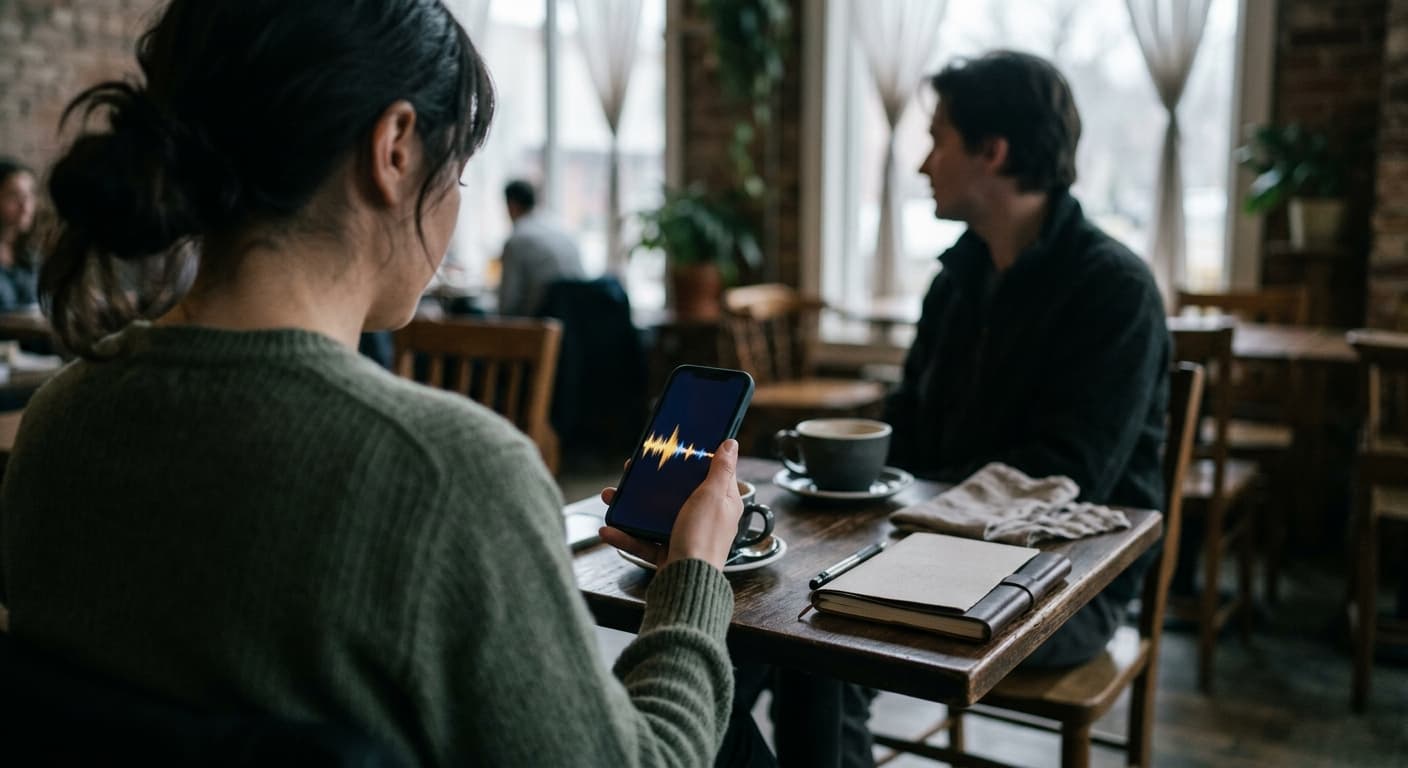
Wisconsin is a one-party consent state under Wis. Stat. § 968.31(2)(c). Any participant in a wire, electronic, or oral communication may record without notifying the other parties, unless the recording serves a criminal, tortious, or otherwise injurious purpose. Recording without any party's consent is a Class H felony, and victims can sue for civil damages.
Wisconsin recording law at a glance
| Question | Answer |
|---|---|
| Consent rule | One-party: a participant may record without disclosure |
| Main statute | Wis. Stat. § 968.31(2)(c) |
| When it is illegal | No party consents AND recorder is not within the participant or color-of-law exception |
| Criminal penalty | Class H felony: up to 6 years / $10,000 fine (§ 939.50(3)(h)) |
| Civil penalty | Actual damages or $100/day or $1,000 minimum (whichever higher), plus punitives and attorney fees (§ 968.31(2m)) |
| Hidden cameras | Class A misdemeanor (§ 942.08(2)); Class I felony for up-skirt capture or victim under 18 |
| Recording police | Permitted in public; First Amendment protected per ACLU v. Alvarez (7th Cir. 2012) |
For deeper treatment of each topic, jump to the in-depth section below.
Recording in-person conversations in Wisconsin
Wisconsin is a one-party consent state. Under Wis. Stat. § 968.31(2)(c), a private actor who is a party to the conversation may record without telling anyone else, as long as the recording is not made for a criminal, tortious, or otherwise injurious purpose. The criminal offense at § 968.31(1) is a Class H felony that reaches only recordings where no party consents.
Wisconsin's Electronic Surveillance Control Law (WESCL), codified at Wis. Stat. §§ 968.27 to 968.37, covers in-person "oral communication" when uttered with a reasonable expectation of privacy under Wis. Stat. § 968.27. This is an important scope point: a private conversation in a closed office or home falls within the statute; a chat in a crowded public lobby probably does not, because there is no justified privacy expectation. Wisconsin thus covers face-to-face recording that some neighboring states (like Indiana) exclude from their wiretap chapters.
Wisconsin's defining quirk is the injurious-purpose clause. The participant exception disappears when recording is made "for the purpose of committing any criminal or tortious act... or for the purpose of committing any other injurious act." The phrase "any other injurious act" is broader than the federal ECPA equivalent at 18 U.S.C. § 2511(2)(d), which stops at "criminal or tortious." Recording to extort, harass, stalk, defame, or accomplish another wrong against the speaker forfeits the exception even if you are a party to the call.
The Wisconsin Supreme Court addressed a related fact pattern in State v. Duchow, 2008 WI 57: a school bus driver's threats to a child were captured by a recorder the child's parents placed in his backpack. The Court held the driver's statements were not "oral communication" under the WESCL at all, because he had no reasonable expectation of privacy in threats made on a public school bus, and it expressly declined to decide whether the statute permits vicarious parental consent. State v. Turner, 2014 WI App 93 later set the totality-of-the-circumstances test for a minor's capacity to consent to color-of-law surveillance.
Practical advice: confirm you are a participant, not merely someone who placed a device and left the room (the exception requires you to be a party). For sensitive recordings, note the location and participants. Do not edit originals, because authentication challenges are easy to mount against spliced clips.
Recording phone calls in Wisconsin
Phone calls, video calls, and other transmitted communications fall within the WESCL "wire communication" and "electronic communication" categories under § 968.27. Wisconsin's one-party rule applies equally: if you are a party to the call, you may record. The same injurious-purpose limit applies.
The definition of "electronic communication" is technology-neutral and reaches VoIP calls, video conferencing (Zoom, Teams, Google Meet), and voice-message apps (WhatsApp, Signal voice notes). Platforms that postdate the statute still fall within the category.
Multistate calls. When a party is in an all-party consent state (California, Florida, Illinois, Maryland, Massachusetts, Pennsylvania, Washington, or another strict-state jurisdiction), that state's law typically governs if it is stricter. A Wisconsin caller dialing an Illinois number assumes Illinois Eavesdropping Act exposure. Conservative practice: announce the recording at the start, or get express consent.
To check a particular pairing before you dial, try our recording consent checker.
Business call recording. A Wisconsin business is a participant in its own customer-service and sales calls and may record under § 968.31(2)(c). Multistate operators should provide a recorded-notice announcement at the start of every call to address the strictest applicable state. The old FCC beep-tone rule (47 C.F.R. § 64.501) was removed effective November 20, 2017 and is not live law.
For the full treatment of call recording rules and interstate conflicts, see the Wisconsin Phone Call Recording Laws spoke.

Hidden cameras, doorbells, and nanny cams
Wisconsin's privacy-of-image statutes sit alongside, not inside, the WESCL audio chapter. A single surreptitious recording device can violate both § 968.31 (audio of a private oral communication) and § 942.08 (video surveillance device in a private place).
Wis. Stat. § 942.08 (voyeurism). Subsection (2) is a Class A misdemeanor (up to 9 months' jail, $10,000 fine) for knowingly installing or using a surveillance device in a private place to observe a nude or partially nude person without consent, peeping into a public-accommodation changing room or toilet for sexual gratification, or entering another person's private property without consent (or an enclosed or unenclosed common area of a multiunit dwelling or condominium) and looking into a dwelling unit for the purpose of sexual arousal or gratification and with intent to intrude upon or interfere with an individual's privacy, where an individual is present in that part of the unit, has a reasonable expectation of privacy there, and does not consent. Subsection (3) escalates to a Class I felony (up to 3 years 6 months, $10,000 fine) for knowingly viewing, broadcasting, or recording under the outer clothing of an individual their genitals, pubic area, breasts, or buttocks without consent (no sexual gratification element is required). Subsection (4) enhances any subsection (2) violation to a Class I felony when the victim is under 18.
Wis. Stat. § 942.09 (representations depicting nudity). The base offense under subsection (2)(am)1 is a Class I felony for capturing an intimate representation without the depicted person's knowledge and consent when they have a reasonable expectation of privacy. Posting a private representation of an adult without consent under subsection (3m)(a)1 is a Class A misdemeanor (enhanced to Class I felony under subsection (3m)(am) when the victim is under 18). The 2025 Wisconsin Act 34 additions (synthetic intimate representation) are addressed in the Special Topics section below.
Audio caveat for home cameras. A Ring doorbell or nanny cam recording conversations inside a Wisconsin home where no participant has consented may trigger WESCL exposure under § 968.31 in addition to the § 942.08 video analysis. Configure audio-capable devices so that at least one household participant is a party to any recorded conversation, or disable audio if the purpose is purely video security.
Wis. Stat. § 942.10 (drone surveillance). Using a drone with intent to photograph, record, or observe a person in a place with a reasonable expectation of privacy is a Class A misdemeanor. Law enforcement operating under § 175.55(2) authorization is exempt.
For deeper coverage see the Wisconsin Voyeurism and Hidden Camera Laws and Wisconsin Security Camera Laws spokes.

Penalties for illegal recording in Wisconsin
Criminal penalties under the WESCL and the privacy-of-image statutes:
| Offense | Statute | Class | Max Prison | Max Fine |
|---|---|---|---|---|
| Unlawful interception (wire, electronic, or oral) | § 968.31(1)(a) | Class H felony | 6 years | $10,000 |
| Unlawful disclosure or use of intercepted contents | § 968.31(1)(c)-(d) | Class H felony | 6 years | $10,000 |
| Surveillance device in private place; peeping | § 942.08(2) | Class A misdemeanor | 9 months | $10,000 |
| Under-clothing capture of genitals or intimate areas without consent | § 942.08(3) | Class I felony | 3 yrs 6 mos | $10,000 |
| § 942.08(2) with victim under 18 | § 942.08(4) | Class I felony | 3 yrs 6 mos | $10,000 |
| Capturing intimate representation without consent | § 942.09(2)(am)1 | Class I felony | 3 yrs 6 mos | $10,000 |
| Posting synthetic intimate representation with coercive intent | § 942.09(2)(am)4 | Class I felony | 3 yrs 6 mos | $10,000 |
| Drone surveillance in place of reasonable privacy expectation | § 942.10 | Class A misdemeanor | 9 months | $10,000 |
Civil remedy under § 968.31(2m): the greater of actual damages, $100 per day of violation, or $1,000 minimum (liquidated, so no separate proof of economic harm is required), plus punitive damages for willful violations, plus reasonable attorney fees and litigation costs. The Wisconsin civil floor ($1,000) is lower than the federal ECPA floor at 18 U.S.C. § 2520 ($10,000); federal claims are available when the conduct also violates ECPA.
A felony conviction under § 968.31(1) carries the collateral consequences that attach to any Wisconsin felony: a permanent record, potential loss of federal firearm rights under 18 U.S.C. § 922(g), and restrictions on professional licensing and housing. Wisconsin does not provide for general expungement of adult felony convictions; restoration typically requires an executive pardon.
Recording the police in Wisconsin
Wisconsin sits in the Seventh Circuit. The controlling First Amendment authority is ACLU of Illinois v. Alvarez, 679 F.3d 583 (7th Cir. 2012): the court held that audio-recording on-duty police officers performing public duties is protected by the First Amendment and that criminalizing all nonconsensual audio recording is not narrowly tailored to the state's privacy interest. The decision binds Wisconsin federal courts.
Wisconsin has no separate state right-to-record statute. Combined with the participant-consent rule at § 968.31(2)(c), a citizen openly recording police in public is protected on two independent grounds: the First Amendment (Alvarez) and the participant-consent exception (the citizen is a party to their own observation).
You may film traffic stops, record public arrests, document use of force, and livestream encounters from public property. You may not interfere with police operations, obstruct an officer, or trespass onto private property to record. Comply with lawful time, place, and manner instructions on the spot; challenge a pretextual order through proper legal channels afterward.
For the full analysis, see the Wisconsin Laws on Recording Police spoke.
Special topics in Wisconsin
Deepfakes and synthetic intimate imagery (2025 Wisconsin Act 34)
2025 Wisconsin Act 34 (originating as 2025 Senate Bill 33, signed October 2, 2025) amended Wis. Stat. § 942.09 in three places. Section 942.09(1)(e) defines "synthetic intimate representation" as a technologically generated representation using an identifiable person's face, likeness, or distinguishing characteristic to depict an intimate representation, so realistic that a reasonable person would believe it depicts actual conduct of that person. Section 942.09(2)(am)4 makes it a Class I felony to post, publish, distribute, or exhibit such a representation with intent to coerce, harass, or intimidate. Section 942.09(3m)(a)3, a companion Class A misdemeanor, separately reaches unauthorized reproduction of a real (non-synthetic) private representation; it is not the synthetic-imagery offense itself. Note the placement: synthetic intimate representation is § 942.09, not § 942.08 (the separate voyeurism statute).
Election synthetic-media disclaimer (2023 Wisconsin Act 123)
2023 Wisconsin Act 123 requires AI-disclosure tags on any campaign-finance regulated audio or video communication that contains "synthetic media" generated substantially by generative AI. Audio communications must include "Contains content generated by AI" at both the beginning and end. Forfeiture up to $1,000 per violation; broadcasters and carriers are shielded. This is a separate statute from Act 34: one covers intimate deepfakes (Class I felony), the other covers election-period synthetic media (campaign-finance forfeiture).
Federal TAKE IT DOWN Act overlay
The federal TAKE IT DOWN Act, Pub. L. 119-12 (signed May 19, 2025) criminalizes knowing publication of non-consensual intimate imagery, including AI deepfakes, and requires covered platforms to remove flagged content within 48 hours. Platform compliance under Section 3 was effective May 19, 2026. Wisconsin victims have a stacked remedy: state criminal prosecution under § 942.09 (as expanded by Act 34), state civil remedies, and federal remedies under TAKE IT DOWN.
Workplace recording and NLRB Section 7
Wisconsin's one-party rule governs the criminal analysis: as a participant in a workplace conversation you may record without telling a coworker, subject to the tortious-purpose limit. Criminal-law permission is not employment-law immunity: Wisconsin is an at-will employment state, and employers can discipline employees for violating a valid no-recording policy. Under NLRB Stericycle, Inc., 372 NLRB No. 113 (Aug. 2, 2023), a blanket no-recording rule is presumptively unlawful under Section 7 unless it advances a legitimate business interest that cannot be served by a narrower rule. NLRB GC 25-05 (Feb. 14, 2025) reinstated Boeing-era enforcement discretion but did not overrule Stericycle. NLRB GC 25-07 (June 25, 2025) addresses surreptitious recording of NLRA collective-bargaining sessions specifically: covert recording of a bargaining session is per se bad-faith bargaining under Section 8(a)(5) or 8(b)(3). For detailed coverage, see the Wisconsin Workplace Recording Laws spoke.
Lawyer ethics: State Bar EF-24-01
Wisconsin State Bar Formal Ethics Opinion EF-24-01 (Feb. 6, 2024) is the controlling Wisconsin attorney-ethics authority on surreptitious recording. Recording a client without disclosure violates SCR 20:1.4(b) and SCR 20:8.4(c). Recording a judge or court staff is prohibited. Lying about whether a recording is occurring violates SCR 20:4.1(a). The opinion does not change the underlying criminal-law one-party rule; the consequence for a noncompliant lawyer is professional discipline, not a felony.
Body-worn cameras (Wis. Stat. § 165.87)
Wis. Stat. § 165.87 (last substantively amended by 2021 Wisconsin Act 240) requires agencies to maintain written policies on use, storage, and training, and sets a 120-day minimum retention floor. Recordings depicting death, injury, custodial arrest, authorized search, or use of force must be retained until final disposition of any related investigation, case, or complaint. Body-camera footage is subject to Wisconsin's Public Records Law at § 19.35: to obtain a recording, file a public-records request with the agency identifying the date, time, location, and officer; a complete denial must cite a specific statutory exception.
Admissibility of recordings in Wisconsin courts (§ 885.365)
A recording that is legal to make is not automatically evidence you can use. A Wisconsin phone recording can be perfectly lawful under § 968.31(2)(c) and still be barred from a civil case. Wis. Stat. § 885.365(1) provides that evidence obtained from using voice recording equipment to record telephone conversations, "by way of interception of a communication or in any other manner," is "totally inadmissible in the courts of this state in civil actions, except as provided in ss. 968.28 to 968.37."
The main way back in is notice. Under § 885.365(2)(a), that bar does not apply where the recording is made in a manner other than by interception and "the person whose conversation is being recorded is informed at that time that the conversation is being recorded and that any evidence thereby obtained may be used in a court of law." The same paragraph also excepts a recording made through a telecommunications utility or carrier recorder connector that automatically produces a distinctive recorder tone repeated at intervals of approximately 15 seconds. Two narrower exceptions cover utility recordings incident to operating the service and its facilities (§ 885.365(2)(b)) and fire-department or law-enforcement recordings made to determine violations of and enforce § 941.13 (§ 885.365(2)(c)).
Note the boundaries of this rule: by its terms it reaches telephone conversations, and it operates in civil actions. It does not on its face govern in-person recordings or criminal prosecutions. The reach of the opening carve-out, "except as provided in ss. 968.28 to 968.37" (the WESCL sections, which include the one-party participant exception at § 968.31(2)(c)), is unsettled, and this page does not resolve it either way. Whether that clause reopens the door to a lawful but unannounced participant recording is a question for Wisconsin counsel on your specific facts.
Practical consequence: if a Wisconsin phone recording may ever matter as civil evidence, say at the start of the call that the conversation is being recorded and that the recording may be used in court. That announcement is not required to record legally, but it is what § 885.365(2)(a) asks for, and it can be the difference between usable evidence and none.
Under Wis. Stat. § 968.30(9)(a), an aggrieved person may separately move to suppress the contents of an unlawfully intercepted wire, electronic, or oral communication, or evidence derived from it, in any trial, hearing, or proceeding. Do not edit or splice originals; edited clips draw authentication challenges under the Wisconsin Best Evidence Rule at § 910.02.
Recent legal developments
- October 2, 2025: 2025 Wisconsin Act 34 (Senate Bill 33) signed; created § 942.09(1)(e) definition of "synthetic intimate representation" and § 942.09(2)(am)4 Class I felony for posting with coercive intent.
- June 25, 2025: NLRB GC 25-07 issued; surreptitious recording of NLRA collective-bargaining sessions is per se bad-faith bargaining.
- May 19, 2025: Federal TAKE IT DOWN Act signed; platform notice-and-takedown obligations effective May 19, 2026.
- February 14, 2025: NLRB GC 25-05 issued; reinstated Boeing-era enforcement discretion without overruling Stericycle.
- February 6, 2024: Wisconsin State Bar Formal Ethics Opinion EF-24-01 issued; comprehensive guidance on lawyer surreptitious recording.
- 2023: 2023 Wisconsin Act 123 enacted election synthetic-media disclaimer requirement for campaign-finance regulated communications.
Wisconsin recording laws in depth
By type of recording
- Wisconsin Audio Recording Laws: One-Party Consent Rules and Penalties (2026)
- Wisconsin Phone Call Recording Laws: Consent Rules for All Call Types (2026)
- Wisconsin Video Recording Laws: Surveillance, Filming, and Privacy Rules (2026)
- Wisconsin Dashcam Laws: Mounting Rules, Audio Recording, and Evidence (2026)
- Wisconsin Voyeurism and Hidden Camera Laws: Privacy Crimes and Penalties (2026)
By place or relationship
- Wisconsin Workplace Recording Laws: Employee and Employer Rights (2026)
- Wisconsin Landlord-Tenant Recording Laws: Cameras, Surveillance, and Privacy (2026)
- Wisconsin Medical Recording Laws: Patient Rights, HIPAA, and Consent (2026)
- Wisconsin School Recording Laws: Student, Parent, and Teacher Rights (2026)
- Wisconsin Laws on Recording Police: Your Rights and Limitations (2026)
- Wisconsin Laws on Recording in Public: Filming, Photography, and Privacy (2026)
- Wisconsin Security Camera Laws: Home, Business, and HOA Rules (2026)
More Wisconsin laws
- Wisconsin At-Will Employment Laws
- Wisconsin Data Privacy Laws
- Wisconsin Expungement Laws
- Wisconsin Landlord-Tenant Laws
- Wisconsin Whistleblower Laws
This article is general legal information, not legal advice. Recording laws change and apply differently to each situation. For advice about your situation, consult a licensed Wisconsin attorney.
More Wisconsin Laws
- Wisconsin AI Meeting Recording Laws
- Wisconsin Dashcam Laws
- Wisconsin Data Privacy Laws
- Wisconsin Deepfake Laws
- Wisconsin Employee Monitoring Laws
- Wisconsin GPS Tracking Laws
- Wisconsin Police Bodycam Laws
- Wisconsin Smart Glasses Recording Laws
Frequently Asked Questions
Is Wisconsin a one-party or two-party consent state?
Wisconsin is a one-party consent state. Under Wis. Stat. § 968.31(2)(c), a participant in a conversation may record without telling the other parties, as long as the recording is not made for a criminal, tortious, or otherwise injurious purpose. The criminal offense at § 968.31(1) applies only when no party consents.
Can I record a phone call in Wisconsin without telling the other person?
Yes, if you are a party to the call. Wis. Stat. § 968.31(2)(c) authorizes any participant to intercept without disclosure. The exception disappears if your purpose is criminal, tortious, or otherwise injurious. For cross-state calls, the stricter state's law may apply: if the other party is in California, Florida, or Illinois, announce the recording.
What is the penalty for illegally recording someone in Wisconsin?
Criminal: Class H felony under Wis. Stat. § 968.31(1), up to 6 years in prison and a $10,000 fine. Civil: the greater of actual damages, $100 per day of violation, or $1,000 minimum (liquidated), plus punitive damages and reasonable attorney fees under § 968.31(2m).
Is recording someone illegal even if I am part of the conversation?
No, not if you are a participant and your purpose is lawful. Wis. Stat. § 968.31(2)(c) lets you record your own conversations. The one exception: if you are recording in order to extort, harass, stalk, defame, or otherwise harm the speaker, the participant safe harbor disappears under the 'any other injurious act' clause.
Can I record the police in Wisconsin?
Yes. The Seventh Circuit held in ACLU of Illinois v. Alvarez, 679 F.3d 583 (7th Cir. 2012) that audio-recording on-duty police performing public duties is First Amendment protected. That ruling binds Wisconsin federal courts. Wisconsin has no separate state right-to-record statute. Do not interfere with police operations; comply with lawful time, place, and manner orders.
Can my employer fire me for recording at work in Wisconsin?
Yes. Wisconsin is an at-will state, and employers may discipline employees who violate a valid no-recording policy even though one-party recording is lawful under the criminal statute. Under NLRB Stericycle (2023), a blanket no-recording rule must be narrowly tailored to a legitimate business interest, but GC 25-05 (2025) reduced enforcement pressure without overruling that standard.
Are nanny cams and Ring doorbells legal in Wisconsin?
Video-only cameras in common areas of your own property are generally legal. Installing a camera in a place where guests or workers have a reasonable expectation of privacy (a guest bedroom, a bathroom) violates Wis. Stat. § 942.08 regardless of whether you own the property. Audio-enabled cameras that record conversations without any party's consent may also violate § 968.31(1).
Are deepfakes illegal in Wisconsin?
Yes, in two contexts. Posting a synthetic intimate representation with intent to coerce, harass, or intimidate is a Class I felony under Wis. Stat. § 942.09(2)(am)4, added by 2025 Wisconsin Act 34. Using AI-generated media in campaign-finance regulated political communications without an AI disclaimer triggers a $1,000 forfeiture under 2023 Wisconsin Act 123. The federal TAKE IT DOWN Act adds platform notice-and-takedown obligations effective May 19, 2026.
Updates
Corrected the courtroom-evidence section: Wisconsin law presumptively bars recorded telephone conversations from civil cases unless the other person was told at the time that the call was being recorded, and tightened the hidden-camera summary to include the sexual-purpose and privacy elements the voyeurism statute actually requires.
Corrected the penalty for posting a private representation of a minor without consent under Wis. Stat. 942.09(3m)(am) from Class H felony to Class I felony, and clarified that a neighboring provision, 942.09(3m)(a)3, covers reproduction of a real (non-synthetic) private image rather than synthetic deepfake imagery.
Independently fact-checked against the cited primary sources; governing law re-checked for recent changes
Governing law re-checked for recent changes
Corrected the citation for Wisconsin's evidentiary-suppression rule for unlawfully intercepted communications from Wis. Stat. § 968.31(3) (a good-faith-reliance defense provision, not an exclusionary rule) to the actual governing section, § 968.30(9)(a).
Governing law re-checked for recent changes
Competitive content-gap check against the top Google result (Wisconsin DWD DVR guidance page) and the Milwaukee Journal Sentinel one-party-consent explainer: both are thinner than this page and cover no topic we were missing, so no additions were needed. While re-verifying case citations against primary sources, found and corrected a real error: the in-person recording section had misattributed a 'vicarious parental consent is valid' holding to State v. Duchow, 2008 WI 57. The actual Duchow opinion (footnote 4) expressly declines to decide the vicarious-consent question; the Court instead held the school-bus driver's own threats were not 'oral communication' under the WESCL because he had no reasonable expectation of privacy on a public bus. Also corrected the source of the minor-consent totality-of-the-circumstances test from State v. House, 2007 WI 79 (which does not address that test) to the correct case, State v. Turner, 2014 WI App 93. Verified against the full opinions on wicourts.gov and courtlistener.com.
Reviewed and approved by an editor
Restructured for readability: added AEO lede, at-a-glance table, and in-depth index; reorganized core consent sections (in-person, phone, hidden cameras, penalties, police) into short-paragraph format; condensed special topics (deepfakes, NLRB, ethics, body cameras, admissibility) into focused subsections; preserved all verified statutes and case citations; no factual changes needed (all load-bearing facts confirmed against primary docs.legis.wisconsin.gov sources).
Refreshed for 2026: added 2025 Wisconsin Act 34 (originating SB 33, signed by Gov. Evers Oct. 2, 2025) creating Wis. Stat. § 942.09(1)(e) synthetic intimate representation definition and § 942.09(2)(am)4 Class I felony posting offense; corrected deepfake placement to § 942.09 (not § 942.08 voyeurism, which is a separate statute family); corrected § 942.10 framing to drone surveillance (not 'interception by photo'); added § 885.365 admissibility statute and State Bar Formal Ethics Opinion EF-24-01 (Feb. 6, 2024); added State v. Duchow, 2008 WI 57, and State v. House, 2007 WI 79, as Wisconsin Supreme Court one-party precedents; added 2023 Wisconsin Act 123 synthetic-media election disclosure; corrected body-cam citation to Wis. Stat. § 165.87 (last substantively amended by 2021 Wisconsin Act 240); updated FCC 24-24 to vacated and removed stale 47 CFR § 64.501; added NLRB Stericycle, GC 25-05, and GC 25-07 workplace overlay; added federal TAKE IT DOWN Act compliance; replaced commercial-codifier URLs with docs.legis.wisconsin.gov, wicourts.gov, and uscode.house.gov.
Added wearable recording devices section and related FAQs
The Law Behind This Article
This article rests on the statutory provisions below, held in our own legal record and retrieved from the official source. Tap a section to read the operative text.
Wisconsin Statutes, Chapter 968: Commencement Of Criminal Proceedings
§ 968.31Interception and disclosure of wire, electronic or oral communications prohibited.In forcecited in 22 of our articles
(1) Except as otherwise specifically provided in ss. 196.63 or 968.28 to 968.30, whoever commits any of the acts enumerated in this section is guilty of a Class H felony: (a) Intentionally intercepts, attempts to intercept or procures any other person to intercept or attempt to intercept, any wire, electronic or oral communication. (b) Intentionally uses, attempts to use or procures any other person to use or attempt to use any electronic, mechanical or other device to intercept any oral communication. (c) Discloses, or attempts to disclose, to any other person the contents of any wire, electronic or oral communication, knowing or having reason to know that the information was obtained through the interception of a wire, electronic or oral communication in violation of this section or under circumstances constituting violation of this section. (d) Uses, or attempts to use, the contents of any wire, electronic or oral communication, knowing or having reason to know that the information was obtained through the interception of a wire, electronic or oral communication in violation of this section or under circumstances constituting violation of this section.
Official text (excerpt) · last checked 2026-09-24 · Read the full text in our law library · Verify at docs.legis.wisconsin.gov
Cited in 23 court opinions in our collectionLatest citing opinion in our collection: 2026
In the courts (editorial summary, independently checked):State v. Maloney held recordings made with one party's prior consent fall under Section 968.31(2)(b) and (c), and that aiding a police sting is not an "injurious act." State v. Gilmore pointed to 968.31(2m) damages and 968.31(1)(e) penalties, reserving suppression for illegal interceptions.
Opinions citing this section in our collection:
- State v. Maloney (Wisconsin Supreme Court 2005, 281 Wis. 2d 595)✓A homicide suspect's girlfriend let police record her hotel room conversations with him in Las Vegas; the court held the videotapes lawful under 968.31(2)(b) and (c) because she was a consenting party, and that helping a lawful sting is not an injurious act.
- State v. Popenhagen (Wisconsin Supreme Court 2008, 309 Wis. 2d 601)“…Arnold, 51 Wis.2d at 442 , 187 N.W.2d 354 (citing Wis. Stat. § 968.31 (2)(b)). However, in considering all th…”
- State v. Gilmore (Wisconsin Supreme Court 1996, 201 Wis. 2d 820)✓Prosecutors filed a public complaint quoting 27 pages of lawfully wiretapped calls; the court held the unsealed filing violated the surveillance law but refused suppression, pointing to the civil action in 968.31(2m) and the criminal penalty in 968.31(1)(e) as the remedies.
Identified automatically from the court opinions citing this section — not a ranking of which case controls.
Also relied on in: One-Party Consent States: Complete 2026 Guide, Wisconsin Security Camera Laws: Home, Business, and HOA Rules (2026), Wisconsin Video Recording Laws: Surveillance, Filming, and Privacy Rules (2026)
§ 968.27Definitions.In forcecited in 4 of our articles
In ss. 968.28 to 968.375: (1) “Aggrieved person” means a person who was a party to any intercepted wire, electronic or oral communication or a person against whom the interception was directed. (2) “Aural transfer” means a transfer containing the human voice at any point from the point of origin to the point of reception. (3) “Contents,” when used with respect to any wire, electronic, or oral communication, includes any information concerning the substance, purport, or meaning of that communication. (4) “Electronic communication” means any transfer of signs, signals, writing, images, sounds, data or intelligence of any nature wholly or partially transmitted by a wire, radio, electromagnetic, photoelectronic or photooptical system. “Electronic communication” does not include any of the following: (a) The radio portion of a cordless telephone communication that is transmitted between the cordless telephone handset and the base unit. (b) Any wire or oral communication. (c) Any communication made through a tone-only paging device. (d) Any communication from a tracking device.
Official text (excerpt) · last checked 2026-07-29 · Read the full text in our law library · Verify at docs.legis.wisconsin.gov
Cited in 19 court opinions in our collectionLatest citing opinion in our collection: 2024
Opinions citing this section in our collection:
- State v. Nicolas Subdiaz-Osorio (Wisconsin Supreme Court 2014, 357 Wis. 2d 41)“…serious physical injury 11 According to Wis. Stat. § 968.27(13) (2009-10), "Pen regist…”
- State v. Gilmore (Wisconsin Supreme Court 1996, 201 Wis. 2d 820)“…the Wisconsin Electronic Surveillance Control Law (WESCL), Wis. Stat. §§ 968.27-968.37 . We hold that while WESC…”
- State v. Sveum (Court of Appeals of Wisconsin 2009, 319 Wis. 2d 498)“…See Wisconsin's Electronic Surveillance Control Law, Wis. Stat. §§ 968.27 -.33 (2007-08). 7 B…”
Identified automatically from the court opinions citing this section — not a ranking of which case controls.
Also relied on in: Wisconsin Audio Recording Laws: One-Party Consent Rules and Penalties (2026), Wisconsin Phone Call Recording Laws: Consent Rules for All Call Types (2026), Wisconsin Ring Doorbell Laws: What You Need to Know in 2026
§ 968.30Procedure for interception of wire, electronic or oral communications.In forcecited in 5 of our articles
(1) Each application for an order authorizing or approving the interception of a wire, electronic or oral communication shall be made in writing upon oath or affirmation to the court and shall state the applicant’s authority to make the application and may be upon personal knowledge or information and belief. Each application shall include the following information: (a) The identity of the investigative or law enforcement officer making the application, and the officers authorizing the application. (b) A full and complete statement of the facts and circumstances relied upon by the applicant, to justify the applicant’s belief that an order should be issued, including: 1. Details of the particular offense that has been, is being, or is about to be committed; 2. A particular description of the nature and location of the facilities from which or the place where the communication is to be intercepted; 3. A particular description of the type of communications sought to be intercepted; and 4. The identity of the person, if known, committing the offense and whose communications are to be intercepted.
Official text (excerpt) · last checked 2026-07-29 · Read the full text in our law library · Verify at docs.legis.wisconsin.gov
Cited in 14 court opinions in our collectionLatest citing opinion in our collection: 2020
Opinions citing this section in our collection:
- State v. Popenhagen (Wisconsin Supreme Court 2008, 309 Wis. 2d 601)“…tly would have prevailed on his motion to suppress because Wis. Stat. § 968.30 (9)(a) provides that "[a]ny aggrieved p…”
- State Ex Rel. Two Unnamed v. Peterson (Wisconsin Supreme Court 2015, 363 Wis. 2d 1)“…d 30 days in duration without specific judicial extension. Wis. Stat. § 968.30 (5). These statutory limitations and…”
- State v. House (Wisconsin Supreme Court 2007, 302 Wis. 2d 1)“…ul because they failed to conform to the requirement under Wis. Stat. §§ 968.30 and 968.28 that applications for exten…”
Identified automatically from the court opinions citing this section — not a ranking of which case controls.
Also relied on in: Wisconsin AI Meeting Recording Laws (2026), Recordings as Evidence: US Court Rules by State
Wisconsin Statutes, Chapter 939: Crimes
§ 939.50Classification of felonies.In forcecited in 10 of our articles
(1) Felonies in the statutes are classified as follows: (a) Class A felony. (b) Class B felony. (c) Class C felony. (d) Class D felony. (e) Class E felony. (f) Class F felony. (g) Class G felony. (h) Class H felony. (i) Class I felony. (2) A felony is a Class A, B, C, D, E, F, G, H, or I felony when it is so specified in the statutes. (3) Penalties for felonies are as follows: (a) For a Class A felony, life imprisonment. (b) For a Class B felony, imprisonment not to exceed 60 years. (c) For a Class C felony, a fine not to exceed $100,000 or imprisonment not to exceed 40 years, or both. (d) For a Class D felony, a fine not to exceed $100,000 or imprisonment not to exceed 25 years, or both. (e) For a Class E felony, a fine not to exceed $50,000 or imprisonment not to exceed 15 years, or both. (f) For a Class F felony, a fine not to exceed $25,000 or imprisonment not to exceed 12 years and 6 months, or both. (g) For a Class G felony, a fine not to exceed $25,000 or imprisonment not to exceed 10 years, or both. (h) For a Class H felony, a fine not to exceed $10,000 or imprisonment not to exceed 6 years, or both.
Official text (excerpt) · last checked 2026-07-29 · Read the full text in our law library · Verify at docs.legis.wisconsin.gov
Cited in 95 court opinions in our collectionLatest citing opinion in our collection: 2026
Opinions citing this section in our collection:
- State v. Lechner (Wisconsin Supreme Court 1998, 217 Wis. 2d 392)“…ce to the penalty structure the legislature established in Wis. Stat. §§ 939.50 through 939.52. "While the word 'serio…”
- State v. Gerald D. Taylor (Wisconsin Supreme Court 2013, 347 Wis. 2d 30)“…mum term of imprisonment for a Class H felony is six years. Wis. Stat. § 939.50(3)(h)——(i).…”
- State v. Head (Wisconsin Supreme Court 2002, 255 Wis. 2d 194)“…s two-element offense was punishable by life imprisonment. Wis. Stat. § 939.50 (3)(a) (1985-86). ¶ 56. Section 940.0…”
Identified automatically from the court opinions citing this section — not a ranking of which case controls.
Also relied on in: Wisconsin Voyeurism and Hidden Camera Laws: Privacy Crimes and Penalties (2026), How Many Years for Second Degree Murder? Sentences by State (2026), Wisconsin Smart Glasses Recording Laws
Wisconsin Statutes, Chapter 942: Crimes Against Reputation, Privacy And Civil Liberties
§ 942.08Invasion of privacy.In forcecited in 13 of our articles
(1) In this section: (a) “Nude or partially nude person” means any human being who has less than fully and opaquely covered genitals, pubic area or buttocks, any female human being who has less than a fully opaque covering over any portion of a breast below the top of the nipple, or any male human being with covered genitals in a discernibly turgid state. (b) “Private place” means a place where a person may reasonably expect to be safe from being observed without his or her knowledge and consent. (c) “Surveillance device” means any device, instrument, apparatus, implement, mechanism or contrivance used, designed to be used to observe, or capable of observing, the activities of a person. “Surveillance device” includes a peephole. (2) Except as provided in sub. (4), whoever does any of the following is guilty of a Class A misdemeanor: (a) Knowingly installs a surveillance device in any private place, or uses a surveillance device to observe in a private place, with the intent to observe any nude or partially nude person without the consent of the person observed.
Official text (excerpt) · last checked 2026-08-31 · Read the full text in our law library · Verify at docs.legis.wisconsin.gov
Cited in 7 court opinions in our collectionLatest citing opinion in our collection: 2026
In the courts (editorial summary, independently checked):Wisconsin courts have applied Wis. Stat. 942.08 to hidden surveillance of nudity. Gillund v. Meridian Mutual Insurance (2009) concluded that secretly videotaping a houseguest violated 942.08(2) and that, unlike the civil privacy statute, it requires specific intent. State v. Jahnke (2008) described 942.08 as addressing live viewing.
Opinions citing this section in our collection:
- Gillund v. Meridian Mutual Insurance (Court of Appeals of Wisconsin 2009, 323 Wis. 2d 1)✓An uncle secretly videotaped his niece undressed in his home; applying Wis. Stat. 942.08(2) (1999-2000), the court held his admitted conduct violated the criminal invasion of privacy statute even though he was never convicted, so the penal-law exclusion barred coverage.
- State v. Culver (Court of Appeals of Wisconsin 2018, 384 Wis. 2d 222)✓Convicted of posting nude photos of a woman online, Culver attacked the definition of "nude or partially nude person" that the post-or-publish statute borrows from Wis. Stat. 942.08(1)(a); the court declined to analyze it in detail and said it reasonably tracked common usage.
- State v. Jahnke (Court of Appeals of Wisconsin 2008, 316 Wis. 2d 324)“…nces. As the State points out, at least one other statute, Wis. Stat. § 942.08 , our "Peeping Tom" law, addresses live…”
Identified automatically from the court opinions citing this section — not a ranking of which case controls.
Also relied on in: Wisconsin Landlord-Tenant Recording Laws: Cameras, Surveillance, and Privacy (2026), Wisconsin Medical Recording Laws: Patient Rights, HIPAA, and Consent (2026), Wisconsin Laws on Recording in Public: Filming, Photography, and Privacy (2026)
§ 942.09Representations depicting nudity.In forcecited in 14 of our articles
(1) In this section: (a) “Captures a representation” means takes a photograph, makes a motion picture, videotape, recording, or other visual or audio representation, or records or stores in any medium data that represents a visual image. (ae) “Consent” means words or overt actions by a person who is competent to give informed consent indicating a freely given agreement to the act. A person who has not attained the age of 18 is incapable of consent. The following persons are presumed incapable of consent but the presumption may be rebutted by competent evidence, subject to the provisions of s. 972.11 (2): 1. A person suffering from a mental illness or defect that impairs capacity to appraise personal conduct. 2. A person who is unconscious or for any other reason is physically unable to communicate unwillingness to an act. (ag) “Intimate representation” means any of the following: 1. A representation of a nude or partially nude person. 2. A representation of clothed, covered, or partially clothed or covered genitalia or buttock that is not otherwise visible to the public. 3. A representation of a person urinating, defecating, or using a feminine hygiene product. 4.
Official text (excerpt) · last checked 2026-08-30 · Read the full text in our law library · Verify at docs.legis.wisconsin.gov
Cited in 12 court opinions in our collectionLatest citing opinion in our collection: 2025
In the courts (editorial summary, independently checked):State v. Nelson (2006) gave "reasonable expectation of privacy" in Wis. Stat. 942.09 its ordinary meaning, not the Fourth Amendment test. State v. Jahnke (2008) called that incomplete: the test is whether one reasonably expected not to be recorded nude. State v. Culver (2018) upheld the post-or-publish ban against overbreadth.
Opinions citing this section in our collection:
- State v. Nelson (Court of Appeals of Wisconsin 2006, 294 Wis. 2d 578)✓Nelson secretly videotaped neighbors through their bathroom window from next door. Affirming his 942.09(2)(a) conviction, the court held "reasonable expectation of privacy" has its ordinary meaning under an objective reasonable-person test, not Fourth Amendment case law.
- State v. Culver (Court of Appeals of Wisconsin 2018, 384 Wis. 2d 222)✓Culver posted nude photos of a woman online without her consent and pleaded guilty under 942.09(3m)(a)2. The court rejected his overbreadth and vagueness attacks on the post-or-publish statute, found he lacked standing to raise a Commerce Clause claim, and affirmed.
- State v. Chagnon (Court of Appeals of Wisconsin 2015, 364 Wis. 2d 719)✓Chagnon, a registered sex offender, cut 189 photos of clothed girls out of magazines and pasted them into a notebook. The court held that 942.09(1)(a)'s definition of "captures a representation" does not reach that conduct, and reversed the refusal to dismiss 23 counts.
Identified automatically from the court opinions citing this section — not a ranking of which case controls.
Also relied on in: Wisconsin Surveillance Camera Laws (2026 Guide), Wisconsin Data Privacy Laws: Breach Notification & Consumer Rights (2026), Wisconsin Age of Consent Laws: Statutes, Penalties and Reporting
§ 942.10Use of a drone.In forcecited in 5 of our articles
Whoever uses a drone, as defined in s. 175.55 (1) (a), with the intent to photograph, record, or otherwise observe another individual in a place or location where the individual has a reasonable expectation of privacy is guilty of Class A misdemeanor. This section does not apply to a law enforcement officer authorized to use a drone pursuant to s. 175.55 (2).
Official text (excerpt) · last checked 2026-08-31 · Read the full text in our law library · Verify at docs.legis.wisconsin.gov
Also relied on in: Is It Illegal to Video Record Someone Without Their Consent? (2026)
Wisconsin Statutes, Chapter 165: Department Of Justice
§ 165.87Body cameras and law enforcement.In forcecited in 8 of our articles
(1) If a law enforcement agency uses a body camera on a law enforcement officer, the law enforcement agency shall do all of the following: (a) Administer a written policy regarding all of the following: 1. The use, maintenance, and storage of body cameras and data recorded by the body cameras. 2. Any limitations the law enforcement agency imposes on which law enforcement officers may wear a body camera. 3. Any limitations the law enforcement agency imposes on situations, persons, or encounters that may be recorded by a body camera. (b) Train all law enforcement officers wearing a body camera on the policy under par. (a) and on the requirements under sub. (2). (c) Train all employees that use, maintain, store, or release data from a body camera on the policy under par. (a) and on the requirements under subs. (2) and (3). (d) Periodically review practices regarding the body cameras and data from body cameras to ensure compliance with the policy under par. (a) and the requirements under subs. (2) and (3). (e) If the law enforcement agency maintains an Internet site or has an Internet site maintained on its behalf, make the policy under par.
Official text (excerpt) · last checked 2026-08-31 · Read the full text in our law library · Verify at docs.legis.wisconsin.gov
Cited in 1 court opinions in our collectionLatest citing opinion in our collection: 2022
Opinions citing this section in our collection:
- Pressley v. City of South Milwaukee (District Court, E.D. Wisconsin 2022)“…3. The plaintiff argues that the defendants have relied on Wis. Stat. §165.87(3)(c) to avoid giving him the body came…”
Identified automatically from the court opinions citing this section — not a ranking of which case controls.
Also relied on in: Wisconsin Laws on Recording Police: Your Rights and Limitations (2026)
Wisconsin Statutes, Chapter 19: General Duties Of Public Officials
§ 19.35Access to records; fees.In forcecited in 5 of our articles
(1) Right to inspection. (a) Except as otherwise provided by law, any requester has a right to inspect any record. Substantive common law principles construing the right to inspect, copy or receive copies of records shall remain in effect. The exemptions to the requirement of a governmental body to meet in open session under s. 19.85 are indicative of public policy, but may be used as grounds for denying public access to a record only if the authority or legal custodian under s. 19.33 makes a specific demonstration that there is a need to restrict public access at the time that the request to inspect or copy the record is made. (am) In addition to any right under par. (a), any requester who is an individual or person authorized by the individual has a right to inspect any personally identifiable information pertaining to the individual in a record containing personally identifiable information that is maintained by an authority and to make or receive a copy of any such information. The right to inspect or copy information in a record under this paragraph does not apply to any of the following: 1.
Official text (excerpt) · last checked 2026-09-02 · Read the full text in our law library · Verify at docs.legis.wisconsin.gov
Wisconsin Statutes, Chapter 885: Witnesses And Oral Testimony
§ 885.365Recorded telephone conversation.In forcecited in 4 of our articles
(1) Evidence obtained as the result of the use of voice recording equipment for recording of telephone conversations, by way of interception of a communication or in any other manner, shall be totally inadmissible in the courts of this state in civil actions, except as provided in ss. 968.28 to 968.37. (2) Subsection (1) shall not apply where: (a) Such recording is made in a manner other than by interception and the person whose conversation is being recorded is informed at that time that the conversation is being recorded and that any evidence thereby obtained may be used in a court of law; or such recording is made through a recorder connector provided by the telecommunications utility as defined in s. 196.01 (10) or a telecommunications carrier as defined in s. 196.01 (8m) in accordance with its tariffs and which automatically produces a distinctive recorder tone that is repeated at intervals of approximately 15 seconds; (b) The recording is made by a telecommunications utility as defined in s. 196.01 (10), a telecommunications carrier as defined in s.
Official text (excerpt) · last checked 2026-07-29 · Read the full text in our law library · Verify at docs.legis.wisconsin.gov
Cited in 1 court opinions in our collectionLatest citing opinion in our collection: 2002
Opinions citing this section in our collection:
- Bauers v. Board of Regents (Court of Appeals for the Seventh Circuit 2002, 33 F. App'x 812)“…ngs were inadmissable under Wisconsin law. She argues that Wis. Stat. § 885.365 (1), which prohibits the introduction o…”
Identified automatically from the court opinions citing this section — not a ranking of which case controls.
United States Code Title 18
§ 2511Interception and disclosure of wire, oral, or electronic communications prohibitedIn forcecited in 441 of our articles
Except as otherwise specifically provided in this chapter any person who— intentionally intercepts, endeavors to intercept, or procures any other person to intercept or endeavor to intercept, any wire, oral, or electronic communication; intentionally uses, endeavors to use, or procures any other person to use or endeavor to use any electronic, mechanical, or other device to intercept any oral communication when— such device is affixed to, or otherwise transmits a signal through, a wire, cable, or other like connection used in wire communication; or such device transmits communications by radio, or interferes with the transmission of such communication; or such person knows, or has reason to know, that such device or any component thereof has been sent through the mail or transported in interstate or foreign commerce; or such use or endeavor to use (A) takes place on the premises of any business or other commercial establishment the operations of which affect interstate or foreign commerce; or (B) obtains or is for the purpose of obtaining information relating to the operations of any business or other commercial establishment the operations of which affect interstate or foreign…
Official text (excerpt) · last checked 2026-09-17 · Read the full text in our law library · Verify at uscode.house.gov
Cited in 2,045 court opinions in our collectionLatest citing opinion in our collection: 2026
In the courts (editorial summary, independently checked):Griggs-Ryan v. Smith (1990) applied the Section 2511(2)(d) prior-consent exception, treating a tenant repeatedly told that all incoming calls were taped as having impliedly consented. United States v. United States District Court (1972) read the then-current Section 2511(3) as conferring no presidential surveillance power.
Opinions citing this section in our collection:
- Mitchell v. Forsyth (Supreme Court of the United States 1985, 472 U.S. 511)✓The Attorney General authorized a warrantless 1970 national security wiretap that caught the plaintiff's calls; the Court held the since-repealed Section 2511(3) disclaimer left the tap lawful under Title III, and that Mitchell had qualified immunity.
- United States v. United States District Court for the Eastern District of Michigan (Supreme Court of the United States 1972, 407 U.S. 297)✓The Attorney General approved warrantless wiretaps on members of a domestic group accused of bombing a CIA office; the Court read Section 2511(3) as a congressional disclaimer conferring no surveillance power, then held the Fourth Amendment required prior judicial approval.
- Forsyth v. Barr (Court of Appeals for the Fifth Circuit 1994, 19 F.3d 1527)✓Dallas police used, in an internal affairs probe of an officer, calls private parties allegedly intercepted illegally; assuming that was unlawful, the Fifth Circuit held Section 2517(1) and (2) allowed the disclosure and use, defeating the Section 2511(1)(c) and (d) claims.
Identified automatically from the court opinions citing this section — not a ranking of which case controls.
Also relied on in: Connecticut Recording Laws (2026): Hybrid Consent Rules Explained, Oregon Recording Laws (2026): Hybrid One-Party and All-Party Rules, US Recording Laws by State (2026): All 50 States Explained
§ 2520Recovery of civil damages authorizedIn forcecited in 130 of our articles
Except as provided in section 2511(2)(a)(ii), any person whose wire, oral, or electronic communication is intercepted, disclosed, or intentionally used in violation of this chapter may in a civil action recover from the person or entity, other than the United States, which engaged in that violation such relief as may be appropriate. In an action under this section, appropriate relief includes— such preliminary and other equitable or declaratory relief as may be appropriate; damages under subsection (c) and punitive damages in appropriate cases; and a reasonable attorney’s fee and other litigation costs reasonably incurred.
Official text (excerpt) · last checked 2026-07-28 · Read the full text in our law library · Verify at uscode.house.gov
Cited in 860 court opinions in our collectionLatest citing opinion in our collection: 2026
In the courts (editorial summary, independently checked):Walker v. Darby (1990) held a 2520 plaintiff need not prove the contents of intercepted conversations, only interception and a justified expectation against it. Bartnicki v. Vopper (2001) barred 2520 damages against defendants who took no part in the interception, obtained the tape lawfully, and disclosed a matter of public concern.
Opinions citing this section in our collection:
- Jessie Walker v. Thomas E. Darby, Hugh L. Robinson, Jr., and Kenneth Day (Court of Appeals for the Eleventh Circuit 1990, 911 F.2d 1573)✓A postal letter carrier said three supervisors wired an intercom near his workstation to listen in. Reversing summary judgment, the Eleventh Circuit held a section 2520 plaintiff can show interception without proving the contents of specific conversations.
- Gelbard v. United States (Supreme Court of the United States 1972, 408 U.S. 41)“…disclosure, or use is entitled to recover civil damages, 18 U. S. C. § 2520 . Title III also bars the use as eviden…”
- DirecTV, Inc. v. Hoa Huynh (Court of Appeals for the Ninth Circuit 2007, 503 F.3d 847)“…7 U.S.C. § 605 (e)(4), or alternatively, for violations of 18 U.S.C. § 2520 (a), or alternatively, for violations o…”
Identified automatically from the court opinions citing this section — not a ranking of which case controls.
Also relied on in: Alabama Audio Recording Laws: Consent Rules and Penalties, Alabama Phone Call Recording Laws: What You Need to Know, Alaska Phone Call Recording Laws: Rules for Landline, Cell, and VoIP (2026)
§ 922Unlawful actsIn forcecited in 72 of our articles
It shall be unlawful— for any person— except a licensed importer, licensed manufacturer, or licensed dealer, to engage in the business of importing, manufacturing, or dealing in firearms, or in the course of such business to ship, transport, or receive any firearm in interstate or foreign commerce; or except a licensed importer or licensed manufacturer, to engage in the business of importing or manufacturing ammunition, or in the course of such business, to ship, transport, or receive any ammunition in interstate or foreign commerce; for any importer, manufacturer, dealer, or collector licensed under the provisions of this chapter to ship or transport in interstate or foreign commerce any firearm to any person other than a licensed importer, licensed manufacturer, licensed dealer, or licensed collector, except that— this paragraph and subsection (b)(3) shall not be held to preclude a licensed importer, licensed manufacturer, licensed dealer, or licensed collector from returning a firearm or replacement firearm of the same kind and type to a person from whom it was received; and this paragraph shall not be held to preclude an individual from mailing a firearm owned in compliance…
Official text (excerpt) · last checked 2026-09-16 · Read the full text in our law library · Verify at uscode.house.gov
Cited in 40,024 court opinions in our collectionLatest citing opinion in our collection: 2026
In the courts (editorial summary, independently checked):Section 922(g)(1) bars a felon from possessing a firearm, and the Supreme Court cases in this line turn on sentencing, not on the ban. Taylor v. United States (1990) and Shepard v. United States (2005) held that whether prior convictions enhance a 922(g) sentence under 924(e) is decided from offense elements and limited plea records.
Opinions citing this section in our collection:
- United States v. Booker (Supreme Court of the United States 2004, 543 U.S. 220)“…e Johnson with one crime (say, illegal gun possession, see 18 U. S. C. § 922 (g)) and Jackson with another (say, ban…”
- Almendarez-Torres v. United States (Supreme Court of the United States 1998, 523 U.S. 224)“…cidivism an offense element in such circumstances. But cf. 18 U. S. C. § 922 (g)(1) (prior felony conviction an elem…”
- Taylor v. United States (Supreme Court of the United States 1990, 495 U.S. 575)✓Taylor pleaded guilty to felon-in-possession under 18 U.S.C. § 922(g)(1) and had two Missouri burglary convictions; the Court held that 'burglary' in the § 924(e) enhancement attached to a § 922(g) conviction means generic burglary judged by the prior statute's elements.
Identified automatically from the court opinions citing this section — not a ranking of which case controls.
Also relied on in: Can You Become an ICE Agent with a Criminal Record? (2026 Guide), How Long Does a Felony Stay on Your Record? (2026), Supreme Court Limits the Federal Gun Ban on Marijuana Users (Hemani, 2026)
Search our full record of US law — 2.1 million sections, every state + federal →
Sources and References
- docs.legis.wisconsin.gov.gov
- docs.legis.wisconsin.gov.gov
- docs.legis.wisconsin.gov.gov
- docs.legis.wisconsin.gov.gov
- docs.legis.wisconsin.gov.gov
- docs.legis.wisconsin.gov.gov
- docs.legis.wisconsin.gov.gov
- docs.legis.wisconsin.gov.gov
- docs.legis.wisconsin.gov.gov
- docs.legis.wisconsin.gov.gov
- docs.legis.wisconsin.gov.gov
- wicourts.gov.gov
- courtlistener.com
- wisbar.org
- uscode.house.gov.gov
- congress.gov.gov
- nlrb.gov.gov
- nlrb.gov.gov
- nlrb.gov.gov
- docs.fcc.gov.gov
- justice.gov.gov
- wicourts.gov.gov
- Wis. Stat. § 968.30 - Procedure for Interception of Wire, Electronic or Oral Communications(docs.legis.wisconsin.gov).gov