
Kansas
Kansas Recording Laws (2026): One-Party Consent Rules
Independently fact-checked against primary sources (last audited August 15, 2026). · Reviewed by the RecordingLaw editorial team. · Law checked current as of August 15, 2026. · 26 primary sources cited on this page. How we verify our legal content
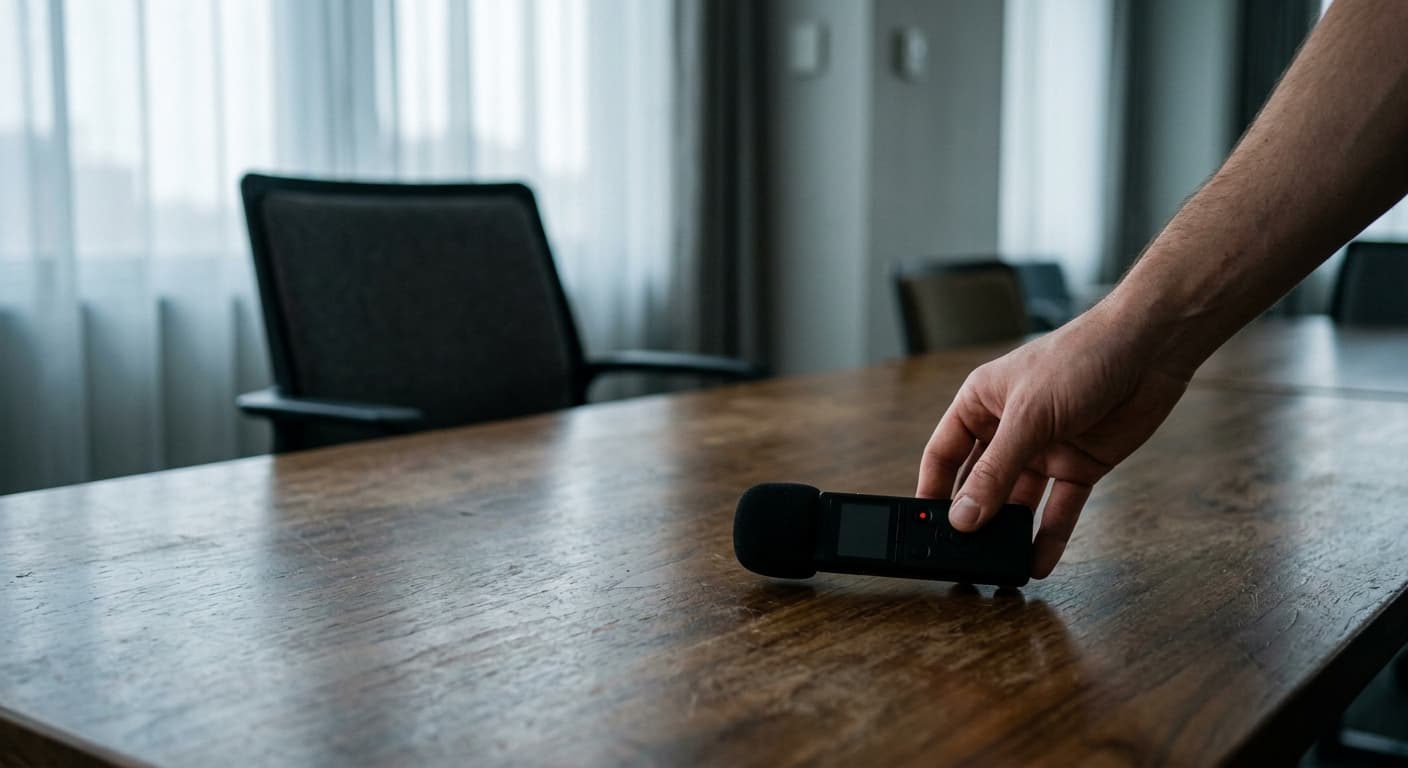
Kansas is a one-party consent state for phone calls, in-person conversations, and electronic communications. Under K.S.A. 21-6101(a)(1), only the sender or receiver of a private communication must consent to recording. Illegal recording is a criminal offense and creates civil liability under K.S.A. 22-2518. The Kansas Supreme Court adopted the one-party reading in State v. Wigley, 210 Kan. 472, 502 P.2d 819 (1972) and reaffirmed it for face-to-face recording in State v. Roudybush, 235 Kan. 834, 686 P.2d 100 (1984).
Kansas recording law at a glance
| Question | Answer |
|---|---|
| Consent rule | One-party |
| Main statute | K.S.A. 21-6101 (breach of privacy) |
| When recording is illegal | Recording a private communication you are not a party to; installing hidden devices in private places without consent |
| Criminal penalty (audio core) | Class A nonperson misdemeanor: up to 1 year jail, up to $2,500 fine |
| Criminal penalty (voyeurism/NCII) | Severity level 8 person felony (first); severity level 5 (repeat or dissemination) |
| Civil remedy | K.S.A. 22-2518: greater of actual damages, $100/day, or $1,000 minimum, plus punitive damages and attorney fees |
| Hidden cameras | Severity level 8 person felony for capture; level 5 for dissemination under K.S.A. 21-6101(a)(6)-(a)(7) |
| Recording police | Clearly established First Amendment right in public per Irizarry v. Yehia (10th Cir. 2022) |
For a deeper dive on any of these topics, see the Kansas recording laws in depth section below.
Recording in-person conversations in Kansas
Kansas applies the one-party rule to face-to-face conversations. K.S.A. 21-6101(a)(1) makes it a crime to intercept a private communication without the consent of the sender or receiver. A participant in the conversation is the sender or receiver, so a participant may record without notifying anyone else.
The one-party construction of that language comes from State v. Wigley, 210 Kan. 472, 502 P.2d 819 (1972), which involved a taped telephone conversation between the defendant and an informer who consented to the recording. The Kansas Supreme Court held there was no violation of the provision then numbered K.S.A. 21-4002(1)(a), which "enjoins interception without the consent of either the sender or the receiver."
State v. Roudybush, 235 Kan. 834, 686 P.2d 100 (1984) reaffirmed that reading and extended it to face-to-face recording. A police informant wore a body transmitter into Roudybush's home during a marijuana buy. The court found no violation of the eavesdropping provisions then numbered K.S.A. 21-4001(1)(a) and (1)(b): the informant was an invited party to the conversation, not the "unknown and uninvited presence" the surreptitious-listening prohibition is aimed at, and the officers neither entered the property nor planted the device themselves. The court separately held that a face-to-face private conversation between a police informer and a suspect is not an "oral communication" under K.S.A. 22-2514, so no ex parte court order was needed to intercept it. It reached the same result the federal one-party rule reaches under 18 U.S.C. § 2511(2)(c) and (d).
The two statutes Roudybush construed no longer carry those numbers. The 2010 recodification of the Kansas criminal code (L. 2010, ch. 136, sec. 171) consolidated the former eavesdropping statute (K.S.A. 21-4001) and the former breach-of-privacy statute (K.S.A. 21-4002) into the single section now numbered K.S.A. 21-6101. Today's subsection (a)(1) is old 21-4002(1)(a) carried forward word for word; old 21-4001 supplied what are now subsections (a)(3) and (a)(4).
Two adjacent subsections set limits. Subsection (a)(3) criminalizes entering a place with intent to listen surreptitiously to private conversations. Subsection (a)(4) criminalizes installing or using a device for recording sounds in a private place without the consent of persons entitled to privacy. Both reach non-participant surveillance. Someone who plants a recorder in a bedroom, break room, or private office and leaves is not a participant under (a)(1); the conduct falls under (a)(4) instead.
Conversations in public spaces where no one has a reasonable expectation of privacy are generally outside K.S.A. 21-6101. Recording at a public park, sidewalk, restaurant dining room, or retail floor is lawful for anyone present. A "private place" under K.S.A. 21-6101(f) is a location where a person may reasonably expect to be safe from uninvited intrusion or surveillance.
Recording phone calls in Kansas
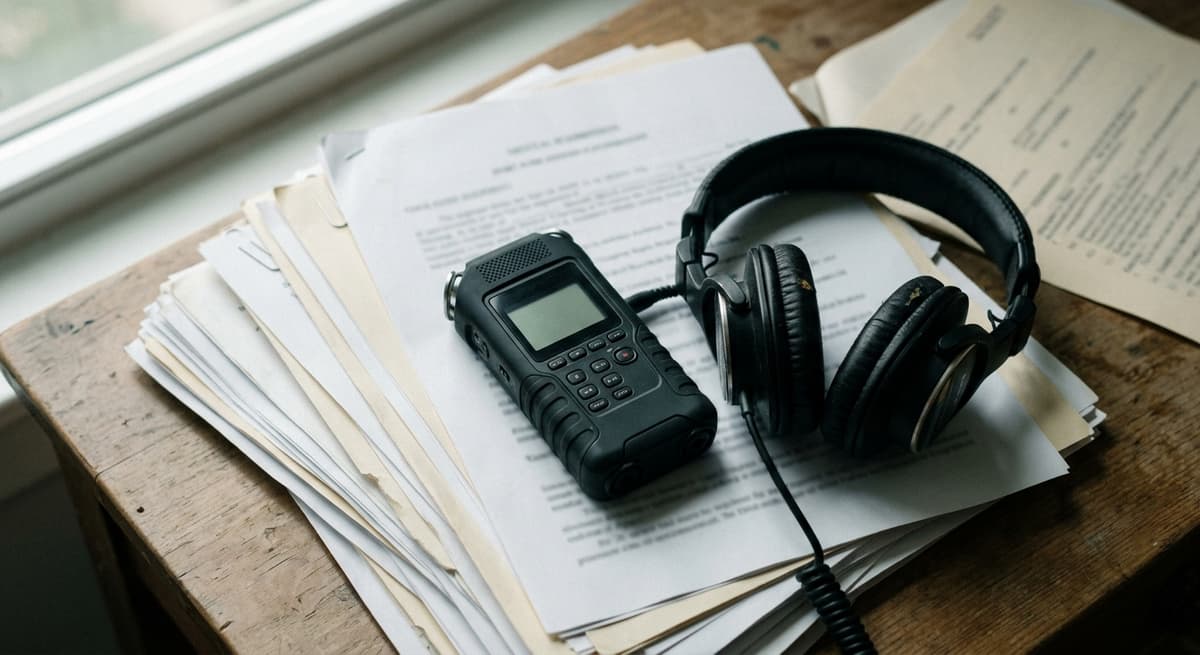
You can record any phone call you participate in under K.S.A. 21-6101(a)(1). The one-party rule applies to landlines, mobile calls, VoIP (Zoom, Teams, Google Meet, FaceTime audio, WhatsApp voice), PBX and cloud-recorded calls, and voicemails. You do not need to announce the recording or use a beep tone.
Federal ECPA at 18 U.S.C. § 2511(2)(d) is also a one-party-consent rule for participant recording, matching the Kansas framework. A separate subsection, (a)(5), criminalizes installing a tap or splitter on the line without the consent of the person in control of the facilities, regardless of whether either speaker consented.
K.S.A. 21-6101(a)(1)'s interception language reaches a private communication while it is being sent, not a message that has already been delivered and is accessed later. In State v. Brooks, 46 Kan. App. 2d 601, 265 P.3d 1175 (2011), rev'd on other grounds, 298 Kan. 672, 317 P.3d 54 (2014), the Kansas Court of Appeals reversed a breach-of-privacy conviction for insufficient evidence because the defendant accessed his ex-wife's email account and copied messages she had sent seven to nine months earlier; surreptitiously accessing communications that far after the fact did not amount to "interception." The distinction matters for email specifically: copying messages already sitting in someone's email account, months after they were sent, falls outside K.S.A. 21-6101(a)(1), even though it may still raise other legal exposure.
For interstate calls, the practical rule is to follow the strictest applicable state's law. Calls that touch California, Florida, Illinois, Pennsylvania, or Washington require disclosure to all parties. The simplest fix is a brief announcement at the start: "This call is being recorded." That satisfies all-party-consent statutes that allow recording upon notice plus continued participation.
For in-depth treatment of phone-call recording rules, see Kansas Phone Call Recording Laws.

Hidden cameras, doorbells, and nanny cams
The hidden-camera prohibition is K.S.A. 21-6101(a)(6). It reaches installing or using a camera of any type to videotape, film, photograph, or record an identifiable person under or through their clothing (upskirt), or a person who is nude or in a state of undress, with intent to invade that person's privacy, under circumstances in which that person has a reasonable expectation of privacy. Capture is a severity level 8 person felony on a first offense and a severity level 5 on a second or subsequent conviction within five years.
Subsection (a)(7) applies to dissemination of material obtained through a (a)(6) violation. Distribution is a severity level 5 person felony outright, even on a first offense. Kansas treats sharing voyeurism material as more harmful than the original capture.
Kansas does not have a separate stand-alone voyeurism statute. The voyeurism crime is consolidated inside K.S.A. 21-6101, the same section as the wiretap prohibition.
For your own property, a doorbell camera or exterior security camera aimed at public space or your own property is generally lawful. An audio-capable camera inside your home may trigger K.S.A. 21-6101 exposure when it records guests or workers in conversations to which no participant has consented. A camera placed inside a bathroom, locker room, dressing room, or other private space violates subsection (a)(6) regardless of who owns the premises.
For deeper coverage, see Kansas Security Camera Laws, Kansas Video Recording Laws, and Kansas Voyeurism Laws.

Penalties for illegal recording in Kansas
K.S.A. 21-6101 has a bifurcated penalty structure. The audio-interception core is misdemeanor. The visual and intimate-image prongs are felony, with the level determined by the subsection and the defendant's criminal-history score under K.S.A. 21-6804.
| Subsection | Conduct | Classification | Max penalty |
|---|---|---|---|
| (a)(1) | Wire/phone interception without consent | Class A nonperson misdemeanor | 1 year jail; $2,500 fine |
| (a)(2) | Downstream disclosure of illegal interception | Class A nonperson misdemeanor | 1 year jail; $2,500 fine |
| (a)(3) | Surreptitious entry to listen or observe | Class A nonperson misdemeanor | 1 year jail; $2,500 fine |
| (a)(4) | Private-place recording device without consent | Class A nonperson misdemeanor | 1 year jail; $2,500 fine |
| (a)(5) | Tap-the-line device without consent | Class A nonperson misdemeanor | 1 year jail; $2,500 fine |
| (a)(6) first offense | Hidden-camera capture of nude or undressed person | Severity level 8 person felony | Grid range typically 7-23 months (K.S.A. 21-6804) |
| (a)(6) repeat within 5 years | Hidden-camera capture | Severity level 5 person felony | Grid range typically 31-136 months |
| (a)(7) | Dissemination of voyeurism imagery | Severity level 5 person felony | Grid range typically 31-136 months |
| (a)(8) first offense | NCII or AI-deepfake intimate-image dissemination | Severity level 8 person felony | Grid range typically 7-23 months |
| (a)(8) repeat within 5 years | NCII or AI-deepfake dissemination | Severity level 5 person felony | Grid range typically 31-136 months |
The misdemeanor caps come from K.S.A. 21-6602(a)(1) (jail) and K.S.A. 21-6611(b)(1) (fine). Felony fines follow a separate scale: because subsections (a)(6) through (a)(8) are ranked severity levels 8 and 5 on the nondrug sentencing grid, a court may also impose a fine on top of any prison term under K.S.A. 21-6611: up to $100,000 for severity levels 6 through 10 under subsection (a)(3), and up to $300,000 for severity level 5 felonies (such as repeat offenses and the dissemination felony) under subsection (a)(2). Severity level 8 felonies carry presumptive probation in some grid blocks; severity level 5 is presumptive imprisonment in most blocks. A court may also impose post-release supervision, restitution, no-contact orders, and (for sex-offense subsections) Kansas Offender Registration Act registration.
For civil liability, K.S.A. 22-2518 entitles a plaintiff to the greater of actual damages, $100 a day of violation, or a $1,000 minimum, plus punitive damages and reasonable attorney fees. Good-faith reliance on a court order is a complete defense. A separate common-law claim for intrusion upon seclusion, recognized in Froelich v. Adair, 213 Kan. 357 (1973) and applied in Werner v. Kliewer, 238 Kan. 289 (1985), covers recording scenarios that fall outside the wire, oral, or electronic scope of K.S.A. 22-2518.

Recording the police in Kansas
Kansas is in the United States Court of Appeals for the Tenth Circuit. The Tenth Circuit's record-the-police law developed in two steps.
Frasier v. Evans, 992 F.3d 1003 (10th Cir. 2021), cert. denied, 142 S. Ct. 427 (2021), arose from an August 2014 incident in Denver. Officers searched a bystander's tablet for video he had taken during a police arrest. The Tenth Circuit granted the officers qualified immunity, finding the right to record on-duty police was not "clearly established" in the circuit at the time of the 2014 conduct.
Irizarry v. Yehia, 38 F.4th 1282 (10th Cir. 2022) changed the picture. A journalist filming a May 2019 DUI stop was obstructed by an officer who shined a flashlight into the camera. The Tenth Circuit held that, as of May 2019, there was a clearly established First Amendment right to film on-duty police performing official duties in public. The officer was denied qualified immunity on the First Amendment retaliation claim.
Taken together, Kansas officers have been on notice since at least May 2019 that interfering with peaceful filming of police in public can support a Section 1983 claim. Practical limits: stay back a reasonable distance, do not block officers or emergency personnel, comply with lawful content-neutral time/place/manner orders, and do not trespass to film.
For more, see Kansas Laws on Recording Police.
Special topics in Kansas
AI deepfakes and SB 186 (2025)
Senate Bill 186 of 2025 (L. 2025 ch. 120 sec. 3), signed by Governor Laura Kelly on April 24, 2025 and effective July 1, 2025, amended K.S.A. 21-6101(a)(8) to expressly reach AI-altered or digitally modified intimate images of identifiable adults. Liability attaches even if the depicted person was never involved in creating any original image. The penalty mirrors (a)(8)'s baseline: severity level 8 person felony on a first offense, severity level 5 on a repeat within five years.
The federal TAKE IT DOWN Act (Pub. L. 119-12, signed May 19, 2025) layers a federal criminal prohibition and a 48-hour platform notice-and-takedown obligation (effective May 19, 2026) enforced by the FTC. Kansas victims now have a stacked remedy: state criminal prosecution under (a)(8), federal criminal prosecution, FTC complaint for platform non-compliance, and a civil claim under K.S.A. 22-2518.
Open meetings and KOMA
The Kansas Open Meetings Act (K.S.A. 75-4317 et seq.) requires open meetings of state and local public bodies. The right to record one is in the act itself, not in agency guidance: K.S.A. 75-4318(e) provides that "the use of cameras, photographic lights and recording devices shall not be prohibited at any meeting mentioned by subsection (a), but such use shall be subject to reasonable rules designed to insure the orderly conduct of the proceedings at such meeting." A public body may set reasonable order-keeping rules, but it cannot prohibit recording outright. The Kansas Attorney General's KOMA resources are a useful plain-language guide to the rest of the act. KOMA does not apply to the Kansas Legislature, courts, or properly noticed executive sessions under K.S.A. 75-4319.
Body-worn cameras and KORA
Kansas's body-camera regime is in K.S.A. 45-254 under the Kansas Open Records Act. Agencies must allow the subject of a recording, the parent or guardian of a minor subject, the subject's attorney, or certain heirs to listen to or view recordings within 20 days of a request. Kansas has no statewide body-camera deployment mandate; each agency decides. Correct citation is K.S.A. 45-254, not K.S.A. 75-7710 or K.S.A. 22-3431 (those sections are unrelated).
Workplace recording and NLRA overlay
A Kansas employee who participates in a workplace conversation can lawfully record it under K.S.A. 21-6101(a)(1). For private-sector employers, the NLRB's decision in Stericycle, Inc., 372 NLRB No. 113 (Aug. 2, 2023) requires that any no-recording handbook rule advance a legitimate, substantial business interest that a narrower rule cannot serve. NLRB GC 25-07 (June 25, 2025) is narrow: it addresses surreptitious recording of collective-bargaining sessions only, not general workplace recording. Installing a hidden microphone in a break room, restroom, or private office to capture employee conversations to which the employer is not a party violates K.S.A. 21-6101(a)(4). For more, see Kansas Workplace Recording Laws.
Federal ECPA and FCC overlay
Federal ECPA at 18 U.S.C. § 2511(2)(d) is a one-party-consent floor matching Kansas law. FCC Declaratory Ruling 24-17 (released February 2024) classifies AI-generated and voice-cloned calls as "artificial or prerecorded voice" under the TCPA, requiring prior express written consent for marketing calls to wireless and residential numbers. FCC 24-24 (the One-to-One Consent Rule) was vacated by the Eleventh Circuit in Insurance Marketing Coalition Ltd. v. FCC, 127 F.4th 303 (11th Cir. 2025), mandate April 30, 2025; it is no longer in force. The old carrier disclosure rule at 47 C.F.R. § 64.501 was removed in 2017 and should not be cited.
HIPAA in Kansas clinical settings
The HIPAA Privacy Rule binds Kansas covered entities (University of Kansas Health System, Stormont Vail Health, Ascension Via Christi, Children's Mercy Kansas-side facilities, the Kansas City VA Medical Center, and others), not patients. A patient may record their own visit under one-party consent; a covered entity recording a patient needs HIPAA authorization. Facility policies barring third-party recording in clinical areas are private-property rules, not HIPAA mandates. For more, see Kansas Medical Recording Laws.
Recent legal developments
- July 1, 2025: SB 186 (L. 2025 ch. 120 sec. 3) takes effect, expanding K.S.A. 21-6101(a)(8) to cover AI-altered and digitally modified intimate images of identifiable adults.
- May 19, 2025: TAKE IT DOWN Act (Pub. L. 119-12) signed; federal criminal provision effective on signature; platform 48-hour takedown obligation effective May 19, 2026.
- April 24, 2025: Governor Laura Kelly signs SB 186 of 2025.
- April 30, 2025: Eleventh Circuit mandate issues vacating FCC 24-24 (One-to-One Consent Rule); rule is no longer in force.
- June 25, 2025: NLRB GC 25-07 declares surreptitious recording of collective-bargaining sessions a per se unfair labor practice.
- 2022: Irizarry v. Yehia, 38 F.4th 1282 (10th Cir. 2022) establishes clearly established First Amendment right to film police in public as of May 2019 in the Tenth Circuit (binding in Kansas).
Kansas recording laws in depth
Want to know more? Each page below covers a specific recording-law context in greater depth.
By type of recording
- Kansas Audio Recording Laws
- Kansas Video Recording Laws
- Kansas Phone Call Recording Laws
- Kansas Voyeurism Laws
- Kansas Dashcam Laws: Mounting Rules, Audio Recording, and Evidence (2026)
By place or relationship
- Kansas Workplace Recording Laws
- Kansas Laws on Recording Police
- Kansas Laws on Recording in Public
- Kansas Security Camera Laws
- Kansas Landlord-Tenant Recording Laws
- Kansas Medical Recording Laws: Patient Rights, HIPAA, and Consent (2026)
- Kansas School Recording Laws: Student, Parent, and Teacher Rights (2026)
More Kansas laws
- Kansas Alimony Laws
- Kansas At-Will Employment Laws
- Kansas Child Custody Laws
- Kansas Child Support Laws
- Kansas Data Privacy Laws
This article is general legal information, not legal advice. Recording laws change and apply differently to each situation. For advice about your situation, consult a licensed Kansas attorney.
More Kansas Laws
- Kansas AI Meeting Recording Laws
- Kansas Dashcam Laws
- Kansas Data Privacy Laws
- Kansas Deepfake Laws
- Kansas Employee Monitoring Laws
- Kansas GPS Tracking Laws
- Kansas Police Bodycam Laws
- Kansas Smart Glasses Recording Laws
Frequently Asked Questions
Is Kansas a one-party or two-party consent state?
Kansas is a one-party consent state. K.S.A. 21-6101(a)(1) prohibits intercepting a private communication without the consent of the sender or receiver. The Kansas Supreme Court read that language in State v. Wigley, 210 Kan. 472, 502 P.2d 819 (1972) as reaching only interceptions made without the consent of either the sender or the receiver, and reaffirmed the point for face-to-face recording in State v. Roudybush, 235 Kan. 834, 686 P.2d 100 (1984). A participant can record a phone call or in-person conversation without telling the other party.
Can I record a phone call in Kansas without telling the other person?
Yes, if you are a party to the call. K.S.A. 21-6101(a)(1) requires only the sender's or receiver's consent, and federal ECPA at 18 U.S.C. § 2511(2)(d) applies the same rule. You do not need to announce the recording. For interstate calls touching California, Florida, Illinois, Pennsylvania, or Washington, follow the stricter state's law as a practical matter.
What is the penalty for illegal recording in Kansas?
It depends on the subsection. Subsections (a)(1) through (a)(5) (audio interception, disclosure, surreptitious entry, private-place device, tap-the-line) are Class A nonperson misdemeanors: up to 1 year in jail under K.S.A. 21-6602 and up to a $2,500 fine under K.S.A. 21-6611. Hidden-camera capture under (a)(6) is a severity level 8 person felony on a first offense. Dissemination of voyeurism imagery under (a)(7) is a severity level 5 person felony outright. NCII or AI-deepfake dissemination under (a)(8) mirrors the (a)(6) penalty tier. Sentencing ranges depend on criminal-history score under K.S.A. 21-6804.
Can I sue someone for recording me illegally in Kansas?
Yes. K.S.A. 22-2518 entitles you to the greater of actual damages, $100 a day of violation, or $1,000 minimum, plus punitive damages and reasonable attorney fees. Good-faith reliance on a court order is a complete defense. For hidden-video scenarios outside the wire/oral/electronic scope of K.S.A. 22-2518, common-law intrusion upon seclusion is the fallback. The two-year limitations period under K.S.A. 60-513(a)(4) likely applies.
Are Ring doorbells and nanny cams legal in Kansas?
An exterior camera aimed at public space or your own property is generally lawful. A camera inside a bathroom, locker room, dressing room, or other private space violates K.S.A. 21-6101(a)(6) regardless of who owns the premises. An audio-capable indoor camera may trigger liability under K.S.A. 21-6101 when it records conversations in which no participant has consented.
Can I record my boss or an HR meeting in Kansas?
Yes, as a participant. Kansas's one-party rule under K.S.A. 21-6101(a)(1) applies to workplace conversations. Your employer may still discipline or terminate you for violating a no-recording workplace policy, even if the recording is legal under Kansas law. NLRB Stericycle requires any such policy to be narrowly tailored to a legitimate business interest.
Can I record the police in Kansas?
Yes. The Tenth Circuit, which includes Kansas, held in Irizarry v. Yehia, 38 F.4th 1282 (10th Cir. 2022) that there is a clearly established First Amendment right to film on-duty police in public as of May 2019. Do not interfere with police activity, record from a reasonable distance, and comply with lawful time, place, and manner orders.
What did Kansas SB 186 of 2025 change about AI deepfakes?
SB 186 (L. 2025 ch. 120 sec. 3), effective July 1, 2025, amended K.S.A. 21-6101(a)(8) to cover AI-altered or digitally modified intimate images of identifiable adults. Liability attaches even if the depicted person had no involvement in creating any original image. Dissemination with intent to harass, threaten, or intimidate is a severity level 8 person felony (first offense) or level 5 (repeat within five years). The federal TAKE IT DOWN Act (Pub. L. 119-12) adds a federal criminal prohibition and a 48-hour platform takedown obligation effective May 19, 2026.
Updates
Corrected a quotation from State v. Wigley to its exact wording, clarified that Werner v. Kliewer applied (rather than first recognized) the intrusion-upon-seclusion tort, and narrowed the description of State v. Brooks to the sent e-mails the court actually addressed.
Corrected the Kansas case law discussion: State v. Wigley (1972) is identified as the source of the one-party consent construction with State v. Roudybush (1984) reaffirming it, a misstated Roudybush holding was replaced with the court’s actual rulings, the 2011 recodification is described as a consolidation of the former eavesdropping and breach-of-privacy statutes into K.S.A. 21-6101, the open-meetings recording right is now quoted from K.S.A. 75-4318(e), and both case citations now link to the opinions.
Split the criminal fine caps by severity tier under K.S.A. 21-6611 ($300,000 for severity level 5; $100,000 for levels 6-10) and removed a case link that pointed to a repealed statute page.
Independently fact-checked against the cited primary sources; governing law re-checked for recent changes
Governing law re-checked for recent changes
Reviewed and approved by an editor
Restructured for readability: tightened lede, added at-a-glance table, split core sections (in-person, phone calls, hidden cameras, penalties, police), condensed special topics (SB 186/deepfakes, KOMA, KORA, workplace, ECPA/FCC, HIPAA) into dedicated subsections, added in-depth links index, refreshed FAQ to 8 questions, confirmed all load-bearing facts (K.S.A. 21-6101 subsection structure and penalties, K.S.A. 22-2518 damages formula, SB 186 effective date) against ksrevisor.gov primary sources.
Refreshed for 2026 around the consolidated structure of K.S.A. 21-6101 'breach of privacy.' Anchored subsections (a)(1) through (a)(5) as Class A nonperson misdemeanors (up to 1 year jail under K.S.A. 21-6602; up to $2,500 fine under K.S.A. 21-6611) and subsections (a)(6), (a)(7), and (a)(8) as person felonies on the K.S.A. 21-6804 sentencing grid. Added SB 186 of 2025 (L. 2025 ch. 120 sec. 3), signed by Governor Laura Kelly on April 24, 2025 and effective July 1, 2025, amending K.S.A. 21-6101(a)(8) to reach AI-altered or digitally modified intimate images of identifiable adults. Corrected the controlling one-party-consent precedent to State v. Roudybush, 235 Kan. 834, 686 P.2d 100 (1984) (the baseline previously referenced 'State v. Roach,' which is not a Kansas Supreme Court case on this issue). Corrected the body-camera citation to K.S.A. 45-254 under the Kansas Open Records Act (the baseline previously referenced K.S.A. 75-7710 and 22-3431, both of which are unrelated). Documented the civil cause of action under K.S.A. 22-2518 (Kansas wiretap-procedure act): the greater of actual damages, $100 per day of violation, or $1,000 minimum, plus punitive damages and reasonable attorney fees; good-faith reliance on a court order is a complete defense. Added the Frasier-then-Irizarry Tenth Circuit progression for record-the-police: Frasier v. Evans, 992 F.3d 1003 (10th Cir. 2021) granted qualified immunity for August 2014 conduct, while Irizarry v. Yehia, 38 F.4th 1282 (10th Cir. 2022) recognized a clearly established First Amendment right as of May 2019 (Irizarry is a Tenth Circuit decision binding on Kansas, not an Eleventh Circuit decision). Added a Kansas Open Meetings Act recording-rights H2 under K.S.A. 75-4317 et seq. with the Kansas Attorney General KOMA FAQ as a unique Kansas differentiator. Updated FCC 24-24 (One-to-One Consent Rule) to vacated by 11th Cir. mandate April 30, 2025 and removed the stale 47 CFR § 64.501 (deleted November 20, 2017). Added NLRB Stericycle / GC 25-05 / GC 25-07 workplace recording overlay and the TAKE IT DOWN Act federal compliance (Pub. L. 119-12, signed May 19, 2025; platform notice-and-takedown effective May 19, 2026). Replaced commercial-codifier URLs with kslegislature.gov, ksrevisor.gov, kscourts.org, ag.ks.gov, ca10.uscourts.gov, fcc.gov, nlrb.gov, ftc.gov, and uscode.house.gov. Keywords array populated (was empty).
Refreshed for 2026 around the consolidated structure of K.S.A. 21-6101 'breach of privacy.' Anchored subsections (a)(1) through (a)(5) as Class A nonperson misdemeanors and subsections (a)(6), (a)(7), and (a)(8) as person felonies. Added SB 186 of 2025 (L. 2025 ch. 120 sec. 3), signed April 24, 2025 and effective July 1, 2025, amending K.S.A. 21-6101(a)(8) for AI-altered intimate images. Corrected controlling precedent to State v. Roudybush, 235 Kan. 834 (1984). Corrected body-camera citation to K.S.A. 45-254 under KORA. Added Irizarry v. Yehia, 38 F.4th 1282 (10th Cir. 2022) for record-the-police. Added KOMA recording-rights section. Added NLRB Stericycle/GC 25-05/GC 25-07 workplace overlay and TAKE IT DOWN Act (Pub. L. 119-12).
Added wearable recording device guidance covering AI voice recorders (Plaud) and smart glasses (Meta Ray-Bans) under Kansas one-party consent law.
The Law Behind This Article
This article rests on the statutory provisions below, held in our own legal record and retrieved from the official source. Tap a section to read the operative text.
Kansas Statutes Annotated, Chapter 21: CRIMES AND PUNISHMENTS
§ 21-6101Breach of privacy.In forcecited in 27 of our articles
(a) Breach of privacy is knowingly and without lawful authority: (1) Intercepting, without the consent of the sender or receiver, a message by telephone, telegraph, letter or other means of private communication; (2) divulging, without the consent of the sender or receiver, the existence or contents of such message if such person knows that the message was illegally intercepted, or if such person illegally learned of the message in the course of employment with an agency in transmitting such message; (3) entering with intent to listen surreptitiously to private conversations in a private place or to observe the personal conduct of any other person or persons entitled to privacy therein; (4) installing or using outside or inside a private place any device for hearing, recording, amplifying or broadcasting sounds originating in such place, which sounds would not ordinarily be audible or comprehensible without the use of such device, without the consent of the person or persons entitled to privacy therein; (5) installing or using any device or equipment for the interception of any telephone, telegraph or other wire or wireless communication without the consent of the person in…
Official text (excerpt) · last checked 2026-09-23 · Read the full text in our law library · Verify at ksrevisor.gov
Cited in 8 court opinions in our collectionLatest citing opinion in our collection: 2026
In the courts (editorial summary, independently checked):Recent Kansas decisions construe the image-dissemination subsection, K.S.A. 21-6101(a)(8), not the interception subsections. State v. Ivy (2025) held a reasonable expectation of privacy under that subsection has a subjective and an objective component. State v. Jamil (2026), unpublished, found disseminating needs no jury definition.
Opinions citing this section in our collection:
- State v. Ivy (Court of Appeals of Kansas 2025)✓Ivy posted on Snapchat a sexual video his ex-girlfriend had recorded and texted him during their relationship; the court applied a subjective and objective two-part test and held a jury could find she kept a reasonable expectation of privacy, affirming the conviction.
- In re Belcher (Supreme Court of Kansas 2024, 552 P.3d 1213)“…deotape, photograph, film or image obtained in violation of K.S.A. 21-6101(a)(6) or (a)(8), and amendments…”
- State v. Jamil (Court of Appeals of Kansas 2026)✓Jamil secretly filmed a woman undressed and unconscious at his home, then sent the videos to her boyfriend; the court held that sharing with a single recipient can be disseminating under K.S.A. 21-6101(a)(8) and that intent to harass could be inferred from his conduct.
Identified automatically from the court opinions citing this section — not a ranking of which case controls.
Also relied on in: Kansas Audio Recording Laws, Kansas Dashcam Laws: Mounting Rules, Audio Recording, and Evidence (2026), Kansas Phone Call Recording Laws
§ 21-6804Sentencing grid for nondrug crimes; authority and responsibility of sentencing court; presumptive disposition.In forcecited in 9 of our articles
(a) The provisions of this section shall be applicable to the sentencing guidelines grid for nondrug crimes. The following sentencing guidelines grid shall be applicable to nondrug felony crimes: (b) Sentences expressed in the sentencing guidelines grid for nondrug crimes represent months of imprisonment. (c) The sentencing guidelines grid is a two-dimensional crime severity and criminal history classification tool. The grid's vertical axis is the crime severity scale which classifies current crimes of conviction. The grid's horizontal axis is the criminal history scale which classifies criminal histories. (d) The sentencing guidelines grid for nondrug crimes as provided in this section defines presumptive punishments for felony convictions, subject to the sentencing court's discretion to enter a departure sentence. The appropriate punishment for a felony conviction should depend on the severity of the crime of conviction when compared to all other crimes and the offender's criminal history. (e) (1) The sentencing court has discretion to sentence at any place within the sentencing range.
Official text (excerpt) · last checked 2026-07-29 · Read the full text in our law library · Verify at ksrevisor.gov
Cited in 70 court opinions in our collectionLatest citing opinion in our collection: 2026
Opinions citing this section in our collection:
- State v. Lamia-Beck (Supreme Court of Kansas 2024, 549 P.3d 1103)“…grid block for an offender classified in that grid block;" K.S.A. 21-6804(a), which holds Lamia-Beck's grid block…”
- State v. Smith (Court of Appeals of Kansas 2024)“…ts to the components of a "complete sentence" identified in K.S.A. 21-6804(e)(2): "the complete sentence . . . sha…”
- State v. Fleming (Supreme Court of Kansas 2018, 423 P.3d 506)“…rity level 3 person felony, in violation of K.S.A. 21-5420, K.S.A. 21-6804 and K.S.A. 21-6807 (aggravated r…”
Identified automatically from the court opinions citing this section — not a ranking of which case controls.
Also relied on in: Kansas Voyeurism Laws, Kansas Workplace Recording Laws, Kansas Hit and Run Laws: Penalties and What to Do
§ 21-6611Fines; crimes committed on or after July 1, 1993.In forcecited in 8 of our articles
(a) A person who has been convicted of a felony may, in addition to the sentence authorized by law, be ordered to pay a fine which shall be fixed by the court as follows: (1) For any off-grid felony crime, or any felony ranked in severity level 1 of the drug grid committed prior to July 1, 2012, or in severity levels 1 or 2 of the drug grid committed on or after July 1, 2012, as provided in K.S.A. 21-6805, and amendments thereto, a sum not exceeding $500,000; (2) for any felony ranked in severity levels 1 through 5 of the nondrug grid as provided in K.S.A. 21-6804, and amendments thereto, or in severity levels 2 or 3 of the drug grid committed prior to July 1, 2012, or in severity levels 3 or 4 of the drug grid committed on or after July 1, 2012, as provided in K.S.A. 21-6805, and amendments thereto, a sum not exceeding $300,000; and (3) for any felony ranked in severity levels 6 through 10 of the nondrug grid as provided in K.S.A. 21-6804, and amendments thereto, or in severity level 4 of the drug grid committed prior to July 1, 2012, or in severity level 5 of the drug grid committed on or after July 1, 2012, as provided in K.S.A.
Official text (excerpt) · last checked 2026-07-29 · Read the full text in our law library · Verify at ksrevisor.gov
Cited in 6 court opinions in our collectionLatest citing opinion in our collection: 2026
Opinions citing this section in our collection:
- Heinzman v. State (Court of Appeals of Kansas 2026)“…olation when, in fact, the maximum amount was $300,000. See K.S.A. 21-6611(a)(2). She also…”
- State v. Abell (Court of Appeals of Kansas 2026)“…hose two cases for the appropriate fines in compliance with K.S.A. 21-6611(a)(3), and for the district court to de…”
- State v. Washington (Court of Appeals of Kansas 2025)“…nclude fines, in addition to or instead of jail time, under K.S.A. 21-6611. Washington's argument misappl…”
Identified automatically from the court opinions citing this section — not a ranking of which case controls.
Also relied on in: Kansas Smart Glasses Recording Laws (K.S.A. 21-6101), Kansas Surveillance Camera Laws (2026 Guide), Kansas Ring Doorbell Laws: What You Need to Know in 2026
§ 21-6602Classification of misdemeanors and terms of confinement; possible disposition.In forcecited in 5 of our articles
(a) For the purpose of sentencing, the following classes of misdemeanors and the punishment and the terms of confinement authorized for each class are established: (1) Class A, the sentence for which shall be a definite term of confinement in the county jail which shall be fixed by the court and shall not exceed one year; (2) class B, the sentence for which shall be a definite term of confinement in the county jail which shall be fixed by the court and shall not exceed six months; (3) class C, the sentence for which shall be a definite term of confinement in the county jail which shall be fixed by the court and shall not exceed one month; and (4) unclassified misdemeanors, which shall include all crimes declared to be misdemeanors without specification as to class, the sentence for which shall be in accordance with the sentence specified in the statute that defines the crime; if no penalty is provided in such law, the sentence shall be the same penalty as provided herein for a class C misdemeanor. (b) Upon conviction of a misdemeanor, a person may be punished by a fine, as provided in K.S.A.
Official text (excerpt) · last checked 2026-07-29 · Read the full text in our law library · Verify at ksrevisor.gov
Cited in 13 court opinions in our collectionLatest citing opinion in our collection: 2026
Opinions citing this section in our collection:
- State v. Stover (Court of Appeals of Kansas 2026)“…endant to serve up to one year in jail for each conviction. K.S.A. 21-6602(a)(1). Additionally, the district court…”
- State v. Vallette (Court of Appeals of Kansas 2026)“…s, all of Vallette's convictions were class B misdemeanors. K.S.A. 21-6602(a)(2) provides that a jail sentence for…”
- State v. Sobek (Court of Appeals of Kansas 2025)“…ion of K.S.A. 8-1567(a)(2)-(3), K.S.A. 8-1567(b)(1)(B), and K.S.A. 21-6602(a)(1). In addition, the State charged S…”
Identified automatically from the court opinions citing this section — not a ranking of which case controls.
Also relied on in: Kansas Felony Levels and Misdemeanor Classes: Sentences (2026), Kansas Disorderly Conduct Laws: Penalties, Trespass and Purple Paint
§ 21-4001Repealed
Official text (excerpt) · last checked 2026-07-29 · Read the full text in our law library · Verify at ksrevisor.gov
Cited in 10 court opinions in our collectionLatest citing opinion in our collection: 2012
Opinions citing this section in our collection:
- State v. Gilliland (Supreme Court of Kansas 2012, 294 Kan. 519)“…pectation of privacy in violation of two criminal statutes, K.S.A. 21-4001 (eavesdropping) and K.S.A. 21-4002 (bre…”
- State v. Roudybush (Supreme Court of Kansas 1984, 235 Kan. 834)“…mmunications were unlawful and in violation of K.S.A. 21-4001 and K.S.A. 22-2514 et seq.,…”
- State v. Martin (Supreme Court of Kansas 1983, 232 Kan. 778)“…artin was acquitted on charges of eavesdropping pursuant to K.S.A. 21-4001. The State of Kansas appeals. Th…”
Identified automatically from the court opinions citing this section — not a ranking of which case controls.
§ 21-4002Repealedcited in 2 of our articles
Official text (excerpt) · last checked 2026-07-29 · Read the full text in our law library · Verify at ksrevisor.gov
Cited in 11 court opinions in our collectionLatest citing opinion in our collection: 2012
Opinions citing this section in our collection:
- State v. Gilliland (Supreme Court of Kansas 2012, 294 Kan. 519)“…f two criminal statutes, K.S.A. 21-4001 (eavesdropping) and K.S.A. 21-4002 (breach of privacy). The basic p…”
- State v. Roudybush (Supreme Court of Kansas 1984, 235 Kan. 834)“…K.S.A. 21-4001 defines the crime of eavesdropping and K.S.A. 21-4002 defines the crime of breach of privacy.…”
- State v. Brooks (Court of Appeals of Kansas 2011, 46 Kan. App. 2d 601)“…elements of breach of privacy, a misdemeanor, as defined in K.S.A. 21-4002(a)(1). That conviction is, therefore, r…”
Identified automatically from the court opinions citing this section — not a ranking of which case controls.
Also relied on in: Kansas AI Meeting Recording Laws (2026)
Kansas Statutes Annotated, Chapter 22: CRIMINAL PROCEDURE
§ 22-2518Same; civil action for damages; defense available in civil and criminal actions.In forcecited in 13 of our articles
(1) Any person whose wire, oral or electronic communication is intercepted, disclosed or used in violation of this act shall have a civil cause of action against any person who intercepts, discloses or uses, or procures any other person to intercept, disclose or use, such communications, and shall be entitled to recover from any such person: (a) Actual damages, but not less than liquidated damages computed at the rate of $100 a day for each day of violation or $1,000, whichever is greater; (b) punitive damages; and (c) reasonable attorneys' fees and other litigation costs reasonably incurred. (2) A good faith reliance by any person on a court order authorizing the interception of any wire, oral or electronic communication shall constitute a complete defense in any civil or criminal action brought against such person based upon such interception.
Official text (excerpt) · last checked 2026-07-29 · Read the full text in our law library · Verify at ksrevisor.gov
Cited in 6 court opinions in our collectionLatest citing opinion in our collection: 2024
Opinions citing this section in our collection:
- State v. Gibson (Supreme Court of Kansas 1994, 255 Kan. 474)“…f unlawfully intercepted *481 wire or oral communications. K.S.A. 22-2518 establishes a civil cause of action for…”
- Fields v. Atchison, Topeka, & Santa Fe Railway Co. (District Court, D. Kansas 1997, 985 F. Supp. 1308)“…18 U.S.C. § 2510 et seq., and the Kansas Wiretap Act, K.S.A. 22-2518, and invaded their privacy by intercept…”
- Banks v. Opat (District Court, D. Kansas 2021)“…ete defense against any civil action. 18 U.S.C. § 2520(d); K.S.A. § 22-2518(2). “To be in good faith, the officers’…”
Identified automatically from the court opinions citing this section — not a ranking of which case controls.
Also relied on in: Kansas Landlord-Tenant Recording Laws, Kansas Security Camera Laws, Kansas Video Recording Laws
§ 22-2514Authorized interception of wire, oral or electronic communications; definitions.In forcecited in 5 of our articles
This act shall be a part of and supplemental to the code of criminal procedure. As used in this act: (1) "Wire communication" means any aural transfer made in whole or in part through the use of facilities for the transmission of communications by the aid of wire, cable or other like connection between the point of origin and the point of reception, including the use of such connection in a switching station, furnished or operated by any person engaged in providing or operating such facilities for the transmission of intrastate, interstate or foreign communications.
Official text (excerpt) · last checked 2026-07-29 · Read the full text in our law library · Verify at ksrevisor.gov
Cited in 22 court opinions in our collectionLatest citing opinion in our collection: 2021
Opinions citing this section in our collection:
- State v. Farha (Supreme Court of Kansas 1975, 218 Kan. 394)“…ne obtained in Sedgwick county pursuant to our present law (K. S. A. 22-2514 to 22-2519 [Weeks 1974]). 1. Shawnee…”
- State v. Roudybush (Supreme Court of Kansas 1984, 235 Kan. 834)“…nlawful and in violation of K.S.A. 21-4001 and K.S.A. 22-2514 et seq., “in that no warra…”
- State v. Brooks (Court of Appeals of Kansas 2011, 46 Kan. App. 2d 601)“…nition. Brooks notes a broad definition of "intercept" in K.S.A. 22-2514(3) but says it does not apply. The Stat…”
Identified automatically from the court opinions citing this section — not a ranking of which case controls.
§ 22-3431Commitment to certain institutions as a result of mental examination and report after conviction and prior to sentence; disposition upon completion of treatment; notice and hearing; victim notification.In force
(a) Whenever it appears to the chief medical officer of the institution to which a defendant has been committed under K.S.A. 22-3430, and amendments thereto, that the defendant will not be improved by further detention in such institution, the chief medical officer shall give written notice thereof to the district court where the defendant was convicted. Such notice shall include, but not be limited to: (1) Identification of the patient; (2) the course of treatment; (3) a current assessment of the defendant's psychiatric condition; (4) recommendations for future treatment, if any; and (5) recommendations regarding discharge, if any. (b) Upon receiving such notice, the district court shall order that a hearing be held. The court shall give notice of the hearing to: (1) The state hospital or state security hospital where the defendant is under commitment; (2) the district or county attorney of the county from which the defendant was originally committed; (3) the defendant; and (4) the defendant's attorney. The county or district attorney shall provide victim notification.
Official text (excerpt) · last checked 2026-07-29 · Read the full text in our law library · Verify at ksrevisor.gov
Cited in 11 court opinions in our collectionLatest citing opinion in our collection: 2025
Opinions citing this section in our collection:
- State v. Harkness (Supreme Court of Kansas 1993, 252 Kan. 510)“…e 28, 1982, the trial court, pursuant to K.S.A. 22-3430 and K.S.A. 22-3431, ordered the defendant committed to Lam…”
- State v. Smith (Court of Appeals of Kansas 1979, 3 Kan. App. 2d 179)“…to be held in that institution until discharged pursuant to K.S.A. 22-3431. Under date of December 16, 1977, the c…”
- State v. Hildebrandt (Supreme Court of Kansas 2000, 270 Kan. 1)“…This sentencing appeal involves the interaction of K.S.A. 22-3431 and the provisions of the Kansas Senten…”
Identified automatically from the court opinions citing this section — not a ranking of which case controls.
United States Code Title 18
§ 2511Interception and disclosure of wire, oral, or electronic communications prohibitedIn forcecited in 441 of our articles
Except as otherwise specifically provided in this chapter any person who— intentionally intercepts, endeavors to intercept, or procures any other person to intercept or endeavor to intercept, any wire, oral, or electronic communication; intentionally uses, endeavors to use, or procures any other person to use or endeavor to use any electronic, mechanical, or other device to intercept any oral communication when— such device is affixed to, or otherwise transmits a signal through, a wire, cable, or other like connection used in wire communication; or such device transmits communications by radio, or interferes with the transmission of such communication; or such person knows, or has reason to know, that such device or any component thereof has been sent through the mail or transported in interstate or foreign commerce; or such use or endeavor to use (A) takes place on the premises of any business or other commercial establishment the operations of which affect interstate or foreign commerce; or (B) obtains or is for the purpose of obtaining information relating to the operations of any business or other commercial establishment the operations of which affect interstate or foreign…
Official text (excerpt) · last checked 2026-09-17 · Read the full text in our law library · Verify at uscode.house.gov
Cited in 2,045 court opinions in our collectionLatest citing opinion in our collection: 2026
In the courts (editorial summary, independently checked):Griggs-Ryan v. Smith (1990) applied the Section 2511(2)(d) prior-consent exception, treating a tenant repeatedly told that all incoming calls were taped as having impliedly consented. United States v. United States District Court (1972) read the then-current Section 2511(3) as conferring no presidential surveillance power.
Opinions citing this section in our collection:
- Mitchell v. Forsyth (Supreme Court of the United States 1985, 472 U.S. 511)✓The Attorney General authorized a warrantless 1970 national security wiretap that caught the plaintiff's calls; the Court held the since-repealed Section 2511(3) disclaimer left the tap lawful under Title III, and that Mitchell had qualified immunity.
- United States v. United States District Court for the Eastern District of Michigan (Supreme Court of the United States 1972, 407 U.S. 297)✓The Attorney General approved warrantless wiretaps on members of a domestic group accused of bombing a CIA office; the Court read Section 2511(3) as a congressional disclaimer conferring no surveillance power, then held the Fourth Amendment required prior judicial approval.
- Forsyth v. Barr (Court of Appeals for the Fifth Circuit 1994, 19 F.3d 1527)✓Dallas police used, in an internal affairs probe of an officer, calls private parties allegedly intercepted illegally; assuming that was unlawful, the Fifth Circuit held Section 2517(1) and (2) allowed the disclosure and use, defeating the Section 2511(1)(c) and (d) claims.
Identified automatically from the court opinions citing this section — not a ranking of which case controls.
Also relied on in: Connecticut Recording Laws (2026): Hybrid Consent Rules Explained, Oregon Recording Laws (2026): Hybrid One-Party and All-Party Rules, US Recording Laws by State (2026): All 50 States Explained
Kansas Statutes Annotated, Chapter 45: PUBLIC RECORDS, DOCUMENTS AND INFORMATION
§ 45-254Law enforcement recordings using body camera or vehicle camera; criminal investigation records; disclosure.In forcecited in 9 of our articles
(a) Every audio or video recording made and retained by law enforcement using a body camera or a vehicle camera shall be considered a criminal investigation record as defined in K.S.A. 45-217, and amendments thereto. (b) In addition to any disclosure authorized pursuant to the open records act, K.S.A. 45-215 et seq., and amendments thereto, a person described in subsection (c) may make a request in accordance with procedures adopted under K.S.A. 45-220, and amendments thereto, to listen to an audio recording or to view a video recording made by a body camera or a vehicle camera. The law enforcement agency shall allow the person to listen to the requested audio recording or to view the requested video recording within 20 days after making the request, and may charge a reasonable fee for such services provided by the law enforcement agency.
Official text (excerpt) · last checked 2026-08-31 · Read the full text in our law library · Verify at ksrevisor.gov
Cited in 1 court opinions in our collectionLatest citing opinion in our collection: 2022
Opinions citing this section in our collection:
- McRoberts v. Overland Park, Kansas, City of (District Court, D. Kansas 2022)“…aintiff he would respond further by March 4, 2022.12 Under Kan. Stat. Ann. § 45-254(b), however, the custodian has twenty d…”
Identified automatically from the court opinions citing this section — not a ranking of which case controls.
Also relied on in: Kansas Police Body Camera Laws: Access & K.S.A. 45-254, Kansas Public Records Laws: The Kansas Open Records Act (KORA) Explained, Kansas Laws on Recording Police
Kansas Statutes Annotated, Chapter 75: STATE DEPARTMENTS; PUBLIC OFFICERS AND EMPLOYEES
§ 75-4317Open meetings declared policy of state; citation of act.In forcecited in 2 of our articles
(a) In recognition of the fact that a representative government is dependent upon an informed electorate, it is declared to be the policy of this state that meetings for the conduct of governmental affairs and the transaction of governmental business be open to the public. (b) It is declared hereby to be against the public policy of this state for any such meeting to be adjourned to another time or place in order to subvert the policy of open public meetings as pronounced in subsection (a). (c) K.S.A. 75-4317 through 75-4320a shall be known and may be cited as the open meetings act.
Official text (excerpt) · last checked 2026-07-29 · Read the full text in our law library · Verify at ksrevisor.gov
Cited in 69 court opinions in our collectionLatest citing opinion in our collection: 2025
Opinions citing this section in our collection:
- State Ex Rel. Murray v. Palmgren (Supreme Court of Kansas 1982, 231 Kan. 524)“…unty, for violation of the Kansas Open Meetings Act (KOMA). K.S.A. 75-4317 et seq. This case is the continuati…”
- State v. Russell (Supreme Court of Kansas 1980, 227 Kan. 897)“…COMPANY. The execution of the contract was in violation of K.S.A. 75-4317. THERE ARE NO MINUTES OF THIS CONTRACT…”
- State Ex Rel. Stephan v. Board of Seward County Comm'rs (Supreme Court of Kansas 1994, 254 Kan. 446)“…alleging violation of the Kansas Open Meetings Act (KOMA), K.S.A. 75-4317 et seq. The district court entered su…”
Identified automatically from the court opinions citing this section — not a ranking of which case controls.
§ 75-4319Closed or executive meetings; conditions; authorized subjects for discussion; binding action prohibited; certain documents identified in meetings not subject to disclosure.In forcecited in 3 of our articles
(a) Upon formal motion made, seconded and carried, all public bodies and agencies subject to the open meetings act may recess, but not adjourn, open meetings for closed or executive meetings. Any motion to recess for a closed or executive meeting shall include: (1) A statement describing the subjects to be discussed during the closed or executive meeting; (2) the justification listed in subsection (b) for closing the meeting; and (3) the time and place at which the open meeting shall resume. The complete motion shall be recorded in the minutes of the meeting and shall be maintained as a part of the permanent records of the public body or agency. Discussion during the closed or executive meeting shall be limited to those subjects stated in the motion.
Official text (excerpt) · last checked 2026-07-29 · Read the full text in our law library · Verify at ksrevisor.gov
Cited in 18 court opinions in our collectionLatest citing opinion in our collection: 2022
Opinions citing this section in our collection:
- Attorney General Opinion No. (Kansas Attorney General Reports 1996)“…openly conducted unless the topic falls within the scope of K.S.A. 75-4319 . K.S.A. 75-4319 allows an open mee…”
- Kansas Racing Management, Inc. v. Kansas Racing Commission (Supreme Court of Kansas 1989, 244 Kan. 343)“…to this act. “(o) The commission, in accordance with K.S.A. 75-4319 and amendments thereto, may recess for…”
- Unified School District No. 446 v. Sandoval (Supreme Court of Kansas 2012, 295 Kan. 278)“…s KOMA requires to be recorded in tire meeting minutes. See K.S.A. 75-4319(a). Accordingly, little, if any, weight…”
Identified automatically from the court opinions citing this section — not a ranking of which case controls.
§ 75-4318Meetings of state and subdivisions open to public; exceptions; secret ballots; notice; agenda; cameras; photographic lights; recording devices; subordinate groups; live streaming of meetings, requirements, exceptions.In forcecited in 5 of our articles
(a) Subject to the provisions of subsection (g), all meetings for the conduct of the affairs of, and the transaction of business by, all legislative and administrative bodies and agencies of the state and political and taxing subdivisions thereof, including boards, commissions, authorities, councils, committees, subcommittees and other subordinate groups thereof, receiving or expending and supported in whole or in part by public funds shall be open to the public and no binding action by such public bodies or agencies shall be by secret ballot. Meetings of task forces, advisory committees or subcommittees of advisory committees created pursuant to a governor's executive order shall be open to the public in accordance with this act.
Official text (excerpt) · last checked 2026-07-29 · Read the full text in our law library · Verify at ksrevisor.gov
Cited in 40 court opinions in our collectionLatest citing opinion in our collection: 2024
Opinions citing this section in our collection:
- State Ex Rel. Murray v. Palmgren (Supreme Court of Kansas 1982, 231 Kan. 524)“…s to furnish information as required by subsection ( b ) of K.S.A. 75-4318 shall be liable for the payment of a ci…”
- Attorney General Opinion No. (Kansas Attorney General Reports 2007)“…ngs of bodies representing public agencies, as set forth by K.S.A. 75-4318 . 1 K.S.A. 72-4468 et seq. autho…”
Identified automatically from the court opinions citing this section — not a ranking of which case controls.
§ 75-7710License fees; day care facilities and child care resource and referral agencies licensing fee fund.In force
(a) The annual fee for a license to conduct a day care facility or child care resource and referral agency shall be fixed by the director of the Kansas office of early childhood by rules and regulations in an amount not to exceed the following: (1) For a child care resource and referral agency, $150; and (2) for any day care facility subject to this act, there shall be no annual fee for a license to conduct a day care facility. (b) The license fee shall be paid to the director of the Kansas office of early childhood when the license is applied for and annually thereafter. The fee shall not be refundable. Fees in effect under subsection (a) immediately prior to July 1, 2026, shall continue in effect on and after July 1, 2026, until a different fee is established by the director of the Kansas office of early childhood by rules and regulations. (c) Any licensee who fails to renew such license within 30 days after the expiration of the license shall pay to the director the renewal fee plus a late fee in an amount of $75 or an amount equal to the fee for the renewal of a license, whichever is greater.
Official text (excerpt) · last checked 2026-07-29 · Read the full text in our law library · Verify at ksrevisor.gov
Kansas Statutes Annotated, Chapter 60: PROCEDURE, CIVIL
§ 60-513Actions limited to two years.In forcecited in 13 of our articles
(a) The following actions shall be brought within two years: (1) An action for trespass upon real property. (2) An action for taking, detaining or injuring personal property, including actions for the specific recovery thereof. (3) An action for relief on the ground of fraud, but the cause of action shall not be deemed to have accrued until the fraud is discovered. (4) An action for injury to the rights of another, not arising on contract, and not herein enumerated. (5) An action for wrongful death. (6) An action to recover for an ionizing radiation injury as provided in K.S.A. 60-513a, 60-513b and 60-513c, and amendments thereto. (7) An action arising out of the rendering of or failure to render professional services by a health care provider, not arising on contract.
Official text (excerpt) · last checked 2026-09-08 · Read the full text in our law library · Verify at ksrevisor.gov
Cited in 762 court opinions in our collectionLatest citing opinion in our collection: 2026
Opinions citing this section in our collection:
- Martindale v. Tenny (Supreme Court of Kansas 1992, 250 Kan. 621)“…two-year and four-year statutes of limitation set forth in K.S.A. 60-513(a)(7) and K.S.A. 60-513(c) barred the a…”
- Kansas Public Employees Retirement System v. Reimer & Koger Associates, Inc. (Supreme Court of Kansas 1997, 262 Kan. 635)“…der the general statutes of limitations of K.S.A 60-512 and K.S.A. 60-513. The parties framed the issues in such…”
- Samsel v. Wheeler Transport Services, Inc. (Supreme Court of Kansas 1990, 246 Kan. 336)“…imitations was shortened as to medical malpractice actions (K.S.A. 60-513); and the collateral source rule was mo…”
Identified automatically from the court opinions citing this section — not a ranking of which case controls.
Also relied on in: Kansas Dog Bite Laws: Liability and Victim Rights, Kansas Car Accident Laws: No-Fault, PIP, Insurance, and Your Claim, Medical Malpractice Laws in Kansas (2026): Deadlines & Caps
Search our full record of US law — 2.1 million sections, every state + federal →
Sources and References
- ksrevisor.gov.gov
- ksrevisor.gov.gov
- ksrevisor.gov.gov
- ksrevisor.gov.gov
- ksrevisor.gov.gov
- ksrevisor.gov.gov
- ksrevisor.gov.gov
- ksrevisor.gov.gov
- ksrevisor.gov.gov
- ksrevisor.gov.gov
- ksrevisor.gov.gov
- kslegislature.gov.gov
- sos.ks.gov.gov
- ag.ks.gov.gov
- ag.ks.gov.gov
- ca10.uscourts.gov.gov
- ca10.uscourts.gov.gov
- uscode.house.gov.gov
- docs.fcc.gov.gov
- fcc.gov.gov
- media.ca11.uscourts.gov.gov
- congress.gov.gov
- nlrb.gov.gov
- nlrb.gov.gov
- justice.gov.gov
- ecfr.gov.gov
- State v. Roudybush, 235 Kan. 834, 686 P.2d 100 (1984)(courtlistener.com)
- State v. Wigley, 210 Kan. 472, 502 P.2d 819 (1972)(courtlistener.com)
- K.S.A. 75-4318 (open meetings; cameras, photographic lights and recording devices)(ksrevisor.gov)