
Colorado
Colorado Recording Laws (2026): One-Party Consent Rules
Independently fact-checked against primary sources (last audited August 15, 2026). · Reviewed by the RecordingLaw editorial team. · Law checked current as of August 15, 2026. · 29 primary sources cited on this page. How we verify our legal content
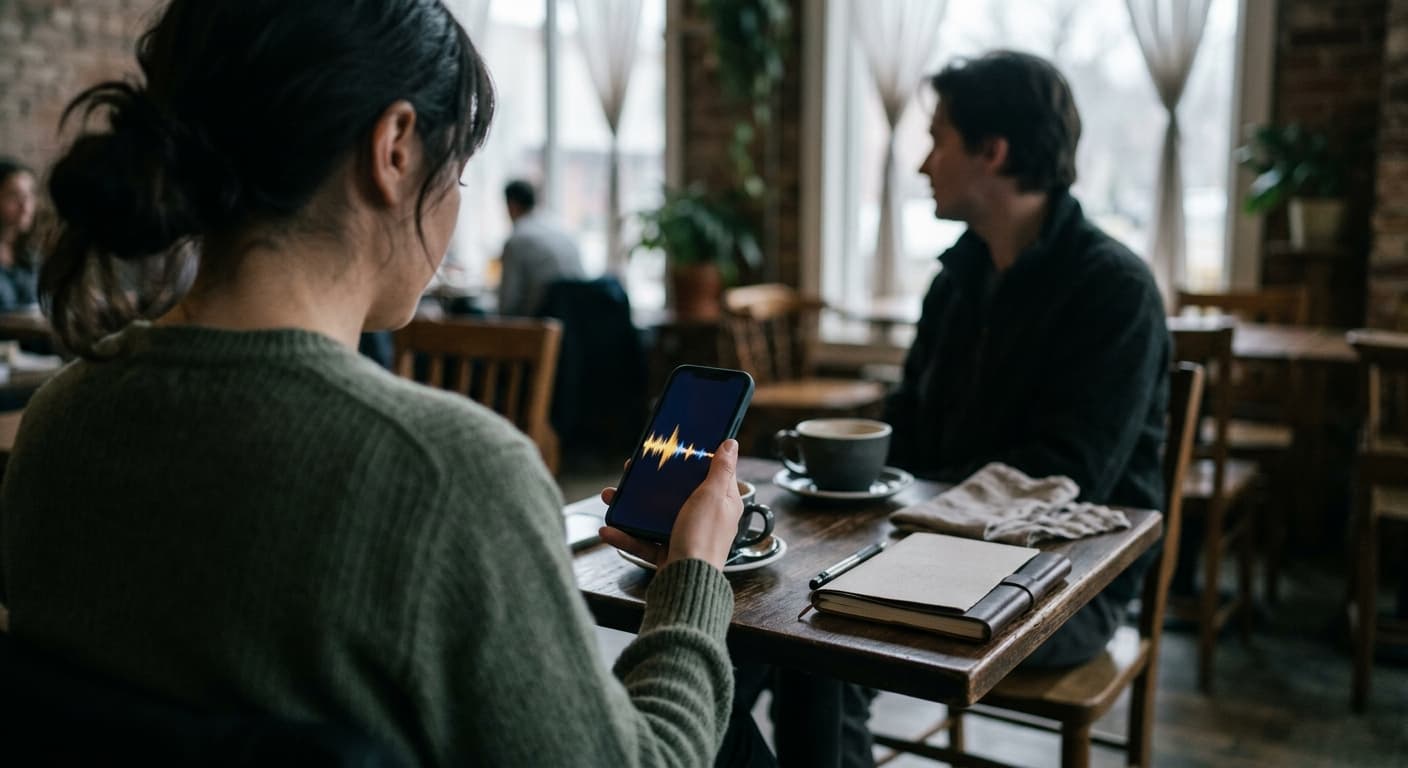
Colorado is a one-party consent state for audio recording. Under C.R.S. 18-9-303 (wiretap) and C.R.S. 18-9-304 (eavesdropping), a participant in any phone call or in-person conversation may record without notifying other parties. Recording without any party's consent is a Class 2 misdemeanor and gives rise to civil liability.
Colorado recording law at a glance
| Question | Answer |
|---|---|
| Consent rule | One-party (C.R.S. 18-9-303 wire/electronic; 18-9-304 in-person) |
| When recording is illegal | Non-participant intercepts without any party's consent |
| Criminal penalty | Class 2 misdemeanor: up to 120 days jail; up to $750 fine |
| Civil remedy | C.R.S. 13-21-128: $500/recording + replacement + fees + up to $15,000 punitives |
| Hidden cameras / voyeurism | C.R.S. 18-3-405.6: Class 1 misdemeanor (first); Class 6 felony (prior unlawful-sexual-behavior conviction, or depicted person under 15 and defendant 4+ years older) |
| Recording police | Statutory right under C.R.S. 16-3-311; no-QI civil action under C.R.S. 13-21-131 |
For a deeper look at each context, see Colorado recording laws in depth below.
Recording in-person conversations in Colorado
C.R.S. 18-9-304 is Colorado's eavesdropping statute. It makes it a Class 2 misdemeanor for any person not visibly present during a conversation to knowingly overhear or record it without the consent of at least one principal party. Consent of one principal party is a complete defense, so a participant who records his or her own conversation is fully protected; the statute targets hidden microphones, concealed listeners, and third parties not visible to the speakers.
For example, recording a face-to-face meeting with your landlord while present and participating is lawful, but hiding a recorder and leaving before the other party arrives to capture their private conversation would violate C.R.S. 18-9-304.
Under post-SB 21-271 sentencing (C.R.S. 18-1.3-501, effective March 1, 2022), a violation carries up to 120 days in jail and up to a $750 fine. Pre-2022 references to a 12-month maximum are stale.

Recording phone calls in Colorado
C.R.S. 18-9-303 is Colorado's wiretap statute. It makes it a Class 2 misdemeanor for any person who is not a sender or receiver of a telephone, telegraph, or electronic communication to knowingly intercept or record it without the consent of either a sender or any one receiver. It covers landline, cellular, and Voice over Internet Protocol calls, text messages, and other electronic communications. A participant may record without telling the other side.
For interstate calls, the conservative rule is to comply with the stricter jurisdiction. If you are unsure which side controls, our recording consent checker lets you compare the two states' consent rules before you dial. Thirteen states impose all-party consent for some recordings (California, Delaware, Florida, Illinois, Maryland, Massachusetts, Montana, New Hampshire, Oregon, Pennsylvania, Washington, Connecticut for civil purposes, and Nevada, which requires every party's consent to record a phone call); when a Colorado resident calls into one of those states, announcing the recording protects against out-of-state exposure. Oregon is a partial exception: ORS 165.540 requires consent from only one participant to record a telephone call, while in-person conversations and video calls there require that every participant be specifically informed of the recording (ORS 165.535 and 165.540). See two-party consent states for the full list.
For deeper treatment, see Colorado Phone Call Recording Laws.
Hidden cameras, doorbells, and nanny cams
Colorado's hidden-camera framework rests on three layers: the voyeurism statute, the eavesdropping audio overlay, and common-law privacy torts.
C.R.S. 18-3-405.6 makes it a Class 1 misdemeanor (first offense) or Class 6 felony to knowingly observe or photograph another person's intimate parts without consent in a location where that person has a reasonable expectation of privacy, for the purpose of sexual gratification. The felony tier is triggered when the defendant has a prior conviction for unlawful sexual behavior as defined in C.R.S. 16-22-102(9), or when the depicted person is under 15 and the defendant is at least 4 years older. When a hidden camera also captures audio, C.R.S. 18-9-304 applies on top unless a principal party consented.
An outward-facing doorbell camera on your own porch is generally lawful: you are a participant for porch conversations, and public-facing areas lack a reasonable expectation of privacy. Placing a camera in a guest's bedroom or bathroom is a textbook C.R.S. 18-3-405.6 prosecution if intimate parts are captured, and supports an intrusion-upon-seclusion civil claim even without that element.
A nanny cam in a shared family room falls outside C.R.S. 18-3-405.6 because a shared living space is not a private location for family members, but its audio can still implicate C.R.S. 18-9-304 if the homeowner is not a principal party. The Colorado Division of Real Estate's audio and video surveillance guidance limits landlord audio recording inside rental units.
For deeper coverage, see Colorado Voyeurism and Hidden Camera Laws and Colorado Security Camera Laws.

Penalties for illegal recording in Colorado
Both core recording offenses carry the same classification after SB 21-271 (effective March 1, 2022).
| Offense | Statute | Class | Jail | Fine |
|---|---|---|---|---|
| Wiretapping | C.R.S. 18-9-303 | Class 2 misdemeanor | Up to 120 days | Up to $750 |
| Eavesdropping | C.R.S. 18-9-304 | Class 2 misdemeanor | Up to 120 days | Up to $750 |
| Device possession with unlawful intent | C.R.S. 18-9-302 | Petty offense | Up to 10 days | Up to $300 |
| Voyeurism (first offense) | C.R.S. 18-3-405.6 | Class 1 misdemeanor | Up to 364 days | Up to $1,000 |
| Voyeurism (prior unlawful-sexual-behavior conviction, or depicted person under 15 and defendant 4+ yrs older) | C.R.S. 18-3-405.6 | Class 6 felony | 1 to 24 months (extraordinary-risk crime under C.R.S. 18-1.3-401(10)(b)(XV)) | $1,000 to $100,000 |
| Intimate image disclosure | C.R.S. 18-7-107 | Class 1 misdemeanor | Up to 364 days | Up to $1,000, plus a mandatory additional fine up to $10,000 (C.R.S. 18-7-107(1)(c)) |
| Intimate image with imminent safety threat | C.R.S. 18-7-107 | Class 6 felony | 1 to 18 months | $1,000 to $100,000 |
On the civil side, two remedies exist for police-related violations. C.R.S. 13-21-128 provides $500 per damaged or destroyed recording, the device's replacement value, reasonable attorney fees and costs, and punitives up to $15,000 on bad faith. C.R.S. 13-21-131 (SB 20-217) is a broader constitutional cause of action: legal or equitable relief plus mandatory attorney fees, with no dollar floor or ceiling; the employing agency indemnifies, and the officer is personally liable up to 5% of judgment or $25,000 (whichever is less) on bad faith.
For non-police recordings, civil exposure runs through the federal Wiretap Act civil remedy (18 U.S.C. 2520) and the Colorado intrusion-upon-seclusion tort recognized in Doe v. High-Tech Institute, Inc., 972 P.2d 1060 (Colo. App. 1998). A separate public-disclosure-of-private-facts tort applies if a lawfully made recording is later published to a wide audience, recognized in Robert C. Ozer, P.C. v. Borquez, 940 P.2d 371 (Colo. 1997).
Recording the police in Colorado
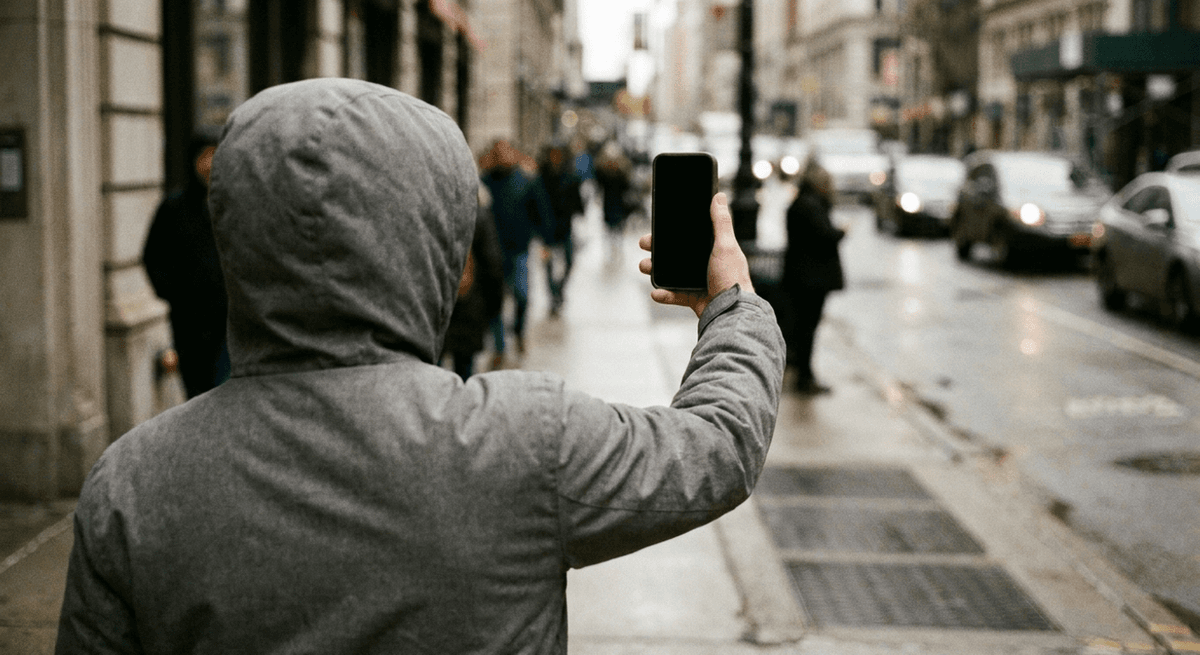
Colorado offers the Tenth Circuit's most protective record-the-police framework: an express state statutory right, two stacked civil remedies, and a clear federal ruling.
C.R.S. 16-3-311 (enacted by HB 15-1290 in 2015 and unamended since) gives every person an explicit right to record any incident involving a peace officer and to keep custody and ownership of the recording. A peace officer may temporarily seize a device without consent on either of two grounds: (1) a reasonable, articulable, good-faith belief that seizure is necessary to prevent destruction of the evidentiary recording while a search warrant is obtained; or (2) a life-safety exigency. Either way, the seizure itself is time-capped: the statute lets the officer hold the device for no longer than 72 hours to obtain a search warrant. That is a limit on how long the device may be held, not a deadline for filing the warrant application. C.R.S. 16-3-311(3) also excludes devices seized incident to arrest, and 16-3-311(1) separately permits a seizure made with consent, a warrant, a subpoena, or another lawful exception to the warrant requirement.
Two civil remedies stack on top: C.R.S. 13-21-128 (device-and-recording remedy: $500 per recording, device replacement value, attorney fees, and up to $15,000 punitives on bad faith) and C.R.S. 13-21-131 (no-qualified-immunity state-constitutional action: legal or equitable relief plus mandatory attorney fees, officer personal liability up to $25,000 on bad faith).
On the federal side, Frasier v. Evans, 992 F.3d 1003 (10th Cir. 2021) granted qualified immunity for August 2014 conduct, declining to decide whether a First Amendment right to record police then existed. Irizarry v. Yehia, 38 F.4th 1282 (10th Cir. 2022) filled the gap, holding the right to film police performing official duties in public was clearly established in the Tenth Circuit as of May 2019. For today's violations, the state C.R.S. 13-21-131 path (no qualified immunity, mandatory fees) is typically cleaner than a federal Section 1983 claim.
The 16-3-311 right is not absolute. Officers may lawfully order a person to step back when recording would interfere with an arrest or scene security; following that order does not waive the right to keep recording from another vantage point.
For a full treatment, see Colorado Laws on Recording Police.
Special topics in Colorado
Biometric privacy: HB 24-1130 (active July 1, 2025)
HB 24-1130 amended the Colorado Privacy Act (C.R.S. 6-1-1301 et seq.) to require affirmative consent before collecting or processing biometric identifiers such as voiceprints, faceprints, retina scans, and fingerprints. The Act's volume thresholds do not apply here, so any entity processing a Colorado resident's biometric data is covered, and employers must obtain affirmative, informed consent from employees, part-time staff, and contractors. Recording a call under one-party consent is one analysis; extracting a voiceprint from it to feed an AI system is a separate one under HB 24-1130.
AI and deepfakes: SB 25-288 (active August 6, 2025)
SB 25-288 reframed C.R.S. 18-7-107 to expressly cover AI-generated and digitally altered intimate imagery: knowingly disclosing or threatening to disclose a private intimate image or intimate digital depiction without consent is a Class 1 misdemeanor, elevated to a Class 6 felony when it poses an imminent, serious safety threat. SB 25-288 also created a separate civil action (C.R.S. 13-21-1501 to -1507) letting the plaintiff elect actual damages or $150,000 liquidated damages, plus exemplary damages and attorney fees, but that civil action reaches only AI-generated or digitally altered intimate depictions; its definition expressly excludes a real image captured without further editing, so a victim of a genuine, unaltered leaked photo cannot use it. The federal TAKE IT DOWN Act (Pub. L. 119-12, signed May 19, 2025) adds a 48-hour platform notice-and-takedown procedure for nonconsensual intimate imagery, with platform compliance effective May 19, 2026.
Body-worn cameras: C.R.S. 24-31-902
SB 20-217 and HB 21-1250 require all Colorado law-enforcement agencies to equip officers with body-worn cameras (mandatory by July 1, 2023), and unedited recordings of misconduct complaints must be released within 21 days. Where an officer fails to activate a required camera as the statute requires, statements or conduct not recorded because of that failure face a rebuttable presumption of inadmissibility under C.R.S. 24-31-902(1)(a)(III). Colorado's facial-recognition law, C.R.S. 24-18-301 et seq. (SB 22-113), separately restricts law-enforcement facial-recognition: under C.R.S. 24-18-307, ongoing surveillance or real-time identification requires a warrant, an investigation with probable cause, or a court order for missing or deceased persons.
Federal overlay: ECPA and NLRB
The federal Wiretap Act (18 U.S.C. 2511(2)(d)) sets a one-party-consent floor nationally, which Colorado's statutes follow. NLRB Stericycle, Inc., 372 NLRB No. 113 (Aug. 2, 2023) requires employers defending a no-recording rule to show a legitimate, substantial business interest that cannot be served by a narrower rule. NLRB GC 25-07 (June 25, 2025) treats surreptitious recording of formal collective-bargaining sessions as a per se unfair labor practice.
Recent legal developments
- SB 21-271 (effective March 1, 2022): Restructured misdemeanor sentencing; Class 2 misdemeanor is now up to 120 days jail and up to $750 fine.
- HB 23-1293 (effective October 1, 2023): Reclassified possession of wiretapping or eavesdropping devices under C.R.S. 18-9-302 as a petty offense.
- HB 24-1130 (effective July 1, 2025): Added biometric-identifier protections to the Colorado Privacy Act; affirmative consent required for voiceprints, faceprints, and other biometric data.
- SB 25-288 (effective August 6, 2025): Reframed C.R.S. 18-7-107 to cover AI-generated intimate imagery; created a $150,000 liquidated-damages civil action.
- SB 24-205 (2024): Colorado Artificial Intelligence Act; would have imposed reasonable-care duties on developers and deployers of high-risk AI systems used for consequential decisions, but its effective date was delayed twice and it was repealed before it ever took effect.
- SB 26-189 (effective January 1, 2027): Automated Decision-Making Technology (ADMT) Act; repealed and replaced SB 24-205 with narrower consumer-notice, adverse-decision-disclosure, and human-review duties.
Colorado recording laws in depth
By type of recording
- Colorado Audio Recording Laws
- Colorado Phone Call Recording Laws
- Colorado Video Recording Laws
- Colorado Voyeurism and Hidden Camera Laws
- Colorado Dashcam Laws
By place or relationship
- Colorado Laws on Recording Police
- Colorado Laws on Recording in Public
- Colorado Workplace Recording Laws
- Colorado Landlord-Tenant Recording Laws
- Colorado Medical Recording Laws
- Colorado School Recording Laws
- Colorado Security Camera Laws
More Colorado laws
- Colorado Alimony Laws
- Colorado At-Will Employment Laws
- Colorado Child Custody Laws
- Colorado Data Privacy Laws
- Colorado Landlord-Tenant Laws
This article is general legal information, not legal advice. Recording laws change and apply differently to each situation. For advice about your situation, consult a licensed Colorado attorney.
More Colorado Laws
- Colorado AI Meeting Recording Laws
- Colorado Dashcam Laws
- Colorado Data Privacy Laws
- Colorado Deepfake Laws
- Colorado Employee Monitoring Laws
- Colorado GPS Tracking Laws
- Colorado Police Bodycam Laws
- Colorado Smart Glasses Recording Laws
Frequently Asked Questions
Is Colorado a one-party or two-party consent state?
Colorado is a one-party consent state. Under C.R.S. 18-9-303, a sender or receiver of a phone, telegraph, or electronic communication may record it without notifying others, and under C.R.S. 18-9-304 a principal party to an in-person conversation may do the same. Both statutes make it a Class 2 misdemeanor for a non-participant to record without any party's consent.
Can I record a phone call in Colorado without telling the other person?
Yes, if you are a party to the call. C.R.S. 18-9-303 requires the consent of only one sender or receiver. The complication is interstate calls: if the other person is in a two-party consent state such as California or Florida, announce the recording to avoid exposure under that state's law.
Is illegal recording a felony in Colorado?
No, for the basic offenses. C.R.S. 18-9-303 (wiretapping) and C.R.S. 18-9-304 (eavesdropping) are both Class 2 misdemeanors after SB 21-271 (effective March 1, 2022): up to 120 days jail and up to $750 fine. Voyeurism under C.R.S. 18-3-405.6 is more serious, reaching a Class 6 felony when the defendant has a prior conviction for unlawful sexual behavior (C.R.S. 16-22-102(9)), or when the depicted person is under 15 and the defendant is at least 4 years older.
Can I record the police in Colorado?
Yes. C.R.S. 16-3-311 gives every person an express statutory right to record any incident involving a peace officer and to keep custody of the recording. An officer may temporarily seize a device without a warrant on either of two grounds: (1) a reasonable, articulable, good-faith belief that seizure is needed to prevent destruction of the recording while a warrant is obtained; or (2) a life-safety exigency. A seizure on either ground may last no longer than 72 hours while the officer obtains a search warrant, and these limits do not apply to a device seized incident to arrest. Two civil remedies apply if police interfere: C.R.S. 13-21-128 and C.R.S. 13-21-131. The Tenth Circuit held the right to film police clearly established as of May 2019 in Irizarry v. Yehia, 38 F.4th 1282 (10th Cir. 2022).
Are Ring doorbells and nanny cams legal in Colorado?
Generally yes for outward-facing cameras on your own property: a porch-facing doorbell captures a non-private space and you are a principal party for porch conversations under C.R.S. 18-9-304, and a nanny cam in a shared family room is outside C.R.S. 18-3-405.6 when intimate parts are not captured. Problems arise if a hidden camera is placed in a private space (bedroom, bathroom) or captures audio of conversations the homeowner does not participate in. Voiceprint or facial-recognition processing of the captured audio or video separately triggers HB 24-1130 affirmative-consent requirements.
Can my employer record me at work in Colorado?
Generally yes if the employer participates in the conversation, since Colorado is a one-party consent state under C.R.S. 18-9-303 and C.R.S. 18-9-304. Employers may not record in bathrooms, locker rooms, or changing areas. NLRB Stericycle, 372 NLRB No. 113 (Aug. 2, 2023) limits blanket no-recording rules: the rule must advance a legitimate, substantial business interest that cannot be met with a narrower rule. Extracting voiceprints or faceprints from recorded audio separately requires affirmative consent under HB 24-1130 (active July 1, 2025).
Can I record an HR meeting or a conversation with my boss in Colorado?
Yes. As a participant, you may record under C.R.S. 18-9-303 or C.R.S. 18-9-304 without disclosing it. An internal no-recording policy may apply, but violating it is a workplace-discipline matter, not a criminal one, provided you are a principal party.
Updates
Corrected the description of Oregon's recording rule: a participant may record a phone call, but every participant must be informed before an in-person conversation or video call is recorded.
Corrected the description of C.R.S. 16-3-311: the 72 hours is the maximum time an officer may hold a seized recording device while obtaining a search warrant, not a deadline for applying for one, and the rule does not reach devices seized incident to arrest.
Corrected the maximum sentence for aggravated voyeurism (24 months, not 18, under the state's extraordinary-risk-crime enhancement), added the mandatory additional $10,000 fine for intimate-image disclosure, fixed a wrong statute citation for the body-camera inadmissibility rule, clarified that SB 25-288's $150,000 civil action covers only AI-altered images and not real unaltered photos, and corrected Oregon's phone-call consent rule to one-party.
Independently fact-checked against the cited primary sources; governing law re-checked for recent changes
Updated Colorado AI Act coverage: SB 24-205 was repealed and replaced by SB 26-189 (2026) before taking effect.
Removed a fabricated third ground for police seizure of a recording device under C.R.S. 16-3-311 (the statute gives exactly two grounds, not three), repeated in KeyTakeaways, the police-recording section, and the FAQ. Also corrected the facial-recognition citation from C.R.S. 24-31-1303 (Colorado's worker-misclassification statute, unrelated to recording law) to the actual facial-recognition act, C.R.S. 24-18.5-101 et seq. (SB 22-113), and removed the wrong citation from the Sources list.
Corrected the citation for Colorado facial-recognition restrictions to C.R.S. 24-18-301 et seq., with the law-enforcement warrant rule at 24-18-307, and added the source.
Governing law re-checked for recent changes
Reviewed and approved by an editor
Restructured into spec-compliant format. Re-verified load-bearing facts against primary sources: C.R.S. 18-9-303 and 18-9-304 both Class 2 misdemeanors post-SB 21-271; corrected C.R.S. 16-3-311 temporary-seizure standard (reasonable articulable good-faith belief to prevent destruction of recording pending warrant, not a probable-cause requirement); confirmed HB 24-1130 effective July 1 2025 and SB 25-288 effective August 6 2025; trimmed to length cap.
Corrections audit: (1) C.R.S. 18-9-303 corrected to Class 2 misdemeanor (not Class 6 felony), same as 18-9-304 (120 days / $750, post-SB 21-271). (2) C.R.S. 13-21-128 corrected to the recording-device remedy ($500/recording + replacement + fees + up to $15,000 punitives); C.R.S. 13-21-131 (SB 20-217) is the no-qualified-immunity constitutional action. (3) C.R.S. 16-3-311 clarified as the right-to-record statute. (4) Device offense corrected to C.R.S. 18-9-302 (petty offense per HB 23-1293); 18-9-305 is the exceptions statute. (5) Facial-recognition bill corrected to SB 22-113. (6) Removed HB 22-1003 from the body-camera attribution.
Major restructure: anchored bifurcated criminal regime as the lead structural section (C.R.S. 18-9-303 wiretap Class 6 felony + C.R.S. 18-9-304 eavesdropping Class 2 misdemeanor). Added Frasier-to-Irizarry Tenth Circuit progression (Irizarry v. Yehia, 38 F.4th 1282 (10th Cir. 2022) recognized clearly-established First Amendment right to film police as of May 2019). Distinguished C.R.S. 16-3-311 own-statute civil remedy ($500 per recording, replacement, fees, punitive) from C.R.S. 13-21-128 no-qualified-immunity cause of action ($15,000 minimum). Added HB 24-1130 Colorado Privacy Act biometric provisions (active July 1, 2025) and SB 24-205 Colorado AI Act (active February 1, 2026). Corrected hidden-camera anchor to C.R.S. 18-3-405.6 (replaced incorrect 18-7-801 reference). Corrected body-cam citation to C.R.S. 24-31-902 (Part 9), keeping C.R.S. 24-31-1303 (Part 13) only as the facial-recognition layer. Dropped unverified People v. Diaz placeholder, unverified People v. Lesslie, and tortious-purpose carve-out framing (not Colorado law). Updated FCC 24-24 to vacated by 11th Cir. (Insurance Marketing Coalition Ltd. v. FCC, mandate Apr 30 2025) and removed stale 47 C.F.R. 64.501. Added NLRB Stericycle / GC 25-05 / GC 25-07 workplace overlay. Added TAKE IT DOWN Act federal compliance (Pub. L. 119-12). Added SB 25-288 intimate-digital-depiction reframe of C.R.S. 18-7-107 and $150,000 liquidated-damages civil action. Replaced commercial-codifier URLs with leg.colorado.gov, courts.state.co.us, ca10.uscourts.gov, and uscode.house.gov canonicals. Populated keywords array with 15 Colorado-specific terms.
Major restructure: added Frasier-to-Irizarry Tenth Circuit progression (Irizarry v. Yehia, 38 F.4th 1282 (10th Cir. 2022), clearly-established right to film police as of May 2019); HB 24-1130 biometric provisions (July 1, 2025) and SB 24-205 AI Act (February 1, 2026); corrected hidden-camera anchor to C.R.S. 18-3-405.6 and body-cam cite to C.R.S. 24-31-902 (Part 9); added NLRB Stericycle / GC 25-07 workplace overlay, the TAKE IT DOWN Act (Pub. L. 119-12), and the SB 25-288 reframe of C.R.S. 18-7-107.
Added wearable recording devices section and 2 FAQs covering AI voice recorders and smart glasses
The Law Behind This Article
This article rests on the statutory provisions below, held in our own legal record and retrieved from the official source. Tap a section to read the operative text.
Colorado Revised Statutes, Title 18: Criminal Code
§ 18-9-304Eavesdropping prohibited - penaltyIn forcecited in 17 of our articles
(1) Any person not visibly present during a conversation or discussion commits eavesdropping if he: (a) Knowingly overhears or records such conversation or discussion without the consent of at least one of the principal parties thereto, or attempts to do so; or (b) Intentionally overhears or records such conversation or discussion for the purpose of committing, aiding, or abetting the commission of an unlawful act; or (c) Knowingly uses for any purpose, discloses, or attempts to use or disclose to any other person the contents of any such conversation or discussion while knowing or having reason to know the information was obtained in violation of this section; or (d) Knowingly aids, authorizes, agrees with, employs, permits, or intentionally conspires with any person to violate the provisions of this section. (2) Eavesdropping is a class 2 misdemeanor.
Official text (excerpt) · last checked 2026-09-23 · Read the full text in our law library · Verify at olls.info
Also relied on in: Colorado Security Camera Laws: Residential, Commercial, and Privacy Rules, Colorado Audio Recording Laws: One-Party Consent Rules and Penalties, Colorado Medical Recording Laws: Patient Rights, HIPAA, and Provider Rules
§ 18-9-303Wiretapping prohibited - penaltyIn forcecited in 18 of our articles
(1) Any person not a sender or intended receiver of a telephone or telegraph communication commits wiretapping if he: (a) Knowingly overhears, reads, takes, copies, or records a telephone, telegraph, or electronic communication without the consent of either a sender or a receiver thereof or attempts to do so; or (b) Intentionally overhears, reads, takes, copies, or records a telephone, telegraph, or electronic communication for the purpose of committing or aiding or abetting the commission of an unlawful act; or (c) Knowingly uses for any purpose or discloses to any person the contents of any such communication, or attempts to do so, while knowing or having reason to know the information was obtained in violation of this section; or (d) Knowingly taps or makes any connection with any telephone or telegraph line, wire, cable, or instrument belonging to another or with any electronic, mechanical, or other device belonging to another or installs any device whether connected or not which permits the interception of messages; or (e) Repealed.
Official text (excerpt) · last checked 2026-08-28 · Read the full text in our law library · Verify at olls.info
Cited in 4 court opinions in our collectionLatest citing opinion in our collection: 2001
Opinions citing this section in our collection:
- Bartnicki v. Vopper (Supreme Court of the United States 2001, 532 U.S. 514)“…5-60-120 (1997); Cal. Penal Code Ann. §631 (West 1999); Colo. Rev. Stat. §18-9-303 (2000); Del. Code Ann., Tit. 11, § 133…”
- Boehner, John A. v. McDermott, James A. (Court of Appeals for the D.C. Circuit 1999, 191 F.3d 463)“…oncert with them); Cal.Penal Code §§ 631, 632 (West 1999); Colo. Rev. Stat. § 18-9-303 (1986 & Supp.1995); Conn. Gen. Stat. §…”
- Sequa Corp. v. Lititech, Inc. (District Court, D. Colorado 1992, 807 F. Supp. 653)“…Menaman. Defendants rely on Colorado’s wiretapping statute, C.R.S. § 18-9-303, which provides in relevant part:…”
Identified automatically from the court opinions citing this section — not a ranking of which case controls.
Also relied on in: Colorado Dashcam Laws: Legality, Mounting Rules, and Evidence Use, Colorado Landlord-Tenant Recording Laws: Cameras, Privacy, and Rights, Colorado Laws on Recording Police: Rights, Protections, and Body Cameras
§ 18-3-405.6Invasion of privacy for sexual gratificationIn forcecited in 10 of our articles
(1) A person who knowingly observes or takes a photograph of another person's intimate parts without that person's consent, in a situation where the person observed or photographed has a reasonable expectation of privacy, for the purpose of the observer's own sexual gratification, commits unlawful invasion of privacy for sexual gratification. (2) (a) Except as otherwise provided in subsection (2)(b) of this section, invasion of privacy for sexual gratification is a class 1 misdemeanor. (b) Invasion of privacy for sexual gratification is a class 6 felony and is an extraordinary risk crime subject to the modified sentencing range specified in section 18-1.3-401 (10) if either of the following circumstances exist: (I) The offense is committed subsequent to a prior conviction, as defined in section 16-22-102 (3), C.R.S., for unlawful sexual behavior as defined in section 16-22-102 (9), C.R.S.; or (II) The person observes or takes a photograph of the intimate parts of a person under fifteen years of age. This subparagraph (II) shall not apply if the defendant is less than four years older than the person observed or photographed.
Official text (excerpt) · last checked 2026-07-29 · Read the full text in our law library · Verify at olls.info
Cited in 1 court opinions in our collectionLatest citing opinion in our collection: 2026
Opinions citing this section in our collection:
- United States v. Watkins (Court of Appeals for the Tenth Circuit 2026)“…n part),2 Ark. Code Ann. § 5-71-213; Cal. Penal Code § 647; Colo. Rev. Stat. § 18-3-405.6;2 Colo. Rev. Stat. § 18-7-801;2 Conn. G…”
Identified automatically from the court opinions citing this section — not a ranking of which case controls.
Also relied on in: Colorado Video Recording Laws: What Is Legal and What Is Not, Colorado Voyeurism and Hidden Camera Laws: Offenses, Penalties, and Protections, Colorado Smart Glasses Recording Laws 2026
§ 18-7-107Disclosing a private intimate image or intimate digital depiction for harassment - definitionsIn forcecited in 8 of our articles
(1) (a) An actor who is eighteen years of age or older commits the offense of disclosing a private intimate image or intimate digital depiction for harassment if the actor discloses or threatens to disclose through the use of electronic media or a website a private intimate image or an intimate digital depiction without the depicted individual's consent: (I) to (III) (Deleted by amendment, L. 2025.) (IV) (A) With the intent to harass, intimidate, or coerce the depicted individual; or (B) When the actor knew or reasonably should have known that the depicted individual had a reasonable expectation that the private intimate image or intimate digital depiction would remain private; and (V) The disclosure or threat to disclose caused physical, emotional, or reputational harm to the depicted individual.
Official text (excerpt) · last checked 2026-08-30 · Read the full text in our law library · Verify at olls.info
Also relied on in: Colorado Deepfake Laws: AI Images, Voice Cloning & Penalties (2026), Colorado Pornography Laws (2026): Legal Status, Age Verification, and Penalties, Colorado AI Laws and Regulation (2026)
§ 18-9-302Wiretapping and eavesdropping devices prohibited - penaltyIn forcecited in 4 of our articles
Any person who manufactures, buys, sells, or knowingly has in the person's possession any instrument, device, contrivance, machine, or apparatus designed or commonly used for wiretapping or eavesdropping, as prohibited in sections 18-9-303 and 18-9-304, with the intent to unlawfully use or employ or allow the same to be so used or employed, or who knowingly aids, authorizes, agrees with, employs, permits, or conspires with any other person to unlawfully manufacture, buy, sell, or have the same in the person's possession is guilty of a petty offense.
Official text (excerpt) · last checked 2026-07-29 · Read the full text in our law library · Verify at olls.info
Also relied on in: Colorado Surveillance Camera Laws (2026 Guide)
§ 18-9-305ExceptionsIn forcecited in 4 of our articles
(1) Nothing in sections 18-9-302 to 18-9-304 shall be interpreted to prevent a news agency, or an employee thereof, from using the accepted tools and equipment of that news medium in the course of reporting or investigating a public and newsworthy event; nor shall said sections prevent any person from using wiretapping or eavesdropping devices on his own premises for security or business purposes if reasonable notice of the use of such devices is given to the public. (2) No part of sections 18-9-302 to 18-9-304 shall apply to the normal use of services, facilities, and equipment provided by a provider of wire or electronic communication service pursuant to its tariffs on file with the public utilities commission of the state of Colorado and with the federal communications commission; and said sections shall not apply to the normal functions of any operator of a switchboard nor to any officer, agent, or employee of a provider of wire or electronic communication service or other person engaged in the business of providing service, equipment, and facilities for communication who performs an otherwise prohibited act if such act is necessary to provide the communication services,…
Official text (excerpt) · last checked 2026-07-29 · Read the full text in our law library · Verify at olls.info
Also relied on in: Colorado Ring Doorbell Laws: What You Need to Know in 2026
§ 18-1.3-501Misdemeanors classified - drug misdemeanors and drug petty offenses classified - penalties - legislative intent - definitionsIn forcecited in 9 of our articles
(1) (a) Except as otherwise provided in subsection (1)(d) of this section, for offenses committed prior to March 1, 2022, misdemeanors are divided into three classes that are distinguished from one another by the following penalties that are authorized upon conviction except as provided in subsection (1.5) of this section: Class Minimum Sentence Maximum Sentence 1 Six months imprisonment, or five Eighteen months imprisonment, hundred dollar fine, or both or five thousand dollar fine, or both 2 Three months imprisonment, or two Three hundred sixty-four days imprisonment, hundred fifty dollar fine, or both or one thousand dollar fine, or both 3 Fifty dollar fine Six months imprisonment, or seven hundred fifty dollar fine, or both (a.5) Except as otherwise provided in subsection (1)(d) of this section, for offenses committed on or after March 1, 2022, misdemeanors are divided into two classes that are distinguished from one another by the following penalties that are authorized upon conviction: Class Maximum Sentence 1 364 days imprisonment, not more than a one thousand dollar fine, or both 2 120 days imprisonment, not more than a seven hundred fifty dollar fine, or…
Official text (excerpt) · last checked 2026-07-29 · Read the full text in our law library · Verify at olls.info
Also relied on in: Colorado Dog Bite Laws: Liability and Victim Rights, Colorado Whistleblower Laws: Protections and How to Report, Colorado Theft Laws: Felony Threshold, Penalties and Shoplifting (2026)
Colorado Revised Statutes, Title 16: Criminal Proceedings
§ 16-3-311Peace officer incident recordingsIn forcecited in 8 of our articles
(1) A person has the right to lawfully record any incident involving a peace officer and to maintain custody and control of that recording and the device used to record the recording. A peace officer shall not seize a recording or recording device without consent, without a search warrant or subpoena, or without a lawful exception to the warrant requirement. (2) (a) If a peace officer seeks to obtain from a person a device used to record an incident involving a peace officer in order to access the recording as possible evidence in an investigation, the officer shall first: (I) Advise the person of his or her name, his or her badge number or other identifying number, and the name of the law enforcement agency; (II) Identify the legal reason for which the information is requested; and (III) If practicable under the circumstances, inquire whether the person will voluntarily provide the officer with a copy of the specific recording that is relevant to the investigation either by voluntarily providing the device to the officer or immediately electronically transferring the information to the officer or the law enforcement agency so that the person may retain possession of his or…
Official text (excerpt) · last checked 2026-07-29 · Read the full text in our law library · Verify at olls.info
Also relied on in: Colorado Phone Call Recording Laws: One-Party Consent and Interstate Rules, Colorado Laws on Recording in Public: Rights, Limits, and Exceptions, Colorado School Recording Laws: Classrooms, IEP Meetings, and Surveillance
§ 16-22-102DefinitionsIn forcecited in 3 of our articles
As used in this article 22, unless the context otherwise requires: (1) Adjudicated or adjudication means a determination by the court that it has been proven beyond a reasonable doubt to the trier of fact that a juvenile has committed a delinquent act or that a juvenile has pled guilty to committing a delinquent act. In addition, when a previous conviction must be pled and proven as an element of an offense or for purposes of sentence enhancement, adjudication means conviction. (1.5) Birthday means a person's birthday as reflected on the notice provided to the person pursuant to section 16-22-106 or 16-22-107 or the person's actual date of birth if the notice does not reflect the person's birthday. (2) CBI means the Colorado bureau of investigation established pursuant to part 4 of article 33.5 of title 24, C.R.S. (3) Convicted or conviction means having received a verdict of guilty by a judge or jury, having pleaded guilty or nolo contendere, having received a disposition as a juvenile, having been adjudicated a juvenile delinquent, or having received a deferred judgment and sentence or a deferred adjudication.
Official text (excerpt) · last checked 2026-07-29 · Read the full text in our law library · Verify at olls.info
Cited in 4 court opinions in our collectionLatest citing opinion in our collection: 2023
Opinions citing this section in our collection:
- Millard v. Rankin (District Court, D. Colorado 2017, 265 F. Supp. 3d 1211)“…Ibarra, 62 P.3d 151, 156-57 (Colo. 2003); see also C.R.S. § 16-22-102(3) (defining “conviction”) and § 16-22-…”
- McGuire v. Strange (District Court, M.D. Alabama 2015, 83 F. Supp. 3d 1231)“…orcement agency — whether municipal or county. See, e.g., Colo.Rev.Stat. § 16-22-102(4.5); 730 Ill. Comp. Stat. 150/2(D); K…”
- CALCANO DE MILLAN (Board of Immigration Appeals 2017, 26 I. & N. Dec. 904)“…100(3) (West 2016); Ark. Code Ann. § 12-12-905 (West 2016); Colo. Rev. Stat. Ann. § 16-22-102(3) (West 2016); Fla. Stat. Ann. § 943.0…”
Identified automatically from the court opinions citing this section — not a ranking of which case controls.
Also relied on in: Colorado Age of Consent Laws: Statutes, Penalties and Reporting, Can I Sue Someone for Recording Me on Private or Public Property?
Colorado Revised Statutes, Title 13: Courts and Court Procedure
§ 13-21-128Civil liability for destruction or unlawful seizure of recordings by a law enforcement officer - definitionsIn forcecited in 3 of our articles
(1) (a) Notwithstanding any other remedies, a person has a right of recovery against a peace officer's employing law enforcement agency if a person attempts to or lawfully records an incident involving a peace officer and: (I) A peace officer unlawfully destroys or damages the recording or recording device; (II) A peace officer seizes the recording or recording device without permission, without lawful order of the court, or without other lawful grounds to seize the device; (III) A peace officer intentionally interferes with the person's lawful attempt to record an incident involving a peace officer; (IV) A peace officer retaliates against a person for recording or attempting to record an incident involving a peace officer; or (V) A peace officer refuses to return the person's recording device that contains a recording of a peace officer-involved incident within a reasonable time period and without legal justification.
Official text (excerpt) · last checked 2026-07-29 · Read the full text in our law library · Verify at olls.info
Cited in 1 court opinions in our collectionLatest citing opinion in our collection: 2021
Opinions citing this section in our collection:
- Irizarry v. Yehia (District Court, D. Colorado 2021)“…attempt to record an incident involving a peace officer.” Colo. Rev. Stat. § 13-21-128(1)(a)(III). intentionally interferes w…”
Identified automatically from the court opinions citing this section — not a ranking of which case controls.
Also relied on in: Colorado AI Meeting Recording Laws (2026)
§ 13-21-131Civil action for deprivation of rightsIn forcecited in 2 of our articles
(1) A peace officer, as defined in section 24-31-901 (3), who, under color of law, subjects or causes to be subjected, including failing to intervene, any other person to the deprivation of any individual rights that create binding obligations on government actors secured by the bill of rights, article II of the state constitution, is liable to the injured party for legal or equitable relief or any other appropriate relief. (2) (a) Statutory immunities and statutory limitations on liability, damages, or attorney fees do not apply to claims brought pursuant to this section. The Colorado Governmental Immunity Act, article 10 of title 24, does not apply to claims brought pursuant to this section. (b) Qualified immunity is not a defense to liability pursuant to this section. (3) In any action brought pursuant to this section, a court shall award reasonable attorney fees and costs to a prevailing plaintiff. In actions for injunctive relief, a court shall deem a plaintiff to have prevailed if the plaintiff's suit was a substantial factor or significant catalyst in obtaining the results sought by the litigation.
Official text (excerpt) · last checked 2026-07-29 · Read the full text in our law library · Verify at olls.info
Cited in 39 court opinions in our collectionLatest citing opinion in our collection: 2026
Opinions citing this section in our collection:
- Armendariz v. City of Colorado Springs (Court of Appeals for the Tenth Circuit 2026)“…and Ditzler Const. art. II, §§ 7, 10, 24; Colo. Rev. Stat. § 13-21-131 Fifth Claim: Deprivation of Rights, in…”
- Sawyers v. Norton (Court of Appeals for the Tenth Circuit 2020, 962 F.3d 1270)“…2d Reg. Sess. § 3 (Colo. 2020) (enacted) (to be codified at Colo. Rev. Stat. Ann. § 13-21-131). The CGIA “does not apply to” this new…”
- Sholes v. City Council of the City of Craig Colorado (District Court, D. Colorado 2025)“…at ¶¶ 144-165]; and (3) excessive force in violation of Colo. Rev. Stat. § 13-21-131 and Article II, Section 7 of the Colora…”
Identified automatically from the court opinions citing this section — not a ranking of which case controls.
Colorado Revised Statutes, Title 24: Government - State
§ 24-31-902Incident recordings - release - tampering - fineIn forcecited in 3 of our articles
(1) (a) (I) By July 1, 2023, all local law enforcement agencies in the state and the Colorado state patrol shall provide body-worn cameras for each peace officer of the law enforcement agency who interacts with members of the public. Law enforcement agencies may seek funding pursuant to section 24-33.5-519. (II) (A) Except as provided in subsection (1)(a)(II)(B) or (1)(a)(II)(C) of this section, a peace officer shall wear and activate a body-worn camera or dash camera, if the peace officer's vehicle is equipped with a dash camera, when responding to a call for service, entering into a premises for the purposes of enforcing the law or in response to a call for service, during a welfare check except for a motorist assist, or during any interaction with the public initiated by the peace officer, whether consensual or nonconsensual, for the purpose of enforcing the law or investigating possible violations of the law. The body-worn camera or dash camera does not need to be on when en route to a call for service, but should be turned on shortly before the vehicle approaches the scene.
Official text (excerpt) · last checked 2026-08-31 · Read the full text in our law library · Verify at olls.info
Cited in 1 court opinions in our collectionLatest citing opinion in our collection: 2025
Opinions citing this section in our collection:
- Sever v. City of Fort Collins (District Court, D. Colorado 2025)“…blic initiated by the peace officer.” [Id. at 13 (quoting Colo. Rev. Stat. § 24-31-902(1)(a)(II)(A))]. Mr. Corsentino further…”
Identified automatically from the court opinions citing this section — not a ranking of which case controls.
Also relied on in: How to Get a Police Report in Colorado (2026): Crash & Incident Reports, Colorado Police Body Camera Laws: Access & Mandate
§ 24-18-307Use of facial recognition service by law enforcement agencies - surveillance and tracking - prohibited uses - warrantsIn force
(1) A law enforcement agency shall not use a facial recognition service to engage in ongoing surveillance, conduct real-time or near real-time identification, or start persistent tracking unless: (a) The law enforcement agency obtains a warrant authorizing such use; (b) Such use is necessary to develop leads in an investigation; (c) The law enforcement agency has established probable cause for such use; or (d) The law enforcement agency obtains a court order authorizing the use of the service for the sole purpose of locating or identifying a missing person or identifying a deceased person. A court may issue an ex parte order under this subsection (1)(d) if a law enforcement officer certifies and the court finds that the information likely to be obtained is relevant to locating or identifying a missing person or identifying a deceased person.
Official text (excerpt) · last checked 2026-07-29 · Read the full text in our law library · Verify at olls.info
Colorado Revised Statutes, Title 6: Consumer and Commercial Affairs
§ 6-1-1301Short titleIn forcecited in 10 of our articles
The short title of this part 13 is the Colorado Privacy Act.
Official text (excerpt) · last checked 2026-07-29 · Read the full text in our law library · Verify at olls.info
Also relied on in: Colorado Signs Device-Level Age-Check Law (SB26-051), What Is the Colorado Privacy Act (CPA)?, Colorado Biometric Privacy Laws: Collection, Consent & Penalties (2026)
§ 6-1-105Unfair or deceptive trade practices - definitionsIn forcecited in 4 of our articles
(1) A person engages in a deceptive trade practice when, in the course of the person's business, vocation, or occupation, the person: (a) Either knowingly or recklessly passes off goods, services, or property as those of another; (b) Either knowingly or recklessly makes a false representation as to the source, sponsorship, approval, or certification of goods, services, or property; (c) Either knowingly or recklessly makes a false representation as to affiliation, connection, or association with or certification by another; (d) Uses deceptive representations or designations of geographic origin in connection with goods or services; (e) Either knowingly or recklessly makes a false representation as to the characteristics, ingredients, uses, benefits, alterations, or quantities of goods, food, services, or property or a false representation as to the sponsorship, approval, status, affiliation, or connection of a person therewith; (f) Represents that goods are original or new if he knows or should know that they are deteriorated, altered, reconditioned, reclaimed, used, or secondhand; (g) Represents that goods, food, services, or property are of a particular standard, quality,…
Official text (excerpt) · last checked 2026-07-29 · Read the full text in our law library · Verify at olls.info
Cited in 106 court opinions in our collectionLatest citing opinion in our collection: 2026
Opinions citing this section in our collection:
- Holcomb v. Jan-Pro Cleaning Systems of Southern Colorado (Supreme Court of Colorado 2007, 172 P.3d 888)“…for violating C.R.S. 6-1-904(b) as specifically provided by C.R.S. 6-1-105(tt). Appearing pro se, Becky Kolb, Pr…”
- Campfield v. State Farm Mutual Automobile Insurance (Court of Appeals for the Tenth Circuit 2008, 532 F.3d 1111)“…esentations and material omissions made by the defendants. Colo. Rev. Stat. § 6-1-105(e),(g),(h), & (u). To be a deceptive t…”
- In re Pharmaceutical Industry Average Wholesale Price Litigation (District Court, D. Massachusetts 2008, 252 F.R.D. 83)“…son of any deception, fraud, or false pretense”); Colorado (Colo.Rev.Stat. § 6-1-105(1)© (“A person engages in a deceptive t…”
Identified automatically from the court opinions citing this section — not a ranking of which case controls.
United States Code Title 18
§ 2511Interception and disclosure of wire, oral, or electronic communications prohibitedIn forcecited in 441 of our articles
Except as otherwise specifically provided in this chapter any person who— intentionally intercepts, endeavors to intercept, or procures any other person to intercept or endeavor to intercept, any wire, oral, or electronic communication; intentionally uses, endeavors to use, or procures any other person to use or endeavor to use any electronic, mechanical, or other device to intercept any oral communication when— such device is affixed to, or otherwise transmits a signal through, a wire, cable, or other like connection used in wire communication; or such device transmits communications by radio, or interferes with the transmission of such communication; or such person knows, or has reason to know, that such device or any component thereof has been sent through the mail or transported in interstate or foreign commerce; or such use or endeavor to use (A) takes place on the premises of any business or other commercial establishment the operations of which affect interstate or foreign commerce; or (B) obtains or is for the purpose of obtaining information relating to the operations of any business or other commercial establishment the operations of which affect interstate or foreign…
Official text (excerpt) · last checked 2026-09-17 · Read the full text in our law library · Verify at uscode.house.gov
Cited in 2,045 court opinions in our collectionLatest citing opinion in our collection: 2026
In the courts (editorial summary, independently checked):Griggs-Ryan v. Smith (1990) applied the Section 2511(2)(d) prior-consent exception, treating a tenant repeatedly told that all incoming calls were taped as having impliedly consented. United States v. United States District Court (1972) read the then-current Section 2511(3) as conferring no presidential surveillance power.
Opinions citing this section in our collection:
- Mitchell v. Forsyth (Supreme Court of the United States 1985, 472 U.S. 511)✓The Attorney General authorized a warrantless 1970 national security wiretap that caught the plaintiff's calls; the Court held the since-repealed Section 2511(3) disclaimer left the tap lawful under Title III, and that Mitchell had qualified immunity.
- United States v. United States District Court for the Eastern District of Michigan (Supreme Court of the United States 1972, 407 U.S. 297)✓The Attorney General approved warrantless wiretaps on members of a domestic group accused of bombing a CIA office; the Court read Section 2511(3) as a congressional disclaimer conferring no surveillance power, then held the Fourth Amendment required prior judicial approval.
- Forsyth v. Barr (Court of Appeals for the Fifth Circuit 1994, 19 F.3d 1527)✓Dallas police used, in an internal affairs probe of an officer, calls private parties allegedly intercepted illegally; assuming that was unlawful, the Fifth Circuit held Section 2517(1) and (2) allowed the disclosure and use, defeating the Section 2511(1)(c) and (d) claims.
Identified automatically from the court opinions citing this section — not a ranking of which case controls.
Also relied on in: Connecticut Recording Laws (2026): Hybrid Consent Rules Explained, Oregon Recording Laws (2026): Hybrid One-Party and All-Party Rules, US Recording Laws by State (2026): All 50 States Explained
§ 2520Recovery of civil damages authorizedIn forcecited in 130 of our articles
Except as provided in section 2511(2)(a)(ii), any person whose wire, oral, or electronic communication is intercepted, disclosed, or intentionally used in violation of this chapter may in a civil action recover from the person or entity, other than the United States, which engaged in that violation such relief as may be appropriate. In an action under this section, appropriate relief includes— such preliminary and other equitable or declaratory relief as may be appropriate; damages under subsection (c) and punitive damages in appropriate cases; and a reasonable attorney’s fee and other litigation costs reasonably incurred.
Official text (excerpt) · last checked 2026-07-28 · Read the full text in our law library · Verify at uscode.house.gov
Cited in 860 court opinions in our collectionLatest citing opinion in our collection: 2026
In the courts (editorial summary, independently checked):Walker v. Darby (1990) held a 2520 plaintiff need not prove the contents of intercepted conversations, only interception and a justified expectation against it. Bartnicki v. Vopper (2001) barred 2520 damages against defendants who took no part in the interception, obtained the tape lawfully, and disclosed a matter of public concern.
Opinions citing this section in our collection:
- Jessie Walker v. Thomas E. Darby, Hugh L. Robinson, Jr., and Kenneth Day (Court of Appeals for the Eleventh Circuit 1990, 911 F.2d 1573)✓A postal letter carrier said three supervisors wired an intercom near his workstation to listen in. Reversing summary judgment, the Eleventh Circuit held a section 2520 plaintiff can show interception without proving the contents of specific conversations.
- Gelbard v. United States (Supreme Court of the United States 1972, 408 U.S. 41)“…disclosure, or use is entitled to recover civil damages, 18 U. S. C. § 2520 . Title III also bars the use as eviden…”
- DirecTV, Inc. v. Hoa Huynh (Court of Appeals for the Ninth Circuit 2007, 503 F.3d 847)“…7 U.S.C. § 605 (e)(4), or alternatively, for violations of 18 U.S.C. § 2520 (a), or alternatively, for violations o…”
Identified automatically from the court opinions citing this section — not a ranking of which case controls.
Also relied on in: One-Party Consent States: Complete 2026 Guide, Alabama Audio Recording Laws: Consent Rules and Penalties, Alabama Phone Call Recording Laws: What You Need to Know
Colorado Revised Statutes, Title 5: Consumer Credit Code
§ 5-16-101Short titleIn forcecited in 2 of our articles
The short title of this article 16 is the Colorado Fair Debt Collection Practices Act.
Official text (excerpt) · last checked 2026-07-29 · Read the full text in our law library · Verify at olls.info
Cited in 1 court opinions in our collectionLatest citing opinion in our collection: 2021
Opinions citing this section in our collection:
- Shibata v. Accredited Management Solutions, LLC (District Court, D. Colorado 2021)“…ment under the Colorado Fair Debt Collection Practices Act, Colo. Rev. Stat. § 5-16-101 et seq., (“CFDCPA”). See Docket No. 18…”
Identified automatically from the court opinions citing this section — not a ranking of which case controls.
Oregon Revised Statutes, Chapter 165: Offenses Involving Fraud or Deception
§ 165.540Obtaining contents of communicationsIn forcecited in 49 of our articles
(1) Except as otherwise provided in ORS 133.724 or 133.726 or subsections (2) to (8) of this section, a person may not: (a) Obtain or attempt to obtain the whole or any part of a telecommunication or a radio communication to which the person is not a participant, by means of any device, contrivance, machine or apparatus, whether electrical, mechanical, manual or otherwise, unless consent is given by at least one participant. (b) Tamper with the wires, connections, boxes, fuses, circuits, lines or any other equipment or facilities of a telecommunication or radio communication company over which messages are transmitted, with the intent to obtain unlawfully the contents of a telecommunication or radio communication to which the person is not a participant. (c) Obtain or attempt to obtain the whole or any part of a conversation by means of any device, contrivance, machine or apparatus, whether electrical, mechanical, manual or otherwise, if not all participants in the conversation are specifically informed that their conversation is being obtained.
Official text (excerpt) · last checked 2026-09-24 · Read the full text in our law library · Verify at oregonlegislature.gov
Cited in 76 court opinions in our collectionLatest citing opinion in our collection: 2026
In the courts (editorial summary, independently checked):State v. Fleetwood (2000) applied ORS 165.540 to body wire evidence, holding that words spoken into a telephone are a telecommunication under subsection (1)(a) and that the (5)(a)(B) exception fails unless the officer or the officer's agent shares reciprocally in the conversation, so the recordings were inadmissible.
Opinions citing this section in our collection:
- State v. Klein (Oregon Supreme Court 2012, 352 Or. 302)“…eing 3 recorded. Conversations recorded in violation of ORS 165.540 are not admissible in 4 court excep…”
- North Pacific Lumber Co. v. Oliver (Oregon Supreme Court 1979, 286 Or. 639)✓A lumber wholesaler secretly monitored traders' calls; on de novo review the court said the practice may have violated ORS 165.540 but refused to rest unclean hands on it, since the ex-employee's calls were never monitored. The employer's noncompete suit failed on other grounds.
- State v. Fleetwood (Oregon Supreme Court 2000, 331 Or. 511)✓A detective wired an informant and recorded the suspect's side of a phone call and his talks with his mother and a juvenile seller; the court held those interceptions violated ORS 165.540(1)(a) and (1)(c) because the informant was not a participant, and upheld suppression.
Identified automatically from the court opinions citing this section — not a ranking of which case controls.
Also relied on in: Oregon Voyeurism and Hidden Camera Laws: Offenses, Penalties, and Protections, Oregon Audio Recording Laws: Split Consent Rules for Conversations and Calls, Oregon Landlord-Tenant Recording Laws: Surveillance, Privacy, and Consent
Explore the law
This article also draws on these acts and chapters (opening at their first section): Florida Statutes § 272.03 (Department of Management Services to supervise Capitol Center buildings; title in state.)
Related law for further reading — not part of this article’s citations.
Search our full record of US law — 2.1 million sections, every state + federal →
Sources and References
- C.R.S. 18-9-303; C.R.S. 18-9-304(leg.colorado.gov).gov
- C.R.S. 18-9-303(leg.colorado.gov).gov
- C.R.S. 18-9-304(leg.colorado.gov).gov
- C.R.S. 18-9-303; C.R.S. 18-9-304; C.R.S. 18-1.3-401; C.R.S. 18-1.3-501(leg.colorado.gov).gov
- C.R.S. 18-9-302 (wiretapping and eavesdropping device possession, petty offense; HB 23-1293 eff. Oct 1, 2023); C.R.S. 18-9-305 (exceptions to wiretapping and eavesdropping prohibitions)(leg.colorado.gov).gov
- C.R.S. 13-21-128 (recording-device civil remedy: $500/recording, replacement, fees, punitive up to $15,000 bad-faith cap)(leg.colorado.gov).gov
- Frasier v. Evans, 992 F.3d 1003 (10th Cir. 2021), cert. denied, 142 S. Ct. 427 (2021)(ca10.uscourts.gov).gov
- Irizarry v. Yehia, 38 F.4th 1282 (10th Cir. 2022)(ca10.uscourts.gov).gov
- C.R.S. 18-3-405.6; C.R.S. 18-3-401(2)(leg.colorado.gov).gov
- Doe v. High-Tech Institute, Inc., 972 P.2d 1060 (Colo. App. 1998); Robert C. Ozer, P.C. v. Borquez, 940 P.2d 371 (Colo. 1997); C.R.S. 13-21-102; C.R.S. 13-80-102(courts.state.co.us)
- Cal. Penal Code 632; Fla. Stat. 934.03; 720 ILCS 5/14-2; Md. Code Cts. and Jud. Proc. 10-402; Mass. Gen. Laws ch. 272 14; Mont. Code 45-8-213; N.H. RSA 570-A:2; Or. Rev. Stat. 165.540; 18 Pa. C.S. 5703; Wash. Rev. Code 9.73.030; Conn. Gen. Stat. 52-570d(leg.colorado.gov).gov
- 18 U.S.C. 2510-2522; 18 U.S.C. 2511(2)(d)(uscode.house.gov).gov
- Stericycle, Inc., 372 NLRB No. 113 (Aug. 2, 2023); NLRB GC 25-05 (Feb. 14, 2025); NLRB GC 25-07 (June 25, 2025); Bartlett-Collins Co., 237 NLRB 770 (1978)(nlrb.gov).gov
- NLRA Section 7; NLRB GC 25-07 (June 25, 2025)(nlrb.gov).gov
- C.R.S. 24-31-902; SB 20-217; HB 21-1250(leg.colorado.gov).gov
- Colorado Privacy Act, C.R.S. 6-1-1301 et seq.; HB 24-1130 (Chapter 313, Session Laws of Colorado 2024)(leg.colorado.gov).gov
- C.R.S. 18-7-107 (post-SB 25-288); SB 25-288 (Chapter 339, Session Laws of Colorado 2025)(leg.colorado.gov).gov
- SB 24-205 (Colorado AI Act)(leg.colorado.gov).gov
- HB 24-1147(leg.colorado.gov).gov
- FCC Declaratory Ruling 24-17 (Feb. 8, 2024); 47 U.S.C. 227 (TCPA); Colorado Consumer Protection Act, C.R.S. 6-1-105 et seq.(docs.fcc.gov).gov
- Insurance Marketing Coalition Ltd. v. FCC, 127 F.4th 303 (11th Cir. 2025); 47 C.F.R. 64.1200(f)(9); 47 C.F.R. 64.501 (REMOVED Nov. 20, 2017); 82 Fed. Reg. 48,766(media.ca11.uscourts.gov).gov
- Justice Manual 9-7.302; 18 U.S.C. 2511(2)(c)(justice.gov).gov
- TAKE IT DOWN Act, S. 146, 119th Cong., Pub. L. 119-12(congress.gov).gov
- 47 U.S.C. 1001-1010 (CALEA); 45 C.F.R. Part 164 (HIPAA); 12 C.F.R. 1006.6 (Reg F); 15 U.S.C. 1692 et seq. (FDCPA); C.R.S. 5-16-101 et seq.; FTC v. Ring (2023)(uscode.house.gov).gov
- C.R.S. 13-21-131; SB 20-217; HB 21-1250 (no-qualified-immunity civil action for state-constitutional rights deprivation)(leg.colorado.gov).gov
- leg.colorado.gov.gov
- leg.colorado.gov.gov
- dre.colorado.gov.gov
- C.R.S. 24-18-307 - Use of facial recognition service by law enforcement agencies(colorado.public.law)
- Colorado SB 26-189 (Automated Decision-Making Technology Act — repeals and reenacts SB 24-205)(leg.colorado.gov).gov
- C.R.S. 16-3-311 (peace officer incident recordings; (2)(e) 72-hour cap on temporary seizure while a search warrant is obtained; (3) inapplicable to devices seized incident to arrest)(olls.info)
- Oregon Revised Statutes Chapter 165 (ORS 165.535, 165.540)(oregonlegislature.gov).gov