
Nebraska
Nebraska Recording Laws (2026): One-Party Consent Rules
Independently fact-checked against primary sources (last audited August 15, 2026). · Reviewed by the RecordingLaw editorial team. · Law checked current as of August 9, 2026. · 20 primary sources cited on this page. How we verify our legal content
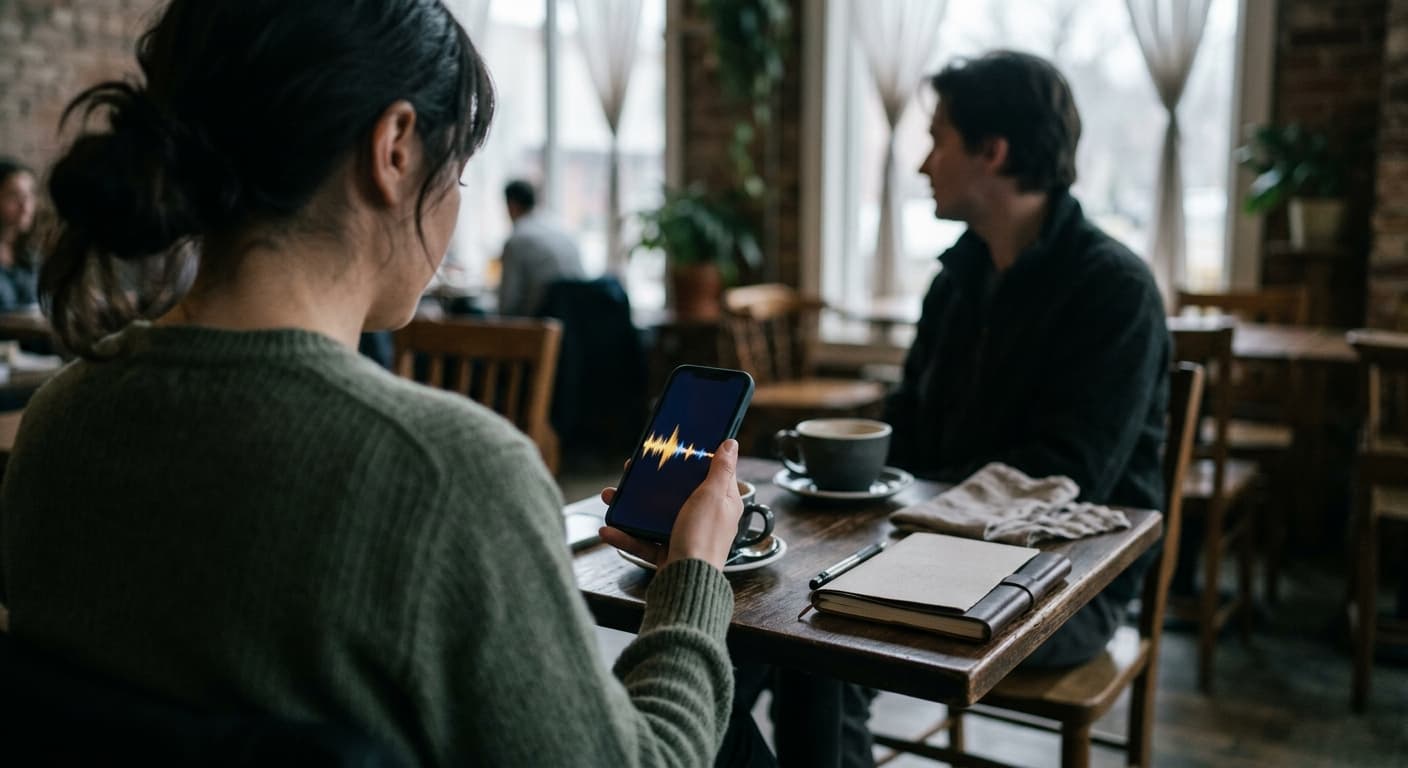
Nebraska is a one-party consent state. Under Neb. Rev. Stat. 86-290(2)(c), anyone taking part in a conversation may record it without telling the other people, as long as the recording is not made to commit a crime or a tort. Illegal recording is a Class IV felony, and victims can sue under Neb. Rev. Stat. 86-297.
Nebraska recording law at a glance
| Question | Answer |
|---|---|
| Consent rule | One-party consent |
| Main statute | Neb. Rev. Stat. 86-290(2)(c) |
| When it is illegal | Recording a conversation you are not part of, or recording for a criminal or tortious purpose |
| Criminal penalty | Class IV felony: up to 2 years prison, $10,000 fine, 12 months post-release supervision |
| Civil penalty | Neb. Rev. Stat. 86-297: greater of $100/day or $10,000, plus attorney fees (no punitive damages) |
| Hidden cameras | Neb. Rev. Stat. 28-311.08 (intrusion, intimate-area recording, distribution) |
| Recording police | Not clearly established in the 8th Circuit (Molina v. Book, 2023) |
This guide covers the questions most people actually ask: recording in-person conversations, recording phone calls, hidden cameras, and the penalties for getting it wrong. For any topic in depth, jump to the full Nebraska guides further down.
Recording in-person conversations in Nebraska
You can record a face-to-face conversation in Nebraska as long as you are part of it. Neb. Rev. Stat. 86-290(2)(c) says it is lawful for a person who is not acting under color of law to record a wire, electronic, or oral communication when that person is a party to it, or when one party has given consent. You do not have to tell anyone you are recording.
This one-party protection only applies once the conversation counts as a protected oral communication in the first place. Neb. Rev. Stat. 86-283 defines that term narrowly: speech uttered with an expectation that it is not being intercepted, where the surrounding circumstances justify that expectation. A conversation held where it can plainly be overheard by others carries no such expectation, so it falls outside the statute entirely, meaning anyone, not just a participant, can lawfully record it without consent from anyone.
The one limit that catches people is the purpose test. The shield disappears if the recording is made for the purpose of committing any criminal or tortious act in violation of state or federal law. So recording a conversation to document harassment, preserve a verbal agreement, or protect yourself is fine. Recording the same conversation to extort money, blackmail someone, or set up a defamation claim is not, and it exposes you to the full Class IV felony plus civil damages.
Nebraska courts have long applied this participant-recorder rule under the statute's plain text. A quick word of caution on the statutes: Neb. Rev. Stat. 86-291 is sometimes wrongly cited as the one-party rule. It is not. Section 86-291 is the court-ordered wiretap statute used by prosecutors, and ordinary people cannot rely on it. Your protection lives only in Section 86-290(2)(c). This tracks the federal one-party floor under the Electronic Communications Privacy Act at (2)(d). It is the opposite of two-party consent states like California, Florida, and Illinois, where every person must agree.

Recording phone calls in Nebraska
Phone calls follow the same one-party rule. A phone call is a wire or electronic communication under Neb. Rev. Stat. 86-290, so if you are on the call you can record it without telling the other person, unless you are doing it for a criminal or tortious purpose. This covers landline calls, cell calls, and VoIP services like Zoom, Teams, and Google Meet, including the audio of a video call.
The trap is interstate calls. When a call reaches a two-party consent state, the stricter state's law usually controls, so a Nebraskan calling a number in California should follow California's all-party rule under Penal Code 632. The good news is that the practical risk is narrow: all five of Nebraska's neighbors (Iowa, Kansas, Missouri, South Dakota, Wyoming) plus Colorado are also one-party states. The friction comes mainly with calls into strict states such as California, Florida, Illinois, Massachusetts, Maryland, Montana, New Hampshire, Oregon, Pennsylvania, and Washington.
For a deeper breakdown of cell, landline, VoIP, business, and interstate call rules, see the full Nebraska phone call recording guide.
Hidden cameras, doorbells, and nanny cams
Silent video on your own property is generally legal in Nebraska. Ring doorbells, exterior security cameras, and nanny cams pointed at common areas of your home are not banned. The line is drawn by Neb. Rev. Stat. 28-311.08, which (as amended by 2026 LB935, discussed below) makes it a crime to:
- Intrude on someone in a place of solitude or seclusion such as a restroom, locker room, shower, dressing room, or fitting room. This is a Class I misdemeanor for a first offense and a Class IV felony for a repeat.
- Record the intimate area of another person without their knowledge and consent. This is a Class IV felony.
- Distribute an intimate recording. A first or second violation is a Class IIA felony (up to 20 years). A third or subsequent violation is a Class II felony (1 to 50 years).
Two practical complications come up constantly. First, audio. A camera that captures conversations when you are not present, and where no one being recorded has consented, can violate Neb. Rev. Stat. 86-290 even though you own the device. A nanny cam that records the babysitter alone with your child is a good example. Second, aim. Cameras pointed into a neighbor's private space, or into any place of seclusion, are off-limits no matter who owns them.

For more, see the Nebraska hidden camera and voyeurism guide, the video recording guide, and the security camera guide.
Penalties for illegal recording in Nebraska
Nebraska treats illegal recording seriously, with both criminal and civil consequences.
Criminal. Intentionally intercepting a conversation you have no right to record is a Class IV felony under Neb. Rev. Stat. 86-290(1). Under Neb. Rev. Stat. 28-105, that means up to 2 years in prison plus 12 months of post-release supervision, or a fine up to $10,000, or both. There is no mandatory minimum, and first-time, non-dangerous offenders are usually eligible for probation. Two narrow first-offense situations are only misdemeanors: intercepting unencrypted radio (a Class I misdemeanor) and intercepting a cell or paging signal with no commercial motive (a Class III misdemeanor).
Civil. A person who was illegally recorded can sue under Neb. Rev. Stat. 86-297 and recover the greater of (a) actual damages plus any profits the recorder made, or (b) statutory damages of $100 per day of violation or $10,000, whichever is larger. The statute also awards attorney fees and allows a court to order the recording stopped. Punitive damages are not available under Nebraska law, although the parallel federal claim under does allow them, so a plaintiff with a federal hook can layer the two.
Disclosure. The felony reaches beyond the person who did the recording. Under Neb. Rev. Stat. 86-290(1)(c), intentionally disclosing the contents of a wire, electronic, or oral communication while knowing or having reason to know it was illegally intercepted is itself a separate Class IV felony, whether or not the discloser made the original recording. There is a narrow First Amendment exception for someone who played no part in the illegal interception: in Bartnicki v. Vopper, 532 U.S. 514 (2001), the U.S. Supreme Court held that a radio host who broadcast an illegally intercepted call he received from an anonymous source was protected because he did not participate in the interception and the call concerned a matter of public interest. That protection is narrow and fact-dependent, so anyone who receives a recording from someone else and does not know how it was made should get legal advice before publishing it.
| Conduct | Criminal penalty | Civil exposure |
|---|---|---|
| Illegally intercepting a conversation (86-290(1)) | Class IV felony: 2 yrs, $10,000, 12 mo supervision | 86-297: greater of $100/day or $10,000, plus attorney fees |
| First-offense unencrypted radio interception | Class I misdemeanor (up to 1 yr, $1,000) | Same 86-297 floor |
| First-offense cell/paging interception, no commercial gain | Class III misdemeanor (up to 3 mo, $500) | Same 86-297 floor |
| Recording someone's intimate area (28-311.08) | Class IV felony | Civil action for nonconsensual intimate images |
| Distributing an intimate recording (28-311.08) | Class IIA or Class II felony | Civil action for nonconsensual intimate images |
Recording the police in Nebraska
This is where Nebraska differs from most of the country. The federal 8th Circuit, which covers Nebraska, has not clearly established a First Amendment right to record police in public. In Molina v. Book, 59 F.4th 334 (8th Cir. 2023), cert. denied (Feb. 20, 2024), a divided panel held that the right to observe, and by extension record, police was not clearly established as of the incident at issue, which means officers usually keep qualified immunity against being sued. Robbins v. City of Des Moines, 984 F.3d 673 (8th Cir. 2021), agreed that recording is protected activity but not absolute. Nebraska also has no state law guaranteeing the right, unlike Colorado.
In practice, you can still record, but protect yourself: keep a reasonable distance, do not interfere, follow lawful orders, and remember that any audio you capture is covered by the one-party rule. The full breakdown is in the Nebraska guide to recording police.
Special topics: biometrics, AI, body cameras, and federal law
These are the fast-moving corners of Nebraska recording law. Each is summarized here, with the key citations.
Biometric privacy (LB204)
Nebraska does not have a BIPA-style biometric privacy law. LB204, the Biometric Autonomy Liberty Law modeled on Illinois's statute, was indefinitely postponed on April 17, 2026. Until that changes, voiceprint capture is governed by the wiretap rule at Neb. Rev. Stat. 86-290, and facial-recognition capture in private places runs through Neb. Rev. Stat. 28-311.08 and common-law intrusion upon seclusion. Anyone telling Nebraska residents they have Illinois-style biometric protections is mistaken.
AI and deepfake laws (LB371, LB383, LB525)
Nebraska did enact several AI measures. LB371 (signed May 30, 2025) extends the state's civil remedy for nonconsensual intimate images to AI-generated and digitally manipulated content. LB383 (signed May 20, 2025) renamed the child-pornography statute the Child Sexual Abuse Material Prevention Act and added AI-generated material. LB525 (signed April 14, 2026, operative July 1, 2027) is the Conversational AI Safety Act, which requires chatbots to disclose to minors that they are not human. The political-deepfake bill, LB615, was indefinitely postponed on April 17, 2026, so Nebraska has no political-deepfake disclosure statute.
Body-worn cameras and public records
Police body cameras are governed by Neb. Rev. Stat. 81-1454, which requires any agency that uses them to adopt a written policy, train officers, and keep recordings for at least 90 days (longer when tied to a case). The statute does not force agencies to deploy cameras, and it does not give the public an automatic right to the footage. Civilian requests go through the Nebraska Public Records Act (Neb. Rev. Stat. 84-712 to 84-712.09), where agencies may withhold active investigative records under 84-712.05(5). Denials can be appealed to the Attorney General or to district court.
Federal overlay
Federal law sits underneath Nebraska's rules. The Electronic Communications Privacy Act () is a one-party floor with the same criminal-or-tortious-purpose carve-out, and its civil action at allows punitive damages. The FCC's 2024 ruling (FCC 24-17) treats AI-cloned voices in robocalls as illegal artificial voices under the TCPA. The federal TAKE IT DOWN Act (Pub. L. 119-12, signed May 19, 2025) criminalizes nonconsensual intimate imagery, including deepfakes, and requires platforms to remove flagged content within 48 hours starting May 19, 2026. HIPAA limits how providers, not patients, handle recordings, so a patient may still record their own visit under the one-party rule.
Recent legal developments (2025 to 2026)
- 2025 LB80 repealed the older, overlapping voyeurism and intimate-image sections, Neb. Rev. Stat. 28-311.09 and 28-311.11. It did not amend Section 28-311.08 itself. Older guides citing 28-311.09 are out of date.
- 2026 LB935 (approved by the Governor April 14, 2026, operative July 18, 2026) amended Neb. Rev. Stat. 28-311.08 to add unmanned-aircraft language to the definition of "intrude," covering viewing or recording a person in a state of undress through electronic or other remote means, including by drone. The same act amended Neb. Rev. Stat. 29-2204.02 to add a fourth exception to mandatory Class IV felony probation: a defendant originally charged with a Class I, IA, IB, IC, ID, II, IIA, III, or IIIA felony does not get the mandatory-probation presumption, even if convicted of a lesser Class IV felony.
- 2025 LB371, LB383 added AI-generated content to the intimate-image and child-exploitation laws.
- 2026 LB525 created chatbot-disclosure duties (operative July 1, 2027).
- 2026 LB204 and LB615 (biometric privacy and political deepfakes) were both indefinitely postponed on April 17, 2026.
Nebraska recording laws in depth
Want to know more? Each guide below goes deeper than this overview on one specific situation.
By type of recording
By place or relationship
- Recording the police
- Recording at work
- Recording in healthcare settings
- Recording in schools
- Public spaces and government meetings
- Landlords and tenants
More Nebraska laws
- Nebraska AI Meeting Recording Laws
- Nebraska Data Privacy Laws
- Nebraska Hit and Run Laws
- Nebraska Landlord-Tenant Laws
- Nebraska Defamation Laws
This article is general legal information, not legal advice. Recording laws change and apply differently to each situation. For advice about your circumstances, consult a licensed Nebraska attorney.
More Nebraska Laws
Frequently Asked Questions
Is Nebraska a one-party or two-party consent state?
One-party consent. Under Neb. Rev. Stat. 86-290(2)(c), a person who is part of a conversation can record it without telling the other party. It only becomes a crime when no party consents, or when the participant records for a criminal or tortious purpose.
Can I record a phone call in Nebraska?
Yes, if you are on the call. Nebraska's one-party rule lets you record without telling the other person. The catch is interstate calls: if you call someone in a two-party state like California, Florida, or Illinois, follow the stricter state's all-party rule to be safe.
Is recording someone in Nebraska a felony?
It can be. Intentionally intercepting a conversation you are not part of is a Class IV felony under Neb. Rev. Stat. 86-290, punishable by up to 2 years in prison and a $10,000 fine. Recording a conversation you are part of, for a lawful purpose, is not a crime.
What can I sue for if someone recorded me illegally?
Under Neb. Rev. Stat. 86-297 you can recover the greater of $100 per day of violation or $10,000, plus your attorney fees, and you can ask a court to stop the recording. Punitive damages are not available under the state statute, though the federal wiretap law (18 U.S.C. 2520) does allow them.
Are Ring doorbells and nanny cams legal in Nebraska?
Video on your own property is generally legal. The risk is audio: a camera that records conversations when you are not present, with no one consenting, can violate Neb. Rev. Stat. 86-290. Cameras aimed at restrooms, locker rooms, or a neighbor's private space are also off-limits under Neb. Rev. Stat. 28-311.08.
Can I record my boss or an HR meeting in Nebraska?
Generally yes for audio, because you are a party to the meeting under the one-party rule. But your employer can adopt a no-recording policy, and that policy is only valid if it is narrowly tailored under the NLRB's Stericycle standard. See the Nebraska workplace recording guide for details.
Is it legal to record the police in Nebraska?
It is legally uncertain. The 8th Circuit, which covers Nebraska, has not clearly established a First Amendment right to record police, so officers often keep qualified immunity (Molina v. Book, 2023). You can still record, but keep your distance, do not interfere, and follow lawful orders.
Does Nebraska have a biometric privacy or deepfake law?
Nebraska has no BIPA-style biometric privacy law (LB204 was postponed in 2026) and no political-deepfake statute. It did add AI-generated content to its nonconsensual intimate image law (LB371, 2025) and its child-exploitation law (LB383, 2025), and passed a chatbot-disclosure law (LB525) that takes effect in 2027.
Updates
Corrected the penalty escalation for distributing an intimate recording under Neb. Rev. Stat. 28-311.08(3): a first or second violation is a Class IIA felony and only a third or subsequent violation is a Class II felony.
Corrected the case name in our recording-police discussion (Molina v. Book, not Molina v. City of St. Louis) and repaired its dead citation link, added the April 2026 LB935 amendment to Nebraska's hidden-camera and probation statutes that this page had missed, fixed a mischaracterization of what a 2025 bill (LB80) actually changed, and removed an uncited 1983 case citation we could not independently verify.
Independently fact-checked against the cited primary sources
Governing law re-checked for recent changes
Governing law re-checked for recent changes
Reviewed and approved by an editor
Restructured for readability: led with the core consumer questions (in-person conversations, phone calls, hidden cameras, penalties, recording police), condensed the biometric, AI/deepfake, body-camera, and federal-overlay material into a single Special Topics section, added a contextual 'in depth' index to the 12 Nebraska sub-guides, refreshed the FAQ, and replaced the hero image. All statutes and citations preserved (86-290, 86-297, 28-311.08, 28-105, 81-1454, LB80/LB371/LB383/LB525, LB204/LB615, Molina).
Refresh anchored Section 86-290(2)(c) one-party consent including the criminal-or-tortious-purpose carve-out, documented Section 86-297 civil cause without punitive damages, consolidated voyeurism and NCII into Section 28-311.08 after 2025 LB80 Section 52 repealed Section 28-311.09, recorded LB204 Biometric Autonomy Liberty Law indefinite postponement on April 17, 2026, recorded LB615 political-deepfake indefinite postponement, removed baseline LB146 and LB231 (not deepfake bills), added the real 2025-2026 enactments LB371 plus LB383 plus LB525, corrected the body-cam statute to Section 81-1454, added 8th Circuit divergence framing through Molina (cert denied February 20, 2024), Robbins, and Chestnut, reframed NLRB GC 25-05 as a housekeeping rescission with Stericycle still controlling, updated FCC 24-24 to vacated, removed stale 47 CFR Section 64.501, added TAKE IT DOWN Act federal compliance, and replaced commercial-codifier links with nebraskalegislature.gov, supremecourt.nebraska.gov, and uscode.house.gov.
Anchored Section 86-290(2)(c) one-party consent and the criminal-or-tortious-purpose carve-out, documented the Section 86-297 civil cause without punitive damages, consolidated voyeurism and NCII into Section 28-311.08 after 2025 LB80, recorded the LB204 and LB615 indefinite postponements, added the real 2025-2026 AI enactments (LB371, LB383, LB525), corrected the body-camera statute to Section 81-1454, and added the 8th Circuit recording-police posture through Molina, Robbins, and Chestnut.
Added wearable recording devices section and 2 FAQs
The Law Behind This Article
This article rests on the statutory provisions below, held in our own legal record and retrieved from the official source. Tap a section to read the operative text.
Nebraska Revised Statutes, Chapter 86: TELECOMMUNICATIONS AND TECHNOLOGY
§ 86-290Unlawful acts; penaltyIn forcecited in 18 of our articles
(1) Except as otherwise specifically provided in sections 86-271 to 86-295, it is unlawful to: (a) Intentionally intercept, endeavor to intercept, or procure any other person to intercept or endeavor to intercept any wire, electronic, or oral communication; (b) Intentionally use, endeavor to use, or procure any other person to use or endeavor to use any electronic, mechanical, or other device to intercept any oral communication when (i) such device is affixed to, or otherwise transmits a signal through, a wire, cable, or other like connection used in wire communication or (ii) such device transmits communications by radio or interferes with the transmission of such communication; (c) Intentionally disclose or endeavor to disclose to any other person the contents of any wire, electronic, or oral communication, knowing or having reason to know that the information was obtained through the interception of a wire, electronic, or oral communication in violation of this subsection; (d) Intentionally use or endeavor to use the contents of any wire, electronic, or oral communication, knowing or having reason to know that the information was obtained through the interception of a wire,…
Official text (excerpt) · last checked 2026-08-31 · Read the full text in our law library · Verify at nebraskalegislature.gov
Cited in 3 court opinionsMost recently applied by a court: 2022
Leading cases:
- Hays v. Hays (Nebraska Court of Appeals 2022)“…to her. We address these arguments, in turn. Under Neb. Rev. Stat. § 86-290(2)(c) (Reissue 2016), “it is not unlawf…”
- Ades v. Omni Hotels Management Corp. (District Court, C.D. California 2014, 46 F. Supp. 3d 999)“…f the carrier or provider of such communication services.”' Neb.Rev.Stat. § 86-290(2)(a). Based on this provision, Omni co…”
- Lewton Ex Rel. Lewton v. Divingnzzo (District Court, D. Nebraska 2011, 772 F. Supp. 2d 1046)“…7) to exclude the recordings as illegally intercepted under Neb.Rev.Stat. § 86-290(a) (see Doc. 137-16 at p.…”
Identified automatically from the court opinions citing this section — not a ranking of which case controls.
Also relied on in: Nebraska Audio Recording Laws: One-Party Consent Rules and Penalties (2026), Nebraska Video Recording Laws: What You Can and Cannot Film (2026), Nebraska Voyeurism Laws: Hidden Cameras, Penalties, and Privacy Protections (2026)
§ 86-297Interception; civil actionIn forcecited in 10 of our articles
(1) Any person whose wire, electronic, or oral communication is intercepted, disclosed, or intentionally used in violation of sections 86-271 to 86-295 and 86-298 to 86-2,103 may in a civil action recover from the person or entity which engaged in that violation such relief as may be appropriate. (2) In an action under this section, appropriate relief includes: (a) Such preliminary and other equitable or declaratory relief as may be appropriate; (b) Damages under subsection (3) of this section; and (c) Reasonable attorney's fees and other litigation costs reasonably incurred. (3)(a) In an action under this section, if the conduct in violation of sections 86-271 to 86-295 and 86-298 to 86-2,103 is the private viewing of a private satellite video communication that is not scrambled or encrypted or if the communication is a radio communication that is transmitted on frequencies allocated for remote pickup broadcast stations under subpart D of 47 C.F.R.
Official text (excerpt) · last checked 2026-07-29 · Read the full text in our law library · Verify at nebraskalegislature.gov
Cited in 1 court opinionsMost recently applied by a court: 2020
Leading cases:
- Brumbaugh v. Bendorf (Nebraska Supreme Court 2020, 945 N.W.2d 116)“…warded under 18 U.S.C. § 2520 (2018) or Neb. Rev. Stat. § 86-297 (Reissue 2014) is addressed to the tria…”
Identified automatically from the court opinions citing this section — not a ranking of which case controls.
Also relied on in: Nebraska Phone Call Recording Laws: Consent Rules for Landline, Cell, and VoIP (2026), Nebraska Security Camera Laws: Rules for Homes, Businesses, and HOAs (2026), Nebraska Smart Glasses Recording Laws 2026
§ 86-283Oral communication, definedIn force
Oral communication means any oral communication uttered by a person exhibiting an expectation that such communication is not subject to interception under circumstances justifying such expectation but does not include any electronic communication.
Official text (excerpt) · last checked 2026-07-29 · Read the full text in our law library · Verify at nebraskalegislature.gov
Cited in 2 court opinionsMost recently applied by a court: 2023
Leading cases:
- Hays v. Hays (Nebraska Court of Appeals 2022)“…ctation but does not include any electronic communication.” Neb. Rev. Stat. § 86-283 (Reissue 2016). Even if we assu…”
- Project Veritas v. Michael Schmidt (Court of Appeals for the Ninth Circuit 2023, 72 F.4th 1043)“…8) 76 PROJECT VERITAS V. SCHMIDT Nebraska: Neb. Rev. Stat. Ann. §§ 86-283, 86-290(1)(a), (2)(c); Nebraska v. Bier…”
Identified automatically from the court opinions citing this section — not a ranking of which case controls.
§ 86-291Interception; court orderIn forcecited in 2 of our articles
The Attorney General or any county attorney may make application to any district court of this state for an order authorizing or approving the interception of wire, electronic, or oral communications, and such court may grant, subject to sections 86-271 to 86-295, an order authorizing or approving the interception of wire, electronic, or oral communications by law enforcement officers having responsibility for the investigation of the offense as to which application is made, when such interception may provide or has provided evidence of the commission of the offense of murder, kidnapping, robbery, bribery, extortion, dealing in narcotic or other dangerous drugs, labor trafficking or sex trafficking, labor trafficking of a minor or sex trafficking of a minor, sexual assault of a child or a vulnerable adult, visual depiction or possessing a visual depiction of sexually explicit conduct of a child, or child enticement by means of a computer, or any conspiracy to commit any such offense.
Official text (excerpt) · last checked 2026-07-29 · Read the full text in our law library · Verify at nebraskalegislature.gov
Cited in 2 court opinionsMost recently applied by a court: 2019
Leading cases:
- State v. Brye (Nebraska Supreme Court 2019, 304 Neb. 498)“…Time. An application to intercept under Neb. Rev. Stat. § 86-291 (Reissue 2014) must be submitted to the…”
- United States v. Jeremy Terrell (Court of Appeals for the Eighth Circuit 2019, 912 F.3d 1125)“…endation, not pre-authorization, to the district court. See Neb. Rev. Stat. § 86-291 (“Within twenty-four hours of receipt b…”
Identified automatically from the court opinions citing this section — not a ranking of which case controls.
Nebraska Revised Statutes, Chapter 28: CRIMES AND PUNISHMENTS
§ 28-311.08Unlawful intrusion; photograph, film, or record image or video of intimate area; distribute or make public; penalty; court; duties; registration under Sex Offender Registration Act; statute of limitationsIn forcecited in 16 of our articles
(1) It shall be unlawful for any person to knowingly intrude upon any other person without his or her consent in a place of solitude or seclusion. Violation of this subsection is a Class I misdemeanor. A second or subsequent violation of this subsection is a Class IV felony. (2) It shall be unlawful for any person to knowingly and intentionally photograph, film, or otherwise record an image or video of the intimate area of any other person without his or her knowledge and consent when his or her intimate area would not be generally visible to the public regardless of whether such other person is located in a public or private place. Violation of this subsection is a Class IV felony. (3) It shall be unlawful for any person to knowingly and intentionally distribute or otherwise make public an image or video of another person recorded in violation of subsection (2) of this section without that person's consent. A first or second violation of this subsection is a Class IIA felony. A third or subsequent violation of this subsection is a Class II felony.
Official text (excerpt) · last checked 2026-08-31 · Read the full text in our law library · Verify at nebraskalegislature.gov
Cited in 4 court opinionsMost recently applied by a court: 2024
Leading cases:
- State v. McGovern (Nebraska Supreme Court 2022, 311 Neb. 705)“…62 See Riley v. California, supra note 5. 63 See Neb. Rev. Stat. § 28-311.08 (Reissue 2016 & Cum. Supp. 2020).…”
- State v. Zitterkopf (Nebraska Supreme Court 2024, 317 Neb. 312)“…unlawful distribution of an intimate image in violation of Neb. Rev. Stat. § 28-311.08(3) (Cum. Supp. 2022). Zitterkopf claims…”
- In Re Interest of Dustin S. (Nebraska Supreme Court 2008, 276 Neb. 635)“…le undressing would constitute a Class II misdemeanor under Neb. Rev.Stat. § 28-311.08 (Cum.Supp.2006). Therefore, Dustin is a…”
Identified automatically from the court opinions citing this section — not a ranking of which case controls.
Also relied on in: Nebraska Medical Recording Laws: Patient Rights, HIPAA, and Consent (2026), Nebraska Public Recording Laws: Filming in Public Spaces and Government Meetings (2026), Nebraska Workplace Recording Laws: Employee and Employer Rights (2026)
§ 28-105Felonies; classification of penalties; sentences; where served; eligibility for probationIn forcecited in 5 of our articles
(1) For purposes of the Nebraska Criminal Code and any statute passed by the Legislature after the date of passage of the code, felonies are divided into ten classes which are distinguished from one another by the following penalties which are authorized upon conviction: Class I felony Death Class IA felony Life imprisonment Class IB felony Maximum—life imprisonment Minimum—twenty years imprisonment Class IC felony Maximum—fifty years imprisonment Mandatory minimum—five years imprisonment Class ID felony Maximum—fifty years imprisonment Mandatory minimum—three years imprisonment Class II felony Maximum—fifty years imprisonment Minimum—one year imprisonment Class IIA felony Maximum—twenty years imprisonment Minimum—none Class III felony Maximum—four years imprisonment and two years post-release supervision or twenty-five thousand dollars fine, or both Minimum—none for imprisonment and none for post-release supervision Class IIIA felony Maximum—three years imprisonment and eighteen months post-release supervision or ten thousand dollars fine, or both Minimum—none for imprisonment and none for post-release supervision Class IV felony Maximum—two years imprisonment and twelve months…
Official text (excerpt) · last checked 2026-07-29 · Read the full text in our law library · Verify at nebraskalegislature.gov
Cited in 941 court opinionsMost recently applied by a court: 2026
Leading cases:
- State v. Iromuanya (Nebraska Supreme Court 2006, 272 Neb. 178)“…ar's imprisonment and a maximum of 50-years' imprisonment. Neb. Rev. Stat. § 28-105 (1) (Cum. Supp. 2004) and §§ 28-201(4)(…”
- State v. Stephens (Nebraska Supreme Court 1991, 237 Neb. 551)“…28-319(2), punishable by from 1 to 50 years’ imprisonment, Neb. Rev. Stat. § 28-105 (1) (Reissue 1985). Stephens’ sentence…”
- State v. Gibson (Nebraska Court of Appeals 2018, 26 Neb. Ct. App. 559)“…I felonies are punishable by 1 to 50 years' imprisonment. Neb. Rev. Stat. § 28-105 (Supp. 2017). Therefore, if the court…”
Identified automatically from the court opinions citing this section — not a ranking of which case controls.
Also relied on in: Nebraska Sexting Laws: Legal Consequences and Penalties, Nebraska Surveillance Camera Laws (2026 Guide), Nebraska Ring Doorbell Laws: What You Need to Know in 2026
United States Code Title 18
§ 2511Interception and disclosure of wire, oral, or electronic communications prohibitedIn forcecited in 415 of our articles
Except as otherwise specifically provided in this chapter any person who— intentionally intercepts, endeavors to intercept, or procures any other person to intercept or endeavor to intercept, any wire, oral, or electronic communication; intentionally uses, endeavors to use, or procures any other person to use or endeavor to use any electronic, mechanical, or other device to intercept any oral communication when— such device is affixed to, or otherwise transmits a signal through, a wire, cable, or other like connection used in wire communication; or such device transmits communications by radio, or interferes with the transmission of such communication; or such person knows, or has reason to know, that such device or any component thereof has been sent through the mail or transported in interstate or foreign commerce; or such use or endeavor to use (A) takes place on the premises of any business or other commercial establishment the operations of which affect interstate or foreign commerce; or (B) obtains or is for the purpose of obtaining information relating to the operations of any business or other commercial establishment the operations of which affect interstate or foreign…
Official text (excerpt) · last checked 2026-08-28 · Read the full text in our law library · Verify at uscode.house.gov
Cited in 2,045 court opinionsMost recently applied by a court: 2026
In the courts (editorial summary, independently checked):Griggs-Ryan v. Smith (1990) applied the Section 2511(2)(d) prior-consent exception, treating a tenant repeatedly told that all incoming calls were taped as having impliedly consented. United States v. United States District Court (1972) read the then-current Section 2511(3) as conferring no presidential surveillance power.
Leading cases:
- Mitchell v. Forsyth (Supreme Court of the United States 1985, 472 U.S. 511)✓The Attorney General authorized a warrantless 1970 national security wiretap that caught the plaintiff's calls; the Court held the since-repealed Section 2511(3) disclaimer left the tap lawful under Title III, and that Mitchell had qualified immunity.
- United States v. United States District Court for the Eastern District of Michigan (Supreme Court of the United States 1972, 407 U.S. 297)✓The Attorney General approved warrantless wiretaps on members of a domestic group accused of bombing a CIA office; the Court read Section 2511(3) as a congressional disclaimer conferring no surveillance power, then held the Fourth Amendment required prior judicial approval.
- Forsyth v. Barr (Court of Appeals for the Fifth Circuit 1994, 19 F.3d 1527)✓Dallas police used, in an internal affairs probe of an officer, calls private parties allegedly intercepted illegally; assuming that was unlawful, the Fifth Circuit held Section 2517(1) and (2) allowed the disclosure and use, defeating the Section 2511(1)(c) and (d) claims.
Identified automatically from the court opinions citing this section — not a ranking of which case controls.
Also relied on in: Connecticut Recording Laws (2026): Hybrid Consent Rules Explained, Oregon Recording Laws (2026): Hybrid One-Party and All-Party Rules, US Recording Laws by State (2026): All 50 States Explained
§ 2520Recovery of civil damages authorizedIn forcecited in 115 of our articles
Except as provided in section 2511(2)(a)(ii), any person whose wire, oral, or electronic communication is intercepted, disclosed, or intentionally used in violation of this chapter may in a civil action recover from the person or entity, other than the United States, which engaged in that violation such relief as may be appropriate. In an action under this section, appropriate relief includes— such preliminary and other equitable or declaratory relief as may be appropriate; damages under subsection (c) and punitive damages in appropriate cases; and a reasonable attorney’s fee and other litigation costs reasonably incurred.
Official text (excerpt) · last checked 2026-07-28 · Read the full text in our law library · Verify at uscode.house.gov
Cited in 860 court opinionsMost recently applied by a court: 2026
In the courts (editorial summary, independently checked):Walker v. Darby (1990) held a 2520 plaintiff need not prove the contents of intercepted conversations, only interception and a justified expectation against it. Bartnicki v. Vopper (2001) barred 2520 damages against defendants who took no part in the interception, obtained the tape lawfully, and disclosed a matter of public concern.
Leading cases:
- Jessie Walker v. Thomas E. Darby, Hugh L. Robinson, Jr., and Kenneth Day (Court of Appeals for the Eleventh Circuit 1990, 911 F.2d 1573)✓A postal letter carrier said three supervisors wired an intercom near his workstation to listen in. Reversing summary judgment, the Eleventh Circuit held a section 2520 plaintiff can show interception without proving the contents of specific conversations.
- Gelbard v. United States (Supreme Court of the United States 1972, 408 U.S. 41)“…disclosure, or use is entitled to recover civil damages, 18 U. S. C. § 2520 . Title III also bars the use as eviden…”
- DirecTV, Inc. v. Hoa Huynh (Court of Appeals for the Ninth Circuit 2007, 503 F.3d 847)“…7 U.S.C. § 605 (e)(4), or alternatively, for violations of 18 U.S.C. § 2520 (a), or alternatively, for violations o…”
Identified automatically from the court opinions citing this section — not a ranking of which case controls.
Also relied on in: Alabama Audio Recording Laws: Consent Rules and Penalties, Alabama Phone Call Recording Laws: What You Need to Know, Alaska Phone Call Recording Laws: Rules for Landline, Cell, and VoIP (2026)
Nebraska Revised Statutes, Chapter 81: STATE ADMINISTRATIVE DEPARTMENTS
§ 81-1454Body-worn camera policy; contentsIn forcecited in 3 of our articles
A body-worn camera policy required by section 81-1453 shall include provisions which govern the use of body-worn cameras by peace officers and the retention and disposition of recordings created with such cameras by law enforcement agencies. Such body-worn camera policy shall include, but not be limited to: (1) A requirement that training be provided to any peace officer who will use a body-worn camera and to any other employee who will come into contact with video or audio data recorded by a body-worn camera; (2) A requirement that recordings created by body-worn cameras shall be retained for a minimum period of ninety days from the date of recording.
Official text (excerpt) · last checked 2026-08-31 · Read the full text in our law library · Verify at nebraskalegislature.gov
Also relied on in: Nebraska Police Body Camera Laws: Retention & Records, Nebraska Police Reports: How to Get a Crash Report, Incident Report, or Bodycam Video
Nebraska Revised Statutes, Chapter 84: STATE OFFICERS
§ 84-712.05Records which may be withheld from the public; enumeratedIn forcecited in 5 of our articles
The following records, unless publicly disclosed in an open court, open administrative proceeding, or open meeting or disclosed by a public entity pursuant to its duties, may be withheld from the public by the lawful custodian of the records: (1) Personal information in records regarding a student, prospective student, or former student of any educational institution or exempt school that has effectuated an election not to meet state approval or accreditation requirements pursuant to section 79-1601 when such records are maintained by and in the possession of a public entity, other than routine directory information specified and made public consistent with 20 U.S.C.
Official text (excerpt) · last checked 2026-09-03 · Read the full text in our law library · Verify at nebraskalegislature.gov
Cited in 24 court opinionsMost recently applied by a court: 2025
In the courts (editorial summary, independently checked):Nebraska courts treat R.S. 84-712.05 as a permissive list the custodian must justify. Jacob v. Nebraska Bd. of Parole (2022) held records of a first-step parole interview fall in the subsection (5) investigatory exception. State ex rel. Unger v. State (2016) held the section reaches only material that is a public record at all.
Leading cases:
- Jacob v. Nebraska Bd. of Parole (Nebraska Supreme Court 2022, 313 Neb. 109)✓An inmate sought the record of the interview from his first-step parole review. The court held that record falls within the investigation or examination exception in section 84-712.05(5) and may be withheld, and that his individual parole file is not a public record.
- Opinion No. (2000) (Nebraska Attorney General Reports 2000)✓Asked about teacher certification files, the Nebraska attorney general concluded records the Department of Education develops while examining applicants fit section 84-712.05(5), so the agency may withhold them but is not required to and may keep disclosing them.
- Opinion No. (1996) (Nebraska Attorney General Reports 1996)“…xception to the general rule of disclosure, as set forth in Neb. Rev. Stat. § 84-712.05 (Supp. 1995), is satisfied. That statu…”
Identified automatically from the court opinions citing this section — not a ranking of which case controls.
Also relied on in: Nebraska Public Records Law: How to Request Government Records (2026), Are Autopsy Reports Public in Nebraska? (2026)
§ 84-1412Meetings of public body; rights of public; public body; powers and dutiesIn forcecited in 3 of our articles
(1) Subject to the Open Meetings Act, the public has the right to attend and the right to speak at meetings of public bodies, and all or any part of a meeting of a public body, except for closed sessions called pursuant to section 84-1410, may be videotaped, televised, photographed, broadcast, or recorded by any person in attendance by means of a tape recorder, a camera, video equipment, or any other means of pictorial or sonic reproduction or in writing. Except for closed sessions called pursuant to section 84-1410, a public body shall allow members of the public an opportunity to speak at each meeting. (2) It shall not be a violation of subsection (1) of this section for any public body to make and enforce reasonable rules and regulations regarding the conduct of persons attending, speaking at, videotaping, televising, photographing, broadcasting, or recording its meetings, including meetings held by virtual conferencing.
Official text (excerpt) · last checked 2026-07-29 · Read the full text in our law library · Verify at nebraskalegislature.gov
Cited in 3 court opinionsMost recently applied by a court: 2017
Leading cases:
- Stoetzel & Sons, Inc. v. City of Hastings (Nebraska Supreme Court 2003, 265 Neb. 637)“…e submitted bids available at the November 13 meeting. See Neb. Rev. Stat. § 84-1412 (8) (Cum. Supp. 2002). *639…”
- Aldridge v. School Dist. of North Platte (Nebraska Supreme Court 1987, 225 Neb. 580)“…be limited or prohibited by the board at its meetings. See Neb. Rev. Stat. § 84-1412 (2) (Cum. Supp. 1984). Since the issue…”
- Koch v. City of Sargent (Nebraska Court of Appeals 2017)“…s table to Koch’s own table is not a violation of the act. Neb. Rev. Stat. § 84-1412 states that “It shall not be a violatio…”
Identified automatically from the court opinions citing this section — not a ranking of which case controls.
Also relied on in: Nebraska School Recording Laws: Student, Parent, and Teacher Rights (2026)
Search our full record of US law — 2.1 million sections, every state + federal →
Sources and References
- Neb. Rev. Stat. 86-290 (interception; one-party consent at 86-290(2)(c); Class IV felony)(nebraskalegislature.gov).gov
- Neb. Rev. Stat. 86-291 (court-ordered wiretap authorization; not the one-party rule)(nebraskalegislature.gov).gov
- Neb. Rev. Stat. 86-297 (civil cause of action; $100/day or $10,000; no punitives)(nebraskalegislature.gov).gov
- Neb. Rev. Stat. 28-311.08 (intrusion, voyeurism, intimate-image distribution; amended by 2026 LB935 to add drone/unmanned-aircraft language)(nebraskalegislature.gov).gov
- Neb. Rev. Stat. 28-105 (Class IV felony sentencing)(nebraskalegislature.gov).gov
- Neb. Rev. Stat. 81-1454 (body-worn camera policy and 90-day retention)(nebraskalegislature.gov).gov
- Neb. Rev. Stat. 84-712.05 (public-records exemptions)(nebraskalegislature.gov).gov
- Neb. Rev. Stat. 84-1412 (Open Meetings Act public recording right)(nebraskalegislature.gov).gov
- 2025 LB80 (repeal of overlapping Sections 28-311.09 and 28-311.11; did not amend 28-311.08 itself)(nebraskalegislature.gov).gov
- 2025 LB371 (AI-image civil-liability extension; signed May 30, 2025)(nebraskalegislature.gov).gov
- 2025 LB383 (Child Sexual Abuse Material Prevention Act; signed May 20, 2025)(nebraskalegislature.gov).gov
- 2026 LB525 (Conversational AI Safety Act; operative July 1, 2027)(nebraskalegislature.gov).gov
- LB204 Biometric Autonomy Liberty Law (indefinitely postponed April 17, 2026)(nebraskalegislature.gov).gov
- Molina v. Book, 59 F.4th 334 (8th Cir. 2023)(ecf.ca8.uscourts.gov).gov
- Robbins v. City of Des Moines, 984 F.3d 673 (8th Cir. 2021)(ecf.ca8.uscourts.gov).gov
- ECPA, 18 U.S.C. 2511 (federal one-party floor)(uscode.house.gov).gov
- TAKE IT DOWN Act, S. 146 (Pub. L. 119-12)(congress.gov).gov
- Stericycle, Inc., 372 NLRB No. 113 (Aug. 2, 2023)(nlrb.gov).gov
- Neb. Rev. Stat. 86-283 (oral communication defined; reasonable-expectation-of-privacy gate)(nebraskalegislature.gov).gov
- Bartnicki v. Vopper, 532 U.S. 514 (2001) (First Amendment protection for innocent recipient publishing illegally intercepted communication)(courtlistener.com)
- 2026 LB935 (amends 28-311.08 to add drone/unmanned-aircraft language; amends 29-2204.02 to add a 4th mandatory-probation exception; approved 4/14/2026, operative 7/18/2026)(nebraskalegislature.gov).gov