
North Dakota
North Dakota Recording Laws (2026): One-Party Consent Rules
Independently fact-checked against primary sources (last audited August 15, 2026). · Reviewed by the RecordingLaw editorial team. · Law checked current as of August 15, 2026. · 23 primary sources cited on this page. How we verify our legal content
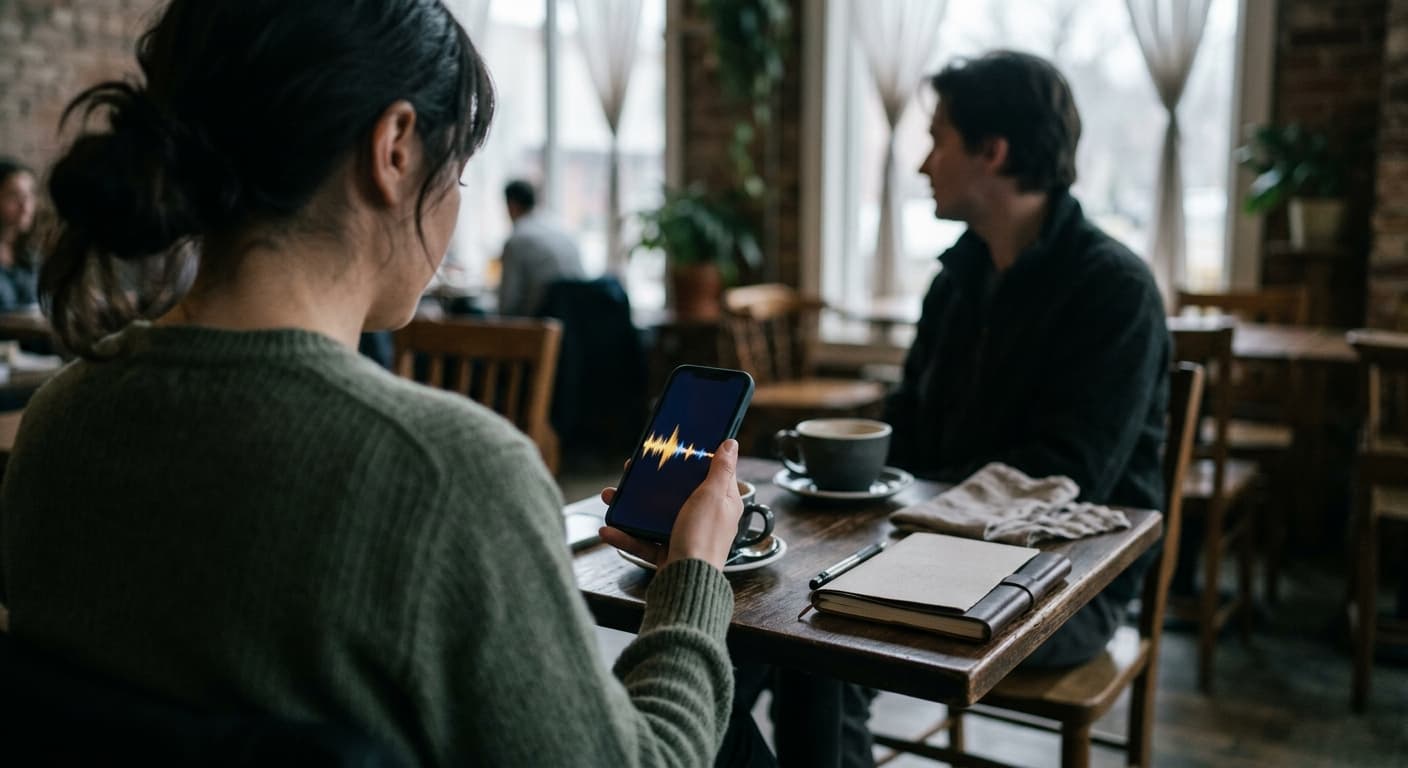
North Dakota is a one-party consent state under N.D. Cent. Code 12.1-15-02(3)(c). If you are a party to the conversation, you can record it without telling anyone else. Recording a conversation you are not part of, without any party's consent, violates section 12.1-15-02(1)(a), a Class C felony carrying up to five years imprisonment and a $10,000 fine. Violations also expose the recorder to civil liability under federal 18 U.S.C. 2520, because North Dakota's wiretap chapter contains no state-law civil cause of action.
North Dakota recording law at a glance
| Question | Answer |
|---|---|
| Consent rule | One-party consent |
| Main statute | N.D. Cent. Code 12.1-15-02(3)(c) |
| When it is illegal | Recording a wire or oral communication without being a party and without any party's consent |
| Criminal penalty | Class C felony: up to 5 years, $10,000 fine (N.D. Cent. Code 12.1-32-01(4)) |
| Civil penalty | No state-law claim; federal 18 U.S.C. 2520 provides the greater of $100/day or $10,000 in statutory damages, plus punitives, attorney fees |
| Hidden cameras | Class B misdemeanor under N.D. Cent. Code 12.1-31-14 (intent to intrude on privacy; no sexual intent required); Class A misdemeanor, Class C felony on enhancement, under N.D. Cent. Code 12.1-20-12.2 (sexual-gratification intent required) |
| Recording police | Not criminally prohibited; but the 8th Circuit has not recognized a clearly established First Amendment right to record |
For a closer look at any of these rules, jump to the in-depth guide index at the bottom of this page.
Recording in-person conversations in North Dakota
North Dakota's consent rule is found in N.D. Cent. Code 12.1-15-02(3)(c). A person who is a party to a wire or oral communication may record it without notifying other participants, as long as the communication was "not intercepted for the purpose of committing a crime or other unlawful harm." The exact statutory wording matters. North Dakota writes the limit as "a crime or other unlawful harm," which is broader than the "criminal or tortious act" phrase used in the federal statute at 18 U.S.C. 2511(2)(d), so conduct that is unlawful without being a crime or a tort can still defeat the defense. That two-prong condition (party status plus lawful purpose) is the full test under the interception statute, but it is not the whole of North Dakota recording law: the surreptitious-intrusion statutes discussed below independently reach hidden video and audio devices in private places.
The "oral communication" definition in section 12.1-15-04(5) adds a threshold filter. The statute only covers communications "uttered by a person exhibiting an expectation that such communication is not subject to interception under circumstances justifying such expectation." A private conversation at home clearly qualifies. An open-air exchange on a busy street corner, easily overheard by bystanders, may not qualify as a covered "oral communication" at all, meaning recording it raises no issue under section 12.1-15-02 in the first place.
The unlawful-purpose carve-out matters practically. Recording a coworker to document an HR complaint is not a crime or other unlawful harm, and the defense applies. Recording the same coworker to facilitate extortion is, and the defense fails even though you are a party to the conversation. Separately, in State v. Loh, 2010 ND 66, the North Dakota Supreme Court, under the facts of that case, was not persuaded that the state constitution was violated by warrantless police electronic monitoring of a suspect's face-to-face conversations with a confidential informant who consented to the monitoring, and it declined to declare the consent provision at N.D.C.C. 29-29.2-05 unconstitutional.
North Dakota's one-party rule mirrors federal law closely. When a party intercepts with no unlawful purpose, both the state and federal regimes are satisfied simultaneously.
Recording phone calls in North Dakota
The same one-party rule applies to phone calls. A party to any landline, cell, VoIP, or video call may record it without announcing the recording. The underlying statute is the same section 12.1-15-02(3)(c), and the unlawful-purpose limit is the same.
For interstate calls, the conservative rule is to comply with the stricter state's law. If one participant is in California, Florida, Illinois, Maryland, Massachusetts, Montana, New Hampshire, Pennsylvania, or Washington (all all-party states), notify everyone at the outset. A few other states carry real but more nuanced exposure for phone calls specifically: Nevada is treated as functionally all-party for phone calls under the fractured Nevada Supreme Court decision in Lane v. Allstate Insurance Co.; Connecticut's criminal law is one-party, but C.G.S. 52-570d imposes civil liability for recording a private phone call unless all parties consent, the recording is preceded by recorded verbal notice, or an audible beep tone is used; and Oregon lets a participant record a phone call under ORS 165.540(1)(a) but requires that all participants be specifically informed before an in-person conversation or a video-conference call is recorded (ORS 165.540(1)(c) and 165.535(1)). Delaware's classification is contested and is best treated with the same caution. A North Dakota resident who does not notify all parties when calling into any of these states will be lawful under North Dakota law but potentially liable under the other state's law.
The federal "beep tone" notice requirement under 47 C.F.R. 64.501 was removed effective November 20, 2017. There is no federal or North Dakota state-level beep-tone rule in force today, and no North Dakota Public Service Commission recording rule exists. Any source citing such a rule is citing an obsolete or phantom standard.
For details on recording rules in specific call contexts, see the North Dakota Phone Call Recording Laws sub-page.
Hidden cameras, doorbells, and nanny cams
North Dakota has two surreptitious-intrusion statutes, and which one applies turns on the recorder's intent. Both reach visual capture (observing, photographing, recording) and audio capture (amplifying, broadcasting sounds).
N.D. Cent. Code 12.1-31-14, "Surreptitious intrusion or interference with privacy," requires no sexual intent. An individual commits a Class B misdemeanor (up to 30 days and a $1,500 fine under N.D. Cent. Code 12.1-32-01(6)) by, with intent to intrude upon or interfere with the privacy of another, entering another's property and surreptitiously installing or using any device for observing, photographing, recording, amplifying, or broadcasting sounds or events from a house or place of dwelling. Subsection 2 reaches the same conduct, with no entry-onto-property element at all, in a tanning booth, a hotel sleeping room, or "other place where a reasonable individual would have an expectation of privacy." This is the provision that covers the ordinary non-sexual hidden camera: the landlord, roommate, neighbor, or former partner who plants a device to watch someone's private life.
N.D. Cent. Code 12.1-20-12.2, also titled "Surreptitious intrusion," is the sexual-offense version. It reaches parallel conduct in the same protected places, but adds a required intent "to arouse, appeal to, or gratify that individual's lust, passions, or sexual desires" on top of the intent to intrude on privacy. The base offense is a Class A misdemeanor (up to 360 days, $3,000 fine). Enhancement to a Class C felony (up to 5 years, $10,000 fine) applies on a second offense, after a prior section 12.1-20-12.1 conviction, on a sex-offender-registry trigger, or when the victim is a minor.
A common error in third-party summaries: section 12.1-20-12.1 is indecent exposure (the actor's own exposure of genitalia in a public place or to a minor), not voyeurism. Section 12.1-20-12.2 is the actual hidden-camera and voyeurism statute.
Intent, not the camera itself, is what separates a lawful security camera from a criminal one. Section 12.1-20-12.2 requires sexual-gratification intent and intent to intrude on privacy together, not either alone; section 12.1-31-14 requires only the intent to intrude on privacy. A Ring doorbell aimed at your own front porch, capturing conversations with visitors who have no expectation of privacy in a public-facing area, triggers neither statute under normal use, because there is no intent to intrude on anyone's privacy and no covered private place. A hidden camera installed in a guest bedroom or rental bathroom triggers section 12.1-31-14 on the privacy-intrusion intent alone, and section 12.1-20-12.2 as well if sexual-gratification intent is present. A reader who discovers a non-sexual hidden camera should not conclude that no video offense applies.
One additional audio caveat: a camera that records conversations inside a private space (where participants expect privacy) may independently trigger section 12.1-15-02's interception prohibition, a Class C felony. All three statutes can apply to the same device in a private setting.
For deeper coverage, see the North Dakota Voyeurism and Hidden Camera Laws and North Dakota Security Camera Laws sub-pages.

Penalties for illegal recording in North Dakota
Criminal and civil penalties occupy separate tracks in North Dakota because the wiretap chapter has no civil cause of action.
Criminal track:
| Offense | Statute | Class | Maximum penalty |
|---|---|---|---|
| Intentional interception of wire or oral communication | N.D. Cent. Code 12.1-15-02(1)(a) | Class C felony | 5 years, $10,000 |
| Intentional disclosure or use of unlawfully intercepted communication | N.D. Cent. Code 12.1-15-02(1)(b) | Class C felony | 5 years, $10,000 |
| Secret loitering to overhear with intent to vex, annoy, or injure | N.D. Cent. Code 12.1-15-02(2) | Class A misdemeanor | 360 days, $3,000 |
| Trafficking in intercepting devices | N.D. Cent. Code 12.1-15-03 | Class C felony | 5 years, $10,000 |
| Surreptitious intrusion or interference with privacy (intent to intrude on privacy; no sexual intent required) | N.D. Cent. Code 12.1-31-14 | Class B misdemeanor | 30 days, $1,500 |
| Surreptitious intrusion (hidden cameras in private places; sexual-gratification intent required) | N.D. Cent. Code 12.1-20-12.2 | Class A misdemeanor (Class C felony on enhancement) | 360 days/$3,000 base; 5 years/$10,000 enhanced |
Interception, disclosure, and use are each separate offenses. A person who intercepts a single call and then shares the recording with a third party has committed two Class C felonies.
Playing no role in the illegal interception does not, by itself, take a disclosure outside a wiretap statute. In Bartnicki v. Vopper, 532 U.S. 514 (2001), the U.S. Supreme Court accepted that disclosures by people who played no part in the interception violated the federal and Pennsylvania statutes, then held that the First Amendment bars civil liability, under a state or federal wiretap statute, for publishing a lawfully obtained recording of an unlawfully intercepted communication that involves a matter of public concern, so long as the publisher did not participate in the illegal interception.
Civil track:
North Dakota's wiretap chapter (Chapter 12.1-15) contains no civil cause of action. Section 12.1-15-04 is definitions only. A plaintiff whose communications were unlawfully intercepted must sue under federal 18 U.S.C. 2520, which provides the greater of actual damages plus violator profits, $100 per day per violation, or $10,000 statutory damages, plus punitive damages and reasonable attorney fees, with a two-year statute of limitations from the date of reasonable discovery.
Supplemental claims may also lie: common-law intrusion on seclusion, intentional infliction of emotional distress, or the chapter 32-49 civil NCII cause of action where the facts support those theories.
Recording the police in North Dakota
Recording police in a public space is not criminally prohibited under North Dakota law. A citizen who records officers during a public encounter is a party to the communication (or the communication is not a covered "oral communication" at all in an open-air setting), and no North Dakota statute bars photography or video recording in public.
The civil-rights posture is materially weaker in the Eighth Circuit than elsewhere. The Eighth Circuit has not recognized a clearly established First Amendment right to record police for qualified-immunity purposes. Molina v. Book, No. 21-1830 (8th Cir. Feb. 2, 2023; cert. denied Feb. 20, 2024), affirmed qualified immunity for officers on First Amendment right-to-record claims, holding the right was not clearly established in 2015. Robbins v. City of Des Moines, 984 F.3d 673 (8th Cir. 2021), similarly upheld qualified immunity on the First Amendment recording claim. Chestnut v. Wallace, 947 F.3d 1085 (8th Cir. 2020), was a Fourth Amendment case: it affirmed the denial of qualified immunity to an officer who detained a bystander, holding, on the facts taken in the bystander's favor, that the officer violated a clearly established right to watch police-citizen interactions at a distance and without interfering. It did not decide a First Amendment right to record.
This diverges from the First, Third, Fourth, Fifth, Seventh, Ninth, and Eleventh Circuits, which have all recognized some clearly established right to record police. In practical terms, a North Dakota citizen who records police in public commits no crime but carries weaker ground for a federal civil-rights damages claim if an officer retaliates.
The counterweight is North Dakota's open-meeting statute. N.D. Cent. Code 44-04-19 grants an express statutory right to photograph, audio-record, video-record, and broadcast live the non-executive-session portion of any open public meeting, subject only to reasonable restrictions to avoid active interference with the meeting's conduct.
For more, see the North Dakota Laws on Recording Police sub-page.
Special topics in North Dakota
Workplace recording (NLRB overlay)
North Dakota's one-party rule extends to the workplace: an employee who is a party to a meeting may record it without disclosure. The NLRB's Stericycle, Inc., 372 NLRB No. 113 (Aug. 2, 2023), governs employer no-recording work rules. Under Stericycle, a broad blanket prohibition is presumptively unlawful; the employer must show the rule advances a legitimate, substantial business interest that cannot be served by a more narrowly tailored rule. Stericycle remains controlling law despite NLRB General Counsel Memorandum GC 25-05 (Feb. 14, 2025), which was only a housekeeping rescission of prior GC memoranda and did not reinstate the earlier Boeing standard or overrule Stericycle. NLRB GC 25-07 (June 25, 2025) separately declared surreptitious recording of collective-bargaining sessions a per se unfair-labor-practice violation, but that is narrowly scoped to the bargaining table and does not change the general one-party workplace rule.
AI, deepfakes, and political content
North Dakota enacted 2025 HB 1167, adding a new section to N.D. Cent. Code chapter 16.1-10 requiring the disclaimer "This content generated by artificial intelligence" on any political communication created in whole or in part with AI. Governor Armstrong signed it April 11, 2025, with a default effective date of August 1, 2025. Violation is a Class A misdemeanor under the Corrupt Practices Act. A companion bill, HB 1320 (general deepfake criminal ban), failed on House second reading 17-69 on January 21, 2025, so North Dakota has no general deepfake criminal statute outside the political-disclosure context.
Nonconsensual intimate images (NCII) and the TAKE IT DOWN Act
N.D. Cent. Code 12.1-17-07.2 criminalizes distribution of intimate images without consent, at the Class A misdemeanor level, with an intimate-image definition that explicitly includes "computer or computer-generated image or picture" (an AI and deepfake hook). The companion civil cause of action is N.D. Cent. Code chapter 32-49 (Uniform Civil Remedies for Unauthorized Disclosure of Intimate Images Act; 2023 SB 2041), which provides statutory damages up to $10,000 per defendant, monetary-gain disgorgement, exemplary damages, attorney fees, and injunctive relief, with a six-year statute of limitations from discovery (tolled until age 18 for minors). The federal TAKE IT DOWN Act, Pub. L. 119-12 (signed May 19, 2025), overlays federal criminal liability for knowing publication of nonconsensual intimate visual depictions, including AI-generated deepfakes, and requires covered platforms to implement 48-hour notice-and-removal procedures by May 19, 2026.
Body-worn cameras and open records
North Dakota has no statewide body-worn-camera operations statute, retention floor, or activation mandate. Agency policy governs. On the records side, N.D. Cent. Code 44-04-18.7(9) classifies body-camera footage taken in a private place as an exempt record under the Open Records Law, but the exemption is discretionary (not mandatory), so release remains possible at agency discretion. Public-place footage is presumptively open.
Federal overlay (ECPA and TCPA)
The federal Electronic Communications Privacy Act at 18 U.S.C. 2511(2)(d) sets the one-party-consent floor that North Dakota's section 12.1-15-02(3)(c) tracks, though the two are not worded identically: North Dakota conditions its defense on the communication not being intercepted for the purpose of committing a crime or other unlawful harm, where the federal text says criminal or tortious act. The civil remedy at 18 U.S.C. 2520 is North Dakota wiretap plaintiffs' only civil hook, for the reasons described in the penalties section. On the FCC-TCPA side, FCC Declaratory Ruling 24-17 (Feb. 8, 2024) holds that AI-generated voice calls are "artificial or prerecorded voice" calls under 47 U.S.C. 227, requiring prior express consent. FCC Order 24-24 (the one-to-one consent rule) was vacated nationally by Insurance Marketing Coalition Ltd. v. FCC, 127 F.4th 303 (11th Cir. 2025).
Recent legal developments
- August 1, 2025: HB 1167 effective date, mandating AI-content disclosure on North Dakota political communications (signed April 11, 2025).
- May 19, 2025: Federal TAKE IT DOWN Act (Pub. L. 119-12) signed; criminal provisions immediate; platform 48-hour removal requirement effective May 19, 2026.
- June 25, 2025: NLRB GC 25-07 declares surreptitious recording of collective-bargaining sessions a per se unfair labor practice.
- April 30, 2025: 11th Circuit mandate in Insurance Marketing Coalition v. FCC vacating FCC's one-to-one consent rule; pre-rule 47 C.F.R. 64.1200(f)(9) reinstated.
- February 20, 2024: Supreme Court denied certiorari in Molina v. Book, leaving the 8th Circuit's no-clearly-established-right posture intact.
- January 21, 2025: ND HB 1320 (general deepfake criminal ban) failed House second reading 17-69; North Dakota remains without a general deepfake statute.
- August 2, 2023: NLRB issued Stericycle, Inc., 372 NLRB No. 113, setting the current employer work-rule standard.
- 2023: Chapter 32-49 (Uniform Civil Remedies for Unauthorized Disclosure of Intimate Images Act) enacted by 2023 SB 2041.
North Dakota recording laws in depth
The pages below each cover a specific recording context in detail.
By type of recording
- North Dakota Audio Recording Laws: One-Party Consent Rules and Penalties (2026)
- North Dakota Phone Call Recording Laws: One-Party Consent Guide (2026)
- North Dakota Video Recording Laws: Surveillance, Filming, and Privacy Rules (2026)
- North Dakota Voyeurism and Hidden Camera Laws: Penalties and Protections (2026)
- North Dakota Dashcam Laws: Mounting, Audio, and Evidence Rules (2026)
By place or relationship
- North Dakota Workplace Recording Laws: Employee and Employer Rights (2026)
- North Dakota Laws on Recording Police: Your Constitutional Rights (2026)
- North Dakota Public Recording Laws: Filming Rights in Public Spaces (2026)
- North Dakota School Recording Laws: Students, Parents, and Teacher Rights (2026)
- North Dakota Landlord-Tenant Recording Laws: Rights for Renters and Landlords (2026)
- North Dakota Medical Recording Laws: Patient Rights and HIPAA Rules (2026)
- North Dakota Security Camera Laws: Home, Business, and HOA Rules (2026)
More North Dakota laws
- North Dakota Alimony Laws
- North Dakota At-Will Employment Laws
- North Dakota Child Custody Laws
- North Dakota Divorce Laws
- North Dakota Expungement Laws
This article is general legal information, not legal advice. Recording laws change and apply differently to each situation. For advice about your situation, consult a licensed North Dakota attorney.
More North Dakota Laws
- North Dakota AI Meeting Recording Laws
- North Dakota Dashcam Laws
- North Dakota Data Privacy Laws
- North Dakota Deepfake Laws
- North Dakota Employee Monitoring Laws
- North Dakota GPS Tracking Laws
- North Dakota Police Bodycam Laws
- North Dakota Smart Glasses Recording Laws
Frequently Asked Questions
Is North Dakota a one-party or two-party consent state?
North Dakota is a one-party consent state. Under N.D. Cent. Code 12.1-15-02(3)(c), a person who is a party to a wire or oral communication may record it without notifying other participants, as long as the communication is not intercepted for the purpose of committing a crime or other unlawful harm. That is North Dakota's own wording, and it is broader than the criminal-or-tortious-act phrase in the federal one-party floor at 18 U.S.C. 2511(2)(d).
Can I record a phone call in North Dakota without telling the other person?
Yes, if you are a party to the call and the communication is not intercepted for the purpose of committing a crime or other unlawful harm. The one-party consent rule in N.D. Cent. Code 12.1-15-02(3)(c) applies to landline, cellular, and VoIP calls alike. If the other party is in an all-party consent state such as California, Illinois, or Pennsylvania, you should notify all parties to comply with the stricter state rule.
What is the penalty for illegally recording someone in North Dakota?
Illegally intercepting a wire or oral communication is a Class C felony under N.D. Cent. Code 12.1-15-02(1)(a), with a maximum of 5 years imprisonment and a $10,000 fine under N.D. Cent. Code 12.1-32-01(4). Disclosing or using an unlawfully intercepted recording is a separate Class C felony. Secret loitering to overhear a conversation is a Class A misdemeanor (up to 360 days and $3,000).
Can I sue someone for recording me without consent in North Dakota?
Not under a North Dakota state wiretap theory. Chapter 12.1-15 contains no civil cause of action. You must sue under federal 18 U.S.C. 2520, which provides the greater of actual damages plus violator profits, $100 per day per violation, or $10,000 statutory damages, plus punitive damages and attorney fees, with a two-year limitations period from reasonable discovery.
Are hidden cameras and nanny cams legal in North Dakota?
Hidden cameras are legal in your own home in spaces where no one has a reasonable expectation of privacy, such as a front entryway. Two statutes reach hidden cameras in private places. N.D. Cent. Code 12.1-31-14 (surreptitious intrusion or interference with privacy) is a Class B misdemeanor and requires only the intent to intrude on another person's privacy, with no sexual-intent element, so it covers the ordinary non-sexual hidden camera placed by a landlord, roommate, neighbor, or former partner. N.D. Cent. Code 12.1-20-12.2 applies when sexual-gratification intent is also present and is a Class A misdemeanor with a Class C felony enhancement. Audio capture in private spaces can additionally trigger the interception felony under section 12.1-15-02.
Can I record police officers in North Dakota?
Yes, recording police in a public space is not a crime under North Dakota law. However, the Eighth Circuit has not recognized a clearly established First Amendment right to record police, meaning an officer who retaliates against a person recording in public may be shielded by qualified immunity in a federal civil-rights suit. North Dakota does have an express statutory right to record open public meetings under N.D. Cent. Code 44-04-19.
Can my employer ban recording in the workplace?
Employers can adopt narrowly tailored no-recording rules, but a broad blanket prohibition is presumptively unlawful under the NLRB's Stericycle standard. The employer must show the rule advances a legitimate, substantial business interest that cannot be served by a narrower rule. An employee who records an HR meeting to document harassment is also exercising Section 7 NLRA rights that a broad no-recording policy cannot lawfully prohibit.
Does North Dakota have a deepfake or AI-voice law?
Partially. HB 1167 (signed April 11, 2025, effective August 1, 2025) requires the disclaimer 'This content generated by artificial intelligence' on AI-generated political communications, with Class A misdemeanor penalties. A general deepfake criminal ban (HB 1320) failed 17-69 in January 2025. The criminal NCII statute at N.D. Cent. Code 12.1-17-07.2 covers AI-generated intimate images by definition.
Updates
Corrected the description of Oregon law for cross-state calls: Oregon allows a participant to record a phone call, but every participant must be informed before an in-person conversation or a video call is recorded.
Corrected the descriptions of State v. Loh, Bartnicki v. Vopper, and Chestnut v. Wallace to what each court actually decided.
Corrected the quoted North Dakota consent standard to the statute's actual wording (a communication not intercepted for the purpose of committing a crime or other unlawful harm, which is broader than the federal criminal-or-tortious-act phrase the page had been using) and added the omitted hidden-camera offense at N.D. Cent. Code 12.1-31-14, a class B misdemeanor that requires no sexual intent, so readers facing a non-sexual hidden camera are no longer told that only the audio-interception statute applies.
Expanded the interstate-call warning list, which previously omitted Nevada, Connecticut, Montana, Oregon, and Delaware, five states with real (if sometimes nuanced) all-party exposure for recorded phone calls.
Independently fact-checked against the cited primary sources; governing law re-checked for recent changes
Governing law re-checked for recent changes
Corrected two restatements (a KeyTakeaways bullet and the at-a-glance table) of the federal 18 U.S.C. 2520 civil-damages figure that framed $10,000 as a cap — the statute awards whichever is greater of $100/day or $10,000, meaning a violation lasting more than 100 days yields more than $10,000.
Governing law re-checked for recent changes
Reviewed and approved by an editor
Restructured page per the recording-redo template spec: added AEO lede, at-a-glance table, reorganized into core consent sections (in-person, phone, hidden cameras, penalties, police), condensed special topics (workplace/NLRB, AI/deepfakes, NCII/TAKE IT DOWN, body cameras, federal overlay) into short subsections, added in-depth sub-page index, refreshed FAQ to 8 Q&A, and prepended this UpdatesLog entry. Fact correction: HB 1167 signing date corrected from April 10 to April 11, 2025 per the official ndlegis.gov bill overview. All statutes, case citations, and penalty amounts from the 2026-05-13 audit confirmed unchanged.
Refresh: Rebuilt the Chapter 12.1-15 structure so that section 12.1-15-02 is the interception felony (Class C; up to 5 years and $10,000 under section 12.1-32-01(4)) with the one-party-consent and law-enforcement defenses INSIDE section 12.1-15-02(3)(b) and (c); section 12.1-15-03 is the device-trafficking felony (NOT the consent-exceptions provision); section 12.1-15-04 is definitions only (oral communication REP at subsection 5; common-carrier wire-communication definition at subsection 6); section 12.1-15-05 is paper-mail interception (Class A misdemeanor); and section 12.1-15-06 is the implanted-microchip prohibition (Class A misdemeanor). Surfaced the load-bearing differentiator that North Dakota has NO state-law civil cause of action under the wiretap statute and that civil plaintiffs must use federal 18 U.S.C. 2520 (greater of actual plus profits, $100 per day, or $10,000 statutory, plus punitives and reasonable attorney fees; two-year SoL). Stripped any inherited phantom 'North Dakota Workplace Privacy Act' and phantom 'North Dakota Electronic Communications Privacy Act' labels and any phantom North Dakota Public Service Commission call-recording or beep-tone framing. Corrected the visual-side bifurcation: section 12.1-20-12.1 is INDECENT EXPOSURE (actor's own exposure of penis, vulva, or anus in a public place, to a minor, or by unsolicited electronic means; Class A misdemeanor basic, Class C felony on enhancement); section 12.1-20-12.2 (surreptitious intrusion) is North Dakota's actual voyeurism and hidden-camera statute (Class A misdemeanor; Class C felony on second offense, prior section 12.1-20-12.1 conviction, sex-offender-registry trigger, or minor victim), reaching BOTH visual and audio capture from a dwelling, a hotel sleeping room, or a tanning booth. Added the criminal nonconsensual-intimate-image statute at section 12.1-17-07.2 (Class A misdemeanor) with the explicit 'computer or computer-generated image' AI and deepfake hook, plus the civil NCII chapter at chapter 32-49 (Uniform Civil Remedies for Unauthorized Disclosure of Intimate Images Act; 2023 SB 2041, 68th Legislative Assembly; $10,000 statutory damages cap per defendant; monetary-gain disgorgement; exemplary damages; attorney fees; injunctive relief; six-year SoL from discovery at section 32-49-06; tolled until age 18 for minors; repealed predecessor section 32-03-58). Added the 2025 AI-political-disclosure statute at chapter 16.1-10 (2025 HB 1167, 69th Legislative Assembly; signed by Governor Kelly Armstrong on April 11, 2025; default effective date August 1, 2025; House 93-0; Senate 46-0 as amended; mandatory 'This content generated by artificial intelligence' disclaimer on political communications created in whole or in part with AI; violation is a Class A misdemeanor under the Corrupt Practices Act). Documented that 2025 HB 1320 (general deepfake video and image criminal prohibition) FAILED on House second reading by a vote of 17-69 on January 21, 2025, so North Dakota has NO general deepfake criminal ban outside the political-disclosure context and the section 12.1-17-07.2 computer-generated-image coverage. Cited State v. Loh, 2010 ND 66, in vendor-neutral form only (no N.W.2d pin), and framed it as the only North Dakota Supreme Court decision squarely on Chapter 12.1-15 consensual monitoring (declined to follow State v. Goetz, 2008 MT 296; the North Dakota Constitution lacks Montana's explicit right-of-individual-privacy clause; federal one-party-consent framework controls). Reframed the Eighth Circuit record-the-police triad: Molina v. Book, No. 21-1830 (8th Cir. Feb. 2, 2023), as 'affirmed in part, reversed in part, remanded' on qualified-immunity grounds (a third plaintiff's separate First Amendment retaliation claim involving distinct protected speech survived; cert. denied Feb. 20, 2024); Robbins v. City of Des Moines, 984 F.3d 673 (8th Cir. Jan. 5, 2021), as qualified immunity on First Amendment right-to-record, REVERSED on Fourth Amendment device-seizure (12-day phone-and-camera seizure was unreasonable); Chestnut v. Wallace, 947 F.3d 1085 (8th Cir. 2020), as a Fourth Amendment passive-observation case that did NOT recognize a clearly established First Amendment right to record. Framed the Eighth Circuit as in the minority no-clearly-established-right camp on record-the-police alongside the Tenth Circuit, in material divergence from the 1st, 3rd, 4th, 5th, 7th, 9th, and 11th Circuits. Replaced the legacy body-camera framing with section 44-04-18.7(9) (private-place body-camera image is an exempt record under the Open Records Law; release is discretionary, not mandatory) and section 44-04-19 (express public right to photograph, audio-record, video-record, and broadcast live the non-executive-session portion of any open public meeting, subject only to reasonable limitations to avoid active interference). Confirmed North Dakota has NO statewide body-worn-camera operations mandate, NO retention floor, and NO activation policy; the North Dakota Highway Patrol runs an agency-wide program supported by a 2023 federal Bureau of Justice Assistance Body-Worn Camera Policy and Implementation Program grant. Reframed NLRB General Counsel Memorandum GC 25-05 (Feb. 14, 2025; Acting General Counsel William B. Cowen) as a housekeeping rescission of prior General Counsel memoranda citing case-backlog management; GC 25-05 did NOT reinstate Boeing and did NOT overrule Stericycle. Confirmed Stericycle, Inc., 372 NLRB No. 113 (Aug. 2, 2023), remains the controlling NLRB work-rule standard for North Dakota private-sector employers covered by the NLRA, with North Dakota's right-to-work status under N.D. Const. art. XIV section 1 and N.D. Cent. Code chapter 34-01 not stripping NLRB jurisdiction. Added NLRB GC 25-07 (June 25, 2025) narrowly scoped to surreptitious recording of collective-bargaining sessions as a per se Section 8(a)(5) or 8(b)(3) violation (builds on Bartlett-Collins Co., 237 NLRB 770 (1978); does NOT change ND general one-party-consent rule for workplace audio). Updated federal overlay: 47 C.F.R. 64.501 REMOVED effective Nov. 20, 2017 (no beep-tone framework lives anywhere; older guidance referencing the section 64.501 framework is obsolete); FCC Declaratory Ruling 24-17 (Feb. 8, 2024) in force on AI voice calls under the TCPA; FCC Order 24-24 (one-to-one consent rule) VACATED nationally by Insurance Marketing Coalition Ltd. v. FCC, 127 F.4th 303 (11th Cir. 2025; mandate Apr. 30, 2025); federal TAKE IT DOWN Act, Pub. L. 119-12 (S. 146, 119th Cong.), signed May 19, 2025, with covered-platform 48-hour notice-and-removal compliance mandatory May 19, 2026 (6 days from this refresh publication date). Honestly disclosed the section 12.1-15-04(6) cellphone-coverage gap (common-carrier-facilities language drafted for the landline era; untested in North Dakota courts) and recommended the conservative practical treatment of cellphone calls as covered. Replaced commercial-codifier URLs with ndlegis.gov, attorneygeneral.nd.gov, ndcourts.gov, ecf.ca8.uscourts.gov, media.ca11.uscourts.gov, uscode.house.gov, nlrb.gov, ftc.gov, congress.gov, and federalregister.gov primary sources. The page now satisfies the 12-H2-section dossier outline with no phantom statutes, no em-dashes, vendor-neutral State v. Loh citation, and full preservation of all binder writer_directives.
Refresh: Rebuilt the Chapter 12.1-15 structure so that section 12.1-15-02 is the interception felony (Class C; up to 5 years and $10,000 under section 12.1-32-01(4)) with the one-party-consent and law-enforcement defenses INSIDE section 12.1-15-02(3)(b) and (c); section 12.1-15-03 is the device-trafficking felony (NOT the consent-exceptions provision); section 12.1-15-04 is definitions only (oral communication REP at subsection 5; common-carrier wire-communication definition at subsection 6); section 12.1-15-05 is paper-mail interception (Class A misdemeanor); and section 12.1-15-06 is the implanted-microchip prohibition (Class A misdemeanor). Surfaced the load-bearing differentiator that North Dakota has NO state-law civil cause of action under the wiretap statute and that civil plaintiffs must use federal 18 U.S.C. 2520 (greater of actual plus profits, $100 per day, or $10,000 statutory, plus punitives and reasonable attorney fees; two-year SoL). Corrected the visual-side bifurcation: section 12.1-20-12.1 is INDECENT EXPOSURE; section 12.1-20-12.2 is the actual voyeurism and hidden-camera statute. Added 2025 HB 1167 AI political-disclosure statute, NCII statutes, Eighth Circuit police-recording and police-observation cases (Molina, Robbins, Chestnut), Stericycle/GC 25-05/GC 25-07, TAKE IT DOWN Act, and federal [TCPA](/us-laws/tcpa) overlay. Replaced all commercial-codifier URLs with primary sources.
Added wearable recording devices section and 2 new FAQs about AI voice recorders and smart glasses
The Law Behind This Article
This article rests on the statutory provisions below, held in our own legal record and retrieved from the official source. Tap a section to read the operative text.
North Dakota Century Code
§ 12.1-15-02Interception of wire or oral communications - EavesdroppingIn forcecited in 18 of our articles
A person is guilty of a class C felony if he: Intentionally intercepts any wire or oral communication by use of any electronic, mechanical, or other device; or Intentionally discloses to any other person or intentionally uses the contents of any wire or oral communication, knowing that the information was obtained through the interception of a wire or oral communication. A person is guilty of a class A misdemeanor if he secretly loiters about any building with intent to overhear discourse or conversation therein and to repeat or publish the same with intent to vex, annoy, or injure others. It is a defense to a prosecution under subsection 1 that: The actor was authorized by law to intercept, disclose, or use, as the case may be, the wire or oral communication. The actor was: A person acting under color of law to intercept a wire or oral communication, and He was a party to the communication or one of the parties to the communication had given prior consent to such interception.
Official text (excerpt) · last checked 2026-09-24 · Read the full text in our law library · Verify at ndlegis.gov
Cited in 5 court opinions in our collectionLatest citing opinion in our collection: 2023
In the courts (editorial summary, independently checked):Fargo Women's Health Organization, Inc. v. Larson (1986) applied the subsection 3(c) defense to this section and held that recordings of calls were properly admitted because the callers knew of and consented to the recording of their own conversations.
Opinions citing this section in our collection:
- Fargo Women's Health Organization, Inc. v. Larson (North Dakota Supreme Court 1986, 391 N.W.2d 627)✓A private investigator hired by an abortion clinic recruited callers to phone a rival anti-abortion clinic and recorded the calls with the callers' consent; the court held that consent triggered the defense in section 12.1-15-02(3)(c), so the tapes were admitted.
- Bartnicki v. Vopper (Supreme Court of the United States 2001, 532 U.S. 514)“…Ann. § 30-12-1 (1994); N. C. Gen. Stat. § 15A-287 (1999); N. D. Cent. Code § 12.1-15-02 (1997); Ohio Rev. Code Ann. § 2933.52…”
- American Civil Liberties Union of Ill. v. Alvarez (Court of Appeals for the Seventh Circuit 2012, 679 F.3d 583)“…55 § 750.539c; N.D. Cent. Code. Ann. § 12.1-15-02. The Cali- fornia statute is illustrat…”
Identified automatically from the court opinions citing this section — not a ranking of which case controls.
Also relied on in: North Dakota Smart Glasses Recording Laws (2026), North Dakota Audio Recording Laws: One-Party Consent Rules and Penalties (2026), North Dakota Phone Call Recording Laws: One-Party Consent Guide (2026)
§ 12.1-20-12.2Surreptitious intrusionIn forcecited in 6 of our articles
An individual, with the intent to arouse, appeal to, or gratify that individual's lust, passions, or sexual desires, is guilty of a class A misdemeanor if that individual does any of the following: With intent to intrude upon or interfere with the privacy of another, enters upon another's property and surreptitiously gazes, stares, or peeps into a house or place of dwelling of another. With intent to intrude upon or interfere with the privacy of another, enters upon another's property and surreptitiously installs or uses any device for observing, photographing, recording, amplifying, or broadcasting sounds or events from a house or place of dwelling of another. With intent to intrude upon or interfere with the privacy of the occupant, surreptitiously gazes, stares, or peeps into a tanning booth, a sleeping room in a hotel, or other place where a reasonable individual would have an expectation of privacy and has exposed or is likely to expose that individual's intimate parts or has removed the clothing covering the immediate area of the intimate parts.
Official text (excerpt) · last checked 2026-07-30 · Read the full text in our law library · Verify at ndlegis.gov
Cited in 3 court opinions in our collectionLatest citing opinion in our collection: 2026
Opinions citing this section in our collection:
- State v. Just (North Dakota Supreme Court 2006, 723 N.W.2d 541)“…to arrest judgment under N.D.R.Crim.P. 3k and N.D.C.C. § 12.1-20-12.2. The district court denied Just’s motio…”
- Silbernagel v. Silbernagel (North Dakota Supreme Court 2011, 2011 ND 140)“…guilty of surreptitious intrusion, a class C felony, under N.D.C.C. § 12.1-20-12.2. On appeal, Ennen argues the evidence…”
- United States v. Watkins (Court of Appeals for the Tenth Circuit 2026)“…18-3; N.M. Stat. Ann § 30-9-20; N.C. Gen. Stat. § 14-202;3 N.D. Cent. Code Ann. § 12.1-20-12.2;2 N.D. Cent. Code § 12.1-31-14; Ohio Re…”
Identified automatically from the court opinions citing this section — not a ranking of which case controls.
Also relied on in: North Dakota Surveillance Camera Laws (2026 Guide)
§ 12.1-32-01Classification of offenses - PenaltiesIn forcecited in 12 of our articles
Offenses are divided into seven classes, which are denominated and subject to maximum penalties, as follows: Class AA felony, for which a maximum penalty of life imprisonment without parole may be imposed. The court must designate whether the life imprisonment sentence imposed is with or without an opportunity for parole. Notwithstanding the provisions of section 12-59-05, a person found guilty of a class AA felony and who receives a sentence of life imprisonment with parole, shall not be eligible to have that person's sentence considered by the parole board for thirty years, less sentence reduction earned for good conduct, after that person's admission to the penitentiary. Class A felony, for which a maximum penalty of twenty years' imprisonment, a fine of twenty thousand dollars, or both, may be imposed. Class B felony, for which a maximum penalty of ten years' imprisonment, a fine of twenty thousand dollars, or both, may be imposed. Class C felony, for which a maximum penalty of five years' imprisonment, a fine of ten thousand dollars, or both, may be imposed.
Official text (excerpt) · last checked 2026-09-24 · Read the full text in our law library · Verify at ndlegis.gov
Cited in 67 court opinions in our collectionLatest citing opinion in our collection: 2026
Opinions citing this section in our collection:
- State v. Brown (North Dakota Supreme Court 2009, 2009 N.D. 150)“…ws ch. 116, § 23. The current relevant statutory provision, N.D.C.C. § 12.1-32-01, lists the various categories of crimin…”
- State v. Magnuson (North Dakota Supreme Court 1997, 571 N.W.2d 642)“…lony charge of murder. The penalty provision for the crime, N.D.C.C. § 12.1-32-01(1), said a person found guilty of a cla…”
- State v. Vickerman (North Dakota Supreme Court 2022, 981 N.W.2d 881)“…ceeding his life expectancy with parole implicitly violates N.D.C.C. § 12.1-32-01(1). Our review “of a criminal sentence…”
Identified automatically from the court opinions citing this section — not a ranking of which case controls.
Also relied on in: North Dakota Ring Doorbell Laws: What You Need to Know in 2026
§ 44-04-19Access to public meetingsIn force
Except as otherwise specifically provided by law, all meetings of a public entity must be open to the public. That portion of a meeting of the governing body of a public entity as defined in subdivision c of subsection 13 of section 44-04-17.1 which does not regard public business is not required to be open under this section. This section is violated when any person is denied access to a meeting under this section, unless such refusal, implicitly or explicitly communicated, is due to a lack of physical space in the meeting room for the persons seeking access or lack of electronic capacity to allow public viewing of the meeting through electronic means. For purposes of this section, if the meeting is held in person, the meeting room must be accessible to, and the size of the room must accommodate, the number of persons reasonably expected to attend the meeting. If the meeting is held by electronic means, the electronic capacity must accommodate the number of persons reasonably expected to attend the meeting remotely.
Official text (excerpt) · last checked 2026-07-30 · Read the full text in our law library · Verify at ndlegis.gov
Cited in 4 court opinions in our collectionLatest citing opinion in our collection: 2026
Opinions citing this section in our collection:
- KFGO Radio, Inc. v. Rothe (North Dakota Supreme Court 1980, 298 N.W.2d 505)“…akota’s open meeting law, which is contained in § 44-04-19, N.D.C.C. Section 44-04-19 applies to all meetings of “public or g…”
- Edinger v. Governing Authority of the Stutsman County Correctional Center & Law Enforcement Center (North Dakota Supreme Court 2005, 695 N.W.2d 447)“…Kouba , at ¶ 5; Wutzke , at ¶ 3. Ill [¶ 9] Under N.D.C.C. § 44-04-19, meetings of the governing body of a pu…”
- Schmitz v. State Board of Chiropractic Examiners (North Dakota Supreme Court 2021, 958 N.W.2d 496)“…be open to the public, except as otherwise provided by law. N.D.C.C. § 44-04-19. “Attorney consultation is exempt from…”
Identified automatically from the court opinions citing this section — not a ranking of which case controls.
§ 12.1-15-03Traffic in intercepting devicesIn force
A person is guilty of a class C felony if, within this state, he manufactures, assembles, possesses, transports, or sells an electronic, mechanical, or other device, knowing that the design of such device renders it primarily useful to the purpose of the surreptitious interception of wire or oral communications. A person is guilty of a class A misdemeanor if he places, in a newspaper, magazine, handbill, or other publication published in this state, an advertisement of an electronic, mechanical, or other device, knowing that the design of such device renders it primarily useful for surreptitious interception of wire or oral communications, or knowing that such advertisement promotes the use of such device for surreptitious interception of wire or oral communications.
Official text (excerpt) · last checked 2026-07-30 · Read the full text in our law library · Verify at ndlegis.gov
§ 12.1-15-04DefinitionsIn force
In sections 12.1-15-02 through 12.1-15-04: "Communications common carrier" shall have the meaning prescribed for the term "common carrier" by section 8-07-01. "Contents", when used with respect to any wire or oral communication, includes any information concerning the identity of the parties to such communication or the existence, substance, purport, or meaning of that communication. "Electronic, mechanical, or other device" means any device or apparatus which can be used to intercept a wire or oral communication other than: Any telephone or telegraph instrument, equipment, or facility, or any component thereof, (1) furnished to the subscriber or user by a communications common carrier in the ordinary course of its business and being used by the subscriber or user in the ordinary course of its business; or (2) being used by a communications common carrier in the ordinary course of its business, or by an investigative or law enforcement officer in the ordinary course of his duties. A hearing aid or similar device being used to correct subnormal hearing to not better than normal.
Official text (excerpt) · last checked 2026-07-30 · Read the full text in our law library · Verify at ndlegis.gov
§ 12.1-17-07.2Distribution of intimate images without or against consent - PenaltyIn forcecited in 6 of our articles
As used in this section: "Distribute" means selling, exhibiting, displaying, wholesaling, retailing, providing, giving, granting admission to, providing access to, or otherwise transferring or presenting an image to another individual, with or without consideration. "Hosting company" means a person that provides services or facilities for storing or distributing content over the internet without editorial or creative alteration of the content. "Intimate image" means any visual depiction, photograph, film, video, recording, picture, or computer or computer-generated image or picture, whether made or produced by electronic, mechanical, or other means, that depicts: Exposed human male or female genitals or pubic area, with less than an opaque covering; A female breast with less than an opaque covering, or any portion of the female breast below the top of the areola; or The individual engaged in any sexually explicit conduct. "Service provider" means an internet service provider, including a person who leases or rents a wire or cable for the transmission of data.
Official text (excerpt) · last checked 2026-07-30 · Read the full text in our law library · Verify at ndlegis.gov
Also relied on in: North Dakota Pornography Laws (2026): Legal Status and Penalties
§ 12.1-20-12.1Indecent exposureIn forcecited in 2 of our articles
An individual, with intent to arouse, appeal to, or gratify that individual's lust, passions, or sexual desires, is guilty of a class A misdemeanor if that individual: Masturbates in a public place or in the presence of a minor; Exposes the individual's penis, vulva, or anus in a public place or to a minor in a public or private place; Exposes the individual's penis, vulva, or anus by unsolicited electronic means; or Exposes the individual's penis, vulva, or anus by any electronic means to a minor. An individual is guilty of a class C felony if the individual violates subsection 1 after a previous conviction for violating subsection 1, after a previous conviction for violating section 12.1-20-12.2, or after being required to register under section 12.1-32-15. An individual who commits a violation of subdivision a or b of subsection 1 within fifty feet [15.24 meters] of or on the real property comprising a public or nonpublic elementary, middle, or high school is guilty of a class C felony.
Official text (excerpt) · last checked 2026-07-30 · Read the full text in our law library · Verify at ndlegis.gov
Cited in 8 court opinions in our collectionLatest citing opinion in our collection: 2025
Opinions citing this section in our collection:
- Hougum v. Valley Memorial Homes (North Dakota Supreme Court 1998, 574 N.W.2d 812)“…a place of temporary privacy and not a “public place” under N.D.C.C. § 12.1-20-12.1, which prohibits masturbating in a publ…”
- State v. Watts (North Dakota Supreme Court 2023, 2023 ND 47)“…that before trial. The Court: Sustained.” [¶5] Under N.D.C.C. § 12.1-20-12.1(1)(a), an individual is guilty of a cla…”
- State v. Blurton (North Dakota Supreme Court 2009, 770 N.W.2d 231)“…C.C. § 12.1-17-04(1), and indecent exposure in violation of N.D.C.C. § 12.1-20-12.1(l)(a). Blurton was accused of sexually…”
Identified automatically from the court opinions citing this section — not a ranking of which case controls.
§ 12.1-31-14Surreptitious intrusion or interference with privacyIn forcecited in 3 of our articles
An individual is guilty of a class B misdemeanor if, with intent to intrude upon or interfere with the privacy of another, the individual: Enters upon another's property and surreptitiously gazes, stares, or peeps into a house or place of dwelling of another; or Enters upon another's property and surreptitiously installs or uses any device for observing, photographing, recording, amplifying, or broadcasting sounds or events from a house or place of dwelling of another. An individual is guilty of a class B misdemeanor if, with intent to intrude upon or interfere with the privacy of an occupant, the individual: Surreptitiously gazes, stares, or peeps into a tanning booth, a sleeping room in a hotel, or other place where a reasonable individual would have an expectation of privacy; or Surreptitiously installs or uses any device for observing, photographing, recording, amplifying, or broadcasting sounds or events from a tanning booth, a sleeping room in a hotel, or other place where a reasonable individual would have an expectation of privacy.
Official text (excerpt) · last checked 2026-08-31 · Read the full text in our law library · Verify at ndlegis.gov
Cited in 1 court opinions in our collectionLatest citing opinion in our collection: 2026
Opinions citing this section in our collection:
- United States v. Watkins (Court of Appeals for the Tenth Circuit 2026)“…Gen. Stat. § 14-202;3 N.D. Cent. Code Ann. § 12.1-20-12.2;2 N.D. Cent. Code § 12.1-31-14; Ohio Rev. Code Ann. § 2907.08;2 Okla.…”
Identified automatically from the court opinions citing this section — not a ranking of which case controls.
United States Code Title 18
§ 2511Interception and disclosure of wire, oral, or electronic communications prohibitedIn forcecited in 441 of our articles
Except as otherwise specifically provided in this chapter any person who— intentionally intercepts, endeavors to intercept, or procures any other person to intercept or endeavor to intercept, any wire, oral, or electronic communication; intentionally uses, endeavors to use, or procures any other person to use or endeavor to use any electronic, mechanical, or other device to intercept any oral communication when— such device is affixed to, or otherwise transmits a signal through, a wire, cable, or other like connection used in wire communication; or such device transmits communications by radio, or interferes with the transmission of such communication; or such person knows, or has reason to know, that such device or any component thereof has been sent through the mail or transported in interstate or foreign commerce; or such use or endeavor to use (A) takes place on the premises of any business or other commercial establishment the operations of which affect interstate or foreign commerce; or (B) obtains or is for the purpose of obtaining information relating to the operations of any business or other commercial establishment the operations of which affect interstate or foreign…
Official text (excerpt) · last checked 2026-09-17 · Read the full text in our law library · Verify at uscode.house.gov
Cited in 2,045 court opinions in our collectionLatest citing opinion in our collection: 2026
In the courts (editorial summary, independently checked):Griggs-Ryan v. Smith (1990) applied the Section 2511(2)(d) prior-consent exception, treating a tenant repeatedly told that all incoming calls were taped as having impliedly consented. United States v. United States District Court (1972) read the then-current Section 2511(3) as conferring no presidential surveillance power.
Opinions citing this section in our collection:
- Mitchell v. Forsyth (Supreme Court of the United States 1985, 472 U.S. 511)✓The Attorney General authorized a warrantless 1970 national security wiretap that caught the plaintiff's calls; the Court held the since-repealed Section 2511(3) disclaimer left the tap lawful under Title III, and that Mitchell had qualified immunity.
- United States v. United States District Court for the Eastern District of Michigan (Supreme Court of the United States 1972, 407 U.S. 297)✓The Attorney General approved warrantless wiretaps on members of a domestic group accused of bombing a CIA office; the Court read Section 2511(3) as a congressional disclaimer conferring no surveillance power, then held the Fourth Amendment required prior judicial approval.
- Forsyth v. Barr (Court of Appeals for the Fifth Circuit 1994, 19 F.3d 1527)✓Dallas police used, in an internal affairs probe of an officer, calls private parties allegedly intercepted illegally; assuming that was unlawful, the Fifth Circuit held Section 2517(1) and (2) allowed the disclosure and use, defeating the Section 2511(1)(c) and (d) claims.
Identified automatically from the court opinions citing this section — not a ranking of which case controls.
Also relied on in: Connecticut Recording Laws (2026): Hybrid Consent Rules Explained, Oregon Recording Laws (2026): Hybrid One-Party and All-Party Rules, US Recording Laws by State (2026): All 50 States Explained
§ 2520Recovery of civil damages authorizedIn forcecited in 130 of our articles
Except as provided in section 2511(2)(a)(ii), any person whose wire, oral, or electronic communication is intercepted, disclosed, or intentionally used in violation of this chapter may in a civil action recover from the person or entity, other than the United States, which engaged in that violation such relief as may be appropriate. In an action under this section, appropriate relief includes— such preliminary and other equitable or declaratory relief as may be appropriate; damages under subsection (c) and punitive damages in appropriate cases; and a reasonable attorney’s fee and other litigation costs reasonably incurred.
Official text (excerpt) · last checked 2026-07-28 · Read the full text in our law library · Verify at uscode.house.gov
Cited in 860 court opinions in our collectionLatest citing opinion in our collection: 2026
In the courts (editorial summary, independently checked):Walker v. Darby (1990) held a 2520 plaintiff need not prove the contents of intercepted conversations, only interception and a justified expectation against it. Bartnicki v. Vopper (2001) barred 2520 damages against defendants who took no part in the interception, obtained the tape lawfully, and disclosed a matter of public concern.
Opinions citing this section in our collection:
- Jessie Walker v. Thomas E. Darby, Hugh L. Robinson, Jr., and Kenneth Day (Court of Appeals for the Eleventh Circuit 1990, 911 F.2d 1573)✓A postal letter carrier said three supervisors wired an intercom near his workstation to listen in. Reversing summary judgment, the Eleventh Circuit held a section 2520 plaintiff can show interception without proving the contents of specific conversations.
- Gelbard v. United States (Supreme Court of the United States 1972, 408 U.S. 41)“…disclosure, or use is entitled to recover civil damages, 18 U. S. C. § 2520 . Title III also bars the use as eviden…”
- DirecTV, Inc. v. Hoa Huynh (Court of Appeals for the Ninth Circuit 2007, 503 F.3d 847)“…7 U.S.C. § 605 (e)(4), or alternatively, for violations of 18 U.S.C. § 2520 (a), or alternatively, for violations o…”
Identified automatically from the court opinions citing this section — not a ranking of which case controls.
Also relied on in: One-Party Consent States: Complete 2026 Guide, Alabama Audio Recording Laws: Consent Rules and Penalties, Alabama Phone Call Recording Laws: What You Need to Know
Connecticut General Statutes, Title 52 (Civil Actions), Chapter 925
§ 52-570dAction for illegal recording of private telephonic communications.In forcecited in 56 of our articles
(a) No person shall use any instrument, device or equipment to record an oral private telephonic communication unless the use of such instrument, device or equipment (1) is preceded by consent of all parties to the communication and such prior consent either is obtained in writing or is part of, and obtained at the start of, the recording, or (2) is preceded by verbal notification which is recorded at the beginning and is part of the communication by the recording party, or (3) is accompanied by an automatic tone warning device which automatically produces a distinct signal that is repeated at intervals of approximately fifteen seconds during the communication while such instrument, device or equipment is in use.
Official text (excerpt) · last checked 2026-08-28 · Read the full text in our law library · Verify at cga.ct.gov
Cited in 22 court opinions in our collectionLatest citing opinion in our collection: 2024
In the courts (editorial summary, independently checked):Holler v. Buckley Broadcasting Corp. (1998) held section 52-570d creates a cause of action unknown at common law that is strictly construed, and does not reach a third party's rerecording of an already illegal tape. Jezouit v. Malloy (2019) held the statute does not waive the state's sovereign immunity from suit.
Opinions citing this section in our collection:
- Holler v. Buckley Broadcasting Corp. (Connecticut Appellate Court 1998, 47 Conn. App. 764)✓A girlfriend secretly taped a radio employee's call, and a coworker re-recorded that tape and used it to get him fired. The court held section 52-570d, strictly construed, bars taping a private call but not a third party's re-recording of an already illegal tape.
- Jezouit v. Malloy (Connecticut Appellate Court 2019, 193 Conn. App. 576)“…his complaint because (1) he brought his claim pursuant to General Statutes § 52-570d, which he contends waives sovereign imm…”
- State v. Skok (Supreme Court of Connecticut 2015)“…on without the consent of all parties to the communication. General Statutes § 52-570d (a) prohibits the use of ‘‘any instrume…”
Identified automatically from the court opinions citing this section — not a ranking of which case controls.
Also relied on in: Can I Sue Someone for Recording Me on Private or Public Property?, Connecticut Audio Recording Laws: Mixed Consent Rules and Penalties (2026), Can an Employer Record Conversations Without Consent? (2026)
Oregon Revised Statutes, Chapter 165: Offenses Involving Fraud or Deception
§ 165.540Obtaining contents of communicationsIn forcecited in 49 of our articles
(1) Except as otherwise provided in ORS 133.724 or 133.726 or subsections (2) to (8) of this section, a person may not: (a) Obtain or attempt to obtain the whole or any part of a telecommunication or a radio communication to which the person is not a participant, by means of any device, contrivance, machine or apparatus, whether electrical, mechanical, manual or otherwise, unless consent is given by at least one participant. (b) Tamper with the wires, connections, boxes, fuses, circuits, lines or any other equipment or facilities of a telecommunication or radio communication company over which messages are transmitted, with the intent to obtain unlawfully the contents of a telecommunication or radio communication to which the person is not a participant. (c) Obtain or attempt to obtain the whole or any part of a conversation by means of any device, contrivance, machine or apparatus, whether electrical, mechanical, manual or otherwise, if not all participants in the conversation are specifically informed that their conversation is being obtained.
Official text (excerpt) · last checked 2026-09-24 · Read the full text in our law library · Verify at oregonlegislature.gov
Cited in 76 court opinions in our collectionLatest citing opinion in our collection: 2026
In the courts (editorial summary, independently checked):State v. Fleetwood (2000) applied ORS 165.540 to body wire evidence, holding that words spoken into a telephone are a telecommunication under subsection (1)(a) and that the (5)(a)(B) exception fails unless the officer or the officer's agent shares reciprocally in the conversation, so the recordings were inadmissible.
Opinions citing this section in our collection:
- State v. Klein (Oregon Supreme Court 2012, 352 Or. 302)“…eing 3 recorded. Conversations recorded in violation of ORS 165.540 are not admissible in 4 court excep…”
- North Pacific Lumber Co. v. Oliver (Oregon Supreme Court 1979, 286 Or. 639)✓A lumber wholesaler secretly monitored traders' calls; on de novo review the court said the practice may have violated ORS 165.540 but refused to rest unclean hands on it, since the ex-employee's calls were never monitored. The employer's noncompete suit failed on other grounds.
- State v. Fleetwood (Oregon Supreme Court 2000, 331 Or. 511)✓A detective wired an informant and recorded the suspect's side of a phone call and his talks with his mother and a juvenile seller; the court held those interceptions violated ORS 165.540(1)(a) and (1)(c) because the informant was not a participant, and upheld suppression.
Identified automatically from the court opinions citing this section — not a ranking of which case controls.
Also relied on in: Oregon Voyeurism and Hidden Camera Laws: Offenses, Penalties, and Protections, Oregon Audio Recording Laws: Split Consent Rules for Conversations and Calls, Oregon Landlord-Tenant Recording Laws: Surveillance, Privacy, and Consent
Code of Federal Regulations Title 47
§ 64.1200Delivery restrictions.In forcecited in 14 of our articles
(a) No person or entity may: (1) Except as provided in paragraph (a)(2) of this section, initiate any telephone call (other than a call made for emergency purposes or is made with the prior express consent of the called party) using an automatic telephone dialing system or an artificial or prerecorded voice; (i) To any emergency telephone line, including any 911 line and any emergency line of a hospital, medical physician or service office, health care facility, poison control center, or fire protection or law enforcement agency; (ii) To the telephone line of any guest room or patient room of a hospital, health care facility, elderly home, or similar establishment; or (iii) To any telephone number assigned to a paging service, cellular telephone service, specialized mobile radio service, or other radio common carrier service, or any service for which the called party is charged for the call.
Official text (excerpt) · last checked 2026-07-28 · Read the full text in our law library · Verify at ecfr.gov
Cited in 840 court opinions in our collectionLatest citing opinion in our collection: 2026
Opinions citing this section in our collection:
- Samuel Zean v. Fairview Health Services (Court of Appeals for the Eighth Circuit 2017, 858 F.3d 520)“…with . . . the prior express consent of the called party.” 47 C.F.R. § 64.1200(a)(2). Under the Hobbs Act, 28 U.S.C. §…”
- Krakauer v. Dish Network, L. L.C. (Court of Appeals for the Fourth Circuit 2019, 925 F.3d 643)“…ing regulations was the national Do-Not-Call registry. See 47 C.F.R. § 64.1200(c)(2). Within the federal government’s…”
- ACA Int'l v. Fed. Commc'ns Comm'n (Court of Appeals for the D.C. Circuit 2018, 885 F.3d 687)“…C. Compare 16 C.F.R. §§ 310.4(b)(1)(iii)(B), 310.4(c), with 47 C.F.R. § 64.1200(c). But the agencies’ initiatives also…”
Identified automatically from the court opinions citing this section — not a ranking of which case controls.
Also relied on in: Michigan Recording Laws (2026): Consent Rules and Participant Exception, TCPA Explained: Robocall, Text, and Telemarketing Law (2026), TCPA Damages and Lawsuits: Penalties, Settlements (2026)
United States Code Title 47
§ 227Restrictions on use of telephone equipmentIn forcecited in 39 of our articles
As used in this section— The term “automatic telephone dialing system” means equipment which has the capacity— to store or produce telephone numbers to be called, using a random or sequential number generator; and to dial such numbers. The term “established business relationship”, for purposes only of subsection (b)(1)(C)(i), shall have the meaning given the term in section 64.1200 of title 47, Code of Federal Regulations, as in effect on January 1, 2003, except that— such term shall include a relationship between a person or entity and a business subscriber subject to the same terms applicable under such section to a relationship between a person or entity and a residential subscriber; and an established business relationship shall be subject to any time limitation established pursuant to paragraph (2)(G)).1 So in original. Second closing parenthesis probably should not appear.
Official text (excerpt) · last checked 2026-09-16 · Read the full text in our law library · Verify at uscode.house.gov
Cited in 3,209 court opinions in our collectionLatest citing opinion in our collection: 2026
In the courts (editorial summary, independently checked):Facebook, Inc. v. Duguid (2021) held that to qualify as an automatic telephone dialing system under Section 227(a)(1), equipment must have the capacity to use a random or sequential number generator to store or produce the numbers it dials. Nicole Blow v. Bijora, Inc. (2017) applied the prior express consent defense to promotional texts.
Opinions citing this section in our collection:
- Campbell-Ewald Co. v. Gomez (Supreme Court of the United States 2016, 577 U.S. 153)✓A marketing firm hired by the Navy had a subcontractor text a recruiting message to 100,000 phones, reaching a man who never consented; the Supreme Court held a contractor gets no derivative sovereign immunity from TCPA suit when it violates the Act and the Navy's orders.
- Auto-Owners Insurance Company v. Stevens & Ricci Inc (Court of Appeals for the Third Circuit 2016, 835 F.3d 388)✓An insured let an advertiser send 18,879 unsolicited fax ads, drawing a $2 million TCPA class judgment; the Third Circuit read the TCPA as protecting seclusion, not secrecy, so the faxes were no covered 'advertising injury' and the insurer need not pay the judgment.
- Facebook, Inc. v. Duguid (Supreme Court of the United States 2021, 592 U.S. 395)✓Facebook texted login alerts to a man who had no account and never gave it his number; the Supreme Court held a device is an autodialer under 227(a)(1) only if it uses a random or sequential number generator to store or produce numbers, excluding Facebook's system.
Identified automatically from the court opinions citing this section — not a ranking of which case controls.
Also relied on in: Massachusetts Recording Laws (2026): Two-Party Consent Rules, California Recording Laws (2026): All-Party Consent Rules, Pennsylvania Recording Laws (2026): All-Party Consent Rules
Search our full record of US law — 2.1 million sections, every state + federal →
Sources and References
- ndlegis.gov.gov
- ndlegis.gov.gov
- ndlegis.gov.gov
- ndlegis.gov.gov
- ndlegis.gov.gov
- ndlegis.gov.gov
- ndlegis.gov.gov
- ndlegis.gov.gov
- ndcourts.gov.gov
- ecf.ca8.uscourts.gov.gov
- ecf.ca8.uscourts.gov.gov
- ecf.ca8.uscourts.gov.gov
- nlrb.gov.gov
- nlrb.gov.gov
- nlrb.gov.gov
- uscode.house.gov.gov
- uscode.house.gov.gov
- docs.fcc.gov.gov
- media.ca11.uscourts.gov.gov
- federalregister.gov.gov
- congress.gov.gov
- attorneygeneral.nd.gov.gov
- N.D. Cent. Code ch. 12.1-31, Miscellaneous Offenses (section 12.1-31-14, Surreptitious intrusion or interference with privacy)(ndlegis.gov)
- Oregon Revised Statutes Chapter 165, ORS 165.535 and 165.540 (Oregon State Legislature)(oregonlegislature.gov).gov