
Alaska
Alaska Recording Laws (2026): One-Party Consent Rules
Independently fact-checked against primary sources (last audited August 15, 2026). · Reviewed by the RecordingLaw editorial team. · Law checked current as of August 15, 2026. · 25 primary sources cited on this page. How we verify our legal content

Alaska is a one-party consent state under AS 42.20.310. A participant in a conversation may record it without telling the other parties. The Alaska Supreme Court confirmed this in Palmer v. State, 604 P.2d 1106, 1108 n.5 (Alaska 1979). Recording by a non-participant is a Class A misdemeanor under AS 42.20.330 and a civil wrong.
Alaska recording law at a glance
| Question | Answer |
|---|---|
| Consent rule | One-party: a participant may record without telling others |
| Main statute | AS 42.20.310 (Title 42, not Title 11) |
| When recording is illegal | A non-participant records without any party's consent |
| Criminal penalty | Class A misdemeanor: up to 1 year jail, up to $25,000 fine |
| Civil remedy | No state civil cause; use federal 18 U.S.C. 2520 or common-law tort |
| Hidden cameras | AS 11.61.123: producing an image is a felony (Class C adult, Class B minor); viewing only is a Class A misdemeanor (adult) or Class C felony (minor) |
| Recording police | Ninth Circuit First Amendment right; record openly in public |
For the full legal framework, see Alaska recording laws in depth.
Recording in-person conversations in Alaska
Alaska's eavesdropping statute, AS 42.20.310, prohibits using an eavesdropping device to hear or record an oral conversation "without the consent of a party to the conversation." The phrase "a party" is the operative word: the Alaska Supreme Court held in Palmer v. State, 604 P.2d 1106, 1108 n.5 (Alaska 1979) that the statute reaches only third-party interception and does not apply to a participant. If you are in the conversation, you consent simply by being there.
The statute lives in Title 42 (Public Utilities and Carriers), not Title 11 (Criminal Law), a quirk of its 1966 enactment as a telephone-tampering provision. The controlling definition sits inside the section itself. AS 42.20.310(b) says that "in this section eavesdropping device means any device capable of being used to hear or record oral conversation whether the conversation is conducted in person, by telephone, or by any other means," with a single carve-out for devices used to restore deaf or hard-of-hearing people to normal or partial hearing. On its terms that reaches smartphones, wearables, and AI voice recorders. The article-wide definition at AS 42.20.390(3) is narrower: it applies only "unless the context otherwise requires," and it excludes telephone instruments and equipment furnished by a wire or electronic communication service provider in the ordinary course of business.
Two caveats apply. The one-party safe harbor disappears if the recording is made for a criminal or tortious purpose, under both federal 18 U.S.C. 2511(2)(d) and Alaska common law: documenting harassment for HR is lawful, recording to facilitate blackmail is not. And a pending Governor-sponsored bill, SB 85, would convert Alaska to all-party consent by replacing "a party" with "all parties." As of June 2026 it is stalled in Senate Labor and Commerce Committee with no action since its February 5, 2025 introduction.
Recording phone calls in Alaska
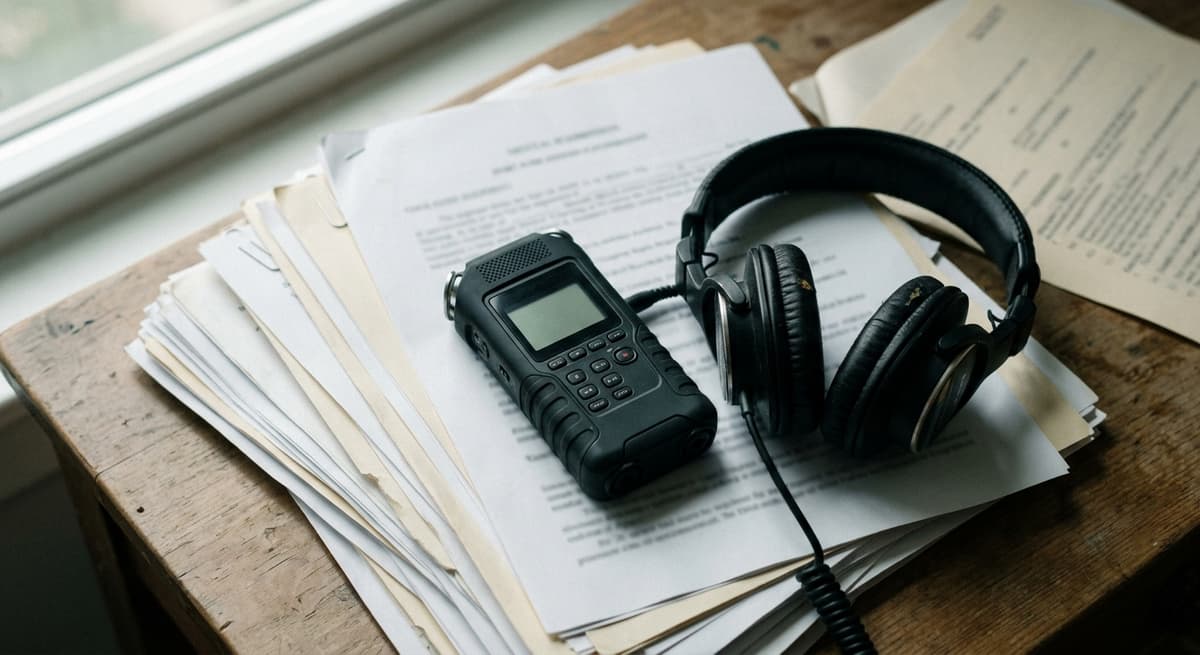
The one-party rule applies equally to telephone, cell, and VoIP calls. If you are on the call, you may record it under AS 42.20.310 and the federal one-party floor at 18 U.S.C. 2511(2)(d). The electronic-communication definition in AS 42.20.390 expressly covers cellular and cordless telephone communications.
Cross-border calls require care. If any party sits in California (Cal. Penal Code 632), Washington (RCW 9.73.030), or Oregon (ORS 165.540), those states require all-party consent. Courts generally apply the stricter rule, so the safest approach is to announce the recording to all parties at the start. Our recording consent checker can confirm which rule governs a call that reaches into California, Washington, or Oregon. Canadian calls are generally one-party under Criminal Code s. 184, though provincial privacy torts vary.
For more detail, see Alaska phone call recording laws.
Hidden cameras, doorbells, and nanny cams
Recording audio or video on your own property in ordinary living spaces is generally lawful under AS 42.20.310 and the First Amendment. The limit is places where someone has a reasonable expectation of privacy.
AS 11.61.123 makes it a crime to view or photograph the private exposure of the genitals, anus, or female breast of another person in a place where they reasonably expected not to be observed, such as bathrooms, locker rooms, and dressing rooms. "Picture" is defined to include electronic and digital formats, so smartphone cameras and smart-home devices are fully covered.
Penalty grades under AS 11.61.123:
- Adult victim, viewing prong (no image produced): Class A misdemeanor (up to 1 year jail, up to $25,000 fine)
- Adult victim, production prong: Class C felony (up to 5 years, up to $50,000 fine)
- Minor victim, viewing prong: Class C felony (up to 5 years)
- Minor victim, production prong: Class B felony (up to 10 years)
AS 11.61.123(d) provides an affirmative defense with three elements that must all be satisfied: the viewing or production was conducted as a security surveillance system, notice of the viewing or production was posted, and any viewing or use of the pictures produced is done only in the interest of crime prevention or prosecution. A nanny cam that captures audio conversations without any participant consenting is separately governed by AS 42.20.310, since the camera is then acting as an eavesdropping device.
For the full nonconsensual intimate imagery framework, see Alaska voyeurism and hidden camera laws and Alaska security camera laws.

Penalties for illegal recording in Alaska
Criminal penalties are set in AS 42.20.330, which grades every violation of AS 42.20.300 or AS 42.20.310 as a Class A misdemeanor. Sentencing and fines are governed by AS 12.55.135(a) and AS 12.55.035(b)(5). The $1,000 fine figure in some older summaries is stale.
| Statute | Conduct | Grade | Jail | Fine |
|---|---|---|---|---|
| AS 42.20.310 via AS 42.20.330 | Eavesdropping / illegal recording | Class A misd | 1 year | $25,000 |
| AS 42.20.300 via AS 42.20.330 | Unauthorized publication | Class A misd | 1 year | $25,000 |
| AS 11.61.123 (adult, viewing only) | Indecent viewing of an adult | Class A misd | 1 year | $25,000 |
| AS 11.61.123 (adult, production) | Producing a picture of an adult | Class C felony | 5 years | $50,000 |
| AS 11.61.123 (minor, viewing) | Indecent viewing of a minor | Class C felony | 5 years | $50,000 |
| AS 11.61.123 (minor, production) | Production of a picture of a minor | Class B felony | 10 years | $100,000 |
| AS 11.61.120(a)(6),(8) | Adult NCII distribution (harassment 2nd) | Class B misd | 90 days | $2,000 |
| 18 U.S.C. 2511 | Federal Wiretap Act | Federal felony | 5 years | Federal guidelines |
Civil remedies are not created by AS 42.20, which contains no express private cause of action. Victims have two routes. First, the federal ECPA civil action at 18 U.S.C. 2520 provides the greater of actual damages plus profits or statutory damages of at least $10,000 (or $100 per day), plus punitive damages and attorney fees, with a two-year statute of limitations. Second, the Alaska common-law intrusion-upon-seclusion tort (Restatement (Second) of Torts s. 652B), reinforced by Alaska Constitution Article I, Section 22, supports actual damages, emotional-distress recovery, and punitive damages under a two-year limitations period (AS 09.10.070).
Alaska separately criminalizes publishing or divulging an illegally obtained recording, not just making it. Under AS 42.20.300, a person who receives a private communication and knows or reasonably should know it was obtained through an illegal interception may not divulge, publish, or use it, even without any role in the original recording. AS 42.20.330 grades this the same as the underlying eavesdropping violation: a Class A misdemeanor.
A narrow First Amendment safe harbor applies to a third party, such as a journalist, who played no part in the illegal interception, lawfully obtained access to the recording, and is publishing a matter of public concern. Bartnicki v. Vopper, 532 U.S. 514 (2001) protected a radio host who broadcast an illegally intercepted union-negotiation call he had no hand in intercepting. The safe harbor does not extend to whoever made the illegal recording in the first place.
Recording the police in Alaska
Alaska sits in the Ninth Circuit, which clearly establishes a First Amendment right to record law enforcement officers performing official duties in public. The governing rule comes from Askins v. DHS, 899 F.3d 1035, 1044 (9th Cir. 2018): "The First Amendment protects the right to photograph and record matters of public interest. This includes the right to record law enforcement officers engaged in the exercise of their official duties in public places." The foundational case is Fordyce v. City of Seattle, 55 F.3d 436 (9th Cir. 1995), which reversed summary judgment for a Seattle officer who allegedly smashed a videographer's camera during a public protest.
These decisions bind the U.S. District Court for the District of Alaska and inform qualified-immunity analysis for Alaska officers under 42 U.S.C. 1983. Record openly, stand at a reasonable distance, and do not physically interfere with police operations. The Ninth Circuit right does not protect a recorder from a separate trespass or obstruction charge.
Note the constitutional overlay that runs the other direction: under State v. Glass, 583 P.2d 872 (Alaska 1978), Alaska police must obtain a search warrant before electronically monitoring a private conversation, even when one party consents. Alaska is therefore a hybrid jurisdiction: one-party for private civilian recording, warrant-required for police informant recording. The Alaska Court of Appeals reaffirmed Glass in Cleveland v. State (Alaska Ct. App. 2020), holding that the warrant must state with reasonable specificity the time, subject matter, and parties to the anticipated conversation.
For more detail, see Alaska laws on recording police.

Special topics in Alaska
Pending SB 85: the all-party consent conversion bill
SB 85 of the 34th Alaska Legislature is Governor Mike Dunleavy's bill replacing "a party" with "all parties" in AS 42.20.310(a)(1) to convert Alaska to all-party consent. It would also add peace-officer exemptions at proposed AS 42.20.320(8) and (9), letting police record civilians without consent during investigations while civilians lose the safe harbor for recording officers, an asymmetry the ACLU of Alaska flagged as a one-way accountability ratchet. Introduced February 5, 2025, it remains in Senate Labor and Commerce Committee with no action since. The 34th Legislature sunsets in early 2027; Alaska remains a one-party state under current law.
AI deepfakes and HB 47 (pending)
Alaska has no enacted deepfake criminal statute as of June 2026. HB 47 passed the House 39-0 on February 27, 2026 and sits in Senate Judiciary. As introduced it would have criminalized distribution of a forged digital likeness (an AI clone used to defraud, harass, or intimidate) as a misdemeanor, alongside distribution of a generated sexual depiction and AI-generated CSAM. Senate Community and Regional Affairs stripped the forged-digital-likeness provision along with the social-media restrictions and the $1 million per-occurrence AI-company civil penalty in its April 2026 committee substitute, citing First Amendment and single-subject concerns. The bill as currently pending in Senate Judiciary is retitled around generated child sexual abuse material and no longer touches AI-clone impersonation; it covers possession and distribution of generated CSAM, enticement of a minor, and unlawful exploitation of a minor. Two companion bills are also pending in the 34th Legislature: SB 2 (election deepfakes; requires disclosure on election-related synthetic media and creates a civil cause of action) and SB 33 (synthetic-media defamation per se), both heard and held in Senate State Affairs Committee on April 29, 2025. The federal TAKE IT DOWN Act, Pub. L. 119-12 (signed May 19, 2025) already covers nonconsensual intimate visual depictions including AI forgeries, with a 48-hour platform notice-and-removal window effective May 19, 2026.
Body-worn cameras
Alaska has no statewide body-worn camera statute; the framework is policy-based. DPS Operations and Procedures Manual Chapter 241 (effective May 1, 2023) governs State Troopers, Wildlife Troopers, Court Services Officers, Fire Marshal investigators, and Village Public Safety Officers; recordings are retained 26 months or until litigation resolves and are public records under the Alaska Public Records Act (AS 40.25.110), subject to the law-enforcement exemption at AS 40.25.120(a)(6). In Anchorage, AO 2024-69 (adopted July 31, 2024) codified APD body-camera policy, requiring release of officer-involved-shooting footage within 45 days and family viewing within 14 days.
Workplace recording and the NLRA
Under AS 42.20.310 and federal one-party consent, an employer or employee who is a party to a workplace conversation may lawfully record it. Blanket no-recording handbook rules are a separate question governed by Stericycle, Inc., 372 NLRB No. 113 (Aug. 2, 2023): such rules are presumptively unlawful if they tend to chill Section 7 activity, unless the employer shows a substantial legitimate interest and no narrower alternative. NLRB GC 25-05 (Feb. 14, 2025) rescinded prior guidance memos for backlog reasons but did not overrule Stericycle, and NLRB GC 25-07 (June 25, 2025) narrowly bars surreptitious recording of collective-bargaining sessions. See Alaska workplace recording laws.
Federal overlay: ECPA, Open Meetings, and cross-topic laws
The Electronic Communications Privacy Act, 18 U.S.C. 2510-2522, sets the federal floor and supplies the principal civil remedy (18 U.S.C. 2520) for Alaska plaintiffs. FCC Declaratory Ruling 24-17 (Feb. 8, 2024) treats AI-generated voices in robocalls as "artificial or prerecorded voice" under the TCPA, requiring prior express consent. The Alaska Open Meetings Act (AS 44.62.310) opens most state and local public-body meetings to the public, where attendees may generally record subject to reasonable anti-disruption rules.
Recent legal developments
- February 5, 2025: Governor Dunleavy introduces SB 85, the all-party consent conversion bill, in the 34th Legislature. Bill stalls in Senate Labor and Commerce Committee.
- February 27, 2026: HB 47 (deepfake/AI CSAM bill) passes Alaska House 39-0; referred to Senate.
- April 9-10, 2026: Senate CRA committee strips the forged-digital-likeness, social-media, and $1M AI-company provisions from HB 47; bill referred to Senate Judiciary.
- May 19, 2025: Federal TAKE IT DOWN Act signed; platform takedown duty effective May 19, 2026.
- May 19, 2026: TAKE IT DOWN Act covered-platform 48-hour notice-and-removal window takes effect.
Alaska recording laws in depth
By type of recording
- Alaska Audio Recording Laws - one-party consent rules and penalties
- Alaska Phone Call Recording Laws - landline, cell, and VoIP
- Alaska Video Recording Laws - surveillance, filming, and consent
- Alaska Voyeurism and Hidden Camera Laws - AS 11.61.123 explained
- Alaska Dashcam Laws - recording rules and windshield mounting
By place or relationship
- Alaska Laws on Recording Police - First Amendment rights and Glass warrant overlay
- Alaska Laws on Recording in Public - filming, photography, and consent
- Alaska Workplace Recording Laws - employee and employer rights
- Alaska Landlord-Tenant Recording Laws - cameras, privacy, and disputes
- Alaska Medical Recording Laws - patient rights and HIPAA
- Alaska School Recording Laws - student privacy and FERPA
- Alaska Security Camera Laws - home, business, and surveillance rules
More Alaska laws
- Alaska Alimony Laws
- Alaska At-Will Employment Laws
- Alaska Child Custody Laws
- Alaska Child Support Laws
- Alaska Divorce Laws
This article is general legal information, not legal advice. Recording laws change and apply differently to each situation. For advice about your situation, consult a licensed Alaska attorney.
More Alaska Laws
- Alaska AI Meeting Recording Laws
- Alaska Dashcam Laws
- Alaska Data Privacy Laws
- Alaska Deepfake Laws
- Alaska Employee Monitoring Laws
- Alaska GPS Tracking Laws
- Alaska Police Bodycam Laws
- Alaska Smart Glasses Recording Laws
Frequently Asked Questions
Is Alaska a one-party or two-party consent state?
Alaska is a one-party consent state under AS 42.20.310. If you are a participant in a conversation, you may record it without telling the other parties, per Palmer v. State, 604 P.2d 1106, 1108 n.5 (Alaska 1979). A pending bill, SB 85, would convert Alaska to all-party consent, but as of June 2026 it is stalled in Senate Labor and Commerce Committee with no committee action since its February 5, 2025 introduction.
Can I record a phone call in Alaska?
Yes, if you are a party to the call. AS 42.20.310 and the federal one-party rule at 18 U.S.C. 2511(2)(d) both permit a participant to record. If any other party is in California, Washington, or Oregon, those states require all-party consent, so the safest practice is to announce the recording before substantive discussion begins on any cross-border call.
Is illegal recording a felony or misdemeanor in Alaska?
Recording a conversation as a non-participant is a Class A misdemeanor under AS 42.20.330, carrying up to one year in jail and up to a $25,000 fine. Alaska's hidden-camera statute, AS 11.61.123, already grades producing an image of an adult victim as a Class C felony (only unrecorded viewing of an adult is a Class A misdemeanor), and escalates a tier further, to a Class C felony (viewing) or Class B felony (production), when the victim is a minor. Federal Wiretap Act violations carry up to five years imprisonment.
What can I sue for if someone illegally recorded me in Alaska?
Alaska has no express state civil cause of action for illegal recording. Your two options are the federal ECPA civil action at 18 U.S.C. 2520, which provides the greater of actual damages or $10,000 in statutory damages plus punitive damages and attorney fees, and the Alaska common-law intrusion-upon-seclusion tort, which supports actual damages, emotional distress, and punitives. Both have a two-year limitations period.
Are Ring doorbells and nanny cams legal in Alaska?
Yes, for areas where people have no reasonable expectation of privacy, such as your front porch or driveway. Placing a camera in a bathroom, locker room, or anywhere a person reasonably expects not to be observed violates AS 11.61.123. Producing an image of an adult that way is a Class C felony (a Class B felony if the person shown is a minor); merely viewing without recording is a Class A misdemeanor for an adult victim. A nanny cam that also captures audio conversations without any participant present crosses into AS 42.20.310 territory.
Can I record my boss or an HR meeting in Alaska?
Yes, under AS 42.20.310 as a participant in the conversation, and under the federal one-party rule at 18 U.S.C. 2511(2)(d). Review your employer's handbook first: a properly tailored no-recording policy can support discipline even where recording is technically lawful. NLRB Stericycle (2023) makes blanket no-recording rules presumptively unlawful, but a narrowly justified policy may survive.
Can I record police officers in Alaska?
Yes, openly in public. Fordyce v. City of Seattle, 55 F.3d 436 (9th Cir. 1995) and Askins v. DHS, 899 F.3d 1035, 1044 (9th Cir. 2018) clearly establish a First Amendment right to record officers performing official duties in public places. Note that under State v. Glass, 583 P.2d 872 (Alaska 1978), the same right does not run the other way: Alaska police need a warrant before electronically monitoring a private conversation, even with one party's consent.
Does Alaska have a deepfake law?
Not yet as of June 2026. HB 47, which as introduced would have criminalized distribution of AI-generated sexual depictions and forged digital likenesses, passed the Alaska House in February 2026 and now sits in Senate Judiciary. Its Senate committee substitute dropped the forged-digital-likeness provision in April 2026, so the bill as currently pending covers generated CSAM, enticement of a minor, and unlawful exploitation of a minor, not AI-clone impersonation. The federal TAKE IT DOWN Act (signed May 19, 2025) already provides federal criminal and platform-takedown protections for nonconsensual intimate imagery including AI-generated forgeries.
Updates
Corrected the Alaska hidden-camera affirmative defense (AS 11.61.123(d) has no same-sex monitoring element) and re-sourced the controlling "eavesdropping device" definition to AS 42.20.310(b) rather than the narrower article-wide definition in AS 42.20.390.
Corrected the AS 11.61.123 penalty description, which had understated producing a hidden-camera image of an adult as a misdemeanor when it is a Class C felony (only unrecorded viewing is a misdemeanor), and updated the HB 47 discussion to reflect the Senate committee's removal of the forged-digital-likeness provision.
Independently fact-checked against the cited primary sources; governing law re-checked for recent changes
Corrected a KeyTakeaways bullet that described the federal ECPA's $10,000 statutory-damages figure as a cap; 18 U.S.C. 2520 actually sets it as a floor (the greater of $100/day or $10,000), consistent with how the rest of the page already described it.
Governing law re-checked for recent changes
Reviewed and approved by an editor
Restructured into canonical template: added AEO lede, at-a-glance table, dedicated sections for in-person/phone/hidden-cameras/penalties/police/special-topics, in-depth index linking all 12 sub-pages, and expanded FAQ to 8 questions. Condensed special topics (SB 85, HB 47, body-worn cameras, workplace/NLRA, federal overlay) into tight subsections. Verified SB 85 still stalled in Senate Labor and Commerce as of June 2026. Confirmed HB 47 still pending in Senate Judiciary as of June 2026, not yet enacted; updated to reflect Senate CRA stripping of social-media and $1M AI-company provisions on April 9, 2026. Preserved all primary statute citations (AS 42.20.310, AS 42.20.330, AS 12.55.135, AS 12.55.035, AS 11.61.123, AS 11.61.120, AS 11.61.116), Palmer v. State, State v. Glass, Cleveland v. State, Fordyce, Askins, and federal overlays. Corrected fine cap from stale $1,000 to current $25,000 per AS 12.55.035(b)(5) preserved from prior audit. No statute or case-law corrections required: core one-party consent rule, Class A misdemeanor grade, and civil remedy framework all verified consistent with primary sources.
Refresh: Verified SB 85 status via akleg.gov on May 14, 2026 (introduced February 5, 2025; in Senate Labor and Commerce Committee with referral to Senate Judiciary; no committee action since the introduction; bill alive in the 34th Legislature). Added the Ninth Circuit record-the-police framing built on Fordyce v. City of Seattle, 55 F.3d 436 (9th Cir. 1995) and Askins v. U.S. Department of Homeland Security, 899 F.3d 1035, 1044 (9th Cir. 2018), decided August 14, 2018, with the operative pinpoint formulation preserved verbatim. Added the State v. Glass, 583 P.2d 872 (Alaska 1978) constitutional overlay and the Cleveland v. State (Alaska Ct. App. 2020) particularity standard reaffirming Glass; both cited via courts.alaska.gov and appellate-records.courts.alaska.gov to avoid the banlisted aggregator link the prior version used for Palmer. Reframed Alaska as a hybrid jurisdiction: one-party for private recording under Palmer, warrant-required for police informant recording under Glass. Surfaced HB 47 of the 34th Legislature (passed Alaska House 39-1 on February 27, 2026; in Senate Judiciary as of April 10, 2026) as the pending forged-digital-likeness and generated-sexual-depiction bill, with SB 2 and SB 33 also pending. Added the federal TAKE IT DOWN Act, Pub. L. 119-12 (signed May 19, 2025; covered-platform notice-and-takedown effective May 19, 2026) as the federal NCII and deepfake-NCII overlay. Added the DPS Operations and Procedures Manual Chapter 241 Mobile Audio and Video Recording (effective May 1, 2023) and Anchorage Ordinance AO 2024-69 amending Anchorage Municipal Code Chapter 3.102 (adopted July 31, 2024) as the body-worn camera framework, with explicit no-statewide-statute negative finding and rejection of any AS 18.65 or AS 12.62 body-cam framing. Anchored civilian access through the Alaska Public Records Act at AS 40.25.110 to .220 with the law-enforcement-records exception at AS 40.25.120(a)(6). Surfaced the Alaska Attorney General / Deputy Attorney General July 17, 2024 position on pre-charging release of officer-involved-shooting footage. Corrected the prior framing that listed AS 11.41.452 as the NCII statute: AS 11.41.452 is enticement of a minor, not NCII. The adult-victim NCII hook is AS 11.61.120(a)(6) and (a)(8) (harassment in the second degree, Class B misdemeanor); the minor-victim distribution hook is AS 11.61.116 (Class B misdemeanor person-to-person, Class A misdemeanor to Internet); the recording-side voyeurism hook is AS 11.61.123 (Class A misdemeanor adult, Class C or B felony minor). Updated the penalty math from the Reporters Committee for Freedom of the Press stale $1,000 fine figure to the current $25,000 cap under AS 12.55.035(b)(5) plus the one-year imprisonment cap under AS 12.55.135(a). Made explicit that Alaska has NO express state civil cause of action under AS 42.20: AS 42.20.330 is the criminal penalty grading section, not a civil remedy. Private plaintiffs rely on the federal ECPA civil action at 18 U.S.C. 2520 (statutory floor of $10,000 or $100 per day, plus punitive damages and reasonable attorney fees, two-year SOL under section 2520(e)) and on the Alaska common-law intrusion-upon-seclusion tort with the Alaska Constitution Article I Section 22 privacy clause as constitutional reinforcement (two-year SOL under AS 09.10.070 with discovery rule). Added Bartnicki v. Vopper, 532 U.S. 514 (2001) as the federal First Amendment overlay for downstream publication. Reframed NLRB GC 25-05 (February 14, 2025; Acting General Counsel William B. Cowen) as a housekeeping rescission of prior General Counsel memoranda for backlog management, NOT a Boeing reinstatement; Stericycle, Inc., 372 NLRB No. 113 (August 2, 2023) remains controlling Board law. Added NLRB GC 25-07 (June 26, 2025) as narrowly scoped to surreptitious recording of collective-bargaining sessions. Updated FCC Order 23-107 (FCC 24-24) to vacated by 11th Cir. Insurance Marketing Coalition Ltd. v. FCC, No. 24-10277 (decided January 24, 2025; mandate April 30, 2025), with FCC subsequent removal of 47 C.F.R. 64.1200(f)(9). Removed reliance on 47 C.F.R. 64.501 (removed November 20, 2017 under Modernizing Common Carrier Rules). Preserved FCC Declaratory Ruling 24-17 (February 8, 2024) as active and in force for AI-generated voices in robocalls. Replaced the prior version's two aggregator URLs for Palmer and AS 11.61.123 plus one secondary-codifier URL for 18 U.S.C. 2511 with courts.alaska.gov, akleg.gov, and uscode.house.gov primary sources. Populated the previously empty Supabase secondary_keywords array with the 15-keyword cluster. Net add approximately 1,100 words from the State v. Glass overlay, the Ninth Circuit Fordyce / Askins framing, the HB 47 / TAKE IT DOWN Act block, the DPS Policy 241 / AO 2024-69 body-cam block, the explicit no-state-civil-cause negative finding, and the AS 11.41.452 / AS 11.61.120 / AS 11.61.116 / AS 11.61.123 mapping correction.
Refresh: Verified SB 85 status (introduced February 5, 2025; in Senate Labor and Commerce Committee; no action since introduction). Added State v. Glass, 583 P.2d 872 (Alaska 1978) constitutional overlay and Cleveland v. State (Alaska Ct. App. 2020) particularity standard. Added Ninth Circuit Fordyce and Askins record-the-police framing. Surfaced HB 47 (passed Alaska House 39-0 on February 27, 2026; in Senate Judiciary as of April 10, 2026). Added TAKE IT DOWN Act, Pub. L. 119-12. Added DPS OPM Chapter 241 (May 1, 2023) and Anchorage AO 2024-69 (July 31, 2024) body-cam framework. Corrected AS 11.41.452 mis-tagging as NCII statute; adult NCII hook is AS 11.61.120(a)(6),(8); minor-victim distribution hook is AS 11.61.116. Updated penalty fine cap from stale $1,000 to $25,000 per AS 12.55.035(b)(5). Confirmed Alaska has no express state civil cause under AS 42.20; primary civil routes are 18 U.S.C. 2520 and Alaska intrusion-upon-seclusion tort. Reframed NLRB GC 25-05 as housekeeping, not a Boeing reinstatement; Stericycle remains controlling. Added NLRB GC 25-07 as scoped only to collective-bargaining sessions. Removed stale 47 C.F.R. 64.501 (removed 2017) and vacated FCC one-to-one consent rule.
Added wearable recording device guidance covering AI voice recorders (Plaud) and smart glasses (Meta Ray-Bans) under Alaska one-party consent law.
The Law Behind This Article
This article rests on the statutory provisions below, held in our own legal record and retrieved from the official source. Tap a section to read the operative text.
Alaska Statutes, Title 42. Public Utilities and Carriers and Energy Programs, Chapter 20. Telegraph and Telephone Systems and Cable Lines; Eavesdropping
§ 42.20.310EavesdroppingIn forcecited in 21 of our articles
(a) A person may not (1) use an eavesdropping device to hear or record all or any part of an oral conversation without the consent of a party to the conversation; (2) use or divulge any information which the person knows or reasonably should know was obtained through the illegal use of an eavesdropping device for personal benefit or another's benefit; (3) publish the existence, contents, substance, purport, effect, or meaning of any conversation the person has heard through the illegal use of an eavesdropping device; (4) divulge, or publish the existence, contents, substance, purport, effect, or meaning of any conversation the person has become acquainted with after the person knows or reasonably should know that the conversation and the information contained in the conversation was obtained through the illegal use of an eavesdropping device. (b) In this section eavesdropping device means any device capable of being used to hear or record oral conversation whether the conversation is conducted in person, by telephone, or by any other means; provided that this definition does not include devices used for the restoration of the deaf or hard-of-hearing to normal or partial hearing.
Official text (excerpt) · last checked 2026-09-23 · Read the full text in our law library · Verify at akleg.gov
Also relied on in: Alaska Audio Recording Laws: One-Party Consent Rules and Penalties (2026), Alaska Security Camera Laws: Home, Business, and Surveillance Rules (2026), Alaska Video Recording Laws: Surveillance, Filming, and Consent Rules (2026)
§ 42.20.330PenaltyIn forcecited in 11 of our articles
A person who violates any of the provisions of AS 42.20.300 and 42.20.310 is guilty of a class A misdemeanor.
Official text (excerpt) · last checked 2026-07-31 · Read the full text in our law library · Verify at akleg.gov
Also relied on in: Alaska Phone Call Recording Laws: Rules for Landline, Cell, and VoIP (2026), Alaska Ring Doorbell Laws: What You Need to Know in 2026, Alaska Smart Glasses Recording Laws 2026
§ 42.20.300Unauthorized publication or use of communicationsIn forcecited in 7 of our articles
(a) Except for a party to a private conversation, a person who receives or assists in receiving, or who transmits or assists in transmitting, a private communication may not divulge or publish the existence, contents, substance, purport, effect, or meaning of the communication, except through authorized channels of transmission or reception (1) to the addressee or the agent or attorney of the addressee; (2) to a person employed or authorized to forward a communication to its destination; (3) to proper accounting or distributing officers of the various communicating centers over which the communication may be passed; (4) to the master of a ship under whom the person is serving; (5) to another on demand of lawful authority; or (6) in response to a subpoena issued or order entered by a court of competent jurisdiction. (b) Except as provided in AS 12.37, a person not authorized by a party to the communication may not intentionally intercept a private communication or divulge or publish the existence, contents, substance, purport, effect, or meaning of the intercepted communication to any person.
Official text (excerpt) · last checked 2026-07-31 · Read the full text in our law library · Verify at akleg.gov
Cited in 2 court opinions in our collectionLatest citing opinion in our collection: 1999
Opinions citing this section in our collection:
- Bachlet v. State (Court of Appeals of Alaska 1997, 941 P.2d 200)“…to the general statutory prohibition on eavesdropping under AS 42.20.300(b).[ 7 ] In this case, Phillip Carter…”
- Boehner, John A. v. McDermott, James A. (Court of Appeals for the D.C. Circuit 1999, 191 F.3d 463)“…C. § 2511 . See Ala. Code §§ 13A-ll-31,13A-ll-35 (1994); Alaska Stat. §§ 42.20.300 to 42.20.330 (Michie 1989 & Supp.1995)…”
Identified automatically from the court opinions citing this section — not a ranking of which case controls.
Also relied on in: Alaska Data Privacy Laws: Constitutional Privacy & Breach Rules (2026), Alaska Employee Monitoring Laws (2026): Workplace Privacy Rules, Alaska Dashcam Laws: Recording Rules, Windshield Mounting, and Legal Limits (2026)
§ 42.20.390DefinitionsIn force
In AS 42.20.300 42.20.390, unless the context otherwise requires, (1) communications common carrier means a business or person engaged as a common carrier for hire in the transmission of communications by wire, cable, satellite, electromagnetic waves, or radio, not including radio broadcasting; (2) contents includes information obtained from a private communication concerning the existence, substance, purport, or meaning of the communication, or the identity of a party of the communication; (3) eavesdropping device means a device or apparatus, including an induction coil, that can be used to intercept an oral, wire, or electronic communication, other than (A) a hearing aid or similar device used for the restoration of subnormal hearing to not better than normal; or (B) a telephone instrument, equipment, or facility, or any component of a telephone instrument, equipment, or facility (i) being used by a provider of wire or electronic communication service in the ordinary course of its business; or (ii) furnished to a subscriber or user by a provider of wire or electronic communication service in the ordinary course of its business and being used by the subscriber or user in the…
Official text (excerpt) · last checked 2026-07-31 · Read the full text in our law library · Verify at akleg.gov
§ 42.20.320ExemptionsIn forcecited in 3 of our articles
(a) The following activities are exempt from the provisions of AS 42.20.300 and 42.20.310: (1) listening to a radio or wireless communications of any sort where the same are publicly made; (2) hearing conversation when heard by employees of a common carrier by wire incidental to the normal course of their employment in the operation, maintenance, or repair of the equipment of the common carrier by wire, provided the information obtained is not used or divulged in any manner by the hearer; (3) a broadcast by radio or other means whether it is a live broadcast or recorded for the purpose of later broadcasts of any function where the public is in attendance and the conversations that are overheard are incidental to the main purpose for which the broadcast is then being made; (4) recording or listening with the aid of any device to an emergency communication made in the normal course of operations by a federal, state, or local law enforcement agency or institutions dealing in emergency services, including hospitals, clinics, ambulance services, fire fighting agencies, a public utility emergency repair facility, civilian defense establishment, or military installations; (5) inadvertent…
Official text (excerpt) · last checked 2026-07-31 · Read the full text in our law library · Verify at akleg.gov
Alaska Statutes, Title 11. Criminal Law, Chapter 61. Offenses Against Public Order
§ 11.61.123Indecent viewing or production of a pictureIn forcecited in 19 of our articles
(a) A person commits the crime of indecent viewing or production of a picture if the person knowingly (1) views, or views a picture of, the private exposure of the genitals, anus, or female breast of another person; or (2) produces a picture of the private exposure of the genitals, anus, or female breast of another person. (b) Each viewing of a person, and each production of a picture of a person, whose genitals, anus, or female breast are viewed or are shown in a picture constitutes a separate violation of this section. (c) This section does not apply to the viewing or production of a picture conducted by a law enforcement agency for a law enforcement purpose. (d) In a prosecution under this section, it is an affirmative defense that the viewing or production of a picture was conducted as a security surveillance system, notice of the viewing or production was posted, and any viewing or use of pictures produced is done only in the interest of crime prevention or prosecution.
Official text (excerpt) · last checked 2026-08-31 · Read the full text in our law library · Verify at akleg.gov
Cited in 3 court opinions in our collectionLatest citing opinion in our collection: 2015
Opinions citing this section in our collection:
- Knutsen v. State (Court of Appeals of Alaska 2004, 101 P.3d 1065)“…eumstance that makes the defendant's conduct criminal under AS 11.61.123(a), we interpret AS 11.61.123(a) to mea…”
- Faye H. v. James B. (Alaska Supreme Court 2015, 348 P.3d 876)“…(1), .220(a)(1)(c), .436(a)(2). 4 See AS 11.61.123(a)(2). 5 See AS 1…”
- United States v. Moreland (Court of Appeals for the Fifth Circuit 2011, 665 F.3d 137)“…nority of states criminalize viewing child pornography. See Alaska Stat. § 11.61.123 (2009); Ark. Code Ann. § 5-27-602 (2010…”
Identified automatically from the court opinions citing this section — not a ranking of which case controls.
Also relied on in: Alaska Landlord-Tenant Recording Laws: Cameras, Privacy Rights, and Disputes (2026), Alaska Workplace Recording Laws: Employee and Employer Rights (2026), Alaska Voyeurism and Hidden Camera Laws: AS 11.61.123 Explained (2026)
United States Code Title 18
§ 2511Interception and disclosure of wire, oral, or electronic communications prohibitedIn forcecited in 441 of our articles
Except as otherwise specifically provided in this chapter any person who— intentionally intercepts, endeavors to intercept, or procures any other person to intercept or endeavor to intercept, any wire, oral, or electronic communication; intentionally uses, endeavors to use, or procures any other person to use or endeavor to use any electronic, mechanical, or other device to intercept any oral communication when— such device is affixed to, or otherwise transmits a signal through, a wire, cable, or other like connection used in wire communication; or such device transmits communications by radio, or interferes with the transmission of such communication; or such person knows, or has reason to know, that such device or any component thereof has been sent through the mail or transported in interstate or foreign commerce; or such use or endeavor to use (A) takes place on the premises of any business or other commercial establishment the operations of which affect interstate or foreign commerce; or (B) obtains or is for the purpose of obtaining information relating to the operations of any business or other commercial establishment the operations of which affect interstate or foreign…
Official text (excerpt) · last checked 2026-09-17 · Read the full text in our law library · Verify at uscode.house.gov
Cited in 2,045 court opinions in our collectionLatest citing opinion in our collection: 2026
In the courts (editorial summary, independently checked):Griggs-Ryan v. Smith (1990) applied the Section 2511(2)(d) prior-consent exception, treating a tenant repeatedly told that all incoming calls were taped as having impliedly consented. United States v. United States District Court (1972) read the then-current Section 2511(3) as conferring no presidential surveillance power.
Opinions citing this section in our collection:
- Mitchell v. Forsyth (Supreme Court of the United States 1985, 472 U.S. 511)✓The Attorney General authorized a warrantless 1970 national security wiretap that caught the plaintiff's calls; the Court held the since-repealed Section 2511(3) disclaimer left the tap lawful under Title III, and that Mitchell had qualified immunity.
- United States v. United States District Court for the Eastern District of Michigan (Supreme Court of the United States 1972, 407 U.S. 297)✓The Attorney General approved warrantless wiretaps on members of a domestic group accused of bombing a CIA office; the Court read Section 2511(3) as a congressional disclaimer conferring no surveillance power, then held the Fourth Amendment required prior judicial approval.
- Forsyth v. Barr (Court of Appeals for the Fifth Circuit 1994, 19 F.3d 1527)✓Dallas police used, in an internal affairs probe of an officer, calls private parties allegedly intercepted illegally; assuming that was unlawful, the Fifth Circuit held Section 2517(1) and (2) allowed the disclosure and use, defeating the Section 2511(1)(c) and (d) claims.
Identified automatically from the court opinions citing this section — not a ranking of which case controls.
Also relied on in: Connecticut Recording Laws (2026): Hybrid Consent Rules Explained, Oregon Recording Laws (2026): Hybrid One-Party and All-Party Rules, US Recording Laws by State (2026): All 50 States Explained
§ 2520Recovery of civil damages authorizedIn forcecited in 130 of our articles
Except as provided in section 2511(2)(a)(ii), any person whose wire, oral, or electronic communication is intercepted, disclosed, or intentionally used in violation of this chapter may in a civil action recover from the person or entity, other than the United States, which engaged in that violation such relief as may be appropriate. In an action under this section, appropriate relief includes— such preliminary and other equitable or declaratory relief as may be appropriate; damages under subsection (c) and punitive damages in appropriate cases; and a reasonable attorney’s fee and other litigation costs reasonably incurred.
Official text (excerpt) · last checked 2026-07-28 · Read the full text in our law library · Verify at uscode.house.gov
Cited in 860 court opinions in our collectionLatest citing opinion in our collection: 2026
In the courts (editorial summary, independently checked):Walker v. Darby (1990) held a 2520 plaintiff need not prove the contents of intercepted conversations, only interception and a justified expectation against it. Bartnicki v. Vopper (2001) barred 2520 damages against defendants who took no part in the interception, obtained the tape lawfully, and disclosed a matter of public concern.
Opinions citing this section in our collection:
- Jessie Walker v. Thomas E. Darby, Hugh L. Robinson, Jr., and Kenneth Day (Court of Appeals for the Eleventh Circuit 1990, 911 F.2d 1573)✓A postal letter carrier said three supervisors wired an intercom near his workstation to listen in. Reversing summary judgment, the Eleventh Circuit held a section 2520 plaintiff can show interception without proving the contents of specific conversations.
- Gelbard v. United States (Supreme Court of the United States 1972, 408 U.S. 41)“…disclosure, or use is entitled to recover civil damages, 18 U. S. C. § 2520 . Title III also bars the use as eviden…”
- DirecTV, Inc. v. Hoa Huynh (Court of Appeals for the Ninth Circuit 2007, 503 F.3d 847)“…7 U.S.C. § 605 (e)(4), or alternatively, for violations of 18 U.S.C. § 2520 (a), or alternatively, for violations o…”
Identified automatically from the court opinions citing this section — not a ranking of which case controls.
Also relied on in: One-Party Consent States: Complete 2026 Guide, Alabama Audio Recording Laws: Consent Rules and Penalties, Alabama Phone Call Recording Laws: What You Need to Know
Alaska Statutes, Title 9. Code of Civil Procedure, Chapter 10. Limitations of Actions
§ 09.10.070Actions for torts, for injury to personal property, for certain statutory liabilities, and against peace officers and coroners to be brought in two yearsIn forcecited in 13 of our articles
(a) Except as otherwise provided by law, a person may not bring an action (1) for libel, slander, assault, battery, seduction, or false imprisonment, (2) for personal injury or death, or injury to the rights of another not arising on contract and not specifically provided otherwise; (3) for taking, detaining, or injuring personal property, including an action for its specific recovery; (4) upon a statute for a forfeiture or penalty to the state; or (5) upon a liability created by statute, other than a penalty or forfeiture; unless the action is commenced within two years of the accrual of the cause of action. (b) A person may not bring an action against a peace officer or coroner upon a liability incurred by the doing of an act in an official capacity or by the omission of an official duty, including the nonpayment of money collected upon an execution, unless brought within two years. This subsection does not apply to an action for an escape.
Official text (excerpt) · last checked 2026-07-31 · Read the full text in our law library · Verify at akleg.gov
Cited in 228 court opinions in our collectionLatest citing opinion in our collection: 2026
In the courts (editorial summary, independently checked):Alaska courts apply the two-year limit of AS 09.10.070(a) to personal injury and other tort claims. Cikan v. ARCO Alaska, Inc. (2005) held mental incompetency under AS 09.10.140(a) can toll it, with the competency dispute resolved at a pretrial hearing. Robinson v. Alaska Hous. Fin. Corp. (2019) applied it to dismiss untimely tort claims.
Opinions citing this section in our collection:
- Adkins v. Nabors Alaska Drilling, Inc. (Alaska Supreme Court 1980, 609 P.2d 15)✓A worker who suffered a head injury tripping over a hose at a drilling site added a new defendant eight months after AS 09.10.070's two-year period ran. The court held his evidence of concussion and amnesia raised a fact issue on tolling, so summary judgment was improper.
- Evans Ex Rel. Kutch v. State (Alaska Supreme Court 2002, 56 P.3d 1046)✓Injured plaintiffs facially challenged Alaska's 1997 tort reform, including how AS 09.10.070's two-year limit works with the minors tolling rule. The court held the narrower tolling given to children hurt before their eighth birthday is rationally based and upheld the scheme.
- Cikan v. ARCO Alaska, Inc. (Alaska Supreme Court 2005, 125 P.3d 335)✓A woman who slipped on ice outside an office building and hit her head sued nearly nine years later. The court held AS 09.10.070(a)'s two-year limit would ordinarily bar the claim, but her evidence of post-concussion incompetency required a pretrial evidentiary hearing.
Identified automatically from the court opinions citing this section — not a ranking of which case controls.
Also relied on in: Alaska Dog Bite Laws: Liability and Victim Rights, Alaska Hit and Run Laws: Penalties and What to Do, Alaska Car Accident Laws: Fault, Insurance, and Your Claim
Alaska Statutes, Title 12. Code of Criminal Procedure, Chapter 55. Sentencing and Probation
§ 12.55.135Sentences of imprisonment for misdemeanorsIn forcecited in 6 of our articles
(a) A defendant convicted of a class A misdemeanor may be sentenced to a definite term of imprisonment of not more than one year. (b) A defendant convicted of a class B misdemeanor may be sentenced to a definite term of imprisonment of not more than 90 days unless otherwise specified in the provision of law defining the offense. (c) A defendant convicted of assault in the fourth degree that is a crime involving domestic violence committed in violation of the provisions of an order issued or filed under AS 12.30.027 or AS 18.66.100 18.66.180 and not subject to sentencing under (g) of this section shall be sentenced to a minimum term of imprisonment of 20 days.
Official text (excerpt) · last checked 2026-07-31 · Read the full text in our law library · Verify at akleg.gov
Cited in 49 court opinions in our collectionLatest citing opinion in our collection: 2024
Opinions citing this section in our collection:
- Doe v. State, Department of Public Safety (Alaska Supreme Court 2004, 92 P.3d 398)“…y up to one year in jail and by a fine up to $10,000. See AS 12.55.135(a), .035(b)(5). [18] AS 18.65.087 au…”
- Dawson v. State (Court of Appeals of Alaska 2011, 264 P.3d 851)“…ode Revision, Tentative Draft, Part 5, p. 87. [16] See AS 12.55.135(b). [17] See R. Perkins & R. Boyce…”
- Miller v. State (Court of Appeals of Alaska 2013, 312 P.3d 1112)“…he faced a minimum sentence of 30 days' imprisonment under AS 12.55.135(g) 4 The defénse attorney never *1116…”
Identified automatically from the court opinions citing this section — not a ranking of which case controls.
Also relied on in: Alaska AI Meeting Recording Laws (2026), Alaska Medical Recording Laws: Patient Rights, HIPAA, and One-Party Consent (2026), Alaska GPS Tracking Laws: Is It Legal to Put a Tracker on a Car? (2026)
§ 12.55.035FinesIn forcecited in 10 of our articles
(a) Upon conviction of an offense, a defendant may be sentenced to pay a fine as authorized in this section or as otherwise authorized by law. (b) Upon conviction of an offense, a defendant who is not an organization may be sentenced to pay, unless otherwise specified in the provision of law defining the offense, a fine of not more than (1) $500,000 for murder in the first or second degree, attempted murder in the first degree, murder of an unborn child, sexual assault in the first degree under AS 11.41.410(a)(1)(A), (2), (3), or (4), sexual abuse of a minor in the first degree, kidnapping, sex trafficking in the first degree under AS 11.66.110(a)(2), or misconduct involving a controlled substance in the first degree; (2) $250,000 for a class A felony; (3) $100,000 for a class B felony; (4) $50,000 for a class C felony; (5) $25,000 for a class A misdemeanor; (6) $2,000 for a class B misdemeanor; (7) $500 for a violation.
Official text (excerpt) · last checked 2026-07-31 · Read the full text in our law library · Verify at akleg.gov
Cited in 30 court opinions in our collectionLatest citing opinion in our collection: 2025
Opinions citing this section in our collection:
- Manderson v. State (Court of Appeals of Alaska 1983, 655 P.2d 1320)“…urden the payment of the fine will impose. See AS 12.55.035(a). 5 Clearly, the $1,…”
- Hillman v. Municipality of Anchorage (Court of Appeals of Alaska 1997, 941 P.2d 211)“…ture of an $8000 vehicle violates Alaska law because, under AS 12.55.035(b), the maximum fine for a class A misd…”
- Wilson v. State (Court of Appeals of Alaska 1988, 756 P.2d 307)“…ted on the basis of ability to pay. See, e.g., AS 12.55.035. A maximum fine does not necessarily in…”
Identified automatically from the court opinions citing this section — not a ranking of which case controls.
Also relied on in: Alaska Surveillance Camera Laws (2026 Guide), Alaska Sexting Laws: Legal Consequences and Penalties, Alaska Age of Consent Laws: Statutes, Penalties and Reporting
United States Code Title 42
§ 1983Civil action for deprivation of rightsIn forcecited in 52 of our articles
Every person who, under color of any statute, ordinance, regulation, custom, or usage, of any State or Territory or the District of Columbia, subjects, or causes to be subjected, any citizen of the United States or other person within the jurisdiction thereof to the deprivation of any rights, privileges, or immunities secured by the Constitution and laws, shall be liable to the party injured in an action at law, suit in equity, or other proper proceeding for redress, except that in any action brought against a judicial officer for an act or omission taken in such officer’s judicial capacity, injunctive relief shall not be granted unless a declaratory decree was violated or declaratory relief was unavailable. For the purposes of this section, any Act of Congress applicable exclusively to the District of Columbia shall be considered to be a statute of the District of Columbia.
Official text (excerpt) · last checked 2026-09-16 · Read the full text in our law library · Verify at uscode.house.gov
Cited in 282,365 court opinions in our collectionLatest citing opinion in our collection: 2026
Opinions citing this section in our collection:
- Ashcroft v. Iqbal (Supreme Court of the United States 2009, 556 U.S. 662)“…its brought against state officials under Rev. Stat. §1979, 42 U. S. C. §1983.” Hartman, 547 U. S., at 254, n. 2. Cf.…”
- Celotex Corp. v. Catrett, Administratrix of the Estate of Catrett (Supreme Court of the United States 1986, 477 U.S. 317)“…policeman as she left. Petitioner brought an action under 42 U. S. C. § 1983 claiming that the refusal of service a…”
- Monell v. New York City Dept. of Social Servs. (Supreme Court of the United States 1978, 436 U.S. 658)“…decided less than two decades ago. Focusing new light on 42 U. S. C. § 1983 , that decision widened access to the f…”
Identified automatically from the court opinions citing this section — not a ranking of which case controls.
Also relied on in: Alabama Laws on Recording Police: Your Rights and Limits, Idaho Laws on Recording Police: Your Rights and Limitations (2026), South Dakota Laws on Recording Police
Alaska Statutes, Title 44. State Government, Chapter 62. Administrative Procedure Act
§ 44.62.310Government meetings publicIn forcecited in 3 of our articles
(a) All meetings of a governmental body of a public entity of the state are open to the public except as otherwise provided by this section or another provision of law. Attendance and participation at meetings by members of the public or by members of a governmental body may be by teleconferencing. Agency materials that are to be considered at the meeting shall be made available at teleconference locations if practicable. Except when voice votes are authorized, the vote shall be conducted in such a manner that the public may know the vote of each person entitled to vote. The vote at a meeting held by teleconference shall be taken by roll call. This section does not apply to any votes required to be taken to organize a governmental body described in this subsection. (b) If permitted subjects are to be discussed at a meeting in executive session, the meeting must first be convened as a public meeting and the question of holding an executive session to discuss matters that are listed in (c) of this section shall be determined by a majority vote of the governmental body.
Official text (excerpt) · last checked 2026-07-31 · Read the full text in our law library · Verify at akleg.gov
Cited in 45 court opinions in our collectionLatest citing opinion in our collection: 2026
Opinions citing this section in our collection:
- University of Alaska v. Geistauts (Alaska Supreme Court 1983, 666 P.2d 424)“…h the requirements of the Alaska Public Meetings Act (PMA), AS 44.62.310-.312. The superi- or court ordered that…”
- Abood v. League of Women Voters of Alaska (Alaska Supreme Court 1987, 743 P.2d 333)“…charged that these meetings violated the Open Meetings Act (AS 44.62.310), the Uniform Rules of the Legislature…”
- Ramsey v. City of Sand Point (Alaska Supreme Court 1997, 936 P.2d 126)“…f Ramsey’s employment in executive session was proper under AS 44.62.310(e)(2) and that Ramsey waived his right…”
Identified automatically from the court opinions citing this section — not a ranking of which case controls.
Also relied on in: Alaska Laws on Recording in Public: Filming, Photography, and Consent (2026), Alaska School Recording Laws: Student Privacy, FERPA, and Classroom Rules (2026)
Alaska Statutes, Title 40. Public Records and Recorders, Chapter 25. Public Record Disclosures
§ 40.25.110Public records open to inspection and copying; feesIn forcecited in 5 of our articles
(a) Unless specifically provided otherwise, the public records of all public agencies are open to inspection by the public under reasonable rules during regular office hours. The public officer having the custody of public records shall give on request and payment of the fee established under this section or AS 40.25.115 a certified copy of the public record. (b) Except as otherwise provided in this section, the fee for copying public records may not exceed the standard unit cost of duplication established by the public agency. (c) If the production of records for one requester in a calendar month exceeds five person-hours, the public agency shall require the requester to pay the personnel costs required during the month to complete the search and copying tasks. The personnel costs may not exceed the actual salary and benefit costs for the personnel time required to perform the search and copying tasks. The requester shall pay the fee before the records are disclosed, and the public agency may require payment in advance of the search. (d) A public agency may reduce or waive a fee when the public agency determines that the reduction or waiver is in the public interest.
Official text (excerpt) · last checked 2026-09-02 · Read the full text in our law library · Verify at akleg.gov
Cited in 12 court opinions in our collectionLatest citing opinion in our collection: 2026
In the courts (editorial summary, independently checked):Fuller v. City of Homer (2005) applied AS 40.25.110 to municipalities, allowing a city to charge a search fee once production for one requester exceeds five person-hours in a month, but held that production does not include time spent reviewing records for privilege, so that time could not be billed.
Opinions citing this section in our collection:
- Fuller v. City of Homer (Alaska Supreme Court 2005, 113 P.3d 659)✓Homer billed a records requester for the 7.25 hours its city manager spent screening annexation files for privilege; the court held "production" under AS 40.25.110 covers only routine search and copying, so privilege-review time could not be charged, and remanded to deduct it.
- Doe v. State (Alaska Supreme Court 2008, 189 P.3d 999)“…t visited July 21, 2008). . 13 AAC 09.050(a). . AS 40.25.110(a) ("Unless specifically provided other…”
- Copeland v. Ballard (Alaska Supreme Court 2009, 210 P.3d 1197)“…s an issue of public interest."). 26 . AS 40.25.110-295. 27 . City of…”
Identified automatically from the court opinions citing this section — not a ranking of which case controls.
§ 40.25.120Public records; exceptions; certified copiesIn forcecited in 5 of our articles
(a) Every person has a right to inspect a public record in the state, including public records in recorders' offices, except (1) records of vital statistics and adoption proceedings, which shall be treated in the manner required by AS 18.50; (2) records pertaining to juveniles unless disclosure is authorized by law; (3) medical and related public health records; (4) records required to be kept confidential by a federal law or regulation or by state law; (5) to the extent the records are required to be kept confidential under 20 U.S.C. 1232g and the regulations adopted under 20 U.S.C.
Official text (excerpt) · last checked 2026-09-02 · Read the full text in our law library · Verify at akleg.gov
Cited in 11 court opinions in our collectionLatest citing opinion in our collection: 2023
In the courts (editorial summary, independently checked):Basey v. State (2017) held the State cannot invoke the law enforcement interference exception in AS 40.25.120(a)(6)(A) merely by pointing to a pending criminal case against the requester. Fuller v. City of Homer (2003) treated the deliberative process privilege as a state law exception under (a)(4) and held it did not apply there.
Opinions citing this section in our collection:
- Fuller v. City of Homer (Alaska Supreme Court 2003, 75 P.3d 1059)✓A resident sought city staff documents behind an annexation petition; treating the deliberative process privilege as the state law exception in AS 40.25.120(a)(4), the court found the public interest outweighed confidentiality once the petition was filed and ordered disclosure.
- Kaleb Lee Basey v. State of Alaska, Department of Public Safety, Division of State Troopers, Bureau of Investigations (Alaska Supreme Court 2020, 462 P.3d 529)✓A federal prisoner suing state troopers requested their disciplinary records; the court held those records are confidential personnel records under the State Personnel Act, bringing them within AS 40.25.120(a)(4)'s exception for records confidential by state law.
- Basey v. State, Department of Public Safety, Division of Alaska State Troopers, Bureau of Investigations (Alaska Supreme Court 2017, 408 P.3d 1173)“…records related to AST’s use of 1 AS 40.25.120(a)(6)(A). 2 AS 4…”
Identified automatically from the court opinions citing this section — not a ranking of which case controls.
Also relied on in: Alaska License Plate Reader Laws (2026)
Oregon Revised Statutes, Chapter 165: Offenses Involving Fraud or Deception
§ 165.540Obtaining contents of communicationsIn forcecited in 49 of our articles
(1) Except as otherwise provided in ORS 133.724 or 133.726 or subsections (2) to (8) of this section, a person may not: (a) Obtain or attempt to obtain the whole or any part of a telecommunication or a radio communication to which the person is not a participant, by means of any device, contrivance, machine or apparatus, whether electrical, mechanical, manual or otherwise, unless consent is given by at least one participant. (b) Tamper with the wires, connections, boxes, fuses, circuits, lines or any other equipment or facilities of a telecommunication or radio communication company over which messages are transmitted, with the intent to obtain unlawfully the contents of a telecommunication or radio communication to which the person is not a participant. (c) Obtain or attempt to obtain the whole or any part of a conversation by means of any device, contrivance, machine or apparatus, whether electrical, mechanical, manual or otherwise, if not all participants in the conversation are specifically informed that their conversation is being obtained.
Official text (excerpt) · last checked 2026-09-24 · Read the full text in our law library · Verify at oregonlegislature.gov
Cited in 76 court opinions in our collectionLatest citing opinion in our collection: 2026
In the courts (editorial summary, independently checked):State v. Fleetwood (2000) applied ORS 165.540 to body wire evidence, holding that words spoken into a telephone are a telecommunication under subsection (1)(a) and that the (5)(a)(B) exception fails unless the officer or the officer's agent shares reciprocally in the conversation, so the recordings were inadmissible.
Opinions citing this section in our collection:
- State v. Klein (Oregon Supreme Court 2012, 352 Or. 302)“…eing 3 recorded. Conversations recorded in violation of ORS 165.540 are not admissible in 4 court excep…”
- North Pacific Lumber Co. v. Oliver (Oregon Supreme Court 1979, 286 Or. 639)✓A lumber wholesaler secretly monitored traders' calls; on de novo review the court said the practice may have violated ORS 165.540 but refused to rest unclean hands on it, since the ex-employee's calls were never monitored. The employer's noncompete suit failed on other grounds.
- State v. Fleetwood (Oregon Supreme Court 2000, 331 Or. 511)✓A detective wired an informant and recorded the suspect's side of a phone call and his talks with his mother and a juvenile seller; the court held those interceptions violated ORS 165.540(1)(a) and (1)(c) because the informant was not a participant, and upheld suppression.
Identified automatically from the court opinions citing this section — not a ranking of which case controls.
Also relied on in: Oregon Voyeurism and Hidden Camera Laws: Offenses, Penalties, and Protections, Oregon Audio Recording Laws: Split Consent Rules for Conversations and Calls, Oregon Landlord-Tenant Recording Laws: Surveillance, Privacy, and Consent
Revised Code of Washington
§ 9.73.030Intercepting, recording, or divulging private communication—Consent required—Exceptions.In forcecited in 46 of our articles
(1) Except as otherwise provided in this chapter, it shall be unlawful for any individual, partnership, corporation, association, or the state of Washington, its agencies, and political subdivisions to intercept, or record any: (a) Private communication transmitted by telephone, telegraph, radio, or other device between two or more individuals between points within or without the state by any device electronic or otherwise designed to record and/or transmit said communication regardless how such device is powered or actuated, without first obtaining the consent of all the participants in the communication; (b) Private conversation, by any device electronic or otherwise designed to record or transmit such conversation regardless how the device is powered or actuated without first obtaining the consent of all the persons engaged in the conversation.
Official text (excerpt) · last checked 2026-09-24 · Read the full text in our law library · Verify at app.leg.wa.gov
Cited in 221 court opinions in our collectionLatest citing opinion in our collection: 2026
In the courts (editorial summary, independently checked):Washington courts have policed what counts as a private communication under Sec. 9.73.030: State v. Gunwall (1986) concluded a pen register intercept comes within a private communication transmitted by telephone, while State v. Riley (1993) held a line trap that reveals only the calling number does not record one.
Opinions citing this section in our collection:
- State v. Salinas (Washington Supreme Court 1992, 119 Wash. 2d 192)“…alties for divulging a telegram or opening a sealed letter. RCW 9.73.030-.070, making it unlawful to intercept,…”
- State v. Gunwall (Washington Supreme Court 1986, 106 Wash. 2d 54)✓Everett police pulled a suspected cocaine dealer's toll records and put a pen register on her line without valid legal process; the court held a pen register intercept is a private communication transmitted by telephone, installable only under the eavesdropping statutes.
- State v. Brown (Washington Supreme Court 1997, 132 Wash. 2d 529)✓Palm Springs officers secretly recorded a Washington murder suspect's statements after his arrest; the court treated RCW 9.73.090, not 9.73.030, as the provision reaching recordings of arrested persons, and held the Privacy Act did not require suppressing that recording.
Identified automatically from the court opinions citing this section — not a ranking of which case controls.
Also relied on in: Washington Recording Laws (2026): All-Party Consent Rules, Federal Wiretap Act and ECPA: The Complete Guide (2026), Is It Illegal to Video Record Someone Without Their Consent? (2026)
Search our full record of US law — 2.1 million sections, every state + federal →
Sources and References
- akleg.gov.gov
- akleg.gov.gov
- akleg.gov.gov
- akleg.gov.gov
- akleg.gov.gov
- akleg.gov.gov
- akleg.gov.gov
- akleg.gov.gov
- akleg.gov.gov
- akleg.gov.gov
- akleg.gov.gov
- ltgov.alaska.gov.gov
- courts.alaska.gov.gov
- appellate-records.courts.alaska.gov.gov
- akleg.gov.gov
- akleg.gov.gov
- akleg.gov.gov
- akleg.gov.gov
- dps.alaska.gov.gov
- muni.org
- courtlistener.com
- courtlistener.com
- supremecourt.gov.gov
- uscode.house.gov.gov
- congress.gov.gov
- nlrb.gov.gov
- docs.fcc.gov.gov
- law.alaska.gov.gov