
West Virginia
West Virginia Recording Laws (2026): One-Party Consent Rules
Independently fact-checked against primary sources (last audited August 15, 2026). · Reviewed by the RecordingLaw editorial team. · Law checked current as of August 15, 2026. · 15 primary sources cited on this page. How we verify our legal content
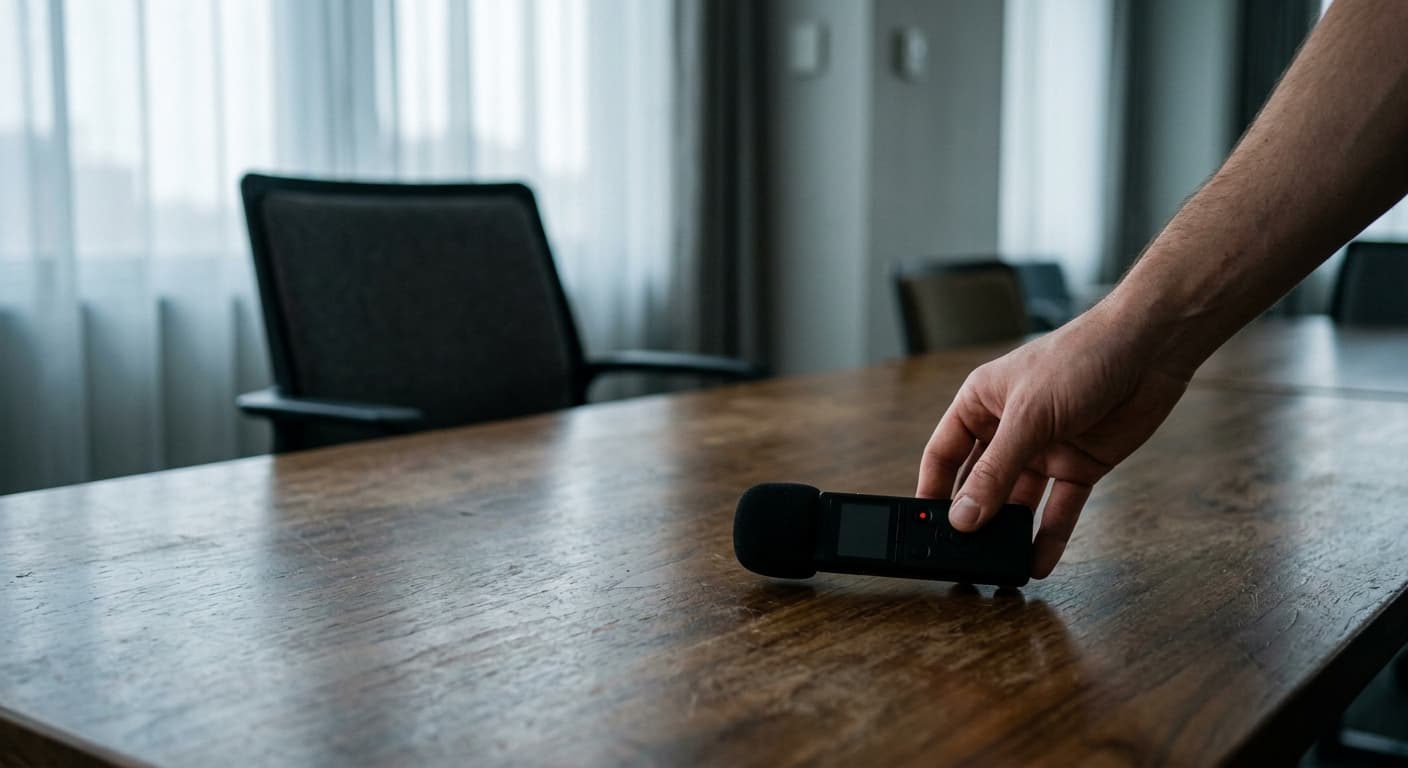
West Virginia is a one-party consent state under W. Va. Code § 62-1D-3(e). If you are a party to a conversation, you may record it without telling anyone else, unless your purpose is criminal or tortious. Recording without consent is a felony under § 62-1D-3(b) and a civil wrong under § 62-1D-12.
West Virginia recording law at a glance
| Question | Answer |
|---|---|
| Consent rule | One-party consent |
| Main statute | W. Va. Code § 62-1D-3 |
| When recording is illegal | Recording a conversation you are not part of, or recording for a criminal or tortious purpose |
| Criminal penalty | Felony: up to 5 years prison, up to $10,000 fine, or both |
| Civil remedy | Actual damages (floor: $100 per day of violation), punitive damages, attorney fees |
| Hidden cameras | Misdemeanor (first) / felony (subsequent) under § 61-8-28 |
| Recording police | First Amendment protected under Sharpe v. Winterville (4th Cir. 2023) |
For a deeper look at how these rules play out in specific situations, see the West Virginia recording laws in depth section below.
Recording in-person conversations in West Virginia
Under W. Va. Code § 62-1D-3(e), any participant in a face-to-face oral communication may record it without informing anyone else. The key proviso: the recording must not be made for the purpose of committing a criminal or tortious act. That proviso is doing real work. Recording a conversation to document harassment for an HR complaint is lawful. Recording the same conversation to extort the other party flips the analysis entirely.
"Oral communications" under § 62-1D-2 are spoken words uttered under circumstances where the speaker reasonably expects not to be intercepted. The statute covers conversations in private settings; it does not protect public statements made where no reasonable expectation of privacy exists. The same one-party rule applies to wire communications (phone calls) and electronic communications (VoIP, text messages, email), making West Virginia's consent framework consistent across all communication types.
The West Virginia Supreme Court of Appeals added a state-constitutional layer in State v. Mullens, 221 W. Va. 70, 650 S.E.2d 169 (2007). Where the government is involved, Article III, § 6 of the state constitution bars police from sending a wired informant into a private home without prior judicial authorization, even though the informant satisfies one-party consent under § 62-1D-3. That holding is a state-action rule only. Private citizens recording their own conversations are governed solely by § 62-1D-3(e) and are not affected by Mullens.
Recording phone calls in West Virginia
The one-party consent rule applies equally to phone calls. A West Virginia resident who is a party to a call on any technology (landline, cell, VoIP) may record it without notice. Section 62-1D-3(e) draws no distinction between face-to-face and remote communication.
Cross-state calls to Maryland or Pennsylvania require extra care. Both states are all-party consent jurisdictions. The practitioner norm for interstate recording is to apply the stricter state's law. If you are calling from West Virginia to a Maryland or Pennsylvania number, treat the call as requiring all-party consent and either announce the recording at the start or get affirmative consent before you begin. Virginia, Ohio, and Kentucky are all one-party states, so calls between those states and West Virginia stay on one-party footing.
Businesses recording customer-service calls from West Virginia can rely on § 62-1D-3(e) as a single-party participant, but should build all-party protocols into any calls routed to or from Maryland or Pennsylvania. The FCC's old carrier "beep tone" rule under 47 C.F.R. § 64.501 was removed effective November 20, 2017 and is no longer a live requirement.
For more detail, see the West Virginia Phone Call Recording Laws sub-page.

Hidden cameras, doorbells, and nanny cams
Visual-only recording is governed by W. Va. Code § 61-8-28, not the wiretap statute. Section 61-8-28 makes it unlawful to knowingly visually portray another person without that other person's knowledge while that person is fully or partially nude in a place where a reasonable expectation of privacy exists. It also reaches downstream distribution: anyone who displays or distributes images they know to have been unlawfully captured commits a separate offense.
Penalties escalate by offense:
| Offense | Classification | Max prison / jail | Max fine |
|---|---|---|---|
| First offense | Misdemeanor | 1 year county jail | $5,000 |
| Second or subsequent | Felony | 1 to 5 years state correctional facility | $10,000 |
On your own property, you generally may install security cameras in public-facing and common areas without consent. The key limit is reasonable expectation of privacy: restrooms, changing rooms, and bedrooms are off-limits regardless of ownership. A doorbell camera aimed at a shared driveway or public sidewalk is lawful. A nanny cam in a private room where guests or employees reasonably expect privacy is not.
An important audio caveat: any camera that captures audio conversations falls under the wiretap statute at § 62-1D-3 in addition to § 61-8-28. If no participant in the captured conversation consented, both provisions can apply simultaneously, stacking criminal exposure.
For more detail, see the West Virginia Voyeurism Laws and West Virginia Security Camera Laws sub-pages.
Penalties for illegal recording in West Virginia
Criminal. Violating § 62-1D-3 is a felony. Each act of unlawful interception, disclosure, and use is a separate count. A person who records a call without consent, sends the recording to a third party, and then uses the contents in litigation can face three counts from a single underlying interception.
Civil. § 62-1D-12 creates a parallel civil cause of action. The statute floors damages at $100 per day of violation, so a sustained surveillance campaign accrues mechanically. Punitive damages and attorney fees are available on top of actual damages.
| Track | Details |
|---|---|
| Criminal offense class | Felony (no class-letter grading; penalty capped directly) |
| Max prison | 5 years |
| Max fine | $10,000 |
| Statute of limitations | None for felonies under § 61-11-9 |
| Civil damages floor | $100 per day of violation |
| Civil punitives | Yes, at court's discretion |
| Civil attorney fees | Yes |
There is a complete civil and criminal defense: good-faith reliance on a facially valid court order or legislative authorization, per § 62-1D-12. That defense protects telecom providers executing on valid wiretap orders. It does not help a private party who recorded without consent and later claims to have misunderstood the law.
The most likely civil limitations period is two years under W. Va. Code § 55-2-12 (personal-injury period). No West Virginia appellate court has definitively resolved which limitations subsection applies to a § 62-1D-12 claim.

Recording the police in West Virginia
West Virginia sits in the Fourth Circuit. The leading Fourth Circuit case is Sharpe v. Winterville Police Department, 59 F.4th 674 (4th Cir. 2023), which recognized that livestreaming a police traffic stop is speech protected by the First Amendment and let the claim against the Town over its alleged no-livestreaming policy proceed on remand. The individual officer, however, received qualified immunity because the right was not clearly established at the time of the 2018 stop, and the court did not decide the broader bystander-recording question.
For West Virginia residents, Sharpe means that recording and livestreaming police encounters in public spaces is constitutionally protected. A municipal policy that flatly bans such recording is constitutionally suspect. The right is not absolute: you cannot physically obstruct officers, ignore lawful time-place-manner orders, or trespass to get a better angle.
On the body-worn camera question: West Virginia has no statewide statutory mandate for police body cameras. Deployment is agency-by-agency. Do not cite W. Va. Code § 15-2-1a as authority, since that section was repealed in 1990. Public access to any existing body-cam footage flows from the general state Freedom of Information Act, W. Va. Code Chapter 29B, subject to standard exemptions including the personal-information and ongoing-investigation exemptions.
For a detailed guide, see West Virginia Laws on Recording Police.
Special topics in West Virginia
Workplace recording: § 21-3-20, Stericycle, and NLRB GC 25-07
West Virginia employees may record workplace conversations they participate in under the general one-party consent rule. W. Va. Code § 21-3-20 carves out a hard prohibition: no employer (public or private) may use electronic surveillance in restrooms, shower rooms, locker rooms, dressing rooms, or employee lounges. An employer or agent who violates that section is guilty of a misdemeanor and, on conviction, is fined $500 for a first offense, $1,000 for a second, and $2,000 for a third or subsequent offense. That prohibition stacks with § 62-1D-3 criminal exposure for any audio captured in those areas.
Under Stericycle, Inc., 372 NLRB No. 113 (Aug. 2, 2023), a blanket "no recording on company property" policy is presumptively unlawful under Section 8(a)(1) of the NLRA because it tends to chill employees' Section 7 rights to document wages, safety conditions, and harassment. Employers can rebut that presumption only with a narrowly tailored policy tied to a legitimate and substantial business interest. NLRB GC 25-05 (February 2025) was a housekeeping rescission of prior prosecutorial memoranda; it did not reinstate the pre-Stericycle Boeing standard. NLRB GC 25-07 (June 25, 2025) narrowly bars surreptitious recording of formal collective-bargaining sessions; it does not reach general workplace conversations.
For a detailed analysis, see West Virginia Workplace Recording Laws.
AI-generated intimate images: § 61-8-28a and 2025 SB 198
W. Va. Code § 61-8-28a prohibits the nonconsensual disclosure (or threat of disclosure) of intimate images with intent to harass, intimidate, or coerce the depicted person. As of July 9, 2025, the statute also reaches AI-generated "fabricated intimate images" of an identifiable person after 2025 SB 198 (signed April 24, 2025). Penalty tiers: misdemeanor on first offense (up to one year, fine of $1,000 to $5,000), felony on subsequent offenses (up to three years, fine of $2,500 to $10,000). West Virginia has no enacted standalone political-deepfake statute; the 2024 and 2025 bills targeting political deepfakes all died in committee.
Federal overlay: ECPA, FCC, TAKE IT DOWN Act
18 U.S.C. § 2511(2)(d) sets a one-party-consent federal floor; West Virginia's § 62-1D-3 sits exactly at that floor. The FCC's Declaratory Ruling 24-17 (February 2024) confirms that AI-generated voices in outbound robocalls are "artificial or prerecorded" under TCPA and require prior express consent. The one-to-one consent provision of FCC Order 24-24 was vacated by the Eleventh Circuit in January 2025; the consent-revocation portions of that order remain in force. The TAKE IT DOWN Act, Pub. L. 119 (2025) (signed May 19, 2025) criminalizes nonconsensual publication of intimate visual depictions including AI-generated forgeries, and requires covered platforms to maintain a 48-hour notice-and-removal process, with a platform-compliance deadline of May 19, 2026 that has now passed. West Virginia-based platforms should already have that 48-hour process in place alongside their § 61-8-28a state-law exposure.

Recent legal developments
- July 9, 2025: 2025 SB 198 takes effect, expanding W. Va. Code § 61-8-28a to cover AI-generated fabricated intimate images of adults; parallel amendments to §§ 61-8C-1 through 61-8C-3c address AI-generated child pornography.
- April 24, 2025: Governor signs 2025 SB 198.
- May 19, 2025: TAKE IT DOWN Act, Pub. L. 119 (2025) signed; criminal provisions effective immediately; platform compliance deadline May 19, 2026 (now in effect).
- February 7, 2023: Fourth Circuit decides Sharpe v. Winterville Police Department, 59 F.4th 674 (4th Cir. 2023), establishing First Amendment protection for livestreaming police encounters in the circuit.
- August 2, 2023: NLRB adopts Stericycle standard, making blanket workplace no-recording policies presumptively unlawful under the NLRA.
West Virginia recording laws in depth
Want to know more? Each sub-page covers a specific West Virginia recording context in greater depth.
By type of recording
- West Virginia Audio Recording Laws: One-Party Consent Guide
- West Virginia Video Recording Laws: Privacy Rules and Consent
- West Virginia Phone Call Recording Laws: Rules and Consent Guide
- West Virginia Dashcam Laws: Legality, Mounting, and Evidence Rules
By place or relationship
- West Virginia Laws on Recording Police: Your Rights and Limits
- West Virginia Laws on Recording in Public: What You Can and Cannot Do
- West Virginia Workplace Recording Laws: Employee and Employer Rights
- West Virginia Voyeurism Laws: Hidden Cameras and Privacy Violations
- West Virginia Security Camera Laws: Rules for Homes and Businesses
- West Virginia Landlord-Tenant Recording Laws: Rights and Rules
- West Virginia Medical Recording Laws: Patient Rights and HIPAA Guide
- West Virginia School Recording Laws: Security, Parents, and Students
More West Virginia laws
- West Virginia Alimony Laws
- West Virginia At-Will Employment Laws
- West Virginia Child Custody Laws
- West Virginia Child Support Laws
- West Virginia Landlord-Tenant Laws
This article is general legal information, not legal advice. Recording laws change and apply differently to each situation. For advice about your situation, consult a licensed West Virginia attorney.
More West Virginia Laws
Frequently Asked Questions
Is West Virginia a one-party consent state?
Yes. Under W. Va. Code § 62-1D-3(e), a person who is a party to a wire, oral, or electronic communication may record it without notifying anyone else, unless the recording is made for a criminal or tortious purpose. You do not need the other party's permission to record a conversation you are part of.
Can I record a phone call in West Virginia?
Yes, if you are on the call. Section 62-1D-3(e) applies equally to landline, cell, and VoIP calls. If you are calling someone in Maryland or Pennsylvania, treat the call as all-party consent, since both those states require every participant to consent.
Is illegal recording a felony in West Virginia?
Yes. Unlawful interception under W. Va. Code § 62-1D-3(b) is a felony punishable by up to five years in prison, a fine of up to $10,000, or both. There is no general statute of limitations on felony prosecutions in West Virginia under § 61-11-9.
What can I sue for if someone recorded me illegally?
W. Va. Code § 62-1D-12 lets you recover actual damages (minimum $100 for each day of violation), punitive damages if appropriate, and reasonable attorney fees and litigation costs. A sustained unlawful surveillance accrues the $100-per-day floor mechanically, which can grow quickly.
Are Ring doorbells and nanny cams legal in West Virginia?
Generally yes in common or outdoor areas where people have no expectation of privacy. W. Va. Code § 61-8-28 prohibits capturing images of a person who is nude or partially nude in a place where they reasonably expect privacy, so cameras in restrooms, changing rooms, or similar private spaces are unlawful. Any camera that also captures audio implicates the wiretap statute.
Can I record my boss or an HR meeting in West Virginia?
Yes. As a one-party consent state, West Virginia allows you to record any conversation you participate in at work without telling your employer, as long as your purpose is not criminal or tortious. Your employer may have a policy against it, and violating that policy can be grounds for discipline, but Section 7 of the NLRA and the Stericycle standard may limit how broadly employers can enforce blanket no-recording rules.
Can I record the police in West Virginia?
Yes. The Fourth Circuit held in Sharpe v. Winterville Police Department, 59 F.4th 674 (4th Cir. 2023), that the First Amendment protects livestreaming a police traffic stop. You may record police performing their public duties so long as you do not obstruct the officers, ignore lawful orders to stand back, or trespass to improve your angle.
Does West Virginia have a deepfake law?
Partially. W. Va. Code § 61-8-28a covers nonconsensual disclosure of intimate images, and 2025 SB 198 (effective July 9, 2025) expanded it to include AI-generated fabricated intimate images of adults. West Virginia has no enacted standalone political-deepfake statute; multiple bills targeting political deepfakes died in committee in 2024 and 2025.
Updates
Corrected the statutory attribution for the felony wiretap penalty to W. Va. Code § 62-1D-3(b), clarified that § 21-3-20 employer-surveillance fines are criminal misdemeanor fines imposed on conviction rather than civil penalties, and restated the § 61-8-28 hidden-camera element as recording without the other person's knowledge.
Updated the TAKE IT DOWN Act discussion to reflect that the May 19, 2026 platform-compliance deadline has now passed, and replaced a dead citation link for State v. Mullens with a working CourtListener link.
Independently fact-checked against the cited primary sources; governing law re-checked for recent changes
Governing law re-checked for recent changes
Reviewed and approved by an editor
Restructured for readability: added AEO lede, at-a-glance table, and in-depth index; reorganized core consent, phone, hidden-camera, penalty, police, and special-topics sections into short scannable paragraphs; condensed workplace (§ 21-3-20, Stericycle, GC 25-07), NCII (§ 61-8-28a, 2025 SB 198), and federal overlay (ECPA, FCC 24-17, TAKE IT DOWN Act) into tight subsections; moved admissibility and PSC content to sub-pages; corrected More Laws section from Virginia to West Virginia; refreshed FAQ and UpdatesLog; all statutes, penalty tiers, and case holdings re-verified against primary sources (code.wvlegislature.gov, ca4.uscourts.gov). No substantive fact corrections found.
Refreshed for 2026: locked § 62-1D-3(e) as the current one-party-consent locus while preserving the § 62-1D-3(b)(2) verbatim quote inside the State v. Mullens (2007) syllabus; corrected penalty framing to the § 62-1D-3(b) felony cap (up to 5 years / $10,000) and confirmed no general felony statute of limitations under § 61-11-9; surfaced the § 62-1D-12 $100-per-day civil floor and noted the absence of any $1,000 minimum (distinguishing the Rhode Island analog); added the controlling Fourth Circuit livestreaming holding from Sharpe v. Winterville Police Dep't, 59 F.4th 674 (4th Cir. 2023), without asserting cert disposition; rebuilt the workplace section around W. Va. Code § 21-3-20 (with the $500/$1,000/$2,000 first/second/third penalty tier) plus Stericycle, GC 25-05 (housekeeping rescission only, Stericycle still controls), and GC 25-07 bargaining-session guidance; corrected body-cam framing to remove repealed § 15-2-1a and confirm public access flows from W. Va. Code Chapter 29B (general FOIA); separated § 61-8-28 voyeurism penalty tiers (misdemeanor up to $5,000 / felony up to $10,000) from § 61-8-28a NCII penalty tiers (misdemeanor $1,000-$5,000 / felony $2,500-$10,000); documented 2025 SB 198 (signed Apr. 24, 2025; effective Jul. 9, 2025) as the only enacted WV deepfake amendment, and confirmed 2024 HB 4963, 2024 HB 5516, 2024 SB 720, and 2025 SB 484 all died; updated FCC overlay to vacated one-to-one consent in Insurance Marketing Coalition (11th Cir. Apr. 30, 2025 mandate) and removed 47 C.F.R. § 64.501 (REMOVED Nov. 20, 2017) framing; added FCC 24-17 AI-voice ruling; added TAKE IT DOWN Act, Pub. L. 119 (2025) with May 19, 2026 platform compliance milestone.
Added wearable recording devices section and related FAQs
The Law Behind This Article
This article rests on the statutory provisions below, held in our own legal record and retrieved from the official source. Tap a section to read the operative text.
West Virginia Code
§ 62-1D-3Interception of communications generally.In forcecited in 36 of our articles
(a) Except as otherwise specifically provided in this article it is unlawful for any person to: (1) Intentionally intercept, attempt to intercept or procure any other person to intercept or attempt to intercept, any wire, oral or electronic communication; or (2) Intentionally disclose or intentionally attempt to disclose to any other person the contents of any wire, oral or electronic communication, knowing or having reason to know that the information was obtained through the interception of a wire, oral or electronic communication in violation of this article; and (3) Intentionally use or disclose or intentionally attempt to use or disclose the contents of any wire, oral or electronic communication or the identity of any party thereto, knowing or having reason to know that such information was obtained through the interception of a wire, oral or electronic communication in violation of this article. (b) Any person who violates subsection (a) of this section is guilty of a felony and, upon conviction thereof, shall be imprisoned in the penitentiary for not more than five years or fined not more than $10,000 or both fined and imprisoned.
Official text (excerpt) · last checked 2026-08-31 · Read the full text in our law library · Verify at code.wvlegislature.gov
Cited in 1 court opinions in our collectionLatest citing opinion in our collection: 1999
Opinions citing this section in our collection:
- Bartnicki v. Vopper (Court of Appeals for the Third Circuit 1999, 200 F.3d 109)“…77 -23a-4, 77-23a-11; Va. Code Ann. §§ 19.2-62 , 19.2-69; W. Va.Code §§ 62-1D-3, 62-1D-12; Wis. Stat. § 968.31 ; Wyo.…”
Identified automatically from the court opinions citing this section — not a ranking of which case controls.
Also relied on in: West Virginia Smart Glasses Recording Laws, West Virginia Audio Recording Laws: One-Party Consent Guide, West Virginia Phone Call Recording Laws: Rules and Consent Guide
§ 62-1D-12Civil liability; defense to civil or criminal action.In forcecited in 20 of our articles
(a) Any person whose wire, oral or electronic communication is intercepted, disclosed, used or whose identity is disclosed in violation of this article shall have a civil cause of action against any person who so intercepts, discloses, or uses, or procures any other person to intercept, disclose, or use the communications, and shall be entitled to recover from any such person or persons: (1) Actual damages, but not less than $100 for each day of violation; (2) Punitive damages, if found to be proper; and (3) Reasonable attorney fees and reasonable costs of litigation incurred. (b) A good faith reliance by a provider of electronic or wire communication services on a court order or legislative authorization constitutes a complete defense to any civil or criminal action brought under this article or any other law.
Official text (excerpt) · last checked 2026-07-30 · Read the full text in our law library · Verify at code.wvlegislature.gov
Also relied on in: West Virginia AI Meeting Recording Laws (2026)
§ 61-8-28Criminal invasion of privacy; penalties.In forcecited in 27 of our articles
(a) For the purposes of this section, the words or terms defined in this subsection have the meanings ascribed to them. These definitions are applicable unless a different meaning clearly appears from the context: (1) “A person fully or partially nude” means a male or female who is either clothed or unclothed so that: (A) All or any part of his or her genitals, pubic area or buttocks is visible; or (B) in the case of a female only, a part of a nipple of her breast is visible and is without a fully opaque covering; (2) “To visually portray” a person means to create a reproducible image of that person by means of: (A) A photograph; (B) A motion picture; (C) A video tape; (D) A digital recording; or (E) Any other mechanical or electronic recording process or device that can preserve, for later viewing, a visual image of a person; and (3) “Place where a reasonable person would have an expectation of privacy” means a place where a reasonable person would believe that he or she could, in privacy, be fully or partially nude without expecting that the act of exposing his or her body was being visually portrayed by another person.
Official text (excerpt) · last checked 2026-08-31 · Read the full text in our law library · Verify at code.wvlegislature.gov
Cited in 2 court opinions in our collectionLatest citing opinion in our collection: 2014
Opinions citing this section in our collection:
- Imaginary Images, Inc. v. Evans (Court of Appeals for the Fourth Circuit 2010, 612 F.3d 736)“…8 Pa. Cons. Stat. § 7507.1(e); Utah Code Ann. § 76-5a-2(6); W. Va. Code § 61-8-28(a)(1); Wis. Stat. § 942.08(1)(a). The m…”
- United States v. Thoms (U S Coast Guard Court of Criminal Appeals 2014)“…9-702.7 (West 2013); Vt. Stat. Ann. Tit. 13, § 2605 (2010); W. Va. Code § 61-8-28 (2000). 4 Ariz. Rev. Stat. Ann. § 13-…”
Identified automatically from the court opinions citing this section — not a ranking of which case controls.
§ 62-1D-2Definitions.In forcecited in 6 of our articles
As used in this article, unless the context in which used clearly requires otherwise, the following terms have the meanings indicated: (a) "Aggrieved person" means a person who was a party to any intercepted wire, oral or electronic communication or a person against whom the interception was directed. (b) "Child care center" means a facility maintained by the state or any county or municipality thereof, or any agency or facility maintained by an individual, firm, corporation, association or organization, public or private, that is licensed by Bureau of Family Assistance for the care of children in any setting. (c) "Communications common carrier" means any telegraph company or telephone company and any radio common carrier. (d) "Contents" when used with respect to any wire, oral or electronic communication, includes any information concerning the substance, purport or meaning of that communication. (e) "Electronic, mechanical or other device" means any device or apparatus: (i) Which can be used to intercept a wire, oral or electronic communication; or (ii) the design of which renders it primarily useful for the surreptitious interception of any such communication.
Official text (excerpt) · last checked 2026-07-30 · Read the full text in our law library · Verify at code.wvlegislature.gov
Cited in 1 court opinions in our collectionLatest citing opinion in our collection: 2023
Opinions citing this section in our collection:
- Project Veritas v. Michael Schmidt (Court of Appeals for the Ninth Circuit 2023, 72 F.4th 1043)“…317 P.3d 1029, 1034 (Wash. 2014) (en banc) West Virginia: W. Va. Code §§ 62-1D-2(i), 62-1D-3(a)(1), (e); West Virginia v…”
Identified automatically from the court opinions citing this section — not a ranking of which case controls.
§ 21-3-20Use of video and other electronic surveillance devices by employers prohibited.In forcecited in 17 of our articles
(a) It is unlawful for any employer or the agent or representative of an employer, whether public or private, to operate any electronic surveillance device or system, including, but not limited to, the use of a closed circuit television system, a video-recording device, or any combination of those or other electronic devices for the purpose of recording or monitoring the activities of the employees in areas designed for the health or personal comfort of the employees or for safeguarding of their possessions, such as rest rooms, shower rooms, locker rooms, dressing rooms and employee lounges. (b) Any employer or agent thereof who violates any provision of this section is guilty of a misdemeanor and, if convicted, shall be fined $500 for the first offense. An employer or agent thereof convicted a second time under this provision shall be fined $1,000. For the third and any subsequent offense, the penalty shall be $2,000.
Official text (excerpt) · last checked 2026-08-31 · Read the full text in our law library · Verify at code.wvlegislature.gov
Cited in 1 court opinions in our collectionLatest citing opinion in our collection: 2019
Opinions citing this section in our collection:
- Blackwood v. Berry Dunn, LLC (District Court, S.D. West Virginia 2019)“…out being in an area protected from monitoring by W. Va. Code § 21-3-20, it cannot be said that taking a…”
Identified automatically from the court opinions citing this section — not a ranking of which case controls.
§ 61-8-28ANonconsensual disclosure of private intimate images; definitions; and penalties.In forcecited in 15 of our articles
(a) As used in this section: (1) “Disclose” means to publish, publicly display, distribute, deliver, circulate or disseminate by any means, including, but not limited to, electronic transmission. (2) “Image” means a photograph, videotape, motion picture film, digital recording or any product of any mechanical or electronic recording process or device that can preserve, for later viewing, a visual image. (3) “Intimate parts” means a person’s genitalia, pubic area, anus, or female post-pubescent breasts. (4) To “publicly disclose” means to disclose an image to one or more persons other than those persons whom the person depicted understood would view the image at the time it was captured. (5) “Fabricated intimate image” means an image of an identifiable depicted individual that was created by the use of artificial intelligence or other computer technology capable of processing and interpreting specific data inputs and depicts computer-generated intimate parts or the intimate parts of another human being as the intimate parts of the depicted individual.
Official text (excerpt) · last checked 2026-08-30 · Read the full text in our law library · Verify at code.wvlegislature.gov
Also relied on in: West Virginia Deepfake Laws: AI Images, Voice Cloning & Penalties (2026)
§ 55-2-12Personal actions not otherwise provided for.In forcecited in 16 of our articles
Every personal action for which no limitation is otherwise prescribed shall be brought: (a) Within two years next after the right to bring the same shall have accrued, if it be for damage to property; (b) within two years next after the right to bring the same shall have accrued if it be for damages for personal injuries; and (c) within one year next after the right to bring the same shall have accrued if it be for any other matter of such nature that, in case a party die, it could not have been brought at common law by or against his personal representative.
Official text (excerpt) · last checked 2026-09-14 · Read the full text in our law library · Verify at code.wvlegislature.gov
Cited in 94 court opinions in our collectionLatest citing opinion in our collection: 2026
Opinions citing this section in our collection:
- Ashley Cooper v. City of Wheeling (Court of Appeals for the Fourth Circuit 2026)“…sonal representative. W. Va. Code § 55-2-12 (emphases supplied). Co…”
- Graham County Soil & Water Conservation District v. United States Ex Rel. Wilson (Supreme Court of the United States 2005, 545 U.S. 409)“…e § 4.16.080 (2) (2004) (catchall for injuries to person); W. Va. Code §55-2-12 (Lexis 2000) (catchall); § 6C-1-4(a) (…”
- Fernando Smith v. Michael Travelpiece (Court of Appeals for the Fourth Circuit 2022, 31 F.4th 878)“…te of limitations for personal injury actions applies. See W. Va. Code § 55-2-12(b). 3 But general common-law pr…”
Identified automatically from the court opinions citing this section — not a ranking of which case controls.
Also relied on in: West Virginia Dog Bite Laws: Liability and Victim Rights, West Virginia Car Accident Laws: Fault, Insurance, and Your Claim, West Virginia Defamation Laws: Libel & Slander (2026)
§ 61-11-9Limitation of prosecution; lost indictment.In forcecited in 4 of our articles
A prosecution for committing or procuring another person to commit perjury shall be commenced within three years next after the perjury was committed. A prosecution for a misdemeanor shall be commenced within one year after the offense was committed: Provided, That whenever the indictment in any case shall be stolen, lost or destroyed, a new indictment may be found for the same offense mentioned in the former indictment, at the first term of the court after such theft, loss or destruction is discovered, or at the next term thereafter, and as often as any such new indictment is stolen, lost or destroyed, another indictment for the same offense may be found at the first term of the court after such theft, loss or destruction is discovered, or at the next term thereafter; and the court shall, in every case where any such indictment has been stolen, lost or destroyed, enter such fact on its record. Whenever such new indictment is found, the clerk shall add to the entry of the finding thereof the following: “This is the second (or third, etc., as the case may be) indictment found against the said ...............
Official text (excerpt) · last checked 2026-07-30 · Read the full text in our law library · Verify at code.wvlegislature.gov
Also relied on in: West Virginia Statute of Limitations: Filing Deadlines by Case Type
§ 61-8C-1Definitions.In forcecited in 3 of our articles
(a) For the purposes of this article: (1) “Minor” means any child under 18 years of age. (2) “Knowledge” means knowing or having reasonable cause to know which warrants further inspection or inquiry. (3) “Sexually explicit conduct” includes any of the following, whether actually performed or simulated: (A) Genital to genital intercourse; (B) Fellatio; (C) Cunnilingus; (D) Anal intercourse; (E) Oral to anal intercourse; (F) Bestiality; (G) Masturbation; (H) Sadomasochistic abuse, including, but not limited to, flagellation, torture, or bondage; (I) Excretory functions in a sexual context; or (J) Exhibition of the genitals, pubic, or rectal areas of any person in a sexual context. (4) “Person” means an individual, partnership, firm, association, corporation, or other legal entity: Provided, That this term does not apply to the provider of an interactive computer service as defined by 47 U. S. C. §230(f)(2), an information service as defined by 47 U. S. C. §153(24), or telecommunications service as defined by 47 U. S. C. §153(53), for content provided by another person.
Official text (excerpt) · last checked 2026-07-30 · Read the full text in our law library · Verify at code.wvlegislature.gov
Cited in 1 court opinions in our collectionLatest citing opinion in our collection: 2009
Opinions citing this section in our collection:
- United States v. Gatherum (Court of Appeals for the Fourth Circuit 2009, 338 F. App'x 271)“…on of genitals in a sexual context. See W. Va. Code § 61-8C-1(c); see also 18 U.S.C.A. §§ 2256(2)(A)…”
Identified automatically from the court opinions citing this section — not a ranking of which case controls.
United States Code Title 18
§ 2511Interception and disclosure of wire, oral, or electronic communications prohibitedIn forcecited in 422 of our articles
Except as otherwise specifically provided in this chapter any person who— intentionally intercepts, endeavors to intercept, or procures any other person to intercept or endeavor to intercept, any wire, oral, or electronic communication; intentionally uses, endeavors to use, or procures any other person to use or endeavor to use any electronic, mechanical, or other device to intercept any oral communication when— such device is affixed to, or otherwise transmits a signal through, a wire, cable, or other like connection used in wire communication; or such device transmits communications by radio, or interferes with the transmission of such communication; or such person knows, or has reason to know, that such device or any component thereof has been sent through the mail or transported in interstate or foreign commerce; or such use or endeavor to use (A) takes place on the premises of any business or other commercial establishment the operations of which affect interstate or foreign commerce; or (B) obtains or is for the purpose of obtaining information relating to the operations of any business or other commercial establishment the operations of which affect interstate or foreign…
Official text (excerpt) · last checked 2026-09-17 · Read the full text in our law library · Verify at uscode.house.gov
Cited in 2,045 court opinions in our collectionLatest citing opinion in our collection: 2026
In the courts (editorial summary, independently checked):Griggs-Ryan v. Smith (1990) applied the Section 2511(2)(d) prior-consent exception, treating a tenant repeatedly told that all incoming calls were taped as having impliedly consented. United States v. United States District Court (1972) read the then-current Section 2511(3) as conferring no presidential surveillance power.
Opinions citing this section in our collection:
- Mitchell v. Forsyth (Supreme Court of the United States 1985, 472 U.S. 511)✓The Attorney General authorized a warrantless 1970 national security wiretap that caught the plaintiff's calls; the Court held the since-repealed Section 2511(3) disclaimer left the tap lawful under Title III, and that Mitchell had qualified immunity.
- United States v. United States District Court for the Eastern District of Michigan (Supreme Court of the United States 1972, 407 U.S. 297)✓The Attorney General approved warrantless wiretaps on members of a domestic group accused of bombing a CIA office; the Court read Section 2511(3) as a congressional disclaimer conferring no surveillance power, then held the Fourth Amendment required prior judicial approval.
- Forsyth v. Barr (Court of Appeals for the Fifth Circuit 1994, 19 F.3d 1527)✓Dallas police used, in an internal affairs probe of an officer, calls private parties allegedly intercepted illegally; assuming that was unlawful, the Fifth Circuit held Section 2517(1) and (2) allowed the disclosure and use, defeating the Section 2511(1)(c) and (d) claims.
Identified automatically from the court opinions citing this section — not a ranking of which case controls.
Also relied on in: Connecticut Recording Laws (2026): Hybrid Consent Rules Explained, Oregon Recording Laws (2026): Hybrid One-Party and All-Party Rules, US Recording Laws by State (2026): All 50 States Explained
Search our full record of US law — 2.1 million sections, every state + federal →
Sources and References
- W. Va. Code § 62-1D-3 (one-party-consent exception at subsection (e); felony penalty at subsection (b): up to 5 years and $10,000)(code.wvlegislature.gov).gov
- W. Va. Code § 62-1D-12 (civil cause of action: actual damages floor $100 per day of violation, punitive damages, attorney fees; good-faith court-order defense)(code.wvlegislature.gov).gov
- W. Va. Code § 61-8-28 (criminal invasion of privacy / voyeurism: misdemeanor first offense up to $5,000; felony subsequent offense 1-5 years up to $10,000)(code.wvlegislature.gov).gov
- W. Va. Code § 61-8-28a (nonconsensual intimate images; reaches AI-generated fabricated intimate images after 2025 SB 198 eff. Jul. 9, 2025; misdemeanor first $1,000-$5,000; felony subsequent up to 3 years $2,500-$10,000)(code.wvlegislature.gov).gov
- W. Va. Code § 21-3-20 (employer electronic surveillance prohibited in restrooms, shower rooms, locker rooms, dressing rooms, and employee lounges; misdemeanor; fined $500/$1,000/$2,000 on conviction for successive offenses)(code.wvlegislature.gov).gov
- W. Va. Code § 61-11-9 (no general felony statute of limitations; only perjury 3 years and misdemeanor 1 year time-limited)(code.wvlegislature.gov).gov
- W. Va. Code § 55-2-12 (two-year personal-injury limitations period; most likely civil period for a § 62-1D-12 interception claim)(code.wvlegislature.gov).gov
- W. Va. Code Chapter 29B (state Freedom of Information Act; governs public access to police body-cam footage; no body-cam-specific WV statute exists)(code.wvlegislature.gov).gov
- State v. Mullens, 221 W. Va. 70, 650 S.E.2d 169 (2007) (state constitution bars warrantless in-home wired-informant recording by police; consent proof need not be solely from consenting party)(courtlistener.com)
- Sharpe v. Winterville Police Department, 59 F.4th 674 (4th Cir. 2023) (livestreaming a police traffic stop is First Amendment-protected speech; Monell claim remanded)(ca4.uscourts.gov).gov
- 2025 Reg. Sess. SB 198 (signed Apr. 24, 2025; eff. Jul. 9, 2025; expanded § 61-8-28a to AI-generated fabricated intimate images)(wvlegislature.gov).gov
- 18 U.S.C. § 2511(2)(d) (ECPA one-party-consent federal floor; criminal-or-tortious-purpose proviso)(uscode.house.gov).gov
- FCC Declaratory Ruling 24-17 (Feb. 8, 2024; AI-generated voices in robocalls are 'artificial or prerecorded' under TCPA, requiring prior express consent)(docs.fcc.gov).gov
- Insurance Marketing Coalition Ltd. v. FCC, 11th Cir. No. 24-10277 (Jan. 24, 2025; mandate Apr. 30, 2025; vacated FCC 24-24 one-to-one consent provision)(media.ca11.uscourts.gov).gov
- Stericycle, Inc., 372 NLRB No. 113 (Aug. 2, 2023) (blanket no-recording work rule presumptively unlawful under NLRA § 8(a)(1); employer must show narrowly tailored legitimate business interest)(nlrb.gov).gov
- TAKE IT DOWN Act, S. 146, Pub. L. 119 (2025) (signed May 19, 2025; criminalizes nonconsensual intimate visual depictions including AI forgeries; 48-hour platform removal obligation effective May 19, 2026)(congress.gov).gov