
Pennsylvania
Pennsylvania Lemon Law (2026): How to Qualify & Get a Refund
Independently fact-checked against primary sources (last audited August 17, 2026). · Reviewed by the RecordingLaw editorial team. · Law checked current as of August 17, 2026. · 5 primary sources cited on this page. How we verify our legal content
Pennsylvania's Automobile Lemon Law (73 P.S. §§ 1951-1963) protects buyers of new vehicles and motorcycles that have unfixable defects. If a manufacturer fails to repair the same problem in three attempts, or your vehicle sits in the shop for 30 cumulative days, you may demand a full refund or replacement.
Overview of Pennsylvania's Lemon Law
Pennsylvania's Automobile Lemon Law, codified at 73 P.S. §§ 1951-1963, protects consumers who purchase or lease new motor vehicles that turn out to have serious, unfixable defects. If a manufacturer cannot repair a substantial defect after a reasonable number of attempts, the consumer may demand a full refund or a comparable replacement vehicle.
The law places the burden on manufacturers to stand behind their products. Consumers do not need to accept a vehicle that fails to meet the manufacturer's own express warranty standards.
What Vehicles Are Covered
Pennsylvania's lemon law covers specific types of vehicles that meet certain criteria. Understanding which vehicles qualify is essential before pursuing a claim under the statute.
Covered Vehicle Types
- New passenger cars: Sedans, coupes, hatchbacks, and similar vehicles designed for personal use
- Trucks and SUVs: Pickup trucks and sport utility vehicles that transport 15 or fewer persons
- Vans and minivans: Vehicles designed for personal, family, or household purposes
- Demonstrator vehicles: Dealer demo cars that have not been previously titled to a consumer
- Leased vehicles: Vehicles leased for personal, family, or household use (covered since February 2002)
- Motorcycles: New motorcycles purchased for personal, family, or household use (covered effective May 18, 2025)
2025 Update: Motorcycle Coverage
Governor Josh Shapiro signed Senate Bill 155 into law on November 18, 2024, extending lemon law protections to new motorcycles. The law took effect on May 18, 2025. Under the amendment, a nonconformity in a newly purchased motorcycle must appear within one year of delivery or during the warranty term, whichever occurs first. Most motorcycle manufacturers provide limited warranties ranging from one to three years, so the applicable lemon law period for motorcycles is typically one year.
Dual sport motorcycles that are driven off road are not covered by the expansion.
Vehicles NOT Covered
- Motor homes and recreational vehicles
- Off-road vehicles
- Dual sport motorcycles driven off road
- Vehicles designed to transport more than 15 persons
- Vehicles purchased primarily for business purposes
- Used vehicles (though federal warranty law may apply)
Registration Requirements
To qualify for Pennsylvania lemon law protection, the vehicle must be:
- Purchased or leased in Pennsylvania, OR
- Purchased or leased elsewhere and registered for the first time in Pennsylvania (for vehicles purchased after December 1, 2002)
- Registered in Pennsylvania
- Used primarily for personal, family, or household purposes
Pennsylvania's Lemon Law Presumption
Under 73 P.S. § 1956, Pennsylvania law creates a "presumption" that a manufacturer has had a reasonable number of attempts to repair a vehicle when certain conditions are met. When this presumption applies, the burden shifts to the manufacturer to prove the vehicle does not qualify as a lemon.
The Lemon Law Presumption Applies When:
| Condition | Requirement | Details |
|---|---|---|
| Repair Attempts (Same Problem) | 3 or more attempts | Same nonconformity must substantially impair use, value, or safety |
| Days Out of Service | 30 or more cumulative calendar days | Vehicle unavailable due to repair for any covered nonconformities |
| Timeframe | Within 1 year, 12,000 miles, or warranty term | Whichever occurs first from date of delivery |
Important: The 30-day out-of-service period may be extended by up to 30 additional calendar days if repairs cannot be completed due to war, terrorism, civil unrest, fire, flood, or natural disaster, provided the manufacturer loans the consumer a vehicle at no charge during this period. An additional 90 days may be granted if the manufacturer files a sworn affidavit with the Office of Attorney General.
What Qualifies as a "Nonconformity"?
Under Pennsylvania law, a "nonconformity" is a defect or condition that:
- Substantially impairs the use, value, or safety of the motor vehicle
- Does not conform to the manufacturer's express warranty
Examples of qualifying nonconformities include:
- Engine or transmission failures affecting drivability
- Brake system malfunctions creating safety hazards
- Steering problems that impair safe operation
- Electrical system failures affecting critical components
- Persistent warning lights indicating serious mechanical issues
- Air conditioning or heating system failures in extreme climates
Consumer Remedies: Refund vs. Replacement
When a vehicle qualifies as a lemon under Pennsylvania law, the consumer has the right to choose between two remedies: a full refund (buyback) or a comparable replacement vehicle.
Option 1: Vehicle Buyback (Refund)
Under 73 P.S. § 1955, the manufacturer must refund:
- Full purchase price: Including the complete sales price of the vehicle
- All collateral charges: Fees, taxes, and charges associated with the purchase
- Lease payments: For leased vehicles, all lease payments made
Usage Deduction: The manufacturer may deduct a reasonable allowance for the miles driven before the first report of the nonconformity. This deduction cannot exceed:
- 10 cents per mile driven, OR
- 10% of the purchase price or lease price
Whichever amount is less.
Refund payments must be made within 30 days of the consumer's election to receive a refund. Payments go to the consumer and any lienholder as their interests appear.
Option 2: Replacement Vehicle
Instead of a refund, consumers may request a replacement vehicle that is:
- Comparable to the original vehicle
- Of equal value to the original purchase
- Covered by the manufacturer's express warranty
Dealer Notification and Documentation Requirements
Pennsylvania law requires dealers to follow specific notification and documentation procedures when handling lemon law repairs.
Repair Invoice Requirements
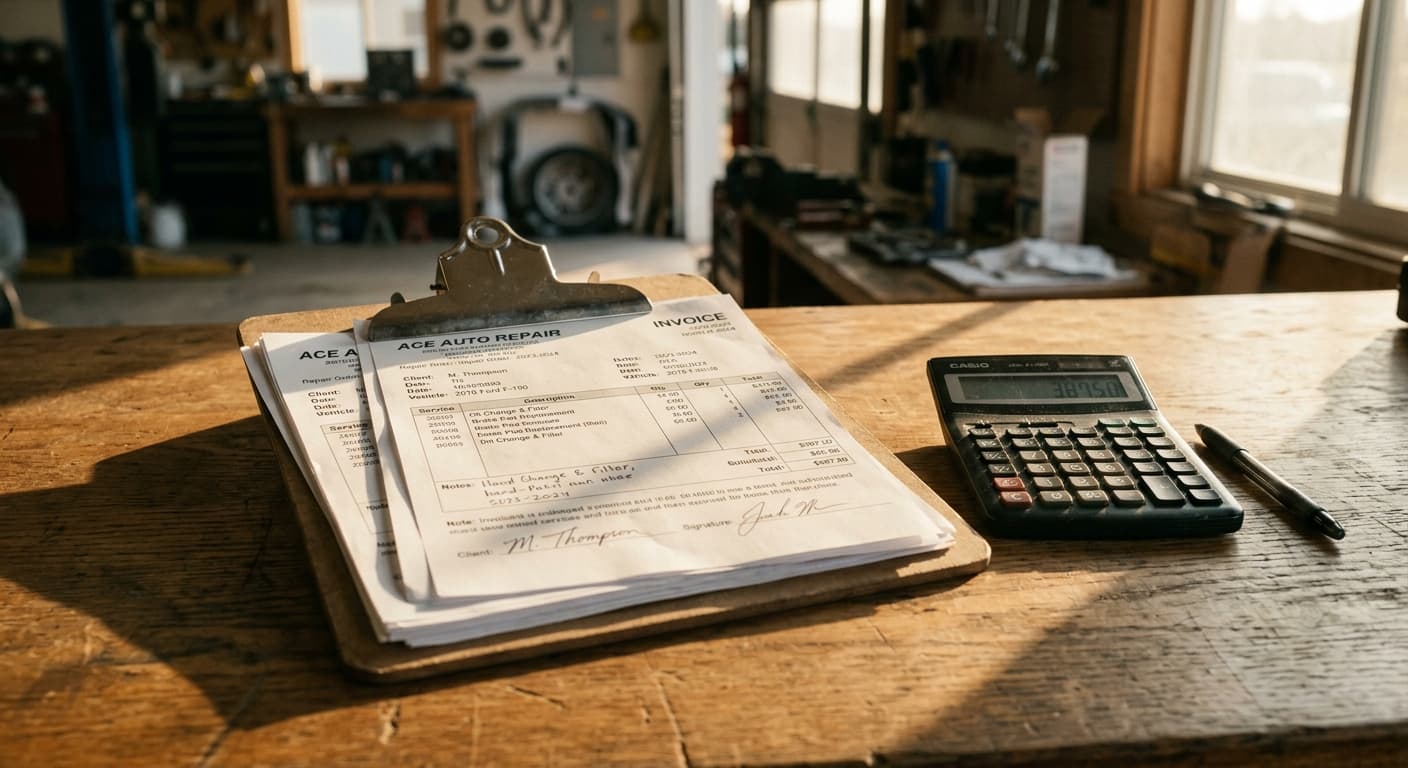
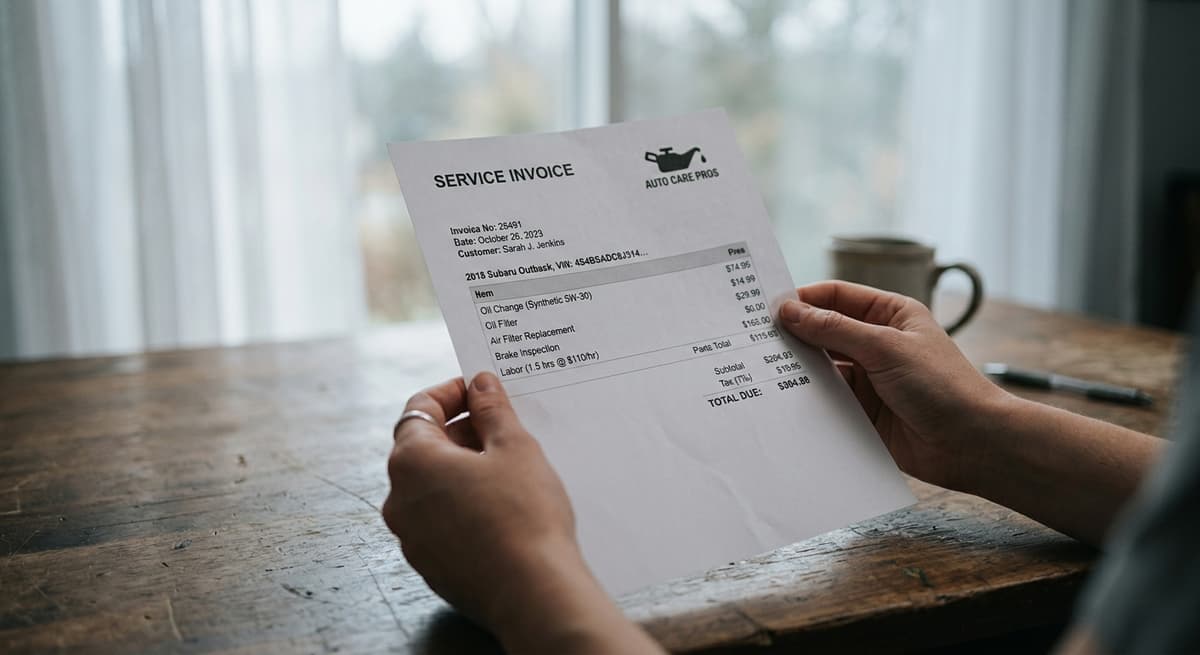
Under 73 P.S. § 1957, the dealer must provide an itemized statement each time the vehicle is brought in for warranty service. This statement must include:
- A description of the reported problem
- The work performed and parts replaced
- The dates the vehicle was in the shop
- The total number of days the vehicle was out of service
The dealer must also notify the manufacturer when the vehicle is brought in a second time for the same nonconformity. This notification requirement is important because it starts the manufacturer's awareness of a recurring problem.
How to File a Lemon Law Claim in Pennsylvania
Filing a successful lemon law claim requires careful documentation and adherence to proper procedures under Pennsylvania law.
Step 1: Document Everything
- Keep all repair orders and invoices
- Record the dates your vehicle was in the shop for repairs
- Document the symptoms you experienced with the vehicle
- Save all correspondence with the dealer and manufacturer
- Take photos or videos of defects when possible
- Request itemized repair statements each time the vehicle is serviced
Step 2: Report to Authorized Dealer
Deliver the nonconforming vehicle to the manufacturer's authorized service and repair facility within Pennsylvania. If the vehicle cannot be delivered due to the nature of the defect, provide written notice to the manufacturer or dealer describing the nonconformity.
Step 3: Allow Reasonable Repair Attempts
Give the manufacturer at least three opportunities to repair the same defect, or allow the vehicle to be out of service for at least 30 cumulative days.
Step 4: Check for Informal Dispute Settlement Procedure
If the manufacturer has an informal dispute settlement procedure that complies with federal regulations (16 CFR Part 703), you may be required to use it before filing a lawsuit. The manufacturer must have informed you of this procedure. Several major manufacturers participate in the BBB AUTO LINE program, which provides free arbitration services to consumers.
Step 5: Consider Your Legal Options
If the dispute is not resolved through informal procedures, you may:
- File a civil lawsuit: Bring an action in the Court of Common Pleas
- Recover attorney fees: Prevailing consumers may recover reasonable attorney fees and court costs
- Pursue Unfair Trade Practices claims: Violations also constitute violations of Pennsylvania's Unfair Trade Practices and Consumer Protection Law
Manufacturer Defenses
Manufacturers may raise several defenses to avoid lemon law liability. Understanding these defenses can help you build a stronger case.
| Defense | Manufacturer's Argument | Consumer's Counter |
|---|---|---|
| Abuse or neglect | Defect caused by consumer misuse | Provide maintenance records showing proper care |
| Unauthorized modifications | Aftermarket alterations caused the problem | Show defect existed before modifications or is unrelated |
| Defect not substantial | Problem does not substantially impair use, value, or safety | Document how defect affects daily use and vehicle value |
| Insufficient repair attempts | Consumer did not allow enough repair attempts | Show repair history meets presumption requirements |
Informal Dispute Settlement Procedures
Under 73 P.S. § 1959, if a manufacturer has established an informal dispute settlement procedure that complies with federal regulations (16 CFR Part 703), consumers must use this procedure before filing a lawsuit.
The process typically involves two stages:
- Mediation: A dispute resolution specialist works with both parties to reach a voluntary settlement.
- Arbitration: If mediation fails, an impartial arbitrator hears testimony, reviews evidence, and issues a decision. The arbitration result is non-binding; consumers retain the right to pursue a civil lawsuit after arbitration.
Consumers must file their dispute within four years from the date the alleged defect is discovered. The arbitration process is free of charge for the consumer.
Resale of Returned Lemon Vehicles
Under 73 P.S. § 1960, Pennsylvania law imposes strict requirements on the resale of vehicles that were repurchased under the lemon law.
Title Branding
The manufacturer, dealer, or transferor must apply for and receive a branded title from the Pennsylvania Department of Transportation (PennDOT). This branded title designation permanently indicates that the vehicle was repurchased under the lemon law. PennDOT will forward a certificate of title with the branded designation to any subsequent purchaser or lienholder.
Disclosure Requirements
Before reselling a returned lemon vehicle, the seller must provide a written statement to the buyer that reads: "This vehicle was repurchased by the manufacturer because it did not conform to the manufacturer's express warranty and the nonconformity was not cured within a reasonable time as provided by Pennsylvania law."
The dealer must obtain a signed receipt confirming the buyer received and understood this disclosure. Records of this receipt must be maintained for four years. The Attorney General approves the form and content of the disclosure statement.
Warranty on Resold Lemons
A lemon buyback vehicle may not be resold in Pennsylvania unless the manufacturer provides the same express warranty it gave to the original purchaser. The warranty term only needs to cover 12,000 miles or 12 months from the resale date, whichever occurs first.
Statute of Limitations
Pennsylvania's Lemon Law does not include an explicit statute of limitations. However, courts have applied the Uniform Commercial Code (UCC) four-year statute of limitations to lemon law claims. This means consumers generally have four years from the date they discover the defect (or from the third related repair attempt) to file a civil lawsuit.
It is important not to confuse this filing deadline with the coverage period. The nonconformity itself must first appear within 1 year, 12,000 miles, or the warranty term (whichever comes first), but the lawsuit to enforce your rights may be filed within four years of the triggering event.
Additional Consumer Protections
Pennsylvania consumers have additional protections beyond the state lemon law.
The federal Magnuson-Moss Warranty Act (15 U.S.C. § 2301 et seq.) provides a federal backstop for consumers whose vehicles are covered by a written manufacturer warranty. Under Magnuson-Moss, consumers can sue in federal court for breach of a written or implied warranty, recover attorney fees if they prevail, and in some cases pursue claims that the state lemon law does not reach, including used vehicles that still carry remaining manufacturer warranty coverage.
Additional protections include:
- Pennsylvania Unfair Trade Practices and Consumer Protection Law: Under 73 P.S. § 1961, a manufacturer's failure to comply with the lemon law also constitutes a violation of the Unfair Trade Practices and Consumer Protection Law, which may provide additional remedies.
- UCC Implied Warranty of Merchantability: Even without an express warranty, vehicles must be fit for their ordinary purpose under the Uniform Commercial Code.
More Pennsylvania Laws
Frequently Asked Questions
How many repair attempts does Pennsylvania require before a vehicle is considered a lemon?
Pennsylvania law presumes a reasonable number of attempts have been made if the same nonconformity has been subject to repair three or more times and still exists, or if the vehicle has been out of service for 30 or more cumulative calendar days. These conditions must occur within the first year, 12,000 miles, or during the warranty term, whichever comes first.
Does Pennsylvania's lemon law cover motorcycles?
Yes. As of May 18, 2025, Pennsylvania's lemon law covers new motorcycles purchased for personal, family, or household use. Governor Josh Shapiro signed the expansion into law on November 18, 2024. Dual sport motorcycles driven off road are not covered.
Does Pennsylvania's lemon law cover used vehicles?
No. Pennsylvania's Lemon Law only covers new vehicles that have not been previously titled to a consumer (except demonstrator vehicles). However, used vehicles may still be protected under the federal Magnuson-Moss Warranty Act (15 U.S.C. § 2301) if they have remaining manufacturer warranty coverage.
What is the usage deduction in a Pennsylvania lemon law buyback?
The manufacturer may deduct a reasonable allowance for miles driven before you first reported the nonconformity. This deduction cannot exceed 10 cents per mile or 10% of the purchase price, whichever is less. For example, on a $40,000 vehicle with 5,000 miles at first report, the maximum deduction would be $500 (5,000 miles x $0.10) since that is less than $4,000 (10% of price).
Do I need to use arbitration before suing under Pennsylvania's lemon law?
It depends on the manufacturer. If the manufacturer has an informal dispute settlement procedure that complies with federal regulations (16 CFR Part 703), you must use that procedure before filing a civil lawsuit. Several manufacturers participate in the BBB AUTO LINE program, which provides free arbitration. If the manufacturer does not have a qualifying program, you may file a lawsuit directly.
Updates
Independently fact-checked against the cited primary sources; governing law re-checked for recent changes
Governing law re-checked for recent changes
Reviewed and approved by an editor
The Law Behind This Article
This article rests on the statutory provisions below, held in our own legal record and retrieved from the official source. Tap a section to read the operative text.
United States Code Title 15
§ 2301DefinitionsIn forcecited in 39 of our articles
For the purposes of this chapter: The term “consumer product” means any tangible personal property which is distributed in commerce and which is normally used for personal, family, or household purposes (including any such property intended to be attached to or installed in any real property without regard to whether it is so attached or installed). The term “Commission” means the Federal Trade Commission. The term “consumer” means a buyer (other than for purposes of resale) of any consumer product, any person to whom such product is transferred during the duration of an implied or written warranty (or service contract) applicable to the product, and any other person who is entitled by the terms of such warranty (or service contract) or under applicable State law to enforce against the warrantor (or service contractor) the obligations of the warranty (or service contract). The term “supplier” means any person engaged in the business of making a consumer product directly or indirectly available to consumers. The term “warrantor” means any supplier or other person who gives or offers to give a written warranty or who is or may be obligated under an implied warranty.
Official text (excerpt) · last checked 2026-07-28 · Read the full text in our law library · Verify at uscode.house.gov
Cited in 1,671 court opinions in our collectionLatest citing opinion in our collection: 2026
In the courts (editorial summary, independently checked):Walsh v. Ford Motor Company (1986) held that except where Magnuson-Moss expressly prescribes a rule, the Act applies state written and implied warranty law, citing Section 2301(7)'s definition of implied warranty as one arising under state law. Birdsong v. Apple (2009) dismissed Act claims once the state warranty claims failed.
Opinions citing this section in our collection:
- John F. "Jack" Walsh v. Ford Motor Company (Court of Appeals for the D.C. Circuit 1986, 807 F.2d 1000)✓Ford owners sought nationwide classes over transmissions that slipped from park into reverse; reading Section 2301(7) and (6), the D.C. Circuit held Magnuson-Moss applies state warranty law except where the Act expressly prescribes a rule, and vacated class certification.
- Birdsong v. Apple, Inc. (Court of Appeals for the Ninth Circuit 2009, 590 F.3d 955)✓iPod buyers alleged the player risked hearing loss; because Section 2301(7) ties implied warranty to state law, the Ninth Circuit treated the Magnuson-Moss claim as standing or falling with the California warranty claims and affirmed dismissal once those failed.
- Robert E. Kelly Virginia L. Kelly v. Fleetwood Enterprises, Inc. (Court of Appeals for the Ninth Circuit 2004, 377 F.3d 1034)“…gnizable under the Magnuson-Moss Warranty Act (the “Act”), 15 U.S.C. § 2301 et seq. This consumer dis…”
Identified automatically from the court opinions citing this section — not a ranking of which case controls.
Also relied on in: Arkansas Lemon Law (2026): How to Qualify & Get a Refund, Washington Lemon Law (2026): How to Qualify & Get a Refund, Florida Lemon Law (2026): How to Qualify & Get a Refund
Search our full record of US law — 2.1 million sections, every state + federal →
Sources and References
- Pennsylvania Automobile Lemon Law (Full Statute Text)(legis.state.pa.us).gov
- 73 P.S. § 1956: Presumption of Reasonable Number of Attempts(legis.state.pa.us).gov
- 73 P.S. § 1955: Manufacturer Duty for Refund or Replacement(legis.state.pa.us).gov
- PennDOT Lemon Law Fact Sheet (May 2025)(pa.gov).gov
- PA Senate: Brooks Bill to Extend Lemon Law to Motorcycles(pasenategop.com).gov
- BBB AUTO LINE: Pennsylvania Lemon Law Information(bbbprograms.org)