
Pennsylvania
Pennsylvania Car Seat Laws (2026): Ages, Fines & Fact Check
Independently fact-checked against primary sources (last audited September 17, 2026). · Reviewed by the RecordingLaw editorial team. · Law checked current as of August 20, 2026. · 3 primary sources cited on this page. How we verify our legal content
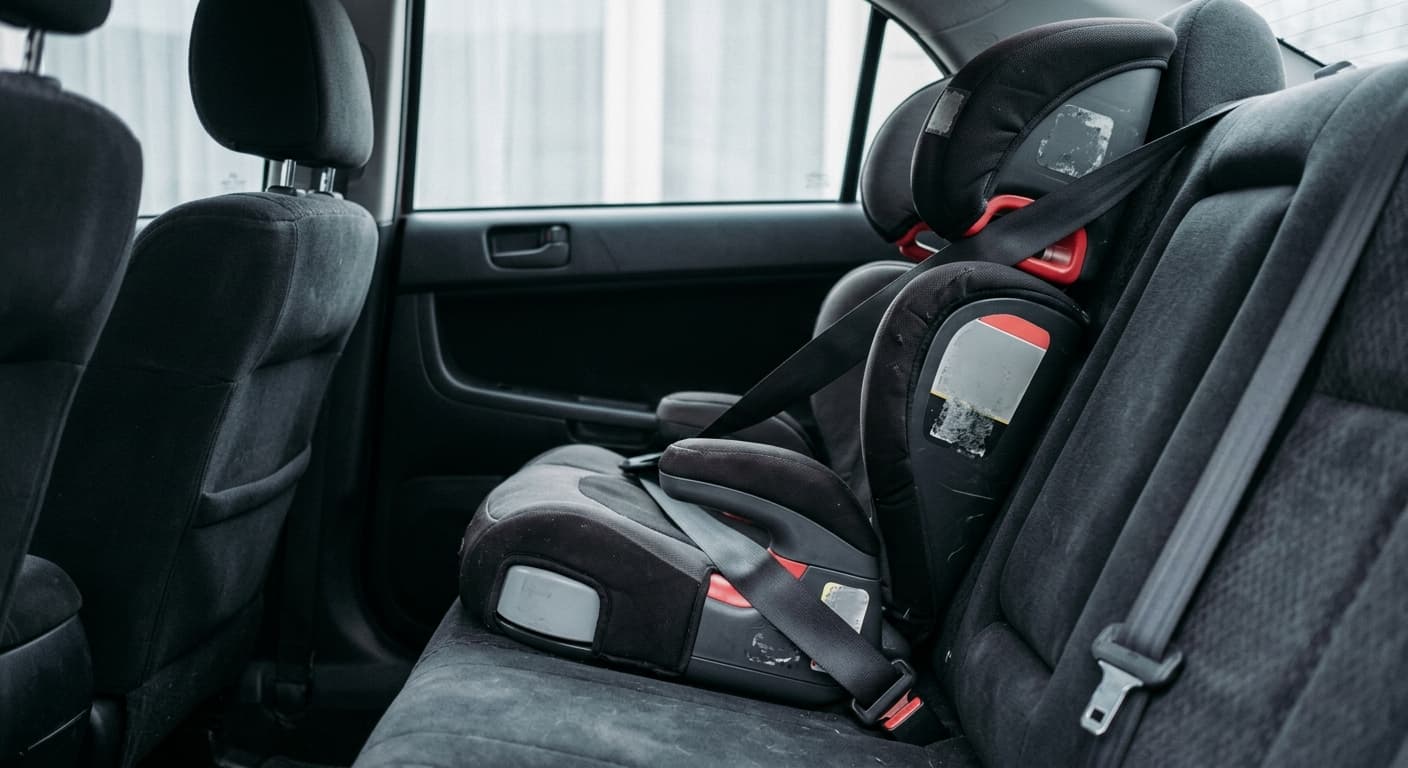
Pennsylvania requires a rear-facing child passenger restraint system for every child under 2, used until the seat's manufacturer weight and height limits are outgrown; a child passenger restraint system of any orientation from age 2 through 3; a booster seat used together with a fastened seat belt for ages 4 through 7; and Pennsylvania's general seat belt law from age 8 on, under 75 Pa.C.S. § 4581. This page reflects the statute's text as of September 2026.
Jurisdiction scope: This article covers car seat and child-restraint law in the state of Pennsylvania only. It does not address any other state. For other states, see the car seat laws hub.
| Stage | Who | Rule | Statute |
|---|---|---|---|
| Rear-facing restraint | Under 2 | Rear-facing child passenger restraint system, used until the seat's manufacturer weight/height limit | 75 Pa.C.S. § 4581(a)(1)(ii) |
| Child passenger restraint system | At least 2, under 4 | Secured in a child passenger restraint system; no orientation specified | § 4581(a)(1)(i) |
| Booster seat with seat belt | At least 4, under 8 | Fastened safety seat belt system AND an appropriately fitting child booster seat | § 4581(a)(1.1) |
| Seat belt | Age 8 through 17 | Pennsylvania's general seat belt duty applies | § 4581(a)(2) |
Under 2: mandatory rear-facing restraint
Pennsylvania's youngest stage is a genuine rear-facing mandate, not just the absence of a rule. Section 4581(a)(1)(ii) requires: "Any person who is operating a passenger car, Class I truck, Class II truck, classic motor vehicle, antique motor vehicle or motor home and who transports a child under two years of age anywhere in the motor vehicle shall fasten such child securely in a rear-facing child passenger restraint system, to be used until the child outgrows the maximum weight and height limits designated by the manufacturer." This rule, added by Act 43 of 2016, sits directly above the broader under-4 restraint-system requirement in (a)(1)(i), and that subparagraph is expressly subordinate to it: it applies "except as provided under subparagraph (ii)." So a child under 2 must ride rear-facing, and can lawfully stay rear-facing past age 2 if the seat's manufacturer limits haven't been outgrown yet, even though (a)(1)(i) alone wouldn't require it once the child turns 2.
Age 2 through 3: child passenger restraint system, no orientation mandate
Once a child turns 2 and is no longer bound by the rear-facing mandate in (a)(1)(ii), the more general requirement in (a)(1)(i) governs through age 3: the child must be secured in a child passenger restraint system, and this subparagraph doesn't specify an orientation. A family that keeps a child rear-facing past age 2, up to the seat's own manufacturer weight or height limit, remains in compliance either way; nothing in Pennsylvania law forces a switch to forward-facing before the seat's own rating requires it. Both (a)(1)(i) and (a)(1)(ii) apply, under (a)(1)(iii), only where the vehicle has a seating position that is equipped, or was originally equipped, with a seat safety belt or other means to secure the restraint system.
Ages 4 through 7: booster seat used together with a seat belt
Section 4581(a)(1.1) requires a child at least 4 but under 8 to be fastened securely "in a fastened safety seat belt system and in an appropriately fitting child booster seat." The booster has to be paired with the vehicle's own seat belt; a booster seat alone, without the belt fastened over it, doesn't satisfy this requirement. Like the restraint-system stages above, this duty applies only where a seating position with a seat safety belt, or one originally so equipped, is available. Read carefully, "under eight" means through age 7; a child who turns 8 moves out of the booster requirement and into Pennsylvania's general seat belt law.
No taxi exemption: taxis are ordinary passenger cars under this statute
Unlike some states, Pennsylvania's child-restraint law doesn't carve out taxis or livery vehicles. Section 4581 applies to "any person who is operating a passenger car, Class I truck, Class II truck, classic motor vehicle, antique motor vehicle or motor home." Section 102 defines "passenger car" as "a motor vehicle, except a motorcycle, designed primarily for the transportation of persons and designed for carrying no more than 15 passengers, including the driver, and primarily used for the transportation of persons," and a taxi falls within that definition like any other passenger vehicle. A taxi driver carrying a child under 8 is subject to the same restraint and booster requirements as a family in a private car.
Exemptions
PennDOT can grant an exemption when using a restraint system would be impractical for physical reasons, including medical reasons or the size of the child, under section 4581(g). A separate provision addresses a driver or front-seat occupant who can't wear a safety belt for physical, medical, or psychological reasons, with a psychiatrist's or specialist's certification required for the psychological version; that exemption applies to the general seat-belt duty, not to the child-restraint requirement described above.
Penalty for a car seat violation
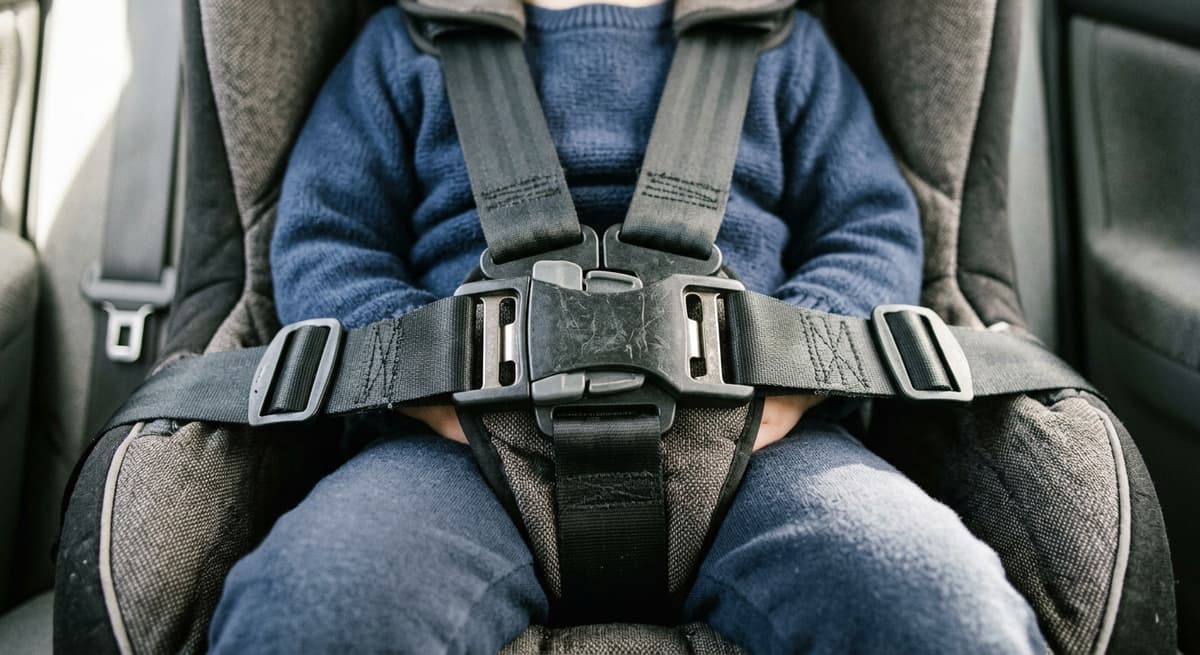
A violation of the child-restraint or booster requirement in (a)(1) or (1.1) carries a $75 fine, deposited into the Child Passenger Restraint Fund under section 4581(b). A separate, lower $10 fine applies to a violation of the general seat belt provisions in (a)(2) or (3), which is a different violation from the child-restraint and booster requirements above. A magisterial district judge, magistrate, or judge is required to dismiss a citation under (a)(1) or (1.1) if the person shows, before or at the hearing, evidence of having acquired a child passenger restraint system or booster seat. Under (c), sufficient evidence is a receipt mailed to the appropriate court officer showing purchase, rental, transfer from another child seat owner (evidenced by a notarized letter), or bailment from a bona fide loaner program.
Leaving a child unattended in a vehicle
Pennsylvania has a dedicated unattended-child statute, 75 Pa.C.S. § 3701.1, separate from the restraint law above. It applies to a child under 6: that child may not remain unattended in a vehicle when the vehicle is out of the responsible person's sight and under circumstances that endanger the child's health, safety, or welfare. Its scope is limited to highways and trafficways of the Commonwealth, which the statute specifically says includes parking lots. It's a summary offense, and each unattended child counts as a separate violation.
Airbags and rear-facing seats
Section 4581 contains no rule requiring a driver to deactivate or remove a front passenger air bag before installing a rear-facing seat in that position; that requirement isn't in the statute's text. The applicable, non-statutory safety guidance is straightforward: never place a rear-facing child restraint in front of an active passenger air bag. A separate federal provision, 49 U.S.C. § 30122, addresses making a vehicle's own safety equipment inoperative; it's an unrelated federal make-inoperative restriction, not a Pennsylvania car-seat-placement law.
Federal guidance vs Pennsylvania law
The federal standard that governs child car seats as products, FMVSS 213 (49 CFR 571.213), regulates what a manufacturer may sell, not how a parent must use the seat; Pennsylvania's own statute, described above, sets the use requirement. The National Highway Traffic Safety Administration and the American Academy of Pediatrics separately recommend keeping a child rear-facing as long as the seat's own height and weight limits allow. That's consistent with, and can call for a longer rear-facing period than, Pennsylvania's own under-2 statutory minimum, but it remains guidance, not a separate legal floor.
Related Pennsylvania traffic law pages
Disclaimer: This article provides general legal information about Pennsylvania's car seat law as of September 2026. It is not legal advice. Statutes, exemptions, and penalties change; verify the current text of the law before relying on it, and talk to a lawyer licensed in Pennsylvania about a specific situation.
Statutes cited reflect their in-force version as of 2026-09-16. Last updated: 2026-09-16.
Frequently Asked Questions
Until what age does a child need a car seat in Pennsylvania?
A rear-facing restraint is required under age 2, until the seat's manufacturer weight or height limit is outgrown. A child passenger restraint system of any orientation is required from 2 through 3. A booster seat used together with a fastened seat belt is required from 4 through 7. At 8, Pennsylvania's general seat belt law takes over, under 75 Pa.C.S. section 4581.
Does Pennsylvania law require removing an airbag for a rear-facing seat?
No. Section 4581 has no airbag-deactivation requirement. The correct safety guidance, which isn't itself a statutory rule, is simply never to place a rear-facing seat in front of an active passenger air bag.
What is the fine for a car seat violation in Pennsylvania?
A child-restraint or booster violation carries a $75 fine. A seat belt violation under a different subsection carries a separate $10 fine. A judge must dismiss a child-restraint or booster citation if the driver shows proof of having since acquired a compliant seat.
Are taxis exempt from Pennsylvania's car seat law?
No. Section 4581 has no taxi or livery exemption; a taxi is treated as an ordinary 'passenger car' and is covered by the same child-restraint and booster requirements as any other vehicle.
Does Pennsylvania have a law against leaving a child alone in a car?
Yes. Under 75 Pa.C.S. section 3701.1, a child under 6 may not be left unattended in a vehicle, out of sight, under circumstances endangering the child's health, safety, or welfare, on a highway or trafficway, which includes parking lots. It's a summary offense, and each child is a separate violation.
Updates
Rebuilt from the current statute text after an independent review: restraint stages, exemptions, front-seat rules and penalties re-verified against the statute.
Independently fact-checked against the cited primary sources
Independently fact-checked against the cited primary sources; governing law re-checked for recent changes
Corrected a misattribution: the pre-1966 vehicle exemption in 75 Pa.C.S. 4581 belongs to the general adult seat belt clause, not the child passenger restraint requirement, which carries no model-year exemption.
Governing law re-checked for recent changes
Reviewed and approved by an editor
The Law Behind This Article
This article rests on the statutory provisions below, held in our own legal record and retrieved from the official source. Tap a section to read the operative text.
Pennsylvania Consolidated Statutes Title 75 (Vehicles)
§ 4581Restraint systemsIn forcecited in 2 of our articles
(a) Occupant protection.-- (1) (i) Except as provided under subparagraph (ii), any person who is operating a passenger car, Class I truck, Class II truck, classic motor vehicle, antique motor vehicle or motor home and who transports a child under four years of age anywhere in the motor vehicle, including the cargo area, shall fasten such child securely in a child passenger restraint system, as provided in subsection (d). (ii) Any person who is operating a passenger car, Class I truck, Class II truck, classic motor vehicle, antique motor vehicle or motor home and who transports a child under two years of age anywhere in the motor vehicle shall fasten such child securely in a rear-facing child passenger restraint system, to be used until the child outgrows the maximum weight and height limits designated by the manufacturer, as provided in subsection (d). (iii) This paragraph shall apply to all persons while they are operators of motor vehicles where a seating position is available which is equipped with a seat safety belt or other means to secure the systems or where the seating position was originally equipped with seat safety belts.
Official text (excerpt) · last checked 2026-09-16 · Read the full text in our law library · Verify at palegis.us
Cited in 55 court opinions in our collectionLatest citing opinion in our collection: 2026
Opinions citing this section in our collection:
- PA State Police, Aplt. v. Grove, M. (Supreme Court of Pennsylvania 2017, 161 A.3d 877)“…her driver received a citation for failure to use seatbelt (75 Pa.C.S. §4581). Public Information Release Repo…”
- Gaudio v. Ford Motor Co. (Superior Court of Pennsylvania 2009, 2009 Pa. Super. 102)“…rder, 6/1/06, at 2. The majority finds statutory mandate in 75 Pa.C.S. § 4581(e) [1] for the exclusion of evidence o…”
- Commonwealth v. Garibay (Superior Court of Pennsylvania 2014, 2014 Pa. Super. 272)“…Motor Vehicle Code].” Therefore, we find that while 75 Pa. Cons.Stat.Ann. § 4581(a)(2) may prohibit a police officer fro…”
Identified automatically from the court opinions citing this section — not a ranking of which case controls.
Search our full record of US law — 2.1 million sections, every state + federal →
Sources and References
- 75 Pa.C.S. § 4581, Restraint systems required for children(legis.state.pa.us).gov
- 75 Pa.C.S. § 3701.1, Endangering welfare of children in vehicles (unattended child)(legis.state.pa.us).gov
- 49 CFR § 571.213, FMVSS No. 213, Child restraint systems(ecfr.gov).gov
- American Academy of Pediatrics, Car Safety Seats: Information for Families(healthychildren.org)