
Georgia
Georgia Car Seat Laws (2026): Ages, Fines & Exemptions
Independently fact-checked against primary sources (last audited September 17, 2026). · Reviewed by the RecordingLaw editorial team. · Law checked current as of August 20, 2026. · 3 primary sources cited on this page. How we verify our legal content

Georgia requires a child passenger restraining system for every child under 8, unless the child is taller than 4 feet 9 inches, under O.C.G.A. § 40-8-76. A first conviction carries a fine of not more than $50; a second or later conviction, not more than $100. The text below reflects the current Code of Georgia, including two places where that text still carries language past its own sunset date.
Jurisdiction scope: This article covers car seat and child-restraint law in the state of Georgia only. It does not address any other state. For other states, see the car seat laws hub.
| Stage | Who | Rule | Statute |
|---|---|---|---|
| Child passenger restraining system | Every child under 8 | Restraint appropriate for the child's height and weight, approved under FMVSS 213; no separate rear-facing provision | O.C.G.A. § 40-8-76(b)(1) |
| Lap belt only | Child at least 40 pounds, in a vehicle lacking lap-and-shoulder belts, or with all such belts occupied by other children | A lap belt alone may substitute for the full restraint system | O.C.G.A. § 40-8-76(b)(1)(A) |
| Seat belt | Child under 8 whose height is shown to exceed 4 feet 9 inches | May move to a regular seat belt before turning 8 | O.C.G.A. § 40-8-76(b)(1)(D) |
| Seat belt | Age 8 and older | Georgia's general seat belt law, § 40-8-76.1, applies once the restraint-system mandate ends | O.C.G.A. § 40-8-76.1 |
Georgia's under-8 restraint requirement
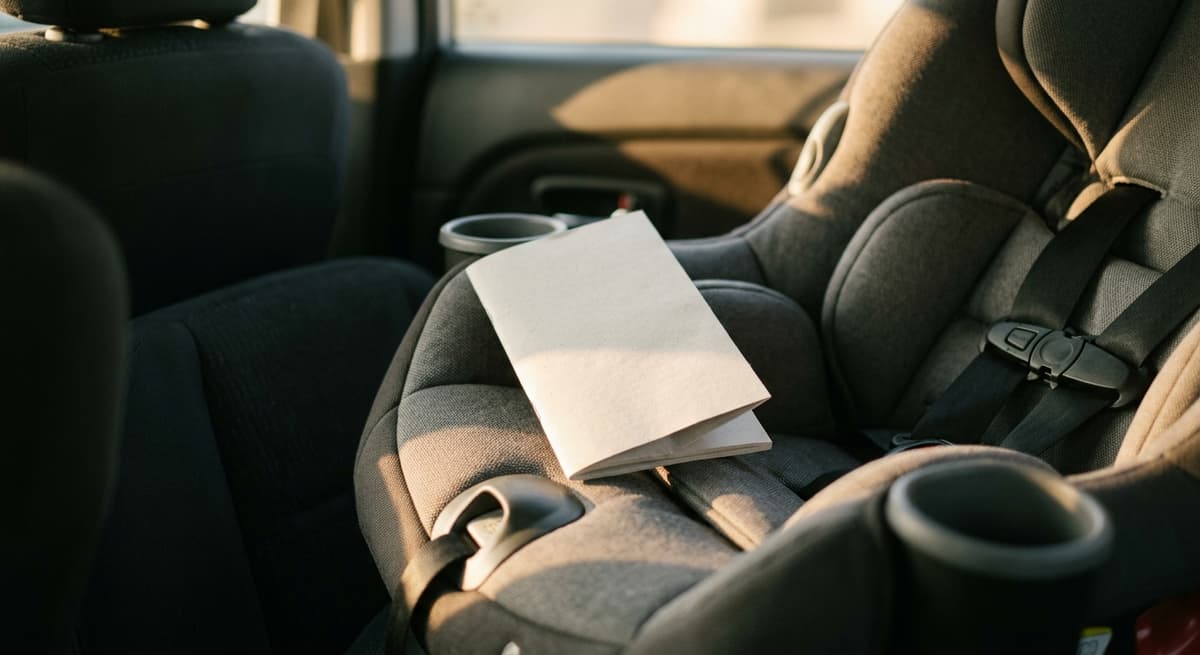
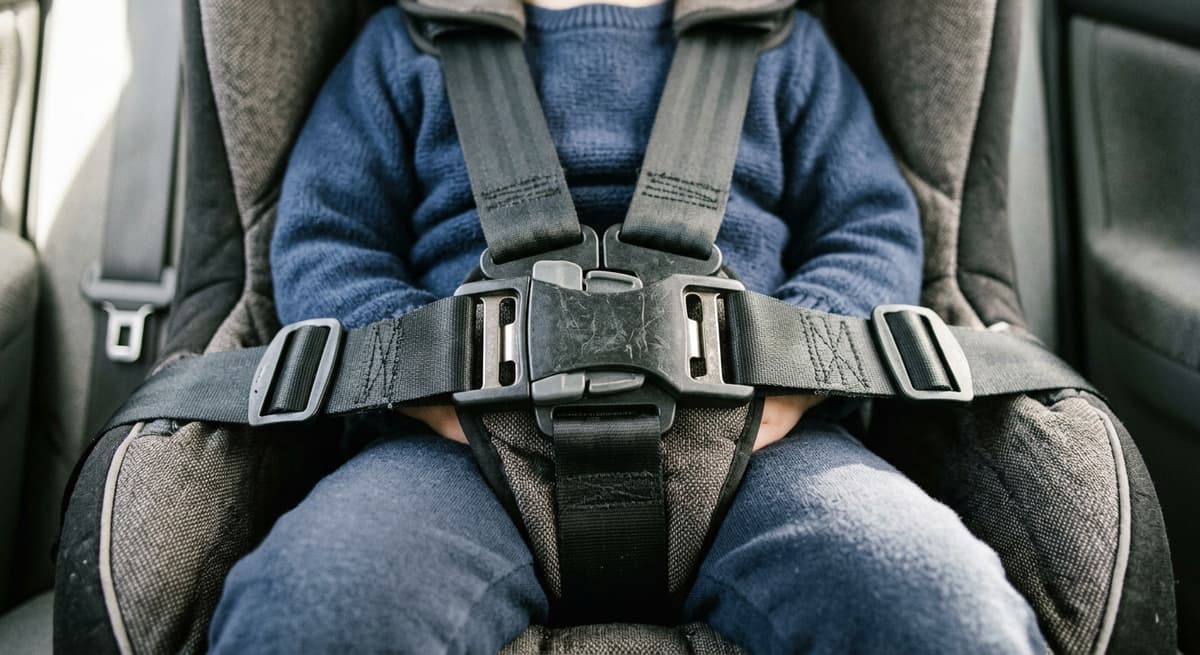
O.C.G.A. § 40-8-76(b)(1) requires every driver transporting a child under 8 to provide "the proper restraint of such child in a child passenger restraining system appropriate for such child's height and weight," approved by the U.S. Department of Transportation under FMVSS 213. The statute doesn't write in a separate rear-facing clause; whether a restraint is rear- or forward-facing at a given point comes down to that restraint's own approval and the manufacturer's instructions. Those manufacturer's directions are not merely descriptive: subsection (b)(1)(C) makes them binding as a matter of Georgia law, stating that "a driver shall not be deemed to be complying with the provisions of this paragraph unless any child passenger restraining system required by this paragraph is installed and being used in accordance with the manufacturer's directions for such system."
The 4-foot-9-inch early exit
Subsection (D) lets a child leave the restraint-system requirement before turning 8 if a parent or guardian "can show the child's height is over 4 feet and 9 inches," at which point the child moves to a regular seat belt under Georgia's separate seat belt statute, § 40-8-76.1. This is a height-based off-ramp, not an automatic one; the statute frames it as something the parent or guardian has to show, not a switch that happens on its own at that height.
When a lap belt alone is enough
Georgia allows a narrower substitute for children who weigh at least 40 pounds: a lap belt by itself, rather than a full restraint system, "when the vehicle is not equipped with both lap and shoulder belts," or when the vehicle does have lap-and-shoulder belts but "all being used to properly restrain other children." This is a fallback for a full or older vehicle, not a general lap-belt option available to any 40-pound child.
Seating position: rear seat required, no airbag rule
Georgia requires the restrained child to sit in the rear seat, consistent with the section's requirements, unless the vehicle has no appropriate rear seating position or all such positions are already occupied by other children, in which case front-seat restraint is allowed. Section 40-8-76 sets no airbag condition anywhere in subsection (b); Georgia's rear-seat rule turns on seat availability, not on whether the front passenger airbag is active.
Exemptions from Georgia's car seat law
Georgia exempts a taxicab, "as defined by Code Section 33-34-5.1," and a public transit vehicle, "as defined by Code Section 16-5-20," from the restraint requirement. Section 33-34-5.1(a)(3)(A) defines a taxicab as "a motor vehicle used to transport passengers for a fare and which is fitted with a taximeter to compute such fare," so the exemption reaches a metered, fare-carrying passenger vehicle; § 33-34-5.1's own section title is "Self-insurers," an insurance-code provision that happens to carry this taxicab definition for that purpose. A medical exemption is also available when a parent or guardian obtains "a physician's written statement that a physical or medical condition of the child prevents" the required restraint, under subsection (b)(1)(D).
A child-care bus exemption that has already expired
Subsection (d) exempts certain buses transporting children over 4, operated by a licensed or commissioned child care facility, from the restraint requirement, but that specific exemption's own text limits it "until July 1, 2012." That date has long passed, so treat that particular clause as dead letter rather than a currently operative exemption unless a more current source confirms otherwise. The rest of subsection (d) is not dead letter, though: it separately requires that on a bus that is not a school bus or multifunction school activities bus, "each child over four years of age and under eight years of age shall be properly restrained by a child passenger restraining system," and it exempts a multifunction school activities bus specifically from having to restrain children 5 or older in a child passenger restraining system. Neither of those two sentences carries a sunset date in the text.
Penalty, and a waiver clause that has also expired
A first conviction under section 40-8-76 carries a fine of not more than $50; a second or subsequent conviction, not more than $100, under subsection (b)(2). The statute's text doesn't state driver's license points for this section. The text as currently codified also carries a waiver: a court may suspend the fine for a first conviction involving a 6- or 7-year-old if the driver shows they bought a compliant restraint system after the offense and before the court date. But that clause caps itself in its own text, stating "this exception shall apply until January 1, 2012." As with the bus exemption above, that date is long past, so the waiver is dead letter; a driver facing that fine situation today should ask the court directly rather than rely on this expired clause.
Federal guidance vs. Georgia law
The federal standard that governs child car seats as products, FMVSS 213 (49 CFR 571.213), regulates what a manufacturer may sell, not how a parent must use the seat; that's what Georgia's statute, described above, sets out. The National Highway Traffic Safety Administration and the American Academy of Pediatrics separately recommend keeping a child rear-facing as long as the seat's own height and weight limits allow, then moving through a forward-facing harness, a booster, and finally a seat belt. That's safety guidance, not a separate legal floor beyond what section 40-8-76 requires. A newer federal side-impact standard for car seats themselves, FMVSS 213a/213b, becomes mandatory for manufacturers on December 5, 2026; it changes what a seat must be built to withstand, not what Georgia law requires a driver to do.
Related Georgia traffic law pages
Disclaimer: This article provides general legal information about Georgia's car seat law as of September 2026. It is not legal advice. Statutes, exemptions, and penalties change; verify the current text of the law before relying on it, and talk to a lawyer licensed in Georgia about a specific situation.
Statutes cited reflect their in-force version as of 2026-09-16. Last updated: 2026-09-16.
Frequently Asked Questions
Until what age or height does a child need a car seat in Georgia?
A child passenger restraining system is required for every child under 8, unless a parent or guardian shows the child's height is over 4 feet 9 inches, in which case the child may move to a regular seat belt early, under O.C.G.A. section 40-8-76.
Can a child sit in the front seat in Georgia?
Georgia's statute requires rear-seat placement for a restrained child unless the vehicle has no appropriate rear seating position or every such position is already occupied by other children. The statute sets no separate airbag condition for the front seat.
What is the fine for a car seat violation in Georgia?
A first conviction is a fine of not more than $50; a second or subsequent conviction is not more than $100, under O.C.G.A. section 40-8-76(b)(2).
Does Georgia's car seat law exempt taxis?
Yes. O.C.G.A. section 40-8-76(b)(1) exempts a taxicab, as defined by Code Section 33-34-5.1, from the restraint requirement; that section defines a taxicab as a motor vehicle used to transport passengers for a fare and fitted with a taximeter to compute the fare. A public transit vehicle is separately exempt.
Updates
Rebuilt from the current statute text after an independent review: restraint stages, exemptions, front-seat rules and penalties re-verified against the statute.
Independently fact-checked against the cited primary sources
Rebuilt the page's child-restraint age/weight staging to match the actual text of O.C.G.A. Section 40-8-76: Georgia law requires an appropriate restraint system for children under 8 (not a codified rear-facing/forward-facing/booster age schedule, which is AAP/manufacturer guidance), and the back-seat mandate applies only to children under 8 who are also shorter than 4 feet 9 inches; added a direct statute citation, since the page previously cited only third-party aggregators.
Independently fact-checked against the cited primary sources; governing law re-checked for recent changes
Reviewed and approved by an editor
The Law Behind This Article
This article rests on the statutory provisions below, held in our own legal record and retrieved from the official source. Tap a section to read the operative text.
Official Code of Georgia Annotated
§ 40-8-76Safety belts required as equipment; safety restraints for children.In force
(a) No new private passenger automobile manufactured after January 1, 1964, shall be sold to the general public in this state unless such automobile shall be equipped with two sets of safety belts for the front seat thereof.…
Official text (excerpt) · last checked 2026-09-10 · Read the full text in our law library · Verify at gahighwaysafety.org
Cited in 9 court opinions in our collectionLatest citing opinion in our collection: 2026
Opinions citing this section in our collection:
- Bautista v. State (Court of Appeals of Georgia 2010, 305 Ga. App. 210)“…ecure a child passenger in an appropriate safety restraint, OCGA § 40-8-76 (b); failure to wear a seat safety belt…”
- Honda Motor Co., Ltd. v. Kimbrel (Court of Appeals of Georgia 1988, 189 Ga. App. 414)“…omobile, and even then not necessarily by the manufacturer. OCGA § 40-8-76 (a) (1). Added in 1983, subsection (d)…”
- C. W. Matthews Contracting Co. v. Gover (Supreme Court of Georgia 1993, 263 Ga. 108)“…as “negligence per se” as it did when enacting OCGA § 40-8-76 (d), regulating the use of automobile s…”
Identified automatically from the court opinions citing this section — not a ranking of which case controls.
Search our full record of US law — 2.1 million sections, every state + federal →
Sources and References
- O.C.G.A. Title 40, Chapter 8, Part 4, official code(legis.ga.gov).gov
- O.C.G.A. § 40-8-76: Safety belts required as equipment; safety restraints for children (2025 Code of Georgia, Justia)(law.justia.com)
- O.C.G.A. § 33-34-5.1: Self-insurers, subsection (a)(3)(A) defines taxicab for the § 40-8-76 exemption (2025 Code of Georgia, Justia)(law.justia.com)
- Georgia Governor's Office of Highway Safety, Seat Belt Laws (state-agency summary)(gahighwaysafety.org).gov
- 49 CFR § 571.213: FMVSS No. 213, Child restraint systems(ecfr.gov).gov
- American Academy of Pediatrics, Car Safety Seats: Information for Families(healthychildren.org)