
Arizona
Arizona Car Seat Laws (2026): Booster Age & Penalty Rules
Independently fact-checked against primary sources (last audited September 17, 2026). · Reviewed by the RecordingLaw editorial team. · Law checked current as of August 20, 2026. · 2 primary sources cited on this page. How we verify our legal content
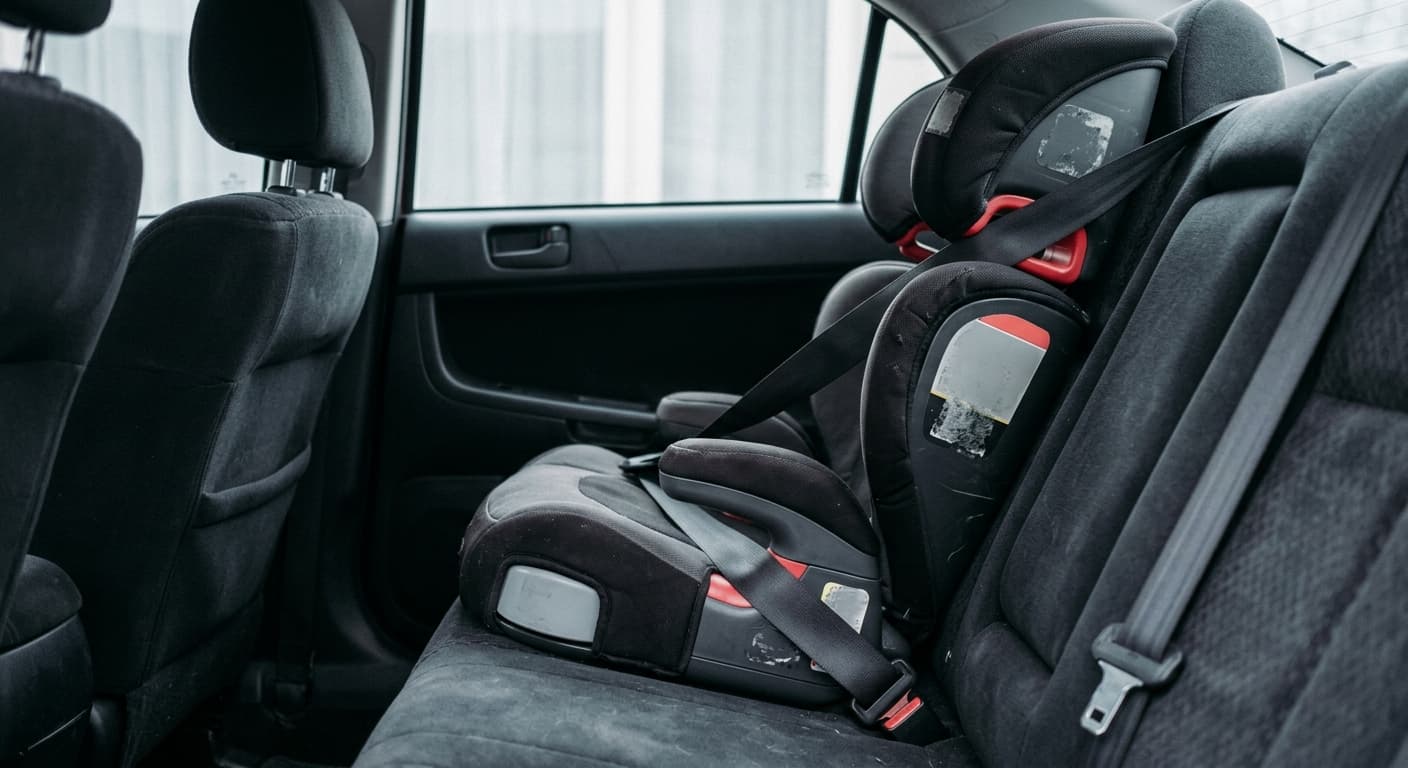
Arizona requires a child restraint system for every child under 5, and, for the operator of a vehicle designed to carry 10 or fewer passengers built for model year 1972 or later, keeps a 5-to-7-year-old in one too if they stand 4 feet 9 inches or shorter, under A.R.S. § 28-907. A violation is a flat $50 civil penalty that a court will waive once you show you've since bought a compliant seat. This page reflects the statute's text as of September 2026.
Jurisdiction scope: This article covers car seat and child-restraint law in the state of Arizona only. It does not address tribal land, federal property, or any other state. For other states, see the car seat laws hub.
| Stage | Who | Rule | Statute |
|---|---|---|---|
| Child restraint system | Any child under 5 years old | Must be properly secured in a child restraint system meeting federal safety standards | A.R.S. § 28-907(A), (C) |
| Child restraint system (typically a booster) | Child at least 5, under 8, and not more than 4 feet 9 inches tall, riding with the operator of a vehicle designed for 10 or fewer passengers (MY1972+, belt-equipped) | Required for that operator; ends at the 8th birthday or at a height over 4 feet 9 inches, whichever comes first | A.R.S. § 28-907(B) |
| Seat belt | Child who has turned 8, or who exceeds 4 feet 9 inches, whichever comes first | Arizona's general seat belt law applies once the child-restraint mandate above ends | Not part of § 28-907 |
Arizona's child restraint requirement for children under 5
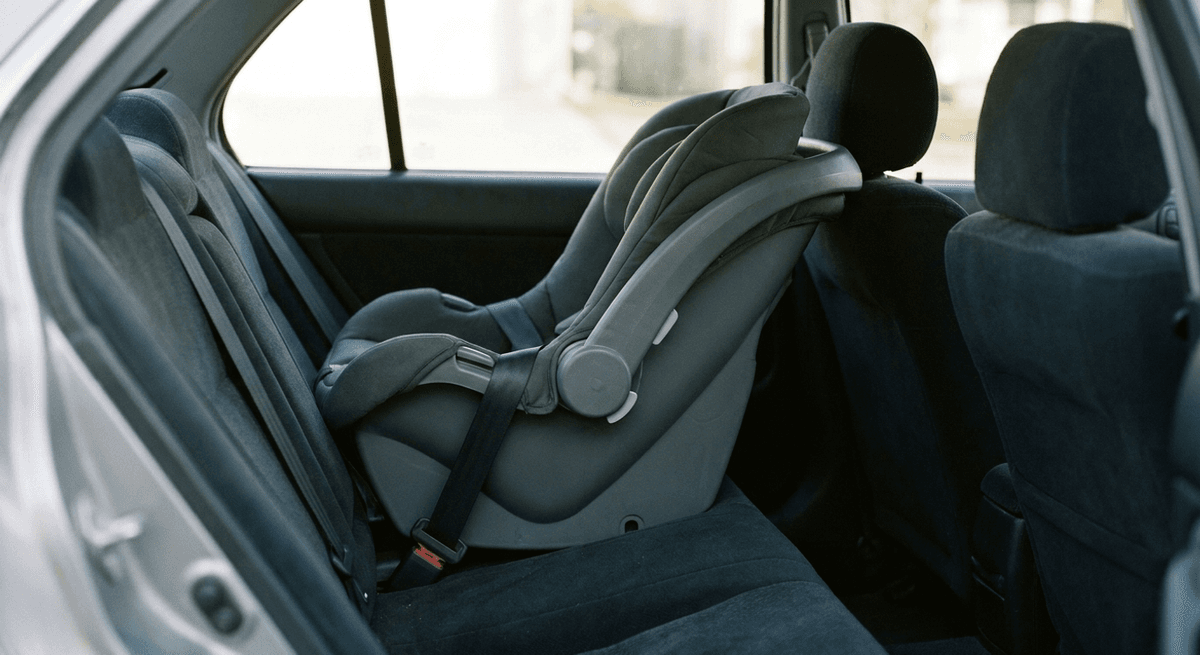
A.R.S. § 28-907(A) makes it unlawful to drive with a child under five years old who isn't "properly secured in a child restraint system." The statute doesn't separately spell out a rear-facing-versus-forward-facing rule. Instead, subsection (C) requires the restraint system itself to meet federal safety standards under 49 CFR 571.213, and it's the seat's own manufacturer instructions, not a distinct Arizona statute, that set the point at which a child can switch from rear-facing to forward-facing within that system. Keeping a child rear-facing as long as the seat allows is what federal safety regulators recommend (see the guidance section below), but that recommendation sits alongside the law rather than inside it.
Booster stage: age 5 through the 4-feet-9-inch cutoff
Once a child turns five, section 28-907(B) still requires a child restraint system, usually a booster seat by this age, for any child who is under eight years old and "not more than four feet nine inches tall." That duty, however, binds only "the operator of a motor vehicle that is designed for carrying ten or fewer passengers, that is manufactured for the model year 1972 and thereafter and that is required to be equipped with an integrated lap and shoulder belt or a lap belt pursuant to the federal motor vehicle safety standards prescribed in 49 Code of Federal Regulations section 571.208." A vehicle designed to carry more than ten passengers, or one built before model year 1972, falls outside (B) entirely, unlike the under-5 duty in (A), which carries no such vehicle limitation. That height ceiling is inclusive: a child measuring exactly four feet nine inches remains covered, and the requirement only lifts once a child is taller than that mark. In practice, the booster stage ends at whichever comes first: the child's eighth birthday, or a height over four feet nine inches.
When Arizona's seat belt law takes over
Once a child ages out of the restraint requirement, by turning eight or by growing past four feet nine inches, section 28-907 no longer applies, and the state's general seat belt statute covers that child the same way it covers an adult passenger. Arizona's car seat law does not carve out a separate lap-belt-only stage; the transition is a clean cutoff at the age or height line above, not a graduated booster-to-belt allowance.
Exemptions from Arizona's car seat law
Section 28-907(H) lists six specific exemptions from the restraint requirement:

- A vehicle originally manufactured without passenger restraint devices.
- A recreational vehicle, as defined in A.R.S. § 41-4001.
- A commercial motor vehicle operated by a driver holding a current commercial driver license.
- A driver who must transport a child in an emergency to obtain necessary medical care.
- An authorized emergency vehicle transporting a child for medical care.
- A vehicle carrying more than one child under 8 where the passenger area doesn't have room for every required restraint system, as long as at least one child is restrained and the rest are restrained as reasonably as possible.
The statute doesn't list a taxi or rideshare exemption. Unless one of the six exemptions above applies, the restraint requirement covers a ride in a taxi or a Transportation Network Company vehicle the same as any other private car.
Penalty for a car seat violation
A violation of section 28-907 carries a $50 civil penalty under subsection (D), with no first-offense/subsequent-offense distinction in the statute's own text. It's a civil penalty rather than a criminal moving violation, and the statute's own text doesn't attach driver's license points to it. The penalty, on any violation, is waived outright if the driver "makes a sufficient showing that the motor vehicle has been subsequently equipped with a child restraint system" that meets the federal standard, so a citation doesn't have to become a lasting fine if you fix the problem before your court date.
Federal guidance vs. Arizona law
The federal standard that governs child car seats as products, FMVSS 213 (49 CFR 571.213), regulates what a manufacturer may sell, not how a parent must use the seat; that's Arizona's statute's job, described above. The National Highway Traffic Safety Administration and the American Academy of Pediatrics separately recommend keeping a child rear-facing as long as the seat's own height and weight limits allow, then moving through a forward-facing harness, a booster, and finally a seat belt. That's safety guidance, not a binding legal requirement beyond what section 28-907 already sets. A newer federal side-impact standard for car seats themselves, FMVSS 213a/213b, becomes mandatory for manufacturers on December 5, 2026; it changes what a seat must be built to withstand, not what Arizona law requires a driver to do.
Related Arizona traffic law pages
Disclaimer: This article provides general legal information about Arizona's car seat law as of September 2026. It is not legal advice. Statutes, exemptions, and penalties change; verify the current text of the law before relying on it, and talk to a lawyer licensed in Arizona about a specific situation.
Statutes cited reflect their in-force version as of 2026-09-16. Last updated: 2026-09-16.
Frequently Asked Questions
At what age can a child sit in the front seat in Arizona?
Arizona's car seat statute, A.R.S. section 28-907, doesn't set a front-seat age or airbag rule. Placement decisions there come down to the vehicle owner's manual and general safety guidance, which recommends the back seat for children through at least age 12, rather than a distinct Arizona legal requirement.
Until what age or height does a child need a booster seat in Arizona?
A child restraint system, typically a booster by this age, is required from age 5 until the child turns 8 or grows taller than 4 feet 9 inches, whichever happens first, under A.R.S. section 28-907(B). That subsection applies to the operator of a vehicle designed for 10 or fewer passengers, model year 1972 or later, required to have a lap-and-shoulder or lap belt under 49 CFR 571.208; the under-5 duty in (A) has no such vehicle limitation.
Does an Uber or Lyft in Arizona need a car seat for a child?
Arizona's car seat law doesn't exempt rideshare vehicles. Unless the ride falls under one of the statute's specific exemptions, such as a medical emergency, the restraint requirement applies the same way it would in a private car.
What is the fine for not using a car seat in Arizona?
A violation is a flat $50 civil penalty under A.R.S. section 28-907(D), with no escalation for a second or later violation. The statute waives the penalty if you show the court you've since obtained a compliant child restraint system.
Updates
Rebuilt from the current statute text after an independent review: restraint stages, exemptions, front-seat rules and penalties re-verified against the statute.
Independently fact-checked against the cited primary sources
Corrected the claim that leaving a child unattended in a vehicle is a flat 'class six felony for reckless behavior' in Arizona; there is no dedicated statute, and the general child abuse law (A.R.S. 13-3623) actually ranges from a class 6 felony up to a class 2 felony depending on the circumstances and mental state. Also added the $50 civil penalty for a child-restraint violation that the page's own metadata promised but never delivered.
Independently fact-checked against the cited primary sources; governing law re-checked for recent changes
Governing law re-checked for recent changes
Reviewed and approved by an editor
The Law Behind This Article
This article rests on the statutory provisions below, held in our own legal record and retrieved from the official source. Tap a section to read the operative text.
Arizona Revised Statutes, Title 28 (Transportation), Chapter 3 (TRAFFIC AND VEHICLE REGULATION), Article 15 (Miscellaneous Rules)
§ 28-907Child restraint system; civil penalty; exemptions; notice; child restraint fund; definitionsIn forcecited in 2 of our articles
A. Except as provided in subsection H of this section, a person shall not operate a motor vehicle on the highways in this state when transporting a child who is under five years of age unless that child is properly secured in a child restraint system. B. The operator of a motor vehicle that is designed for carrying ten or fewer passengers, that is manufactured for the model year 1972 and thereafter and that is required to be equipped with an integrated lap and shoulder belt or a lap belt pursuant to the federal motor vehicle safety standards prescribed in 49 Code of Federal Regulations section 571.208 shall require each passenger who is at least five years of age, who is under eight years of age and who is not more than four feet nine inches tall to be restrained in a child restraint system. C. Child restraint systems shall meet the requirements of 49 Code of Federal Regulations section 571.213 for the performance, design and installation of child restraint systems for use in motor vehicles as prescribed in this section. D.
Official text (excerpt) · last checked 2026-09-09 · Read the full text in our law library · Verify at azleg.gov
Cited in 4 court opinions in our collectionLatest citing opinion in our collection: 1999
Opinions citing this section in our collection:
- Law v. Superior Court of State of Ariz. (Arizona Supreme Court 1988, 157 Ariz. 147)“…any general legislation mandating seat belt use. But see A.R.S. § 28-907 requiring seat belt use for children fo…”
- Garcia v. General Motors Corp. (Court of Appeals of Arizona 1999, 195 Ariz. 510)“…me situations, such as for the very young, see A.R.S. section 28-907 (1998); Idaho Code section 49-672, or f…”
- Warfel v. Cheney (Court of Appeals of Arizona 1988, 157 Ariz. 424)“…systems for children under 4 years of age, see A.R.S. § 28-907, did not forbid a defendant from showin…”
Identified automatically from the court opinions citing this section — not a ranking of which case controls.
Also relied on in: Car Seat Laws by State 2026: Rear-Facing, Booster, Front Seat Rules
Arizona Revised Statutes, Title 13 (Criminal Code), Chapter 36 (FAMILY OFFENSES)
§ 13-3623Child or vulnerable adult abuse; emotional abuse; classification; exceptions; definitionsIn force
A. Under circumstances likely to produce death or serious physical injury, any person who causes a child or vulnerable adult to suffer physical injury or, having the care or custody of a child or vulnerable adult, who causes or permits the person or health of the child or vulnerable adult to be injured or who causes or permits a child or vulnerable adult to be placed in a situation where the person or health of the child or vulnerable adult is endangered is guilty of an offense as follows: 1. If done intentionally or knowingly, the offense is a class 2 felony and if the victim is under fifteen years of age it is punishable pursuant to section 13-705. 2. If done recklessly, the offense is a class 3 felony. 3. If done with criminal negligence, the offense is a class 4 felony. B.
Official text (excerpt) · last checked 2026-08-04 · Read the full text in our law library · Verify at azleg.gov
Cited in 116 court opinions in our collectionLatest citing opinion in our collection: 2026
Opinions citing this section in our collection:
- State of Arizona v. Christopher Mathew Payne (Arizona Supreme Court 2013, 233 Ariz. 484)“…e intentionally or knowingly,” it becomes a class 2 felony. A.R.S. § 13-3623(A)(1). It is a lesser offense if done n…”
- State v. Mott (Arizona Supreme Court 1997, 187 Ariz. 536)“…to produce death or serious injury, a class 2 felony. See A.R.S. § 13-3623(B) and (C). We focus on the class 2 fel…”
- State v. Jones (Arizona Supreme Court 1997, 188 Ariz. 388)“…Count Four). A person is guilty of child abuse under A.R.S. § 13-3623(B) if, while having “care or custody of…”
Identified automatically from the court opinions citing this section — not a ranking of which case controls.
Arizona Revised Statutes, Title 41 (State Government), Chapter 37 (HOUSING), Article 3 (Office of Manufactured Housing)
§ 41-4001DefinitionsIn force
In this chapter, unless the context otherwise requires: 1. "Accessory structure" means the installation, assembly, connection or construction of any one-story habitable room, storage room, patio, porch, garage, carport, awning, skirting, retaining wall, evaporative cooler, refrigeration air conditioning system, solar system or wood decking attached to a new or used manufactured home, mobile home or factory-built building. 2. "Act" means the national manufactured housing construction and safety standards act of 1974 and title VI of the housing and community development act of 1974 (P.L. 93-383, as amended by P.L. 95-128, 95-557, 96-153 and 96-339). 3. "Alteration": (a) Means the replacement, addition, modification or removal of any equipment or installation after the sale by a manufacturer to a dealer or distributor but before the sale by a dealer to a purchaser, which may affect compliance with the standards, construction, fire safety, occupancy, plumbing or heat-producing or electrical system.
Official text (excerpt) · last checked 2026-08-04 · Read the full text in our law library · Verify at azleg.gov
Code of Federal Regulations Title 49
§ 571.208Standard No. 208; Occupant crash protection.In forcecited in 2 of our articles
S1. Scope. This standard specifies performance requirements for the protection of vehicle occupants in crashes. S2. Purpose. The purpose of this standard is to reduce the number of deaths of vehicle occupants, and the severity of injuries, by specifying vehicle crashworthiness requirements in terms of forces and accelerations measured on anthropomorphic dummies in test crashes, and by specifying equipment requirements for active and passive restraint systems. S3. Application. (a) This standard applies to passenger cars, multipurpose passenger vehicles, trucks designed to carry at least one person, and buses. In addition, S9, Pressure vessels and explosive devices, applies to vessels designed to contain a pressurized fluid or gas, and to explosive devices, for use in the above types of motor vehicles as part of a system designed to provide protection to occupants in the event of a crash.
Official text (excerpt) · last checked 2026-07-28 · Read the full text in our law library · Verify at ecfr.gov
Cited in 173 court opinions in our collectionLatest citing opinion in our collection: 2024
Opinions citing this section in our collection:
- Geier v. American Honda Motor Co. (Supreme Court of the United States 2000, 529 U.S. 861)“…oses of meeting FMVSS 208's passive restraint requirement. 49 CFR § 571.208 , S4.1.3.4(a)(1) (1999); 49 Fed. Reg.…”
- Patricia M. Wood v. General Motors Corporation (Court of Appeals for the First Circuit 1988, 865 F.2d 395)“…[gross vehicle weight rating] of 10,-000 pounds or less.” 49 C.F.R. § 571.208 , S4.2.2 (1987). For the protection of…”
- Frederick A. Hurley and Christine A. Hurley v. Motor Coach Industries, Incorporated (Court of Appeals for the Seventh Circuit 2000, 222 F.3d 377)“…SA) Federal Motor Vehicle Safety Standard 208 (FMVSS 208), 49 C.F.R. § 571.208 . The district court’s summary judgment…”
Identified automatically from the court opinions citing this section — not a ranking of which case controls.
Also relied on in: Indiana Car Seat Laws (2026): Ages, Exemptions & Penalties
§ 571.213Child restraint systems; Applicable unless a vehicle or child restraint system is certified to § 571.213b.In forcecited in 51 of our articles
S1. Scope. This standard specifies requirements for child restraint systems used in motor vehicles and aircraft. S2. Purpose. The purpose of this standard is to reduce the number of children killed or injured in motor vehicle crashes and in aircraft. S3. Application. This standard applies to passenger cars, multipurpose passenger vehicles, trucks and buses, and to child restraint systems for use in motor vehicles and aircraft, manufactured before December 5, 2026. FMVSS No. 213b applies to child restraint systems manufactured on or after December 5, 2026. S4. Definitions. Add-on child restraint system means any portable child restraint system. Backless child restraint system means a child restraint, other than a belt-positioning seat, that consists of a seating platform that does not extend up to provide a cushion for the child's back or head and has a structural element designed to restrain forward motion of the child's torso in a forward impact.
Official text (excerpt) · last checked 2026-07-28 · Read the full text in our law library · Verify at ecfr.gov
Cited in 16 court opinions in our collectionLatest citing opinion in our collection: 2022
Opinions citing this section in our collection:
- Welsh Ex Rel. Welsh v. Century Products, Inc. (District Court, D. Maryland 1990, 745 F. Supp. 313)“…afety Act”) and Federal Motor Vehicle Safety Standard 213, 49 C.F.R. § 571.213 (1989) (“FMVSS 213”). In particular, C…”
- Hendrix Ex Rel. Gp v. Evenflo Co., Inc. (Court of Appeals for the Eleventh Circuit 2010, 609 F.3d 1183)“…meets the requirements imposed by federal regulations. See 49 C.F.R. § 571.213. When used properly, the base is positio…”
- Hendrix v. Evenflo Co. (District Court, N.D. Florida 2009, 255 F.R.D. 568)“…ance requirements and a testing procedure for CRS modules. 49 C.F.R. § 571.213 . Van Arsdell’s mechanical engineering…”
Identified automatically from the court opinions citing this section — not a ranking of which case controls.
Also relied on in: Alabama Car Seat Laws (2026): Ages, Stages & Penalties, Alaska Car Seat Laws (2026): 5 Stages & Penalties, Arkansas Car Seat Laws (2026): Ages, Weight & Fines
Sources and References
- A.R.S. § 28-907, Child restraint systems; civil penalty(azleg.gov).gov
- 49 CFR § 571.213, FMVSS No. 213, Child restraint systems(ecfr.gov).gov
- American Academy of Pediatrics, Car Safety Seats: Information for Families(healthychildren.org)