
New Hampshire
New Hampshire Recording Laws (2026): All-Party Consent Rules
Independently fact-checked against primary sources (last audited August 22, 2026). · Reviewed by the RecordingLaw editorial team. · Law checked current as of August 22, 2026. · 23 primary sources cited on this page. How we verify our legal content
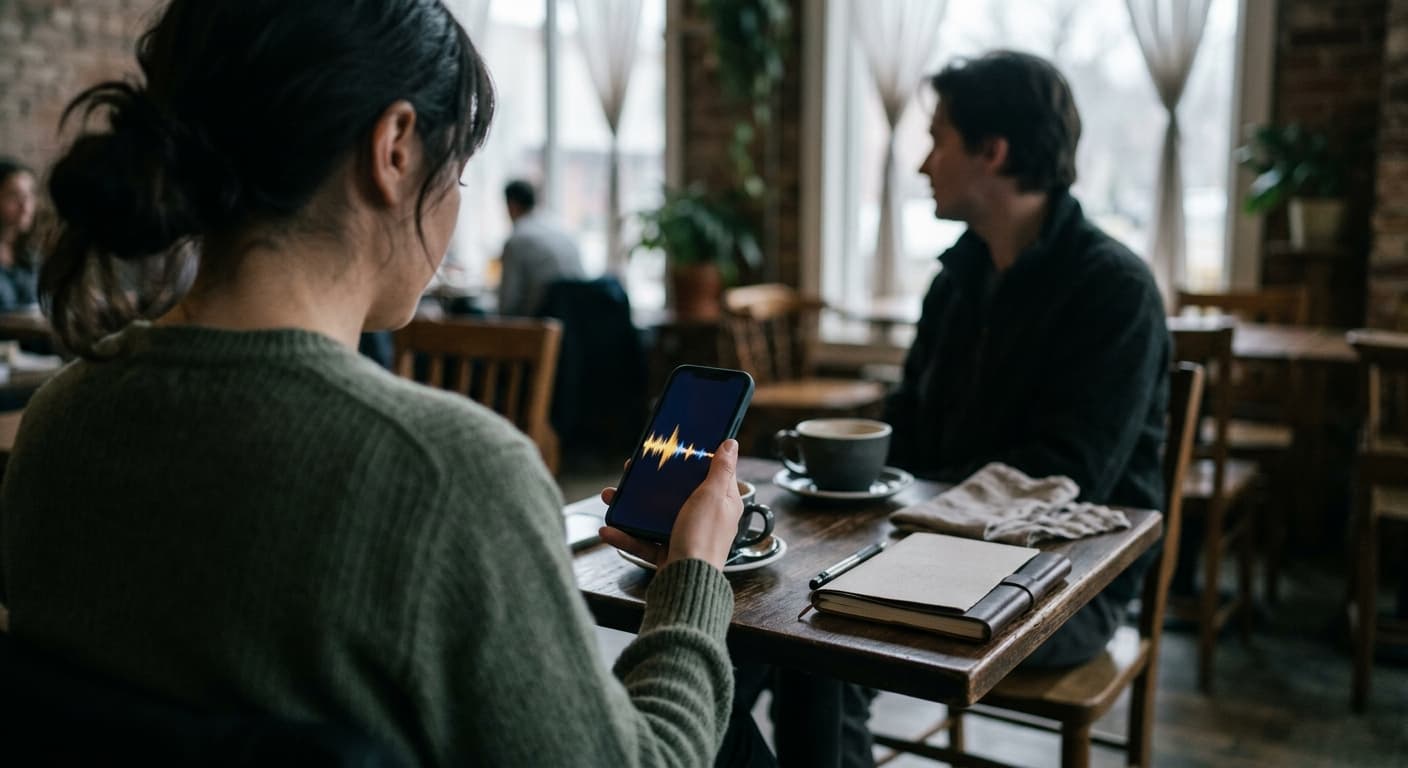
New Hampshire is an all-party consent state. Under RSA 570-A:2, every participant in a conversation must consent before it may be recorded. Recording without all-party consent is a crime, and the felony/misdemeanor line is drawn by mental state, not by whether you are a party to the call: willfully intercepting a conversation is a Class B felony under RSA 570-A:2, I, whether you are a participant or a third party, while a participant who records only knowingly, a lower mental state than willful, faces the lesser Class B misdemeanor under RSA 570-A:2, I-a. Either way it creates civil liability under RSA 570-A:11.
New Hampshire recording law at a glance
| Question | Answer |
|---|---|
| Consent rule | All-party (every participant must consent) |
| Main statute | RSA 570-A:2 |
| When recording is illegal | Any time a party does not consent to being recorded |
| Criminal penalty (willful interception, any recorder) | Class B felony: up to 7 years / $4,000 fine (RSA 570-A:2, I) |
| Criminal penalty (participant, knowing not willful) | Class B misdemeanor (default): no jail / max $1,200 fine; State may elect Class A: up to 1 year / $2,000 (RSA 570-A:2, I-a) |
| Civil penalty | $100/day or $1,000 min. + actual + punitive + attorney fees |
| Hidden cameras / voyeurism | Class A misdemeanor (RSA 644:9); Class B felony on repeat or if victim is under 18 |
| Recording police | Protected by First Amendment in public (Glik v. Cunniffe, 1st Cir. 2011) via federal courts; RSA 91-A explicitly allows recording at public meetings |
For a deeper analysis of every topic below, see the New Hampshire recording laws in depth section.
Recording in-person conversations in New Hampshire
New Hampshire's all-party consent rule under RSA 570-A:2 applies to any "oral communication," defined in RSA 570-A:1 as a spoken statement made where the speaker has a reasonable expectation the words will not be intercepted. That expectation-of-privacy requirement matters: a shouted exchange on a public street where neither party expects confidentiality is less likely to qualify than a private conversation in a home or office.
The key rule is simple. If you are in a conversation in New Hampshire, you need consent from every other person in the room before you press record. There is no "I'm a party to it" exception for civilians. One-party consent is the federal floor under 18 U.S.C. § 2511, but New Hampshire's stricter standard overrides it for recordings made in this state.
The statute draws its felony/misdemeanor line by mental state, not by whether you are a party to the conversation. RSA 570-A:2, I makes willful interception a Class B felony for anyone, participant or third party. RSA 570-A:2, I-a is a narrower carve-out: a participant who records only knowingly, a lower mental state than willful, faces the lesser Class B misdemeanor instead. A participant who deliberately and willfully records without consent remains exposed to the same felony as a third-party eavesdropper. RSA 570-A:2, II carves out several exceptions to the all-party rule for specific government and institutional actors, not private individuals. A uniformed officer may audio-record a routine traffic stop alongside video (notice required unless not reasonable or practicable) and wear a body camera under RSA 105-D (RSA 570-A:2, II(j), (m)). Emergency dispatch centers may record 911 calls, and a school board may authorize audio recording on school buses after a public hearing and parent notification (RSA 570-A:2, II(h)-(i), (k)). None of these exceptions let a private citizen record without consent.

Recording phone calls in New Hampshire
The same all-party consent requirement applies to telephone calls, whether landline, cell, or VoIP. Under RSA 570-A:2, "telecommunication" is covered alongside "oral communication," so every person on the call must agree to the recording before it begins.
Consent does not have to be spoken aloud. New Hampshire courts have found valid consent where the surrounding circumstances show a party knew the call was being recorded, such as a stated notice or recorded tone at the start of the call (State v. Lott, 152 N.H. 436 (2005); State v. Locke, 144 N.H. 348 (1999)). Relying on implied consent is riskier than getting an explicit yes, since a dispute over what someone knew becomes a factual question for a court.
Interstate calls create a wrinkle. RSA 570-A contains no provision stating which state's law governs when one party is in New Hampshire and the other is elsewhere, and no published New Hampshire Supreme Court decision resolves the question. Until it is settled, treat the stricter all-party rule as the one that applies and get consent from everyone on any call with a New Hampshire connection.
For a full analysis of call recording rules, see New Hampshire Phone Call Recording Laws.
Hidden cameras, doorbells, and nanny cams
RSA chapter 570-A governs audio interception only. Silent video recording in a public space, where no audio is captured, is not an "interception" under RSA 570-A and does not require consent. The moment a video recording also captures audio, even incidentally, it falls within the all-party consent framework.
For video in private spaces, RSA 644:9 is the controlling statute. It is a Class A misdemeanor to install or use any device to observe, photograph, or record a person's private body parts without consent, or to record activity in a private place such as a bathroom, locker room, or changing room. A second offense rises to a Class B felony, as does a first offense involving a victim under 18; a subsequent offense involving a minor victim is a Class A felony.
RSA 644:9-a is New Hampshire's non-consensual intimate image statute, updated in 2024 to cover synthetic and AI-generated images. Purposefully disseminating an intimate image (real or AI-generated) of an identifiable person without consent and with intent to harass, intimidate, threaten, or coerce is a Class B felony. The synthetic-image provision took effect January 1, 2025.
Homeowners may install security cameras on their own property, including doorbell cameras, but should avoid capturing audio of conversations in areas where guests have a reasonable expectation of privacy. A camera that records audio inside a home or on a private porch falls under RSA 570-A's all-party consent requirement. For more detail, see New Hampshire Security Camera Laws and New Hampshire Voyeurism Laws.

Penalties for illegal recording in New Hampshire
Criminal penalties depend on whether you were a party to the conversation:
| Offense | Statute | Class | Max Prison | Max Fine |
|---|---|---|---|---|
| Willful interception (any recorder, participant or third party) | RSA 570-A:2, I | Class B felony | 7 years | $4,000 |
| Participant recording, knowing but not willful (default) | RSA 570-A:2, I-a | Class B misdemeanor (default) | None | $1,200 |
| Participant recording (State elects upgrade) | RSA 570-A:2, I-a / RSA 625:9, IV(c)(2) | Class A misdemeanor | 1 year | $2,000 |
The mental-state distinction drives the tier. Willfully intercepting a conversation is the felony, whether or not you are a party to it. Only a participant who acts knowingly, a lower mental state than willful, gets the lesser misdemeanor. That same distinction also controls admissibility: after State v. Clark (2024 N.H. 64), suppression under RSA 570-A:6 is triggered only by a felony violation, not by a misdemeanor participant recording.
Civil remedies under RSA 570-A:11: any person whose communication was illegally intercepted, disclosed, or used may sue for liquidated damages of $100 per day of violation or $1,000, whichever is greater, plus actual damages if greater, punitive damages, and reasonable attorney fees. A civil action may proceed whether or not the violation was criminally prosecuted.
New Hampshire common law adds an independent layer. In Hamberger v. Eastman, 106 N.H. 107 (1964), the state Supreme Court held a landlord liable for invasion of privacy after installing listening devices in a tenant's bedroom, establishing that NH common law protects reasonable privacy expectations beyond the RSA 570-A framework.
Recording the police in New Hampshire
The U.S. Court of Appeals for the First Circuit held in Glik v. Cunniffe, 655 F.3d 78 (1st Cir. 2011), that the First Amendment clearly protects the right to record police officers performing their duties in public. This precedent binds NH federal courts (the U.S. District of New Hampshire and the First Circuit) and protects citizens in 42 U.S.C. § 1983 civil rights actions. It does not automatically override RSA 570-A in state criminal proceedings.
New Hampshire's Right-to-Know Law (RSA 91-A) explicitly permits recording at public meetings of government bodies. Under RSA 91-A:2, II, no government body may prohibit the use of recording devices at public sessions. Recording at a public meeting is not a violation of RSA 570-A:2.
Best practice when recording police in public: record openly, avoid interfering with police duties, and maintain a safe distance. Officers performing public duties in public spaces generally lack a reasonable expectation of privacy in their official conduct, though the precise scope under NH state constitutional law (Part I, Art. 19 of the NH Constitution) is less settled than under federal First Amendment doctrine.
For a full treatment, see New Hampshire Laws on Recording Police.
Special topics in New Hampshire
Workplace recording and NLRB
New Hampshire has no separate employer monitoring statute. RSA 570-A:2 applies fully to workplace recordings, so employers and employees alike must obtain all-party consent. Under Stericycle, Inc. and Teamsters Local 628, 372 NLRB No. 113 (Aug. 2, 2023), employer no-recording policies are presumptively unlawful if they tend to chill employees' Section 7 rights under the NLRA, unless the employer demonstrates a legitimate and substantial business justification. NLRB GC Memo 25-07 (June 26, 2025) additionally treats surreptitious recording of collective bargaining sessions as a per se bad-faith bargaining violation (GC Memo 25-07 is prosecutorial guidance, not a binding Board decision). See New Hampshire Workplace Recording Laws.
Healthcare and HIPAA
Any audio recording of a patient communication that captures protected health information is subject to HIPAA authorization under 45 CFR § 164.508, on top of the RSA 570-A misdemeanor framework. Satisfying state recording law does not substitute for HIPAA patient authorization. See New Hampshire Medical Recording Laws.
School recording and FERPA
Audio and video recordings of students that are maintained by a school qualify as FERPA education records when directly related to an identified student (20 U.S.C. § 1232g; 34 CFR Part 99). Schools may not disclose such recordings without written consent except under enumerated exceptions. FERPA does not create a recording-consent right displacing RSA 570-A. See New Hampshire School Recording Laws.
AI voice calls and TCPA
FCC 24-17 (Feb. 8, 2024) declared AI-generated voice cloning an "artificial or prerecorded voice" under the TCPA (47 U.S.C. § 227), requiring prior express consent before such calls are made. The FCC's 2023 one-to-one consent rule was vacated by the Eleventh Circuit in Insurance Marketing Coalition Ltd. v. FCC, 127 F.4th 303 (2025), and the FCC reinstated the pre-2023 common-law consent standard via DA 25-621. New Hampshire falls within the First Circuit, so the Eleventh Circuit ruling is not directly binding on NH federal courts, but the FCC's DA 25-621 makes the one-to-one requirement non-operative nationally.
Interstate calls
When one party is in New Hampshire and the other is in a one-party consent state, which state's law governs is an open question. RSA 570-A does not address it, and no published New Hampshire Supreme Court decision has settled it. Assume the stricter all-party rule reaches any call touching New Hampshire and get consent from everyone before recording.
Recent legal developments
- Nov. 13, 2024: State v. Clark, 2024 N.H. 64, holds that suppression under RSA 570-A:6 applies only to felony violations; misdemeanor participant recordings are not subject to automatic suppression.
- Jan. 1, 2025: RSA 644:9-a expanded to cover synthetic and AI-generated intimate images (2024, 127:1, 2).
- Feb. 3, 2026: HB 1508, which would have repealed all-party consent and allowed secret recording, killed by House Judiciary Committee (ITL, 18-0). NH's all-party consent rule remains unchanged.
- 2026 session (pending): LSR 1242 would add a statutory exemption for recording public officials on duty in public. As of June 2026, final bill number and status have not been confirmed. Verify at gc.nh.gov.
New Hampshire recording laws in depth
By type of recording:
- New Hampshire Audio Recording Laws
- New Hampshire Video Recording Laws
- New Hampshire Phone Call Recording Laws
- New Hampshire Dashcam Laws
- New Hampshire Voyeurism Laws
- New Hampshire Security Camera Laws
By place or relationship:
- New Hampshire Laws on Recording Police
- New Hampshire Laws on Recording in Public
- New Hampshire Workplace Recording Laws
- New Hampshire School Recording Laws
- New Hampshire Medical Recording Laws
- New Hampshire Landlord-Tenant Recording Laws
More New Hampshire laws
- New Hampshire Alimony Laws
- New Hampshire At-Will Employment Laws
- New Hampshire Child Custody Laws
- New Hampshire Data Privacy Laws
- New Hampshire Landlord-Tenant Laws
This article is general legal information, not legal advice. Recording laws change and apply differently to each situation. For advice about your situation, consult a licensed New Hampshire attorney.
More New Hampshire Laws
Frequently Asked Questions
Is New Hampshire a one-party consent state?
No. New Hampshire is an all-party consent state under RSA 570-A:2. Every person in the conversation must consent before any recording is made. Willfully recording without all-party consent is a Class B felony under RSA 570-A:2, I, whether you are a third party or a participant; a participant who records only knowingly, not willfully, faces the lesser Class B misdemeanor under RSA 570-A:2, I-a.
Can I record my own phone call in New Hampshire?
Not without the consent of everyone on the call. If you record only knowingly, not willfully, without all-party consent, RSA 570-A:2, I-a makes it a Class B misdemeanor (no jail; maximum $1,200 fine), which the State may elect to charge as a Class A misdemeanor (up to 1 year and a $2,000 fine) by notice before arraignment. A deliberate, willful recording without consent is still exposed to the Class B felony under RSA 570-A:2, I, the same as a third-party eavesdropper. Either way, it is illegal.
Is secretly recording someone a felony in New Hampshire?
It depends on your mental state, not on whether you are part of the conversation. Willfully intercepting a communication without all-party consent is a Class B felony under RSA 570-A:2, I, carrying up to 7 years in prison and a $4,000 fine, whether you are a third party or a participant. Only a participant who records merely knowingly, not willfully, gets the lesser Class B misdemeanor under RSA 570-A:2, I-a.
What can I sue for if someone illegally recorded me in New Hampshire?
Under RSA 570-A:11, you may recover the greater of $100 per day of the violation or $1,000, plus actual damages if they exceed that amount, punitive damages, and reasonable attorney fees. A civil suit may proceed whether or not criminal charges were filed.
Are Ring doorbells and nanny cams legal in New Hampshire?
Silent video recording on your own property is generally permitted. Once a camera captures audio, the all-party consent requirement of RSA 570-A:2 applies. Cameras pointed at areas where others have a reasonable expectation of privacy (such as restrooms or bedrooms) are prohibited under RSA 644:9 regardless of audio, and a first offense is a Class A misdemeanor.
Can I record my boss or an HR meeting in New Hampshire?
Not without consent from everyone present. New Hampshire has no employer monitoring exception for employees, and RSA 570-A:2 applies to workplace conversations. Recording an HR meeting you are part of without all-party consent is a Class B misdemeanor if done only knowingly, but a willful, deliberate secret recording exposes you to the same Class B felony a third party would face. Employers who record employees without consent also violate RSA 570-A:2 and face NLRB scrutiny under Stericycle (372 NLRB No. 113, 2023).
Can I record the police in New Hampshire?
Yes, in public. The First Circuit held in Glik v. Cunniffe (2011) that the First Amendment protects recording police performing duties in public, binding NH federal courts. New Hampshire's Right-to-Know Law (RSA 91-A:2) explicitly allows recording at public meetings of government bodies. For state criminal purposes, RSA 570-A still applies, though officers on public duty in public spaces generally lack a reasonable expectation of privacy.
Are secretly recorded conversations admissible in court in New Hampshire?
It depends on the tier of violation. After State v. Clark (2024 N.H. 64), suppression under RSA 570-A:6 is required only for felony violations (willful interceptions under RSA 570-A:2, I, whether or not by a party). A recording that constitutes only a misdemeanor under RSA 570-A:2, I-a is not subject to automatic suppression and may be admitted as evidence.
Updates
Removed a reference to an unpublished 2025 New Hampshire Supreme Court order that had been described as settling which state law governs interstate call recording, and replaced it with a note that the question is unresolved.
Corrected the felony/misdemeanor rule for New Hampshire recording: RSA 570-A:2 draws the line by mental state (willful vs. knowing), not by whether you are a party to the conversation, so a participant who willfully records without consent faces the same Class B felony as a third-party eavesdropper. Also clarified that RSA 644:9's hidden-camera penalty can reach a Class A felony for a repeat offense against a minor victim.
Independently fact-checked against the cited primary sources; governing law re-checked for recent changes
Governing law re-checked for recent changes
Governing law re-checked for recent changes
Reviewed and approved by an editor
Restructured to new template spec: AEO lede, at-a-glance table, per-section flow (in-person/phone/hidden cameras/penalties/police), condensed special topics (workplace, HIPAA, FERPA, TCPA/FCC, interstate), updated Recent Developments with HB 1508 ITL (18-0, Feb 3 2026) and RSA 644:9-a synthetic-image effective date (Jan 1 2025). All primary facts re-verified against gc.nh.gov statutes and courts.nh.gov case PDFs. No factual corrections required.
Refreshed with State v. Clark (2024 N.H. 64, Nov. 13, 2024) and State v. Hersom (No. 2023-0352, Jan. 24, 2025); added HB 1508 and LSR 1242 pending legislation; corrected RSA 570-A:2, I-a civilian participant-misdemeanor framing throughout; added federal overlay (FCC, NLRB, CFPB, HIPAA, FERPA) and video-only analysis.
Added wearable recording devices section and 2 FAQs
The Law Behind This Article
This article rests on the statutory provisions below, held in our own legal record and retrieved from the official source. Tap a section to read the operative text.
New Hampshire Revised Statutes Annotated, TITLE LVIII PUBLIC JUSTICE, CHAPTER 570-A WIRETAPPING AND EAVESDROPPING
§ 570-A:2Interception and Disclosure of Telecommunication or Oral Communications Prohibited.In forcecited in 25 of our articles
I. A person is guilty of a class B felony if, except as otherwise specifically provided in this chapter or without the consent of all parties to the communication, the person: (a) Wilfully intercepts, endeavors to intercept, or procures any other person to intercept or endeavor to intercept, any telecommunication or oral communication; (b) Wilfully uses, endeavors to use, or procures any other person to use or endeavor to use any electronic, mechanical, or other device to intercept any oral communication when: (1) Such device is affixed to, or otherwise transmits a signal through, a wire, cable, or other like connection used in telecommunication, or (2) Such device transmits communications by radio, or interferes with the transmission of such communication, or (3) Such use or endeavor to use (A) takes place on premises of any business or other commercial establishment, or (B) obtains or is for the purpose of obtaining information relating to the operations of any business or other commercial establishment; or (c) Wilfully discloses, or endeavors to disclose, to any other person the contents of any telecommunication or oral communication, knowing or having reason to know that…
Official text (excerpt) · last checked 2026-08-31 · Read the full text in our law library · Verify at gc.nh.gov
Cited in 35 court opinions in our collectionLatest citing opinion in our collection: 2025
In the courts (editorial summary, independently checked):New Hampshire courts read the felony offense in RSA 570-A:2, I as requiring more than intent to record. Fischer v. Hooper (1999) held wilfully means intentional or reckless disregard for the lawfulness of the conduct, so a good faith belief is a defense. State of New Hampshire v. Adam Mueller (2014) reversed on that mens rea.
Opinions citing this section in our collection:
- State v. Kilgus (Supreme Court of New Hampshire 1986, 128 N.H. 577)✓A murder-for-hire middleman agreed to wear a hidden recorder and got the defendant to confirm paying $1,000 to have a man killed; the court held the taping was lawful under RSA 570-A:2, II(d) because one party consented and homicide is an enumerated offense.
- Fischer v. Hooper (Supreme Court of New Hampshire 1999, 143 N.H. 585)✓A father secretly taped his ex-wife's calls with their daughter though a guardian ad litem had said both parents must agree; the court held wilfully in RSA 570-A:2, I requires intentional or reckless disregard for the lawfulness of the conduct, and reversed for a new trial.
- State of New Hampshire v. Adam Mueller (Supreme Court of New Hampshire 2014, 166 N.H. 65)✓A police-accountability activist recorded three phone calls with a police captain and two school officials without telling them; the court held that instructing the jury on purposely rather than the statute's wilfully was plain error and reversed his wiretapping convictions.
Identified automatically from the court opinions citing this section — not a ranking of which case controls.
Also relied on in: New Hampshire Video Recording Laws, New Hampshire Smart Glasses Recording Laws (2026), US Recording Laws by State (2026): All 50 States Explained
§ 570-A:1Definitions.In forcecited in 11 of our articles
As used in this chapter: I. "Telecommunication" means the transfer of any form of information in whole or in part through the facilities of a communications common carrier. "Telecommunication" does not include any communication made through a tone-only paging system or from a tracking device. II. "Oral communication" means any verbal communication uttered by a person who has a reasonable expectation that the communication is not subject to interception, under circumstances justifying such expectation. III. "Intercept" means the aural or other acquisition of, or the recording of, the contents of any telecommunication or oral communication through the use of any electronic, mechanical, or other device. IV.
Official text (excerpt) · last checked 2026-07-29 · Read the full text in our law library · Verify at gc.nh.gov
Cited in 12 court opinions in our collectionLatest citing opinion in our collection: 2025
Opinions citing this section in our collection:
- State v. Lamontagne (Supreme Court of New Hampshire 1992, 136 N.H. 575)“…State contends that there was no “intercept” as defined by RSA 570-A:1, III (1986 & Supp. 1992), while the def…”
- State v. Lott (Supreme Court of New Hampshire 2005, 152 N.H. 436)“…g.” State v. Townsend, 57 P.3d 255, 260 n.2 (Wash. 2002). RSA 570-A:1, IV states that an intercept is the rec…”
- State v. MacMillan (Supreme Court of New Hampshire 2005, 152 N.H. 67)“…rial court’s ruling that the interception was illegal under RSA 570-A:1 (2001), the only issue before us is whe…”
Identified automatically from the court opinions citing this section — not a ranking of which case controls.
Also relied on in: New Hampshire Audio Recording Laws, New Hampshire Dashcam Laws, New Hampshire Phone Call Recording Laws
§ 570-A:11Recovery of Civil Damages Authorized.In forcecited in 14 of our articles
Any person whose telecommunication or oral communication is intercepted, disclosed, or used in violation of this chapter shall have a civil cause of action against any person who intercepts, discloses, or uses, or procures any other person to intercept, disclose or use such communications, and be entitled to recover from any such person: (a) actual damages but not less than liquidated damages computed at the rate of $100 a day for each day of violation or $1,000, whichever is higher; (b) punitive damages; and (c) a reasonable attorney's fee and other litigation costs reasonably incurred. Good faith reliance on a court order or on a representation made by the attorney general, deputy attorney general or a county attorney shall constitute a complete defense to any civil or criminal action brought under this chapter.
Official text (excerpt) · last checked 2026-07-29 · Read the full text in our law library · Verify at gc.nh.gov
Cited in 6 court opinions in our collectionLatest citing opinion in our collection: 2021
In the courts (editorial summary, independently checked):Courts have applied RSA 570-A:11 as the chapter's private damages remedy. Desilets v. Wal-Mart Stores (1997) awarded fees and costs under 570-A:11(c) after a jury found statutory damages for secret workplace recording; Lath v. Manchester PD, et al. (2017) entered judgment for the defendant where no interception was shown.
Opinions citing this section in our collection:
- Karen Warrington, individually, and as m/n/f of J.W. v. P John Edward Warrington (District Court, D. New Hampshire 2021, 2021 DNH 070)✓A father secretly recorded a call with his son at a New Hampshire boarding school and later used it in divorce proceedings; the court dismissed the mother's 570-A:11 damages claim because the complaint never alleged he was in New Hampshire when he recorded.
- Sanjeev Lath v. Oak Brook Condominium Owners’ Association, Gerard Dufresne, and Betty Mullen (District Court, D. New Hampshire 2018, 2018 DNH 013)“…upport dogs. Count 9: an eavesdropping claim under RSA 570-A:11 against Mullen, for installing came…”
- Lath v. Manchester PD, et al. (District Court, D. New Hampshire 2017, 2017 DNH 164)✓A condominium owner claimed a neighbor drilled holes in their shared wall and installed listening devices in his unit; on her unrebutted affidavit denying it, the court granted summary judgment against his 570-A:11 eavesdropping claim.
Identified automatically from the court opinions citing this section — not a ranking of which case controls.
Also relied on in: New Hampshire School Recording Laws, New Hampshire Ring Doorbell Laws: What You Need to Know in 2026
§ 570-A:6Prohibition of Use as Evidence of Intercepted Telecommunications or Oral Communications.In forcecited in 9 of our articles
Whenever any telecommunication or oral communication has been intercepted, no part of the contents of such communication and no evidence derived therefrom may be received in evidence in any trial, hearing, or other proceeding in or before any court, grand jury, department, officer, agency, regulatory body, legislative committee, or other authority of the state, or a political subdivision thereof, if the disclosure of that information would be in violation of this chapter.
Official text (excerpt) · last checked 2026-07-29 · Read the full text in our law library · Verify at gc.nh.gov
Cited in 16 court opinions in our collectionLatest citing opinion in our collection: 2025
Opinions citing this section in our collection:
- State v. McLeod (Supreme Court of New Hampshire 2013, 165 N.H. 42)“…dio-recording of a one-party telephonic interception, see RSA 570-A:6 (2001). We reverse in part, vacate in p…”
- State v. MacMillan (Supreme Court of New Hampshire 2005, 152 N.H. 67)“…sion of Detective Warchol’s testimony is not required under RSA 570-A:6 (2001) because the detective’s knowledg…”
- State v. Telles (Supreme Court of New Hampshire 1995, 139 N.H. 344)“…ions that she had overheard. The defendant objected, citing RSA 570-A:6, which prohibits the admission of evide…”
Identified automatically from the court opinions citing this section — not a ranking of which case controls.
Also relied on in: Recordings as Evidence: US Court Rules by State
United States Code Title 18
§ 2511Interception and disclosure of wire, oral, or electronic communications prohibitedIn forcecited in 422 of our articles
Except as otherwise specifically provided in this chapter any person who— intentionally intercepts, endeavors to intercept, or procures any other person to intercept or endeavor to intercept, any wire, oral, or electronic communication; intentionally uses, endeavors to use, or procures any other person to use or endeavor to use any electronic, mechanical, or other device to intercept any oral communication when— such device is affixed to, or otherwise transmits a signal through, a wire, cable, or other like connection used in wire communication; or such device transmits communications by radio, or interferes with the transmission of such communication; or such person knows, or has reason to know, that such device or any component thereof has been sent through the mail or transported in interstate or foreign commerce; or such use or endeavor to use (A) takes place on the premises of any business or other commercial establishment the operations of which affect interstate or foreign commerce; or (B) obtains or is for the purpose of obtaining information relating to the operations of any business or other commercial establishment the operations of which affect interstate or foreign…
Official text (excerpt) · last checked 2026-09-17 · Read the full text in our law library · Verify at uscode.house.gov
Cited in 2,045 court opinions in our collectionLatest citing opinion in our collection: 2026
In the courts (editorial summary, independently checked):Griggs-Ryan v. Smith (1990) applied the Section 2511(2)(d) prior-consent exception, treating a tenant repeatedly told that all incoming calls were taped as having impliedly consented. United States v. United States District Court (1972) read the then-current Section 2511(3) as conferring no presidential surveillance power.
Opinions citing this section in our collection:
- Mitchell v. Forsyth (Supreme Court of the United States 1985, 472 U.S. 511)✓The Attorney General authorized a warrantless 1970 national security wiretap that caught the plaintiff's calls; the Court held the since-repealed Section 2511(3) disclaimer left the tap lawful under Title III, and that Mitchell had qualified immunity.
- United States v. United States District Court for the Eastern District of Michigan (Supreme Court of the United States 1972, 407 U.S. 297)✓The Attorney General approved warrantless wiretaps on members of a domestic group accused of bombing a CIA office; the Court read Section 2511(3) as a congressional disclaimer conferring no surveillance power, then held the Fourth Amendment required prior judicial approval.
- Forsyth v. Barr (Court of Appeals for the Fifth Circuit 1994, 19 F.3d 1527)✓Dallas police used, in an internal affairs probe of an officer, calls private parties allegedly intercepted illegally; assuming that was unlawful, the Fifth Circuit held Section 2517(1) and (2) allowed the disclosure and use, defeating the Section 2511(1)(c) and (d) claims.
Identified automatically from the court opinions citing this section — not a ranking of which case controls.
Also relied on in: Connecticut Recording Laws (2026): Hybrid Consent Rules Explained, Oregon Recording Laws (2026): Hybrid One-Party and All-Party Rules, Hawaii Recording Laws (2026): Hybrid Consent State Rules
United States Code Title 42
§ 1983Civil action for deprivation of rightsIn forcecited in 50 of our articles
Every person who, under color of any statute, ordinance, regulation, custom, or usage, of any State or Territory or the District of Columbia, subjects, or causes to be subjected, any citizen of the United States or other person within the jurisdiction thereof to the deprivation of any rights, privileges, or immunities secured by the Constitution and laws, shall be liable to the party injured in an action at law, suit in equity, or other proper proceeding for redress, except that in any action brought against a judicial officer for an act or omission taken in such officer’s judicial capacity, injunctive relief shall not be granted unless a declaratory decree was violated or declaratory relief was unavailable. For the purposes of this section, any Act of Congress applicable exclusively to the District of Columbia shall be considered to be a statute of the District of Columbia.
Official text (excerpt) · last checked 2026-09-16 · Read the full text in our law library · Verify at uscode.house.gov
Cited in 282,365 court opinions in our collectionLatest citing opinion in our collection: 2026
Opinions citing this section in our collection:
- Ashcroft v. Iqbal (Supreme Court of the United States 2009, 556 U.S. 662)“…its brought against state officials under Rev. Stat. §1979, 42 U. S. C. §1983.” Hartman, 547 U. S., at 254, n. 2. Cf.…”
- Celotex Corp. v. Catrett, Administratrix of the Estate of Catrett (Supreme Court of the United States 1986, 477 U.S. 317)“…policeman as she left. Petitioner brought an action under 42 U. S. C. § 1983 claiming that the refusal of service a…”
- Monell v. New York City Dept. of Social Servs. (Supreme Court of the United States 1978, 436 U.S. 658)“…decided less than two decades ago. Focusing new light on 42 U. S. C. § 1983 , that decision widened access to the f…”
Identified automatically from the court opinions citing this section — not a ranking of which case controls.
Also relied on in: Alabama Laws on Recording Police: Your Rights and Limits, Idaho Laws on Recording Police: Your Rights and Limitations (2026), South Dakota Laws on Recording Police
Code of Federal Regulations Title 45
§ 164.508Uses and disclosures for which an authorization is required.In forcecited in 9 of our articles
(a) Standard: Authorizations for uses and disclosures —(1) Authorization required: General rule. Except as otherwise permitted or required by this subchapter, a covered entity may not use or disclose protected health information without an authorization that is valid under this section. When a covered entity obtains or receives a valid authorization for its use or disclosure of protected health information, such use or disclosure must be consistent with such authorization. (2) Authorization required: Psychotherapy notes.
Official text (excerpt) · last checked 2026-07-28 · Read the full text in our law library · Verify at ecfr.gov
Cited in 199 court opinions in our collectionLatest citing opinion in our collection: 2026
Opinions citing this section in our collection:
- Glen Murphy v. Aldolfo C. Dulay (Court of Appeals for the Eleventh Circuit 2014, 768 F.3d 1360)“…ility Act (“HIPAA”), and its accompanying regulations, see 45 C.F.R. §§ 164.508, 164.512. That authorization form—requ…”
- Kenneth Wilson v. UnitedHealthcare Insurance Co (Court of Appeals for the Fourth Circuit 2022, 27 F.4th 228)“…to identify his authority to do so as required by 45 C.F.R. § 164.508(c)(vi). Either way, United argues…”
- United States v. Deleon (District Court, D. New Mexico 2018, 323 F. Supp. 3d 1273)“…re information without the patient's authorization. See 45 C.F.R. § 164.508 (a)(1) ("Except as otherwise permitted…”
Identified automatically from the court opinions citing this section — not a ranking of which case controls.
Also relied on in: Alaska Medical Recording Laws: Patient Rights, HIPAA, and One-Party Consent (2026), Arkansas Medical Recording Laws: Patient Rights, HIPAA, and One-Party Consent (2026), Delaware Medical Recording Laws: Patient Rights, HIPAA, and Consent Rules (2026)
United States Code Title 20
§ 1232gFamily educational and privacy rightsIn forcecited in 29 of our articles
No funds shall be made available under any applicable program to any educational agency or institution which has a policy of denying, or which effectively prevents, the parents of students who are or have been in attendance at a school of such agency or at such institution, as the case may be, the right to inspect and review the education records of their children. If any material or document in the education record of a student includes information on more than one student, the parents of one of such students shall have the right to inspect and review only such part of such material or document as relates to such student or to be informed of the specific information contained in such part of such material. Each educational agency or institution shall establish appropriate procedures for the granting of a request by parents for access to the education records of their children within a reasonable period of time, but in no case more than forty-five days after the request has been made.
Official text (excerpt) · last checked 2026-09-03 · Read the full text in our law library · Verify at uscode.house.gov
Cited in 981 court opinions in our collectionLatest citing opinion in our collection: 2026
In the courts (editorial summary, independently checked):Courts have held Section 1232g is enforced by the Secretary of Education, not by suit. Gonzaga University v. Doe (2002) held FERPA's nondisclosure provisions create no personal rights enforceable under 42 U.S.C. 1983. Kate Frazier v. Fairhaven School Committee (2002) held FERPA confers no private right of action, express or implied.
Opinions citing this section in our collection:
- Goss v. Lopez (Supreme Court of the United States 1975, 419 U.S. 565)“…ucation Amendments of 1974, Pub. L. 93-380, 88 Stat. 571, 20 U. S. C. § 1232g (1970 ed., Supp. IV), adding § 438 to t…”
- Gonzaga University v. Doe (Supreme Court of the United States 2002, 536 U.S. 273)✓A university official told the state teacher-licensing agency about sexual misconduct allegations against a student, who then lost the affidavit he needed to teach; the Supreme Court held FERPA's nondisclosure provisions create no personal rights enforceable under section 1983.
- Foster Children v. Jeb Bush, Kathleen Kearney, Chuck Bates, Robert Williams, Ester Tibbs (Court of Appeals for the Eleventh Circuit 2003, 329 F.3d 1255)“…Family Educational Rights and Privacy Act of 1974 (FERPA), 20 U.S.C. § 1232g. In FERPA Congress directed the Secreta…”
Identified automatically from the court opinions citing this section — not a ranking of which case controls.
Also relied on in: Alaska School Recording Laws: Student Privacy, FERPA, and Classroom Rules (2026), Arkansas School Recording Laws: Student Privacy, FERPA, and Classroom Rules (2026), DC School Recording Laws: Student Privacy, FERPA, and Classroom Rules (2026)
United States Code Title 47
§ 227Restrictions on use of telephone equipmentIn forcecited in 37 of our articles
As used in this section— The term “automatic telephone dialing system” means equipment which has the capacity— to store or produce telephone numbers to be called, using a random or sequential number generator; and to dial such numbers. The term “established business relationship”, for purposes only of subsection (b)(1)(C)(i), shall have the meaning given the term in section 64.1200 of title 47, Code of Federal Regulations, as in effect on January 1, 2003, except that— such term shall include a relationship between a person or entity and a business subscriber subject to the same terms applicable under such section to a relationship between a person or entity and a residential subscriber; and an established business relationship shall be subject to any time limitation established pursuant to paragraph (2)(G)).1 So in original. Second closing parenthesis probably should not appear.
Official text (excerpt) · last checked 2026-09-16 · Read the full text in our law library · Verify at uscode.house.gov
Cited in 3,209 court opinions in our collectionLatest citing opinion in our collection: 2026
In the courts (editorial summary, independently checked):Facebook, Inc. v. Duguid (2021) held that to qualify as an automatic telephone dialing system under Section 227(a)(1), equipment must have the capacity to use a random or sequential number generator to store or produce the numbers it dials. Nicole Blow v. Bijora, Inc. (2017) applied the prior express consent defense to promotional texts.
Opinions citing this section in our collection:
- Campbell-Ewald Co. v. Gomez (Supreme Court of the United States 2016, 577 U.S. 153)✓A marketing firm hired by the Navy had a subcontractor text a recruiting message to 100,000 phones, reaching a man who never consented; the Supreme Court held a contractor gets no derivative sovereign immunity from TCPA suit when it violates the Act and the Navy's orders.
- Auto-Owners Insurance Company v. Stevens & Ricci Inc (Court of Appeals for the Third Circuit 2016, 835 F.3d 388)✓An insured let an advertiser send 18,879 unsolicited fax ads, drawing a $2 million TCPA class judgment; the Third Circuit read the TCPA as protecting seclusion, not secrecy, so the faxes were no covered 'advertising injury' and the insurer need not pay the judgment.
- Facebook, Inc. v. Duguid (Supreme Court of the United States 2021, 592 U.S. 395)✓Facebook texted login alerts to a man who had no account and never gave it his number; the Supreme Court held a device is an autodialer under 227(a)(1) only if it uses a random or sequential number generator to store or produce numbers, excluding Facebook's system.
Identified automatically from the court opinions citing this section — not a ranking of which case controls.
Also relied on in: Massachusetts Recording Laws (2026): Two-Party Consent Rules, California Recording Laws (2026): All-Party Consent Rules, Delaware Recording Laws (2026): Two-Statute Consent Conflict
Search our full record of US law — 2.1 million sections, every state + federal →
Sources and References
- N.H. RSA 570-A:2, I(gc.nh.gov).gov
- N.H. RSA 570-A:2, I; 18 U.S.C. § 2511(2)(d)(gc.nh.gov).gov
- N.H. RSA 570-A:1(gc.nh.gov).gov
- N.H. RSA 570-A:2, I-a(gc.nh.gov).gov
- State v. Clark, 2024 N.H. 64, No. 2023-0451 (N.H. Nov. 13, 2024)(courts.nh.gov).gov
- N.H. RSA 570-A:11(gc.nh.gov).gov
- Glik v. Cunniffe, 655 F.3d 78 (1st Cir. 2011)(media.ca1.uscourts.gov).gov
- Glik v. Cunniffe, 655 F.3d 78 (1st Cir. 2011); N.H. Const. pt. I, art. 19(media.ca1.uscourts.gov).gov
- Hamberger v. Eastman, 106 N.H. 107 (1964)
- N.H. HB 1508, 2026 Reg. Sess.; NHPR reporting Jan. 14, 2026(nhpr.org)
- LSR 1242, N.H. General Court(gc.nh.gov).gov
- N.H. RSA 570-A:1 (definition of oral communication); N.H. RSA 570-A:2(gc.nh.gov).gov
- FCC, In the Matter of Implications of Artificial Intelligence Technologies on Protecting Consumers from Unwanted Robocalls and Robotexts, FCC 24-17 (released Feb. 8, 2024)(docs.fcc.gov).gov
- Insurance Marketing Coalition Ltd. v. FCC, 127 F.4th 303 (11th Cir. 2025); FCC DA 25-621 (ministerial order reinstating prior rule, mandate issued Apr. 30, 2025); 47 CFR § 64.1200(f)(9)(docs.fcc.gov).gov
- 47 CFR § 64.501 (historical text); Federal Register, Modernizing Common Carrier Rules, 82 Fed. Reg. 48960 (Oct. 20, 2017)(federalregister.gov).gov
- DOJ Justice Manual § 9-7.302; A.G. Memorandum of May 30, 2002(justice.gov).gov
- Stericycle, Inc. and Teamsters Local 628, 372 NLRB No. 113 (Aug. 2, 2023)(nlrb.gov).gov
- NLRB GC Memo 25-07 (June 26, 2025)(nlrb.gov).gov
- CFPB, Regulation F, 12 CFR § 1006.100(b) -- Record Retention (Telephone Calls)(consumerfinance.gov).gov
- HHS OCR, Guidance on HIPAA Rules and Audio-Only Telehealth (2022); 45 CFR §§ 164.508, 164.530(hhs.gov).gov
- FERPA, 20 U.S.C. § 1232g; 34 CFR §§ 99.3, 99.30; USDOE Student Privacy Policy Office, FAQs on Photos and Videos under FERPA(studentprivacy.ed.gov).gov
- gc.nh.gov.gov
- gc.nh.gov.gov
- gc.nh.gov.gov
- gc.nh.gov.gov