
North Carolina
North Carolina Hit and Run Laws: Penalties and What to Do
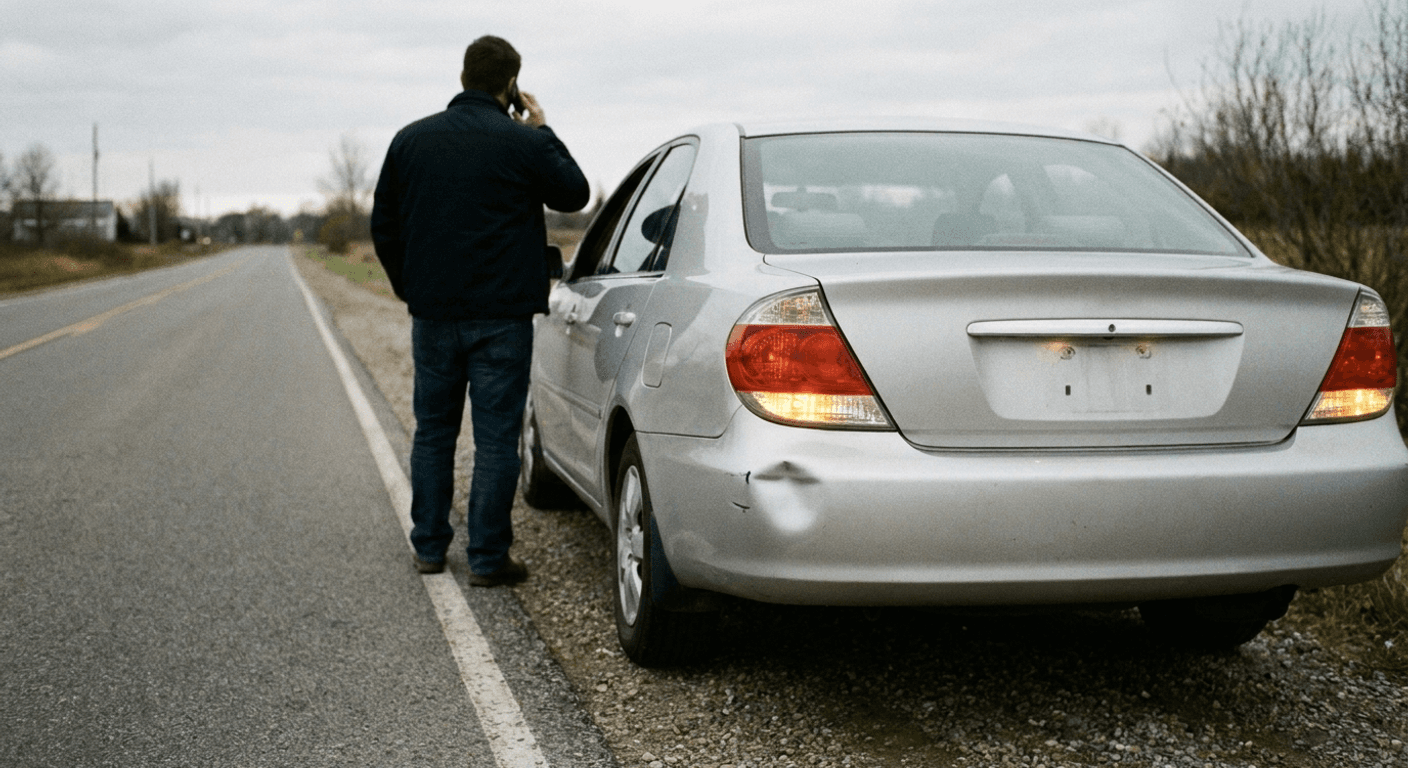
North Carolina requires drivers to stop and remain at any crash scene under N.C. Gen. Stat. 20-166. Leaving the scene of a property-damage-only accident is a Class 1 misdemeanor, while fleeing after causing injury is a Class H felony, and leaving after a serious injury or death is a Class F felony.
Hurt in a hit-and-run? If the driver who hit you fled or had no insurance, your own uninsured/underinsured-motorist (UM/UIM) coverage may pay your injury claim. Estimate what it could be worth with our free North Carolina Car Accident Settlement Calculator.
Last verified: January 2026
Table of Contents
- Quick Summary
- North Carolina Statute 20-166 Explained
- When Hit and Run Is a Misdemeanor
- When Hit and Run Is a Felony
- Penalties for Leaving the Scene
- North Carolina Crash Statistics
- Notable Hit and Run Cases
- What to Do After an Accident
- How Fault Is Determined
- Statute of Limitations
- Frequently Asked Questions
Quick Summary
- Property damage only: Class 1 misdemeanor, up to 120 days in jail
- Injury without permission to leave: Class H felony
- Serious injury or death: Class F felony (exact prison range for both classes is set by North Carolina's structured sentencing law, G.S. 15A-1340.17, based on the offender's prior record level)
- Reportable accident threshold: $1,000 in property damage, or any injury or death
- Reporting duty: For a reportable crash, the driver must immediately notify the local police department (or, outside a city or town, the State Highway Patrol or county sheriff) under G.S. 20-166.1(a)
- North Carolina is an at-fault state with contributory negligence rules
North Carolina Statute 20-166 Explained
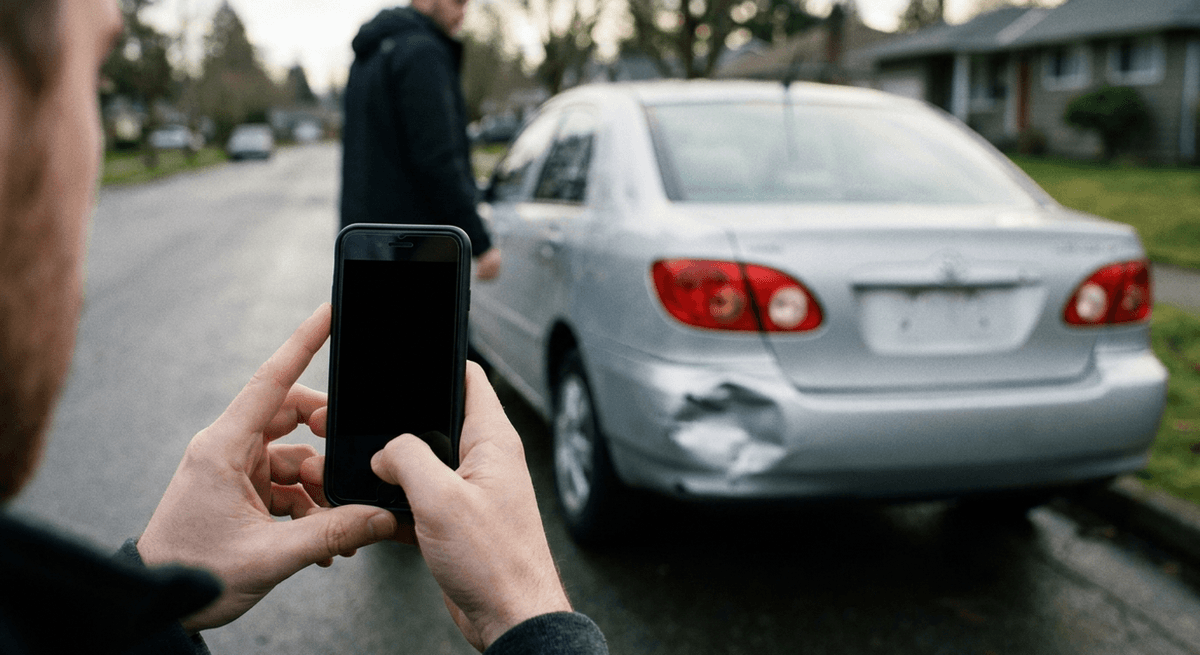
Under N.C. General Statute 20-166, titled "Duty to Stop in Event of a Crash," any driver involved in a collision must immediately stop and remain at the scene until they fulfill specific legal obligations.

Your legal duties at the scene include:
- Stop your vehicle immediately at the scene or as close as possible without obstructing traffic
- Remain at the scene until a law enforcement officer completes the investigation or authorizes you to leave (for a property-damage-only crash, this duty to remain applies when the crash is reportable)
- Provide your name, address, driver's license number, and your vehicle's license plate number to the other driver or occupants, the person struck, or the owner of damaged property
- Render reasonable assistance to anyone who is injured, including calling for medical assistance when it is apparently needed or requested
If you must leave for a reason the statute permits, you must return with the vehicle to the scene "within a reasonable period of time," unless a law enforcement officer instructs otherwise. Separately, under G.S. 20-166(c2), when a highway crash involves no known injury or death and every vehicle can be normally and safely driven, the vehicles must be moved out of the travel lane as soon as possible.
When Can You Legally Leave the Scene?
Before the officer completes the investigation or authorizes you to leave, G.S. 20-166 allows the vehicle to leave the scene only for these purposes:
- To call for a law enforcement officer
- To call for medical assistance or medical treatment
- To remove yourself or others from significant risk of injury
If you leave for one of these reasons, you must return with the vehicle within a reasonable period of time unless a law enforcement officer instructs otherwise.
When Hit and Run Is a Misdemeanor in North Carolina
Leaving the scene of an accident involving only property damage is a Class 1 misdemeanor under N.C.G.S. 20-166. This applies when you knew or should have known your vehicle was involved in a collision that caused property damage.
A Class 1 misdemeanor carries:
- Up to 120 days in jail
- A discretionary fine set by the court
- Potential license suspension
Hitting a Parked or Unattended Vehicle
If you strike a parked and unattended vehicle and the owner's name and location are not known or readily ascertainable, G.S. 20-166(c1) gives you two options: give your information to the nearest available peace officer, or immediately place a written note in a conspicuous place on or in the damaged vehicle. The note must contain your:
- Name and address
- Driver's license number
- Vehicle's license plate number
If you choose the note, you must also report the collision to the owner within 48 hours under G.S. 20-166.1(c), including the time, date, and place of the accident. A written report not handed to the owner at the scene must go by certified mail, return receipt requested, with a copy to the DMV. Violating G.S. 20-166(c1) is a Class 1 misdemeanor.
When Hit and Run Is a Felony in North Carolina
Hit and run becomes a felony when the accident involves injury or death.
Class H Felony: Leaving the scene of an accident involving any injury without obtaining consent from a law enforcement officer.
Class F Felony: Leaving the scene when you knew or should have known someone suffered serious bodily injury or death.
North Carolina's structured sentencing law, G.S. 15A-1340.17, sets the exact prison term for both felony classes based on the offender's prior record level, rather than N.C.G.S. 20-166 itself specifying a fixed range.
"Serious bodily injury" means any injury creating a substantial risk of death or causing permanent disfigurement, loss of function, or prolonged impairment.
DWI and Felony Death by Vehicle
Under N.C.G.S. 20-141.4, if you cause a fatal accident while driving impaired, you face felony death by vehicle charges:
- Felony death by vehicle: Class D felony
- Aggravated felony death by vehicle (prior impaired-driving conviction within seven years): Class D felony, sentenced in the aggravated range
- Repeat felony death by vehicle (prior felony death by vehicle or qualifying conviction): Class B2 felony
- Felony serious injury by vehicle: Class F felony
- Aggravated felony serious injury by vehicle (prior impaired-driving conviction within seven years): Class E felony
Penalties for Leaving the Scene of an Accident in North Carolina
- Property damage only: Class 1 misdemeanor, up to 120 days in jail, discretionary fine
- Any injury (left without officer consent): Class H felony (exact term set by the offender's prior record level under G.S. 15A-1340.17)
- Serious injury or death: Class F felony (exact term set by the offender's prior record level under G.S. 15A-1340.17)
- DWI with death: Class D felony (felony death by vehicle under G.S. 20-141.4)
- Aggravated felony death by vehicle: Class D felony, sentenced in the aggravated range
Convictions for accidents involving any injury or death result in mandatory driver's license revocation under G.S. 20-166(e). Property-damage-only convictions are not covered by this mandatory revocation clause, though the DMV's point system may still lead to license consequences. Prior offenses and aggravating factors can increase penalties significantly.
North Carolina Crash Statistics
According to the NC Department of Transportation, North Carolina continues to face significant traffic safety challenges:
- Over 1,500 traffic fatalities occurred statewide in recent years
- Approximately 15% of all fatal crashes involve a driver who left the scene
- Pedestrian and cyclist hit-and-run incidents have increased in urban areas
- Charlotte, Raleigh, and Greensboro report the highest hit-and-run rates
The state has increased enforcement efforts and public awareness campaigns to address hit-and-run incidents.
Notable North Carolina Hit and Run Cases
Charlotte Hit and Run (2025): Federal authorities arrested a driver in connection with a hit-and-run crash that killed a 15-year-old girl in Charlotte. The driver was initially charged with felony hit-and-run and driving without a license. The case drew national attention and highlighted enforcement challenges in hit-and-run investigations.
Thomasville Fatal Hit and Run (2024): The Thomasville Traffic Safety Unit charged a local woman in connection with a deadly hit-and-run. The investigation lasted several months before an arrest was made, demonstrating how witness tips and surveillance footage often prove critical in solving these cases.
What to Do If Someone Hits Your Car and Drives Off
If you are the victim of a hit and run in North Carolina:
- Call 911 immediately to report the incident
- Do not chase the fleeing vehicle
- Document everything: vehicle description, license plate (if visible), direction of travel, damage to your vehicle
- Look for witnesses and get their contact information
- Check for surveillance cameras in the area
- Take photos of the scene and your injuries
- Seek medical attention before making statements about your condition
- Report to your insurance company if injuries or significant damage occurred
- Contact an attorney before providing detailed statements
If You Are Arrested for Hit and Run
Exercise your constitutional rights:
- Invoke your right to remain silent
- Request an attorney before answering questions
- Do not discuss the case with anyone except your lawyer
- Do not make statements that could be interpreted as admitting fault
How Fault Is Determined in North Carolina
North Carolina is one of only a few states that follows the contributory negligence rule. This means if you are found even 1% at fault for an accident, you may be barred from recovering any compensation from the other party.
Because of this strict standard, never admit fault at the scene of an accident. Let investigators and insurance adjusters make fault determinations based on evidence. With even 1% fault able to bar recovery, ask a North Carolina car accident lawyer for a free claim review before you tell the insurer anything about fault (attorney advertising).
Statute of Limitations
- Personal injury claims: 3 years from the date of the accident
- Property damage claims: 3 years
- Wrongful death claims: 2 years from the date of death
Frequently Asked Questions
Q: Can I be charged with hit and run if I did not realize I hit something?
A: Potentially not. The prosecution must prove you knew or should have known you were involved in a collision. However, courts consider whether a reasonable person would have noticed the impact.
Q: What if I left the scene because I feared for my safety?
A: The statute allows leaving only to call law enforcement, to call for medical assistance, or to remove yourself or others from significant risk of injury. If you leave for one of those reasons, you must return with the vehicle to the scene within a reasonable period of time unless a law enforcement officer instructs otherwise.
Q: Will my insurance cover hit-and-run damage if the other driver is never found?
A: If you have uninsured motorist coverage, it typically covers hit-and-run incidents. Collision coverage may also apply to vehicle damage.
Q: How long do police investigate hit-and-run cases?
A: There is no set timeframe. Serious cases involving injury or death may be investigated for months or years. The statute of limitations for criminal charges depends on the severity of the offense.
Q: Can I face both criminal charges and a civil lawsuit?
A: Yes. Criminal charges are brought by the state, while civil lawsuits are filed by victims seeking compensation. The outcomes of each are independent.
Related North Carolina Laws
- North Carolina Recording Laws
- North Carolina Car Seat Laws
- North Carolina Lemon Law
- North Carolina Statute of Limitations
- North Carolina Child Support Laws
More North Carolina Laws
Updates
Corrected the crash-reporting duty, the felony classes for death and serious injury by vehicle, the information drivers must exchange, the rules for hitting an unattended vehicle, and the permitted reasons for leaving a crash scene to match N.C. Gen. Stat. 20-166, 20-166.1 and 20-141.4.
Resolved self-contradicting Class H and Class F felony prison-term figures (the page stated two different maximums for the same offense in three places) by pointing to North Carolina's structured sentencing law, which sets the actual term by prior record level rather than a fixed number in G.S. 20-166; also corrected the blanket claim that 'all convictions' trigger mandatory license revocation, which does not apply to property-damage-only convictions.
Governing law re-checked for recent changes
The Law Behind This Article
This article rests on the statutory provisions below, held in our own legal record and retrieved from the official source. Tap a section to read the operative text.
North Carolina General Statutes, Chapter 20: Motor Vehicles.
§ 20-166Duty to stop in event of a crash; furnishing information or assistance to injured person, etc.; persons assisting exempt from civil liabilityIn force
(a) The driver of any vehicle who knows or reasonably should know: (1) That the vehicle which he or she is operating is involved in a crash; and (2) That the crash has resulted in serious bodily injury, as defined in G.S. 14-32.4, or death to any person; shall immediately stop the driver's vehicle at the scene of the crash. The driver shall remain with the vehicle at the scene of the crash until a law-enforcement officer completes the investigation of the crash or authorizes the driver to leave and the vehicle to be removed, unless remaining at the scene places the driver or others at significant risk of injury. Prior to the completion of the investigation of the crash by a law enforcement officer, or the consent of the officer to leave, the driver may not facilitate, allow, or agree to the removal of the vehicle from the scene for any purpose other than to call for a law enforcement officer, to call for medical assistance or medical treatment as set forth in subsection (b) of this section, or to remove oneself or others from significant risk of injury.
Official text (excerpt) · last checked 2026-07-29 · Read the full text in our law library · Verify at ncleg.gov
Cited in 52 court opinions in our collectionLatest citing opinion in our collection: 2026
Opinions citing this section in our collection:
- State v. Fearing (Supreme Court of North Carolina 1981, 304 N.C. 499)“…upon the essential elements of a hit-and-run offense under G.S. 20-166. This identical issue, concerning the a…”
- Branch v. Dempsey (Supreme Court of North Carolina 1965, 265 N.C. 733)“…ns. He was performing no duty imposed by law upon Simons. G.S. § 20-166 requires the driver of a vehicle, invol…”
- State v. Duvall (Supreme Court of North Carolina 1981, 304 N.C. 557)“…e essential elements of the hit-and-run offense *559 under G.S. 20-166 because the judges did not correctly ex…”
Identified automatically from the court opinions citing this section — not a ranking of which case controls.
§ 20-166.1Reports and investigations required in event of accidentIn forcecited in 2 of our articles
(a) Notice of Accident. - The driver of a vehicle involved in a reportable accident must immediately, by the quickest means of communication, notify the appropriate law enforcement agency of the accident. If the accident occurred in a city or town, the appropriate agency is the police department of the city or town. If the accident occurred outside a city or town, the appropriate agency is the State Highway Patrol or the sheriff's office or other qualified rural police of the county where the accident occurred. (b) Insurance Verification. - When requested to do so by the Division, the driver of a vehicle involved in a reportable accident must furnish proof of financial responsibility. (c) Parked Vehicle. - The driver of a motor vehicle that collides with another motor vehicle left parked or unattended on a highway of this State must report the collision to the owner of the parked or unattended motor vehicle. This requirement applies to an accident that is not a reportable accident as well as to one that is a reportable accident.
Official text (excerpt) · last checked 2026-07-29 · Read the full text in our law library · Verify at ncleg.gov
Cited in 24 court opinions in our collectionLatest citing opinion in our collection: 2024
Opinions citing this section in our collection:
- Branch v. Dempsey (Supreme Court of North Carolina 1965, 265 N.C. 733)“…im as to how he was driving or what caused the collision. G.S. § 20-166.1 requires the driver of any vehicle invo…”
- State v. Hernandez (Court of Appeals of North Carolina 2008, 188 N.C. App. 193)“…estigations that are required in the event of an accident. N.C. Gen. Stat. § 20-166.1 (2007). N.C. Gen. Stat. § 20-166.1 (h…”
- State v. Young (Court of Appeals of North Carolina 2002, 148 N.C. App. 462)“…dway except in the direction so indicated by said signs. N.C. Gen. Stat. § 20-166.1 . Defendant argues that although Office…”
Identified automatically from the court opinions citing this section — not a ranking of which case controls.
Also relied on in: North Carolina Police Reports: How to Get a Crash or Incident Report
§ 20-141.4Felony and misdemeanor death by vehicle; felony serious injury by vehicle; aggravated offenses; repeat felony death by vehicleIn force
(a) Repealed by Session Laws 1983, c. 435, s. 27. (a1) Felony Death by Vehicle. - A person commits the offense of felony death by vehicle if: (1) The person unintentionally causes the death of another person, (2) The person was engaged in the offense of impaired driving under G.S. 20-138.1 or G.S. 20-138.2, and (3) The commission of the offense in subdivision (2) of this subsection is the proximate cause of the death. (a2) Misdemeanor Death by Vehicle. - A person commits the offense of misdemeanor death by vehicle if: (1) The person unintentionally causes the death of another person, (2) The person was engaged in the violation of any State law or local ordinance applying to the operation or use of a vehicle or to the regulation of traffic, other than impaired driving under G.S. 20-138.1, and (3) The commission of the offense in subdivision (2) of this subsection is the proximate cause of the death. (a3) Felony Serious Injury by Vehicle. - A person commits the offense of felony serious injury by vehicle if: (1) The person unintentionally causes serious injury to another person, (2) The person was engaged in the offense of impaired driving under G.S. 20-138.1 or G.S.
Official text (excerpt) · last checked 2026-07-29 · Read the full text in our law library · Verify at ncleg.gov
Cited in 64 court opinions in our collectionLatest citing opinion in our collection: 2026
Opinions citing this section in our collection:
- State v. Mumford (Supreme Court of North Carolina 2010, 364 N.C. 394)“…impaired driving under G.S. 20-138.1 or G.S. 20-138.2.” N.C.G.S. § 20-141.4(a3) (2009). In this case we first consi…”
- State v. Davis (Supreme Court of North Carolina 2010, 364 N.C. 297)“…e the Court of Appeals, however, defendant claimed that N.C.G.S. § 20-141.4(b) did not authorize his sentences for…”
- State v. Smith (Court of Appeals of North Carolina 1988, 90 N.C. App. 161)“…condition of her probation. Defendant contends that G.S. 20-141.4(a2) is invalid under both the North Car…”
Identified automatically from the court opinions citing this section — not a ranking of which case controls.
Connecticut General Statutes, Title 20 (Professional and Occupational Licensing, Certification, Title Protection and Registration. Examining Boards), Chapter 382
§ 20-166In force
Transferred to Chapter 400j, Part III, Sec. 20-610.
Official text (excerpt) · last checked 2026-07-29 · Read the full text in our law library · Verify at cga.ct.gov
Cited in 1 court opinions in our collectionLatest citing opinion in our collection: 2022
Opinions citing this section in our collection:
- University of North Carolina Health Care System v. ITPEU Health and Welfare Plan (District Court, S.D. Georgia 2022)“…olation of N.C. Gen. Stat. § 20-166(c) North Carolina General Statutes § 20-166(c) requires “[t]he driver of any vehicl…”
Identified automatically from the court opinions citing this section — not a ranking of which case controls.
Search our full record of US law — 2.1 million sections, every state + federal →
Sources and References
- N.C. Gen. Stat. § 20-166: duty to stop in event of a crash; furnishing information or assistance(ncleg.gov).gov
- N.C. Gen. Stat. § 20-166.1: reports and investigations required in event of accident(ncleg.gov)
- N.C. Gen. Stat. § 20-141.4: felony and misdemeanor death by vehicle; felony serious injury by vehicle(ncleg.gov)
Paid attorney referral. RecordingLaw may receive compensation when you use an attorney-help link. RecordingLaw is not a law firm. Submitting a request does not guarantee that an attorney will accept your case and does not create an attorney-client relationship.