
New Jersey
New Jersey Hit and Run Laws: Penalties, Statutes, and Your Rights
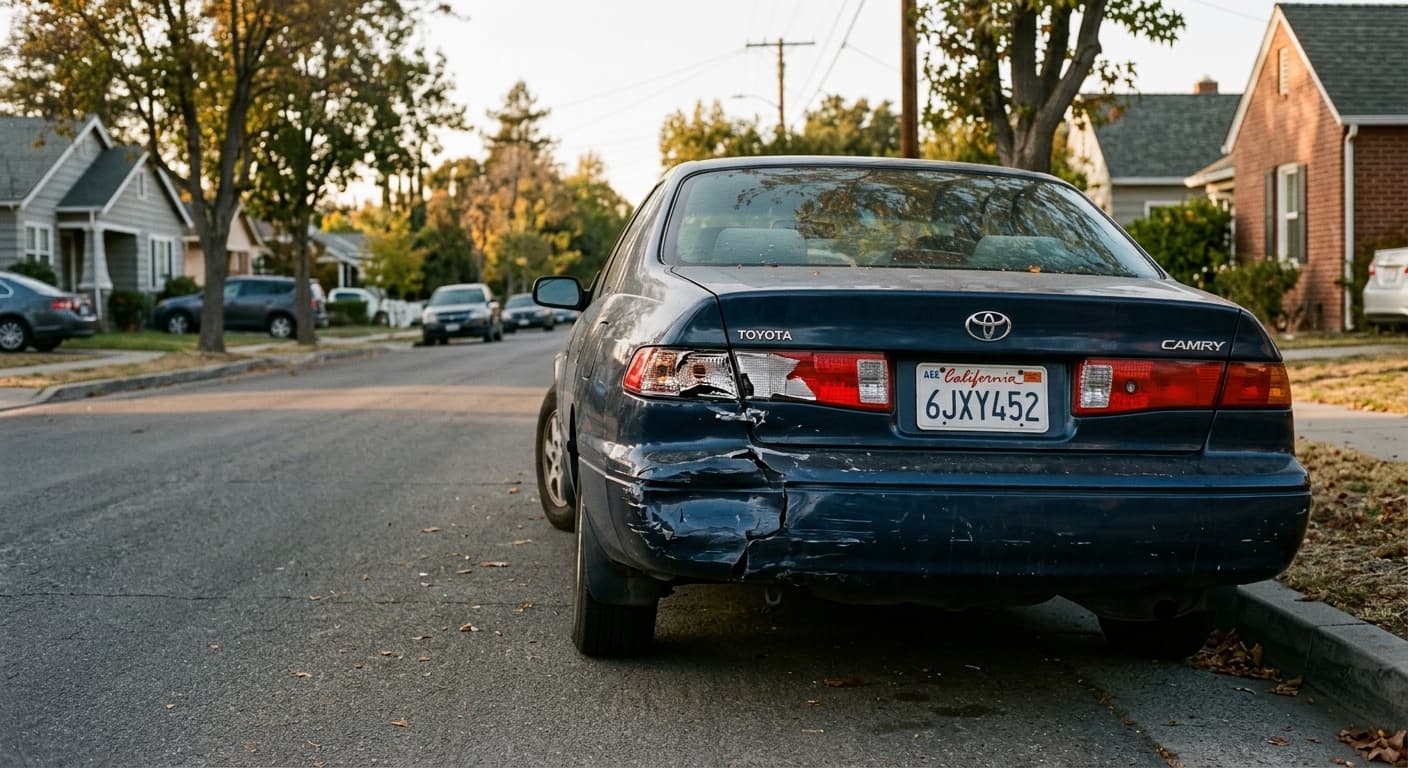
New Jersey prosecutes hit and run under NJSA 39:4-129 and the criminal code simultaneously. Property damage violations carry up to 90 days in jail, while leaving the scene of a fatal accident is a second-degree crime under NJSA 2C:11-5.1, punishable by 5 to 10 years in prison.
Hurt in a hit-and-run? If the driver who hit you fled or had no insurance, your own uninsured/underinsured-motorist (UM/UIM) coverage may pay your injury claim. Estimate what it could be worth with our free New Jersey Car Accident Settlement Calculator.
Quick Summary: New Jersey Hit and Run Penalties
New Jersey prosecutes hit and run offenses under two separate statutes: a traffic violation (NJSA 39:4-129) and a criminal offense (NJSA 2C:12-1.1 and 2C:11-5.1). When someone is injured or killed, the driver faces charges under both statutes simultaneously.

- Property damage only (first offense): Up to 30 days in jail, $200 to $400 fine, license suspension up to 6 months
- Personal injury (traffic offense): Up to 180 days in jail, $2,500 to $5,000 fine
- Serious bodily injury (criminal): Third-degree crime, 3 to 5 years in prison, up to $15,000 fine
- Death (criminal): Second-degree crime, 5 to 10 years in prison, up to $150,000 fine
- Report requirement: Accidents with injury, death, or property damage over $500 must be reported within 10 days
- License points: 2 points for property damage, 8 points for injury or death
- Fault state: New Jersey is a no-fault insurance state with a comparative fault rule
Your Legal Obligations at the Scene of an Accident
NJSA 39:4-129 requires that any driver involved in an accident must immediately stop at the scene or as close as possible and fulfill several legal requirements:
- Provide identification: Give your name, address, and show your driver's license to the other driver, property owner, or injured person
- Render assistance: You or a passenger in your vehicle must provide reasonable help to anyone who needs it
- Exchange insurance: Share your insurance policy information with the other party
- Notify police: Contact law enforcement if the accident results in death, injury, or property damage
- Remain at scene: Stay until you have fulfilled all required duties
Upon first conviction under this statute, the court must suspend your driver's license for up to one year. For subsequent offenses, permanent license revocation is possible.
Property Damage Hit and Run (Traffic Offense)
Leaving the scene of an accident involving only property damage is a disorderly persons offense (similar to a misdemeanor in other states).
First Offense
- Fine between $200 and $400
- Possible jail time of up to 30 days (at the court's discretion)
- License suspension up to 6 months
- 2 demerit points on your driving record
Subsequent Offenses
- Fine between $400 and $600
- 30 to 90 days in jail
- License suspension up to 1 year
Hitting an Unattended Vehicle
If you damage an unattended vehicle or property:
- Make a reasonable effort to locate the owner
- If you cannot find the owner, leave a note in a visible place with your name, address, contact information, and vehicle registration
- Notify law enforcement if damages appear to exceed $500
Reportable Accidents in New Jersey
Under NJSA 39:4-130, you must report any accident resulting in:
- Death or injury to any person
- Property damage exceeding $500
You must notify police using the "quickest means of communication" and submit a written accident report within 10 days. The self-reporting crash form is available through the New Jersey Department of Transportation.
Failure to report carries a fine between $30 and $100. The statute specifies that being unaware of personal injury or property damage is NOT a valid defense for failure to report.
If the Driver Cannot Report
If the driver is physically unable to give notice or file a report, and another occupant in the vehicle is capable of doing so, that occupant must fulfill the reporting requirements.
Hit and Run with Injury or Death (Criminal Charges)
When an accident results in injury or death, you face both the traffic violation under NJSA 39:4-129 and criminal charges under the New Jersey Criminal Code.
Leaving the Scene with Personal Injury (Traffic Offense)
Under NJSA 39:4-129, leaving the scene of an accident involving personal injury carries:
- Up to 180 days in jail
- Fine between $2,500 and $5,000
- License suspension or revocation for 1 year
- 8 demerit points
Leaving the Scene with Serious Bodily Injury (Third-Degree Crime)
Under NJSA 2C:12-1.1, knowingly leaving the scene of an accident that results in serious bodily injury is a third-degree crime. "Serious bodily injury" means any injury that:
- Creates a significant risk of death
- Causes serious permanent disfigurement
- Results in loss or impairment of any bodily member or organ
Penalties for a third-degree crime: 3 to 5 years in prison and fines up to $15,000.
Leaving the Scene Resulting in Death (Second-Degree Crime)
Under NJSA 2C:11-5.1, knowingly leaving the scene of an accident that results in death is a second-degree crime. This is one of the most serious hit and run charges in New Jersey.
Penalties: 5 to 10 years in prison and fines up to $150,000.
An important aspect of this statute: neither knowledge of the death nor knowledge of the specific traffic violation are elements of the offense. It is not a defense to claim you did not know the victim died.
When the court imposes sentences for multiple offenses from the same incident, those sentences run consecutively, not concurrently.
Vehicular Manslaughter and Assault by Auto
NJSA 2C:11-5 defines vehicular homicide as causing death by driving recklessly.
Vehicular homicide classifications:
- Second-degree crime: Up to 10 years in prison and $150,000 fine (for reckless driving causing death)
- First-degree crime: Up to 20 years in prison (if under the influence of drugs or alcohol at time of accident)
The statute mandates a minimum term of imprisonment. For vehicular homicide, you must serve between one-third and one-half of your sentence (or 3 years, whichever is greater) before becoming eligible for parole.
Eluding Police
Eluding a police officer in New Jersey is a third-degree crime, punishable by up to 5 years in prison.
New Jersey Hit and Run Penalties Summary
- Property damage (first offense): Up to 30 days jail, $200 to $400 fine, 6-month license suspension, 2 points
- Property damage (subsequent): 30 to 90 days jail, $400 to $600 fine, 1-year suspension
- Personal injury (traffic): Up to 180 days jail, $2,500 to $5,000 fine, 1-year suspension, 8 points
- Serious bodily injury (criminal): Third-degree crime, 3 to 5 years prison, up to $15,000 fine
- Death (criminal): Second-degree crime, 5 to 10 years prison, up to $150,000 fine
- Vehicular homicide (reckless): Second-degree crime, up to 10 years prison, $150,000 fine
- Vehicular homicide (DUI): First-degree crime, up to 20 years prison
- Failure to report: $30 to $100 fine
- Eluding police: Third-degree crime, up to 5 years prison
New Jersey Crash Statistics
According to the New Jersey State Police and Attorney General's Office:
- 2023 fatal crashes: 585 fatal crashes, a 9.4% decrease from 646 in 2022
- 2023 total deaths: 606 people died on New Jersey roads
- 2024 trend: Several counties reported increases in fatalities, including Hunterdon County (100% increase), Cape May County (75% increase in driver fatalities), and Cumberland County (36.4% increase)
- Pedestrian fatalities: Bergen County saw a 23% increase in pedestrian deaths; Gloucester County saw a 20% increase
The New Jersey State Police maintains current fatal crash statistics updated regularly.
Civil Liability and How Fault Is Determined
New Jersey is a no-fault state, meaning your own insurance company pays for your injuries regardless of who caused the accident. However, the state follows a comparative fault rule for claims that exceed no-fault coverage.
Under the comparative fault rule, you can recover damages if your share of responsibility for the accident is less than 50%. If you are 50% or more at fault, you cannot recover damages from the other party.
Permissive Inference: The statute creates a permissive inference that the registered owner of the vehicle was the person involved in the accident. For rental or leased vehicles, the inference applies to the renter or lessee rather than the vehicle owner.
Statute of Limitations:
- Personal injury claims: 2 years from the date of accident
- Property damage claims: 6 years
Protecting Your Rights at the Scene
Both drivers and victims should take these steps:
- Document everything: driver descriptions, vehicle make, color, license plate, and damage
- Take photos or video if possible
- Collect witness contact information
- Seek medical attention before commenting on your condition
- Call police immediately
- Never admit fault
- Give a truthful account of events without speculation
Possible Defenses to Hit and Run Charges
Potential defenses depend on the specific facts of your case:
- Safety concerns: Remaining at the scene would have placed you in danger
- Lack of knowledge: You were genuinely unaware that an accident occurred
- Compliance: You fulfilled all statutory obligations before leaving
- Mistaken identity: You were not the driver involved in the accident
Other New Jersey Laws
- New Jersey Recording Laws
- New Jersey Lemon Law
- New Jersey Statute of Limitations
- New Jersey Whistleblower Laws
- New Jersey Sexting Laws
- New Jersey Child Support Laws
More New Jersey Laws
Frequently Asked Questions
How long do I have to report an accident in New Jersey?
You must submit a written report within 10 days for accidents involving death, injury, or property damage over $500. You should also notify police at the scene using the quickest available means. Failure to report carries a fine between $30 and $100.
Can I lose my license permanently for hit and run in New Jersey?
Yes. For a first conviction, your license may be suspended for up to one year. For subsequent offenses, the court may permanently revoke your driving privileges.
What is the difference between a traffic offense and a criminal charge for hit and run?
Property damage hit and run is typically a traffic offense under NJSA 39:4-129 with penalties of up to 90 days in jail. When the accident results in serious bodily injury, you face a third-degree crime under NJSA 2C:12-1.1 with 3 to 5 years in prison. If the accident results in death, you face a second-degree crime under NJSA 2C:11-5.1 with 5 to 10 years in prison.
How many points will I get for hit and run in New Jersey?
Leaving the scene of a property damage accident adds 2 demerit points. If the accident involves injury or death, you receive 8 demerit points. You may also receive additional points for failure to stop and failure to report.
Does New Jersey have a permissive inference for hit and run?
Yes. The statute creates a permissive inference that the registered owner of the vehicle was the person involved in the accident. For rental or leased vehicles, the inference applies to the renter or lessee rather than the vehicle owner.
Injured in New Jersey? Get a free case review from a personal-injury attorney
If someone else's negligence caused your injury, you may be owed compensation for medical bills, lost wages, and pain and suffering. Get a free, no-obligation review from a New Jersey personal-injury attorney. Most work on contingency, so there is no upfront cost.
Updates
Fixed NJSA 39:4-129(b) property-damage penalties: the first- and subsequent-offense jail ranges and fines had been swapped (first offense is up to 30 days jail, not 30-90; subsequent is $400-$600, not $200-$400), and the first-offense license suspension was corrected from 1 year to the statute's actual 6 months (1 year applies only to a subsequent offense).
Governing law re-checked for recent changes
The Law Behind This Article
This article rests on the statutory provisions below, held in our own legal record and retrieved from the official source. Tap a section to read the operative text.
New Jersey Statutes (Unannotated)
§ 39:4-129Action in case of accident.In force
39:4-129. (a) The driver of any vehicle, knowingly involved in an accident resulting in injury or death to any person shall immediately stop the vehicle at the scene of the accident or as close thereto as possible but shall then forthwith return to and in every event shall remain at the scene until he has fulfilled the requirements of subsection (c) of this section. Every such stop shall be made without obstructing traffic more than is necessary. Any person who shall violate this subsection shall be fined not less than $2,500 nor more than $5,000, or be imprisoned for a period of 180 days, or both. The term of imprisonment required by this subsection shall be imposed only if the accident resulted in death or injury to a person other than the driver convicted of violating this section. In addition, any person convicted under this subsection shall forfeit his right to operate a motor vehicle over the highways of this State for a period of one year from the date of his conviction for the first offense and for a subsequent offense shall thereafter permanently forfeit his right to operate a motor vehicle over the highways of this State.
Official text (excerpt) · last checked 2026-08-01 · Read the full text in our law library · Verify at lis.njleg.state.nj.us
Cited in 62 court opinionsMost recently applied by a court: 2026
Leading cases: State v. Smith (Supreme Court of New Jersey 2001, 167 N.J. 158) · Podias v. Mairs (New Jersey Superior Court Appellate Division 2007, 394 N.J. Super. 338) · State of New Jersey v. Louise Frank (New Jersey Superior Court Appellate Division 2016, 445 N.J. Super. 98)
Identified automatically from the court opinions citing this section — not a ranking of which case controls.
§ 39:4-130Immediate notice of accident; written report.In force
39:4-130. The driver of a vehicle or street car involved in an accident resulting in injury to or death of any person, or damage to property of any one person in excess of $500.00 shall by the quickest means of communication give notice of such accident to the local police department or to the nearest office of the county police of the county or of the State Police, and in addition shall within 10 days after such accident forward a written report of such accident to the commission on forms furnished by it. Such written reports shall contain sufficiently detailed information with reference to a motor vehicle accident, including the cause, the conditions then existing, the persons and vehicles involved and such information as may be necessary to enable the chief administrator to determine whether the requirements for the deposit of security required by law are inapplicable by reason of the existence of insurance or other circumstances. The chief administrator may rely upon the accuracy of the information contained in any such report, unless he has reason to believe that the report is erroneous.
Official text (excerpt) · last checked 2026-08-01 · Read the full text in our law library · Verify at lis.njleg.state.nj.us
Cited in 34 court opinionsMost recently applied by a court: 2026
Leading cases: Bruce Maida v. Michael Kuskin (073429) (Supreme Court of New Jersey 2015, 221 N.J. 112) · State v. Gill (Supreme Court of New Jersey 1966, 47 N.J. 441) · State v. Michael Ross II (077458) (Middlesex and Statewide) (Supreme Court of New Jersey 2017, 229 N.J. 389)
Identified automatically from the court opinions citing this section — not a ranking of which case controls.
Search our full record of US law — 2.1 million sections, every state + federal →
Sources and References
- NJSA 39:4-129: Action in Case of Accident(njleg.state.nj.us).gov
- NJSA 2C:12-1.1: Knowingly Leaving Scene of Motor Vehicle Accident Resulting in Serious Bodily Injury(law.justia.com)
- NJSA 2C:11-5.1: Knowingly Leaving Scene of Accident Resulting in Death(law.justia.com)
- New Jersey DOT Self-Reporting Crash Form(state.nj.us).gov
- New Jersey State Police Fatal Crash Statistics(nj.gov).gov