
Louisiana
Louisiana Hit and Run Laws: Penalties and What to Do

Louisiana classifies leaving the scene of an accident as a crime under La. R.S. 14:100. Property-damage-only incidents carry a misdemeanor with up to six months in jail and a $500 fine. When death or serious bodily injury results, the offense becomes a felony with 2 to 10 years in prison, including a 2-year mandatory minimum.
Hurt in a hit-and-run? If the driver who hit you fled or had no insurance, your own uninsured/underinsured-motorist (UM/UIM) coverage may pay your injury claim. Estimate what it could be worth with our free Louisiana Car Accident Settlement Calculator.
Quick Summary
- Governing statute: Louisiana Revised Statutes 14:100 (Hit and Run Driving)
- Felony threshold: Accidents resulting in death or serious bodily injury
- Maximum felony penalty: 2 to 10 years imprisonment with hard labor, plus up to $5,000 fine (as amended by Acts 2025, No. 124)
- Enhanced felony penalty: 5 to 20 years with prior convictions for vehicular offenses
- Misdemeanor penalty: Up to 6 months in jail, $500 fine
- Reporting deadline: 24 hours from the time of the accident
- License consequences: Mandatory suspension upon conviction; SR-22 filing required for reinstatement
- Fault system: Louisiana follows "comparative fault" rules
Last verified: March 2026. This guide reflects current Louisiana Revised Statutes, including amendments effective August 1, 2025. Always consult a licensed attorney for legal advice specific to your situation.
Louisiana Hit and Run Statute (RS 14:100)
Under Louisiana Revised Statutes Section 14:100, hit and run driving is the intentional failure of a driver involved in or causing any accident to stop the vehicle at the scene, give their identity, and render reasonable aid. The statute covers all accidents on public roads or places open to public access.
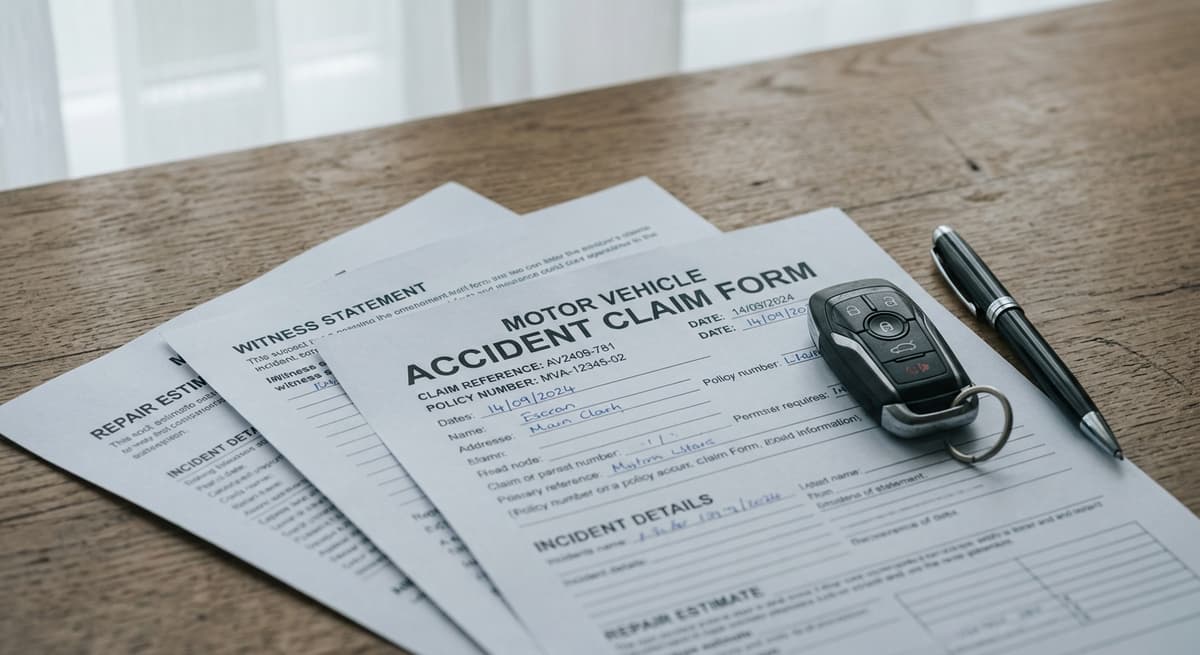
Louisiana law defines "giving identity" as providing your name, address, and the license number of your vehicle, or reporting the accident to police. The statute also defines "serious bodily injury" as bodily injury involving unconsciousness, extreme physical pain, protracted and obvious disfigurement, protracted loss or impairment of a bodily function, or a substantial risk of death.
The severity of the charge depends on whether the accident caused only property damage or resulted in bodily injury or death. The 2025 legislative session brought significant changes to the penalty structure, establishing mandatory minimum sentences for the most serious offenses.
Your Legal Obligations at the Scene
Louisiana law requires every driver involved in an accident to take specific steps immediately. Failing to complete any of these obligations can result in criminal charges.
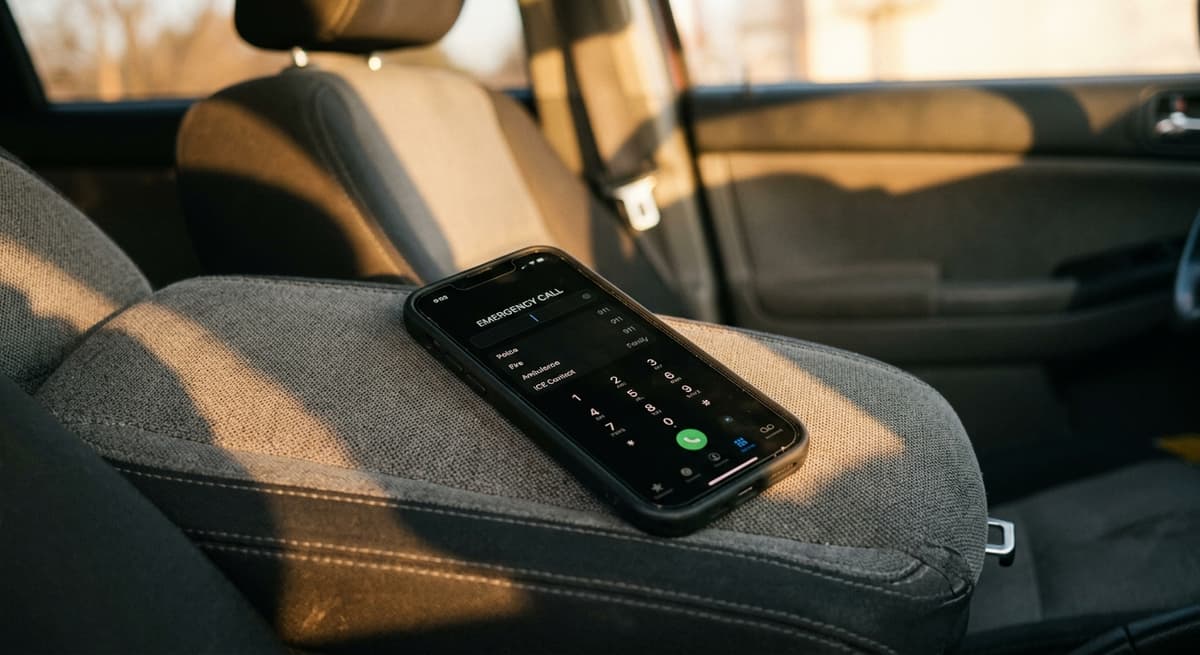
You must stop immediately at the scene of the accident or as close to it as safely possible. Driving away, even briefly, can be treated as evidence of intent to flee.
You must render reasonable assistance to any person who appears injured. This includes calling 911, requesting emergency medical services, or transporting the injured person to a medical facility if transportation is needed and you are able to provide it.
You must exchange information with the other driver, vehicle occupants, property owner, or any person injured in the accident. Required information includes your name, address, vehicle registration number, and insurance details.
You must report the accident to law enforcement. Louisiana law requires this report within 24 hours of the accident.
You must remain at the scene until you have fulfilled all of these obligations. Leaving before completing these steps, even if you intend to return, can lead to criminal charges.
If you strike an unattended vehicle and the owner is not present, you must leave a written note in a visible location on the vehicle. The note should include your name, address, and contact information. You should also report the incident to police.
Misdemeanor Hit and Run in Louisiana
A hit and run is charged as a misdemeanor when the accident results only in property damage and no one suffers bodily injury. Under RS 14:100(C)(1), the penalties for a first offense misdemeanor hit and run include:
- A fine of up to $500
- Imprisonment for up to six months
- Or both fine and imprisonment
These penalties apply to situations such as striking a parked car, damaging a fence or mailbox, or causing a fender bender where no one is hurt.
DUI Enhancement for Property Damage Hit and Run
When evidence shows the driver consumed alcohol or used drugs before the accident, the substance use contributed to the accident, and the driver fled to avoid detection or to affect a potential criminal investigation, the penalties increase. Under this enhancement:
- The minimum jail sentence increases to 10 days
- The maximum remains six months
- The maximum fine remains $500
This enhancement reflects the legislature's recognition that fleeing a DUI-related accident creates additional public safety risks and suggests consciousness of guilt regarding the impaired driving.
Felony Hit and Run in Louisiana
Leaving the scene becomes a felony when the accident results in serious bodily injury or death. The 2025 amendments to RS 14:100 (Acts 2025, No. 124, effective August 1, 2025) strengthened the penalties for these offenses.
Death or Serious Bodily Injury (First Offense)
Under RS 14:100(C)(2), when death or serious bodily injury is a direct result of the accident, the driver knew or should have known that death or serious bodily injury occurred, and the driver's vehicle was directly involved, the penalties are:
- Imprisonment with or without hard labor for not less than 2 years and not more than 10 years
- The first 2 years must be served without benefit of parole, probation, or suspension of sentence
- A fine of up to $5,000
- Or both imprisonment and fine
The 2025 amendment established the 2-year mandatory minimum, replacing the previous law that had no minimum imprisonment requirement for this offense.
Enhanced Penalties With Prior Convictions
When a driver has prior convictions for vehicular negligent injuring, vehicular homicide, first degree vehicular negligent injuring, or DUI-related offenses, the penalties increase substantially:
- Imprisonment with or without hard labor for not less than 5 years and not more than 20 years
- A fine of up to $5,000
- Or both
Prosecutors may also pursue separate charges such as vehicular homicide (RS 14:32.1), first degree vehicular negligent injuring (RS 14:39.2), or negligent injuring (RS 14:39) depending on the circumstances. If evidence suggests intent to harm, attempted murder charges could apply.
Louisiana Hit and Run Penalties at a Glance
| Offense Type | Classification | Imprisonment | Maximum Fine |
|---|---|---|---|
| Property damage only | Misdemeanor | Up to 6 months | $500 |
| Property damage with DUI | Misdemeanor | 10 days to 6 months | $500 |
| Serious injury or death | Felony | 2 to 10 years (2-year mandatory minimum) | $5,000 |
| Serious injury/death with priors | Felony | 5 to 20 years | $5,000 |
| Failure to report within 24 hours | Misdemeanor | Up to 60 days | $100 |
Administrative Penalties
A hit and run conviction triggers mandatory driver's license suspension by the Louisiana Office of Motor Vehicles. To reinstate driving privileges, convicted drivers must:
- Pay all reinstatement fees
- File an SR-22 certificate of financial responsibility with the state
- Maintain the SR-22 for a minimum of 3 years from the date of the triggering offense
- Provide proof of active liability insurance meeting Louisiana's minimum coverage requirements
Louisiana's minimum auto insurance requirements are $15,000 per person and $30,000 per accident for bodily injury liability, plus $25,000 for property damage liability.
Louisiana Crash Statistics
According to data from the Insurance Institute for Highway Safety (IIHS) and the National Highway Traffic Safety Administration (NHTSA):
- Total motor vehicle deaths (2023): 811 fatalities in Louisiana
- Death rate: 17.7 per 100,000 population, significantly higher than the national average of 12.2
- Pedestrian fatalities: 145 deaths, representing 18% of all traffic deaths in the state
- Alcohol involvement: Approximately 33% of fatally injured drivers in Louisiana had a BAC of 0.08% or higher
Nationally, NHTSA estimated 39,345 traffic fatalities in 2024, a decrease of about 3.8% from 2023. The AAA Foundation for Traffic Safety reports that hit and run crashes account for approximately 24% of all pedestrian fatalities. Pedestrians and cyclists are disproportionately represented among hit and run victims nationwide.
Louisiana's fatality rate ranks among the highest in the nation. The state's high fatality rate is influenced by factors including rural road conditions, high rates of impaired driving, and lower seat belt usage compared to national averages.
How Fault Is Determined in Louisiana
Louisiana follows a "comparative fault" system under Civil Code Article 2323. Under this system, your financial recovery in a civil lawsuit is reduced by your percentage of responsibility for the accident. However, Louisiana does not bar recovery entirely based on your degree of fault, making it more favorable to accident victims than many other states.
For example, if a jury determines you suffered $100,000 in damages but were 30% at fault, your recovery would be reduced to $70,000. Even if you were 90% at fault, you could still recover 10% of your damages.
Practical advice: Do not admit fault at the scene of an accident. Fault determination is the responsibility of investigators, insurance adjusters, and the courts. Statements made at the scene can be used against you in both criminal and civil proceedings. Focus on fulfilling your legal obligations: stop, render aid, exchange information, and report the accident.
Insurance Implications of a Hit and Run
A hit and run conviction has significant insurance consequences beyond criminal penalties.
Rate increases: Your auto insurance premiums will increase substantially after a hit and run conviction. Most insurers classify hit and run as a major violation, similar to DUI, which can double or triple your rates.
SR-22 requirement: Louisiana requires an SR-22 certificate of financial responsibility after a hit and run conviction. This filing proves you carry at least the state minimum insurance coverage and must be maintained for 3 years.
Uninsured motorist coverage: If you are the victim of a hit and run in Louisiana and the other driver cannot be identified, your own uninsured motorist (UM) coverage may compensate you. Louisiana law requires all auto policies to include UM coverage unless the policyholder specifically rejects it in writing.
Subrogation: If your insurance company pays your claim after a hit and run, they may pursue the at-fault driver through subrogation to recover the amount paid.
Possible Defenses to Hit and Run Charges
Common defenses that may apply depending on the circumstances include:
- Lack of knowledge: You were genuinely unaware that an accident occurred or that anyone was injured. This is more credible for minor impacts or when road conditions limited visibility.
- Fear for safety: You left the scene due to a reasonable fear of violence or harm, such as a hostile crowd or threatening behavior from other parties.
- Medical emergency: You needed immediate medical attention yourself and drove to the nearest hospital or called for emergency assistance.
- Identity dispute: You were not the driver of the vehicle at the time of the accident.
- Compliance: The other party refused to exchange information or indicated they were uninjured and did not want to file a report.
These defenses require credible evidence. If you leave the scene for any reason, report to the nearest police station as soon as safely possible. Voluntarily reporting reduces the appearance of intent to flee and may influence how prosecutors handle the case.
Statute of Limitations
For criminal hit and run charges in Louisiana, the statute of limitations depends on the offense classification:
- Misdemeanor hit and run: Charges must be filed within 2 years of the offense
- Felony hit and run: Charges must be filed within 6 years of the offense
For civil claims arising from a hit and run:
- Personal injury: 2 years from the date of the accident, under Louisiana Civil Code Article 3493.1, for claims arising after July 1, 2024
- Property damage: 2 years. Where the damage is to immovable property, Article 3493.2 runs the two years from the day the owner acquired, or should have acquired, knowledge of the damage
- Wrongful death: One year from the death, or two years from the day the injury was sustained, whichever is longer, under Article 2315.2(B)
Louisiana used to have one of the shortest civil deadlines in the country. Acts 2024, No. 423 doubled the general delictual prescription from one year to two, effective July 1, 2024, and that Act applies only to claims arising after that date. It also repealed Civil Code Articles 3492 and 3493, the one-year articles that older guidance still cites.
Because the accident date decides which period governs, and because medical malpractice keeps its own one-year deadline under La. R.S. 9:5628, consult a Louisiana attorney rather than assuming which rule applies to you.
Related Louisiana Laws
- Louisiana Recording Laws
- Louisiana Car Seat Laws
- Louisiana Statute of Limitations
- Louisiana Child Support Laws
- Louisiana Sexting Laws
- Louisiana Whistleblower Laws
Official Reference: Louisiana RS 14:100 Hit and Run Driving
More Louisiana Laws
Frequently Asked Questions
How long do I have to report an accident in Louisiana?
You must report any accident to law enforcement within 24 hours. Failure to report is a separate offense under Louisiana law, punishable by up to 60 days in jail and a $100 fine. If someone is injured, you should call 911 immediately from the scene.
Can I be charged with hit and run if I was not at fault for the accident?
Yes. Louisiana's hit and run law applies to all drivers involved in an accident, regardless of who caused it. The obligation to stop, render aid, and exchange information applies equally to every driver. Even if the other driver ran a red light and hit you, leaving the scene without stopping is a criminal offense.
What are the penalties for hitting a parked car and leaving in Louisiana?
If you hit a parked car and leave without making a reasonable effort to locate the owner, leaving a note with your contact information, and reporting the incident to police, you can be charged with misdemeanor hit and run. Penalties include up to 6 months in jail and a $500 fine. Even if the damage appears minor, leaving without taking these steps is a crime.
What is the statute of limitations for a hit and run civil lawsuit in Louisiana?
For accidents on or after July 1, 2024, Louisiana gives you 2 years. Acts 2024, No. 423 replaced the old one-year rule with a two-year liberative prescription for delictual actions under Civil Code art. 3493.1, running from the day the injury or damage is sustained. The Act applies prospectively only, so a claim that arose before July 1, 2024 is still governed by the former one-year period. Wrongful death is its own rule: art. 2315.2(B) gives one year from the death or two years from the injury, whichever is longer. Medical malpractice keeps a one-year deadline under La. R.S. 9:5628. Because the date decides which rule governs, consult a Louisiana attorney rather than assuming.
Will a hit and run conviction affect my driver's license and insurance?
Yes, significantly. A conviction results in mandatory license suspension and requires you to file an SR-22 certificate of financial responsibility for at least 3 years. Your auto insurance premiums will increase substantially because insurers classify hit and run as a major violation. Some insurers may refuse to renew your policy entirely, forcing you into the state's high-risk insurance pool.
Injured in Louisiana? Get a free case review from a personal-injury attorney
If someone else's negligence caused your injury, you may be owed compensation for medical bills, lost wages, and pain and suffering. Get a free, no-obligation review from a Louisiana personal-injury attorney. Most work on contingency, so there is no upfront cost.
The Law Behind This Article
This article rests on the statutory provisions below, held in our own legal record and retrieved from the official source. Tap a section to read the operative text.
Louisiana Civil Code
§ 2315.2Wrongful death actionIn forcecited in 12 of our articles
A. If a person dies due to the fault of another, suit may be brought by the following persons to recover damages which they sustained as a result of the death: (1) The surviving spouse and child or children of the deceased, or either the spouse or the child or children. (2) The surviving father and mother of the deceased, or either of them if he left no spouse or child surviving. (3) The surviving brothers and sisters of the deceased, or any of them, if he left no spouse, child, or parent surviving. (4) The surviving grandfathers and grandmothers of the deceased, or any of them, if he left no spouse, child, parent, or sibling surviving. B. The right of action granted by this Article prescribes one year from the death of the deceased or two years from the day that injury or damage is sustained, whichever is longer. C. The right of action granted under this Article is heritable, but the inheritance of it neither interrupts nor prolongs the prescriptive period defined in this Article.
Official text (excerpt) · last checked 2026-09-06 · Read the full text in our law library · Verify at legis.la.gov
Cited in 58 court opinions in our collectionLatest citing opinion in our collection: 2026
In the courts (editorial summary, independently checked):Jenkins v. Long Term Care Managers, Inc. (2000) applied article 2315.2's beneficiary hierarchy: a surviving child, even one informally acknowledged, leaves the decedent's mother no right of action. Wartelle v. Women's and Children's Hosp., Inc. (1997) restated that article 26 treats a stillborn fetus as a person only for wrongful death.
Opinions citing this section in our collection:
- Wartell v. Woman's & Children's Hosp. (Louisiana Court of Appeal 1996, 676 So. 2d 632)✓Parents whose baby was stillborn after a fetal heart monitor was removed for about ninety minutes won $250,000; reviewing that wrongful death award under article 2315.2, the court found no abuse of discretion given the couple's documented grief and affirmed it.
- Jenkins v. Long Term Care Managers, Inc. (Louisiana Court of Appeal 2000, 758 So. 2d 863)“…ded Ms. Jenkins from recovery under a wrongful death claim. La. Civ.Code art. 2315.2. The trial court denied Long Term Care’…”
- McKenzie v. LeBlanc (Louisiana Court of Appeal 1998, 98 La.App. 3 Cir. 0353)“…sustained between the time of injury and the time of death. La.Civ.Code art. 2315.2 is *712 another exception. That Articl…”
Identified automatically from the court opinions citing this section — not a ranking of which case controls.
Also relied on in: Motorcycle Accident Laws in Louisiana (2026): Deadlines, Medical Malpractice Laws in Louisiana (2026): Deadlines & Caps, Truck Accident Laws in Louisiana (2026): Deadlines & Liability
§ 2323Comparative faultIn forcecited in 18 of our articles
A.(1) In any action for damages where a person suffers injury, death, or loss, the degree or percentage of fault attributable to all persons causing or contributing to the injury, death, or loss shall be determined, regardless of whether the person is a party to the action or a nonparty, and regardless of the person's insolvency, ability to pay, immunity by statute, including but not limited to the provisions of R.S. 23:1032, or that the other person's identity is not known or reasonably ascertainable. (2) If a person suffers injury, death, or loss partly as the result of his own negligence and partly as a result of the fault of another person or persons, then the following shall apply: (a) If the degree or percentage of negligence attributable to the person suffering injury, death, or loss is equal to or greater than fifty-one percent, then the person suffering injury, death, or loss shall not be entitled to recover damages.
Official text (excerpt) · last checked 2026-09-08 · Read the full text in our law library · Verify at legis.la.gov
Cited in 187 court opinions in our collectionLatest citing opinion in our collection: 2026
In the courts (editorial summary, independently checked):Murray v. Ramada Inns, Inc. (1988) held assumption of risk no longer bars recovery and that such plaintiff conduct is judged under article 2323's comparative fault reduction. Keith v. US Fidelity & Guar. Co. (1997) held the 1996 amendment to article 2323 procedural and retroactive, so an immune employer's fault is quantified.
Opinions citing this section in our collection:
- Murray v. Ramada Inns, Inc. (Supreme Court of Louisiana 1988, 521 So. 2d 1123)✓Answering a question certified by the Fifth Circuit in a suit over a man paralyzed and killed by a dive into the shallow end of a motel pool, the court held assumption of risk no longer totally bars recovery; that conduct falls under Article 2323 and only reduces damages.
- Miller v. Lammico (Supreme Court of Louisiana 2008, 973 So. 2d 693)✓A jury divided fault among three doctors whose missed diagnosis let a pelvic infection destroy Mrs. Miller's uterus; the court held Article 2323's fault percentages apply to the full damages award before the medical malpractice cap, even where the plaintiff bears no fault.
- Keith v. US Fidelity & Guar. Co. (Supreme Court of Louisiana 1997, 694 So. 2d 180)✓An oilfield worker hurt by rented slips sued the equipment lessor, which pleaded the fault of his compensation-immune employer; the court held the 1996 amendment extending Article 2323 to persons with statutory immunity was procedural and applied retroactively to that case.
Identified automatically from the court opinions citing this section — not a ranking of which case controls.
Also relied on in: Louisiana Dog Bite Laws: Liability and Victim Rights, Louisiana Dashcam Laws: Mounting, Recording, and Evidence Rules, Louisiana Slip and Fall Laws: Proving Premises Liability Under the Civil Code
§ 3492Repealedcited in 11 of our articles
Official text (excerpt) · last checked 2026-07-29 · Read the full text in our law library · Verify at legis.la.gov
Cited in 411 court opinions in our collectionLatest citing opinion in our collection: 2026
In the courts (editorial summary, independently checked):Louisiana courts applied article 3492's one-year delictual period as running from the day damage is sustained. Harvey v. Dixie Graphics, Inc. (1992) held a claim prescribed once the plaintiff knowingly sustained appreciable damage. Bailey v. Khoury (2005) found no proof that earlier damage had manifested with sufficient certainty.
Opinions citing this section in our collection:
- Harvey v. Dixie Graphics, Inc. (Supreme Court of Louisiana 1992, 593 So. 2d 351)✓A businessman sued an accounting firm over a negligent tax return more than a year after the IRS told his advisers the return was wrong and he began paying accountant and lawyer fees; the Louisiana Supreme Court held appreciable harm started prescription under article 3492.
- Bailey v. Khoury (Supreme Court of Louisiana 2005, 891 So. 2d 1268)✓A mother sued doctors and pharmacies over birth defects tied to Depakote taken while pregnant; the Louisiana Supreme Court, applying article 3492's rule that prescription runs from the day damage is sustained, held the child's claim accrued only at live birth.
- David v. Our Lady of the Lake Hosp., Inc. (Supreme Court of Louisiana 2003, 849 So. 2d 38)✓A patient who contracted hepatitis C from a 1979 hospital transfusion sued in strict liability 20 years later; the Louisiana Supreme Court held the claim arose out of patient care and was prescribed under R.S. 9:5628, overruling cases that had routed such claims to article 3492.
Identified automatically from the court opinions citing this section — not a ranking of which case controls.
Also relied on in: Louisiana Recording Laws (2026): One-Party Consent Rules, Louisiana Car Accident Laws: Fault, Insurance, and Your Claim, Louisiana Defamation Laws: Libel, Slander & Suing (2026)
§ 3493.1Delictual actionsIn forcecited in 13 of our articles
Delictual actions are subject to a liberative prescription of two years. This prescription commences to run from the day that injury or damage is sustained. It does not run against minors or interdicts in actions involving permanent disability and brought pursuant to the Louisiana Products Liability Act or state law governing product liability actions in effect at the time of the injury or damage.
Official text (excerpt) · last checked 2026-09-08 · Read the full text in our law library · Verify at legis.la.gov
Cited in 15 court opinions in our collectionLatest citing opinion in our collection: 2026
In the courts (editorial summary, independently checked):Federal courts in the Eastern District of Louisiana have applied art. 3493.1 prospectively only. Lin (2026) and Geary (2026) held its two-year prescription reaches delictual actions arising after July 1, 2024, so the former one-year period of art. 3492 still governs torts occurring before that date.
Opinions citing this section in our collection:
- Lin (District Court, E.D. Louisiana 2026)✓Property owners counterclaimed over post-Hurricane Ida mitigation work they say gutted their buildings; the court read article 3493.1's two-year prescription as prospective only, so the one-year period governed, and denied summary judgment on a waived, fact-disputed defense.
- Geary (District Court, E.D. Louisiana 2026)✓A grandmother sued over a principal's alleged January 22, 2024 body-slam of her grandson; the court held article 3493.1's two-year period reaches only torts arising after July 1, 2024, so the one-year period applied and the February 2025 suit was time barred.
- Stella Johnson, et al. v. Marathon Petroleum Corporation, et al. (District Court, E.D. Louisiana 2026)✓Residents suing over an August 2023 refinery fire moved in November 2024 to widen the class; the court noted article 3493.1's two-year period applies only prospectively, applied the former one-year period, and held the expanded class definition prescribed.
Identified automatically from the court opinions citing this section — not a ranking of which case controls.
Also relied on in: Louisiana Statute of Limitations: Filing Deadlines by Case Type
§ 3493.2Damage to immovable property; commencement and accrual of prescriptionIn forcecited in 2 of our articles
When damage is caused to immovable property, the two-year prescription commences to run from the day that the owner of the immovable acquired, or should have acquired, knowledge of the damage.
Official text (excerpt) · last checked 2026-07-29 · Read the full text in our law library · Verify at legis.la.gov
Louisiana Revised Statutes
§ 14:100Hit-and-run drivingIn forcecited in 3 of our articles
A. Hit-and-run driving is the intentional failure of the driver of a vehicle involved in or causing any accident, to stop such vehicle at the scene of the accident, to give his identity, and to render reasonable aid. B. For the purpose of this Section: (1) "To give his identity", means that the driver of any vehicle involved in any accident shall give his name, address, and the license number of his vehicle, or shall report the accident to the police. (2) Repealed by Acts 2019, No. 2, §3. (3) "Vehicle" includes a watercraft. (4) "Accident" means an incident or event resulting in damage to property or injury to person. C.(1)(a) Whoever commits the crime of hit-and-run driving where there is no death or serious bodily injury shall be fined not more than five hundred dollars or imprisoned for not more than six months, or both.
Official text (excerpt) · last checked 2026-07-29 · Read the full text in our law library · Verify at legis.la.gov
Cross-referenced in the statute itself: § 14:32.1, § 14:39.2
Cited in 56 court opinions in our collectionLatest citing opinion in our collection: 2025
Opinions citing this section in our collection:
- State v. Davenport (Louisiana Court of Appeal 2006, 941 So. 2d 629)“…bert Davenport, Jr., of hit and run driving, a violation of La.R.S. 14:100. Thereafter, the trial court sentenced…”
- Bell v. Department of Police (Louisiana Court of Appeal 2017, 2016 La.App. 4 Cir. 0677)“…f La. R.S. 14:98, and for hit and run driving, in violation La. R.S. 14:100. At the time of the incident, Bell was…”
- State ex rel. of Korkosz (Louisiana Court of Appeal 1980, 393 So. 2d 332)“…Korkosz adjudicated a juvenile delinquent for violation of La.R.S. 14:100 1 in that “he did while operating a pi…”
Identified automatically from the court opinions citing this section — not a ranking of which case controls.
Also relied on in: Louisiana's Jody's Law Takes Effect August 1, Changing Bail and Adding Hit-and-Run Alerts
§ 14:32.1Vehicular homicideIn forcecited in 4 of our articles
A. Vehicular homicide is the killing of a human being caused proximately or caused directly by an offender engaged in the operation of, or in actual physical control of, any motor vehicle, aircraft, watercraft, or other means of conveyance, whether or not the offender had the intent to cause death or great bodily harm, whenever any of the following conditions exists and such condition was a contributing factor to the killing: (1) The operator is impaired by alcoholic beverages as determined by chemical tests administered under the provisions of R.S. 32:662. (2) The operator's blood alcohol concentration is 0.08 percent or more by weight based upon grams of alcohol per one hundred cubic centimeters of blood. (3)(a) The operator is impaired by any other drug, combination of drugs, or combination of alcohol and drugs. (b) As used in this Section, the term "drug" means any substance or combination of substances that, when taken into the human body, can impair the ability of the person to operate a vehicle safely. (4) The operator is impaired by alcoholic beverages.
Official text (excerpt) · last checked 2026-07-29 · Read the full text in our law library · Verify at legis.la.gov
Cited in 179 court opinions in our collectionLatest citing opinion in our collection: 2025
Opinions citing this section in our collection:
- State v. Price (Louisiana Court of Appeal 2006, 952 So. 2d 112)“…cted by a grand jury for vehicular homicide, a violation of La. R.S. 14:32.1. With counsel present, the defendant en…”
- State v. LeBlanc (Supreme Court of Louisiana 2010, 41 So. 3d 1168)“…efendant pleaded guilty to one count of vehicular homicide, La. R.S. 14:32.1, and to three counts of vehicular negli…”
- State v. Taylor (Supreme Court of Louisiana 1985, 463 So. 2d 1274)“…s blood alcohol concentration is 0.10 percent or more [1] . La.R.S. 14:32.1. The trial court declared the statute u…”
Identified automatically from the court opinions citing this section — not a ranking of which case controls.
Also relied on in: Louisiana DWI Laws: Penalties, BAC Limit & License (2026)
§ 14:39Negligent injuringIn forcecited in 2 of our articles
A. Negligent injuring is either of the following: (1) The inflicting of any injury upon the person of another by criminal negligence. (2) The inflicting of any injury upon the person of another by a dog or other animal when the owner of the dog or other animal is reckless and criminally negligent in confining or restraining the dog or other animal. B. The violation of a statute or ordinance shall be considered only as presumptive evidence of such negligence. C. Whoever commits the crime of negligent injuring shall be fined not more than five hundred dollars, or imprisoned for not more than six months, or both. D. The provisions of this Section shall not apply to: (1) Any dog which is owned, or the service of which is employed, by any state or local law enforcement agency for the principal purpose of aiding in the detection of criminal activity, enforcement of laws, or apprehension of offenders.
Official text (excerpt) · last checked 2026-07-29 · Read the full text in our law library · Verify at legis.la.gov
Cited in 16 court opinions in our collectionLatest citing opinion in our collection: 2024
Opinions citing this section in our collection:
- State v. D.L. (Louisiana Court of Appeal 1997, 697 So. 2d 706)“…ce. He stated he was a good student and an athlete. LAW La. R.S. 14:39 states: Negligent injuring is the inf…”
- In Re Marinoff (Supreme Court of Louisiana 2002, 819 So. 2d 305)“…a misdemeanor charge of negligent injuring, a violation of La. R.S. 14:39. The state subsequently filed a bill of…”
- State of Louisiana in the Interest of C.R. Vs. (Louisiana Court of Appeal 2021)“…s, we refer to the juvenile by his initials. 2 La. R.S. 14:39(A)(1) provides that negligent injuring…”
Identified automatically from the court opinions citing this section — not a ranking of which case controls.
§ 14:39.2First degree vehicular negligent injuringIn forcecited in 2 of our articles
A. First degree vehicular negligent injuring is the inflicting of serious bodily injury upon the person of a human being when caused proximately or caused directly by an offender engaged in the operation of, or in actual physical control of, any motor vehicle, aircraft, watercraft, or other means of conveyance whenever any of the following conditions exists: (1) The offender is impaired by alcoholic beverages. (2) The offender's blood alcohol concentration is 0.08 percent or more by weight based upon grams of alcohol per one hundred cubic centimeters of blood. (3)(a) The offender is impaired by any other drug, combination of drugs, or combination of alcohol and drugs. (b) As used in this Section, the term "drug" means any substance or combination of substances that, when taken into the human body, can impair the ability of the person to operate a vehicle safely. (4), (5) Repealed by Acts 2024, No. 662, §3. B. The violation of a statute or ordinance shall be considered only as presumptive evidence of negligence as set forth in Subsection A. C. Repealed by Acts 2019, No. 2, §3.
Official text (excerpt) · last checked 2026-07-29 · Read the full text in our law library · Verify at legis.la.gov
Cited in 54 court opinions in our collectionLatest citing opinion in our collection: 2024
Opinions citing this section in our collection:
- State v. Blanchard (Louisiana Court of Appeal 2003, 861 So. 2d 657)“…f first degree vehicular negligent injuring in violation of La. R.S. 14:39.2. Thereafter, the trial court sentence…”
- State v. Berkeley (Louisiana Court of Appeal 2001, 788 So. 2d 647)“…egree negligent injuring of Marie Mansfield, a violation of La. R.S. 14:39.2. Defendant was arraigned on November 23…”
- State v. Olivia (Louisiana Court of Appeal 2014, 2013 La.App. 4 Cir. 0496)“…uash the bill of information charging her with violation of La. R.S. 14:39.2. Following a hearing on the motion, the…”
Identified automatically from the court opinions citing this section — not a ranking of which case controls.
§ 9:5628Actions for medical malpracticeIn forcecited in 8 of our articles
A. No action for damages for injury or death against any physician, chiropractor, nurse, licensed midwife practitioner, dentist, psychologist, optometrist, hospital or nursing home duly licensed under the laws of this state, or community blood center or tissue bank as defined in R.S. 40:1231.1(A), whether based upon tort, or breach of contract, or otherwise, arising out of patient care shall be brought unless filed within one year from the date of the alleged act, omission, or neglect, or within one year from the date of discovery of the alleged act, omission, or neglect; however, even as to claims filed within one year from the date of such discovery, in all events such claims shall be filed at the latest within a period of three years from the date of the alleged act, omission, or neglect. B. The provisions of this Section shall apply to all persons whether or not infirm or under disability of any kind and including minors and interdicts. C. The provisions of this Section shall apply to all healthcare providers listed herein or defined in R.S. 40:1231.1 regardless of whether the healthcare provider avails itself of the protections and provisions of R.S.
Official text (excerpt) · last checked 2026-07-29 · Read the full text in our law library · Verify at legis.la.gov
Cited in 404 court opinions in our collectionLatest citing opinion in our collection: 2026
Opinions citing this section in our collection:
- Lott v. Haley (Supreme Court of Louisiana 1979, 370 So. 2d 521)“…ontends the court of appeal erred in retroactively applying La.R.S. 9:5628, effective September 12, 1975, to hold…”
- Griffin v. Kinberger (Supreme Court of Louisiana 1987, 507 So. 2d 821)“…tice action presents two issues. The first issue is whether La.R.S. 9:5628, which sets an outside limit of three y…”
- Borel v. Young (Supreme Court of Louisiana 2008, 989 So. 2d 42)“…malpractice action can be brought are clearly set forth in La. R.S. 9:5628(A), which provides in pertinent part:…”
Identified automatically from the court opinions citing this section — not a ranking of which case controls.
Also relied on in: Louisiana Medical Records Retention Laws (2026 Guide)
Explore the law
The laws cited above reference these related sections in their own text:
- Louisiana Revised Statutes § 14:98 — Operating a vehicle while impaired view in our statute record · read at the official source
- Louisiana Revised Statutes § 40:1231.1 — Definitions and general applications view in our statute record · read at the official source
- Louisiana Revised Statutes § 40:1231.2 — Limitation of recovery view in our statute record · read at the official source
Related law for further reading — not part of this article’s citations.
Search our full record of US law — 2.1 million sections, every state + federal →
Sources and References
- Louisiana RS 14:100 Hit and Run Driving(legis.la.gov).gov
- Louisiana Revised Statutes 14:100 (2025)(law.justia.com)
- HB 35 (Acts 2025, No. 124) - Hit and Run Amendment(legis.la.gov).gov
- IIHS Fatality Facts 2023: State by State(iihs.org)
- NHTSA 2024 Traffic Fatality Estimates(nhtsa.gov).gov
- Louisiana Civil Code Article 2323 - Comparative Fault(legis.la.gov).gov