
Illinois
Illinois Hit and Run Laws: Penalties and What to Do
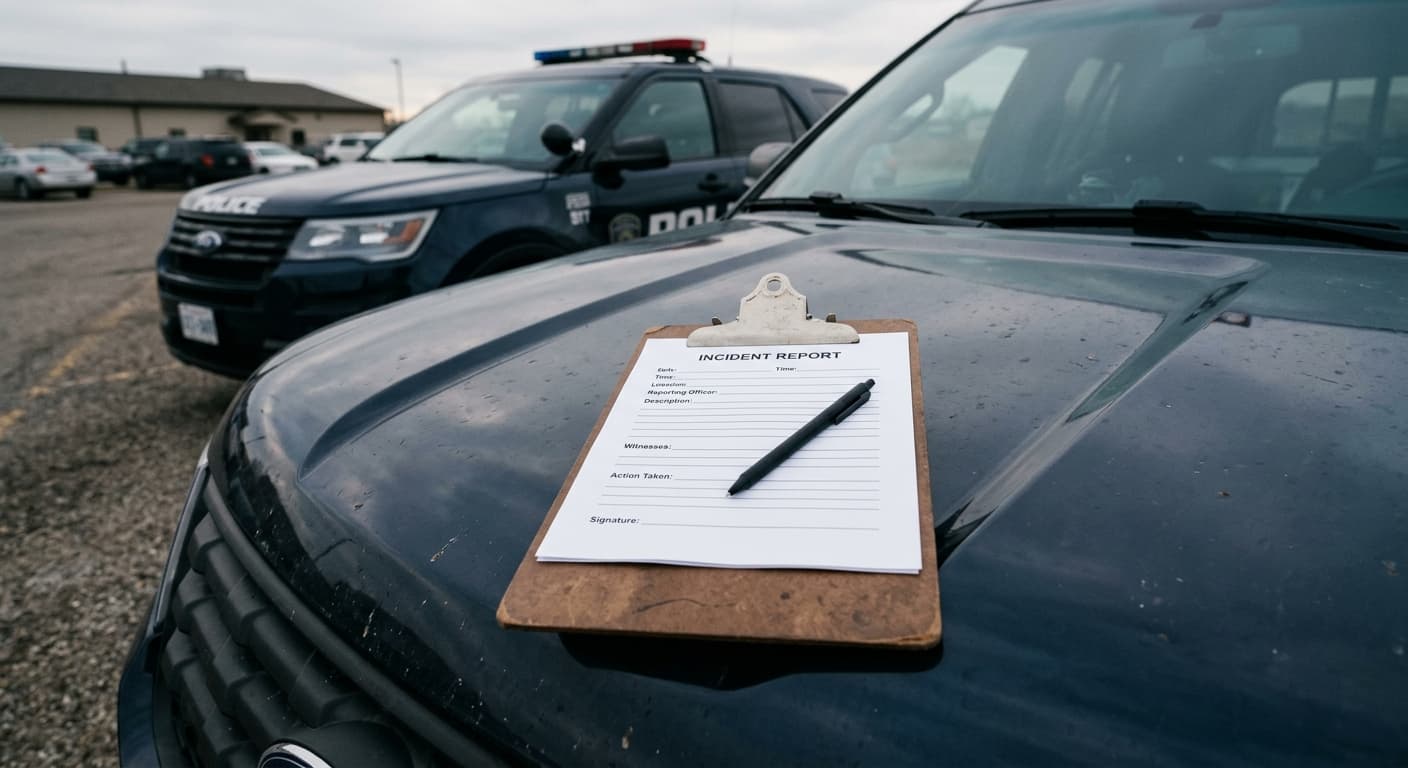
Illinois law under 625 ILCS 5/11-401 and 11-402 requires every driver involved in a crash to stop, exchange information, and render aid. Leaving the scene of a property-damage accident is a Class A misdemeanor; leaving after an injury is a Class 4 felony; and leaving after a fatal crash is a Class 2 felony with a mandatory 3-year minimum.
Hurt in a hit-and-run? If the driver who hit you fled or had no insurance, your own uninsured/underinsured-motorist (UM/UIM) coverage may pay your injury claim. Estimate what it could be worth with our free Illinois Car Accident Settlement Calculator.
Overview of Illinois Hit and Run Laws
Illinois treats hit and run offenses seriously. If you are involved in any motor vehicle crash, state law requires you to stop, exchange information, help anyone who is injured, and report the accident within strict deadlines. Failing to meet these obligations can result in felony charges, years in prison, and the permanent loss of your driving privileges.
The primary statutes governing hit and run in Illinois are found in the Illinois Vehicle Code at 625 ILCS 5/11-401 through 11-404. These sections spell out the duties that apply to every driver after a crash, along with the penalties for violations. This guide breaks down each requirement and consequence so you know exactly where you stand under current Illinois law.
Last verified: March 2026. This guide reflects current Illinois law under 625 ILCS 5/11-401 through 11-404.
Your Legal Duties After Any Accident in Illinois
Under 625 ILCS 5/11-403, every driver involved in a motor vehicle crash must fulfill several obligations before leaving the scene.
Stop Immediately
You must bring your vehicle to a stop at the scene of the accident, or as close to the scene as possible without blocking traffic more than necessary. Then you must return to and remain at the scene until all legal requirements are satisfied.
Exchange Information
You must provide the following to the other driver, any injured person, or a law enforcement officer:
- Your full legal name and current address
- Your vehicle registration number
- Your driver's license (if requested by a police officer)
If the other driver is not present (for example, you struck a parked car), you must leave this information in a written note placed in a visible spot on the damaged vehicle.
Render Reasonable Assistance
If anyone is injured, you must provide reasonable assistance. This includes calling 911 and, if needed, arranging transportation to a hospital or medical facility. You are not required to provide medical treatment yourself, but you cannot simply drive away from an injured person.
Report the Accident
Illinois law sets different reporting deadlines depending on the severity of the crash:
- Injury or death accidents: You must report to the nearest police station within 30 minutes of the crash (or within 30 minutes of being released from a hospital if you were also injured).
- Property damage over $1,500: You must file a written crash report with the Illinois Department of Transportation within 10 days using the SR 1050 form.
- Property damage over $500 (uninsured driver involved): The reporting threshold drops to $500 if any driver in the crash did not carry insurance.
Penalties for Hit and Run in Illinois
The consequences for leaving the scene of an accident vary based on whether the crash caused property damage only, personal injury, or death. Illinois law also distinguishes between failing to stop at the scene and failing to report to police within the required time frame.
Property Damage Only (625 ILCS 5/11-402)
If a crash causes only property damage and the driver leaves without stopping or providing information, the offense is a Class A misdemeanor. Penalties include:
- Up to 1 year in county jail
- A fine of up to $2,500
- Possible license suspension
- A permanent criminal record
Even striking an unattended vehicle and leaving without a note qualifies as a violation.
Leaving the Scene of an Injury Accident (625 ILCS 5/11-401)
When a crash results in personal injury to any person and the driver leaves the scene without stopping, exchanging information, and rendering aid, the offense is a Class 4 felony. Penalties include:
- 1 to 3 years in prison (up to 6 years with extended-term sentencing)
- A fine of up to $25,000
- Mandatory driver's license revocation
- Possible vehicle seizure and forfeiture
Leaving the Scene of a Fatal Accident (625 ILCS 5/11-401)
If the crash results in the death of any person and the driver leaves without stopping, the offense is a Class 2 felony with enhanced sentencing. Penalties include:
- 3 to 14 years in prison (mandatory minimum of 3 years)
- A fine of up to $25,000
- Mandatory driver's license revocation
- Vehicle seizure and forfeiture
Failure to Report an Injury Accident Within 30 Minutes
If a driver leaves the scene of a crash involving personal injury (but no death) and also fails to report the accident to police within 30 minutes, the charge is elevated to a Class 2 felony:
- 3 to 7 years in prison
- A fine of up to $25,000
- Mandatory driver's license revocation
Failure to Report a Fatal Accident Within 30 Minutes
If a driver leaves the scene of a fatal crash and fails to report to police within 30 minutes, the charge becomes a Class 1 felony:
- 4 to 15 years in prison
- A fine of up to $25,000
- Mandatory driver's license revocation
- Vehicle seizure and forfeiture
Refusing a Chemical Test
Under Section 11-401(b-1), any person arrested for a hit and run involving injury or death is subject to mandatory chemical testing of blood, breath, or urine for alcohol and drugs. Refusing to submit to testing when the crash resulted in a death is a Class 1 felony carrying 4 to 15 years in prison.
Complete Penalty Summary Table
| Offense | Classification | Prison/Jail Time | Maximum Fine |
|---|---|---|---|
| Property damage only (leave scene) | Class A Misdemeanor | Up to 1 year jail | $2,500 |
| Leave scene, injury (no death) | Class 4 Felony | 1 to 3 years prison | $25,000 |
| Leave scene, death involved | Class 2 Felony | 3 to 14 years prison | $25,000 |
| Fail to report injury within 30 min | Class 2 Felony | 3 to 7 years prison | $25,000 |
| Fail to report death within 30 min | Class 1 Felony | 4 to 15 years prison | $25,000 |
| Refuse chemical test (death case) | Class 1 Felony | 4 to 15 years prison | $25,000 |
All felony convictions under Section 11-401 trigger mandatory driver's license revocation by the Illinois Secretary of State.
Additional Consequences of a Hit and Run Conviction
Driver's License Revocation
Under 625 ILCS 5/11-401(e), the Secretary of State must revoke the driving privileges of any person convicted under this section. A revocation is more severe than a suspension. To regain driving privileges after a revocation, you must attend a formal hearing with the Secretary of State's office and demonstrate that you meet specific criteria for reinstatement.
Vehicle Seizure and Forfeiture
The motor vehicle used in a hit and run violation is subject to seizure and forfeiture under Sections 36-1 and 36-2 of the Illinois Criminal Code of 2012 (720 ILCS 5/36-1). This means the state can permanently take your vehicle, even if charges are eventually reduced.
Insurance Consequences
A hit and run conviction will almost certainly cause your auto insurance rates to increase substantially. Many insurers classify hit and run as a major violation, similar to a DUI. In some cases, your insurer may cancel your policy entirely. You will likely need to obtain an SR-22 certificate (proof of financial responsibility) before you can reinstate your driving privileges.
Civil Liability
A criminal hit and run case does not prevent the injured party from filing a separate civil lawsuit for damages. In fact, leaving the scene can be used as evidence of consciousness of guilt, which may increase the amount of damages a jury awards against you.
What to Do If You Are Involved in an Accident
Following these steps will help you comply with Illinois law and protect yourself:
- Stop your vehicle safely at or near the scene.
- Turn on your hazard lights to alert other drivers.
- Check for injuries. Call 911 immediately if anyone is hurt.
- Exchange information with the other driver: name, address, insurance details, driver's license number, and vehicle registration.
- Document the scene. Take photos of vehicle damage, road conditions, traffic signs, and any visible injuries.
- Talk to witnesses. Get names and phone numbers from anyone who saw the crash.
- File a police report. For injury or death accidents, report within 30 minutes. For property damage accidents exceeding $1,500, file an SR 1050 report with IDOT within 10 days.
- Contact your insurance company as soon as possible to report the claim.
- Seek medical attention even if you feel fine. Some injuries do not show symptoms right away.
What to Do If You Are a Victim of a Hit and Run
Being the victim of a hit and run is stressful, but taking the right steps can improve your chances of identifying the other driver and recovering compensation.
At the Scene
- Do not chase the fleeing vehicle. Pursuing another driver puts you and others at risk.
- Note as many details as possible about the other vehicle: make, model, color, license plate number (even a partial plate helps), and any description of the driver.
- Call 911 immediately and file a police report. A police report is essential for any insurance claim.
- Talk to witnesses who may have seen the crash or the other vehicle leaving.
- Take photos of your vehicle damage, the location, and any debris left behind by the other car.
After the Scene
- File a claim with your own insurance company. If the other driver is never found, your uninsured motorist (UM) coverage may apply.
- Understand your UM coverage. Illinois requires all auto policies to include uninsured motorist bodily injury coverage at minimum limits of $25,000 per person and $50,000 per accident. However, UM property damage coverage is optional.
- Keep all medical records and receipts. Document every expense related to your injuries.
- Follow up with police on the investigation.
Statute of Limitations for Hit and Run in Illinois
The statute of limitations determines how long prosecutors have to file criminal charges. Under 720 ILCS 5/3-5, the general rules are:
- Misdemeanor hit and run (property damage only): Charges must be filed within 18 months of the offense.
- Felony hit and run (injury or death): Charges must be filed within 3 years of the offense.
These deadlines can be extended in certain circumstances, such as when new evidence comes to light or the suspect leaves the state. If you believe you may face hit and run charges, the clock is ticking, and the sooner you consult a lawyer the better.
For civil lawsuits, the statute of limitations for personal injury in Illinois is generally 2 years from the date of the injury under 735 ILCS 5/13-202.
Possible Defenses to Hit and Run Charges
If you are charged with leaving the scene of an accident, several defenses may apply depending on the facts of your case:
- Lack of knowledge: You did not realize an accident had occurred. For example, a minor fender tap at low speed in heavy traffic may genuinely go unnoticed.
- Safety concerns: You left the scene because you faced an immediate threat of physical harm, such as a hostile crowd or dangerous road conditions.
- Medical emergency: You were incapacitated by your own injuries and unable to stop or remain at the scene.
- You were not the driver: Someone else was operating your vehicle at the time of the crash.
- Compliance with the law: You actually fulfilled all of your legal obligations (stopped, exchanged information, and reported) and were wrongly accused.
The prosecution bears the burden of proving beyond a reasonable doubt that you (1) drove the vehicle, (2) were involved in a crash, and (3) knowingly left the scene without fulfilling your legal duties.
Illinois Crash Statistics
According to the Illinois Department of Transportation, approximately 285,000 motor vehicle crashes occur in Illinois each year. Data from the Insurance Institute for Highway Safety (IIHS) shows that in 2023:
- Total traffic fatalities: 1,241 deaths
- Death rate: 9.9 per 100,000 population
- Death rate per miles traveled: 1.21 per 100 million vehicle miles
- Vehicle miles traveled: 102.9 billion miles
Hit and run crashes account for a significant portion of these incidents. Nationally, the AAA Foundation for Traffic Safety has found that hit and run crashes kill roughly 2,000 people per year across the United States, with the number trending upward over the past decade.
More Illinois Laws
Frequently Asked Questions
Is hit and run a felony in Illinois?
It depends on the circumstances. Leaving the scene of a property-damage-only crash is a Class A misdemeanor. However, if the crash caused personal injury, leaving the scene is a Class 4 felony. If the crash caused a death, it is a Class 2 felony. Failing to report an injury crash to police within 30 minutes elevates the charge to a Class 2 felony, and failing to report a fatal crash within 30 minutes is a Class 1 felony.
How long do I have to report an accident in Illinois?
For crashes involving injury or death, you must report to the nearest police station within 30 minutes of the accident (or within 30 minutes of hospital discharge if you were injured). For property damage exceeding $1,500 (or $500 if an uninsured driver is involved), you must file a written crash report with the Illinois Department of Transportation within 10 days.
What is the statute of limitations for hit and run in Illinois?
For misdemeanor hit and run (property damage only), prosecutors must file charges within 18 months. For felony hit and run involving injury or death, the statute of limitations is 3 years. These deadlines may be extended in certain circumstances.
Can I be charged with hit and run if I was not at fault for the accident?
Yes. The legal duty to stop, exchange information, and render aid applies to every driver involved in a crash, regardless of who caused it. Fault for the accident is a separate issue from the criminal charge of leaving the scene. Even if the other driver caused the collision, you can face hit and run charges if you leave without fulfilling your obligations.
Does my insurance cover a hit and run accident in Illinois?
If you are the victim of a hit and run, your uninsured motorist (UM) bodily injury coverage will typically apply. Illinois requires all auto policies to include UM coverage at minimum limits of $25,000 per person and $50,000 per accident. UM property damage coverage is optional. You will need to file a police report promptly to support your claim.
Injured in Illinois? Get a free case review from a personal-injury attorney
If someone else's negligence caused your injury, you may be owed compensation for medical bills, lost wages, and pain and suffering. Get a free, no-obligation review from a Illinois personal-injury attorney. Most work on contingency, so there is no upfront cost.
Sources and References
- 625 ILCS 5/11-401: Motor vehicle crashes involving death or personal injuries(ilga.gov).gov
- 625 ILCS 5/11-402: Motor vehicle accidents involving damage to vehicle(ilga.gov).gov
- 625 ILCS 5/11-403: Duty to give information and render aid(ilga.gov).gov
- 625 ILCS 5/11-404: Duty to report crashes to IDOT(ilga.gov).gov
- 720 ILCS 5/3-5: General limitations for criminal prosecutions(ilga.gov).gov
- 720 ILCS 5/36-1: Seizure and forfeiture of vehicles(ilga.gov).gov
- 735 ILCS 5/13-202: Personal injury statute of limitations(ilga.gov).gov
- IDOT Crash Reports and SR 1050 Reporting(idot.illinois.gov).gov
- Illinois Roadway Crash Data(idot.illinois.gov).gov
- IIHS Fatality Facts 2023: State by State(iihs.org)
- Illinois Secretary of State: Safety and Financial Responsibility Law(ilsos.gov).gov
- IDOI Auto Insurance Definitions(idoi.illinois.gov).gov