
 100vw, 1800px” /></p>
<div class=)
Colorado Hit and Run Laws (2026 Guide)
Last verified: January 2026. This article reflects current Colorado Revised Statutes Title 42 and recent case developments.
📑 Table of Contents (click to expand)
Quick Summary
- Property damage only: Class 2 misdemeanor, up to 120 days jail and $750 fine.
- Injury (fleeing): Class 1 misdemeanor (non-serious) or Class 4 felony (serious injury), up to 6 years prison.
- Death (fleeing): Class 3 felony, 4 to 12 years prison and fines up to $750,000.
- No crime if you stay: Remaining at the scene and fulfilling obligations is not a crime, even if you caused the accident.
- Accident report: You have 60 days to file with the Colorado DMV.
- Civil statute of limitations: Three years for personal injury, five years for death.
References:
- CRS 42-4-1601: Accidents Involving Death or Personal Injuries
- CRS 42-4-1603: Duty to Give Information and Render Aid
- CRS 42-4-1606: Immediate Report of Accidents
CRS 42-4-1601: Colorado’s Hit and Run Law

Under Colorado Revised Statutes 42-4-1601, any driver involved in an accident resulting in injury, death, or property damage must immediately stop at the scene or as close as possible and remain until fulfilling all statutory requirements.
Key Principle: Staying is Not a Crime
Section 1.5 of the statute clarifies: if you fulfill the requirements of CRS 42-4-1601 and 42-4-1603, then leave the scene to report the accident per 42-4-1606, you have committed no offense. A hit and run only becomes a crime when you flee without meeting your obligations.
Your Obligations Under CRS 42-4-1603
- Provide your name, address, and vehicle registration to the other party or law enforcement
- Show your driver’s license upon request
- Render reasonable assistance to injured persons, including arranging transportation
- Report to the nearest law enforcement office if no officer is at the scene
Penalties for Hit and Run in Colorado
Property Damage Only
- Classification: Class 2 misdemeanor
- Jail: Up to 120 days
- Fine: Up to $750
If you cannot find the property owner, leave your contact information in a conspicuous spot.
Accident with Non-Serious Injury
- Classification: Class 1 misdemeanor
- Jail: Up to 18 months
- Fine: Up to $5,000
Accident with Serious Bodily Injury
- Classification: Class 4 felony
- Prison: 2 to 6 years
- Fine: Up to $500,000
Accident Resulting in Death
- Classification: Class 3 felony
- Prison: 4 to 12 years
- Fine: Up to $750,000
Upon conviction, the Colorado DMV may revoke your driver’s license.
Colorado Crash Statistics
Colorado has seen concerning trends in traffic safety, particularly for pedestrians:
- Pedestrian crashes in Denver: In 2024, 590 crashes involved pedestrians, representing nearly 4% of all accidents in the city.
- Pedestrian fatalities: Colorado recorded 47 pedestrian fatalities in the first half of 2024, down 24% from 2023, showing some improvement.
- Four-year trend: Auto-pedestrian deaths have increased for four consecutive years statewide.
- Vision Zero: Denver tracks fatal and serious injury crashes through its Vision Zero initiative to identify safety improvements.
Notable Colorado Hit and Run Cases
Parafencer Death Case (2024)
A driver was sentenced to prison in May 2025 for a 2024 hit and run that killed a beloved parafencer in Lakewood. The driver faced multiple charges including leaving the scene of a crash involving death, tampering with physical evidence, possession of a controlled substance, and driving after revocation. The case demonstrated how hit and run charges combine with evidence tampering and drug charges for significant sentences.
Commerce City Teen Death (2024)
In August 2025, two more people were arrested in connection with a 2024 fatal hit and run that killed a teenager in Commerce City. Elian Agramonte faced vehicular homicide and vehicular assault charges. The case later resulted in a seven-year prison sentence, showing the serious consequences for fatal hit and run incidents.
16th Street Mall Incident (2025)
In October 2025, a pedestrian was struck and killed near Denver’s 16th Street Mall early on a Sunday morning. A man was arrested just hours later and three blocks away. The rapid arrest demonstrated how urban surveillance and witness reports help identify hit and run suspects quickly.
I-25 Fatal Hit and Run (2025)
In July 2025, Denver police arrested Marisol Infante for a deadly hit and run on I-25. Interstate incidents are often more challenging to investigate due to high speeds and multiple lanes, making this arrest notable.
What to Do After an Accident in Colorado
For Drivers
- Stop immediately at the scene or as close as safely possible
- If property damage only, move the vehicle out of traffic flow
- If injury or death, do not move the vehicle unless instructed
- Call 911 for any injuries
- Render reasonable assistance to injured persons
- Exchange information (name, address, registration, license)
- Report to law enforcement if no officer is present
- File an accident report with Colorado DMV within 60 days
- Contact an attorney before making detailed statements
For Victims
- Document everything: photographs, vehicle description, license plate
- Collect witness contact information
- Call law enforcement immediately
- Seek medical treatment and keep all receipts
- Look for video footage (security cameras, dashcams)
- Contact your insurance company
- Consult with an attorney about civil claims
Proving Fault in Colorado
Colorado is an at-fault state using negligence principles. To prove the other party is responsible:
- The other driver owed you a duty of care
- They breached that duty through their actions
- Your injuries or damages resulted from that breach
What Constitutes Negligence?
- Driving under the influence
- Speeding
- Unsafe lane changes
- Following too closely
- Disobeying traffic signs or signals
- Road rage
- Distracted driving
Important: Do not admit fault at the scene. Statements like “I didn’t see you” or “I’m sorry” can be used against you.
DUI Hit and Run in Colorado
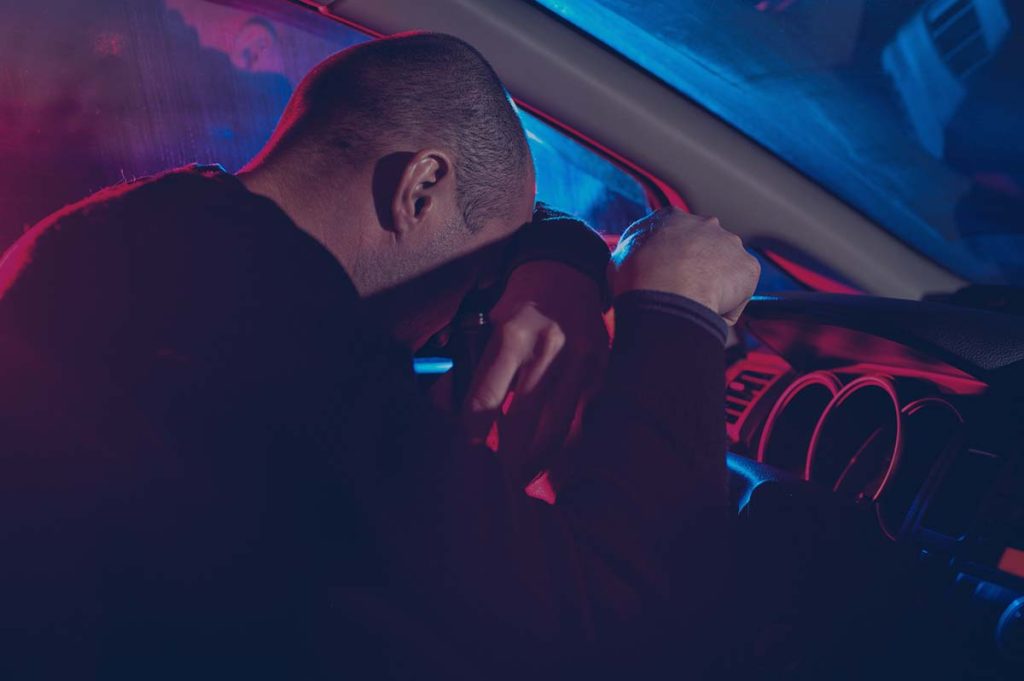
Driving under the influence combined with hit and run creates severe legal consequences:
Vehicular Assault While Intoxicated
- Classification: Class 4 felony
- Minimum sentence: 3 years parole
- Maximum: 6 years prison
Vehicular Homicide While Intoxicated
- Classification: Class 3 felony
- Prison: Up to 14 years
- Fine: Up to $750,000
Additional charges may include DUI, road rage, and assault depending on the facts.
Legal Defenses for Hit and Run
Fear for Safety
If staying at the scene could result in death, injury, or property damage to you, leaving is justified. You must report to law enforcement immediately and document your concerns.
Incapacitation
If you were injured and physically unable to fulfill the requirements, this serves as a defense.
Left to Seek Help
If you left the scene specifically to find help for the victim, this may mitigate or eliminate charges.
No Injury or Damage
If the victim suffered no injuries and no property was damaged, the basis for charges is weakened.
Frequently Asked Questions
What is the statute of limitations for hit and run in Colorado?
For civil claims: three years for personal injury, five years for wrongful death. Vehicular homicide has a ten-year criminal statute of limitations.
Is it a crime if I stop and help but was at fault?
No. Under Colorado law, if you stop and fulfill all statutory requirements, leaving the scene of an accident is not a crime. Civil liability for causing the accident is separate from criminal hit and run charges.
How long do I have to file an accident report?
You have 60 days to file with the Colorado Department of Motor Vehicles. You may file in person or online.
Can I be charged if I did not cause the accident?
Yes. Hit and run charges are based on leaving the scene, not on fault for the collision itself.
What evidence is used to prove hit and run?
Witness testimony, surveillance footage, photographs of vehicle damage, debris at the scene, and physical evidence matching your vehicle to the collision.