
Alabama
Alabama Dog Bite Laws: Liability and Victim Rights
Independently fact-checked against primary sources (last audited August 23, 2026). · Reviewed by the RecordingLaw editorial team. · Law checked current as of August 23, 2026. · 2 primary sources cited on this page. How we verify our legal content
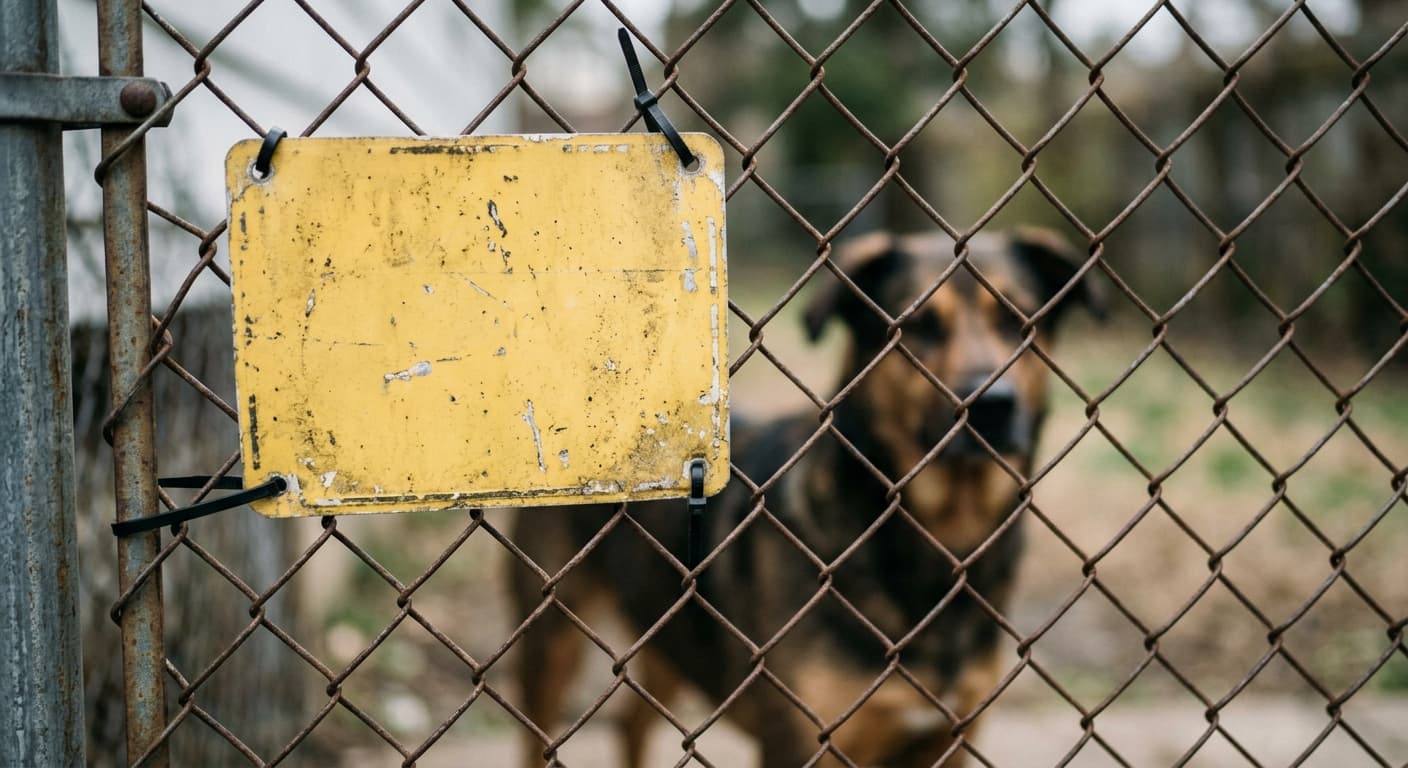
Alabama dog bite law holds owners strictly liable for unprovoked bites that occur on their property under Ala. Code § 3-6-1, and applies the one-bite rule for attacks off the owner's property. Victims must act within two years under § 6-2-38, and any shared fault can bar recovery entirely under Alabama's pure contributory negligence rule.
Estimate your claim: Use our free Alabama Dog Bite Settlement Calculator to see a rough settlement range based on the medical bills, the bite location, the victim's age, and Alabama's liability rule.
How Alabama Dog Bite Liability Works
Alabama handles dog bite cases differently than most states. Rather than choosing one approach, Alabama gives victims two separate legal paths to recover damages. The path that applies depends on where the bite happened and what the owner knew about the dog.
Understanding which statute applies to your situation is the first step in building a successful claim.
Strict Liability Under Alabama Code § 3-6-1
Alabama Code § 3-6-1 creates strict liability for dog owners when a bite occurs on property the owner controls. Under this statute, if a dog bites someone without provocation while that person is lawfully on the owner's property, the owner is automatically liable for damages.
This strict liability also applies when a dog chases someone off the owner's property and bites them immediately after they leave.
Section 3-6-1 itself is a single unconditional strict-liability sentence with no knowledge-based limitation. However, a related provision of the same chapter allows an owner who proves they had no knowledge of the dog's dangerous tendencies to limit their liability to the victim's actual expenses incurred. This means the owner would not owe compensation for pain and suffering or other non-economic damages in that scenario.
The One-Bite Rule Under Alabama Code § 3-1-3
Alabama Code § 3-1-3 covers dog attacks that happen off the owner's property, such as in a public park, on a sidewalk, or on someone else's land. Under this statute, the owner is liable when they keep a "vicious or dangerous animal" and, through careless management or by allowing the animal to go at liberty, another person is injured.
The central question under the one-bite rule is "scienter," which means the owner's actual or constructive knowledge that the dog had dangerous tendencies. Victims must prove the owner knew or should have known the dog was dangerous before the attack.
Evidence of scienter can include:
- Prior bites or attacks on people or animals
- Aggressive behavior such as lunging, growling, or snapping
- The owner keeping the dog chained or caged due to aggression
- Complaints from neighbors about the dog
- The dog's history of escaping confinement
Negligence Claims
Beyond the two statutes, victims can also pursue a standard negligence claim against the dog owner. To succeed, the victim must prove:
- The owner had a duty to control the dog
- The owner breached that duty (for example, by violating a local leash law)
- The breach directly caused the victim's injuries
- The victim suffered actual damages
Negligence claims are particularly useful when a local ordinance requires dogs to be leashed or confined, because violating the ordinance can serve as evidence of negligence.
Alabama's Pure Contributory Negligence Rule
Alabama is one of only four states (along with Maryland, North Carolina, and Virginia, plus the District of Columbia) that still follows the pure contributory negligence doctrine. This is one of the harshest rules in American personal injury law.

Under pure contributory negligence, if the victim is found to have been even 1% at fault for the dog bite, the victim is completely barred from recovering any compensation. There is no reduction of damages based on the percentage of fault. Instead, any fault at all on the victim's part eliminates the claim entirely.
Actions that could trigger a contributory negligence defense include:
- Teasing, provoking, or hitting the dog
- Ignoring warning signs posted on the property
- Approaching a dog that was visibly agitated or growling
- Reaching through a fence to pet an unfamiliar dog
- Entering property where the victim knew a dangerous dog was present
Because of this rule, building a strong case with clear evidence is essential for Alabama dog bite victims.
Emily's Law and Dangerous Dog Designations
In June 2018, Alabama enacted Emily's Law (codified in Alabama Code Title 3, Chapter 6A), named after Emily Colvin, who was killed by a pack of dogs in Jackson County in December 2017. This law created a formal process for declaring dogs dangerous and established serious criminal penalties for owners who fail to control them.
What Makes a Dog "Dangerous" Under Alabama Law
Under Alabama Code § 3-6A-3, a dangerous dog is defined as any dog, regardless of breed, that has bitten, attacked, or caused physical injury, serious physical injury, or death to a person without justification. Police dogs used for legitimate law enforcement purposes are excluded from this definition.
The Dangerous Dog Investigation Process
Under Alabama Code § 3-6A-4, the process begins when someone files a sworn statement before a city magistrate or county sheriff identifying the dog, its owner (if known), and why the person believes the dog is dangerous.
An animal control officer then conducts a dangerous dog investigation. If the complaint involves serious physical injury or death, a law enforcement officer takes over the investigation.
If the investigation supports the claim, a hearing is held before a municipal or district court. The court determines whether the dog meets the legal definition of dangerous.
Requirements for Owners of Declared Dangerous Dogs
If a court declares a dog dangerous but the dog has not caused serious injury or death, the owner may keep the dog under strict conditions:
| Requirement | Details |
|---|---|
| Surety bond | At least $100,000 to cover potential future injuries |
| Secure enclosure | Lockable enclosure with a top and proper flooring to prevent escape |
| Leash and control | Owner must be present with a secure collar and leash when the dog is outside the enclosure |
| Microchip | Permanent identification through microchipping |
| Spay/neuter | The dog must be spayed or neutered |
| Annual registration | Must pay a $100 annual dangerous dog registration fee to the county or municipality; non-registration within two weeks carries a $100 penalty |
| Proof of bond | Must show proof of the surety bond at each annual registration |
Owners have 30 days to comply with all court-ordered requirements. If they fail to meet the deadline, the law requires the dog to be humanely euthanized.
If the court finds the dog caused serious physical injury or death, the court must order the dog to be humanely euthanized by a licensed veterinarian or authorized animal control official.
Criminal Penalties Under Emily's Law
Alabama Code § 3-6A-5 establishes a tiered system of criminal penalties:
| Offense | Classification |
|---|---|
| Declared dangerous dog causes serious injury or death | Class B felony |
| Undeclared dog causes serious injury or death, and owner knew of dangerous propensities but showed reckless disregard | Class C felony |
| Declared dangerous dog causes physical injury | Class A misdemeanor |
| Owner refuses to surrender dog during investigation | Class C misdemeanor |
| Knowingly filing a false dangerous dog report | Class C misdemeanor |
| Repeated violations of confinement requirements | Class B misdemeanor |
A Class B felony in Alabama carries a potential sentence of 2 to 20 years in prison and fines up to $30,000.
Dog Owner Responsibilities in Alabama
Alabama law imposes several duties on all dog owners, not just those with declared dangerous dogs.
Confinement Requirements
Under Alabama Code § 3-1-5, subsection (a) requires a dog owner to confine the dog to the limits of their own premises or the premises where the dog is regularly kept, and a violation is a misdemeanor punishable by a fine of not less than $2.00 nor more than $50.00. The same subsection expressly allows the dog to accompany its owner elsewhere.
Subsection (b) is what decides whether the section reaches you at all, and it is easy to miss. Section 3-1-5 does not apply to a dog running at large within the corporate limits of any Alabama city or town that requires a license tag to be kept on dogs, and it does not apply in any county until the county commission of that county has adopted it. So this is not a statewide confinement duty: in a tag-licensing municipality, or in a county whose commission never adopted the section, neither the confinement requirement nor its criminal fine applies, and local ordinances govern instead. Check with your municipal clerk or county commission before assuming § 3-1-5 covers your situation.
Rabies Vaccination
Alabama Code § 3-7A-2 requires all dogs to be vaccinated against rabies by a licensed veterinarian when the dog reaches three months of age. The Alabama Department of Public Health oversees compliance. Owners must maintain a vaccination certificate and numbered tag as proof of immunization.
Local Leash Laws and Ordinances
While Alabama does not have a statewide leash law, most municipalities enforce their own leash ordinances. Many cities require dogs to be leashed in all public areas. Check your local city or county ordinances for specific requirements in your area.
Damages Available to Dog Bite Victims
Dog bite victims in Alabama may recover compensation in several categories, depending on which legal theory applies and whether the owner had prior knowledge of the dog's dangerous behavior.
When the Owner Had Prior Knowledge
If the victim can establish scienter (the owner knew the dog was dangerous), or if strict liability applies under § 3-6-1 with prior knowledge, the victim may recover:
- Medical expenses: Emergency care, surgery, hospitalization, rehabilitation, and future medical costs
- Lost wages: Time missed from work during recovery and any reduction in future earning capacity
- Pain and suffering: Physical pain endured as a result of the bite
- Emotional distress: Anxiety, fear, PTSD, and other psychological harm
- Scarring and disfigurement: Compensation for permanent physical changes
- Property damage: Damaged clothing, personal items, or other property
When the Owner Lacked Prior Knowledge
Under a mitigation provision found elsewhere in the same chapter as § 3-6-1, if the owner proves they had no knowledge of the dog's dangerous tendencies, recovery may be limited to the victim's actual expenses incurred. This typically covers only medical bills and out-of-pocket costs, not pain and suffering or emotional distress.
Statute of Limitations for Dog Bite Claims
Under Alabama Code § 6-2-38, dog bite victims have two years from the date of the attack to file a personal injury lawsuit. (See Alabama's statute of limitations rules for other case types.) This deadline is strictly enforced, and missing it almost always results in the court dismissing the case.
Key timing rules to know:
- The two-year clock starts on the date the bite occurs
- Minors: For victims under age 19, the two-year period does not begin until the victim turns 19
- Government claims: If a government employee's dog caused the bite, shorter notice requirements may apply
- Tolling: Certain circumstances can pause the running of the deadline, but these exceptions are narrow
Filing promptly is important not just for meeting the deadline but also for preserving evidence. Witnesses' memories fade, surveillance footage may be deleted, and medical records become harder to connect to the incident over time.
Breed-Specific Legislation in Alabama
Alabama has no statewide breed-specific legislation (BSL). The state does not ban or restrict any particular dog breed at the state level. Instead, Alabama gives individual cities and counties the authority to regulate or restrict specific breeds within their boundaries.
Several Alabama municipalities have enacted breed-specific restrictions, particularly in the Birmingham metropolitan area:
- Irondale: Prohibits owning or possessing pit bull dogs, with limited exceptions for dogs registered before the ordinance took effect
- Tarrant: Restricts pit bull ownership
- Fairfield: Has breed-specific provisions
- Gardendale: Maintains pit bull regulations
Because local rules vary significantly, dog owners should research the specific ordinances in their city or county. A breed that is legal in one municipality may be restricted or banned in a neighboring one.
Landlord Liability for Dog Bites in Alabama
Landlords in Alabama can face liability for dog bite injuries caused by a tenant's dog under certain conditions. The key factor is whether the landlord had knowledge of the dog's dangerous tendencies.
A landlord may be liable when:
- The landlord knew the tenant's dog had previously bitten someone or displayed dangerous behavior
- The landlord had the authority to require the tenant to remove the dog (through lease provisions)
- The landlord failed to take reasonable action to protect other tenants and visitors
For common areas such as hallways, parking lots, and shared yards, landlords have a duty to use "reasonable care" to protect tenants from known dangers, including aggressive dogs.
Landlords can protect themselves by including clear pet policies in lease agreements, requiring proof of renter's insurance with liability coverage, and acting promptly when they receive complaints about a tenant's dog.
How to File a Dog Bite Claim in Alabama
If you have been bitten by a dog in Alabama, taking the right steps early can strengthen your case.
-
Get medical treatment immediately. This creates a medical record linking your injuries to the dog bite. Follow all treatment recommendations and keep copies of every bill and receipt.
-
Report the bite to animal control and local police. An official report creates a documented record of the incident. Ask for a copy of the report for your records.
-
Document your injuries thoroughly. Take photos of all wounds on the day of the attack and throughout the healing process. Photograph the location where the bite occurred and the dog if possible.
-
Collect the owner's information. Get the dog owner's full name, address, phone number, and homeowner's or renter's insurance information.
-
Identify and contact witnesses. If anyone saw the attack, get their names and contact information. Witness testimony can be critical in proving what happened.
-
Preserve physical evidence. Keep torn or bloody clothing in a sealed bag. Do not wash or discard anything damaged in the attack.
-
Check for prior incidents. Ask animal control whether the dog has a history of bites or complaints. Prior incidents are important evidence of scienter.
-
Consult a personal injury attorney. Many Alabama dog bite attorneys offer free consultations and work on contingency, meaning you pay nothing unless you recover compensation.
More Alabama Laws
Frequently Asked Questions
Does Alabama have strict liability for dog bites?
Yes, but only in limited circumstances. Under Alabama Code § 3-6-1, dog owners face strict liability when their dog bites someone without provocation on the owner's property or immediately after chasing the victim off the property. A related provision of the same chapter can further limit an owner's liability to the victim's actual expenses incurred if the owner proves they had no knowledge of the dog's dangerous tendencies.
What is the statute of limitations for a dog bite claim in Alabama?
Alabama Code § 6-2-38 sets a two-year statute of limitations for personal injury claims, including dog bites. The clock starts on the date of the bite. For victims under age 19, the two-year period does not begin until they turn 19.
Can I recover damages if I was partially at fault for the dog bite?
Possibly not. Alabama follows the pure contributory negligence rule, which means that if you are found to be even slightly at fault for the incident, you may be completely barred from recovering any compensation. This is one of the strictest fault rules in the country.
What happens to a dog that is declared dangerous under Emily's Law?
If the dog caused serious physical injury or death, the court must order euthanasia. If the dog caused non-serious injuries, the owner may keep the dog under strict conditions, including maintaining a $100,000 surety bond, microchipping, spaying or neutering, keeping the dog in a secure enclosure, and paying a $100 annual dangerous dog registration fee to the county or municipality. The owner has 30 days to comply or the dog must be euthanized.
Are pit bulls banned in Alabama?
Not at the state level. Alabama has no statewide breed-specific legislation. However, several municipalities, including Irondale, Tarrant, Fairfield, and Gardendale, have enacted local ordinances restricting or banning pit bulls. You should check your local city or county rules for specific breed restrictions in your area.
Injured in Alabama? Get a free case review from a personal-injury attorney
If someone else's negligence caused your injury, you may be owed compensation for medical bills, lost wages, and pain and suffering. Get a free, no-obligation review from a Alabama personal-injury attorney. Most work on contingency, so there is no upfront cost.
Updates
Corrected the annual registration requirement for court-declared dangerous dogs to the $100 fee payable to the county or municipality under Ala. Code § 3-6A-4, added the subsection (b) limits on where the § 3-1-5 confinement rule actually applies, and repointed the § 3-1-3 and § 3-1-5 citations to the official Code of Alabama.
Independently fact-checked against the cited primary sources; governing law re-checked for recent changes
Corrected a fabricated 'no knowledge' damages-mitigation clause that the article quoted and attributed to Ala. Code § 3-6-1 (the actual text of § 3-6-1 is a single unconditional strict-liability sentence with no such clause); the mitigation concept is now described as coming from a related, unverified provision elsewhere in the same chapter rather than a false pinpoint cite.
Governing law re-checked for recent changes
Reviewed and approved by an editor
The Law Behind This Article
This article rests on the statutory provisions below, held in our own legal record and retrieved from the official source. Tap a section to read the operative text.
Code of Alabama 1975, Title 3: Animals.
§ 3-6-1Liability of Owner of Dog for Injuries to Person Bitten or Injured While Upon Property Owned or Controlled by Owner, Etc.In force
If any dog shall, without provocation, bite or injure any person who is at the time at a place where he or she has a legal right to be, the owner of such dog shall be liable in damages to the person so bitten or injured, but such liability shall arise only when the person so bitten or injured is upon property owned or controlled by the owner of such dog at the time such bite or injury occurs or when such person has been immediately prior to such time on such property and has been pursued therefrom by such dog.
Official text (excerpt) · last checked 2026-08-28 · Read the full text in our law library · Verify at alison.legislature.state.al.us
Cited in 3 court opinions in our collectionLatest citing opinion in our collection: 1997
Opinions citing this section in our collection:
- Gentle v. Pine Valley Apartments (Supreme Court of Alabama 1994, 631 So. 2d 928)“…ner of the dog, are not involved in this appeal; therefore, Ala. Code 1975, § 3-6-1 , setting out the liability of a dog ow…”
- Williams v. Hill (Supreme Court of Alabama 1995, 658 So. 2d 381)“…was responsible for their injuries under the provisions of Ala.Code 1975, § 3-6-1. Hill filed a motion for summary judg…”
- Wright ex rel. Wright v. Calvin Reid Construction Co. (Court of Civil Appeals of Alabama 1997, 723 So. 2d 55)“…s with respect to the defendants’ potential liability under Ala.Code 1975, § 3-6-1 et seq., and those theories are not bef…”
Identified automatically from the court opinions citing this section — not a ranking of which case controls.
§ 3-6A-5Violations.In force
(a) If a dog that has previously been declared by a court to be dangerous, when unjustified, attacks and causes serious physical injury or death to a person, the owner of the dog shall be guilty of a Class B felony. (b) If a dog that has not been declared by a court to be dangerous, when unjustified, attacks and causes serious physical injury or death to a person, and the owner of the dog had prior knowledge of the dangerous propensities of the dog, yet demonstrated a reckless disregard of the propensities under the circumstances, the owner of the dog shall be guilty of a Class C felony. (c) If a dog that has previously been declared by a court to be dangerous, when unjustified, attacks and causes physical injury to a person, the owner of the dog shall be guilty of a Class A misdemeanor. (d) If a dog that has not been declared by a court to be dangerous, when unjustified, attacks and causes physical injury to a person, and the owner of the dog had prior knowledge of the dangerous propensities of the dog, yet demonstrated a reckless disregard of the propensities under the circumstances, the owner of the dog shall be guilty of a Class B misdemeanor.
Official text (excerpt) · last checked 2026-07-29 · Read the full text in our law library · Verify at alison.legislature.state.al.us
§ 3-6A-3Definitions.In force
For the purposes of this chapter, the following words shall have the following meanings: (1) ANIMAL CONTROL OFFICER. Any person employed by a county or municipality who performs animal control functions or any person who performs animal control functions who is employed by an entity under agreement or contract with a county or municipality to perform animal control functions or to enforce this chapter. (2) ATTACK. Aggressive physical contact by a dog. (3) BITTEN. Seized with the teeth so that the skin of the person seized has been gripped, or has been wounded or pierced, resulting in physical injury. (4) DANGEROUS DOG. A dog, regardless of its breed, that has bitten, attacked, or caused physical injury, serious physical injury, or death to a person without justification, except a dog that is a police animal as defined by Section 13A-11-260, used by law enforcement officials for legitimate law enforcement purposes. (5) DOG. All members of the canine family including dog hybrids. (6) IMPOUNDED.
Official text (excerpt) · last checked 2026-07-29 · Read the full text in our law library · Verify at alison.legislature.state.al.us
§ 3-6A-4Sworn Statement; Dangerous Dog Investigation; Hearing; Procedures.In force
(a)(1) When a person claims that a dog is dangerous, the person shall make a sworn statement before a city magistrate or sheriff setting forth the name of the dog owner, if known, the location where the dog is being kept in the city or county, and the reason he or she believes the dog to be dangerous. (2) The sworn statement shall be delivered to an animal control officer who shall complete a dangerous dog investigation.When the sworn statement claims that a dog has caused serious physical injury or death to a person, the duties of the animal control officer, including but not limited to the dangerous dog investigation, shall be carried out by a law enforcement officer. (b) An animal control officer may initiate a dangerous dog investigation in cases where a complaint has been made pursuant to subsection (a) and a person has been bitten, received physical injury or serious physical injury, or has died. (c)(1) In the event a dangerous dog investigation leads an animal control officer to believe the allegation is founded, all of the following shall occur: a.
Official text (excerpt) · last checked 2026-07-29 · Read the full text in our law library · Verify at alison.legislature.state.al.us
Cited in 1 court opinions in our collectionLatest citing opinion in our collection: 2025
Opinions citing this section in our collection:
- Sonja R. Haney v. City of Alabaster (Court of Civil Appeals of Alabama 2025)“…t the dog be CL-2025-0038 humanely euthanized pursuant to Ala. Code 1975, § 3-6A-4, which is a part of Emily's Law, Ala.…”
Identified automatically from the court opinions citing this section — not a ranking of which case controls.
§ 3-7A-2Dogs, Cats, and Ferrets to Be Immunized; Sale, Etc., of Vaccine; Vaccination Exemptions.In force
(a) Every owner of a dog, cat, or ferret required to be immunized for rabies as defined in this chapter, shall cause the animal to be immunized by the rabies officer, his or her authorized representative, or any duly licensed veterinarian, when the animal reaches three months of age and subsequently in accordance with the intervals specified in the vaccine’s license. Notwithstanding the above, the State Board of Health may establish by rule vaccine intervals or specific vaccines, or both, to be used in public rabies vaccination clinics, based on considerations such as county specific prevalence of animal rabies or risk of animal rabies and the vaccination rates of dogs, cats, and ferrets in a county.
Official text (excerpt) · last checked 2026-07-29 · Read the full text in our law library · Verify at alison.legislature.state.al.us
Code of Alabama 1975, Title 6: Civil Practice.
§ 6-2-38Commencement of Actions - Two Years.In forcecited in 8 of our articles
(a) An action by a representative to recover damages for wrongful act, omission, or negligence causing the death of the decedent under Sections 6-5-391 and 6-5-410 must be commenced within two years from the death. (b) All actions by common carriers of property subject to Chapter 3 of Title 37 for recovery of their charges, or any part thereof, shall be begun within two years from the time the cause of action accrues and not after. (c) For recovery of charges, action shall be begun against common carriers of property by motor vehicles subject to this article within two years from the time the cause of action accrues and not after, except as provided in subsection (d) of this section; provided, that if claim for the overcharge has been presented in writing to the carrier within the two-year period of limitation, said period shall be extended to include six months from the time notice in writing is given by the carrier to the claimant of disallowance of the claim, or any part or parts thereof, specified in the notice.
Official text (excerpt) · last checked 2026-09-08 · Read the full text in our law library · Verify at alison.legislature.state.al.us
Cited in 372 court opinions in our collectionLatest citing opinion in our collection: 2026
In the courts (editorial summary, independently checked):Alabama courts have applied Section 6-2-38's two-year period. Mardis v. Robbins Tire & Rubber Co. (1995) held harassment acts occurring more than two years before filing were time-barred. Hicks v. Globe Life and Acc. Ins. Co. (1991) ran the two-year fraud period from discovery under a separate saving provision, normally a jury question.
Opinions citing this section in our collection:
- Hicks v. Globe Life and Acc. Ins. Co. (Supreme Court of Alabama 1991, 584 So. 2d 458)✓A retiree let her major medical policy lapse after an agent said a new hospital policy was comparable. The court held the two-year fraud period of 6-2-38(l) turned on when she should have discovered the fraud, a jury question here, and reversed summary judgment for the insurer.
- Auto-Owners Ins. Co. v. Abston (Supreme Court of Alabama 2001, 822 So. 2d 1187)✓An insured said his auto insurer defrauded him by paying his medical benefits to his health insurer. The court held 6-2-38(l)'s two-year period started when he read a 1996 letter enclosing the subrogation agreement, which would provoke inquiry, so his fraud claims were barred.
- Mardis v. Robbins Tire & Rubber Co. (Supreme Court of Alabama 1995, 669 So. 2d 885)✓A former employee sued over supervisor harassment running from August to December 1990 and filed on December 2, 1992. Rejecting a continuing-tort theory, the court applied the two-year period of 6-2-38(l) to bar acts before December 2, 1990, leaving the final days actionable.
Identified automatically from the court opinions citing this section — not a ranking of which case controls.
Also relied on in: Alabama Statute of Limitations: Filing Deadlines by Case Type, Alabama Voyeurism Laws: Hidden Cameras, Penalties, and Victim Rights, Alabama Car Accident Laws: Fault, Insurance, and Your Claim
Search our full record of US law — 2.1 million sections, every state + federal →
Sources and References
- Alabama Code § 3-6-1: Liability of Owner of Dog for Injuries to Person Bitten or Injured While Upon Property(law.justia.com)
- Alabama Code § 3-6A-3: Dangerous Dog Definitions (Emily's Law)(law.justia.com)
- Alabama Code § 3-6A-4: Dangerous Dog Investigation, Hearing, and Procedures(law.justia.com)
- Alabama Code § 3-6A-5: Dangerous Dog Violations and Criminal Penalties(law.justia.com)
- Alabama Code § 6-2-38: Two-Year Statute of Limitations for Personal Injury(law.justia.com)
- Alabama Code § 3-7A-2: Rabies Vaccination Requirements for Dogs(law.justia.com)
- Alabama Department of Public Health: Rabies Information(alabamapublichealth.gov).gov
- Alabama Legislature: Code of Alabama(alison.legislature.state.al.us).gov
- Animal Legal & Historical Center: Alabama Consolidated Dog Laws(animallaw.info)
- Alabama Code § 3-1-3: Liability of Owner, Etc., Permitting Vicious or Dangerous Animal to Be at Liberty, Etc., for Injuries Caused by Same(alison.legislature.state.al.us)
- Alabama Code § 3-1-5: Permitting Dogs to Run at Large; Applicability of Provisions of Section in Counties and Certain Cities or Towns(alison.legislature.state.al.us)
- Alabama Code § 3-6A-4: Sworn Statement; Dangerous Dog Investigation; Hearing; Procedures(alison.legislature.state.al.us)