How Old Do You Have to Be to Buy a Lighter? (2026)
Independently fact-checked against primary sources (last audited August 4, 2026). · 18 primary sources cited on this page. How we verify our legal content
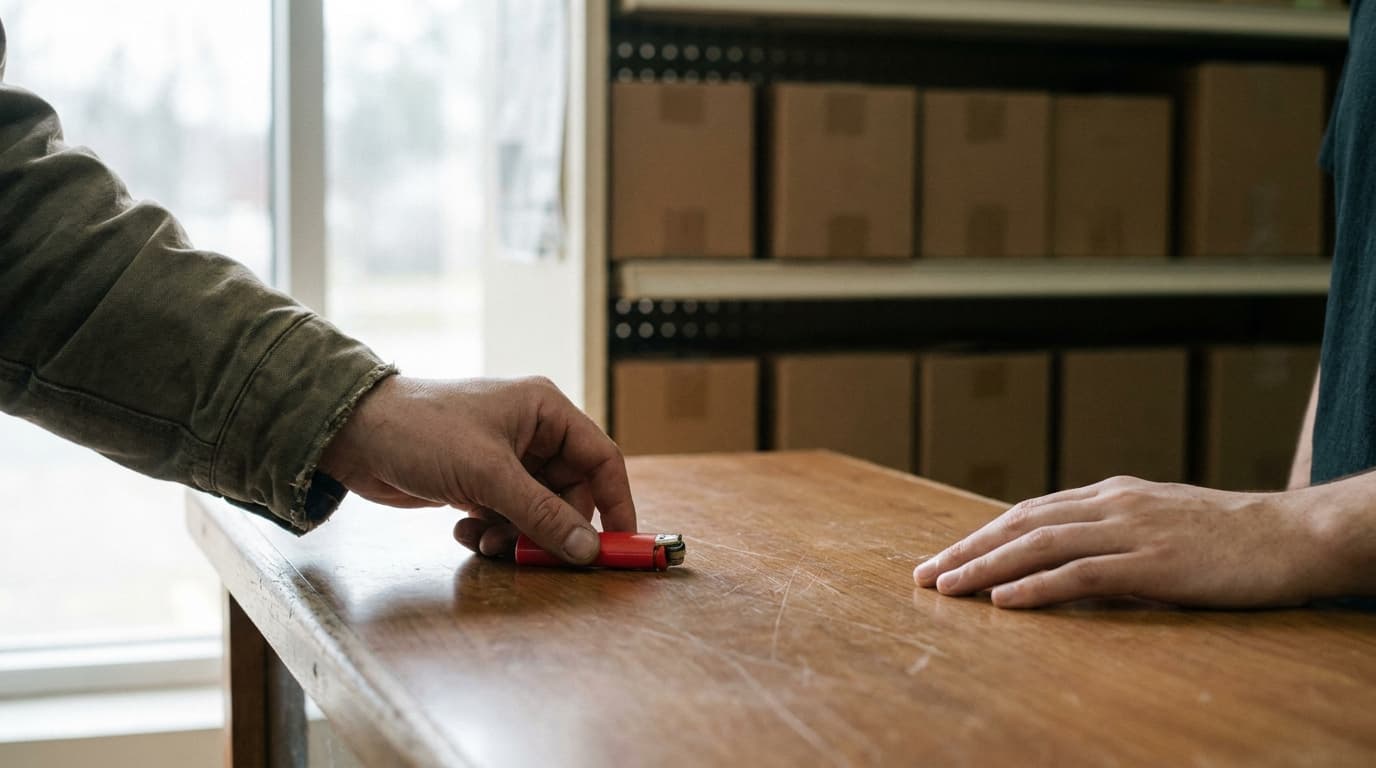
There is no federal minimum age to buy a lighter in the United States. The FDA does not classify lighters as tobacco products, so minors can legally purchase one at the federal level. Many retailers voluntarily set an 18-plus policy, and a growing number of states ban novelty lighters that are designed to appeal to children.
Is There a Federal Age Requirement to Buy a Lighter?
No federal statute imposes a minimum purchase age for ordinary lighters or matches. Congress has never passed legislation requiring a buyer to be a certain age before purchasing a flame-producing tool of this type.
The question comes up often because many people assume lighters fall under tobacco-product regulations. That assumption is understandable. Lighters are sold in the tobacco aisle of most convenience stores, placed next to cigarettes and rolling papers. But federal law draws a clear line between tobacco products and the accessories people use to light them.
The short answer: under federal law, a twelve-year-old can legally walk into a store and buy a BIC. Whether the store will actually sell it is a separate question governed by retailer policy, not federal mandate.

Are Lighters Tobacco Products Under Federal Law?
No. The Family Smoking Prevention and Tobacco Control Act (Pub. L. 111-31, signed June 22, 2009) grants the FDA authority to regulate tobacco products. The definition it created, now codified at 21 U.S.C. Section 321(rr)(1), is broader than most readers expect. A tobacco product means any product made or derived from tobacco, or containing nicotine from any source, that is intended for human consumption, "including any component, part, or accessory of a tobacco product," excepting raw materials other than tobacco used to manufacture such a component, part, or accessory.
That accessory clause is the part that matters here, and it is worth reading rather than skipping. On its face it pulls accessories in. The exclusion of lighters happens one level down, in the FDA's own regulations.
Under 21 CFR Section 1100.3, an accessory is a product that is used with or for the human consumption of a tobacco product, contains no tobacco and is not derived from tobacco, and either does not affect the tobacco product's performance, composition, constituents, or characteristics, or affects them only by controlling the moisture or temperature of a stored product or by "solely provid[ing] an external heat source to initiate but not maintain combustion of a tobacco product." That last clause describes a lighter or a match precisely.
Accessories then fall out of the framework by design. Section 1100.1 deems all other products meeting the statutory definition subject to the Act "except accessories of such other tobacco products." Because the age-of-sale rule at 21 CFR Section 1140.14 reaches only cigarettes, smokeless tobacco, and "covered tobacco products," and a covered tobacco product is one deemed subject to the Act under Section 1100.2, an accessory never enters the chain. The FDA's Center for Tobacco Products has not issued a rule asserting jurisdiction over lighters, matches, or other ignition accessories.
This distinction matters practically. Federal law raised the minimum age for tobacco sales to 21 nationwide in December 2019, and 21 CFR Section 1140.14(a)(1) and (b)(1) now bar a retailer from selling cigarettes, smokeless tobacco, or covered tobacco products to anyone younger than 21. A lighter is none of those three things, so the 21-plus rule never touches it.

Why Do Stores Still Refuse to Sell Lighters to Minors?
If there is no federal age restriction, why does the teenager at the gas station get turned away when trying to buy a lighter? Several reasons converge.
Voluntary retailer policy. Large chains such as Walmart, Target, and most convenience-store franchises maintain internal age-verification guidelines for lighters. These policies are set by loss-prevention and legal teams, not by law. The store has every right to refuse a sale for any lawful reason, including customer age.
Liability concern. A lighter in the hands of a young child can start a fire. A retailer that sells to a very young child and a fire results could face a negligence claim. Refusing to sell to minors reduces that exposure, even if no law mandates the refusal.
A state rule on lighter fuel. Pennsylvania makes it a summary offense to knowingly sell or furnish butane, or to buy it intending to sell or furnish it, to a person under 18, outside a parent-child, guardian-ward, or adult instructor-pupil relationship. A first violation carries a fine of at least $250 and each later one $500 (18 Pa.C.S. Section 6315). Read the definition before assuming this covers the lighter rack: the section defines butane as a product that is 90 percent or more n-butane, isobutane, or both by weight, and expressly excludes products in which butane is a secondary component or serves as a solvent or propellant. That threshold points at butane fuel and refill canisters rather than at a finished lighter, most of whose weight is casing and mechanism. It is still a real age restriction sitting in the same aisle, which is part of why a blanket store policy is simpler than parsing product by product.
Local ordinances. A small number of municipalities have enacted local rules restricting lighter sales to minors. These are not universal, but they contribute to the perception that an age requirement exists everywhere.
The result is a practical landscape where a minor may be legally entitled to buy a lighter in most states but will encounter a voluntary refusal at most major retailers.

CPSC Child-Resistance Rules: 16 CFR Part 1210 and Part 1212
While no law sets a buyer's minimum age, federal law does impose strict safety standards on the lighters themselves. The Consumer Product Safety Commission enforces two rules that every manufacturer and importer must satisfy.
16 CFR Part 1210: Disposable and Novelty Cigarette Lighters
The CPSC published 16 CFR Part 1210, the Safety Standard for Cigarette Lighters, under authority of the Consumer Product Safety Act. It applies to disposable lighters and novelty lighters, both as defined in Section 1210.2.
Refillability alone does not put a lighter outside Part 1210. This is worth stating plainly, because the opposite is widely repeated and a seller who believes it will conclude that an entire product class escapes the rule. Section 1210.2(b) treats a lighter as disposable if it is either not refillable with fuel, or fueled by butane, isobutane, propane, or a similar liquified hydrocarbon and carries a Customs Valuation or ex-factory price under a threshold that the rule adjusts every five years against the Producer Price Index. The rule states the current adjusted figure in its own text: $2.75. That second prong exists specifically to capture inexpensive refillable butane lighters, so a cheap refillable butane lighter is a disposable lighter for purposes of the rule and carries the full child-resistance obligation. Novelty lighters are covered on top of that regardless of fuel or refillability, because Section 1210.2(d) says in terms that "a novelty lighter may operate on any fuel, including butane or liquid fuel."
The core requirement: a lighter subject to Part 1210 must be child-resistant. Under Section 1210.3(a), it must resist successful operation by at least 85 percent of the child-test panel when tested under the Section 1210.4 protocol. That panel is 100 children drawn in three age bands between 42 and 51 months, and the 85-percent threshold applies across the full panel.
Part 1210 also constrains the mechanism itself. Under Section 1210.3(b), the child-resistance mechanism must reset itself automatically after each operation of the ignition mechanism, must not impair safe operation of the lighter when used in a normal and convenient manner, must be effective for the reasonably expected life of the lighter, and must not be easily overridden or deactivated.
Section 1210.1 sets the scope date: the standard applies to all disposable and novelty lighters, as defined in Section 1210.2, that are manufactured or imported after July 12, 1994. Importers bear certification responsibility for foreign-made lighters.
Part 1210 reaches novelty lighters through its definition rather than through any separate appearance-based prohibition. Section 1210.2(d) defines a novelty lighter as one with entertaining audio or visual effects, or one that depicts or resembles articles commonly recognized as appealing to or intended for use by children under 5, listing cartoon characters, toys, guns, watches, musical instruments, vehicles, toy animals, and food or beverages. The effect of that definition is to pull those lighters into the same 85-percent child-resistance requirement that applies to disposable lighters, and nothing more. A novelty lighter that passes the child-test panel complies with Part 1210. The outright bans on toy-shaped lighters are state law, not federal.
16 CFR Part 1212: Multi-Purpose Lighters
Multi-purpose lighters are wand-style or long-handled devices used to light candles, fireplaces, grills, camp stoves, and similar items. Think of the elongated utility lighters sold at hardware stores. The CPSC issued 16 CFR Part 1212, the Safety Standard for Multi-Purpose Lighters, effective December 22, 2000.
The child-resistance standard is identical in structure to Part 1210: at least 85 percent of a child test panel aged 42 to 51 months must be unable to successfully operate the lighter. The rule applies to all multi-purpose lighters manufactured in the United States or imported on or after December 22, 2000.
Because multi-purpose lighters are not usually marketed to light cigarettes and are typically too large to be mistaken for toys, state novelty-lighter bans have focused primarily on cigarette-sized novelty lighters. The CPSC standard for multi-purpose lighters concentrates on mechanical child resistance rather than appearance.
Selling Non-Compliant Lighters Is a Federal Violation
Under 15 U.S.C. Section 2068, it is unlawful to sell, offer for sale, manufacture for sale, distribute in commerce, or import into the United States any consumer product that does not conform to an applicable consumer product safety rule. A lighter that fails to meet the child-resistance requirements of Part 1210 or Part 1212 is an illegal product.
The money penalties sit in the next section of the Act, not in Section 2068. Under 15 U.S.C. Section 2069(a)(1), any person who knowingly violates Section 2068 is subject to a civil penalty "not to exceed $100,000 for each such violation," and "the maximum civil penalty shall not exceed $15,000,000 for any related series of violations."
Two details in Section 2069 matter to a seller. First, the penalty attaches only to a knowing violation, and subsection (d) treats a person as knowing if they had actual knowledge or the knowledge a reasonable person exercising due care would have had. Second, subsection (a)(3) directs the Commission to publish an inflation-adjusted schedule of maximum penalties in the Federal Register every five years, so the figures actually enforced can run above the amounts printed in the statute. The CPSC can also seek injunctive relief or a recall.
State Lighter Laws
Beyond the federal safety standards, a significant and growing number of states have enacted their own lighter rules. They fall into three groups, and the differences between them matter to the age question.
Most are novelty-lighter bans. They target lighters that resemble toys, cartoon characters, weapons, musical instruments, vehicles, animals, or food items because those designs make them attractive to young children and increase the risk of accidental fires, and they bar the sale to anyone, adult or minor. A second and newer group requires every lighter sold in the state to meet an ASTM International standard, whatever its shape. And one state, Virginia, wrote an age rule instead of a ban.
The following table is a representative sample of states with lighter restrictions. This list is not exhaustive and is provided for informational purposes. Statutes are subject to amendment; consult the current text of each state's law before relying on this information.
| State | Key Restriction | Primary Statute |
|---|---|---|
| Illinois | Prohibits retail sale and distribution of novelty lighters; fines up to $500 per violation | 815 ILCS 406/15 |
| Maine | First state to enact a novelty lighter ban; fines up to $500 | 25 M.R.S.A. Section 2467 |
| New York | Prohibits sale or distribution of novelty lighters | McKinney's General Business Law Section 391-s |
| Tennessee | Two separate laws. Prohibits sale or gift of certain novelty lighters, and since July 1, 2025 also bars offering for sale, selling, or offering a free sample of a counterfeit lighter or any lighter failing ASTM F400-20 or F2201-20 | T.C.A. Section 47-18-129; T.C.A. Section 47-18-136 (2025 Pub. Ch. 20) |
| Massachusetts | Prohibits novelty lighter distribution | M.G.L.A. 148 Section 60 |
| Oregon | Prohibits novelty lighter commerce | O.R.S. Section 476.841 |
| Washington | Prohibits novelty lighter sales | RCWA 70.255.020 |
| Virginia | Age-based, not an outright ban. Bars selling a novelty lighter to a person the seller knows or has reason to know is a juvenile (civil penalty of no more than $100); novelty lighters available for purchase at a retail establishment must be located in a place not open to the general public | VA Code Ann. Section 18.2-371.4 |
| New Jersey | Prohibits novelty lighter sales and distribution | N.J.S.A. 2A:65C-1 |
| North Carolina | Restricts novelty lighter sales | N.C.G.S.A. Section 66-16.1 |
| Arkansas | Prohibits novelty lighter sales and distribution | ACA Section 5-60-102 |
| Louisiana | Prohibits novelty lighter sales | LSA-R.S. 40:1601 |
| Hawaii | Bans novelty lighter commerce | HRS Section 132-17 |
| Nevada | Restricts novelty lighter sales | N.R.S. 597.980 |
| Utah | Prohibits novelty lighter sales | U.C.A. 1953 Section 53-7-504 |
| Nebraska | Restricts novelty lighter sales | Neb. Rev. Stat. Section 28-1357 |
| Mississippi | Prohibits novelty lighter sales | Miss. Code Ann. Section 45-10-3 |
| Connecticut | Bans the sale of counterfeit lighters and of any lighter that fails ASTM F400-20 (cigarette and pocket) or ASTM F2201-20 (grill and utility), regardless of shape; effective October 1, 2022 | Public Act 22-12 (Substitute S.B. 185) |
| Wisconsin | Bans the sale of counterfeit lighters and of any lighter that fails ASTM F400-20 (disposable or refillable cigarette, cigar, pipe) or ASTM F2201-20 (utility, grill, fireplace lighters, lighting rods, gas matches); effective July 1, 2024 | Wis. Stat. Section 100.435 (2023 Wisconsin Act 271) |
| California | Bans the sale, offer for sale, or distribution of counterfeit lighters and of any lighter that fails ASTM F400 (cigar, cigarette, pipe) or ASTM F2201 (fireplace, grill, utility, lighting rods, gas matches); effective January 1, 2026 | Health and Safety Code Section 14945 (SB 793, Chapter 235, Statutes of 2025) |
Most of the novelty-lighter laws above define "novelty lighter" consistently with the Illinois model: a mechanical or electrical device used to light cigarettes, cigars, or pipes that is designed to resemble a cartoon character, toy, gun, watch, musical instrument, vehicle, animal, food, or beverage, or that plays musical notes, has flashing lights, or incorporates other entertaining features.
Standard lighters with brand logos or decorative printed artwork generally fall outside these definitions, as do transportation and warehouse storage of novelty lighters intended for distribution outside the state.
Virginia: The One State That Wrote an Age Rule
Virginia is worth separating out. It is routinely miscounted as a ban state, and it is the only state that attaches an age to the sale of a lighter itself.
Va. Code Section 18.2-371.4 is captioned "Prohibiting the sale of novelty lighters to juveniles," and that caption is the whole substance of it. Subsection D provides that "any individual who sells a novelty lighter to a person he knows or has reason to know is a juvenile is subject to a civil penalty of no more than $100." Subsection C adds a display rule: novelty lighters available for purchase at a retail establishment "shall be located in a place that is not open to the general public." Subsection E lets the State Fire Marshal's Office, local fire marshals, or law-enforcement officers enforce it.
Nothing in the section prohibits selling a novelty lighter to an adult. Virginia's general rule of construction, Va. Code Section 1-207, defines "juvenile" as a person less than 18 years of age, so the practical effect is an 18-plus rule for one category of lighter, backed by a civil penalty rather than a criminal one, and applied to the seller rather than the buyer.
The definition in subsections A and B tracks the familiar novelty model and expressly excludes a standard disposable lighter that is merely printed or decorated with logos, labels, decals, artwork, or heat-shrinkable sleeves, along with unfueled lighters, lighters lacking a device necessary to produce combustion or a flame, devices used primarily to ignite fuel for fireplaces or charcoal or gas grills, and lighters manufactured before 1980.
Four States Now Regulate Every Lighter, Not Just Novelty Shapes
At least four states have moved past the novelty-shape model and now regulate every lighter sold within their borders by reference to ASTM International standards. The four statutes are close to identical in structure and wording, down to the same pair of exemptions.
Connecticut acted first. Public Act 22-12 (Substitute Senate Bill No. 185), "An Act Concerning Counterfeit and Unsafe Lighters," was approved May 10, 2022 and took effect October 1, 2022. Section 1(a)(3) defines an unsafe lighter as any disposable or refillable cigarette or pocket lighter that does not comply with ASTM Standard F400-20, or any grill or utility lighter that does not comply with ASTM Standard F2201-20. Section 1(b)(1) then bars any person from offering or selling a counterfeit or unsafe lighter in the state, "including, but not limited to, by way of providing a free sample," and it reaches retail, wholesale, online, and in-person sales alike.
The Connecticut act carves out interstate transportation of such lighters through the state and their storage in a distribution center or warehouse that is closed to the public. Enforcement runs through the courts rather than a fine schedule: under Section 1(c), the State Fire Marshal, a local fire marshal empowered to enforce the State Fire Prevention Code or Fire Safety Code, and any person aggrieved by a violation may bring a civil action in Superior Court to recover damages.
Wisconsin followed. 2023 Wisconsin Act 271 was enacted April 5, 2024 and published April 6, 2024, creating Wis. Stat. Section 100.435. It uses the same two definitions, ASTM F400-20 for disposable or refillable cigarette, cigar, and pipe lighters and ASTM F2201-20 for utility, grill, and fireplace lighters, lighting rods, and gas matches, and bars offering for sale, selling, or offering a free sample of a counterfeit or unsafe lighter. It carries the same interstate-transit and non-public-warehouse carve-outs. Section 2 of the act set its effective date as the first day of the third month beginning after publication, which made it July 1, 2024.
Tennessee came next, and it is the one state that now has both kinds of law on the books. 2025 Public Chapter 20 (Senate Bill 512, substituted for House Bill 343) added Tenn. Code Ann. Section 47-18-136 with the same F400-20 and F2201-20 definitions and the same prohibition and carve-outs. Tennessee routed enforcement through its consumer-protection statute instead: subsection (d) makes a violation an unfair or deceptive act under Section 47-18-104. The act states its own effective date of July 1, 2025 and applies to conduct occurring on or after that date. Tennessee's older novelty-lighter ban at Section 47-18-129 remains separately in force.
California is the most recent. SB 793 carries the caption "Public safety: lighters: standards: prohibition," was approved by the Governor and filed with the Secretary of State on October 1, 2025, and became Chapter 235 of the Statutes of 2025. It added Part 7.5 of Division 12 of the Health and Safety Code, headed "Counterfeit Lighters," beginning at Section 14945. That section bars selling, offering for sale, or distributing a counterfeit lighter or an unsafe lighter, defining unsafe by non-compliance with ASTM F400 for cigar, cigarette, and pipe lighters and ASTM F2201 for fireplace, grill, and utility lighters and for lighting rods and gas matches, with the same two carve-outs. It took effect January 1, 2026.
Two things about California are widely misreported. First, the bill has no short title. There is no "California Unsafe Lighter Act," and a reader searching for one will find nothing, because the chaptered text contains no "may be cited as" clause and Section 14945 carries no name of its own. Second, SB 793 did not write California's first lighter-standards law. The Legislative Counsel's Digest for the bill records that existing law already required the State Fire Marshal to specify cigarette-lighter design standards using an 80 percent acceptance criterion for features preventing operation by children 5 years old and younger, and already barred selling a cigarette lighter that failed those standards. SB 793 is an addition to that landscape rather than the start of it: it adds a new part to the Health and Safety Code that ties the test to the ASTM standards and extends the prohibition to counterfeit lighters and to the fireplace, grill, and utility category.
Note what none of these four laws does: none sets a minimum purchase age. They govern which lighters may be sold, not who may buy one.
Product Liability and Defective Lighters
A separate body of law governs what happens when a lighter causes harm due to a defect, regardless of the buyer's age.
Under the Consumer Product Safety Act (15 U.S.C. Chapter 47), the CPSC can pursue civil penalties against sellers of non-conforming lighters. Under 15 U.S.C. Section 2069, those penalties run to $100,000 per violation and $15 million for any related series of violations, and they attach only where the violation was knowing.
Under state product liability law, a consumer injured by a defective lighter may bring a claim against the manufacturer, distributor, or retailer. Product liability claims generally rest on one of three theories: manufacturing defect (the specific unit deviated from its design), design defect (the entire product line was unreasonably dangerous), or failure to warn (the product lacked adequate warnings about known hazards).
A lighter that ignites unexpectedly, fails to extinguish properly, or whose child-resistance mechanism malfunctions could support a design or manufacturing defect claim. The plaintiff must show the defect existed when the product left the defendant's control and that the defect caused the injury.
The statute of limitations for product liability claims is set by state law and varies significantly, both from state to state and by the theory of the claim. Some states run the clock from the date of injury, while others apply a discovery rule or an outer statute of repose. Check the limitation period in the state where the injury happened rather than relying on a general figure, and consult a licensed attorney promptly, because these deadlines are unforgiving once they expire.
Disclaimer: This page provides general legal information only and does not constitute legal advice. Laws vary by state and locality and are subject to change. No attorney-client relationship is created by reading this page. If you have a specific legal situation, consult a licensed attorney in your jurisdiction.
Frequently Asked Questions
Can a minor buy a lighter in the United States?
Yes, under federal law. No federal statute sets a minimum purchase age for standard lighters or matches. The FDA does not classify lighters as tobacco products, so the federal Tobacco 21 rule does not apply. A minor can legally purchase a lighter at the federal level, although many retailers voluntarily refuse sales to customers under 18, and some states restrict the sale of novelty-style lighters.
Do you have to be 18 to buy a lighter?
Not by federal law, and no state has enacted a blanket minimum-age law for ordinary lighters comparable to the 21-plus rule for tobacco products. The 18-plus threshold you meet at the counter is a voluntary retailer policy set for liability and loss-prevention reasons. Two real state age rules do exist at the edges. Virginia makes it a civil violation, carrying a penalty of no more than $100, to sell a novelty lighter to a person the seller knows or has reason to know is a juvenile, which Va. Code Section 1-207 defines as someone under 18 (Va. Code Section 18.2-371.4). Pennsylvania makes it a summary offense to sell or furnish butane to anyone under 18, though it defines butane as a product that is at least 90 percent n-butane or isobutane by weight, which points at fuel and refill canisters rather than at a finished lighter (18 Pa.C.S. Section 6315).
Are lighters tobacco products under federal law?
No, though the statutory definition is broader than it first appears and the exclusion happens in the regulations rather than the statute. Under 21 U.S.C. Section 321(rr)(1), a tobacco product is any product made or derived from tobacco, or containing nicotine from any source, that is intended for human consumption, including any component, part, or accessory of a tobacco product. A lighter is an accessory: 21 CFR Section 1100.3 defines that term to cover a product used with a tobacco product that contains no tobacco and solely provides an external heat source to initiate but not maintain combustion. The FDA's deeming regulation at 21 CFR Section 1100.1 then excludes accessories, so lighters never become covered tobacco products and the 21-plus retailer rule at 21 CFR Section 1140.14 never reaches them. Lighters are regulated by the Consumer Product Safety Commission under 16 CFR Parts 1210 and 1212 instead.
Is it illegal to sell lighters to minors?
It depends on the type of lighter and the state. Most of the states with novelty-lighter statutes ban the retail sale outright, to adults and minors alike, including Illinois, New York, Maine, and Tennessee. Virginia is the exception among them: it does not ban the sale, it makes selling a novelty lighter to a juvenile a civil violation carrying a penalty of no more than $100 and requires retailers to keep novelty lighters out of areas open to the general public. Connecticut, Wisconsin, Tennessee, and California go further in a different direction and bar the sale of any lighter that fails the applicable ASTM standard, whatever its shape, without regard to the buyer's age. Selling any lighter that lacks required child-resistance features is a federal violation under 15 U.S.C. Section 2068. Selling an ordinary, compliant lighter to a minor is not illegal under federal law, though individual retailers may refuse the sale as a matter of policy.
Are novelty lighters illegal?
They are restricted or banned outright in a growing number of states. Illinois, Maine, New York, Massachusetts, Oregon, Washington, Tennessee, and New Jersey prohibit the retail sale of lighters designed to look like toys, cartoon characters, guns, animals, or similar objects, and eight more states listed on this page do the same. Virginia belongs in a separate category: it permits the sale to adults and instead bars selling a novelty lighter to a juvenile, with a civil penalty of no more than $100, plus a requirement that retailers keep them out of areas open to the general public. Four states regulate more broadly by shape-blind safety standard: Connecticut since October 1, 2022, Wisconsin since July 1, 2024, Tennessee since July 1, 2025, and California since January 1, 2026, each barring the sale of any lighter failing ASTM F400 or F2201. Federal law is not the source of any of this. A novelty lighter that passes the CPSC child-resistance test complies with 16 CFR Part 1210, and may still be barred from sale by state law because of its appearance.
What age can you buy a Zippo or refillable lighter?
There is no federal age requirement for any lighter, including refillable brands such as Zippo. On the safety side, be careful with a common misstatement: a Zippo-style windproof lighter generally falls outside 16 CFR Part 1210 because it is neither non-refillable nor a low-cost butane lighter under the Section 1210.2(b) price threshold, not simply because it is refillable. Inexpensive refillable butane lighters are covered by the rule, and a refillable novelty lighter is covered regardless of its fuel or price. Zippo-style lighters are generally sold without age verification under federal law, though retailers may still impose a voluntary 18-plus policy.
What does child-resistant mean for lighters under CPSC rules?
Under 16 CFR Part 1210 and Part 1212, a child-resistant lighter must be one that at least 85 percent of a test panel of children between the ages of 42 and 51 months cannot successfully operate. The test uses surrogate lighters that approximate the production model and are identical in every factor affecting child resistance. Section 1210.3(b) adds four requirements for the mechanism itself: it must reset itself automatically after each operation of the ignition mechanism, must not impair safe operation of the lighter in normal and convenient use, must be effective for the reasonably expected life of the lighter, and must not be easily overridden or deactivated. Lighters that fail cannot lawfully be sold in the United States.
What is the penalty for selling a non-compliant lighter?
Selling a lighter that does not conform to an applicable CPSC safety rule is a prohibited act under 15 U.S.C. Section 2068. The civil penalties are set by 15 U.S.C. Section 2069, which provides that a person who knowingly violates Section 2068 faces a penalty of up to $100,000 for each violation, with a maximum of $15 million for any related series of violations. Those ceilings are adjusted for inflation on a schedule the Commission publishes in the Federal Register every five years. The CPSC can also seek a recall or injunctive relief.
Can I be sued for selling a lighter that injures a child?
Potentially, yes. A retailer or manufacturer that sells a lighter not conforming to CPSC safety standards can face civil penalties under the Consumer Product Safety Act. Under state product liability law, a seller may face a tort claim if a defective lighter causes injury, regardless of the buyer's age. Courts have held retailers liable when they sold products that were unreasonably dangerous given the foreseeable risk of harm to children. Consulting a licensed attorney before making any decisions in a specific situation is advisable.
Updates
Corrected how this page describes Virginia's lighter law. Virginia does not ban novelty lighters outright: Va. Code Section 18.2-371.4 makes it a civil violation, carrying a penalty of no more than $100, to sell one to a person the seller knows or has reason to know is a juvenile, and it requires retailers to keep novelty lighters out of areas open to the general public. That makes Virginia the one state with an actual age rule for a lighter, and the page now says so. Also removed a described federal durability test that does not exist in 16 CFR Part 1210, corrected the statement that refillable lighters fall outside Part 1210 (inexpensive refillable butane lighters are covered by the rule's price-based definition), removed the name "California Unsafe Lighter Act" because SB 793 has no short title, added Wisconsin and Tennessee to the states requiring ASTM compliance, and completed the federal definition of "tobacco product" so readers can see why lighters sit outside it as accessories.
Independently fact-checked against the cited primary sources
The Law Behind This Article
This article rests on the statutory provisions below, held in our own legal record and retrieved from the official source. Tap a section to read the operative text.
California Health and Safety Code
§ 14945In force
(a) (1) Subject to paragraph (2), no person shall sell, offer for sale, or distribute a counterfeit lighter or an unsafe lighter. (2) Paragraph (1) does not apply to either of the following: (A) The interstate transportation of counterfeit lighters or unsafe lighters. (B) The storage of counterfeit lighters or unsafe lighters in a warehouse or distribution center in this state if the warehouse or distribution center is not open to the public for the purposes of retail sale or distribution. (b) For purposes of this section, the following definitions apply: (1) “Counterfeit lighter” means a lighter that infringes on an intellectual property right of a citizen of the United States or a person that is protected by federal or state intellectual property law. (2) “Lighter” means an electrical or mechanical device that operates using any type of fuel and that is intended for use in igniting a cigar, cigarette, fireplace, grill, pipe, or utility. (3) “Unsafe lighter” means any of the following: (A) A lighter used for igniting cigars, cigarettes, or pipes that does not comply with ASTM International Standard F400.
Official text (excerpt) · last checked 2026-07-28 · Read the full text in our law library · Verify at leginfo.legislature.ca.gov
Code of Virginia, Title 1: General Provisions
§ 1-207Child; juvenile; minor; infantIn force
"Child," "juvenile," "minor," "infant," or any combination thereof means a person less than 18 years of age.
Official text (excerpt) · last checked 2026-07-29 · Read the full text in our law library · Verify at law.lis.virginia.gov
Code of Virginia, Title 18.2: Crimes and Offenses Generally
§ 18.2-371.4Prohibiting the sale of novelty lighters to juvenilesIn force
A. "Novelty lighter" means a mechanical or electrical device containing a combustible fuel typically used for lighting cigarettes, cigars, or pipes that is (i) designed to resemble a cartoon character, toy, gun, watch, musical instrument, vehicle, animal, food, or beverage, or (ii) a fanciful article that plays musical notes, has flashing lights, or has other entertaining features that are appealing to or intended for use by juveniles. A novelty lighter may operate on any fuel, including butane, isobutene, or liquid fuel. B. "Novelty lighter" does not include (i) a lighter without fuel and that is incapable of being fueled, (ii) a lighter lacking a device necessary to produce combustion or a flame, (iii) a mechanical or electrical device primarily used to ignite fuel for fireplaces or for charcoal or gas grills, (iv) a lighter manufactured prior to 1980, or (v) a standard disposable lighter that is printed or decorated with logos, labels, decals, or artwork, or heat shrinkable sleeves. C. Novelty lighters that are available for purchase at a retail establishment shall be located in a place that is not open to the general public. D.
Official text (excerpt) · last checked 2026-07-29 · Read the full text in our law library · Verify at law.lis.virginia.gov
Wisconsin Statutes, Chapter 100: Marketing; Trade Practices
§ 100.435Counterfeit and unsafe lighters.In force
(1) Definitions. In this section: (a) “Counterfeit lighter” means a lighter that infringes on an intellectual property right of a citizen of the United States or a person that is protected by federal or state intellectual property law. (b) “Lighter” means any electrical or mechanical device that operates using any type of fuel and that is intended for use in igniting cigarettes, cigars, pipes, charcoal or gas grills, or fireplaces. (c) “Unsafe lighter” means any of the following: 1. A disposable or refillable cigarette, cigar, or pipe lighter that does not comply with ASTM International standard F400-20. 2. A utility, grill, or fireplace lighter, or a lighting rod or gas match, that does not comply with ASTM International standard F2201-20. (2) Prohibition. (a) No person may offer for sale or sell, or offer a free sample of, a counterfeit lighter or unsafe lighter in this state. (b) The prohibition in par. (a) does not apply to any of the following: 1. The interstate transportation of counterfeit lighters or unsafe lighters that passes through this state. 2.
Official text (excerpt) · last checked 2026-07-29 · Read the full text in our law library · Verify at docs.legis.wisconsin.gov
Search our full record of US law — 2.1 million sections, every state + federal →
Sources and References
- 16 CFR Part 1210: Safety Standard for Cigarette Lighters (CPSC child-resistance rule for disposable and novelty lighters)(ecfr.gov).gov
- 16 CFR Part 1212: Safety Standard for Multi-Purpose Lighters (CPSC child-resistance rule for wand-style lighters)(ecfr.gov).gov
- CPSC Lighters Business Guidance (overview of 16 CFR 1210 and 1212 requirements for manufacturers and importers)(cpsc.gov).gov
- Family Smoking Prevention and Tobacco Control Act Overview (FDA tobacco-product authority; lighters not included)(fda.gov).gov
- 15 U.S.C. Section 2068: Consumer Product Safety Act prohibited acts, 2024 U.S. Code edition (applies to non-compliant lighters)(govinfo.gov).gov
- 15 U.S.C. Section 2069: Consumer Product Safety Act civil penalties, 2024 U.S. Code edition ($100,000 per knowing violation; $15,000,000 for any related series of violations)(govinfo.gov).gov
- Illinois Novelty Lighters: Office of the State Fire Marshal (815 ILCS 406, ban on sale/distribution of novelty lighters)(sfm.illinois.gov).gov
- Illinois 815 ILCS 406 Retail Sale and Distribution of Novelty Lighters Prohibition Act(ilga.gov).gov
- Connecticut Public Act 22-12 (Substitute S.B. 185), An Act Concerning Counterfeit and Unsafe Lighters, effective October 1, 2022 (ASTM F400-20 and F2201-20 compliance; counterfeit lighter ban)(cga.ct.gov).gov
- California SB 793 (2025), "Public safety: lighters: standards: prohibition," Chapter 235, Statutes of 2025, adding Health and Safety Code Part 7.5 (Section 14945), approved October 1, 2025, effective January 1, 2026 (ASTM F400/F2201 compliance required; counterfeit lighters banned)(leginfo.legislature.ca.gov).gov
- 2023 Wisconsin Act 271, creating Wis. Stat. Section 100.435 (counterfeit and unsafe lighters; ASTM F400-20 and F2201-20), published April 6, 2024, effective July 1, 2024(docs.legis.wisconsin.gov).gov
- Tennessee Public Chapter 20 (2025) (SB 512 / HB 343), adding Tenn. Code Ann. Section 47-18-136 (counterfeit and unsafe lighters; ASTM F400-20 and F2201-20; violation is an unfair or deceptive act), effective July 1, 2025(publications.tnsosfiles.com).gov
- Va. Code Ann. Section 18.2-371.4, "Prohibiting the sale of novelty lighters to juveniles" (subsection D: civil penalty of no more than $100 for selling to a known or reasonably knowable juvenile; subsection C: retail display must not be open to the general public)(law.lis.virginia.gov).gov
- Va. Code Ann. Section 1-207: "Child," "juvenile," "minor," "infant" means a person less than 18 years of age (rule of construction fixing the age in Section 18.2-371.4)(law.lis.virginia.gov).gov
- 18 Pa.C.S. Section 6315: Selling or furnishing butane to minors (summary offense for sale to a person under 18; butane defined as a product 90 percent or more n-butane or isobutane by weight)(legis.state.pa.us).gov
- 21 CFR Part 1100: FDA deeming regulation (Section 1100.1 deems other tobacco products subject to the Act "except accessories"; Section 1100.3 defines accessory to include a product that solely provides an external heat source to initiate but not maintain combustion)(ecfr.gov).gov
- 21 CFR Part 1140: FDA retailer restrictions (Section 1140.14(a)(1) and (b)(1) bar sales of cigarettes, smokeless tobacco, and covered tobacco products to anyone younger than 21; lighters are not covered tobacco products)(ecfr.gov).gov
- 21 U.S.C. Section 321(rr)(1): statutory definition of "tobacco product," including any component, part, or accessory of a tobacco product, 2024 U.S. Code edition(govinfo.gov).gov
- Lighter Association: State Novelty Lighter Laws (compiled list of state statutes restricting novelty lighter sales)(lighterassociation.org)