
Florida
Florida Lemon Law (2026): How to Qualify & Get a Refund
Independently fact-checked against primary sources (last audited August 17, 2026). · Reviewed by the RecordingLaw editorial team. · Law checked current as of August 17, 2026. · 8 primary sources cited on this page. How we verify our legal content

Florida's Motor Vehicle Warranty Enforcement Act (Fla. Stat. ch. 681) covers new and demonstrator motor vehicles used for personal, family, or household purposes. A vehicle qualifies as a lemon after three repair attempts plus a final attempt, or 30 or more cumulative days out of service, within 24 months of delivery. Consumers may choose a full refund or replacement vehicle.
Florida's Motor Vehicle Warranty Enforcement Act, commonly called the Florida Lemon Law, is one of the strongest consumer protection statutes in the country. Found at Fla. Stat. Chapter 681, it gives buyers and lessees of new motor vehicles a clear path to a refund or replacement when a manufacturer cannot fix a substantial defect within a reasonable number of attempts.
The program is funded by a one-time $2.00 motor vehicle warranty fee collected at the time of purchase or lease. This fee has remained unchanged since the program launched in 1989.
What Vehicles Are Covered
Under Fla. Stat. § 681.102, Florida's lemon law covers specific types of motor vehicles that meet certain criteria.
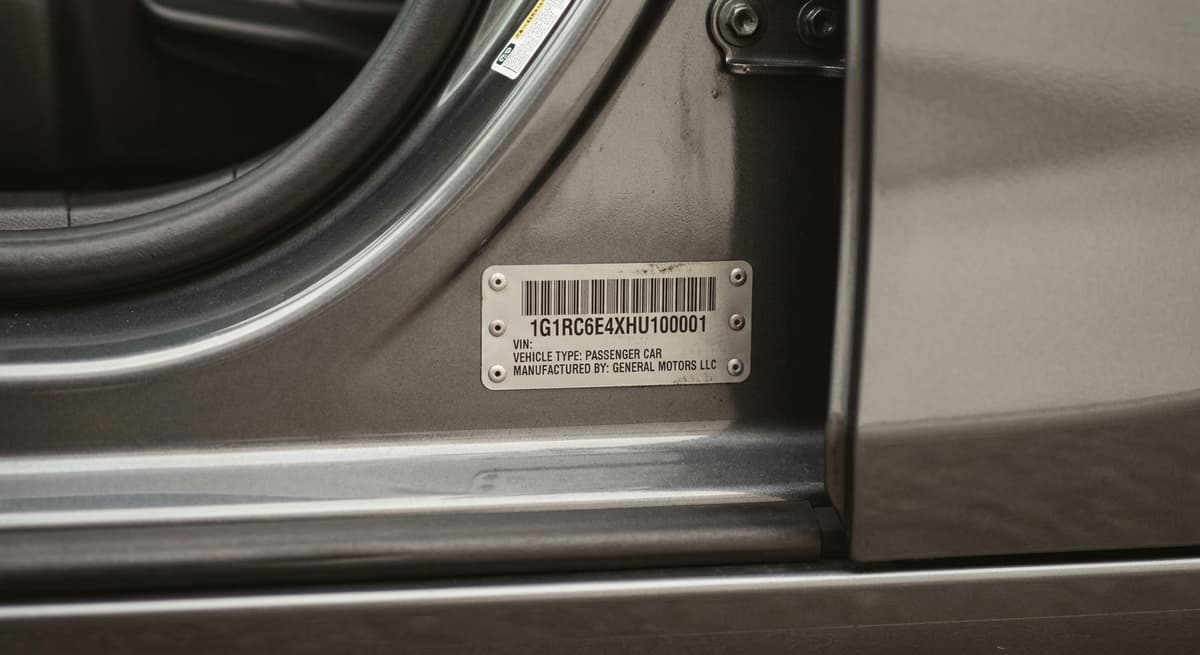
Covered Vehicle Types
- New passenger cars: Sedans, coupes, hatchbacks, and similar vehicles
- New trucks: Pickup trucks under 10,000 pounds gross vehicle weight
- New SUVs and crossovers: Sport utility vehicles for personal use
- New vans and minivans: Passenger and family vans
- Demonstrator vehicles: Demo vehicles with manufacturer warranty
- Leased vehicles: Vehicles leased for one year or more where lessee is responsible for repairs
- Recreational vehicles: Motor portion of RVs (living facilities have separate coverage)
- Electric vehicles: Fully covered, including battery and charging system issues
Vehicles Not Covered
- Vehicles run only on tracks
- Off-road vehicles
- Trucks over 10,000 pounds gross vehicle weight
- Motorcycles and mopeds
- Electric bicycles
- Living facilities of recreational vehicles (flooring, plumbing, roof AC, furnace, generator, etc.)
- Vehicles purchased primarily for resale
Lemon Law Rights Period
The "Lemon Law rights period" in Florida is defined as the period ending 24 months after the date of original delivery of a motor vehicle to a consumer. Problems must first be reported to the manufacturer or its authorized service agent within this 24-month window to qualify for lemon law protection.
Subsequent purchasers who receive a vehicle during the Lemon Law rights period also have coverage, provided the vehicle was purchased primarily for personal, family, or household purposes.
The Lemon Law Presumption
Florida law creates a rebuttable presumption under Fla. Stat. § 681.104 that a reasonable number of attempts have been made to conform a motor vehicle to the warranty. This presumption significantly helps consumers prove their lemon law cases.
When the Presumption Applies
| Condition | Requirement | Details |
|---|---|---|
| Repair Attempts (Same Problem) | 3 attempts + final attempt | Same nonconformity repaired at least 3 times, plus manufacturer's final attempt after proper written notice |
| Days Out of Service | 30 or more days (60 for RVs) | Cumulative total out of service for repair of one or more nonconformities |
| Timeframe | Within Lemon Law rights period | 24 months from date of original delivery |
Written Notice Requirements
Florida's lemon law includes specific notice requirements that consumers must follow.
After Three Repair Attempts
After three attempts have been made to repair the same nonconformity, the consumer must give written notification by registered or express mail to the manufacturer. This notification:
- Informs the manufacturer of the need to repair the nonconformity
- Allows the manufacturer a final attempt to cure the problem
- Must be sent before the presumption fully applies
The manufacturer then has 10 days from receipt to respond and give the consumer the opportunity to have the vehicle repaired at a reasonably accessible repair facility. After delivery to the designated facility, the manufacturer has 10 days (45 days for recreational vehicles) to conform the vehicle to warranty.
After 15 Days Out of Service
If the motor vehicle is out of service for a cumulative total of 15 or more days (exclusive of routine maintenance), the consumer must notify the manufacturer in writing by registered or express mail. This gives the manufacturer or its authorized service agent an opportunity to inspect or repair the vehicle.
What Qualifies as a Nonconformity?
A nonconformity is a defect or condition that substantially impairs the use, value, or safety of a motor vehicle. It does not include defects resulting from:
- An accident
- Abuse or neglect
- Modification or alteration by persons other than the manufacturer or its authorized service agent
Consumer Remedies: Refund vs. Replacement
When a manufacturer cannot conform a motor vehicle to warranty after a reasonable number of attempts, Fla. Stat. § 681.104(2) requires the manufacturer to provide relief within 40 days.
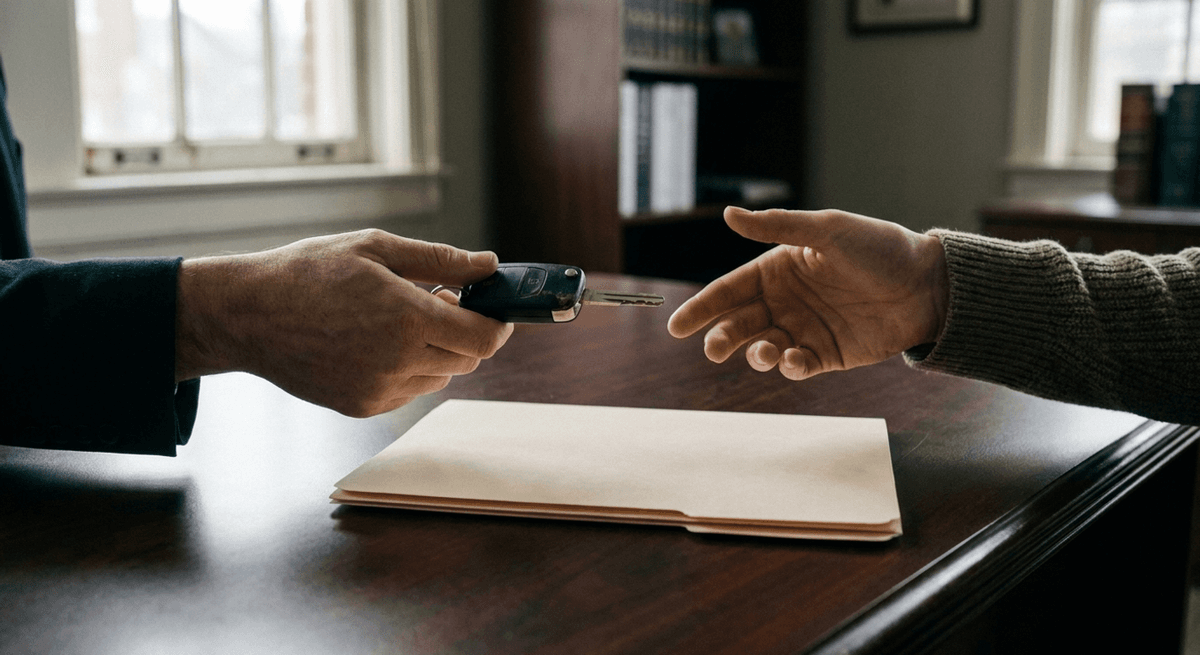
Consumer's Unconditional Right to Choose
Florida law gives consumers an unconditional right to choose a refund rather than a replacement motor vehicle. This choice belongs entirely to the consumer, and the manufacturer cannot override it.
Option 1: Vehicle Refund (Repurchase)
The manufacturer must repurchase the motor vehicle and refund:
- Full purchase price: The complete amount paid for the vehicle
- Collateral charges: Manufacturer-installed or agent-installed items, earned finance charges, sales taxes, and title charges
- Incidental charges: Reasonable costs directly caused by the nonconformity (towing, rental cars, etc.)
Reasonable Offset for Use: The manufacturer may deduct a reasonable offset calculated as:
Offset = (Miles at Settlement or Hearing x Base Selling Price) / 120,000
(For recreational vehicles, divide by 60,000)
For example, if your vehicle's base price was $36,000 and you drove 12,000 miles before the arbitration hearing, the offset would be $3,600.
Option 2: Replacement Vehicle
In exchange for receipt of a reasonable offset for use from the consumer, the manufacturer may provide a replacement motor vehicle that is:
- Identical or reasonably equivalent to the vehicle being replaced
- Acceptable to the consumer
- Within 105% of the manufacturer's suggested retail price of the original vehicle
The replacement must include all reasonably incurred collateral and incidental charges.
Distribution of Refunds
- Purchased vehicles: Refunds go to the consumer and lienholder, as their interests appear. For financed purchases, the manufacturer typically pays off the remaining loan balance to the lienholder and the consumer receives amounts already paid, minus the offset for use.
- Leased vehicles: The lessee receives the "lessee cost" (aggregate deposit and rental payments previously paid). The lessor receives the "lease price" less the lessee cost.
- No early termination penalties: Lessees cannot be charged penalties for early lease termination under lemon law claims.
Title Branding for Buyback Vehicles
When a manufacturer repurchases a vehicle under the lemon law, the title must be branded "Manufacturer's Buy Back." If the vehicle is later resold, the seller must clearly and conspicuously disclose the nature of the nonconformity to the prospective buyer. The manufacturer must also warrant to correct the nonconformity for a term of 1 year or 12,000 miles, whichever occurs first.
How to File a Lemon Law Claim in Florida
Following the proper procedure is essential for a successful Florida lemon law claim.
Step 1: Document All Problems and Repairs
- Keep every repair order and invoice
- Request fully itemized statements showing diagnoses, work performed, parts used, and dates
- Document test drives performed and their approximate length
- Note the odometer reading at each repair visit
- Keep records of all correspondence with dealer and manufacturer
- Save photos or videos of the defect when possible
Step 2: Ensure Proper Notice is Given
After three repair attempts for the same problem, send written notice to the manufacturer by registered or express mail. If your vehicle has been out of service for 15+ cumulative days, send the required written notice.
Step 3: Allow Final Repair Attempt
Give the manufacturer the opportunity for a final repair attempt. They have 10 days to respond to your notice and 10 days after you deliver the vehicle to complete repairs (45 days for RVs).
Step 4: Submit the Dispute to Arbitration
Arbitration is not an alternative to court in Florida. It comes first. Under Fla. Stat. § 681.1095(4), before filing a civil action on a matter subject to s. 681.104, the consumer must first submit the dispute to the department, and to the board if the dispute is deemed eligible for arbitration. The order of steps is:
- Use a manufacturer's state-certified dispute settlement procedure (required first if the manufacturer has one)
- Submit the dispute to the Department of Legal Affairs, which screens the request for eligibility under Fla. Stat. § 681.109(5) and refers eligible disputes to the Florida New Motor Vehicle Arbitration Board (free state program)
- Only after completing those steps may you file a civil action in Florida courts under Fla. Stat. § 681.112
Filing suit before submitting the dispute to the department and the board does not satisfy this prerequisite.
Critical Filing Deadlines
You must file your arbitration claim within 60 days after the expiration of the Lemon Law rights period (24 months from delivery). If you use a manufacturer-sponsored program first, you must file within 30 days after the final action of that program, or within 60 days after the rights period expires, whichever is later.
For civil court actions, the lawsuit must be filed within 1 year after the expiration of the Lemon Law rights period, or within 1 year after the final action of any dispute settlement procedure, whichever is later. Remember that the dispute must go to the department and, if eligible, the Arbitration Board before that action is filed.
If the Arbitration Board issues a decision, either party has 30 days after receiving it to petition the circuit court. A decision that is not appealed within that window is final (Fla. Stat. § 681.1095(10)).
Florida New Motor Vehicle Arbitration Board
The Florida New Motor Vehicle Arbitration Board, administered by the Department of Legal Affairs (Attorney General's Office), provides free arbitration services to Florida consumers. Since its inception, the program has recovered more than $500 million in relief for Florida consumers.
Key Features of the State Arbitration Program
- Free to consumers: No cost to file or participate
- Manufacturer must comply: Unless the decision is appealed, the manufacturer must comply with its terms within 40 days after receiving it (Fla. Stat. § 681.1095(9))
- 30 days to appeal: A decision is final unless appealed by either party. The consumer or the manufacturer must petition the circuit court within 30 days after receipt of the decision, and that appeal is a trial de novo (Fla. Stat. § 681.1095(10) and (12)). Rejecting a decision without filing that petition in time forfeits the appeal, and the manufacturer may appeal whether or not the consumer accepts.
- Set timeframes: The board must hear the dispute within 40 days and render a decision within 60 days after the date the arbitration request is approved, not from the date it is submitted (Fla. Stat. § 681.1095(6))
- Statewide access: Hearings are conducted in 10 regional locations across Florida
Regional Hearing Locations
The Arbitration Board conducts hearings in the following cities or nearby vicinities:
| Region | City |
|---|---|
| Northeast | Jacksonville |
| Central | Orlando |
| West Central | Tampa |
| West Central | St. Petersburg |
| Southeast | Fort Lauderdale |
| Southeast | Miami |
| Southeast | West Palm Beach |
| Southwest | Fort Myers |
| North | Tallahassee |
| Northwest | Pensacola |
The board is administered by the Attorney General's offices in Tallahassee, Tampa, and Fort Lauderdale.
Eligibility for State Arbitration
Under Fla. Stat. § 681.109, to be eligible for the state arbitration program, consumers must:
- Have a vehicle that meets the definition of "motor vehicle" under the lemon law
- Have reported the nonconformity during the Lemon Law rights period
- Have provided required written notices to the manufacturer
- First use any manufacturer's state-certified dispute settlement procedure, if the manufacturer has one
- File within 60 days after the expiration of the Lemon Law rights period (or 30 days after a manufacturer program's final action)
State-Certified Manufacturer Dispute Settlement Programs
Under Fla. Stat. § 681.108, if a manufacturer has a dispute settlement procedure certified by the Department of Legal Affairs as substantially complying with FTC regulations (16 C.F.R. Part 703), consumers must first use that procedure before accessing the state arbitration board.
The following state-certified programs are currently active in Florida (certifications provisionally extended through October 31, 2026):
BBB Auto Line
Covers vehicles manufactured by:
- Bentley Motor, Inc.
- Ford Motor Co.
- General Motors LLC
- Hyundai Motor America (including Genesis)
- Kia Motors America, Inc.
- Mazda Motor of America, Inc.
- Nissan Motor Corporation U.S.A. (including Infiniti)
- Volkswagen/Audi of America, Inc.
National Center for Dispute Settlement (NCDS)
Covers vehicles manufactured by:
- Toyota Motor Sales USA, Inc. (including Lexus)
- American Honda Motor Company (including Acura) (vehicles purchased on or after November 1, 2022)
- Tesla Motors, Inc. (vehicles purchased on or after November 1, 2022)
CAP Motors
Covers vehicles manufactured by:
- Porsche Cars North America, Inc.
If a manufacturer-sponsored program does not issue a decision within 40 days, or if you are not satisfied with the decision, you become eligible to file with the Florida New Motor Vehicle Arbitration Board.
Federal Overlay: Magnuson-Moss Warranty Act
Florida consumers also have rights under the federal Magnuson-Moss Warranty Act, 15 U.S.C. 2301 et seq. This federal law applies to any consumer product sold with a written warranty and sets minimum standards for how manufacturers must honor their warranties. When a manufacturer fails to honor an express or implied warranty on a motor vehicle, a consumer may bring a federal civil action to recover damages and reasonable attorney fees. Magnuson-Moss serves as a backstop: if a vehicle falls outside Florida's lemon law (for example, a used car beyond the rights period), federal warranty claims may still be available depending on the warranty's terms.
Attorney Fees and Civil Court Actions
Under Fla. Stat. § 681.112, a consumer may file a civil action to recover damages caused by a violation of Chapter 681. This is not a first step: Fla. Stat. § 681.1095(4) requires the consumer to submit the dispute to the department, and to the Arbitration Board if the dispute is deemed eligible, before filing that action.
What a Prevailing Consumer Can Recover
If a consumer wins in court, the court must award:
- The amount of any pecuniary loss
- Litigation costs
- Reasonable attorney fees
- Appropriate equitable relief
This fee-shifting provision is a significant consumer protection. It allows consumers to hire an attorney without paying out of pocket, because the manufacturer must cover attorney fees if the consumer prevails.
Statute of Limitations for Civil Actions
A civil action under Chapter 681 must be filed within 1 year after the expiration of the Lemon Law rights period. If the consumer first used an informal dispute settlement procedure or submitted the dispute to the Arbitration Board, the lawsuit must be filed within 1 year after the final action of that process.
Manufacturer Defenses
Under Fla. Stat. § 681.104(4), manufacturers may raise certain affirmative defenses.
Valid Affirmative Defenses
| Defense | Manufacturer's Argument | Consumer's Counter |
|---|---|---|
| Defect not substantial | Nonconformity does not substantially impair use, value, or safety | Document specific impacts on daily use, safety concerns, or value reduction |
| Accident, abuse, or neglect | Nonconformity resulted from accident, abuse, or neglect | Provide evidence of proper care and maintenance |
| Unauthorized modifications | Nonconformity resulted from unauthorized modifications or alterations | Show defect predated modifications or is unrelated |
| Bad faith claim | Consumer's claim was not filed in good faith | Document genuine attempts to resolve the issue |
Bad Faith Claims Penalty
Under Fla. Stat. § 681.106, if a consumer's claim is found by the court to have been filed in bad faith, solely for harassment, or in complete absence of a justiciable issue, the consumer may be liable for all costs and reasonable attorney fees incurred by the manufacturer.
Recreational Vehicle Protections
Florida provides specific protections for recreational vehicle (RV) owners under its lemon law, with some modified requirements.
RV Coverage
- Motor portion: The chassis, engine, and drivetrain components are covered under the general lemon law
- Living facilities: These are specifically excluded from the motor vehicle definition but may have separate warranty protections
Modified Requirements for RVs
- Final repair attempt: Manufacturer has 45 days (instead of 10) to complete repairs after vehicle delivery
- Out of service: Presumption applies after 60 days out of service (instead of 30)
- Usage offset: Calculated by dividing by 60,000 miles (instead of 120,000)
- Replacement value: Retail price of replacement cannot exceed 105% of purchase price
RV Mediation and Arbitration Program
Florida has established a separate RV Mediation and Arbitration Program under Fla. Stat. § 681.1096 to handle disputes involving recreational vehicles.
Electric Vehicle Considerations
Electric vehicles are fully covered under Florida's lemon law. EV owners should be aware of issues specific to electric powertrains and systems.
Common EV Defects That May Qualify
- Battery capacity significantly below specifications
- Charging system failures
- Range materially below manufacturer claims
- Electric motor malfunctions
- Software defects affecting vehicle operation
- Thermal management problems
- Regenerative braking issues
- Display or infotainment system failures affecting critical functions
Documentation for EV Claims
When pursuing a lemon law claim for an EV, maintain records of:
- Charging attempts and failures
- Range performance data
- Software update history
- Error messages and diagnostic codes
- Battery health reports if available
Key Deadlines and Statute of Limitations
Understanding timing is critical for Florida lemon law claims.
Key Deadlines
| Deadline | Timeframe | Details |
|---|---|---|
| Lemon Law rights period | 24 months from delivery | Problems must first be reported within this period |
| Written notice (3 repairs) | After 3rd repair attempt | Must send registered or express mail to manufacturer |
| Written notice (15 days) | After 15 cumulative days out of service | Must send registered or express mail to manufacturer |
| Manufacturer response to notice | 10 days from receipt | Must offer a reasonably accessible repair facility |
| Manufacturer final repair | 10 days (45 for RVs) | After vehicle is delivered to designated facility |
| Manufacturer remedy | 40 days | Must provide refund or replacement after failed final attempt |
| Arbitration filing | 60 days after rights period expires | Or 30 days after manufacturer program's final action, whichever is later |
| Board hearing | 40 days after the arbitration request is approved | The department screens the request for eligibility before approval |
| Board decision | 60 days after the arbitration request is approved | Fla. Stat. 681.1095(6) |
| Manufacturer compliance with decision | 40 days after receipt of the decision | Unless the decision is appealed |
| Appeal of board decision | 30 days after receipt of the decision | Petition to circuit court by either party; trial de novo |
| Civil court action | 1 year after rights period expires | Or 1 year after final action of dispute settlement procedure; arbitration must come first |
Repairs After Rights Period
Under Fla. Stat. § 681.103(1), if a consumer first reports a problem during the Lemon Law rights period, the manufacturer must make necessary repairs even if those repairs occur after the rights period expires. However, this does not extend the rights period or expand the time to file a claim.
Lemon Law Hotline and Resources
The Florida Attorney General's Office provides free resources for consumers navigating the lemon law process.
- Lemon Law Hotline: 1-800-321-5366 (within Florida) or 850-414-3500 (outside the state)
- Online Information: myfloridalegal.com/lemon-law
- Arbitration Forms: Available by calling the hotline or visiting the Attorney General's forms page
- Attorney General Fraud Hotline: 1-866-966-7226 (within Florida) or 850-414-3990
More Florida Laws
Frequently Asked Questions
How many repair attempts are required before my vehicle qualifies as a lemon in Florida?
Florida law presumes a vehicle is a lemon after three repair attempts for the same nonconformity, plus a final attempt by the manufacturer if you provide proper written notice by registered or express mail. Alternatively, if your vehicle has been out of service for 30 or more cumulative days (60 for RVs) for repairs, it may qualify. These conditions must occur within the 24-month Lemon Law rights period.
Does Florida's lemon law cover used vehicles?
Florida's lemon law primarily covers new motor vehicles. However, subsequent purchasers who receive a vehicle during the Lemon Law rights period (24 months from original delivery) also have coverage, provided the vehicle was purchased primarily for personal, family, or household purposes. Used vehicles outside this scenario may have other warranty remedies but are not covered by the lemon law.
Do I have to use the manufacturer's arbitration program first?
If the manufacturer has a dispute settlement procedure certified by Florida's Department of Legal Affairs, you must first use that procedure before filing with the state arbitration board. Major programs include BBB Auto Line (covering Ford, GM, Hyundai, Kia, Nissan, Mazda, VW/Audi, and Bentley) and NCDS (covering Toyota/Lexus, Honda/Acura, and Tesla for vehicles purchased after November 1, 2022). If the program does not decide within 40 days, or you reject the decision, you can then file with the state board.
How is the reasonable offset for use calculated in Florida?
The offset is calculated by multiplying the number of miles driven (at settlement or arbitration hearing) by the base selling price, then dividing by 120,000. For recreational vehicles, divide by 60,000. For example, if your vehicle's base price was $36,000 and you drove 12,000 miles, the offset would be $3,600.
What is the deadline to file a Florida lemon law claim?
You must file your arbitration claim within 60 days after the expiration of the Lemon Law rights period (24 months from delivery). If you use a manufacturer-sponsored program first, you must file with the state board within 30 days after that program's final action, or 60 days after the rights period expires, whichever is later. For civil court actions, you have 1 year after the rights period or 1 year after the final action of any dispute process. Before suing, you must first submit the dispute to the department and, if it is deemed eligible, to the Arbitration Board. If the board issues a decision, either side has 30 days after receiving it to appeal to the circuit court.
Will I have to pay attorney fees if I file a lemon law lawsuit?
If you prevail in a civil action under Fla. Stat. § 681.112, the court must award you reasonable attorney fees, litigation costs, pecuniary loss, and equitable relief. This means the manufacturer pays your attorney fees if you win. However, if a court finds your claim was filed in bad faith or without any justiciable issue, you could be liable for the manufacturer's costs and attorney fees.
What happens to a vehicle that is bought back under the lemon law?
When a manufacturer repurchases a vehicle under Florida's lemon law, the title is branded as a Manufacturer's Buy Back. If the vehicle is resold, the seller must clearly and conspicuously disclose the nature of the previous nonconformity to the buyer. The manufacturer must also warrant to correct the nonconformity for 1 year or 12,000 miles, whichever comes first.
Updates
Corrected the Florida arbitration procedure: state arbitration must be completed before a lemon law lawsuit, the board hears a dispute within 40 days and decides within 60 days after the request is approved, and either party has 30 days to appeal a board decision to circuit court.
Independently fact-checked against the cited primary sources; governing law re-checked for recent changes
Governing law re-checked for recent changes
Reviewed and approved by an editor
The Law Behind This Article
This article rests on the statutory provisions below, held in our own legal record and retrieved from the official source. Tap a section to read the operative text.
Florida Statutes
§ 681.104Nonconformity of motor vehicles.In force
(1)(a) After three attempts have been made to repair the same nonconformity, the consumer shall give written notification, by registered or express mail to the manufacturer, of the need to repair the nonconformity to allow the manufacturer a final attempt to cure the nonconformity. The manufacturer shall have 10 days, commencing upon receipt of such notification, to respond and give the consumer the opportunity to have the motor vehicle repaired at a reasonably accessible repair facility within a reasonable time after the consumer’s receipt of the response. The manufacturer shall have 10 days, except in the case of a recreational vehicle, in which event the manufacturer shall have 45 days, commencing upon the delivery of the motor vehicle to the designated repair facility by the consumer, to conform the motor vehicle to the warranty. If the manufacturer fails to respond to the consumer and give the consumer the opportunity to have the motor vehicle repaired at a reasonably accessible repair facility or perform the repairs within the time periods prescribed in this subsection, the requirement that the manufacturer be given a final attempt to cure the nonconformity does not apply.
Official text (excerpt) · last checked 2026-09-08 · Read the full text in our law library · Verify at leg.state.fl.us
Cited in 3 court opinions in our collectionLatest citing opinion in our collection: 2024
Opinions citing this section in our collection:
- BMW of North America, Inc. v. Singh (District Court of Appeal of Florida 1995, 664 So. 2d 266)“…problems with the vehicle. On October 29, 1992, pursuant to section 681.104, Florida Statutes, Singh sent BMW a notice of continuing…”
- Joyce v. Forest River, Inc. (District Court, S.D. Florida 2024)“…nonconformity after a reasonable number of attempts[.]” Fla. Stat. Ann. § 681.104 (West) (emphasis added).…”
- Kelly v. Lee County RV Sales Company (District Court, M.D. Florida 2019)“…ations to the record and she cites to Florida’s Lemon-Law, Fla. Stat. § 681.104, to argue that “[a] consumer has a righ…”
Identified automatically from the court opinions citing this section — not a ranking of which case controls.
§ 681.103Duty of manufacturer to conform a motor vehicle to the warranty.In force
(1) If a motor vehicle does not conform to the warranty and the consumer first reports the problem to the manufacturer or its authorized service agent during the Lemon Law rights period, the manufacturer or its authorized service agent shall make such repairs as are necessary to conform the vehicle to the warranty, irrespective of whether such repairs are made after the expiration of the Lemon Law rights period. Such repairs shall be at no cost to the consumer if made during the term of the manufacturer’s written express warranty. Nothing in this paragraph shall be construed to grant an extension of the Lemon Law rights period or to expand the time within which a consumer must file a claim under this chapter. (2) Each manufacturer shall provide to its consumers conspicuous notice of the address and phone number for its zone, district, or regional office for this state in the written warranty or owner’s manual. By January 1 of each year, each manufacturer shall forward to the department a copy of the owner’s manual and any written warranty for each make and model of motor vehicle that it sells in this state.
Official text (excerpt) · last checked 2026-07-28 · Read the full text in our law library · Verify at leg.state.fl.us
§ 681.112Consumer remedies.In force
(1) A consumer may file an action to recover damages caused by a violation of this chapter. The court shall award a consumer who prevails in such action the amount of any pecuniary loss, litigation costs, reasonable attorney’s fees, and appropriate equitable relief. (2) An action brought under this chapter must be commenced within 1 year after the expiration of the Lemon Law rights period, or, if a consumer resorts to an informal dispute-settlement procedure or submits a dispute to the department or board, within 1 year after the final action of the procedure, department, or board. (3) This chapter does not prohibit a consumer from pursuing other rights or remedies under any other law.
Official text (excerpt) · last checked 2026-07-28 · Read the full text in our law library · Verify at leg.state.fl.us
Cited in 7 court opinions in our collectionLatest citing opinion in our collection: 2011
Opinions citing this section in our collection:
- King v. King Motor Co. of Fort Lauderdale (District Court of Appeal of Florida 2001, 780 So. 2d 937)“…in order to bring a circuit court action for damages under section 681.112, Florida Statutes (2000), Florida's Lemon Law, and 15 U.…”
- General Motors LLC v. Bowie (District Court of Appeal of Florida 2011, 58 So. 3d 934)“…owner then filed a complaint in circuit court, pursuant to section 681.112, Florida Statutes (2006), seeking recovery for pecuniary…”
- Hamilton v. Ford Motor Co. (District Court of Appeal of Florida 2006, 936 So. 2d 1203)“…ng claims under the Motor Vehicle Warranty Enforcement Act, section 681.112, Florida Statutes (2002) [Florida Lemon Law Act] and the…”
Identified automatically from the court opinions citing this section — not a ranking of which case controls.
§ 681.102Definitions.In force
As used in this chapter, the term:(1) “Authorized service agent” means any person, including a franchised motor vehicle dealer, who is authorized by the manufacturer to service motor vehicles. In the case of a recreational vehicle when there are two or more manufacturers, an authorized service agent for any individual manufacturer is any person, including a franchised motor vehicle dealer, who is authorized to service the items warranted by that manufacturer. The term does not include a rental car company authorized to repair rental vehicles. (2) “Board” means the Florida New Motor Vehicle Arbitration Board. (3) “Collateral charges” means those additional charges to a consumer wholly incurred as a result of the acquisition of the motor vehicle. For the purposes of this chapter, collateral charges include, but are not limited to, manufacturer-installed or agent-installed items or service charges, earned finance charges, sales taxes, and title charges.
Official text (excerpt) · last checked 2026-07-28 · Read the full text in our law library · Verify at leg.state.fl.us
Cited in 5 court opinions in our collectionLatest citing opinion in our collection: 2024
Opinions citing this section in our collection:
- Mason v. Porsche Cars of North America (District Court of Appeal of Florida 1997, 688 So. 2d 361)“…therefore constituted nonconformities within the meaning of section 681.102, Florida Statutes (1991). Determining the vehicle to be a…”
- Burns v. DaimlerChrysler Corp. (District Court of Appeal of Florida 2005, 914 So. 2d 451)“…etermined that the Jeep was a "Lemon" within the meaning of section 681.102, Florida Statutes. The Board issued its final order on Ma…”
- Results Real Estate, Inc. v. Lazy Days RV Center, Inc. (District Court of Appeal of Florida 1987, 12 Fla. L. Weekly 1010)“…the trial court by first examining the following portion of section 681.102, Florida Statutes (1985): 681.102(3) "Consumer" means t…”
Identified automatically from the court opinions citing this section — not a ranking of which case controls.
§ 681.108Dispute-settlement procedures.In force
(1) If a manufacturer has established a procedure that the department has certified as substantially complying with the provisions of 16 C.F.R. part 703, in effect October 1, 1983, as amended, and with the provisions of this chapter and the rules adopted under this chapter, and has informed the consumer how and where to file a claim with such procedure pursuant to s. 681.103(3), the provisions of s. 681.104(2) apply to the consumer only if the consumer has first resorted to such procedure. The decisionmakers for a certified procedure shall, in rendering decisions, take into account all legal and equitable factors germane to a fair and just decision, including, but not limited to, the warranty; the rights and remedies conferred under 16 C.F.R. part 703, in effect October 1, 1983, as amended; the provisions of this chapter; and any other equitable considerations appropriate under the circumstances. Decisionmakers and staff for a procedure shall be trained in the provisions of this chapter and in 16 C.F.R. part 703, in effect October 1, 1983, as amended.
Official text (excerpt) · last checked 2026-07-28 · Read the full text in our law library · Verify at leg.state.fl.us
Cited in 1 court opinions in our collectionLatest citing opinion in our collection: 1998
Opinions citing this section in our collection:
- Ford Motor Co. v. Fowler (District Court of Appeal of Florida 1998, 705 So. 2d 662)“…art in the dispute settlement procedure process outlined in section 681.108, Florida Statutes. See Wylie v. Investment Management…”
Identified automatically from the court opinions citing this section — not a ranking of which case controls.
§ 681.109Florida New Motor Vehicle Arbitration Board; dispute eligibility.In force
(1) If a manufacturer has a certified procedure, a consumer claim arising during the Lemon Law rights period must be filed with the certified procedure no later than 60 days after the expiration of the Lemon Law rights period. If a decision is not rendered by the certified procedure within 40 days after filing, the consumer may apply to the department to have the dispute removed to the board for arbitration. (2) If a manufacturer has a certified procedure, a consumer claim arising during the Lemon Law rights period must be filed with the certified procedure no later than 60 days after the expiration of the Lemon Law rights period. If a consumer is not satisfied with the decision or the manufacturer’s compliance therewith, the consumer may apply to the department to have the dispute submitted to the board for arbitration. A manufacturer may not seek review of a decision made under its procedure. (3) If a manufacturer does not have a certified procedure or if the certified procedure does not have jurisdiction to resolve the dispute, a consumer may apply directly to the department to have the dispute submitted to the board for arbitration.
Official text (excerpt) · last checked 2026-07-28 · Read the full text in our law library · Verify at leg.state.fl.us
Cited in 2 court opinions in our collectionLatest citing opinion in our collection: 2026
Opinions citing this section in our collection:
- Holzhauer-Mosher v. Ford Motor Co. (District Court of Appeal of Florida 2000, 772 So. 2d 7)“…nformity in the Mustang. The problem continued. Pursuant to section 681.109, Florida Statutes (1997), Holzhauer-Mosher *9 requested…”
- Thielen (District Court, S.D. Florida 2026)“…UTO LINE decision, Plaintiff’s exclusive remedy pursuant to Fla. Stat. § 681.109 was to request arbitration before the…”
Identified automatically from the court opinions citing this section — not a ranking of which case controls.
§ 681.1096RV Mediation and Arbitration Program; creation and qualifications.In force
(1) This section and s. 681.1097 shall apply to disputes determined eligible under this chapter involving recreational vehicles acquired on or after October 1, 1997. (2) Each manufacturer of a recreational vehicle involved in a dispute that is determined eligible under this chapter, including chassis and component manufacturers that separately warrant the chassis and components and that otherwise meet the definition of manufacturer set forth in s. 681.102(13), shall participate in a mediation and arbitration program that is deemed qualified by the department. (3) In order to be deemed qualified by the department, the mediation and arbitration program must, at a minimum, meet the following requirements:(a) The program must be administered by an administrator and staff that are sufficiently insulated from the manufacturer to ensure impartial mediation and arbitration services and to ensure that a manufacturer does not make decisions as to whether a consumer’s dispute proceeds to mediation or arbitration. (b) Program administration fees must be timely paid by the manufacturer, and no such fees shall be charged to a consumer.
Official text (excerpt) · last checked 2026-07-28 · Read the full text in our law library · Verify at leg.state.fl.us
§ 681.106Bad faith claims.In force
Any claim by a consumer which is found by the court to have been filed in bad faith or solely for the purpose of harassment, or in complete absence of a justiciable issue of either law or fact raised by the consumer, shall result in the consumer being liable for all costs and reasonable attorney’s fees incurred by the manufacturer, or its agent, as a direct result of the bad faith claim.
Official text (excerpt) · last checked 2026-07-28 · Read the full text in our law library · Verify at leg.state.fl.us
§ 681.1095Florida New Motor Vehicle Arbitration Board; creation and function.In force
(1) There is established within the department, the Florida New Motor Vehicle Arbitration Board, consisting of members appointed by the Attorney General for an initial term of 1 year. Board members may be reappointed for additional terms of 2 years. Each board member is accountable to the Attorney General for the performance of the member’s duties and is exempt from civil liability for any act or omission that occurs while acting in the member’s official capacity. The department shall defend a member in any action against the member or the board which arises from any such act or omission. The Attorney General may establish as many regions of the board as necessary to carry out the provisions of this chapter. (2) The board shall hear cases in various locations throughout the state so that any consumer whose dispute is approved for arbitration by the department may attend an arbitration hearing at a reasonably convenient location and present a dispute orally. Hearings shall be conducted by panels of three board members assigned by the department. A majority vote of the three-member board panel shall be required to render a decision.
Official text (excerpt) · last checked 2026-07-28 · Read the full text in our law library · Verify at leg.state.fl.us
Cited in 11 court opinions in our collectionLatest citing opinion in our collection: 2026
Opinions citing this section in our collection:
- Mason v. Porsche Cars of North America (District Court of Appeal of Florida 1993, 621 So. 2d 719)“…ge entered an order granting a trial de novo. He found that section 681.1095, Florida Statutes (1991) is ambiguous, but that the clear…”
- Chrysler Corp. v. Pitsirelos (Supreme Court of Florida 1998, 23 Fla. L. Weekly Supp. 464)“…e. The defect was not repaired, and Pitsirelos, pursuant to section 681.1095, Florida Statutes (1989), applied for arbitration proceed…”
- King v. King Motor Co. of Fort Lauderdale (District Court of Appeal of Florida 2001, 780 So. 2d 937)“…Florida New Motor Vehicle Arbitration Boards created under section 681.1095, Florida Statutes, the circuit judge dismissed the Lemon…”
Identified automatically from the court opinions citing this section — not a ranking of which case controls.
United States Code Title 15
§ 2301DefinitionsIn forcecited in 41 of our articles
For the purposes of this chapter: The term “consumer product” means any tangible personal property which is distributed in commerce and which is normally used for personal, family, or household purposes (including any such property intended to be attached to or installed in any real property without regard to whether it is so attached or installed). The term “Commission” means the Federal Trade Commission. The term “consumer” means a buyer (other than for purposes of resale) of any consumer product, any person to whom such product is transferred during the duration of an implied or written warranty (or service contract) applicable to the product, and any other person who is entitled by the terms of such warranty (or service contract) or under applicable State law to enforce against the warrantor (or service contractor) the obligations of the warranty (or service contract). The term “supplier” means any person engaged in the business of making a consumer product directly or indirectly available to consumers. The term “warrantor” means any supplier or other person who gives or offers to give a written warranty or who is or may be obligated under an implied warranty.
Official text (excerpt) · last checked 2026-07-28 · Read the full text in our law library · Verify at uscode.house.gov
Cited in 1,671 court opinions in our collectionLatest citing opinion in our collection: 2026
In the courts (editorial summary, independently checked):Walsh v. Ford Motor Company (1986) held that except where Magnuson-Moss expressly prescribes a rule, the Act applies state written and implied warranty law, citing Section 2301(7)'s definition of implied warranty as one arising under state law. Birdsong v. Apple (2009) dismissed Act claims once the state warranty claims failed.
Opinions citing this section in our collection:
- John F. "Jack" Walsh v. Ford Motor Company (Court of Appeals for the D.C. Circuit 1986, 807 F.2d 1000)✓Ford owners sought nationwide classes over transmissions that slipped from park into reverse; reading Section 2301(7) and (6), the D.C. Circuit held Magnuson-Moss applies state warranty law except where the Act expressly prescribes a rule, and vacated class certification.
- Birdsong v. Apple, Inc. (Court of Appeals for the Ninth Circuit 2009, 590 F.3d 955)✓iPod buyers alleged the player risked hearing loss; because Section 2301(7) ties implied warranty to state law, the Ninth Circuit treated the Magnuson-Moss claim as standing or falling with the California warranty claims and affirmed dismissal once those failed.
- Robert E. Kelly Virginia L. Kelly v. Fleetwood Enterprises, Inc. (Court of Appeals for the Ninth Circuit 2004, 377 F.3d 1034)“…gnizable under the Magnuson-Moss Warranty Act (the “Act”), 15 U.S.C. § 2301 et seq. This consumer dis…”
Identified automatically from the court opinions citing this section — not a ranking of which case controls.
Also relied on in: Washington Lemon Law (2026): How to Qualify & Get a Refund, California Lemon Law (2026): How to Qualify & Get a Refund, Delaware Lemon Law (2026): How to Qualify & Get a Refund
Search our full record of US law — 2.1 million sections, every state + federal →
Sources and References
- Florida Statutes Chapter 681: Motor Vehicle Sales Warranties (2025)(leg.state.fl.us).gov
- Florida Attorney General: Lemon Law(myfloridalegal.com).gov
- How The Florida Lemon Law Works - Florida Attorney General(myfloridalegal.com).gov
- State-Certified, Manufacturer-Sponsored Programs - Florida Attorney General(myfloridalegal.com).gov
- Lemon Law Remedy Calculation Guideline - Florida Attorney General(myfloridalegal.com).gov
- Hearings Before the Florida New Motor Vehicle Arbitration Board(myfloridalegal.com).gov
- Florida Dept. of Revenue - Motor Vehicle Warranty Fee (Lemon Law Fee)(floridarevenue.com).gov
- The Florida Bar: Motor Vehicle Lemon Law(floridabar.org)
- Florida DHSMV: Buying from a Licensed Dealer(flhsmv.gov).gov
- Fla. Stat. 681.1095: Florida New Motor Vehicle Arbitration Board; dispute eligibility, hearing and decision deadlines, appeals(leg.state.fl.us)
- Fla. Stat. 681.109: Florida New Motor Vehicle Arbitration Board; department screening of arbitration requests and filing deadlines(leg.state.fl.us)
- Fla. Stat. 681.112: Consumer remedies, attorney fees, and the 1-year limitation period(leg.state.fl.us)