
Delaware
Delaware Car Seat Laws (2026): Stages, Airbag Rule & Fines
Independently fact-checked against primary sources (last audited September 17, 2026). · Reviewed by the RecordingLaw editorial team. · Law checked current as of August 20, 2026. · 2 primary sources cited on this page. How we verify our legal content
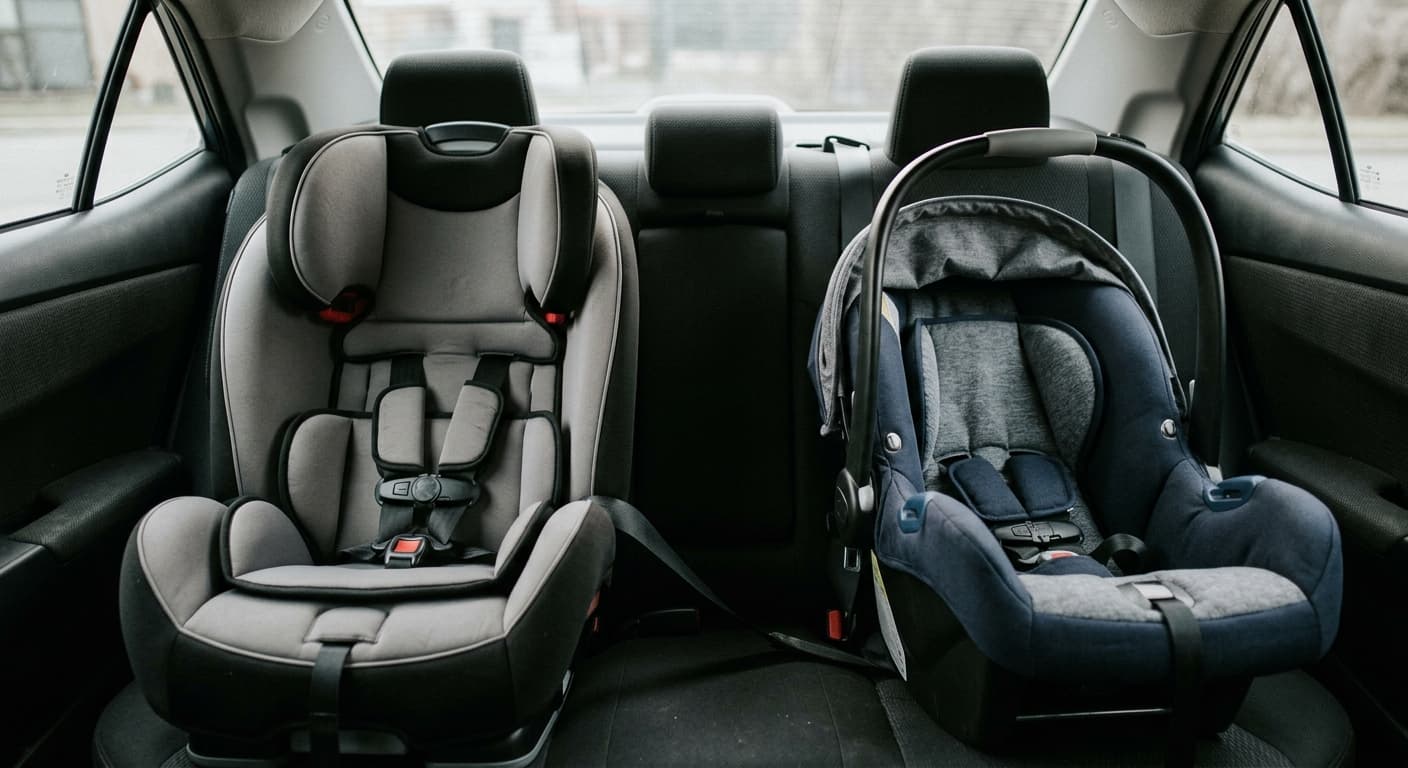
Delaware runs a four-stage child restraint law under 21 Del. C. § 4803: rear-facing until age 2 and 30 pounds, a forward-facing harness until age 4 and 40 pounds, a booster until the seat's own upper limit, then a seat belt until 16. A second or subsequent violation carries a $25 fine; the statute doesn't set a dollar fine for a first offense. This page reflects the statute's text as of September 2026.
Jurisdiction scope: This article covers car seat and child-restraint law in the state of Delaware only. It does not address any other state. For other states, see the car seat laws hub.
| Stage | Who | Rule | Statute |
|---|---|---|---|
| Rear-facing | Under 2 years old AND under 30 pounds | Rear-facing restraint with a 5-point harness; ends when the child turns 2 or reaches 30 pounds, whichever comes first | 21 Del. C. § 4803(a)(2) |
| Forward-facing harness | Under 4 years old AND under 40 pounds | Restraint with a 5-point harness, rear- or forward-facing until the seat's own upper limits; ends when the child turns 4 or reaches 40 pounds, whichever comes first | 21 Del. C. § 4803(a)(3) |
| Booster | Until the booster's own upper height/weight limit | Belt-positioning booster seat, per the seat manufacturer's guidelines, not a fixed statutory age or weight | 21 Del. C. § 4803(a)(4) |
| Seat belt | Child who has outgrown a booster and is under 16 | Properly secured seat belt, in every seating position | 21 Del. C. § 4803(a)(5) |
Rear-facing: the first stage
Delaware's law is explicit that both conditions have to be true at once: a child restraint has to be rear-facing, with a 5-point harness, for a child who is under 2 years old and under 30 pounds. The rule stops applying as soon as either threshold is crossed, the second birthday or the 30-pound mark, whichever comes first, and the child moves to the next stage below.
Forward-facing harness stage
The next stage, section 4803(a)(3), again pairs two conditions: a 5-point-harness restraint is required for a child under 4 years old and under 40 pounds. The statute's own text allows this restraint to be "either rear-facing or forward facing until they reach the upper height or weight limits of the restraint," so a family using a convertible seat can keep a child rear-facing well past age 2 if the seat allows it; the law simply doesn't require forward-facing at any particular point. The harnessed-restraint requirement itself ends once the child turns 4 or reaches 40 pounds, whichever comes first.
Booster stage: no fixed age or weight
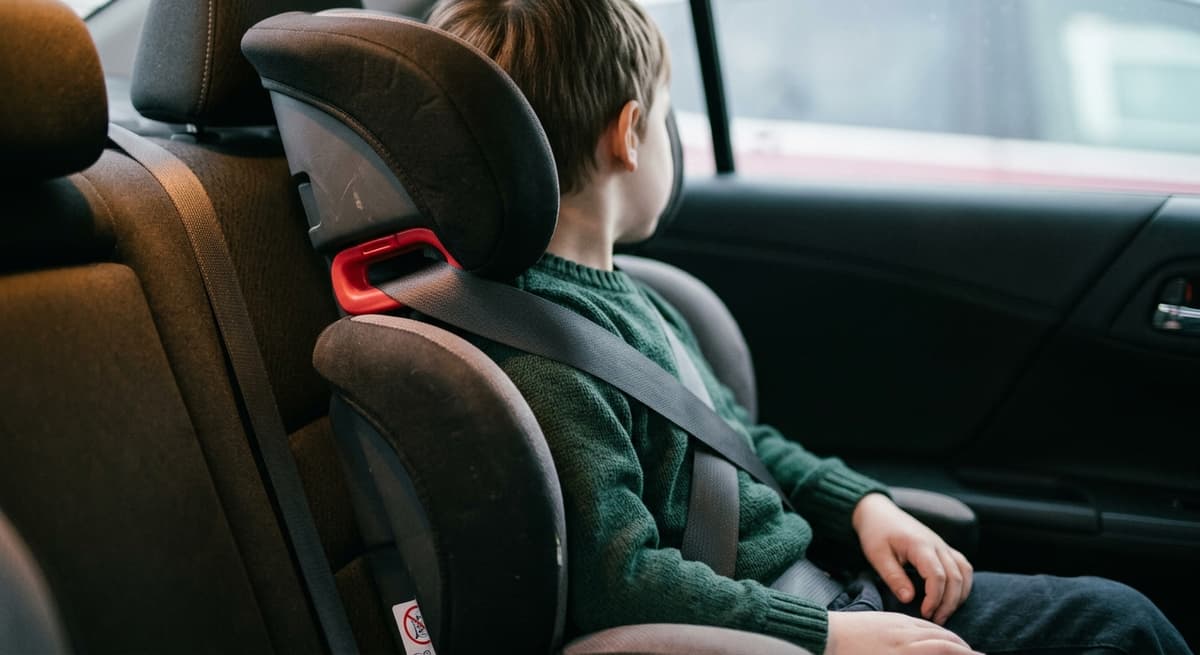
Delaware's booster requirement, section 4803(a)(4), doesn't attach a specific age or weight in the statute at all. A child must be in a belt-positioning booster until reaching that booster's own upper height or weight limit, as set by the seat's manufacturer, meaning the exit point depends on which booster a family is using rather than a number written into the law.
Seat belt stage and the age-16 cutoff
Once a child has outgrown a booster by the manufacturer's own limits, and is still under 16, Delaware requires a properly secured seat belt in every seating position, under section 4803(a)(5). At 16, the child-restraint statute no longer applies and Delaware's general adult seat belt law takes over.
Front-seat airbag rule
Delaware has a real, statute-based front-seat restriction tied specifically to airbags, not a blanket ban on children up front. Under section 4803(b)(1)-(2), a child 5 feet 5 inches tall or shorter (that height is inclusive) and under 12 years old may not ride in the front passenger seat of a vehicle with an active, non-disabled passenger-side airbag. There are three safe harbors: the vehicle's passenger-side airbag was specifically designed or modified by the manufacturer for use by children and small adults (subsection (b)(1)), the vehicle has no rear passenger seat at all, or every rear passenger seat is already occupied by other children who also meet the height-and-age description (both under subsection (b)(2)). Subsection (b)(2)'s own safe harbors also carry a secondary-offense provision: the statute says a vehicle can't be stopped by police solely for a suspected violation of that subsection.
Exemptions from Delaware's car seat law
Section 4803(a)(1) exempts the operators and passengers of a charter bus, limousine, or taxicab, using the definitions in 2 Del. C. § 1801, from the general securing duty imposed by that subsection; the statute does not expressly extend the exemption to the stage-specific requirements in (a)(2) through (a)(5). No exemption is written for medical transport or rideshare vehicles in this section.
Penalty for violating Delaware's car seat law
The statute's own text does not set a dollar fine for a first violation of section 4803. What it does say is that "a second or subsequent violation of this section shall be an offense punishable by a fine of $25 for each violation," under subsection (c). No driver's license points are stated in the text. Unlike several other states, Delaware does not offer a waiver for a driver who shows the court they've since bought a compliant seat.
Federal guidance vs. Delaware law
The federal standard that governs child car seats as products, FMVSS 213 (49 CFR 571.213), regulates what a manufacturer may sell, not how a parent must use the seat; Delaware's statute, described above, is what sets the use requirement. The National Highway Traffic Safety Administration and the American Academy of Pediatrics separately recommend keeping a child rear-facing as long as the seat's own height and weight limits allow, which Delaware's own forward-facing-stage language already accommodates, then moving through a harnessed seat, a booster, and finally a seat belt. That recommendation is safety guidance, not a separate legal floor beyond what section 4803 requires. A newer federal side-impact standard for car seats themselves, FMVSS 213a/213b, becomes mandatory for manufacturers on December 5, 2026; it changes what a seat must be built to withstand, not what Delaware law requires a driver to do.
Related Delaware traffic law pages
Disclaimer: This article provides general legal information about Delaware's car seat law as of September 2026. It is not legal advice. Statutes, exemptions, and penalties change; verify the current text of the law before relying on it, and talk to a lawyer licensed in Delaware about a specific situation.
Statutes cited reflect their in-force version as of 2026-09-16. Last updated: 2026-09-16.
Frequently Asked Questions
At what weight can a child in Delaware switch from rear-facing to forward-facing?
Delaware's statute doesn't set a switch point; a convertible restraint can stay rear-facing until the seat's own upper limits under section 4803(a)(3). The 5-point-harness requirement itself only ends once the child turns 4 or reaches 40 pounds, whichever comes first.
Until what age does a child need a booster seat in Delaware?
Delaware doesn't set a fixed age or weight for the booster stage. A child needs a belt-positioning booster until reaching that specific booster's own upper height or weight limit, as set by its manufacturer, under section 4803(a)(4).
Can a child sit in the front seat in Delaware?
Only if the child is taller than 5 feet 5 inches or at least 12 years old, the vehicle's passenger airbag is off or disabled, the vehicle's passenger-side airbag was specifically designed or modified by the manufacturer for use by children and small adults, the vehicle has no rear passenger seat at all, or every rear seat is already filled by other children under that same height and age. Otherwise, section 4803(b) keeps a shorter, younger child out of the front seat with an active airbag.
What is the fine for a car seat violation in Delaware?
Delaware's statute states no dollar fine for a first violation. A second or subsequent violation is a $25 fine under section 4803(c), and the law doesn't offer a waiver for later showing proof of a compliant seat.
Updates
Rebuilt from the current statute text after an independent review: restraint stages, exemptions, front-seat rules and penalties re-verified against the statute.
Independently fact-checked against the cited primary sources
Fixed a blocking error in the front-seat rule: Delaware law restricts the front seat only to children who are BOTH under 12 AND 5 feet 5 inches or shorter (the page previously said "or," which incorrectly restricted a much larger group of children); also added the statute's charter bus/limousine/taxicab exemption and removed a stray broken-link fragment near the end of the page.
Independently fact-checked against the cited primary sources; governing law re-checked for recent changes
Reviewed and approved by an editor
The Law Behind This Article
This article rests on the statutory provisions below, held in our own legal record and retrieved from the official source. Tap a section to read the operative text.
Delaware Code, Title 21 (Motor Vehicles), Chapter 048 (OCCUPANT PROTECTION SYSTEM SAFETY ACT)
§ 4803Child restraint in motor vehicles.In force
(a) (1) The driver shall be responsible, when transporting a child under the age of 16 in a motor vehicle operated on the roadways, streets, or highways of this State, for providing protection of the child by properly securing the child in all seating positions, according to manufacturer’s instructions, in a child safety seat or booster seat meeting federal motor vehicle safety standards, and that is appropriate for the child’s age, weight and height, or a properly secured seatbelt. The duty imposed by this subsection shall not apply to any operator or passenger of a “charter bus,” “limousine” or “taxicab” as defined in § 1801 of Title 2. (2) A child under the age of 2 years and less than 30 pounds shall be properly secured in a rear-facing child restraint equipped with a 5-point harness. (3) A child under the age of 4 and less than 40 pounds shall be properly secured in a child restraint equipped with a 5-point harness. This restraint shall be either rear-facing or forward facing until they reach the upper height or weight limits of the restraint.
Official text (excerpt) · last checked 2026-09-09 · Read the full text in our law library · Verify at delcode.delaware.gov
Search our full record of US law — 2.1 million sections, every state + federal →
Sources and References
- 21 Del. C. § 4803: Child passenger protection system required; penalty(delcode.delaware.gov).gov
- 49 CFR § 571.213: FMVSS No. 213, Child restraint systems(ecfr.gov).gov
- American Academy of Pediatrics, Car Safety Seats: Information for Families(healthychildren.org)