
California
California Recording Laws (2026): All-Party Consent Rules
Independently fact-checked against primary sources (last audited August 22, 2026). · Reviewed by the RecordingLaw editorial team. · Law checked current as of August 22, 2026. · 23 primary sources cited on this page. How we verify our legal content
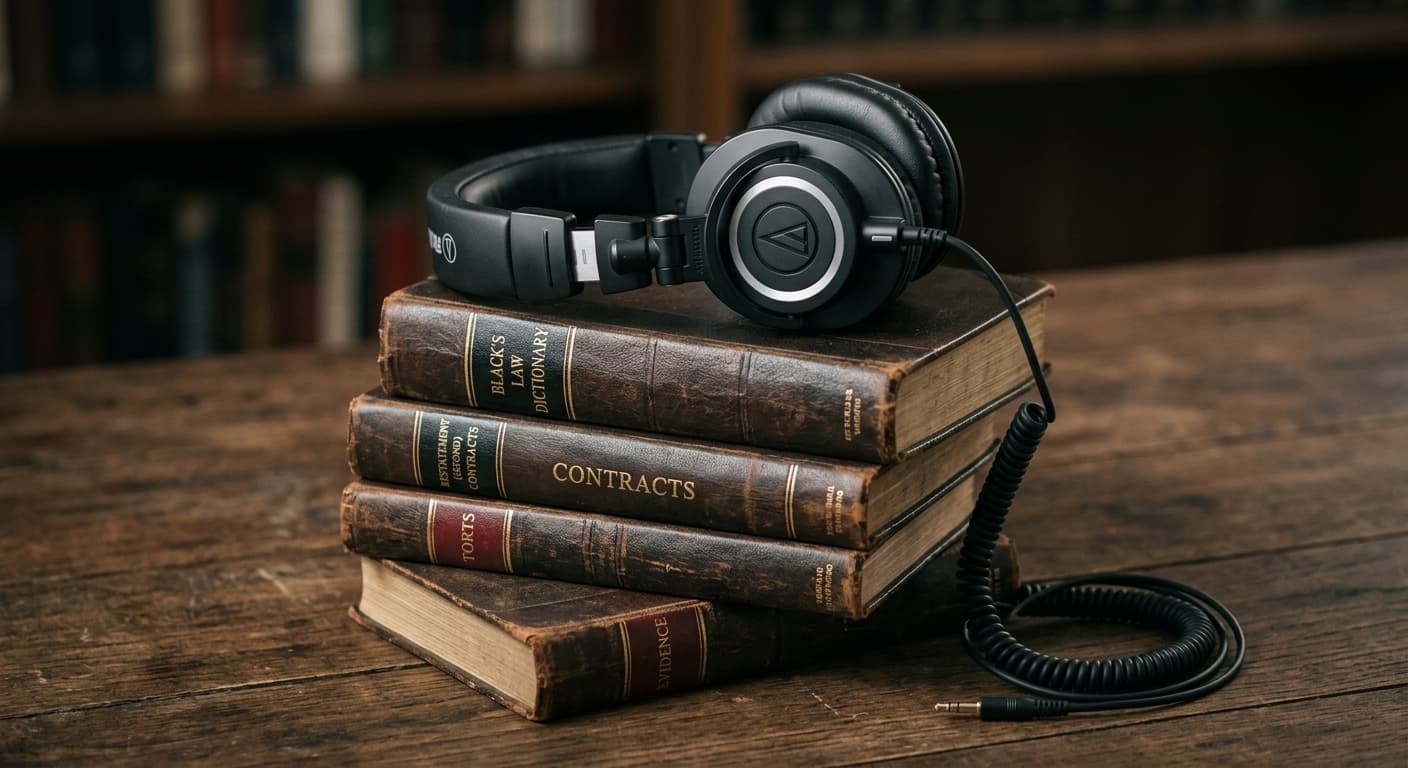
California is an all-party consent state. Under California Penal Code § 632, every participant in a private conversation must consent before anyone records it. Recording without that consent is both a crime, carrying fines and possible jail time, and a civil wrong that can cost the recorder $5,000 per violation with no proof of financial harm required.
California recording law at a glance
| Question | Answer |
|---|---|
| Consent rule | All-party (every participant must consent) |
| Main statute | Cal. Penal Code § 632 |
| When recording is illegal | Recording a confidential communication without consent of all parties |
| Criminal penalty | Up to $2,500 fine (first) or $10,000 (repeat), plus up to 1 year county jail (misdemeanor) or 16 months, 2, or 3 years state prison (felony) |
| Civil penalty | $5,000 per violation or 3x actual damages under PC 637.2 |
| Hidden cameras | Prohibited in private areas under PC 647(j); misdemeanor |
| Recording police | Legal under PC 148(g) and First Amendment, provided you do not interfere |
For deeper analysis, see the California recording laws in depth index below.
Recording in-person conversations in California
California's all-party consent rule means every person in a private conversation must agree to a recording before it starts. It is not enough that you, the recorder, have consented; the rule covers every other participant.
The governing statute, Penal Code § 632, applies to any "confidential communication," defined as one carried on in circumstances that reasonably indicate any party wants it confined to those present. A quiet conversation in a private office, a closed conference room, or a parked car with the windows up qualifies. A loud argument in a parking lot or a speech at a public rally does not, because no reasonable expectation of privacy exists.
Four elements must all be present for a violation: (1) intentional recording, (2) an electronic device, (3) a reasonable expectation of confidentiality, and (4) at least one non-consenting party. If any is absent, there is no PC 632 violation; the same conversation can be confidential in one setting and public in another.
PC 632 is part of California's Invasion of Privacy Act (CIPA) (Penal Code §§ 630-638.55), which also covers wiretapping (PC 631), cellular calls (PC 632.7), civil remedies (PC 637.2), and voyeurism (PC 647(j)).
Recording phone calls in California
California's all-party consent requirement applies to every type of telephone call: landline, cell, VoIP, and cordless. Unlike one-party consent states, you cannot record a call you are on unless everyone else agrees first.
Penal Code § 632.7 (last amended Stats. 2022, Ch. 27, SB 1272, effective January 1, 2023) covers communications between cell phones, cordless phones, and landlines in any combination. The California Supreme Court confirmed in Smith v. LoanMe, Inc., 11 Cal. 5th 183 (2021), that PC 632.7 applies to a party recording the call, not just outside eavesdroppers.
For cross-state calls, Kearney v. Salomon Smith Barney, Inc., 39 Cal. 4th 95 (2006), held that California's all-party rule applies whenever a California party is on the call, even if the other caller is in a one-party state. Get everyone's consent regardless of where you call from.
Businesses recording customer service calls must play a clear notice first; the standard "This call may be recorded for quality assurance" message satisfies the requirement when the caller continues, but starting the recording before the notice does not.
For phone-specific rules, see the California Phone Call Recording Laws page.
Hidden cameras, doorbells, and nanny cams

Security cameras on your own property are generally lawful when pointed at areas with no reasonable privacy expectation, such as a front porch, driveway, or street-facing backyard. The line is crossed when a camera captures a space where someone has a genuine expectation of privacy.
Penal Code § 647(j) makes it a misdemeanor to use a concealed camera to record someone in a restroom, locker room, changing room, or other private area, and also covers recording under or through clothing without consent and drone capture in private spaces. A first offense carries up to six months in county jail and, under the default misdemeanor punishment in Penal Code § 19, a fine of up to $1,000; repeat offenses and cases involving a minor victim carry up to one year in county jail and a fine of up to $2,000.
California also has the paparazzi-specific Civil Code § 1708.8, which bars trespassing to capture images of people in personal or familial activity, including telephoto lenses from a distance. Civil penalties run from $5,000 to $50,000 per incident.
One audio caveat: a nanny cam or doorbell camera with audio that records conversations inside your home is subject to PC 632. If it captures confidential oral communications among non-consenting people, you may face liability under the all-party consent rule, not just the voyeurism statute.
Penalties for illegal recording in California
California combines criminal punishment with a strong civil damages scheme, and a single illegal recording can expose the recorder to both at once.
| Violation | Max Fine | Max Jail/Prison |
|---|---|---|
| PC 632, first offense (eavesdropping) | $2,500 | 1 year county jail (misdemeanor) or 16 months, 2, or 3 years state prison (felony) |
| PC 632, repeat offense | $10,000 | 1 year county jail (misdemeanor) or 16 months, 2, or 3 years state prison (felony) |
| PC 631 wiretapping (wobbler: misdemeanor or felony) | $2,500 (first); $10,000 (repeat) | 1 year (misdemeanor) or 16 months to 3 years (felony) |
| PC 632.7, cell/cordless phone | $2,500 ($10,000 repeat) | Up to 1 year (misdemeanor) or 16 months, 2, or 3 years (felony) |
| PC 637 sharing intercepted communications | $5,000 | Up to 1 year (misdemeanor) or 16 months, 2, or 3 years (felony) |
| PC 647(j) video voyeurism, first offense | $1,000 | 6 months county jail |
| PC 647(j) video voyeurism, repeat or minor victim | Up to $2,000 | Up to 1 year county jail |
On the civil side, Penal Code § 637.2 lets victims recover $5,000 per violation or three times actual damages, whichever is greater, with no proof of harm required for the $5,000 minimum, plus injunctive relief. The limitations period is three years from the violation under California Code of Civil Procedure § 338(a).
Recordings made in violation of California's wiretapping and eavesdropping laws are generally inadmissible in any judicial, administrative, or legislative proceeding, stronger than the many states that admit illegal recordings as evidence even while penalizing the recorder. This exclusion is narrower in criminal cases: California's 1982 "Truth in Evidence" provision (Cal. Const. art. I, § 28(f)(2), enacted by Proposition 8) repealed Penal Code § 632(d)'s exclusionary effect for criminal proceedings, so an illegally made recording can still be used against a defendant if it is relevant, does not violate the U.S. Constitution, and fits a hearsay exception such as a party admission or a prior inconsistent statement.
Recording the police in California
California has a clear statutory right to record law enforcement. Penal Code § 148(g), added by SB 411 in 2015, states that photographing or making an audio or video recording of a police officer in a public place, or from any place you have a right to be, does not by itself constitute obstruction or interference and does not create reasonable suspicion to detain you or probable cause to arrest you.
This complements the First Amendment protection recognized by federal courts. The practical limits: you must not physically interfere, enter a restricted area, or disobey lawful orders that do not themselves prohibit recording. Officers cannot demand you delete recordings without a warrant, and while they may lawfully seize your device in some circumstances (for example, incident to a lawful arrest or to prevent destruction of evidence), Riley v. California requires a warrant before they can search its contents.
Because California is an all-party consent state, PC 632 also applies to officer audio in many situations, so recording a private conversation an officer reasonably expected to be confidential could raise consent questions. Recording officers in clearly public settings, such as a traffic stop or an arrest visible to bystanders, involves no confidential communication and falls cleanly within PC 148(g).
For the complete analysis, see the California Laws on Recording Police page.
Special topics in California
Workplace recording: Stericycle and NLRB GC Memo 25-07

In the workplace, PC 632 and federal labor law operate in parallel. In Stericycle, Inc. and Teamsters Local 628, 372 NLRB No. 113 (Aug. 2, 2023), the NLRB held that facially neutral no-recording policies are presumptively unlawful under the NLRA if they tend to chill Section 7 rights, unless the employer shows a legitimate and substantial business justification; blanket bans are vulnerable, while policies narrowly tailored to trade secrets fare better. NLRB GC Memorandum 25-07 (June 25, 2025), Tier 2 prosecutorial guidance rather than a binding Board decision, directed regional offices to treat surreptitious recording during collective-bargaining sessions as a per se bad-faith bargaining violation under NLRA §§ 8(a)(5) and 8(b)(3).
For the full employee-rights and employer-policy analysis, see the California Workplace Recording Laws page.
Federal overlay: ECPA, FCC AI voice rule
The federal Electronic Communications Privacy Act (ECPA), 18 U.S.C. §§ 2510-2523, sets a one-party consent floor, but California's stricter all-party standard governs activity in or connected to California. FCC Order 24-17 (adopted February 8, 2024) declared AI-generated voice technologies "artificial or prerecorded voice" under the TCPA, requiring prior express consent, so California callers using such tools must satisfy both the TCPA and PC 632/632.7. FCC Order 24-24's one-to-one consent rule was vacated by the Eleventh Circuit in Insurance Marketing Coalition Ltd. v. FCC, 127 F.4th 303 (11th Cir. 2025) (Jan. 24, 2025); the FCC reinstated the prior version of 47 CFR § 64.1200(f)(9) via DA 25-621.
HIPAA and FERPA
In healthcare settings, HIPAA (45 CFR § 164.502) requirements for recordings that constitute protected health information layer on top of, and do not replace, PC 632's all-party mandate. FERPA (20 U.S.C. § 1232g; 34 CFR Part 99) governs school recordings that qualify as education records, so a school recording a student under California's consent rules still cannot disclose it without FERPA-compliant authorization. Compliance with one framework does not satisfy the other.
For healthcare recording analysis, see the California Laws on Recording Doctors and Medical Appointments page. For school recording analysis, see the California School Recording Laws page.
Exceptions overview
Key exceptions to PC 632: (1) no reasonable expectation of privacy (public spaces, open government meetings under the Brown Act, Gov. Code § 54953.5); (2) law enforcement under the PC 633 grandfather clause; (3) victims recording evidence of extortion, kidnapping, bribery, human trafficking, domestic violence, harassing calls, or violent felonies under PC 633.5; and (4) a narrow provision for a domestic violence victim who is seeking a restraining order: under PC 633.6(b), that victim may record a confidential communication made to them by the perpetrator if they reasonably believe it may contain evidence germane to that restraining order, and only for the exclusive purpose of providing that evidence to the court. This is not a general right for domestic violence victims to record an abuser.
Recent legal developments
- January 1, 2023: PC 632.7 amended (Stats. 2022, Ch. 27, SB 1272) to cover more cellular/cordless device combinations.
- August 2, 2023: NLRB issues Stericycle, Inc., 372 NLRB No. 113, making blanket workplace no-recording policies presumptively unlawful.
- February 8, 2024: FCC Order 24-17 declares AI-generated voice calls subject to TCPA prior express consent.
- January 24, 2025: Eleventh Circuit vacates FCC 24-24 One-to-One Consent Rule; FCC reinstates prior rule via DA 25-621 (mandate April 30, 2025).
- June 25, 2025: NLRB GC Memorandum 25-07 directs regional offices to treat surreptitious collective-bargaining recordings as per se bad-faith bargaining.
- Pending, 2026: SB 1130 (proposed PC § 632.8, wearable devices) and SB 690 (CCPA carve-out for CIPA) remain unresolved. Neither is law as of June 2026.
California recording laws in depth
The pages below each cover a distinct California recording scenario. Jump to the topic that applies to you.
By type of recording
- California Audio Recording Laws
- California Phone Call Recording Laws
- California Video Recording Laws
- California Voyeurism and Hidden Camera Laws
- California Dashcam Laws
By place or relationship
- California Laws on Recording in Public
- California Laws on Recording Police
- California Workplace Recording Laws
- California Landlord-Tenant Recording and Surveillance Laws
- California Security Camera and Surveillance Laws
- California Laws on Recording Doctors and Medical Appointments
- California School Recording Laws
More California laws
- California AI Meeting Recording Laws
- California At-Will Employment Laws
- California Data Privacy Laws
- California Landlord-Tenant Laws
- California Workplace Recording Laws
This article is general legal information, not legal advice. Recording laws change and apply differently to each situation. For advice about your situation, consult a licensed California attorney.
More California Laws
Frequently Asked Questions
Is California a one-party or two-party consent state for recording?
California is an all-party consent state: every participant in a private conversation must consent before anyone records it. The governing statute is Penal Code § 632, and recording without all-party consent is both a crime and a civil wrong under PC 637.2.
Can I record a phone call in California?
Only if every person on the call consents first. Both PC 632 (confidential communications) and PC 632.7 (cellular and cordless calls) require all-party consent. The California Supreme Court confirmed in Smith v. LoanMe (2021) that PC 632.7 applies even when you are a participant, not just an outside eavesdropper.
Is recording someone without permission a crime in California?
Yes, if the conversation is confidential and at least one party has not consented. A first offense under PC 632 carries up to a $2,500 fine and up to one year in county jail (misdemeanor) or 16 months, 2, or 3 years in state prison (felony); repeat offenders face the same jail-or-prison exposure with fines up to $10,000.
What can I sue for if someone illegally recorded me in California?
Under Penal Code § 637.2 you can recover $5,000 per violation or three times your actual damages, whichever is greater, with no proof of financial harm required for the $5,000 minimum. Injunctive relief is also available to stop ongoing violations.
Are Ring doorbells and nanny cams legal in California?
Video-only cameras pointed at your own property and public-facing areas are generally lawful. But if the camera records audio of private conversations inside the home without all parties' consent, PC 632 applies, and cameras in restrooms, changing areas, or other private spaces violate PC 647(j) regardless of audio.
Can I record my boss or an HR meeting in California?
Not without consent from everyone present. Even to document misconduct, secretly recording a workplace conversation can expose you to criminal and civil liability under PC 632. The PC 633.5 crime-documentation exception may apply if you reasonably believe you are recording evidence of a specific enumerated crime, but consult an attorney first.
Can I record police in California?
Yes. Penal Code § 148(g) and the First Amendment give you the right to photograph or record police performing public duties. Recording does not by itself constitute obstruction, and officers cannot demand you delete recordings without a warrant; while they may lawfully seize your device in some circumstances, Riley v. California requires a warrant before they can search its contents; you just must not physically interfere.
Does California recording law apply to calls from other states?
Yes, if a California party is on the call. In Kearney v. Salomon Smith Barney (2006), the California Supreme Court held that California's all-party consent rule applies to calls involving a California party even when the other caller is in a one-party consent state. Get all-party consent before recording any call involving someone in California.
Updates
Clarified that the Penal Code 633.6(b) exception applies only to a domestic violence victim seeking a restraining order, and only for recordings offered as evidence to the court.
Corrected three internal contradictions on the California recording laws hub: police may lawfully seize a phone in some circumstances but need a warrant to search it (Riley v. California), PC 647(j) voyeurism carries a first-offense fine up to $1,000 (not $0), and PC 632's felony exposure is 16 months to 3 years in state prison, not a flat one-year term.
Independently fact-checked against the cited primary sources; governing law re-checked for recent changes
Governing law re-checked for recent changes
Governing law re-checked for recent changes
Reviewed and approved by an editor
Page restructured under the recording-redo spec: AEO lede, at-a-glance table, new section anchors, condensed federal/HIPAA/FERPA subsections, Recent Legal Developments list, and an 8-question FAQ. Hero and inline images updated. All load-bearing facts (PC 632 all-party consent, $2,500/$10,000 penalties, PC 637.2 $5,000/3x damages, PC 647(j) voyeurism, PC 148(g) police recording) re-verified against primary sources June 2026. No fact corrections required.
Title rewritten from 'California Recording Laws: Consent Rules and Penalties' to 'California Recording Laws: All-Party Consent, Penalties, and 2026 Updates' to front-load primary keyword and add freshness signal. Meta rewritten: AEO declarative opener with specific penalty figures (155 chars). Kept: KeyTakeaways, PC 632 confidential-communication breakdown, phone/cell section (PC 632.7 + Smith v. LoanMe), in-person recording, penalty table, voyeurism and hidden-camera section (PC 647(j)), police-recording section (PC 148(g)), evidence admissibility, state comparison, More California Laws links, FAQ structure. Fixed: removed unsupported 'two-year bill' assertion for SB 690; corrected SB 690 section to state only confirmed facts (stalled Assembly committee July 2, 2025; 2026 session status unconfirmed). Expanded: Exceptions H2 (key ranking gap at pos 49 for 'california penal code 632 exceptions') with domestic-violence exception PC 633.6(b), PC 633.5 enumerated crimes, no-privacy-expectation rule; Workplace H2 expanded with Stericycle, Inc., 372 NLRB No. 113 (Aug. 2, 2023) standard and NLRB GC Memorandum 25-07 (June 25, 2025, Tier 2 prosecutorial guidance). Added new H2s: Federal Law Overlay (ECPA baseline, FCC 24-17 AI voice ruling operative, FCC 24-24 One-to-One rule vacated Jan. 24 2025 by 11th Cir., reinstated pre-2023 standard via DA 25-621); Special Contexts HIPAA + FERPA; Pending Legislation (SB 1130 wearable-device bill on Appropriations suspense as of May 8, 2026, hearing May 14, 2026; SB 690 CCPA carve-out, stalled Assembly July 2025); Topic Index linking all 12 California spoke pages. SourcesList and UpdatesLog added.
Title and meta rewritten for AEO with specific penalty figures. Corrected SB 690 to confirmed facts only (stalled in Assembly committee July 2, 2025). Expanded Exceptions (PC 633.6(b) domestic-violence, PC 633.5 enumerated crimes, no-privacy-expectation rule) and Workplace (Stericycle, 372 NLRB No. 113; GC Memo 25-07). Added Federal Law Overlay (ECPA, FCC 24-17, FCC 24-24 vacated by 11th Cir. and reinstated via DA 25-621), HIPAA/FERPA, Pending Legislation (SB 1130, SB 690), and a topic index linking all 12 California spoke pages.
Added wearable recording device guidance covering AI voice recorders (Plaud), smart glasses (Meta Ray-Bans), and California SB 1130.
The Law Behind This Article
This article rests on the statutory provisions below, held in our own legal record and retrieved from the official source. Tap a section to read the operative text.
California Penal Code
§ 632In forcecited in 44 of our articles
(a) A person who, intentionally and without the consent of all parties to a confidential communication, uses an electronic amplifying or recording device to eavesdrop upon or record the confidential communication, whether the communication is carried on among the parties in the presence of one another or by means of a telegraph, telephone, or other device, except a radio, shall be punished by a fine not exceeding two thousand five hundred dollars ($2,500) per violation, or imprisonment in a county jail not exceeding one year, or in the state prison, or by both that fine and imprisonment. If the person has previously been convicted of a violation of this section or Section 631, 632.5, 632.6, 632.7, or 636, the person shall be punished by a fine not exceeding ten thousand dollars ($10,000) per violation, by imprisonment in a county jail not exceeding one year, or in the state prison, or by both that fine and imprisonment.
Official text (excerpt) · last checked 2026-09-17 · Read the full text in our law library · Verify at leginfo.legislature.ca.gov
Cited in 267 court opinions in our collectionLatest citing opinion in our collection: 2026
In the courts (editorial summary, independently checked):Kimmel v. Goland (1990) held the section 47(2) litigation privilege does not bar a damages claim under Section 632 for recording confidential conversations without consent. Lieberman v. KCOP Television, Inc. (2003) held a Section 632 violation is complete the moment the recording is made, whether or not it is disclosed.
Opinions citing this section in our collection:
- Rubin v. Green (California Supreme Court 1993, 4 Cal. 4th 1187)“…f telephone conversations with defendants, an offense under Penal Code section 632. We noted that defendants alleged that…”
- Kimmel v. Goland (California Supreme Court 1990, 51 Cal. 3d 202)✓Mobilehome owners secretly taped phone calls with park management in anticipation of suing; the court held the section 47(2) litigation privilege did not bar the cross-complaint for damages under Penal Code section 632, since the injury came from recording, not publication.
- Shulman v. Group W Productions, Inc. (California Supreme Court 1998, 74 Cal. Rptr. 2d 843)✓A TV producer put a wireless microphone on the flight nurse treating a crash victim. No section 632 claim was before the court, but it called section 632 and the intrusion tort laws of general applicability and said the press may not eavesdrop in violation of section 632.
Identified automatically from the court opinions citing this section — not a ranking of which case controls.
Also relied on in: US Recording Laws by State (2026): All 50 States Explained, Can an Employer Record Conversations Without Consent? (2026), Can I Sue Someone for Recording Me on Private or Public Property?
§ 632.7In forcecited in 5 of our articles
(a) Every person who, without the consent of all of the parties to a communication, intercepts or receives and intentionally records, or assists in the interception or reception and intentional recordation of, a communication transmitted between two cellular radio telephones, a cellular radio telephone and a landline telephone, two cordless telephones, a cordless telephone and a landline telephone, or a cordless telephone and a cellular radio telephone, shall be punished by a fine not exceeding two thousand five hundred dollars ($2,500), or by imprisonment in a county jail not exceeding one year, or in the state prison, or by both that fine and imprisonment. If the person has been convicted previously of a violation of this section or of Section 631, 632, 632.5, 632.6, or 636, the person shall be punished by a fine not exceeding ten thousand dollars ($10,000), by imprisonment in a county jail not exceeding one year, or in the state prison, or by both that fine and imprisonment.
Official text (excerpt) · last checked 2026-07-28 · Read the full text in our law library · Verify at leginfo.legislature.ca.gov
Cited in 67 court opinions in our collectionLatest citing opinion in our collection: 2026
Opinions citing this section in our collection:
- Smith v. LoanMe, Inc. (California Supreme Court 2021, 276 Cal. Rptr. 3d 746)“…Opinion of the Court by Cantil-Sakauye, C. J. Under Penal Code section 632.7, subdivision (a) (hereinafter section 6…”
- People v. Chavez (California Court of Appeal 1996, 44 Cal. App. 4th 1144)“…Smith (5th Cir. 1992) 978 F.2d 171, 178 ; Pen. Code, § 632.7, subd. (c)(2).) The CI sought au…”
- Gruber v. Yelp Inc. (California Court of Appeal 2020)“…al courts have refused to dismiss or summarily adjudicate a Penal Code section 632.7 claim based merely on the fact that the…”
Identified automatically from the court opinions citing this section — not a ranking of which case controls.
Also relied on in: California Audio Recording Laws: Two-Party Consent Rules and Penalties (2026), California Phone Call Recording Laws: Consent Rules for Cell and Landline (2026), California Surveillance Camera Laws: Complete 2026 Guide
§ 631In forcecited in 10 of our articles
(a) Any person who, by means of any machine, instrument, or contrivance, or in any other manner, intentionally taps, or makes any unauthorized connection, whether physically, electrically, acoustically, inductively, or otherwise, with any telegraph or telephone wire, line, cable, or instrument, including the wire, line, cable, or instrument of any internal telephonic communication system, or who willfully and without the consent of all parties to the communication, or in any unauthorized manner, reads, or attempts to read, or to learn the contents or meaning of any message, report, or communication while the same is in transit or passing over any wire, line, or cable, or is being sent from, or received at any place within this state; or who uses, or attempts to use, in any manner, or for any purpose, or to communicate in any way, any information so obtained, or who aids, agrees with, employs, or conspires with any person or persons to unlawfully do, or permit, or cause to be done any of the acts or things mentioned above in this section, is punishable by a fine not exceeding two thousand five hundred dollars ($2,500), or by imprisonment in the county jail not exceeding one year,…
Official text (excerpt) · last checked 2026-09-16 · Read the full text in our law library · Verify at leginfo.legislature.ca.gov
Cited in 202 court opinions in our collectionLatest citing opinion in our collection: 2026
Opinions citing this section in our collection:
- Ribas v. Clark (California Supreme Court 1985, 38 Cal. 3d 355)“…iminal statutes prohibiting various forms of eavesdropping (Pen. Code, §§ 631, subd. (a), and 637), as well as for in…”
- Warden v. Kahn (California Court of Appeal 1979, 99 Cal. App. 3d 805)“…not to be found elsewhere among the states of the nation. Penal Code section 631 provides: "Any person who, by means of…”
- Rogers v. Ulrich (California Court of Appeal 1975, 52 Cal. App. 3d 894)“…nowledge the incident amounted to wiretapping as defined by Penal Code section 631; a statutory penalty in the amount of $…”
Identified automatically from the court opinions citing this section — not a ranking of which case controls.
Also relied on in: Serial CIPA Website-Wiretap Filer Declared a Vexatious Litigant, California Pixel-Wiretap Rulings Split the Same Week: Blue Shield Claim Dismissed, BlueChew Claims Advance, Otter.ai Faces Consolidated Wiretap Class Action Over Its AI Meeting Notetaker and All-Party Consent
§ 637.2In forcecited in 20 of our articles
(a) Any person who has been injured by a violation of this chapter may bring an action against the person who committed the violation for the greater of the following amounts: (1) Five thousand dollars ($5,000) per violation. (2) Three times the amount of actual damages, if any, sustained by the plaintiff. (b) Any person may, in accordance with Chapter 3 (commencing with Section 525) of Title 7 of Part 2 of the Code of Civil Procedure, bring an action to enjoin and restrain any violation of this chapter, and may in the same action seek damages as provided by subdivision (a). (c) It is not a necessary prerequisite to an action pursuant to this section that the plaintiff has suffered, or be threatened with, actual damages. (d) This section shall not be construed to affect Title 4 (commencing with Section 3425.1) of Part 1 of Division 4 of the Civil Code.
Official text (excerpt) · last checked 2026-07-28 · Read the full text in our law library · Verify at leginfo.legislature.ca.gov
Cited in 103 court opinions in our collectionLatest citing opinion in our collection: 2026
In the courts (editorial summary, independently checked):Ribas v. Clark (1985) held the section 637.2 award accrues at the moment of the Privacy Act violation, so the Civil Code section 47 litigation privilege does not bar it, though damages flowing solely from privileged testimony fail. Kimmel v. Goland (1990) applied that reasoning to recordings made in anticipation of litigation.
Opinions citing this section in our collection:
- Rubin v. Green (California Supreme Court 1993, 4 Cal. 4th 1187)“…asion of privacy and related torts as well as damages under Penal Code section 637.2, granting persons injured by eavesdropp…”
- Ribas v. Clark (California Supreme Court 1985, 38 Cal. 3d 355)✓A wife asked a third party to listen on an extension phone while she called her husband, and that listener later testified about it; the court held the judicial privilege barred damages from the testimony but not Section 637.2's fixed award, which accrues at the violation.
- Kimmel v. Goland (California Supreme Court 1990, 51 Cal. 3d 202)✓Mobilehome residents secretly taped calls with park management to gather evidence for a planned lawsuit; the court held the litigation privilege did not bar management's Section 637.2 claim, because the injury came from the recording itself and not from any publication.
Identified automatically from the court opinions citing this section — not a ranking of which case controls.
Also relied on in: How to Detect and Block Listening Devices in Your Home (2026), Is It Illegal to Video Record Someone Without Their Consent? (2026), Otter.ai Lawsuit: Judge Lets Core Privacy Claims Proceed (2026)
§ 647In forcecited in 16 of our articles
Except as provided in paragraph (5) of subdivision (b) and in subdivisions (k) and (l), a person who commits any of the following acts is guilty of disorderly conduct, a misdemeanor: (a) An individual who solicits anyone to engage in or who engages in lewd or dissolute conduct in a public place or in a place open to the public or exposed to public view. (b) (1) An individual who solicits, or who agrees to engage in, or who engages in, an act of prostitution with the intent to receive compensation, money, or anything of value from another person. An individual agrees to engage in an act of prostitution when, with specific intent to so engage, the individual manifests an acceptance of an offer or solicitation by another person to so engage, regardless of whether the offer or solicitation was made by a person who also possessed the specific intent to engage in an act of prostitution. (2) An individual who solicits, or who agrees to engage in, or who engages in, an act of prostitution with another person who is 18 years of age or older in exchange for the individual providing compensation, money, or anything of value to the other person.
Official text (excerpt) · last checked 2026-08-31 · Read the full text in our law library · Verify at leginfo.legislature.ca.gov
Cited in 593 court opinions in our collectionLatest citing opinion in our collection: 2026
In the courts (editorial summary, independently checked):In re Giannini (1968) set aside convictions under Penal Code 647(a) because the prosecution introduced no evidence of community standards, and equated "lewd or dissolute" with obscenity only for the purpose of judging an allegedly obscene dance performed for an audience.
Opinions citing this section in our collection:
- Morrison v. State Board of Education (California Supreme Court 1969, 1 Cal. 3d 214)“…public beach and the teacher was arrested for violation of Penal Code section 647, subdivision (a), and convicted, on his…”
- People v. Laiwa (California Supreme Court 1983, 34 Cal. 3d 711)“…to arrest him for being under the influence of a narcotic. (Pen. Code, § 647, subd. (f).) [1] He moved, however, to…”
- In Re Cregler (California Supreme Court 1961, 56 Cal. 2d 308)✓A man previously convicted of theft was arrested for standing in a San Francisco bus station under the pre-1961 vagrancy version of section 647. The court rejected his vagueness challenge, reading loiter to require lingering to commit a crime, and denied habeas relief.
Identified automatically from the court opinions citing this section — not a ranking of which case controls.
Also relied on in: California Landlord-Tenant Recording and Surveillance Laws (2026), California Laws on Recording in Public: What Is Legal (2026), California Security Camera and Surveillance Laws: Rules for Home and Business (2026)
§ 633In forcecited in 3 of our articles
(a) Nothing in Section 631, 632, 632.5, 632.6, or 632.7 prohibits the Attorney General, any district attorney, or any assistant, deputy, or investigator of the Attorney General or any district attorney, any officer of the California Highway Patrol, any peace officer of the Office of Internal Affairs of the Department of Corrections and Rehabilitation, any chief of police, assistant chief of police, or police officer of a city or city and county, any sheriff, undersheriff, or deputy sheriff regularly employed and paid in that capacity by a county, police officer of the County of Los Angeles, or any person acting pursuant to the direction of one of these law enforcement officers acting within the scope of his or her authority, from overhearing or recording any communication that they could lawfully overhear or record prior to January 1, 1968. (b) Nothing in Section 631, 632, 632.5, 632.6, or 632.7 renders inadmissible any evidence obtained by the above-named persons by means of overhearing or recording any communication that they could lawfully overhear or record prior to January 1, 1968.
Official text (excerpt) · last checked 2026-07-28 · Read the full text in our law library · Verify at leginfo.legislature.ca.gov
Cited in 21 court opinions in our collectionLatest citing opinion in our collection: 2015
Opinions citing this section in our collection:
- People v. Ayers (California Court of Appeal 1975, 51 Cal. App. 3d 370)“…nder police direction and supervision would be admissible. (Pen. Code, § 633.) 1 They argue, however, t…”
- People v. Chavez (California Court of Appeal 1996, 44 Cal. App. 4th 1144)“…fully subject to the law enforcement exception codified in Penal Code section 633. Consequently, we reverse the order gra…”
- Untitled California Attorney General Opinion (California Attorney General Reports 1996)“…Does the designation "district attorney" as used in Penal Code section 633 with respect to the overhearing or reco…”
Identified automatically from the court opinions citing this section — not a ranking of which case controls.
Also relied on in: California Penal Code § 632 Explained: Recording Consent
§ 633.5In forcecited in 8 of our articles
Sections 631, 632, 632.5, 632.6, and 632.7 do not prohibit one party to a confidential communication from recording the communication for the purpose of obtaining evidence reasonably believed to relate to the commission by another party to the communication of the crime of extortion, kidnapping, bribery, any felony involving violence against the person, including, but not limited to, human trafficking, as defined in Section 236.1, or a violation of Section 653m, or domestic violence as defined in Section 13700. Sections 631, 632, 632.5, 632.6, and 632.7 do not render any evidence so obtained inadmissible in a prosecution for extortion, kidnapping, bribery, any felony involving violence against the person, including, but not limited to, human trafficking, as defined in Section 236.1, a violation of Section 653m, or domestic violence as defined in Section 13700, or any crime in connection therewith.
Official text (excerpt) · last checked 2026-07-28 · Read the full text in our law library · Verify at leginfo.legislature.ca.gov
Cited in 21 court opinions in our collectionLatest citing opinion in our collection: 2026
Opinions citing this section in our collection:
- People v. Baker (California Court of Appeal 1978, 88 Cal. App. 3d 115)“…ction 632. 3 . Appellant has overlooked Penal Code section 633.5, 4 which is dispositive of…”
- Malinowski v. Martin (California Court of Appeal 2024)“…se permitted under statutory exceptions to the Privacy Act (Pen. Code, §§ 633.5 and 633.6). In the published port…”
- Geragos v. Abelyan (California Court of Appeal 2023)“…matter pleaded.”].) The Geragos Parties next contend Penal Code section 633.5 exempts Kazarian’s recording from exclu…”
Identified automatically from the court opinions citing this section — not a ranking of which case controls.
§ 633.6In force
(a) Notwithstanding the provisions of this chapter, and in accordance with federal law, upon the request of a victim of domestic violence who is seeking a domestic violence restraining order, a judge issuing the order may include a provision in the order that permits the victim to record any prohibited communication made to him or her by the perpetrator. (b) Notwithstanding the provisions of this chapter, and in accordance with federal law, a victim of domestic violence who is seeking a domestic violence restraining order from a court, and who reasonably believes that a confidential communication made to him or her by the perpetrator may contain evidence germane to that restraining order, may record that communication for the exclusive purpose and use of providing that evidence to the court. (c) The Judicial Council shall amend its domestic violence prevention application and order forms to incorporate the provisions of this section.
Official text (excerpt) · last checked 2026-07-28 · Read the full text in our law library · Verify at leginfo.legislature.ca.gov
Cited in 3 court opinions in our collectionLatest citing opinion in our collection: 2026
Opinions citing this section in our collection:
- Malinowski v. Martin (California Court of Appeal 2024)“…heir provisions. We first address subdivision (a) of Penal Code section 633.6, which provides that a judge issuing a…”
- Andrea M. v. Paul M. CA2/3 (California Court of Appeal 2026)“…632, subds. (a) & (d).) One such exception is set forth in Penal Code section 633.6, subdivision (b), which provides that “…”
- Breja v. Breja CA1/5 (California Court of Appeal 2023)“…confidential communication may contain relevant evidence. (Pen. Code, § 633.6, subd. (b).) Under those circumstances,…”
Identified automatically from the court opinions citing this section — not a ranking of which case controls.
§ 148In forcecited in 3 of our articles
(a) (1) Every person who willfully resists, delays, or obstructs any public officer, peace officer, or an emergency medical technician, as defined in Division 2.5 (commencing with Section 1797) of the Health and Safety Code, in the discharge or attempt to discharge any duty of his or her office or employment, when no other punishment is prescribed, shall be punished by a fine not exceeding one thousand dollars ($1,000), or by imprisonment in a county jail not to exceed one year, or by both that fine and imprisonment. (2) Except as provided by subdivision (d) of Section 653t, every person who knowingly and maliciously interrupts, disrupts, impedes, or otherwise interferes with the transmission of a communication over a public safety radio frequency shall be punished by a fine not exceeding one thousand dollars ($1,000), imprisonment in a county jail not exceeding one year, or by both that fine and imprisonment.
Official text (excerpt) · last checked 2026-07-28 · Read the full text in our law library · Verify at leginfo.legislature.ca.gov
Cited in 1,008 court opinions in our collectionLatest citing opinion in our collection: 2026
In the courts (editorial summary, independently checked):California courts have shaped Sec. 148(a)(1): People v. Smith (2013) held it is a necessarily included lesser offense of resisting an officer under section 69 as charged. Cornell v. City & Cnty. of S.F. (2017) held a 148(a) charge requires the officer act within lawful duty, so an unlawful detention defeats probable cause to arrest.
Opinions citing this section in our collection:
- People v. Kelly (California Supreme Court 2006, 51 Cal. Rptr. 3d 98)“…or count of resisting, delaying, or obstructing an officer (Pen.Code, § 148, subd. (a)(1)). The trial court imposed…”
- People v. Smith (California Supreme Court 2013, 57 Cal. 4th 232)✓A jail inmate struck one deputy and threw a bowl of urine and feces at another, and was convicted under section 69; the court held section 148(a)(1) was a lesser offense necessarily included in section 69 as charged, but that no instruction on it was required here.
- City of Santa Cruz v. Municipal Court (California Supreme Court 1989, 49 Cal. 3d 74)✓A man charged under section 148 after a forceful arrest sought the officers' prior excessive force complaints; in that prosecution the court held his lawyer's information-and-belief declaration showed materiality under Evidence Code section 1043, not construing section 148.
Identified automatically from the court opinions citing this section — not a ranking of which case controls.
Also relied on in: California Laws on Recording Police: Your Rights and Limits (2026)
California Civil Code
§ 1708.8In forcecited in 9 of our articles
(a) A person is liable for physical invasion of privacy when the person knowingly enters onto the land or into the airspace above the land of another person without permission or otherwise commits a trespass in order to capture any type of visual image, sound recording, or other physical impression of the plaintiff engaging in a private, personal, or familial activity and the invasion occurs in a manner that is offensive to a reasonable person. (b) A person is liable for constructive invasion of privacy when the person attempts to capture, in a manner that is offensive to a reasonable person, any type of visual image, sound recording, or other physical impression of the plaintiff engaging in a private, personal, or familial activity, through the use of any device, regardless of whether there is a physical trespass, if this image, sound recording, or other physical impression could not have been achieved without a trespass unless the device was used. (c) An assault or false imprisonment committed with the intent to capture any type of visual image, sound recording, or other physical impression of the plaintiff is subject to subdivisions (d), (e), and (h).
Official text (excerpt) · last checked 2026-08-31 · Read the full text in our law library · Verify at leginfo.legislature.ca.gov
Cited in 17 court opinions in our collectionLatest citing opinion in our collection: 2026
In the courts (editorial summary, independently checked):Richardson-Tunnell v. Schools Insurance Program for Employees (2007) held Section 1708.8 creates no exception to Government Code 821.6 immunity for a public entity's investigatory surveillance. Simmons v. Bauer Media Group USA, LLC (2020) let a 1708.8(b) claim over a hidden tracker past an anti-SLAPP motion without reaching its elements.
Opinions citing this section in our collection:
- Hernandez v. Hillsides, Inc. (California Supreme Court 2009, 47 Cal. 4th 272)“…provisions is on the “intent to capture” a “visual image” (Civ. Code, § 1708.8, subd. (a)), or on the “attempt” to do…”
- Richardson-Tunnell v. Schools Insurance Program for Employees (California Court of Appeal 2007, 69 Cal. Rptr. 3d 176)✓Workers' compensation investigators secretly videotaped an injured teacher at her wedding and honeymoon; the court held Civil Code section 1708.8 creates no exception to the investigatory immunity of Government Code section 821.6, so her claim against the public entities failed.
- Raef v. Appellate Division of the Superior Court (California Court of Appeal 2015, 240 Cal. App. 4th 1112)“…Erwin Chemerinsky explained in relation to another statute (Civ. Code, § 1708.8, which, too, forms part of what is popu…”
Identified automatically from the court opinions citing this section — not a ranking of which case controls.
Also relied on in: California Video Recording Laws: Filming, Surveillance, and Consent (2026), California Voyeurism and Hidden Camera Laws: Penalties and Protections (2026), California Drone Laws (2026): Privacy, Fires & Shoot-Down Rules
California Government Code
§ 54953.5In forcecited in 2 of our articles
(a) Any person attending an open and public meeting of a legislative body of a local agency shall have the right to record the proceedings in the absence of a reasonable finding by the legislative body of the local agency that the recording cannot continue without noise, illumination, or obstruction of view that constitutes, or would constitute, a persistent disruption of the proceedings. (b) Any recording of an open and public meeting made for whatever purpose by or at the direction of the local agency shall be subject to inspection pursuant to the California Public Records Act (Division 10 (commencing with Section 7920.000) of Title 1), but, notwithstanding Section 34090, may be erased or destroyed 30 days after the recording. Any inspection of an audio or video recording shall be provided without charge on equipment made available by the local agency.
Official text (excerpt) · last checked 2026-07-28 · Read the full text in our law library · Verify at leginfo.legislature.ca.gov
Cited in 1 court opinions in our collectionLatest citing opinion in our collection: 1993
Opinions citing this section in our collection:
- Choice-In-Education League v. Los Angeles Unified School District (California Court of Appeal 1993, 17 Cal. App. 4th 415)“…Government Code.” (See also Gov. Code, § 54953, subd. (a).) Government Code section 54953.5 provides that “[a]ny person attending a…”
Identified automatically from the court opinions citing this section — not a ranking of which case controls.
United States Code Title 18
§ 2511Interception and disclosure of wire, oral, or electronic communications prohibitedIn forcecited in 422 of our articles
Except as otherwise specifically provided in this chapter any person who— intentionally intercepts, endeavors to intercept, or procures any other person to intercept or endeavor to intercept, any wire, oral, or electronic communication; intentionally uses, endeavors to use, or procures any other person to use or endeavor to use any electronic, mechanical, or other device to intercept any oral communication when— such device is affixed to, or otherwise transmits a signal through, a wire, cable, or other like connection used in wire communication; or such device transmits communications by radio, or interferes with the transmission of such communication; or such person knows, or has reason to know, that such device or any component thereof has been sent through the mail or transported in interstate or foreign commerce; or such use or endeavor to use (A) takes place on the premises of any business or other commercial establishment the operations of which affect interstate or foreign commerce; or (B) obtains or is for the purpose of obtaining information relating to the operations of any business or other commercial establishment the operations of which affect interstate or foreign…
Official text (excerpt) · last checked 2026-09-17 · Read the full text in our law library · Verify at uscode.house.gov
Cited in 2,045 court opinions in our collectionLatest citing opinion in our collection: 2026
In the courts (editorial summary, independently checked):Griggs-Ryan v. Smith (1990) applied the Section 2511(2)(d) prior-consent exception, treating a tenant repeatedly told that all incoming calls were taped as having impliedly consented. United States v. United States District Court (1972) read the then-current Section 2511(3) as conferring no presidential surveillance power.
Opinions citing this section in our collection:
- Mitchell v. Forsyth (Supreme Court of the United States 1985, 472 U.S. 511)✓The Attorney General authorized a warrantless 1970 national security wiretap that caught the plaintiff's calls; the Court held the since-repealed Section 2511(3) disclaimer left the tap lawful under Title III, and that Mitchell had qualified immunity.
- United States v. United States District Court for the Eastern District of Michigan (Supreme Court of the United States 1972, 407 U.S. 297)✓The Attorney General approved warrantless wiretaps on members of a domestic group accused of bombing a CIA office; the Court read Section 2511(3) as a congressional disclaimer conferring no surveillance power, then held the Fourth Amendment required prior judicial approval.
- Forsyth v. Barr (Court of Appeals for the Fifth Circuit 1994, 19 F.3d 1527)✓Dallas police used, in an internal affairs probe of an officer, calls private parties allegedly intercepted illegally; assuming that was unlawful, the Fifth Circuit held Section 2517(1) and (2) allowed the disclosure and use, defeating the Section 2511(1)(c) and (d) claims.
Identified automatically from the court opinions citing this section — not a ranking of which case controls.
Also relied on in: Connecticut Recording Laws (2026): Hybrid Consent Rules Explained, Oregon Recording Laws (2026): Hybrid One-Party and All-Party Rules, Hawaii Recording Laws (2026): Hybrid Consent State Rules
Code of Federal Regulations Title 45
§ 164.502Uses and disclosures of protected health information: General rules.In forcecited in 14 of our articles
(a) Standard. A covered entity or business associate may not use or disclose protected health information, except as permitted or required by this subpart or by subpart C of part 160 of this subchapter. (1) Covered entities: Permitted uses and disclosures. A covered entity is permitted to use or disclose protected health information as follows: (i) To the individual; (ii) For treatment, payment, or health care operations, as permitted by and in compliance with § 164.506; (iii) Incident to a use or disclosure otherwise permitted or required by this subpart, provided that the covered entity has complied with the applicable requirements of §§ 164.502(b), 164.514(d), and 164.530(c) with respect to such otherwise permitted or required use or disclosure; (iv) Except for uses and disclosures prohibited under § 164.502(a)(5)(i), pursuant to and in compliance with a valid authorization under § 164.508; (v) Pursuant to an agreement under, or as otherwise permitted by, § 164.510; and (vi) As permitted by and in compliance with any of the following: (A) This section. (B) Section 164.512 and, where applicable, § 164.509. (C) Section 164.514(e), (f), or (g).
Official text (excerpt) · last checked 2026-09-16 · Read the full text in our law library · Verify at ecfr.gov
Cited in 290 court opinions in our collectionLatest citing opinion in our collection: 2026
In the courts (editorial summary, independently checked):Section 164.502 is the Privacy Rule's general bar on using or disclosing protected health information. Opis Management Resources, LLC (2013) held it preempted a Florida law compelling release of deceased residents' records to a spouse or named representative; Disability Rights Texas v. Hollis (2024) applied the required-by-law exception.
Opinions citing this section in our collection:
- Northwestern Memorial Hospital v. John Ashcroft, Attorney General of the United States (Court of Appeals for the Seventh Circuit 2004, 362 F.3d 923)“…sub-part or by subpart C of part 160 of this subchapter.” 45 C.F.R. § 164.502 (a). Before looking to the various exce…”
- Opis Management Resources, LLC v. Secretary, Florida Agency for Health Care Administration (Court of Appeals for the Eleventh Circuit 2013, 713 F.3d 1291)✓Nursing homes refused to give deceased residents' records to spouses who were not personal representatives under 45 CFR 164.502(g); the Eleventh Circuit held Florida's statute compelling those blanket disclosures was preempted as an obstacle to HIPAA's privacy objectives.
- United States ex rel. Baltazar v. Warden (District Court, N.D. Illinois 2014, 302 F.R.D. 256)“…nduct was protected under HIPAA’s whistleblower exception, 45 C.F.R. § 164.502 (j)(l). 2 Regardless of whether Baltaz…”
Identified automatically from the court opinions citing this section — not a ranking of which case controls.
Also relied on in: Michigan Recording Laws (2026): Consent Rules and Participant Exception, Delaware Recording Laws (2026): Two-Statute Consent Conflict, Illinois Recording Laws (2026): All-Party Consent Rules
Code of Federal Regulations Title 47
§ 64.1200Delivery restrictions.In forcecited in 12 of our articles
(a) No person or entity may: (1) Except as provided in paragraph (a)(2) of this section, initiate any telephone call (other than a call made for emergency purposes or is made with the prior express consent of the called party) using an automatic telephone dialing system or an artificial or prerecorded voice; (i) To any emergency telephone line, including any 911 line and any emergency line of a hospital, medical physician or service office, health care facility, poison control center, or fire protection or law enforcement agency; (ii) To the telephone line of any guest room or patient room of a hospital, health care facility, elderly home, or similar establishment; or (iii) To any telephone number assigned to a paging service, cellular telephone service, specialized mobile radio service, or other radio common carrier service, or any service for which the called party is charged for the call.
Official text (excerpt) · last checked 2026-07-28 · Read the full text in our law library · Verify at ecfr.gov
Cited in 840 court opinions in our collectionLatest citing opinion in our collection: 2026
Opinions citing this section in our collection:
- Samuel Zean v. Fairview Health Services (Court of Appeals for the Eighth Circuit 2017, 858 F.3d 520)“…with . . . the prior express consent of the called party.” 47 C.F.R. § 64.1200(a)(2). Under the Hobbs Act, 28 U.S.C. §…”
- Krakauer v. Dish Network, L. L.C. (Court of Appeals for the Fourth Circuit 2019, 925 F.3d 643)“…ing regulations was the national Do-Not-Call registry. See 47 C.F.R. § 64.1200(c)(2). Within the federal government’s…”
- ACA Int'l v. Fed. Commc'ns Comm'n (Court of Appeals for the D.C. Circuit 2018, 885 F.3d 687)“…C. Compare 16 C.F.R. §§ 310.4(b)(1)(iii)(B), 310.4(c), with 47 C.F.R. § 64.1200(c). But the agencies’ initiatives also…”
Identified automatically from the court opinions citing this section — not a ranking of which case controls.
Also relied on in: TCPA Explained: Robocall, Text, and Telemarketing Law (2026), TCPA Damages and Lawsuits: Penalties, Settlements (2026), Pennsylvania Recording Laws (2026): All-Party Consent Rules
United States Code Title 20
§ 1232gFamily educational and privacy rightsIn forcecited in 29 of our articles
No funds shall be made available under any applicable program to any educational agency or institution which has a policy of denying, or which effectively prevents, the parents of students who are or have been in attendance at a school of such agency or at such institution, as the case may be, the right to inspect and review the education records of their children. If any material or document in the education record of a student includes information on more than one student, the parents of one of such students shall have the right to inspect and review only such part of such material or document as relates to such student or to be informed of the specific information contained in such part of such material. Each educational agency or institution shall establish appropriate procedures for the granting of a request by parents for access to the education records of their children within a reasonable period of time, but in no case more than forty-five days after the request has been made.
Official text (excerpt) · last checked 2026-09-03 · Read the full text in our law library · Verify at uscode.house.gov
Cited in 981 court opinions in our collectionLatest citing opinion in our collection: 2026
In the courts (editorial summary, independently checked):Courts have held Section 1232g is enforced by the Secretary of Education, not by suit. Gonzaga University v. Doe (2002) held FERPA's nondisclosure provisions create no personal rights enforceable under 42 U.S.C. 1983. Kate Frazier v. Fairhaven School Committee (2002) held FERPA confers no private right of action, express or implied.
Opinions citing this section in our collection:
- Goss v. Lopez (Supreme Court of the United States 1975, 419 U.S. 565)“…ucation Amendments of 1974, Pub. L. 93-380, 88 Stat. 571, 20 U. S. C. § 1232g (1970 ed., Supp. IV), adding § 438 to t…”
- Gonzaga University v. Doe (Supreme Court of the United States 2002, 536 U.S. 273)✓A university official told the state teacher-licensing agency about sexual misconduct allegations against a student, who then lost the affidavit he needed to teach; the Supreme Court held FERPA's nondisclosure provisions create no personal rights enforceable under section 1983.
- Foster Children v. Jeb Bush, Kathleen Kearney, Chuck Bates, Robert Williams, Ester Tibbs (Court of Appeals for the Eleventh Circuit 2003, 329 F.3d 1255)“…Family Educational Rights and Privacy Act of 1974 (FERPA), 20 U.S.C. § 1232g. In FERPA Congress directed the Secreta…”
Identified automatically from the court opinions citing this section — not a ranking of which case controls.
Also relied on in: Alaska School Recording Laws: Student Privacy, FERPA, and Classroom Rules (2026), Arkansas School Recording Laws: Student Privacy, FERPA, and Classroom Rules (2026), DC School Recording Laws: Student Privacy, FERPA, and Classroom Rules (2026)
United States Code Title 47
§ 227Restrictions on use of telephone equipmentIn forcecited in 37 of our articles
As used in this section— The term “automatic telephone dialing system” means equipment which has the capacity— to store or produce telephone numbers to be called, using a random or sequential number generator; and to dial such numbers. The term “established business relationship”, for purposes only of subsection (b)(1)(C)(i), shall have the meaning given the term in section 64.1200 of title 47, Code of Federal Regulations, as in effect on January 1, 2003, except that— such term shall include a relationship between a person or entity and a business subscriber subject to the same terms applicable under such section to a relationship between a person or entity and a residential subscriber; and an established business relationship shall be subject to any time limitation established pursuant to paragraph (2)(G)).1 So in original. Second closing parenthesis probably should not appear.
Official text (excerpt) · last checked 2026-09-16 · Read the full text in our law library · Verify at uscode.house.gov
Cited in 3,209 court opinions in our collectionLatest citing opinion in our collection: 2026
In the courts (editorial summary, independently checked):Facebook, Inc. v. Duguid (2021) held that to qualify as an automatic telephone dialing system under Section 227(a)(1), equipment must have the capacity to use a random or sequential number generator to store or produce the numbers it dials. Nicole Blow v. Bijora, Inc. (2017) applied the prior express consent defense to promotional texts.
Opinions citing this section in our collection:
- Campbell-Ewald Co. v. Gomez (Supreme Court of the United States 2016, 577 U.S. 153)✓A marketing firm hired by the Navy had a subcontractor text a recruiting message to 100,000 phones, reaching a man who never consented; the Supreme Court held a contractor gets no derivative sovereign immunity from TCPA suit when it violates the Act and the Navy's orders.
- Auto-Owners Insurance Company v. Stevens & Ricci Inc (Court of Appeals for the Third Circuit 2016, 835 F.3d 388)✓An insured let an advertiser send 18,879 unsolicited fax ads, drawing a $2 million TCPA class judgment; the Third Circuit read the TCPA as protecting seclusion, not secrecy, so the faxes were no covered 'advertising injury' and the insurer need not pay the judgment.
- Facebook, Inc. v. Duguid (Supreme Court of the United States 2021, 592 U.S. 395)✓Facebook texted login alerts to a man who had no account and never gave it his number; the Supreme Court held a device is an autodialer under 227(a)(1) only if it uses a random or sequential number generator to store or produce numbers, excluding Facebook's system.
Identified automatically from the court opinions citing this section — not a ranking of which case controls.
Also relied on in: Massachusetts Recording Laws (2026): Two-Party Consent Rules, New Hampshire Recording Laws (2026): All-Party Consent Rules, Arkansas Phone Call Recording Laws: Landline, Cell, and VoIP Rules (2026)
Search our full record of US law — 2.1 million sections, every state + federal →
Sources and References
- SB 1130, 2025-2026 Cal. Leg. Sess. (as amended Apr. 22, 2026)(leginfo.legislature.ca.gov).gov
- SB 1130, 2025-2026 Cal. Leg. Sess., proposed Pen. Code § 632.8 (as amended Apr. 22, 2026)(leginfo.legislature.ca.gov).gov
- SB 1130, 2025-2026 Cal. Leg. Sess. (as amended Apr. 22, 2026), amending Pen. Code §§ 633, 633.1, 633.5(leginfo.legislature.ca.gov).gov
- SB 690, 2025-2026 Cal. Leg. Sess. (as amended May 29, 2025)(leginfo.legislature.ca.gov).gov
- SB 690, 2025-2026 Cal. Leg. Sess., proposed amendment to Pen. Code § 637.2 (as amended May 29, 2025)(leginfo.legislature.ca.gov).gov
- Cal. Penal Code § 632 (last amended Stats. 2016, Ch. 855, Sec. 1, eff. Jan. 1, 2017)(leginfo.legislature.ca.gov).gov
- Cal. Penal Code § 632.7 (last amended Stats. 2022, Ch. 27, Sec. 2 (SB 1272), eff. Jan. 1, 2023)(leginfo.legislature.ca.gov).gov
- FCC, In the Matter of Implications of Artificial Intelligence Technologies on Protecting Consumers from Unwanted Robocalls and Robotexts, FCC 24-17 (released Feb. 8, 2024)(docs.fcc.gov).gov
- Insurance Marketing Coalition Ltd. v. FCC, 127 F.4th 303 (11th Cir. 2025); FCC 24-24 (One-to-One Consent Rule, 2023); FCC DA 25-621 (ministerial reinstatement of prior rule, mandate issued Apr. 30, 2025); 47 CFR § 64.1200(f)(9)(docs.fcc.gov).gov
- Stericycle, Inc. and Teamsters Local 628, 372 NLRB No. 113 (Aug. 2, 2023)(nlrb.gov).gov
- NLRB, Acting General Counsel William B. Cowen, GC Memorandum 25-07 (June 25, 2025)(nlrb.gov).gov
- 45 CFR § 164.502 (HIPAA Privacy Rule); HHS, Summary of the HIPAA Privacy Rule(ecfr.gov).gov
- FERPA, 20 U.S.C. § 1232g; 34 CFR Part 99; U.S. Dept. of Education, Student Privacy Policy Office, FAQs on Photos and Videos under FERPA(ecfr.gov).gov
- Cal. Penal Code § 631(leginfo.legislature.ca.gov).gov
- Cal. Penal Code § 633(leginfo.legislature.ca.gov).gov
- Cal. Penal Code § 633.5(leginfo.legislature.ca.gov).gov
- Cal. Penal Code § 633.6(leginfo.legislature.ca.gov).gov
- Cal. Penal Code § 637.2(leginfo.legislature.ca.gov).gov
- Cal. Penal Code § 647(leginfo.legislature.ca.gov).gov
- Cal. Penal Code § 148(leginfo.legislature.ca.gov).gov
- Cal. Gov't Code § 54953.5(leginfo.legislature.ca.gov).gov
- Cal. Civil Code § 1708.8(leginfo.legislature.ca.gov).gov
- Smith v. LoanMe, Inc. opinion (CourtListener)(courtlistener.com)
- Kearney v. Salomon Smith Barney, Inc. opinion (CourtListener)(courtlistener.com)
- Cal. Penal Code, Title 15, Part 1, Chapter 1.5 (Invasion of Privacy)(leginfo.legislature.ca.gov).gov
- 18 U.S.C. § 2511 (Cornell Legal Information Institute)(law.cornell.edu)
- 47 U.S.C. § 227 (Cornell Legal Information Institute)(law.cornell.edu)