
Indiana
Indiana Hit and Run Laws: Penalties and What to Do
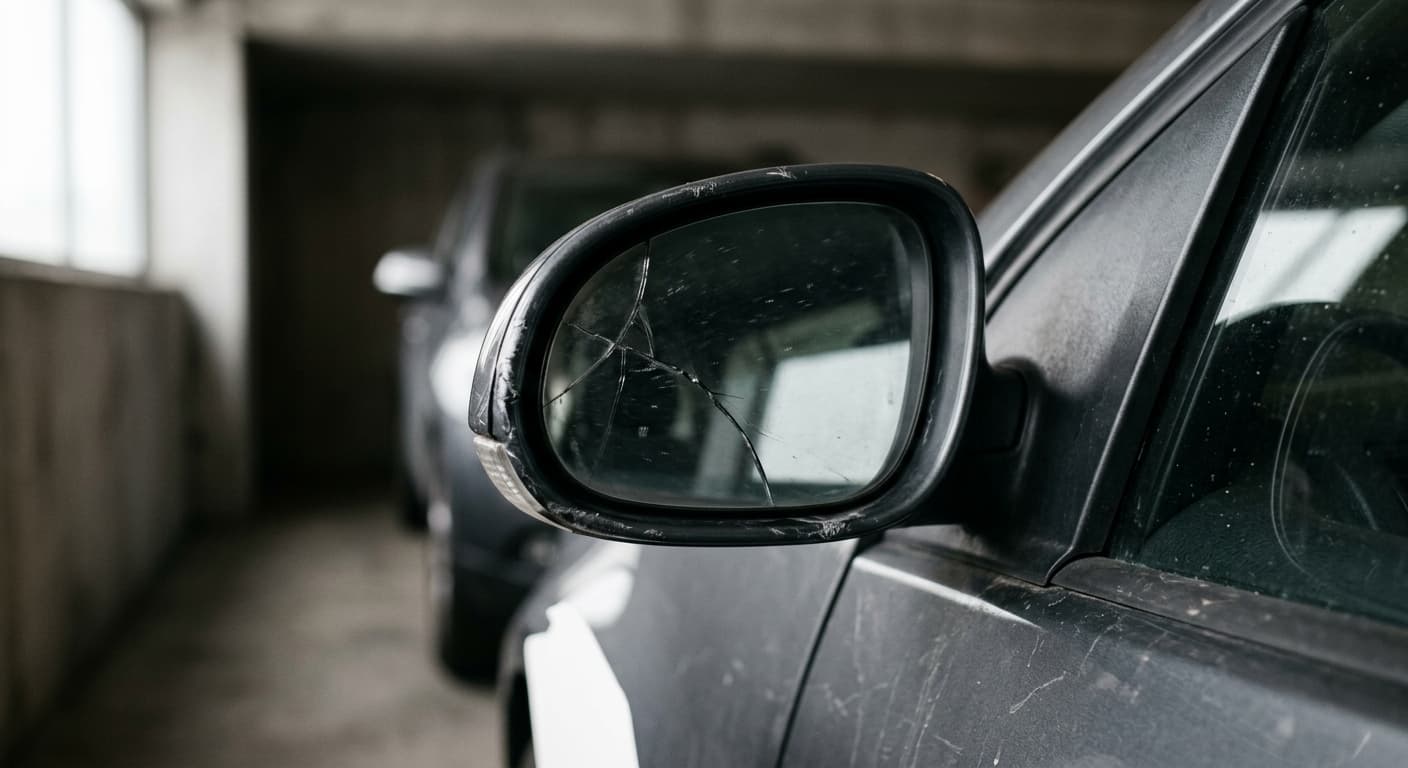
Indiana requires every driver involved in a crash to stop, identify themselves, and render aid under Ind. Code 9-26-1-1.1. Penalties range from a Class B misdemeanor for property damage to a Level 3 felony for a DUI-related death, catastrophic injury, or serious bodily injury, with prison terms up to 16 years.
Hurt in a hit-and-run? If the driver who hit you fled or had no insurance, your own uninsured/underinsured-motorist (UM/UIM) coverage may pay your injury claim. Estimate what it could be worth with our free Indiana Car Accident Settlement Calculator.
Overview of Indiana Hit and Run Laws
Last verified: March 2026. This guide reflects current Indiana law under IC 9-26-1-1.1 through IC 9-26-1-1.2.

Indiana law takes leaving the scene of an accident seriously. Under IC 9-26-1-1.1, every driver involved in a crash must stop immediately, provide identification, and assist anyone who is injured. Failing to do so is a criminal offense that can range from a misdemeanor to a serious felony, depending on the outcome of the accident.
This guide breaks down the specific duties required of drivers, the criminal penalties for leaving the scene, administrative consequences for your driving record, insurance options if you are a victim, and the time limits for filing claims.
Driver Duties After an Accident in Indiana
Under IC 9-26-1-1.1, every driver involved in an accident must fulfill several obligations before leaving the scene. These duties apply regardless of who caused the crash.
Required Actions at the Scene
- Stop immediately at the scene or as close to the accident as safely possible
- Do not obstruct traffic more than necessary when parking your vehicle
- Provide your information to the other driver, including your name, address, and vehicle registration number
- Show your driver's license when requested by the other party or law enforcement
- Render reasonable assistance to anyone injured in or entrapped by the crash, as directed by a law enforcement officer, medical personnel, or a 911 operator (required when the accident results in injury or death)
- Remain at the scene until you have completed all required duties
- Notify law enforcement by the quickest means of communication available if the accident results in injury or death
For accidents within a municipality, contact the local police department. For accidents outside city limits, contact the county sheriff's office or the nearest Indiana State Police post. Calling 911 also satisfies this duty.
Reporting the Accident to the BMV
Indiana no longer has a separate driver-filed crash report requirement; the old reporting sections (IC 9-26-1-2 through 9-26-1-4) were repealed. Instead, under IC 9-26-2-1 a law enforcement officer must investigate every crash that results in:
- Injury or death of any person
- Total property damage to an apparent extent of at least $2,500
Under IC 9-25-5-2, no more than 45 days after the Indiana Bureau of Motor Vehicles (BMV) receives a copy of the accident report, it sends each driver identified in the report, regardless of fault, a request for evidence of financial responsibility (proof of insurance).
Striking Unattended Vehicles or Property
If you hit an unattended vehicle or damage property other than a vehicle, IC 9-26-1-1.1 requires you to:
- Take reasonable steps to locate and notify the owner or person in charge of the damaged vehicle or property
- If the owner cannot be found after reasonable inquiry, contact a law enforcement officer or agency and provide the required information (your name, address, and vehicle registration number)
Criminal Penalties for Hit and Run in Indiana
Indiana law uses a tiered penalty structure for leaving the scene of an accident. The severity of the criminal charge depends on the level of harm caused and whether the driver was impaired.
Penalty Table
| Offense Type | Classification | Jail/Prison Term | Maximum Fine |
|---|---|---|---|
| Property damage only | Class B Misdemeanor | Up to 180 days | $1,000 |
| Bodily injury | Class A Misdemeanor | Up to 1 year | $5,000 |
| Moderate or serious bodily injury | Level 6 Felony | 6 months to 2.5 years | $10,000 |
| Prior conviction within 5 years for a listed serious driving offense | Level 6 Felony | 6 months to 2.5 years | $10,000 |
| Death or catastrophic injury | Level 4 Felony | 2 to 12 years | $10,000 |
| Failing to stop during or after OWI causing serious bodily injury, death, or catastrophic injury | Level 3 Felony | 3 to 16 years | $10,000 |
Property Damage Only (Class B Misdemeanor)
If the accident causes only property damage and you leave without fulfilling your duties, you commit a Class B misdemeanor. This includes hitting parked vehicles, mailboxes, fences, or other structures. The maximum penalty is 180 days in jail and a $1,000 fine.
Bodily Injury (Class A Misdemeanor)
When the accident results in bodily injury to another person, the charge rises to a Class A misdemeanor. "Bodily injury" means any impairment of physical condition, including pain. A conviction carries up to one year in jail and a fine of up to $5,000.
Moderate or Serious Bodily Injury, or Prior Conviction (Level 6 Felony)
The offense becomes a Level 6 felony under two circumstances:
- The accident results in moderate or serious bodily injury to another person. Serious bodily injury means injury that creates a substantial risk of death or causes serious permanent disfigurement or loss of function
- Within the preceding five years, the driver had a prior conviction for any offense listed in IC 9-30-10-4(a): reckless homicide or voluntary or involuntary manslaughter involving a motor vehicle, failing to stop at a crash resulting in death or injury, or operating while intoxicated (or with a prohibited alcohol concentration or controlled substance) resulting in death. A prior leaving-the-scene conviction for a property-damage-only crash does not count
A Level 6 felony carries a sentence of six months to two and a half years in prison, plus fines up to $10,000.
Death or Catastrophic Injury (Level 4 Felony)
If someone dies or suffers catastrophic injury as a result of the accident, leaving the scene is a Level 4 felony. Catastrophic injury includes permanent disability or impairment. This carries two to twelve years in prison and fines up to $10,000.
DUI Hit and Run (Level 3 Felony)
The most severe charge applies when a driver knowingly or intentionally fails to stop or comply with these duties during or after committing operating while intoxicated causing serious bodily injury (IC 9-30-5-4) or operating while intoxicated causing death or catastrophic injury (IC 9-30-5-5). Impairment alone does not trigger this level; the OWI offense itself must have caused serious bodily injury, death, or catastrophic injury. A Level 3 felony carries three to sixteen years in prison and fines up to $10,000.
Important: Indiana law treats each injured or deceased victim as a separate offense. Courts may order consecutive sentences, meaning penalties compound when multiple people are harmed.
Administrative Penalties and License Consequences
Beyond criminal charges, a hit and run conviction in Indiana carries significant administrative penalties through the Indiana BMV.
Points on Your Driving Record
Under 140 IAC 1-4.5-10, a leaving-the-scene conviction adds 8 points to your driving record, or 10 points when the crash involved injury or death. Under 140 IAC 1-4.5-4, points stay active for 24 months, 14 to 18 active points bring a warning notice, and 20 or more active points trigger a license suspension.
The suspension schedule works as follows:
- 20 points: 1-month suspension
- 22 points: 2-month suspension
- 24 points: 3-month suspension
- Each additional 2 points adds another month, up to a 12-month suspension at 42 or more points
Habitual Traffic Violator Status
A conviction under IC 9-26-1-1.1 also counts toward Indiana's habitual traffic violator law, IC 9-30-10-4. Failing to stop at a crash resulting in death or injury is one of the offenses where two judgments within ten years make a driver a habitual violator, and any leaving-the-scene conviction counts toward the three-judgment threshold.
When Not to Move Your Vehicle
Under IC 9-26-1-1.2, you should not move your vehicle if:
- The accident results in injury or death of any person
- A person is entrapped in a vehicle
- You are transporting hazardous materials
Wait for emergency personnel or law enforcement to arrive and instruct you. Moving your vehicle in these situations may compromise the crash investigation and could result in additional charges.
However, if the accident causes only property damage and your vehicle creates a traffic obstruction, you should move it to the nearest safe location that does not obstruct traffic.
Insurance Implications for Hit and Run Victims
If you are the victim of a hit and run in Indiana, you have several insurance options to recover compensation.
Uninsured Motorist (UM) Coverage
Indiana law requires auto insurance companies to offer uninsured motorist (UM) coverage to all policyholders. In a hit and run, the fleeing driver is treated as an uninsured motorist. UM coverage pays for:
- Medical expenses
- Lost wages
- Pain and suffering
- Other injury-related damages
Indiana's minimum UM coverage limits are $25,000 per person and $50,000 per accident for bodily injury and, where UM property damage coverage is included, $25,000 for property damage. You can reject UM coverage in writing, so check your policy.
Collision Coverage
If you carry collision coverage, it will pay for repairs to your vehicle regardless of fault, minus your deductible. This applies even when the at-fault driver cannot be identified.
Filing a Claim
To preserve your rights after a hit and run:
- Call 911 and file a police report immediately
- Document the scene with photos and gather witness contact information
- Note any details about the fleeing vehicle (make, model, color, license plate)
- Notify your insurance company within a reasonable time
- Respond to any BMV request for proof of insurance that follows the police accident report
Statute of Limitations
Indiana imposes time limits on both criminal prosecution and civil lawsuits related to hit and run accidents.
Criminal Time Limits
The statute of limitations for criminal prosecution depends on the offense classification:
| Offense Level | Time Limit |
|---|---|
| Class B Misdemeanor (property damage) | 2 years |
| Class A Misdemeanor (bodily injury) | 2 years |
| Level 6, 5, 4, or 3 Felony | 5 years |
These deadlines run from the date of the offense. After the time limit expires, prosecutors generally cannot file charges.
Civil Time Limits
Under IC 34-11-2-4, the statute of limitations for personal injury and property damage claims in Indiana is 2 years from the date of the accident.
Indiana's Comparative Fault Rule
Indiana follows a modified comparative fault system under IC 34-51-2-6. This rule affects how damages are calculated in civil claims arising from hit and run accidents.
- If you are 50% or less at fault, you can recover damages, but your award is reduced by your percentage of fault
- If you are 51% or more at fault, you are barred from recovering any compensation
For example, if a court finds you 30% at fault and your total damages are $100,000, you would recover $70,000.
Note that fleeing the scene does not automatically make you 100% at fault for causing the accident. Fault for the crash and liability for leaving the scene are separate legal issues. However, leaving the scene often makes it harder to defend against fault allegations because evidence may be lost.
Possible Defenses to Hit and Run Charges
Prosecutors must prove that you knowingly or intentionally failed to comply with the duties in IC 9-26-1-1.1(a). Common defenses include:
- Lack of knowledge: You genuinely did not realize an accident occurred (for example, a minor bump in heavy traffic)
- Safety concerns: You left the scene because you reasonably feared for your physical safety and reported the accident promptly afterward
- Involuntary departure: You were incapacitated, unconscious, or transported away from the scene by others
- Full compliance: You fulfilled all duties required by law before leaving
- Mistaken identity: You were not the driver of the vehicle at the time of the accident
Indiana Crash Statistics
According to the Insurance Institute for Highway Safety (IIHS), Indiana recorded 989 motor vehicle deaths in 2023. The Federal Highway Administration reported that Indiana's fatal crash rate was 1.05 deaths per 100 million vehicle miles traveled.
Breakdown by road user type (2023):
| Road User | Deaths | Percentage |
|---|---|---|
| Car occupants | 313 | 32% |
| Pickup and SUV occupants | 245 | 25% |
| Large truck occupants | 245 | 25% |
| Pedestrians | 96 | 10% |
| Bicyclists | 31 | 3% |
| Motorcyclists | 24 | 2% |
| Other | 35 | 3% |
Nationally, NHTSA estimated 39,345 traffic fatalities in 2024, a 3.8% decrease from 2023. Preliminary data for 2025 suggests a continued downward trend.
More Indiana Laws
Frequently Asked Questions
How long do I have to report a hit and run accident in Indiana?
If the accident results in injury or death, you must notify law enforcement (local police, the county sheriff or nearest state police post, or 911) as soon as possible. If you hit an unattended vehicle or other property and cannot find the owner, you must contact law enforcement. Indiana no longer requires drivers to file a separate crash report with the BMV; officers investigate injury, death, and apparent $2,500+ damage crashes, and the BMV then asks each driver in the report for proof of insurance.
Is hit and run a felony in Indiana?
It depends on the severity of the accident. Property damage only is a Class B misdemeanor. Bodily injury is a Class A misdemeanor. Moderate or serious bodily injury, or a prior conviction within five years for a serious driving offense listed in IC 9-30-10-4(a), elevates the charge to a Level 6 felony. Death or catastrophic injury is a Level 4 felony. It becomes a Level 3 felony when the driver fails to stop during or after committing operating while intoxicated causing serious bodily injury, death, or catastrophic injury.
What is the statute of limitations for a hit and run in Indiana?
For criminal charges, misdemeanor hit and run has a 2-year statute of limitations. Felony charges (Level 3 through Level 6) have a 5-year statute of limitations. For civil personal injury or property damage claims, you have 2 years from the date of the accident to file a lawsuit under IC 34-11-2-4.
Does my insurance cover me if I am a hit and run victim in Indiana?
Yes, if you carry uninsured motorist (UM) coverage. Indiana requires insurers to offer UM coverage, which treats the fleeing driver as an uninsured motorist. Minimum UM limits in Indiana are $25,000 per person and $50,000 per accident for bodily injury and, where UM property damage coverage is included, $25,000 for property damage. Collision coverage can also pay for vehicle repairs.
How many points does a hit and run add to my Indiana driving record?
A leaving-the-scene conviction adds 8 points to your Indiana driving record under 140 IAC 1-4.5-10, or 10 points if the crash involved injury or death. Under 140 IAC 1-4.5-4, reaching 20 or more active points (points stay active for 24 months) triggers a license suspension.
Injured in Indiana? Get a free case review from a personal-injury attorney
If someone else's negligence caused your injury, you may be owed compensation for medical bills, lost wages, and pain and suffering. Get a free, no-obligation review from a Indiana personal-injury attorney. Most work on contingency, so there is no upfront cost.
Updates
Corrected the Level 6 prior-conviction and Level 3 OWI triggers, the no-move and unattended-property duties, the mental-state standard, point values, and the UM property minimum, and replaced an outdated driver crash-report requirement with the current police-report and BMV insurance-verification process.
Restored two dropped statutory triggers under IC 9-26-1-1.1: the Level 6 felony tier covers moderate (not just serious) bodily injury, and the Level 3 DUI felony tier also covers OWI causing serious bodily injury, not only death or catastrophic injury.
Governing law re-checked for recent changes
The Law Behind This Article
This article rests on the statutory provisions below, held in our own legal record and retrieved from the official source. Tap a section to read the operative text.
Indiana Code, TITLE 9. MOTOR VEHICLES
§ 9-26-1-1.1Duties of driver of motor vehicle involved in accident; sentencingIn force
Sec. 1.1. (a) The operator of a motor vehicle involved in an accident shall do the following: (1) Except as provided in section 1.2 of this chapter, the operator shall immediately stop the operator's motor vehicle: (A) at the scene of the accident; or (B) as close to the accident as possible; in a manner that does not obstruct traffic more than is necessary. (2) Remain at the scene of the accident until the operator does the following: (A) Gives the operator's name and address and the registration number of the motor vehicle the operator was driving to any person involved in the accident. (B) Exhibits the operator's driver's license to any person involved in the accident or occupant of or any person attending to any vehicle involved in the accident.
Official text (excerpt) · last checked 2026-07-29 · Read the full text in our law library · Verify at iga.in.gov
Cited in 33 court opinions in our collectionLatest citing opinion in our collection: 2026
Opinions citing this section in our collection:
- Bradley W Hobbs v. State of Indiana (Indiana Court of Appeals 2026)“…accident or ensuring another person had done so. See Ind. Code § 9-26-1-1.1(a)(2), (3). The jury was instruc…”
- Jordan B. Wadle v. State of Indiana (Indiana Supreme Court 2020)“…See I.C. § 35-42-2-1.5 (aggravated battery) (2014 Repl.); I.C. § 9-26-1-1.1(a), (b) (Supp. 2015) (leaving the scene…”
- Jesse Jones v. State of Indiana (mem. dec.) (Indiana Court of Appeals 2016)“…ect at the time of Jones’s offense. 2 I.C. § 9-26-1-1.1(b)(1). Court of Appeals of Indi…”
Identified automatically from the court opinions citing this section — not a ranking of which case controls.
§ 9-26-1-1.2Duties of driver of motor vehicle involved in an accident resulting in traffic obstruction; violationIn force
Sec. 1.2. (a) If, after an operator of a motor vehicle is involved in an accident, the operator's motor vehicle comes to a stop in the traveled portion of a highway, the operator shall, as soon as safely possible, move the motor vehicle off the traveled portion of the highway and to a location as close to the accident as possible. However, the operator shall not move the motor vehicle if the accident: (1) involves the transportation of hazardous materials; or (2) results in injury or death of a person or the entrapment of a person in a vehicle. A person who violates this subsection commits a Class C infraction. (b) An operator of a motor vehicle to whom subsection (a) applies, is also subject to section 1.1(a)(2), 1.1(a)(3), and 1.1(a)(4) of this chapter. An operator who knowingly or intentionally fails to comply with section 1.1(a)(2), 1.1(a)(3), or 1.1(a)(4) of this chapter commits leaving the scene of an accident, a Class B misdemeanor, and is subject to the penalties in section 1.1(b) of this chapter.
Official text (excerpt) · last checked 2026-07-29 · Read the full text in our law library · Verify at iga.in.gov
Indiana Code, TITLE 34. CIVIL LAW AND PROCEDURE
§ 34-51-2-6Barring of recovery; degree of contributory faultIn forcecited in 6 of our articles
Sec. 6. (a) In an action based on fault that is brought against: (1) one (1) defendant; or (2) two (2) or more defendants who may be treated as a single party; the claimant is barred from recovery if the claimant's contributory fault is greater than the fault of all persons whose fault proximately contributed to the claimant's damages. (b) In an action based on fault that is brought against two (2) or more defendants, the claimant is barred from recovery if the claimant's contributory fault is greater than the fault of all persons whose fault proximately contributed to the claimant's damages. [Pre-1998 Recodification Citation: 34-4-33-4.]
Official text (excerpt) · last checked 2026-09-08 · Read the full text in our law library · Verify at iga.in.gov
Cited in 28 court opinions in our collectionLatest citing opinion in our collection: 2025
Opinions citing this section in our collection:
- St. Margaret Mercy Healthcare Centers, Inc. v. Poland (Indiana Court of Appeals 2005, 828 N.E.2d 396)“…2), the matter shifts to a comparative fault analysis under I.C. § 34-51-2-6. [7] Poland alleged in her complaint…”
- Speedway SuperAmerica, LLC v. Holmes (Indiana Supreme Court 2008, 885 N.E.2d 1265)“…ault to Gerald would have produced a judgment for Speedway. Ind. Code § 34-51-2-6 (2004). Moreover, the trial court’s ord…”
- TRW Vehicle Safety Systems, Inc. v. Moore (Indiana Supreme Court 2010, 936 N.E.2d 201)“…fault proximately contributed to the claimant's damag- es." Ind. Code § 34-51-2-6(b). If we were to ignore the unallocate…”
Identified automatically from the court opinions citing this section — not a ranking of which case controls.
Also relied on in: Indiana Dog Bite Laws: Liability and Victim Rights, Indiana Car Accident Laws: Fault, Insurance, and Your Claim, Motorcycle Accident Laws in Indiana (2026): Deadlines & Helmets
§ 34-11-2-4Injury or forfeiture of penalty actionsIn forcecited in 8 of our articles
Sec. 4. (a) An action for: (1) injury to person or character; (2) injury to personal property; or (3) a forfeiture of penalty given by statute; must be commenced within two (2) years after the cause of action accrues. (b) Except as provided in subsections (c) and (d), an action for injury to a person that results from the sexual abuse of a child must be commenced within the later of: (1) seven (7) years after the cause of action accrues; or (2) four (4) years after the person ceases to be a dependent of the person alleged to have performed the sexual abuse. (c) An action for injury to a person that: (1) results from the sexual abuse of a child; (2) is barred due to the expiration of the statute of limitations period described in subsection (b); and (3) is brought against a congressionally chartered organization that was incorporated before June 16, 1916; may be commenced in accordance with subsection (d).
Official text (excerpt) · last checked 2026-09-08 · Read the full text in our law library · Verify at iga.in.gov
Cited in 196 court opinions in our collectionLatest citing opinion in our collection: 2026
Opinions citing this section in our collection:
- Burkett v. American Family Insurance Group (Indiana Court of Appeals 2000, 737 N.E.2d 447)“…ons for tort actions applies to this case. See Ind.Code § 34-11-2-4. The accident between Richard Bu…”
- Irwin Mortgage Corp. v. Marion County Treasurer (Indiana Court of Appeals 2004, 816 N.E.2d 439)“…e as: 1. Does the two-year statute of limitations of Ind.Code Ann. § 34-11-2-4 bar Irwin's federal constitutional clai…”
- Shaum v. McClure (Indiana Court of Appeals 2009, 902 N.E.2d 853)“…the applicable statute of limitations is that set forth in IC 34-11-2-4, two (2) years. Additionally, even if t…”
Identified automatically from the court opinions citing this section — not a ranking of which case controls.
Also relied on in: Indiana Defamation Laws: Libel, Slander & Suing (2026), Indiana Slip and Fall Laws: Proving Premises Liability and Comparative Fault, Indiana Statute of Limitations: Filing Deadlines by Case Type
Search our full record of US law — 2.1 million sections, every state + federal →
Sources and References
- IC 9-26-1-1.1: Duties of Driver of Motor Vehicle Involved in Accident; Sentencing(iga.in.gov).gov
- IC 9-26-1-1.2: Duties of Driver Involved in Accident Resulting in Traffic Obstruction(iga.in.gov).gov
- Indiana BMV: Driver Record Points(in.gov).gov
- 140 IAC 1-4.5-10: Point Value Table for Indiana Traffic Convictions(law.cornell.edu)
- IC 34-11-2-4: Statute of Limitations for Personal Injury(iga.in.gov).gov
- IC 34-51-2-6: Comparative Fault(iga.in.gov).gov
- IIHS Fatality Facts 2023: State by State(iihs.org)
- FHWA State Highway Safety Report: Indiana(fhwa.dot.gov).gov
- NHTSA Early Estimate of Motor Vehicle Traffic Fatalities in 2024(crashstats.nhtsa.dot.gov).gov
- Indiana Department of Insurance: Auto Insurance(in.gov).gov
- 140 IAC 1-4.5-4: Points Accumulation Retention and Suspension Schedule(law.cornell.edu)
- IC 9-25-5-2: BMV Request for Evidence of Financial Responsibility After Accident Report(iga.in.gov)
- IC 9-26-2-1: Law Enforcement Investigation of Accidents(iga.in.gov)
- IC 9-30-10-4: Habitual Traffic Violators(iga.in.gov)
- IC 9-25-4-5: Minimum Amounts of Financial Responsibility(iga.in.gov)
- IC 27-7-5-2: Uninsured and Underinsured Motorist Coverage(iga.in.gov)