
Arkansas
Arkansas Hit and Run Laws: Penalties and What to Do
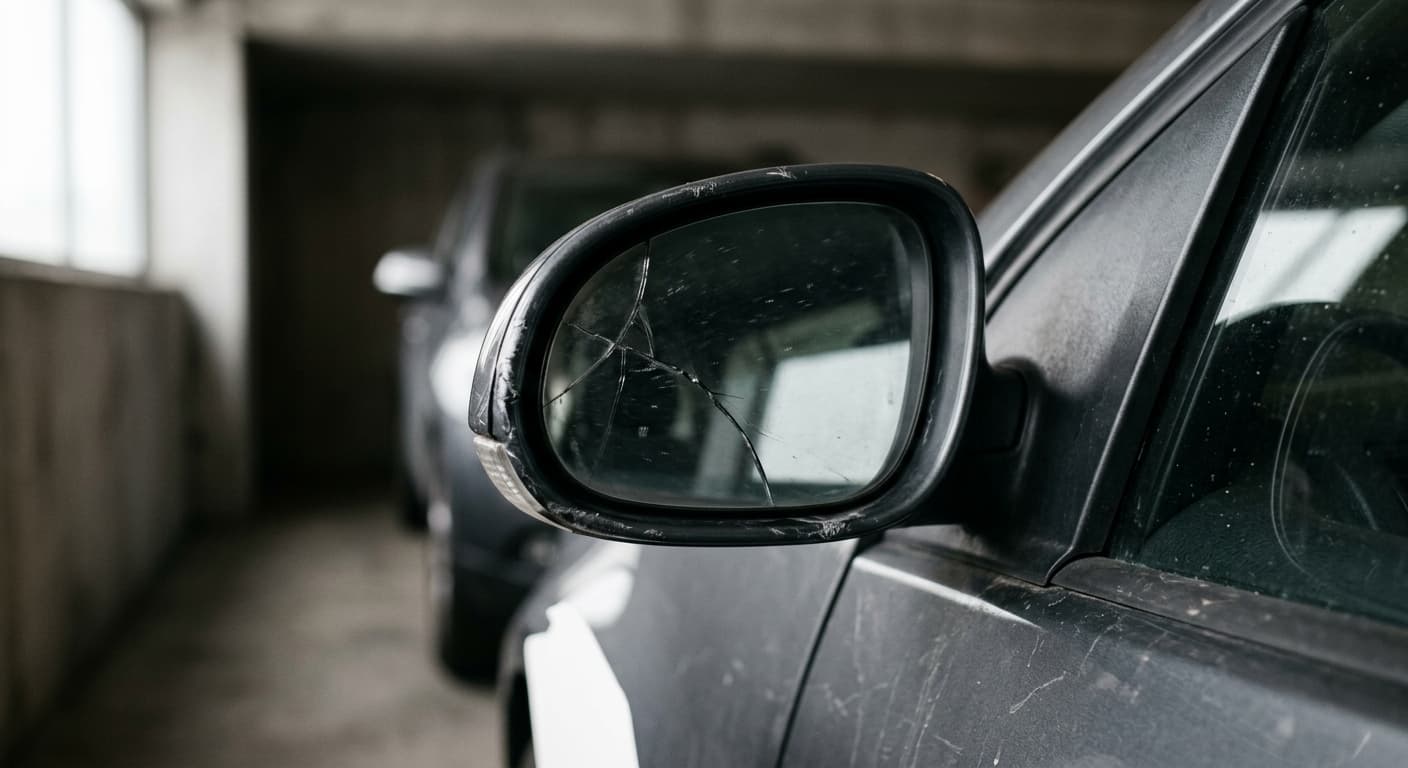
Under Ark. Code Ann. 27-53-101 through 27-53-103, Arkansas classifies leaving the scene of an accident as a criminal offense ranging from a Class B misdemeanor for minor property damage to a Class B felony carrying five to twenty years in prison when the crash causes serious injury or death.
Hurt in a hit-and-run? If the driver who hit you fled or had no insurance, your own uninsured/underinsured-motorist (UM/UIM) coverage may pay your injury claim. Estimate what it could be worth with our free Arkansas Car Accident Settlement Calculator.
Overview of Arkansas Hit and Run Laws
Last verified: March 2026. This article reflects current Arkansas Code Title 27, Chapter 53, and applicable criminal statutes.
Arkansas treats leaving the scene of an accident as a serious criminal offense. Three statutes form the backbone of the state's hit and run laws: AR Code 27-53-101 (accidents involving injury or death), AR Code 27-53-102 (property damage accidents), and AR Code 27-53-103 (duty to give information and render aid).
The penalties range from a Class B misdemeanor for minor property damage to a Class B felony for fleeing the scene of a fatal accident. Understanding these laws can help you protect your rights whether you are a driver or a victim.
Arkansas Code 27-53-101: Accidents Involving Injury or Death

Under AR Code 27-53-101, any driver involved in an accident that results in physical injury, serious physical injury, or death must take these steps:
- Stop immediately at the scene or as close to the scene as safely possible.
- Return to the scene right away if you cannot stop at the exact location.
- Remain at the scene until you fulfill all duties listed under 27-53-103.
- Do not move the vehicle unless law enforcement instructs you to do so.
Penalties Under 27-53-101
The penalties depend on the severity of harm caused:
| Outcome | Classification | Maximum Penalty |
|---|---|---|
| Physical injury | Class D Felony | Up to 6 years in prison, up to $10,000 fine |
| Serious physical injury or death (knowing/reckless failure to stop) | Class B Felony | 5 to 20 years in prison, up to $15,000 fine |
A conviction under this section also triggers mandatory driver's license revocation.
The distinction between "physical injury" and "serious physical injury" matters. Arkansas law defines serious physical injury as injury that creates a substantial risk of death, causes protracted disfigurement, or results in protracted impairment of health or loss of any bodily function.
Arkansas Code 27-53-102: Property Damage Accidents
Under AR Code 27-53-102, any driver involved in an accident that results only in damage to a vehicle or personal property must:
- Stop immediately and park the vehicle in a safe position.
- Remain at the scene for a reasonable time, which the statute defines as not less than 30 minutes.
- Fulfill all duties listed under 27-53-103.
This applies to accidents on public roads, parking lots of private businesses, and anywhere else in the state.
Penalties Under 27-53-102
The classification depends on the dollar amount of damage:
| Damage Amount | Classification | Maximum Jail/Prison | Maximum Fine |
|---|---|---|---|
| Under $1,000 | Class B Misdemeanor | 90 days in jail | $1,000 |
| $1,000 to $9,999 | Class A Misdemeanor | 1 year in jail | $2,500 |
| $10,000 or more | Class D Felony | 6 years in prison | $10,000 |
Even at the lowest tier, a hit and run conviction creates a criminal record that can affect employment, insurance rates, and driving privileges.
Arkansas Code 27-53-103: Duty to Give Information and Render Aid
AR Code 27-53-103 spells out what every driver must do after any accident. You must provide the following to the other party, law enforcement, or any person attending an injured victim:

- Your full name and address
- Your vehicle registration number
- Your driver's license (upon request)
- Reasonable assistance to any person injured in the accident, including arranging transportation to a medical facility if needed
You must also remain at the scene for a reasonable time, which the statute defines as not less than 30 minutes, to be present if law enforcement was contacted.
These requirements do not apply if you are physically incapacitated or too severely injured to comply.
SR-1 Accident Report Requirements
Beyond the duties at the scene, Arkansas requires drivers to file a Safety Responsibility (SR-1) accident report with the Arkansas Department of Finance and Administration within 30 days of any accident that:
- Results in injury or death to any person, regardless of fault
- Causes property damage exceeding $1,000 to any one person's property
Failing to file the SR-1 report can result in a fine between $100 and $1,000 and potential suspension of your driver's license under AR Code 27-53-201.
You can submit the SR-1 form online, by mail, or in person at a DFA revenue office.
Related Criminal Charges That May Apply
Arkansas prosecutors can stack additional charges on top of the hit and run offense. Here are the most common related charges.
Negligent Homicide (AR Code 5-10-105)
If a driver causes a death through criminal negligence, separate negligent homicide charges may apply. This offense becomes a Class B felony (5 to 20 years in prison, up to $15,000 fine) when the driver:
- Had a blood alcohol concentration of 0.08 or higher
- Was operating while fatigued (awake for 24 or more consecutive hours)
- Was unlawfully passing a stopped school bus
Otherwise, negligent homicide is a Class A misdemeanor unless the victim is a minor under 16 or a first responder.
DUI Combined With Hit and Run
DUI and hit and run are separate offenses in Arkansas. A driver who flees the scene while intoxicated may face:
- DUI charges under Arkansas Code Title 5
- Hit and run charges (felony if injury or death is involved)
- Negligent homicide charges if a death occurred
- Enhanced sentencing for multiple concurrent offenses
The combination of DUI and hit and run significantly increases the total potential prison time and fines.
Vehicular Homicide and Road Rage
If prosecutors can show the driver acted with intent or extreme recklessness, such as during a road rage incident, charges can escalate beyond the standard hit and run statute.
Statute of Limitations
Arkansas imposes strict time limits on both criminal prosecution and civil lawsuits related to hit and run.
Criminal Statute of Limitations
Under AR Code 5-1-109, the time prosecutors have to file charges depends on the classification:
| Classification | Time Limit |
|---|---|
| Misdemeanor (Class A or B) | 1 year from the offense |
| Class D Felony | 3 years from the offense |
| Class B Felony | 6 years from the offense |
These deadlines mean that even if you are not immediately identified after fleeing the scene, prosecutors can still bring charges for years afterward.
Civil Statute of Limitations
Victims have three years from the date of the accident to file a personal injury or property damage lawsuit under Arkansas civil law. This deadline applies regardless of whether criminal charges are filed.
Fault Determination and Comparative Negligence
Arkansas follows a modified comparative fault system under AR Code 16-64-122. Here is how it works:
- Each party in an accident is assigned a percentage of fault.
- Your damages award is reduced by your percentage of fault.
- If you are 50% or more at fault, you are completely barred from recovering damages.
This rule has a critical practical consequence: admitting fault at the accident scene can severely damage or eliminate your ability to recover compensation in a civil claim. You should exchange required information but avoid making statements about who caused the accident. Let investigators determine fault based on evidence.
Insurance Implications After a Hit and Run
Arkansas requires all drivers to carry minimum liability insurance of 25/50/25:
- $25,000 per person for bodily injury
- $50,000 per accident for total bodily injury
- $25,000 per accident for property damage
Arkansas insurance companies must offer uninsured motorist (UM) coverage to every policyholder, though drivers may decline it. UM coverage becomes essential in hit and run cases because it pays your claim when the at-fault driver cannot be identified.
If you are the victim of a hit and run and the other driver is never found, your UM policy effectively stands in for the missing driver's insurance. Without UM coverage, you may have no source of compensation for your injuries and vehicle damage beyond a civil lawsuit that you may never be able to file because the driver is unknown.
What to Do After an Accident in Arkansas
Steps for Drivers
- Stop immediately and park your vehicle in a safe position.
- Call 911 or notify law enforcement. You must do this within 30 minutes.
- Check for injuries and render reasonable assistance to anyone who is hurt.
- Exchange information: your name, address, vehicle registration, and driver's license.
- Document the scene: take photos, note the time, weather, and road conditions.
- Collect witness information from bystanders who saw the accident.
- File an SR-1 report within 30 days if injuries occurred or property damage exceeds $1,000.
- Contact an attorney before making detailed written or recorded statements.
What NOT to Do
- Never leave the scene. Even a minor fender-bender can result in criminal charges if you drive away.
- Never admit fault or say "it was my fault." Let investigators determine responsibility.
- Never move a vehicle involved in an accident with serious injury or death unless law enforcement directs you.
Steps for Hit and Run Victims
- Document everything you can: the fleeing vehicle's make, model, color, license plate, and direction of travel.
- Take photographs of the scene, your vehicle, and any injuries.
- Gather witness contact information from anyone who saw the incident.
- Report to law enforcement immediately. A prompt report increases the chance of identifying the driver.
- Seek medical attention even if your injuries seem minor. Some injuries take hours or days to manifest.
- Keep all receipts for medical treatment, vehicle repair, rental cars, and other expenses.
- Contact your insurance company to discuss filing a UM claim.
- Consult with an attorney about both criminal victim rights and civil recovery options.
Legal Defenses for Hit and Run Charges
Arkansas courts recognize several defenses to hit and run charges. These defenses must be supported by evidence and are evaluated on a case-by-case basis.
Fear for Personal Safety
If you reasonably feared for your life or physical safety at the accident scene, you may leave and immediately report to the nearest law enforcement agency. For example, if the other driver became physically threatening, leaving the scene to call police from a safe location may be justifiable.
Lack of Knowledge
If you genuinely did not know you were involved in an accident, this may serve as a defense. However, prosecutors will examine vehicle damage, surveillance camera footage, and witness statements to determine whether a reasonable person would have been aware of the collision.
Incapacitation
The statute itself provides an exemption for drivers who are physically unable to fulfill the stop-and-report requirements due to their own injuries. If you were rendered unconscious or required emergency medical transport, the duty to remain at the scene may not apply.
2025 Law Change: Work Zone Safety
Effective August 5, 2025, Act 327 of 2025 (HB 1596) expanded the double-fine provision for traffic violations in work zones. Previously, fines were only doubled in static (stationary) work zones. The new law doubles fines in mobile work zones as well.
This change is relevant to hit and run cases because accidents in construction or maintenance zones already carry heightened scrutiny. Striking a highway worker and fleeing can result in both the standard hit and run felony charges and the enhanced work zone penalties.
Notable Arkansas Hit and Run Cases
Highway Worker Death Case (2024)
A North Little Rock woman was arrested by Arkansas State Police in connection with the hit and run death of an Arkansas Department of Transportation employee working in an I-30 work zone. The case highlighted the severe consequences of fleeing after striking workers in highway construction zones.
Florida Man Extradition (2025)
In July 2025, Arkansas State Police took custody of a Florida man charged in a fatal October 2023 hit and run stemming from a road rage incident. The suspect was extradited from Florida, demonstrating that fleeing across state lines does not prevent prosecution.
Interstate 530 Hit and Run (2025)
On December 30, 2025, Arkansas State Police investigated a hit and run on Interstate 530 South near the 34-mile marker. The ongoing investigation demonstrates the state's commitment to pursuing hit and run offenders on major highways.
More Arkansas Laws
Frequently Asked Questions
Is a hit and run always a felony in Arkansas?
No. A hit and run involving only property damage under $10,000 and no injuries is charged as a misdemeanor. It becomes a Class B misdemeanor if damage is under $1,000 and a Class A misdemeanor if damage is between $1,000 and $9,999. Felony charges apply when property damage reaches $10,000, someone is injured, or a death occurs.
How long do I have to report an accident in Arkansas?
You must remain at the scene for at least 30 minutes and notify law enforcement within that time. You also must file an SR-1 accident report with the Arkansas Department of Finance and Administration within 30 days if the accident caused injury, death, or property damage exceeding $1,000.
What is the statute of limitations for a hit and run in Arkansas?
For criminal charges, prosecutors have one year to file misdemeanor charges, three years for Class D felony charges, and six years for Class B felony charges (serious injury or death cases). Victims have three years from the accident date to file a civil lawsuit for damages.
Can I recover damages as a hit and run victim if the other driver is never found?
Yes, if you carry uninsured motorist (UM) coverage on your auto insurance policy. Arkansas insurers are required to offer UM coverage to every policyholder. UM coverage pays for your injuries and vehicle damage when the at-fault driver is unidentified. Without UM coverage, your recovery options are limited.
What should I do if I am falsely accused of a hit and run in Arkansas?
Contact a criminal defense attorney immediately. Common defenses include lack of knowledge that an accident occurred, fear for personal safety that justified leaving the scene, and physical incapacitation due to your own injuries. Surveillance footage, witness testimony, and vehicle damage evidence can all support your defense.
Injured in Arkansas? Get a free case review from a personal-injury attorney
If someone else's negligence caused your injury, you may be owed compensation for medical bills, lost wages, and pain and suffering. Get a free, no-obligation review from a Arkansas personal-injury attorney. Most work on contingency, so there is no upfront cost.
The Law Behind This Article
This article rests on the statutory provisions below, held in our own legal record and retrieved from the official source. Tap a section to read the operative text.
Arkansas Code of 1987 Annotated
§ 16-64-122Comparative fault.In forcecited in 7 of our articles
(a) Except as otherwise provided under § 16-118-109, in all actions for damages for personal injuries or wrongful death or injury to property in which recovery is predicated upon fault, liability shall be determined by comparing the fault chargeable to a claiming party with the fault chargeable to
Official text (excerpt) · last checked 2026-09-08 · Read the full text in our law library · Verify at arkleg.state.ar.us
Cited in 51 court opinions in our collectionLatest citing opinion in our collection: 2017
Opinions citing this section in our collection:
- Ouachita Wilderness Institute v. Mergen (Supreme Court of Arkansas 1997, 329 Ark. 405)“…ial Court declined to give a jury instruction patterned on Ark. Code Ann. § 16-64-122 (c) (Supp. 1995). That subsection, foun…”
- Skinner v. R.J. Griffin & Co. (Supreme Court of Arkansas 1993, 313 Ark. 430)“…ative fault is an affirmative defense, ARCP Rule 8(c), and Ark. Code Ann. § 16-64-122 (1987), in the pertinent part, provide…”
- Nationsbank, N.A. v. Murray Guard, Inc. (Supreme Court of Arkansas 2001, 343 Ark. 437)“…es from whom the claiming party seeks to recover damages.” Ark. Code Ann. § 16-64-122 . Just how this change of phrase was in…”
Identified automatically from the court opinions citing this section — not a ranking of which case controls.
Also relied on in: Medical Malpractice Laws in Arkansas (2026): Deadlines & Caps, Arkansas Wrongful Death Laws (2026): Deadlines & Who Can Sue, Truck Accident Laws in Arkansas (2026): Deadlines & Liability
§ 27-53-101Requirements in accidents involving death or personal injuries.In force
(a)(1) The driver of any vehicle involved in an accident resulting in injury to or death of any person shall immediately stop the vehicle at the scene of the accident or as close thereto as possible, but shall then immediately return to and in every event shall remain at the scene of the accident…
Official text (excerpt) · last checked 2020-11-06 · Read the full text in our law library
Cited in 5 court opinions in our collectionLatest citing opinion in our collection: 2007
Opinions citing this section in our collection:
- Stivers v. State (Supreme Court of Arkansas 2003, 354 Ark. 140)“…ction for fading to stop after an accident, a violation of Ark. Code Ann. § 27-53-101 (Supp. 2001). On appeal, Stivers argue…”
- Hicks v. State (Supreme Court of Arkansas 1991, 305 Ark. 393)“…as subsequently incarcerated and charged with violations of Ark.Code Ann. §§ 27-53-101 and 5-10-104 (1987). It is agreed, by a…”
- Tackett v. State (Supreme Court of Arkansas 1989, 298 Ark. 20)“…n accident (Ark.Stat. Ann. § 75-901 (Repl.1981), currently Ark. Code Ann. § 27-53-101 (Supp.1987)). In September 1983 he was…”
Identified automatically from the court opinions citing this section — not a ranking of which case controls.
§ 27-53-102Accidents involving damage only to vehicle or personal property of another person — Removal of vehicle.In force
(a)(1) The driver of a vehicle involved in an accident resulting only in damage to a vehicle that is driven or attended by any person or to the personal property of another person shall immediately stop the vehicle at the scene of the accident or as close to the accident as possible, and shall…
Official text (excerpt) · last checked 2020-11-06 · Read the full text in our law library
§ 27-53-103Duty to give information, remain at the scene of an accident, and render aid.In force
(a)(1) The driver of any vehicle involved in an accident resulting in injury to or death of any person or damage to any vehicle that is driven or attended by any person shall give his or her name, address, and the registration number of the vehicle he or she is driving. (2) Upon request and if…
Official text (excerpt) · last checked 2020-11-06 · Read the full text in our law library
Cited in 2 court opinions in our collectionLatest citing opinion in our collection: 2021
Opinions citing this section in our collection:
- State Farm Mutual Automobile Insurance v. Henderson (Supreme Court of Arkansas 2004, 356 Ark. 335)“…gation to stop at the scene of the accident, as required by Ark.Code Ann. § 27-53-103 (Supp.2003). The trial court then concl…”
- Lovellette v. Carlos Jose Peres Lagos Inc (District Court, E.D. Arkansas 2021)“…ble aid to a person involved in a collision as required by A.C.A. § 27-53-103” and that this failure was a proximate…”
Identified automatically from the court opinions citing this section — not a ranking of which case controls.
§ 5-1-109Statute of limitations.In forcecited in 2 of our articles
(a)(1) A prosecution for the following offenses may be commenced at any time: (A) Capital murder, § 5-10-101 ; (B) Murder in the first degree, § 5-10-102 ; (C) Murder in the second degree, § 5-10-103 ; (D) Rape, § 5-14-103 , if the victim was a minor at the time of the offense; (E) Sexual…
Official text (excerpt) · last checked 2020-11-06 · Read the full text in our law library
Cited in 42 court opinions in our collectionLatest citing opinion in our collection: 2026
Opinions citing this section in our collection:
- Tackett v. State (Supreme Court of Arkansas 1989, 298 Ark. 20)“…tside the three year statute of limitations established by Ark. Code Ann. § 5-1-109 (Supp.1987) for manslaughter. Under…”
- Clark v. State (Supreme Court of Arkansas 1992, 308 Ark. 84)“…he general statue of limitations for theft is three years. Ark. Code Ann. § 5-1-109 (b) (1987). However, the state argued t…”
- State v. Gray (Supreme Court of Arkansas 2016, 505 S.W.3d 160)“…ies had expired before commencement of the prosecution. See Ark. Code Ann. § 5-1-109(b)(2) (Repl. 2013). He also filed a mot…”
Identified automatically from the court opinions citing this section — not a ranking of which case controls.
Also relied on in: Arkansas Statute of Limitations: Filing Deadlines by Case Type
§ 5-10-105Negligent homicide.In force
(a)(1) A person commits negligent homicide if he or she negligently causes the death of another person, not constituting murder or manslaughter, as a result of operating a vehicle, an aircraft, or a watercraft: (A) While intoxicated; (B)(i) If at that time there is an alcohol concentration of…
Official text (excerpt) · last checked 2020-11-06 · Read the full text in our law library
Cited in 30 court opinions in our collectionLatest citing opinion in our collection: 2024
Opinions citing this section in our collection:
- Rollins v. State (Supreme Court of Arkansas 2009, 347 S.W.3d 20)“…he first place (negligent conduct)." Original Commentary to Ark.Code Ann. § 5-10-105 (Repl.1995). In Hoyle v. State, 3…”
- Robinson v. State (Court of Appeals of Arkansas 2007, 98 Ark. App. 237)“…hter as a result of operating a vehicle while intoxicated. Ark. Code Ann. § 5-10-105 (a)(1)(A) (Supp. 2005). A person convic…”
- Kristopher Gould v. State of Arkansas (Court of Appeals of Arkansas 2023, 2023 Ark. App. 227)“…blood, urine, breath, saliva, or other bodily substance.” Ark. Code Ann. § 5-10-105(a)(1)(A), (B) & (a)(2). A person “acts…”
Identified automatically from the court opinions citing this section — not a ranking of which case controls.
Search our full record of US law — 2.1 million sections, every state + federal →
Sources and References
- AR Code 27-53-101: Requirements in Accidents Involving Death or Personal Injuries (2024)(law.justia.com)
- AR Code 27-53-102: Accidents Involving Damage Only to Vehicle or Personal Property (2024)(law.justia.com)
- AR Code 27-53-103: Duty to Give Information, Remain at Scene, and Render Aid (2024)(law.justia.com)
- AR Code 5-10-105: Negligent Homicide (2024)(law.justia.com)
- AR Code 5-1-109: Criminal Statute of Limitations (2024)(law.justia.com)
- AR Code 16-64-122: Comparative Fault (2024)(law.justia.com)
- Arkansas DFA Safety Responsibility: SR-1 Accident Report(dfa.arkansas.gov).gov
- Arkansas SR-1 Online Filing Instructions(ark.org).gov
- Arkansas Insurance Department: Consumer FAQ(insurance.arkansas.gov).gov
- Arkansas DOT: New Laws Go into Effect August 5, 2025(ardot.gov).gov