
Wisconsin
Wisconsin Lemon Law (2026): How to Qualify & Get a Refund
Independently fact-checked against primary sources (last audited August 17, 2026). · Reviewed by the RecordingLaw editorial team. · Law checked current as of August 17, 2026. · 5 primary sources cited on this page. How we verify our legal content
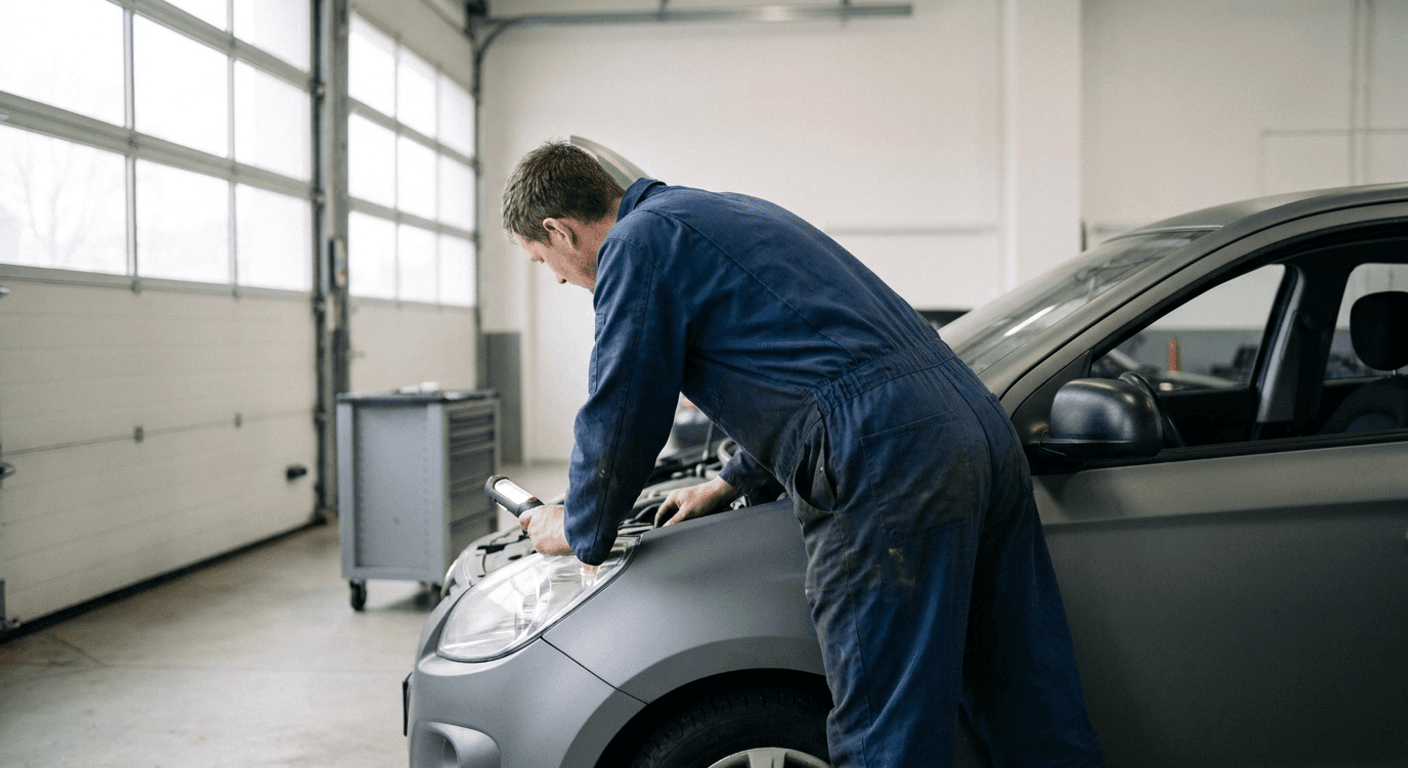
Wisconsin's lemon law, codified at Wis. Stat. section 218.0171, protects new-vehicle buyers when a defect persists after 4 repair attempts or leaves the vehicle out of service for 30 or more aggregate days within the warranty period or one year of first delivery, whichever is sooner. Consumers who qualify may choose between a full replacement vehicle or a complete refund, including sales tax, finance charges, and collateral costs.
Wisconsin has one of the strongest and most consumer-friendly lemon laws in the country. Codified at Wis. Stat. section 218.0171, the law covers a broader range of vehicles than most states, including motorcycles, motor homes, and heavy-duty trucks. It gives consumers a clear choice between a replacement vehicle and a full refund when a new vehicle has a defect that cannot be fixed after reasonable attempts.
This guide explains who qualifies, what triggers a lemon law claim, the remedies available, and how to navigate the filing process in Wisconsin.
Which Vehicles Does the Wisconsin Lemon Law Cover
Wisconsin has one of the broadest vehicle coverage provisions of any state lemon law. The law applies to nearly every type of new motor vehicle.
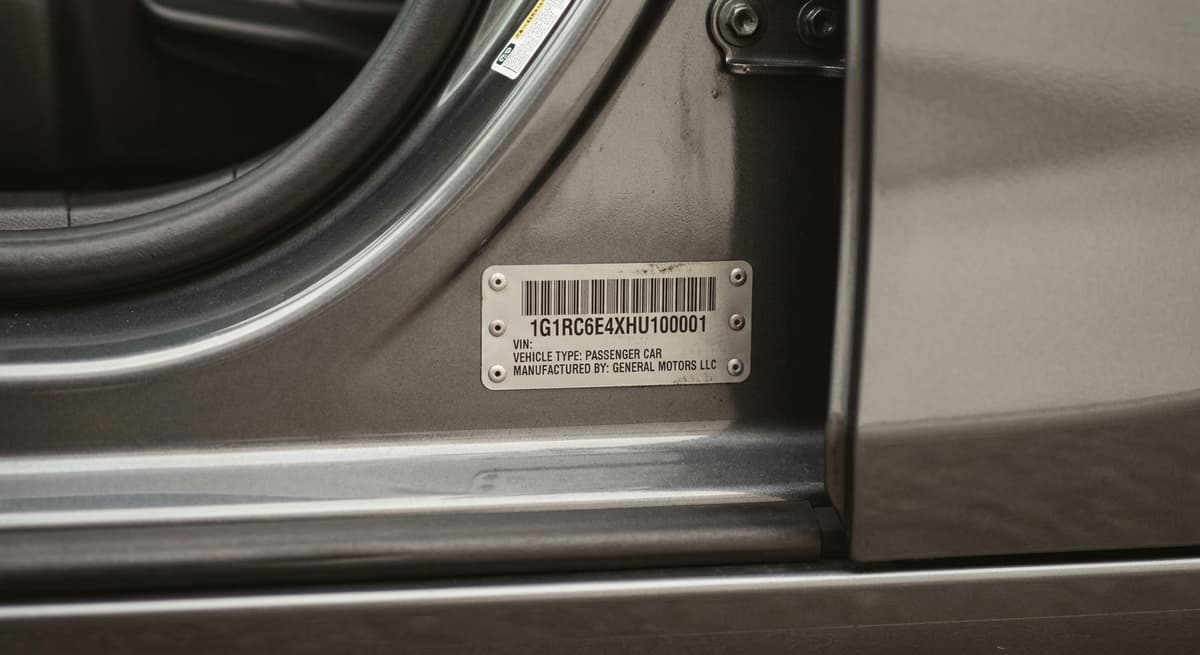
Covered Vehicle Types
- Standard motor vehicles required to be registered under Wisconsin law
- Vehicles exempt from registration if exempt as nonresident or foreign-registered vehicles
- Demonstrator vehicles used primarily for demonstration to the public
- Executive vehicles used primarily by manufacturer, distributor, or dealer executives
- Motorcycles (with a modified usage deduction formula)
- Motor homes including the living quarters components
- Heavy-duty vehicles with a gross vehicle weight rating (GVWR) over 10,000 pounds (with extended timelines)
- Leased vehicles under written lease agreements
- Electric and hybrid vehicles of any type listed above
Vehicles NOT Covered
- Mopeds
- Semitrailers
- Trailers designed for use in combination with a truck or truck tractor
- Previously owned (used) vehicles
Who Counts as a Consumer
Wisconsin defines "consumer" broadly to include:
- Purchasers of new motor vehicles from dealers (not for resale)
- Transferees who receive the vehicle before warranty expiration (not for resale)
- Persons who may enforce the warranty
- Persons who lease a motor vehicle under a written lease
The Wisconsin Lemon Law Presumption
Under Wis. Stat. section 218.0171(1)(h), Wisconsin law defines a "reasonable attempt to repair" as occurring when certain conditions are met within the warranty period or one year after first delivery, whichever is sooner.
When the Presumption Applies
| Condition | Threshold | Details |
|---|---|---|
| Repair attempts (same defect) | 4 or more attempts | The same nonconformity has been subject to repair and continues to exist |
| Days out of service | 30 or more aggregate days | Vehicle out of service because of one or more warranty nonconformities |
| Coverage window | Warranty term OR 1 year | Whichever is sooner from date of first delivery |
What Counts as "Out of Service"
Wisconsin provides a specific definition of when a vehicle is considered out of service:
- The vehicle is in the possession of the manufacturer, motor vehicle lessor, or any authorized dealer for repairs or repair attempts, OR
- The vehicle is in the consumer's possession AND has a nonconformity that substantially affects use or safety AND has been subject to at least 2 prior repair attempts
This second prong is important. It means time spent driving a vehicle with a known, unresolved safety issue can count toward the 30-day total, as long as there have been at least two prior repair attempts.
Exclusions from the 30-Day Count
Time when repair services are not available because of flood, other natural disaster, war, invasion, fire, or strike does not count toward the 30-day period.
What Qualifies as a Nonconformity
A nonconformity is any condition or defect that:
- Substantially impairs the use, value, or safety of the motor vehicle
- Is covered by an express warranty applicable to the vehicle or a component
A condition caused by abuse, neglect, or unauthorized modification by the consumer does not qualify.
Consumer Remedies: Replacement or Refund
After a reasonable attempt to repair, Wisconsin gives the consumer the choice between a replacement vehicle or a full refund. The consumer makes this election using a state-prescribed form from the Wisconsin Department of Transportation.
Option 1: Replacement Vehicle
If the consumer chooses a replacement, the manufacturer must:
- Accept return of the nonconforming vehicle
- Provide a comparable new motor vehicle
- Refund any collateral costs
Timeline for standard vehicles: No later than 30 days after receiving the consumer's election form, the manufacturer must agree in writing to provide a comparable new vehicle or a refund. That written agreement is its own enforceable deadline. The manufacturer then has until the 45th day after receiving the form to actually deliver the replacement vehicle or pay the refund, and must exercise due diligence in locating a comparable vehicle during that period. See Wis. Stat. section 218.0171(2)(cg)1.
Timeline for heavy-duty vehicles (over 10,000 lbs GVWR): The same 30-day written-agreement deadline applies. Only the outer limit changes: the manufacturer then has until the 120th day after receiving the election form to deliver the replacement or pay the refund. See Wis. Stat. section 218.0171(2)(cg)2.
If no comparable vehicle can be found, the manufacturer may provide a refund instead.
Option 2: Full Refund
If the consumer chooses a refund, the manufacturer must provide:
- Full purchase price of the vehicle
- Sales tax paid on the purchase
- Finance charges including interest and fees
- Amount paid at point of sale such as down payments
- Collateral costs including expenses for alternative transportation during repairs
Usage Deduction Formula
The manufacturer may subtract a reasonable allowance for the consumer's use of the vehicle before first reporting the defect:
Usage Deduction = (Full Purchase Price x Miles Before First Report) / 100,000
For motorcycles, the formula uses 20,000 instead of 100,000.
Example: If you paid $35,000 for a car and drove 3,000 miles before reporting the defect, the usage deduction would be $35,000 x 3,000 / 100,000 = $1,050.
Payment Timeline
The refund must be provided no later than 30 days after the consumer offers to transfer title to the manufacturer.
How to File a Lemon Law Claim in Wisconsin
Step 1: Document Everything
- Keep all repair orders and invoices
- Record dates your vehicle was in the shop or out of service (including days in your possession with an unresolved safety defect after 2 repairs)
- Document the symptoms you experienced each time
- Save all correspondence with the dealer and manufacturer
- Take photos or videos of defects when possible
Step 2: Report the Problem
Report the nonconformity to the manufacturer, motor vehicle lessor, or any authorized dealer and make the vehicle available for repair before the warranty expires or within one year of first delivery, whichever is sooner.
Step 3: Allow Repair Attempts
Give the manufacturer, lessor, or dealer the opportunity to repair the nonconformity. Keep careful records of each attempt, including what was done and whether the problem recurred.
Step 4: Obtain the State-Prescribed Election Form
The Wisconsin Department of Transportation prescribes forms for consumers to elect replacement or refund. These forms are available on the DOT's lemon law page. You must submit this form to the manufacturer.
Step 5: Check for a Certified Dispute Settlement Procedure
If a state-certified informal dispute settlement procedure is available for your vehicle's manufacturer, you must use it before filing a lawsuit. The DOT certifies these programs and publishes annual reports evaluating them.
Step 6: File a Civil Action if Necessary
If the manufacturer fails to provide relief, you may file a civil action within 36 months (3 years) after first delivery of the vehicle.
Certified Dispute Settlement Procedures
Wisconsin has a distinctive system of state-certified informal dispute settlement procedures, overseen by the Department of Transportation.
DOT Certification Requirements
The DOT adopts rules requiring each procedure to:
- Provide rights and procedures at least as favorable as required under federal regulations (16 CFR Part 703)
- Require manufacturers to provide the lemon law remedies after a reasonable attempt to repair
DOT Oversight
The Department of Transportation:
- Investigates each informal dispute settlement procedure used in Wisconsin
- Certifies procedures that comply with state rules
- May revoke certification if a procedure no longer complies
- Publishes annual reports evaluating procedures, stating certification status and reasons for any failures
When Dispute Resolution is Required
If a certified procedure is available, the consumer may not bring a lawsuit until they have first used that procedure.
Manufacturer Licensing Impact
The DOT may consider whether a manufacturer obtains certification in determining whether to issue a manufacturer's license to do business in Wisconsin. This gives manufacturers a strong incentive to maintain compliant programs.
Leased Vehicle Protections
Wisconsin provides detailed protections for consumers who lease vehicles under written lease agreements.
Refund Distribution for Leased Vehicles
When a leased vehicle qualifies as a lemon, the refund is split between the lessor and the lessee.
The motor vehicle lessor receives the current value of the written lease, calculated as:
- Total remaining lease obligation, PLUS
- Early termination costs, PLUS
- Vehicle value at lease expiration (if stated in the lease), MINUS
- Early termination savings
The consumer (lessee) receives:
- Amount already paid under the lease
- Any sales tax paid
- Collateral costs
- Less a reasonable allowance for use
Usage Deduction for Leased Vehicles
Usage Deduction = (Total Lease Obligation x Miles Before First Report) / 100,000
Lease Termination
After the consumer receives a refund, no person may enforce the lease against the consumer.
Heavy-Duty Vehicle Provisions
Wisconsin includes special provisions for "heavy-duty vehicles," defined as motor vehicles with a GVWR or actual gross weight of more than 10,000 pounds.
Extended Replacement Timeline
For heavy-duty vehicles, the manufacturer must still agree in writing within 30 days of receiving the consumer's election form, the same as for standard vehicles. What changes is the delivery deadline: the manufacturer then has until the 120th day after receiving the form, instead of the 45th day, to provide a comparable new motor vehicle or refund.
Negotiated Settlement Option
If a consumer enters into a negotiated written settlement with the manufacturer about a heavy-duty vehicle nonconformity, the manufacturer is no longer subject to most lemon law requirements for that vehicle. The exception is the lemon buyback disclosure requirement, which still applies if the vehicle is later resold.
Manufacturer Defenses
Wisconsin's lemon law does not create a nonconformity when the condition or defect results from consumer abuse, consumer neglect, or modification or alteration not authorized by the manufacturer.
Failure to Cooperate
If a court finds that any party has failed to reasonably cooperate with another party's efforts to comply with the law, the court may:
- Extend deadlines in the statute
- Reduce damages, attorney fees, or costs
- Strike pleadings
- Enter default judgment against the offending party
This provision applies equally to consumers and manufacturers, creating an incentive for both sides to act in good faith.
Resale of Lemon Buyback Vehicles
No vehicle returned under Wisconsin's lemon law (or under a similar law in another state) may be sold or leased again in Wisconsin unless full disclosure of the reasons for return is made to any prospective buyer or lessee.
Sales Tax Refund
The Department of Revenue must refund sales tax to:
- The manufacturer, if the manufacturer already refunded sales tax to the consumer
- The consumer, if the manufacturer refunded the purchase price but not the sales tax
Electric and Hybrid Vehicle Coverage
Wisconsin's broad definition of "motor vehicle" means that electric vehicles, plug-in hybrids, and hydrogen fuel cell vehicles are all covered under the lemon law as long as they are new and required to be registered under Wisconsin law.
Common EV-specific issues that may support a lemon law claim include:
- Battery capacity or range degradation beyond what the warranty allows
- Repeated charging system malfunctions
- Thermal management failures leading to reduced performance
- Software defects affecting drivetrain, regenerative braking, or safety systems
The same 4-repair or 30-day presumption applies. Consumers should note that some EV repairs take longer because parts may need to be specially ordered, but this extra time still counts toward the 30-day threshold.
Statute of Limitations
Under Wis. Stat. section 218.0171(7)(a), any action to recover for damages caused by a violation of the lemon law must be commenced within 36 months (3 years) after first delivery of the motor vehicle to a consumer. This is one of the longer statutes of limitations among state lemon laws.
Attorney Fees and Court Remedies
Under Wis. Stat. section 218.0171(7)(a), a court must award a prevailing consumer the amount of any pecuniary loss together with costs, disbursements, and reasonable attorney fees. The statute does not provide for enhanced or double damages in consumer lemon law actions. The prior version of the statute automatically awarded twice the pecuniary loss to every prevailing consumer, but 2013 Act 101 (effective March 1, 2014) eliminated that provision entirely. Prevailing consumers are now entitled to single damages plus mandatory attorney fees.
The Federal Magnuson-Moss Warranty Act
In addition to Wisconsin's state lemon law, the federal Magnuson-Moss Warranty Act (15 U.S.C. 2301 et seq.) provides a separate legal basis for claims when a manufacturer fails to honor an express written warranty on a consumer product, including motor vehicles. Where the vehicle's purchase price and the nature of the warranty breach meet the federal threshold, a consumer may bring a Magnuson-Moss claim in federal court or in state court alongside a Wisconsin lemon law claim. Attorney fees are also available to prevailing consumers under Magnuson-Moss, making it a useful parallel avenue when a manufacturer disputes the state law claim. Consumers who believe their vehicle qualifies should consult a licensed Wisconsin attorney to assess whether both state and federal claims apply to their situation.
More Wisconsin Laws
Frequently Asked Questions
How many repair attempts does Wisconsin require before a vehicle qualifies as a lemon?
Wisconsin law defines a reasonable attempt to repair as occurring when the same defect has been subject to repair at least 4 times and continues to exist, or when the vehicle has been out of service for an aggregate of at least 30 days because of warranty nonconformities. These conditions must occur within the warranty period or one year after first delivery, whichever is sooner.
Does Wisconsin's lemon law cover motorcycles and motor homes?
Yes. Wisconsin is one of the few states that explicitly covers motorcycles and motor homes under its lemon law. For motorcycles, the usage deduction formula uses a 20,000-mile denominator instead of 100,000 miles. Motor homes are covered including their living quarters components, which is broader than many other states.
How is the usage deduction calculated in Wisconsin?
The manufacturer may deduct a reasonable allowance for miles driven before the first report of the defect. For standard vehicles, the formula is: Full Purchase Price multiplied by Miles Driven divided by 100,000. For motorcycles, the divisor is 20,000. For example, a $35,000 car driven 3,000 miles before the first report would have a usage deduction of $1,050.
What protections exist for leased vehicles in Wisconsin?
Wisconsin has detailed provisions for leased vehicles. Refunds are split between the lessor (who receives the current value of the remaining lease) and the lessee (who receives amounts already paid plus sales tax and collateral costs, less a usage allowance). After the refund, the lease cannot be enforced against the consumer.
What is the statute of limitations for a Wisconsin lemon law claim?
Any action to recover damages under the Wisconsin lemon law must be filed within 36 months (3 years) after first delivery of the vehicle to a consumer. This is one of the longer limitation periods among state lemon laws. If a certified dispute settlement procedure is available, consumers must use that process before filing a lawsuit.
Can a consumer get double damages under Wisconsin's lemon law?
No. The prior version of Wis. Stat. section 218.0171 automatically awarded twice the pecuniary loss to every prevailing consumer. The 2013 revision (2013 Act 101, effective March 2014) eliminated that double-damages provision entirely. Under current law, a prevailing consumer recovers the amount of any pecuniary loss plus costs, disbursements, and reasonable attorney fees. There is no enhanced damages multiplier of any kind under the current statute.
Does the federal Magnuson-Moss Warranty Act apply to Wisconsin lemon law cases?
Yes. The Magnuson-Moss Warranty Act (15 U.S.C. 2301 et seq.) provides a federal backstop for warranty claims on consumer products including motor vehicles. A Wisconsin consumer may pursue a Magnuson-Moss claim alongside a state lemon law claim if the manufacturer fails to honor an express written warranty. Attorney fees are available to prevailing consumers under both statutes.
Updates
Clarified the replacement timeline: Wisconsin manufacturers must agree in writing within 30 days of receiving the election form, a deadline separate from the 45-day (or 120-day heavy-duty) limit for actually delivering the replacement or refund.
Independently fact-checked against the cited primary sources; governing law re-checked for recent changes
Governing law re-checked for recent changes
Governing law re-checked for recent changes
Reviewed and approved by an editor
The Law Behind This Article
This article rests on the statutory provisions below, held in our own legal record and retrieved from the official source. Tap a section to read the operative text.
Wisconsin Statutes, Chapter 218: Finance Companies, Auto Dealers, Adjustment Companies And Collection Agencies
§ 218.0171Repair, replacement and refund under new motor vehicle warranties.In force
(1) In this section: (a) “Collateral costs” means expenses incurred by a consumer in connection with the repair of a nonconformity, including the costs of obtaining alternative transportation. (b) “Consumer” means any of the following: 1. The purchaser of a new motor vehicle, if the motor vehicle was purchased from a motor vehicle dealer for purposes other than resale. 2. A person to whom the motor vehicle is transferred for purposes other than resale, if the transfer occurs before the expiration of an express warranty applicable to the motor vehicle. 3. A person who may enforce the warranty. 4. A person who leases a motor vehicle from a motor vehicle lessor under a written lease. (bd) “Demonstrator” means used primarily for the purpose of demonstration to the public. (bg) “Early termination cost” means any expense or obligation a motor vehicle lessor incurs as a result of both the termination of a written lease before the termination date set forth in that lease and the return of a motor vehicle to a manufacturer under sub. (2) (b) 3. “Early termination cost” includes a penalty for prepayment under a finance arrangement.
Official text (excerpt) · last checked 2026-09-16 · Read the full text in our law library · Verify at docs.legis.wisconsin.gov
Cited in 37 court opinions in our collectionLatest citing opinion in our collection: 2024
Opinions citing this section in our collection:
- Schonscheck v. Paccar, Inc. (Court of Appeals of Wisconsin 2003, 261 Wis. 2d 769)“…judgment finding it in violation of Wisconsin's lemon law, Wis. Stat. § 218.0171 . 1 Kenworth argues: (1) G…”
- Garcia v. Mazda Motor of America, Inc. (Wisconsin Supreme Court 2004, 273 Wis. 2d 612)“…t Mazda had failed to comply with Wisconsin's "Lemon Law," Wis. Stat. § 218.0171 (2001-02), 2 a remedial s…”
- Marquez v. Mercedes-Benz USA, LLC (Wisconsin Supreme Court 2012, 341 Wis. 2d 119)“…LC, alleging that his new car was a "lemon," as defined in Wis. Stat. § 218.0171 (2) (2005-06); 1 that he requested a r…”
Identified automatically from the court opinions citing this section — not a ranking of which case controls.
United States Code Title 15
§ 2301DefinitionsIn forcecited in 41 of our articles
For the purposes of this chapter: The term “consumer product” means any tangible personal property which is distributed in commerce and which is normally used for personal, family, or household purposes (including any such property intended to be attached to or installed in any real property without regard to whether it is so attached or installed). The term “Commission” means the Federal Trade Commission. The term “consumer” means a buyer (other than for purposes of resale) of any consumer product, any person to whom such product is transferred during the duration of an implied or written warranty (or service contract) applicable to the product, and any other person who is entitled by the terms of such warranty (or service contract) or under applicable State law to enforce against the warrantor (or service contractor) the obligations of the warranty (or service contract). The term “supplier” means any person engaged in the business of making a consumer product directly or indirectly available to consumers. The term “warrantor” means any supplier or other person who gives or offers to give a written warranty or who is or may be obligated under an implied warranty.
Official text (excerpt) · last checked 2026-07-28 · Read the full text in our law library · Verify at uscode.house.gov
Cited in 1,671 court opinions in our collectionLatest citing opinion in our collection: 2026
In the courts (editorial summary, independently checked):Walsh v. Ford Motor Company (1986) held that except where Magnuson-Moss expressly prescribes a rule, the Act applies state written and implied warranty law, citing Section 2301(7)'s definition of implied warranty as one arising under state law. Birdsong v. Apple (2009) dismissed Act claims once the state warranty claims failed.
Opinions citing this section in our collection:
- John F. "Jack" Walsh v. Ford Motor Company (Court of Appeals for the D.C. Circuit 1986, 807 F.2d 1000)✓Ford owners sought nationwide classes over transmissions that slipped from park into reverse; reading Section 2301(7) and (6), the D.C. Circuit held Magnuson-Moss applies state warranty law except where the Act expressly prescribes a rule, and vacated class certification.
- Birdsong v. Apple, Inc. (Court of Appeals for the Ninth Circuit 2009, 590 F.3d 955)✓iPod buyers alleged the player risked hearing loss; because Section 2301(7) ties implied warranty to state law, the Ninth Circuit treated the Magnuson-Moss claim as standing or falling with the California warranty claims and affirmed dismissal once those failed.
- Robert E. Kelly Virginia L. Kelly v. Fleetwood Enterprises, Inc. (Court of Appeals for the Ninth Circuit 2004, 377 F.3d 1034)“…gnizable under the Magnuson-Moss Warranty Act (the “Act”), 15 U.S.C. § 2301 et seq. This consumer dis…”
Identified automatically from the court opinions citing this section — not a ranking of which case controls.
Also relied on in: Washington Lemon Law (2026): How to Qualify & Get a Refund, Florida Lemon Law (2026): How to Qualify & Get a Refund, California Lemon Law (2026): How to Qualify & Get a Refund
Search our full record of US law — 2.1 million sections, every state + federal →
Sources and References
- Wisconsin Lemon Law, Wis. Stat. section 218.0171 (Full Text)(docs.legis.wisconsin.gov).gov
- Wisconsin DOT: Lemon Law Information and Forms(wisconsindot.gov).gov
- Wisconsin DOT: Lemon Law Consumer Guide (PDF)(wisconsindot.gov).gov
- Wisconsin DATCP: Consumer Protection(datcp.wi.gov).gov
- FTC: Informal Dispute Settlement Procedures Rule (16 CFR Part 703)(ftc.gov).gov
- BBB AUTO LINE: Wisconsin Lemon Law Information(bbbprograms.org)