
Michigan
Michigan Hit and Run Laws: Penalties and What to Do
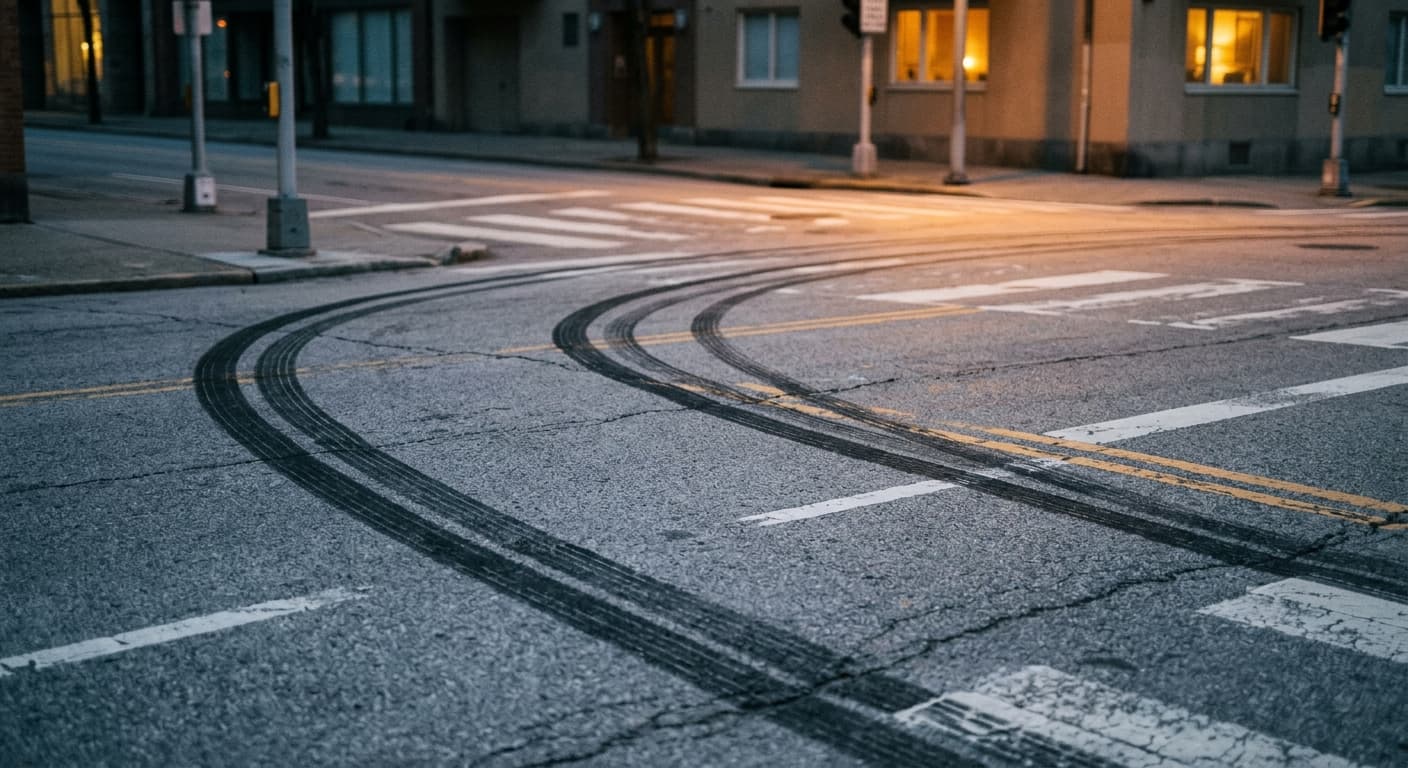
Michigan criminalizes leaving the scene of an accident under MCL 257.617, using a tiered penalty system based on severity. Property damage violations carry up to 90 days in jail, injury accidents up to one year, and at-fault fatal crashes up to 15 years in prison.
Hurt in a hit-and-run? If the driver who hit you fled or had no insurance, your own uninsured/underinsured-motorist (UM/UIM) coverage may pay your injury claim. Estimate what it could be worth with our free Michigan Car Accident Settlement Calculator.
Last verified: March 2026. This guide reflects current Michigan Compiled Laws Sections 257.617, 257.617a, 257.618, and 257.619. Always consult a licensed attorney for legal advice specific to your situation.
Quick Summary of Michigan Hit and Run Laws
Michigan addresses hit and run offenses through several sections of the Michigan Vehicle Code (Act 300 of 1949). The state creates a tiered penalty system based on the severity of the accident and whether the driver caused the collision.
- Property damage only: Misdemeanor, up to 90 days in jail, $100 fine
- Personal injury (no serious impairment): Misdemeanor, up to 1 year in jail, $1,000 fine
- Serious impairment or death (not at fault): Felony, up to 5 years in prison, $5,000 fine
- At-fault fatal accident: Felony, up to 15 years in prison, $10,000 fine
- Reporting deadline: Immediately to police, written report within 3 days
- Insurance system: Michigan is a no-fault insurance state
Michigan Hit and Run Statutes
Michigan uses three primary statutes to address leaving the scene of an accident:
Section 257.617: Serious Impairment or Death
MCL 257.617 requires drivers involved in accidents on public or private property open to public travel to immediately stop and fulfill the requirements of Section 619. If a driver violates this duty and the accident results in serious impairment of body function or death, the driver faces felony charges.
The statute also creates a separate, more severe penalty when the driver caused the accident that resulted in a death.
Section 257.617a: Injury Accidents
MCL 257.617a covers accidents resulting in injury that does not rise to the level of "serious impairment of body function." Violations under this section are classified as misdemeanors.
Section 257.618: Vehicle Damage
MCL 257.618 addresses accidents that result in damage to an attended vehicle. Drivers must stop, exchange information, and report to police.
Section 257.619: Driver Duties
MCL 257.619 specifies the exact information that must be exchanged and the assistance that must be rendered after an accident.
Your Legal Obligations at the Scene
Under Michigan law (Section 257.619), if you know or have reason to believe you have been involved in an accident, you must:
- Stop immediately at the scene without obstructing traffic more than necessary.
- Provide your information to the other party or a law enforcement officer, including your name, address, and vehicle registration number.
- Show your driver's license upon request.
- Render reasonable assistance to any person who needs medical attention, including arranging transportation to a hospital if necessary.
- Report the accident immediately to the nearest or most convenient law enforcement agency.
Exception for Personal Safety
Michigan law explicitly recognizes a safety exception. If you have a "reasonable and honest belief that remaining at the scene will result in further harm," you may leave to immediately report the accident to the nearest police agency. However, you must still fulfill the information exchange requirements of Section 619.
Unattended Vehicles
If you hit a parked or unattended vehicle and cannot locate the owner, you must leave a note in a conspicuous place on the vehicle containing your name, address, and license plate number. If the damage exceeds $1,000, you must also report the accident to police.
Misdemeanor Hit and Run Penalties
Property Damage (Section 257.618)
Leaving the scene of an accident involving property damage to an attended vehicle is a misdemeanor punishable by:
- Up to 90 days in jail
- A fine of up to $100
- Or both
- License suspension for up to 30 days
Injury Not Resulting in Serious Impairment (Section 257.617a)
Leaving the scene of an accident that causes injury (but not serious impairment of body function or death) is a misdemeanor punishable by:
- Up to 1 year in jail
- A fine of up to $1,000
- Or both
- License suspension for up to 1 year
Felony Hit and Run Penalties
Michigan creates two tiers of felony hit and run, depending on whether the driver caused the accident:
Serious Impairment or Death, Not At Fault (Section 257.617(2))
If you violate the duty to stop and the accident resulted in serious impairment of body function or death, but you did not cause the accident, you face:
- Up to 5 years in prison
- A fine of up to $5,000
- Or both
"Serious impairment of body function" means an impairment that substantially affects the person's ability to carry on normal life activities and is not something that is temporary.
At-Fault Fatal Accident (Section 257.617(3))
If you caused the accident and the accident resulted in the death of another person, the penalties increase dramatically:
- Up to 15 years in prison
- A fine of up to $10,000
- Or both
This is one of the most severe hit and run penalties in the United States, reflecting Michigan's position that drivers who cause fatal crashes and flee deserve enhanced punishment.
DUI Hit and Run
If you were under the influence of alcohol or drugs at the time of a fatal accident, you may face additional charges under Michigan's DUI laws, which can carry up to 15 years in prison plus a $10,000 fine.
Michigan Hit and Run Penalties Summary
| Offense | Classification | Maximum Incarceration | Maximum Fine | License Impact |
|---|---|---|---|---|
| Property damage (attended vehicle) | Misdemeanor | 90 days | $100 | Up to 30 days suspension |
| Injury (not serious impairment) | Misdemeanor | 1 year | $1,000 | Up to 1 year suspension |
| Serious impairment or death (not at fault) | Felony | 5 years | $5,000 | Suspension required |
| At-fault fatal accident | Felony | 15 years | $10,000 | Revocation |
| DUI hit and run (death) | Felony | 15 years | $10,000 | Revocation |
License Suspension Rules
Section 257.319 requires the Secretary of State to suspend the operator's or chauffeur's license of anyone convicted of a hit and run offense. The length of suspension depends on the severity of the offense. Failure to stop at an injury accident results in suspension for up to 1 year.
Michigan Crash Statistics
According to the Michigan State Police Criminal Justice Information Center and IIHS data:
2024 Data:
- Total motor vehicle deaths: 1,099 fatalities (up from 1,095 in 2023)
- Total crashes: 288,880 (up from 287,953 in 2023)
- Total injuries: 71,316 (up from 71,085 in 2023)
- Alcohol-involved crashes: 8,542 (down 3% from 2023), but alcohol-involved fatalities increased 3% to 307
- Drug-involved crashes: 2,315 (up 3% from 2023), drug-involved fatalities up 6% to 272
2023 Data:
- Death rate per 100,000 population: 10.9 (below the national average of 12.2)
- Deaths per 100 million miles traveled: 1.11
- Pedestrian fatalities: 175 deaths (16% of all traffic deaths)
- Motorcyclist fatalities: 180 deaths (16% of total)
How Fault Is Determined in Michigan
No-Fault Insurance System
Michigan is a no-fault auto insurance state. After an accident, you file claims with your own insurance company under your Personal Injury Protection (PIP) coverage for medical expenses and wage loss, regardless of who caused the accident. Michigan's PIP coverage is among the most comprehensive in the nation.
Comparative Fault Rule for Lawsuits
For lawsuits that go beyond PIP coverage, Michigan follows a comparative fault rule under Section 600.2959:
- Your recovery is reduced by your percentage of fault.
- If your share of fault exceeds the combined fault of all other parties, you can only recover economic damages (medical bills, lost wages). Noneconomic damages (pain and suffering) are not available.
- A jury determines the percentage of fault for each party.
Never admit fault at the scene of an accident. Fault determination is the responsibility of investigators, insurance adjusters, and juries.
Statute of Limitations for Civil Claims
In Michigan, you have 3 years from the date of the accident to file a personal injury, wrongful death, or negligence lawsuit.
Insurance Implications of a Hit and Run in Michigan
A hit and run conviction in Michigan creates significant insurance consequences:
- Points on driving record: A leaving-the-scene conviction adds points to your driving record, triggering premium increases.
- Policy cancellation risk: Insurers may refuse to renew your policy after a conviction.
- Uninsured motorist coverage: If you are the victim of a hit and run, your uninsured motorist (UM) coverage can help pay for injuries and damage. Michigan law requires insurers to offer UM coverage.
- Mini-tort claims: Under Michigan's limited property damage system, you may file a "mini-tort" claim against the at-fault driver for up to $3,000 in vehicle damage.
Drug and Alcohol Testing
Refusing a drug or alcohol test after an accident is a civil infraction in Michigan. Consult with an attorney about the best course of action in your specific situation.
Possible Defenses to Hit and Run Charges
Depending on the circumstances, these defenses may be available:
- Lack of knowledge: You did not know and had no reason to know that you were involved in an accident.
- Fear for safety: You had a "reasonable and honest belief that remaining at the scene will result in further harm." This defense is explicitly recognized in Section 257.617.
- No injury or damage: The collision did not result in any actual injury or property damage.
- Mistaken identity: You were not the driver of the vehicle at the time of the accident.
- Stolen vehicle: The vehicle was taken without your knowledge or consent.
- Emergency circumstances: You left the scene to seek immediate medical attention and reported to police as soon as possible.
What to Do After an Accident in Michigan
Follow these steps to comply with Michigan law and protect your rights:
- Stop immediately at the scene without obstructing traffic.
- Check for injuries and call 911 if anyone needs medical attention.
- Exchange information with all other parties: name, address, registration number, and driver's license.
- Render reasonable assistance to anyone who is injured.
- Report to police immediately at the scene.
- Document the scene with photos and notes.
- File a written accident report within 3 days if required.
- Contact your insurance company promptly to file a PIP claim.
- Do not admit fault at the scene.
Related Michigan Laws
- Michigan Recording Laws
- Michigan Car Seat Laws
- Michigan Statute of Limitations
- Michigan Child Support Laws
- Michigan Sexting Laws
- Michigan Whistleblower Laws
Official References:
- MCL 257.617: Accident Resulting in Serious Impairment or Death
- MCL 257.617a: Accident Resulting in Injury
- MCL 257.618: Accidents Involving Vehicle Damage
- MCL 257.619: Duties of Driver
- MCL 257.319: License Suspension
More Michigan Laws
Frequently Asked Questions
What is a reportable accident in Michigan?
Any accident resulting in injury, death, or property damage exceeding $1,000 must be reported to law enforcement. You must notify police immediately at the scene, then file a written report within 3 days.
What if I hit a parked car and cannot find the owner?
Leave a note with your name, address, and license plate number on the vehicle in a conspicuous place. If damage exceeds $1,000, also report to police. Leaving without doing so is a misdemeanor punishable by up to 90 days in jail and a $100 fine.
Can I be charged with hit and run even if I did not cause the accident?
Yes. The duty to stop, render aid, and exchange information applies to all drivers involved, regardless of who caused the accident. However, the penalty for fleeing a fatal accident is higher for at-fault drivers (up to 15 years) compared to non-at-fault drivers (up to 5 years).
What is the statute of limitations for hit and run charges in Michigan?
For misdemeanor hit and run (property damage or injury), the statute of limitations is 6 years. For felony hit and run (serious impairment or death), there is generally no statute of limitations for the most serious charges. For civil lawsuits, you have 3 years from the date of the accident.
Will a hit and run conviction result in license suspension?
Yes. Michigan law requires the Secretary of State to suspend the license of anyone convicted of a hit and run offense. An injury hit and run results in suspension for up to 1 year. Property damage offenses can result in suspension for up to 30 days.
Injured in Michigan? Get a free case review from a personal-injury attorney
If someone else's negligence caused your injury, you may be owed compensation for medical bills, lost wages, and pain and suffering. Get a free, no-obligation review from a Michigan personal-injury attorney. Most work on contingency, so there is no upfront cost.
The Law Behind This Article
This article rests on the statutory provisions below, held in our own legal record and retrieved from the official source. Tap a section to read the operative text.
Michigan Compiled Laws
§ 257.319Suspension of license; crimes; violations; waiver; restricted license; "prior conviction" as used in subsection (8); 2 or more convictions; appealIn forcecited in 2 of our articles
(1) The secretary of state shall immediately suspend an individual's license as provided in this section on receiving a record of the individual's conviction for a crime described in this section, whether the conviction is under a law of this state, a local ordinance that substantially corresponds to a law of this state, a law of another state that substantially corresponds to a law of this state, or, beginning October 31, 2010, a law of the United States that substantially corresponds to a law of this state. (2) The secretary of state shall suspend the individual's license for 1 year for any of the following crimes: (a) Fraudulently altering or forging documents pertaining to motor vehicles in violation of section 257. (b) A violation of section 413 of the Michigan penal code, 1931 PA 328, MCL 750.413. (c) A felony in which a motor vehicle was used.
Official text (excerpt) · last checked 2026-07-30 · Read the full text in our law library · Verify at legislature.mi.gov
Cited in 8 court opinions in our collectionLatest citing opinion in our collection: 1997
Opinions citing this section in our collection:
- People v. Dickens (Michigan Court of Appeals 1985, 144 Mich. App. 49)“…pend * * *”. For negligent homicide the penalty is found in MCL 257.319(1); MSA 9.2019(1), "[t]he secretary of…”
- Kutzli v. Secretary of State (Michigan Court of Appeals 1986, 152 Mich. App. 38)“…State received a record of the conviction and, pursuant to MCL 257.319(2); MSA 9.2019(2), suspended petitioner…”
- Utter v. Secretary of State (Michigan Court of Appeals 1989, 179 Mich. App. 119)“…d of one year. The *121 suspension was ordered pursuant to MCL 257.319; MSA 9.2019. Petitioner thereafter fi…”
Identified automatically from the court opinions citing this section — not a ranking of which case controls.
§ 257.617Accident resulting in serious impairment of body function or death; stopping required; reporting to police agency or officer; violation as felony; penaltyIn forcecited in 3 of our articles
(1) The driver of a vehicle who knows or who has reason to believe that he or she has been involved in an accident upon public or private property that is open to travel by the public shall immediately stop his or her vehicle at the scene of the accident and shall remain there until the requirements of section 619 are fulfilled or immediately report the accident to the nearest or most convenient police agency or officer to fulfill the requirements of section 619(a) and (b) if there is a reasonable and honest belief that remaining at the scene will result in further harm. The stop shall be made without obstructing traffic more than is necessary. (2) Except as provided in subsection (3), if the individual violates subsection (1) and the accident results in serious impairment of a body function or death, the individual is guilty of a felony punishable by imprisonment for not more than 5 years or by a fine of not more than $5,000.00, or both.
Official text (excerpt) · last checked 2026-07-30 · Read the full text in our law library · Verify at legislature.mi.gov
Cited in 70 court opinions in our collectionLatest citing opinion in our collection: 2026
Opinions citing this section in our collection:
- People v. Aldrich (Michigan Court of Appeals 2001, 246 Mich. App. 101)“…th failure to stop at an accident involving serious injury, MCL 257.617. On appeal, the defendant argued that…”
- People v. Feezel (Michigan Supreme Court 2010, 486 Mich. 184)“…p at *188 the scene of an accident that resulted in death, MCL 257.617(3), operating while intoxicated (OWI),…”
- People v. Noble (Michigan Court of Appeals 2000, 238 Mich. App. 647)“…to stop at the scene of a serious personal injury accident, MCL 257.617; MSA 9.2317, and operating a motor vehi…”
Identified automatically from the court opinions citing this section — not a ranking of which case controls.
Also relied on in: Hit and Run Laws in the United States (2026 Guide)
§ 257.617aAccident; personal injury; reporting to police agency or officer; stopping required; penalty; suspension of licenseIn forcecited in 3 of our articles
(1) The driver of a vehicle who knows or who has reason to believe that he has been involved in an accident upon public or private property that is open to travel by the public shall immediately stop his or her vehicle at the scene of the accident and shall remain there until the requirements of section 619 are fulfilled or immediately report the accident to the nearest or most convenient police agency or officer to fulfill the requirements of section 619(a) and (b) if there is a reasonable and honest belief that remaining at the scene will result in further harm. The stop shall be made without obstructing traffic more than is necessary. (2) If an individual violates subsection (1) and the accident results in injury to any individual, the individual is guilty of a misdemeanor punishable by imprisonment for not more than 1 year or a fine of not more than $1,000.00, or both. (3) The secretary of state shall suspend the operator's or chauffeur's license of an individual convicted of violating this section as provided in section 319.
Official text (excerpt) · last checked 2026-07-30 · Read the full text in our law library · Verify at legislature.mi.gov
Cited in 11 court opinions in our collectionLatest citing opinion in our collection: 2026
Opinions citing this section in our collection:
- People v. Martinson (Michigan Court of Appeals 1987, 161 Mich. App. 55)“…failure to stop at the scene of a personal injury accident, MCL 257.617a; MSA 9.2317(1), and was sentenced to on…”
- Griffin Wasik v. Auto Club Insurance Association (Michigan Court of Appeals 2022)“…run vehicle” because it was already defined by MCL 257.617, MCL 257.617a, and MCL 257.619. As noted, the trial c…”
- People v. Jones (Michigan Court of Appeals 2012, 297 Mich. App. 80)“…failure to stop at the scene of a personal injury accident, MCL 257.617a, operating a motor vehicle with a suspe…”
Identified automatically from the court opinions citing this section — not a ranking of which case controls.
§ 257.618Accidents; damage to vehicles; stopping required; reporting to police agency or officer; penaltyIn forcecited in 2 of our articles
(1) The driver of a vehicle who knows or who has reason to believe that he has been involved in an accident upon public or private property that is open to travel by the public shall immediately stop his or her vehicle at the scene of the accident and shall remain there until the requirements of section 619 are fulfilled or immediately report the accident to the nearest or most convenient police agency or officer to fulfill the requirements of section 619(a) and (b) if there is a reasonable and honest belief that remaining at the scene will result in further harm. The stop shall be made without obstructing traffic more than is necessary. (2) If an individual violates the requirements of subsection (1) and the accident results in damage to a vehicle operated by or attended by any individual, the individual is guilty of a misdemeanor punishable by imprisonment for not more than 90 days or a fine of not more than $100.00, or both.
Official text (excerpt) · last checked 2026-07-30 · Read the full text in our law library · Verify at legislature.mi.gov
Cited in 16 court opinions in our collectionLatest citing opinion in our collection: 2024
Opinions citing this section in our collection:
- Crampton v. 54-A District Judge (Michigan Supreme Court 1976, 397 Mich. 489)“…479; MSA 28.747. [11] MCLA 752.191; MSA 28.661. [12] MCLA 257.618; MSA 9.2318. [13] "We emphasize that…”
- People v. Goans (Michigan Court of Appeals 1975, 59 Mich. App. 294)“…stop at a motor vehicle accident involving property damage. MCLA 257.618; MSA 9.2318. *296 The de…”
- Estate of Buckner v. City of Lansing (Michigan Supreme Court 2008, 480 Mich. 1243)“…L 257.625, and failing to stop at the scene of an accident, MCL 257.618. 7 A city employee admitted that it h…”
Identified automatically from the court opinions citing this section — not a ranking of which case controls.
§ 257.619Accidents; duties of driverIn forcecited in 2 of our articles
The driver of a vehicle who knows or who has reason to believe that he or she has been involved in an accident with an individual or with another vehicle that is operated or attended by another individual shall do all of the following: (a) Give his or her name and address, and the registration number of the vehicle he or she is operating, including the name and address of the owner, to a police officer, the individual struck, or the driver or occupants of the vehicle with which he or she has collided. (b) Exhibit his or her operator's or chauffeur's license to a police officer, individual struck, or the driver or occupants of the vehicle with which he or she has collided. (c) Render to any individual injured in the accident reasonable assistance in securing medical aid or arrange for or provide transportation to any injured individual.
Official text (excerpt) · last checked 2026-07-30 · Read the full text in our law library · Verify at legislature.mi.gov
Cited in 18 court opinions in our collectionLatest citing opinion in our collection: 2026
Opinions citing this section in our collection:
- People v. Feezel (Michigan Supreme Court 2010, 486 Mich. 184)“…accident and shall remain there until the requirements of [MCL 257.619] are fulfilled or immediately report th…”
- People v. Noble (Michigan Court of Appeals 2000, 238 Mich. App. 647)“…t first argues that his conviction must be reversed because MCL 257.619; MSA 9.2319 is unconstitutionally vague…”
- People v. Goodin (Michigan Court of Appeals 2003, 257 Mich. App. 425)“…scene and remain there until fulfilling the requirements of MCL 257.619. MCL 257.619 requires the driver involv…”
Identified automatically from the court opinions citing this section — not a ranking of which case controls.
Explore the law
The laws cited above reference these related sections in their own text:
- Michigan Compiled Laws § 750.479 — Resisting or obstructing officer in discharge of duty; penalty; definitions view in our statute record · read at the official source
Related law for further reading — not part of this article’s citations.
Search our full record of US law — 2.1 million sections, every state + federal →
Sources and References
- MCL 257.617: Accident Resulting in Serious Impairment or Death(legislature.mi.gov).gov
- MCL 257.617a: Accident Resulting in Injury(legislature.mi.gov).gov
- MCL 257.618: Accidents Involving Vehicle Damage(legislature.mi.gov).gov
- MCL 257.619: Duties of Driver(legislature.mi.gov).gov
- MCL 257.319: License Suspension(legislature.mi.gov).gov
- Michigan State Police 2024 Statewide Traffic Crash Data Year End Report(michigan.gov).gov
- IIHS Fatality Facts 2023: State by State(iihs.org)
- NHTSA 2024 Traffic Fatality Estimates(nhtsa.gov).gov