
Northwest Territories
Northwest Territories Hit and Run Laws (2025)
Independently fact-checked against primary sources (last audited June 18, 2026). · 9 primary sources cited on this page. How we verify our legal content
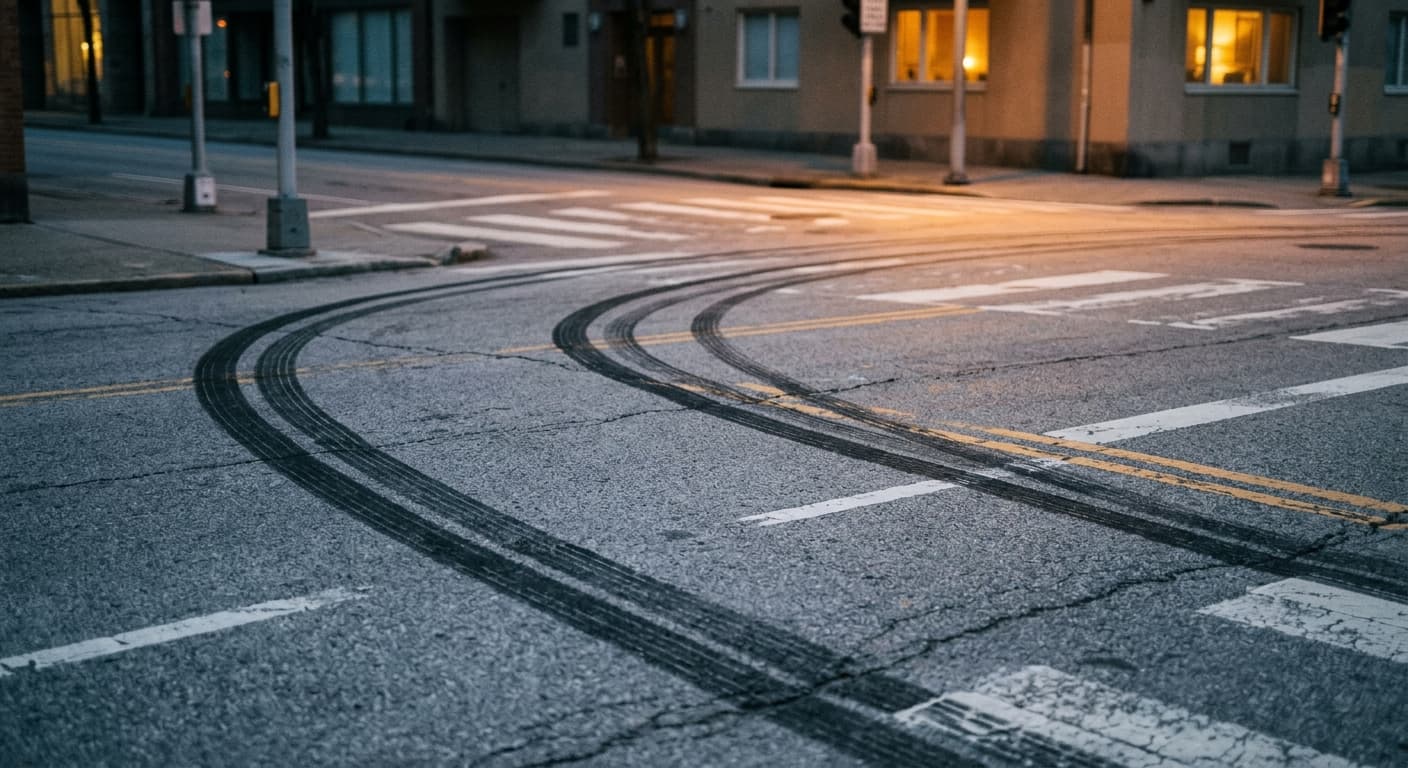
Northwest Territories Hit and Run Laws
A driver involved in an accident in the Northwest Territories must stop, remain at the scene, provide their name and address, and offer assistance to anyone injured. Failing to do so without reasonable excuse is both a territorial offence under the Motor Vehicles Act, RSNWT 1988, c M-16, and a federal criminal offence under section 320.16 of the Criminal Code.
Information last verified on 2026-06-07. This article has not yet been reviewed by a licensed lawyer.
Jurisdiction scope: This article addresses hit-and-run law in the Northwest Territories under the Motor Vehicles Act, RSNWT 1988, c M-16, and the federal Criminal Code, RSC 1985, c C-46, s 320.16. It does not address Yukon, Nunavut, or provincial law. For the national overview, see Canadian hit and run laws.
For a side-by-side comparison of every province and territory, visit the Canada hit and run laws hub.
The territorial duty to stop after an accident
The Motor Vehicles Act of the Northwest Territories, RSNWT 1988, c M-16, imposes a duty on every driver involved in a collision to stop at or near the scene, render reasonable assistance, and give their name, address, and the name and address of the registered owner of the vehicle to any person injured and to the driver of any other vehicle involved. These obligations apply regardless of fault. A driver who leaves the scene without fulfilling them commits a territorial offence and may face fines, demerit points, and licence suspension under the Act. The territorial regime operates independently of and in addition to any federal criminal prosecution, so a single incident of leaving the scene can give rise to both a provincial ticket and a Criminal Code charge.
The duty to report applies when an accident results in injury or death, or when property damage exceeds $2,000 (the territorial reporting threshold under the Act). Because the NWT does not have a provincial insurer or a collision-reporting centre, drivers must report qualifying accidents directly to the Royal Canadian Mounted Police (RCMP), the territorial police service. Drivers should preserve the scene to the extent possible, note the other vehicle's make, model, colour, and licence plate, and collect contact information from witnesses before reporting.
Federal law: Criminal Code s. 320.16
The primary federal hit-and-run offence is section 320.16 of the Criminal Code, RSC 1985, c C-46, which came into force on 18 December 2018 as part of SC 2018, c 21 (formerly Bill C-46). That Act repealed the former s. 252 (failure to stop at scene of accident) in its entirety. Any legal guide that still references s. 252 as a live provision is out of date.
Section 320.16(1) provides that everyone commits an offence who operates a conveyance and who, at the time of operating the conveyance, knows that, or is reckless as to whether, the conveyance has been involved in an accident with a person or another conveyance, and who fails, without reasonable excuse, to stop the conveyance, give their name and address and, if any person has been injured or appears to require assistance, offer assistance.
"fails, without reasonable excuse, to stop the conveyance, give their name and address and, if any person has been injured or appears to require assistance, offer assistance" Source: Criminal Code, RSC 1985, c C-46, s 320.16(1)
The term "conveyance" is defined in s. 320.11 to include a motor vehicle, vessel, aircraft, or railway equipment, giving s. 320.16 a broader reach than the old s. 252, which referred separately to "vehicle, vessel or aircraft."
Mens rea: knowledge or recklessness, not a presumption
A critical point under current law is that s. 320.16 is structured around knowledge or recklessness. The Crown must prove that the driver knew or was reckless as to whether the conveyance was involved in an accident. The old s. 252(2) contained an evidentiary presumption: failing to stop was, in the absence of evidence to the contrary, proof of intent to escape civil or criminal liability. That subsection was repealed when s. 252 was repealed in 2018. Section 320.16 contains no equivalent presumption. A driver who genuinely did not know an accident had occurred, and was not reckless in failing to appreciate it, has a factual basis on which to contest the charge.
Section 320.16(1) also preserves a defence of "reasonable excuse," which is a fact-specific question for the trier of fact.
Penalties under the Criminal Code
The three tiers of penalty under s. 320.16 track the severity of injury:
| Tier | Circumstance | Maximum penalty | Mode |
|---|---|---|---|
| s. 320.16(1) | No injury (or injury unknown) | 10 years imprisonment | Hybrid (indictment or summary) |
| s. 320.16(2) | Bodily harm | 14 years imprisonment | Hybrid |
| s. 320.16(3) | Death | Life imprisonment | Straight indictable |
For the bodily harm and death tiers, mandatory minimums apply under ss. 320.2 and 320.21: a fine of not less than $1,000 for a first offence, 30 days imprisonment for a second offence, and 120 days imprisonment for each subsequent offence.
On summary conviction for the no-injury tier, the maximum is 2 years less a day. There is no mandatory minimum for the basic s. 320.16(1) offence alone (s. 320.19(5)).
A conviction under s. 320.16 results in a criminal record. In the NWT, where communities are small and a criminal record affects employment, housing, and travel, the collateral consequences can be severe and long-lasting.
Reporting to police and what to expect
Because the GNWT does not operate collision-reporting centres, drivers in the NWT must contact the RCMP detachment for their area to satisfy the reporting duty. The RCMP serves as the territorial police service throughout the NWT, including in Yellowknife, Hay River, Inuvik, Fort Smith, and all smaller communities. A driver who reports promptly, before any investigation begins, is in a materially different legal position than one who is located later.
When reporting a hit-and-run as a victim, provide the RCMP with as much detail as possible:
- Date, time, and precise location of the accident
- Direction of travel and description of the fleeing vehicle (make, model, colour, licence plate)
- Names and contact information of any witnesses
- Photographs of the scene, damage, and any debris left by the fleeing vehicle
- Any surveillance camera locations nearby
The RCMP report number is required when making an insurance claim for damage caused by an unidentified driver.
Insurance for hit-and-run victims in the NWT
The Northwest Territories operates a private insurance market regulated under the Insurance Act, RSNWT 1988, c I-4. There is no provincial crown insurer (such as ICBC in British Columbia or MPI in Manitoba) that absorbs hit-and-run claims. This means the path to compensation for victims depends on the insurance coverage the victim carries.
Uninsured automobile coverage
Every standard auto policy in the NWT includes uninsured automobile coverage, which responds where the at-fault driver is uninsured or, as in a hit-and-run, unidentified. This coverage pays for bodily injury sustained by the insured when the at-fault vehicle cannot be identified. A police report to the RCMP is a standard condition precedent to making a claim under uninsured automobile coverage for an unidentified driver.
Facility Association
Facility Association is the industry-funded insurer of last resort operating in the NWT, as confirmed on its website. Facility Association provides coverage in the residual market for drivers who cannot obtain standard insurance, and it also administers uninsured automobile claims in jurisdictions without a public fund. A person injured by a hit-and-run driver who carries no auto insurance at all, or who cannot access their own policy, may pursue a claim through Facility Association. Reporting to the RCMP is required.
Collision (own damage) coverage
Property damage to the victim's vehicle caused by an unidentified driver is typically handled under the victim's own collision coverage, subject to the applicable deductible. Uninsured automobile coverage in most Canadian private-market territories covers bodily injury but not property damage by an unidentified driver, so collision coverage is the relevant first-party coverage for vehicle damage.
Watch out: Uninsured automobile coverage generally requires that the victim report the hit-and-run to police before making a claim. Failure to report promptly to the RCMP can void coverage. Check the specific conditions in your policy.
What drivers commonly get wrong
Several misunderstandings arise regularly in hit-and-run cases in Canada:
The presumption is gone. Many online guides still describe a legal presumption that leaving the scene proves intent to escape liability. That presumption existed in old s. 252(2) and was repealed in 2018. Under current s. 320.16, the Crown must prove the driver's knowledge or recklessness. The presumption does not carry forward.
Both regimes apply. A driver who leaves the scene of a minor fender-bender can face both a territorial offence ticket under the Motor Vehicles Act and a federal criminal charge under s. 320.16 if the Crown elects to proceed. The territorial ticket does not immunise the driver from criminal prosecution.
The duty to offer assistance is mandatory. Section 320.16(1) explicitly requires a driver to offer assistance "if any person has been injured or appears to require assistance." A driver who stops, gives their name, but then leaves without offering assistance where someone is visibly injured has not fully complied with the provision.
Remote locations do not excuse non-reporting. The NWT's geography is vast and many accidents occur far from the nearest RCMP detachment. Distance is not a "reasonable excuse" for failing to report. Drivers should use a satellite communicator or radio in areas without cellular coverage to satisfy the reporting obligation.
Where to get help
If you have been involved in a hit-and-run accident in the Northwest Territories, whether as a driver or a victim, you should consult a lawyer licensed to practise in the NWT as soon as possible. The Law Society of the Northwest Territories can provide referrals. For insurance claims, contact your insurer or broker immediately, report to the nearest RCMP detachment, and obtain a police report number before the claim is filed.
For a national comparison of how each province and territory handles these offences, see the Canada hit and run laws hub.
Disclaimer
This article provides general legal information about hit-and-run law in the Northwest Territories. It is not legal advice and does not create a lawyer-client relationship. The law described reflects statutes in force as of 2026-06-07. Laws change, and individual circumstances vary. You should consult a lawyer licensed to practise in the Northwest Territories for advice about your specific situation.
Authorities cited
- Criminal Code, RSC 1985, c C-46, s 320.16 (Failure to stop after accident, current provision). https://laws-lois.justice.gc.ca/eng/acts/C-46/section-320.16.html
- Criminal Code, RSC 1985, c C-46, s 320.11 (Definition of conveyance). https://laws-lois.justice.gc.ca/eng/acts/C-46/page-47.html
- Criminal Code, RSC 1985, c C-46, ss 320.19(5) and 320.2 (Punishment, no injury and bodily harm). https://laws-lois.justice.gc.ca/eng/acts/C-46/page-47.html
- Criminal Code, RSC 1985, c C-46, s 320.21 (Punishment, death; up to life imprisonment). https://laws-lois.justice.gc.ca/eng/acts/C-46/section-320.21.html
- Criminal Code, RSC 1985, c C-46, s 252 (repealed SC 2018, c 21, s 14). https://laws-lois.justice.gc.ca/eng/acts/C-46/section-252.html
- SC 2018, c 21, An Act to amend the Criminal Code (offences relating to conveyances), ss 14-15 (repealing s. 252 and enacting Part VIII.1 including s. 320.16; Royal Assent 2018-06-21; in force 2018-12-18). https://laws-lois.justice.gc.ca/eng/annualstatutes/2018_21/FullText.html
- Motor Vehicles Act, RSNWT 1988, c M-16 (duty to stop, report, and render assistance). https://www.justice.gov.nt.ca/en/files/legislation/motor-vehicles/motor-vehicles.a.pdf
- Insurance Act, RSNWT 1988, c I-4 (regulation of private insurance market in the NWT). https://www.justice.gov.nt.ca/en/files/legislation/insurance/insurance.a.pdf
- Facility Association, Operating jurisdictions (confirms NWT). https://www.facilityassociation.com
- Justice Canada, Legislative background: Bill C-46 Part VIII.1 overview (confirms s. 320.16 as the failure-to-stop offence). https://www.justice.gc.ca/eng/cj-jp/sidl-rlcfa/c46/p4.html
Related articles
Last updated: 2026-06-07. Statutes cited reflect their in-force version as of 2026-06-07.
Related Canadian Guides
- Canadian law by province and topic
- Hit and Run laws in Canada
- Northwest Territories Recording laws
- Northwest Territories Child Support laws
- Northwest Territories Slip and Fall laws
Frequently Asked Questions
What is the law for hit and run in the Northwest Territories?
Two regimes apply simultaneously. The Motor Vehicles Act, RSNWT 1988, c M-16, requires every driver to stop, give their name and address, and render assistance after an accident. The Criminal Code, RSC 1985, c C-46, s 320.16, makes it a federal offence for a driver who knew or was reckless about being involved in an accident to fail to stop, give their name and address, or offer assistance. Both charges can arise from the same incident.
What section of the Criminal Code covers hit and run in Canada?
Section 320.16 of the Criminal Code, Part VIII.1 (Offences Relating to Conveyances), which came into force on 18 December 2018 under SC 2018, c 21. The former s. 252 was repealed by that same Act and is no longer the operative provision. Any source citing s. 252 as current law is out of date.
What are the penalties for hit and run in the Northwest Territories?
Under s. 320.16 of the Criminal Code: up to 10 years imprisonment where no injury results (hybrid); up to 14 years where bodily harm results, with a mandatory minimum fine of $1,000 for a first offence; up to life imprisonment where death results (straight indictable). Territorial Motor Vehicles Act offences carry additional fines, demerit points, and possible licence suspension.
Do I have to report an accident to the RCMP in the NWT?
Yes, where the accident involves injury, death, or property damage above $2,000 (the territorial threshold under the Motor Vehicles Act). The NWT does not have collision-reporting centres, so drivers report qualifying accidents to the nearest RCMP detachment. A police report number is also required when claiming under uninsured automobile coverage for a hit-and-run by an unidentified driver.
Is there a legal presumption that leaving the scene proves guilt in the NWT?
No. The old s. 252(2) of the Criminal Code contained such a presumption, but it was repealed in 2018 when the entire s. 252 was struck by SC 2018, c 21. Section 320.16, the current offence, contains no equivalent presumption. The Crown must prove that the driver knew or was reckless as to whether an accident occurred.
What if I was hit by an unidentified driver in the NWT?
Report the incident to the RCMP as soon as possible and obtain a report number. Then contact your auto insurer and make a claim under your uninsured automobile coverage for bodily injury. Property damage to your vehicle is typically claimed under your own collision coverage. If you have no applicable coverage, Facility Association operates in the NWT as the insurer of last resort.
Does the NWT have a public auto insurer for hit-and-run claims?
No. Unlike British Columbia (ICBC), Manitoba (MPI), or Saskatchewan (SGI), the Northwest Territories operates a private insurance market. There is no territorial crown insurer. Victims of hit-and-run by unidentified drivers pursue claims through their own policy's uninsured automobile coverage, or through Facility Association if they lack coverage.
What does Facility Association do in the NWT?
Facility Association is the industry-funded insurer of last resort, confirmed to operate in the Northwest Territories. It provides coverage in the residual market for drivers who cannot obtain standard insurance, and administers uninsured automobile claims for persons injured by uninsured or unidentified drivers who have no other coverage to access. A police report to the RCMP is required.
What must a driver do at the scene of an accident in the NWT?
Under the Motor Vehicles Act, RSNWT 1988, c M-16, and Criminal Code s. 320.16(1): (1) stop the vehicle; (2) give their name and address; (3) offer assistance if any person has been injured or appears to require assistance. Drivers must also exchange licence and insurance information with other involved drivers and report qualifying accidents to the RCMP.
Can a driver be charged under both territorial and federal law for the same hit and run?
Yes. A territorial Motor Vehicles Act offence and a federal Criminal Code s. 320.16 charge are separate regimes that can both arise from the same incident. The territorial offence typically results in fines, demerit points, and possible suspension. The federal charge is a criminal offence that, on conviction, results in a criminal record and potential imprisonment.
Updates
Independently fact-checked against the cited primary sources
The Law Behind This Article
This article rests on the statutory provisions below, held in our own legal record and retrieved from the official source. Tap a section to read the operative text.
Criminal Code
s. 252RepealedRepealedcited in 26 of our articles
Official text (excerpt) · last checked 2026-08-12 · Read the full text in our law library · Verify at laws-lois.justice.gc.ca
Cited in 4 court opinions in our collectionLatest citing opinion in our collection: 2016
Opinions citing this section in our collection:
- R. v. Noël (Supreme Court of Canada 2002, 2002 SCC 67)
- R. v. White (Supreme Court of Canada 1999, [1999] 2 SCR 417)
- Casimiro Santos v. Canada (Citizenship and Immigration) (Federal Court 2013, 2013 FC 425)
Identified automatically from the court opinions citing this section — not a ranking of which case controls.
Also relied on in: Alberta Hit and Run Laws: Duties, Penalties & MVAC, British Columbia Hit and Run Laws: Duties and Penalties, Manitoba Hit and Run Laws: Penalties and MPI Claims
s. 320.16Failure to stop after accidentIn forcecited in 26 of our articles
(1) Everyone commits an offence who operates a conveyance and who at the time of operating the conveyance knows that, or is reckless as to whether, the conveyance has been involved in an accident with a person or another conveyance and who fails, without reasonable excuse, to stop the conveyance, give their name and address and, if any person has been injured or appears to require assistance, offer assistance. (2) Everyone commits an offence who commits an offence under subsection (1) and who at the time of committing the offence knows that, or is reckless as to whether, the accident resulted in bodily harm to another person. (3) Everyone commits an offence who commits an offence under subsection (1) and who, at the time of committing the offence, knows that, or is reckless as to whether, the accident resulted in the death of another person or in bodily harm to another person whose death ensues.
Official text (excerpt) · last checked 2026-08-12 · Read the full text in our law library · Verify at laws-lois.justice.gc.ca
Cited in 2 court opinions in our collectionLatest citing opinion in our collection: 2023
Opinions citing this section in our collection:
- R. v. Tim (Supreme Court of Canada 2022, 2022 SCC 12)
- Shaikh v. Canada (Public Safety and Emergency Preparedness) (Federal Court 2023, 2023 FC 634)
Identified automatically from the court opinions citing this section — not a ranking of which case controls.
Also relied on in: New Brunswick Hit and Run Laws: Penalties and Duties, Newfoundland and Labrador Hit and Run Laws: Penalties, Nova Scotia Hit-and-Run Laws: Penalties & What to Do
s. 320.21Punishment in case of deathIn forcecited in 22 of our articles
Everyone who commits an offence under subsection 320.13(3), 320.14(3), 320.15(3) or 320.16(3) is liable on conviction on indictment to imprisonment for life and to a minimum punishment of, (a) for a first offence, a fine of $1,000; (b) for a second offence, imprisonment for a term of 30 days; and (c) for each subsequent offence, imprisonment for a term of 120 days.
Official text (excerpt) · last checked 2026-08-12 · Read the full text in our law library · Verify at laws-lois.justice.gc.ca
Cited in 1 court opinions in our collectionLatest citing opinion in our collection: 2021
Opinions citing this section in our collection:
- Lin v. Canada (Citizenship and Immigration) (Federal Court 2021, 2021 FC 1329)
Identified automatically from the court opinions citing this section — not a ranking of which case controls.
Also relied on in: Careless Driving vs Dangerous Driving in Canada, DUI Penalties in Canada: Fines, Jail Time, and Bans, Nunavut Hit and Run Laws (2025)
Search our full record of Canadian federal law — every consolidated Act, in English and French →
Sources and References
- Criminal Code, RSC 1985, c C-46, s 320.16 (Failure to stop after accident, current provision, in force 2018-12-18)(laws-lois.justice.gc.ca).gov
- Criminal Code, RSC 1985, c C-46, s 320.11 (Definition of conveyance: motor vehicle, vessel, aircraft, or railway equipment)(laws-lois.justice.gc.ca).gov
- Criminal Code, RSC 1985, c C-46, ss 320.19(5) and 320.2 (Punishment: no injury up to 10 years; bodily harm up to 14 years with mandatory minimums)(laws-lois.justice.gc.ca).gov
- Criminal Code, RSC 1985, c C-46, s 320.21 (Punishment in case of death: up to life imprisonment; straight indictable)(laws-lois.justice.gc.ca).gov
- Criminal Code, RSC 1985, c C-46, s 252 (repealed SC 2018, c 21, s 14; former failure to stop provision)(laws-lois.justice.gc.ca).gov
- SC 2018, c 21, An Act to amend the Criminal Code (offences relating to conveyances), ss 14-15; Royal Assent 2018-06-21; in force 2018-12-18(laws-lois.justice.gc.ca).gov
- Motor Vehicles Act, RSNWT 1988, c M-16 (territorial duty to stop, render assistance, and report accidents; $2,000 property-damage reporting threshold)(justice.gov.nt.ca).gov
- Insurance Act, RSNWT 1988, c I-4 (regulation of private auto insurance market in the Northwest Territories)(justice.gov.nt.ca).gov
- Facility Association, Operating jurisdictions page (confirms NWT is a Facility Association jurisdiction)(facilityassociation.com)
- Justice Canada, Legislative background: Bill C-46 Part VIII.1 overview (s. 320.16 is the failure-to-stop offence)(justice.gc.ca).gov