AI Meeting Recording Laws by State: Complete Guide (2026)
Independently fact-checked against primary sources (last audited August 16, 2026). · Reviewed by the RecordingLaw editorial team. · Law checked current as of August 9, 2026. · 7 primary sources cited on this page. How we verify our legal content
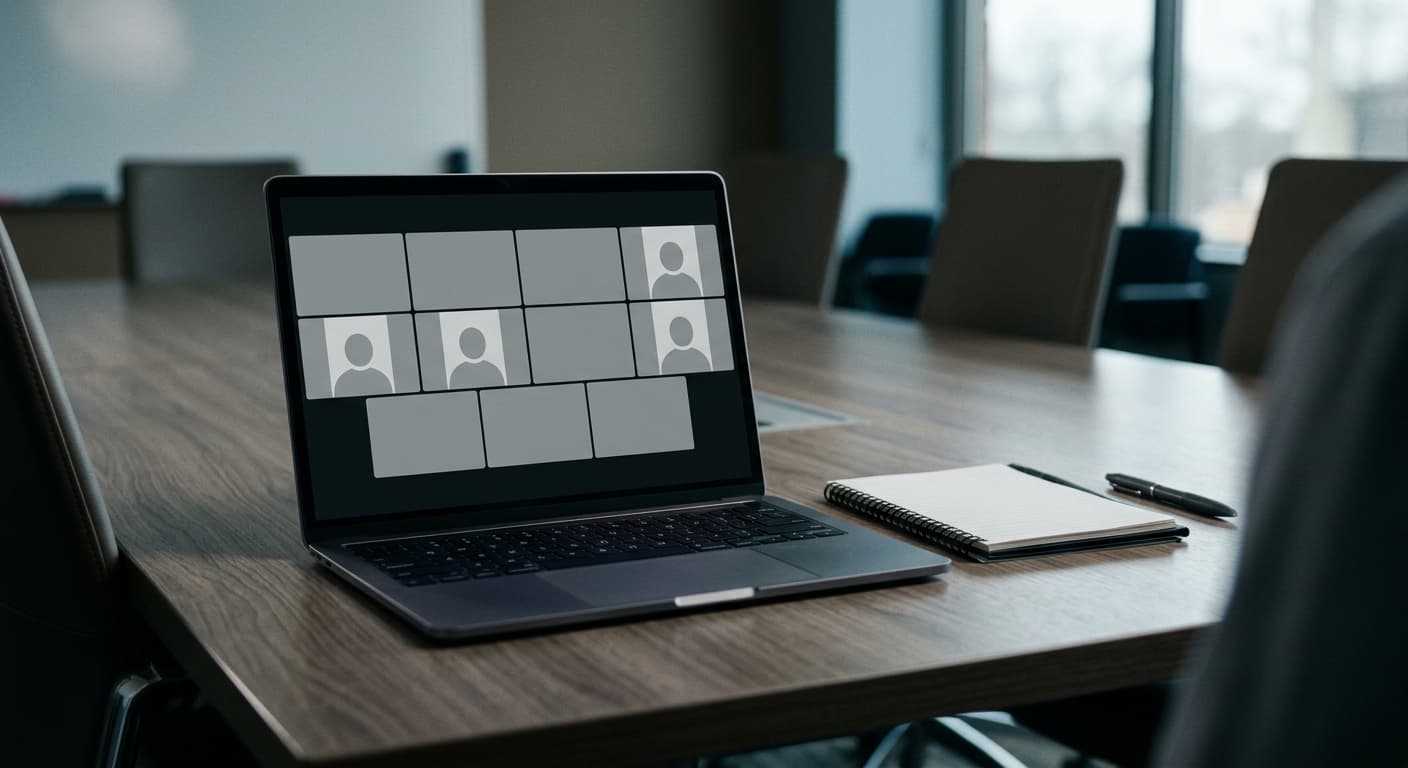
Whether an AI meeting recorder is legal in the United States depends on state law. Federal law under permits one-party consent, but 13 states require all-party consent, and recording without every participant's agreement in those states can constitute a felony.
AI meeting recorders like Otter.ai, Fireflies, Fathom, and built-in tools from Zoom, Microsoft Teams, and Google Meet have transformed how organizations capture meeting content. They also raise serious legal questions under federal and state wiretapping laws that were written decades before AI transcription existed.
Whether an AI meeting recorder is legal depends on where meeting participants are located, how the tool obtains consent, and whether courts classify the AI bot as a recording device or an unauthorized third-party interceptor. As of April 2026, federal litigation and state legislative action are actively reshaping this legal landscape.
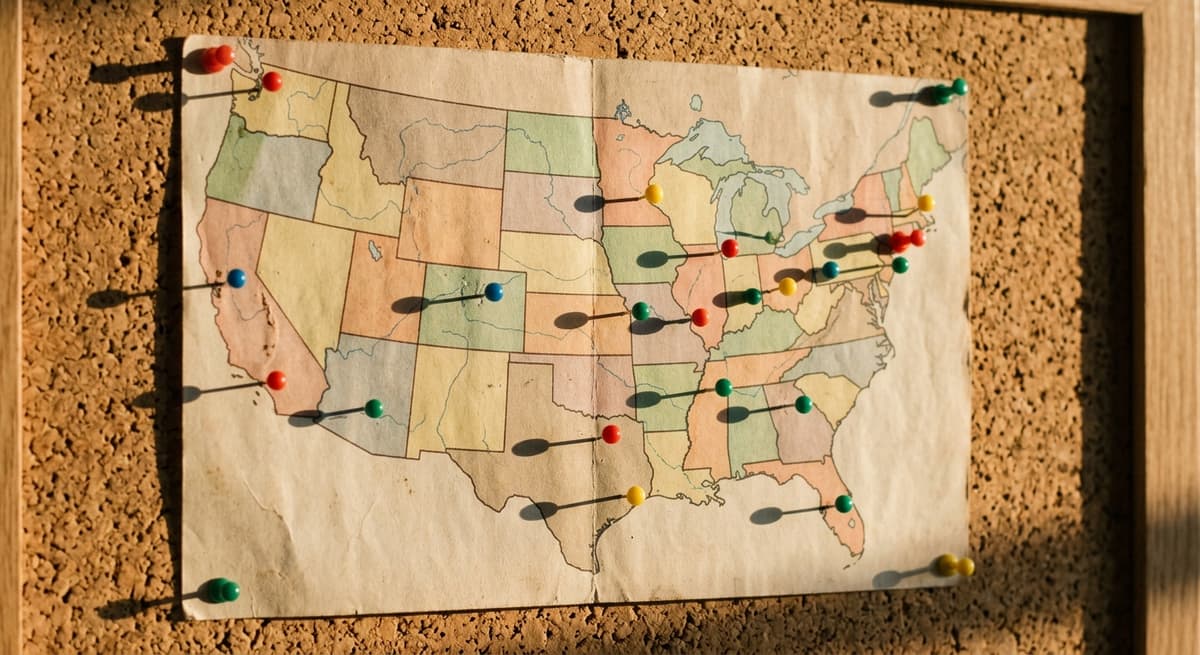
Federal Law: The Starting Point
The Electronic Communications Privacy Act (ECPA), codified at , prohibits intentionally intercepting wire, oral, or electronic communications. The critical exception: one party to the communication can consent to recording without notifying others.
Federal penalties for violations include up to 5 years imprisonment, fines up to $250,000, and civil damages of $10,000 per violation (or $100 per day, whichever is greater).
The Third-Party Question
The central legal question for AI meeting recorders: is the AI bot a "party" to the conversation, or a "third party" intercepting it?
In Ambriz v. Google (N.D. Cal.), the court denied Google's motion to dismiss, finding that plaintiffs adequately alleged Google's Contact Center AI acted as "the statutory actor doing real-time recording and reading in transit." The court applied a "capability test," holding that alleging the vendor had the capability to use intercepted data for its own purposes was sufficient to establish third-party status at the pleading stage.
This ruling has significant implications for every AI meeting recorder that processes, stores, or uses meeting data beyond simple transcription.
The Otter.ai Class Action
In re Otter.AI Privacy Litigation (N.D. Cal., No. 5:25-cv-06911) consolidates four lawsuits filed between August and September 2025:
| Case | Key Claims | Core Allegation |
|---|---|---|
| Brewer v. Otter.ai | ECPA, CIPA, CFAA | OtterPilot joined Zoom without participant knowledge; data used for AI training |
| Walker v. Otter.ai | Illinois BIPA | Voiceprints collected to identify speakers without written consent |
| Theus v. Otter.ai | ECPA, CIPA | Auto-join enabled by default; continues joining after users disable it |
| Winston v. Otter.ai | ECPA, BIPA, CIPA | Default config does not notify non-users; notification only in Enterprise plan |
Additional AI recording lawsuits include Cruz v. Fireflies.AI (Illinois BIPA, Dec. 2025, voluntarily dismissed without prejudice in March 2026), Galanter v. Cresta (CIPA, June 2025), and Lisota v. Heartland Dental (federal wiretap, July 2025).
One-Party vs. Two-Party Consent States
The legal risk of using AI meeting recorders varies dramatically by state. In one-party consent states, the meeting host's consent may be sufficient. In two-party (all-party) consent states, every participant must agree before any AI tool records the conversation.

Two-Party (All-Party) Consent States
These 13 states require consent from all participants. Using an AI meeting recorder without universal consent can result in felony charges in most of these jurisdictions.
| State | Key Statute | Maximum Criminal Penalty | Guide |
|---|---|---|---|
| California | 1 year/$2,500 (misd.) or 3 years (felony) | California AI Meeting Recording Laws | |
| Connecticut | Conn. Gen. Stat. 53a-189 (criminal); 52-570d (civil) | 5 years/$5,000 (Class D felony, but the criminal statute is one-party consent) | Connecticut AI Meeting Recording Laws |
| Delaware | Del. Code tit. 11, 1335 | 1 year (Class A misd.) to Class G felony | Delaware AI Meeting Recording Laws |
| Florida | 5 years/$5,000 (felony) | Florida AI Meeting Recording Laws | |
| Illinois | 720 ILCS 5/14-2 + BIPA | 3 years/$25,000 + $5,000/BIPA violation | Illinois AI Meeting Recording Laws |
| Maryland | Md. Code 10-402 | 5 years/$10,000 (felony) | Maryland AI Meeting Recording Laws |
| Massachusetts | Mass. Gen. Laws ch. 272, 99 | 5 years/$10,000 (all violations are felonies) | Massachusetts AI Meeting Recording Laws |
| Montana | Mont. Code 45-8-213 | 6 months (1st) to 5 years (3rd+) | Montana AI Meeting Recording Laws |
| Nevada | NRS 200.620 (one-party by text; all-party in practice per the fractured Lane v. Allstate decision) | 1-4 years (Category D felony) | Nevada AI Meeting Recording Laws |
| New Hampshire | N.H. RSA 570-A:2 | 7 years/$4,000 (Class B felony) | New Hampshire AI Meeting Recording Laws |
| Oregon | ORS 165.540 (all-party for in-person only; one-party for calls/electronic) | 5 years/$125,000 (aggravated) | Oregon AI Meeting Recording Laws |
| Pennsylvania | 18 Pa.C.S. 5704 | 7 years/$15,000 (3rd-degree felony) | Pennsylvania AI Meeting Recording Laws |
| Washington | , .080 | Gross misdemeanor: up to 364 days/$5,000 | Washington AI Meeting Recording Laws |
Two rows above need a caveat. Connecticut's criminal eavesdropping statute (Conn. Gen. Stat. 53a-189, applying the wiretapping and mechanical-overhearing definitions in 53a-187) is a one-party-consent crime: the Class D felony applies to intercepting a conversation without the consent of any party, not to simply lacking unanimous consent. Connecticut's all-party framing comes from a separate civil statute, Conn. Gen. Stat. 52-570d, which is satisfied by all-party consent, a recorded verbal notice at the start of the call, or a repeating beep tone, and which only allows a civil damages claim, not criminal charges. Oregon's ORS 165.540 also splits by communication type: in-person conversations require every participant to be informed, but telephone and other electronic communications, the category most AI meeting recorders actually capture, require consent from only one participant.
Two rows above need a caveat. Connecticut's criminal eavesdropping statute (Conn. Gen. Stat. 53a-189, applying the wiretapping and mechanical-overhearing definitions in 53a-187) is a one-party-consent crime: the Class D felony applies to intercepting a conversation without the consent of any party, not to simply lacking unanimous consent. Connecticut's all-party framing comes from a separate civil statute, Conn. Gen. Stat. 52-570d, which is satisfied by all-party consent, a recorded verbal notice at the start of the call, or a repeating beep tone, and which only allows a civil damages claim, not criminal charges. Oregon's ORS 165.540 also splits by communication type: in-person conversations require every participant to be informed, but telephone and other electronic communications, the category most AI meeting recorders actually capture, require consent from only one participant.
One-Party Consent States
In these 37 states plus DC, the meeting host's consent as one party may be sufficient to authorize AI recording. However, the "capability test" from Ambriz v. Google means AI vendors that independently access or use meeting data could still face liability as unauthorized third parties.
| State | Guide | State | Guide |
|---|---|---|---|
| Alabama | AL Guide | Nebraska | NE Guide |
| Alaska | AK Guide | New Jersey | NJ Guide |
| Arizona | AZ Guide | New Mexico | NM Guide |
| Arkansas | AR Guide | New York | NY Guide |
| Colorado | CO Guide | North Carolina | NC Guide |
| District of Columbia | DC Guide | North Dakota | ND Guide |
| Georgia | GA Guide | Ohio | OH Guide |
| Hawaii | HI Guide | Oklahoma | OK Guide |
| Idaho | ID Guide | Rhode Island | RI Guide |
| Indiana | IN Guide | South Carolina | SC Guide |
| Iowa | IA Guide | South Dakota | SD Guide |
| Kansas | KS Guide | Tennessee | TN Guide |
| Kentucky | KY Guide | Texas | TX Guide |
| Louisiana | LA Guide | Utah | UT Guide |
| Maine | ME Guide | Vermont | VT Guide |
| Minnesota | MN Guide | Virginia | VA Guide |
| Mississippi | MS Guide | West Virginia | WV Guide |
| Missouri | MO Guide | Wisconsin | WI Guide |
| Wyoming | WY Guide | ||
| Michigan | MI Guide |
Michigan is a notable case within this group. Its wiretapping statute, MCL 750.539c, is written as an all-party consent law, but Michigan courts have recognized a participant exception since Sullivan v. Gray, 117 Mich. App. 476 (1982): a participant to a conversation can record it without notifying the other party, so Michigan functions as one-party consent for recordings made by a meeting participant.
AI Meeting Recorder Compliance Comparison
Not all AI meeting tools handle consent the same way. The table below compares how major tools notify participants and obtain consent.
| Tool | How It Joins | Consent Mechanism | Sued? | Legal Risk |
|---|---|---|---|---|
| Otter.ai (OtterPilot) | Joins as visible participant | Host responsible; notification only in Enterprise plan | Yes (4 lawsuits) | Highest |
| Fireflies.ai | Joins as participant; Chrome extension option | Email 1 hour before; opt-in/opt-out modes available | Yes (BIPA) | High |
| Fathom | Joins Zoom as participant | Pre-meeting consent email; recording banner visible | No | Moderate |
| Grain | Joins Zoom as participant | Disclaimer modal with consent choice | No | Low-Moderate |
| Read AI | Joins as participant | Requires host approval; "opt out" chat command | No | Low-Moderate |
| Krisp | Desktop app, no bot joins | User responsible for consent | No | Lower |
| Microsoft Copilot (Teams) | Built into Teams | All participants see notification; explicit consent via dial pad | No | Low |
| Google Gemini (Meet) | Built into Meet | Passive on-screen notification; pencil icon | No | Moderate |
| Zoom AI Companion | Built into Zoom | Participants cannot unmute until accepting consent notice | No | Lowest |
HIPAA and Healthcare Meetings
When meetings involve Protected Health Information (PHI), AI meeting recorders must comply with HIPAA requirements. The AI tool vendor must sign a Business Associate Agreement (BAA) with the healthcare provider before processing any PHI.
Tools offering HIPAA-compliant enterprise plans with BAA include Fireflies.ai, Otter.ai (Enterprise only), Fathom, and Krisp. Free-tier AI tools should never be used for meetings involving patient information, as they may use data for model training by default.
HIPAA violations carry penalties ranging from $137 to $68,928 per violation, up to $1.5 million per year for each violation category.
Attorney-Client Privilege
The NYC Bar issued Formal Opinion 2025-6 addressing AI recording of attorney-client conversations. Key requirements include obtaining client consent before using AI to record or transcribe, evaluating AI vendor data storage and training practices, and independently verifying AI-generated transcripts for accuracy.
AI-generated meeting transcripts are discoverable evidence. Using an AI recorder during privileged conversations creates risks of inadvertent waiver if the vendor's employees can access stored content.
Employer Mandates and Workplace Rights
Employers increasingly mandate AI meeting recorders for performance tracking, compliance, and training. The NLRA (Section 7) protects employees' rights to engage in concerted activity. The NLRB's Stericycle standard requires employer recording policies to preserve Section 7 rights and be grounded in legitimate business interests.
In all-party consent states, employers cannot unilaterally mandate AI recording without obtaining consent from all participants, including employees who object. Illinois HB 3773 (effective 2026) specifically prohibits AI-driven employment discrimination and requires employer notice when AI is used for hiring, promotion, or discipline decisions.
Cross-State Meetings
When meeting participants are in different states, the strictest applicable law generally governs. A meeting between participants in Texas (one-party) and California (all-party) requires all-party consent because California law applies to the California participant.
Organizations with employees or clients in multiple states should default to the strictest consent standard: obtain affirmative consent from all participants before enabling any AI recording tool.
Pending Legislation
Several states are considering laws that would directly affect AI meeting recorders:
- New York S5077: Would shift New York from one-party to all-party consent, making it the 14th all-party consent state
- Texas RAIGA (HB 149): Imposes AI transparency and disclosure requirements effective January 2026
- Illinois HB 3773: Prohibits AI-driven employment discrimination, effective 2026
- California SB 942: AI Transparency Act requiring detection tools and watermarks, effective August 2026
As of April 2026, 1,561 AI-related bills have been introduced across 45 states, with 73 new AI laws adopted across 27 states in 2025 alone.
This guide provides general legal information, not legal advice. Recording laws are complex and vary significantly between jurisdictions. Consult an attorney for advice specific to your situation.
Frequently Asked Questions
Are AI meeting recorders legal in the United States?
The legality depends on your state. Federal law allows one-party consent, but 13 states require all-party consent. In those states, every meeting participant must agree to AI recording before it begins. Even in one-party consent states, courts are increasingly questioning whether AI bots qualify as unauthorized third-party interceptors.
What is the difference between one-party and two-party consent for AI meeting recording?
In one-party consent states, the meeting host's consent may be sufficient to use an AI recorder. In two-party (all-party) consent states, every participant must consent before any AI tool records the conversation. Violations in two-party states are typically felonies with penalties ranging from 1 to 7 years in prison.
Can I refuse to let an AI bot record my meeting?
Yes. In two-party consent states, you have the legal right to refuse recording, and the recording cannot proceed without your consent. Even in one-party consent states, many organizations allow participants to request that the bot be removed.
Is the Otter.ai recording notification sufficient consent?
Courts have not definitively ruled on this question. As of April 2026, four class action lawsuits challenge Otter.ai's consent practices. The lawsuits allege that Otter's default auto-join feature and limited participant notification do not constitute legally valid consent under federal and state wiretapping laws.
Can my employer force me to use an AI meeting recorder?
It depends on your state's consent laws and employment law protections. In two-party consent states, employers cannot unilaterally mandate recording without every participant's agreement. The NLRA also protects certain employee rights regarding workplace recording.
What penalties exist for illegally using an AI meeting recorder?
Penalties vary by state and range from misdemeanors (up to 1 year, $1,000 fine) to felonies (up to 7 years prison, $15,000 fine in Pennsylvania). Federal penalties include up to 5 years imprisonment, $250,000 fine, and civil damages of $10,000 or more per violation.
Does HIPAA apply to AI meeting recorders in healthcare?
Yes. When meetings involve Protected Health Information, the AI tool vendor must sign a Business Associate Agreement with the healthcare provider. Free-tier AI tools should never be used for meetings involving patient information, as they may use data for model training by default.
Which AI meeting recorder has the best consent mechanism?
Zoom AI Companion currently offers the most robust built-in consent mechanism, requiring participants to actively accept a consent notice before unmuting or activating their camera. Microsoft Teams Copilot also offers explicit recording consent for audio conferencing participants.
Updates
Fixed two rows in the all-party consent state table: Connecticut's cited felony penalty actually comes from a separate one-party-consent criminal statute (not the civil statute previously cited), and Oregon requires all-party consent only for in-person conversations, not for the phone and video calls AI meeting recorders capture.
Independently fact-checked against the cited primary sources
Corrected Michigan's classification: MCL 750.539c is written as all-party consent, but a 1982 Michigan Court of Appeals ruling (Sullivan v. Gray) created a participant exception that makes it function as one-party consent, matching this site's dedicated Michigan recording-laws page. Michigan moved out of the two-party consent table (now 13 states) and into the one-party consent list (now 38 entries) with an explanatory note.
Follow-up correction: a prior pass (Aug 7) had already updated this page's state counts to '14 all-party / 36 one-party plus DC' to match the tables as they stood then, which still wrongly included Michigan in the two-party table. This session's Michigan fix moved Michigan from the two-party table to the one-party table (per Sullivan v. Gray, 117 Mich. App. 476 (1982)), so the counts are now corrected to 13 all-party consent states and 37 one-party states plus DC, and New York's pending shift is now correctly described as the 14th all-party state.
Governing law re-checked for recent changes
Corrected the state counts to match the page's own tables: 14 all-party consent states and 36 one-party states plus DC.
Corrected the Washington row in the Two-Party Consent States table: the '5 years/$10,000 felony' figure was wrongly attributed to RCW 9.73.030 (which sets only the consent requirement, no penalty). Washington's actual penalty, under RCW 9.73.080, is a gross misdemeanor (up to 364 days, $5,000 fine), matching the state's own AI meeting recording guide.
Governing law re-checked for recent changes
Reviewed and approved by an editor
State-by-state comparison
Each state guide below is paired with the governing statute our editors adjudicated for it, held in our own legal record and verified against the official source.
Each statute shown is the same adjudicated anchor its state guide renders, independently verified against primary sources. A dash means not yet adjudicated in our record — never that no law exists.
The Law Behind This Article
This article rests on the statutory provisions below, held in our own legal record and retrieved from the official source. Tap a section to read the operative text.
California Penal Code
§ 632In forcecited in 40 of our articles
(a) A person who, intentionally and without the consent of all parties to a confidential communication, uses an electronic amplifying or recording device to eavesdrop upon or record the confidential communication, whether the communication is carried on among the parties in the presence of one another or by means of a telegraph, telephone, or other device, except a radio, shall be punished by a fine not exceeding two thousand five hundred dollars ($2,500) per violation, or imprisonment in a county jail not exceeding one year, or in the state prison, or by both that fine and imprisonment. If the person has previously been convicted of a violation of this section or Section 631, 632.5, 632.6, 632.7, or 636, the person shall be punished by a fine not exceeding ten thousand dollars ($10,000) per violation, by imprisonment in a county jail not exceeding one year, or in the state prison, or by both that fine and imprisonment.
Official text (excerpt) · last checked 2026-08-31 · Read the full text in our law library · Verify at leginfo.legislature.ca.gov
Cited in 267 court opinionsMost recently applied by a court: 2026
In the courts (editorial summary, independently checked):Kimmel v. Goland (1990) held the section 47(2) litigation privilege does not bar a damages claim under Section 632 for recording confidential conversations without consent. Lieberman v. KCOP Television, Inc. (2003) held a Section 632 violation is complete the moment the recording is made, whether or not it is disclosed.
Leading cases:
- Rubin v. Green (California Supreme Court 1993, 4 Cal. 4th 1187)“…f telephone conversations with defendants, an offense under Penal Code section 632. We noted that defendants alleged that…”
- Kimmel v. Goland (California Supreme Court 1990, 51 Cal. 3d 202)✓Mobilehome owners secretly taped phone calls with park management in anticipation of suing; the court held the section 47(2) litigation privilege did not bar the cross-complaint for damages under Penal Code section 632, since the injury came from recording, not publication.
- Shulman v. Group W Productions, Inc. (California Supreme Court 1998, 74 Cal. Rptr. 2d 843)✓A TV producer put a wireless microphone on the flight nurse treating a crash victim. No section 632 claim was before the court, but it called section 632 and the intrusion tort laws of general applicability and said the press may not eavesdrop in violation of section 632.
Identified automatically from the court opinions citing this section — not a ranking of which case controls.
Also relied on in: US Recording Laws by State (2026): All 50 States Explained, Can an Employer Record Conversations Without Consent? (2026), Can I Sue Someone for Recording Me on Private or Public Property?
Florida Statutes
§ 934.03Interception and disclosure of wire, oral, or electronic communications prohibited.In forcecited in 51 of our articles
(1) Except as otherwise specifically provided in this chapter, any person who:(a) Intentionally intercepts, endeavors to intercept, or procures any other person to intercept or endeavor to intercept any wire, oral, or electronic communication; (b) Intentionally uses, endeavors to use, or procures any other person to use or endeavor to use any electronic, mechanical, or other device to intercept any oral communication when:1. Such device is affixed to, or otherwise transmits a signal through, a wire, cable, or other like connection used in wire communication; or 2.
Official text (excerpt) · last checked 2026-08-31 · Read the full text in our law library · Verify at leg.state.fl.us
Cited in 74 court opinionsMost recently applied by a court: 2026
In the courts (editorial summary, independently checked):State v. Walls (1978) held that recording an in-home oral communication without the consent of all parties violated section 934.03 and required suppression, and State v. Inciarrano (1985) held the statute protects only communications uttered with a reasonable expectation of privacy.
Leading cases:
- State v. Walls (Supreme Court of Florida 1978, 356 So. 2d 294)✓An extortion victim secretly recorded threats made to him in his own home; the court held that was a protected oral communication, that recording it without every party's consent violated Section 934.03, and that Section 934.06 barred using the tape as evidence.
- SHARRON TASHA FORD v. CITY OF BOYNTON BEACH (District Court of Appeal of Florida 2021)“…ng oral communications in violation of the wiretap statute, section 934.03, Florida Statutes (2009), and for obstructing without vio…”
- State v. Calhoun (Circuit Court for the Judicial Circuits of Florida 1984, 7 Fla. Supp. 2d 3)“…hall not be violated” . . . (emphasis mine) Furthermore, section 934.03, Florida Statutes, makes it unlawful for *6 any person (…”
Identified automatically from the court opinions citing this section — not a ranking of which case controls.
Also relied on in: Federal Wiretap Act and ECPA: The Complete Guide (2026), Is It Illegal to Video Record Someone Without Their Consent? (2026), Is Plaud HIPAA Compliant? Kind Of. Here's What to Know (2026)
Michigan Compiled Laws
§ 750.539cEavesdropping upon private conversationIn forcecited in 42 of our articles
Any person who is present or who is not present during a private conversation and who wilfully uses any device to eavesdrop upon the conversation without the consent of all parties thereto, or who knowingly aids, employs or procures another person to do the same in violation of this section, is guilty of a felony punishable by imprisonment in a state prison for not more than 2 years or by a fine of not more than $2,000.00, or both.
Official text (excerpt) · last checked 2026-08-28 · Read the full text in our law library · Verify at legislature.mi.gov
Cited in 32 court opinionsMost recently applied by a court: 2025
In the courts (editorial summary, independently checked):Michigan courts read MCL 750.539c to reach third-party eavesdropping only. Sullivan v. Gray (1982) held the statutory phrase "private discourse of others" excludes recording by a participant in the conversation; People v. Lucas (1991) held an officer who answered an arrestee's ringing car phone did not violate the section.
Leading cases:
- People v. Lucas (Michigan Court of Appeals 1991, 188 Mich. App. 554)✓Police answering the arrested defendant's ringing car phone took drug-purchase calls and testified to them; the court held the officer was not an eavesdropper because there was no private discourse between the sender and some other receiver, so MCL 750.539c was not violated.
- Sullivan v. Gray (Michigan Court of Appeals 1982, 117 Mich. App. 476)✓A party to a phone call about a failed car dealership sale secretly taped it and the transcript was used in later litigation; reading the statute to reach only the private discourse of others, the court held participant recording is not eavesdropping under MCL 750.539c.
- People v. Warner (Michigan Supreme Court 1977, 401 Mich. 186)✓A motel switchboard operator deliberately listened in on a guest's call and reported it to police; the court held her willful eavesdropping violated MCL 750.539c, but the defendant, not shown to be a party to the call, had no standing to suppress the resulting evidence.
Identified automatically from the court opinions citing this section — not a ranking of which case controls.
Also relied on in: Michigan Smart Glasses Recording Laws (2026), Michigan Phone Call Recording Laws: Rules for Landlines, Cell Phones, and VoIP (2026), Michigan AI Meeting Recording Laws (2026)
Revised Code of Washington
§ 9.73.030Intercepting, recording, or divulging private communication—Consent required—Exceptions.In forcecited in 41 of our articles
(1) Except as otherwise provided in this chapter, it shall be unlawful for any individual, partnership, corporation, association, or the state of Washington, its agencies, and political subdivisions to intercept, or record any: (a) Private communication transmitted by telephone, telegraph, radio, or other device between two or more individuals between points within or without the state by any device electronic or otherwise designed to record and/or transmit said communication regardless how such device is powered or actuated, without first obtaining the consent of all the participants in the communication; (b) Private conversation, by any device electronic or otherwise designed to record or transmit such conversation regardless how the device is powered or actuated without first obtaining the consent of all the persons engaged in the conversation.
Official text (excerpt) · last checked 2026-08-31 · Read the full text in our law library · Verify at app.leg.wa.gov
Cited in 221 court opinionsMost recently applied by a court: 2026
In the courts (editorial summary, independently checked):Washington courts have policed what counts as a private communication under Sec. 9.73.030: State v. Gunwall (1986) concluded a pen register intercept comes within a private communication transmitted by telephone, while State v. Riley (1993) held a line trap that reveals only the calling number does not record one.
Leading cases:
- State v. Salinas (Washington Supreme Court 1992, 119 Wash. 2d 192)“…alties for divulging a telegram or opening a sealed letter. RCW 9.73.030-.070, making it unlawful to intercept,…”
- State v. Gunwall (Washington Supreme Court 1986, 106 Wash. 2d 54)✓Everett police pulled a suspected cocaine dealer's toll records and put a pen register on her line without valid legal process; the court held a pen register intercept is a private communication transmitted by telephone, installable only under the eavesdropping statutes.
- State v. Brown (Washington Supreme Court 1997, 132 Wash. 2d 529)✓Palm Springs officers secretly recorded a Washington murder suspect's statements after his arrest; the court treated RCW 9.73.090, not 9.73.030, as the provision reaching recordings of arrested persons, and held the Privacy Act did not require suppressing that recording.
Identified automatically from the court opinions citing this section — not a ranking of which case controls.
Also relied on in: Washington Recording Laws (2026): All-Party Consent Rules, Oregon Phone Call Recording Laws: Split Consent Rules and Penalties, Washington Voyeurism and Hidden Camera Laws: Penalties and Protections (2026)
§ 9.73.080Penalties.In forcecited in 16 of our articles
(1) Except as otherwise provided in this chapter, any person who violates RCW 9.73.030 is guilty of a gross misdemeanor. (2) Any person who knowingly alters, erases, or wrongfully discloses any recording in violation of RCW 9.73.090(1)(c) is guilty of a gross misdemeanor.
Official text (excerpt) · last checked 2026-07-29 · Read the full text in our law library · Verify at app.leg.wa.gov
Cited in 13 court opinionsMost recently applied by a court: 2023
Leading cases:
- State v. Wanrow (Washington Supreme Court 1977, 88 Wash. 2d 221)“…9.73.090, which opens with a waiver of RCW 9.73.030 through RCW 9.73.080, [9] i.e., the recording is not unlaw…”
- State v. Williams (Washington Supreme Court 1980, 94 Wash. 2d 531)✓ATF agents recorded a suspect's conversations with an informant and undercover agents with only one party's consent. The court assumed without deciding that the RCW 9.73.080 criminal penalty may not reach federal agents, but held the tapes were still inadmissible in state court.
- State v. Clark (Washington Supreme Court 2007, 916 P.2d 384)“…Violation of RCW 9.73.030 constitutes a gross misdemeanor, RCW 9.73.080, and may also result in civil liability…”
Identified automatically from the court opinions citing this section — not a ranking of which case controls.
Also relied on in: Washington Audio Recording Laws: Two-Party Consent Rules and Penalties (2026), Washington Dashcam Laws: Mounting Rules, Audio Recording, and Evidence (2026), Washington Phone Call Recording Laws: Consent Rules and Exceptions (2026)
United States Code Title 18
§ 2511Interception and disclosure of wire, oral, or electronic communications prohibitedIn forcecited in 415 of our articles
Except as otherwise specifically provided in this chapter any person who— intentionally intercepts, endeavors to intercept, or procures any other person to intercept or endeavor to intercept, any wire, oral, or electronic communication; intentionally uses, endeavors to use, or procures any other person to use or endeavor to use any electronic, mechanical, or other device to intercept any oral communication when— such device is affixed to, or otherwise transmits a signal through, a wire, cable, or other like connection used in wire communication; or such device transmits communications by radio, or interferes with the transmission of such communication; or such person knows, or has reason to know, that such device or any component thereof has been sent through the mail or transported in interstate or foreign commerce; or such use or endeavor to use (A) takes place on the premises of any business or other commercial establishment the operations of which affect interstate or foreign commerce; or (B) obtains or is for the purpose of obtaining information relating to the operations of any business or other commercial establishment the operations of which affect interstate or foreign…
Official text (excerpt) · last checked 2026-08-28 · Read the full text in our law library · Verify at uscode.house.gov
Cited in 2,045 court opinionsMost recently applied by a court: 2026
In the courts (editorial summary, independently checked):Griggs-Ryan v. Smith (1990) applied the Section 2511(2)(d) prior-consent exception, treating a tenant repeatedly told that all incoming calls were taped as having impliedly consented. United States v. United States District Court (1972) read the then-current Section 2511(3) as conferring no presidential surveillance power.
Leading cases:
- Mitchell v. Forsyth (Supreme Court of the United States 1985, 472 U.S. 511)✓The Attorney General authorized a warrantless 1970 national security wiretap that caught the plaintiff's calls; the Court held the since-repealed Section 2511(3) disclaimer left the tap lawful under Title III, and that Mitchell had qualified immunity.
- United States v. United States District Court for the Eastern District of Michigan (Supreme Court of the United States 1972, 407 U.S. 297)✓The Attorney General approved warrantless wiretaps on members of a domestic group accused of bombing a CIA office; the Court read Section 2511(3) as a congressional disclaimer conferring no surveillance power, then held the Fourth Amendment required prior judicial approval.
- Forsyth v. Barr (Court of Appeals for the Fifth Circuit 1994, 19 F.3d 1527)✓Dallas police used, in an internal affairs probe of an officer, calls private parties allegedly intercepted illegally; assuming that was unlawful, the Fifth Circuit held Section 2517(1) and (2) allowed the disclosure and use, defeating the Section 2511(1)(c) and (d) claims.
Identified automatically from the court opinions citing this section — not a ranking of which case controls.
Also relied on in: Connecticut Recording Laws (2026): Hybrid Consent Rules Explained, Oregon Recording Laws (2026): Hybrid One-Party and All-Party Rules, Hawaii Recording Laws (2026): Hybrid Consent State Rules
Search our full record of US law — 2.1 million sections, every state + federal →
Sources and References
- 18 U.S.C. Section 2511 - Federal Wiretap Act(law.cornell.edu)
- In re Otter.AI Privacy Litigation, 5:25-cv-06911 (N.D. Cal.)(courtlistener.com)
- DOJ Justice Manual Section 1050(justice.gov).gov
- California Penal Code Section 632(leginfo.legislature.ca.gov).gov
- Illinois BIPA (740 ILCS 14)(ilga.gov).gov
- Pennsylvania Wiretap Act(legis.state.pa.us).gov
- Washington RCW 9.73.030(app.leg.wa.gov).gov
- NYC Bar Formal Opinion 2025-6(nycbar.org)
- NPR: Otter AI class action(npr.org)
- New York Senate Bill S5077(nysenate.gov).gov
- Washington RCW 9.73.080 (Penalties)(app.leg.wa.gov).gov