Is It Illegal to Video Record Someone Without Their Consent? (2026)
Independently fact-checked against primary sources (last audited August 3, 2026). · Law checked current as of August 9, 2026. · 28 primary sources cited on this page. How we verify our legal content
Silent video of someone in a public place is generally legal without their consent, but secretly recording someone in a bathroom, locker room, or changing room, or filming under a person's clothing, can be a crime under state voyeurism laws. Adding audio brings in wiretap consent rules: 37 states plus DC let a participant record a conversation with only their own consent, while 13 all-party consent states require everyone's consent for at least one type of conversation.
Information last verified on August 3, 2026. This article has not yet been reviewed by a licensed lawyer.
Jurisdiction scope: This article addresses video recording consent law across all 50 US states and under federal statutes. It does not address Canadian recording consent law; see Canada recording laws for that.
The Short Answer: Three Legal Layers Must Align
Silent video recording in a public place is almost always legal. Silent video recording in a bathroom, bedroom, locker room, or other private space is almost always a crime, under voyeurism statutes in every state plus 18 U.S.C. § 1801 on federal property. The moment the microphone turns on, wiretap consent rules from the federal Wiretap Act (18 U.S.C. § 2510 et seq.) and their state counterparts govern the audio track independently. And even when no criminal law is technically violated, secretly recording someone in a private setting can still produce civil liability under the common-law privacy torts recognized in most states. Each of those three layers is independent: a recording can be protected from wiretap prosecution (because there is no audio) while still violating a voyeurism statute (because the subject is in a private space), and still give rise to a civil intrusion claim. A recording can be silent, taken in public, and still expose the recorder to a defamation or right-of-publicity claim if the footage is misused. Understanding all three is the only way to assess legality.
The three layers in brief:
- Wiretap consent (audio only). No audio, no wiretap issue. Audio present: one-party or all-party consent rules apply depending on the state. (18 U.S.C. § 2511(2)(d); state wiretap statutes.)
- Voyeurism statutes (location and subject matter). Private spaces and intimate areas are protected everywhere, audio or not. (18 U.S.C. § 1801 for federal property; state voyeurism statutes for everywhere else.)
- Civil privacy torts. Four Restatement torts can attach even when criminal liability does not: intrusion upon seclusion (§ 652B), public disclosure of private facts (§ 652D), false light (§ 652E), and appropriation of likeness (§ 652C).
Layer 1: The Audio Track and Wiretap Consent Laws
Silent video recording is not covered by the federal Wiretap Act (18 U.S.C. §§ 2510 et seq.) because the Act applies to "wire, oral, and electronic communications," and a purely visual recording does not intercept a "communication" as defined in 18 U.S.C. § 2510(1), (2), and (4). The moment a video recording also captures audio, however, the Wiretap Act and its state counterparts treat the audio track as an intercepted oral communication. Under 18 U.S.C. § 2511(2)(d), one participant in a conversation may consent to interception, making one-party consent the federal floor. State law can be stricter. In 37 states plus the District of Columbia, the federal one-party consent rule applies: if you are a party to the conversation you are recording, your own consent is generally sufficient for the audio portion.
Nevada is a hybrid, which is why it is counted among the all-party states below rather than in that one-party count. NRS 200.620, as construed by the Nevada Supreme Court in Lane v. Allstate Ins. Co., 114 Nev. 1176, 969 P.2d 938 (1998), requires the consent of every party before a telephone call may be recorded, and a willful violation is a category D felony (NRS 200.690). In-person conversations remain one-party under NRS 200.650, which permits recording when authorized by one of the persons engaging in the conversation. See Nevada recording laws for the full breakdown.
In 13 states, all parties must consent before audio may be captured, for at least one type of communication. Those all-party consent states are California (Cal. Penal Code § 632), Connecticut, Delaware, Florida (Fla. Stat. § 934.03), Illinois (720 ILCS 5/14-2), Maryland, Massachusetts, Montana, Nevada (telephone calls only, NRS 200.620), New Hampshire, Oregon, Pennsylvania, and Washington (Wash. Rev. Code § 9.73.030).
Connecticut belongs on that list only for telephone calls. Its criminal eavesdropping definitions are one-party and reach only a recorder who is not a party or is not present: Conn. Gen. Stat. § 53a-187(a)(1) defines wiretapping as recording a telephonic communication "by a person other than a sender or receiver thereof, without the consent of either the sender or receiver," and § 53a-187(a)(2) defines mechanical overhearing of a conversation as recording it "without the consent of at least one party thereto, by a person not present thereat." The all-party requirement comes instead from Conn. Gen. Stat. § 52-570d, a civil cause of action limited to private telephonic communications and satisfied by consent obtained at the start of the recording, a recorded verbal notification, or an automatic tone warning device.
Michigan is the state most often miscounted in that list. Its eavesdropping statute reads like an all-party rule, but Michigan courts have read a participant exception into the statutory definition of "eavesdrop" (MCL 750.539a), so a party to a conversation may record it without the other party's consent. Michigan operates as a one-party consent state in practice; see Michigan recording laws for the governing case law.
The practical implication for video: a person filming a public event on their phone with the microphone on must comply with the consent rules of the state where the recording is made. In all-party consent states, bystanders whose conversations are captured without knowledge or consent may have a wiretap claim even though the video itself would have been perfectly legal. In one-party consent states, the recorder's own participation is sufficient consent for the audio.
A useful way to frame the distinction: wiretap law governs the microphone, not the lens. Keeping the microphone off sidesteps the consent tier entirely. The voyeurism and civil-tort tiers, discussed below, remain in force regardless of whether audio is captured.
Watch out: Adding a microphone to a security camera or dashcam in an all-party consent state converts a lawful visual recording system into a potential wiretap violation the moment a conversation that the recorder is not party to is captured.
Layer 2: Voyeurism and Unlawful Surveillance Statutes
Every state has a voyeurism or unlawful surveillance statute that makes secret video recording of a person in a private space a crime, completely independent of the wiretap consent analysis. Federal law (18 U.S.C. § 1801) covers the same conduct on federal maritime and territorial property. Understanding the scope of each is essential.
Federal: 18 U.S.C. § 1801 (Video Voyeurism Prevention Act of 2004)
Section 1801 makes it a federal crime to intentionally capture an image of a "private area" of an individual without consent, under circumstances where the person has a reasonable expectation of privacy (18 U.S.C. § 1801). The statute defines "private area" as:
"the naked or undergarment clad genitals, pubic area, buttocks, or female breast of that individual" 18 U.S.C. § 1801(b)(3)
Critically, the statute applies to any location (including public spaces) where the person reasonably expects not to be imaged, not merely to traditional private spaces. However, § 1801 is jurisdictionally limited to "the special maritime and territorial jurisdiction of the United States": military bases, national parks, the District of Columbia, federal courthouses, ships, and aircraft (18 U.S.C. § 1801). It does not create a nationwide federal ban on voyeurism. State statutes carry the load for the vast majority of locations.
State voyeurism statutes: ten major jurisdictions
| State | Statute | Core prohibition | Penalty |
|---|---|---|---|
| California | Cal. Penal Code § 647(j) | Viewing or recording intimate areas or persons in private rooms without consent | Misdemeanor (up to 1 yr county jail). A repeat offense or a minor victim raises the fine ceiling to $2,000 but stays a misdemeanor (§ 647(k)(1), (2)); only a repeat violation of § 647(j)(3) with a minor victim can be punished under § 1170(h) |
| Florida | Fla. Stat. § 810.145 | Secret recording of persons undressing or exposing body where privacy is expected | 3rd-degree felony for adults 19+; 1st-degree misdemeanor under 19 |
| New York | N.Y. Penal Law § 250.45 | Observing or recording intimate areas or persons in private spaces without consent | Class E felony (up to 4 yrs); Class D felony (up to 7 yrs) on a second unlawful-surveillance conviction within ten years (N.Y. Penal Law § 250.50) |
| Texas | Tex. Penal Code § 21.15 | Recording intimate areas without consent in private spaces; upskirt recording anywhere | State jail felony (180 days to 2 yrs; up to $10,000 fine) |
| Illinois | 720 ILCS 5/26-4 | Recording another person in restrooms, tanning facilities, locker rooms, changing rooms, hotel bedrooms, or residences without consent | Class 4 felony (restroom, tanning bed or salon, locker room, changing room, hotel bedroom, or residence); Class 3 felony if the victim is under 18 or the offender is a registered sex offender |
| Michigan | MCL 750.539j | Surveilling or recording persons in undergarments or nude where privacy is expected | Up to 2 yrs (surveillance); up to 5 yrs (recording, photography, or distribution) |
| Minnesota | Minn. Stat. § 609.746 | Peeping, observation devices, recording intimate areas in private spaces without consent | Gross misdemeanor; felony with prior conviction or minor victim |
| Virginia | Va. Code § 18.2-386.1 | Creating images of non-consenting persons nude or in undergarments in listed private spaces | Class 1 misdemeanor; Class 6 felony with minor victim or two prior convictions in 10 yrs |
| Oregon | ORS 163.700, 163.701 | Invasion of personal privacy (voyeurism, second and first degree) | Class A misdemeanor (2nd degree); Class C felony (1st degree) |
| Washington | RCW 9A.44.115 | Washington voyeurism law | Felony |
For deeper analysis of individual states, see the dedicated voyeurism spoke pages: California voyeurism laws, Florida digital voyeurism law, New York unlawful surveillance, Texas invasive visual recording, Illinois hidden camera laws, Michigan voyeurism law, and Virginia hidden camera laws.
Every other state has equivalent statutes. The common thread across all of them is the location and subject matter: bathrooms, bedrooms, locker rooms, changing rooms, and recording of intimate areas are protected everywhere in the country.
Watch out: 18 U.S.C. § 1801 is confined to federal property. If a voyeuristic recording occurs in an ordinary apartment, retail store, or private school, federal § 1801 does not apply. The state voyeurism statute is the operative law.
Layer 3: Civil Torts and Intrusion Upon Seclusion
Even when no criminal charge is filed, surreptitious video recording can trigger civil liability under four common-law privacy torts recognized by the Restatement (Second) of Torts. These torts are available regardless of whether the footage was ever shared with anyone else.
1. Intrusion upon seclusion (Restatement § 652B)
Section 652B imposes liability on anyone who "intentionally intrudes, physically or otherwise, upon the solitude or seclusion of another or his private affairs or concerns... if the intrusion would be highly offensive to a reasonable person." The act of making a surreptitious recording in a private setting is itself sufficient to state a claim: no publication, sharing, or use of the footage is required. This is the most frequently litigated of the four torts in the recording context.
The New Hampshire Supreme Court recognized the tort's application to surveillance equipment in Hamberger v. Eastman, 106 N.H. 107, 206 A.2d 239 (N.H. 1964). A married couple alleged that their landlord had "bugged" their bedroom, and the court held that the intrusion, as alleged in the pleadings, was a violation of their right of privacy and a tort for which they may recover damages to the extent that they can prove them. What the court treated as the invasion was the installation of a device capable of capturing the couple's private life, not any later use made of a recording.
The California Supreme Court applied the same principle to video in Shulman v. Group W Productions, Inc., 18 Cal. 4th 200, 955 P.2d 469 (Cal. 1998). The court held that the interior of a rescue helicopter could constitute a private space creating a reasonable expectation of privacy, and that media defendants have no constitutional privilege to intrude on private communications. The court stated: "defendants had no constitutional privilege to intrude on plaintiffs' seclusion and private communications." The focus of the intrusion analysis is whether the recording was made in a private place or of a private matter, not merely whether the recorder was physically present.
2. Public disclosure of private facts (Restatement § 652D)
Section 652D liability attaches when "publicity" is given to private matters that are "highly offensive to a reasonable person" and lack "legitimate concern to the public." The Restatement defines "publicity" as "communication to the public at large, or to so many persons that the matter must be regarded as substantially certain to become one of public knowledge." Posting a surreptitious video to social media or distributing it to others satisfies the publicity element. This tort requires publication, unlike intrusion upon seclusion.
3. Appropriation of name or likeness (Restatement § 652C)
Section 652C imposes liability when someone appropriates another's name or likeness "for their own use or benefit." Commercial exploitation of a secretly-recorded image, for example in advertising or for sale, triggers this theory. It operates as a property right, licensable to others but belonging initially to the subject.
4. False light (Restatement § 652E)
False light liability arises when a recording is published in a way that places the subject in a false and highly offensive light before the public, and when the recorder had knowledge of or reckless disregard for the falsity. Selective editing or misleading framing of footage can satisfy this element even if individual frames are accurate.
Civil damages: In states that recognize intrusion upon seclusion, damages include actual damages (emotional distress, lost wages), nominal damages, and punitive damages when conduct is egregious. California adds statutory civil remedies under Cal. Penal Code § 637.2, which provides $5,000 per violation or three times actual damages (whichever is greater) for wiretap violations that include audio. Under 18 U.S.C. § 2520, federal wiretap civil claims can yield $100 per day of violation or $10,000 (whichever is greater) plus attorney fees.
Public vs. Private Spaces and the Reasonable Expectation of Privacy Line

The dividing line between lawful and unlawful video recording turns on whether the subject had a "reasonable expectation of privacy" in the location where the recording was made. This standard originates in Katz v. United States, 389 U.S. 347 (1967), and has been extended by courts to video surveillance contexts across the country. The Katz test asks: (1) did the person subjectively expect privacy? and (2) is that expectation one that society is prepared to recognize as objectively reasonable?
Clearly public spaces (no reasonable expectation of privacy):
Recording is generally lawful in streets, sidewalks, parks, government buildings open to the public, public transit, retail store floors, public events, and anywhere visible from a public vantage point. People who enter these spaces accept that their appearance and movements may be observed and recorded.
Clearly private spaces (near-absolute privacy expectation):
Bathrooms, restrooms, bedrooms, locker rooms, changing rooms, fitting rooms, hotel rooms, medical examination rooms, and tanning booths. Recording in any of these without consent is illegal under state voyeurism statutes and, on federal property, under 18 U.S.C. § 1801. No consent exception exists.
Gray area spaces (context-specific analysis):
| Location | Analysis |
|---|---|
| Private backyard | Generally private; visible from a neighbor's window or drone may reduce the expectation but does not eliminate it |
| Semi-enclosed patio or deck | Courts apply Katz facts-and-circumstances analysis; fence height and visual accessibility matter |
| Employer break room | Shared space; expectation lower than a private office but higher than an open factory floor |
| Open-plan office | Minimal privacy expectation for work activities visible to coworkers |
| Hotel lobby | Public-facing; no reasonable expectation of privacy |
| Residential hallway (apartment building) | Shared but not fully public; courts have varied |
The key question for gray-area cases is whether a reasonable person standing in that space would expect to be unobserved. The California public recording laws page provides a detailed breakdown of how California courts apply this framework to common scenarios.
Special Contexts: Workplaces, Schools, Healthcare, and Restrooms
Workplaces
Open office floors, common areas, and production spaces generally carry no reasonable expectation of privacy for work activities visible to coworkers. Employer video recording in those spaces is typically lawful. However, restrooms, locker rooms, and changing areas within workplaces retain full privacy protection under state voyeurism statutes regardless of who installs the camera. Employers who place cameras in restrooms or changing areas face criminal liability under state voyeurism statutes and civil liability under Restatement § 652B.
Employee recording of coworkers or supervisors at work is governed by the same wiretap and voyeurism rules that apply to anyone. Additionally, employer no-recording policies must satisfy the National Labor Relations Board's Stericycle (2023) standard: a policy that would chill employees from exercising their Section 7 rights under the National Labor Relations Act (concerted activity, discussion of wages and working conditions) is presumptively unlawful unless the employer can demonstrate a legitimate, substantial business justification that outweighs the burden on those rights.
Schools
The Family Educational Rights and Privacy Act (FERPA), 20 U.S.C. § 1232g and 34 C.F.R. Part 99, governs video recordings in K-12 schools when those recordings constitute "education records." Under the US Department of Education's guidance, a video is an education record when it is (1) directly related to an identifiable student and (2) maintained by the school or educational institution. Schools cannot release education-record videos to police or third parties without written parental consent or a valid FERPA exception (such as a health and safety emergency or a judicial order). Videos that happen to show students incidentally in the background at public school events are not education records. Parents recording at public school events are not subject to FERPA themselves, but they remain subject to state wiretap and voyeurism statutes if the recording is made in a private space.
Healthcare
The HIPAA Privacy Rule (45 C.F.R. § 164.502) restricts covered entities (hospitals, clinics, insurers, and their business associates) from making or sharing video recordings that constitute protected health information (PHI). A video recording that identifies a patient and is made by or at the direction of a covered entity during the delivery of care constitutes PHI and cannot be disclosed without patient authorization or a valid HIPAA exception. Patients who wish to record their own medical encounters are not subject to HIPAA (which protects patients' information, not the act of recording by patients). They are, however, subject to state wiretap consent rules if their recording captures audio of healthcare providers.
Restrooms (universal rule)
Regardless of context, location, or who owns the building, recording in a bathroom, restroom, or toilet facility without consent is illegal everywhere in the United States under state voyeurism statutes and, on federal property, under 18 U.S.C. § 1801. There are no exceptions for employers, landlords, or building owners. Posting a sign does not constitute consent.
Modern Contexts: Drones, Doorbell Cameras, Smart Glasses, Body Cameras, and Nanny Cams
Drones
Since March 16, 2024 the FAA has enforced its Remote ID rule (14 C.F.R. Part 89) against every drone that is required to be registered, meaning any drone weighing 250 grams or more and any drone flown under Part 107 rather than the recreational exception. Those aircraft must broadcast identification, location, and altitude in real time (14 C.F.R. § 89.305). Recreational drones under 250 grams are outside the rule, and a drone without Remote ID equipment may still be flown inside an FAA-Recognized Identification Area so long as it stays within visual line of sight. FAA Remote ID addresses airspace management, not privacy: the rule says nothing about what a drone may lawfully record. Privacy is governed entirely by state law. As of 2025, 44 states have enacted drone-specific privacy statutes. California, Florida, Idaho, and Wisconsin have explicit statutes restricting video recording from drones over private property or of individuals with a reasonable expectation of privacy. Florida's statute (Fla. Stat. § 934.50) prohibits using a drone to photograph private property or persons on it without written consent. Idaho (Idaho Code § 21-213) prohibits drone surveillance of private property without consent. Wisconsin (Wis. Stat. § 942.10) classifies drone voyeurism as a Class A misdemeanor.
The underlying analysis is the same as for any camera: the drone can record public spaces freely but cannot peer into spaces where individuals have a reasonable expectation of privacy, including the interiors of homes, enclosed backyards, and private pools.
Doorbell Cameras
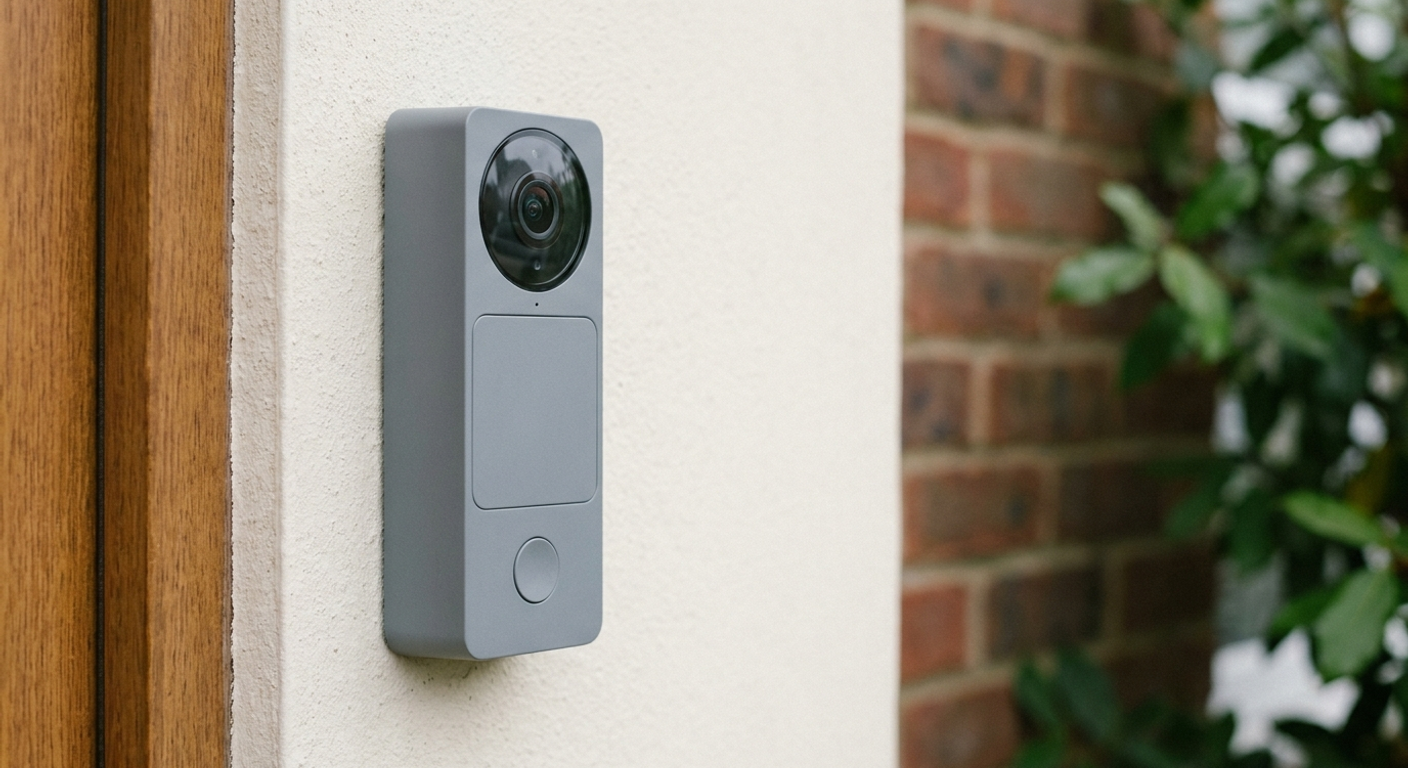
Doorbell cameras (Ring, Nest, Eufy, and similar devices) that are angled toward public sidewalks, driveways, and streets are lawful in all 50 states. People on public thoroughfares have no reasonable expectation of privacy. The legal exposure arises when a camera is deliberately angled to capture a neighbor's interior spaces: a bedroom window, an enclosed backyard, a private patio. In those cases, the camera operator may face voyeurism statute liability and a civil intrusion claim under Restatement § 652B.
The FTC took action against Ring LLC in 2023 for allowing employees and contractors to access consumers' private home video footage without authorization, and for failing to implement adequate security measures that enabled hackers to access customer accounts. In April 2024, the FTC distributed $5.6 million to approximately 117,044 Ring customers, with refunds processed through PayPal. The settlement also required Ring to implement a privacy and security program and prohibited the company from monetizing customer video without explicit consent (FTC v. Ring LLC, FTC File No. 192 3130 (2023 settlement)).
Smart Glasses
Meta Ray-Ban smart glasses (2023 to present) can record video without an obvious indicator visible to the subject. In 2024, Harvard researchers demonstrated that the glasses could be used to identify strangers in real time via facial recognition. No federal smart-glasses-specific privacy statute exists as of 2026. The recording rules that apply to any camera apply equally to smart glasses: recording in public is generally lawful; recording in private spaces without consent implicates voyeurism statutes and Restatement § 652B. For background on the privacy concerns raised by the glasses' design, see the Meta Ray-Ban smart glasses privacy scandal coverage on this site.
Body Cameras
Law enforcement body cameras are governed by state body-camera statutes and department policies, not by general wiretap or voyeurism law. Private individuals wearing body cameras in public are subject to the same wiretap and voyeurism rules as any other recording device: audio triggers consent rules; recording in private spaces without consent triggers voyeurism liability.
Nanny Cams and Hidden Cameras
Nanny cams (hidden cameras installed by homeowners to monitor care workers) are lawful in most states when placed in common areas of the owner's own home. They become unlawful when: (1) placed in bathrooms or bedrooms where care workers have a reasonable expectation of privacy; (2) they capture audio in all-party consent states without the worker's knowledge; or (3) the subject is a tenant rather than an employee and the state restricts landlord surveillance of tenants' living spaces. Common areas (living rooms, kitchens, entryways) on the homeowner's own property are generally permissible recording locations.
On the other side of that equation, a guest, tenant, or short-term renter who suspects a camera has been hidden in their space can follow the sweep method in our guide to detecting hidden cameras and listening devices.
Recording Police and Public Officials: First Amendment Protection
Video recording police officers performing official duties in public places is protected by the First Amendment. Every federal circuit court that has ruled on the question has recognized this right: the First, Third, Fifth, Seventh, Ninth, and Eleventh Circuits have each affirmed it, with the Fourth, Sixth, and Tenth Circuits recognizing the right in varying contexts. Key decisions include Glik v. Cunniffe, 655 F.3d 78 (1st Cir. 2011); Fields v. City of Philadelphia, 862 F.3d 353 (3d Cir. 2017); Turner v. Driver, 848 F.3d 678 (5th Cir. 2017); and ACLU of Illinois v. Alvarez, 679 F.3d 583 (7th Cir. 2012).
The right extends to silent video and to video with audio alike. Officers cannot lawfully order a person to stop recording from a public space or from their own property, and cannot confiscate recording devices without a warrant. The right does not permit physical interference with law enforcement activities, recording in non-public spaces (such as the interior of a police station without authorization), or recording in locations requiring security clearance.
For recording immigration enforcement officers and other federal officials in public, see the related article on recording ICE during raids.
Penalties: Federal and State Criminal Plus Civil Damages
The penalties for illegal video recording vary significantly by jurisdiction and offense type. The table below summarizes the principal criminal provisions and available civil remedies.
| Jurisdiction | Statute | Criminal classification | Maximum criminal penalty | Civil remedy |
|---|---|---|---|---|
| Federal (§ 1801, federal property) | 18 U.S.C. § 1801 | Federal misdemeanor | 1 year imprisonment + fine | Not specified in § 1801 |
| Federal (wiretap, audio) | 18 U.S.C. § 2511 | Federal felony | 5 years imprisonment | § 2520: $100/day or $10,000 + attorney fees |
| California | Cal. Penal Code § 647(j) | Misdemeanor (felony-level term only for a repeat § 647(j)(3) offense with a minor victim) | 1 year county jail (misdemeanor) | § 637.2: $5,000/violation or 3x actual damages |
| Florida | Fla. Stat. § 810.145 | 3rd-degree felony (adults 19+) | 5 years | State civil action available |
| New York | N.Y. Penal Law §§ 250.45, 250.50 | Class E felony (Class D on a second unlawful-surveillance conviction within ten years) | 4 years (Class E); 7 years (Class D) | Civil action for damages |
| Texas | Tex. Penal Code § 21.15 | State jail felony | 2 years state jail + $10,000 fine | Civil action for damages |
| Illinois | 720 ILCS 5/26-4 | Class 4 felony | 3 years (Class 4 felony) | Civil action for damages |
| Michigan | MCL 750.539j | Up to 5 years for recording/distribution | 5 years + $5,000 fine | Civil action for damages |
| Virginia | Va. Code § 18.2-386.1 | Class 1 misdemeanor; Class 6 felony (minor victim/repeat) | 5 years (Class 6 felony) | Civil action for damages |
In addition to the criminal provisions above, civil intrusion upon seclusion claims under Restatement § 652B are available in the vast majority of states. Damages include actual damages (emotional distress, lost wages), nominal damages where actual harm is not shown, and punitive damages where the conduct was egregious. No publication of the recording is required to state an intrusion claim.
State-by-State Quick Reference
Every state has both an audio consent rule and a voyeurism statute protecting private spaces. The table below covers the 15 highest-traffic states with links to the detailed voyeurism spoke pages for each.
| State | Audio consent rule | Voyeurism statute | Penalty (standard) | Voyeurism spoke |
|---|---|---|---|---|
| California | All-party (Cal. Penal Code § 632) | Cal. Penal Code § 647(j) | Misdemeanor | California voyeurism laws |
| Florida | All-party (Fla. Stat. § 934.03) | Fla. Stat. § 810.145 | 3rd-degree felony (adults) | Florida digital voyeurism law |
| New York | One-party (N.Y. Penal Law § 250.05) | N.Y. Penal Law § 250.45 | Class E felony | New York unlawful surveillance |
| Texas | One-party (Tex. Penal Code § 16.02) | Tex. Penal Code § 21.15 | State jail felony | Texas invasive visual recording |
| Illinois | All-party (720 ILCS 5/14-2) | 720 ILCS 5/26-4 | Class 4 felony | Illinois hidden camera laws |
| Michigan | One-party; participant exception (MCL 750.539a) | MCL 750.539j | Up to 5 yrs (recording) | Michigan voyeurism law |
| Washington | All-party (Wash. Rev. Code § 9.73.030) | RCW 9A.44.115 | Felony | Washington voyeurism law |
| Pennsylvania | All-party (18 Pa. C.S. § 5703) | 18 Pa. C.S. § 7507.1 | Misdemeanor / felony (repeat) | State spoke page |
| Massachusetts | All-party (Mass. Gen. Laws ch. 272, § 99) | Mass. Gen. Laws ch. 272, § 105 | Felony | State spoke page |
| Minnesota | One-party | Minn. Stat. § 609.746 | Gross misdemeanor / felony | State spoke page |
| Virginia | One-party (Va. Code § 19.2-62) | Va. Code § 18.2-386.1 | Class 1 misdemeanor / Class 6 felony | Virginia hidden camera laws |
| Oregon | All-party (ORS 165.540) | ORS 163.700, 163.701 | Class A misdemeanor / Class C felony | State spoke page |
| Maryland | All-party (Md. Code, Cts. & Jud. Proc. § 10-402) | Md. Code, Crim. Law § 3-902 | Misdemeanor | State spoke page |
| New Jersey | One-party (N.J. Stat. § 2A:156A-4) | N.J. Stat. § 2C:14-9 | 4th-degree crime (standard) | State spoke page |
| Ohio | One-party (Ohio Rev. Code § 2933.52) | Ohio Rev. Code § 2907.08 | Misdemeanor / felony (repeat) | State spoke page |
For the full state-by-state audio consent breakdown, see US recording laws by state.
Deepfakes, AI-Generated Content, and the TAKE IT DOWN Act (2025-2026)
Video recording analysis now intersects with a substantial federal and state AI-deepfake regime. The federal TAKE IT DOWN Act, Pub. L. 119-12, signed May 19, 2025, makes it a federal crime to knowingly publish nonconsensual intimate images of an identifiable adult, including AI-generated or synthetic depictions. The criminal prohibitions took effect immediately upon signing. The platform notice-and-takedown obligations begin May 19, 2026, requiring covered online services to remove identified content within 48 hours of a valid notice. The FTC enforces the platform-compliance provisions.
Even where a person consented to be filmed in real life, downstream use of that footage to generate a sexual deepfake remains independently criminal under the Act and under the rapidly growing state-level deepfake statutes. Tennessee's ELVIS Act (eff. July 1, 2024) protects voice and likeness against AI cloning. Wyoming's Enrolled Act 32 (eff. July 1, 2026) creates a 10 to 12 year felony for synthetic NCII. South Carolina's Act 37 of 2025 reaches both authentic and digitally-forged intimate imagery. Rhode Island, Florida, California, New York, Texas, Maryland, Idaho, and over thirty other states have enacted or amended deepfake or NCII statutes since 2024. For video recording in a public place, the underlying capture may be lawful, but the subsequent edit, alteration, or AI-generated derivative can independently violate state criminal law, state civil tort law, and the federal Act.
Disclaimer: This article provides general legal information about video recording consent laws in the United States. It is not legal advice and does not create an attorney-client relationship. Laws vary by state and are subject to change. The information on this page was verified as of August 3, 2026. For advice about your specific situation, consult a lawyer licensed in your jurisdiction.
About the Author
[PLACEHOLDER: author roster pending]
Related Articles
- US recording laws by state: full state-by-state audio consent breakdown
- All-party consent states: the 13 states requiring everyone's permission to record audio for at least one type of conversation
- One-party consent states: the 37 states where your own consent is sufficient
- Can employers record employees at work?: workplace recording rules in depth
- Recording ICE during raids and detentions: First Amendment rights when recording federal officers
Last updated: August 3, 2026. Statutes cited reflect their in-force versions as of August 3, 2026.
Frequently Asked Questions
Is it illegal to video record someone without their consent in public?
Generally no. People in public spaces have no objectively reasonable expectation of privacy under the Katz framework. Recording from a public location is lawful in all 50 states. The exception is upskirt or downblouse recording, which is illegal even in public under 18 U.S.C. § 1801 on federal property and under state voyeurism statutes everywhere else.
Does video recording without consent violate wiretap laws?
Only if the recording captures audio. Silent video is not covered by the federal Wiretap Act (18 U.S.C. § 2510) or state wiretap statutes. Once audio is added, state consent rules apply to that audio track. In 37 states plus DC (one-party consent), your own participation is generally sufficient. In the 13 all-party consent states, everyone whose voice is recorded must consent for at least one type of conversation; Nevada is in that group because it requires the consent of every party to record a telephone call (NRS 200.620), though its in-person rule stays one-party.
Which states require everyone's consent to record audio?
Thirteen states apply an all-party consent rule to audio for at least one type of conversation: California, Connecticut, Delaware, Florida, Illinois, Maryland, Massachusetts, Montana, Nevada, New Hampshire, Oregon, Pennsylvania, and Washington. The other 37 states and the District of Columbia follow the federal one-party consent standard. Michigan is frequently miscounted as all-party, but its courts read a participant exception into the eavesdropping statute (MCL 750.539a), so it operates as one-party in practice. Two entries carry qualifications. Connecticut is all-party only for telephone calls, and only under the civil statute Conn. Gen. Stat. § 52-570d; its criminal eavesdropping definitions are one-party and reach only a recorder who is not a party or is not present (Conn. Gen. Stat. § 53a-187(a)(1), (2)). Nevada is all-party only for telephone calls (NRS 200.620, as construed in Lane v. Allstate Ins. Co., 114 Nev. 1176 (1998)); in-person conversations stay one-party under NRS 200.650.
Can I sue someone for recording me on video without consent?
Yes, in most states. The tort of intrusion upon seclusion (Restatement § 652B) allows you to sue for damages without proving the footage was published or shared. If the recording was made in a private space, courts often award actual damages including emotional distress, and sometimes punitive damages. Criminal prosecution under state voyeurism statutes can also occur simultaneously.
Is it illegal to put a hidden camera in a bathroom?
Yes, in every jurisdiction. Bathrooms, locker rooms, changing rooms, and similar private spaces are protected under state voyeurism statutes in all 50 states. Federal law (18 U.S.C. § 1801) covers the same conduct on federal property. Most state violations are misdemeanors or felonies depending on the state and whether the victim is a minor.
Can employers video record employees at work?
Employers can generally record open workspaces and common areas where no reasonable expectation of privacy exists. They cannot place cameras in restrooms, locker rooms, or changing areas. Employer no-recording policies must satisfy the NLRB's Stericycle (2023) balancing test to avoid unlawfully chilling employees' Section 7 rights under the National Labor Relations Act.
Are Ring doorbell cameras legal?
Yes, when angled toward public spaces such as sidewalks, driveways, and streets. They may be unlawful if deliberately angled to capture a neighbor's bedroom window, enclosed backyard, or other space where the neighbor has a reasonable expectation of privacy. The FTC distributed $5.6 million to approximately 117,044 Ring customers in April 2024 after settling claims that Ring allowed unauthorized employee access to private footage.
Is drone video recording without consent illegal?
It depends on the state and what is being recorded. The FAA Remote ID rule (enforced since March 16, 2024, under 14 C.F.R. Part 89) requires every drone that must be registered, meaning any drone of 250 grams or more and any drone flown under Part 107, to broadcast its identification, location, and altitude, but it says nothing about privacy. Recreational drones under 250 grams and flights inside an FAA-Recognized Identification Area are excepted. State law governs privacy. At least 44 states have drone privacy statutes; Florida, California, Idaho, and Wisconsin explicitly restrict recording people or private property without consent.
Does FERPA prevent video recording in schools?
FERPA (20 U.S.C. § 1232g) restricts how schools handle videos that qualify as education records: directly related to an identifiable student and maintained by the school. Schools cannot release such videos without parental consent. Parents recording at public school events are not subject to FERPA themselves but remain subject to state wiretap and voyeurism laws.
Is video recording someone in their home through a window illegal?
Yes. Homes are quintessentially private spaces under Katz. Recording someone through their window without consent violates state voyeurism statutes (criminal) and constitutes intrusion upon seclusion (civil). The use of a drone, telephoto lens, or other remote technology does not change the analysis: what matters is whether the subject had a reasonable expectation of privacy in the space being recorded.
Can you video record a conversation without consent?
Visually recording a conversation (silent) in a public place is generally lawful in all 50 states. If the recording also captures audio, wiretap consent rules apply to that audio. In one-party consent states, your own participation is sufficient. In California, Florida, Illinois, and the other all-party consent states, everyone whose voice is captured must consent to the audio portion.
Updates
Corrected the description of Hamberger v. Eastman to what the court actually held: that the alleged intrusion was a tort for which the couple may recover damages they can prove, on a ruling denying a motion to dismiss.
Governing law re-checked for recent changes
Independently fact-checked against the cited primary sources
Corrected the audio consent classification. The page previously said 36 states plus DC were one-party consent and listed 10 all-party consent states including Michigan. The correct figures are 38 states plus DC one-party and 12 all-party (California, Connecticut, Delaware, Florida, Illinois, Maryland, Massachusetts, Montana, New Hampshire, Oregon, Pennsylvania, Washington). Michigan operates as one-party because its courts read a participant exception into MCL 750.539a. Fixed in the key takeaways, the Layer 1 discussion, the FAQ, and the related-articles list, and added an FAQ listing the 12 all-party states. Added the two qualifications that the bucket framing hides: Nevada sits in the one-party column but requires the consent of every party to record a telephone call (NRS 200.620, as construed in Lane v. Allstate Ins. Co. (1998)), while in-person conversations stay one-party under NRS 200.650; and Connecticut is all-party only for telephone calls, under the civil statute Conn. Gen. Stat. § 52-570d, because its criminal eavesdropping definitions in § 53a-187(a)(1) and (a)(2) are one-party. Corrected three statutory penalty statements: Illinois recording in a restroom, tanning facility, locker room, changing room, hotel bedroom, or residence is a Class 4 felony (not a Class A misdemeanor outside residences), and rises to a Class 3 felony where the victim is under 18 or the offender is a registered sex offender (720 ILCS 5/26-4); a repeat California offense or a minor victim raises the fine ceiling but stays a misdemeanor, with only a repeat Cal. Penal Code § 647(j)(3) offense involving a minor punishable under § 1170(h); and New York's Class D grade turns on a prior unlawful-surveillance conviction within ten years, not on the victim being a minor (N.Y. Penal Law § 250.50). Narrowed the FAA Remote ID description to the drones the rule actually covers, those required to be registered, and noted the sub-250-gram recreational and FAA-Recognized Identification Area exceptions. Replaced the Katz v. United States source link and attached a working source to the Hamberger v. Eastman citation, and pointed the Canadian-law note at the Canada recording laws page instead of the US state hub.
Full rewrite from 847-word stub. New three-layer framework: federal Video Voyeurism Prevention Act (18 U.S.C. § 1801) + state voyeurism statutes (CA § 647(j), FL § 810.145, NY §§ 250.45/250.50, TX § 21.15, IL § 26-4, MCL 750.539j, MN § 609.746, VA § 18.2-386.1, ORS 163.700) + civil intrusion-upon-seclusion torts (Restatement § 652B/C/D). Added drone overlay (FAA Remote ID, 14 C.F.R. Part 89), school FERPA rule (Letter to Wachter, USDOE), HIPAA/medical-facility rule (45 C.F.R. § 164.502), FTC v. Ring (2023 settlement, $5.8M), audio-overlay distinguishing video-only from audio-bearing recording, plus 10-pair FAQ with verified statutory anchors. Replaced banlist URLs (vlex.com → null reporter cite, claimsjournal.com → ftc.gov primary).
Full rewrite from 847-word stub. Replaced single-layer wiretap framing with three-layer analysis (wiretap consent, voyeurism statutes, civil torts). Added 12 verified state voyeurism statutes, 4 Restatement privacy torts (intrusion upon seclusion, public disclosure, false light, appropriation), drone laws (FAA Remote ID March 2024 mandate plus 44-state statute count), Ring/doorbell-camera FTC settlement (April 2024 refund distribution), Meta Ray-Ban smart glasses context, body cameras, FERPA school context, and HIPAA healthcare context. State-by-state quick reference table with internal links to voyeurism spoke pages. Penalty comparison table added. FAQ expanded from 6 to 10 items.
The Law Behind This Article
This article rests on the statutory provisions below, held in our own legal record and retrieved from the official source. Tap a section to read the operative text.
California Penal Code
§ 632In forcecited in 3 of our articles
(a) A person who, intentionally and without the consent of all parties to a confidential communication, uses an electronic amplifying or recording device to eavesdrop upon or record the confidential communication, whether the communication is carried on among the parties in the presence of one another or by means of a telegraph, telephone, or other device, except a radio, shall be punished by a fine not exceeding two thousand five hundred dollars ($2,500) per violation, or imprisonment in a county jail not exceeding one year, or in the state prison, or by both that fine and imprisonment. If the person has previously been convicted of a violation of this section or Section 631, 632.5, 632.6, 632.7, or 636, the person shall be punished by a fine not exceeding ten thousand dollars ($10,000) per violation, by imprisonment in a county jail not exceeding one year, or in the state prison, or by both that fine and imprisonment.
Official text (excerpt) · last checked 2026-09-23 · Read the full text in our law library · Verify at leginfo.legislature.ca.gov
Cited in 267 court opinions in our collectionLatest citing opinion in our collection: 2026
In the courts (editorial summary, independently checked):Kimmel v. Goland (1990) held the section 47(2) litigation privilege does not bar a damages claim under Section 632 for recording confidential conversations without consent. Lieberman v. KCOP Television, Inc. (2003) held a Section 632 violation is complete the moment the recording is made, whether or not it is disclosed.
Opinions citing this section in our collection:
- Rubin v. Green (California Supreme Court 1993, 4 Cal. 4th 1187)“…f telephone conversations with defendants, an offense under Penal Code section 632. We noted that defendants alleged that…”
- Kimmel v. Goland (California Supreme Court 1990, 51 Cal. 3d 202)✓Mobilehome owners secretly taped phone calls with park management in anticipation of suing; the court held the section 47(2) litigation privilege did not bar the cross-complaint for damages under Penal Code section 632, since the injury came from recording, not publication.
- Shulman v. Group W Productions, Inc. (California Supreme Court 1998, 74 Cal. Rptr. 2d 843)✓A TV producer put a wireless microphone on the flight nurse treating a crash victim. No section 632 claim was before the court, but it called section 632 and the intrusion tort laws of general applicability and said the press may not eavesdrop in violation of section 632.
Identified automatically from the court opinions citing this section — not a ranking of which case controls.
Also relied on in: California Recording Laws (2026): All-Party Consent Rules, US Recording Laws by State (2026): All 50 States Explained, Can an Employer Record Conversations Without Consent? (2026)
§ 637.2In force
(a) Any person who has been injured by a violation of this chapter may bring an action against the person who committed the violation for the greater of the following amounts: (1) Five thousand dollars ($5,000) per violation. (2) Three times the amount of actual damages, if any, sustained by the plaintiff. (b) Any person may, in accordance with Chapter 3 (commencing with Section 525) of Title 7 of Part 2 of the Code of Civil Procedure, bring an action to enjoin and restrain any violation of this chapter, and may in the same action seek damages as provided by subdivision (a). (c) It is not a necessary prerequisite to an action pursuant to this section that the plaintiff has suffered, or be threatened with, actual damages. (d) This section shall not be construed to affect Title 4 (commencing with Section 3425.1) of Part 1 of Division 4 of the Civil Code.
Official text (excerpt) · last checked 2026-07-28 · Read the full text in our law library · Verify at leginfo.legislature.ca.gov
Cited in 103 court opinions in our collectionLatest citing opinion in our collection: 2026
In the courts (editorial summary, independently checked):Ribas v. Clark (1985) held the section 637.2 award accrues at the moment of the Privacy Act violation, so the Civil Code section 47 litigation privilege does not bar it, though damages flowing solely from privileged testimony fail. Kimmel v. Goland (1990) applied that reasoning to recordings made in anticipation of litigation.
Opinions citing this section in our collection:
- Rubin v. Green (California Supreme Court 1993, 4 Cal. 4th 1187)“…asion of privacy and related torts as well as damages under Penal Code section 637.2, granting persons injured by eavesdropp…”
- Ribas v. Clark (California Supreme Court 1985, 38 Cal. 3d 355)✓A wife asked a third party to listen on an extension phone while she called her husband, and that listener later testified about it; the court held the judicial privilege barred damages from the testimony but not Section 637.2's fixed award, which accrues at the violation.
- Kimmel v. Goland (California Supreme Court 1990, 51 Cal. 3d 202)✓Mobilehome residents secretly taped calls with park management to gather evidence for a planned lawsuit; the court held the litigation privilege did not bar management's Section 637.2 claim, because the injury came from the recording itself and not from any publication.
Identified automatically from the court opinions citing this section — not a ranking of which case controls.
§ 647In forcecited in 20 of our articles
Except as provided in paragraph (5) of subdivision (b) and in subdivisions (k) and (l), a person who commits any of the following acts is guilty of disorderly conduct, a misdemeanor: (a) An individual who solicits anyone to engage in or who engages in lewd or dissolute conduct in a public place or in a place open to the public or exposed to public view. (b) (1) An individual who solicits, or who agrees to engage in, or who engages in, an act of prostitution with the intent to receive compensation, money, or anything of value from another person. An individual agrees to engage in an act of prostitution when, with specific intent to so engage, the individual manifests an acceptance of an offer or solicitation by another person to so engage, regardless of whether the offer or solicitation was made by a person who also possessed the specific intent to engage in an act of prostitution. (2) An individual who solicits, or who agrees to engage in, or who engages in, an act of prostitution with another person who is 18 years of age or older in exchange for the individual providing compensation, money, or anything of value to the other person.
Official text (excerpt) · last checked 2026-08-31 · Read the full text in our law library · Verify at leginfo.legislature.ca.gov
Cited in 593 court opinions in our collectionLatest citing opinion in our collection: 2026
In the courts (editorial summary, independently checked):In re Giannini (1968) set aside convictions under Penal Code 647(a) because the prosecution introduced no evidence of community standards, and equated "lewd or dissolute" with obscenity only for the purpose of judging an allegedly obscene dance performed for an audience.
Opinions citing this section in our collection:
- Morrison v. State Board of Education (California Supreme Court 1969, 1 Cal. 3d 214)“…public beach and the teacher was arrested for violation of Penal Code section 647, subdivision (a), and convicted, on his…”
- People v. Laiwa (California Supreme Court 1983, 34 Cal. 3d 711)“…to arrest him for being under the influence of a narcotic. (Pen. Code, § 647, subd. (f).) [1] He moved, however, to…”
- In Re Cregler (California Supreme Court 1961, 56 Cal. 2d 308)✓A man previously convicted of theft was arrested for standing in a San Francisco bus station under the pre-1961 vagrancy version of section 647. The court rejected his vagueness challenge, reading loiter to require lingering to commit a crime, and denied habeas relief.
Identified automatically from the court opinions citing this section — not a ranking of which case controls.
Also relied on in: California Landlord-Tenant Recording and Surveillance Laws (2026), California Laws on Recording in Public: What Is Legal (2026), California Security Camera and Surveillance Laws: Rules for Home and Business (2026)
Connecticut General Statutes, Title 52 (Civil Actions), Chapter 925
§ 52-570dAction for illegal recording of private telephonic communications.In forcecited in 56 of our articles
(a) No person shall use any instrument, device or equipment to record an oral private telephonic communication unless the use of such instrument, device or equipment (1) is preceded by consent of all parties to the communication and such prior consent either is obtained in writing or is part of, and obtained at the start of, the recording, or (2) is preceded by verbal notification which is recorded at the beginning and is part of the communication by the recording party, or (3) is accompanied by an automatic tone warning device which automatically produces a distinct signal that is repeated at intervals of approximately fifteen seconds during the communication while such instrument, device or equipment is in use.
Official text (excerpt) · last checked 2026-08-28 · Read the full text in our law library · Verify at cga.ct.gov
Cited in 22 court opinions in our collectionLatest citing opinion in our collection: 2024
In the courts (editorial summary, independently checked):Holler v. Buckley Broadcasting Corp. (1998) held section 52-570d creates a cause of action unknown at common law that is strictly construed, and does not reach a third party's rerecording of an already illegal tape. Jezouit v. Malloy (2019) held the statute does not waive the state's sovereign immunity from suit.
Opinions citing this section in our collection:
- Holler v. Buckley Broadcasting Corp. (Connecticut Appellate Court 1998, 47 Conn. App. 764)✓A girlfriend secretly taped a radio employee's call, and a coworker re-recorded that tape and used it to get him fired. The court held section 52-570d, strictly construed, bars taping a private call but not a third party's re-recording of an already illegal tape.
- Jezouit v. Malloy (Connecticut Appellate Court 2019, 193 Conn. App. 576)“…his complaint because (1) he brought his claim pursuant to General Statutes § 52-570d, which he contends waives sovereign imm…”
- State v. Skok (Supreme Court of Connecticut 2015)“…on without the consent of all parties to the communication. General Statutes § 52-570d (a) prohibits the use of ‘‘any instrume…”
Identified automatically from the court opinions citing this section — not a ranking of which case controls.
Also relied on in: Connecticut Audio Recording Laws: Mixed Consent Rules and Penalties (2026), Connecticut Dashcam Laws: Mounting Rules, Audio Recording, and Evidence (2026), Connecticut Landlord-Tenant Recording and Surveillance Laws (2026)
Connecticut General Statutes, Title 53a (Penal Code), Chapter 952
§ 53a-187Definitions. Applicability.In forcecited in 22 of our articles
(a) The following definitions are applicable to sections 53a-188 and 53a-189: (1) “Wiretapping” means the intentional overhearing or recording of a telephonic or telegraphic communication or a communication made by cellular radio telephone by a person other than a sender or receiver thereof, without the consent of either the sender or receiver, by means of any instrument, device or equipment. The normal operation of a telephone or telegraph corporation and the normal use of the services and facilities furnished by such corporation pursuant to its tariffs shall not be deemed “wiretapping”. (2) “Mechanical overhearing of a conversation” means the intentional overhearing or recording of a conversation or discussion, without the consent of at least one party thereto, by a person not present thereat, by means of any instrument, device or equipment. (3) “Unlawfully” means not specifically authorized by law. For purposes of this section, “cellular radio telephone” means a wireless telephone authorized by the Federal Communications Commission to operate in the frequency bandwidth reserved for cellular radio telephones.
Official text (excerpt) · last checked 2026-07-29 · Read the full text in our law library · Verify at cga.ct.gov
Cited in 12 court opinions in our collectionLatest citing opinion in our collection: 2021
In the courts (editorial summary, independently checked):Connecticut courts read section 53a-187's definitions to reach only surreptitious, nonconsensual monitoring. State v. Grullon (1989) applied it to place one-party-consent recordings outside the eavesdropping statutes, and Washington v. Meachum (1996) held those statutes are violated only when neither party knows the call is monitored.
Opinions citing this section in our collection:
- State v. Grullon (Supreme Court of Connecticut 1989, 212 Conn. 195)✓Police recorded the defendant's calls with his brother, who consented; the court held that replacing the older wiretap penal statute with section 53a-187, which reaches recording only when no party consents, gave no reason to exclude the transcripts.
- Washington v. Meachum (Supreme Court of Connecticut 1996, 238 Conn. 692)✓Inmates challenged prison rules allowing nonprivileged collect calls to be monitored after posted signs, signed forms and a recurring tone; reading section 53a-187's consent-based definitions, the court held the eavesdropping statutes are violated only when neither party knows.
- State v. McVeigh (Supreme Court of Connecticut 1993, 224 Conn. 593)✓Police used a scanner in a neighbor's apartment to record a couple's cordless phone calls; the court rejected the State's argument that a 1989 amendment adding cellular phones to section 53a-187's wiretapping definition left cordless calls unprotected, and ordered suppression.
Identified automatically from the court opinions citing this section — not a ranking of which case controls.
Also relied on in: Connecticut Medical Recording Laws: Patients, Doctors, and HIPAA Rules (2026), Connecticut Phone Call Recording Laws: All-Party Consent Rules and Penalties (2026), Connecticut Laws on Recording Police: Your Rights and Limits (2026)
Florida Statutes
§ 810.145Digital voyeurism.In force
(1) As used in this section, the term:(a) “Broadcast” means electronically transmitting a visual image or visual recording with the intent that it be viewed by another person. (b) “Family or household member” has the same meaning as in s. 741.28. (c) “Imaging device” means any mechanical, digital, or electronic viewing device; still camera; camcorder; motion picture camera; or any other instrument, equipment, or format capable of recording, storing, or transmitting visual images of another person. (d) “Position of authority or trust” means a position occupied by a person 18 years of age or older who is a relative, caregiver, coach, employer, or other person who, by reason of his or her relationship with the victim, is able to exercise undue influence over him or her or exploit his or her trust. (e) “Privately exposing the body” means exposing a sexual organ.
Official text (excerpt) · last checked 2026-08-31 · Read the full text in our law library · Verify at leg.state.fl.us
Cited in 3 court opinions in our collectionLatest citing opinion in our collection: 2024
In the courts (editorial summary, independently checked):Kenneth Isaac Parkerson v. State of Florida (2015) rejected a facial overbreadth challenge to section 810.145, holding the video voyeurism statute regulates conduct, not pure speech. Clemen v. Surterra Holdings, Inc. (2024) drew on its privacy definition and exemption for clearly visible cameras when dismissing an intrusion claim.
Opinions citing this section in our collection:
- Kenneth Isaac Parkerson v. State of Florida (District Court of Appeal of Florida 2015, 163 So. 3d 683)✓A man caught watching people inside their homes, once carrying a camera, argued Florida's video voyeurism statute was facially overbroad because it could reach journalists and investigators; the court held section 810.145 is not overbroad and affirmed his convictions.
- Clemen v. Surterra Holdings, Inc. (District Court, M.D. Florida 2024)✓A worker sued over cameras aimed at a workplace changing area; dismissing her intrusion on seclusion claim, the court drew on section 810.145's privacy definition and its exclusion for obvious cameras, and found no authority making an alleged violation outrageous per se.
- Keith Taig v. City of Vero Beach (Court of Appeals for the Eleventh Circuit 2023)✓A spa customer recorded by covert police cameras installed under a court order argued Florida statutes including section 810.145 gave officers clear notice of customers' privacy rights; the court held those state statutes do not clearly establish a federal constitutional right.
Identified automatically from the court opinions citing this section — not a ranking of which case controls.
§ 934.03Interception and disclosure of wire, oral, or electronic communications prohibited.In forcecited in 53 of our articles
(1) Except as otherwise specifically provided in this chapter, any person who:(a) Intentionally intercepts, endeavors to intercept, or procures any other person to intercept or endeavor to intercept any wire, oral, or electronic communication; (b) Intentionally uses, endeavors to use, or procures any other person to use or endeavor to use any electronic, mechanical, or other device to intercept any oral communication when:1. Such device is affixed to, or otherwise transmits a signal through, a wire, cable, or other like connection used in wire communication; or 2.
Official text (excerpt) · last checked 2026-09-23 · Read the full text in our law library · Verify at leg.state.fl.us
Cited in 74 court opinions in our collectionLatest citing opinion in our collection: 2026
In the courts (editorial summary, independently checked):State v. Walls (1978) held that recording an in-home oral communication without the consent of all parties violated section 934.03 and required suppression, and State v. Inciarrano (1985) held the statute protects only communications uttered with a reasonable expectation of privacy.
Opinions citing this section in our collection:
- State v. Walls (Supreme Court of Florida 1978, 356 So. 2d 294)✓An extortion victim secretly recorded threats made to him in his own home; the court held that was a protected oral communication, that recording it without every party's consent violated Section 934.03, and that Section 934.06 barred using the tape as evidence.
- SHARRON TASHA FORD v. CITY OF BOYNTON BEACH (District Court of Appeal of Florida 2021)“…ng oral communications in violation of the wiretap statute, section 934.03, Florida Statutes (2009), and for obstructing without vio…”
- State v. Calhoun (Circuit Court for the Judicial Circuits of Florida 1984, 7 Fla. Supp. 2d 3)“…hall not be violated” . . . (emphasis mine) Furthermore, section 934.03, Florida Statutes, makes it unlawful for *6 any person (…”
Identified automatically from the court opinions citing this section — not a ranking of which case controls.
Also relied on in: Federal Wiretap Act and ECPA: The Complete Guide (2026), Is Plaud HIPAA Compliant? Kind Of. Here's What to Know (2026), Florida School Recording Laws: Classroom, Campus, and Student Privacy (2026)
§ 934.50Searches and seizure using a drone.In force
(1) SHORT TITLE.—This act may be cited as the “Freedom from Unwarranted Surveillance Act.” (2) DEFINITIONS.—As used in this act, the term:(a) “Drone” means a powered, aerial vehicle that:1. Does not carry a human operator; 2. Uses aerodynamic forces to provide vehicle lift; 3. Can fly autonomously or be piloted remotely; 4. Can be expendable or recoverable; and 5. Can carry a lethal or nonlethal payload. (b) “Image” means a record of thermal, infrared, ultraviolet, visible light, or other electromagnetic waves; sound waves; odors; or other physical phenomena which captures conditions existing on or about real property or an individual located on that property. (c) “Imaging device” means a mechanical, digital, or electronic viewing device; still camera; camcorder; motion picture camera; or any other instrument, equipment, or format capable of recording, storing, or transmitting an image. (d) “Law enforcement agency” means a lawfully established state or local public agency that is responsible for the prevention and detection of crime, local government code enforcement, and the enforcement of penal, traffic, regulatory, game, or controlled substance laws.
Official text (excerpt) · last checked 2026-08-31 · Read the full text in our law library · Verify at leg.state.fl.us
Cited in 1 court opinions in our collectionLatest citing opinion in our collection: 2022
Opinions citing this section in our collection:
- CHARLES LEE ROSALY v. VERONIKA KONECNY (District Court of Appeal of Florida 2022)“…section 784.048(1)(a). The Florida legislature amended section 934.50, Florida Statutes, in 2015 to prohibit certain conduct in…”
Identified automatically from the court opinions citing this section — not a ranking of which case controls.
Michigan Compiled Laws
§ 750.539aDefinitionsIn forcecited in 32 of our articles
As used in sections 539a to 539i: (1) "Private place" means a place where one may reasonably expect to be safe from casual or hostile intrusion or surveillance but does not include a place to which the public or substantial group of the public has access. (2) "Eavesdrop" or "eavesdropping" means to overhear, record, amplify or transmit any part of the private discourse of others without the permission of all persons engaged in the discourse. Neither this definition or any other provision of this act shall modify or affect any law or regulation concerning interception, divulgence or recording of messages transmitted by communications common carriers. (3) "Surveillance" means to secretly observe the activities of another person for the purpose of spying upon and invading the privacy of the person observed. (4) "Person" means any individual, partnership, corporation or association.
Official text (excerpt) · last checked 2026-07-30 · Read the full text in our law library · Verify at legislature.mi.gov
Cited in 26 court opinions in our collectionLatest citing opinion in our collection: 2026
Opinions citing this section in our collection:
- Lewis v. LeGrow (Michigan Court of Appeals 2003, 258 Mich. App. 175)“…such unauthorized installation, is guilty of a felony.... MCL 750.539a provides the definitions of phrases use…”
- People v. Stone (Michigan Supreme Court 2001, 463 Mich. 558)“…permission of all persons engaged in the discourse.” MCL 750.539a(2); MSA 28.807(1)(2). In…”
- People v. Lucas (Michigan Court of Appeals 1991, 188 Mich. App. 554)“…e Commander Turner, in answering the mobile phone, violated MCL 750.539a et seq.; MSA 28.807(1)…”
Identified automatically from the court opinions citing this section — not a ranking of which case controls.
Also relied on in: Michigan Smart Glasses Recording Laws (2026), Michigan Audio Recording Laws: Consent Rules, Statutes, and Penalties (2026), Michigan Dashcam Laws: Windshield Rules, Audio Recording, and Legal Use (2026)
§ 750.539jSurveillance of or distribution, dissemination, or transmission of recording, photograph, or visual image of individual having reasonable expectation of privacy; prohibited conduct; violation as felony; penalty; exceptions; "surveil" definedIn force
(1) A person shall not do any of the following: (a) Surveil another individual who is clad only in his or her undergarments, the unclad genitalia or buttocks of another individual, or the unclad breasts of a female individual under circumstances in which the individual would have a reasonable expectation of privacy. (b) Photograph, or otherwise capture or record, the visual image of the undergarments worn by another individual, the unclad genitalia or buttocks of another individual, or the unclad breasts of a female individual under circumstances in which the individual would have a reasonable expectation of privacy. (c) Distribute, disseminate, or transmit for access by any other person a recording, photograph, or visual image the person knows or has reason to know was obtained in violation of this section. (2) A person who violates or attempts to violate this section is guilty of a crime as follows: (a) For a violation or attempted violation of subsection (1)(a): (i) Except as provided in subparagraph (ii), the person is guilty of a felony punishable by imprisonment for not more than 2 years or a fine of not more than $2,000.00, or both.
Official text (excerpt) · last checked 2026-07-30 · Read the full text in our law library · Verify at legislature.mi.gov
Cited in 17 court opinions in our collectionLatest citing opinion in our collection: 2026
In the courts (editorial summary, independently checked):Michigan courts have applied MCL 750.539j to hidden cameras. In People of Michigan v. Jeffrey Thomas Mazur (2015) the Court of Appeals held the statute does not require that a defendant view the recorded material, and that its residential security-monitoring exception does not cover a camera used for a lewd or lascivious purpose.
Opinions citing this section in our collection:
- In Re L-S Morehead Minor (Michigan Court of Appeals 2026)“…e, was arrested for felony surveilling an unclothed person, MCL 750.539j(1)(a). The trial court authori…”
- In Re K N Klemkow Minor (Michigan Court of Appeals 2024)“…520g(2), and two counts of surveilling an unclothed person, MCL 750.539j. Respondent was arraigned on the crimin…”
- People of Michigan v. Cora Ladane Lymon (Michigan Supreme Court 2024)“…ither naked or clad in undergarments, MCL 28.722(r)(vi) and MCL 750.539j. These offenses all involve a sexual c…”
Identified automatically from the court opinions citing this section — not a ranking of which case controls.
Minnesota Statutes, Chapter 609: CRIMINAL CODE
§ 609.746INTERFERENCE WITH PRIVACYIn forcecited in 17 of our articles
Subdivision 1. Surreptitious intrusion; observation device. (a) A person is guilty of a gross misdemeanor who: (1) enters upon another's property; (2) surreptitiously gazes, stares, or peeps in the window or any other aperture of a house or place of dwelling of another; and (3) does so with intent to intrude upon or interfere with the privacy of a member of the household. (b) A person is guilty of a gross misdemeanor who: (1) enters upon another's property; (2) surreptitiously installs or uses any device for observing, photographing, recording, amplifying, or broadcasting sounds or events through the window or any other aperture of a house or place of dwelling of another; and (3) does so with intent to intrude upon or interfere with the privacy of a member of the household.
Official text (excerpt) · last checked 2026-08-31 · Read the full text in our law library · Verify at revisor.mn.gov
Cited in 15 court opinions in our collectionLatest citing opinion in our collection: 2026
In the courts (editorial summary, independently checked):State v. Pakhnyuk (2019) held the intent to intrude on privacy in section 609.746, subd. 1(a) attaches only to the peeping, not to entering the property. State v. Ulmer (2006) applied subd. 1(c) to a public restroom, holding the space above a urinal partition is an aperture and the shielded space is private.
Opinions citing this section in our collection:
- State v. Pakhnyuk (Supreme Court of Minnesota 2019, 926 N.W.2d 914)✓A houseguest sat on the roof and watched a 14-year-old undressing through a bedroom window; the Minnesota Supreme Court held the intent to intrude element attaches only to the peeping clause, not to entering the property, and affirmed the conviction.
- State v. Ulmer (Court of Appeals of Minnesota 2006, 719 N.W.2d 213)✓A man leaned over a urinal partition in a store restroom to watch a seven-year-old boy urinate; the court of appeals held a user has an expectation of privacy in that partitioned space and that the gap above the partition is an aperture under the statute.
- State v. Morris (Court of Appeals of Minnesota 2002, 644 N.W.2d 114)✓A man carried a camera concealed in a bag and filmed up a store clerk's skirt; the court of appeals held the area under a skirt is a place with an expectation of privacy and the camera itself an aperture, and rejected the commercial-establishment exemption.
Identified automatically from the court opinions citing this section — not a ranking of which case controls.
Also relied on in: Minnesota Landlord-Tenant Recording Laws: Cameras, Privacy, and Rights, Minnesota Medical Recording Laws: Patient Rights, HIPAA, and Provider Rules, Minnesota Laws on Recording in Public: Rights, Limits, and Privacy Rules
New York Penal Law
§ 250.45Unlawful surveillance in the second degreeIn forcecited in 19 of our articles
Unlawful surveillance in the second degree. A person is guilty of unlawful surveillance in the second degree when: 1. For his or her own, or another person's amusement, entertainment, or profit, or for the purpose of degrading or abusing a person, he or she intentionally uses or installs, or permits the utilization or installation of an imaging device to surreptitiously view, broadcast or record a person dressing or undressing or the sexual or other intimate parts of such person at a place and time when such person has a reasonable expectation of privacy, without such person's knowledge or consent; or 2. For his or her own, or another person's sexual arousal or sexual gratification, he or she intentionally uses or installs, or permits the utilization or installation of an imaging device to surreptitiously view, broadcast or record a person dressing or undressing or the sexual or other intimate parts of such person at a place and time when such person has a reasonable expectation of privacy, without such person's knowledge or consent; or 3.
Official text (excerpt) · last checked 2026-08-31 · Read the full text in our law library · Verify at legislation.nysenate.gov
Cited in 51 court opinions in our collectionLatest citing opinion in our collection: 2025
In the courts (editorial summary, independently checked):People v. Piznarski (2013) held Penal Law 250.45 reaches a participant who secretly records consensual sex, that the victim kept a reasonable expectation of privacy, and that the one-party consent rule for eavesdropping does not apply. People v. Evans (2006) applied section 250.45(3) to a camera hidden in a bedroom.
Opinions citing this section in our collection:
- People v. Evans (Appellate Division of the Supreme Court of the State of New York 2006, 27 A.D.3d 905)✓A man placed a video camera in his girlfriend's 12-year-old daughter's bedroom and recorded her undressing, then pleaded guilty under Section 250.45(3); the court affirmed, holding the plea needed no express admission of no legitimate purpose given the statutory presumption.
- People v. Lema (Appellate Division of the Supreme Court of the State of New York 2017, 152 A.D.3d 440)✓A man used a phone camera to record under women's skirts on a subway train, but dark lighting produced no image of intimate parts; the court affirmed, holding Section 250.45(4) is satisfied when a device is used for the purpose of making such a recording.
- People v. Piznarski (Appellate Division of the Supreme Court of the State of New York 2013, 113 A.D.3d 166)✓A student secretly recorded sex with two women using a camera left in view on his bedroom desk; the court affirmed under Section 250.45, holding the statute reaches a participant who records a consensual encounter and that a visible camera can still be used surreptitiously.
Identified automatically from the court opinions citing this section — not a ranking of which case controls.
Also relied on in: New York Dashcam Laws: Legality, Mounting Rules, and Evidence Use, New York Landlord-Tenant Recording Laws: Rights for Renters and Property Owners, New York Medical Recording Laws: Patient Rights and Healthcare Privacy
§ 250.50Unlawful surveillance in the first degreeIn forcecited in 6 of our articles
Unlawful surveillance in the first degree. A person is guilty of unlawful surveillance in the first degree when he or she commits the crime of unlawful surveillance in the second degree and has been previously convicted within the past ten years of unlawful surveillance in the first or second degree. Unlawful surveillance in the first degree is a class D felony.
Official text (excerpt) · last checked 2026-07-29 · Read the full text in our law library · Verify at legislation.nysenate.gov
Cited in 3 court opinions in our collectionLatest citing opinion in our collection: 2018
Opinions citing this section in our collection:
- People v. Diaz (New York Court of Appeals 2018, 32 N.Y.3d 538)“…stration for first-degree unlawful surveillance pursuant to Penal Law § 250.50]). Thus, SORA's overall purpose of "pro…”
- People v. Williams (Appellate Division of the Supreme Court of the State of New York 2005, 20 A.D.3d 72)“…into the statutory definition of criminal assistance under Penal Law § 250.50 (4). We also think a proper distincti…”
- People v. Morriale (Criminal Court of the City of New York 2008, 20 Misc. 3d 558)“…of the crime of unlawful surveillance in the first degree, Penal Law § 250.50 cannot serve as a predicate for the one…”
Identified automatically from the court opinions citing this section — not a ranking of which case controls.
Also relied on in: New York Video Recording Laws: Surveillance Rules and Privacy Limits, New York Voyeurism and Hidden Camera Laws: Penalties and Protections, New York Ring Doorbell Laws: What You Need to Know in 2026
Texas Penal Code
§ 21.15INVASIVE VISUAL RECORDINGIn forcecited in 17 of our articles
(a) In this section: (1) "Female breast" means any portion of the female breast below the top of the areola. (2) "Intimate area" means the naked or clothed genitals, pubic area, anus, buttocks, or female breast of a person. (3) "Changing room" means a room or portioned area provided for or primarily used for the changing of clothing and includes dressing rooms, locker rooms, and swimwear changing areas. (3-a) "Place in which a person has a reasonable expectation of privacy" means a place in which a reasonable person would believe that the person could disrobe in privacy, without being concerned that the act of undressing would be photographed or visually recorded by another or that a visual image of the person undressing would be broadcasted or transmitted by another. The term includes a bathroom, bedroom, and changing room. (4) "Promote" has the meaning assigned by Section 43.21.
Official text (excerpt) · last checked 2026-08-31 · Read the full text in our law library · Verify at statutes.capitol.texas.gov
Cited in 44 court opinions in our collectionLatest citing opinion in our collection: 2025
In the courts (editorial summary, independently checked):The Court of Criminal Appeals struck down the 2007 improper photography provision at Penal Code 21.15(b)(1), and Ex parte Shay (2016) set aside a conviction under it. The Legislature re-enacted the section in 2015, and Ex Parte Kamilah a Hamilton (2020) held the current subsection (b)(1) survives strict scrutiny and is not overbroad.
Opinions citing this section in our collection:
- Ex Parte Nyabwa (Texas Court of Appeals, 14th District (Houston) 2011, 366 S.W.3d 719)✓Charged with improper photography, Nyabwa attacked section 21.15(b)(1) by pretrial habeas; the court of appeals held the 2007 subsection regulated the photographer's intent rather than speech and was neither overbroad nor vague. Ex parte Thompson struck it down in 2014.
- Ex parte Shay (Court of Criminal Appeals of Texas 2016, 507 S.W.3d 731)✓Shay pleaded guilty under section 21.15(b)(1) before Ex parte Thompson struck that subsection down; the Court of Criminal Appeals held his favorable plea bargain did not estop habeas relief, set aside the conviction, and remanded to dismiss the indictment.
- Ex Parte Kamilah a Hamilton (Texas Court of Appeals, 14th District (Houston) 2020)✓Indicted under the 2015 version of section 21.15(b)(1) for broadcasting an image of a complainant's intimate area, Hamilton claimed facial overbreadth; the court held the rewritten subsection survives strict scrutiny, is not overbroad, and affirmed denial of relief.
Identified automatically from the court opinions citing this section — not a ranking of which case controls.
Also relied on in: Texas Landlord-Tenant Recording Laws: Cameras, Privacy, and Rights, Texas Laws on Recording in Public: Rights, Limits, and Exceptions, Texas School Recording Laws: Classrooms, Cameras, and Student Privacy
Code of Virginia, Title 18.2: Crimes and Offenses Generally
§ 18.2-386.1Unlawful creation of image of another; penaltyIn forcecited in 16 of our articles
A. It is unlawful for any person to knowingly and intentionally create any videographic or still image by any means whatsoever of any nonconsenting person if (i) that person is (a) totally nude; (b) clad in undergarments; (c) in a state of undress so as to expose the genitals, pubic area, buttocks, or female breast; or (d) not exposed to show the genitals, pubic area, buttocks, or female breast but such videographic or still image is obscene, as defined in § 18.2-372, when such nonconsenting person is in a restroom, dressing room, locker room, hotel room, motel room, tanning bed, tanning booth, bedroom, or other location; or (ii) the videographic or still image is created by placing the lens or image-gathering component of the recording device in a position directly beneath or between a person's legs for the purpose of capturing an image of the person's intimate parts or undergarments covering those intimate parts when the intimate parts or undergarments would not otherwise be visible to the general public; and when the circumstances set forth in clause (i) or (ii) are otherwise such that the person being recorded would have a reasonable expectation of privacy. B.
Official text (excerpt) · last checked 2026-08-31 · Read the full text in our law library · Verify at law.lis.virginia.gov
Also relied on in: Virginia Smart Glasses Recording Laws, Virginia Employee Monitoring Laws: Workplace Surveillance and Social Media (2026)
Code of Virginia, Title 19.2: Criminal Procedure
§ 19.2-62Interception, disclosure, etc., of wire, electronic or oral communications unlawful; penalties; exceptionsIn force
A. Except as otherwise specifically provided in this chapter any person who: 1. Intentionally intercepts, endeavors to intercept or procures any other person to intercept or endeavor to intercept, any wire, electronic or oral communication; 2. Intentionally uses, endeavors to use, or procures any other person to use or endeavor to use any electronic, mechanical or other device to intercept any oral communication; 3. Intentionally discloses, or endeavors to disclose, to any other person the contents of any wire, electronic or oral communication knowing or having reason to know that the information was obtained through the interception of a wire, electronic or oral communication; or 4. Intentionally uses, or endeavors to use, the contents of any wire, electronic or oral communication, knowing or having reason to know that the information was obtained through the interception of a wire, electronic or oral communication; shall be guilty of a Class 6 felony. B. 1.
Official text (excerpt) · last checked 2026-09-24 · Read the full text in our law library · Verify at law.lis.virginia.gov
Cited in 11 court opinions in our collectionLatest citing opinion in our collection: 2025
In the courts (editorial summary, independently checked):Courts read Section 19.2-62 in step with the federal wiretap act. Global Policy Partners, LLC v. Yessin (2009) held that accessing email stored on a destination server is not an intercept, and Wilks v. Commonwealth (1977) held a conversation police recorded through a cooperating coconspirator was not a protected oral communication.
Opinions citing this section in our collection:
- Belmer v. Commonwealth (Court of Appeals of Virginia 2001, 36 Va. App. 448)✓A juvenile arrested for robbery whispered to his mother's boyfriend in a police interview room while a detective listened in; the court found no reasonable expectation of privacy, so Chapter 6, which carries the Section 19.2-62 ban, did not bar the detective's testimony.
- Wilks v. Commonwealth (Supreme Court of Virginia 1977, 217 Va. 885)✓An arson conspirator agreed to be wired and drew the defendant into a taped shop-talk about the fires; the court held the defendant had no justifiable expectation of noninterception, so the talk was not an oral communication protected by Chapter 6 and the tape was admissible.
- Bartnicki v. Vopper (Supreme Court of the United States 2001, 532 U.S. 514)“…16.02 (Supp. 2001); Utah Code Ann. § 77 23a4 (1982); Va. Code Ann. § 19.2-62 (1995); W. Va. Code § 62 -1D-3 (2000)…”
Identified automatically from the court opinions citing this section — not a ranking of which case controls.
Revised Code of Washington
§ 9.73.030Intercepting, recording, or divulging private communication—Consent required—Exceptions.In forcecited in 46 of our articles
(1) Except as otherwise provided in this chapter, it shall be unlawful for any individual, partnership, corporation, association, or the state of Washington, its agencies, and political subdivisions to intercept, or record any: (a) Private communication transmitted by telephone, telegraph, radio, or other device between two or more individuals between points within or without the state by any device electronic or otherwise designed to record and/or transmit said communication regardless how such device is powered or actuated, without first obtaining the consent of all the participants in the communication; (b) Private conversation, by any device electronic or otherwise designed to record or transmit such conversation regardless how the device is powered or actuated without first obtaining the consent of all the persons engaged in the conversation.
Official text (excerpt) · last checked 2026-09-24 · Read the full text in our law library · Verify at app.leg.wa.gov
Cited in 221 court opinions in our collectionLatest citing opinion in our collection: 2026
In the courts (editorial summary, independently checked):Washington courts have policed what counts as a private communication under Sec. 9.73.030: State v. Gunwall (1986) concluded a pen register intercept comes within a private communication transmitted by telephone, while State v. Riley (1993) held a line trap that reveals only the calling number does not record one.
Opinions citing this section in our collection:
- State v. Salinas (Washington Supreme Court 1992, 119 Wash. 2d 192)“…alties for divulging a telegram or opening a sealed letter. RCW 9.73.030-.070, making it unlawful to intercept,…”
- State v. Gunwall (Washington Supreme Court 1986, 106 Wash. 2d 54)✓Everett police pulled a suspected cocaine dealer's toll records and put a pen register on her line without valid legal process; the court held a pen register intercept is a private communication transmitted by telephone, installable only under the eavesdropping statutes.
- State v. Brown (Washington Supreme Court 1997, 132 Wash. 2d 529)✓Palm Springs officers secretly recorded a Washington murder suspect's statements after his arrest; the court treated RCW 9.73.090, not 9.73.030, as the provision reaching recordings of arrested persons, and held the Privacy Act did not require suppressing that recording.
Identified automatically from the court opinions citing this section — not a ranking of which case controls.
Also relied on in: Washington Recording Laws (2026): All-Party Consent Rules, Oregon Phone Call Recording Laws: Split Consent Rules and Penalties, Washington Voyeurism and Hidden Camera Laws: Penalties and Protections (2026)
Wisconsin Statutes, Chapter 942: Crimes Against Reputation, Privacy And Civil Liberties
§ 942.10Use of a drone.In forcecited in 5 of our articles
Whoever uses a drone, as defined in s. 175.55 (1) (a), with the intent to photograph, record, or otherwise observe another individual in a place or location where the individual has a reasonable expectation of privacy is guilty of Class A misdemeanor. This section does not apply to a law enforcement officer authorized to use a drone pursuant to s. 175.55 (2).
Official text (excerpt) · last checked 2026-08-31 · Read the full text in our law library · Verify at docs.legis.wisconsin.gov
Code of Federal Regulations Title 45
§ 164.502Uses and disclosures of protected health information: General rules.In force
(a) Standard. A covered entity or business associate may not use or disclose protected health information, except as permitted or required by this subpart or by subpart C of part 160 of this subchapter. (1) Covered entities: Permitted uses and disclosures. A covered entity is permitted to use or disclose protected health information as follows: (i) To the individual; (ii) For treatment, payment, or health care operations, as permitted by and in compliance with § 164.506; (iii) Incident to a use or disclosure otherwise permitted or required by this subpart, provided that the covered entity has complied with the applicable requirements of §§ 164.502(b), 164.514(d), and 164.530(c) with respect to such otherwise permitted or required use or disclosure; (iv) Except for uses and disclosures prohibited under § 164.502(a)(5)(i), pursuant to and in compliance with a valid authorization under § 164.508; (v) Pursuant to an agreement under, or as otherwise permitted by, § 164.510; and (vi) As permitted by and in compliance with any of the following: (A) This section. (B) Section 164.512 and, where applicable, § 164.509. (C) Section 164.514(e), (f), or (g).
Official text (excerpt) · last checked 2026-09-16 · Read the full text in our law library · Verify at ecfr.gov
Cited in 290 court opinions in our collectionLatest citing opinion in our collection: 2026
In the courts (editorial summary, independently checked):Section 164.502 is the Privacy Rule's general bar on using or disclosing protected health information. Opis Management Resources, LLC (2013) held it preempted a Florida law compelling release of deceased residents' records to a spouse or named representative; Disability Rights Texas v. Hollis (2024) applied the required-by-law exception.
Opinions citing this section in our collection:
- Northwestern Memorial Hospital v. John Ashcroft, Attorney General of the United States (Court of Appeals for the Seventh Circuit 2004, 362 F.3d 923)“…sub-part or by subpart C of part 160 of this subchapter.” 45 C.F.R. § 164.502 (a). Before looking to the various exce…”
- Opis Management Resources, LLC v. Secretary, Florida Agency for Health Care Administration (Court of Appeals for the Eleventh Circuit 2013, 713 F.3d 1291)✓Nursing homes refused to give deceased residents' records to spouses who were not personal representatives under 45 CFR 164.502(g); the Eleventh Circuit held Florida's statute compelling those blanket disclosures was preempted as an obstacle to HIPAA's privacy objectives.
- United States ex rel. Baltazar v. Warden (District Court, N.D. Illinois 2014, 302 F.R.D. 256)“…nduct was protected under HIPAA’s whistleblower exception, 45 C.F.R. § 164.502 (j)(l). 2 Regardless of whether Baltaz…”
Identified automatically from the court opinions citing this section — not a ranking of which case controls.
United States Code Title 18
§ 1801Video voyeurismIn forcecited in 81 of our articles
Whoever, in the special maritime and territorial jurisdiction of the United States, has the intent to capture an image of a private area of an individual without their consent, and knowingly does so under circumstances in which the individual has a reasonable expectation of privacy, shall be fined under this title or imprisoned not more than one year, or both. In this section— the term “capture”, with respect to an image, means to videotape, photograph, film, record by any means, or broadcast; the term “broadcast” means to electronically transmit a visual image with the intent that it be viewed by a person or persons; the term “a private area of the individual” means the naked or undergarment clad genitals, pubic area, buttocks, or female breast of that individual; the term “female breast” means any portion of the female breast below the top of the areola; and the term “under circumstances in which that individual has a reasonable expectation of privacy” means— circumstances in which a reasonable person would believe that he or she could disrobe in privacy, without being concerned that an image of a private area of the individual was being captured; or circumstances in which a…
Official text (excerpt) · last checked 2026-07-28 · Read the full text in our law library · Verify at uscode.house.gov
Cited in 53 court opinions in our collectionLatest citing opinion in our collection: 2026
In the courts (editorial summary, independently checked):Courts have applied 18 U.S.C. 1801 mainly at its edges. United States v. Johnson (2010) read it as Congress's answer to secretly filming nudity on federal property, acquitting on a child exploitation charge instead. EPIC v. Department of Homeland Security (2011) applied the Section 1801(c) law enforcement exception to a TSA scanner claim.
Opinions citing this section in our collection:
- United States v. Anthony Helton (Court of Appeals for the Fourth Circuit 2019, 944 F.3d 198)“…from this list of federal offenses is video voyeurism under 18 U.S.C. § 1801. Rather than list this statute as an enu…”
- United States v. Johnson (District Court, W.D. Missouri 2010, 719 F. Supp. 2d 1059)✓A weightlifting coach hid a camera to film minors weighing in nude; acquitting him under the child exploitation statute, the court called that conduct plain video voyeurism under section 1801, but noted the section reaches only federal maritime and territorial jurisdiction.
- Electronic Privacy Information Center v. United States Department of Homeland Security (Court of Appeals for the D.C. Circuit 2011, 653 F.3d 1)✓Privacy groups challenged TSA body scanners under the Video Voyeurism Prevention Act; the D.C. Circuit held the statute's exception for lawful law enforcement, correctional, or intelligence activity applied to airport screening, so the section 1801 claim failed.
Identified automatically from the court opinions citing this section — not a ranking of which case controls.
Also relied on in: California Voyeurism and Hidden Camera Laws: Penalties and Protections (2026), California Smart Glasses Recording Laws (2026), Alabama Smart Glasses Recording Laws
§ 2510DefinitionsIn forcecited in 137 of our articles
As used in this chapter— “wire communication” means any aural transfer made in whole or in part through the use of facilities for the transmission of communications by the aid of wire, cable, or other like connection between the point of origin and the point of reception (including the use of such connection in a switching station) furnished or operated by any person engaged in providing or operating such facilities for the transmission of interstate or foreign communications or communications affecting interstate or foreign commerce; “oral communication” means any oral communication uttered by a person exhibiting an expectation that such communication is not subject to interception under circumstances justifying such expectation, but such term does not include any electronic communication; “State” means any State of the United States, the District of Columbia, the Commonwealth of Puerto Rico, and any territory or possession of the United States; “intercept” means the aural or other acquisition of the contents of any wire, electronic, or oral communication through the use of any electronic, mechanical, or other device.1 So in original. The period probably should be a semicolon.
Official text (excerpt) · last checked 2026-07-28 · Read the full text in our law library · Verify at uscode.house.gov
Cited in 2,382 court opinions in our collectionLatest citing opinion in our collection: 2026
In the courts (editorial summary, independently checked):United States v. New York Telephone Co. (1977) held that pen registers fall outside Title III because they do not acquire the contents of a communication as Section 2510(4) and (8) define interception. Forsyth v. Barr (1994) applied the same definitions, treating the defendant officers as law enforcement officers under Section 2510(7).
Opinions citing this section in our collection:
- Forsyth v. Barr (Court of Appeals for the Fifth Circuit 1994, 19 F.3d 1527)✓Neighbors tapped an informant's home line and the overheard charges reached Dallas internal affairs; the Fifth Circuit saw no evidence the police defendants intercepted anything and held they were 2510(7) law enforcement officers, so 2517(1) and (2) allowed their use of it.
- Nixon v. Administrator of General Services (Supreme Court of the United States 1977, 433 U.S. 425)“…of the Omnibus Crime Control and Safe Streets Act of 1968, 18 U. S. C. §§ 2510 et seq. 408 F. Supp., at 363 . We…”
- Gannett Co. v. DePasquale (Supreme Court of the United States 1979, 443 U.S. 368)“…of the Omnibus Crime Control and Safe Streets Act of 1968, 18 U. S. C. § 2510 et seq., be preserved prior to the d…”
Identified automatically from the court opinions citing this section — not a ranking of which case controls.
Also relied on in: Surveillance Camera Laws by State (2026 Guide), Georgia Recording Laws (2026): One-Party Audio, All-Party Video, District of Columbia Recording Laws (2026): One-Party Consent Rules
§ 2511Interception and disclosure of wire, oral, or electronic communications prohibitedIn forcecited in 441 of our articles
Except as otherwise specifically provided in this chapter any person who— intentionally intercepts, endeavors to intercept, or procures any other person to intercept or endeavor to intercept, any wire, oral, or electronic communication; intentionally uses, endeavors to use, or procures any other person to use or endeavor to use any electronic, mechanical, or other device to intercept any oral communication when— such device is affixed to, or otherwise transmits a signal through, a wire, cable, or other like connection used in wire communication; or such device transmits communications by radio, or interferes with the transmission of such communication; or such person knows, or has reason to know, that such device or any component thereof has been sent through the mail or transported in interstate or foreign commerce; or such use or endeavor to use (A) takes place on the premises of any business or other commercial establishment the operations of which affect interstate or foreign commerce; or (B) obtains or is for the purpose of obtaining information relating to the operations of any business or other commercial establishment the operations of which affect interstate or foreign…
Official text (excerpt) · last checked 2026-09-17 · Read the full text in our law library · Verify at uscode.house.gov
Cited in 2,045 court opinions in our collectionLatest citing opinion in our collection: 2026
In the courts (editorial summary, independently checked):Griggs-Ryan v. Smith (1990) applied the Section 2511(2)(d) prior-consent exception, treating a tenant repeatedly told that all incoming calls were taped as having impliedly consented. United States v. United States District Court (1972) read the then-current Section 2511(3) as conferring no presidential surveillance power.
Opinions citing this section in our collection:
- Mitchell v. Forsyth (Supreme Court of the United States 1985, 472 U.S. 511)✓The Attorney General authorized a warrantless 1970 national security wiretap that caught the plaintiff's calls; the Court held the since-repealed Section 2511(3) disclaimer left the tap lawful under Title III, and that Mitchell had qualified immunity.
- United States v. United States District Court for the Eastern District of Michigan (Supreme Court of the United States 1972, 407 U.S. 297)✓The Attorney General approved warrantless wiretaps on members of a domestic group accused of bombing a CIA office; the Court read Section 2511(3) as a congressional disclaimer conferring no surveillance power, then held the Fourth Amendment required prior judicial approval.
- Forsyth v. Barr (Court of Appeals for the Fifth Circuit 1994, 19 F.3d 1527)✓Dallas police used, in an internal affairs probe of an officer, calls private parties allegedly intercepted illegally; assuming that was unlawful, the Fifth Circuit held Section 2517(1) and (2) allowed the disclosure and use, defeating the Section 2511(1)(c) and (d) claims.
Identified automatically from the court opinions citing this section — not a ranking of which case controls.
Also relied on in: Connecticut Recording Laws (2026): Hybrid Consent Rules Explained, Oregon Recording Laws (2026): Hybrid One-Party and All-Party Rules, Hawaii Recording Laws (2026): Hybrid Consent State Rules
§ 2520Recovery of civil damages authorizedIn force
Except as provided in section 2511(2)(a)(ii), any person whose wire, oral, or electronic communication is intercepted, disclosed, or intentionally used in violation of this chapter may in a civil action recover from the person or entity, other than the United States, which engaged in that violation such relief as may be appropriate. In an action under this section, appropriate relief includes— such preliminary and other equitable or declaratory relief as may be appropriate; damages under subsection (c) and punitive damages in appropriate cases; and a reasonable attorney’s fee and other litigation costs reasonably incurred.
Official text (excerpt) · last checked 2026-07-28 · Read the full text in our law library · Verify at uscode.house.gov
Cited in 860 court opinions in our collectionLatest citing opinion in our collection: 2026
In the courts (editorial summary, independently checked):Walker v. Darby (1990) held a 2520 plaintiff need not prove the contents of intercepted conversations, only interception and a justified expectation against it. Bartnicki v. Vopper (2001) barred 2520 damages against defendants who took no part in the interception, obtained the tape lawfully, and disclosed a matter of public concern.
Opinions citing this section in our collection:
- Jessie Walker v. Thomas E. Darby, Hugh L. Robinson, Jr., and Kenneth Day (Court of Appeals for the Eleventh Circuit 1990, 911 F.2d 1573)✓A postal letter carrier said three supervisors wired an intercom near his workstation to listen in. Reversing summary judgment, the Eleventh Circuit held a section 2520 plaintiff can show interception without proving the contents of specific conversations.
- Gelbard v. United States (Supreme Court of the United States 1972, 408 U.S. 41)“…disclosure, or use is entitled to recover civil damages, 18 U. S. C. § 2520 . Title III also bars the use as eviden…”
- DirecTV, Inc. v. Hoa Huynh (Court of Appeals for the Ninth Circuit 2007, 503 F.3d 847)“…7 U.S.C. § 605 (e)(4), or alternatively, for violations of 18 U.S.C. § 2520 (a), or alternatively, for violations o…”
Identified automatically from the court opinions citing this section — not a ranking of which case controls.
United States Code Title 20
§ 1232gFamily educational and privacy rightsIn forcecited in 29 of our articles
No funds shall be made available under any applicable program to any educational agency or institution which has a policy of denying, or which effectively prevents, the parents of students who are or have been in attendance at a school of such agency or at such institution, as the case may be, the right to inspect and review the education records of their children. If any material or document in the education record of a student includes information on more than one student, the parents of one of such students shall have the right to inspect and review only such part of such material or document as relates to such student or to be informed of the specific information contained in such part of such material. Each educational agency or institution shall establish appropriate procedures for the granting of a request by parents for access to the education records of their children within a reasonable period of time, but in no case more than forty-five days after the request has been made.
Official text (excerpt) · last checked 2026-09-03 · Read the full text in our law library · Verify at uscode.house.gov
Cited in 981 court opinions in our collectionLatest citing opinion in our collection: 2026
In the courts (editorial summary, independently checked):Courts have held Section 1232g is enforced by the Secretary of Education, not by suit. Gonzaga University v. Doe (2002) held FERPA's nondisclosure provisions create no personal rights enforceable under 42 U.S.C. 1983. Kate Frazier v. Fairhaven School Committee (2002) held FERPA confers no private right of action, express or implied.
Opinions citing this section in our collection:
- Goss v. Lopez (Supreme Court of the United States 1975, 419 U.S. 565)“…ucation Amendments of 1974, Pub. L. 93-380, 88 Stat. 571, 20 U. S. C. § 1232g (1970 ed., Supp. IV), adding § 438 to t…”
- Gonzaga University v. Doe (Supreme Court of the United States 2002, 536 U.S. 273)✓A university official told the state teacher-licensing agency about sexual misconduct allegations against a student, who then lost the affidavit he needed to teach; the Supreme Court held FERPA's nondisclosure provisions create no personal rights enforceable under section 1983.
- Foster Children v. Jeb Bush, Kathleen Kearney, Chuck Bates, Robert Williams, Ester Tibbs (Court of Appeals for the Eleventh Circuit 2003, 329 F.3d 1255)“…Family Educational Rights and Privacy Act of 1974 (FERPA), 20 U.S.C. § 1232g. In FERPA Congress directed the Secreta…”
Identified automatically from the court opinions citing this section — not a ranking of which case controls.
Also relied on in: Alaska School Recording Laws: Student Privacy, FERPA, and Classroom Rules (2026), Arkansas School Recording Laws: Student Privacy, FERPA, and Classroom Rules (2026), DC School Recording Laws: Student Privacy, FERPA, and Classroom Rules (2026)
Search our full record of US law — 2.1 million sections, every state + federal →
Sources and References
- 18 U.S.C. § 1801 (Video Voyeurism Prevention Act of 2004)(law.cornell.edu)
- 18 U.S.C. § 1801(b)(3) (definition of 'private area')(law.cornell.edu)
- 18 U.S.C. § 2510 (federal Wiretap Act definitions)(law.cornell.edu)
- 18 U.S.C. § 2511(2)(d) (one-party consent exception)(law.cornell.edu)
- 18 U.S.C. § 2520 (civil remedies for federal wiretap violations)(law.cornell.edu)
- Cal. Penal Code § 647(j), (k) (California voyeurism statute and its punishment provisions)(leginfo.legislature.ca.gov).gov
- Cal. Penal Code § 632 (California all-party audio consent)(leginfo.legislature.ca.gov).gov
- Cal. Penal Code § 637.2 (California civil damages for wiretap violations)(leginfo.legislature.ca.gov).gov
- Fla. Stat. § 810.145 (Florida Digital Voyeurism Act)(leg.state.fl.us).gov
- Fla. Stat. § 934.03 (Florida all-party audio consent)(leg.state.fl.us).gov
- N.Y. Penal Law § 250.45 (New York unlawful surveillance in the second degree)(nysenate.gov).gov
- N.Y. Penal Law § 250.50 (unlawful surveillance in the first degree; prior conviction within ten years)(nysenate.gov).gov
- Conn. Gen. Stat. § 53a-187(a)(1), (2) (Connecticut definitions of wiretapping and mechanical overhearing of a conversation)(cga.ct.gov).gov
- Conn. Gen. Stat. § 52-570d (Connecticut civil action for illegal recording of private telephonic communications)(cga.ct.gov).gov
- NRS 200.620, 200.650, 200.690 (Nevada interception of wire communications, intrusion by listening device, and penalties)(leg.state.nv.us).gov
- Tex. Penal Code § 21.15 (Texas invasive visual recording)(statutes.capitol.texas.gov).gov
- 720 ILCS 5/26-4 (Illinois unauthorized video recording)(ilga.gov).gov
- 720 ILCS 5/14-2 (Illinois all-party audio consent)(ilga.gov).gov
- MCL 750.539a (Michigan definition of 'eavesdrop'; basis of the participant exception)(legislature.mi.gov).gov
- MCL 750.539j (Michigan voyeurism statute)(legislature.mi.gov).gov
- Minn. Stat. § 609.746 (Minnesota interference with privacy)(revisor.mn.gov).gov
- Va. Code § 18.2-386.1 (Virginia unlawful creation of image of another)(law.lis.virginia.gov).gov
- ORS 163.700, 163.701 (Oregon invasion of personal privacy)(oregonlegislature.gov).gov
- Wash. Rev. Code § 9.73.030 (Washington all-party audio consent)(app.leg.wa.gov).gov
- 20 U.S.C. § 1232g; 34 C.F.R. Part 99 (FERPA and school video records)(studentprivacy.ed.gov).gov
- 45 C.F.R. § 164.502 (HIPAA Privacy Rule)(hhs.gov).gov
- 14 C.F.R. Part 89 (FAA Remote ID Rule)(faa.gov).gov
- FAA, end of discretionary enforcement policy for drone Remote ID (effective March 16, 2024)(faa.gov).gov
- FAA, How to Register Your Drone (registration required except drones under 250 grams flown under the recreational exception)(faa.gov).gov
- 14 C.F.R. § 89.305 (minimum Remote ID message elements, including geometric altitude)(govinfo.gov).gov
- Katz v. United States, 389 U.S. 347 (1967)(law.cornell.edu)
- Restatement (Second) of Torts § 652B (intrusion upon seclusion)(cyber.harvard.edu)
- Restatement (Second) of Torts § 652D (public disclosure of private facts)(cyber.harvard.edu)
- Restatement (Second) of Torts § 652C (appropriation of name or likeness)(cyber.harvard.edu)
- Hamberger v. Eastman, 106 N.H. 107, 206 A.2d 239 (N.H. 1964)(cyber.harvard.edu)
- Shulman v. Group W Productions, Inc., 18 Cal. 4th 200, 955 P.2d 469 (Cal. 1998)(scocal.stanford.edu)
- FTC v. Ring LLC, FTC File No. 192 3130 (2023 settlement)(ftc.gov).gov
- FTC, refunds to Ring customers stemming from the 2023 settlement ($5.6 million, April 2024)(ftc.gov).gov
- TAKE IT DOWN Act, Pub. L. 119-12 (signed May 19, 2025)(congress.gov).gov