
Slovakia
Slovakia Recording Laws: All-Party Consent Rules and Penalties (2026)
Independently fact-checked against primary sources (last audited July 28, 2026). · 1 primary source cited on this page. How we verify our legal content

Slovakia requires all-party consent before recording any private conversation. Recording another person's private spoken words requires their consent under Obciansky zakonnik (Civil Code) section 12(1), and recording someone without consent and then disclosing or using that recording in a way that causes them serious harm is a criminal offense under Trestny zakon (Criminal Code) section 377, carrying up to five years in prison in the most aggravated cases. This guide covers every major provision: phone calls, in-person meetings, police encounters, workplace surveillance, deepfakes, and EU-law overlays.
Information last verified on 2026-05-15. This article has not yet been reviewed by a licensed lawyer. Readers should consult a qualified Slovak attorney for advice on their specific situation.
Jurisdiction scope: This article addresses recording law in Slovakia under the Slovak Criminal Code (Trestny zakon, Act No. 300/2005 Coll.), the Act on Personal Data Protection (Act No. 18/2018 Coll., implementing GDPR Regulation 2016/679), the Constitution of the Slovak Republic (1992, as amended), and the Act on Electronic Communications (Act No. 351/2011 Coll.). It also covers directly applicable EU law including the GDPR, the ePrivacy Directive (2002/58/EC), and the EU AI Act (Regulation 2024/1689). It does not address Czech law; for Czech recording law, see the Czech Republic recording laws spoke on this site.
Quick Answer: Is Slovakia an All-Party Consent Country?
Slovakia is an all-party consent jurisdiction. Under Obciansky zakonnik (Civil Code, Act No. 40/1964 Coll.) section 12(1), a recording of a person's spoken words, likeness, or image may be made or used only with that person's consent, whether the recording is of a phone call, an in-person meeting, or video. You cannot lawfully record your own phone call without informing the other party. You cannot secretly record a business meeting, even as a participant. Where a recording is made without consent and is then disclosed to a third party or otherwise used in a way that causes the recorded person serious harm to their rights, Trestny zakon (Act No. 300/2005 Coll.) section 377 makes that conduct a criminal offense. The Constitution of the Slovak Republic, Article 19, guarantees the right to protection of private life and personal honor, and Article 22 guarantees the secrecy of correspondence and other communications. These constitutional guarantees undergird the civil and criminal prohibitions and allow individuals to bring constitutional complaints before the Ustavny sud (Constitutional Court) where state actors violate privacy. Slovakia's rule is stricter than the one-party consent baseline in many other jurisdictions and significantly stricter than the federal baseline in US law under the Wiretap Act, 18 U.S.C. section 2511.
Obciansky zakonnik Section 12 and Trestny zakon Section 377: The Core Consent and Criminal Rules
The requirement to obtain consent before recording someone in Slovakia is fundamentally a civil rule, not a criminal one. Obciansky zakonnik (Civil Code, Act No. 40/1964 Coll.) section 12(1) provides that personal-nature documents, likenesses, image captures, and image-and-sound recordings relating to a natural person or their personal-nature expressions may be made or used only with that person's consent. This is the operative all-party consent rule: everyone whose spoken words or image are captured must consent, subject only to the narrow exceptions in section 12(2) (official use required by a specific law) and section 12(3) (reasonable use for science, art, or press, film, radio, and television news reporting that does not conflict with the person's legitimate interests). Backing this civil rule with criminal liability, Trestny zakon (Criminal Code, Act No. 300/2005 Coll.) section 377 criminalizes violating the confidentiality of non-publicly spoken words or another personal-nature expression by unlawfully capturing it with a recording device and then disclosing the resulting recording to a third party or otherwise using it, where doing so causes the recorded person serious harm to their rights.
Section 377: Violation of confidentiality of spoken expression. Section 377 is the actual criminal backstop for unauthorized recording. It requires three elements together: unlawfully capturing non-public spoken words (or another personal-nature expression) with a recording device, then disclosing the resulting recording to a third party or otherwise using it, and thereby causing the recorded person serious harm to their rights. Recording alone, kept private and never disclosed or used, does not complete this offense, though it still breaches the civil consent duty in section 12(1) above. The base penalty is imprisonment of up to two years. Where the offense is committed as part of an organized group, causes significant damage, or is committed with intent to obtain significant profit, the penalty rises to six months to three years. Where the offender is a public official, causes extensive damage, or intends extensive profit, the penalty rises further to six months to five years.
Sections 374 to 376: adjacent but different offenses. These provisions are sometimes cited as the general recording prohibition, but they address different conduct. Section 374 (Unauthorized handling of personal data) criminalizes disclosing personal data collected through the exercise of public power or a person's constitutional rights, or obtained through one's profession or employment, in violation of a statutory duty; it is a data-protection offense, with a base penalty of up to one year, rising to two years where it causes serious harm to the affected person's rights, is committed publicly, or involves a more serious manner of conduct. Section 375 (Damaging others' rights) criminalizes causing serious harm to another by deceiving them or exploiting their mistake; it is a deception-based offense unrelated to recording consent, carrying up to two years, rising to six months to three years for aggravated forms or one to five years where significant profit is obtained.
Section 376 (Violation of secrecy of a document or record) criminalizes disclosing, making available to a third party, or otherwise using an already-existing private document, letter, sound recording, image recording, or computer data kept in someone's privacy, where doing so causes serious harm to that person's rights. It governs what happens after a recording already exists and is not about the act of making one; the penalty is imprisonment of up to two years, with no separate aggravated tier in the statute. None of sections 374 to 376 establishes the consent requirement for making a recording in the first place. That requirement comes from Civil Code section 12(1), enforced criminally through Trestny zakon section 377.
These provisions are prosecuted by the Generalna prokuratura (General Prosecution Service) and investigated by the Policajny zbor (Slovak Police Force). Private individuals may also initiate criminal complaints. The slov-lex.sk portal maintains the in-force consolidated version of Act No. 300/2005 Coll.
Watch out: Slovak law does not recognize a good-faith belief exception to the civil consent requirement in Civil Code section 12(1). If you recorded a conversation genuinely believing the other party had consented and they had not, and you then disclose or use that recording in a way that causes them serious harm, you can still face criminal liability under Trestny zakon section 377. Written or recorded consent from all parties before the recording begins is the only safe practice.
Constitution of the Slovak Republic: Articles 19 and 22
The Constitution of the Slovak Republic, adopted on 1 September 1992 and amended most recently in 2017, provides the foundational framework for privacy rights that the Criminal Code implements.
Article 19 provides: "Everyone shall have the right to preservation of his/her human dignity, personal honour and reputation, and the right to protection of his/her name." It further guarantees the right to protection against unauthorized collection, disclosure, or other misuse of personal data. This provision has been interpreted by the Ustavny sud to require meaningful state protection against private-party violations of personal data, not merely against state surveillance.
Article 22 provides: "The secrecy of letters, other documents and records, whether kept privately or sent by post, or by telephone, telegraph or other similar device, shall be guaranteed." The guarantee is subject only to limitations the Constitution explicitly allows, which are narrow and require statutory authorization.
The Ustavny sud has addressed recording-related privacy questions in cases involving police surveillance and media publication of private communications. In consistent rulings, the court has held that any statutory derogation from Articles 19 and 22 must pass proportionality scrutiny: the limitation must pursue a legitimate aim, be necessary, and be the least restrictive available means. Courts applying this framework have generally invalidated blanket surveillance authorizations and upheld narrow judicial-authorization requirements for interception.
Constitutional complaints about recording violations by private individuals are less common than criminal prosecutions, but are available where the violation is linked to state inaction or where the perpetrator is a public-sector body. Remedies include a declaration of violation and just satisfaction. The relevant authority is the Ustavny sud Slovenskej republiky (ustavnysud.sk).

Act No. 18/2018 Coll. on Personal Data Protection and the GDPR
Act No. 18/2018 Coll. on Personal Data Protection (Zakon o ochrane osobnych udajov) entered into force on 25 May 2018, the same day as the EU GDPR (Regulation 2016/679). The Slovak Act transposes and supplements the GDPR for national purposes, designating the Office for Personal Data Protection (Urad na ochranu osobnych udajov SR, dataprotection.gov.sk) as the national supervisory authority.
When does the GDPR apply to a recording? Under GDPR Article 2(1), the regulation applies to any processing of personal data wholly or partly by automated means. A voice recording of a conversation between identified persons contains personal data. The moment you create such a recording, you are processing personal data and must comply with the GDPR unless a specific exemption applies.
The household exemption. GDPR Article 2(2)(c) exempts processing "by a natural person in the course of a purely personal or household activity." A private individual recording a conversation for purely personal use, with no intention of disclosing it, may fall within this exemption. However, the exemption does not apply if the recording is later shared, published, or used in formal proceedings. Slovak courts have followed the CJEU's interpretation in Case C-212/13 (Rynes v. Urad) and Case C-434/16 (Nowak), which read the household exemption narrowly.
Legal bases for recording under the GDPR. Outside the household exemption, a recording requires a lawful basis under GDPR Article 6. Consent under Article 6(1)(a) is the most commonly invoked basis for private recordings. That consent must be freely given, specific, informed, and unambiguous. A verbal acknowledgment that a call is being recorded satisfies the informational requirement only if the person can refuse without adverse consequences. Legitimate interests under Article 6(1)(f) may justify workplace recordings only where a documented balancing test concludes that the controller's interests override the employees' privacy interests, taking into account GDPR Recital 47.
Data subject rights. Any person whose voice or image is captured in a recording has rights under GDPR Articles 15 to 22: the right of access (to obtain a copy of any recording containing their personal data), the right to erasure (where the recording was unlawfully made or is no longer needed), and the right to object. Requests must be responded to within one month.
Administrative fines. The Office for Personal Data Protection has power under GDPR Article 83 to impose fines of up to EUR 10 million or 2 percent of global annual turnover for violations of technical and organizational obligations, and up to EUR 20 million or 4 percent for violations of core principles including lawfulness of processing. In its 2024 annual report, the Office reported 312 complaints received and noted a continuing pattern of private individuals filing complaints about unauthorized recordings. Several decisions resulted in reprimands and modest fines against small enterprises that recorded customer telephone calls without adequate notice or consent.
Act No. 351/2011 Coll. on Electronic Communications
Act No. 351/2011 Coll. on Electronic Communications (Zakon o elektronickych komunikaciach) implements the EU ePrivacy Directive (2002/58/EC) and regulates the confidentiality of electronic communications in Slovakia. The Act is administered by the Regulatory Authority for Electronic Communications and Postal Services (Urad pre regulaciu elektronickych komunikacii a postovych sluzieb, teleoff.gov.sk).
Section 55 of the Act prohibits electronic service providers from recording, monitoring, storing, or intercepting electronic communications without lawful authority. Providers of telephone and internet services are required to maintain technical measures that prevent unauthorized interception of traffic data and content data. The prohibition extends to any third party who intercepts communications in transit.
The Act grants lawful interception powers to intelligence services and law enforcement, subject to judicial or prosecutorial authorization under the Trestny poriadok (Code of Criminal Procedure, Act No. 301/2005 Coll.). Interceptions require a prior order from the Ustavny sud (for intelligence purposes) or a district court judge (for criminal investigations). The maximum interception period without renewal is six months.
For ordinary private users and businesses, the key obligations are:
- Inform all parties before recording a telephone call. Automated announcement messages at the start of a call satisfy this requirement for customer-service lines.
- Do not retain recordings beyond the period necessary for the stated purpose.
- Log and document the legal basis for any recording retained by a business.
- Report any breach of recording security to the Office for Personal Data Protection within 72 hours under GDPR Article 33.
Criminal Penalties: Sentences, Fines, and Forfeiture
Slovak criminal law uses a tiered imprisonment framework. The Trestny zakon distinguishes misdemeanors (priestupky), administered by administrative authorities, from crimes (trestne ciny), prosecuted in the criminal courts. Unauthorized recording that is disclosed or used and causes serious harm, under section 377, is a criminal offense (trestny cin), not a misdemeanor, because it involves intentional violation of constitutional privacy rights.
| Offense | Statutory section | Basic penalty | Aggravated penalty |
|---|---|---|---|
| Violation of confidentiality of spoken expression (unauthorized recording, then disclosure/use causing serious harm) | Sec. 377 TZ | Up to 2 years imprisonment | 6 months-3 years (organized group, significant damage, or intent for significant profit); 6 months-5 years (public official, extensive damage, or intent for extensive profit) |
| Unauthorized handling of personal data (disclosure via public power or professional context) | Sec. 374 TZ | Up to 1 year imprisonment | Up to 2 years (serious harm, public commission, or more serious manner) |
| Violation of secrecy of an existing document or recording (disclosure to a third party) | Sec. 376 TZ | Up to 2 years imprisonment | No separate aggravated tier in the statute |
| Processing personal data without lawful basis | GDPR Art. 83 + Act 18/2018 | Administrative fine up to EUR 10M or 2% turnover | Up to EUR 20M or 4% turnover for core principle violations |
Fines (penatne tresty) under the Criminal Code are calculated in daily rates (denne sadzby). One daily rate equals one thirtieth of the defendant's net monthly income, subject to a minimum set by the court. Courts typically impose fines as an alternative to short custodial sentences for first offenders with no prior criminal record.
Forfeiture of recording equipment used in the offense is available under Trestny zakon section 83. Where the recording was disseminated digitally, courts may order takedown of hosted content through civil injunctions under the Civil Code and Code of Civil Procedure, alongside any criminal proceeding under section 377.
Civil Liability for Unauthorized Recordings
Civil Code section 12, already introduced above as the source of Slovakia's consent requirement, also supplies the primary civil remedies for a violation, available whether or not the criminal threshold in Trestny zakon section 377 is met. Even a recording that is never disclosed or used, and so never completes the section 377 offense, still breaches section 12(1) and can be remedied here. The Obciansky zakonnik (Civil Code, Act No. 40/1964 Coll.) protects personality rights (osobnostne prava) in Part Two, Chapter One, sections 11 to 16.
Section 12 provides: "Written personal records, personal photographs, films, images and similar documents relating to a natural person or their expressions of a personal nature can be made or used only with their consent." An unauthorized recording that captures a person's voice (an expression of personal nature) is a direct violation of section 12. Remedies include:
- A court order to cease the violation (injunction).
- Destruction or surrender of the recording medium.
- Compensation for non-material harm (nematerialna ujma). Slovak courts have awarded amounts ranging from EUR 500 to EUR 5,000 in documented cases involving publication of unauthorized recordings in media contexts.
- A public apology (where the violation was made public).
Civil proceedings are initiated in the relevant regional court (krajsky sud). The Ustava does not set a limitation period for personality-rights claims specific to recordings; the general 3-year subjective limitation period under section 101 of the Civil Code applies from the date the claimant learned of the violation.
Employers who conduct unauthorized workplace surveillance face additional exposure under the Zakonnik prace (Labour Code, Act No. 311/2001 Coll.). Section 13 of the Labour Code prohibits employers from recording employees' private communications and requires prior consultation with employee representatives before implementing any monitoring system. Violations can support unfair-dismissal claims and civil damages.
Phone Call Recording in Slovakia
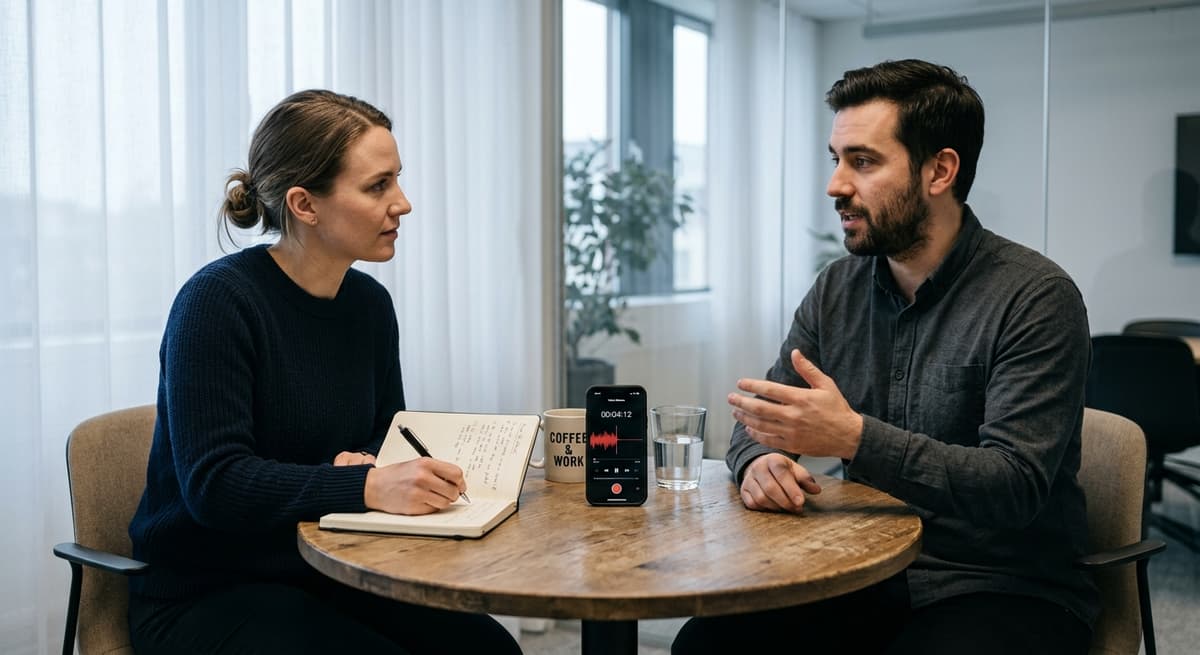
Recording a telephone call in Slovakia requires the consent of all parties before the recording begins. This rule applies whether you use a dedicated call-recorder application, a voice-over-IP service with built-in recording, or physical equipment placed near a speakerphone.
Business telephone recordings. Customer service centers and legal or financial advisers commonly record calls for compliance or quality-assurance purposes. These recordings are lawful under GDPR Article 6(1)(f) (legitimate interests) or Article 6(1)(c) (legal obligation), provided the caller is informed before the call is recorded, the information is provided in plain language, and the purpose and retention period are stated in the organization's privacy notice. A caller who continues the call after hearing the recording announcement has implicitly consented in the sense that they have been informed, though Slovak supervisory guidance treats this as reliance on legitimate interests rather than GDPR consent, which requires a positive opt-in under Article 7.
Personal calls. If you record a personal telephone call without telling the other party, you violate the consent requirement in Civil Code section 12(1) and process personal data without a lawful GDPR basis; disclosing or using that recording in a way that causes the other party serious harm additionally exposes you to criminal liability under Trestny zakon section 377. The fact that you are a party to the call does not create a consent exception in Slovak law, unlike in one-party consent jurisdictions such as the Czech Republic and Poland.
Overseas calls. If one party is in Slovakia and the other is in a one-party consent jurisdiction, Slovak law applies to the conduct occurring on Slovak territory. A person physically in Slovakia who records the call without all-party consent violates Slovak law regardless of where the other party is located.
In-Person Recording in Slovakia
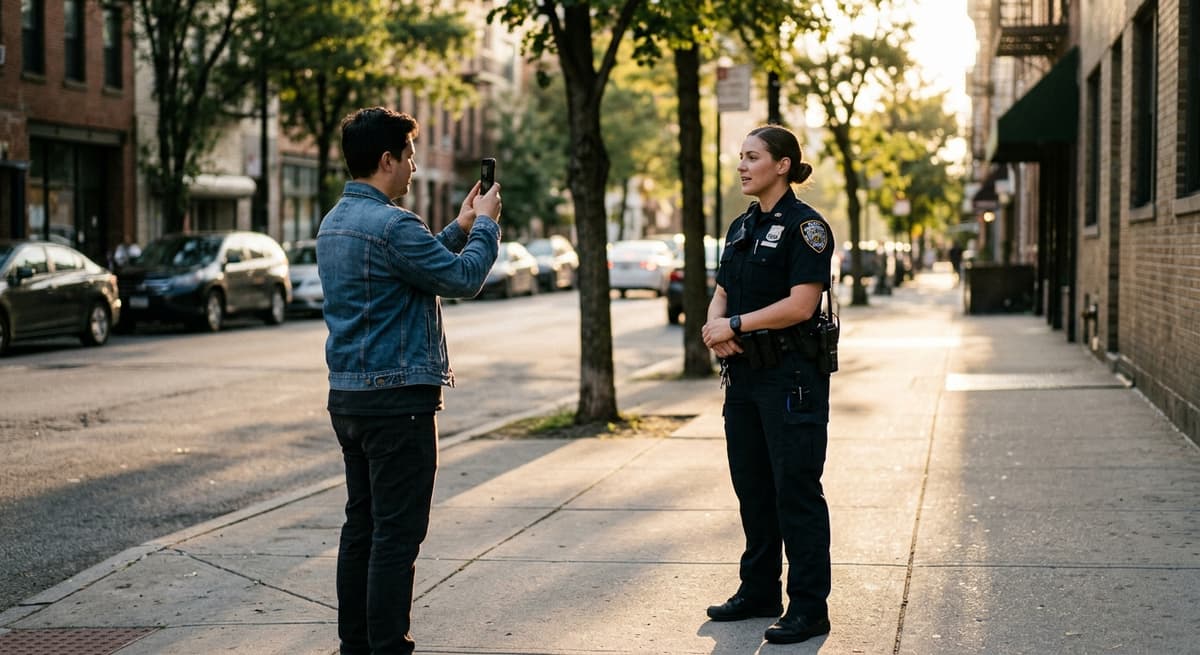
The all-party consent rule applies equally to in-person conversations. Recording a meeting, interview, or confrontation without informing all present participants violates the consent requirement in Civil Code section 12(1), and can trigger criminal liability under Trestny zakon section 377 if the recording is then disclosed or used and causes serious harm. The location is irrelevant: a private office, a public restaurant, a street corner.
Public spaces. A conversation in a public space does not lose its private character simply because it occurs in view of others. Slovak courts have applied the constitutional privacy analysis to hold that a conversation between two people, even outdoors, retains a reasonable expectation of confidentiality between the participants. Passersby observing or overhearing the conversation incidentally do not have the right to record it without consent.
Video recordings. Audiovisual recordings are covered by Civil Code section 12 (consent) and, where disclosed or used and causing serious harm, Trestny zakon section 377 (criminal liability). Video cameras installed in a private property (home, business premises) for security purposes require GDPR-compliant notice (Article 13) to anyone entering the monitored area. The Office for Personal Data Protection issued guidance in 2023 specifying that a clearly visible sign with the controller's identity and contact details satisfies the Article 13 obligation for CCTV in commercial premises.
Journalistic exception. Slovak law recognizes a limited public-interest exception for journalism. The GDPR, Article 85, requires member states to reconcile data protection with freedom of expression for journalistic, academic, artistic, and literary purposes. Slovak Act No. 18/2018 Coll. section 78 implements this by permitting processing of personal data for journalistic purposes where publication serves the public interest and the data controller adheres to the ethics code of the Slovak Syndicate of Journalists (Slovensky syndikatus novinarov). Covert recording by a journalist covering a matter of genuine public interest may fall within this exception, but courts assess the proportionality individually. The exception does not cover private investigators or individuals claiming journalistic purpose to justify personal grievance recordings.
Recording Police Officers in Slovakia
Recording Slovak police officers performing their public duties in publicly observable spaces is not expressly prohibited by the Criminal Code or the Electronic Communications Act. However, several interacting legal frameworks create genuine uncertainty.
The public-official context. Trestny zakon section 377 applies to capturing non-publicly spoken words or another personal-nature expression. A police officer carrying out an arrest, issuing a citation, or directing traffic in a public street is performing a public function in public, not a non-public personal-nature expression. A recording of that public act does not obviously fall within section 377, and Civil Code section 12(2) separately permits recordings made for official purposes on a statutory basis. The Ustava, Article 26, guarantees freedom of expression and the right to seek and receive information, which supports a right to document government conduct.
Practical cautions under the Fico government. The press freedom environment has deteriorated. Reporters Without Borders (RSF) ranked Slovakia 30th in its 2025 World Press Freedom Index, down from 17th in 2022. The decline followed the 2018 murder of investigative journalist Jan Kuciak and his fiancee Martina Kusnirova, and accelerated after Prime Minister Robert Fico's return to government in 2023. Critics of the Fico government, including the European Commission in its 2024 Rule of Law Report on Slovakia (SWD(2024) 825 final), noted concerns about political pressure on public media, strategic lawsuits against journalists (SLAPPs), and an erosion of institutional independence at the prosecution service. While these concerns primarily affect journalists, the practical environment means that individuals who record police encounters may face informal pressure or creative application of obstruction-related provisions in the Criminal Code.
Obstruction provisions. Trestny zakon section 328 criminalizes obstructing a police officer in the execution of duties. A recording that is conducted from a safe distance and does not interfere with police operations does not constitute obstruction. Courts have consistently held that passive documentation does not obstruct. However, blocking police access, arguing with officers during an active operation, or refusing a lawful order to move in order to continue recording can give rise to an obstruction charge independent of the recording itself.
Recommendation. Recording Slovak police in a public space while exercising clear documentary distance and not interfering with operations is not a Criminal Code violation. Inform the officer that you are recording if asked, and do not resist a lawful order to move. Retain a copy of any recording independently of cloud services subject to Slovak law enforcement requests.
The legacy of the Kuciak murder investigation and subsequent criminal proceedings at the Najvyssi sud (Supreme Court) illustrates both the value of recordings as evidence and the risks faced by those who document official misconduct in Slovakia's current political environment.
Workplace Recording in Slovakia
Employers in Slovakia are subject to the most detailed consent and proportionality requirements of any recording context. Three overlapping frameworks apply: the Criminal Code, the GDPR and Act No. 18/2018, and the Zakonnik prace (Labour Code, Act No. 311/2001 Coll.).
Employer-initiated monitoring. An employer who wishes to monitor employees through audio or video recording in the workplace must:
- Establish a lawful GDPR basis. For employee monitoring, Article 6(1)(f) (legitimate interests) is the standard basis, supported by a documented balancing test showing that the monitoring purpose (e.g., security of premises, quality assurance in call centers) outweighs employees' reasonable privacy expectations.
- Conduct prior consultation with employee representatives. Labour Code section 13 requires the employer to inform, and where required to consult, the works council or trade union before introducing monitoring. Failure to consult renders the monitoring unlawful independently of the GDPR analysis.
- Provide GDPR Article 13 information. Employees must receive a written privacy notice before monitoring begins, covering the purpose, legal basis, retention period, and data subject rights.
- Limit the scope. Monitoring must be proportionate. Courts have held that audio recording of all employee conversations at all times, including break-room conversations, is disproportionate regardless of the stated purpose.
Employee-initiated recordings of colleagues or managers. An employee who secretly records a workplace conversation, meeting, or performance review without the consent of all present violates the Civil Code section 12(1) consent requirement, and can face criminal liability under Trestny zakon section 377 if the recording is disclosed or used and causes serious harm. Slovak employment tribunals have declined to admit secretly obtained recordings as primary evidence of workplace discrimination or unfair treatment, though some decisions have allowed them as corroborating evidence where the recording confirmed facts otherwise proved by direct testimony. This is an unsettled area; the more reliable route is to take contemporaneous written notes and request formal minutes of meetings rather than recording.
Whistleblower context. Act No. 54/2019 Coll. on the Protection of Whistleblowers (Zakon o ochrane oznamovatelov) grants procedural protection to employees who report certain categories of wrongdoing. The Act does not grant a recording right. A whistleblower who covertly records in order to document evidence of fraud, corruption, or safety violations remains exposed to Civil Code section 12(1) liability and, if the recording is disclosed or used and causes serious harm, Trestny zakon section 377 liability; the whistleblower protections relate to retaliation, not to the lawfulness of the recording method.
Voyeurism and Non-Consensual Intimate Images
Trestny zakon section 377 is not the only criminal provision governing unauthorized recording. Slovakia also has specific provisions targeting voyeurism and non-consensual intimate imagery.
Section 360b (inserted by Act No. 236/2021 Coll., effective 1 July 2021). Section 360b of the Criminal Code (nebezpecne elektronicke obtazovanie, dangerous electronic harassment) expressly covers the non-consensual disclosure of intimate recordings through electronic means. Under section 360b(1), it is a criminal offense to intentionally, by means of an electronic communication service, computer system, or computer network, substantially impair another person's quality of life by unlawfully disclosing or making available to a third party a visual, audio, or audiovisual recording of a personal nature that was obtained with the person's consent but is capable of materially impairing their reputation or otherwise causing serious injury to their rights. The basic penalty is imprisonment of up to three years. A qualified offense, for example where the victim is a minor or the conduct is motivated by a specific protected characteristic, carries one to four years imprisonment. A severe form, where the offense causes significant harm or is committed by a repeat offender, carries two to six years imprisonment. This provision is the primary instrument used by Slovak prosecutors for non-consensual intimate image (NCII) cases, including so-called revenge porn and similar image-based abuse.
Revenge porn and online distribution. Distribution of intimate recordings through social media, messaging platforms, or file-sharing services triggers section 360b of the Criminal Code and GDPR Article 9 (processing of special category data involving intimate aspects of a person). Victims may apply for emergency civil injunctions under section 74 of the Civil Procedure Code to compel platform takedowns, alongside criminal complaints.
Upskirting and covert placement of cameras. Section 377 combined with section 360b covers covert cameras placed in changing rooms, bathrooms, or similar spaces, as well as recording devices hidden under clothing in public. Slovak police treat these as priority offenses, and the General Prosecution Service has issued guidance to prosecutors to seek custodial sentences in cases involving repeat offenders or distribution to third parties.
Deepfakes and the EU AI Act
The EU AI Act (Regulation 2024/1689), published in the Official Journal on 12 July 2024, applies directly in Slovakia without requiring transposition. Its provisions entered into force on 1 August 2024, with a phased application timeline: prohibited practices applied from 2 February 2025, obligations for providers of general-purpose AI models from 2 August 2025, the Article 50 transparency duties (including deepfake labeling) from 2 August 2026, and the high-risk AI obligations from 2 December 2027 for the Annex III use cases and 2 August 2028 for AI built into regulated products. Those last two dates were 2 August 2026 and 2 August 2027 until Regulation (EU) 2026/1744, the July 2026 Digital Omnibus on AI, moved them.
Deepfake disclosure obligation. Article 50(4) of the AI Act requires deployers of AI systems that generate synthetic audio, video, or image content depicting real persons to label that content as artificially generated or manipulated. The labeling must be machine-readable and visible to the recipient of the content. Content clearly identified as satire or parody is exempt from the labeling requirement, but must still avoid misleading audiences about the real conduct or statements of the depicted person.
Prohibition on real-time biometric surveillance. Article 5(1)(h) prohibits law enforcement authorities in the EU from using real-time remote biometric identification systems in publicly accessible spaces, except in narrowly defined circumstances: searching for specific missing or exploited persons, averting a specific and imminent terrorist threat, or identifying persons suspected of listed serious criminal offenses. Slovak law enforcement agencies must obtain judicial authorization before deploying AI-driven facial recognition in real time. The Slovak National Security Authority (Narodny bezpecnostny urad) and the Ministry of Interior have issued joint guidance on AI Act implementation for law enforcement, effective 1 January 2025.
Deepfakes and the Criminal Code. A deepfake recording that purports to depict a real person making statements or performing acts they did not make or perform can constitute defamation under Trestny zakon section 373, or, where the deepfake was generated from a private recording obtained and disclosed without consent, a violation of Civil Code section 12(1) and Trestny zakon section 377, depending on the method of production and purpose. A deepfake that is used to extort the depicted person falls within the blackmail provisions (sections 189 to 190). Slovak prosecutors have brought the first wave of AI-related charges under existing Criminal Code provisions rather than waiting for dedicated AI criminal legislation.
Cross-Border Recordings Involving Slovakia
When a recording has a cross-border dimension, the following framework applies:
| Scenario | Applicable law |
|---|---|
| Both parties physically in Slovakia | Slovak Criminal Code and GDPR apply exclusively |
| One party in Slovakia, other in Czech Republic | Slovak law applies to conduct on Slovak territory; Czech law to conduct on Czech territory. Czech Republic is one-party consent, so the Slovak party must still obtain all-party consent. |
| One party in Slovakia, other in Germany | Both are all-party consent. Slovak and German law independently require all-party consent. |
| One party in Slovakia, other in the USA | Slovak law applies to the Slovak party. The US party is subject to federal Wiretap Act (18 U.S.C. section 2511, one-party consent) plus any applicable state law. |
| Recording made in Slovakia, stored/processed in Ireland (e.g., cloud service) | GDPR applies in both jurisdictions; the Irish DPC has jurisdiction over the controller as lead supervisory authority for EU-wide processing, but the Slovak Office for Personal Data Protection handles local complaints. |
| Slovakia to another EU member state, non-EU destination for stored data | GDPR Chapter V (international transfers) governs. Adequacy decisions or standard contractual clauses required for transfers outside the EEA. |
The Slovak Office for Personal Data Protection cooperates with other national supervisory authorities through the European Data Protection Board (EDPB) consistency mechanism. Cross-border complaints involving Slovak residents and foreign controllers are handled under the one-stop-shop mechanism in GDPR Article 56.
EU Rule of Law context. The European Commission's 2024 Rule of Law Report on Slovakia (SWD(2024) 825 final, published 24 July 2024) raised concerns about the independence of the Specialna prokuratura (Special Prosecution Service), which handles serious crimes including surveillance abuse cases, and about changes to the National Criminal Agency (NAKA) that critics argued weakened anti-corruption enforcement. These concerns are relevant background to any analysis of whether Slovak criminal law governing recording is consistently enforced, particularly in politically sensitive cases. Readers who believe their privacy rights have been violated by state actors should consider filing complaints with the Ustavny sud as well as with the Slovak Office for Personal Data Protection.
Next Steps and Legal Resources
If you have questions about a specific recording situation in Slovakia, consulting a Slovak attorney (advokat) is the most reliable path. The Slovak Bar Association (Slovenska advokatura, slovenská advokátska komora) maintains a public register of licensed practitioners at sak.sk. For GDPR complaints involving recordings, you may file directly with the Office for Personal Data Protection at dataprotection.gov.sk.
For journalists and press freedom issues, the Slovak Syndicate of Journalists and international organizations including the International Federation of Journalists provide resources and support. The European Commission's annual Rule of Law Report on Slovakia is available at ec.europa.eu and offers independent assessment of the institutional environment affecting criminal enforcement.
For cross-border EU issues, the European Data Protection Board (edpb.europa.eu) publishes binding guidelines on matters such as the household exception, video surveillance, and cross-border data flows.
Disclaimer
This article provides general legal information about recording laws in Slovakia under the Slovak Criminal Code (Trestny zakon, Act No. 300/2005 Coll.), the Act on Personal Data Protection (Act No. 18/2018 Coll.), the Constitution of the Slovak Republic (1992, as amended), the Act on Electronic Communications (Act No. 351/2011 Coll.), and directly applicable EU law including GDPR Regulation 2016/679 and EU AI Act Regulation 2024/1689. Information was verified on 2026-05-15 against sources current as of that date.
This article is not legal advice and does not create a lawyer-client relationship. Laws change; statutes and case law cited here reflect their in-force versions as of 2026-05-15 but may have been amended since. Readers should consult a lawyer licensed to practice in Slovakia (or in the relevant jurisdiction) for advice on their specific situation. The consequences of violating Slovak recording laws can include criminal prosecution, civil liability, and substantial GDPR fines. When in doubt, obtain written consent before recording.
About the Author
[PLACEHOLDER - author roster pending]
Authorities Cited
- Trestny zakon (Criminal Code), Act No. 300/2005 Coll. (Slovakia), section 377 (violation of confidentiality of spoken expression, the operative criminal provision for unauthorized recording) and sections 374 and 376 (adjacent personal-data and document-secrecy offenses, not the recording-consent rule). https://www.slov-lex.sk/pravne-predpisy/SK/ZZ/2005/300/
- Constitution of the Slovak Republic (Ustava Slovenskej republiky), 1992, as amended, Articles 19 and 22. https://www.nrsr.sk/web/Static/en-US/NRSR/Constitution%20of%20the%20Slovak%20Republic%202023.pdf
- Act No. 18/2018 Coll. on Personal Data Protection (Zakon o ochrane osobnych udajov), implementing GDPR. https://www.slov-lex.sk/pravne-predpisy/SK/ZZ/2018/18/
- EU General Data Protection Regulation (GDPR), Regulation 2016/679/EU. https://eur-lex.europa.eu/legal-content/EN/TXT/?uri=CELEX%3A32016R0679
- Office for Personal Data Protection of the Slovak Republic (Urad na ochranu osobnych udajov SR). https://dataprotection.gov.sk/en/
- Act No. 351/2011 Coll. on Electronic Communications (Zakon o elektronickych komunikaciach). https://www.slov-lex.sk/pravne-predpisy/SK/ZZ/2011/351/
- Regulatory Authority for Electronic Communications and Postal Services (Urad pre regulaciu elektronickych komunikacii a postovych sluzieb). https://www.teleoff.gov.sk/
- Obciansky zakonnik (Civil Code), Act No. 40/1964 Coll. (Slovakia), section 12. https://www.slov-lex.sk/pravne-predpisy/SK/ZZ/1964/40/
- Zakonnik prace (Labour Code), Act No. 311/2001 Coll. (Slovakia), section 13. https://www.slov-lex.sk/pravne-predpisy/SK/ZZ/2001/311/
- Trestny zakon (Criminal Code), Act No. 300/2005 Coll. section 360b, as inserted by Act No. 236/2021 Coll. (effective 1 July 2021). https://www.slov-lex.sk/pravne-predpisy/SK/ZZ/2005/300/
- EU AI Act, Regulation 2024/1689/EU, Article 50(4) (deepfake disclosure) and Article 5(1)(h) (biometric surveillance prohibition). https://eur-lex.europa.eu/legal-content/EN/TXT/?uri=CELEX%3A32024R1689
- Act No. 54/2019 Coll. on the Protection of Whistleblowers (Zakon o ochrane oznamovatelov). https://www.slov-lex.sk/pravne-predpisy/SK/ZZ/2019/54/
- European Commission, 2024 Rule of Law Report on Slovakia, SWD(2024) 825 final. https://commission.europa.eu/document/download/b4b142ba-2515-49fa-9693-30737384264e_en?filename=56_1_58083_coun_chap_slovakia_en.pdf
- Reporters Without Borders (RSF), 2025 World Press Freedom Index, Slovakia. https://rsf.org/en/country/slovakia
- Slovak Parliament (Narodna rada Slovenskej republiky). https://www.nrsr.sk/
- Najvyssi sud Slovenskej republiky (Supreme Court of Slovakia). https://nsud.sk/
- Ustavny sud Slovenskej republiky (Constitutional Court of Slovakia). https://www.ustavnysud.sk/
- Trestny poriadok (Code of Criminal Procedure), Act No. 301/2005 Coll. (Slovakia). https://www.slov-lex.sk/pravne-predpisy/SK/ZZ/2005/301/
- ePrivacy Directive 2002/58/EC (Directive on Privacy and Electronic Communications). https://eur-lex.europa.eu/legal-content/EN/TXT/?uri=CELEX%3A32002L0058
- CJEU, Case C-212/13, Frantisek Rynes v. Urad pro ochranu osobnich udaju [2014] ECLI:EU:C:2014:2428 (narrow reading of household exemption). https://curia.europa.eu/juris/document/document.jsf?docid=160561
Related Articles
- World Recording Laws: Country-by-Country Consent Rules and Penalties
- Czech Republic Recording Laws: One-Party Consent, GDPR, and Deepfake Rules (2026)
- Germany Recording Laws: All-Party Consent, StGB, GDPR (2026)
- Hungary Recording Laws: Consent, Penalties, and 2025 AI Rules
- Poland Recording Laws: One-Party Consent, GDPR, and Deepfake Rules (2026)
Last updated: 2026-05-15. Statutes cited reflect their in-force version as of 2026-05-15.
Frequently Asked Questions
Is it illegal to record a phone call in Slovakia without telling the other person?
Yes, in two respects. Recording a telephone call without informing and obtaining the consent of all parties violates Civil Code section 12(1), Slovakia's all-party consent rule. If the recording is then disclosed to a third party or otherwise used in a way that causes serious harm to the other party, that additionally becomes a criminal offense under Trestny zakon section 377, carrying up to two years in prison for the base offense (more for aggravated forms). There is no one-party consent exception.
Can I record a conversation I am part of in Slovakia?
No. Being a participant in a conversation does not give you the right to record it without the other party's consent. Civil Code section 12(1) requires the consent of everyone whose spoken words are recorded, including participants in the conversation, and Trestny zakon section 377 makes it a criminal offense to record without consent and then disclose or use that recording in a way that causes serious harm.
What is the penalty for secretly recording someone in Slovakia?
The basic penalty under Trestny zakon section 377, for unauthorized recording that is then disclosed or used and causes serious harm, is imprisonment of up to two years. Where the offense is committed by an organized group, causes significant damage, or is done for significant profit, the penalty rises to six months to three years; where the offender is a public official, causes extensive damage, or seeks extensive profit, it rises to six months to five years. Additional administrative fines under the GDPR can reach EUR 20 million or 4 percent of global annual turnover for serious data protection violations.
Can employers record employee phone calls in Slovakia?
Employers may record employee calls for documented legitimate business purposes (quality assurance, regulatory compliance), provided they: notify employees in advance and in writing, establish a GDPR-compliant legal basis, consult the works council or trade union, and limit retention to what is necessary. Covert recording of employees is prohibited.
Is it legal to record police in Slovakia?
Recording police officers performing public duties in publicly observable spaces is not expressly prohibited. Police are performing a public function in public, not a non-public personal-nature expression, so Trestny zakon section 377 does not clearly apply. However, the recording must not obstruct the officers. Given the current press freedom environment under the Fico government and RSF's 2025 ranking of Slovakia at 30th globally, exercise caution and record from a distance without interfering.
Does the GDPR apply to recordings made in Slovakia?
Yes. Any recording that captures the voice, image, or other personal data of an identifiable person is subject to GDPR Regulation 2016/679 and Slovak Act No. 18/2018 Coll. on Personal Data Protection, unless the household exemption under GDPR Article 2(2)(c) applies. Business and organizational recordings require a lawful GDPR basis, a privacy notice, and data subject rights compliance.
What is the Office for Personal Data Protection in Slovakia and what does it do?
The Office for Personal Data Protection (Urad na ochranu osobnych udajov Slovenskej republiky) at dataprotection.gov.sk is the national GDPR supervisory authority. It investigates complaints about unlawful processing of personal data (including unauthorized recordings), conducts audits, issues guidance, and imposes administrative fines under GDPR Article 83.
Can a secretly recorded conversation be used as evidence in a Slovak court?
Slovak courts generally exclude secretly recorded conversations obtained in violation of the Civil Code section 12(1) consent requirement. Criminal courts apply the exclusionary rule under Trestny poriadok sections 119 to 120, though this is not absolute. Civil courts have shown some flexibility, occasionally admitting covertly obtained recordings as corroborating evidence where direct testimony establishes the same facts. Reliance on a covert recording as primary evidence is risky and may expose the recorder to criminal liability under Trestny zakon section 377 if the recording is disclosed or used and causes serious harm.
Are deepfakes illegal in Slovakia?
Yes in several respects. EU AI Act Article 50(4) requires disclosure labeling on AI-generated content depicting real persons. Deepfakes used to defame, extort, or produce intimate imagery without consent violate Trestny zakon sections 373 (defamation), 360b (non-consensual intimate imagery via electronic means), and 189 to 190 (blackmail). The basic offense under section 360b carries up to three years imprisonment, rising to four years for qualified offenses involving a minor or protected characteristics.
What is the slov-lex.sk portal and is it authoritative?
Slov-lex.sk (the Legal and Information System of the Slovak Republic) is the official portal operated by the Ministry of Justice. It publishes consolidated, in-force versions of all Slovak statutes including the Criminal Code (Act No. 300/2005 Coll.) and Act No. 18/2018 Coll. on Personal Data Protection. It is the authoritative source for current Slovak statutory text.
Does Slovakia have different consent rules for video versus audio recording?
No. Civil Code section 12(1) and, where disclosure or use causing serious harm follows, Trestny zakon section 377, apply equally to audio recordings, video recordings, and audiovisual recordings. Any recording that captures a person's spoken words or image requires that person's consent. The all-party consent standard applies to both.
What are the whistleblower rules for recording evidence of wrongdoing in Slovakia?
Act No. 54/2019 Coll. on the Protection of Whistleblowers provides procedural protections against retaliation for employees who report wrongdoing but does not authorize covert recording. A whistleblower who records conversations to document evidence remains exposed to Trestny zakon section 377 criminal liability if the recording is disclosed or used and causes serious harm. Safer approaches include contemporaneous written notes, requesting formal meeting minutes, and using internal or external whistleblower channels.
Updates
AI Act timeline corrected: general-purpose AI model obligations applied from 2 August 2025, the Article 50 deepfake labeling duty applies from 2 August 2026, and the high-risk obligations now apply 2 December 2027 (Annex III) and 2 August 2028 (Annex I) after the July 2026 Digital Omnibus.
Corrected the citation for Slovakia's recording-consent rule. The page previously cited Trestny zakon sections 374-376 as the criminal basis for the all-party consent requirement, but those sections cover unauthorized handling of personal data (374), a deception-based rights violation (375), and disclosure of an already-existing private document or recording (376), none of which establishes the consent rule for making a recording. The operative authority is Obciansky zakonnik (Civil Code) section 12(1), which requires consent to record a person's spoken words or image, backed criminally by Trestny zakon section 377 (unauthorized capture plus disclosure or use causing serious harm, up to 2-5 years). The all-party consent conclusion is unchanged. Also removed a fabricated citation to a nonexistent 'section 374a' attributed to Act No. 276/2023 Coll., which is in fact an unrelated school-law amendment. Verified against the in-force Trestny zakon and Civil Code text on slov-lex.sk.
Independently fact-checked against the cited primary sources
Sources and References
- Trestny zakon (Criminal Code), Act No. 300/2005 Coll. section 377 (primary), sections 374 and 376 (adjacent offenses)(slov-lex.sk)
- Constitution of the Slovak Republic, Articles 19 and 22(nrsr.sk)
- Act No. 18/2018 Coll. on Personal Data Protection (Slovakia)(slov-lex.sk)
- EU GDPR, Regulation 2016/679/EU(eur-lex.europa.eu)
- Office for Personal Data Protection of the Slovak Republic (dataprotection.gov.sk)(dataprotection.gov.sk)
- Act No. 351/2011 Coll. on Electronic Communications (Slovakia)(slov-lex.sk)
- Regulatory Authority for Electronic Communications (teleoff.gov.sk)(teleoff.gov.sk)
- Obciansky zakonnik (Civil Code), Act No. 40/1964 Coll. section 12(slov-lex.sk)
- Zakonnik prace (Labour Code), Act No. 311/2001 Coll. section 13(slov-lex.sk)
- EU AI Act, Regulation 2024/1689/EU(eur-lex.europa.eu)
- Act No. 54/2019 Coll. on the Protection of Whistleblowers (Slovakia)(slov-lex.sk)
- European Commission 2024 Rule of Law Report on Slovakia, Country Chapter, SWD(2024) 825 final(commission.europa.eu)
- RSF 2025 World Press Freedom Index Slovakia(rsf.org)
- Slovak Parliament (nrsr.sk)(nrsr.sk)
- Najvyssi sud Slovenskej republiky (nsud.sk)(nsud.sk)
- Ustavny sud Slovenskej republiky (ustavnysud.sk)(ustavnysud.sk)
- Trestny poriadok (Code of Criminal Procedure), Act No. 301/2005 Coll.(slov-lex.sk)
- ePrivacy Directive 2002/58/EC(eur-lex.europa.eu)
- CJEU Case C-212/13 Rynes v. Urad (household exemption, narrow reading)(curia.europa.eu)
- Regulation (EU) 2026/1744 of 8 July 2026 amending Regulation (EU) 2024/1689 (Digital Omnibus on AI), OJ L 2026/1744, 24.7.2026(eur-lex.europa.eu).gov