AI Copyright Laws in the European Union (2026)

The EU applies the "author's own intellectual creation" standard from CJEU Infopaq (C-5/08) to deny copyright to purely machine-generated works, while Directive (EU) 2019/790 and Regulation (EU) 2024/1689 together impose binding training-data duties and transparency obligations on AI model providers operating in the European market.
Information last verified on 2026-06-25. This article presents general legal information, not legal advice. The EU framework is phasing in and several details remain under guidance.
Scope: This article covers the European Union (all 27 member states) and the EU institutions' legal framework across three areas: AI-output copyrightability, text-and-data mining for AI training, and software copyright under the Software Directive 2009/24/EC. For a comparative overview of how these rules compare with other countries, see how AI and copyright differ worldwide.
Can Purely AI-Generated Works Be Copyrighted in the EU?
The EU's answer is no. The Court of Justice of the European Union (CJEU) established the harmonised EU originality standard in Infopaq International A/S v. Danske Dagblades Forening (C-5/08): a work is protected by copyright only if it is the "author's own intellectual creation," reflecting the author's personality and free, creative choices. A generative AI system does not possess a personality, make free creative choices, or carry an identifiable human creative mind, so works produced entirely by AI without meaningful human involvement do not meet this threshold.
EU copyright law contains no provision equivalent to the UK's "computer-generated works" category, and member states have no authority to grant copyright to a non-human author because the "author's own intellectual creation" standard is a CJEU-harmonised floor that national law cannot lower.
AI-assisted works occupy a different position. Where a human author makes free, expressive, creative choices, such as selecting and arranging AI outputs, adding original prompt structures, or editing AI-generated drafts in ways that reflect personal creative judgment, the resulting work may qualify for protection. The protection extends only to those human contributions, not to the underlying AI output.
Software presents a related question. Under the Software Directive 2009/24/EC, Art. 1, computer programs are protected by copyright as literary works under the Berne Convention. However, the underlying ideas, algorithms, mathematical logic, and programming languages are explicitly excluded from protection. AI-generated code is therefore assessed under the same "author's own intellectual creation" standard: where no human author contributed originality, the generated code is not protected.
Text-and-Data Mining: The DSM Directive Rules and Opt-Out
Directive (EU) 2019/790 on copyright in the Digital Single Market (the "DSM Directive") introduced two text-and-data mining (TDM) exceptions that directly affect AI training.
Article 3 creates a mandatory TDM exception for scientific research by research organisations and cultural heritage institutions. This exception cannot be overridden by contract or by rightsholder objection: Art. 3(4) renders any contrary contractual provision unenforceable.
Article 4 extends TDM rights to any person or company for any purpose, including commercial AI training, but with one key limitation: rightsholders may reserve their rights. Under Art. 4(3), when content is made available online, the reservation must be expressed in a "machine-readable manner." Websites commonly implement this through robots.txt disallow directives or explicit metadata tags. If a rightsholder has not expressed a machine-readable reservation for online content, Art. 4 permits mining that content for commercial purposes.
| DSM Directive provision | Who benefits | Opt-out available to rightsholders? |
|---|---|---|
| Art. 3 (research TDM) | Research organisations and cultural heritage institutions | No |
| Art. 4 (general TDM) | Any person or company, including commercial AI developers | Yes, via machine-readable reservation |
The EU AI Act: Duties on General-Purpose AI Providers
Regulation (EU) 2024/1689, the EU AI Act, entered into force on 1 August 2024. Obligations for providers of general-purpose AI (GPAI) models apply from 2 August 2025. Providers of GPAI models that were already on the market before 1 August 2024 have an extended compliance deadline of 2 August 2027. Most remaining provisions of the Act become mandatory from 2 August 2026.

Under AI Act Art. 53(1)(c), GPAI providers must put in place a policy to comply with EU copyright law and must identify and comply, including via state-of-the-art technologies, with rights reservations made under Art. 4(3) of the DSM Directive. In practice, this means GPAI providers must scan for and honour machine-readable opt-outs when crawling content for model training.
Under Art. 53(1)(d), GPAI providers must publish a sufficiently detailed summary of the content used for training the model, using a template provided by the EU AI Office. This transparency obligation allows rightsholders and regulators to assess whether protected content may have been incorporated into a model's training corpus.
The open-source release of a GPAI model does not remove these duties. The AI Act's open-source relief under Art. 53(2) applies only to the technical-documentation and downstream-transparency obligations in Art. 53(1)(a) and (b). The copyright-compliance policy (Art. 53(1)(c)) and the training-data summary (Art. 53(1)(d)) apply to every GPAI provider, including open-source providers, regardless of whether a model reaches the systemic-risk thresholds.
Violations of the GPAI obligations in Art. 53 can result in fines of up to 3% of the provider's total worldwide annual turnover or EUR 15,000,000, whichever is higher, under AI Act Art. 101.
The Sui Generis Database Right and AI Training Data
Directive 96/9/EC, Art. 7 creates a "sui generis" database right that operates independently of copyright. A database maker who has made a substantial investment in obtaining, verifying, or presenting the contents of a database holds an exclusive right to prevent extraction or reutilisation of the database's contents, for a term of 15 years.
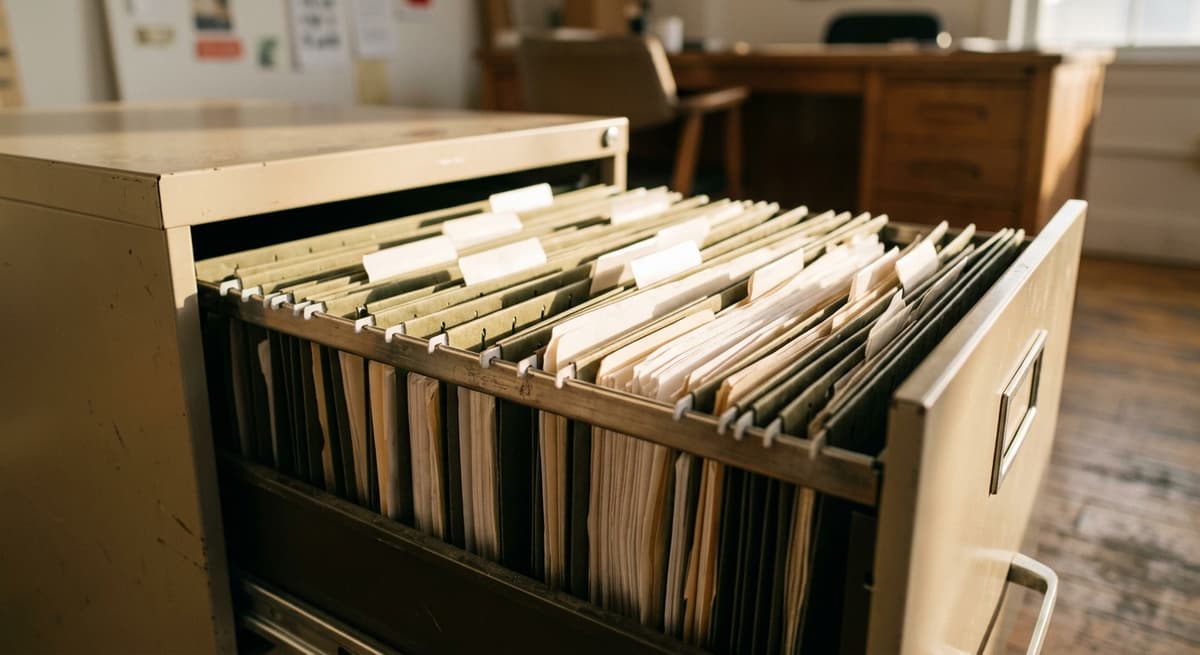
This right matters for AI because large curated datasets used for training, such as image libraries, text corpora, or structured data collections, may qualify as protected databases. The CJEU limited the scope of the right in British Horseracing Board Ltd v. William Hill Organisation Ltd (C-203/02), holding that the substantial investment must relate to obtaining or verifying pre-existing data, not to creating the data in the first place. A company that creates its own training dataset from scratch therefore cannot rely on the sui generis right to protect that data; but a company that assembles, verifies, and curates third-party data at substantial cost may hold a database right covering that assembly.
How the EU Differs from the United States
Both the EU and the United States deny copyright protection to purely AI-generated works that lack human creative authorship. The US Copyright Office has consistently held that human authorship is a prerequisite for registration, and recent guidance confirms that AI output alone is not protectable.
The more significant difference lies in what each jurisdiction requires of AI model providers. The EU imposes affirmative duties: GPAI providers must adopt a copyright-compliance policy, identify and honour machine-readable opt-outs under the DSM Directive (AI Act Art. 53(1)(c)), and publish a training-data summary (Art. 53(1)(d)). These obligations are backed by fines reaching 3% of global turnover. The United States has no directly equivalent binding statutory framework; US litigation has proceeded on fair use and other common-law theories rather than through a structured opt-out regime.
The EU's DSM Directive also establishes an explicit, EU-wide opt-out mechanism for online content. In the United States, rightsholders have pursued opt-outs through contract terms and robots.txt, but no federal statute obligates AI trainers to respect those signals.
This article provides general legal information about the EU's approach to AI and copyright. It is not legal advice and does not create an attorney-client relationship. Laws and guidance are subject to change; the information above reflects publicly available sources as of 2026-06-25. Consult a lawyer qualified in the relevant EU member state for advice on your specific situation.
Related Articles
- How AI and copyright differ worldwide
- AI copyright law in the United States
- United Kingdom AI copyright laws
- Japan AI copyright laws
Last updated: 2026-06-25.
Frequently Asked Questions
Does the EU grant copyright to AI-generated art or text?
No. EU copyright requires that a work be the 'author's own intellectual creation,' a standard established by the CJEU in Infopaq (C-5/08). A generative AI system does not meet this standard because it has no personality and makes no free creative choices. Purely AI-generated works receive no EU copyright protection. Human-edited or human-directed AI outputs may be protected, but only to the extent of the human's creative contribution.
Can EU rightsholders stop AI companies from training on their content?
Yes, for commercial training covered by DSM Directive Art. 4. Rightsholders can opt out of commercial text-and-data mining by expressing a machine-readable reservation, such as via robots.txt or metadata. The EU AI Act Art. 53(1)(c) requires GPAI providers to identify and honour those reservations using state-of-the-art technologies. Rightsholders cannot opt out of the Art. 3 research-institution exception.
What counts as a valid machine-readable opt-out under the DSM Directive?
The DSM Directive Art. 4(3) requires that an opt-out for online content be 'expressed in a machine-readable manner.' The EU has not mandated a single technical standard, but a robots.txt disallow directive targeting AI crawlers and specific metadata tags are widely used approaches. The EU AI Act requires GPAI providers to use 'state-of-the-art technologies' to identify and comply with these reservations.
When do EU AI Act copyright obligations apply to GPAI providers?
Obligations for GPAI providers under Regulation (EU) 2024/1689 apply from 2 August 2025. Providers of GPAI models already on the market when the Act entered into force on 1 August 2024 have an extended compliance deadline of 2 August 2027. Most other provisions of the AI Act become mandatory from 2 August 2026.
Can a company claim a database right over its AI training dataset?
Possibly, if the company made a substantial investment in obtaining or verifying existing data. The sui generis database right under Directive 96/9/EC, Art. 7 lasts 15 years and is independent of copyright. However, following the CJEU's ruling in British Horseracing Board (C-203/02), investment in creating data from scratch does not qualify; only investment in obtaining or verifying pre-existing data counts.
Does EU AI copyright law apply to companies based outside the EU?
Yes, in practice. The EU AI Act applies to providers placing GPAI models on the EU market or whose models' outputs are used in the EU, regardless of where the provider is established. Similarly, the DSM Directive opt-out mechanism applies when AI systems mine content made available online to EU audiences. Companies operating from outside the EU are not exempt if their models or outputs reach EU users.
The Law Behind This Article
This article rests on the statutory provisions below, held in our own legal record and retrieved from the official source. Tap a section to read the operative text.
Database Directive 96/9/EC
Art. 7Object of protectionIn forcecited in 5 of our articles
1. Member States shall provide for a right for the maker of a database which shows that there has been qualitatively and/or quantitatively a substantial investment in either the obtaining, verification or presentation of the contents to prevent extraction and/or re-utilization of the whole or of a substantial part, evaluated qualitatively and/or quantitatively, of the contents of that database. 2. For the purposes of this Chapter: (a) ‘extraction’ shall mean the permanent or temporary transfer of all or a substantial part of the contents of a database to another medium by any means or in any form; (b) ‘re-utilization’ shall mean any form of making available to the public all or a substantial part of the contents of a database by the distribution of copies, by renting, by on-line or other forms of transmission. The first sale of a copy of a database within the Community by the rightholder or with his consent shall exhaust the right to control resale of that copy within the Community; Public lending is not an act of extraction or re-utilization. 3. The right referred to in paragraph 1 may be transferred, assigned or granted under contractual licence. 4.
Official text (excerpt) · last checked 2026-08-12 · Read the full text in our law library · Verify at eur-lex.europa.eu
Cited in 13 court opinionsMost recently applied by a court: 2025
Leading cases:
- Apis-Hristovich EOOD v Lakorda AD (Court of Justice of the European Union 2009, C-545/07)
- Directmedia Publishing GmbH v Albert-Ludwigs-Universität Freiburg (Court of Justice of the European Union 2008, C-304/07)
- Innoweb BV v Wegener ICT Media BV and Wegener Mediaventions BV (Court of Justice of the European Union 2013, C-202/12)
Identified automatically from the court opinions citing this section — not a ranking of which case controls.
Software Directive 2009/24/EC
Art. 1In forcecited in 5 of our articles
Article 1 1. In accordance with the provisions of this Directive, Member States shall protect computer programs, by copyright, as literary works within the meaning of the Berne Convention for the Protection of Literary and Artistic Works. For the purposes of this Directive, the term ‘computer programs’ shall include their preparatory design material. 2. Protection in accordance with this Directive shall apply to the expression in any form of a computer program. Ideas and principles which underlie any element of a computer program, including those which underlie its interfaces, are not protected by copyright under this Directive. 3. A computer program shall be protected if it is original in the sense that it is the author's own intellectual creation. No other criteria shall be applied to determine its eligibility for protection. 4. The provisions of this Directive shall apply also to programs created before 1 January 1993, without prejudice to any acts concluded and rights acquired before that date.
Official text (excerpt) · last checked 2026-08-12 · Read the full text in our law library · Verify at eur-lex.europa.eu
Cited in 5 court opinionsMost recently applied by a court: 2024
Leading cases:
- UsedSoft GmbH v Oracle International Corp (Court of Justice of the European Union 2012, C-128/11)
- Sony Computer Entertainment Europe Ltd v Datel Design and Development Ltd and Others (Court of Justice of the European Union 2024, C-159/23)
- IT Development SAS v Free Mobile SAS (Court of Justice of the European Union 2019, C-666/18)
Identified automatically from the court opinions citing this section — not a ranking of which case controls.
Search our record of EU legislation — GDPR, ePrivacy, AI Act and more, from EUR-Lex →
Sources and References
- Regulation (EU) 2024/1689 (EU AI Act), Art. 53(artificialintelligenceact.eu)
- Regulation (EU) 2024/1689 (EU AI Act), Art. 101 (penalties)(artificialintelligenceact.eu)
- European Commission, guidelines for providers of general-purpose AI models(digital-strategy.ec.europa.eu)
- Directive (EU) 2019/790 (DSM Copyright Directive), Arts. 3-4(eur-lex.europa.eu)
- Directive 96/9/EC (Database Directive), Art. 7 (sui generis right)(eur-lex.europa.eu)
- CJEU, Infopaq International A/S v Danske Dagblades Forening, C-5/08(eur-lex.europa.eu)
- Directive 2009/24/EC (Software Directive), Art. 1(eur-lex.europa.eu)
- European Parliament Think Tank, Generative AI and copyright (2025)(europarl.europa.eu)