
Nebraska
Common Law Marriage in Nebraska: Is It Recognized? (2026)
Independently fact-checked against primary sources (last audited August 18, 2026). · Reviewed by the RecordingLaw editorial team. · Law checked current as of August 18, 2026. How we verify our legal content

Nebraska does not allow couples to form a new common law marriage. Nebraska has required a marriage license since 1923 under Neb. Rev. Stat. 42-104, and the state courts have consistently held that no common law marriage can be created in Nebraska after that date. However, Nebraska does recognize a common law marriage that was validly formed in another state.
Information last verified on June 2, 2026.
Jurisdiction scope: This article addresses common law marriage formation and recognition under Nebraska law, principally Neb. Rev. Stat. 42-104 and Nebraska case law. It does not address federal recognition or immigration consequences. For spousal support rules, see Nebraska alimony laws. For an overview of which states do recognize common law marriage, see Common law marriage by state.
Does Nebraska Recognize Common Law Marriage?
Nebraska does not allow new common law marriages to be formed within the state. The prohibition has been in place since 1923, when the Nebraska Legislature enacted Neb. Rev. Stat. 42-104, which requires a marriage license issued by a county clerk before a marriage can take place. The license requirement is a condition of validity, not merely a procedural step.
The consequence is clear: a couple that lives together in Nebraska, regardless of how long, how publicly they present themselves as a couple, or what they call each other, does not acquire marital status through cohabitation alone. Nebraska courts have confirmed this position in Bowman v. Bowman and in subsequent decisions.
Because the prohibition dates to 1923, there are no grandfathered common law marriages formed in Nebraska after that year. Any relationship formed in Nebraska since 1923 without a license is not a marriage under Nebraska law.
Nebraska Law Requiring a Marriage License
Neb. Rev. Stat. 42-104 governs marriage licenses in Nebraska. It provides that before a marriage is solemnized in Nebraska, the parties must obtain a marriage license from the county clerk or clerk of the district court. The statutory scheme under Neb. Rev. Stat. Chapter 42 treats the license as the threshold requirement for a valid marriage.
The effect of 42-104 on common law marriage was addressed by the Nebraska courts in Bowman v. Bowman, where the court held that a common law marriage cannot be established in Nebraska. The court reasoned that because the statute requires a license, a cohabiting couple that never obtains one cannot have a legally recognized marriage, regardless of their intent, conduct, or how long they lived together.
The Nebraska Attorney General has also addressed the issue, and state administrative agencies apply the same rule: a license is required, and no common law marriage formed in Nebraska after 1923 will be recognized for state purposes.
Watch out: Longstanding cohabitation in Nebraska, even for decades with shared finances and public presentation as a couple, does not create a legal marriage. If you want your relationship to carry the legal rights of marriage in Nebraska, you must obtain a license and solemnize the marriage.
No Grandfathered Pre-1923 Marriages
Nebraska abolished common law marriage formation in 1923. Unlike states such as Pennsylvania (which abolished prospectively as of January 1, 2005, preserving pre-2005 common law marriages) or South Carolina (which abolished prospectively as of July 24, 2019), Nebraska's cutoff is now over a century in the past.
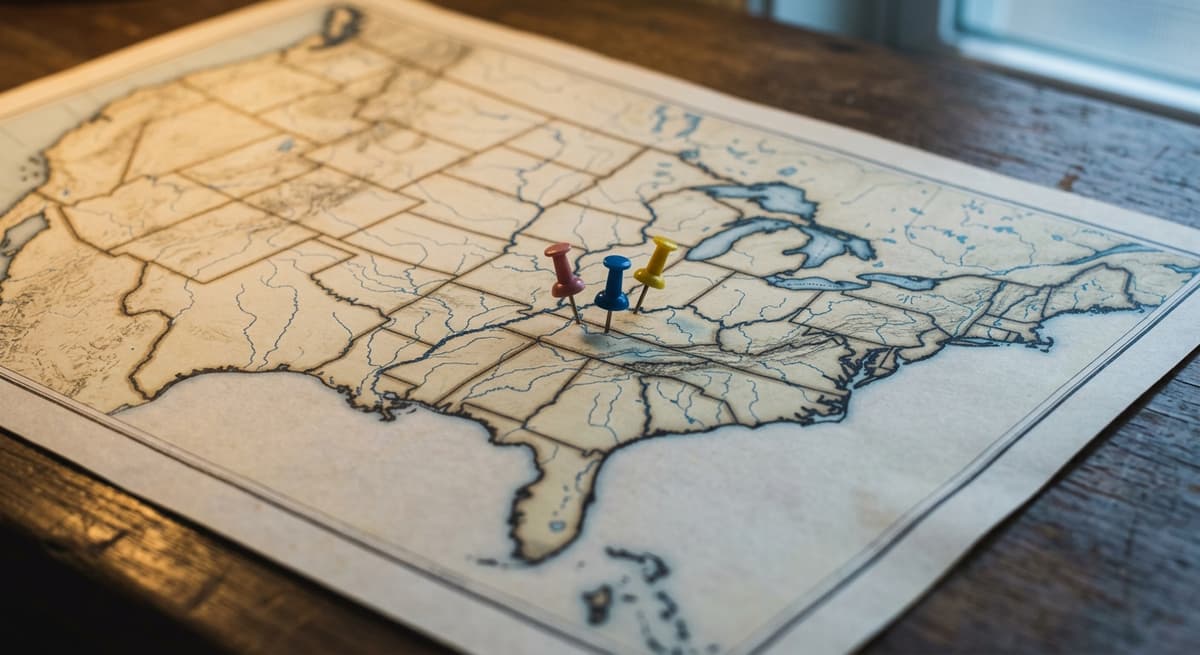
For practical purposes today, there are no surviving grandfathered common law marriages formed in Nebraska. Any Nebraska couple claiming a common law marriage must have formed it under the law of another state where such marriages are permitted, not in Nebraska itself.
The 7-Year Myth: No Time Requirement Anywhere
A widely believed but entirely false claim holds that a couple automatically becomes common law married after living together for seven years. This is not true in Nebraska, and it is not true in any U.S. state.
Nebraska has required a marriage license since 1923. No amount of cohabitation, whether one year or forty years, results in a common law marriage in Nebraska. The seven-year figure has no basis in Nebraska statute, Nebraska case law, or the law of any other state. It appears to be a folk belief with no legal origin.
States that do still permit common law marriages, such as Colorado, Iowa, Kansas, Montana, and Texas, also impose no minimum time requirement. What those states require is legal capacity, a mutual present agreement to be married, and cohabitation with public repute as a married couple. Time is relevant only as evidence of those elements, not as an independent threshold.
Nebraska Recognizes Valid Out-of-State Common Law Marriages
Although Nebraska does not permit the formation of new common law marriages within the state, Nebraska does recognize a common law marriage that was validly formed in a state where such marriages are allowed. This is a well-established principle of American conflict of laws: the validity of a marriage is generally determined by the law of the state where the marriage was formed.
If a couple formed a common law marriage while living in Colorado, Iowa, Kansas, Montana, Texas, or another state that permits them, and that marriage met all the requirements of the state where it was formed, Nebraska courts and agencies will treat that marriage as valid.
This matters in several real-world contexts in Nebraska:
Inheritance: A surviving spouse who can prove a valid out-of-state common law marriage will have intestate inheritance rights under Nebraska probate law, including rights to the elective share under Neb. Rev. Stat. 30-2313.
Employee benefits and insurance: Nebraska employers and insurers that cover "spouses" must recognize a valid out-of-state common law marriage if the couple can document it.
Dissolution: If a couple formed a valid common law marriage in another state and later separates in Nebraska, they must obtain a formal divorce in Nebraska to legally dissolve the marriage. They cannot simply separate.
Social Security and federal benefits: The federal government follows state law for marriage recognition. A valid out-of-state common law marriage should be recognized for Social Security survivor benefits, federal employee benefits, and other federal programs.
How to Document an Out-of-State Common Law Marriage for Use in Nebraska
Nebraska has no administrative process for registering or certifying an out-of-state common law marriage. If you need to assert a common law marriage in a Nebraska court or before a Nebraska agency, you will need to prove the marriage was valid under the law of the state where it formed.

Useful documentation includes:
- Federal or state income tax returns filed as "married filing jointly" for the years the couple lived in the state where the marriage was formed.
- Joint financial accounts, leases, or mortgages established in the state of formation that list both parties.
- Insurance policies, retirement account beneficiary designations, or employer benefit forms listing the other person as "spouse" from the period when the couple lived in the forming state.
- Affidavits from witnesses who knew the couple during their time in the forming state and can attest to their public presentation as a married couple.
- Any written statements, correspondence, or social media posts from that period in which the parties referred to each other as husband or wife.
The evidentiary standard Nebraska courts apply to claims of out-of-state common law marriage is generally clear and convincing evidence that all requirements of the forming state were met.
How a Valid Common Law Marriage Ends in Nebraska Context
If a couple has a valid common law marriage (formed in another state) and one or both partners move to Nebraska, the marriage does not dissolve automatically. A common law marriage ends only through formal divorce or the death of a spouse. There is no "common law divorce."
A couple that formed a common law marriage in Colorado, Iowa, Texas, or another recognizing state and later lives in Nebraska must obtain a formal dissolution of marriage under Nebraska law if they wish to end the marriage. Nebraska district courts have jurisdiction to dissolve a valid out-of-state common law marriage on the same terms as any other marriage, including property division under Neb. Rev. Stat. 42-365, potential alimony, and child support and parenting provisions for any children.
For information on spousal support in Nebraska, see Nebraska alimony laws. For child support rules, see Nebraska child support laws.
What Couples in Long-Term Relationships Should Know
Nebraska does not offer any alternative legal status, such as a registered domestic partnership or civil union, at the state level. Couples in long-term committed relationships who want the legal protections of marriage in Nebraska must obtain a marriage license and solemnize the marriage.
For couples who want limited legal protections without marriage, the following private legal instruments may help, though they do not replicate marital status:
- A cohabitation agreement addressing property rights during and after the relationship.
- Wills and beneficiary designations that explicitly provide for the partner.
- A durable power of attorney and health care power of attorney naming the partner as agent.
These tools provide some protection but do not create marital status. For the full bundle of rights that comes with marriage under Nebraska law, a license and ceremony are required.
This article presents general legal information about common law marriage under Nebraska law as of June 2, 2026. It is not legal advice. Family law is fact-specific, and the laws governing marriage and divorce can change. Consult a licensed Nebraska family law attorney for guidance on your specific situation.

Related Articles
Last updated: June 2, 2026. Statutes cited reflect their in-force version as of June 2, 2026.
More Nebraska Laws
Frequently Asked Questions
Does Nebraska recognize common law marriage?
Nebraska does not allow new common law marriages to be formed in the state. Nebraska has required a marriage license since 1923 under Neb. Rev. Stat. 42-104. However, Nebraska does recognize a common law marriage that was validly formed in another state where such marriages are permitted.
When did Nebraska abolish common law marriage?
Nebraska prohibited the formation of new common law marriages in 1923, when the legislature enacted Neb. Rev. Stat. 42-104 requiring a marriage license. The prohibition has been in place for over a century, so there are no surviving grandfathered common law marriages formed in Nebraska for practical purposes today.
Does living together for 7 years create a common law marriage in Nebraska?
No. There is no 7-year rule in Nebraska or any other state. Nebraska has required a marriage license since 1923, and no period of cohabitation creates a marriage without one. The 7-year figure is a myth with no basis in Nebraska law.
If we formed a common law marriage in Texas or Colorado, will Nebraska recognize it?
Yes. Nebraska recognizes a common law marriage that was validly formed under the law of a state that permits them. If your relationship met all the requirements of the state where you formed the marriage, Nebraska courts and agencies will treat you as married. You should be prepared to document the marriage with tax returns, financial records, and witness affidavits from the time you lived in the forming state.
Do we need a formal divorce in Nebraska to end a common law marriage we formed in another state?
Yes. A valid common law marriage ends only by formal divorce or the death of a spouse. If you formed a valid common law marriage in another state and now live in Nebraska, you must file for dissolution of marriage in a Nebraska district court to legally end the marriage. You cannot simply separate and consider yourselves unmarried.
Can a surviving partner inherit under Nebraska law if the couple had a common law marriage from another state?
Yes, if the common law marriage was validly formed in a state that permits them and the couple can prove it. The surviving spouse would have intestate inheritance rights under Nebraska probate law, including rights to the elective share. The surviving partner typically needs to prove the out-of-state common law marriage by clear and convincing evidence.
Does Nebraska offer domestic partnerships or civil unions as an alternative to marriage?
No. Nebraska does not have a statewide domestic partnership or civil union registry. Couples who want legal relationship protections in Nebraska must obtain a marriage license. Certain private instruments, such as cohabitation agreements, wills, and powers of attorney, can provide some protection but do not create marital status.
Updates
Independently fact-checked against the cited primary sources; governing law re-checked for recent changes
Governing law re-checked for recent changes
Reviewed and approved by an editor
The Law Behind This Article
This article rests on the statutory provisions below, held in our own legal record and retrieved from the official source. Tap a section to read the operative text.
Nebraska Revised Statutes, Chapter 30: DECEDENTS' ESTATES; PROTECTION OF PERSONS AND PROPERTY
§ 30-2313Right to elective share; validity of certain conveyancesIn force
(a) Except as provided in subsection (c) of this section, if a married person domiciled in this state dies, the surviving spouse has a right of election to take an elective share in any fraction not in excess of one-half of the augmented estate under the limitations and conditions hereinafter stated. (b) Except as provided in subsection (c) of this section, if a married person not domiciled in this state dies, the right, if any, of the surviving spouse to take an elective share in property in this state and the amount or extent of such share are governed by the law of the decedent's domicile at death. (c) If a married person dies and such person (1) had been an owner of real estate in this state and (2) had conveyed the real estate during his or her lifetime without joinder of his or her spouse in the conveyance, while domiciled outside of the state, such conveyance shall be valid regardless of the law of the decedent's domicile at death. The real estate shall not be subject to any claims or interests derived from the grantor or the grantor's estate because the spouse did not join in the conveyance.
Official text (excerpt) · last checked 2026-07-29 · Read the full text in our law library · Verify at nebraskalegislature.gov
Cited in 12 court opinionsMost recently applied by a court: 2017
Leading cases:
- In Re Estate of Chrisp (Nebraska Supreme Court 2009, 276 Neb. 966)“…ugmented Estate Does Not Include premarital Trusts Under Neb. Rev. Stat. § 30-2313 (Reissue 1995), a surviving spouse has…”
- In Re Estate of Fries (Nebraska Supreme Court 2010, 279 Neb. 887)“…JOYMENT OF, OR RIGHT TO INCOME FROM, THE PROPERTIES Under Neb.Rev.Stat. § 30-2313(a) (Reissue 2008), a surviving spouse h…”
- In Re Estate of Florey (Nebraska Supreme Court 1982, 212 Neb. 665)“…provided for the resident surviving spouse to elect under Neb. Rev. Stat. § 30-2313 (Reissue 1979). This section provides…”
Identified automatically from the court opinions citing this section — not a ranking of which case controls.
Nebraska Revised Statutes, Chapter 42: HOUSEHOLDS AND FAMILIES
§ 42-104Solemnization; license; application; requirementsIn force
Prior to the solemnization of any marriage in this state, a license for that purpose shall be obtained from a county clerk in the State of Nebraska. Applications for a marriage license made with the county court prior to January 1, 1987, shall be processed and licenses shall be issued by the county court according to the law and procedures in effect on the date each application was made. No marriage hereafter contracted shall be recognized as valid unless such license has been previously obtained and used within one year from the date of issuance and unless such marriage is solemnized by a person authorized by law to solemnize marriages. Each party shall present satisfactory documentary proof of and shall swear or affirm to the application giving: (1) Full name of each applicant and residence; and (2) the place, date, and year of birth of each.
Official text (excerpt) · last checked 2026-07-29 · Read the full text in our law library · Verify at nebraskalegislature.gov
Cited in 5 court opinionsMost recently applied by a court: 2021
Leading cases:
- Vlach v. Vlach (Nebraska Supreme Court 2013, 286 Neb. 141)“…the requirements for a valid legal marriage, as provided by Neb. Rev. Stat. § 42-104 (Reissue 1984), had been met. The court…”
- Voss v. State (In Re Estate of Hasterlik) (Nebraska Supreme Court 2018, 909 N.W.2d 641)“…atts, 137 Wis. 2d 506, 405 N.W.2d 303 (1987). 9 See Neb. Rev. Stat. § 42-104 (Reissue 2016).…”
- Randall v. Randall (Nebraska Supreme Court 1984, 216 Neb. 541)“…w that argument is made, in light of the clear language of Neb. Rev. Stat. § 42-104 (Reissue 1978), which provides: “Previ…”
Identified automatically from the court opinions citing this section — not a ranking of which case controls.
§ 42-365Decree; alimony; division of property; criteria; modification; revocation; terminationIn forcecited in 2 of our articles
When dissolution of a marriage is decreed, the court may order payment of such alimony by one party to the other and division of property as may be reasonable, having regard for the circumstances of the parties, duration of the marriage, a history of the contributions to the marriage by each party, including contributions to the care and education of the children, and interruption of personal careers or educational opportunities, and the ability of the supported party to engage in gainful employment without interfering with the interests of any minor children in the custody of such party. Reasonable security for payment may be required by the court. A proceeding to modify or revoke an order for alimony for good cause shall be commenced by filing a complaint to modify. Service of process and other procedure shall comply with the requirements for a dissolution action. Amounts accrued prior to the date of filing of the complaint to modify may not be modified or revoked. A decree may not be modified to award alimony if alimony was not allowed in the original decree dissolving a marriage.
Official text (excerpt) · last checked 2026-07-29 · Read the full text in our law library · Verify at nebraskalegislature.gov
Cited in 354 court opinionsMost recently applied by a court: 2026
Leading cases:
- Becher v. Becher (Nebraska Supreme Court 2018, 299 Neb. 206)“…s. 19 Becher v. Becher, supra note 1. 20 See Neb. Rev. Stat. §§ 42-365 and 42-366 (Reissue 2016). 21 Se…”
- Parde v. Parde (Nebraska Supreme Court 2023, 313 Neb. 779)“…on. 4. Divorce: Property Division: Equity. Neb. Rev. Stat. § 42-365 (Reissue 2016) auth…”
- Westwood v. Darnell (Nebraska Supreme Court 2018, 299 Neb. 612)“…tably between the parties. 6. ____. Under Neb. Rev. Stat. § 42-365 (Reissue 2016), the equitable divi-…”
Identified automatically from the court opinions citing this section — not a ranking of which case controls.
Also relied on in: Nebraska Alimony Laws: How Spousal Support Works (2026)
Search our full record of US law — 2.1 million sections, every state + federal →
Sources and References
- Neb. Rev. Stat. 42-104: Marriage License Required(nebraskalegislature.gov)
- Neb. Rev. Stat. 42-365: Division of Property Upon Dissolution(nebraskalegislature.gov)
- Neb. Rev. Stat. 30-2313: Elective Share of Surviving Spouse(nebraskalegislature.gov)
- Nebraska Legislature: Chapter 42: Domestic Relations(nebraskalegislature.gov)
- Cornell Law School LII: Full Faith and Credit Clause(law.cornell.edu)