
Maine
Maine Recording Laws (2026): One-Party Consent, § 710 and § 511
Independently fact-checked against primary sources (last audited August 15, 2026). · Reviewed by the RecordingLaw editorial team. · Law checked current as of August 15, 2026. · 27 primary sources cited on this page. How we verify our legal content
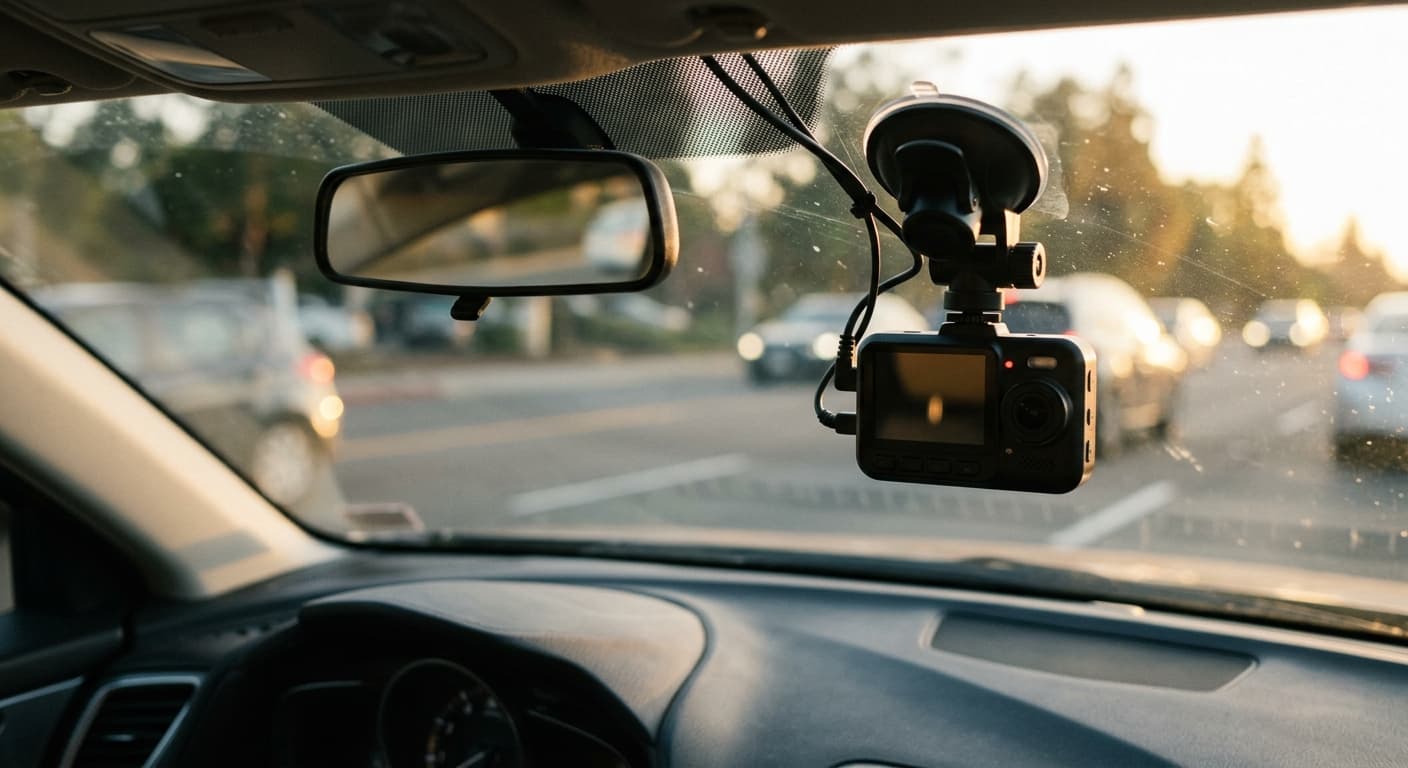
Maine is a one-party consent state under 15 M.R.S. § 710. You may lawfully record any phone call or in-person conversation when you are a party to it, or when at least one participant has given prior consent. Illegal recording is a Class C crime and a civil wrong under 15 M.R.S. § 711. Maine has one important wrinkle: a parallel all-party rule under 17-A M.R.S. § 511 applies whenever recording occurs inside a "private place" such as a bathroom, locker room, or bedroom.
Maine recording law at a glance
| Question | Answer |
|---|---|
| Consent rule | One-party consent (participant recording lawful) |
| Main statute | 15 M.R.S. § 710, defined via § 709(4) |
| When recording is illegal | No party to the conversation consents; or recording inside a private place without all-party consent |
| Criminal penalty | Class C (up to 5 yrs / $5k); Class B for device sale (up to 10 yrs / $20k) |
| Civil penalty | $100/day liquidated damages or actual damages, plus attorney fees |
| Hidden cameras | Class D crime under 17-A M.R.S. § 511 in private places; lawful in public spaces |
| Recording police | Constitutionally protected (open or secret) under Glik and Project Veritas Action Fund |
For detailed analysis of each scenario, see the in-depth guides below.

Recording in-person conversations in Maine
Maine's one-party rule is rooted in how the wiretap chapter defines "intercept." Under 15 M.R.S. § 709(4), "intercept" excludes the sender or receiver of a communication and a person given prior authority by the sender or receiver. A participant's own recording therefore does not "intercept" a protected communication at all, and § 710 is never triggered. Section 709(5)'s definition of "oral communication," which asks whether the speaker exhibited a justified expectation of non-interception, works alongside this exclusion but answers a separate question: whether a communication is protected in the first place, not who counts as intercepting it.
Chapter 102 also defines "intercept" itself to exclude certain listeners. Under 15 M.R.S. § 709(4)(B), a person "within the range of normal unaided hearing" does not commit an interception by recording what they can naturally hear, even when they are not a party to the conversation. This is narrower than it sounds: it protects a bystander who genuinely overhears a conversation firsthand, not someone using a parabolic microphone, wall-mounted bug, or other device that extends perception beyond normal range.
The practical result: if you are part of a conversation, you may record it without telling anyone else. Federal ECPA preemption under 18 U.S.C. § 2511(2)(d) supplies the same result for wire communications and sets the federal floor that Maine cannot lower.
The critical second question is always the place. Public settings (sidewalks, restaurants, parks, government lobbies, workplace common areas) fall under the one-party rule. Private places fall under the separate all-party rule discussed in the hidden-cameras section below. Maine's one-party posture for public conversations is straightforward; its private-place overlay is what sets it apart from most one-party states.
Recording phone calls in Maine
Phone calls are "wire communications" under 15 M.R.S. § 709(7), and the same one-party analysis applies. You may record any call you participate in, covering landlines, cell calls, VoIP (Zoom, Teams, FaceTime), and conference calls where any participating party consents. Recording a call you are not on, where no party consents, is a Class C crime under § 710(1).
Interstate calls create a conflict-of-laws risk. Maine borders New Hampshire (all-party under RSA 570-A:2) and is close to Massachusetts (all-party under M.G.L. c. 272 § 99). Courts in stricter states have applied their own law to calls touching their territory. For any call to Massachusetts, New Hampshire, California, Florida, Illinois, Maryland, Montana, Pennsylvania, or Washington, the safe approach is to disclose the recording at the start of the call.
Our recording consent checker shows which rule controls for a call between Maine and Massachusetts, New Hampshire, or any other state.
For more on Maine phone call rules, see Maine Phone Call Recording Laws.

Hidden cameras, doorbells, and nanny cams
Video recording in public places is generally lawful in Maine with no additional consent requirement. Dashcams, public-street filming, and doorbell cameras pointed at the public sidewalk are all permitted. The one public-space exception is § 511(1)(D): capturing someone's body beneath their clothing in a public place ("upskirt" imaging) is a Class D crime.
Recording inside a "private place" is a different matter. 17-A M.R.S. § 511(1)(B) makes it a Class D crime to install or use any device for observing, photographing, or recording in a private place "without the consent of the person or persons entitled to privacy in that place." The statute defines a private place as "a place where one may reasonably expect to be safe from surveillance, including, but not limited to, changing or dressing rooms, bathrooms and similar places." The "including but not limited to" language means courts look to the reasonable-expectation question, not a closed list of rooms.
A nanny cam in a bathroom or guest bedroom, a landlord's hidden camera in a tenant's room, or a locker-room surveillance camera are all Class D crimes under § 511. A nanny cam in an open living room or kitchen is generally lawful. A camera capturing audio also layers the § 710 one-party question: if the audio captures bystanders who are not parties to any conversation, there is potential wiretap exposure too.
The "all-party" shorthand undersells the rule. Section 511(1)(B) requires the consent of every person "entitled to privacy" in the place, which can exceed the count of conversational participants. In a four-person locker room, all four privacy interests must consent.
For more, see Maine Security Camera Laws and Maine Voyeurism Laws.

Penalties for illegal recording in Maine
Criminal penalties
| Statute | Conduct | Class | Max prison | Max fine |
|---|---|---|---|---|
| 15 M.R.S. § 710(1) | Intentional interception of wire or oral communication | C | 5 years | $5,000 |
| 15 M.R.S. § 710(2) | Editing or tampering with a recording for use in proceedings | C | 5 years | $5,000 |
| 15 M.R.S. § 710(3) | Disclosing or using unlawfully intercepted contents | C | 5 years | $5,000 |
| 15 M.R.S. § 710(5) | Possessing an interception device outside authorized exceptions | C | 5 years | $5,000 |
| 15 M.R.S. § 710(6) | Selling or transferring an interception device | B | 10 years | $20,000 |
| 17-A M.R.S. § 511(1)(B) | Recording in a private place without all-party consent | D | 364 days | $2,000 |
| 17-A M.R.S. § 511(1)(D) | Upskirt imaging in public | D | 364 days | $2,000 |
| 17-A M.R.S. § 511-A | Nonconsensual intimate imagery (including AI deepfakes) | D | 364 days | $2,000 |
Penalties are set by 17-A M.R.S. § 1604: Class C up to 5 years, Class B up to 10 years, Class D up to 364 days. The fine schedule is in § 1704.
Civil remedy
Under 15 M.R.S. § 711, any party whose communication was intercepted, disclosed, or used in violation of chapter 102 may sue for: actual damages, but not less than $100 per day of violation, plus reasonable attorney fees and litigation disbursements. There is no statutory punitive-damages provision, though Maine common-law punitive doctrine could apply where independent malice is shown. There is no $1,000 statutory floor; even a brief violation only accrues the per-day measure.
Recording the police in Maine
Maine sits in the United States Court of Appeals for the First Circuit, which has produced some of the strongest record-the-police decisions in the country.
In Glik v. Cunniffe, 655 F.3d 78 (1st Cir. 2011), the court held that openly recording on-duty police officers in a public space is a clearly established First Amendment right, defeating qualified immunity for officers who retaliated against the recorder.
In Project Veritas Action Fund v. Rollins, 982 F.3d 813 (1st Cir. 2020), the First Circuit extended Glik to the secret, nonconsensual audio recording of police officers discharging their official duties in public spaces. Surreptitiousness does not remove that protection where police in public are the subject. The court did not decide whether the same rule reaches other public employees: it vacated on ripeness grounds the broader ruling covering secret recording of any "government official" discharging official duties in public and remanded that claim for dismissal without prejudice.
In Gericke v. Begin, 753 F.3d 1 (1st Cir. 2014), the First Circuit held it was clearly established that the First Amendment right recognized in Glik extends specifically to filming a police traffic stop, so long as no reasonable restriction is actually imposed by the officer at the scene. The case arose after a bystander who tried to film a traffic stop was arrested for disobeying a police order and then charged, among other counts, with violating New Hampshire's wiretap statute; the First Circuit denied the officers qualified immunity on the resulting retaliatory-prosecution claim.
Together these cases mean Maine citizens may openly or secretly record on-duty police performing public duties, and chapter 102 may not be used to prosecute that recording. Officers may still order you to step back a reasonable distance, enforce neutral time/place/manner restrictions, or act on independent probable cause. They may not seize your device without a warrant, order deletion of recordings, or use obstruction charges pretextually to silence you.
For detailed guidance, see Maine Laws on Recording Police.
Special topics in Maine
Workplace recording and NLRB Stericycle
Maine has no employer-notice statute for one-party recording. A Maine worker or supervisor who participates in a conversation may record it. However, under Stericycle, Inc., 372 NLRB No. 113 (Aug. 2, 2023), a private-sector employer's blanket no-recording policy is presumptively unlawful unless narrowly tailored to a legitimate business interest with carve-outs for Section 7 protected activity. NLRB GC 25-05 (Feb. 14, 2025) reinstated Boeing-era prosecutorial discretion but did not overrule Stericycle. NLRB GC 25-07 (June 25, 2025) makes surreptitious recording of collective-bargaining sessions a per se Section 8 unfair labor practice, overriding Maine's one-party rule for that narrow context.
AI-generated imagery and the TAKE IT DOWN Act
Maine LD 1944 / PL 2025, c. 400, signed by Governor Janet Mills on June 20, 2025, amended 17-A M.R.S. § 511-A to expressly reach AI-generated and deepfake intimate imagery via the phrase "created or modified so that it appears to show." The federal TAKE IT DOWN Act (Pub. L. 119-12, signed May 19, 2025) adds a federal criminal prohibition and a 48-hour platform notice-and-takedown obligation (effective May 19, 2026). Maine victims now have both state and federal remedies. Maine has no parallel civil deepfake statute; § 511-A is criminal only.
AI chatbot disclosure
10 M.R.S. § 1500-DD (LD 1727, enacted 2025) requires any business using an AI chatbot to interact with a Maine consumer to clearly disclose that the consumer is talking to an AI, not a human. Violations are enforced through Maine's Unfair Trade Practices Act. This statute also interacts with recording law: AI voice agents on outbound calls must disclose their AI status under § 1500-DD while the underlying call remains subject to the one-party rule under § 710.
FCC AI voice robocalls (FCC 24-17)
FCC Declaratory Ruling 24-17 (Feb. 8, 2024) classifies AI-generated voices as "artificial or prerecorded" under the TCPA, requiring prior express written consent for marketing calls to Maine numbers. In force as of June 2026.
Body-worn cameras
Maine has no statewide statute requiring law-enforcement officers to wear or activate body cameras. A 2019 bill, LD 636 / SP 198 (129th Legislature), would have created such a mandate, but it was amended down to a resolve establishing a work group to study body-camera use, and died at the end of the 129th Legislature on November 16, 2020. Whether an officer wears a body camera, and when it records, is set by individual department policy, not state law. Footage a department does record is a public record under the Maine Freedom of Access Act, 1 M.R.S. § 402 et seq., subject to law-enforcement, personnel, and personal-privacy exemptions. FOAA requests must receive a response within five business days. A separate provision, 25 M.R.S. § 2803-B(1)(K) and (K-1), requires every law enforcement agency to adopt written policies on the recording of interviews of suspects (paragraph K) and, under a later-added paragraph K-1, of witnesses, in murder and Class A, Class B and Class C crime investigations. Paragraph K-1 expressly does not require every witness interview to be recorded.
Public-meeting recording (FOAA)
Under the Maine Freedom of Access Act, meetings of public bodies (city councils, school boards, county commissions, planning boards, state agency boards) must generally be open, and recording is generally permitted. Public bodies may adopt reasonable procedural rules on positioning but cannot impose a blanket prohibition. Executive sessions under 1 M.R.S. § 405(6) are closed to the public; no recording right attaches inside them.
Federal overlay (ECPA, HIPAA, CALEA)
ECPA, 18 U.S.C. §§ 2510-2522, sets the federal one-party floor and confirms Maine's parallel result for wire and oral communications. The HIPAA Privacy Rule, 45 C.F.R. Part 164, applies to covered entities recording in patient-care settings; a patient may record their own visit under § 710, but a provider recording the patient needs a HIPAA-compliant basis. CALEA, 47 U.S.C. §§ 1001-1010, imposes engineering obligations on Maine carriers to enable lawful court-ordered interception; it does not authorize warrantless recording.
Recent legal developments
- June 20, 2025: Governor Janet Mills signed LD 1944 / PL 2025, c. 400, expanding 17-A M.R.S. § 511-A to cover AI-generated and deepfake intimate imagery.
- June 25, 2025: NLRB GC 25-07 made surreptitious recording of NLRA collective-bargaining sessions a per se Section 8 unfair labor practice.
- May 19, 2025: Federal TAKE IT DOWN Act (Pub. L. 119-12) signed; platform notice-and-takedown obligation effective May 19, 2026.
- April 30, 2025: 11th Circuit mandate vacated the FCC One-to-One Consent Rule (FCC 23-107); FCC removed 47 C.F.R. § 64.1200(f)(9). Do not cite the one-to-one consent rule as a current obligation.
- February 14, 2025: NLRB GC 25-05 reinstated Boeing-era prosecutorial discretion; Stericycle remains binding Board law.
- December 10, 2020: First Circuit decided Project Veritas Action Fund v. Rollins, extending Glik to secret audio recording of police.
- November 16, 2020: LD 636 / SP 198, a bill that would have required Maine law-enforcement officers to wear body cameras statewide, died at the end of the 129th Legislature after being amended into a study resolve; Maine still has no statewide body-worn camera mandate.
Maine recording laws in depth
By type of recording
- Maine Audio Recording Laws: One-Party Consent Rules and Penalties (2026)
- Maine Phone Call Recording Laws: Consent Rules for Cell, Landline, and VoIP (2026)
- Maine Video Recording Laws: Public Filming, Private Property, and Consent (2026)
- Maine Voyeurism Laws: Hidden Cameras, Penalties, and Defenses (2026)
- Maine Dashcam Laws: Mounting Rules, Audio Recording, and Evidence (2026)
By place or relationship
- Maine Laws on Recording Police: Your Rights and Limits (2026)
- Maine Workplace Recording Laws: Employee and Employer Rights (2026)
- Maine Security Camera Laws: Home, Business, and HOA Rules (2026)
- Maine Landlord-Tenant Recording Laws: Cameras, Audio, and Privacy Rights (2026)
- Maine Medical Recording Laws: Patient Rights, HIPAA, and Consent (2026)
- Maine School Recording Laws: Student, Parent, and Teacher Rights (2026)
- Maine Laws on Recording in Public: Your Complete Guide (2026)
More Maine laws
- Maine AI Meeting Recording Laws
- Maine Alimony Laws
- Maine At-Will Employment Laws
- Maine Child Custody Laws
- Maine Data Privacy Laws
This article is general legal information, not legal advice. Recording laws change and apply differently to each situation. For advice about your situation, consult a licensed Maine attorney.
More Maine Laws
- Maine AI Meeting Recording Laws
- Maine Dashcam Laws
- Maine Data Privacy Laws
- Maine Deepfake Laws
- Maine Employee Monitoring Laws
- Maine GPS Tracking Laws
- Maine Police Bodycam Laws
- Maine Smart Glasses Recording Laws
Frequently Asked Questions
Is Maine a one-party or two-party consent state?
Maine is a one-party consent state for wire and oral communications under 15 M.R.S. § 710. The participant rule flows from 15 M.R.S. § 709(4), which excludes the sender or receiver of a communication, and anyone they authorize, from the definition of 'intercept': a participant who records has not intercepted a protected communication at all. Maine has one important overlay: 17-A M.R.S. § 511 imposes an all-party rule when recording occurs inside a private place such as a bathroom, locker room, or changing room.
Can I record a phone call in Maine?
Yes, if you are a party to the call. Under 15 M.R.S. § 710 read with the definition in § 709(4), a participant does not intercept a protected wire communication by recording it. Federal ECPA, 18 U.S.C. § 2511(2)(d), confirms the same one-party result. If you are calling someone in Massachusetts, New Hampshire, or another all-party state, use the stricter state's rule and disclose the recording at the start of the call.
Can I record someone in person in Maine without telling them?
It depends on where the conversation takes place. In public settings, sidewalks, restaurants, or open workplaces, participant recording is lawful under 15 M.R.S. § 710. In a private place under 17-A M.R.S. § 511 (bathroom, locker room, changing room, bedroom, or anywhere with a reasonable expectation of freedom from surveillance), every person entitled to privacy in that place must consent. Recording in a private place without that consent is a Class D crime punishable by up to 364 days and a $2,000 fine.
Is recording someone without consent a felony in Maine?
Yes. Unauthorized interception of a wire or oral communication under 15 M.R.S. § 710(1), (2), (3), or (5) is a Class C crime in Maine, punishable by up to 5 years in prison and a $5,000 fine. Selling an interception device under § 710(6) is a Class B crime (up to 10 years and $20,000). Recording in a private place without consent under 17-A M.R.S. § 511 is a Class D crime (up to 364 days and $2,000).
What can I sue for if someone illegally recorded me in Maine?
Under 15 M.R.S. § 711, you may recover actual damages, but at minimum $100 per day for each day of violation, plus reasonable attorney fees and other litigation disbursements. There is no statutory punitive-damages provision in chapter 102, though Maine common-law punitive doctrine may apply where independent malice is shown.
Are Ring cameras and nanny cams legal in Maine?
A Ring or doorbell camera pointed at your own porch or public spaces is generally lawful, though audio capturing bystander conversations where no party consents may create exposure under 15 M.R.S. § 710. A nanny cam in a living room or kitchen is generally permissible. Any camera placed in or reaching a private place (bathroom, bedroom, locker room) violates 17-A M.R.S. § 511(1)(B), a Class D crime, regardless of whether the camera captures audio.
Can I record the police in Maine?
Yes. The First Circuit has recognized a First Amendment right to openly record on-duty police in public under Glik v. Cunniffe, 655 F.3d 78 (1st Cir. 2011), and extended that right to secret audio recording in Project Veritas Action Fund v. Rollins, 982 F.3d 813 (1st Cir. 2020). Maine chapter 102 may not be used to prosecute citizen recording of police engaged in public duties. Practical limits: maintain a reasonable distance, do not interfere with the scene, and comply with lawful time, place, and manner orders.
Can my employer ban recording at work in Maine?
A Maine employer who participates in a conversation may record it under the one-party rule. Blanket employer no-recording handbook policies are presumptively unlawful under NLRB Stericycle, Inc., 372 NLRB No. 113 (2023), unless narrowly tailored to a legitimate business interest with carve-outs for Section 7 protected activity. NLRB GC 25-07 (June 25, 2025) also makes surreptitious recording of collective-bargaining sessions a per se Section 8 violation, overriding Maine's one-party rule for that narrow context.
Updates
Corrected the description of Gericke v. Begin: the bystander was arrested for disobeying a police order and later charged, among other counts, under New Hampshire's wiretap statute.
Corrected the description of Project Veritas Action Fund v. Rollins to the police-only holding the First Circuit actually reached, corrected the interview-recording citation to 25 M.R.S. section 2803-B(1)(K) for suspects and (K-1) for witnesses, and fixed a changelog entry that named the wrong subsection as the source of Maine one-party rule.
Removed an inaccurate claim that Maine has a statewide law requiring police body cameras; the cited statute does not exist and the 2019 bill that would have created one died in 2020. Corrected the statutory citation for Maine's one-party recording rule from § 709(5) to § 709(4).
Independently fact-checked against the cited primary sources; governing law re-checked for recent changes
Governing law re-checked for recent changes
Governing law re-checked for recent changes
Reviewed and approved by an editor
Restructured for readability: condensed the dense original (~10,000 words) to clean sections at scannable length while retaining every verified statute, case, and citation. New structure: AEO lede, at-a-glance table, separate in-person/phone/hidden-camera/police sections, consolidated special-topics subsections (workplace NLRB, AI deepfake/TAKE IT DOWN, AI chatbot disclosure, FCC 24-17, body-worn cameras, FOAA public meetings, federal overlay), recent-developments bullet list, in-depth sub-page index, updated FAQ (8 Qs). All load-bearing facts re-verified June 2026 against legislature.maine.gov primary sources: 15 M.R.S. §§ 709(5), 710, 711 and 17-A M.R.S. § 511 confirmed correct. No corrections required.
Refresh: Anchored Maine's dual-regime structure (15 M.R.S. § 710 one-party participant rule for wire and oral communications, plus 17-A M.R.S. § 511 all-party private-place rule for surveillance inside bathrooms, locker rooms, changing rooms, and bedrooms). The doctrinal hook for the one-party rule is the 'expectation' element in the definition of 'oral communication' at 15 M.R.S. § 709(4), reinforced by federal ECPA preemption under 18 U.S.C. § 2511(2)(d). Corrected 15 M.R.S. § 711 framing to civil remedy ($100/day or $1,000 floor, whichever higher, plus attorney's fees and litigation disbursements); the prior baseline incorrectly cited § 711 as the device-sale Class B felony statute. The device-sale offense is § 710(6). Added Maine LD 1944 / PL 2025, c. 400 ('An Act to Protect Children and Adults from Technology-facilitated Sexual Abuse'), signed by Governor Janet Mills on June 20, 2025, expanding 17-A M.R.S. § 511-A to expressly reach AI-generated and deepfake intimate imagery via the 'created or modified so that it appears to show' phrase. Added 10 M.R.S. § 1500-DD AI chatbot disclosure law (LD 1727 of 132d Legislature; effective 2025), enforceable through Maine Unfair Trade Practices Act. Corrected body-worn camera statute citation to 25 M.R.S. § 3842 within Title 25, Chapter 411-2 (Law Enforcement Officers' Body-Worn Cameras), enacted SP 198 / LD 636 in 129th Legislature with effective date January 1, 2021; pre-refresh draft cited 25 M.R.S. § 2806-D, which is incorrect. Added Project Veritas Action Fund v. Rollins, 982 F.3d 813 (1st Cir. 2020), extending Glik v. Cunniffe (1st Cir. 2011) to secret audio recording of police officers performing public duties; together they give Maine the strongest record-the-police posture in the country. Updated FCC One-to-One Consent Rule (FCC 23-107, sometimes referenced as FCC 24-24) status to vacated by 11th Cir. Insurance Marketing Coalition Ltd. v. FCC (mandate Apr. 30, 2025); FCC subsequently removed implementing 47 C.F.R. § 64.1200(f)(9). Removed reliance on stale 47 C.F.R. § 64.501 (which was removed effective Nov. 20, 2017). FCC Declaratory Ruling 24-17 (Feb. 8, 2024) on AI-voice robocalls confirmed as in force. Added NLRB Stericycle, Inc., 372 NLRB No. 113 (Aug. 2, 2023) (workplace no-recording rules presumptively unlawful unless narrowly tailored), GC 25-05 (Feb. 14, 2025) (Boeing-era prosecutorial discretion reinstated; Stericycle still good Board law), and GC 25-07 (June 25, 2025) (surreptitious recording of NLRA collective-bargaining sessions as bad-faith bargaining). Added federal TAKE IT DOWN Act (Pub. L. 119-12, signed May 19, 2025; covered-platform notice-and-takedown obligation effective May 19, 2026). Replaced commercial-codifier URLs with legislature.maine.gov, mainelegislature.org, courts.maine.gov, and government-domain federal sources. No Maine Supreme Judicial Court case-law spine was located in primary research; article relies on statutory text and First Circuit federal authority.
Refresh: Anchored Maine's dual-regime structure (15 M.R.S. § 710 one-party participant rule for wire and oral communications, plus 17-A M.R.S. § 511 all-party private-place rule). The doctrinal hook for the one-party rule is 15 M.R.S. § 709(4), which excludes the sender or receiver of a communication, and anyone they authorize, from the definition of 'intercept'. An earlier version of this entry attributed the rule to the 'expectation' element in the definition of 'oral communications' at § 709(5), which answers the separate question of whether a communication is protected at all; that was corrected in August 2026. Federal ECPA preemption under 18 U.S.C. § 2511(2)(d) reinforces the same one-party result. Corrected 15 M.R.S. § 711 framing to civil remedy ($100/day liquidated damages, plus attorney fees); prior baseline incorrectly cited § 711 as the device-sale Class B felony statute. Added Maine LD 1944 / PL 2025, c. 400 (signed June 20, 2025), expanding 17-A M.R.S. § 511-A to AI-generated and deepfake imagery. Added 10 M.R.S. § 1500-DD AI chatbot disclosure law. Added a body-worn-camera note citing 25 M.R.S. § 3842; that citation was later found fabricated (the section does not exist) and was corrected August 2026 to state that Maine has no statewide body-worn camera mandate. Added Project Veritas Action Fund v. Rollins (1st Cir. 2020), extending Glik to secret audio recording of police. Updated FCC One-to-One Consent Rule status to vacated (11th Cir., mandate Apr. 30, 2025). Confirmed FCC 24-17 in force. Added Stericycle, GC 25-05, GC 25-07, and TAKE IT DOWN Act.
Added wearable recording device guidance covering AI voice recorders (Plaud) and smart glasses (Meta Ray-Bans) under Maine one-party consent law.
The Law Behind This Article
This article rests on the statutory provisions below, held in our own legal record and retrieved from the official source. Tap a section to read the operative text.
Maine Revised Statutes, Title 15: COURT PROCEDURE -- CRIMINAL, Part 2: PROCEEDINGS BEFORE TRIAL, Chapter 102: INTERCEPTION OF WIRE AND ORAL COMMUNICATIONS
§ 710OffensesIn forcecited in 18 of our articles
1. Interception, oral communications prohibited. Any person, other than an employee of a communication common carrier, a law enforcement officer, an investigative officer, another employee of the Department of Corrections authorized to exercise law enforcement powers as described in Title 34‑A, section 3011 or a jail investigative officer or a jail employee acting at the direction of a jail investigative officer, carrying out practices otherwise permitted by this chapter, who intentionally or knowingly intercepts, attempts to intercept or procures any other person to intercept or attempt to intercept any wire or oral communication is guilty of a Class C crime. 2. Editing of tape recordings in judicial proceedings prohibited. Any person who knowingly or intentionally edits, alters or tampers with any tape, transcription or other sound recording, or knows of such editing, altering or tampering, and presents that recording in any judicial proceeding or proceeding under oath, without fully indicating the nature of the changes made and the original state of the recording, is guilty of a Class C crime. 3. Disclosure or use of wire or oral communications prohibited.
Official text (excerpt) · last checked 2026-09-23 · Read the full text in our law library · Verify at legislature.maine.gov
Cited in 5 court opinions in our collectionLatest citing opinion in our collection: 2022
In the courts (editorial summary, independently checked):Williams v. Poulos (1993) affirmed section 710(1) liability for intercepting employee calls and held section 710(3)(A) and (B) require only knowledge the information came through interception. Glenn A. Griffin v. Cristie J. Griffin (2014) allowed a parent's vicarious consent for a young child only on a good faith best-interest belief.
Opinions citing this section in our collection:
- Glenn A. Griffin v. Cristie J. Griffin (Supreme Judicial Court of Maine 2014, 92 A.3d 1144)✓A father recorded his six-year-old daughter's nightly calls with her mother after overhearing abusive remarks; the court held a parent with a good faith, objectively reasonable best-interest belief may vicariously consent under section 709(4)(C), so section 710 was not violated.
- Archer v. Androscoggin County (Superior Court of Maine 2022)✓An attorney sought recordings of another inmate's jail calls under Maine's public records law; the court applied the wiretap chapter that makes interception a crime under section 710 and held a court-appointed defense lawyer is not within the section 712(4) disclosure exception.
- Williams v. Poulos (Court of Appeals for the First Circuit 1993)✓Company owners secretly recorded employee phone calls using alligator clips wired to a VCR, and their lawyers then used the tapes; the First Circuit affirmed liability under section 710, holding subsection 3 requires only knowledge that the material came from an interception.
Identified automatically from the court opinions citing this section — not a ranking of which case controls.
Also relied on in: Maine Dashcam Laws: Mounting Rules, Audio Recording, and Evidence (2026), Maine Landlord-Tenant Recording Laws: Cameras, Audio, and Privacy Rights (2026), Maine Phone Call Recording Laws: Consent Rules for Cell, Landline, and VoIP (2026)
§ 709DefinitionsIn forcecited in 13 of our articles
The following words and phrases as used in this chapter, unless the context otherwise indicates, shall have the following meanings. [PL 1973, c. 561 (NEW).] 1. Communication common carrier. "Communication common carrier" means any telephone or telegraph company. 1-A. Administration of criminal justice. 1-B. Administration of juvenile criminal justice. 1-C. Administration of juvenile justice. "Administration of juvenile justice" has the same meaning as in section 3003, subsection 1‑A. 2. Contents. "Contents," when used with respect to any wire or oral communication, means any information concerning the identity of the parties to such communication or the existence, contents, substance, purport or meaning of that communication. 3. Intercepting device. "Intercepting device" means any device or apparatus which can be used to intercept a wire or oral communication other than: A. Any telephone or telegraph instrument, equipment or facility or any component thereof being used by a communication common carrier in the ordinary course of its business or extension telephones used by a subscriber to telephone service; or [PL 1973, c. 561 (NEW).] B.
Official text (excerpt) · last checked 2026-07-30 · Read the full text in our law library · Verify at legislature.maine.gov
Cited in 8 court opinions in our collectionLatest citing opinion in our collection: 2021
Opinions citing this section in our collection:
- Glenn A. Griffin v. Cristie J. Griffin (Supreme Judicial Court of Maine 2014, 92 A.3d 1144)“…nterception of Wire and Oral Communications Act (the Act), 15 M.R.S. §§ 709-713 (2012),1 and (2) whether the court…”
- State v. Kehling (Supreme Judicial Court of Maine 1991, 601 A.2d 620)“…e Maine’s Interception of Wire and Oral Communications Act, 15 M.R.S.A. §§ 709-713 (Supp.1991). As to the sentence, we…”
- State v. Cyran (Supreme Judicial Court of Maine 1991, 586 A.2d 1238)“…versations. Nevertheless, both Maine’s wiretap regulations, 15 M.R.S.A. §§ 709-712, and the applicable federal provisi…”
Identified automatically from the court opinions citing this section — not a ranking of which case controls.
Also relied on in: Maine Smart Glasses Recording Laws: What You Need to Know, Maine Surveillance Camera Laws (2026 Guide), Maine Medical Recording Laws: Patient Rights, HIPAA, and Consent (2026)
§ 711Civil remedyIn forcecited in 9 of our articles
Any party to a conversation intercepted, disclosed or used in violation of this chapter shall have a civil cause of action against any person who intercepts, discloses or uses such communications and shall be entitled to recover from any such persons: [PL 1973, c. 561 (NEW).] 1. Damages. Actual damages, but not less than liquidated damages, computed at the rate of $100 per day for each day of violation; and 2. Attorney's fee. A reasonable attorney's fee and other litigation disbursements reasonably incurred.
Official text (excerpt) · last checked 2026-07-30 · Read the full text in our law library · Verify at legislature.maine.gov
Cited in 1 court opinions in our collectionLatest citing opinion in our collection: 2009
Opinions citing this section in our collection:
- Simpson v. Cumberland County (Superior Court of Maine 2009)“…additional claims, including: (1) an alleged violation of 15 M.R.S. § 711 - which provides a civil damages remedy…”
Identified automatically from the court opinions citing this section — not a ranking of which case controls.
Also relied on in: Maine Audio Recording Laws: One-Party Consent Rules and Penalties (2026), Maine Security Camera Laws: Home, Business, and HOA Rules (2026), Maine Voyeurism Laws: Hidden Cameras, Penalties, and Defenses (2026)
Maine Revised Statutes, Title 17-A: MAINE CRIMINAL CODE, Part 2: SUBSTANTIVE OFFENSES, Chapter 21: OFFENSES AGAINST PUBLIC ORDER
§ 511Violation of privacyIn forcecited in 15 of our articles
1. A person is guilty of violation of privacy if, except in the execution of a public duty or as authorized by law, that person intentionally: A. Commits a civil trespass on property with the intent to overhear or observe any person in a private place; [PL 1997, c. 467, §1 (AMD).] B. Installs or uses in a private place without the consent of the person or persons entitled to privacy in that place, any device for observing, photographing, recording, amplifying or broadcasting sounds or events in that place; [PL 1997, c. 467, §1 (AMD).] C. Installs or uses outside a private place without the consent of the person or persons entitled to privacy therein any device for observing, photographing, hearing, recording, amplifying or broadcasting images or sounds originating in that place that would not ordinarily be visible, audible or comprehensible outside that place; [PL 2023, c. 227, §1 (AMD).] D.
Official text (excerpt) · last checked 2026-08-31 · Read the full text in our law library · Verify at legislature.maine.gov
Cited in 6 court opinions in our collectionLatest citing opinion in our collection: 2026
In the courts (editorial summary, independently checked):In State of Maine v. Mark W. Strong Sr. (2013) the Maine Supreme Judicial Court read section 511(1)(B) to require an objectively reasonable expectation of being safe from surveillance, and held that people who entered a place solely to engage a prostitute were not persons entitled to privacy there.
Opinions citing this section in our collection:
- State of Maine v. Mark W. Strong Sr. (Supreme Judicial Court of Maine 2013, 60 A.3d 1286)✓A man faced 45 counts of violation of privacy for recording the clients of a Kennebunk prostitute; the Law Court held that people present solely to engage a prostitute were not 'persons entitled to privacy' there, so the indictment failed to charge the offense.
- Friedman v. Public Utilities Commission (Supreme Judicial Court of Maine 2012, 48 A.3d 794)“…statutes: 17-A M.R.S. § 402(1) (2011) (criminal trespass), 17-A M.R.S. § 511 (2011) (criminal violation of privacy),…”
- Cuso Mortgage Corp. v. Gauthier (Superior Court of Maine 2012)“…e counts of criminal invasion of privacy, presumably under 17-A M.R.S. § 511(1)(B), for allegedly filming sexual act…”
Identified automatically from the court opinions citing this section — not a ranking of which case controls.
Also relied on in: Maine Laws on Recording in Public: Your Complete Guide (2026), Maine Video Recording Laws: Public Filming, Private Property, and Consent (2026), Maine AI Meeting Recording Laws: One-Party Consent and Class C Penalties
§ 511-AUnauthorized dissemination of certain private imagesIn forcecited in 7 of our articles
1. A person is guilty of unauthorized dissemination of certain private images if the person, with the intent to harass, torment or threaten the depicted person or another person, intentionally or knowingly disseminates, displays or publishes an image of another person in a state of nudity or engaged in a sexual act or engaged in sexual contact or an image that has been created or modified so that it appears to show the depicted person in a state of nudity or engaged in a sexual act or engaged in sexual contact in a manner in which there is no public or newsworthy purpose when the person knows or should have known that the depicted person: A. [PL 2015, c. 394, §5 (RP).] B. Is identifiable from the image itself or information displayed in connection with the image; and [PL 2015, c. 339, §1 (NEW).] C. Has not consented to the dissemination, display or publication of the image. [PL 2025, c. 400, §2 (AMD).] 2. This section does not apply to the following: A. Lawful and common practices of medical treatment; [PL 2015, c. 339, §1 (NEW).] B. Images involving voluntary exposure in a public or commercial setting; or [PL 2015, c. 339, §1 (NEW).] C.
Official text (excerpt) · last checked 2026-08-30 · Read the full text in our law library · Verify at legislature.maine.gov
Also relied on in: Maine AI Laws and Regulation (2026), Maine Deepfake Laws: AI Images, Voice Cloning & Penalties (2026), Maine Sexting Laws: Legal Consequences and Penalties
United States Code Title 18
§ 2511Interception and disclosure of wire, oral, or electronic communications prohibitedIn forcecited in 441 of our articles
Except as otherwise specifically provided in this chapter any person who— intentionally intercepts, endeavors to intercept, or procures any other person to intercept or endeavor to intercept, any wire, oral, or electronic communication; intentionally uses, endeavors to use, or procures any other person to use or endeavor to use any electronic, mechanical, or other device to intercept any oral communication when— such device is affixed to, or otherwise transmits a signal through, a wire, cable, or other like connection used in wire communication; or such device transmits communications by radio, or interferes with the transmission of such communication; or such person knows, or has reason to know, that such device or any component thereof has been sent through the mail or transported in interstate or foreign commerce; or such use or endeavor to use (A) takes place on the premises of any business or other commercial establishment the operations of which affect interstate or foreign commerce; or (B) obtains or is for the purpose of obtaining information relating to the operations of any business or other commercial establishment the operations of which affect interstate or foreign…
Official text (excerpt) · last checked 2026-09-17 · Read the full text in our law library · Verify at uscode.house.gov
Cited in 2,045 court opinions in our collectionLatest citing opinion in our collection: 2026
In the courts (editorial summary, independently checked):Griggs-Ryan v. Smith (1990) applied the Section 2511(2)(d) prior-consent exception, treating a tenant repeatedly told that all incoming calls were taped as having impliedly consented. United States v. United States District Court (1972) read the then-current Section 2511(3) as conferring no presidential surveillance power.
Opinions citing this section in our collection:
- Mitchell v. Forsyth (Supreme Court of the United States 1985, 472 U.S. 511)✓The Attorney General authorized a warrantless 1970 national security wiretap that caught the plaintiff's calls; the Court held the since-repealed Section 2511(3) disclaimer left the tap lawful under Title III, and that Mitchell had qualified immunity.
- United States v. United States District Court for the Eastern District of Michigan (Supreme Court of the United States 1972, 407 U.S. 297)✓The Attorney General approved warrantless wiretaps on members of a domestic group accused of bombing a CIA office; the Court read Section 2511(3) as a congressional disclaimer conferring no surveillance power, then held the Fourth Amendment required prior judicial approval.
- Forsyth v. Barr (Court of Appeals for the Fifth Circuit 1994, 19 F.3d 1527)✓Dallas police used, in an internal affairs probe of an officer, calls private parties allegedly intercepted illegally; assuming that was unlawful, the Fifth Circuit held Section 2517(1) and (2) allowed the disclosure and use, defeating the Section 2511(1)(c) and (d) claims.
Identified automatically from the court opinions citing this section — not a ranking of which case controls.
Also relied on in: Connecticut Recording Laws (2026): Hybrid Consent Rules Explained, Oregon Recording Laws (2026): Hybrid One-Party and All-Party Rules, US Recording Laws by State (2026): All 50 States Explained
Maine Revised Statutes, Title 1: GENERAL PROVISIONS, Chapter 13: PUBLIC RECORDS AND PROCEEDINGS
§ 402DefinitionsIn forcecited in 4 of our articles
1. Conditional approval. Approval of an application or granting of a license, certificate or any other type of permit upon conditions not otherwise specifically required by the statute, ordinance or regulation pursuant to which the approval or granting is issued. 1-A. Legislative subcommittee. "Legislative subcommittee" means 3 or more Legislators from a legislative committee appointed for the purpose of conducting legislative business on behalf of the committee. 2. Public proceedings. The term "public proceedings" as used in this subchapter means the transactions of any functions affecting any or all citizens of the State by any of the following: A. The Legislature of Maine and its committees and subcommittees; [PL 1975, c. 758 (NEW).] B. Any board or commission of any state agency or authority, the Board of Trustees of the University of Maine System and any of its committees and subcommittees, the Board of Trustees of the Maine Maritime Academy and any of its committees and subcommittees, the Board of Trustees of the Maine Community College System and any of its committees and subcommittees; [PL 1989, c. 878, Pt. A, §1 (RPR); PL 2003, c. 20, Pt. OO, §2 (AMD); PL 2003, c.
Official text (excerpt) · last checked 2026-07-30 · Read the full text in our law library · Verify at legislature.maine.gov
Cited in 95 court opinions in our collectionLatest citing opinion in our collection: 2024
Opinions citing this section in our collection:
- Town of Burlington v. Hospital Administrative District No. 1 (Supreme Judicial Court of Maine 2001, 769 A.2d 857)“…the records are "trade secrets" exempted from disclosure by 1 M.R.S.A. § 402(3)(B) (Supp.2000). Furthermore, the cou…”
- MaineToday Media, Inc. v. State of Maine (Supreme Judicial Court of Maine 2013, 82 A.3d 104)“…that fall within any one of nineteen categories set out in 1 M.R.S. § 402(3)(A)-(R). See S. Portland Police Patr…”
- Great Northern Paper, Inc. v. Penobscot Nation (Supreme Judicial Court of Maine 2001, 770 A.2d 574)“…e “public records” provisions of the Freedom of Access Act, 1 M.R.S.A. § 402(3) (1989 & Supp. 2000), and in accordan…”
Identified automatically from the court opinions citing this section — not a ranking of which case controls.
Also relied on in: Maine Laws on Recording Police: Your Rights and Limits (2026), Maine Police Bodycam Laws (2026): No Mandate & Records Access, Maine Freedom of Access Act: Deadlines, Fees, Waivers, and How to Appeal
§ 405Executive sessionsIn force
Those bodies or agencies falling within this subchapter may hold executive sessions subject to the following conditions. [PL 1975, c. 758 (NEW).] 1. Not to defeat purposes of subchapter. An executive session may not be used to defeat the purposes of this subchapter as stated in section 401. 2. Final approval of certain items prohibited. An ordinance, order, rule, resolution, regulation, contract, appointment or other official action may not be finally approved at an executive session. 3. Procedure for calling of executive session. An executive session may be called only by a public, recorded vote of 3/5 of the members, present and voting, of such bodies or agencies. 4. Motion contents. A motion to go into executive session must indicate the precise nature of the business of the executive session and include a citation of one or more sources of statutory or other authority that permits an executive session for that business. Failure to state all authorities justifying the executive session does not constitute a violation of this subchapter if one or more of the authorities are accurately cited in the motion.
Official text (excerpt) · last checked 2026-07-30 · Read the full text in our law library · Verify at legislature.maine.gov
Cited in 34 court opinions in our collectionLatest citing opinion in our collection: 2019
Opinions citing this section in our collection:
- Lewiston Daily Sun v. School Administrative District No. 43 (Supreme Judicial Court of Maine 1999, 738 A.2d 1239)“…uired by 20-A M.R.S.A. § 6101(2)(B)(6) and as authorized by 1 M.R.S.A. § 405(6)(A), (E) & (F), [2] this meeting als…”
- Cook v. Lisbon School Committee (Supreme Judicial Court of Maine 1996, 682 A.2d 672)“…t to procedural due process, and the Freedom of Access Act, 1 M.R.S.A. §§ 405-410 (1989 & Supp.1995) arising from the…”
- Martin v. Unemployment Insurance Commission (Supreme Judicial Court of Maine 1998, 723 A.2d 412)“…so argues that the hearing was an "executive session” under 1 M.R.S.A. § 405. This argument fails. The executive ses…”
Identified automatically from the court opinions citing this section — not a ranking of which case controls.
Maine Revised Statutes, Title 10: COMMERCE AND TRADE, Part 3: REGULATION OF TRADE, Chapter 241: COMMUNICATIONS WITH CONSUMERS VIA ARTIFICIAL INTELLIGENCE
§ 1500-DDRequired disclosure of use of artificial intelligence chatbot to engage in trade and commerceIn forcecited in 3 of our articles
1. Definitions. As used in this section, unless the context otherwise indicates, the following terms have the following meanings. A. "Artificial intelligence chatbot" means a software application, web interface or computer program that simulates human conversation and interaction through textual or aural communications. [PL 2025, c. 294, §1 (NEW); RR 2025, c. 1, Pt. A, §16 (RAL).] B. "Trade" and "commerce" have the same meaning as in Title 5, section 206, subsection 3. [PL 2025, c. 294, §1 (NEW); RR 2025, c. 1, Pt. A, §16 (RAL).] 2. Required disclosure of use of artificial intelligence chatbot to engage in trade and commerce. A person may not use an artificial intelligence chatbot or any other computer technology to engage in trade and commerce with a consumer in a manner that may mislead or deceive a reasonable consumer into believing that the consumer is engaging with a human being unless the consumer is notified in a clear and conspicuous manner that the consumer is not engaging with a human being. 3. Violation. A violation of subsection 2 is a violation of the Maine Unfair Trade Practices Act.
Official text (excerpt) · last checked 2026-09-03 · Read the full text in our law library · Verify at legislature.maine.gov
Maine Revised Statutes, Title 17-A: MAINE CRIMINAL CODE, Part 6: PUNISHMENTS, Chapter 63: SENTENCES OF IMPRISONMENT
§ 1604Imprisonment for crimes other than murderIn forcecited in 8 of our articles
1. Maximum terms of imprisonment dependent on crime class. Unless a different maximum term of imprisonment is specified by statute, the maximum term of imprisonment is as follows: A. In the case of a Class A crime, 30 years; [PL 2019, c. 113, Pt. A, §2 (NEW).] B. In the case of a Class B crime, 10 years; [PL 2019, c. 113, Pt. A, §2 (NEW).] C. In the case of a Class C crime, 5 years; [PL 2019, c. 113, Pt. A, §2 (NEW).] D. In the case of a Class D crime, less than one year; or [PL 2019, c. 113, Pt. A, §2 (NEW).] E. In the case of a Class E crime, 6 months. [PL 2019, c. 113, Pt. A, §2 (NEW).] 2. Exceptions to maximum term of imprisonment based on crime class. Notwithstanding subsection 1: A. In the case of the Class A crime of aggravated attempted murder, the court shall set a term of imprisonment under section 152‑A, subsection 2 of life or a definite period of any term of years; [PL 2019, c. 113, Pt. A, §2 (NEW).] B. If the State pleads and proves that the defendant is a repeat sexual assault offender, the court may set a definite term of imprisonment under section 253‑A, subsection 1 for any term of years; and [PL 2019, c. 113, Pt. A, §2 (NEW).] C.
Official text (excerpt) · last checked 2026-07-30 · Read the full text in our law library · Verify at legislature.maine.gov
Cited in 30 court opinions in our collectionLatest citing opinion in our collection: 2026
Opinions citing this section in our collection:
- State of Maine v. Taylor A. Pelletier (Supreme Judicial Court of Maine 2023, 2023 ME 74)“…ndictment. That count cites 17-A M.R.S. § 301(1)(A)(3) and 17-A M.R.S § 1604(5)(A) (2021)10 and reads: On…”
- State of Maine v. Germaine Page (Supreme Judicial Court of Maine 2023, 2023 ME 73)“…e’s sentences exceed the maximum sentences allowable under 17-A M.R.S. § 1604(1)(D) (2023).…”
- State of Maine v. Thomas G. Coffill III (Supreme Judicial Court of Maine 2026, 2026 ME 18)“…A M.R.S. § 211(1), and an elevating-circumstances statute, 17-A M.R.S. § 1604(5)(A). A crimes. See, e.g., United St…”
Identified automatically from the court opinions citing this section — not a ranking of which case controls.
Also relied on in: How Long Is a Life Sentence in Maine? (2026 Guide), Maine Age of Consent Laws: Statutes, Penalties and Reporting, Maine Expungement Laws: Record Sealing Under 15 M.R.S. § 2261 et seq.
Maine Revised Statutes, Title 25: INTERNAL SECURITY AND PUBLIC SAFETY, Part 8: MAINE CRIMINAL JUSTICE ACADEMY, Chapter 341: THE MAINE CRIMINAL JUSTICE ACADEMY
§ 2803-BRequirements of law enforcement agenciesIn forcecited in 2 of our articles
1. Law enforcement policies. All law enforcement agencies shall adopt written policies regarding procedures to deal with the following: A. Use of physical force, including the use of electronic weapons and less-than-lethal munitions; [PL 2009, c. 336, §18 (AMD).] B. Barricaded persons and hostage situations; [PL 1993, c. 744, §5 (NEW).] C. [PL 2013, c. 147, §16 (RP).] D. Domestic violence, which must include, at a minimum, the following: (1) A process to ensure that a victim receives notification of the defendant's release from jail; (2) A process for the collection of information regarding the defendant that includes the defendant's previous history, the parties' relationship, whether the commission of an alleged crime included the use of strangulation as defined in Title 17‑A, section 208, subsection 1, paragraph C, the name of the victim and a process to relay this information to a bail commissioner before a bail determination is made; (3) A process for the safe retrieval of personal property belonging to the victim or the defendant that includes identification of a possible neutral location for retrieval, the presence of at least one law enforcement officer during the…
Official text (excerpt) · last checked 2026-07-30 · Read the full text in our law library · Verify at legislature.maine.gov
Cited in 3 court opinions in our collectionLatest citing opinion in our collection: 2026
Opinions citing this section in our collection:
- State of Maine v. Maldonado (Superior Court of Maine 2021)“…search warrants. L.D. 1043 (130th Legis. 2021) (enacted at 25 MRSA §2803-B(l)). Almost all proponents and opponent…”
- LUCAS (District Court, D. Maine 2026)“…unicipalities maintain such policies. Opp’n at 20 (citing 25 M.R.S. § 2803-B(1)(D)(3)).3 Plaintiff also argues that…”
- JOHNSON v. CITY OF BIDDEFORD POLICE DEPARTMENT (District Court, D. Maine 2020)“…into protective custody.7 7 Johnson and Welch also cite 25 M.R.S.A. § 2803-B, which at the time required all Maine l…”
Identified automatically from the court opinions citing this section — not a ranking of which case controls.
New Hampshire Revised Statutes Annotated, TITLE LVIII PUBLIC JUSTICE, CHAPTER 570-A WIRETAPPING AND EAVESDROPPING
§ 570-A:2Interception and Disclosure of Telecommunication or Oral Communications Prohibited.In forcecited in 34 of our articles
I. A person is guilty of a class B felony if, except as otherwise specifically provided in this chapter or without the consent of all parties to the communication, the person: (a) Wilfully intercepts, endeavors to intercept, or procures any other person to intercept or endeavor to intercept, any telecommunication or oral communication; (b) Wilfully uses, endeavors to use, or procures any other person to use or endeavor to use any electronic, mechanical, or other device to intercept any oral communication when: (1) Such device is affixed to, or otherwise transmits a signal through, a wire, cable, or other like connection used in telecommunication, or (2) Such device transmits communications by radio, or interferes with the transmission of such communication, or (3) Such use or endeavor to use (A) takes place on premises of any business or other commercial establishment, or (B) obtains or is for the purpose of obtaining information relating to the operations of any business or other commercial establishment; or (c) Wilfully discloses, or endeavors to disclose, to any other person the contents of any telecommunication or oral communication, knowing or having reason to know that…
Official text (excerpt) · last checked 2026-09-24 · Read the full text in our law library · Verify at gc.nh.gov
Cited in 35 court opinions in our collectionLatest citing opinion in our collection: 2025
In the courts (editorial summary, independently checked):New Hampshire courts read the felony offense in RSA 570-A:2, I as requiring more than intent to record. Fischer v. Hooper (1999) held wilfully means intentional or reckless disregard for the lawfulness of the conduct, so a good faith belief is a defense. State of New Hampshire v. Adam Mueller (2014) reversed on that mens rea.
Opinions citing this section in our collection:
- State v. Kilgus (Supreme Court of New Hampshire 1986, 128 N.H. 577)✓A murder-for-hire middleman agreed to wear a hidden recorder and got the defendant to confirm paying $1,000 to have a man killed; the court held the taping was lawful under RSA 570-A:2, II(d) because one party consented and homicide is an enumerated offense.
- Fischer v. Hooper (Supreme Court of New Hampshire 1999, 143 N.H. 585)✓A father secretly taped his ex-wife's calls with their daughter though a guardian ad litem had said both parents must agree; the court held wilfully in RSA 570-A:2, I requires intentional or reckless disregard for the lawfulness of the conduct, and reversed for a new trial.
- State of New Hampshire v. Adam Mueller (Supreme Court of New Hampshire 2014, 166 N.H. 65)✓A police-accountability activist recorded three phone calls with a police captain and two school officials without telling them; the court held that instructing the jury on purposely rather than the statute's wilfully was plain error and reversed his wiretapping convictions.
Identified automatically from the court opinions citing this section — not a ranking of which case controls.
Also relied on in: New Hampshire Audio Recording Laws, Is Plaud HIPAA Compliant? Kind Of. Here's What to Know (2026), Arkansas Phone Call Recording Laws: Landline, Cell, and VoIP Rules (2026)
Code of Federal Regulations Title 47
§ 64.1200Delivery restrictions.In forcecited in 14 of our articles
(a) No person or entity may: (1) Except as provided in paragraph (a)(2) of this section, initiate any telephone call (other than a call made for emergency purposes or is made with the prior express consent of the called party) using an automatic telephone dialing system or an artificial or prerecorded voice; (i) To any emergency telephone line, including any 911 line and any emergency line of a hospital, medical physician or service office, health care facility, poison control center, or fire protection or law enforcement agency; (ii) To the telephone line of any guest room or patient room of a hospital, health care facility, elderly home, or similar establishment; or (iii) To any telephone number assigned to a paging service, cellular telephone service, specialized mobile radio service, or other radio common carrier service, or any service for which the called party is charged for the call.
Official text (excerpt) · last checked 2026-07-28 · Read the full text in our law library · Verify at ecfr.gov
Cited in 840 court opinions in our collectionLatest citing opinion in our collection: 2026
Opinions citing this section in our collection:
- Samuel Zean v. Fairview Health Services (Court of Appeals for the Eighth Circuit 2017, 858 F.3d 520)“…with . . . the prior express consent of the called party.” 47 C.F.R. § 64.1200(a)(2). Under the Hobbs Act, 28 U.S.C. §…”
- Krakauer v. Dish Network, L. L.C. (Court of Appeals for the Fourth Circuit 2019, 925 F.3d 643)“…ing regulations was the national Do-Not-Call registry. See 47 C.F.R. § 64.1200(c)(2). Within the federal government’s…”
- ACA Int'l v. Fed. Commc'ns Comm'n (Court of Appeals for the D.C. Circuit 2018, 885 F.3d 687)“…C. Compare 16 C.F.R. §§ 310.4(b)(1)(iii)(B), 310.4(c), with 47 C.F.R. § 64.1200(c). But the agencies’ initiatives also…”
Identified automatically from the court opinions citing this section — not a ranking of which case controls.
Also relied on in: Michigan Recording Laws (2026): Consent Rules and Participant Exception, TCPA Explained: Robocall, Text, and Telemarketing Law (2026), TCPA Damages and Lawsuits: Penalties, Settlements (2026)
Search our full record of US law — 2.1 million sections, every state + federal →
Sources and References
- legislature.maine.gov.gov
- legislature.maine.gov.gov
- legislature.maine.gov.gov
- mainelegislature.org.gov
- legislature.maine.gov.gov
- legislature.maine.gov.gov
- mainelegislature.org.gov
- legislature.maine.gov.gov
- legislature.maine.gov.gov
- LD 636 / SP 198 (129th Legislature) bill status - died as a study resolve, Nov. 16, 2020 (Maine Legislature)(mainelegislature.org).gov
- legislature.maine.gov.gov
- maine.gov.gov
- legislature.maine.gov.gov
- media.ca1.uscourts.gov.gov
- media.ca1.uscourts.gov.gov
- media.ca1.uscourts.gov.gov
- uscode.house.gov.gov
- justice.gov.gov
- congress.gov.gov
- docs.fcc.gov.gov
- media.ca11.uscourts.gov.gov
- nlrb.gov.gov
- nlrb.gov.gov
- nlrb.gov.gov
- ftc.gov.gov
- ecfr.gov.gov
- uscode.house.gov.gov