
Hawaii
Hawaii Recording Laws (2026): Hybrid Consent State Rules
Independently fact-checked against primary sources (last audited August 15, 2026). · Reviewed by the RecordingLaw editorial team. · Law checked current as of August 15, 2026. · 22 primary sources cited on this page. How we verify our legal content
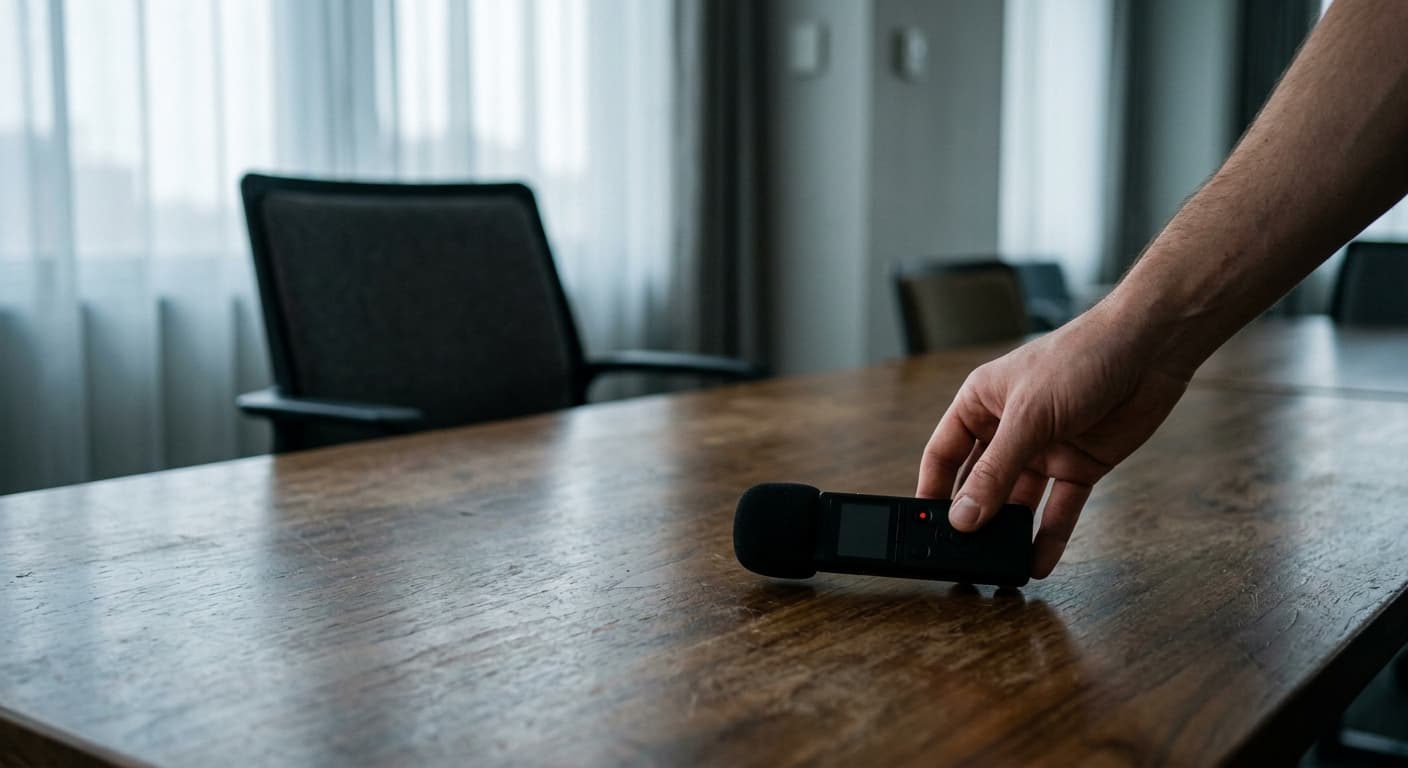
Hawaii is a hybrid consent state. Under HRS § 803-42(b)(3)(A), a party to any wire, oral, or electronic communication may record it without notifying the other parties. Inside a private place, HRS § 711-1111(1)(d) layers a separate all-party-consent rule on top. Violating either statute exposes you to criminal and civil liability.
Hawaii recording law at a glance
| Question | Answer |
|---|---|
| Consent rule | Hybrid: one-party default (HRS § 803-42); all-party in private places (HRS § 711-1111) |
| Main wiretap statute | HRS § 803-42 |
| When recording is illegal | Without being a party to the conversation; inside a private place without consent; capturing undress or sexual activity |
| Wiretap criminal penalty | Class C felony, up to 5 years and $10,000 fine |
| Private-place misdemeanor | Up to 1 year and $2,000 fine (HRS § 711-1111) |
| Intimate-imagery felony | Class C felony, up to 5 years and $10,000 fine (HRS § 711-1110.9) |
| Civil remedy | Greater of $100/day or $10,000 floor, plus punitives and attorney fees (HRS § 803-48) |
| Hidden cameras / voyeurism | Misdemeanor for private-place device; Class C felony if undress or sexual activity is captured |
| Recording police | Explicitly protected in public places by Act 164 SLH 2016 |
See the in-depth guides below for coverage by topic.
Recording in-person conversations in Hawaii
Under HRS § 803-42(b)(3)(A), a private actor who is a party to an oral, wire, or electronic communication may record it without notifying the other parties. The Hawaii Supreme Court applied this rule in State v. Okubo, 67 Haw. 197, 682 P.2d 79 (1984), holding that a participant recording does not violate the wiretap act. That remains the canonical Hawaii authority on the one-party rule.
The safe harbor has two limits. First, it disappears if your purpose is to commit a criminal or tortious act (blackmail, harassment, fraud). Second, it does not override the private-place rule. Even a participant can violate HRS § 711-1111(1)(d) by recording inside a bedroom, bathroom, hotel room, locker room, or other place where those present have a reasonable expectation of privacy. State v. Lo, 66 Haw. 653, 675 P.2d 754 (1983) confirmed that section 803-42 does not authorize bugging a private place without consent.
A "private place" is defined in HRS § 711-1100 as a location where someone may reasonably expect to be safe from casual or hostile intrusion or surveillance. Streets, public parks, restaurants, open-plan offices, and shared conference rooms are not private places. Bedrooms, bathrooms, locked private offices, and hotel rooms are.
A practical example: you can record a tense conversation with a contractor in your open kitchen or on your front porch without telling them. You cannot set a hidden recorder in your guest bedroom and leave the room.

Recording phone calls in Hawaii
The same participant safe harbor in HRS § 803-42(b)(3)(A) covers wire and electronic communications, so you may record a landline call, cell call, VoIP call, or video conference you are party to without telling the other person. This covers Zoom, Teams, Google Meet, FaceTime, and similar platforms.
The interstate call problem matters. If the other party is in California, Florida, Illinois, Maryland, Massachusetts, Pennsylvania, or Washington, those states require all-party consent. Courts and regulators have generally applied the stricter state's rule as a practical matter, so the conservative move is to disclose at the start of the call or get all-party consent.
Federal ECPA at 18 U.S.C. § 2511(2)(d) is a one-party-consent floor that matches Hawaii's wiretap rule. Hawaii's stricter private-place rule under HRS § 711-1111 is not preempted by ECPA.
For full treatment of phone-call recording rules, including business call disclosures and debt-collector obligations, see the Hawaii Phone Call Recording Laws guide.
Hidden cameras, doorbells, and nanny cams
Installing or using any device in a private place without consent of the persons entitled to privacy there is Violation of Privacy in the Second Degree under HRS § 711-1111, a misdemeanor. The statute also covers trespassory surveillance, peeping or peering into a dwelling, exterior listening devices, upskirt-style capture of intimate areas, and interception of private messages.
When the camera captures undress, sexual activity, or intimate imagery, the offense escalates to Violation of Privacy in the First Degree under HRS § 711-1110.9, a Class C felony.
On your own property, the line is simple: exterior cameras (doorbell, driveway, perimeter) pointing toward public or common areas are lawful, because no one has a privacy expectation on a public sidewalk or street. A camera inside a guest bedroom or bathroom is not lawful without the guest's consent, and if it captures undress it becomes a Class C felony regardless of property ownership.
Nanny cams in a child's bedroom present a harder case. The homeowner's Section 803-42 participant safe harbor does not apply if the homeowner is not in the room and is not part of the conversation. An audio-recording baby monitor in a bedroom points toward the section 711-1111(1)(d) misdemeanor. A camera that captures a caregiver in a private space without consent falls in the same zone.
For residential and commercial camera rules, see the Hawaii Security Camera Laws guide. For voyeurism and intimate-imagery coverage, see Hawaii Voyeurism Laws.

Penalties for illegal recording in Hawaii
Hawaii's penalty structure runs in three tiers. Each tier has a different statute and a different maximum sentence.
| Offense | Statute | Class | Max prison | Max fine |
|---|---|---|---|---|
| Unlawful interception (wiretap) | HRS § 803-42(a) | Class C felony | 5 years | $10,000 |
| Violation of Privacy in the Second Degree (private place, no consent) | HRS § 711-1111 | Misdemeanor | 1 year | $2,000 |
| Violation of Privacy in the First Degree (undress, NCII, deepfake intimate imagery) | HRS § 711-1110.9 | Class C felony | 5 years | $10,000 |
The Class C felony terms are set by HRS § 706-660 (imprisonment) and HRS § 706-640 (fine). A single course of conduct can implicate more than one tier. Surreptitiously recording a sexual encounter in a hotel room could trigger the wiretap Class C felony under section 803-42(a), the private-place misdemeanor under section 711-1111(1)(d), and the intimate-imagery Class C felony under section 711-1110.9(1)(a), depending on the proof.
On the civil side, HRS § 803-48 gives victims a cause of action for the greater of: (i) actual damages plus the violator's profits, or (ii) statutory damages of the greater of $100 per day of violation or $10,000. Add punitive damages where appropriate, plus reasonable attorney's fees and litigation costs. The fee-shifting provision is significant: it allows plaintiffs' lawyers to take cases on contingency without needing proof of specific economic loss.
Recording the police in Hawaii
Hawaii has an explicit statutory right to record police, broader than the federal First Amendment baseline. Act 164, Session Laws 2016, amended HRS § 711-1111(1)(d) to carve out recording a law enforcement officer performing official duties in a public place or where the officer has no reasonable expectation of privacy, provided you do not interfere with safety and control, scene security, investigation integrity, or public safety and order.
The Hawaii Supreme Court reached the same conclusion under both constitutions in State v. Russo, 141 Hawai'i 181, 407 P.3d 137 (2017), holding that filming police officers performing their duties in public is protected by the First Amendment and by article I, section 4 of the Hawaii Constitution, subject to reasonable time, place, and manner restrictions tied to officer safety and investigation integrity. Hawaii also sits in the Ninth Circuit, which recognized a First Amendment right to film matters of public interest (including police conduct) in publicly accessible areas in Fordyce v. City of Seattle, 55 F.3d 436 (9th Cir. 1995) and Askins v. U.S. Department of Homeland Security, 899 F.3d 1035 (9th Cir. 2018). The state statutory right under Act 164 is independently enforceable and does not depend on those decisions.
Practically: you may film traffic stops, arrests, and public encounters; livestream from a public sidewalk; and document federal agents (CBP, ICE, U.S. Marshals) acting in publicly accessible areas. You may not trespass, physically interfere with an arrest, enter a taped-off crime scene, or refuse a lawful order to step back.
For the full treatment of Ninth Circuit authority, open-meetings rules, and body-worn camera public-records access, see the Hawaii Laws on Recording Police guide.
Special topics in Hawaii
Nonconsensual intimate imagery and revenge porn
Separate from the hidden-camera offenses above, HRS § 711-1110.9(1)(b) makes it a Class C felony to knowingly disclose, or threaten to disclose, a nude image or video of an identifiable person, or one showing them in sexual conduct, without that person's consent, with intent to substantially harm them or as an act of revenge or retribution. This felony reaches images that were originally taken consensually, such as during a relationship; the crime is the nonconsensual disclosure, not how the image was obtained. It carries an exception for images of a person voluntarily nude or having sex in public, or created under a voluntary commercial transaction, and does not impose liability on electronic communication or remote storage service providers for content disclosed by another user.
Deepfakes and AI intimate imagery
HRS § 711-1110.9(1)(c), added by Act 59 SLH 2021, makes it a Class C felony to intentionally create or disclose a synthetic image or video using the recognizable physical characteristics of a known person depicted nude or in sexual conduct, with intent to substantially harm the depicted person. This statute remains in force. Hawaii's election deepfake law, Act 191 SLH 2024, was permanently enjoined as facially unconstitutional in Babylon Bee LLC v. Lopez, No. 1:25-cv-00234 (D. Haw. Jan. 30, 2026) (Park, J.), and is unenforceable. S.B. 1156 (a separate sexually-explicit-deepfake misdemeanor bill carried over from the 2025 Regular Session) has not been enacted.
Federal TAKE IT DOWN Act
The TAKE IT DOWN Act, Pub. L. 119-12, signed May 19, 2025, criminalizes nonconsensual intimate imagery including AI-generated deepfakes. Criminal liability attached on enactment. Covered platforms must operate a notice-and-takedown process and remove flagged content within 48 hours; platform compliance obligations took effect May 19, 2026. The FTC enforces platform compliance. Hawaii victims can invoke state criminal charges under HRS § 711-1110.9, federal charges under TAKE IT DOWN, and platform notices once section 3 is in force.
AI voice clones and robocalls
FCC Declaratory Ruling 24-17 (Feb. 8, 2024) treats AI-generated voices in calls as "artificial or prerecorded voice" under the TCPA, requiring prior express consent. The separate FCC one-to-one consent rule, adopted as Part III.D of the FCC's 2023 order, was vacated by the Eleventh Circuit in Insurance Marketing Coalition Ltd. v. FCC, 127 F.4th 303 (11th Cir. 2025); it is not in force.
Body-worn cameras: county policy and UIPA
No Hawaii statute governs police body-worn cameras. Each of the four county police departments sets its own rules by departmental policy or general order, so the requirements differ from island to island.
Honolulu is the largest example. HPD Policy 2.57 authorizes officers to carry and use a body-worn camera only after they successfully complete departmental BWC training, and requires recordings to be labeled and docked for uploading by the end of the shift. Retention runs thirteen months from the date of recording by default.
Two exceptions stretch that window. Recordings with evidentiary or exculpatory value in a criminal or civil case are kept for the applicable statute of limitations or until final disposition of the case, whichever is shorter. Recordings that capture a use of force, or an encounter that drew a complaint or an administrative investigation, are kept no less than three years.
Public access is controlled by the Uniform Information Practices Act (UIPA), HRS §§ 92F-13 and 92F-14. OIP Opinion F22-01 applies the UIPA balancing test to a Kauai Police Department denial of a police report and the associated body-worn camera recordings, and is a useful reference.
Workplace recording and NLRB
Hawaii's one-party rule lets employees record workplace conversations they participate in. The private-place limit under HRS § 711-1111 still applies to employee restrooms, lactation rooms, and locker rooms. Under NLRB Stericycle, Inc., 372 NLRB No. 113 (Aug. 2, 2023), overbroad employer no-recording rules are presumptively unlawful under Section 7 of the NLRA. NLRB GC 25-05 (Feb. 14, 2025) is a housekeeping rescission of certain Biden-era memoranda, not a reinstatement of older frameworks; Stericycle controls. NLRB GC 25-07 (June 25, 2025) adds a narrow per se bar on surreptitious recording of collective-bargaining sessions. For full detail, see the Hawaii Workplace Recording Laws guide.
Recent legal developments
- January 30, 2026: U.S. District Judge Shanlyn A.S. Park permanently enjoined Hawaii's election deepfake law (Act 191 SLH 2024) as facially unconstitutional in Babylon Bee LLC v. Lopez, No. 1:25-cv-00234 (D. Haw.).
- May 19, 2026: Platform notice-and-takedown obligations under the federal TAKE IT DOWN Act (Pub. L. 119-12) took effect; criminal prohibition was effective on enactment in May 2025.
- January 24, 2025: FCC's one-to-one-consent restriction (Part III.D of its 2023 order) vacated by Insurance Marketing Coalition Ltd. v. FCC, 127 F.4th 303 (11th Cir. 2025).
- June 25, 2025: NLRB GC 25-07 issued, declaring surreptitious recording of collective-bargaining sessions a per se unfair labor practice.
- Act 59 SLH 2021: Added deepfake intimate-imagery felony at HRS § 711-1110.9(1)(c); remains in force.
- Act 164 SLH 2016: Added the explicit right-to-record-police carve-out to HRS § 711-1111(1)(d).
Hawaii recording laws in depth
By type of recording
- Hawaii Audio Recording Laws: One-Party Consent Rules and Penalties
- Hawaii Phone Call Recording Laws: One-Party Consent Rules for Calls
- Hawaii Video Recording Laws: Privacy Rules and Consent Requirements
- Hawaii Voyeurism Laws: Hidden Camera Penalties and Privacy Protections
- Hawaii Dashcam Laws: Recording Rules, Audio Consent, and Legal Limits (2026)
By place or relationship
- Hawaii Workplace Recording Laws: Employee and Employer Rights
- Hawaii Landlord-Tenant Recording Laws: Surveillance and Privacy Rights
- Hawaii Medical Recording Laws: Patient Rights, HIPAA, and Consent Rules (2026)
- Hawaii Laws on Recording Police: Your Rights Under Act 164
- Hawaii Laws on Recording in Public: Your Rights in Public Spaces
- Hawaii School Recording Laws: Student Privacy, FERPA, and Classroom Rules (2026)
- Hawaii Security Camera Laws: Residential and Business Surveillance Rules
More Hawaii laws
- Hawaii Alimony Laws
- Hawaii At-Will Employment Laws
- Hawaii Child Custody Laws
- Hawaii Data Privacy Laws
- Hawaii Landlord-Tenant Laws
This article is general legal information, not legal advice. Recording laws change and apply differently to each situation. For advice about your situation, consult a licensed Hawaii attorney.
More Hawaii Laws
Frequently Asked Questions
Is Hawaii a one-party or two-party consent state?
Hawaii is a hybrid consent state, not simply one-party or two-party. Under HRS § 803-42(b)(3)(A), a participant in any wire, oral, or electronic communication may record it without notifying the other parties. Inside a private place such as a bedroom, bathroom, or hotel room, HRS § 711-1111(1)(d) requires consent of everyone entitled to privacy there. The simple binary label does not fit Hawaii.
Can I record a phone call in Hawaii without telling the other person?
Yes, if you are a party to the call. HRS § 803-42(b)(3)(A) covers wire and electronic communications, so you may record a landline call, cell call, or video conference without disclosing it. The safe harbor disappears if your purpose is criminal or tortious. On multistate calls, if the other party is in a strict all-party state like California or Pennsylvania, apply the more protective rule as a practical matter.
Is recording someone without consent a felony in Hawaii?
It depends on the conduct. Unlawful interception under HRS § 803-42(a) is a Class C felony (up to 5 years, $10,000 fine). Recording inside a private place without consent under HRS § 711-1111 is a misdemeanor (up to 1 year, $2,000 fine). Recording someone in a state of undress or sexual activity, or creating or disclosing deepfake intimate imagery, under HRS § 711-1110.9 is a Class C felony.
What can I sue for if someone recorded me illegally in Hawaii?
Under HRS § 803-48, you may recover the greater of (i) actual damages plus the violator's profits, or (ii) statutory damages of the greater of $100 per day of violation or $10,000. You may also recover punitive damages where appropriate, plus reasonable attorney's fees and litigation costs. This is one of the strongest civil recording-law remedies in the country because the floor does not require proof of specific economic loss.
Are Ring doorbells and nanny cams legal in Hawaii?
Exterior cameras pointing toward public areas (street, driveway, front porch) are legal because no one has a privacy expectation there. A camera inside a private space of the home, such as a guest bedroom or bathroom, without the occupant's consent is a misdemeanor under HRS § 711-1111. If that camera captures undress, it becomes a Class C felony under HRS § 711-1110.9. Nanny cams in living areas where the homeowner is present are generally covered by one-party consent.
Can I record my boss or an HR meeting in Hawaii?
Yes. Hawaii's one-party rule under HRS § 803-42(b)(3)(A) lets you record any conversation you participate in, including workplace meetings. You do not need to tell your employer or HR. The private-place limit still applies: recording in an employee restroom or lactation room requires all-party consent. Your employer may also have a policy against recording, which can support discipline even though the recording is legal under state law.
Can I record the police in Hawaii?
Yes. Since 2016, HRS § 711-1111(1)(d) contains an explicit right to record a law enforcement officer performing duties in a public place, as long as you do not interfere with safety, scene security, or investigations. The Ninth Circuit also protects recording police as a First Amendment right under Fordyce v. City of Seattle and Askins v. DHS. You may film traffic stops, arrests, and encounters from a public sidewalk.
Are deepfakes illegal in Hawaii?
Creating or disclosing AI deepfake intimate imagery of a known person is a Class C felony under HRS § 711-1110.9(1)(c), added by Act 59 SLH 2021. Hawaii's separate election deepfake law, Act 191 SLH 2024, was permanently enjoined as unconstitutional in Babylon Bee LLC v. Lopez (D. Haw. Jan. 30, 2026) and is unenforceable. The federal TAKE IT DOWN Act (Pub. L. 119-12) adds criminal liability and a platform notice-and-takedown obligation for nonconsensual intimate imagery including deepfakes.
Updates
Corrected the description of Insurance Marketing Coalition Ltd. v. FCC to what the Eleventh Circuit actually did: it vacated Part III.D of the FCC's 2023 order (the one-to-one consent rule) on January 24, 2025.
Corrected the body-worn camera section: no Hawaii statute governs police body cameras, so the rules previously attributed to HRS Chapter 52D are now sourced to Honolulu Police Department Policy 2.57 with its actual retention periods, an unsupported First Amendment claim was removed, OIP Opinion F22-01 was corrected from Maui to Kauai, and two Hawaii Supreme Court citations that linked to an unrelated statute page had those links removed.
Independently fact-checked against the cited primary sources; governing law re-checked for recent changes
Governing law re-checked for recent changes
Governing law re-checked for recent changes
Competitive gap check against the Reporters Committee for Freedom of the Press recording guide (top organic result). Added State v. Russo, 141 Hawai'i 181, 407 P.3d 137 (2017), the Hawaii Supreme Court's own holding that filming police in public is protected by the First Amendment and article I, section 4 of the Hawaii Constitution, verified against the official Hawaii Judiciary opinion PDF and cited alongside the existing Ninth Circuit authority in the police-recording section. Added a new 'Nonconsensual intimate imagery and revenge porn' subsection covering HRS 711-1110.9(1)(b), the separate Class C felony for knowingly disclosing a nonconsensual nude or sexual image or video (distinct from the hidden-camera and AI-deepfake provisions already covered), verified against the statute text. Checked the competitor's civil-damages summary against HRS 803-48 directly; our existing description (actual damages plus profits, or the greater of $100/day or $10,000, plus punitives and fees) is accurate as published, no change needed.
Reviewed and approved by an editor
Restructured for readability: added AEO lede, at-a-glance table, and section-level headers following the recording-redo spec. Condensed the hybrid-tier explanation, private-place analysis, phone-call section, and workplace content into shorter paragraphs. Special topics (deepfakes, TAKE IT DOWN Act, FCC 24-17 and the one-to-one consent rule, HRS Chapter 52D body-worn cameras, NLRB stack) collapsed to tight subsections. Added in-depth sub-page index grouped by type and by place or relationship. FAQ refreshed to 8 questions. All load-bearing facts (HRS 803-42, 711-1111, 711-1110.9, 803-48, Act 164 SLH 2016, Act 59 SLH 2021, Babylon Bee v. Lopez injunction, TAKE IT DOWN Act platform deadline) re-verified against primary sources. No corrections required; existing page was accurate.
2026 audit-and-evolve refresh. Reframed Hawaii as a HYBRID three-tier regime: HRS 803-42(b)(3)(A) Class C felony one-party wiretap floor; HRS 711-1111(1)(d) misdemeanor all-party rule for private places (Violation of Privacy in the Second Degree); HRS 711-1110.9 Class C felony escalation for undress, sexual activity, NCII, and AI deepfake intimate imagery (Violation of Privacy in the First Degree). Corrected the prior page so HRS 711-1111 is classified as a misdemeanor, not a felony. Consolidated all NCII, revenge-porn, and AI-deepfake intimate-imagery coverage under HRS 711-1110.9, with subsection (1)(c) added by Act 59 SLH 2021 as the in-force deepfake felony. Documented Act 191 SLH 2024 (originally S.B. 2687) as enacted but PERMANENTLY ENJOINED in Babylon Bee LLC v. Lopez, No. 1:25-cv-00234 (D. Haw. Jan. 30, 2026) (Park, J.). Flagged S.B. 1156 (2025 Regular Session, carried over to 2026) as pending and not enacted. Promoted the police-recording analysis to lead with HRS 711-1111(1)(d) as amended by Act 164 SLH 2016 before layering Fordyce v. City of Seattle, 55 F.3d 436 (9th Cir. 1995), and Askins v. U.S. Dep't of Homeland Sec., 899 F.3d 1035 (9th Cir. 2018). Anchored State v. Okubo, 67 Haw. 197, 682 P.2d 79 (1984) as the canonical Hawaii Supreme Court one-party precedent, with State v. Lo (1983) and State v. Lee (1984) as supplementary authority. Promoted HRS 803-48 civil remedies to a dedicated section (greater of $100 per day or $10,000 floor, plus actual damages, profits, punitive damages, and reasonable attorney's fees and costs). Reframed law-enforcement body-worn cameras as a two-layer analysis under HRS Chapter 52D plus the Uniform Information Practices Act (HRS sections 92F-13 and 92F-14) plus Office of Information Practices guidance (e.g., F22-01). Reframed NLRB GC 25-05 as a housekeeping rescission narrowing General Counsel enforcement priorities (not a Boeing-era reinstatement) and noted GC 25-07 as a narrow per se bar on surreptitious recording of collective-bargaining sessions. Updated the federal overlay: FCC 24-24 (one-to-one consent rule) marked vacated by Insurance Marketing Coalition Ltd. v. FCC, 127 F.4th 303 (11th Cir. 2025); 47 C.F.R. section 64.501 marked removed effective November 20, 2017. Added the federal TAKE IT DOWN Act (Pub. L. 119-12), including the May 19, 2026 platform notice-and-takedown compliance window. Replaced prior FindLaw verification URL for Askins with the official Ninth Circuit opinion at cdn.ca9.uscourts.gov.
2026 audit-and-evolve refresh. Reframed Hawaii as a HYBRID three-tier regime: HRS 803-42(b)(3)(A) Class C felony one-party wiretap floor; HRS 711-1111(1)(d) misdemeanor all-party rule for private places (Violation of Privacy in the Second Degree); HRS 711-1110.9 Class C felony escalation for undress, sexual activity, NCII, and AI deepfake intimate imagery (Violation of Privacy in the First Degree). Corrected the prior page so HRS 711-1111 is classified as a misdemeanor, not a felony. Consolidated all NCII, revenge-porn, and AI-deepfake intimate-imagery coverage under HRS 711-1110.9, with subsection (1)(c) added by Act 59 SLH 2021 as the in-force deepfake felony. Documented Act 191 SLH 2024 (originally S.B. 2687) as enacted but PERMANENTLY ENJOINED in Babylon Bee LLC v. Lopez, No. 1:25-cv-00234 (D. Haw. Jan. 30, 2026) (Park, J.). Flagged S.B. 1156 (2025 Regular Session, carried over to 2026) as pending and not enacted. Promoted the police-recording analysis to lead with HRS 711-1111(1)(d) as amended by Act 164 SLH 2016 before layering Fordyce v. City of Seattle, 55 F.3d 436 (9th Cir. 1995), and Askins v. U.S. Dep't of Homeland Sec., 899 F.3d 1035 (9th Cir. 2018). Anchored State v. Okubo, 67 Haw. 197, 682 P.2d 79 (1984) as the canonical Hawaii Supreme Court one-party precedent, with State v. Lo (1983) and State v. Lee (1984) as supplementary authority. Promoted HRS 803-48 civil remedies to a dedicated section (greater of $100 per day or $10,000 floor, plus actual damages, profits, punitive damages, and reasonable attorney's fees and costs). Reframed law-enforcement body-worn cameras as a two-layer analysis under HRS Chapter 52D plus the Uniform Information Practices Act (HRS sections 92F-13 and 92F-14) plus Office of Information Practices guidance (e.g., F22-01). Reframed NLRB GC 25-05 as a housekeeping rescission narrowing General Counsel enforcement priorities (not a Boeing-era reinstatement) and noted GC 25-07 as a narrow per se bar on surreptitious recording of collective-bargaining sessions. Updated the federal overlay: the FCC's one-to-one consent rule (Part III.D of its 2023 order) marked vacated by Insurance Marketing Coalition Ltd. v. FCC, 127 F.4th 303 (11th Cir. 2025); 47 C.F.R. section 64.501 marked removed effective November 20, 2017. Added the federal TAKE IT DOWN Act (Pub. L. 119-12), including the May 19, 2026 platform notice-and-takedown compliance window. Replaced prior FindLaw verification URL for Askins with the official Ninth Circuit opinion at cdn.ca9.uscourts.gov.
Added wearable recording device guidance covering AI voice recorders (Plaud) and smart glasses (Meta Ray-Bans) under Hawaii one-party consent law.
The Law Behind This Article
This article rests on the statutory provisions below, held in our own legal record and retrieved from the official source. Tap a section to read the operative text.
Hawaii Revised Statutes, Chapter 803: ARRESTS, SEARCHES, SEARCH WARRANTS
§ 803-42Interception, access, and disclosure of wire, oral, or electronic communications, use of pen register, trap and trace device, and mobile tracking device prohibitedIn forcecited in 20 of our articles
(a) Except as otherwise specifically provided in this part, any person who: (1) Intentionally intercepts, endeavors to intercept, or procures any other person to intercept or endeavor to intercept, any wire, oral, or electronic communication; (2) Intentionally uses, endeavors to use, or procures any other person to use or endeavor to use any electronic, mechanical, or other device to intercept any wire, oral, or electronic communication when: (A) Such a device is affixed to, or otherwise transmits a signal through, a wire, cable, or other similar connection used in wire communication; or (B) Such a device transmits communications by radio, or interferes with the transmission of such communication; (3) Intentionally discloses, or endeavors to disclose, to any other person the contents of any wire, oral, or electronic communication, knowing or having reason to know that the information was obtained through the interception of a wire, oral, or electronic communication in violation of this part; (4) Intentionally uses, or endeavors to use, the contents of any wire, oral, or electronic communication, knowing or having reason to know that the information was obtained through the…
Official text (excerpt) · last checked 2026-09-23 · Read the full text in our law library · Verify at capitol.hawaii.gov
Cited in 14 court opinions in our collectionLatest citing opinion in our collection: 2026
In the courts (editorial summary, independently checked):State v. Lo (1983) held HRS 803-42(b)(3) barred police from secretly installing recording devices in a hotel room even though one participant consented, and suppressed the evidence. State v. Lee (1984) held a recorder worn by a consenting participant is not an installation in a private place, so no violation.
Opinions citing this section in our collection:
- State v. Lo (Hawaii Supreme Court 1983, 66 Haw. 653)✓Agents wired a hotel room and recorded a doctor lured there by a cooperating patient; the Hawaii Supreme Court held the statute bars installing a recording device in any private place without the consent of those entitled to privacy, and affirmed suppression.
- State v. Okubo (Hawaii Supreme Court 1984, 67 Haw. 197)✓Police recorded roughly forty bribery conversations using body recorders and phone taps with the participating officers' consent; the Hawaii Supreme Court found the consensual monitoring valid under the statute and the state constitution.
- State v. Lee (Hawaii Supreme Court 1984, 67 Haw. 307)✓An officer posing as a patient wore a recorder into a doctor's private office; the Hawaii Supreme Court held a device worn on a participant's body is not an installation in a private place, so the statute was not violated, distinguishing Lo.
Identified automatically from the court opinions citing this section — not a ranking of which case controls.
Also relied on in: Hawaii Audio Recording Laws: One-Party Consent Rules and Penalties, Hawaii Smart Glasses Recording Laws (2026), Hawaii Landlord-Tenant Recording Laws: Surveillance and Privacy Rights
§ 803-48Recovery of civil damages authorizedIn forcecited in 13 of our articles
Any person whose wire, oral, or electronic communication is accessed, intercepted, disclosed, or used in violation of this part shall[:] (1) Have a civil cause of action against any person who accesses, intercepts, discloses, or uses, or procures any other person to access, intercept, disclose, or use the communications[;] and (2) Be entitled to recover from any such person: (A) The greater of[:] (i) The sum of the actual damages suffered by the plaintiff and any profits made by the violator as a result of the violation[;] or (ii) Statutory damages of the greater of $100 a day for each day of violation or $10,000; (B) Punitive damages, where appropriate; and (C) A reasonable attorney's fee and other litigation costs reasonably incurred. The aggrieved person may also seek and be awarded such preliminary, and other equitable or declaratory relief as may be appropriate. A good faith reliance on a court order shall constitute a complete defense to any civil action brought under this part. [L 1978, c 218, pt of §2; am L 1986, c 303, §8; am L 1989, c 164, §10; am L 2006, c 200, pt of §4]
Official text (excerpt) · last checked 2026-07-30 · Read the full text in our law library · Verify at capitol.hawaii.gov
Also relied on in: Hawaii AI Meeting Recording Laws (2026), Hawaii Surveillance Camera Laws: Complete 2026 Guide, Hawaii Video Recording Laws: Privacy Rules and Consent Requirements
Hawaii Revised Statutes, Chapter 711: OFFENSES AGAINST PUBLIC ORDER
§ 711-1111Violation of privacy in the second degreeIn forcecited in 19 of our articles
(1) A person commits the offense of violation of privacy in the second degree if, except in the execution of a public duty or as authorized by law, the person intentionally: (a) Trespasses on property for the purpose of subjecting anyone to eavesdropping or other surveillance in a private place; (b) Peers or peeps into a window or other opening of a dwelling or other structure adapted for sojourn or overnight accommodations for the purpose of spying on the occupant thereof or invading the privacy of another person with a lewd or unlawful purpose, under circumstances in which a reasonable person in the dwelling or other structure would not expect to be observed; (c) Trespasses on property for the sexual gratification of the actor; (d) Installs or uses, or both, in any private place, without consent of the person or persons entitled to privacy therein, any means or device for observing, recording, amplifying, or broadcasting sounds or events in that place other than another person in a stage of undress or sexual activity; provided that this paragraph shall not prohibit a person from making a video or audio recording or taking a photograph of a law enforcement officer while the…
Official text (excerpt) · last checked 2026-08-31 · Read the full text in our law library · Verify at capitol.hawaii.gov
Cited in 10 court opinions in our collectionLatest citing opinion in our collection: 2026
In the courts (editorial summary, independently checked):Hawaii decisions have construed HRS 711-1111 mainly alongside neighboring statutes. State v. Kaakimaka (2026) read subsections (1)(d) and (1)(e) as an inside and outside pair while construing the first-degree offense. State v. Lee (1984) treated 711-1111(1) as drawn from Model Penal Code 250.12 in reading the wiretap statute.
Opinions citing this section in our collection:
- State v. Lee (Hawaii Supreme Court 1984, 67 Haw. 307)✓An undercover officer wearing a recorder taped conversations in a doctor's private office; construing the wiretap consent provision drawn from HRS 711-1111(1)(b) and (c), the court held a body-worn device is not an "installation" in a private place, so the tapes were admissible.
- State v. Kaakimaka (Hawaii Supreme Court 2026)“…711-1110.9 and second degree violation of privacy under HRS § 711-1111 (2014 & Supp. 2025) convinces me that…”
- State v. Lester (Hawaii Supreme Court 1982, 64 Haw. 659)“…The Code provision covering wiretapping and eavesdropping, HRS § 711-1111, permits "consensual eavesdropping".…”
Identified automatically from the court opinions citing this section — not a ranking of which case controls.
Also relied on in: Hawaii Dashcam Laws: Recording Rules, Audio Consent, and Legal Limits (2026), Hawaii Medical Recording Laws: Patient Rights, HIPAA, and Consent Rules (2026), Hawaii Phone Call Recording Laws: One-Party Consent Rules for Calls
§ 711-1110.9Violation of privacy in the first degreeIn forcecited in 16 of our articles
(1) A person commits the offense of violation of privacy in the first degree if, except in the execution of a public duty or as authorized by law: (a) The person intentionally or knowingly installs or uses, or both, in any private place, without consent of the person or persons entitled to privacy therein, any device for observing, recording, amplifying, or broadcasting another person in a stage of undress or sexual activity in that place; (b) The person knowingly discloses or threatens to disclose an image or video of another identifiable person either in the nude, as defined in section 712‑1210, or engaging in sexual conduct, as defined in section 712-1210, without the consent of the depicted person, with intent to harm substantially the depicted person with respect to that person's health, safety, business, calling, career, education, financial condition, reputation, or personal relationships or as an act of revenge or retribution; or (c) The person intentionally creates or discloses or threatens to disclose an image or video of a composite fictitious person depicted in the nude as defined in section 712-1210, or engaged in sexual conduct as defined in section 712-1210, that…
Official text (excerpt) · last checked 2026-09-03 · Read the full text in our law library · Verify at capitol.hawaii.gov
Cited in 7 court opinions in our collectionLatest citing opinion in our collection: 2026
In the courts (editorial summary, independently checked):Hawaii courts have construed HRS 711-1110.9 in the Kaakimaka litigation. State v. Kaakimaka (2026) held subsection (1)(a) requires the device, or the person using it, to be inside the private place, and reversed a conviction where the phone stayed outside. A 2025 Kaakimaka opinion upheld the charge as drawn.
Opinions citing this section in our collection:
- State v. Kaakimaka (Hawaii Supreme Court 2026)✓A man stood outside a vacation home and aimed his phone at a bathroom window where a 15-year-old was showering; the court held the statute requires the device or the person using it to be inside the private place, found the evidence insufficient, and reversed the conviction.
- State v. Kaakimaka. ICA s.d.o., filed 01/31/2025 [ada], 155 Haw. 297. Opinion by Hiraoka, J. Concurring in Part and Dissenting in Part. Opinion by Guidry J. Concurring in Part and Dissenting in Part. Application for Writ of Certiorari, filed 05/16/2025. S.Ct. Order Accepting Application for Writ of Certiorari, filed 06/23/2025. S.Ct. Amended Order Accepting Application for Writ of Certiorari, filed 06/23/2025 [ada]. (Hawaii Supreme Court 2025)✓Charged with recording a girl showering, the defendant argued his indictment was defective because it did not define "private place"; the court held that term is an attendant circumstance whose statutory definition need not be alleged, and upheld the charge.
- State v. Olive (Hawaii Intermediate Court of Appeals 2025)“…and (b). These offenses are classified as Class C felonies. HRS § 711-1110.9(2) (2014 & 2018 Supp.). HR…”
Identified automatically from the court opinions citing this section — not a ranking of which case controls.
Also relied on in: Hawaii Laws on Recording in Public: Your Rights in Public Spaces, Hawaii School Recording Laws: Student Privacy, FERPA, and Classroom Rules (2026), Hawaii Security Camera Laws: Residential and Business Surveillance Rules
Hawaii Revised Statutes, Chapter 706: DISPOSITION OF CONVICTED DEFENDANTS
§ 706-660Sentence of imprisonment for class B and C felonies; ordinary terms; discretionary termsIn forcecited in 5 of our articles
(1) Except as provided in subsection (2), a person who has been convicted of a class B or class C felony may be sentenced to an indeterminate term of imprisonment except as provided for in section 706-660.1 relating to the use of firearms in certain felony offenses and section 706-606.5 relating to repeat offenders. When ordering such a sentence, the court shall impose the maximum length of imprisonment which shall be as follows: (a) For a class B felony--ten years; and (b) For a class C felony--five years. The minimum length of imprisonment shall be determined by the Hawaii paroling authority in accordance with section 706-669. (2) A person who has been convicted of a class B or class C felony for any offense under part IV of chapter 712 may be sentenced to an indeterminate term of imprisonment; provided that this subsection shall not apply to sentences imposed under sections 706-606.5, 706-660.1, 712-1240.5, 712-1240.8 as that section was in effect prior to July 1, 2016, 712-1242, 712-1245, 712-1249.5, 712‑1249.6, 712-1249.7, and 712-1257.
Official text (excerpt) · last checked 2026-07-30 · Read the full text in our law library · Verify at capitol.hawaii.gov
Cited in 78 court opinions in our collectionLatest citing opinion in our collection: 2026
Opinions citing this section in our collection:
- State v. Gaylord (Hawaii Supreme Court 1995, 78 Haw. 127)“…r alia, by an indeterminate ten-year term of imprisonment. HRS § 706-660(1) (Supp.1992). . We recognize th…”
- State v. Soto (Hawaii Supreme Court 1997, 84 Haw. 229)“…murder was a class B felony and was punishable pursuant to HRS § 706-660 (1985), 21 “which delineat…”
- State v. Rivera (Hawaii Supreme Court 2004, 106 Haw. 146)“…to the amendments made by Act 102 (1965), the commentary to HRS § 706-660 (1976) states, inter alia: In 1965…”
Identified automatically from the court opinions citing this section — not a ranking of which case controls.
Also relied on in: Hawaii Voyeurism Laws: Hidden Camera Penalties and Privacy Protections
§ 706-640Authorized finesIn forcecited in 2 of our articles
(1) A person who has been convicted of an offense may be sentenced to pay a fine not exceeding: (a) $50,000, when the conviction is of a class A felony, murder in the first or second degree, or attempted murder in the first or second degree; (b) $25,000, when the conviction is of a class B felony; (c) $10,000, when the conviction is of a class C felony; (d) $2,000, when the conviction is of a misdemeanor; (e) $1,000, when the conviction is of a petty misdemeanor or a violation; (f) Any higher amount equal to double the pecuniary gain derived from the offense by the defendant; (g) Any higher or lower amount specifically authorized by statute. (2) Notwithstanding section 706-641, the court shall impose a mandatory fine upon any defendant convicted of theft in the first or second degree committed by receiving stolen property as set forth in section 708-830(7). The fine imposed shall be the greater of double the value of the stolen property received or $25,000 in the case of a conviction for theft in the first degree; or the greater of double the value of the stolen property received or $10,000 in the case of a conviction for theft in the second degree.
Official text (excerpt) · last checked 2026-07-30 · Read the full text in our law library · Verify at capitol.hawaii.gov
Cited in 21 court opinions in our collectionLatest citing opinion in our collection: 2025
Opinions citing this section in our collection:
- State v. Yong Shik Won (Hawaii Supreme Court 2015, 137 Haw. 330)“…y days.” HRS § 701-107(4) (Supp. 2005). 8 HRS § 706-640(1)(e). 9 HRS § 706-60…”
- Adams v. State (Hawaii Supreme Court 2003, 103 Haw. 214)“…ssibility of suspension of sentence or parole.” Pursuant to HRS § 706-640 (Supp.1997), the maximum possible fine…”
- State v. Silva (Hawaii Intermediate Court of Appeals 1999, 91 Haw. 111)“…n or upon premises. (2) Simple trespass is a violation. HRS § 706-640 (Supp.1998) provides that a person conv…”
Identified automatically from the court opinions citing this section — not a ranking of which case controls.
United States Code Title 18
§ 2511Interception and disclosure of wire, oral, or electronic communications prohibitedIn forcecited in 422 of our articles
Except as otherwise specifically provided in this chapter any person who— intentionally intercepts, endeavors to intercept, or procures any other person to intercept or endeavor to intercept, any wire, oral, or electronic communication; intentionally uses, endeavors to use, or procures any other person to use or endeavor to use any electronic, mechanical, or other device to intercept any oral communication when— such device is affixed to, or otherwise transmits a signal through, a wire, cable, or other like connection used in wire communication; or such device transmits communications by radio, or interferes with the transmission of such communication; or such person knows, or has reason to know, that such device or any component thereof has been sent through the mail or transported in interstate or foreign commerce; or such use or endeavor to use (A) takes place on the premises of any business or other commercial establishment the operations of which affect interstate or foreign commerce; or (B) obtains or is for the purpose of obtaining information relating to the operations of any business or other commercial establishment the operations of which affect interstate or foreign…
Official text (excerpt) · last checked 2026-09-17 · Read the full text in our law library · Verify at uscode.house.gov
Cited in 2,045 court opinions in our collectionLatest citing opinion in our collection: 2026
In the courts (editorial summary, independently checked):Griggs-Ryan v. Smith (1990) applied the Section 2511(2)(d) prior-consent exception, treating a tenant repeatedly told that all incoming calls were taped as having impliedly consented. United States v. United States District Court (1972) read the then-current Section 2511(3) as conferring no presidential surveillance power.
Opinions citing this section in our collection:
- Mitchell v. Forsyth (Supreme Court of the United States 1985, 472 U.S. 511)✓The Attorney General authorized a warrantless 1970 national security wiretap that caught the plaintiff's calls; the Court held the since-repealed Section 2511(3) disclaimer left the tap lawful under Title III, and that Mitchell had qualified immunity.
- United States v. United States District Court for the Eastern District of Michigan (Supreme Court of the United States 1972, 407 U.S. 297)✓The Attorney General approved warrantless wiretaps on members of a domestic group accused of bombing a CIA office; the Court read Section 2511(3) as a congressional disclaimer conferring no surveillance power, then held the Fourth Amendment required prior judicial approval.
- Forsyth v. Barr (Court of Appeals for the Fifth Circuit 1994, 19 F.3d 1527)✓Dallas police used, in an internal affairs probe of an officer, calls private parties allegedly intercepted illegally; assuming that was unlawful, the Fifth Circuit held Section 2517(1) and (2) allowed the disclosure and use, defeating the Section 2511(1)(c) and (d) claims.
Identified automatically from the court opinions citing this section — not a ranking of which case controls.
Also relied on in: Connecticut Recording Laws (2026): Hybrid Consent Rules Explained, Oregon Recording Laws (2026): Hybrid One-Party and All-Party Rules, US Recording Laws by State (2026): All 50 States Explained
Hawaii Revised Statutes, Chapter 92F: UNIFORM INFORMATION PRACTICES ACT (MODIFIED)
§ 92F-13Government records; exceptions to general ruleIn forcecited in 2 of our articles
This part shall not require disclosure of: (1) Government records which, if disclosed, would constitute a clearly unwarranted invasion of personal privacy; (2) Government records pertaining to the prosecution or defense of any judicial or quasi-judicial action to which the State or any county is or may be a party, to the extent that such records would not be discoverable; (3) Government records that, by their nature, must be confidential in order for the government to avoid the frustration of a legitimate government function; (4) Government records which, pursuant to state or federal law including an order of any state or federal court, are protected from disclosure; and (5) Inchoate and draft working papers of legislative committees including budget worksheets and unfiled committee reports; work product; records or transcripts of an investigating committee of the legislature which are closed by rules adopted pursuant to section 21-4 and the personal files of members of the legislature. [L 1988, c 262, pt of §1; am L 1993, c 250, §1]
Official text (excerpt) · last checked 2026-07-30 · Read the full text in our law library · Verify at capitol.hawaii.gov
Cited in 20 court opinions in our collectionLatest citing opinion in our collection: 2025
Opinions citing this section in our collection:
- Kaapu v. Aloha Tower Development Corp. (Hawaii Supreme Court 1993, 74 Haw. 365)“…y remain confidential under the ‘frustration exemption’ in [HRS § 92F-13(3) (Supp. 1992)] 10 until…”
- Peer News LLC v. City and County of Honolulu. (Hawaii Supreme Court 2016, 138 Haw. 53)“…s entirety. To justify its denial, HPD cited to HRS § 92F-13(1)3 and HRS § 92F- 14,4 and stated tha…”
- Civil Beat Law Center for the Public Interest, Inc. v. City and County of Honolulu (Hawaii Supreme Court 2019, 144 Haw. 466)“…clearly unwarranted invasion of personal privacy.” HRS § 92F-13(1). In Peer News LLC v. City & Co…”
Identified automatically from the court opinions citing this section — not a ranking of which case controls.
Also relied on in: Hawaii Police Reports: How to Get a Copy From HPD or County Police
§ 92F-14Significant privacy interest; examplesIn force
(a) Disclosure of a government record shall not constitute a clearly unwarranted invasion of personal privacy if the public interest in disclosure outweighs the privacy interest of the individual. (b) The following are examples of information in which the individual has a significant privacy interest: (1) Information relating to medical, psychiatric, or psychological history, diagnosis, condition, treatment, or evaluation, other than directory information while an individual is present at such facility; (2) Information identifiable as part of an investigation into a possible violation of criminal law, except to the extent that disclosure is necessary to prosecute the violation or to continue the investigation; (3) Information relating to eligibility for social services or welfare benefits or to the determination of benefit levels; (4) Information in an agency's personnel file, or applications, nominations, recommendations, or proposals for public employment or appointment to a governmental position, except: (A) Information disclosed under section 92F‑12(a)(14); and (B) The following information related to employment misconduct that results in an employee's suspension or…
Official text (excerpt) · last checked 2026-07-30 · Read the full text in our law library · Verify at capitol.hawaii.gov
Cited in 13 court opinions in our collectionLatest citing opinion in our collection: 2025
Opinions citing this section in our collection:
- State of Hawai'i Organization of Police Officers v. Society of Professional Journalists-University of Hawai'i Chapter (Hawaii Supreme Court 1996, 83 Haw. 378)“…the circuit court erroneously applied the 1993 amendment to HRS § 92F-14(b)(4) retroactively, and/or the suit wa…”
- Peer News LLC v. City and County of Honolulu. (Hawaii Supreme Court 2016, 138 Haw. 53)“…of personal privacy[.]” 4 The version of HRS § 92F-14 as amended by Act 242, which was in eff…”
- Civil Beat Law Center for the Public Interest, Inc. v. City and County of Honolulu (Hawaii Supreme Court 2019, 144 Haw. 466)“…138 Hawaii 53, 67-68, 376 P.3d 1, 15-16 (2016) (citing HRS § 92F-14). Neither the language nor structure…”
Identified automatically from the court opinions citing this section — not a ranking of which case controls.
Explore the law
This article also draws on these acts and chapters (opening at their first section): Hawaii Revised Statutes, Chapter 52D: POLICE DEPARTMENTS § 52D-1 (Police commission)
Related law for further reading — not part of this article’s citations.
Search our full record of US law — 2.1 million sections, every state + federal →
Sources and References
- HRS § 803-42 (Hawaii Wiretap Act; one-party rule; Class C felony)(capitol.hawaii.gov).gov
- HRS § 803-48 (civil cause of action; statutory damages floor)(capitol.hawaii.gov).gov
- HRS § 711-1111 (Violation of Privacy in the Second Degree; misdemeanor private-place rule; Act 164 SLH 2016 right-to-record-police carve-out)(capitol.hawaii.gov).gov
- HRS § 711-1110.9 (Violation of Privacy in the First Degree; Class C felony for undress, sexual activity, NCII, deepfake intimate imagery)(capitol.hawaii.gov).gov
- HRS § 706-660 (Class C felony imprisonment)(capitol.hawaii.gov).gov
- HRS § 706-640 (Class C felony fine)(capitol.hawaii.gov).gov
- HRS § 92F-13 (UIPA exceptions to disclosure)(capitol.hawaii.gov).gov
- HRS § 92F-14 (UIPA significant privacy interests)(capitol.hawaii.gov).gov
- Act 191, Session Laws of Hawaii 2024 (election deepfake; permanently enjoined)(data.capitol.hawaii.gov).gov
- Babylon Bee LLC v. Lopez, No. 1:25-cv-00234 (D. Haw. Jan. 30, 2026) (Bloomberg Law coverage)(news.bloomberglaw.com)
- Hawaii S.B. 1156 (2025 Regular Session, carried over to 2026; pending)(data.capitol.hawaii.gov).gov
- Askins v. U.S. Department of Homeland Security, 899 F.3d 1035 (9th Cir. 2018)(cdn.ca9.uscourts.gov).gov
- Cheairs v. City of Seattle (9th Cir. 2025) (cites Fordyce v. City of Seattle, 55 F.3d 436 (9th Cir. 1995))(cdn.ca9.uscourts.gov).gov
- ECPA, 18 U.S.C. § 2511(uscode.house.gov).gov
- DOJ Justice Manual § 9-7.302 (consensual monitoring)(justice.gov).gov
- FCC Declaratory Ruling 24-17 (AI voice in robocalls)(docs.fcc.gov).gov
- Insurance Marketing Coalition Ltd. v. FCC, 127 F.4th 303 (11th Cir. 2025) (FCC 24-24 vacated)(media.ca11.uscourts.gov).gov
- TAKE IT DOWN Act, S. 146 (Pub. L. 119-12)(congress.gov).gov
- Stericycle, Inc., 372 NLRB No. 113 (Aug. 2, 2023)(nlrb.gov).gov
- NLRB GC 25-05 (Feb. 14, 2025; housekeeping rescission)(nlrb.gov).gov
- NLRB GC 25-07 (June 25, 2025; surreptitious bargaining-session recording)(nlrb.gov).gov
- HIPAA Privacy Rule, 45 C.F.R. Part 164(ecfr.gov).gov
- 12 C.F.R. Part 1006 (CFPB Regulation F)(ecfr.gov).gov
- Honolulu Police Department Policy 2.57 (Body-Worn Cameras; training prerequisite; thirteen-month default retention, three-year floor for use of force or complaint)(honolulupd.org)
- OIP Opinion Ltr. No. F22-01 (UIPA balancing test; Kauai Police Department body worn camera recordings)(ags.hawaii.gov)