
Virginia
Virginia Dog Bite Laws: Liability and Victim Rights
Independently fact-checked against primary sources (last audited August 23, 2026). · Reviewed by the RecordingLaw editorial team. · Law checked current as of August 23, 2026. · 7 primary sources cited on this page. How we verify our legal content
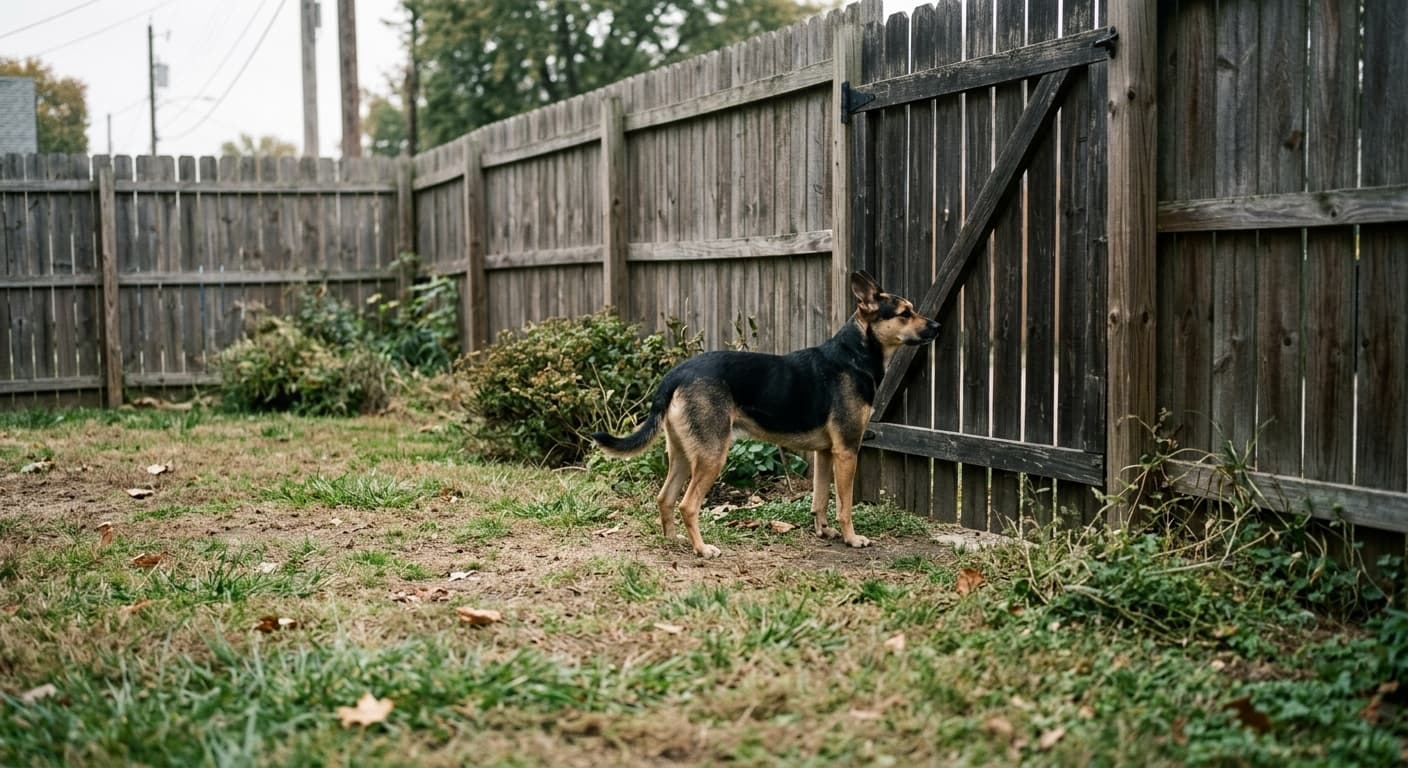
Virginia does not have a strict liability dog bite statute. Under the common-law one-bite rule, owners become liable once they knew or should have known their dog had dangerous propensities. Victims may also pursue negligence claims if an owner failed to use reasonable care.
Estimate your claim: Use our free Virginia Dog Bite Settlement Calculator to see a rough settlement range based on the medical bills, the bite location, the victim's age, and Virginia's liability rule.
How Dog Bite Liability Works in Virginia
Virginia does not have a specific dog bite statute that automatically makes owners liable when their dog injures someone. Instead, the state relies on two main legal theories: the common-law one-bite rule and general negligence principles.
This combination means that dog bite cases in Virginia turn on what the owner knew about the dog and how responsibly the owner behaved. Understanding both paths to liability is essential for victims seeking compensation and for owners who want to know their legal exposure.
The One-Bite Rule
Under Virginia's one-bite rule, a dog owner becomes strictly liable for injuries caused by their dog once the owner knew or should have known the dog had dangerous tendencies. The term "one-bite" is somewhat misleading. The dog does not literally get a free first bite. Virginia courts have held that an owner can be on notice of dangerous propensities even if the dog never bit anyone before.
For example, if a dog regularly lunged at visitors, snarled aggressively, or tried to escape a yard to chase people, those behaviors could establish that the owner knew the dog posed a risk. Once that knowledge is established, the owner faces strict liability for any resulting injuries. Under strict liability, the owner is responsible regardless of the precautions they took.
To recover damages under the one-bite rule, a victim must prove:
- The dog had dangerous propensities (aggressive behavior, prior attacks, or threatening conduct)
- The owner knew or should have known about those propensities
- The dog's dangerous behavior caused the victim's injuries
Negligence Claims
Even when a victim cannot prove the owner knew about dangerous tendencies, they can still pursue a negligence claim. A negligence claim requires showing that the dog owner failed to use reasonable care in controlling or restraining the dog, and that failure led to the injury.
Common examples of owner negligence include:
- Allowing a dog to roam without a leash in an area that requires leashing
- Failing to repair a broken fence that allowed the dog to escape
- Leaving a gate open or unsecured
- Entrusting a dog to someone unable to control it
Negligence Per Se
Virginia recognizes negligence per se in dog bite cases. When an owner violates a local leash law, confinement ordinance, or animal control regulation, courts treat that violation as automatic proof of negligence. The owner cannot argue they were otherwise being careful. Any injuries the dog causes while the owner is breaking the law are presumed to result from that carelessness.
This makes leash law violations particularly significant in Virginia dog bite claims.
Virginia's Contributory Negligence Rule
Virginia is one of only a handful of jurisdictions that follows pure contributory negligence. This rule has a dramatic impact on dog bite cases.

Under pure contributory negligence, if the victim is found even 1% at fault for the incident, they are completely barred from recovering any damages. There is no proportional reduction. Any fault at all eliminates the claim entirely.
Insurance companies in Virginia routinely investigate dog bite victims looking for any evidence of contributory negligence. Common arguments include:
- The victim provoked the dog (teasing, hitting, or startling it)
- The victim ignored warning signs or "Beware of Dog" notices
- The victim was trespassing on private property
- The victim reached through a fence or into a vehicle to pet the dog
- The victim's own animal provoked the attack
This strict rule makes Virginia one of the most challenging states for dog bite victims. Documenting exactly what happened and gathering witness testimony is critical to defeating contributory negligence defenses. With even 1% of fault enough to end the claim, get a free consultation from a Virginia personal injury lawyer on gathering that evidence and answering the insurer's contributory negligence arguments (attorney advertising).
Dangerous Dog Designations Under Virginia Law
Virginia law creates a formal process for designating dogs as "dangerous" or "vicious." These designations carry significant legal consequences for owners.
What Makes a Dog "Dangerous"
Under Va. Code § 3.2-6540, a law enforcement or animal control officer who has reason to believe a dog is dangerous may apply to a magistrate for a summons. The court will find a dog dangerous only if the evidence shows one of two things:
- The dog killed a companion animal (a dog or cat) or inflicted serious injury on one, including a serious impairment of health or bodily function requiring significant medical attention, serious disfigurement, or any injury with a reasonable potential to cause death, other than a sprain or strain
- The dog directly caused serious injury to a person, meaning a laceration, a broken bone, or a substantial puncture of skin by teeth
A single nip or bite that results only in a scratch, abrasion, or other minor injury does not meet this standard. An officer may not even apply for a summons over an injury that minor.
The court will not find a dog dangerous if the injured person was committing a crime or a willful trespass on the owner's property at the time, provoked or tormented the animal, or the dog was responding to pain or protecting itself, its offspring, its kennel, a person, or its owner's property. A dog also is not dangerous for killing or injuring another dog or cat while lawfully hunting with its owner or participating in an organized, lawful dog-handling event.
Owner Obligations After a Dangerous Dog Finding
Under Va. Code § 3.2-6540.01, the owner must meet the following requirements within 30 days of a dangerous dog finding, then keep the dog confined and the registration current for as long as the owner keeps the dog:
| Requirement | Details |
|---|---|
| Spay or neuter | Provide documentation the dog has been spayed or neutered |
| Microchip | Implant electronic identification registered to the owner |
| Liability insurance | Maintain at least $100,000 in coverage for animal bites, or post a surety bond of equal value |
| Registration fee | Pay $150 to the local governing body and complete a dangerous dog registration certificate |
| Warning signs | Post clearly visible signs at all entry points to the home and yard |
| Confinement | Keep the dog in the locked enclosure described below unless it is confined inside the owner's residence or, if outdoors, controlled by a physical leash held by a responsible adult owner and securely muzzled |
| Secure enclosure | If the dog is kept outdoors outside the owner's immediate presence, build within 30 days a secure, locked enclosure of sufficient height and design to prevent the dog from escaping and to prevent any person or other animal from entering or making direct physical contact |
| Annual renewal | By January 31 of each year, until the dog is deceased, update and renew the dangerous dog registration certificate for a fee of $85 under Va. Code § 3.2-6542.1. An animal control officer must inspect the dog and the premises where it is kept before a renewal certificate can be issued |
| Relocation notice | Notify animal control at least 10 days before moving the dog to a new address |
The $90 and $25 figures that appear in Va. Code § 3.2-6542(C) are a separate matter and are not charged to the owner. Those are the amounts the county or city remits to the State Veterinarian each year to fund the statewide registry, $90 for each dangerous dog it newly registered and $25 for each registration it renewed.
An owner charged under Va. Code § 3.2-6540.03 who is found to have willfully failed to comply with § 3.2-6540, § 3.2-6540.01, § 3.2-6540.02, or § 3.2-6540.04 is guilty of a Class 1 misdemeanor, punishable by up to 12 months in jail and a fine of up to $2,500. Willfulness is an element of the offense, so inadvertent noncompliance does not by itself support a conviction.
Vicious Dog Classification
Virginia law draws a distinction between "dangerous" and "vicious" dogs. Under Va. Code § 3.2-6540.1, a dog is classified as vicious if it has:
- Killed a person
- Inflicted serious injury on a person
- Continued exhibiting dangerous behavior after a prior dangerous dog finding
"Serious injury" means an injury with a reasonable potential to cause death, or any injury other than a sprain or strain that involves serious disfigurement, serious impairment of health, or serious impairment of bodily function and requires significant medical attention.
A dog found to be vicious must be euthanized. There is no alternative outcome. The court may also order the owner to pay restitution for actual damages to any injured person or the estate of any person killed, plus all reasonable expenses for caring for the dog while in custody.
Damages Available to Dog Bite Victims
Dog bite victims in Virginia may recover both economic and non-economic damages if they can prove the owner's liability.
Economic Damages
- Emergency room visits, surgery, hospital stays, and rehabilitation
- Prescription medications and medical devices
- Future medical treatment, including plastic surgery for scarring
- Lost wages during recovery
- Reduced earning capacity from permanent injuries
- Property damage (torn clothing, broken personal items)
Non-Economic Damages
- Physical pain and suffering
- Emotional distress and psychological trauma
- Scarring and permanent disfigurement
- Loss of enjoyment of life
- Post-traumatic stress, anxiety, or fear of dogs
Virginia does not impose a statutory cap on damages in personal injury cases, including dog bite claims. The amount recoverable depends on the severity of the injuries and the evidence presented.
Statute of Limitations for Dog Bite Claims
Under Va. Code § 8.01-243, Virginia's statute of limitations for personal injury claims is 2 years from the date of the injury. This applies to all dog bite lawsuits, regardless of the legal theory used.

Key points about the filing deadline:
- The clock starts on the date of the bite or attack
- Missing the 2-year deadline permanently bars the claim
- Minors may have the deadline tolled (paused) until they reach the age of majority
- Claims against government entities (such as a dog owned by a government employee on duty) may have shorter notice requirements
- Property damage claims have a separate 5-year statute of limitations under Va. Code § 8.01-243(B)
Filing sooner is always better. Evidence disappears, witnesses forget details, and medical records become harder to connect to the incident as time passes.
Criminal Penalties for Dog Owners
Virginia law imposes criminal penalties on owners whose dogs cause harm, particularly when the dog was already designated as dangerous.
Subsequent Attack by a Dangerous Dog
Under Va. Code § 3.2-6540.04, if a dog previously found dangerous attacks again in a separate incident:
| Offense | Classification | Maximum Penalty |
|---|---|---|
| Dangerous dog attacks or kills another companion animal | Class 2 misdemeanor | Up to 6 months in jail, $1,000 fine |
| Dangerous dog bites or causes bodily injury to a person | Class 1 misdemeanor | Up to 12 months in jail, $2,500 fine |
The court may also prohibit the convicted owner from owning, possessing, or living on the same property as any dog.
Exceptions to Criminal Liability
Criminal penalties under Va. Code § 3.2-6540.04 do not apply when the dog was:
- Responding to pain or injury at the time of the attack
- Protecting itself, its offspring, its kennel, a person, or its owner's property
- A police dog performing its official duties
Dog Owner Responsibilities in Virginia
Virginia imposes several general obligations on all dog owners, not just those with dangerous dogs.
Leash and Confinement Laws
Virginia does not have a statewide leash law. Instead, leash requirements vary by locality. Most cities and counties in Virginia require dogs to be leashed in public areas or securely confined on the owner's property. Owners should check their local municipal code for specific requirements.
Violating a local leash ordinance creates negligence per se liability, making the owner automatically responsible for any injuries the dog causes while off-leash.
Rabies Vaccination
Virginia law requires all dogs over four months of age to be vaccinated against rabies. After a dog bite, animal control will typically quarantine the dog for 10 days to monitor for rabies symptoms.
Licensing
Most Virginia localities require dogs to be licensed and registered with the local government.
Landlord Liability for Dog Bites in Virginia
Landlords in Virginia may face liability when a tenant's dog injures someone, but the standard is narrower than for dog owners.
A landlord can be held liable for a tenant's dog bite if:
- The landlord knew or should have known the tenant's dog was dangerous
- The landlord had the authority to remove the dog or require the tenant to address the danger
- The landlord failed to take reasonable steps to protect others
- The bite occurred in a common area the landlord was responsible for maintaining (shared hallways, yards, or parking areas)
Landlords are generally not liable for bites that occur inside the tenant's private rental unit or fenced yard. Virginia courts focus on whether the landlord had actual knowledge of the specific dog's dangerous tendencies and whether the bite occurred in an area under the landlord's control.
Breed-Specific Legislation in Virginia
Virginia has a state preemption law that prohibits local governments from enacting breed-specific legislation (BSL). This means no city or county in Virginia can ban or restrict ownership of dogs based solely on breed.
Instead, Virginia uses a behavior-based approach through its dangerous and vicious dog statutes. Any dog of any breed can be designated dangerous or vicious based on its individual actions, not its breed.
Both statutes state the rule without qualification. Va. Code § 3.2-6540(K) bars a court from finding a dog dangerous solely because it is a particular breed, and Va. Code § 3.2-6540.1(C) provides that no canine or canine crossbreed may be found vicious solely because it is a particular breed, "nor is the ownership of a particular breed of canine or canine crossbreed prohibited." Neither the locality ordinance provisions in Va. Code § 3.2-6543 nor those in § 3.2-6543.1 carry an exception for breed-specific ordinances a locality adopted earlier.
How to Protect Your Rights After a Dog Bite
If a dog bites you in Virginia, the steps you take immediately after the incident can significantly affect your ability to recover damages.
- Get medical treatment right away. Even minor bites can cause infection, nerve damage, or scarring. Medical records also serve as evidence.
- Report the bite to local animal control. Virginia law requires animal control to investigate reported dog bites and determine whether the dog qualifies as dangerous.
- Document the scene. Photograph your injuries, the location, the dog, and any broken fences or open gates.
- Get the owner's information. Record the owner's name, address, phone number, and homeowner's or renter's insurance information.
- Identify witnesses. Collect names and contact information from anyone who saw the attack.
- Preserve physical evidence. Keep torn or bloodied clothing in a sealed bag.
- Avoid discussing fault. Do not admit any responsibility for the incident. Virginia's pure contributory negligence rule means even a minor admission could eliminate your claim.
- Virginia AI Meeting Recording Laws
- Virginia Alimony Laws
- Virginia At-Will Employment Laws
- Virginia Car Accident Laws
- Virginia Car Seat Laws
- Virginia Child Custody Laws
- Virginia Child Support Laws
- Virginia Common Law Marriage Laws
- Virginia Dashcam Laws
- Virginia Data Privacy Laws
- Virginia Deepfake Laws
- Virginia Divorce Laws
- Virginia Drone Laws
- Virginia Emancipation Laws
- Virginia Employee Monitoring Laws
- Virginia Expungement Laws
More Virginia Laws
Frequently Asked Questions
Does Virginia have a strict liability dog bite law?
No. Virginia does not have a strict liability dog bite statute. The state follows the common-law one-bite rule, which holds owners strictly liable only after they knew or should have known their dog had dangerous tendencies. Victims can also pursue claims based on owner negligence.
What is the statute of limitations for a dog bite claim in Virginia?
Virginia gives you 2 years from the date of the bite to file a personal injury lawsuit under Va. Code § 8.01-243. Missing this deadline permanently bars your claim. Minors may have the deadline paused until they turn 18.
Can I recover damages if I was partially at fault for the dog bite?
No. Virginia follows pure contributory negligence, which means if you were even 1% at fault for the incident, you cannot recover any damages at all. This applies to situations like provoking the dog, ignoring warning signs, or trespassing.
What happens to a dog that is declared dangerous in Virginia?
The owner must spay or neuter the dog, microchip it, obtain at least $100,000 in liability insurance or a surety bond, pay a $150 registration fee, post warning signs, and keep the dog in a locked enclosure or inside the residence, or leashed and securely muzzled when outdoors. The registration must be renewed by January 31 each year for an $85 fee, and animal control must inspect the dog and premises before renewing. An owner found to have willfully failed to comply is guilty of a Class 1 misdemeanor. If the dog is found vicious (killed or seriously injured a person), it must be euthanized.
Can a landlord be sued for a tenant's dog bite in Virginia?
Yes, but only in limited situations. The landlord must have known the dog was dangerous, had the ability to address the situation, and failed to act. Liability is most likely when the bite happens in a common area the landlord controls, such as a shared hallway or yard.
Updates
Corrected the dangerous dog section: added the owner's January 31 annual renewal deadline and $85 fee with its required animal control inspection, added the confinement and secure enclosure duties, noted that the Class 1 misdemeanor applies only to willful noncompliance, repointed the registration and insurance citation to Va. Code § 3.2-6540.01, and removed an unsupported claim about grandfathered breed-specific local ordinances.
Rebuilt the description of Virginia's dangerous-dog legal test to match the actual two-prong standard in Va. Code Section 3.2-6540(H): serious injury to a companion animal or a defined serious injury to a person, with an express carve-out for minor nips and scratches, replacing a lower and partly fabricated standard the page had stated.
Independently fact-checked against the cited primary sources; governing law re-checked for recent changes
Corrected the dangerous-dog table: the January 31 deadline and fees under Va. Code Section 3.2-6542 are the county/city's annual remittance to the State Veterinarian ($90 new, $25 renewal), not an $85 owner-paid renewal fee under Section 3.2-6540.01, which has no such provision.
Governing law re-checked for recent changes
Reviewed and approved by an editor
The Law Behind This Article
This article rests on the statutory provisions below, held in our own legal record and retrieved from the official source. Tap a section to read the operative text.
Code of Virginia, Title 3.2: Agriculture, Animal Care, and Food
§ 3.2-6540Dangerous dogs; investigation, summons, and hearingIn force
A. As used in this section, "dog" includes a hybrid canine as defined in § 3.2-6581. B. Any law-enforcement officer or animal control officer who (i) has reason to believe that an animal is a dangerous dog and (ii) is located in the jurisdiction where the animal resides or in the jurisdiction where the act was committed may apply to a magistrate for the issuance of a summons requiring the owner, if known, to appear before a general district court at a specified time. The summons shall advise the owner of the nature of the proceeding and the matters at issue. C. No law-enforcement officer or animal control officer shall apply for a summons pursuant to subsection B if, upon investigation, the officer finds (i) in the case of an injury to a companion animal that is a dog or cat, that no serious injury has occurred as a result of the attack or bite, that both animals are owned by the same person, or that the incident originated on the property of the attacking or biting dog's owner or (ii) in the case of an injury to a person, that the injury caused by the dog upon the person consists solely of a single nip or bite resulting only in a scratch, abrasion, or other minor injury.
Official text (excerpt) · last checked 2026-08-28 · Read the full text in our law library · Verify at law.lis.virginia.gov
§ 3.2-6540.1Vicious dogs; penaltiesIn force
A. As used in this section: "Serious injury" means an injury having a reasonable potential to cause death or any injury other than a sprain or strain, including serious disfigurement, serious impairment of health, or serious impairment of bodily function and requiring significant medical attention. "Vicious dog" means a canine or canine crossbreed that has (i) killed a person, (ii) inflicted serious injury to a person, or (iii) continued to exhibit the behavior that resulted in a previous finding by a court or, on or before July 1, 2006, by an animal control officer as authorized by ordinance that it is a dangerous dog, provided that its owner has been given notice of that finding. B. Any law-enforcement officer or animal control officer who (i) has reason to believe that a canine or canine crossbreed is a vicious dog and (ii) is located in the jurisdiction where the vicious dog resides or in the jurisdiction where a vicious dog committed an act set forth in the definition shall apply to a magistrate serving the jurisdiction for the issuance of a summons requiring the owner or custodian, if known, to appear before a general district court at a specified time.
Official text (excerpt) · last checked 2026-07-29 · Read the full text in our law library · Verify at law.lis.virginia.gov
§ 3.2-6540.01Obligations of officer and owner following dangerous dog findingIn force
A. After an animal is found to be a dangerous dog pursuant to § 3.2-6540, the local animal control officer or treasurer shall provide the owner with a uniformly designed tag that identifies the animal as a dangerous dog. The owner shall affix the tag to the animal's collar and ensure that the animal wears the collar and tag at all times. B. Within 30 days of the finding that an animal is a dangerous dog pursuant to § 3.2-6540, the owner shall: 1. Provide documentation that the animal has been neutered or spayed; 2. Provide documentation that the animal has been implanted with electronic identification registered to the owner. The registration information shall be provided to the animal control officer; 3. Present satisfactory evidence to the animal control officer of liability insurance coverage, to the value of at least $100,000, that covers animal bites. The owner may obtain and maintain a bond in surety to the value of at least $100,000 in lieu of liability insurance; 4. Pay to the local governing body a fee of $150 and under the direction of the animal control officer complete a dangerous dog registration certificate issued by the Department pursuant to § 3.2-6542.
Official text (excerpt) · last checked 2026-07-29 · Read the full text in our law library · Verify at law.lis.virginia.gov
§ 3.2-6540.04Subsequent attack or bite by dangerous dog; penaltyIn force
A. Any owner of an animal found to be a dangerous dog pursuant to § 3.2-6540, when such finding arose out of a separate and distinct incident, is guilty of a: 1. Class 2 misdemeanor if such dog attacks and injures or kills a cat or dog that is a companion animal belonging to another person; or 2. Class 1 misdemeanor if such dog bites a human being or attacks a human being causing bodily injury. B. The provisions of subsection A shall not apply to any animal that at the time of the act complained of was responding to pain or injury, was protecting itself, its kennel, its offspring, a person, or its owner's property, or was a police dog engaged in the performance of its duties at the time of the attack. C. The court may determine that a person convicted under this section shall be prohibited from owning, possessing, or residing on the same property with a dog. 2021, Sp. Sess. I, c. 464.
Official text (excerpt) · last checked 2026-07-29 · Read the full text in our law library · Verify at law.lis.virginia.gov
§ 3.2-6540.03Violation of law by owner of dangerous dog; penaltyIn force
A. If an owner of an animal previously found to be a dangerous dog pursuant to § 3.2-6540 is charged with a violation of § 3.2-6540, 3.2-6540.01, 3.2-6540.02, or 3.2-6540.04, the animal control officer shall confine the dangerous dog until such time as evidence shall be heard and a verdict rendered pursuant to § 3.2-6540. Unless good cause is determined by the court, such evidentiary hearing shall be held within 30 days or as soon as practicable of the issuance of the summons. The court, through its contempt powers, may compel the owner of the animal to produce the animal. B. Upon conviction, the court may (i) order the dangerous dog to be disposed of by a local governing body pursuant to § 3.2-6562 or (ii) grant the owner up to 30 days to comply with the requirements of § 3.2-6540.01, during which time the dangerous dog shall remain in the custody of the animal control officer until compliance has been verified. If the owner fails to achieve compliance within the time specified by the court, the court shall order the dangerous dog to be disposed of by a local governing body pursuant to § 3.2-6562.
Official text (excerpt) · last checked 2026-07-29 · Read the full text in our law library · Verify at law.lis.virginia.gov
§ 3.2-6542Establishment of Dangerous Dog RegistryIn force
A. The Commissioner shall establish the Virginia Dangerous Dog Registry to be maintained by the Department. The State Veterinarian shall maintain information provided and posted by animal control officers or other such officials statewide on a website. All information collected for the Dangerous Dog Registry shall be available to animal control officers via the website. The website list shall be known as the Virginia Dangerous Dog Registry. B. Registration information shall include the name of the animal, a photograph, sex, age, weight, primary breed, secondary breed, color and markings, whether spayed or neutered, the acts that resulted in the dog being designated as dangerous and associated trial docket information, microchip or tattoo number, address where the animal is maintained, name of the owner, address of the owner, telephone numbers of the owner, and a statement that the owner has complied with the provisions of the dangerous dog order.
Official text (excerpt) · last checked 2026-07-29 · Read the full text in our law library · Verify at law.lis.virginia.gov
§ 3.2-6542.1Renewal of dangerous dog registrationIn force
A. By January 31 of each year, until the animal is deceased, the owner of an animal found to be a dangerous dog pursuant to § 3.2-6540 shall update and renew the dangerous dog registration certificate obtained pursuant to § 3.2-6540.01 for a fee of $85 in the same manner as the initial certificate was obtained. However, if the dangerous dog adjudication occurred within 60 days of the end of the calendar year, the first renewal shall be included in the initial registration at no additional charge to the owner. B. Prior to the renewal date of a dangerous dog registration each year, a local animal control officer shall conduct an inspection of the dangerous dog and the premises on which it is kept, and no certificate of renewal shall be issued without such inspection. The animal control officer shall post registration information on the Virginia Dangerous Dog Registry established by § 3.2-6542. C.
Official text (excerpt) · last checked 2026-07-29 · Read the full text in our law library · Verify at law.lis.virginia.gov
§ 3.2-6543Governing body of any locality may adopt certain ordinancesIn force
A. The governing body of any locality of the Commonwealth may adopt, and make more stringent, ordinances that parallel §§ 3.2-6521 through 3.2-6539, 3.2-6546 through 3.2-6555, 3.2-6562, 3.2-6569, 3.2-6570, 3.2-6574 through 3.2-6580, and 3.2-6585 through 3.2-6590. Any town may choose to adopt by reference any ordinance of the surrounding county adopted under this section to be applied within its town limits, in lieu of adopting an ordinance of its own. Any funds collected pursuant to the enforcement of ordinances adopted pursuant to the provisions of this section may be used for the purpose of defraying the costs of local animal control, including efforts to promote sterilization of cats and dogs. B. Any locality may, by ordinance, establish uniform schedules of civil penalties for violations of specific provisions of ordinances adopted pursuant to this section. Civil penalties may not be imposed for violations of ordinances that parallel § 3.2-6570. Designation of a particular violation for a civil penalty shall be in lieu of criminal sanctions and preclude prosecution of such violation as a criminal misdemeanor.
Official text (excerpt) · last checked 2026-07-29 · Read the full text in our law library · Verify at law.lis.virginia.gov
Code of Virginia, Title 8.01: Civil Remedies and Procedure
§ 8.01-243Personal action for injury to person or property generally; extension in actions for malpractice against health care providerIn forcecited in 10 of our articles
A. Unless otherwise provided in this section or by other statute, every action for personal injuries, whatever the theory of recovery, and every action for damages resulting from fraud, shall be brought within two years after the cause of action accrues. B. Every action for injury to property, including actions by a parent or guardian of an infant against a tort-feasor for expenses of curing or attempting to cure such infant from the result of a personal injury or loss of services of such infant, shall be brought within five years after the cause of action accrues. An infant's claim for medical expenses pursuant to subsection B of § 8.01-36 accruing on or after July 1, 2013, shall be governed by the applicable statute of limitations that applies to the infant's cause of action. C. The two-year limitations period specified in subsection A shall be extended in actions for malpractice against a health care provider as follows: 1. In cases arising out of a foreign object having no therapeutic or diagnostic effect being left in a patient's body, for a period of one year from the date the object is discovered or reasonably should have been discovered; 2.
Official text (excerpt) · last checked 2026-09-14 · Read the full text in our law library · Verify at law.lis.virginia.gov
Cited in 376 court opinions in our collectionLatest citing opinion in our collection: 2026
In the courts (editorial summary, independently checked):Dunlap v. Cottman Transmissions Systems (2014) held Section 8.01-243(B)'s five-year property period governs tortious interference claims, not the two years in (A). Dixon v. Messer (2003) read the (C)(2) extension to cover fraud, concealment and intentional misrepresentation, but not negligence.
Opinions citing this section in our collection:
- Herman v. McCarthy Enterprises, Inc. (Virginia Circuit Court 2002, 61 Va. Cir. 697)✓Homeowners sued the subcontractor that applied synthetic stucco to their new house. The court held they sought damages for injury to property, not personal injury, so subsection (B)'s five-year period applied rather than subsection (A)'s two years, and it denied the plea in bar.
- Ansari v. Pahlavi (Virginia Circuit Court 1991, 23 Va. Cir. 402)✓A businessman sued in detinue to recover corporate stock he said was held only as collateral. The court held detinue is governed by the five-year property-injury period of 8.01-243(B) rather than the one-year catch-all, and denied summary judgment on limitations grounds.
- Dixon v. Messer (Virginia Circuit Court 2003, 61 Va. Cir. 527)✓A former surgical patient sued her surgeon after the two-year period ran. The court held 8.01-243(C)(2) extends that period only for actual fraud, concealment or intentional misrepresentation, which the patient must prove by clear and convincing evidence, and sent it to a jury.
Identified automatically from the court opinions citing this section — not a ranking of which case controls.
Also relied on in: Virginia Hit and Run Laws: Penalties and What to Do, Virginia Car Accident Laws: Fault, Insurance, and Your Claim, Motorcycle Accident Laws in Virginia (2026): Deadlines & Helmets
Search our full record of US law — 2.1 million sections, every state + federal →
Sources and References
- Va. Code § 3.2-6540 - Dangerous dogs; investigation, summons, and hearing(law.lis.virginia.gov).gov
- Va. Code § 3.2-6540.01 - Obligations of officer and owner following dangerous dog finding(law.lis.virginia.gov).gov
- Va. Code § 3.2-6540.03 - Violation of law by owner of dangerous dog; penalty(law.lis.virginia.gov).gov
- Va. Code § 3.2-6540.04 - Subsequent attack or bite by dangerous dog; penalty(law.lis.virginia.gov).gov
- Va. Code § 3.2-6540.1 - Vicious dogs; penalties(law.lis.virginia.gov).gov
- Va. Code § 8.01-243 - Personal action for injury to person or property generally(law.lis.virginia.gov).gov
- Va. Code § 3.2-6542 - Virginia Dangerous Dog Registry(law.lis.virginia.gov).gov
- Va. Code § 3.2-6542.1 - Dangerous dog registry; annual renewal of registration(law.lis.virginia.gov)
Paid attorney referral. RecordingLaw may receive compensation when you use an attorney-help link. RecordingLaw is not a law firm. Submitting a request does not guarantee that an attorney will accept your case and does not create an attorney-client relationship.