New York Dog Bite Laws: Liability and Victim Rights

Overview of New York Dog Bite Laws
New York operates under a dual liability system for dog bite injuries. Owners of dogs that have been designated as dangerous face strict liability for medical costs under Agriculture & Markets Law § 123. For all other damages, and for dogs without a prior dangerous designation, victims may pursue claims based on the owner's knowledge of the dog's vicious propensities or through ordinary negligence.
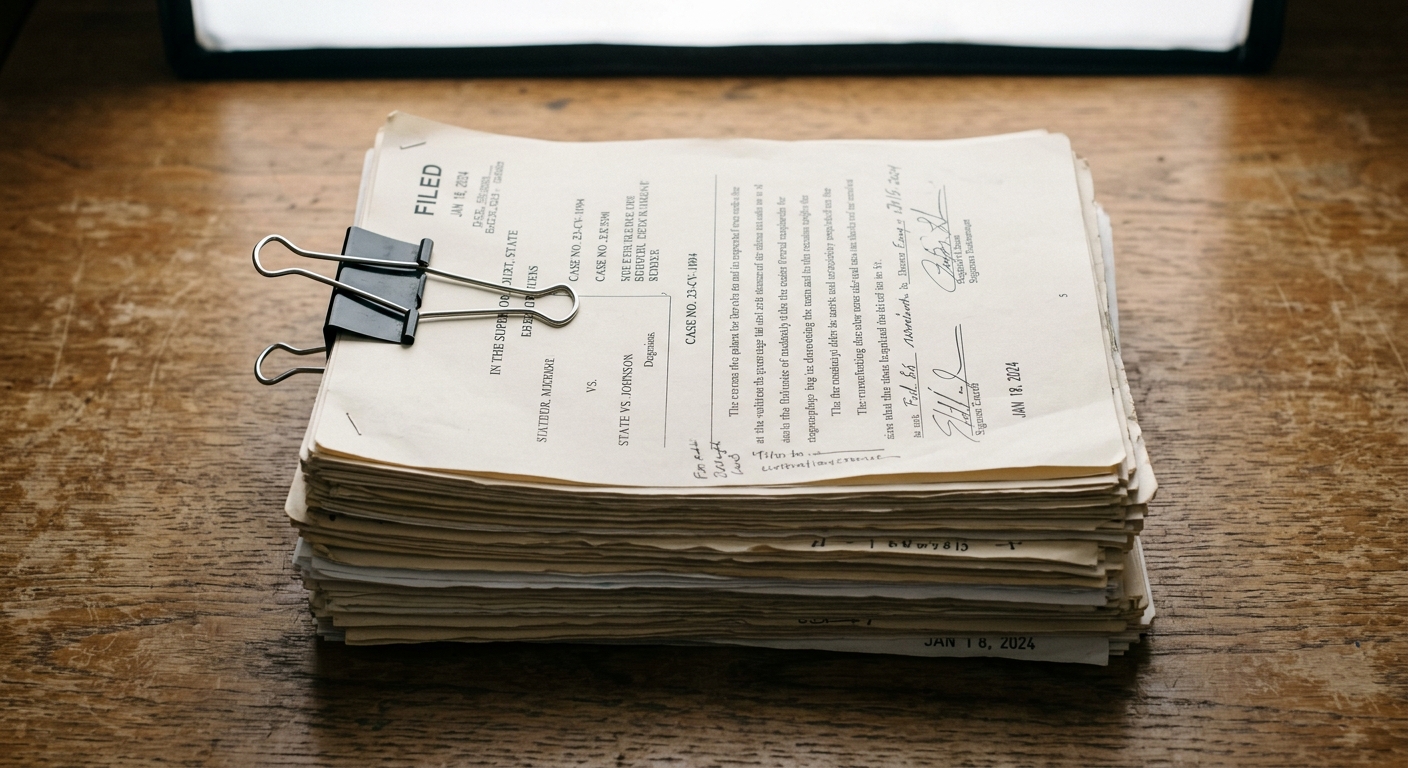
This framework changed significantly in April 2025 when the New York Court of Appeals issued its landmark ruling in Flanders v. Goodfellow (2025 NY Slip Op 02261). The court overruled decades of precedent that had blocked negligence claims in domestic animal injury cases. Today, dog bite victims in New York have broader legal options than at any point in the past 20 years.
New York sees roughly 4,000 dog bite injuries requiring medical attention each year. The state leads the nation in average claim cost, with dog bite claims averaging $110,488 in 2024 according to the Insurance Information Institute.
The Flanders v. Goodfellow Decision (April 2025)
On April 17, 2025, the New York Court of Appeals fundamentally reshaped dog bite law in the state. The case involved Rebecca Flanders, a postal carrier who suffered a severe shoulder tear requiring multiple surgeries after being bitten while delivering a package to the Goodfellow residence.
The court made two critical holdings:
- Strict liability reinstated: The court found a triable issue of fact as to whether the dog owners had constructive knowledge of the dog's vicious propensities, based on sworn affidavits from other postal workers describing the dog as "the most aggressive" on the route
- Negligence claims now allowed: The court overruled Bard v. Jahnke (2006), which had barred negligence liability for harm caused by domestic animals, calling the prior rule "inconsistent with ordinary tort principles" and "unworkable"
This ruling means that even if a dog has no documented history of aggression, victims can now pursue compensation by proving the owner failed to exercise reasonable care in controlling the animal.
What This Means for Dog Bite Victims
Before Flanders, victims had to prove the owner knew or should have known of the dog's dangerous tendencies. That standard left many bite victims without recourse when a dog attacked for what appeared to be the first time.
Now, victims have two paths to recovery:
- Strict liability if the owner knew of the dog's vicious propensities or the dog was designated dangerous under § 123
- Negligence if the owner failed to take reasonable precautions, such as proper leashing, fencing, restraint, or supervision
Strict Liability Under Agriculture & Markets Law § 123
New York's Agriculture & Markets Law § 123 establishes strict liability for owners of dogs that have been formally designated as dangerous.
Under this statute, the owner or lawful custodian of a dangerous dog is strictly liable for medical costs resulting from injury caused by the dog to a person, companion animal, farm animal, or domestic animal. This means the victim does not need to prove negligence or fault. The mere fact that the designated dangerous dog caused injury triggers liability for medical expenses.
However, strict liability under § 123 applies only to medical costs. Recovery of other damages (pain and suffering, lost wages, emotional distress) still requires proving the owner knew of the dog's dangerous propensities or was negligent.
Dangerous Dog Designation Process
Any person who witnesses a dog attack or threatened attack on a person or animal may file a complaint with a dog control officer or police officer. The officer must inform the complainant of their right to start a proceeding and, if there is reason to believe the dog is dangerous, must begin the proceeding.
A dog may be designated as dangerous under AGM § 123 if it:
- Attacks a person, companion animal, farm animal, or domestic animal without justification
- Behaves in a manner that a reasonable person would believe poses a serious and unjustified imminent threat of serious physical injury or death
- Has been previously found to be dangerous and continues to exhibit threatening behavior
The petitioner must prove the dog is dangerous by clear and convincing evidence, a standard higher than the typical "preponderance of the evidence" used in civil cases.
Conditions Imposed on Dangerous Dogs
When a court designates a dog as dangerous, it may order:
| Condition | Details |
|---|---|
| Neutering/Spaying | Mandatory surgical sterilization |
| Microchipping | Permanent identification implant |
| Behavioral evaluation | Assessment by a certified animal behaviorist |
| Training | Completion of an approved training program |
| Secure confinement | Housing designed to prevent escape and protect the public |
| Muzzle and leash | Required when the dog is in public |
| Reporting | Owner must report presence of dangerous dog per General Municipal Law § 209-cc |
In the most serious cases, a judge may order humane euthanasia or permanent confinement if the dog caused serious physical injury or death to a person, has known vicious propensities from prior attacks, or caused serious physical injury to animals with prior similar findings.
Civil Penalties for Dog Owners
New York law imposes escalating civil and criminal penalties based on the severity of the incident:
| Violation | Penalty |
|---|---|
| Owner negligently permits dog to bite, causing physical injury | Civil fine up to $400 |
| Owner negligently permits dog to bite, causing serious physical injury | Civil fine up to $1,500 |
| Previously designated dangerous dog bites, causing serious physical injury | Misdemeanor: fine up to $3,000 and/or up to 90 days imprisonment |
| Previously designated dangerous dog kills a person | Class A misdemeanor (fine up to $1,000 and/or up to 1 year imprisonment) |
These criminal penalties apply in addition to any civil liability for damages the victim pursues in a separate lawsuit.
Dog Owner Responsibilities Under New York Law
New York imposes several legal duties on dog owners:
Licensing (AGM § 109)
All dogs four months of age or older must be licensed in the municipality where the owner resides. The license must be renewed as required by local law. Proof of rabies vaccination is required to obtain a license.
Rabies Vaccination (Public Health Law § 2141)
Under Public Health Law § 2141, every dog must receive a rabies vaccination no later than four months after birth, with a second vaccination within one year of the first. Subsequent vaccinations must follow USDA-licensed vaccine schedules. Failure to vaccinate carries a fine of up to $200 per offense.
Leash and Confinement Laws
New York does not have a statewide leash law. However, most municipalities, including New York City, have enacted local leash ordinances requiring dogs to be leashed in public areas. AGM § 121 authorizes municipalities to require dogs to be securely confined between sunset and one hour after sunrise during designated periods.
Violating local leash laws or confinement requirements can serve as strong evidence of negligence in a dog bite case, especially after the Flanders decision.
Victim Rights and Compensation
Dog bite victims in New York may recover several categories of damages.
Economic Damages
- Medical expenses, including emergency care, surgery, and rehabilitation
- Future medical costs for ongoing treatment
- Lost wages and loss of earning capacity
- Property damage
Non-Economic Damages
- Pain and suffering
- Emotional distress and psychological trauma
- Scarring and disfigurement
- Loss of enjoyment of life
For dogs designated as dangerous under § 123, strict liability covers medical costs automatically. All other damages require proof of the owner's knowledge of vicious propensities or negligence under the Flanders standard.
Statute of Limitations
Dog bite claims in New York are governed by CPLR § 214(5), which sets a 3-year statute of limitations for personal injury actions. The clock starts on the date of the bite.
Important exceptions and considerations:
- Minors: The statute of limitations is tolled (paused) for victims under 18. The 3-year period generally begins when the minor turns 18, subject to a maximum extension
- Government entities: Claims against municipalities, state agencies, or government employees require a Notice of Claim filed within 90 days of the incident under General Municipal Law § 50-e
- Discovery rule: In rare cases involving latent injuries, the limitations period may begin when the injury is discovered or reasonably should have been discovered
Failing to file within the deadline will almost certainly bar the claim permanently.
Comparative Negligence in Dog Bite Cases
New York follows a pure comparative negligence system under CPLR § 1411. This means a victim's own fault does not bar recovery but reduces the damages award proportionally.
For example, if a jury determines that a dog bite victim suffered $100,000 in damages but was 20% at fault for provoking the dog, the victim would recover $80,000.
Unlike modified comparative negligence states, New York allows recovery even if the victim is more than 50% at fault. A victim who was 90% responsible could still recover 10% of the total damages.
Legal Defenses for Dog Owners
Provocation
If the victim provoked the dog through teasing, tormenting, hitting, or other aggressive behavior, the owner's liability may be reduced or eliminated. The provocation must be sufficient to cause a normally calm dog to react aggressively.
Trespassing
Dog owners generally face reduced or no liability when their dog bites a trespasser. However, this defense may not apply to children who may not understand property boundaries. New York's "attractive nuisance" doctrine can impose liability even toward trespassing children in some circumstances.
Assumption of Risk
If the victim knowingly assumed the risk of being bitten, this may limit or bar recovery. This defense commonly applies to veterinarians, dog groomers, kennel workers, and others who interact with dogs professionally.
Comparative Negligence
As discussed above, the owner can argue the victim's own conduct contributed to the injury, reducing the damages award under CPLR § 1411.
Landlord Liability for Dog Bites in New York
Landlords in New York may face liability for tenant dog bites under specific conditions. A landlord can be held liable if:
- The landlord knew or should have known the tenant's dog was dangerous
- The landlord had the ability to require removal of the dog (through lease terms or other authority)
- The landlord failed to take action to protect others
Landlords are not automatically responsible for their tenants' pets. The key factor is knowledge of the dog's dangerous nature combined with a failure to act. Evidence such as prior complaints from neighbors, visible aggressive behavior, or a known dangerous dog designation can establish the landlord's knowledge.
Landlords should include clear pet policies in lease agreements and consider requiring tenants with dogs to carry renter's insurance with adequate liability coverage.
Breed-Specific Legislation in New York
New York has a state preemption law that prohibits municipalities from enacting breed-specific legislation (BSL) restricting ownership based solely on a dog's breed. This means local governments cannot ban pit bulls, Rottweilers, or any other breed.
New York's approach focuses on individual dog behavior rather than breed. The dangerous dog designation process under AGM § 123 evaluates each dog based on its specific actions, not its breed.
Additionally, recent legislation has addressed insurance discrimination based on dog breed, prohibiting insurance companies from dropping coverage, raising premiums, or refusing to insure homeowners or renters solely because of their dog's breed.
How to File a Dog Bite Claim in New York
If you have been bitten by a dog in New York, take these steps to protect your legal rights:
- Seek medical attention immediately. Get treatment and keep all medical records, bills, and receipts
- Report the incident. File a report with local animal control and the police department. This creates an official record and may trigger a dangerous dog investigation
- Document the scene. Photograph your injuries, the location of the attack, and the dog if possible
- Gather information. Obtain the dog owner's name, address, contact information, and homeowner's or renter's insurance details
- Identify witnesses. Collect names and contact information from anyone who saw the attack
- Preserve evidence. Keep torn or bloodied clothing, and do not alter the scene
- Track your damages. Maintain records of medical expenses, lost wages, and how the injury affects your daily life
- Consult an attorney. A personal injury lawyer can evaluate your case, identify all liable parties, and handle insurance negotiations
Many personal injury attorneys in New York offer free consultations and work on a contingency fee basis, meaning you pay nothing unless you recover compensation.
More New York Laws
Sources and References
- New York Agriculture & Markets Law Section 123 - Dangerous Dogs(nysenate.gov).gov
- New York CPLR Section 214 - Statute of Limitations for Personal Injury(nysenate.gov).gov
- New York CPLR Section 1411 - Comparative Negligence(nysenate.gov).gov
- New York Public Health Law Section 2141 - Compulsory Rabies Vaccination(nysenate.gov).gov
- New York Agriculture & Markets Law Article 7 - Licensing, Identification and Control of Dogs(nysenate.gov).gov
- Flanders v. Goodfellow, 2025 NY Slip Op 02261 - Court of Appeals Opinion(nycourts.gov).gov
- New York Courts - Statute of Limitations Chart(nycourts.gov).gov
- New York Department of Health - Rabies Information(health.ny.gov).gov
- Insurance Information Institute - Dog Bite Liability Statistics(iii.org)